
View All Products
en
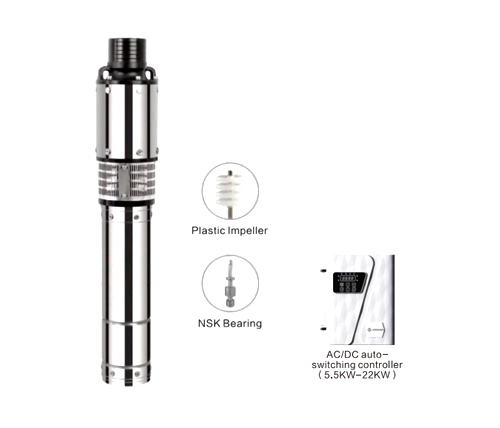
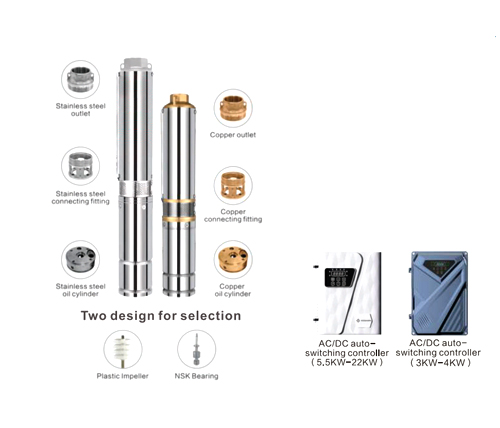
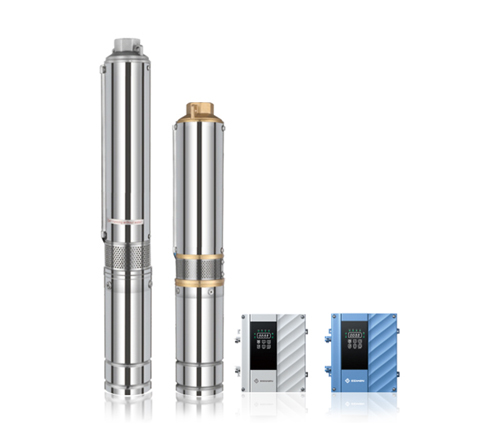
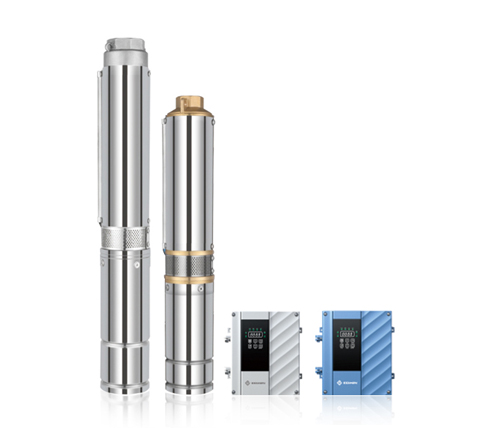
AC/DC hybrid solar pumps are a type of water pump that uses both AC and DC power to operate. They are designed for use in remote or off-grid areas where a reliable source of power may not be available. The AC/DC hybrid solar pump system is comprised of a solar panel, a battery, and a water pump. The solar panel collects energy from the sun and converts it into DC power, which is then stored in the battery. The battery provides the power needed to run the water pump when the sun is not shining. The use of a hybrid system provides several advantages over traditional AC or DC water pumps. First, the system is able to operate even when there is no sunlight. This is because the battery provides a backup power source. Second, the use of a battery allows the system to store excess energy generated by the solar panel during the day, which can be used to run the water pump at night or during periods of low sunlight. This provides a more reliable source of water for the user, as the pump will continue to function even when the sun is not shining. Another advantage of the AC/DC hybrid solar pump is that it is able to operate with a lower voltage than traditional AC or DC water pumps. This is because the system uses a DC motor, which requires less power to operate than an AC motor. This not only makes the system more efficient, but it also reduces the risk of electrical shock, as the voltage is lower. The AC/DC hybrid solar pump is also more environmentally friendly than traditional water pumps, as it does not rely on a fossil fuel-powered generator or a grid connection. This reduces the carbon footprint of the pump and makes it a more sustainable solution for remote areas.
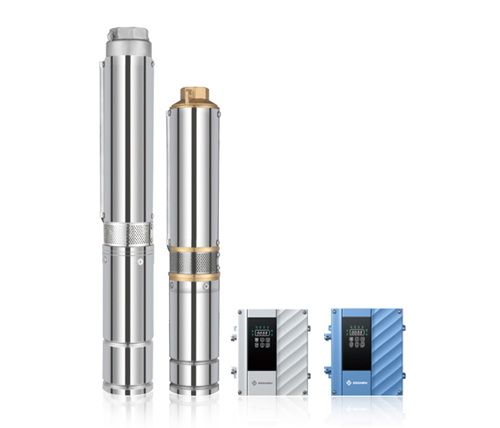
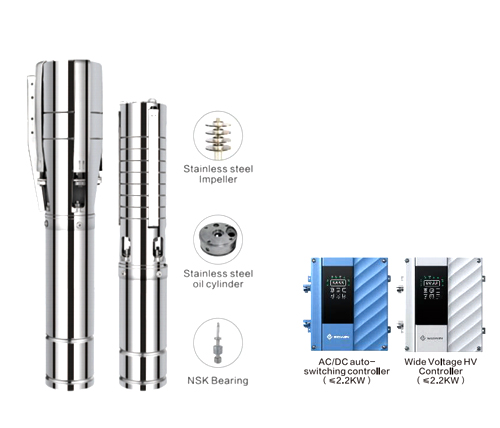
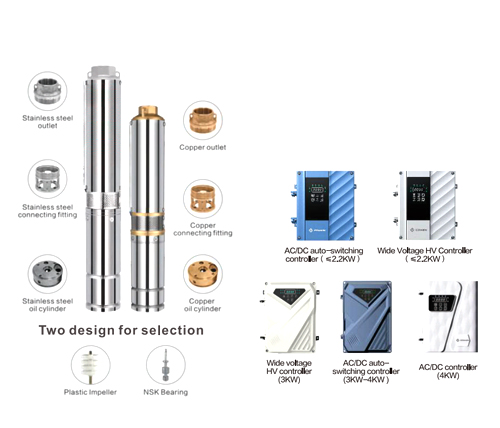
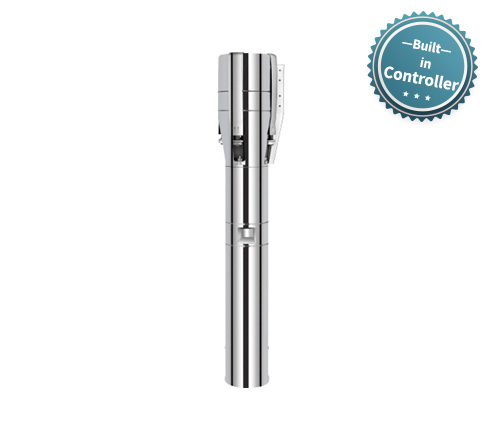
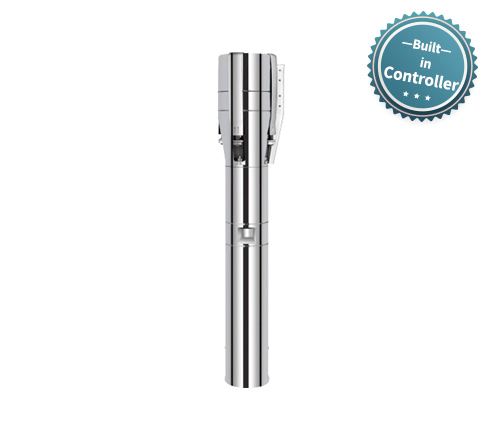



A Submersible Pump is a critical tool for moving water and other fluids from wells, tanks, or reservoirs. Unlike surface pumps, submersible...
READ MOREAccess to groundwater is a critical concern for agriculture, residential use, and industrial operations. A borehole pump is designed to ext...
READ MOREA Deep Well Pump is designed to draw water from wells that are significantly deeper than standard household sources. These pumps are widely...
READ MOREWater management is an essential part of agriculture, and efficient irrigation systems depend on reliable pumps. An Irrigation Pump Factory...
READ MOREA submersible pump factory is responsible for producing pumps that operate fully underwater while maintaining stable performance. These pump...
READ MOREMaintaining an AC/DC hybrid submersible solar pump ensures long-term reliability, consistent water output, and reduced risk of mechanical failure. Key maintenance tasks include:
Regular Inspection of Solar Panels
Clean panels to remove dust, dirt, and bird droppings.
Check for cracks, discoloration, or loose wiring connections.
Electrical System Checks
Inspect controller and wiring for corrosion, loose connections, or damaged insulation.
Verify proper operation of AC/DC switching mechanisms and protection devices.
Pump and Motor Maintenance
Monitor pump performance for unusual noise, vibration, or reduced flow.
Inspect motor bearings and lubrication levels if applicable.
Ensure impellers are free of debris and not worn or damaged.
Hydraulic Components
Check suction and discharge lines for leaks or blockages.
Inspect foot valves or check valves for smooth operation.
Replace worn seals or gaskets to prevent water ingress.
System Operation Monitoring
Periodically test flow rates and pressure output.
Verify that automatic switching between AC and DC power functions correctly.
Record operational data to identify gradual performance decline.
Seasonal or Long-Term Storage Considerations
Drain the pump and lines if unused for extended periods in freezing conditions.
Store controllers and electrical components in a dry, safe location.
Water-filled solar pumps are versatile and find application across multiple sectors due to their energy independence and adaptability. Common uses include:
Agricultural Irrigation
Livestock Watering
Rural and Off-Grid Domestic Water Supply
Industrial and Commercial Water Transfer
Aquaculture and Fisheries
Landscape and Garden Watering
Emergency Water Supply and Disaster Relief
These applications highlight the flexibility of water-filled solar pumps and their ability to operate sustainably in diverse environments.
Installing a stainless steel solar deep well pump requires careful attention to detail to ensure reliable operation and long-term durability. The typical process includes
Confirm well depth, water quality, and flow requirements.
Ensure adequate space for solar panels, pump house, and piping layout.
Check the stainless steel pump body, impeller, and motor for damage before installation.
Verify that all seals, gaskets, and fasteners are in place.
Attach appropriate support cables or guide rods.
Carefully lower the pump to the correct depth, avoiding contact with the well casing to prevent damage.
Ensure the pump is vertically aligned to avoid excessive vibration.
Attach inlet and outlet pipes securely, using clamps or unions as required.
Install foot valves, check valves, or strainers if needed to prevent backflow and debris entry.
Connect the pump motor to the controller or inverter.
Wire the solar panels, ensuring correct voltage and polarity.
Implement protective devices, including fuses or overload protection.
Run the pump initially at low flow to verify smooth operation.
Check water delivery, pressure, and flow rates.
Inspect for leaks, unusual vibration, or abnormal noise.
Adjust panel tilt or pump controller settings for performance.
Document operational data for future maintenance.
+86-13586290903 (WhatsApp)
Xuri Gongliang Cutting Tool Entrepreneurship Park, Wenqiao Town, Wenling City, Taizhou City, Zhejiang Province, China

AC/DC Hybrid Submersible Solar Pump Manufacturer


 English