
edwina@edwin-pump.com

View All Products
en
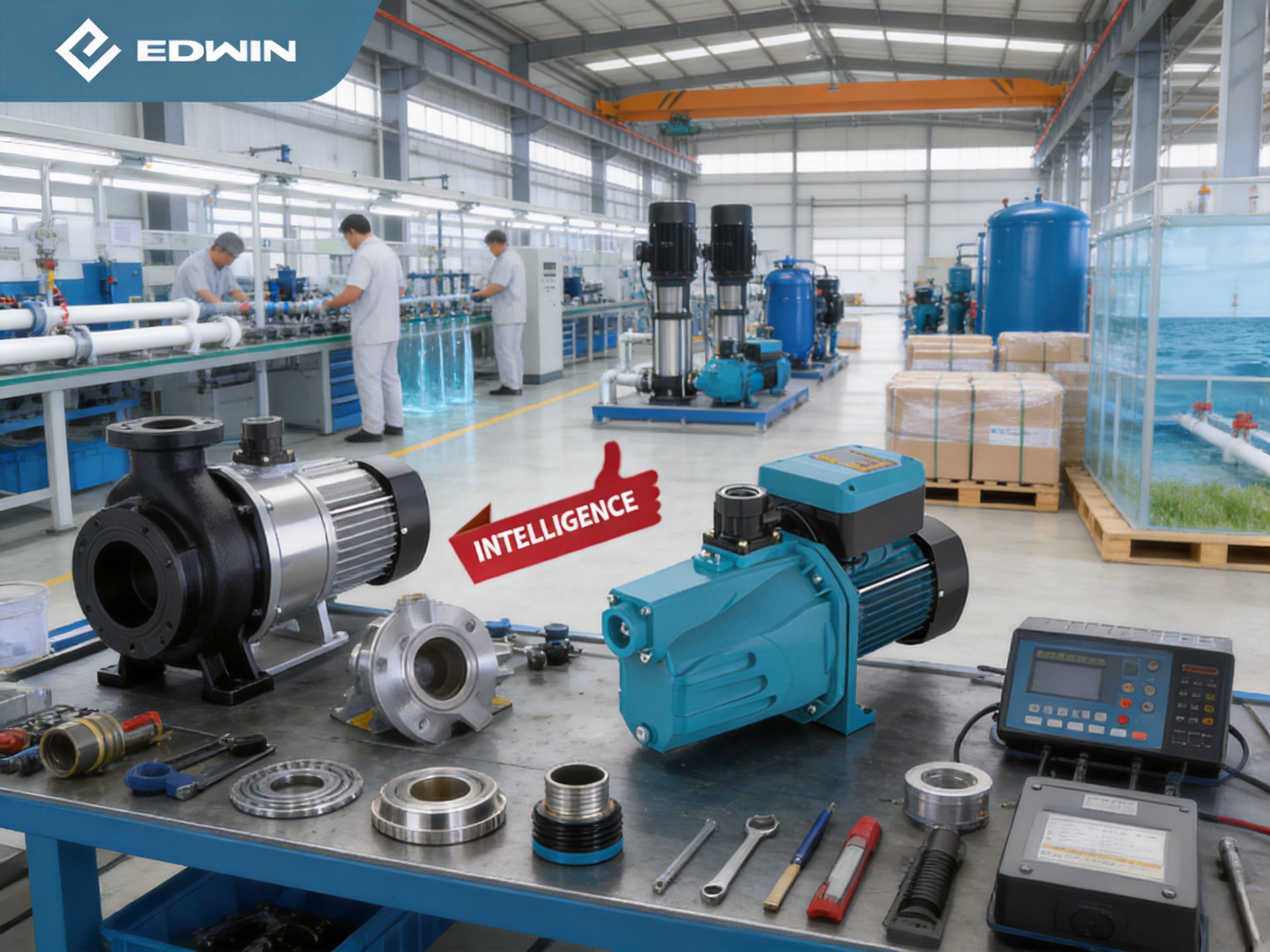
Reliable water pressure is essential for modern irrigation, household water supply, hospitality facilities, gardens, and many other clean-water applications. When a water source is located below the point of use, or when the existing supply cannot provide adequate pressure, a self-priming jet pump offers a practical and efficient solution. The ITJET Series Automatic High-Pressure Jet Water Pump has been developed to meet these requirements with automatic operation, strong pressure performance, compact construction, and intelligent protection functions.
The series includes four power options from 550 W to 1,500 W, covering a maximum head range of 40 to 48 meters and maximum flow rates from 3.0 to 4.0 cubic meters per hour. With a maximum suction lift of 9.5 meters, the pump is suitable for drawing clean water from wells, tanks, reservoirs, and other water sources. Its automatic control system responds to pipeline pressure and water demand, reducing the need for manual operation.
Unlike a basic pump that must be switched on and off by the user, the ITJET Series combines a linear pressure sensor with a flow-control system. This design allows the pump to identify changes in pressure and demand, start when water is required, and stop when the demand ends. The result is a more convenient, controlled, and energy-conscious water supply system.
Manufactured by Taizhou Edwin Electric Co., Ltd., the pump benefits from the company’s experience in research and development, mass production, export operations, and water-pump engineering. Since its establishment in 2008, the company has developed a broad product portfolio covering deep-well pumps, submersible pumps, domestic booster pumps, circulation pumps, solar water pumps, and intelligent booster systems. This product knowledge supports the development of practical pumping equipment for agricultural, residential, commercial, and industrial users.
Water systems are often affected by fluctuating demand. A garden irrigation system may require water for only a short period, while a household may need pressure at different times for showers, faucets, washing machines, and cleaning equipment. In agricultural applications, demand may vary according to irrigation zones, weather conditions, crop requirements, and operating schedules.
A conventional pump with a simple manual switch can operate continuously even when no water is being used. This wastes electricity, increases operating noise, and places unnecessary stress on the motor and hydraulic components. Repeated manual switching can also be inconvenient, especially when the pump is installed in a remote location, a pump room, a well house, or an outdoor utility area.
An automatic jet pump addresses these challenges by monitoring the water system. When pressure falls because a valve or faucet is opened, the pump can start. When water demand stops and the pipeline reaches the appropriate pressure, the pump can stop. This operating pattern makes the system easier to use and helps reduce unnecessary running time.
The self-priming jet configuration provides another important benefit. The pump uses a nozzle and venturi arrangement to create a high-velocity water jet. This process generates suction that helps lift water from the source. As a result, the pump can serve applications where the water level is below the pump installation point, provided that the suction height remains within the rated limit and the system is properly primed.
The ITJET Series is designed for clean-water pumping and pressurization. It is available in A/B model versions with power ratings of 550 W, 750 W, 1,100 W, and 1,500 W. All models use one-inch suction and discharge connections and share a compact overall size of approximately 480 by 200 by 278 millimeters.
The smallest model, ITJET-550A/B, provides a maximum flow of 3.0 cubic meters per hour, equivalent to 50 liters per minute, and a maximum head of 40 meters. The largest model, ITJET-1500A/B, reaches a maximum flow of 4.0 cubic meters per hour, or 67 liters per minute, with a maximum head of 48 meters.
The range allows users to select a pump according to the required pressure, pipe length, elevation, and water demand. A smaller model may be appropriate for a garden, single-family home, or limited irrigation zone. A higher-powered model can provide additional head capacity for larger systems, longer pipe runs, or applications requiring stronger pressurization.
| Model | Power | Power | Maximum Flow | Maximum Head | Maximum Suction | Pipe Connection |
|---|---|---|---|---|---|---|
| ITJET-550A/B | 550 W | 0.75 HP | 3.0 m³/h | 40 m | 9.5 m | 1 inch × 1 inch |
| ITJET-750A/B | 750 W | 1 HP | 3.6 m³/h | 42 m | 9.5 m | 1 inch × 1 inch |
| ITJET-1100A/B | 1,100 W | 1.5 HP | 3.8 m³/h | 45 m | 9.5 m | 1 inch × 1 inch |
| ITJET-1500A/B | 1,500 W | 2 HP | 4.0 m³/h | 48 m | 9.5 m | 1 inch × 1 inch |
Performance figures such as maximum flow and maximum head describe the upper operating capabilities of the pump under specified test conditions. Actual performance depends on pipe diameter, pipe length, fittings, elevation, water temperature, suction conditions, and the operating point of the system. Proper selection should therefore consider the complete hydraulic installation rather than relying only on the maximum values.
Irrigation systems require more than a simple movement of water. Water must often travel through horizontal pipes, rise to higher ground, pass through filters and valves, and reach sprinklers or drip lines with sufficient pressure. If pressure is too low, the irrigation pattern may become uneven, distant outlets may receive inadequate water, and the system may fail to operate correctly.
The ITJET Series provides a maximum head of up to 48 meters, giving the pump the ability to support many small and medium-sized irrigation arrangements. The available pressure is useful for garden sprinklers, lawn irrigation, vegetable plots, nursery areas, landscaping systems, and domestic agricultural applications.
The high-pressure jet design is especially useful when the source is a well or storage tank. The pump can draw water through the suction line and deliver it to the pressurized discharge system. When correctly installed with a suitable foot valve, properly sealed connections, and a stable water supply, it can provide dependable performance during regular irrigation cycles.
Compared with a low-pressure transfer pump, an automatic high-pressure jet pump offers better suitability for systems that require both suction and pressure. A transfer pump may move water effectively over a short distance, but it may not provide enough head for sprinklers, elevated outlets, or multiple fixtures. The ITJET Series is designed specifically for these pressurized applications.
The defining hydraulic feature of the product is its self-priming jet configuration. The system uses a nozzle and venturi tube to create a high-speed water flow inside the pump body. This flow produces a lower-pressure area that assists in drawing water through the suction line.
This arrangement enables the pump to lift water from a source below the pump. It is particularly useful where installation above the water level is unavoidable. Typical examples include shallow wells, underground tanks, collection reservoirs, rainwater storage systems, and household water tanks.
Self-priming performance depends on correct installation. The suction pipe should be airtight, free from unnecessary bends, and appropriately sized. A foot valve or check valve may be required to prevent the suction line from draining after the pump stops. Before initial operation, the pump casing and suction line should be filled according to the installation instructions.
The maximum suction value for the ITJET Series is 9.5 meters. This value should not be interpreted as a recommendation to operate continuously at the absolute limit. Practical suction performance is affected by altitude, water temperature, pipe friction, air leakage, water level changes, and the condition of the suction line. Keeping the actual suction lift comfortably below the maximum can improve reliability.
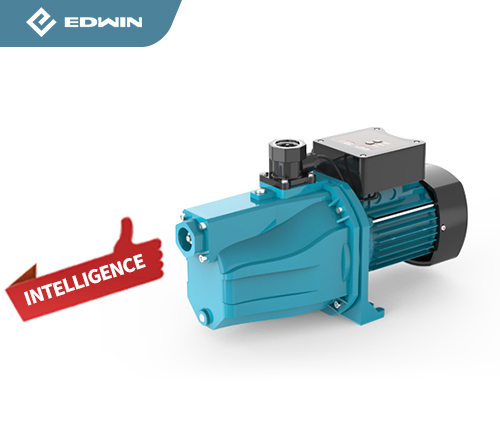
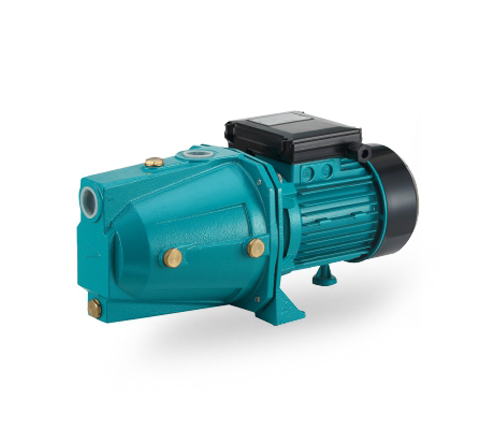
ITJET Series Automatic High Pressure Jet Water Pump for Irrigation
The ITJET Series replaces a conventional mechanical pressure switch with a linear pressure sensor. This sensor continuously identifies pressure conditions in the pipeline and helps regulate the pump’s starting and stopping behavior. The system is designed to respond more intelligently to changing demand than a simple on-off arrangement.
When a user opens a faucet or an irrigation valve, pressure in the discharge pipeline decreases. The sensor detects this change and signals the pump to start. Once the valve is closed and pressure returns to the appropriate level, the control system stops the pump. This automatic sequence reduces the need for manual intervention.
The double control system combines pressure detection with flow-control logic. Pressure information indicates the condition of the pipeline, while flow information helps confirm whether water is actually being consumed. Together, these functions support more accurate operation and reduce the risk of unnecessary cycling.
The control system also includes a memory function supported by a microprocessor. This allows the unit to retain operational information and adapt to system behavior. The intelligent learning capability is intended to help the pump respond more appropriately to different operating conditions over time.
Plug-and-play compatibility is another practical benefit. Once the pump is connected to the water system and electrical supply in accordance with the installation requirements, users can operate the system without adding a complex external control cabinet. This can simplify installation for domestic, agricultural, and small commercial projects.
Automatic pipeline pressure recognition allows the pump to identify when pressure falls below the required starting condition. This is useful in systems with several outlets or changing water demand, where a fixed manual schedule cannot always match actual consumption.
The control system can automatically adjust the starting pressure according to system conditions. This helps provide a more consistent user experience when the pump supplies multiple fixtures or irrigation zones with different flow requirements.
Running without water can damage pump components and cause overheating. The ITJET Series includes water-scarcity protection intended to identify abnormal dry-running conditions and stop or protect the pump. This feature is especially valuable for wells and tanks where the water level may vary.
If the water source temporarily becomes unavailable and later returns, the system can automatically initiate the pump again. This function reduces the need for users to reset the equipment manually after a temporary water shortage.
Timing functionality supports planned operation, while temperature protection helps guard the equipment against excessive operating temperature. These functions can contribute to safer and more controlled use in irrigation and domestic pressurization systems.
The market includes many standard self-priming pumps, but not all models provide the same level of control, protection, or operating convenience. The ITJET Series distinguishes itself through the combination of hydraulic performance and integrated intelligence.
First, the product combines self-priming suction with automatic high-pressure delivery. Some basic pressure pumps are designed primarily for boosting an already available water supply and may not be suitable for lifting water from a shallow well or tank. The jet system of the ITJET Series gives it broader installation flexibility.
Second, the linear pressure sensor offers a modern alternative to a traditional mechanical pressure switch. Mechanical switches may be affected by contact wear, pressure fluctuation, and repeated cycling. A sensor-based system can provide more precise pressure information and support more responsive automatic control.
Third, the double control system considers both pressure and flow. This approach can reduce false starts and improve the pump’s ability to distinguish between real water demand and unusual pipeline conditions. For users, this may translate into smoother operation and less unnecessary motor activity.
Fourth, integrated protections improve the product’s suitability for unattended use. Water-scarcity protection, automatic restarting, temperature protection, and scheduled operation are particularly useful where the pump is installed in a remote garden, agricultural area, utility room, or tank facility.
Fifth, all models use the same compact dimensional envelope and one-inch pipe connections. This makes the product range easier to plan and can simplify replacement or upgrading. Users can select a higher-power model without necessarily redesigning the entire installation space.
Sixth, the pump is built with corrosion-resistant and wear-conscious materials in key areas. The pump body and support are made from cast iron, the motor housing is aluminum, the impeller is PPO, and the mechanical seal uses silicon carbide. These material choices balance strength, weight, hydraulic performance, and service durability.
The pump body is constructed from cast iron. Cast iron provides structural rigidity and helps the hydraulic casing withstand the mechanical loads associated with pressurization. It is a widely used material for pump housings because it offers a practical combination of strength, stability, and manufacturing efficiency.
The pump support is also made from cast iron. This component connects and supports the main hydraulic and motor sections. A robust support helps maintain alignment between the motor shaft, bearing, impeller, and mechanical seal during operation.
The motor housing is aluminum. Aluminum reduces weight compared with an all-cast-iron construction and can assist with heat dissipation from the motor. The lighter housing is also beneficial during installation, handling, transportation, and maintenance.
The impeller uses PPO, a technical polymer selected for its suitability in water-pump applications. A polymer impeller can reduce rotating mass and resist certain forms of corrosion associated with clean-water environments. Its low weight can also support efficient motor operation and smoother rotation.
The mechanical seal uses silicon carbide. The mechanical seal is a critical component because it prevents water from entering the motor area along the rotating shaft. Silicon carbide provides high hardness and wear resistance, making it suitable for demanding sealing conditions when correctly matched with the application.
The listed bearing is a 6202 bearing for the 550 W through 1,500 W models. Proper bearing quality, lubrication, alignment, and operating conditions are important for maintaining smooth shaft rotation and reducing vibration.
| Component | Construction Material | Functional Purpose |
|---|---|---|
| Pump body | Cast iron | Provides a rigid hydraulic casing for pressurized water flow |
| Pump support | Cast iron | Supports the pump structure and helps maintain component alignment |
| Motor housing | Aluminum | Reduces weight and supports motor heat dissipation |
| Impeller | PPO | Provides lightweight hydraulic rotation and water resistance |
| Mechanical seal | Silicon carbide | Helps prevent water leakage along the shaft |
| Bearing | 6202 | Supports smooth shaft rotation across the listed power range |
A reliable pump depends not only on its design but also on the consistency of the manufacturing process. Taizhou Edwin Electric Co., Ltd. operates as an integrated manufacturing enterprise with independent research and development, mass production, and global export capabilities. This integrated structure helps connect product design, component selection, assembly, inspection, packaging, and customer service.
Independent research and development enables the company to develop products around actual market requirements. The ITJET Series reflects this approach by combining a traditional jet-pump hydraulic structure with a modern sensor-based control system. The result is a product designed not only to move water but also to manage the operating process automatically.
Mass-production capability is important for distributors, project contractors, and original equipment buyers. Consistent production processes support repeat orders, stable product specifications, and more predictable delivery planning. They also allow the manufacturer to improve assembly methods and quality checks through repeated production experience.
The company’s product portfolio provides additional manufacturing knowledge. Its experience with deep-well pumps, submersible pumps, booster pumps, circulation pumps, solar pumps, and related water-treatment products exposes the engineering team to different hydraulic systems, motor technologies, installation environments, and customer requirements.
Since 2018, the company has invested in new-energy and intelligent technologies, including solar water pumps and intelligent booster pumps. This development direction is relevant to the ITJET Series because automatic pressure control, energy-conscious operation, and equipment protection are increasingly important in modern water systems.
The manufacturing process for a product of this type involves several coordinated stages. These include material preparation, casting or forming of structural parts, machining of connection surfaces, impeller production, motor assembly, seal installation, control-system integration, performance testing, electrical safety checks, and final packaging.
Cast-iron pump bodies and supports require controlled casting and subsequent machining. The suction and discharge ports must be accurately formed so that pipes, fittings, and sealing elements can be installed correctly. Machined mating surfaces also help maintain proper alignment between the hydraulic casing and the motor-support structure.
The aluminum motor housing requires accurate dimensions and effective heat-dissipation characteristics. During assembly, the housing must be matched with the motor components, bearing arrangement, wiring, and protective structures. Attention to these interfaces supports stable operation and reduces vibration.
The impeller and jet components must be manufactured and assembled with suitable dimensional accuracy. The relationship between the impeller, nozzle, venturi tube, and pump chamber influences suction performance, pressure generation, and flow efficiency. Correct assembly is therefore essential to achieve the published performance range.
The mechanical seal must be installed carefully. Excessive pressure, incorrect alignment, contamination, or improper handling can affect sealing performance. A controlled assembly environment and trained technicians help protect the sealing faces and reduce the likelihood of leakage during operation.
Control-system integration is another important manufacturing stage. The linear pressure sensor, flow-control components, microprocessor, protection logic, and electrical connections must work together as a complete system. Functional testing should verify starting, stopping, pressure recognition, water-scarcity protection, temperature protection, timing behavior, and restart operation.
By combining product development with production and export experience, the manufacturer can respond to different market requirements while maintaining a consistent product platform. This is valuable for importers and distributors who need stable specifications, clear technical information, and dependable after-sales coordination.
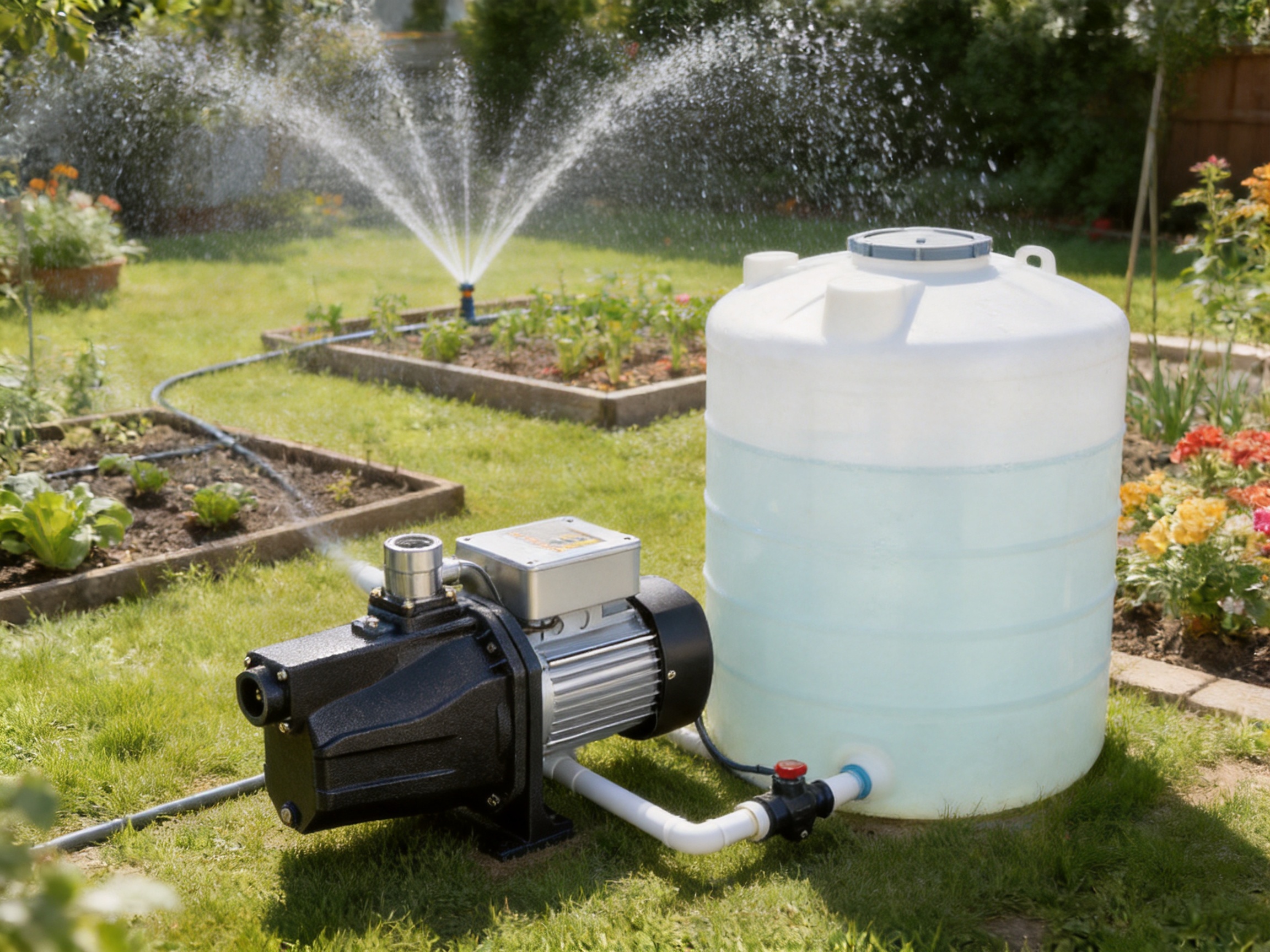
The primary application of the ITJET Series is clean-water irrigation. It can supply water to gardens, lawns, small farms, nurseries, landscape projects, and agricultural plots where a self-priming pressure pump is suitable.
For garden irrigation, the automatic control system allows the pump to respond when a hose, sprinkler, or irrigation valve is opened. Users do not need to remain beside the pump to operate a manual switch. After the watering task is complete, the pump can stop automatically.
For agricultural use, the pump can support irrigation zones supplied from shallow wells, tanks, or reservoirs. The appropriate model depends on the number of outlets, required sprinkler pressure, elevation, pipe layout, and total water demand. A professional installer should calculate system resistance and select the operating point accordingly.
In nursery and greenhouse applications, reliable pressure helps distribute water through multiple lines, provided that the pump’s flow and head capacity match the design. The automatic system can also be integrated into scheduled irrigation routines where water demand follows a defined timetable.
For lawn and landscape irrigation, the pump can support sprinklers and other clean-water distribution devices. Pressure requirements vary significantly between spray heads, rotating sprinklers, drip systems, and micro-irrigation equipment. Filters, regulators, valves, and pipe size should be selected together with the pump.
The ITJET Series is also suitable for domestic water pressurization. It can be used to improve pressure from a storage tank, support household water supply, or provide water to elevated fixtures. Its compact dimensions make it practical for installation in utility spaces, pump rooms, or protected outdoor enclosures.
In hospitality facilities, cafeterias, small guesthouses, and service areas, stable clean-water pressure can improve the performance of faucets, cleaning equipment, and water-using appliances. Automatic operation is valuable in these environments because demand changes throughout the day.
The pump may also support water heaters, solar-energy-related water systems, central air-conditioning equipment, and other clean-water applications requiring pressurization. Before use, the installer must confirm that the water quality, temperature, flow, pressure, electrical supply, and duty cycle are compatible with the equipment.
The maximum liquid temperature is 100 degrees Celsius, while the ambient temperature must remain below 40 degrees Celsius. These limits should be treated as operating boundaries. For regular domestic and irrigation work, the actual water and ambient temperatures should normally remain comfortably below the maximum values.
Correct installation is essential for achieving the expected performance of any self-priming pump. The pump should be placed on a stable, level foundation that can support its weight and minimize vibration. Adequate space should be left around the unit for ventilation, inspection, and maintenance.
The suction line should be as short and direct as practical. Excessive pipe length, sharp bends, undersized pipe, and air leaks can reduce suction performance and increase the time required for priming. All threaded connections should be sealed appropriately, and the suction pipe should be checked for leaks before operation.
A foot valve or suitable check valve can help maintain water in the suction line when the pump stops. This reduces the risk of losing prime and supports faster restarting. The valve should be correctly sized and installed in a position where it remains submerged during operation.
The discharge pipe should be designed according to the required flow and pressure. Unnecessary restrictions can cause pressure loss. Filters, valves, pressure regulators, and irrigation devices should be selected so that their combined resistance does not exceed the pump’s practical capacity.
Electrical installation should be performed by a qualified professional. The supply voltage, frequency, grounding, protection device, cable size, and control connections must comply with local electrical requirements and the specific pump configuration. The control unit should be protected from direct rain, flooding, and excessive humidity unless the installation arrangement provides suitable protection.
Before starting the pump for the first time, the user should verify that the pump casing is filled, the suction line is ready, all valves are positioned correctly, and the water source is available. Operating a pump without water should be avoided even when dry-running protection is included.
Routine maintenance helps preserve hydraulic performance and extend service life. Users should periodically inspect the suction line, connections, valves, filters, electrical wiring, and pump housing. Any sign of leakage, unusual noise, excessive vibration, overheating, or irregular cycling should be investigated promptly.
Filters should be cleaned when required, particularly in irrigation systems that draw water from tanks, reservoirs, or wells. Blocked filters reduce flow and may force the pump to operate under unfavorable conditions. The water source should also be monitored for sand, mud, debris, or other contaminants that could affect the impeller, seal, or valves.
If the pump is installed in a location subject to freezing temperatures, the system should be drained or protected during periods of non-use. Frozen water can expand and damage the pump body, pipework, and fittings.
The mechanical seal and bearing are wear-related components. Their service life depends on water quality, operating frequency, alignment, temperature, dry-running events, and maintenance conditions. Genuine or correctly specified replacement parts should be used during servicing.
The automatic control system should be kept dry and protected from unauthorized modification. If the pump starts and stops too frequently, the system should be checked for leaks, insufficient pressure, incorrect valve settings, or an unsuitable pressure-control configuration.
Automatic operation can contribute to energy efficiency by limiting pump operation to periods of actual water demand. The pump does not need to run continuously when all valves are closed and the water system has reached the required pressure.
Efficiency also depends on correct pump selection. Selecting a model that is too small may cause continuous operation, inadequate pressure, or failure to satisfy the irrigation system. Selecting a model that is unnecessarily large may increase purchase and operating costs. The best choice is the model that provides the required duty point with an appropriate margin.
Pipe design has a direct effect on energy use. Larger, smoother, and appropriately sized pipes can reduce friction losses. Excessive restrictions, narrow hoses, blocked filters, and poorly designed fittings force the pump to work harder and may reduce delivered flow.
Water-saving irrigation methods can complement the pump’s automatic control. Drip irrigation, zone control, scheduled watering, and moisture-based management can reduce water consumption while allowing the pump to operate in a more predictable manner.
For international buyers, product quality is only one part of a successful purchasing program. Consistent communication, order tracking, procurement planning, documentation, packaging, and cross-border delivery are equally important. The manufacturer has established related import and export companies to provide procurement and foreign-trade services for customers.
This one-stop approach can benefit distributors that purchase several categories of pumps or related water-system products. Instead of coordinating with multiple unrelated suppliers, buyers may be able to plan a broader product range through an organization familiar with pump specifications, packaging requirements, shipping arrangements, and market applications.
The company’s global export orientation also supports product adaptation to different commercial environments. Importers may require specific labeling, packaging, documentation, electrical configurations, or spare-parts arrangements. These matters should be confirmed before an order is placed, but an experienced export manufacturer is better positioned to coordinate them.
For project contractors, the availability of multiple pump categories can simplify system planning. A supplier with knowledge of deep-well pumps, submersible pumps, booster pumps, circulation pumps, solar pumps, and accessories can help customers evaluate different solutions according to source depth, pressure demand, energy availability, and installation conditions.
Homeowners typically value automatic operation, compact size, reliable pressure, and simple installation. The ITJET Series addresses these priorities through its integrated control system, one-inch connections, and range of power options.
Farmers and gardeners generally need dependable water delivery, strong suction performance, and protection against changing water availability. The self-priming jet design, 9.5-meter maximum suction rating, water-scarcity protection, and automatic restart function are relevant to these requirements.
Contractors and system integrators need predictable technical data and a product range that can be matched to different project sizes. The four model options provide a clear progression in power, flow, and head while maintaining a common compact format.
Distributors and wholesalers need products that can be explained easily to end users. The ITJET Series has a clear application profile: automatic clean-water pressure boosting and self-priming pumping for irrigation, domestic water supply, and related applications.
Industrial and commercial buyers may prioritize durability, component quality, supplier reliability, and after-sales support. The cast-iron hydraulic structure, aluminum motor housing, PPO impeller, silicon-carbide mechanical seal, and manufacturer’s integrated production capabilities provide a foundation for these purchasing considerations.
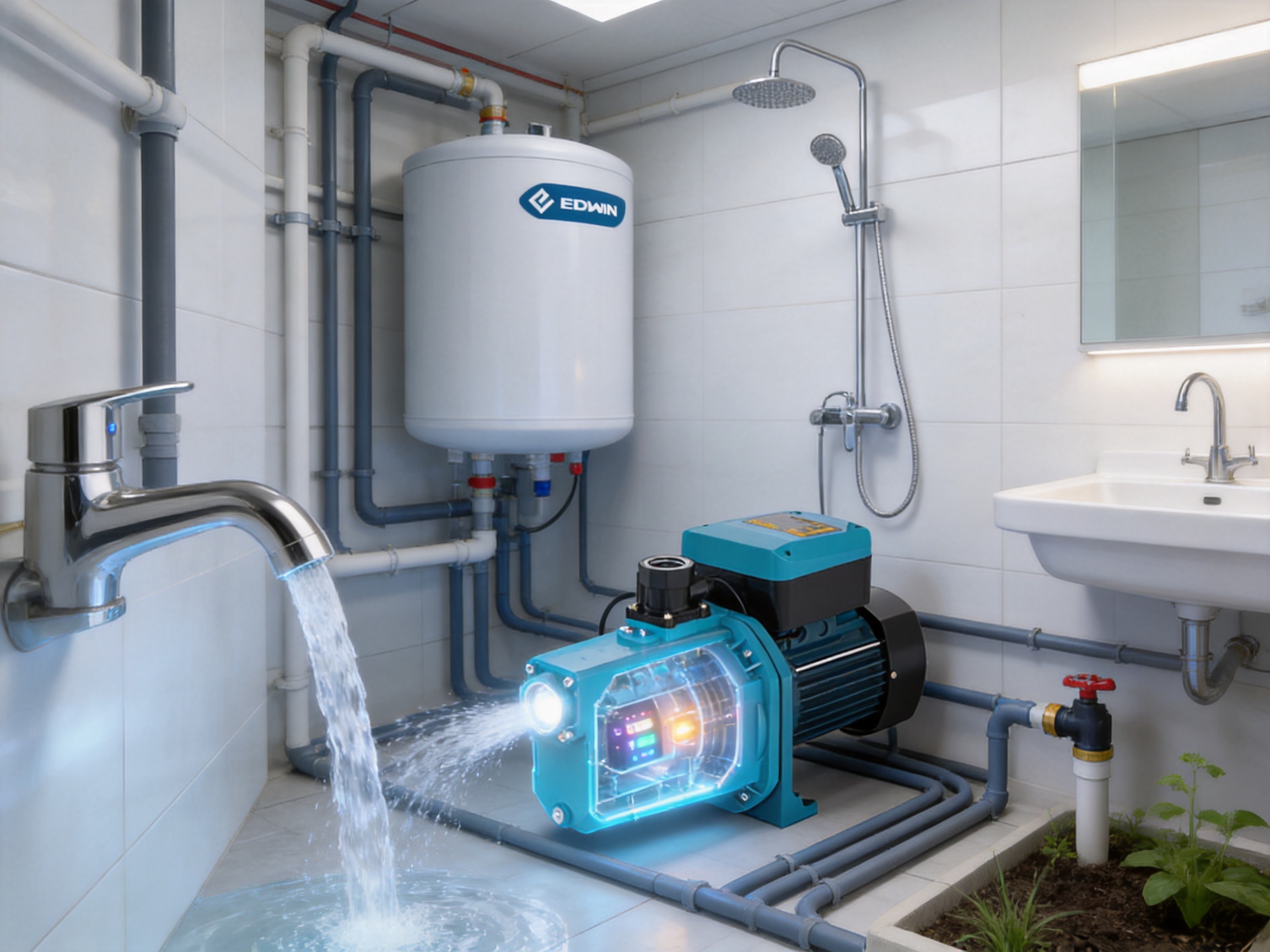
It is an automatic self-priming JET pump designed for clean-water irrigation, domestic water supply, and pressure-boosting applications. It combines a jet hydraulic system with a linear pressure sensor and flow-control system.
The maximum suction rating is 9.5 meters. Actual performance depends on pipe design, air tightness, water temperature, altitude, valve condition, and the difference between the pump and water level.
Yes, it can be used for suitable shallow-well applications when the water is clean and the actual suction lift remains within the rated limit. The suction line must be correctly installed and properly primed.
The ITJET-1500A/B provides the highest listed maximum head at 48 meters. It has a power rating of 1,500 W, a maximum flow of 4.0 cubic meters per hour, and a maximum suction rating of 9.5 meters.
The ITJET-550A/B or ITJET-750A/B may be suitable for a small garden, depending on the sprinkler type, pipe length, elevation, and number of outlets. The system should be assessed according to its actual flow and pressure requirements.
Yes. The linear pressure sensor detects pipeline pressure changes, while the flow-control system helps identify water demand. The pump can start when water is required and stop when demand ends.
The pump includes water-scarcity protection designed to protect against dry-running conditions. It can also automatically initiate operation when water returns, subject to correct installation and operating conditions.
Yes, it is designed for pressurized clean-water applications such as garden and agricultural irrigation. The sprinkler system must be selected so that its required flow and pressure are compatible with the pump’s actual operating point.
The pump body and support are made from cast iron, the motor housing is aluminum, the impeller is PPO, and the mechanical seal uses silicon carbide. The listed bearing is a 6202 bearing across the stated model range.
The operating condition specifies that the temperature must not exceed 100 degrees Celsius. The ambient temperature must remain below 40 degrees Celsius. Users should also confirm that the intended application is suitable for the pump and seal configuration.
The product includes an integrated control system based on a linear pressure sensor and flow control. An external pressure switch is generally not required for the standard automatic operating function, but system-specific accessories may be needed for certain installations.
The suction line should be airtight and correctly sized, and a suitable foot valve or check valve should be installed when appropriate. The pump casing and suction line should be filled before initial operation.
The product is designed for clean-water pressurization. Water containing sand, mud, solids, or abrasive particles may damage the impeller, mechanical seal, valves, or other components. Filtration and water-quality assessment are recommended where necessary.
Inspect the system for leaks, incorrect valve settings, insufficient pressure, blocked filters, air entering the suction line, or an unsuitable control configuration. Frequent cycling may also indicate that the pump does not match the system demand.
A manufacturer with experience in research and development, mass production, pump assembly, intelligent controls, and international export can provide better consistency across product design, production, documentation, packaging, and customer support.
Begin by identifying the water source and measuring the vertical distance between the water level and the pump. Confirm that the actual suction lift is within 9.5 meters and allow for practical losses in the suction line.
Next, calculate the required flow rate. Consider the number of irrigation outlets, fixtures, sprinklers, or appliances that may operate at the same time. If several outlets operate simultaneously, their combined flow demand must be considered.
Then calculate the required total head. This includes elevation, pressure required at the outlet, friction losses in pipes and fittings, and losses through filters, valves, regulators, and irrigation equipment.
Compare the required duty point with the performance curve for the selected model. Maximum head and maximum flow are not normally achieved at the same time. The pump should be selected according to the performance at the actual required flow, not only the headline maximum values.
Finally, confirm the electrical supply, installation environment, water temperature, ambient temperature, pipe connections, protection requirements, and maintenance access. A qualified technician or system designer should review the installation for larger or more complex projects.
The ITJET Series Automatic High-Pressure Jet Water Pump provides a balanced solution for clean-water irrigation, domestic pressurization, garden watering, shallow-well pumping, hospitality facilities, cafeterias, and equipment-support applications. Its self-priming jet structure helps draw water from suitable sources below the pump, while its high-pressure performance supports demanding small and medium-sized water systems.
The product’s main advantage over basic competitors is the integration of hydraulic performance with intelligent automatic control. The linear pressure sensor, double control system, microprocessor memory, water-scarcity protection, automatic restart, timing function, and temperature protection provide a more complete operating solution than a simple manually controlled pump.
The four-model range makes it possible to select power from 550 W to 1,500 W, maximum head from 40 to 48 meters, and maximum flow from 3.0 to 4.0 cubic meters per hour. The common one-inch connections and compact dimensions support straightforward system planning and installation.
Material selection further supports long-term service. Cast iron provides a robust hydraulic structure, aluminum reduces motor-housing weight, PPO supports lightweight impeller construction, and silicon carbide contributes to mechanical-seal wear resistance. These components are brought together through an integrated manufacturing operation that includes product development, mass production, assembly, testing, and export support.
For users seeking an automatic pump that can provide strong pressure, self-priming capability, intelligent protection, and practical installation flexibility, the ITJET Series is a competitive choice. Correct pump selection, professional installation, clean water, and routine maintenance remain essential for achieving reliable performance throughout the product’s service life.
1. Product technical data and operating information for the ITJET Series Automatic High-Pressure Jet Water Pump.
2. Manufacturer-provided component and material specifications for the ITJET-550A/B, ITJET-750A/B, ITJET-1100A/B, and ITJET-1500A/B models.
3. General engineering principles for self-priming centrifugal and jet pump installation.
4. General guidance on irrigation system pressure, flow calculation, pipe friction, and pump selection.
5. General maintenance practices for clean-water pumps, mechanical seals, bearings, suction lines, and automatic pressure-control systems.
edwina@edwin-pump.com
+86-13586290903 (WhatsApp)
Xuri Gongliang Cutting Tool Entrepreneurship Park, Wenqiao Town, Wenling City, Taizhou City, Zhejiang Province, China

High Performance Smart Pump Factory


 English