
edwina@edwin-pump.com

View All Products
en
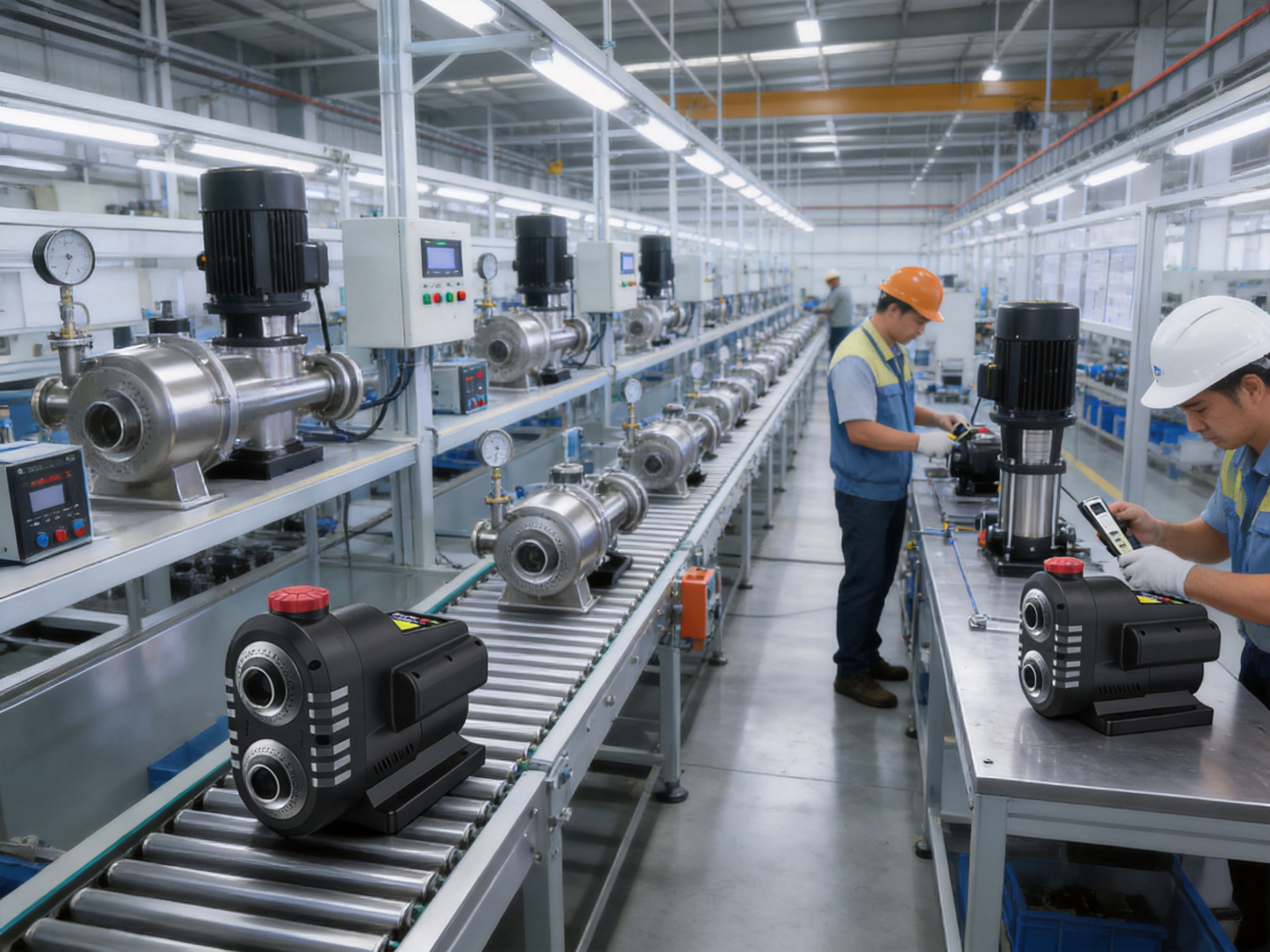
Modern residential and light commercial water systems require more than simple water transfer. Users expect stable pressure at showers, faucets, washing machines, irrigation points, and other outlets, even when demand changes throughout the day. A pump that runs at one fixed speed may provide acceptable performance under one operating condition but become inefficient, noisy, or unstable when several outlets open or close. The HPF Series FOC Technology Stainless Steel Efficient Constant Pressure Permanent Magnet Booster Pump is designed to address these challenges through intelligent speed control, permanent magnet motor technology, stainless steel wetted components, and integrated pressure management.
The HPF Series belongs to the multistage intelligent booster pump category. It is developed for domestic water boosting, residential water supply, small commercial facilities, and applications that need consistent pressure without the complexity of a large traditional booster set. Available in the HPF204 and HPF204H configurations, the series provides power ratings from 550 W to 650 W, maximum flow rates from 4.8 to 5.0 m³/h, rated heads from 22 to 30 m, and maximum heads from 28 to 40 m.
At the heart of the design is a permanent magnetic synchronous motor combined with insensitive field-oriented control, commonly known as FOC technology. This control method allows the motor to respond smoothly to changing water demand. Instead of operating continuously at full speed, the pump can adjust its output according to pressure requirements. The result is more stable water delivery, lower energy consumption during partial-load operation, and a more comfortable acoustic environment.
Manufactured by Taizhou Edwin Electric Co., Ltd., the HPF Series reflects the company’s focus on high-performance water pumps, intelligent technology, independent research and development, mass production, and international supply. The company has developed pump products for domestic, agricultural, municipal, industrial, construction, HVAC, and new energy applications. Its experience across these fields supports the development of compact and reliable intelligent booster equipment for global customers.
Water consumption in a building is rarely constant. A household may use one faucet in the morning, several bathrooms during peak hours, a washing machine later in the day, and an outdoor irrigation system in the evening. In a small commercial building, demand can fluctuate even more sharply. A pump must therefore respond to changing flow requirements while maintaining a comfortable pressure level.
Traditional fixed-speed booster pumps generally operate according to a simple start-and-stop principle. When the pressure drops below a preset value, the pump starts. When pressure rises above another value, it stops. This approach can produce noticeable pressure fluctuations, repeated motor starting, water hammer, and unnecessary energy consumption. It may also cause discomfort when users experience a sudden change in water flow during bathing or washing.
The HPF Series uses a constant-pressure control system designed for home water supply. Industrial-grade pressure sensors continuously monitor system conditions, while the intelligent controller adjusts motor speed. When demand is low, the pump can reduce its operating speed. When several outlets require water, the motor increases speed to maintain the desired pressure. This variable-response operation helps provide a more consistent water experience across different usage conditions.
Constant-pressure operation also supports equipment protection. Reducing repeated full-speed starts can lower mechanical and electrical stress on the motor. Smoother acceleration and deceleration may help reduce pressure shocks in the piping system. The integrated check valve structure further contributes to system stability by helping prevent reverse flow and water hammer.
The HPF Series uses a permanent magnetic synchronous motor rather than a conventional induction motor. Permanent magnet motors can achieve high efficiency because the rotor produces its magnetic field without requiring the same type of rotor excitation losses associated with many traditional motor designs. This is particularly beneficial when the pump operates for extended periods or spends significant time at partial load.
The motor is matched with intelligent electronic control so that the available power is used more effectively. In practical operation, the system does not simply run at one fixed speed regardless of demand. It adjusts the motor’s performance according to the pressure feedback from the water system. This combination of motor design and control logic supports efficient operation without sacrificing pressure stability.
Permanent magnet technology can also contribute to a compact power unit. For applications where equipment-room space is limited, a smaller and more efficient drive system is valuable. The compact arrangement of the HPF Series makes it suitable for residential pump rooms, utility spaces, technical cabinets, and light commercial installations where a large conventional booster set may be excessive.
Field-oriented control is a vector-based motor control method that regulates torque and magnetic flux more precisely than basic on-off or simple variable-frequency control. The HPF Series uses insensitive FOC vector drive technology to manage the permanent magnet motor. This provides smooth motor behavior, accurate speed adjustment, and improved response to changes in system demand.
The term “insensitive” refers to the controller’s ability to operate without depending excessively on complex motor feedback arrangements. This helps simplify the motor system and supports the company’s objective of reducing motor-system maintenance requirements. With fewer wear-prone mechanical feedback components, the design can improve long-term convenience for users and service personnel.
FOC control is especially valuable in constant-pressure applications. A sudden increase in demand can cause the system pressure to fall. The pressure sensor communicates the change to the controller, and the controller adjusts motor speed in a controlled manner. When demand decreases, the pump reduces output rather than continuing to operate at full capacity. This dynamic response is one of the main distinctions between an intelligent booster pump and a basic fixed-speed water pump.
Accurate pressure feedback is essential for constant-pressure control. The HPF Series is equipped with industrial-grade pressure sensors designed to monitor water-system conditions reliably. The use of a Sensata pressure sensor provides a dedicated sensing component for the intelligent control system, allowing the pump to react to pressure changes with greater consistency.
The pressure sensor works together with the controller and display interface. This integrated arrangement allows the system to maintain the target pressure without requiring users to make frequent manual adjustments. It also supports a clearer understanding of operating conditions during installation, commissioning, or maintenance.
Reliable sensing is an important advantage over low-cost booster systems that rely on less precise switches or basic pressure controls. A simple pressure switch may cause wide pressure variation between start and stop points. By contrast, an intelligent sensor-based system can make more frequent and gradual adjustments, creating a smoother water supply for end users.
The HPF Series incorporates a reverse valve structure into the system. The check valve helps prevent water from flowing backward through the pump when the motor stops or when the pressure on the discharge side is higher than the pressure on the suction side.
Reverse flow can create unnecessary movement in the pump and piping system. It can also contribute to water hammer, a pressure shock caused by the sudden change in water velocity. By helping control reverse flow, the integrated check valve supports quieter operation and improved system stability. It also simplifies installation because an important hydraulic control function is incorporated into the pump design rather than requiring a separate external component in every installation.
This integrated approach can save space and reduce the number of connections required around the pump. Fewer external components may also reduce the opportunities for installation errors, although correct pipework, valves, electrical protection, and commissioning procedures remain essential.
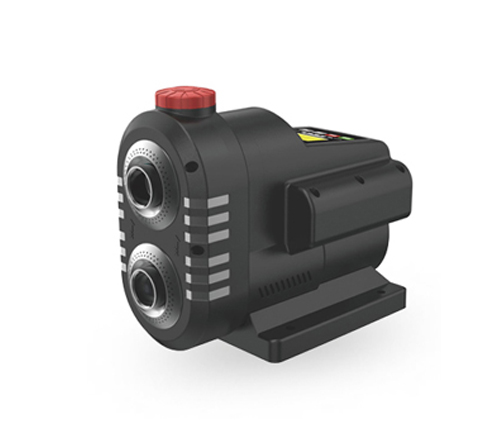
HPF Series FOC Technology Stainless Steel Efficient Constant Presssure Permanent Magnet Booster Pump
Material selection directly influences pump service life, corrosion resistance, maintenance requirements, and water quality. The HPF Series combines an ABS casing with a stainless steel pump body and stainless steel hydraulic components. This construction is intended to provide a balance between lightweight external protection, mechanical strength, and corrosion resistance in the wetted parts.
The external casing is made from ABS material. ABS is widely used in equipment housings because it is relatively lightweight, impact resistant, and suitable for molded protective structures. A well-designed polymer casing can help protect the internal electrical and control components while reducing the overall weight of the unit.
For installers, a lighter pump can be easier to position and handle than a comparable all-metal assembly. The casing also allows the product to maintain a clean and compact appearance in residential or commercial utility areas. The stated protection rating for the sensor is IP54, while the installation environment should still be selected in accordance with the complete equipment requirements and applicable electrical standards.
The pump body and impeller use stainless steel. These components are directly associated with water movement and therefore benefit from corrosion-resistant construction. Stainless steel can help reduce the risk of rust formation in the hydraulic passage compared with ordinary carbon steel components, particularly when the pump is used in normal clean-water applications.
The use of stainless steel is especially important in a constant-pressure pump because the equipment may operate frequently throughout the day. Repeated exposure to water, pressure changes, and varying flow conditions places continual demands on the wetted components. Durable materials help preserve hydraulic performance and reduce the likelihood of corrosion-related maintenance.
The rotor shaft uses 304 stainless steel welding technology. The shaft is part of the rotating assembly and must maintain alignment while transferring motor torque to the pump hydraulics. The stainless steel construction helps protect the shaft from corrosion, while the welded design supports the product’s objective that overwater components should not rust under appropriate operating conditions.
A corrosion-resistant shaft can be advantageous in systems where the pump is installed in humid environments or where long periods of service are expected. It also supports cleaner hydraulic operation by reducing the risk of rust particles entering the water passage. As with any pump, the actual service life depends on water quality, installation conditions, operating temperature, electrical supply, and correct maintenance.
The HPF Series uses a silicon carbide to graphite mechanical seal. The mechanical seal is responsible for limiting leakage along the rotating shaft where it passes between the motor and hydraulic chamber. Silicon carbide offers high hardness and wear resistance, while graphite provides a complementary sealing surface with suitable friction characteristics.
The selected seal combination is intended to support reliable operation under normal clean-water conditions. A high-quality mechanical seal is important because leakage can damage nearby components, reduce efficiency, and create installation or maintenance concerns. Proper pump priming, avoidance of dry running, and operation within the specified performance range remain necessary to protect the seal.
The HPF Series is available in two primary models. Both models use a 1-inch connection size, making them suitable for common domestic and light commercial water-supply layouts. Their differences are mainly related to motor power, maximum flow, rated head, and maximum head.
| Model | Power | Maximum Flow | Rated Head | Maximum Head | Connection Size |
|---|---|---|---|---|---|
| HPF204 | 550 W | 4.8 m³/h | 22 m | 28 m | 1 inch |
| HPF204H | 650 W | 5.0 m³/h | 30 m | 40 m | 1 inch |
The HPF204 is appropriate where the installation requires moderate pressure boosting and a maximum head of approximately 28 meters. It offers a maximum flow of 4.8 m³/h and a rated head of 22 meters. This configuration may suit smaller homes, apartments, garden water systems, and light-duty service points where the pressure requirement is moderate.
The HPF204H provides a higher pressure range. With 650 W of power, a rated head of 30 meters, and a maximum head of 40 meters, it is better suited to taller buildings, longer pipe runs, more demanding shower systems, or applications with greater elevation and friction losses. Its maximum flow is 5.0 m³/h.
Model selection should not be based only on maximum head or maximum flow. A qualified installer should consider the required flow at the actual operating point, static elevation, pipe length, pipe diameter, fittings, inlet conditions, water temperature, and the number of outlets that may operate simultaneously. The performance curve should be consulted to confirm that the selected model can provide the required flow and pressure together.
Maximum head is the theoretical pressure capability at very low or zero flow. It does not mean that the pump can provide maximum flow at maximum head at the same time. The rated head is a more useful reference for normal selection, but the final operating point must always be checked against the pump curve and system curve.
The most visible advantage of the HPF Series is its ability to maintain a more stable pressure than a conventional fixed-speed start-and-stop pump. Users can benefit from a smoother flow when taps open, showers operate, or household appliances draw water. This is particularly valuable in homes where comfort and predictable water delivery are important.
A fixed-speed pump may consume nearly the same amount of energy whether the system requires a small flow or a high flow. The HPF Series can reduce motor speed when demand falls, allowing the pump to match output more closely to actual requirements. This can reduce wasted energy during low-demand periods and support lower operating costs over the equipment’s service life.
The exact energy savings depend on the operating schedule, pressure setting, pipe system, water demand, and electricity tariff. Nevertheless, variable-speed operation generally provides a stronger efficiency opportunity than continuous full-speed operation, especially in systems with frequent changes in demand.
Smooth speed adjustment can reduce the shock associated with repeated abrupt starts and stops. The motor, pump stages, bearings, shaft, seals, and piping system may all benefit from a more controlled operating pattern. Lower mechanical stress can support longer service intervals and improve overall system reliability.
The integrated check valve structure helps limit reverse flow and contributes to the reduction of water hammer. This is an advantage over basic booster pumps that may require several external valves and accessories to achieve comparable hydraulic control. A quieter and more stable pipe system is particularly beneficial in homes, hotels, offices, and other occupied buildings.
The permanent magnet motor and FOC control system are designed to deliver smooth running behavior. Reduced vibration and controlled acceleration can create a more comfortable acoustic environment than a basic pump that starts at full speed. Quiet operation is important when the equipment is installed near bedrooms, kitchens, offices, or other occupied spaces.
The stainless steel pump body, impeller, and 304 stainless steel welded shaft provide a stronger corrosion-resistant foundation than ordinary painted steel hydraulic components. This is a practical advantage in humid pump rooms and in clean-water installations where long-term appearance and reliability matter.
By combining the motor, intelligent controller, pressure sensor, display interface, and check valve structure into one coordinated product, the HPF Series can reduce the need for a complicated external control cabinet. A compact integrated system simplifies the equipment layout and can make installation more convenient when space is limited.
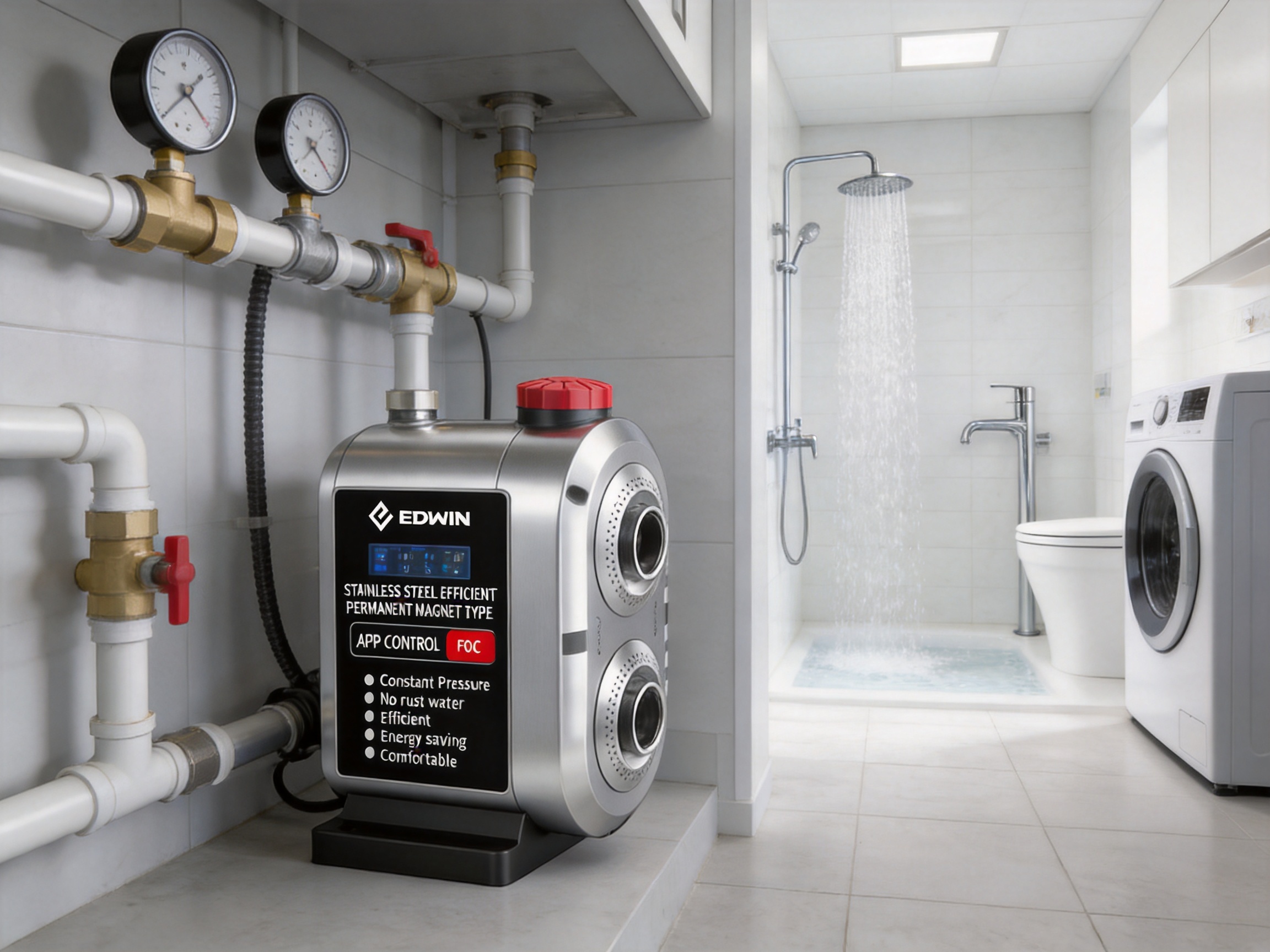
The HPF Series supports an ICD display human-machine interface. The interface is designed to make operation simple and to provide users or installers with a clearer way to interact with the pump. A readable control interface is particularly important in intelligent equipment because it allows operating parameters and system conditions to be reviewed without relying entirely on external instruments.
During commissioning, the interface can help installers check the pump’s status and confirm that the system is responding correctly to pressure demand. During routine service, it can support faster identification of operating conditions. Simple controls also make the product more accessible to residential users who may not have extensive technical experience.
The value of an integrated interface is not limited to appearance. It connects the electronic control system with the practical needs of the user. When the display, pressure sensor, motor controller, and pump hydraulics are designed as one system, the equipment can deliver a more coordinated operating experience than a collection of separate components.
Taizhou Edwin Electric Co., Ltd. was founded in 2008 and operates as an integrated manufacturing enterprise focused on independent research and development, mass production, and global export. Its product development experience covers deep well pumps, submersible pumps, domestic booster pumps, circulation pumps, solar water pumps, intelligent booster pumps, and related water-pump products.
This broad product portfolio provides useful technical knowledge across different hydraulic conditions. Deep well and submersible pump development requires attention to motor protection, sealing, water immersion, and long-distance lifting. Booster pump development requires accurate pressure control, smooth speed regulation, compact packaging, and comfortable operation. Experience in multiple pump categories can support more complete design decisions when developing intelligent water-supply equipment.
The HPF Series is not simply a stainless steel pump with an electronic switch added externally. Its performance depends on the coordinated design of the permanent magnet motor, FOC controller, pressure sensor, hydraulic stages, mechanical seal, check valve, and user interface. This type of integration requires cooperation between electrical engineering, motor design, hydraulic design, software control, materials selection, and production quality management.
Integrated development can improve product consistency because the motor and controller are selected and tuned for the pump hydraulics. The pressure control logic can be matched to the actual performance characteristics of the pump. The mechanical arrangement can be designed around the intended installation format rather than assembled from unrelated components.
Mass production is valuable when it is supported by standardized processes and effective quality control. Consistent manufacturing helps ensure that pump bodies, impellers, shafts, seals, motors, sensors, and electronic assemblies meet repeatable specifications. This matters to distributors, system integrators, contractors, and end users who need predictable product performance across multiple orders.
For international customers, production consistency also supports spare-parts planning and service management. When the same model is manufactured according to controlled procedures, replacement components and technical support can be organized more effectively. This is especially important for projects involving multiple buildings, residential developments, agricultural facilities, or commercial installations.
The company is located in Wenling, Taizhou, Zhejiang Province, an area known for pump and electrical equipment manufacturing. Access to an established industrial supply chain can support the sourcing of motors, castings, stainless steel components, electronic controls, sensors, seals, packaging, and other parts needed for pump production.
A developed manufacturing ecosystem can also improve response speed during product development and production planning. Close cooperation with component suppliers may assist in material verification, technical adjustments, quality improvement, and the development of new pump technologies. For global buyers, this industrial foundation can strengthen supply stability and support one-stop procurement.
The company’s stated commitment to quality, innovation, and high-performance water pumps is reflected in the technical configuration of the HPF Series. Stainless steel wetted parts, a permanent magnetic synchronous motor, industrial-grade pressure sensing, an integrated check valve, and FOC vector control are all selected to address practical requirements in modern water supply.
Quality should be evaluated as a complete system rather than by one material or one specification. A durable pump requires suitable hydraulic design, correct motor sizing, reliable electronics, effective sealing, stable sensors, accurate assembly, and appropriate testing. The HPF Series brings these elements together in a product intended for consistent daily operation.
The HPF Series is designed to improve water pressure in houses, apartments, villas, and other residential properties. It can support showers, kitchen faucets, bathroom fixtures, washing machines, and other domestic outlets. Constant-pressure control is especially helpful when several water points are used at different times throughout the day.
In a multi-story home, the higher-head HPF204H may be considered where elevation and pipe losses reduce pressure at upper-floor outlets. In a smaller residence with moderate demand, the HPF204 may provide a suitable balance between pressure capability and power consumption. Final selection should be based on the actual hydraulic calculation rather than building size alone.
Offices, small hotels, guesthouses, restaurants, clinics, and retail buildings may require stable water pressure without the cost and space requirements of a large commercial booster set. The HPF Series can provide an intelligent solution for applications with moderate and variable demand.
Quiet running is beneficial in commercial environments where customers, guests, or employees are nearby. The compact construction can also simplify installation in service rooms or utility areas. For larger buildings or systems with highly variable demand, multiple pumps or a larger commercial multistage system may be more appropriate.
The pump can also be considered for garden water supply and small irrigation systems where a stable pressure is needed for sprinklers, hose outlets, or automated irrigation zones. The variable-speed design can help accommodate different flow conditions as irrigation valves open and close.
When used in irrigation, the water source must be clean enough for the pump’s hydraulic design, and suitable filtration may be needed. Installers should also verify that the pump’s pressure range is compatible with the sprinkler heads, drip lines, valves, and control equipment.
During building renovation, pressure problems may occur because of extended piping, added bathrooms, or changes in the water distribution layout. An intelligent booster pump can help improve pressure without replacing the entire water system. The HPF Series may be suitable where the required capacity falls within its performance range and where the pump can be installed with proper inlet conditions.
Correct installation is essential for achieving the advertised performance and service life of any booster pump. The pump should be installed by qualified personnel who understand hydraulic and electrical requirements. Pipework should be sized appropriately, supported independently, and arranged to avoid unnecessary stress on the pump connections.
The water source must provide adequate inlet conditions. Excessive suction lift, restricted inlet piping, clogged filters, or inadequate water supply can cause poor performance, noise, vibration, or cavitation. The pump should not be operated dry. Before startup, the hydraulic chamber and suction line should be prepared according to the installation instructions.
The 1-inch connection size should be matched with suitable valves, unions, filters, and pipe fittings. Excessive reductions in pipe diameter can increase friction losses and limit the available flow. Where a filter is installed, it should be selected for the expected water quality and maintained regularly to prevent blockage.
Electrical installation should include appropriate overload protection, grounding, supply verification, and environmental protection. The pump should be protected from flooding, excessive humidity, extreme temperatures, chemical exposure, and conditions outside the specified operating range. The IP54 specification associated with the pressure sensor should not be interpreted as permission to immerse the complete pump or control system.
After installation, the system should be checked for leaks, correct rotation or electronic operation, stable pressure response, abnormal vibration, and proper stopping behavior. The pressure setting should be adjusted to match the building’s requirements. Excessively high pressure can increase energy use and place unnecessary stress on fixtures and piping.
The HPF Series is designed to reduce motor-system maintenance through its insensitive FOC technology, but no pump is completely maintenance-free under all conditions. Routine inspection remains important. Users should periodically check for leakage, unusual noise, vibration, pressure instability, blocked filters, and changes in flow performance.
The mechanical seal should be protected by preventing dry running and ensuring that the pump operates with appropriate water quality. Abrasive particles, excessive sediment, aggressive chemicals, or water temperatures beyond the intended range may shorten the life of the seal and hydraulic components. Where water quality is uncertain, filtration and a professional application review are recommended.
Stainless steel components can resist corrosion effectively in many clean-water applications, but stainless steel is not immune to every chemical environment. Chlorides, acidic liquids, abrasive media, and unsuitable water chemistry may affect service life. The HPF Series should therefore be applied primarily to suitable water-supply duties unless the manufacturer confirms compatibility with another liquid.
Electronic components should be kept dry and protected from unstable power conditions. If the pump displays an abnormal condition, users should first verify the water supply, valves, filter, electrical source, and pipework before restarting repeatedly. Frequent fault resets without identifying the cause may increase the risk of damage.
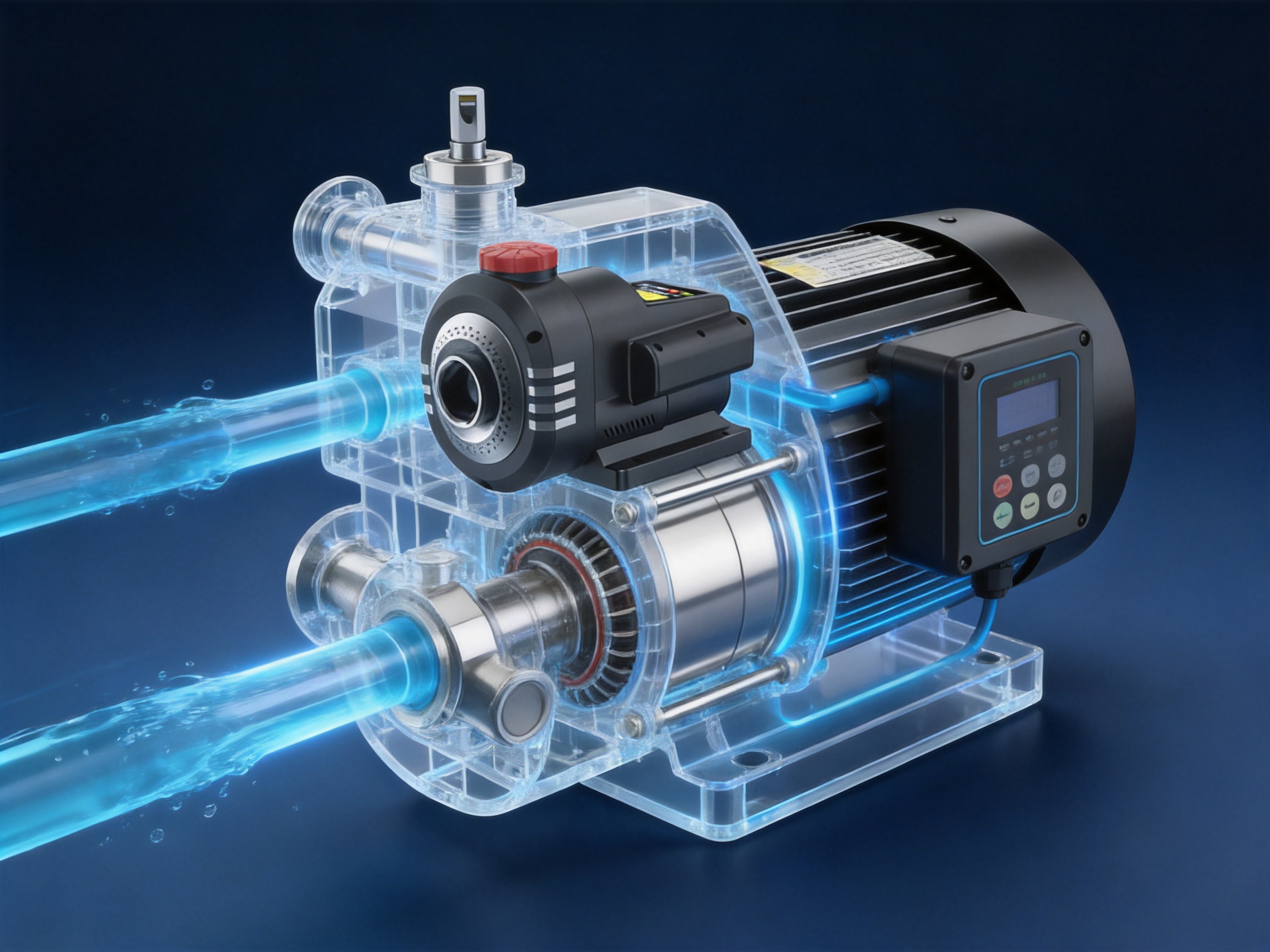
For international buyers, product performance is only one part of the purchasing decision. They also require stable supply, responsive communication, order coordination, documentation, packaging, and delivery support. Taizhou Edwin Electric Co., Ltd. has developed export experience and provides products for customers in the global market.
Through associated import and export service companies established in 2012, the business has built a professional team for procurement planning, order tracking, cross-border delivery, and foreign trade services. This structure is intended to support customers seeking one-stop procurement rather than purchasing individual pump components from multiple sources.
The company’s pump products are used in new energy projects, agricultural irrigation, municipal engineering, mining, construction, HVAC systems, and household water supply. Although the HPF Series is focused on residential and light commercial pressure boosting, experience in these broader applications helps the manufacturer understand different project requirements, delivery schedules, technical documents, and installation environments.
For distributors and project contractors, a focused product category can make product training, inventory planning, and after-sales service more manageable. The two-model HPF configuration also provides a straightforward starting point for selecting a moderate-pressure or higher-pressure option. Additional technical confirmation should be requested for projects involving unusual water quality, large simultaneous demand, special voltage requirements, or multiple-pump operation.
Compared with a standard fixed-speed booster pump, the HPF Series offers more intelligent control and better adaptation to changing demand. The fixed-speed alternative may be simpler in basic applications, but it commonly depends on larger pressure fluctuations and more frequent on-off cycling. The HPF Series is designed to provide a smoother and more comfortable pressure experience.
Compared with a conventional induction-motor variable-speed pump, the permanent magnet motor can offer an efficiency advantage when properly controlled, particularly at partial load. The FOC controller is designed to use the motor’s characteristics effectively. The actual difference depends on operating conditions, system design, and control settings, but the technology provides a strong foundation for efficient water boosting.
Compared with a separate pump, pressure switch, external check valve, and independent controller, the HPF Series integrates several functions into one compact unit. This can reduce system complexity and installation space. It may also reduce the number of external components that need to be selected, wired, adjusted, and maintained.
Compared with pumps made primarily from ordinary steel in wetted areas, the stainless steel body, impeller, and welded shaft provide improved resistance to rust in suitable clean-water environments. This contributes to product appearance, water-path cleanliness, and long-term durability.
OEM customers can benefit from a product platform that combines intelligent pressure control with compact pump construction. The HPF Series can be incorporated into residential water-supply packages, prefabricated utility systems, building-service equipment, or branded water-boosting solutions, subject to technical and commercial agreement.
Distributors can position the HPF Series as a higher-value alternative to basic domestic booster pumps. Its permanent magnet motor, intelligent control, industrial-grade pressure sensor, stainless steel wetted construction, and display interface provide clear technical features for product comparison and customer education.
Contractors can benefit from the integrated design when planning installations in restricted spaces. The 1-inch connections are familiar for many domestic water systems, while the model range allows selection according to pressure demand. The pump’s constant-pressure function can also reduce the need to design around wide pressure fluctuations.
Engineering consultants should evaluate the pump using the complete duty point, not only the headline maximum figures. The required flow, total dynamic head, inlet pressure, operating schedule, water quality, ambient conditions, and control strategy should all be reviewed. When correctly selected, the HPF Series can offer a practical balance between intelligent performance, compact size, energy efficiency, and installation convenience.
Begin by identifying the required water outlets and estimating the probable simultaneous flow. The design should distinguish between the total number of outlets in a building and the number expected to operate at the same time. This prevents over-sizing and helps the pump operate closer to its efficient range.
Next, calculate the total head requirement. This should include the desired outlet pressure, vertical elevation, pipe friction, fittings, filters, valves, and any equipment installed downstream. The HPF204 may be suitable for moderate requirements, while the HPF204H should be considered where a higher head is needed.
Then compare the required operating point with the performance curve. Confirm that the selected model can provide the necessary flow at the required head. Avoid selecting a pump solely because its maximum head appears high enough, since maximum head is achieved at minimal flow.
Review the water source and inlet arrangement. The pump requires a reliable water supply and should not be forced to operate against a blocked or undersized suction line. If the source is a tank, confirm that the tank level and inlet configuration provide suitable conditions during the full operating cycle.
Finally, verify electrical, environmental, and maintenance requirements. Confirm the available power supply, protection devices, installation location, drainage, ventilation, and access for service. A properly selected and installed pump will generally perform more reliably than an oversized or poorly matched unit, regardless of its rated capacity.
The development of intelligent booster pumps reflects a wider movement in the water-equipment industry toward higher efficiency, improved user comfort, and more connected control. Customers increasingly expect pumps to consume less energy, operate more quietly, occupy less space, and provide reliable pressure without complicated adjustment.
The HPF Series addresses these expectations through its permanent magnetic synchronous motor, FOC vector drive, pressure sensing, display interface, corrosion-resistant materials, and integrated valve structure. These features demonstrate how motor technology, electronics, hydraulics, and materials engineering can be combined in a practical water-supply product.
Edwin Pump has invested in new energy and intelligent technology since 2018, expanding its portfolio with solar water pumps and intelligent booster pumps. This direction supports the company’s broader goal of developing efficient and high-performance pump solutions for global industrial and domestic users.
As water systems become more automated, intelligent control will continue to influence pump selection. Products that can adapt to demand, reduce unnecessary energy use, and provide clear operating information are likely to become increasingly important in residential construction, renovation, commercial facilities, and decentralized water systems.
The HPF Series is designed to provide stable, consistent water pressure for residential and light commercial applications. It can support domestic water supply, small commercial buildings, garden water systems, and other clean-water applications within its performance range.
FOC means field-oriented control. It is a vector control method that manages motor torque and magnetic flux accurately. In the HPF Series, FOC technology helps the permanent magnet motor adjust speed smoothly according to water demand and pressure feedback.
The documented models are HPF204 and HPF204H. The HPF204 has a 550 W motor, a maximum flow of 4.8 m³/h, a rated head of 22 m, and a maximum head of 28 m. The HPF204H has a 650 W motor, a maximum flow of 5.0 m³/h, a rated head of 30 m, and a maximum head of 40 m.
The HPF204H may be more suitable where the system requires a higher head because of building elevation, longer pipe runs, or greater friction losses. The actual selection should be confirmed through a hydraulic calculation and the pump performance curve.
No. The HPF Series uses intelligent variable-speed control. It adjusts motor speed according to pressure demand rather than running continuously at one fixed speed. This supports stable pressure and can reduce energy consumption during periods of lower demand.
The pump uses an ABS casing, a stainless steel pump body, a stainless steel impeller, a 304 stainless steel welded shaft, and a silicon carbide to graphite mechanical seal. These materials are selected to support durability and corrosion resistance in suitable clean-water applications.
Yes. The HPF Series is equipped with an industrial-grade Sensata pressure sensor. The sensor provides pressure feedback to the intelligent control system, helping the pump adjust its output to maintain a stable water supply.
Yes. The system integrates a reverse valve structure. This check valve helps prevent reverse flow and contributes to the reduction of water hammer when the pump stops or system conditions change.
The stated applications focus on residential and light commercial water supply. The pump should be used with water quality compatible with its materials, seals, and hydraulic design. Dirty, highly abrasive, chemically aggressive, or sediment-filled water may require filtration, special materials, or a different pump model.
Both listed models use a 1-inch connection size. The complete pipework system should still be designed correctly to avoid excessive friction losses, restrictions, or mechanical stress at the pump connections.
The intelligent motor control is designed to reduce motor-system maintenance, but routine inspection is still recommended. Users should check for leakage, abnormal noise, vibration, blocked filters, pressure changes, and other signs of incorrect operation. Dry running and unsuitable water quality should be avoided.
The HPF Series is manufactured by Taizhou Edwin Electric Co., Ltd., also known as Edwin Pump. The company was founded in 2008 and focuses on research and development, mass production, export, and the supply of multiple water-pump categories.
Yes, the series is intended for residential and light commercial applications. It may be suitable for offices, small hotels, restaurants, clinics, retail buildings, and similar facilities when the required flow and head remain within the model’s performance range.
Stainless steel helps resist rust and corrosion in the wetted parts under suitable water conditions. It can support long-term hydraulic durability and help maintain a cleaner water passage than ordinary carbon steel components.
The HPF Series FOC Technology Stainless Steel Efficient Constant Pressure Permanent Magnet Booster Pump is designed for users who need reliable pressure, efficient operation, compact construction, and reduced maintenance complexity. Its permanent magnetic synchronous motor and insensitive FOC vector drive technology allow the pump to respond intelligently to changing water demand. The industrial-grade pressure sensor, ICD display interface, and integrated check valve further support convenient and stable operation.
The use of an ABS casing, stainless steel pump body, stainless steel impeller, 304 stainless steel welded shaft, and silicon carbide to graphite mechanical seal provides a durable material foundation for clean-water applications. With the HPF204 and HPF204H models, customers can select between moderate-pressure and higher-pressure configurations while maintaining the benefits of intelligent constant-pressure control.
Beyond the product itself, the manufacturer offers experience in pump research and development, mass production, international export, and one-stop procurement services. Its broader product portfolio and investment in intelligent and new-energy technologies demonstrate a commitment to developing efficient water-pump solutions for changing global requirements.
For residential water boosting, small commercial facilities, garden supply, and other suitable applications, the HPF Series provides a modern alternative to conventional fixed-speed booster pumps. Proper model selection, installation, commissioning, and maintenance will help users achieve the best balance of pressure stability, energy efficiency, operating comfort, and long-term reliability.
Taizhou Edwin Electric Co., Ltd. HPF Series Product Technical Data and Performance Information.
Taizhou Edwin Electric Co., Ltd. Product Materials and Core Technology Specifications.
International Electrotechnical Commission. General Principles for Rotating Electrical Machine Efficiency and Performance Evaluation.
Hydraulic Institute. Recommended Practices for Centrifugal Pump Selection, Operation, and Maintenance.
American Society of Mechanical Engineers. Guidance on Pump System Design and Hydraulic Performance.
International Organization for Standardization. General Principles for Quality Management and Manufacturing Process Control.
edwina@edwin-pump.com
+86-13586290903 (WhatsApp)
Xuri Gongliang Cutting Tool Entrepreneurship Park, Wenqiao Town, Wenling City, Taizhou City, Zhejiang Province, China

High Performance Smart Pump Factory


 English