edwina@edwin-pump.com

View All Products
en
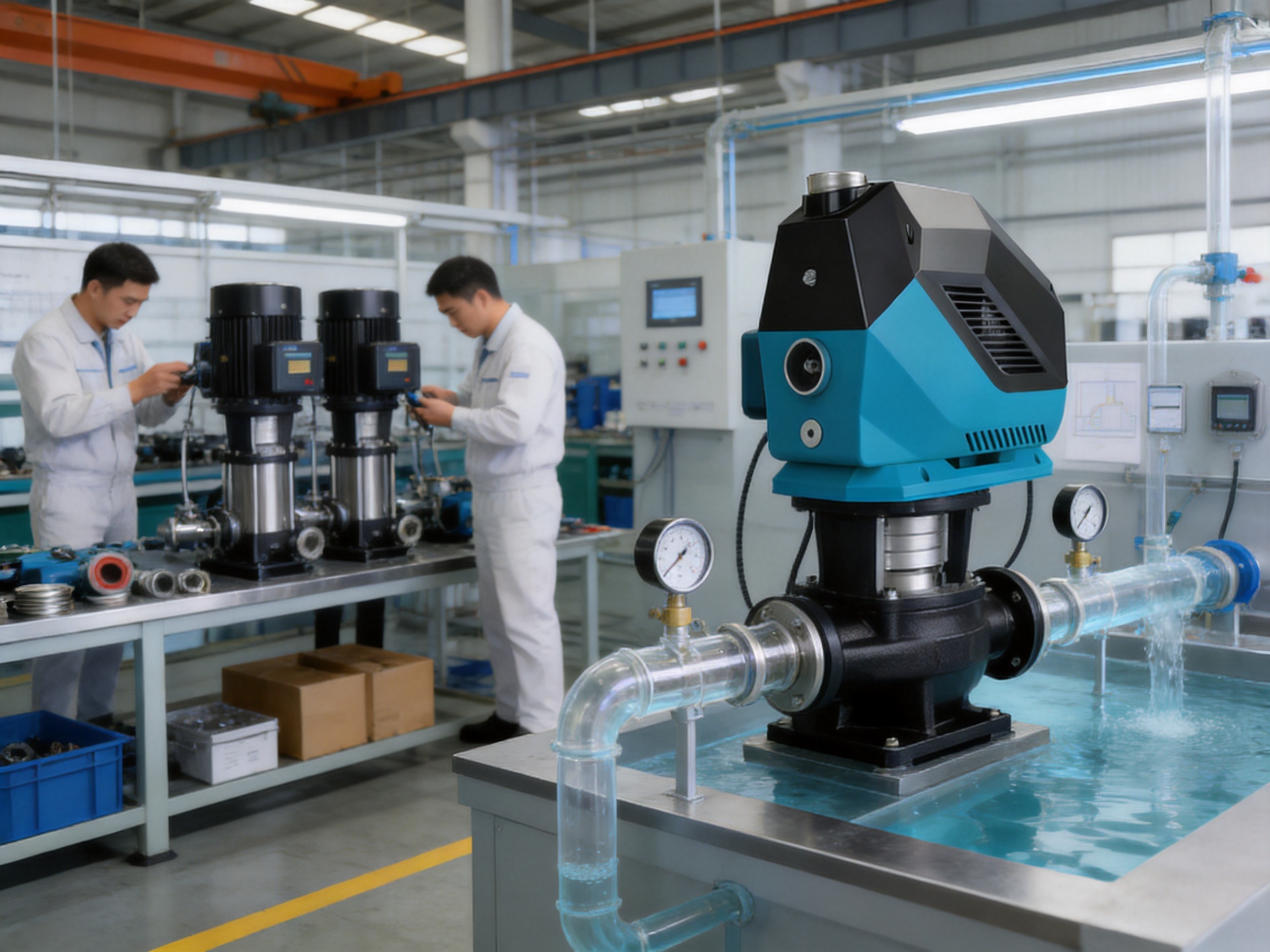
Reliable water pressure is essential in luxury villas, apartments, hotels, clubs, bars, commercial buildings, and other public facilities. As buildings become larger and water demand becomes more variable, traditional fixed-speed pumps often struggle to maintain stable pressure. They may consume excessive electricity during low-demand periods, create uncomfortable pressure fluctuations, generate unnecessary noise, or require frequent manual adjustment. A modern intelligent booster pump offers a more responsive solution by combining automatic control, variable-frequency operation, multistage hydraulic performance, and self-priming capability in one compact system.
The T8-50/60 Household Self-Priming Multistage Intelligent Booster Pump is designed for applications that require dependable pressure, efficient operation, and convenient automatic control. Its permanent magnet frequency-conversion motor adjusts operating speed according to water demand, while its multistage pump structure provides the head required by multi-floor buildings and long distribution lines. The unit also incorporates a smart switch and multiple protection functions, creating a practical water-supply solution for residential and light commercial environments.
This article examines the pump’s technical characteristics, operating advantages, application value, manufacturing strengths, and selection considerations. It also explains how its self-priming structure and intelligent control distinguish it from conventional fixed-speed booster pumps and less advanced pressure systems.
Water consumption in a building rarely remains constant. A household may use several outlets at the same time in the morning, while demand may fall sharply during the day. A hotel can experience short periods of heavy consumption when guests prepare for work or events, followed by relatively low demand. A club, bar, or public facility may need strong water pressure during operating hours but very little flow when closed.
A fixed-speed pump generally operates at one speed regardless of the actual requirement. If the pump is selected for peak demand, it may deliver more flow and pressure than necessary during normal operation. This excess capacity can lead to wasted energy, pressure shocks, increased wear, and a less comfortable user experience. If the pump is selected too conservatively, it may fail to provide sufficient pressure when several outlets operate at the same time.
An intelligent booster pump addresses this mismatch by monitoring system conditions and adjusting motor speed. At low demand, the pump can operate at a reduced speed. When demand increases, the controller raises the operating frequency and pump speed to provide more flow and pressure. This approach helps the system respond more closely to actual water requirements rather than continuously running at maximum output.
The T8 series is particularly suitable for projects in which users expect a combination of strong performance and simple operation. It is intended for various high-class clubs, bars, hotels, large public places, luxury villas, and apartments. These applications often require more than basic water transfer. They require pressure stability, quiet operation, automatic adaptation, reliable protection, and a professional appearance suitable for premium properties.
The T8-50 and T8-60 are household self-priming multistage intelligent booster pump models. Both models use a voltage range of 165–260 volts and a frequency rating of 50 hertz. The T8-50 uses a rated power of 1,500 watts, while the T8-60 uses a rated power of 2,200 watts. Their maximum flow rates are 17.5 cubic meters per hour and 18.5 cubic meters per hour respectively.
The pump combines several technologies that work together. The multistage hydraulic design uses multiple impellers and guide stages to build pressure progressively. The permanent magnet motor provides an efficient drive source, while frequency conversion allows operating speed to change according to demand. The self-priming arrangement helps the pump draw water from a source within its specified suction range. A smart switch manages automatic starting and stopping, while built-in protection functions help safeguard the equipment and connected water system.
In a typical installation, water enters through the suction pipe and passes through the pump stages. Each stage adds energy to the water, enabling the system to produce a high head without requiring an excessively large single impeller. When a downstream outlet is opened, pressure in the delivery line changes. The control system detects the operating condition and adjusts the motor speed to respond. When water demand stops, the pump can stop automatically rather than continuing to run without purpose.
This operating principle gives the pump a significant advantage over simple manual booster arrangements. Users do not need to repeatedly start or stop the motor, and the system can adapt to changing demand without requiring a separate complex control cabinet for ordinary applications.
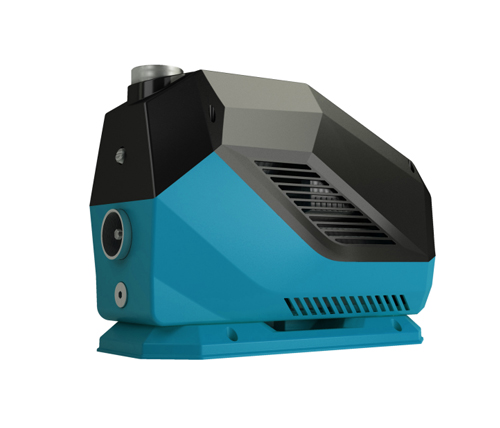
T8-50/60 Household Self-Priming Multistage Intelligent Booster Pump
The following table summarizes the principal technical data for the two available models.
| Model | Voltage | Frequency | Power | Maximum Flow | Maximum Head | Rated Flow | Rated Head | Maximum Suction | Piping |
|---|---|---|---|---|---|---|---|---|---|
| T8-50 | 165–260 V | 50 Hz | 1,500 W | 17.5 m³/h | 70 m | 8 m³/h | 43 m | 8 m | 50 mm |
| T8-60 | 165–260 V | 50 Hz | 2,200 W | 18.5 m³/h | 70 m | 8 m³/h | 49 m | 8 m | 50 mm |
The maximum head indicates the highest pressure-producing capability stated for the pump under the relevant operating condition. The rated head provides a more practical reference for normal design selection at the rated flow of 8 cubic meters per hour. Engineers should evaluate the complete system curve, including static elevation, pipe friction, fittings, valves, and the required pressure at the most distant outlet, before choosing a model.
The T8-50 and T8-60 share the same rated flow and maximum suction specification, but the T8-60 provides a higher rated head and greater motor power. This makes it more appropriate where the water system has greater vertical elevation, longer pipelines, higher friction losses, or a stronger pressure requirement. The T8-50 may be a suitable choice for installations that require reliable pressure boosting without the additional power capacity of the larger model.
The 50-millimeter piping specification provides a relatively large connection size for a household-oriented booster pump. Correct pipe sizing is important because undersized suction or discharge lines can increase friction losses, restrict flow, and reduce overall efficiency. Installation should follow accepted hydraulic practice, with attention to pipe diameter, inlet conditions, valve arrangement, air leakage, and maintenance access.
One of the most important features of the T8 series is its permanent magnet frequency-conversion drive. Unlike a conventional induction motor that normally operates at a fixed speed, a frequency-conversion motor can adjust its speed over a working range. The permanent magnet design can also support efficient conversion of electrical energy into mechanical output.
Variable-frequency operation is valuable because water demand changes continuously. A pump does not need to operate at full capacity when only one small outlet is open. By reducing motor speed under partial demand, the system can lower energy consumption and reduce hydraulic stress. When demand increases, the controller can raise speed to provide the necessary flow and pressure.
The energy benefit of speed control is especially relevant for systems that operate for long hours. In many centrifugal pumping applications, power demand changes significantly with speed. Although actual savings depend on the system curve, operating schedule, pipework, and pressure setting, reducing unnecessary speed can produce meaningful reductions in electricity consumption compared with an always-on fixed-speed pump that relies on throttling or repeated cycling.
Permanent magnet technology can also support a more compact motor arrangement and efficient operation. The motor is designed to produce useful torque with reduced electrical losses under appropriate conditions. When combined with an intelligent controller, this helps the pump achieve the stated goals of low energy consumption, high efficiency, and power saving.
Competitor products based only on fixed-speed motors may appear simple at the time of purchase, but their lifetime operating cost can be higher. They may consume the same amount of power during high-demand and low-demand periods, even though the hydraulic requirement is completely different. A frequency-conversion system is therefore better suited to facilities where demand varies throughout the day.
Stable pressure is one of the primary reasons building owners select an intelligent booster pump. Pressure variation can be frustrating for residents and guests. A shower may suddenly become weak when another tap is opened, or a high-pressure outlet may produce an uncomfortable surge after the pump starts. In commercial facilities, unstable pressure can also affect cleaning equipment, sanitary fixtures, water heaters, and other connected systems.
The T8 series is designed for variable-frequency constant-voltage operation. Its control system responds to water demand and adjusts the pump’s operating condition to help maintain a more consistent pressure level. This does not mean that pressure is completely independent of every installation factor. The final result still depends on pipe design, water-source conditions, pressure settings, elevation, and the number of simultaneous users. However, automatic speed adjustment gives the pump a stronger ability to compensate for changing demand than a conventional fixed-speed unit.
The automatic adaptation function can also reduce frequent start-stop cycling. If a pump starts at full speed each time a small amount of water is needed, the motor and hydraulic components experience unnecessary mechanical and electrical stress. A smart control strategy can make operation more proportional to demand, contributing to smoother performance and potentially extending service life when the equipment is correctly installed and maintained.
For apartments and villas, constant pressure improves daily comfort. For hotels and public venues, it supports a more consistent service experience. For clubs and bars, where water demand may change rapidly, adaptive control can provide the required response without the need for continuous manual supervision.
A multistage pump develops pressure through a series of hydraulic stages. Each impeller and guide assembly contributes part of the total head. This arrangement is well suited to applications that require elevated pressure, such as multi-floor buildings, long distribution systems, water transfer between tanks, and pressure boosting at points where municipal supply is insufficient.
Compared with a single-stage pump of similar general size, a multistage design can provide a higher head in a controlled and efficient package. The progressive pressure increase through the stages can also support stable performance over a broad operating range when the hydraulic components and motor are properly matched.
The T8-50 offers a rated head of 43 meters at a rated flow of 8 cubic meters per hour, while the T8-60 offers a rated head of 49 meters at the same rated flow. Both models list a maximum head of 70 meters. These values indicate that the product is intended for more demanding pressure applications than ordinary low-head transfer pumps.
Multistage construction can be particularly beneficial in luxury villas and apartments with several floors. In such buildings, the pump must overcome elevation as well as friction loss in the piping. A pump that provides adequate flow but insufficient head may leave upper floors with poor pressure. The multistage arrangement helps address this requirement while keeping the system practical for building-scale installation.
Commercial users should not select a pump only by looking at the maximum head. Maximum values are useful for understanding the upper performance boundary, but the pump must operate near a suitable point on its performance curve. A professional selection process should compare expected flow and total dynamic head with the manufacturer’s performance data and should consider whether several outlets will operate simultaneously.
Self-priming capability is another important advantage of the product. A self-priming pump is designed to remove air from the suction line and establish water flow under appropriate installation conditions. This can simplify applications where the pump is positioned above the water source or where air may enter the suction pipe during normal operation.
The T8 series specifies a maximum suction of 8 meters. This value should be understood as a stated operating limit rather than a guarantee that every installation will achieve the same result. Actual suction performance depends on atmospheric pressure, water temperature, suction-pipe length and diameter, pipe condition, air tightness, foot-valve arrangement, elevation above sea level, and the condition of the water source.
Self-priming construction can reduce the inconvenience associated with manual priming. Conventional non-self-priming pumps may require the suction line and pump chamber to be filled before each start or after an interruption. If the water level changes or the suction line drains, the pump may fail to restart without assistance. An automatic self-priming system is more convenient for residential and commercial installations where users expect unattended operation.
Proper installation remains essential. The suction line should be airtight, appropriately sized, and laid to avoid unnecessary high points where air can accumulate. The pump should be positioned on a stable foundation, and the water source should contain suitable filtration if debris could enter the hydraulic system. Self-priming capability improves convenience, but it does not eliminate the need for correct system design.
Noise is a major consideration in residential properties, hotels, office buildings, and premium public venues. A pump located near bedrooms, living areas, guest rooms, or entertainment spaces can become a source of complaints if it produces strong vibration or repeated impact noise.
The T8 product concept emphasizes high efficiency and low noise. Variable-frequency operation can help reduce noise during periods of low demand because the motor does not need to operate continuously at maximum speed. Smooth speed adjustment may also reduce abrupt hydraulic changes associated with repeated full-speed starting.
Noise performance depends on more than the motor itself. The quality of the foundation, alignment of the pipework, use of flexible connectors where appropriate, valve selection, water turbulence, and building acoustics all influence the final sound level. Even a quiet pump can transmit vibration if it is mounted on a weak platform or connected to rigid pipes that act as sound conductors.
When properly installed, the combination of efficient motor control, multistage hydraulic operation, and automatic adaptation can create a more comfortable environment than a basic fixed-speed booster system. This is particularly valuable in luxury villas, hotels, clubs, and apartments where quiet operation is part of the expected level of service.
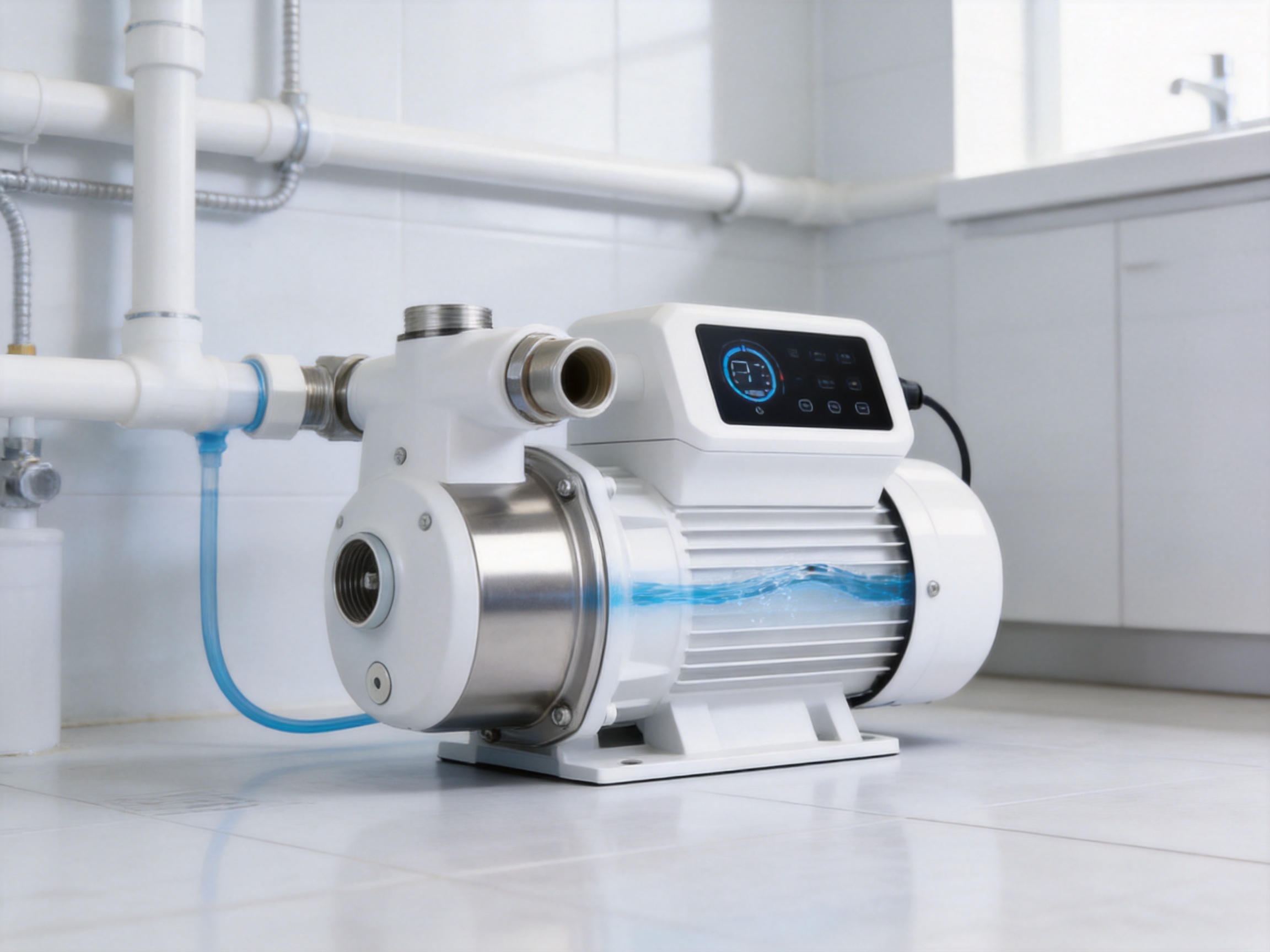
Water pumps operate in changing conditions. A supply tank may become empty, a valve may be closed accidentally, a pipe may leak, voltage may fluctuate, or the motor may experience an abnormal load. Multiple protection functions help reduce the risk of damage caused by these conditions and improve operational safety.
The product description identifies multiple protections designed to safeguard the equipment. Depending on the specific controller configuration and installation, protective functions may address conditions such as dry running, overload, abnormal operation, excessive current, voltage variation, or repeated cycling. Users and project engineers should confirm the exact protection list and control behavior for the selected configuration before final installation.
Protection is valuable for both the pump and the building’s water system. A dry-running pump can suffer from overheating, seal damage, and accelerated wear. Overload protection can help prevent prolonged operation outside the intended working range. Automatic shutdown during abnormal conditions can limit the consequences of a blocked line or a supply interruption.
It is important to recognize that electronic protection does not replace good engineering practice. The pump should be connected to a suitable electrical supply with appropriate grounding and protective devices. Pipework should include the required isolation valves, check valves, filters, drains, and pressure-related components. Routine inspection should verify that the suction source, wiring, seals, and control functions remain in good condition.
Complex water systems can be difficult for non-specialist users. A pump that requires frequent manual adjustment may be unsuitable for villas, hotels, and public buildings where operators need dependable performance without constant technical intervention. The T8 series addresses this requirement with a smart switch and simple operating concept.
Automatic starting and stopping allow the pump to respond to water use without requiring the user to operate a separate switch every time an outlet is opened. This improves convenience and reduces the possibility that the pump will be left running unnecessarily. A clear control interface can also make it easier for installers and maintenance personnel to understand the operating status.
The combination of smart control and self-priming performance is especially useful in properties that are occupied intermittently. A villa may remain unused for several days and then experience a sudden increase in demand. A hotel may need automatic operation across different shifts. An intelligent system can reduce dependence on manual intervention while still allowing qualified personnel to inspect and adjust the installation when necessary.
Simple operation does not mean that technical planning can be ignored. The pressure setting should be selected according to the building’s requirements, and users should understand the recommended operating limits. However, once correctly configured, the pump is intended to provide a more straightforward experience than a manually controlled booster arrangement.
The competitive value of the T8 series comes from the way several features are integrated. Many basic pumps may provide one or two of these functions, but the combination of permanent magnet drive, variable-frequency control, multistage pressure generation, self-priming capability, automatic operation, and protective functions offers a more complete solution.
Compared with a standard fixed-speed booster pump, the T8 series can better match motor output to changing demand. This can reduce unnecessary energy use and improve pressure stability. It may also limit the noise and mechanical stress associated with continuous full-speed operation.
Compared with a simple single-stage pump, its multistage arrangement is better suited to higher-head applications. Buildings with several floors or long pipelines may require more pressure than a basic transfer pump can provide efficiently.
Compared with a non-self-priming pump, the T8 series can provide greater convenience when the pump must draw water from a source below the pump level, provided the suction conditions remain within the specified limit. This reduces the need for repeated manual priming after air enters the line or after the system has been drained.
Compared with a manual pump-and-switch installation, the intelligent control system offers automatic response and improved user convenience. The pump can react to water demand and can stop when demand falls, reducing the chance of wasteful operation.
Compared with low-cost products that focus only on initial purchase price, the T8 series should be evaluated through total cost of ownership. Energy consumption, pressure performance, user comfort, maintenance requirements, and operational reliability all influence long-term value. A product with intelligent efficiency features may provide a stronger financial return in facilities that operate frequently or have variable demand.
The company behind the product, Taizhou Edwin Electric Co., Ltd., was founded in 2008 and operates as an integrated manufacturing enterprise. Its stated capabilities include independent research and development, mass production, and global export. This structure is important because pump quality depends not only on the final assembly process but also on product design, component coordination, production consistency, inspection, and after-sales support.
Independent research and development enables a manufacturer to adapt pump structures and control systems to changing market requirements. The T8 series reflects this approach by combining a permanent magnet motor, frequency conversion, automatic pressure control, multistage hydraulics, self-priming operation, and multiple protection functions. These features require coordination between mechanical design, motor technology, electronics, software logic, and hydraulic performance.
Mass production provides another important strength when it is supported by appropriate process control. Repeated production allows manufacturing teams to standardize assembly procedures, improve component compatibility, identify recurring quality issues, and build experience in testing and inspection. Consistency is especially important for pumps because small variations in impeller balance, seal installation, motor alignment, or controller connection can affect performance and service life.
An integrated manufacturer can also coordinate product development and production more effectively than a company that only purchases finished units for resale. Design feedback can move more directly from field applications to engineering teams. Production staff can work with technical personnel to improve assembly methods, while export and service teams can communicate common installation questions from international customers.
The company has expanded its product portfolio over time to include deep well pumps, submersible pumps, domestic booster pumps, circulation pumps, solar water pumps, and intelligent booster pumps. This broad product experience provides a useful foundation for understanding different water-supply conditions, including agricultural irrigation, household supply, municipal engineering, construction, mining, new energy projects, and HVAC systems.
Developing both conventional and intelligent pump products allows the manufacturer to compare the practical requirements of different applications. A household booster pump must prioritize quietness and ease of use, while a commercial or industrial pump may prioritize pressure range, continuous operation, and system integration. Experience across several categories can support more informed product design and application guidance.
A professional mass-production process normally requires controlled incoming materials, standardized assembly, electrical inspection, hydraulic testing, and final performance verification. Although the exact internal test procedures for each T8 unit should be confirmed with the manufacturer, the company’s integrated manufacturing model is intended to support reliable quality and repeatable output.
For a pump of this type, quality control should pay attention to the motor, controller, impellers, stages, pressure-sensing components, seals, electrical connections, and housing interfaces. The pump’s intelligent functions are only useful when the mechanical and electronic systems are correctly matched. Proper testing can help identify leaks, abnormal current draw, operating noise, control errors, and inadequate hydraulic performance before shipment.
Manufacturing quality also includes packaging and export preparation. Pumps shipped internationally may experience long transportation periods, changes in temperature, humidity, and repeated handling. Appropriate packaging, clear identification, documentation, and spare-parts planning help reduce the possibility of damage and simplify installation at the destination.
The company established Taizhou Haipai Import & Export Co., Ltd. and Golden Falcon Industrial Co., Ltd. in 2012 to support procurement planning, order tracking, cross-border delivery, and foreign trade services. This broader service structure is valuable for overseas buyers who require more than a product quotation.
International pump projects often involve model selection, technical confirmation, packaging requirements, shipment coordination, customs documentation, spare parts, and communication across different time zones. A manufacturer with dedicated foreign trade support can help organize these steps and reduce coordination difficulties for distributors, contractors, and project purchasers.
One-stop procurement is also useful when a customer needs several categories of pump products. The company’s product range includes deep well pumps, submersible pumps, domestic booster pumps, circulation pumps, solar water pumps, and related water-supply equipment. A broader portfolio can help buyers consolidate orders and develop a more consistent supplier relationship.
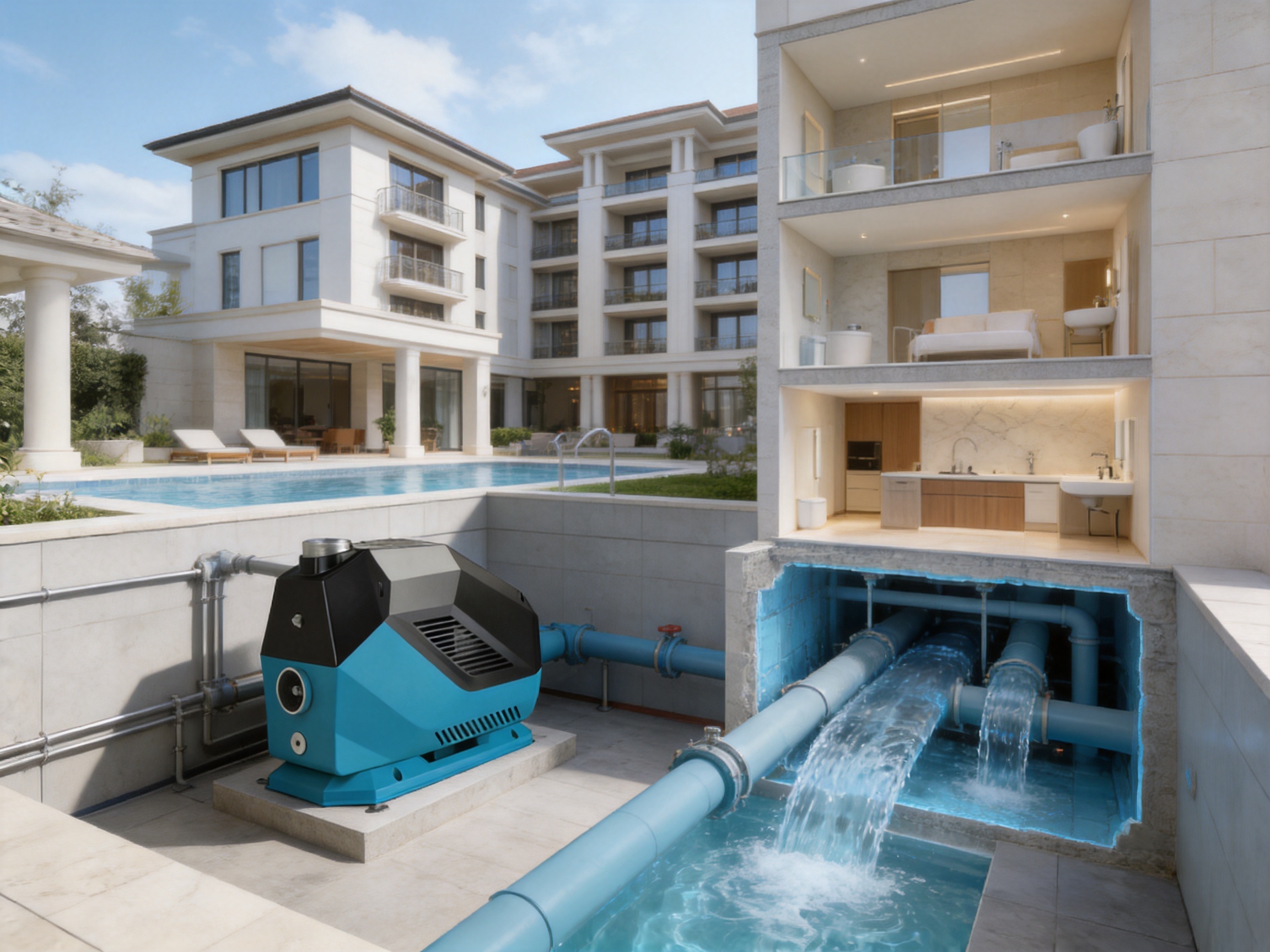
Luxury villas and apartments often have high expectations for water pressure and quietness. The T8 series can support domestic water supply where the incoming source does not provide sufficient pressure or where the building’s height creates a significant elevation requirement.
Before installation, the designer should determine the number of occupants, the number and type of outlets, the expected simultaneous demand, the vertical distance between the pump and the highest outlet, and the length of the piping network. The rated flow of 8 cubic meters per hour provides a reference point, but actual household demand may be much lower or may rise significantly when multiple bathrooms, kitchens, irrigation outlets, or water appliances operate together.
The T8-50 may be appropriate for a moderately demanding residential installation, while the T8-60 may be preferable when additional head is required. The final choice should be based on calculated total dynamic head rather than motor power alone. Oversizing can increase purchase and operating costs, while undersizing may result in insufficient pressure during peak use.
Hotels, clubs, bars, and other public facilities often experience rapid changes in water use. Guest rooms, kitchens, bathrooms, cleaning areas, laundry equipment, and service areas may place different demands on the system at different times.
An intelligent booster pump can help respond to these changes more efficiently than a fixed-speed pump. During low occupancy or quiet periods, reduced speed can help lower energy use. During busy periods, the system can increase output to support the greater demand. Constant-pressure operation can also improve the experience for guests and staff by reducing noticeable pressure fluctuations.
Commercial operators should consider duty cycles, water-source reliability, access for maintenance, noise transmission, and the consequences of downtime. The pump should be installed where it is protected from flooding, excessive heat, and unauthorized interference. If the facility requires uninterrupted supply, the designer may need to consider standby equipment, a storage tank, or a backup power strategy in addition to selecting the correct pump.
Correct installation is essential to achieving the pump’s expected performance. The foundation should be stable and sufficiently strong to support the equipment without excessive vibration. The suction pipe should be short and direct where possible, with suitable diameter and airtight joints. The discharge pipe should be sized to balance flow requirements and friction losses.
Isolation valves can simplify maintenance, while a check valve may help prevent reverse flow depending on the system design. A filter or strainer may be appropriate when the water source contains particles, but it must be selected and maintained carefully because a clogged filter can restrict suction and reduce pump performance.
The pump should not be forced to operate continuously against a closed discharge valve unless the operating instructions specifically permit that condition. Excessive restriction can create heat and stress within the pump. Similarly, the pump should not be run dry or allowed to operate outside the stated suction conditions.
Electrical installation should be completed by qualified personnel. The supply voltage must be compatible with the pump’s specified range, and the system should include proper grounding and protection. The controller and motor should be protected from water ingress and installed according to the manufacturer’s instructions. Before commissioning, the system should be checked for leaks, correct valve positions, adequate water availability, and proper priming conditions.
Intelligent equipment still requires routine care. Regular inspection should include the suction line, valves, filters, electrical connections, pressure behavior, noise, vibration, and visible leakage. Any sudden change in performance may indicate a blocked filter, air leakage, worn seal, abnormal water level, pipe problem, or control issue.
Users should keep the pump area clean and dry. Ventilation should be maintained around the motor and controller, and the unit should not be exposed to avoidable flooding or corrosive substances. If the water contains sediment or mineral deposits, inspection intervals may need to be shortened.
When the system is taken out of service for an extended period, the operator should follow appropriate procedures for isolation, drainage, and protection against freezing or contamination. Restarting should include checks of the water source and suction condition. If an electronic protection function stops the pump, the cause should be identified before repeated restart attempts are made.
Maintenance records can be useful in commercial properties. Recording operating problems, inspection dates, replacement parts, and changes in water demand helps facility managers identify trends and plan service before a failure interrupts building operation.
The choice between the two models should begin with the required flow and total head. The T8-50 has a rated head of 43 meters at 8 cubic meters per hour, while the T8-60 has a rated head of 49 meters at the same rated flow. Both have a maximum head listed at 70 meters, but their rated performance differs.
The T8-50 may be suitable where the system has moderate elevation and friction losses. Its 1,500-watt motor can provide strong booster performance while avoiding unnecessary capacity in a smaller installation. The T8-60, with its 2,200-watt motor, may be more appropriate for taller buildings, larger distribution networks, or applications requiring additional pressure at the rated flow.
Other factors include the water-source level, expected simultaneous demand, available electrical supply, operating schedule, noise sensitivity, and future expansion. Buyers should provide the manufacturer or technical distributor with a system description rather than selecting solely from the model name. A properly matched pump generally performs more efficiently and experiences less stress than an oversized or undersized unit.
For contractors, an integrated intelligent booster pump can reduce the number of separate components required for a basic pressure-boosting system. The built-in control concept may simplify installation and commissioning compared with assembling a fixed-speed pump, external pressure switch, separate control cabinet, and additional adjustment components.
For distributors, the T8 series can serve several market segments, including premium residential projects, apartment buildings, hospitality properties, and public facilities. Its combination of intelligent operation and strong pressure performance gives sales teams a clear value proposition beyond basic water transfer.
For project buyers, the product offers a balance between performance and convenience. Permanent magnet frequency conversion can help reduce operating costs, while self-priming and automatic control can improve daily usability. The company’s ability to support global export, order tracking, and procurement services can also simplify international sourcing.
Buyers should request the applicable technical documents, installation instructions, performance curves, electrical details, warranty terms, spare-parts information, and confirmation of protection functions before placing a project order. These documents help ensure that the pump is correctly integrated into the intended water system.
The T8-50/60 is a household self-priming multistage intelligent booster pump. It combines a multistage hydraulic system with variable-frequency control, a permanent magnet motor, automatic operation, and multiple protection functions.
The T8-50 uses a 1,500-watt motor and has a rated head of 43 meters at 8 cubic meters per hour. The T8-60 uses a 2,200-watt motor and has a rated head of 49 meters at the same rated flow. The T8-60 is generally better suited to systems requiring additional head or greater pressure capacity.
The variable-frequency control system is designed for constant-voltage operation and automatic adaptation to changing demand. It can help maintain more stable pressure than a fixed-speed pump, although final performance depends on the pump setting, pipework, water source, elevation, and system design.
The self-priming function helps the pump remove air from the suction line and establish water flow under suitable conditions. The stated maximum suction is 8 meters. The suction pipe must remain airtight and correctly installed for self-priming performance to be effective.
Yes. Its multistage structure and rated head make it suitable for many multi-floor residential and commercial applications. The correct model must be selected after calculating static elevation, friction losses, required outlet pressure, and simultaneous flow demand.
The product uses a permanent magnet motor and variable-frequency operation, which can reduce unnecessary energy consumption when demand is below the maximum operating requirement. Actual savings depend on operating hours, system resistance, pressure settings, water demand, and installation quality.
It is designed for applications including high-class clubs, bars, hotels, large public places, luxury villas, and apartments. For a commercial project, the buyer should verify the required duty cycle, flow, pressure, standby requirements, and installation environment before selection.
The smart switch is designed to provide automatic operation, allowing the pump to respond to water demand. Users should still follow the installation and operating instructions and should arrange professional inspection if the controller indicates an abnormal condition.
The technical data lists 50 millimeters for the piping connection. The connected system should be designed to avoid unnecessary restriction, especially on the suction side.
Before installation, confirm the water source, suction height, pipe diameter, total head, expected flow, electrical supply, drainage conditions, foundation, valve arrangement, and maintenance access. The system should also be protected from dry running, excessive contamination, flooding, and unsuitable environmental conditions.
The pump should be used with a water source compatible with its materials, hydraulic design, and operating instructions. Water containing excessive sediment, corrosive chemicals, or abrasive particles may require treatment, filtration, or a different pump configuration.
International projects often require model confirmation, technical documents, export packaging, order tracking, delivery coordination, spare parts, and installation communication. A manufacturer with research, production, and foreign trade capabilities can help coordinate these requirements more efficiently.
The T8-50/60 Household Self-Priming Multistage Intelligent Booster Pump is designed for modern water-supply systems that require pressure, efficiency, comfort, and automatic control. Its permanent magnet frequency-conversion motor helps adapt output to changing demand, while its multistage structure supports higher-head applications. Self-priming capability improves convenience, the smart switch simplifies operation, and multiple protection functions contribute to safer use.
Compared with conventional fixed-speed or single-stage pumps, the T8 series offers a more complete solution for luxury villas, apartments, hotels, clubs, bars, and public facilities. Its advantages are not limited to maximum flow or maximum head. The broader value lies in the integration of intelligent control, energy-conscious operation, low-noise performance, stable pressure, and practical installation features.
The manufacturer’s experience in independent research and development, mass production, global export, and one-stop procurement provides additional support for distributors, contractors, and project buyers. Its wider portfolio of water pumps and intelligent products indicates a continuing focus on reliable water-supply technology and changing market requirements.
For the best result, the pump should be selected according to a complete hydraulic calculation and installed by qualified personnel. When correctly matched to the system, the T8-50 or T8-60 can provide a dependable and efficient pressure-boosting solution for demanding residential and light commercial applications.
1. Product technical data for the T8-50 and T8-60 Household Self-Priming Multistage Intelligent Booster Pump.
2. Manufacturer product information concerning permanent magnet frequency conversion, variable-frequency constant-voltage operation, self-priming performance, and intelligent protection.
3. Manufacturer corporate information concerning research and development, mass production, global export, and water-pump product categories.
4. General centrifugal pump engineering principles for flow, head, suction conditions, pipe friction, and system-curve selection.
5. General variable-frequency drive principles for motor-speed control, pressure regulation, energy management, and pump-system optimization.
6. General building water-supply design practices for booster-pump selection, pipe sizing, installation, commissioning, and maintenance.
edwina@edwin-pump.com
+86-13586290903 (WhatsApp)
Xuri Gongliang Cutting Tool Entrepreneurship Park, Wenqiao Town, Wenling City, Taizhou City, Zhejiang Province, China

High Performance Smart Pump Factory


 English