edwina@edwin-pump.com

View All Products
en
Reliable access to water is essential for garden irrigation, greenhouse cultivation, fish breeding, poultry raising, household water supply, and many other everyday applications. In these environments, a pump must do more than move water from one location to another. It must start consistently, handle changing operating conditions, provide adequate suction performance, protect its motor from overheating, and remain practical for routine installation and maintenance. The EGP-PPH Series Garden JET Water Pump is designed to meet these requirements through a compact self-priming configuration, dependable motor protection, durable bearing components, and flexible installation options.
Classified as a garden self-priming pump, the EGP-PPH Series is intended for clean water and liquids with physical and chemical characteristics similar to water. Its maximum suction capability is 8 meters, while its maximum fluid temperature is +35°C. The pump incorporates a C&U bearing, a built-in thermal protector, Class F insulation, IPX4 protection, and a maximum ambient temperature rating of +40°C. These features support dependable service in residential, agricultural, and light commercial environments where ease of use and stable operation are especially important.
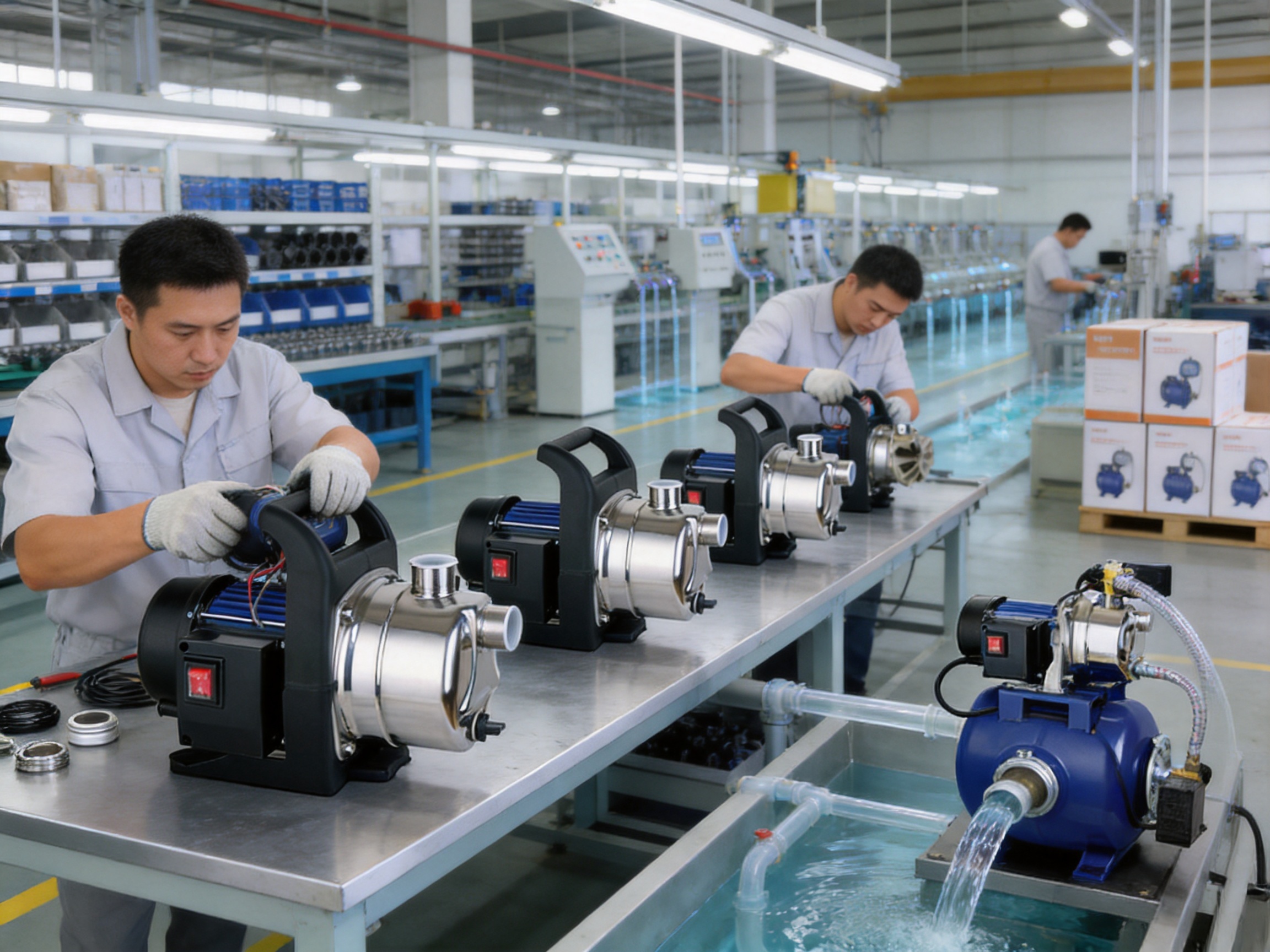
The product is manufactured by Taizhou Edwin Electric Co., Ltd., an integrated pump enterprise with experience in independent research and development, mass production, and international export. Since its establishment in 2008, the company has developed a product portfolio covering deep well pumps, submersible pumps, domestic booster pumps, circulation pumps, solar water pumps, intelligent booster pumps, and other water supply equipment. This broad technical background contributes to the design and production of practical garden pumping solutions.
This article examines the construction, operating principles, technical advantages, application suitability, manufacturing strengths, installation considerations, and purchasing value of the EGP-PPH Series Garden JET Water Pump. It also explains how a self-priming garden pump can compare favorably with less specialized alternatives and provides a question-and-answer section for buyers, installers, distributors, and project planners.
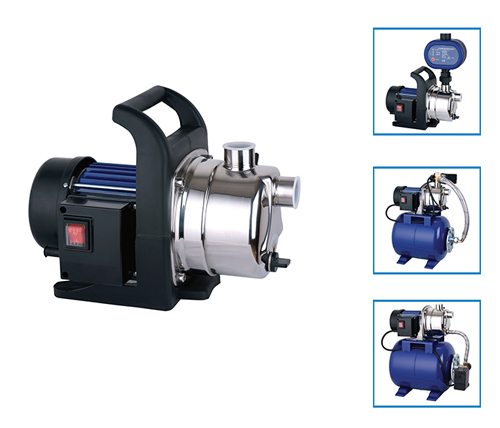
EGP-PPH Series Garden JET Water Pump
The EGP-PPH Series Garden JET Water Pump is a surface-mounted water pump developed for applications where water must be drawn from a source and delivered to irrigation points, domestic outlets, tanks, or other nearby systems. Unlike a submersible pump, the motor and pumping assembly remain outside the water source. This arrangement makes the pump easy to inspect, service, and integrate into a conventional water supply layout.
The pump belongs to the self-priming jet pump category. Self-priming technology is particularly useful in garden and domestic applications because the pump can evacuate air from the suction line after the initial priming process has been completed correctly. This helps the pump establish water flow when the suction pipe contains a limited amount of air. For users who need a practical surface pump rather than a fully submerged solution, this operating concept provides an effective balance of convenience, accessibility, and performance.
The EGP-PPH Series is designed for clean water or liquids similar to water in physical and chemical properties. Typical uses include watering gardens, supplying greenhouses, supporting fish breeding facilities, serving poultry-raising operations, and providing water to domestic automatic supply systems. The pump is not intended for abrasive slurries, heavily contaminated wastewater, or liquids containing aggressive chemicals unless a specific model has been approved for that purpose.
Its operating specifications are appropriate for ordinary outdoor and indoor water supply conditions. The maximum fluid temperature is +35°C, which covers normal groundwater, storage tank water, and typical irrigation water. The maximum suction height is +8 meters, allowing the pump to draw water from a well, tank, reservoir, or other source when the complete suction system is correctly designed. The maximum ambient temperature is +40°C, making the pump suitable for many warm-climate installations when it is positioned in a ventilated and protected location.
The most important feature of the EGP-PPH Series is its self-priming jet pump design. A conventional surface centrifugal pump may lose effectiveness when air enters the suction line. In contrast, a properly installed self-priming pump is designed to remove air from the suction pipe and re-establish water flow after the initial priming stage. This is highly useful in gardens and domestic supply systems, where water levels, hose positions, and operating intervals can change regularly.
The jet-assisted hydraulic arrangement supports suction performance and helps the pump handle conditions that may be difficult for a basic surface centrifugal pump. Although the maximum suction height is specified as 8 meters, actual performance depends on pipe diameter, pipe length, fittings, elevation, water temperature, airtightness, foot valve condition, and atmospheric pressure. Correct installation remains essential, but the self-priming architecture gives the product a practical advantage in routine water supply work.
A maximum suction height of +8 meters provides flexibility for drawing water from a variety of sources. The pump can be considered for shallow wells, underground tanks, rainwater storage systems, garden reservoirs, and other water sources where the vertical distance between the water level and the pump inlet remains within the permitted range.
In practice, suction height should be measured from the lowest expected water level to the pump inlet, rather than from the tank or well opening. The suction pipe should be as short and straight as practical, with an appropriate diameter and a reliable foot valve. Long horizontal suction lines create additional friction loss and can reduce the useful suction height. The EGP-PPH Series provides a strong foundation for these installations, but system design must account for the total dynamic conditions rather than relying only on the nominal maximum value.
Motor protection is an important consideration for garden pumps because operating conditions may vary. A pump can experience increased electrical or mechanical load if the discharge line is restricted, the voltage is unstable, the motor ventilation is poor, or the pump operates continuously for longer than expected. The EGP-PPH Series includes a built-in thermal protector designed to help protect the motor against excessive temperature rise.
When motor temperature reaches an unsafe level, the thermal protection function can interrupt operation and reduce the risk of damage caused by overheating. After the motor cools, the protection system may allow the pump to resume operation, depending on the specific electrical configuration. This feature does not replace correct installation, suitable circuit protection, or proper operating practices, but it adds an important layer of protection and contributes to safer everyday use.
The motor uses Class F insulation. Insulation class indicates the thermal capability of the electrical insulation system. Class F insulation is widely used in motor applications that require a higher thermal margin than lower insulation classes. This is valuable in outdoor and semi-outdoor pumping environments, where ambient temperature, operating duration, ventilation, and load conditions can vary.
The insulation specification supports dependable motor operation when the pump is used within its intended electrical and environmental limits. It also reflects the importance of selecting appropriate materials and winding protection during motor production. Together with the built-in thermal protector, Class F insulation helps the pump manage normal temperature fluctuations and routine operating demands.
The EGP-PPH Series has an IPX4 protection rating. This means the pump enclosure is designed to resist water splashes from different directions under the conditions defined by the relevant ingress protection classification. IPX4 is suitable for many sheltered outdoor and utility-room installations, but it does not mean that the pump can be submerged or exposed indefinitely to heavy rain, flooding, or direct high-pressure water jets.
For long service life, the pump should be installed on a stable, dry, and well-drained foundation. A protective cover may be appropriate for outdoor use, provided that the cover does not restrict ventilation or create excessive heat around the motor. Positioning the pump correctly allows the IPX4 feature to provide meaningful protection while reducing the likelihood of corrosion, electrical faults, and avoidable maintenance.
The pump is equipped with a C&U bearing. Bearings play a central role in motor smoothness, shaft alignment, noise control, and long-term mechanical reliability. A suitable bearing helps support the rotating shaft and maintain stable interaction between the motor and hydraulic components.
For garden pump users, bearing quality can influence the consistency of operation over repeated start-and-stop cycles. A well-supported shaft reduces unnecessary vibration and helps the pump maintain its designed mechanical relationship between the impeller and casing. The use of a C&U bearing forms part of the product’s mechanical reliability strategy and supports the manufacturer’s objective of producing dependable water pumps for international customers.
A basic centrifugal surface pump may be adequate when the suction pipe remains completely filled with water and the operating conditions are stable. However, garden and domestic installations often experience air entry, intermittent use, fluctuating water levels, and changes in hose or pipe arrangements. The self-priming jet configuration of the EGP-PPH Series is better suited to these variable conditions.
Users can benefit from easier restart behavior after a properly completed initial priming procedure. This is especially useful for seasonal irrigation, household water transfer, and installations where the pump is not operated continuously. The product therefore offers a more user-friendly solution than a basic non-self-priming pump in many shallow-suction applications.
Submersible pumps are valuable for deep wells, drainage, and applications where the pump must operate underwater. However, they can be more difficult to inspect or remove because the motor and hydraulic assembly are located inside the water source. A surface-mounted pump such as the EGP-PPH Series keeps the motor accessible for observation, electrical inspection, cleaning, and service.
This accessibility can be an important advantage for homeowners, garden managers, maintenance teams, and distributors. Routine checks can be carried out without lifting the pump from a well or tank. The surface arrangement also allows the pump to be connected to a pressure controller or tank system according to the user’s requirements.
The EGP-PPH Series can be used in domestic automatic water supply places, especially when combined with a pressure controller or tank system. A pressure controller can start and stop the pump according to water demand, while a tank system can reduce the frequency of direct motor starts and provide a more stable supply pattern.
The option to connect a pressure controller or assemble the pump with a tank system gives installers greater flexibility. Instead of being limited to manual operation, the pump can become part of a more convenient household water supply arrangement. This feature is particularly useful for garden homes, small properties, greenhouses, and other locations where water demand changes during the day.
The combination of a +35°C maximum fluid temperature and +40°C maximum ambient temperature makes the pump suitable for many ordinary water supply environments. These limits cover a wide range of garden, greenhouse, household, and light agricultural applications without positioning the product as an industrial high-temperature pump.
Clear operating limits are beneficial because they help users select the correct application and avoid unsuitable conditions. A pump should be chosen according to water temperature, ambient temperature, suction height, expected flow, duty cycle, and water quality. The EGP-PPH Series is designed for clean-water service within defined limits, providing a practical solution rather than an unnecessarily complex system for ordinary garden and domestic requirements.
Different cable lengths are available on request. This option helps adapt the pump to different installation layouts and reduces the need for improvised extensions or inconvenient electrical arrangements. Cable selection should be confirmed according to the installation distance, local electrical requirements, voltage, current, and environmental conditions.
Providing cable-length options also demonstrates the product’s suitability for international distribution and project-based purchasing. Retail customers may need a standard configuration, while installers, wholesalers, and agricultural users may require a different cable length for a particular system. Configurable supply options can simplify procurement and improve installation efficiency.
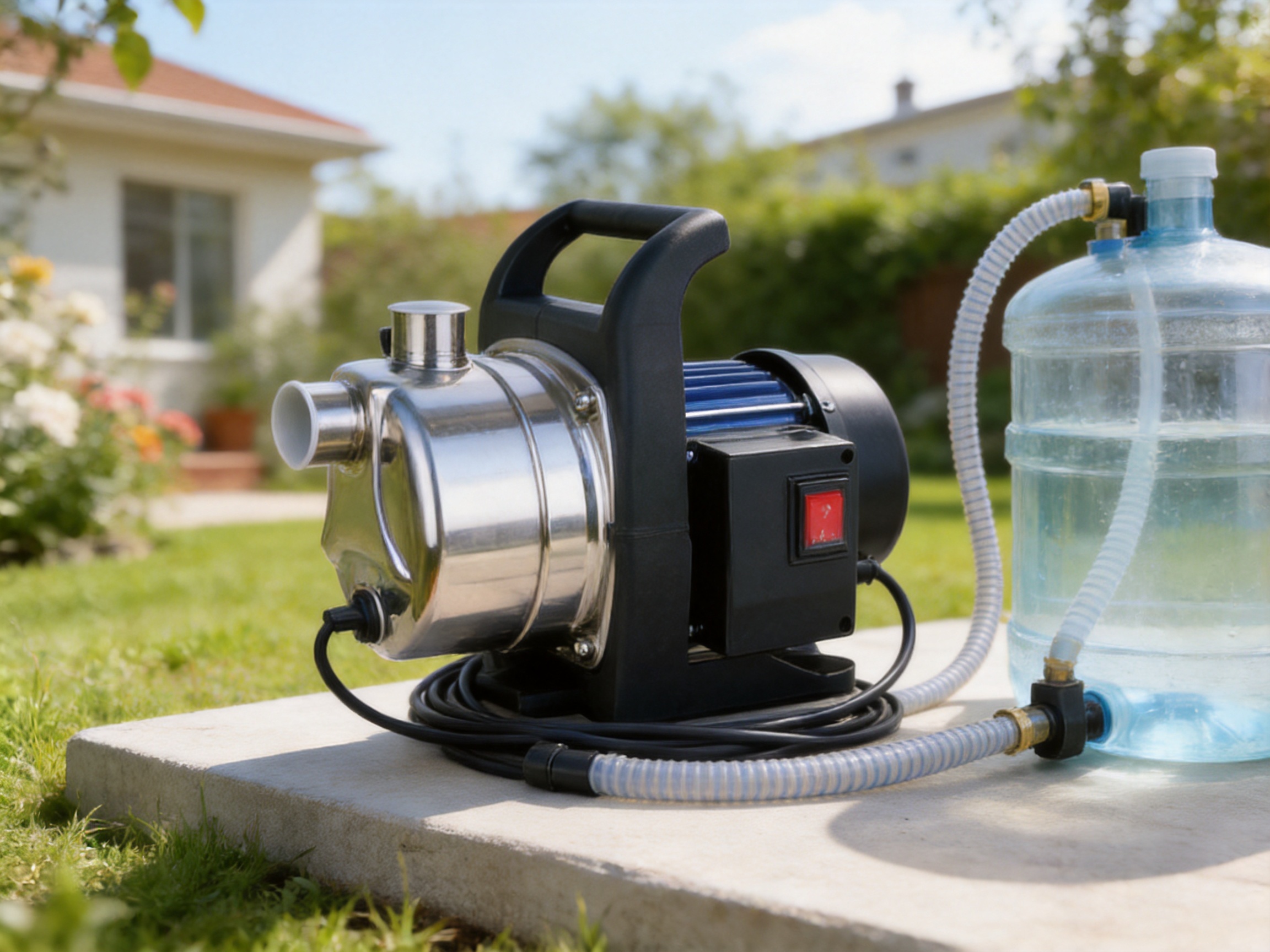
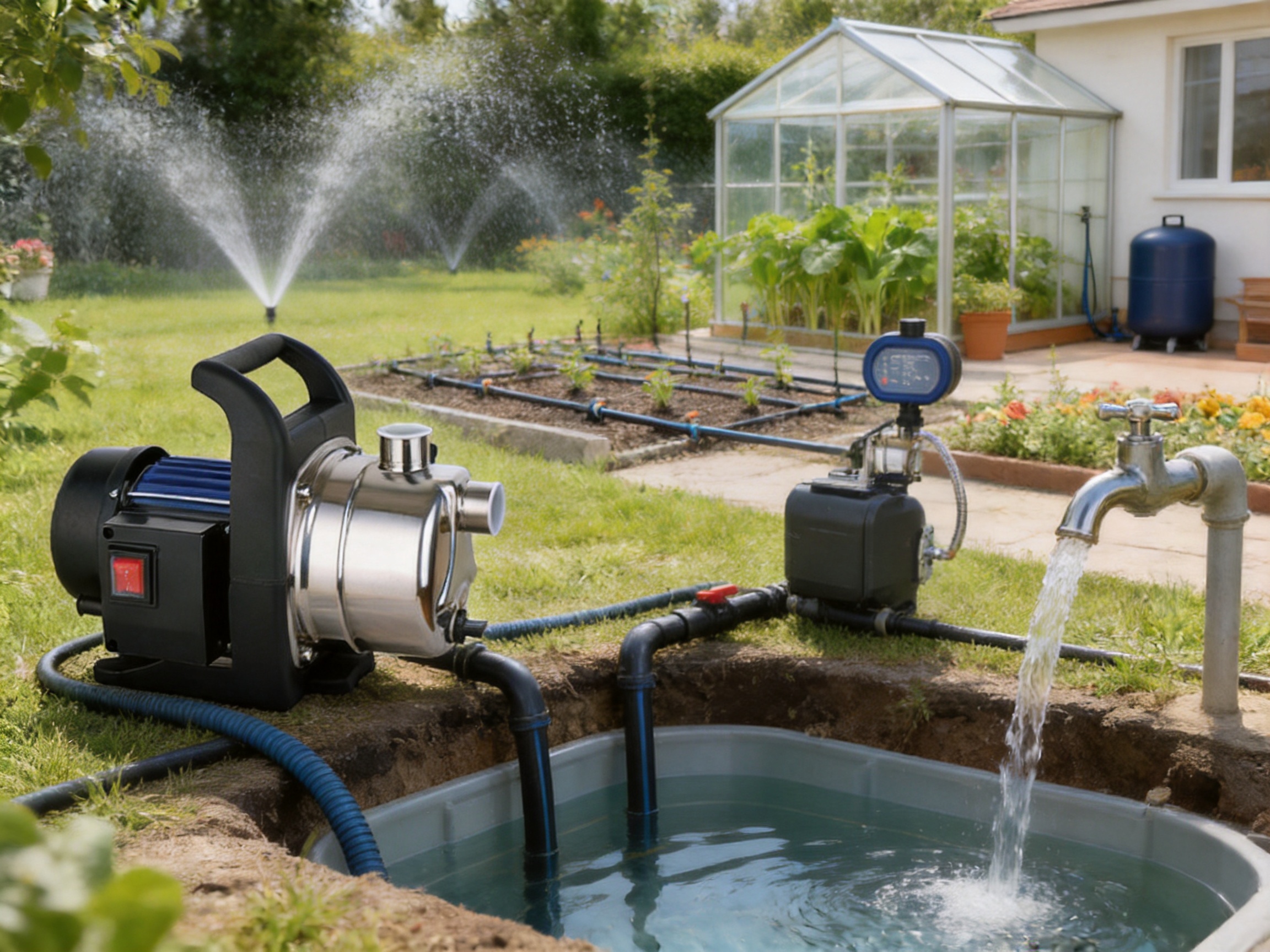
Garden irrigation is one of the primary applications for the EGP-PPH Series. The pump can draw clean water from a tank, shallow well, reservoir, or similar source and deliver it through hoses, sprinklers, drip systems, or manual watering equipment. Its self-priming design is useful in gardens where the water source is located below the pump and the system may be used intermittently.
For best results, irrigation planners should calculate the required flow and pressure before selecting accessories. Small sprinklers may require more pressure than drip lines, while long hoses can create significant friction loss. A foot valve and properly sealed suction pipe are also important. When these details are considered, the pump can provide dependable water movement for lawns, vegetable plots, flower beds, nurseries, and private gardens.
Greenhouses often require controlled and repeated water delivery. The pump can supply irrigation water to benches, planting beds, misting arrangements, or storage systems, provided that the water is clean and the operating temperature remains within the stated limits. Its compact surface-mounted design allows installation in a utility area outside the growing zone, helping protect the motor from unnecessary exposure to moisture and plant debris.
Greenhouse operators can combine the pump with a pressure controller, tank, filter, or irrigation timer. These accessories can support more consistent watering cycles and improve management of water resources. The pump itself should not be exposed to chemical fertilizer solutions or aggressive treatment liquids unless compatibility has been confirmed in advance.
Fish breeding facilities may use surface pumps for clean-water transfer, tank filling, supplementary circulation, or water supply to holding systems. The pump’s clean-water application range makes it appropriate for selected fish-breeding duties where the water does not contain abrasive particles or harmful chemicals.
Because fish are sensitive to water quality and temperature, system designers should consider filtration, oxygenation, flow velocity, and water temperature separately from pump selection. The EGP-PPH Series can provide water movement, but it should be integrated into a complete aquatic system that protects fish health and prevents debris from entering the impeller or suction line.
Poultry facilities require water for drinking systems, cleaning, cooling, and general husbandry. The EGP-PPH Series can support clean-water delivery in small and medium-scale poultry environments when the required flow and pressure are compatible with the pump system. Automatic water supply arrangements can help reduce manual carrying and improve access to water at different points in a facility.
Installation areas should be kept dry and clean, and electrical connections should be protected from wash-down water. A suitable filter may be needed if the water source contains sediment. The pump’s IPX4 rating provides splash resistance, but it should not be treated as permission for direct flooding or immersion.
In homes and small properties, the pump can be used to increase the usefulness of a storage tank, shallow well, or rainwater collection system. It may supply outdoor taps, toilets, washing areas, garden hoses, or other non-potable applications, depending on local regulations and water quality requirements.
When connected to a pressure controller or tank system, the pump can operate as part of an automatic water supply installation. Such a system can start the pump when a tap is opened and stop it when demand ends. A pressure tank can also reduce rapid cycling and help maintain a more stable pressure pattern. Installers should confirm all electrical, plumbing, and local code requirements before commissioning the system.
The performance of a water pump is determined not only by its published specifications but also by the consistency of its manufacturing process. The EGP-PPH Series is produced by an integrated enterprise that combines independent research and development, mass production, and global export. This structure enables the manufacturer to coordinate product design, component selection, assembly, inspection, packaging, and customer support within a connected business system.
Since 2008, Taizhou Edwin Electric Co., Ltd. has focused on pump development and production. Its portfolio includes several technically related product categories, such as deep well pumps, submersible pumps, domestic booster pumps, circulation pumps, solar water pumps, intelligent booster pumps, and other water supply products. Experience across these categories can support better understanding of hydraulic design, motor protection, sealing, electrical integration, application requirements, and international purchasing standards.
Independent research and development allows a manufacturer to adapt products to changing market needs rather than relying only on standard designs. For a garden jet pump, development work may involve hydraulic efficiency, self-priming behavior, motor protection, noise control, component compatibility, installation flexibility, and adaptation to different customer requirements.
The EGP-PPH Series reflects an application-oriented development approach. Its features are directed toward practical problems faced by users: drawing water from shallow sources, restarting after intermittent use, protecting the motor against overheating, accommodating different cable lengths, and integrating with pressure controllers or tank systems. This type of development connects product engineering with real installation conditions.
Mass production requires more than assembling a large number of units. It requires repeatable processes, controlled component supply, consistent assembly procedures, appropriate testing, and organized order management. A manufacturer with mass-production capability can serve wholesalers, distributors, project buyers, and original equipment customers with more predictable delivery and product consistency.
For the EGP-PPH Series, production consistency is especially important because motor alignment, bearing installation, electrical connections, sealing, impeller placement, and casing assembly all influence performance. A controlled production environment helps reduce variation between units and supports reliable operation across different customer markets.
A pump is a coordinated system of hydraulic, mechanical, electrical, and protective components. The C&U bearing must work with the motor shaft and rotating assembly. The thermal protector must be integrated into the motor circuit. Class F insulation must be supported by suitable winding and insulation materials. IPX4 protection depends on the relationship between the enclosure, cable entry, covers, and assembly quality.
Integrated manufacturing helps the company coordinate these elements instead of treating them as unrelated parts. This supports a more complete approach to quality control. The result is not simply a motor attached to a pump body, but a combined water supply product designed around intended operating conditions.
The company has developed professional capabilities in procurement planning, order tracking, cross-border delivery, and foreign trade services through related import and export organizations. These capabilities are valuable for international customers who need more than a product catalogue. Distributors and project buyers often require technical communication, production scheduling, documentation, packaging coordination, shipment planning, and after-sales support.
International experience also encourages attention to different application conditions. Water sources, climate, electrical systems, installation practices, and customer expectations vary between markets. A manufacturer serving global clients must communicate specifications clearly and support correct product selection. The EGP-PPH Series is positioned within this broader export-oriented product and service framework.
The manufacturer’s involvement in solar water pumps, intelligent booster pumps, deep well pumps, submersible pumps, and circulation pumps provides a broad perspective on water movement. Different pump categories address different hydraulic conditions, but they share common engineering concerns such as motor durability, sealing, bearing reliability, thermal control, electrical safety, and application matching.
This broad product knowledge benefits customers because the manufacturer can help identify alternatives when a garden self-priming pump is not the correct solution. For example, a deep well may require a submersible pump, while a high-rise building may require a multistage booster system. A one-stop supplier with multiple pump categories can support more complete project planning.
| Item | Specification | Application Significance |
|---|---|---|
| Product series | EGP-PPH Series Garden JET Water Pump | Designed for garden, domestic, and light agricultural water supply |
| Product category | Garden Self-priming Pump | Suitable for surface installation and shallow suction applications |
| Suitable liquid | Clean water or liquids similar to water | Appropriate for ordinary water transfer and irrigation |
| Maximum fluid temperature | +35°C | Suitable for normal irrigation, storage, and household water |
| Maximum suction height | +8 m | Supports shallow wells, tanks, reservoirs, and similar sources |
| Bearing | C&U bearing | Supports shaft rotation and mechanical operating stability |
| Motor protection | Built-in thermal protector | Helps reduce the risk of overheating-related motor damage |
| Insulation class | F | Provides a suitable thermal insulation margin for the motor |
| Protection class | IPX4 | Provides protection against water splashes from different directions |
| Maximum ambient temperature | +40°C | Suitable for many warm indoor and sheltered outdoor locations |
| Options on request | Different cable lengths | Allows adaptation to varied installation layouts |
| Control integration | Pressure controller connection available | Supports automatic start and stop according to water demand |
| System integration | Tank system assembly available | Can support pressure stability and reduce frequent starts |
| Warranty | 1 year | Provides a defined warranty period under general sales conditions |
The pump should be installed on a stable, level surface that can support its weight and resist vibration. The area should be clean, dry, accessible, and adequately ventilated. Although the IPX4 rating provides splash protection, the pump should be sheltered from flooding, standing water, direct immersion, and unnecessary exposure to severe weather.
There should be sufficient clearance around the motor for ventilation and inspection. Avoid placing the pump in a sealed enclosure where heat can accumulate. If an outdoor cover is used, it should protect the pump from rain and sunlight while allowing air circulation and providing access for maintenance.
The suction line is one of the most important parts of a self-priming pump installation. It should be airtight, correctly supported, and arranged with as few sharp bends and unnecessary fittings as possible. The pipe diameter should be appropriate for the pump inlet and expected flow. A suction line that is too narrow, too long, or poorly sealed can cause air leakage, reduced performance, noise, and difficulty in priming.
A foot valve or non-return valve is commonly used at the water-source end of the suction line. This helps retain water in the pipe when the pump stops. The valve should be positioned below the minimum water level and protected from large debris. A strainer may be useful, but excessive restriction can also reduce suction performance, so filtration must be selected carefully.
Before starting the pump for the first time, the pump casing and suction line should be filled according to the installation instructions. A self-priming pump is not intended to operate dry during commissioning. Correct initial priming allows the hydraulic system to establish the water seal necessary for self-priming operation.
If the pump does not deliver water after starting, switch it off and investigate the cause. Possible causes include insufficient priming, air leakage, an incorrectly positioned foot valve, excessive suction height, blocked piping, or an empty water source. Repeated dry running should be avoided because it can cause unnecessary wear and heat generation.
Electrical installation should be performed by a qualified person and must comply with local requirements. The supply voltage and frequency should match the pump’s nameplate information. Appropriate circuit protection, grounding, cable sizing, and isolation should be provided.
The built-in thermal protector helps protect the motor, but it is not a substitute for correct electrical design. The circuit should be protected against short circuits and other electrical faults. Cable connections must remain dry and secure, particularly in garden, greenhouse, poultry, and outdoor environments.
When the pump is connected to a pressure controller or tank system, the control settings should be compatible with the pump and the plumbing arrangement. Excessively frequent starts can increase motor and mechanical stress. A tank system can help reduce cycling by storing a small quantity of pressurized water.
Pressure controls should be installed where they are protected from direct water exposure and should be adjusted by a qualified installer. The discharge system should also include suitable valves, filters, and pressure-relief arrangements when required by the application.
Routine maintenance helps preserve pump performance and extend service life. Users should periodically inspect the suction pipe, foot valve, fittings, electrical cable, pump casing, and discharge connections. Any sign of air leakage, unusual vibration, excessive noise, water leakage, or repeated thermal shutdown should be investigated promptly.
The water source should be kept as clean as practical. Sand, stones, leaves, algae, and other debris can obstruct the foot valve, damage hydraulic parts, or reduce flow. If sediment is unavoidable, a suitable pre-filter or strainer may be installed, provided that it does not create excessive suction resistance.
The pump should be stopped and isolated from the power supply before inspection or cleaning. Users should never open electrical components while the pump is energized. If the motor repeatedly trips its thermal protector, the cause may be excessive load, blocked hydraulics, low voltage, poor ventilation, incorrect wiring, or a mechanical fault. Repeated resetting without investigation is not recommended.
Seasonal users should take additional precautions before long periods of inactivity or freezing weather. Water may need to be drained from exposed pipework and the pump according to local conditions. Frozen water can expand and damage pump components, pipework, and fittings. The correct winterization procedure should follow the installation and service instructions for the complete system.
The EGP-PPH Series is suitable for distributors, garden equipment suppliers, agricultural retailers, plumbing wholesalers, and project buyers seeking a practical clean-water pump for common applications. Its combination of self-priming operation, thermal protection, Class F insulation, IPX4 protection, and optional system integration provides a clear product proposition for several market segments.
For distributors, the product can serve as a versatile surface pump for garden irrigation and household water supply. Its application range is broad enough to address multiple customer needs while remaining focused enough to support clear sales and technical communication. Optional cable lengths and compatibility with pressure controllers or tank systems can also help distributors serve different installation requirements.
For project buyers, the manufacturer’s integrated production and international service capability can support procurement beyond the individual pump. Customers may require technical consultation, order scheduling, packaging coordination, shipment organization, and related pump products. The company’s broader product portfolio makes it possible to discuss complete water supply requirements rather than selecting an isolated unit without considering the overall system.
The one-year warranty provides a defined support period according to the manufacturer’s general sales conditions. Buyers should review warranty terms, installation requirements, exclusions, spare-part availability, and service procedures before placing an order. Proper selection and installation are important to ensuring that warranty support can be applied effectively.
Selecting an integrated pump manufacturer can reduce complexity during procurement. A specialized producer with research, production, export, and service capabilities can provide more consistent communication than a trading channel that has limited technical control over the product. This is especially important when a buyer needs customized cable lengths, pressure-controller compatibility, tank-system assembly, private-label coordination, or related pump categories.
Integrated manufacturing also improves accountability. Product design, component sourcing, assembly, inspection, packaging, and after-sales communication can be connected within one organization. If technical questions arise, the buyer can communicate with a team familiar with the product’s construction and intended application.
The company’s development from a pump manufacturer into a broader water equipment supplier reflects this integrated approach. Its product lines cover household water supply, agricultural irrigation, deep-well applications, submersible pumping, circulation, solar pumping, intelligent control, and commercial water systems. This enables the manufacturer to support both individual products and larger water-management projects.
The EGP-PPH Series is designed for clean water or liquids similar to water. It should not automatically be selected for sewage, abrasive slurry, seawater, strongly acidic or alkaline liquids, oil, solvents, or high-temperature fluids. Such applications may require different materials, seals, motor designs, or pump categories.
The 8-meter maximum suction specification should also be treated as an upper application limit rather than a guaranteed operating condition in every installation. Atmospheric pressure, elevation, water temperature, suction-line friction, pipe leakage, and water level variation can reduce the practical suction capability. Buyers should provide complete installation information when requesting technical confirmation.
For deep wells, a submersible pump may be more appropriate because a surface pump cannot normally provide the same suction arrangement. For high-pressure multi-floor buildings, a commercial multistage pump or intelligent booster pump may be required. For hot water circulation, a circulation pump designed for the relevant temperature should be selected. Correct product matching is one of the most important factors in achieving reliable service.
Efficient water pumping begins with correct system design. An oversized pump may consume unnecessary energy, while an undersized pump may operate continuously without meeting demand. Pipe sizing, valve selection, pressure requirements, water-source elevation, and irrigation layout all influence energy use.
The EGP-PPH Series can contribute to practical energy management when it is selected for an appropriate duty and operated with suitable controls. A pressure controller or tank system may help avoid unnecessary manual operation and support more controlled water delivery. Regular maintenance also matters because blocked filters, leaking suction lines, damaged valves, and worn components can increase operating resistance.
Water conservation is equally important. In garden and greenhouse applications, drip irrigation, timed watering, leak detection, and correctly adjusted sprinklers can reduce waste. The pump is one part of a larger water-management system, and its environmental value depends on how effectively the complete installation is designed and used.
Reliability in a garden pump is not defined by one feature alone. It results from the interaction of hydraulic design, motor construction, bearing quality, thermal protection, insulation, enclosure protection, installation, and maintenance. The EGP-PPH Series addresses these areas through its self-priming jet structure, C&U bearing, built-in thermal protector, Class F insulation, and IPX4 protection.
The product’s long-term value also comes from its flexibility. It can serve a simple manual irrigation system today and later be integrated with a pressure controller or tank system as water requirements change. Different cable lengths can be requested for different installation layouts. This adaptability may reduce the need to replace the pump when a property or small agricultural operation expands.
Manufacturing experience adds another dimension to product value. An enterprise with independent development, mass-production capability, and international export experience is positioned to provide repeatable products and coordinated support. For professional buyers, this can be as important as the individual technical specifications.
It is a garden self-priming jet water pump designed for surface installation. It is suitable for clean water and liquids with physical and chemical characteristics similar to water.
The stated maximum suction height is 8 meters. Actual performance depends on water level, elevation, suction-pipe length and diameter, fittings, foot-valve condition, air tightness, water temperature, and atmospheric conditions.
Yes. Garden irrigation is one of its intended applications. It can draw water from a suitable tank, reservoir, shallow well, or similar source and deliver it to hoses, sprinklers, drip systems, or other irrigation equipment when the required flow and pressure are compatible.
Yes. The pump can support clean-water supply for greenhouse irrigation and related water delivery. Filters, controllers, timers, and tanks may be added according to the greenhouse design.
Yes. The pump is suitable for domestic automatic water supply applications and can be connected with a pressure controller or assembled with a tank system on request.
Yes. It has a built-in thermal protector designed to help protect the motor against excessive temperature rise. Correct electrical protection, ventilation, and operating practices are still required.
Class F identifies the thermal capability of the motor insulation system. It provides a suitable thermal margin for the intended operating environment when the pump is used within its specified limits.
The pump has IPX4 protection, which means it is designed to resist water splashes from different directions under defined test conditions. It should not be submerged, flooded, or exposed to continuous high-pressure water jets.
The maximum fluid temperature is +35°C. Higher-temperature liquids should not be pumped unless the manufacturer has specifically approved the application and configuration.
The maximum ambient temperature is +40°C. The pump should be installed in a ventilated location and protected from excessive heat, direct flooding, and severe environmental exposure.
Yes. Different cable lengths are available on request. The required length should be confirmed before ordering according to the installation layout and electrical requirements.
The pump is not intended for abrasive slurries, heavily contaminated wastewater, aggressive chemicals, oils, solvents, or high-temperature liquids unless the manufacturer confirms suitability for a specific configuration.
A foot valve is commonly recommended in suction installations because it helps retain water in the suction line and supports reliable priming. The valve should be correctly sized, sealed, and protected from debris.
Check whether the pump and suction line were correctly primed, whether the suction pipe has air leaks, whether the water source is sufficiently full, whether the foot valve is working, and whether the suction height and piping arrangement are within practical limits. Stop the pump before inspection and avoid prolonged dry running.
The product is manufactured by Taizhou Edwin Electric Co., Ltd., an integrated pump enterprise founded in 2008 with capabilities in independent research and development, mass production, global export, and related water pump product categories.
The stated warranty period is one year, according to the manufacturer’s general sales conditions. Buyers should confirm the complete warranty terms before purchase.
The EGP-PPH Series Garden JET Water Pump is a practical surface-mounted solution for clean-water supply in gardens, greenhouses, fish-breeding facilities, poultry operations, and domestic automatic water systems. Its self-priming jet design supports convenient operation in shallow-suction applications, while the 8-meter maximum suction capability provides flexibility for tanks, reservoirs, and shallow wells.
The product combines several features that support dependable service: a C&U bearing, built-in thermal protector, Class F insulation, IPX4 protection, a +35°C maximum fluid temperature, and a +40°C maximum ambient temperature. Optional cable lengths, pressure-controller connection, and tank-system assembly further improve installation flexibility.
Compared with a basic non-self-priming surface pump, the EGP-PPH Series offers greater convenience for intermittent and variable garden use. Compared with a submersible solution, its surface-mounted design provides easier access for inspection and maintenance. These advantages make it a strong choice for users who need reliable clean-water transfer without the complexity of a deep-well or high-pressure commercial pumping system.
Its value is supported by the manufacturer’s broader strengths in independent development, mass production, international export, and multiple pump technologies. By combining product-focused engineering with coordinated manufacturing and trade services, the company is positioned to supply both individual garden pumps and broader water-management solutions to customers around the world.
1. Manufacturer product information for the EGP-PPH Series Garden JET Water Pump.
2. Manufacturer technical information concerning self-priming garden pump applications, motor protection, insulation, and enclosure protection.
3. General principles of centrifugal and jet pump operation for clean-water supply systems.
4. General guidance on pump suction-line design, foot valves, priming, and hydraulic-system installation.
5. General reference material on electric motor insulation classes and ingress protection classifications.
6. Manufacturer company information concerning independent research and development, mass production, international export, and water pump product categories.
edwina@edwin-pump.com
+86-13586290903 (WhatsApp)
Xuri Gongliang Cutting Tool Entrepreneurship Park, Wenqiao Town, Wenling City, Taizhou City, Zhejiang Province, China

High Performance Smart Pump Factory


 English