edwina@edwin-pump.com

View All Products
en

Air compressor systems depend on accurate pressure control to operate safely, efficiently, and consistently. A pressure switch is one of the most important control components in the system because it monitors air pressure and automatically starts or stops the compressor according to preset pressure values. When the pressure switch is reliable, the compressor can maintain the required working pressure while avoiding unnecessary operation, excessive energy consumption, and potential equipment damage.
The ERQ-5 Series 50/60Hz Zinc Alloy Bottom Pressure Switch is designed for this essential task. It is a mechanical pressure controller developed for air compressors used in workshops, industrial facilities, automotive service centers, and other compressed-air applications. With a pressure range of 20–100 psi, rated voltage from 110V to 240V, a rated current of 12A, and compatibility with both 50Hz and 60Hz systems, the switch provides a flexible solution for different operating environments.
Its zinc alloy bottom gives the unit a strong and durable construction, while its automatic pressure-control function helps ensure stable compressor operation. The product can also be customized in several important areas, including pressure settings, hydraulic connection, crust configuration, screw type, and air-relief valve specifications. These options make it suitable for manufacturers, distributors, system integrators, and professional users who require a pressure switch adapted to specific equipment designs.
An air compressor converts mechanical energy into compressed air. During operation, the compressor fills a storage tank or supplies air directly to a pneumatic system. As the air pressure increases, the compressor must eventually stop. When compressed air is consumed and the pressure falls, the compressor must start again. The pressure switch performs this automatic control function.
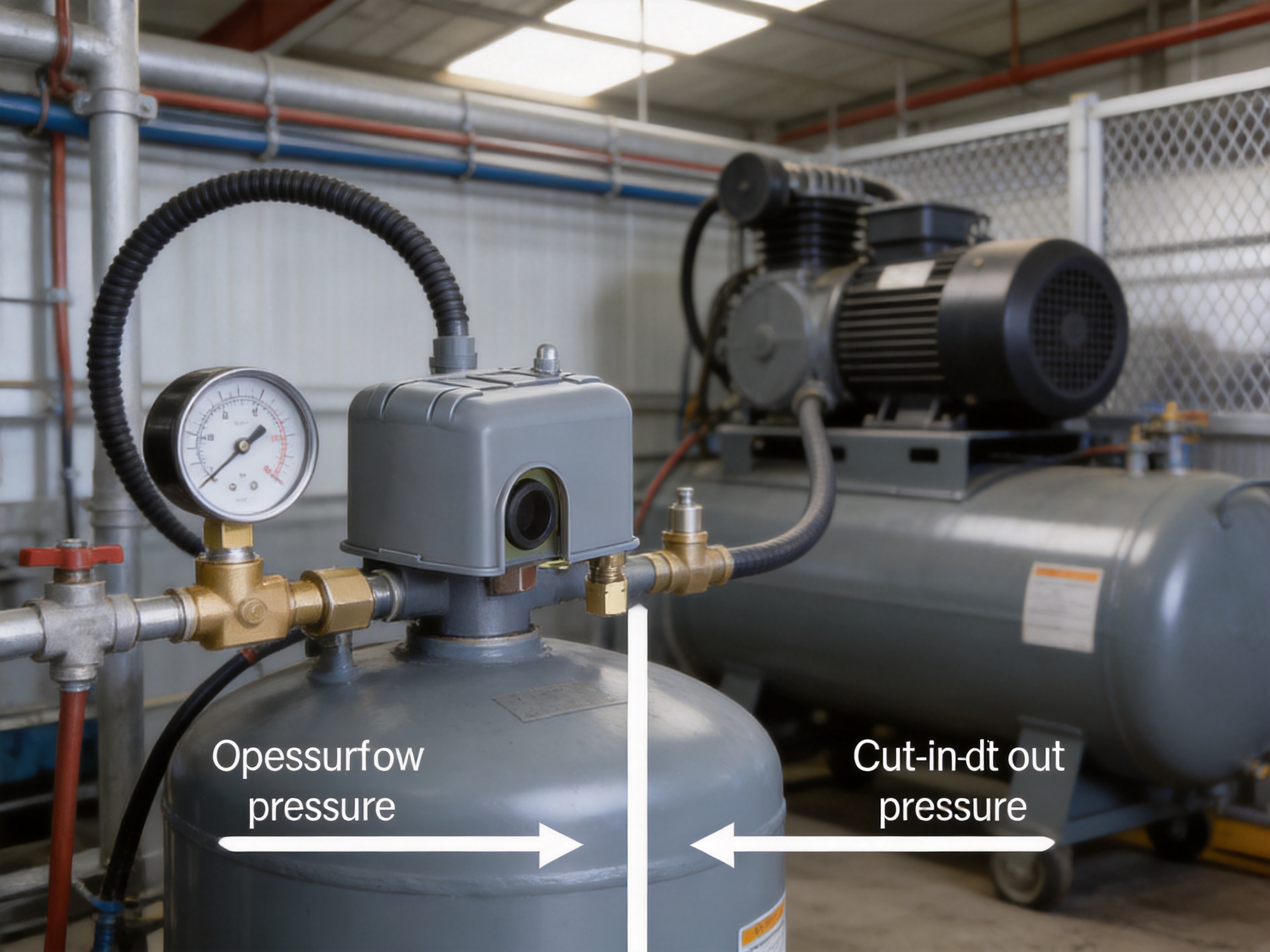
The switch continuously responds to the pressure in the connected air system. When pressure falls to the configured starting point, the electrical contacts close or change state, allowing the compressor motor to operate. When pressure rises to the configured stopping point, the contacts change back and disconnect the compressor motor. This creates an automatic operating cycle based on the difference between cut-in and cut-out pressure.
This function is more important than simple on-and-off switching. A correctly selected pressure switch can help protect the compressor from running continuously, reduce unnecessary motor starts, and keep the air supply within a practical pressure range. It also supports safer operation by reducing the likelihood of over-pressurization caused by uncontrolled compressor running.
The ERQ-5 Series is designed around this mechanical pressure-control principle. Its pressure-sensitive structure, electrical switching mechanism, and air-relief configuration work together to provide dependable automatic control. The result is a compact control component that can be integrated into a wide range of compressor assemblies.
The ERQ-5 Series is a zinc alloy bottom pressure switch intended primarily for air compressors. Its construction is designed for demanding working conditions where the switch must withstand pressure fluctuations, repeated operating cycles, vibration, and regular electrical switching.
The zinc alloy bottom is a major structural feature. It provides a solid foundation for the pressure connection and internal mechanism while offering good resistance to mechanical stress and corrosion. Compared with less robust materials, zinc alloy can provide a stronger and more stable base for applications in which the pressure switch is frequently exposed to vibration or repeated pressure changes.
The product supports electrical systems with a rated voltage of 110V–240V and can operate with both 50Hz and 60Hz frequencies. This broad electrical compatibility is useful for international equipment manufacturers and distributors that serve multiple markets. It reduces the need to maintain separate switch models for every electrical region.
The rated current is 12A. This rating allows the switch to be used in suitable compressor control circuits, subject to the electrical design of the equipment and the applicable safety requirements. The switch should always be selected and installed by qualified personnel who can confirm that the compressor motor, control circuit, voltage, current, wiring, and protection devices are compatible.
| Parameter | Specification |
|---|---|
| Product series | ERQ-5 Series |
| Product type | Mechanical pressure controller |
| Primary application | Air compressors |
| Pressure range | 20–100 psi |
| Available pressure settings | 20–50 psi, 30–60 psi, 40–70 psi, 50–80 psi |
| Rated voltage | 110V–240V |
| Rated current | 12A |
| Frequency | 50/60Hz |
| Maximum working temperature | 40°C |
| Protection degree | IP20 |
| Hydraulic connection | Optional 1/4-inch female connection |
| Screw type | One-way or four-way |
| Warranty | One year |
The bottom section of a pressure switch is exposed to both the pressure connection and the physical forces created during installation and operation. A zinc alloy bottom provides a firm and durable structure that can support the pressure interface and internal assembly.
In practical applications, the switch may be installed on a compressor tank, manifold, pipe fitting, or pressure-control assembly. These installations can expose the component to vibration and small mechanical shocks. A strong metal base helps maintain the integrity of the connection and reduces the risk of deformation during normal use.
Air compressor environments are not always dry or clean. Condensation, oil mist, dust, workshop chemicals, and changing temperatures can affect exposed components. Zinc alloy offers useful resistance to corrosion when appropriately manufactured and finished. This helps the pressure switch maintain its structural performance over time.
Material resistance does not eliminate the need for proper system maintenance. Drainage of accumulated water, correct filtration, suitable installation, and protection from direct chemical exposure remain important. Nevertheless, a zinc alloy pressure connection provides a practical advantage over lightweight or less durable alternatives.
A pressure switch must maintain a dependable connection to the air system. Leakage at the connection can cause false pressure readings, frequent compressor cycling, poor air efficiency, or complete loss of automatic control. The zinc alloy bottom supports a stable connection when the correct fitting, sealing method, and installation torque are used.
The available 1/4-inch female hydraulic connection is suitable for many common compressor arrangements. Customers can also request different connection configurations according to their equipment design. This flexibility is valuable for original equipment manufacturers that use different tank outlets, manifolds, or pipe layouts.
Air compressors often operate through repeated start-and-stop cycles. The pressure switch therefore needs to withstand regular mechanical movement and electrical switching. A robust body and correctly assembled internal mechanism help the switch maintain its function over repeated cycles.
The ERQ-5 Series is designed as a working control component rather than a temporary monitoring device. Its purpose is to provide automatic pressure management during normal compressor operation, helping the equipment maintain a usable pressure range without continuous manual intervention.
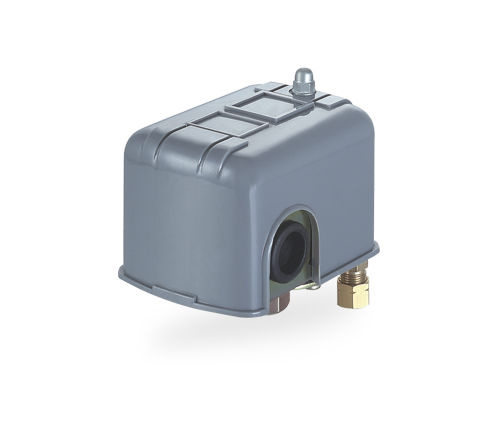
ERQ-5 Series 50/60Hz Zinc Alloy Bottom Pressure Switch Used in Air Compressors
The ERQ-5 Series has a stated pressure range of 20–100 psi. This range covers many common low- and medium-pressure compressor applications. The available settings include 20–50 psi, 30–60 psi, 40–70 psi, and 50–80 psi.
These settings represent practical cut-in and cut-out combinations for different compressor systems. For example, a 30–60 psi setting allows the compressor to start when pressure falls to approximately 30 psi and stop when pressure reaches approximately 60 psi, subject to the actual adjustment and calibration of the unit. A higher setting can be selected when the connected equipment requires a higher operating pressure.
The correct pressure setting should be determined by the compressor manufacturer, the air receiver rating, the downstream equipment, and the required working pressure. Selecting a setting that is too high may place unnecessary stress on the compressor, tank, hoses, fittings, and safety devices. Selecting a setting that is too low may result in insufficient air pressure for pneumatic tools or production equipment.
One of the product’s advantages is that pressure settings can be customized according to customer requirements. This is particularly useful for private-label products, equipment manufacturers, and distributors that need specific factory settings. Customization can simplify final assembly and help ensure that the pressure switch is matched to the intended compressor model.
The primary operating advantage of the ERQ-5 Series is automatic compressor control. Once the switch is correctly connected and adjusted, it responds to the pressure condition of the system without requiring the operator to switch the compressor on and off manually.
When compressed air is used, the pressure in the tank or system gradually falls. After reaching the configured cut-in pressure, the pressure switch activates the compressor circuit. The motor then operates to restore the pressure. When the pressure reaches the configured cut-out value, the switch disconnects the compressor circuit.
This automatic cycle provides several benefits. First, it helps keep air pressure within a functional range. Second, it prevents the compressor from operating continuously when the required pressure has already been reached. Third, it helps reduce unnecessary supervision, which is especially valuable in workshops, factories, and commercial equipment where operators may not remain beside the compressor at all times.
Automatic control also supports equipment protection. A compressor that continues running after the desired pressure is reached may experience unnecessary wear and increased heat generation. The pressure switch helps interrupt operation at the appropriate point. However, it should be used together with a correctly sized safety valve, overload protection, suitable motor protection, and all other required safety components.
The ERQ-5 Series can be equipped with an air-relief valve incorporating a delayed closing system. This feature is designed to help release residual pressure from the compressor discharge line when the compressor stops.
When a compressor stops, pressure may remain in the short section of pipe between the compressor outlet and the check valve or receiver. If this pressure is not released, the motor may need to start against a high opposing load during the next cycle. The air-relief function can reduce this starting resistance by allowing residual air to escape for a controlled period.
A delayed closing system is useful because it allows pressure relief during the stopping and restarting sequence while helping prevent continuous air loss during normal operation. The exact behavior depends on the switch configuration, compressor design, check valve arrangement, and installation method.
Customers can select an air-relief valve with a 6mm or 1/4-inch diameter pipe. This option allows the product to be adapted to different discharge-line layouts and compressor assemblies. Proper tubing installation is essential. The relief line should be routed securely, protected from damage, and installed in accordance with the compressor manufacturer’s instructions.
The rated voltage range of 110V–240V and frequency compatibility of 50/60Hz make the ERQ-5 Series suitable for a broad international market. Electrical standards and supply conditions vary between countries, so a pressure switch that can support multiple common power environments is helpful for exporters and equipment manufacturers.
Frequency compatibility is important because electrical systems may operate at 50Hz or 60Hz depending on the region. A switch designed for both frequencies offers greater flexibility when the same compressor model is sold in different markets.
The 12A rated current must be considered carefully during system design. The pressure switch may be used for a suitable motor circuit, but the actual current demand, starting current, motor type, control architecture, and protection method must all be reviewed. In higher-power applications, the pressure switch may be used to control a relay, contactor, or other intermediate device rather than switching the motor directly.
Installation should be completed by a qualified electrician. The power supply must be disconnected before wiring or servicing. Correct grounding, insulation, terminal tightening, cable selection, overload protection, and enclosure design are essential for safe operation.
Air compressor designs differ widely. Some use a direct connection to the tank, while others use a manifold, four-way connector, pressure gauge, safety valve, and air-relief line in one compact assembly. The ERQ-5 Series can be configured with one-way or four-way screw types to suit different installation layouts.
A one-way configuration can be suitable for a simple connection in which the pressure switch is mounted directly to a dedicated port. A four-way configuration can be useful when multiple accessories, such as a pressure gauge, safety valve, outlet connection, and relief line, are grouped around a common manifold.
The hydraulic connection can also be selected according to customer requirements. The 1/4-inch female connection is a listed option, but customized connection arrangements may be available for equipment manufacturers with specific dimensional or installation needs.
The outer crust or housing can be produced according to customer requirements. This may support different appearance standards, branding programs, assembly layouts, or equipment packaging requirements. Customization should be discussed during the technical confirmation stage so that pressure settings, connection sizes, housing design, and electrical requirements remain consistent.
Some low-cost pressure-control products are designed with limited adjustment options, less durable body materials, or narrow electrical compatibility. They may be suitable for basic applications, but they can create challenges when equipment manufacturers need consistent performance across multiple markets or compressor models.
The ERQ-5 Series offers several advantages over less specialized alternatives. Its zinc alloy bottom provides a more substantial mechanical base than lightweight plastic-only construction. Its 50/60Hz compatibility supports broader distribution. Its available pressure settings simplify adaptation to different compressor requirements. Its optional air-relief valve supports easier compressor starting. Its one-way and four-way screw options provide greater installation flexibility.
Another advantage is the possibility of customization. A standardized pressure switch may require additional adapters, modifications, or manual adjustments during assembly. A configurable product can be ordered closer to the final equipment specification, helping reduce assembly time and the number of extra fittings.
The product also combines mechanical control with a practical design. Electronic pressure controllers may offer digital displays or advanced programming, but a mechanical pressure switch can be preferred for applications where simplicity, cost control, serviceability, and dependable automatic switching are the main priorities.
A mechanical switch does not require software, programming, or a separate display to perform its basic control function. This can make it easier to understand, install, and replace in workshops and industrial environments. For many air compressor systems, a well-designed mechanical switch provides sufficient accuracy and reliability without unnecessary complexity.
Taizhou Edwin Electric Co., Ltd., operating under the Edwin Pump name, was founded in 2008 and has developed an integrated manufacturing business focused on independent research and development, mass production, and global export. Although the company is widely associated with water pumps and water-treatment peripheral products, its engineering and manufacturing experience also supports the production and supply of control components such as pressure switches.
An integrated manufacturing structure is valuable because it connects product development, production planning, quality management, and export service. For customers purchasing pressure switches in commercial quantities, this structure can support more consistent communication from technical inquiry through order delivery.
The company’s product portfolio includes deep well pumps, submersible pumps, domestic booster pumps, circulation pumps, solar water pumps, intelligent booster pumps, and related accessories. This broad product knowledge provides useful insight into fluid systems, pressure behavior, motor control, hydraulic connections, and equipment integration.
Its manufacturing background is especially relevant to pressure-control products because pressure switches are not isolated components. They are installed within complete systems that include motors, pumps or compressors, tanks, pipes, valves, electrical circuits, and safety devices. A supplier with experience across fluid-handling equipment can better understand how a control component functions within the complete assembly.
The company emphasizes independent research and development as part of its manufacturing model. Research and development in this field includes product structure, material selection, electrical compatibility, pressure adjustment, connection design, assembly methods, and application adaptation.
For the ERQ-5 Series, development considerations include the relationship between pressure sensing, mechanical movement, electrical switching, housing strength, and installation convenience. The ability to offer multiple pressure settings and connection options reflects an application-oriented approach rather than a one-size-fits-all product strategy.
Independent development also helps the manufacturer respond to customer requirements. Compressor manufacturers may need a specific cut-in and cut-out range, a particular connection, a customized housing, or a different air-relief configuration. A supplier with internal technical capability can evaluate these requirements more efficiently than a company that only resells standard products.
Mass production requires more than the ability to assemble individual units. It requires repeatable processes, controlled material purchasing, production scheduling, component inspection, assembly consistency, and final testing. These factors are important for pressure switches because small variations in mechanical adjustment or electrical contact quality can influence the performance of the finished product.
Edwin’s experience in mass production supports the needs of distributors and equipment manufacturers that require stable supply. Consistent production is particularly important when a pressure switch is used in a standardized compressor model. Replacement units must remain compatible with the original equipment, including pressure settings, connections, dimensions, and electrical specifications.
Large-scale production experience can also support more efficient procurement. Customers may combine pressure switches with pumps, pump accessories, or other fluid-system products in broader purchasing programs. A supplier with several product categories may provide a convenient one-stop sourcing arrangement.
The company has established additional import and export service organizations to support procurement planning, order tracking, cross-border delivery, and foreign trade services. These capabilities are valuable for international customers that need more than a product quotation.
Export-oriented support can help coordinate technical confirmation, packaging requirements, production schedules, documentation, shipping arrangements, and after-sales communication. For pressure switches, accurate order confirmation is essential because a small difference in pressure setting or connection type can affect installation compatibility.
Global customers may also require different labels, packaging formats, voltage information, product documentation, and inspection records. A supplier experienced in international trade is better positioned to organize these requirements before production begins.
A reliable pressure switch depends on the quality of both materials and processes. The zinc alloy bottom must be properly formed and finished. Threaded connections must be produced with suitable dimensional control. Internal pressure-sensing components must be assembled correctly. Electrical contacts must be positioned and protected appropriately. Adjustment mechanisms must correspond to the specified pressure range.
Quality control should cover incoming materials, component dimensions, assembly operations, pressure adjustment, electrical continuity, and final appearance. Functional testing is particularly important because a pressure switch must respond to pressure changes while also switching the electrical circuit correctly.
Pressure testing can help verify that the unit responds within the intended operating range. Electrical testing can confirm contact operation and insulation performance under appropriate test conditions. Visual inspection can identify housing defects, thread damage, missing components, incorrect labels, or assembly problems.
The maximum working temperature for the ERQ-5 Series is listed as 40°C. Customers should consider the temperature around the compressor, motor, tank, and installation location. If the pressure switch is installed close to a hot motor or in a poorly ventilated enclosure, the surrounding temperature may exceed the product specification. Proper ventilation and installation planning are therefore important.
The stated protection degree is IP20. This indicates that the switch is intended for indoor or protected installations and is not designed for direct exposure to water jets, heavy rain, or high-pressure cleaning. The product should be installed in a dry and suitable location, with additional enclosure protection when the application environment requires it.
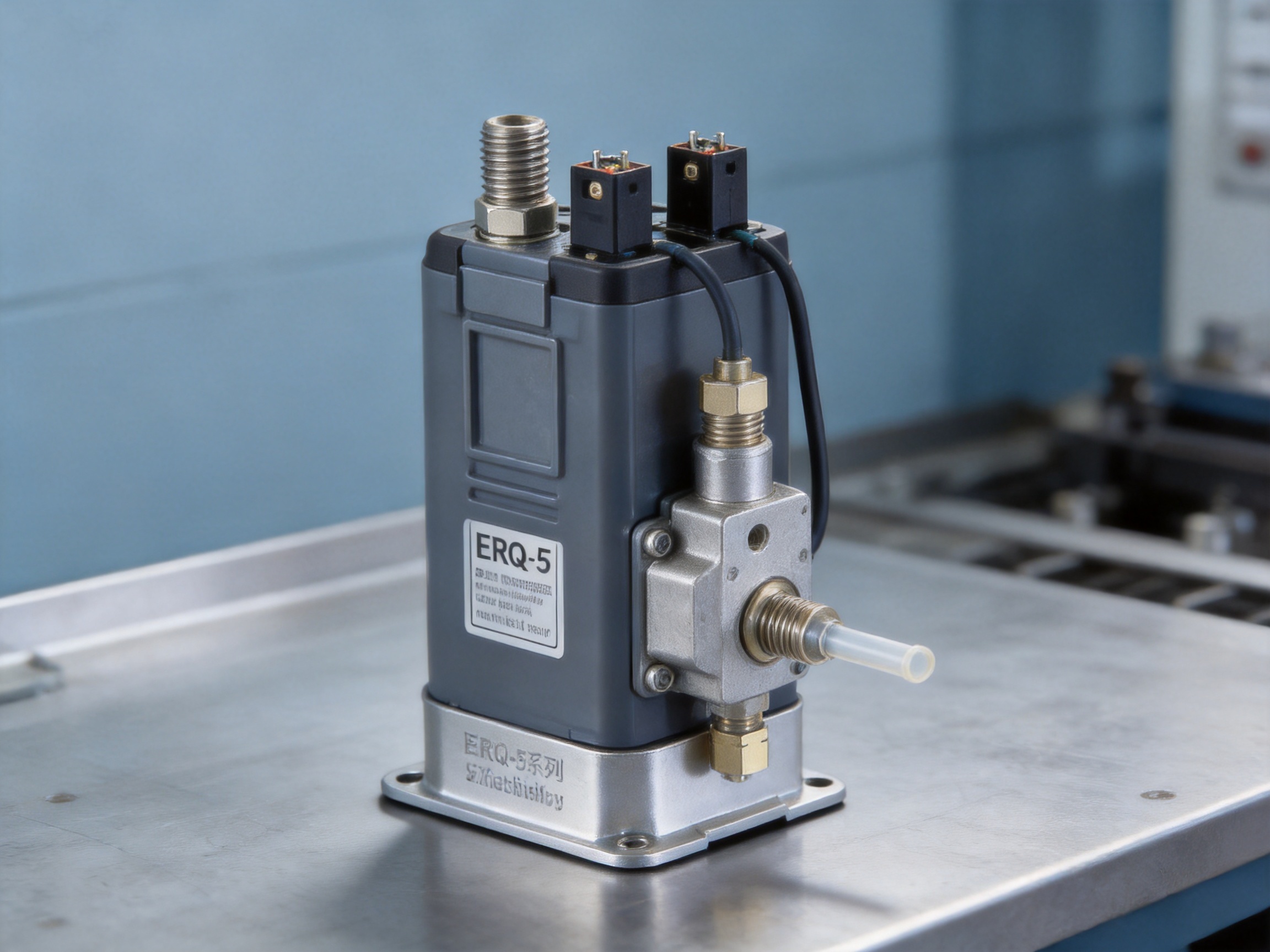
Workshops commonly use compressed air for pneumatic tools, cleaning, inflation, painting, and maintenance tasks. In these environments, the compressor may start and stop frequently as air demand changes. The ERQ-5 Series can provide automatic control for suitable workshop compressors while reducing the need for manual switching.
The rugged zinc alloy bottom is useful in workshops where equipment may experience vibration, movement, dust, and repeated use. The available air-relief function can also support smoother restarting by helping release residual discharge pressure.
Automotive repair shops often rely on compressed air for impact wrenches, air ratchets, tire inflation, spray equipment, and cleaning operations. Demand can vary significantly throughout the day, so automatic pressure control is important for maintaining a ready supply of air.
The 20–100 psi pressure range provides flexibility for different workshop compressor designs. However, the selected pressure setting should always correspond to the tank rating and the pressure requirements of the connected tools.
Industrial compressors may be integrated into production lines, packaging equipment, assembly systems, and pneumatic automation. In these applications, stable pressure control supports consistent equipment operation.
The pressure switch can be incorporated into suitable control systems where a mechanical start-and-stop signal is preferred. For larger compressors or systems with higher motor currents, an intermediate contactor or control relay may be required. The final design should be reviewed by an electrical engineer or qualified system designer.
Portable compressors and small commercial units often prioritize compact construction, straightforward maintenance, and cost-effective control. A mechanical pressure switch can be a practical choice because it does not require a programming interface or complex electronic configuration.
The available one-way and four-way screw configurations allow the switch to be adapted to different compact layouts. Customized housing and pressure settings may also help equipment manufacturers standardize the appearance and operation of their product range.
Before installation, confirm the pressure switch model, pressure range, connection type, electrical rating, frequency, temperature conditions, and required air-relief configuration. The air receiver and compressor must have appropriate safety devices, including a correctly rated safety valve.
Disconnect and isolate all electrical power before installation. Release system pressure where appropriate, and verify that the compressor cannot start unexpectedly. Use a suitable sealing method on threaded connections without allowing sealant to enter the pressure passage.
Install the pressure switch in a position that allows access for wiring, adjustment, and maintenance. Avoid placing excessive mechanical stress on the body. Support connected pipes and fittings independently when necessary so that pipe weight or vibration is not transferred directly to the switch.
Connect the electrical wiring according to the equipment circuit diagram. Confirm that the supply voltage and motor circuit are compatible with the switch rating. Terminals should be tightened correctly, and cables should be protected from abrasion, heat, moisture, and moving parts.
If an air-relief valve is used, connect the relief tube according to the compressor design. Check that the tube is not kinked or blocked. The relief path should discharge safely and should not create a hazard for operators or nearby equipment.
After installation, inspect all connections before applying power. Restore pressure gradually and check for air leakage. Confirm that the compressor starts at the intended cut-in pressure and stops at the intended cut-out pressure. Observe at least several operating cycles to verify stable performance.
Routine inspection can help extend the service life of the pressure switch and the compressor system. Check for air leakage around the connection, unusual electrical noise, repeated rapid cycling, damaged wiring, corrosion, loose fittings, or abnormal pressure behavior.
Frequent cycling may indicate an incorrectly selected pressure differential, an undersized air receiver, an air leak, a blocked filter, or excessive air demand. It should not automatically be attributed to a defective pressure switch. The complete system should be inspected.
If the compressor does not start, verify the power supply, wiring, motor protection, pressure level, switch contacts, and control circuit. If the compressor does not stop, disconnect power safely and inspect the pressure setting, contact operation, and any connected relay or contactor.
If the compressor starts under heavy load, inspect the air-relief valve, discharge tube, check valve, and residual pressure in the discharge line. A blocked or incorrectly installed relief tube can prevent the system from unloading correctly.
Do not exceed the specified pressure range or maximum working temperature. Do not expose the IP20-rated switch to direct water or unsuitable outdoor conditions. Replacement should be considered if the housing is damaged, the pressure connection is leaking, the electrical contacts are unreliable, or the switch fails to respond consistently.
OEM customers can use the ERQ-5 Series as part of a standardized compressor control package. The ability to select pressure settings, connection styles, screw types, air-relief options, and housing configurations supports equipment-specific design requirements.
Customized factory settings can reduce adjustment work during final assembly. Consistent supply from the same manufacturing source can also simplify production planning and spare-parts management.
Distributors can offer a pressure switch that serves multiple markets because it supports 110V–240V and 50/60Hz systems. The range of pressure settings provides a practical selection for common compressor applications.
The product’s zinc alloy construction, automatic control function, and optional air-relief valve provide clear selling points for professional customers. Distributors can position the switch as a durable and adaptable component rather than a basic replacement part.
System integrators can use the available connection and configuration choices to simplify compressor assembly. The four-way option may help combine several accessories in a compact layout, while the one-way version may suit simpler installations.
Because the manufacturer also produces pumps, booster systems, circulation equipment, and related accessories, integrators may be able to coordinate multiple components through one supply relationship. This can improve procurement efficiency for projects involving complete fluid-handling systems.
Digital control technology has expanded rapidly, but mechanical pressure switches remain relevant in many compressor systems. They are straightforward, familiar to technicians, and capable of operating without software or a digital interface.
For basic start-and-stop control, a mechanical pressure switch can provide an effective balance between function, cost, and serviceability. It can also be easier to replace in locations where specialized programming tools are not available.
The ERQ-5 Series adds flexibility to this conventional approach through its multiple electrical, pressure, connection, and configuration options. It combines a traditional mechanical control principle with a durable zinc alloy structure and customization capability suited to modern equipment manufacturing.
Digital controllers may be preferred when a system requires remote monitoring, variable-speed control, data logging, precise electronic adjustment, or integration with building-management systems. The ERQ-5 Series is most appropriate when the application requires dependable mechanical pressure switching and automatic compressor operation within the stated specifications.
Before ordering, customers should confirm the required cut-in and cut-out pressure values. The selected setting must be compatible with the compressor, receiver, downstream equipment, safety valve, and operating requirements.
Customers should also confirm the supply voltage, operating frequency, motor current, and whether the pressure switch will directly control the motor or operate an intermediate relay or contactor.
The hydraulic connection should be checked against the compressor tank, manifold, or pipe fitting. If a standard 1/4-inch female connection is not suitable, the required alternative should be specified before production.
The screw type, air-relief valve diameter, outer housing requirements, labels, packaging, and quantity should also be confirmed. Clear technical information at the inquiry stage helps prevent installation problems and reduces delays during order fulfillment.
It is used to automatically start and stop suitable air compressors according to the pressure in the air system. It monitors pressure and switches the compressor circuit at the configured cut-in and cut-out values.
The stated pressure range is 20–100 psi. Available pressure settings include 20–50 psi, 30–60 psi, 40–70 psi, and 50–80 psi. Customized settings may be discussed for specific equipment requirements.
The zinc alloy bottom provides a strong and durable base for the pressure connection and internal mechanism. It offers useful resistance to mechanical stress and corrosion in appropriate compressor environments.
Yes. The product is designed for 50Hz and 60Hz electrical systems, with a rated voltage range of 110V–240V.
The rated current is 12A. The actual application must be reviewed to confirm compatibility with the compressor motor, starting current, control circuit, relay, contactor, and protective devices.
An air-relief valve with a delayed closing system is an available configuration. The relief valve can be specified with a 6mm or 1/4-inch diameter pipe, depending on the compressor design.
It helps release residual air pressure from the compressor discharge line after the compressor stops. This can reduce the load during the next start and support smoother compressor restarting.
A 1/4-inch female hydraulic connection is available, and connection arrangements can be customized according to customer requirements. One-way and four-way screw types are also available.
The listed protection degree is IP20, so the switch should be installed in a dry, protected location. It is not intended for direct exposure to rain, water jets, or high-pressure cleaning.
The maximum working temperature is listed as 40°C. The installation environment should be checked carefully, especially when the switch is mounted near a hot motor or in an enclosed space.
Yes. The outer crust or housing can be produced according to customer needs, subject to technical confirmation and production requirements.
The listed warranty period is one year. Warranty conditions should be confirmed with the supplier before purchase and should be considered together with correct installation, operating conditions, and maintenance.
Installation and electrical connection should be completed by qualified personnel. The installer must confirm pressure compatibility, wiring safety, grounding, overload protection, and compliance with applicable regulations.
That depends on the motor and control-circuit requirements. The 12A rating must not be exceeded. Larger motors may require the pressure switch to control a relay or contactor rather than switching the motor directly.
The ERQ-5 Series 50/60Hz Zinc Alloy Bottom Pressure Switch provides a practical and adaptable solution for automatic air compressor control. Its principal functions are straightforward but essential: it monitors system pressure, starts the compressor when pressure falls, and stops the compressor when the desired pressure is reached.
The product’s advantages include a durable zinc alloy bottom, a 20–100 psi pressure range, multiple pressure-setting options, 110V–240V electrical compatibility, 50/60Hz frequency support, one-way and four-way screw configurations, and an optional delayed-closing air-relief valve. These features make it suitable for workshops, automotive repair facilities, industrial equipment, portable compressors, and customized OEM assemblies.
Compared with less adaptable pressure-control products, the ERQ-5 Series offers stronger configuration flexibility and broader application potential. Its mechanical design is easy to understand and maintain, while its automatic switching function supports reliable compressor operation and reduced manual supervision.
The manufacturing strength behind the product is supported by Taizhou Edwin Electric Co., Ltd.’s experience in research and development, mass production, fluid-system equipment, and global export. Its broader product portfolio in pumps and related accessories provides valuable system knowledge, while its international procurement and order-coordination capabilities support customers seeking dependable supply and one-stop service.
For the best result, customers should confirm pressure settings, electrical requirements, connection specifications, temperature conditions, protection needs, and air-relief configuration before ordering. When properly selected, installed, and maintained, the ERQ-5 Series can provide stable mechanical pressure control for a wide range of air compressor applications.
1. Product technical information for the ERQ-5 Series 50/60Hz Zinc Alloy Bottom Pressure Switch.
2. Manufacturer-provided specifications for pressure range, pressure settings, rated voltage, rated current, frequency, connection options, temperature, and protection degree.
3. General principles of air compressor pressure control and automatic cut-in/cut-out operation.
4. General guidance on compressed-air system safety, pressure vessels, relief devices, electrical protection, and maintenance.
5. Manufacturer company information concerning research and development, mass production, global export, pump manufacturing, and one-stop procurement services.
6. General engineering practice for mechanical pressure switches, compressor unloading systems, threaded connections, and electrical control circuits.
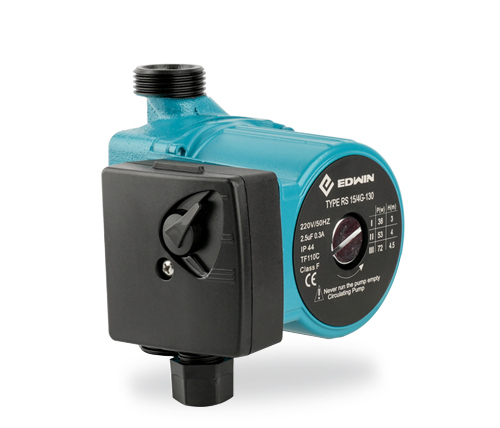
serieswatershortageprotectionvoltagestabilizationstainlesssteelverticalmultistagepump.jpg "EVR(S) Series Water Shortage Protection Voltage Stabilization Stainless Steel Vertical Multistage Pump")
edwina@edwin-pump.com
+86-13586290903 (WhatsApp)
Xuri Gongliang Cutting Tool Entrepreneurship Park, Wenqiao Town, Wenling City, Taizhou City, Zhejiang Province, China

High Performance Smart Pump Factory


 English