
edwina@edwin-pump.com

View All Products
en
The EPST Series flanged centrifugal monoblock pump is designed for users who need dependable clean-water transfer, efficient circulation, and stable pressure performance in demanding daily operation. Built around a robust HT200 pump body, a durable impeller option in HT200 or AISI304 stainless steel, and a DIN-compliant mechanical seal, this pump provides a practical balance of strength, efficiency, installation convenience, and long service life.
Unlike general-purpose pumps that may focus only on basic water movement, this model is engineered for reliable circulation and transfer of clean, chemically non-aggressive liquids in water supply, agricultural irrigation, air-conditioning circulation, industrial cooling, civil HVAC systems, and related clean-water applications. With flow capacity up to 220 m³/h, head up to 95 m, and maximum operating pressure up to 12 bar, it is suitable for projects that require both volume and lift.
EPST Series Powful Advanced Easy Installation Centrifugal Monoblock Pump with Flange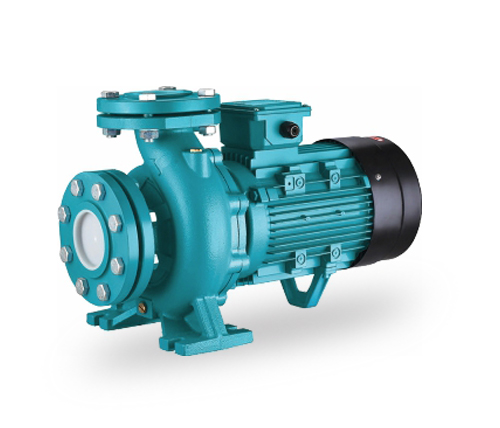
The EPST Series is a centrifugal monoblock pump with flange connection, designed to simplify installation while maintaining strong hydraulic performance. The monoblock configuration integrates the pump and motor into a compact assembly, reducing alignment complexity and saving installation space compared with traditional long-coupled pump sets.
The pump is suitable for circulating clean, non-aggressive liquids. It is particularly effective in projects where reliability, high flow, and moderate-to-high head are required. Typical applications include building water supply, agricultural irrigation, air-conditioning water circulation, civil water systems, and selected industrial circulation processes.
The core structure combines a sturdy HT200 cast iron pump body with a closed, externally ventilated motor. The motor is designed with IP54 protection and Class F insulation, allowing it to withstand common dust and splash conditions while maintaining stable electrical performance. Built-in overload protection further improves operational safety.
One of the main strengths of the pump is its practical engineering. The flange design supports secure piping connection, helping users achieve stable installation in fixed water supply and circulation systems. Compared with threaded small pumps or lightweight circulation units, the flanged structure provides higher mechanical stability, better sealing reliability, and suitability for larger piping systems.
The pump uses a mechanical seal compliant with DIN 24960. The seal is lubricated by internal recirculating pumped liquid, which helps reduce dry friction during normal operation and contributes to seal durability. For clean-water applications, this design supports long-term performance and reduced maintenance frequency.
The EPST Series has been developed for a performance range that meets the needs of commercial, agricultural, and industrial clean-water systems. The maximum flow rate reaches up to 220 m³/h, giving the pump strong liquid transfer capacity for high-volume requirements.
The maximum head reaches up to 95 m, allowing the pump to convey water to elevated locations or through systems with higher resistance. This makes it suitable for irrigation fields, building water supply, circulation loops, and other systems where pressure must remain stable.
The maximum operating pressure is 12 bar, marked as PN12. This pressure rating supports safe and stable operation in properly designed pipeline systems. For users comparing pump options, this rating demonstrates that the product is not limited to light-duty service; it is appropriate for more demanding installations where a stable hydraulic structure is needed.
The impeller can be made of HT200 or AISI304 stainless steel, depending on configuration. HT200 provides strength and cost-effective durability, while AISI304 improves corrosion resistance in clean-water applications where enhanced material performance is preferred.
The pump body is made of HT200, a widely used cast iron material known for mechanical strength, vibration absorption, and structural reliability. In pump manufacturing, a stable cast iron body helps maintain hydraulic geometry, supports the shaft and sealing area, and contributes to service life.
The motor has a closed construction with external ventilation. This design helps prevent internal contamination while allowing heat to dissipate efficiently. The motor complies with relevant performance standards and uses Class F insulation, which offers a high level of heat resistance for stable operation under normal working conditions.
The IP54 protection class provides protection against dust ingress and water splashes. This makes the motor suitable for many pump rooms, equipment rooms, agricultural pump stations, and general industrial environments, provided the installation follows appropriate safety and ventilation requirements.
The maximum ambient temperature is +40℃, which supports operation in many standard indoor and sheltered outdoor environments. The rotation direction is anti-clockwise when facing the pump suction port, and counter flanges can be supplied on request to support convenient installation.
Item |
Specification |
Benefit for Users |
Pump Type |
Flanged centrifugal monoblock pump |
Compact structure, easier installation, reduced alignment work |
Application Liquid |
Clean, chemically non-aggressive water and similar liquids |
Reliable circulation and transfer for water supply, irrigation, and HVAC |
Maximum Flow Rate |
Up to 220 m³/h |
Supports high-volume water transfer |
Maximum Head |
Up to 95 m |
Suitable for higher lift and longer pipeline systems |
Maximum Operating Pressure |
12 bar, PN12 |
Provides stable and safe operation under demanding conditions |
Pump Body Material |
HT200 cast iron |
Strong structure, good durability, vibration absorption |
Impeller Material |
HT200 or AISI304 stainless steel |
Choice between robust economy and enhanced corrosion resistance |
Mechanical Seal |
DIN 24960 compliant |
Reliable sealing and easier standardization for maintenance |
Motor Construction |
Closed structure with external ventilation |
Improved cooling and protection against contamination |
Insulation Class |
Class F |
Good thermal resistance for stable motor operation |
Protection Class |
IP54 |
Protection against dust and splashing water |
Maximum Ambient Temperature |
+40℃ |
Suitable for common industrial and civil environments |
A centrifugal pump converts rotational energy from the motor into hydraulic energy. In this design, the rotating impeller accelerates water outward, increasing velocity and pressure so the liquid can move through the discharge pipeline. This principle is well established, but final performance depends greatly on hydraulic design, material quality, motor stability, and manufacturing precision.
The monoblock structure is especially valuable for users who want easy installation. In a traditional coupled pump arrangement, the pump and motor are separate components connected by a coupling. Such systems often require careful alignment during installation and periodic checks afterward. Misalignment may cause vibration, bearing wear, seal failure, and lower efficiency.
By contrast, the EPST Series monoblock structure reduces the alignment burden. The pump and motor are integrated into a compact assembly, so installation is more straightforward. This helps contractors save time, reduce commissioning complexity, and minimize errors during field installation.
For commercial and agricultural users, this advantage is important. Pump systems are often installed under time pressure, and many sites may not have specialized alignment tools. A well-designed monoblock pump offers a more convenient solution while still delivering strong hydraulic performance.
The flanged connection further increases installation reliability. Flanges provide a stable mechanical connection to the pipeline and are better suited for larger flow rates than small threaded connections. They also allow easier disassembly for maintenance when required.
In building and civil water supply systems, users need pumps that deliver stable pressure, dependable flow, and continuous service. The EPST Series supports these requirements through its high flow capability, robust body, and reliable motor structure.
For residential buildings, commercial complexes, factories, and public facilities, water supply systems may involve long pipeline runs, multiple outlet points, storage tanks, or elevated distribution. A pump with head up to 95 m can help overcome elevation and system resistance, while flow capacity up to 220 m³/h supports large water demand.
Compared with lighter-duty pumps, this model is more suitable for fixed systems where stability is a priority. The HT200 pump body provides a strong hydraulic casing, and the flange connection ensures that pipeline forces can be managed more securely when the installation is properly supported.
The built-in overload protection of the motor helps improve safety in water supply operation. If abnormal conditions occur, overload protection can reduce the risk of motor damage. While external system protection and correct electrical installation remain essential, built-in protection is an important layer of safety.
For users managing water supply projects, the pump’s standardized components and practical construction can reduce operating uncertainty. Maintenance teams can understand the structure easily, inspect key parts such as seals and bearings, and plan service intervals based on actual operating conditions.
Agricultural irrigation requires pumps that can transfer significant volumes of water efficiently and reliably. Fields, greenhouses, orchards, and farm water systems often demand high flow during irrigation periods. The EPST Series is well suited to such tasks when the liquid is clean and non-aggressive.
The pump’s maximum flow rate of up to 220 m³/h provides the capacity needed for many irrigation layouts. Whether water is supplied from a reservoir, storage tank, or clean-water source, the pump can move large quantities through distribution pipelines to sprinklers, drip systems, or field channels.
The head capacity of up to 95 m helps in farms where water must travel across distance, overcome elevation differences, or pass through filters and control valves. This is especially useful when irrigation systems are expanded and require stronger pressure support.
A major advantage over smaller surface pumps is durability. Agricultural environments can be challenging, with dust, temperature changes, long working hours, and seasonal peak demand. The closed externally ventilated motor with IP54 protection helps the pump operate reliably in suitable sheltered installations.
When compared with competitor pumps that use lower-grade materials or weaker motor protection, the EPST Series offers better confidence for long operating cycles. The HT200 body, DIN-compliant seal, and optional stainless-steel impeller support a longer service life when the pump is correctly selected and maintained.
Water circulation is essential in many air-conditioning and HVAC systems. Chilled water, cooling water, or circulation water must move through heat exchangers, coils, pipelines, and equipment loops. A stable pump supports efficient heat transfer and system reliability.
The EPST Series is designed for clean-water circulation, making it suitable for many HVAC-related circulation duties. Its ability to provide reliable flow helps maintain consistent heat exchange performance in air-conditioning systems.
In HVAC systems, pump failure can cause temperature instability, equipment shutdown, and uncomfortable indoor conditions. For this reason, stable mechanical structure and dependable motor performance are crucial. The pump’s closed motor construction, external ventilation, IP54 protection, and Class F insulation all contribute to reliable operation in equipment rooms.
Compared with general low-cost circulation pumps, this model offers stronger hydraulic capacity and a more robust flanged construction. It is not limited to small domestic circulation loops; it can support larger commercial and civil circulation systems where higher flow and pressure are needed.
The mechanical seal design also matters in HVAC circulation. Seal leakage can reduce system pressure, waste water, and damage equipment spaces. A DIN-compliant seal lubricated by recirculating liquid helps support stable sealing performance in clean-water service.
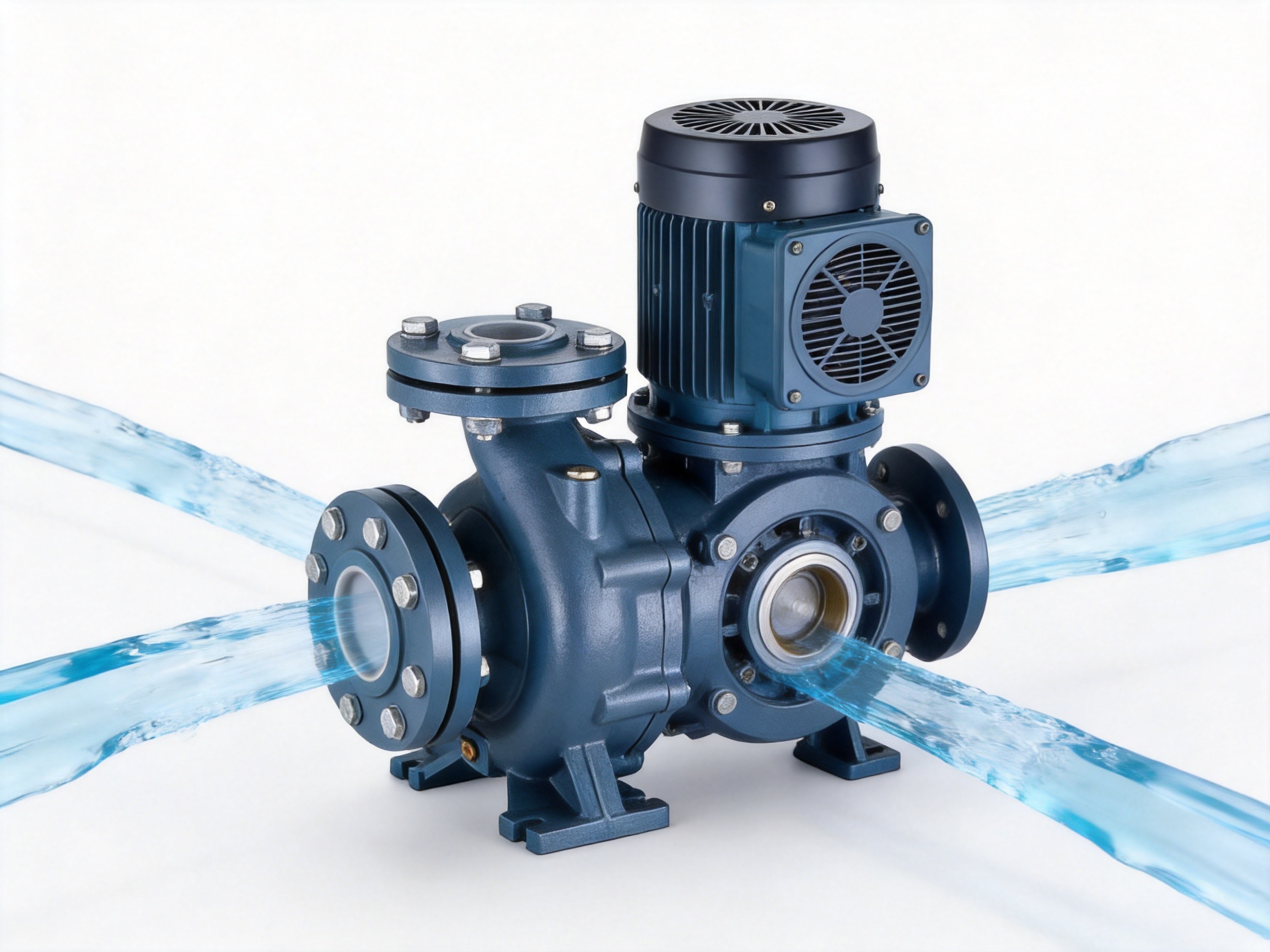
The performance of a centrifugal pump depends not only on hydraulic design but also on material selection. The EPST Series uses proven industrial materials for key components to achieve a balance of strength, durability, corrosion resistance, and cost efficiency.
The pump body is made of HT200 cast iron. This material provides good compressive strength and dimensional stability, which are important for maintaining pump casing geometry under operating pressure. Cast iron also has good vibration damping characteristics, helping reduce mechanical noise and improve operational stability.
The impeller is available in HT200 or AISI304 stainless steel. The HT200 option is suitable for clean-water applications where strength and cost control are priorities. The AISI304 option offers improved corrosion resistance, making it useful for systems where water quality may require enhanced material protection.
The pump shaft material can include 45 steel or 06Cr19Ni10 stainless steel, depending on configuration. A reliable shaft supports stable rotation, reduces vibration, and helps protect the mechanical seal and bearings from unnecessary stress.
The O-ring uses NBR, a commonly applied elastomer for sealing in water pump systems. NBR provides good sealing performance in appropriate temperature and liquid conditions. Correct elastomer selection helps prevent leakage and maintain hydraulic efficiency.
The fan is made of PP, while the fan cover uses 08F material. These components support motor cooling and physical protection. Effective ventilation helps keep the motor temperature within an acceptable range, which is important for electrical insulation life.
The motor cover uses ZL102, contributing to structural integrity and heat dissipation. Each component plays a role in the final reliability of the pump, and the combination of materials reflects practical engineering for clean-water applications.
The mechanical seal is one of the most important parts of any centrifugal pump. It prevents liquid from escaping along the shaft where the rotating shaft passes through the stationary pump casing. A poor seal can cause leakage, contamination, bearing damage, and unplanned downtime.
The EPST Series uses a mechanical seal compliant with DIN 24960. This standardization is important because it supports consistent design quality and easier replacement planning. Maintenance teams prefer standardized seal dimensions and structures because they reduce uncertainty during repair.
The seal is lubricated by internal recirculating pumped liquid. In clean-water service, this helps reduce friction between seal faces during normal operation. Lower friction supports longer seal life and more stable sealing performance.
Compared with pumps using non-standard seals or low-cost sealing assemblies, the EPST Series offers better maintenance predictability. Users benefit from a design that aligns with recognized mechanical seal practices rather than relying on unknown or non-standard parts.
However, proper operation remains essential. The pump should not be allowed to run dry. Dry running can damage the seal faces quickly because the liquid film needed for lubrication is absent. Correct installation, adequate priming, and proper system design help protect the seal and extend pump life.
The motor is a central element of pump performance. Even a well-designed hydraulic end cannot perform properly without a stable motor. The EPST Series uses a closed motor construction with external ventilation, designed to balance cooling performance and protection.
External ventilation helps remove heat generated during motor operation. Heat is one of the major causes of motor insulation aging. By supporting efficient heat dissipation, the motor can maintain better operating stability under normal conditions.
Class F insulation provides a strong level of thermal resistance. This is important for users who operate pumps for long periods or in warm environments. Although the maximum ambient temperature is +40℃, actual installation should still ensure adequate airflow around the motor.
The IP54 protection class offers protection against limited dust ingress and water splashes. In many pump rooms and agricultural pump stations, this protection level is beneficial because environments may not be perfectly clean or dry. Still, the pump should be installed according to good engineering practice, protected from flooding, heavy rain, and corrosive atmospheres.
Built-in overload protection adds another layer of safety. Overload can occur due to abnormal hydraulic conditions, blocked pipelines, voltage problems, or mechanical issues. Protection helps reduce the risk of motor burnout and improves confidence in daily operation.
Compared with competitor products using lower insulation classes, weaker ventilation, or limited motor protection, the EPST Series provides a stronger foundation for dependable service. This advantage is especially meaningful for users who value total lifecycle cost rather than only the initial purchase price.
The EPST Series is positioned as a practical, high-performance solution for clean-water circulation and transfer. Its advantages become clear when compared with common alternatives in the market.
First, the pump offers a high performance range. With flow up to 220 m³/h and head up to 95 m, it covers many medium and large clean-water duties. Some competitor models may offer either flow or head, but not both in a balanced and durable monoblock design.
Second, the flanged monoblock structure reduces installation complexity. Separate coupled pumps often require alignment, base preparation, and more commissioning work. Lightweight pumps may be easy to install but may not provide the same stability or pressure capability. The EPST Series offers a strong middle ground: easy installation with industrial-grade connection stability.
Third, the material selection improves reliability. The HT200 body provides strength and vibration absorption, while the optional AISI304 impeller improves corrosion resistance. In comparison, pumps using thinner casings, lower-grade impellers, or inconsistent casting quality may suffer from faster wear, vibration, or leakage.
Fourth, the mechanical seal follows DIN 24960. Standardized sealing is a major advantage for maintenance. Low-cost pumps may use non-standard seals that are difficult to replace or may have shorter service life. The EPST Series supports easier maintenance planning and better operating confidence.
Fifth, the motor construction is designed for reliable operation. IP54 protection, Class F insulation, external ventilation, and overload protection provide a practical package for real-world use. Some competing pumps reduce cost by simplifying motor protection, but this can increase the risk of failure in demanding applications.
Sixth, the pump is backed by a manufacturer with broad pump experience, export capability, and integrated production strength. Product reliability does not come only from design; it also depends on casting control, machining precision, assembly quality, testing, and final inspection. These manufacturing strengths help ensure that the pump users receive matches the promised performance.
Taizhou Edwin Electric Co., Ltd. is an integrated manufacturing enterprise specializing in independent research and development, mass production, and global export of water pumps. Founded in 2008, the company has built experience across deep well pumps, submersible pumps, domestic booster pumps, circulation pumps, solar water pumps, intelligent booster pumps, and related water treatment peripheral products.
This broad manufacturing background matters for the EPST Series because centrifugal monoblock pump quality depends on many disciplines. Hydraulic design, casting, machining, motor production, assembly, testing, and packaging must all work together. A factory that understands multiple pump categories can apply cross-product engineering knowledge to improve reliability and production consistency.
The company focuses on the medium-to-high-end global market, which requires stable quality and responsive service. Export customers often demand consistent product batches, clear technical communication, reliable packaging, and timely delivery. These requirements help drive stronger internal quality systems.
Since 2018, the company has invested in new energy and intelligent technology, expanding into solar water pumps and intelligent booster pumps. This investment reflects a commitment to innovation rather than simple low-cost manufacturing. The same engineering mindset supports continued improvement in centrifugal pump design and production.
To support global purchasing needs, the company also established professional foreign trade service teams through related import and export operations. This enables better procurement planning, order tracking, cross-border delivery, and customer service. For buyers, strong export service is an important advantage because it reduces purchasing risk.
The manufacturer’s pumps are widely used in new energy projects, agricultural irrigation, municipal engineering, mining, construction, HVAC systems, and household water supply. This application diversity demonstrates practical experience in real operating environments. Such experience helps the company understand what users need: reliability, efficiency, easy installation, serviceability, and value.
High-quality pump production begins with design and continues through every manufacturing stage. For a centrifugal monoblock pump, even small deviations in impeller geometry, casing dimensions, shaft concentricity, or seal fitting can influence performance and service life.
In advanced manufacturing, the pump body casting must be inspected for dimensional accuracy and structural integrity. A sound casting reduces the risk of leakage, vibration, and premature failure. HT200 cast iron requires proper casting control, cooling, and machining preparation to achieve stable results.
Machining precision is equally important. The sealing chamber, bearing seat, flange surfaces, and impeller fitting areas must be processed accurately. Poor machining can lead to misalignment, leakage, vibration, and inefficient hydraulic performance. Precision machining helps ensure that the assembled pump operates smoothly.
Impeller production is another critical process. The impeller must maintain correct blade shape and balance. If the impeller is poorly balanced, it can create vibration that affects bearings, seals, and motor life. A manufacturer with strong quality control will check key dimensions and balance conditions to support stable operation.
Motor production requires attention to winding quality, insulation treatment, rotor balance, bearing installation, and electrical testing. Class F insulation performance depends not only on material rating but also on manufacturing process control. Proper winding and insulation treatment help prevent early electrical faults.
Assembly quality connects all production steps. During assembly, technicians must ensure correct seal installation, shaft rotation, fastener tightening, impeller clearance, and motor connection. A pump that is well designed but poorly assembled cannot deliver reliable service.
Testing is essential before delivery. Hydraulic testing verifies that the pump meets required performance expectations. Electrical testing checks motor safety and operating condition. Leakage inspection confirms sealing quality. Noise and vibration checks help identify assembly or balance problems.
These manufacturing and quality control steps give the EPST Series an advantage over pumps produced with minimal inspection. Buyers may not see these processes directly, but they experience the results through stable operation, fewer failures, and longer service life.
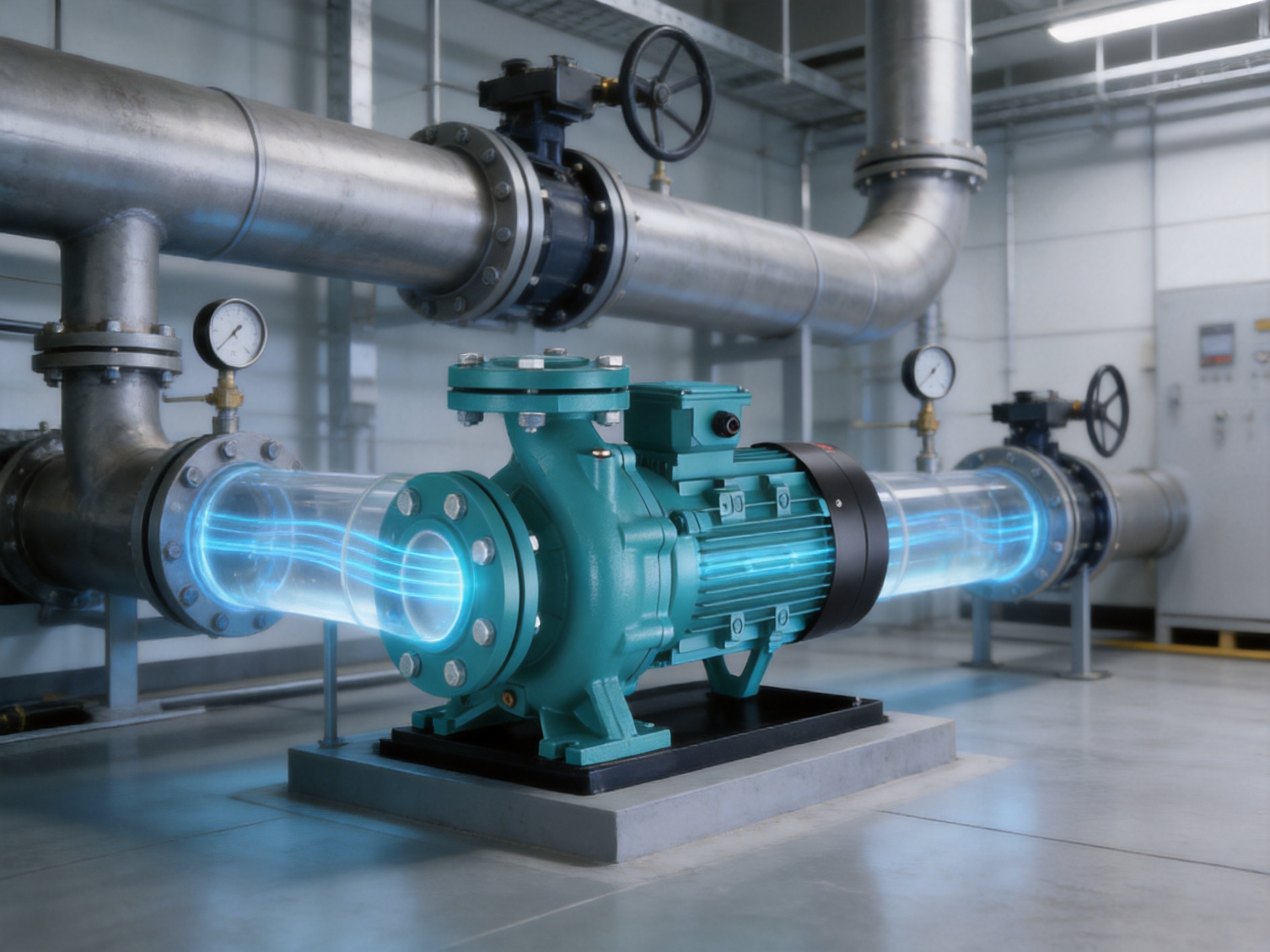
The EPST Series is designed for easy installation in clean-water systems. Its monoblock construction reduces the need for field coupling alignment, which is a common challenge with separate pump and motor sets. This makes the pump easier for contractors, installers, and maintenance teams to handle.
The flange connection helps create a secure pipeline interface. In fixed installations, flanges are preferred because they provide strength, alignment stability, and service access. Properly installed flanges also reduce leakage risk compared with weak or mismatched connections.
Installation should include a stable foundation or support structure. Although the monoblock design is compact, the pump should not carry excessive pipeline weight. Pipeline supports should be used to prevent stress on the pump flanges and casing.
The suction pipeline should be designed to reduce turbulence and avoid air pockets. A poor suction arrangement can cause cavitation, noise, vibration, and performance loss. The pump should be supplied with clean liquid and should not be allowed to run dry.
The rotation direction must be checked during commissioning. The specified rotation is anti-clockwise when facing the pump suction port. Incorrect rotation can reduce performance and may damage components. Electricians and installers should verify rotation before full operation.
Counter flanges are available on request, supporting convenient matching with system piping. This flexibility is helpful for project buyers who need complete installation support rather than only the pump unit.
Proper operation helps users obtain the full benefit of the EPST Series. Before startup, the pump and suction line should be filled with liquid if the installation requires priming. The pump should never be started dry because dry running may damage the mechanical seal.
Operators should check that valves are in the correct position and that the discharge pipeline is ready for flow. Starting against unsuitable conditions can cause overload, vibration, or pressure problems. The electrical supply should match the motor requirements and be installed according to local regulations.
During operation, users should monitor noise, vibration, pressure, flow, and motor temperature. A sudden change may indicate a blocked filter, air in the suction line, worn components, improper valve position, or electrical issues.
Routine maintenance should include inspection of seals, bearings, fasteners, flange joints, electrical connections, and ventilation openings. The motor fan and fan cover should remain clean enough to allow proper airflow. Dust accumulation can reduce cooling efficiency.
If the pump is used seasonally, such as in agricultural irrigation, it should be inspected before the operating season begins. After long storage, operators should confirm that the shaft rotates freely, the seal area is in good condition, and electrical insulation is acceptable.
For HVAC systems, maintenance planning should align with building service schedules. Because circulation pumps can be critical to comfort and process stability, preventive maintenance is better than emergency repair.
Correct maintenance improves lifecycle value. A durable pump still requires responsible operation, but when maintained properly, the EPST Series can provide reliable service in demanding clean-water systems.
Energy efficiency is not only a pump feature; it is also a system result. A pump with good hydraulic design can waste energy if it is incorrectly selected or installed. The EPST Series supports efficient operation by offering a wide performance range and stable hydraulic construction, but users should select the model that matches actual flow and head requirements.
Oversized pumps may consume unnecessary energy and create excessive pressure. Undersized pumps may run continuously without meeting demand. Proper pump selection helps maintain efficient operation and reduces operating cost over time.
The impeller and casing geometry influence hydraulic efficiency. Accurate manufacturing helps preserve the intended hydraulic profile, reducing internal losses. Balanced rotation reduces vibration and mechanical friction, supporting better energy use.
In water supply systems, stable pump performance helps maintain pressure without excessive cycling. In irrigation systems, correct flow and pressure improve water distribution uniformity. In HVAC circulation, reliable flow supports heat exchange efficiency and equipment stability.
Compared with low-cost pumps that may have inconsistent performance curves or rough internal surfaces, a well-manufactured centrifugal monoblock pump can deliver better real-world efficiency. This can reduce electricity cost, especially in applications with long operating hours.
Many buyers compare pumps mainly by purchase price. However, the true cost of a pump includes energy consumption, installation labor, maintenance, downtime, spare parts, and service life. The EPST Series is designed to offer strong lifecycle value rather than simply low initial cost.
Easy installation reduces labor time and commissioning risk. The monoblock design lowers alignment requirements, while flanged connections support secure piping. These advantages can save time during project construction.
Reliable materials reduce premature failure risk. HT200 casting, optional AISI304 impeller, NBR sealing parts, and a DIN-compliant mechanical seal support durability in clean-water systems.
Motor protection reduces electrical risk. IP54 protection, Class F insulation, external ventilation, and built-in overload protection all help extend motor life when the pump is installed and operated correctly.
Standardized design supports maintenance. Maintenance teams can understand the pump structure and replace wear parts more predictably. This reduces downtime and improves long-term service planning.
Manufacturer strength also contributes to lifecycle value. A supplier with R&D, production, export service, and broad application experience can provide more dependable product support than a trading-only supplier with limited technical control.
The EPST Series is suitable for contractors, agricultural irrigation companies, HVAC system integrators, water supply project managers, equipment distributors, and industrial users who need a reliable clean-water centrifugal pump.
For contractors, the pump offers easy installation and stable performance, helping reduce project risk. For distributors, the product provides strong technical selling points, including high flow, high head, flanged connection, robust materials, and reliable motor protection.
For farms and irrigation projects, the pump supports high-volume water delivery and pressure needs. For HVAC projects, it supports circulation stability and heat exchange performance. For water supply systems, it helps deliver dependable pressure and flow.
The pump is not intended for dirty water, corrosive chemicals, abrasive liquids, or liquids containing solids unless confirmed by specific engineering review. It is designed for clean, chemically non-aggressive water and similar liquids. Correct application selection is essential for long service life.
The EPST Series uses a carefully selected component structure to support durability and performance. The pump body is HT200, offering a strong foundation for the hydraulic chamber. The impeller is available in HT200 or 06Cr19Ni10 stainless steel, depending on the required balance between cost and corrosion resistance.
The O-ring uses NBR for practical sealing performance. The connection body is HT200, maintaining structural continuity with the pump body. The motor cover is ZL102, while the fan is PP and the fan cover is 08F. The guard plate and certain stainless components use 06Cr19Ni10, supporting corrosion resistance in selected areas.
The pump shaft may use 45 steel or 06Cr19Ni10 stainless steel. Shaft quality is important because it directly affects rotating stability. A strong and accurately machined shaft reduces vibration and protects seals and bearings.
Although small components may appear less important than the casing or motor, they influence total reliability. Bearings, seals, O-rings, fan components, and fasteners all contribute to daily performance. A pump is only as reliable as the integration of all these parts.
Low-cost centrifugal pumps may appear attractive at the purchasing stage, but users often encounter hidden costs later. Thin castings, poor machining, unstable motor quality, weak seals, and insufficient testing can result in leakage, overheating, noise, vibration, and early failure.
The EPST Series addresses these issues through robust material selection and controlled manufacturing. The HT200 body provides a stable casing. The DIN-compliant seal improves sealing reliability. The Class F motor insulation and IP54 protection support safer operation. The monoblock design reduces alignment problems.
Another common weakness of low-cost pumps is inconsistent performance. If the impeller is not accurately produced or the hydraulic passage is poorly finished, actual flow and head may differ from expectation. Strong manufacturing control helps ensure more predictable operation.
Serviceability is also important. A pump using non-standard parts may become difficult to repair. Users may be forced to replace the entire pump instead of servicing components. The EPST Series uses a more practical and standardized approach, improving long-term maintainability.
For international buyers, product quality is only one part of the purchasing decision. Supply reliability, documentation, communication, packaging, and after-sales support also matter. Taizhou Edwin Electric Co., Ltd. has developed global export experience and service systems to support overseas customers.
The company established professional import and export service capabilities to help with procurement planning, order tracking, cross-border delivery, and foreign trade services. This is valuable for distributors, engineering buyers, and project contractors who require reliable supply chains.
Because the company manufactures a wide range of pumps, customers can source multiple pump categories from one supplier. This one-stop procurement capability is useful for projects that require deep well pumps, submersible pumps, booster pumps, circulation pumps, solar pumps, intelligent booster pumps, and centrifugal pumps.
Global customers benefit from supplier continuity. A manufacturer with long-term pump experience can support repeat orders, model selection, and product development. This reduces risk compared with short-term suppliers that may change models frequently or lack technical support.
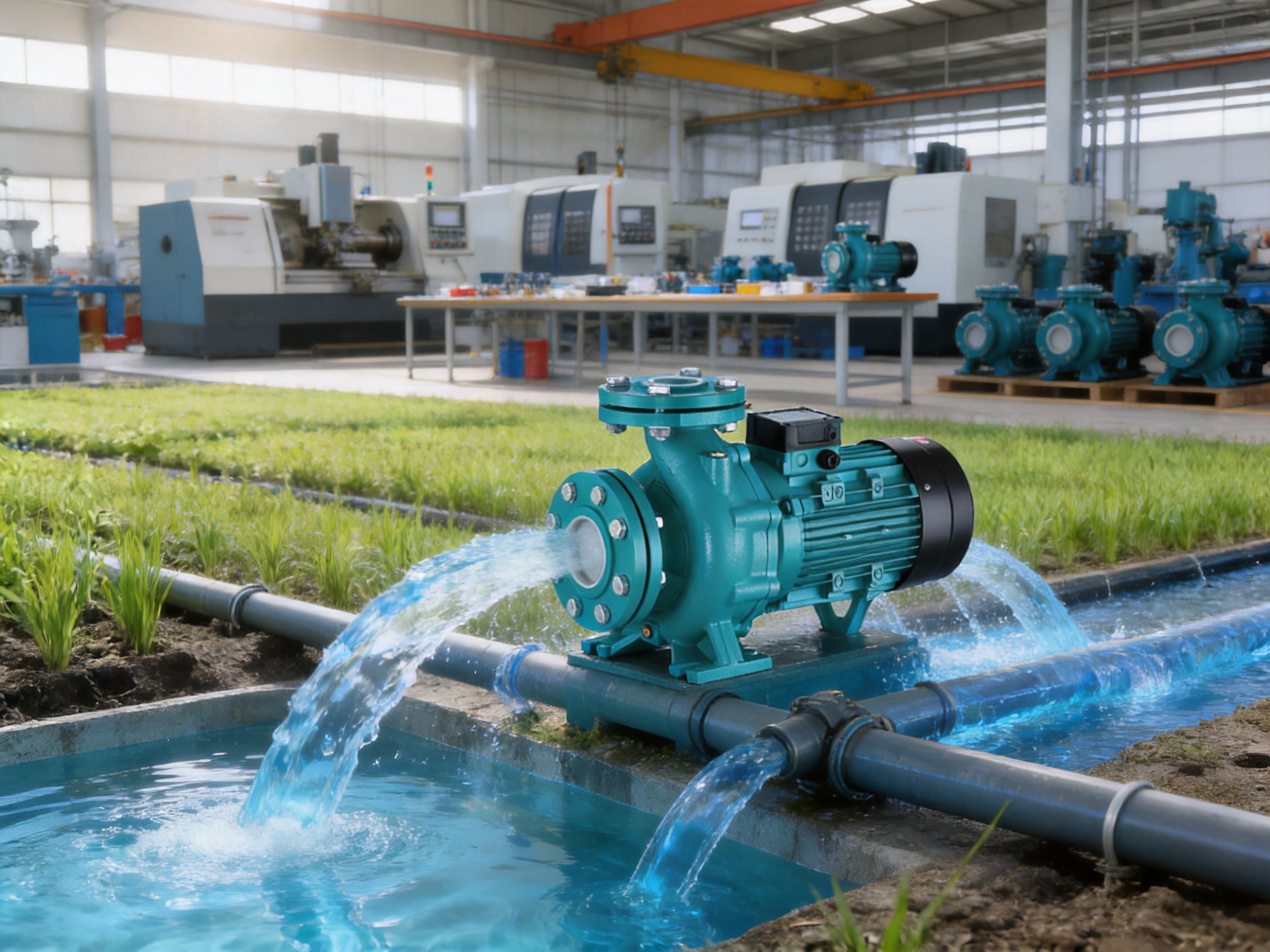
A reliable pump contributes to sustainable water use by reducing leakage, downtime, and inefficient operation. In irrigation, stable pumping helps distribute water more accurately. In HVAC circulation, efficient flow supports energy-conscious building operation. In water supply, dependable pressure reduces waste caused by unstable systems.
The EPST Series supports these goals through robust construction and stable performance. A longer service life means fewer replacements and less material waste. Efficient operation reduces energy consumption when the pump is correctly selected for the system.
The company’s investment in new energy and intelligent technology also shows a broader commitment to modern water solutions. While the EPST Series itself is a clean-water centrifugal monoblock pump, it belongs to a wider manufacturing portfolio that includes solar water pumps and intelligent booster systems. This reflects an understanding of future water and energy trends.
When selecting the EPST Series, users should identify required flow, required head, liquid characteristics, pipeline layout, operating pressure, ambient temperature, installation environment, and duty cycle. These factors determine the correct pump model and motor power.
The liquid should be clean and chemically non-aggressive. If the water contains sand, fibers, abrasive particles, or corrosive substances, the application should be reviewed carefully. Using a clean-water pump for unsuitable liquids can shorten service life.
System pressure must remain within the maximum operating pressure of 12 bar. The pipeline, valves, and accessories should also be rated appropriately. A pump is part of a complete system, and every component must be compatible with operating conditions.
The installation environment should allow adequate motor ventilation. Although the motor has IP54 protection, it should not be submerged or exposed to severe weather without suitable protection. Proper shelter and ventilation help maintain performance.
Electrical supply must match the motor requirements. Voltage instability can damage motors and reduce efficiency. Qualified electrical installation and proper protection devices are recommended.
For best results, buyers should consult technical data and performance curves when choosing a model. Correct selection ensures the pump operates near an efficient duty point and provides long-term value.
It is designed for clean, chemically non-aggressive water and similar liquids. It is suitable for clean-water transfer, circulation, water supply, irrigation, and HVAC circulation. It is not intended for dirty, abrasive, or corrosive liquids unless specifically evaluated by technical personnel.
The pump can reach flow rates up to 220 m³/h, head up to 95 m, and maximum operating pressure up to 12 bar. Actual performance depends on the selected model, motor power, system design, and installation conditions.
The monoblock design integrates the pump and motor into a compact assembly. This reduces alignment work, simplifies installation, saves space, and lowers the risk of coupling-related vibration or maintenance issues.
The flange connection offers a strong and stable pipeline connection. It is suitable for larger flow systems and fixed installations. It also supports easier maintenance access compared with less robust connection methods.
The pump body is made of HT200 cast iron. The impeller can be made of HT200 or AISI304 stainless steel, depending on configuration. These material choices provide strength, durability, and optional corrosion resistance.
DIN 24960 compliance indicates that the mechanical seal follows a recognized standard. This improves sealing reliability and supports easier maintenance planning because standardized seal structures are more predictable than non-standard alternatives.
Yes. It is suitable for agricultural irrigation when the water is clean and non-aggressive. Its high flow capability and head range make it useful for farms, fields, greenhouses, and irrigation distribution systems.
Yes. The pump is suitable for clean-water circulation in air-conditioning and HVAC systems. It helps maintain stable water circulation for heat exchange and system operation.
The motor has a closed construction with external ventilation, IP54 protection, Class F insulation, and built-in overload protection. These features help improve safety and reliability in suitable operating environments.
The rotation direction is anti-clockwise when facing the pump suction port. Rotation should be checked during commissioning because incorrect rotation can reduce performance and may damage the pump.
It offers a stronger combination of high flow, high head, HT200 casing, optional stainless-steel impeller, DIN-compliant mechanical seal, IP54 motor protection, Class F insulation, and easy flanged monoblock installation. These factors improve reliability and lifecycle value.
The pump is supported by an experienced manufacturer with independent R&D, mass production capability, global export experience, quality control processes, and a broad product portfolio. Production strength includes material control, machining precision, assembly management, motor testing, and final inspection.
The EPST Series flanged centrifugal monoblock pump is a strong solution for clean-water circulation and transfer in water supply, irrigation, air-conditioning, and related industrial or civil systems. Its performance range of up to 220 m³/h flow, up to 95 m head, and up to 12 bar operating pressure makes it suitable for demanding applications that require both capacity and reliability.
The pump’s competitive advantages come from a combination of practical design and durable construction. The monoblock configuration simplifies installation, the flange connection improves pipeline stability, the HT200 pump body provides strength, the optional AISI304 impeller improves corrosion resistance, and the DIN 24960 mechanical seal supports reliable sealing.
The motor design further strengthens the product. Closed construction, external ventilation, IP54 protection, Class F insulation, and built-in overload protection provide dependable operation in appropriate environments. These features make the pump more reliable than many low-cost alternatives that sacrifice protection, material quality, or serviceability.
Behind the product is an experienced pump manufacturer with R&D capability, mass production strength, export service experience, and a broad range of water pump solutions. This manufacturing foundation supports consistent quality, professional supply, and long-term customer value.
For buyers seeking a clean-water centrifugal pump that combines easy installation, strong hydraulic performance, durable materials, and reliable manufacturing support, the EPST Series is a practical and competitive choice.
1. Karassik, I. J., Messina, J. P., Cooper, P., and Heald, C. C. Pump Handbook. McGraw-Hill Education.
2. Hydraulic Institute. Centrifugal Pump Standards and Application Guidelines.
3. Europump and Hydraulic Institute. Variable Speed Pumping: A Guide to Successful Applications.
4. Stepanoff, A. J. Centrifugal and Axial Flow Pumps: Theory, Design, and Application.
5. DIN 24960. Mechanical Seals: Dimensions and Technical Requirements.
6. International Electrotechnical Commission. IEC 60034 Rotating Electrical Machines Standards.
7. Bloch, H. P., and Budris, A. R. Pump User’s Handbook: Life Extension.
edwina@edwin-pump.com
+86-13586290903 (WhatsApp)
Xuri Gongliang Cutting Tool Entrepreneurship Park, Wenqiao Town, Wenling City, Taizhou City, Zhejiang Province, China

High Performance Smart Pump Factory


 English