
edwina@edwin-pump.com

View All Products
en
The 2ECP Series surface centrifugal pump is designed for applications that require higher pressure, dependable water transfer, and stable operation from a compact surface-mounted unit. With a double-impeller hydraulic design, robust cast-iron construction, brass impellers, stainless-steel wetted shaft areas, and a reliable mechanical seal, the series is suitable for domestic water supply, garden irrigation, water lifting, small pressure systems, and a wide range of civil and light commercial applications.
Unlike a basic single-stage surface pump that may prioritize flow over pressure, the 2ECP Series is engineered to produce a higher head while maintaining a practical flow range. This makes it useful where water must be delivered to elevated tanks, upper floors, irrigation zones, or distribution systems with meaningful resistance in the pipework. Its maximum suction height of 8 meters also gives installers useful flexibility when the water source is below the pump.
Manufactured by Taizhou Edwin Electric Co., Ltd., the product reflects the company’s experience in pump research and development, mass production, and international export. The company’s broader portfolio includes deep well pumps, submersible pumps, domestic booster pumps, circulation pumps, solar water pumps, and intelligent booster pumps. This product knowledge provides a strong foundation for selecting materials, motor configurations, sealing systems, and hydraulic structures for different water-pumping requirements.
The following article examines the 2ECP Series in detail, including its hydraulic concept, construction, performance data, applications, manufacturing strengths, maintenance requirements, and advantages compared with common surface centrifugal pump alternatives.
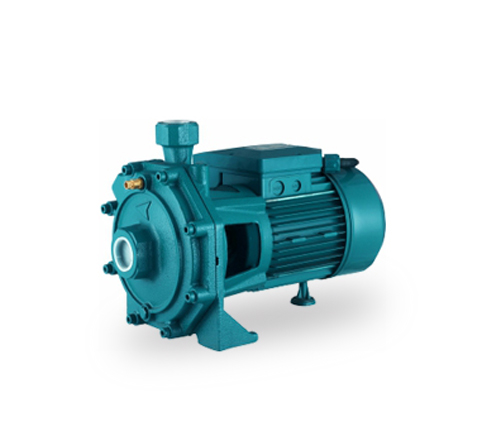
2ECP Series High Head Low Vibration Reliable Sealing Surface Centrifugal Pump
The 2ECP Series is a surface-mounted centrifugal pump with two impellers arranged to generate a higher discharge pressure than many conventional single-impeller pumps of a similar general size. The pump is intended primarily for clean water and liquids with physical and chemical properties similar to water.
Its product design combines a high-head hydraulic section with a compact electric motor. Depending on the model, rated motor power ranges from 0.75 kW to 2.2 kW, equivalent to approximately 1 HP to 3 HP. Maximum flow ranges from 100 L/min to 145 L/min, while maximum head ranges from 40 meters to 55 meters.
The series includes the following models:
2ECP-130: 0.75 kW, 1 HP, maximum flow 100 L/min, maximum head 40 m.
2ECP-160: 1.1 kW, 1.5 HP, maximum flow 125 L/min, maximum head 50 m.
2ECP-210: 1.5 kW, 2 HP, maximum flow 140 L/min, maximum head 55 m.
2ECP-310: 2.2 kW, 3 HP, maximum flow 145 L/min, maximum head 55 m.
2ECP-310T: 2.2 kW, 3 HP, maximum flow 145 L/min, maximum head 55 m.
The inlet and outlet sizes vary by model. The 2ECP-130 uses 1-inch connections, while the larger models use 1.25-inch inlet and outlet connections. This range allows users to match pump capacity to the required pressure, pipe size, water demand, and available electrical supply.
The pump is not designed for abrasive slurry, seawater, fuel, solvents, or chemically aggressive liquids unless the material compatibility has been specifically verified. Correct application selection is essential for achieving the expected service life and maintaining stable hydraulic performance.
The most important performance feature of the 2ECP Series is its double-impeller configuration. A centrifugal pump converts rotational energy from the motor into fluid velocity and pressure through the impeller. In a double-impeller design, the hydraulic stages work together to produce a greater total head than a comparable single-impeller arrangement.
This design is especially valuable in systems where pressure is more important than maximum free-flow capacity. Examples include water distribution networks, elevated storage tanks, multi-point domestic supply, garden irrigation with long pipe runs, and small pressure systems that must overcome elevation and friction losses.
A higher head rating does not mean that the pump always operates at its maximum stated head. Actual performance depends on the system curve, pipe diameter, total pipe length, fittings, elevation, valves, water level, and required delivery flow. The stated maximum head represents the upper pressure capability under specified test conditions. Installers should select a working point within the pump’s performance curve rather than sizing solely from the maximum value.
Compared with a typical single-impeller surface pump, the double-impeller arrangement can provide a useful pressure advantage without requiring an excessively large pump body. This may help reduce installation space and allow a higher-pressure application to be served by a relatively compact motor-pump assembly.
Another benefit is application flexibility. A single-stage pump may be adequate for short-distance water transfer, but it can become less suitable when the system includes vertical lifting, narrow pipes, multiple elbows, filters, pressure controls, or sprinklers. The 2ECP Series is better suited to these resistance-heavy applications because its hydraulic structure is intended for high-head service.
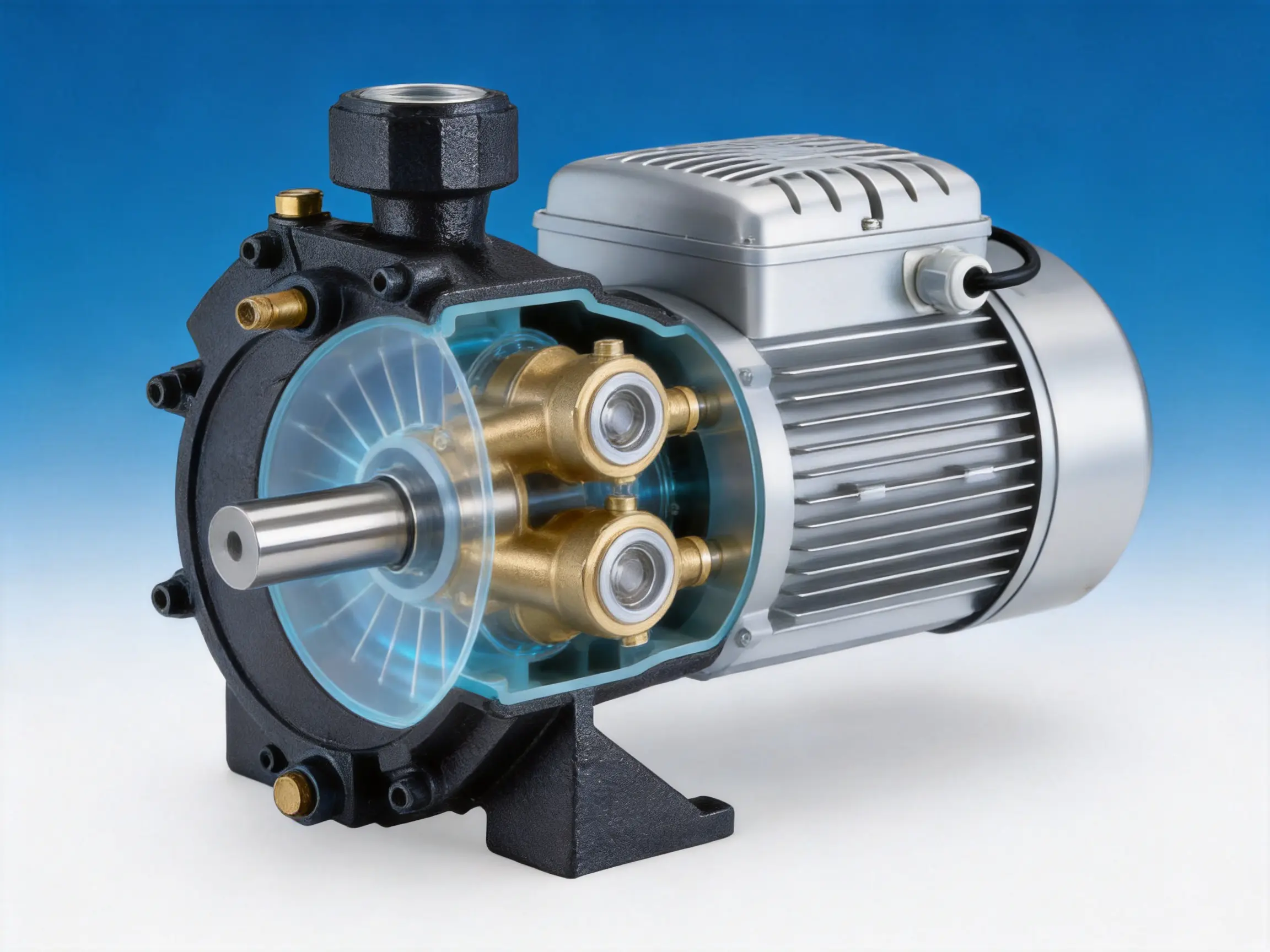
The series provides maximum head values from 40 meters to 55 meters. The 2ECP-130 reaches a maximum head of 40 meters, while the 2ECP-160, 2ECP-210, 2ECP-310, and 2ECP-310T offer maximum head values of 50 or 55 meters.
These figures make the pump suitable for many small and medium water-transfer tasks, including:
Supplying water from a ground-level source to an elevated tank.
Improving pressure in domestic distribution systems.
Delivering water through long garden or agricultural irrigation pipelines.
Feeding small sprinkler and spray irrigation systems.
Transferring water from storage tanks to buildings or workshops.
Supporting pressure sets with suitable control equipment.
Supplying water to several outlets where system resistance is significant.
In a real installation, the available flow at a particular pressure will be lower than the pump’s maximum free-flow rate. Therefore, the correct evaluation method is to compare the required system duty point with the manufacturer’s pump curve. If the application requires 80 L/min at a defined total dynamic head, the installer should verify that the selected model can maintain that flow at the required pressure.
The high-head structure is one of the primary ways this pump can compete with conventional surface pumps. Rather than selecting a much larger single-stage model to compensate for pressure losses, users may be able to select a double-impeller model with an appropriate motor size. This can support a more balanced installation, provided the duty point, suction conditions, and pipework are correctly calculated.
Low vibration is a key product advantage in surface-mounted pumping equipment. Excessive vibration can produce noise, loosen pipe connections, increase bearing loads, accelerate mechanical seal wear, and transmit unwanted movement to the foundation or building structure.
The 2ECP Series is designed around a balanced motor-pump assembly, a rigid support structure, and high-efficiency bearings. The use of C&U bearings supports smooth rotor rotation and helps reduce mechanical resistance during operation. A properly aligned shaft and rotor assembly also contribute to stable running conditions.
Low vibration depends on both product design and installation quality. The pump should be mounted on a solid, level base. Suction and discharge pipes should be independently supported so that their weight does not pull on the pump casing. The pipework should be free from unnecessary stress, and the pump should be protected against operation with a blocked line, severe cavitation, or air leakage at the suction side.
When these conditions are satisfied, the low-vibration design can provide several practical advantages over less rigid or poorly balanced surface pumps. Operators may experience a more comfortable acoustic environment, fewer fastener problems, and reduced stress on connected valves and fittings.
For residential installations, lower vibration is particularly useful because the pump may be installed near living areas, utility rooms, garages, or small workshops. For commercial and agricultural applications, stable operation can reduce interruptions and help maintain consistent water delivery.
Water leakage is one of the most common concerns in centrifugal pump operation. The 2ECP Series uses a mechanical seal with carbon and ceramic components. This material combination is widely used in clean-water pumps because it provides a controlled sealing interface around the rotating shaft.
The mechanical seal helps prevent water from escaping along the shaft while also limiting the entry of contaminants into the motor-side area. Proper seal performance depends on correct assembly, adequate cooling and lubrication from the pumped liquid, and avoidance of dry running.
The pump also uses an AISI 304 stainless-steel shaft in the water-contact area. Stainless steel offers useful corrosion resistance for clean-water applications and helps reduce the risk of rust contamination. It also supports dependable restarting after periods of inactivity when the pump has been stored or used intermittently.
The brass impeller is another important material choice. Brass provides good resistance to corrosion in normal clean-water service and is less susceptible to certain forms of rust than ordinary carbon steel. The product description also identifies rust-free copper inserts, which are intended to support smooth restarting after prolonged periods without operation.
The pump body and support are manufactured from HT200 cast iron and receive special anti-rust treatment. Cast iron provides a rigid and durable structural base for the hydraulic components. Its strength helps the casing withstand normal internal pressure and external installation loads when the pump is correctly selected and operated.
These material choices provide a balanced alternative to very low-cost pumps that may use less durable wetted components. Although material selection alone cannot guarantee service life in every environment, the combination of treated cast iron, brass, stainless steel, and carbon-ceramic sealing is well suited to the stated clean-water applications.
The electric motor is designed with durable copper wiring. Copper windings offer good electrical conductivity and support efficient conversion of electrical energy into rotational power. Efficient winding design can also help limit unnecessary heat generation during normal operation.
The motor uses high-efficiency C&U bearings to support smooth rotation. Bearing quality is important because the motor must operate at high speed while carrying the radial and axial loads produced by the pump. Correct bearing installation, lubrication, and alignment are essential for realizing the expected benefit.
Single-phase versions include a built-in thermal protector. This protection device is intended to disconnect or protect the motor when excessive temperature develops because of overload, abnormal operating conditions, insufficient cooling, or voltage-related stress. Thermal protection is particularly useful in domestic and small commercial systems where a separate motor protection panel may not always be installed.
The motor insulation rating is Class F. This insulation class provides a defined thermal capability for the winding insulation system and supports dependable operation within the manufacturer’s specified conditions. The motor also has an IP44 protection rating, which provides protection against solid objects of certain sizes and splashing water from typical directions. IP44 does not mean that the motor is waterproof or suitable for flooding, immersion, or direct high-pressure washing.
The maximum ambient temperature is specified as 40°C. Installers should ensure adequate ventilation around the motor and avoid enclosing the pump in a space where heat accumulates beyond this limit. Correct ventilation helps protect the winding insulation, capacitor, bearings, and thermal protection system.
The 2ECP Series combines hydraulic and motor components in a compact surface-pump package. The pump body and support use HT200 cast iron, providing a stable connection between the hydraulic section and the motor. The motor case is aluminum, which helps reduce weight and assists heat dissipation. The motor cover is identified as cast iron, adding structural protection to the assembly.
The fan is made from PP, or polypropylene. A polymer fan can provide low weight and resistance to normal environmental moisture. The fan cover protects the rotating cooling fan and helps maintain safe operating conditions around the motor.
The assembly also includes a capacitor holding box, capacitor, terminal cover, stator, rotor and shaft, and ball bearing components. Every component has a role in creating a dependable pump system. The shaft transfers torque from the motor to the impellers, the stator generates the rotating magnetic field, the rotor converts that field into mechanical rotation, and the capacitor supports the starting and running characteristics of the single-phase motor.
In comparison with lightweight pumps using thin housings or less rigid supports, the 2ECP Series is positioned as a more durable option for applications where the pump may operate frequently or face higher pressure demands. The cast-iron hydraulic structure is especially useful where mechanical stability and resistance to ordinary handling are important.
The principal published technical parameters are summarized below. Maximum values should be used for selection guidance only. The actual working point must be confirmed using the pump performance curve and the complete system requirements.
| Model | Power (kW) | Power (HP) | Inlet/Outlet | Maximum Flow (L/min) | Maximum Head (m) | Maximum Suction (m) |
|---|---|---|---|---|---|---|
| 2ECP-130 | 0.75 | 1 | 1 x 1 inch | 100 | 40 | 8 |
| 2ECP-160 | 1.1 | 1.5 | 1.25 x 1 inch | 125 | 50 | 8 |
| 2ECP-210 | 1.5 | 2 | 1.25 x 1 inch | 140 | 55 | 8 |
| 2ECP-310 | 2.2 | 3 | 1.25 x 1 inch | 145 | 55 | 8 |
| 2ECP-310T | 2.2 | 3 | 1.25 x 1 inch | 145 | 55 | 8 |
The listed connection dimensions show that the series is intended for moderate pipework rather than very large-volume industrial transfer. In many systems, correct pipe sizing is essential. A pipe that is too small can create excessive friction loss, reducing the flow available at the discharge point and increasing the load on the pump.
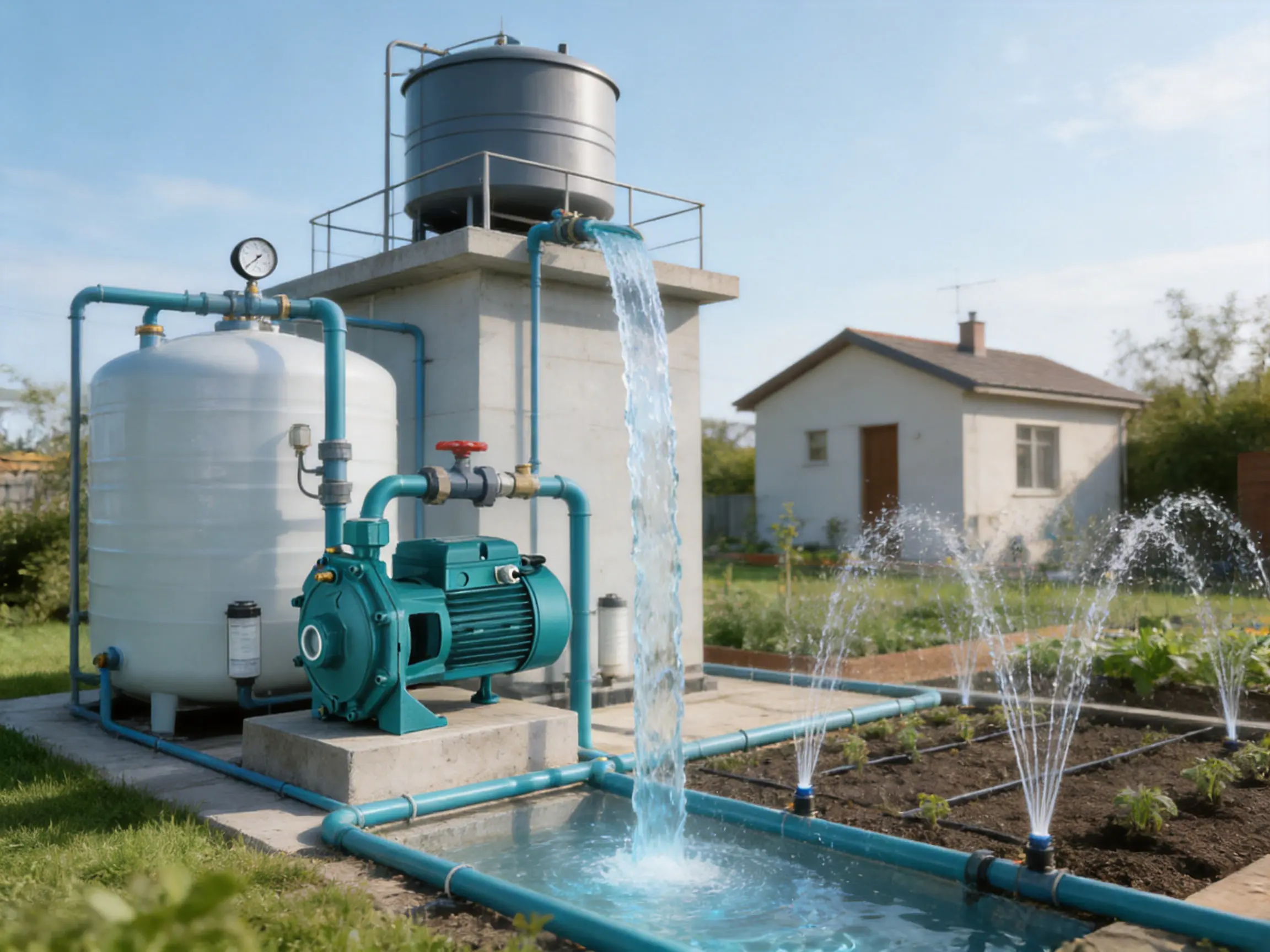
The 2ECP Series can be used for domestic water distribution where the source is clean and the required pressure is higher than a basic transfer pump can provide. It may serve water from a storage tank, ground-level reservoir, or shallow source to faucets, appliances, garden outlets, or a small pressure system.
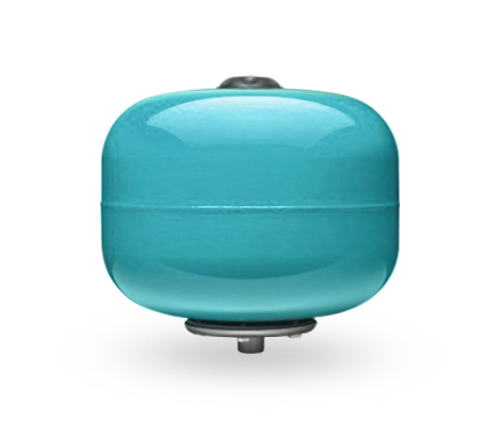
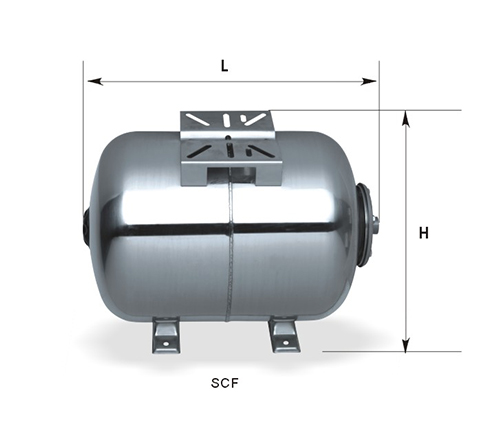
It is also suitable for civil applications such as supplying water to small buildings, service facilities, workshops, and farm structures. When used with an appropriate pressure tank and control system, the pump can support automatic starting and stopping in response to water demand.
For water tower applications, the pump can transfer water into an elevated tank or help distribute stored water through a building network. The selected model should be based on the required vertical elevation, pipe friction, desired flow, and operating schedule.
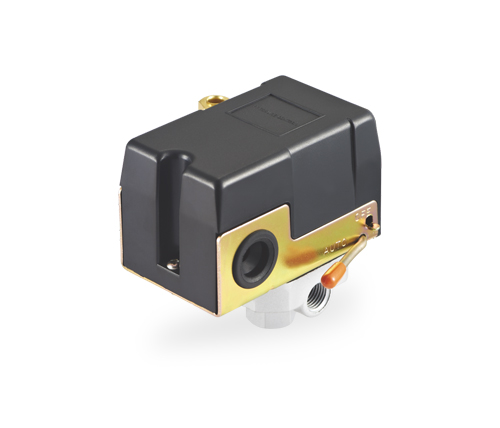
In domestic installations, a pressure switch, electronic controller, non-return valve, isolation valve, pressure gauge, and suitable dry-run protection may be added according to the system design. These accessories are not substitutes for correct pump selection, but they can improve control, safety, and user convenience.
Garden irrigation systems often include long hoses, multiple branches, spray heads, sprinklers, filters, and elevation changes. These components create resistance that may require more pressure than a simple water-transfer pump can deliver. The high-head capability of the 2ECP Series makes it suitable for many small garden and allotment irrigation systems.
The pump may also support small agricultural irrigation networks, especially where clean water is drawn from a tank, cistern, or shallow source. The flow requirement should be calculated carefully because running too many irrigation outlets at once can reduce pressure. Dividing the system into zones can help maintain a more stable operating point.
Filtration is important when water comes from an open tank, rainwater storage system, or source that may contain sediment. A properly sized suction strainer or pre-filter helps protect the impellers and mechanical seal. The filter must be maintained regularly because a blocked suction filter can cause cavitation, loss of flow, and overheating.
The product information states that the pump can handle situations where air or water may be present in the water to be pumped. However, a surface centrifugal pump still requires proper priming and a reasonably airtight suction line for reliable operation. Air leakage at joints, a damaged foot valve, or an empty suction pipe can prevent the pump from developing pressure.
The maximum suction height is specified as 8 meters. This is a practical upper limit under favorable conditions, but actual suction performance may be lower depending on altitude, water temperature, pipe diameter, pipe length, fittings, air tightness, and atmospheric pressure.
The pump should be installed as close as practical to the water source. The suction pipe should be as short and straight as possible, with a diameter that does not restrict inlet flow. A foot valve or non-return valve may be used to keep the suction line filled during shutdown.
Operators should avoid continuous dry running. Even a pump with a reliable mechanical seal can suffer damage if the seal faces operate without adequate liquid lubrication. Where water levels fluctuate, a level sensor, low-water switch, or automatic dry-run controller can provide additional protection.
Taizhou Edwin Electric Co., Ltd. was founded in 2008 and operates as an integrated manufacturing enterprise focused on independent research and development, mass production, and global export. This integrated structure is relevant to the 2ECP Series because pump quality depends on the coordination of hydraulic design, motor production, component selection, assembly, testing, and after-sales support.
An organization with in-house product development capabilities can refine pump structures according to market feedback and application requirements. For a high-head surface pump, this includes reviewing impeller geometry, casing passages, shaft dimensions, sealing arrangements, bearing support, motor matching, and thermal performance.
Mass-production capability can also support consistent component sourcing and repeatable assembly. The benefits are strongest when supported by documented process controls, incoming material checks, dimensional inspection, electrical testing, hydraulic testing, and final visual inspection. These activities help reduce variation between production batches and improve the reliability of delivered products.
The company has developed a broad product portfolio that includes deep well pumps, submersible pumps, domestic booster pumps, circulation pumps, solar water pumps, intelligent booster pumps, and related pump products. This range indicates experience with different hydraulic environments, including submerged operation, pressure boosting, solar-powered water supply, and circulation systems.
Since 2018, the company has invested in new energy and intelligent technology. This experience can support the ongoing development of more efficient and automated pumping solutions. Although the 2ECP Series is a conventional surface centrifugal pump, it can be integrated into a wider water-supply system that includes automatic controls, pressure management, storage tanks, or renewable-energy equipment.
The company also established Taizhou Haipai Import & Export Co., Ltd. and Golden Falcon Industrial Co., Ltd. to support procurement planning, order tracking, cross-border delivery, and foreign-trade services. For international buyers, this broader service structure can simplify communication, production coordination, documentation, and shipment management.
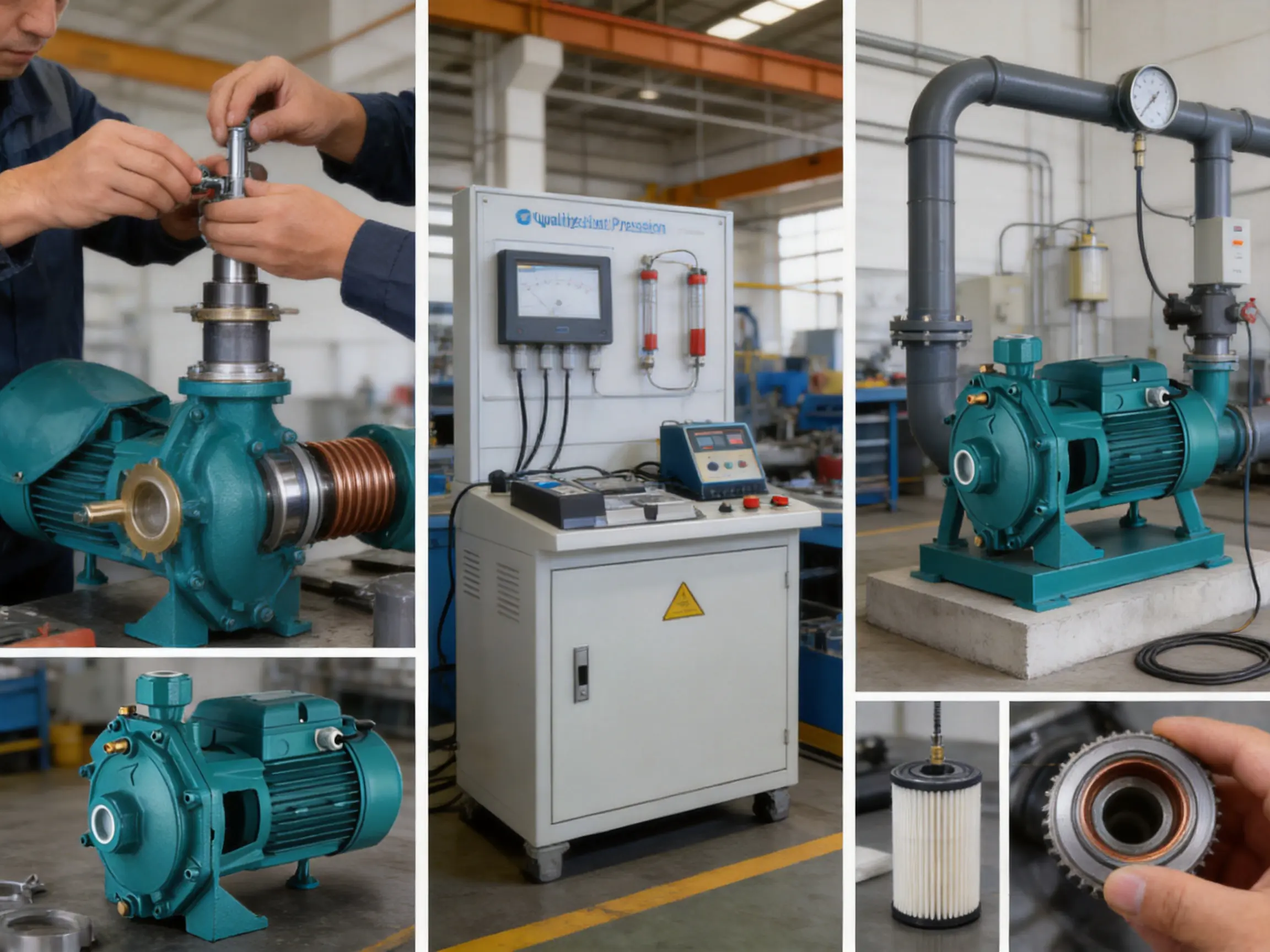
A dependable centrifugal pump is the result of multiple production stages rather than a single material or component. The manufacturing process generally begins with design confirmation and material planning. The selected materials must correspond to the pump’s pressure, temperature, corrosion, and mechanical requirements.
For the 2ECP Series, the cast-iron pump body and support provide the primary structural framework. The hydraulic components must be machined and assembled so that clearances are controlled and rotating parts remain properly aligned. Impeller balance is important because an unbalanced impeller can increase vibration and bearing stress.
The shaft and rotor assembly require careful attention to concentricity and runout. The rotating shaft must remain aligned with the mechanical seal, bearings, and impellers. Poor alignment can lead to seal leakage, noise, vibration, and premature wear.
The motor production process includes stator winding, rotor assembly, insulation treatment, bearing installation, capacitor connection, terminal protection, and final electrical inspection. Copper wiring, Class F insulation, thermal protection, and appropriate terminal construction must work together to provide safe and stable operation.
Hydraulic testing is an important part of pump manufacturing. Testing can verify whether the pump produces the expected pressure and flow under controlled conditions. Electrical tests can evaluate insulation resistance, current, voltage, rotation, and motor protection behavior. Noise and vibration checks can help identify assembly problems before shipment.
Final inspection should include checking the casing, fasteners, connection threads, cable or terminal arrangement, seal area, nameplate information, and packaging protection. A clear model identity is especially important because the 2ECP Series includes several power ratings and connection configurations.
For global customers, production strength also includes packaging and logistics. Pumps must be protected against impact, moisture, abrasion, and deformation during storage and transport. Correct labeling and supporting documents help distributors and installers identify the pump and match it with the appropriate operating instructions.
The 2ECP Series offers several advantages over basic surface centrifugal pumps, particularly in applications that demand elevated pressure and dependable operation.
The double-impeller design is the primary competitive advantage. It enables the series to reach up to 55 meters of maximum head in selected models. This is useful when a single-stage pump would provide insufficient pressure or would need to be oversized.
The model range provides maximum flows from 100 L/min to 145 L/min and maximum heads from 40 meters to 55 meters. This allows users to select a motor size that more closely matches the intended application instead of using one pump size for every requirement.
The treated HT200 cast-iron body and support, brass impeller, stainless-steel shaft, carbon-ceramic mechanical seal, aluminum motor case, and cast-iron motor cover create a practical combination of strength, corrosion resistance, heat management, and serviceability.
The rigid structure, balanced rotating assembly, and quality bearing arrangement are intended to promote smoother operation. This is an advantage where noise, pipe movement, and long operating periods are important considerations.
Class F insulation, IP44 protection, copper windings, C&U bearings, and a built-in thermal protector provide a stronger basic motor package than an unprotected low-cost pump. Protection remains dependent on proper installation and operating conditions, but these features provide a sound foundation.
The pump can serve domestic, civil, irrigation, storage-tank, water-tower, and small commercial requirements. This versatility makes it suitable for distributors and project suppliers who need a product family rather than a single fixed-capacity model.
Edwin Pump’s wider product portfolio enables customers to source different pump types from an experienced supplier. This can simplify product matching for projects that require surface pumps, submersible pumps, deep well pumps, solar pumps, circulation pumps, or intelligent booster systems.
The pump should be installed by a qualified technician or an experienced installer familiar with electrical equipment and water-pumping systems. Before installation, confirm the model, voltage, frequency, connection size, flow requirement, head requirement, and liquid compatibility.
Install the pump on a firm, level foundation in a dry and ventilated location. The location should protect the motor from flooding, direct rain, excessive dust, corrosive vapors, and temperatures above the specified ambient limit. Adequate clearance should be left around the motor for cooling and future maintenance.
The suction pipe should be airtight and supported independently. Avoid high points in the suction line where air can accumulate. Use suitable thread sealant or gaskets, but prevent excess sealing material from entering the pump or pipework.
Install an isolation valve on the discharge side and, where appropriate, a non-return valve. A pressure gauge can help monitor system performance. If the water source contains suspended particles, install a suitable strainer or filter without making the suction path excessively restrictive.
Fill and prime the pump according to the installation instructions before starting. Check that the valves are in the correct position and that the suction line remains full. After starting, inspect the mechanical seal area, connections, vibration level, noise, pressure, and flow.
Electrical connections must comply with local regulations. Confirm that the supply voltage matches the motor nameplate. Use suitable overcurrent protection, grounding, cable sizing, and isolation equipment. Even when a thermal protector is built into the single-phase motor, external protection and a safe disconnecting device are strongly recommended.
Routine maintenance helps preserve pump efficiency and reduces the likelihood of unexpected failure. The inspection schedule should reflect operating hours, water quality, seasonal use, and the importance of the installation.
Regularly inspect the suction strainer and clean it when necessary. A clogged strainer can reduce inlet pressure and cause cavitation. Check the suction pipe for air leakage, especially around threaded joints, valves, and flexible connections.
Observe the pump during operation. Unusual noise, increasing vibration, unstable pressure, reduced flow, repeated thermal trips, or visible leakage may indicate a developing problem. Early investigation can prevent damage to the impellers, bearings, motor windings, or mechanical seal.
Protect the pump from freezing temperatures. Water trapped inside the casing or pipework can expand and damage components. If the pump is shut down for a long period in a cold environment, drain it according to the applicable maintenance procedure.
Do not operate the pump against a permanently closed discharge valve. Short periods during controlled starting may be acceptable in some systems, but prolonged dead-heading can overheat the water inside the casing and place unnecessary stress on the pump.
If the mechanical seal begins to leak, the pump should be shut down and inspected. Replacing a seal without checking shaft condition, bearing condition, impeller clearance, and alignment may not resolve the underlying problem.
Model selection should begin with the required flow and total dynamic head. Total dynamic head includes static elevation, pressure requirements at the outlet, friction losses in the suction and discharge pipes, and losses through valves, filters, fittings, and equipment.
The 2ECP-130 may be suitable for lower-power applications requiring up to 40 meters of maximum head and a maximum flow of 100 L/min. The 2ECP-160 provides a higher power level and a maximum head of 50 meters. The 2ECP-210 increases the motor rating to 1.5 kW and reaches a maximum head of 55 meters.
The 2ECP-310 and 2ECP-310T use 2.2 kW motors and provide a maximum flow of 145 L/min with a maximum head of 55 meters. The exact distinction between these two model versions should be confirmed with the supplier before ordering, particularly regarding electrical configuration, phase arrangement, control features, or regional specifications.
Oversizing is not always beneficial. A pump that is too large may operate outside its preferred efficiency range, create excessive pressure, increase energy consumption, or require throttling. Undersizing can result in poor delivery, overheating, and continuous operation at an unsuitable point. The best choice is the smallest model that reliably satisfies the required duty point with a reasonable operating margin.
The stated maximum liquid temperature is +60°C. The pump should not be used for liquids above this value without written confirmation of material and seal compatibility. Higher temperatures can affect seal performance, motor cooling, viscosity, vapor pressure, and hydraulic behavior.
The pump is intended for clean water or liquids similar to water. Abrasive particles can damage the impellers and mechanical seal. Fibers, sludge, oils, chemicals, and corrosive fluids may require a different pump design and different materials.
The maximum suction height of 8 meters should not be interpreted as a guarantee under every environmental condition. Long suction pipes, high altitudes, hot water, narrow pipework, and air leaks can significantly reduce the practical suction capability.
The IP44 motor rating provides limited protection against water and solid particles, but the complete pump should still be installed in a protected location. The pump must never be submerged unless it is specifically designed and rated for submersible operation.
International distributors and project suppliers often need a pump range that is easy to position across different markets. The 2ECP Series offers several motor capacities and two principal connection arrangements, which can support residential, agricultural, and light commercial product catalogs.
The manufacturer’s experience with global export can assist with order coordination, product selection, packaging, and shipment planning. The company’s associated foreign-trade service structure is intended to support procurement planning, order tracking, cross-border delivery, and related commercial requirements.
For importers, product consistency is as important as initial price. A stable supply chain, repeatable assembly, documented specifications, clear model identification, and responsive technical communication can reduce the cost of returns and installation errors.
Edwin Pump’s range of complementary products can also support larger procurement programs. A customer may require a surface centrifugal pump for a tank-transfer application, a submersible pump for a well, an intelligent booster pump for domestic pressure, and a solar water pump for an off-grid irrigation project. Access to multiple pump categories from one manufacturing group can simplify technical coordination.
Compared with a basic single-impeller surface pump, the 2ECP Series generally offers a stronger high-head orientation. It is therefore more appropriate for systems where elevation and friction losses are significant.
Compared with a lightweight plastic-bodied pump, its cast-iron hydraulic body and support provide a more substantial structural platform. This can be advantageous in regular-use installations, although it may also result in a higher overall weight.
Compared with a low-cost motor without thermal protection, the built-in thermal protector in the single-phase configuration adds an important layer of protection against overheating. External electrical protection is still recommended.
Compared with a submersible pump, the 2ECP Series is installed outside the water source and is easier to access for visual inspection and service. However, it requires a properly designed suction line and cannot be used where the source conditions demand submersible installation.
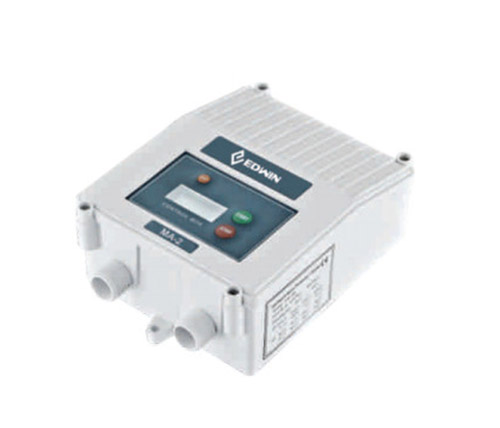
Compared with an intelligent booster pump, the 2ECP Series normally requires separate control equipment if automatic pressure management is needed. Its advantage is a straightforward, robust surface-pump architecture that can be integrated with pressure switches, tanks, controllers, and valves according to project requirements.
The 2ECP Series is a surface-mounted centrifugal pump with a double-impeller hydraulic design. It is intended for clean water and similar liquids and is designed to provide relatively high pressure for domestic, civil, irrigation, and light commercial applications.
The maximum published head is 55 meters for the 2ECP-210, 2ECP-310, and 2ECP-310T models. The 2ECP-160 reaches 50 meters, while the 2ECP-130 reaches 40 meters.
Maximum published flow ranges from 100 L/min to 145 L/min, depending on the model. The 2ECP-310 and 2ECP-310T have the highest listed maximum flow of 145 L/min.
Yes. It is suitable for many garden, allotment, and small agricultural irrigation systems using clean water. The required model should be selected according to the number of outlets, sprinkler pressure, pipe length, elevation, and filtration requirements.
Yes. The pump is recommended for drawing water from tanks and similar sources. The suction line must be airtight, correctly sized, properly supported, and primed before operation.
The published maximum suction height is 8 meters. Actual performance may be lower depending on altitude, water temperature, suction-pipe design, pipe friction, and the condition of valves and connections.
The pump body and support are HT200 cast iron, the impeller is brass, the mechanical seal uses carbon and ceramic, the water-contact shaft is AISI 304 stainless steel, the motor case is aluminum, the motor cover is cast iron, and the cooling fan is PP.
The stated maximum liquid temperature is +60°C. Applications near this limit should be reviewed carefully, and the actual liquid characteristics must be compatible with the mechanical seal and other wetted materials.
The single-phase motor configuration includes a built-in thermal protector. Appropriate external overcurrent protection, grounding, isolation, and installation according to local electrical requirements are still necessary.
IP44 indicates limited protection against solid objects and splashing water. It does not mean that the motor can be submerged or exposed to continuous high-pressure water. The pump should be placed in a dry, ventilated, and protected location.
The available product information emphasizes surface pumping and the ability to handle conditions where air or water may be present, but installers should follow the specific operating instructions regarding priming. The suction system must be designed to minimize air entry, and dry running should be avoided.
The correct model depends on the required flow, total dynamic head, suction conditions, voltage, pipe size, operating frequency, and liquid properties. Selection should be based on the manufacturer’s performance curve and the complete system calculation rather than maximum head or maximum flow alone.
Its principal differences include a double-impeller high-head design, treated cast-iron construction, brass impellers, an AISI 304 stainless-steel shaft, carbon-ceramic mechanical sealing, low-vibration design features, copper motor windings, C&U bearings, and thermal protection in the single-phase motor.
Yes. It can be combined with suitable pressure switches, pressure tanks, electronic controllers, non-return valves, gauges, and protection devices. The control equipment must be correctly matched to the motor and the application.
The 2ECP Series is manufactured by Taizhou Edwin Electric Co., Ltd., also known as Edwin Pump. The company was founded in 2008 and focuses on pump research and development, mass production, and global export.
The 2ECP Series is a practical high-head surface centrifugal pump for users who need more pressure than a basic single-impeller design can normally provide. Its double-impeller construction, maximum head of up to 55 meters, flow capacity of up to 145 L/min, and model range from 0.75 kW to 2.2 kW make it adaptable to many domestic, civil, irrigation, and light commercial systems.
The product’s material selection further supports its positioning. Treated HT200 cast iron provides a rigid pump structure, brass impellers offer corrosion resistance in normal clean-water service, the AISI 304 stainless-steel shaft protects water-contact areas, and the carbon-ceramic mechanical seal supports reliable sealing. Copper windings, C&U bearings, Class F insulation, IP44 protection, and a built-in thermal protector add further value to the motor assembly.
Its competitive advantages are strongest in applications involving elevated water transfer, long pipe runs, pressure boosting, irrigation equipment, and tank or water-tower supply. Compared with simpler surface pumps, it offers a stronger combination of pressure capability, construction quality, material durability, and operating stability.
Behind the product is an integrated manufacturing organization with experience in research and development, mass production, international export, and multiple pump categories. This foundation supports product continuity, technical development, procurement coordination, and one-stop sourcing for customers seeking complete water-pumping solutions.
For the best results, users should select the model according to the actual duty point, install the pump with a correctly designed suction line, provide appropriate electrical and dry-run protection, and maintain filters, seals, bearings, and connections as required. When properly selected and installed, the 2ECP Series can provide dependable high-head water transfer for a broad range of real-world applications.
1. Taizhou Edwin Electric Co., Ltd., 2ECP Series product information and technical parameters.
2. Taizhou Edwin Electric Co., Ltd., product materials and component specifications for the 2ECP Series.
3. Taizhou Edwin Electric Co., Ltd., company profile and manufacturing overview.
4. Hydraulic Institute, centrifugal pump principles and application guidance.
5. International Electrotechnical Commission, motor insulation and enclosure protection concepts.
6. General engineering practice for centrifugal pump installation, priming, suction-line design, and maintenance.
edwina@edwin-pump.com
+86-13586290903 (WhatsApp)
Xuri Gongliang Cutting Tool Entrepreneurship Park, Wenqiao Town, Wenling City, Taizhou City, Zhejiang Province, China

High Performance Smart Pump Factory


 English
