
edwina@edwin-pump.com

View All Products
en
Modern water supply systems require more than a conventional pump that simply starts and stops. Household water systems, garden irrigation networks, greenhouse installations, and small commercial applications increasingly demand stable pressure, efficient energy use, quiet operation, and protection against abnormal working conditions. The Lite250, Lite370, Lite400P, Lite600P, and Lite800P series of dry-run protection self-priming intelligent booster pumps are designed to meet these requirements through an integrated control architecture, permanent magnet motor technology, and automatic operating protection.
This product family combines the functions of a self-priming pump, pressure booster, electronic controller, frequency converter, and system monitoring unit in one compact package. Instead of requiring a separate pressure switch, external inverter, and multiple protection devices, the pump uses an intelligent control system to monitor pressure, current, operating status, and potential leakage. The result is a more streamlined solution for water users who need dependable automatic pressurization without the complexity of a conventional multi-component installation.
Manufactured by Taizhou Edwin Electric Co., Ltd., the series reflects the company’s focus on intelligent water technology, high-performance pump production, independent research and development, and global supply. The company has developed experience in deep well pumps, submersible pumps, domestic booster pumps, circulation pumps, solar water pumps, and other water-handling products. This broad product background supports a practical understanding of different water supply conditions and allows the company to develop equipment for household, agricultural, commercial, municipal, and industrial applications.
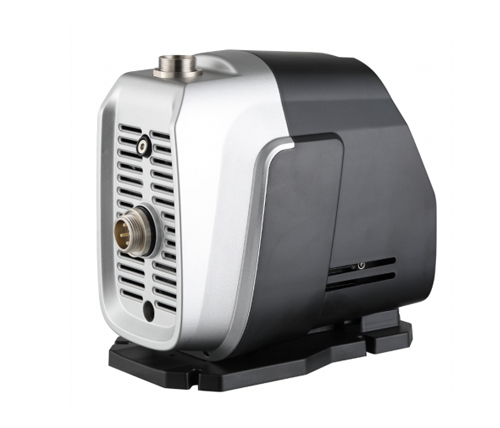
Lite250/370/400/600/800 Dry Run Protection Self-Priming Intelligent Booster Pump
A self-priming booster pump is designed to draw water from a source and increase its pressure for delivery through a connected piping system. Unlike a basic centrifugal pump that may require manual filling before operation, a self-priming design can remove air from the suction line and establish water flow after suitable initial preparation. This makes it especially useful where the pump is installed above a water tank, storage vessel, shallow well, or other water source.
An intelligent booster pump adds automatic control and protection functions to the hydraulic equipment. It can identify changing demand, regulate motor speed, monitor pressure, and respond to abnormal conditions. When a tap or irrigation outlet is opened, the controller can increase pump operation to provide water. When demand is reduced or stopped, the pump can decrease speed or shut down according to programmed logic. This approach improves convenience and avoids the frequent hard starting and stopping associated with a basic fixed-speed pump.
The Lite series is designed around this integrated concept. Its controller, frequency converter, motor, pump body, and protection logic work as one coordinated unit. The compact format helps reduce installation space and minimizes the number of external electrical components required. For installers and system integrators, this can simplify wiring, commissioning, maintenance, and troubleshooting.
Running without water is one of the most damaging conditions for many pumps. Water normally cools and lubricates internal hydraulic and mechanical components. If the suction source is empty, the inlet is blocked, or air enters the system, the pump may continue operating without producing useful flow. This can result in overheating, seal damage, excessive wear, and premature failure.
The Lite series includes automatic dry-run protection. The intelligent controller monitors operating behavior and detects conditions associated with a lack of liquid. When dry running is identified, the system can trigger protective action to prevent unnecessary mechanical stress and overheating. This is particularly valuable for installations connected to variable water sources, storage tanks, rainwater systems, garden supplies, and shallow wells where the available water level may change.
Compared with a conventional pump that depends on the user to notice a loss of water, automatic dry-run protection provides a faster response. It also reduces the risk of damage caused by unattended operation. For household and agricultural applications, this function can extend service life and lower the cost of emergency repairs.
Motors may experience overload because of blocked pipes, excessive hydraulic resistance, abnormal voltage, mechanical friction, or a pump operating outside its intended conditions. Temperature can also rise when the motor works for long periods in a demanding environment. Without suitable protection, overload and overheating may damage the winding insulation and reduce motor life.
The integrated control system monitors motor operation and can limit power output or initiate an emergency shutdown when a dangerous condition is detected. This provides an additional layer of protection beyond ordinary electrical switching. The operating limit is not based only on a single event; the controller is designed to observe important operating conditions in real time and respond according to programmed protection logic.
For users, this means greater confidence during long operating periods. For installers, it means fewer external protection devices are needed in the basic configuration. The motor protection function is especially useful in systems with fluctuating demand, seasonal irrigation, intermittent water use, or changing pipeline conditions.
The built-in frequency converter is one of the most important differences between this series and a traditional fixed-speed booster pump. A conventional pump commonly operates at one speed whenever it is energized. If the demand is low, it may deliver more water than necessary and create pressure fluctuations. If demand changes quickly, frequent starts and stops may occur.
By regulating motor frequency and speed, the integrated converter allows the pump to adapt more precisely to the required water demand. The system can adjust performance instead of relying solely on on-off operation. This can help provide smoother pressure, reduce hydraulic shock, and improve energy utilization during partial-load operation.
Because the frequency converter is built into the pump assembly, users do not have to select and install a separate inverter. This reduces the equipment footprint and makes the complete system easier to organize. It also helps reduce potential signal interference and compatibility problems between separately sourced control components. The integrated design is a practical advantage for compact plant rooms, residential utility areas, and packaged water supply systems.
The pump uses a high-efficiency permanent magnet driven motor. Compared with traditional motor arrangements, permanent magnet motor technology can provide improved electrical efficiency, especially when the operating speed changes. The product information indicates potential energy efficiency improvements of approximately 10% to 30% compared with traditional motors, depending on operating conditions and system design.
Permanent magnet motors can also support lower noise and vibration when properly engineered and controlled. These characteristics are important for domestic water supply, residential buildings, offices, and other locations where pump noise may affect comfort. A smoother motor and speed control strategy can also contribute to reduced mechanical stress in connected pipelines.
Energy efficiency should always be evaluated as part of the complete water system. Pipe diameter, suction conditions, operating schedule, fittings, water demand, and pressure settings all influence actual consumption. Nevertheless, the combination of permanent magnet drive and variable-speed control gives the Lite series a strong foundation for reducing wasted energy during changing demand.
A pump that stops immediately every time a water outlet closes may create sudden changes in flow and pressure. These rapid changes can contribute to water hammer, pipeline vibration, and unnecessary mechanical stress. The stop delay function allows the pump to continue operating for a controlled period before stopping.
This delay can help complete pressure relief and pipeline emptying in a more controlled way. It supports smoother system operation and reduces the impact of abrupt shutdown. The exact setting can be adjusted according to the requirements of the installation and the programmed control logic.
In domestic applications, the function contributes to more comfortable water use. In irrigation or small commercial systems, it may help reduce repeated pressure shocks when valves open and close frequently. It also supports better coordination between the pump and the downstream water network.
Small leaks are often difficult to identify because they may not create a visible flow of water. A slow leak from a fitting, toilet supply, valve, connection, or buried pipe can cause the pump to start repeatedly or operate at unusual intervals. Over time, this wastes water and electricity and may lead to corrosion, moisture damage, or declining system pressure.
The Lite series monitors pressure and flow behavior to identify signs of small leakage. When the system detects an abnormal pattern, it can issue an early warning or activate an appropriate control response. This monitoring capability is valuable because it helps reveal developing problems before they become major failures.
Leakage detection also improves system management. Users can use operating information to investigate a suspected problem, inspect fittings, and schedule maintenance before a pipe failure or extensive water loss occurs. The function is particularly relevant in household water systems, greenhouse networks, and irrigation installations that may include long or partly concealed pipelines.
Different applications require different pressure levels, operating schedules, response times, and protection settings. A domestic supply system may prioritize quiet operation and stable pressure, while garden irrigation may require a different flow pattern. The programmable menu allows users or qualified installers to configure operating parameters according to the actual system.
Adjustable parameters may include speed, pressure, delay logic, and other control functions supported by the product configuration. This flexibility makes one pump platform suitable for a broad range of applications without treating every installation as identical.
A programmable system can also support better commissioning. The installer can observe the pump under real operating conditions and adjust settings to achieve an appropriate balance between pressure, flow, comfort, and energy use. Clear documentation and proper commissioning remain important, but the programmable design provides a stronger basis for adaptation than a fixed mechanical control system.
Pressure and current are two important indicators of pump operation. Pressure information shows whether the system is achieving the required delivery performance, while current information provides insight into motor load and abnormal operating conditions. Continuous monitoring of these values supports more informed control decisions.
The controller can use pressure feedback to regulate pump speed and maintain a more stable water supply. Current monitoring helps identify overload, unusual resistance, or other conditions that may require protective action. Together, these functions support predictive maintenance and reduce dependence on visual inspection alone.
For commercial users and installers, operating data can also help with troubleshooting. If pressure falls while current rises, the system may require inspection for blockage, excessive friction, or a change in the water source. If pressure falls and current also declines, the problem may be related to air, insufficient water, or suction conditions. A monitored system provides more useful information than a pump that only indicates whether power is present.
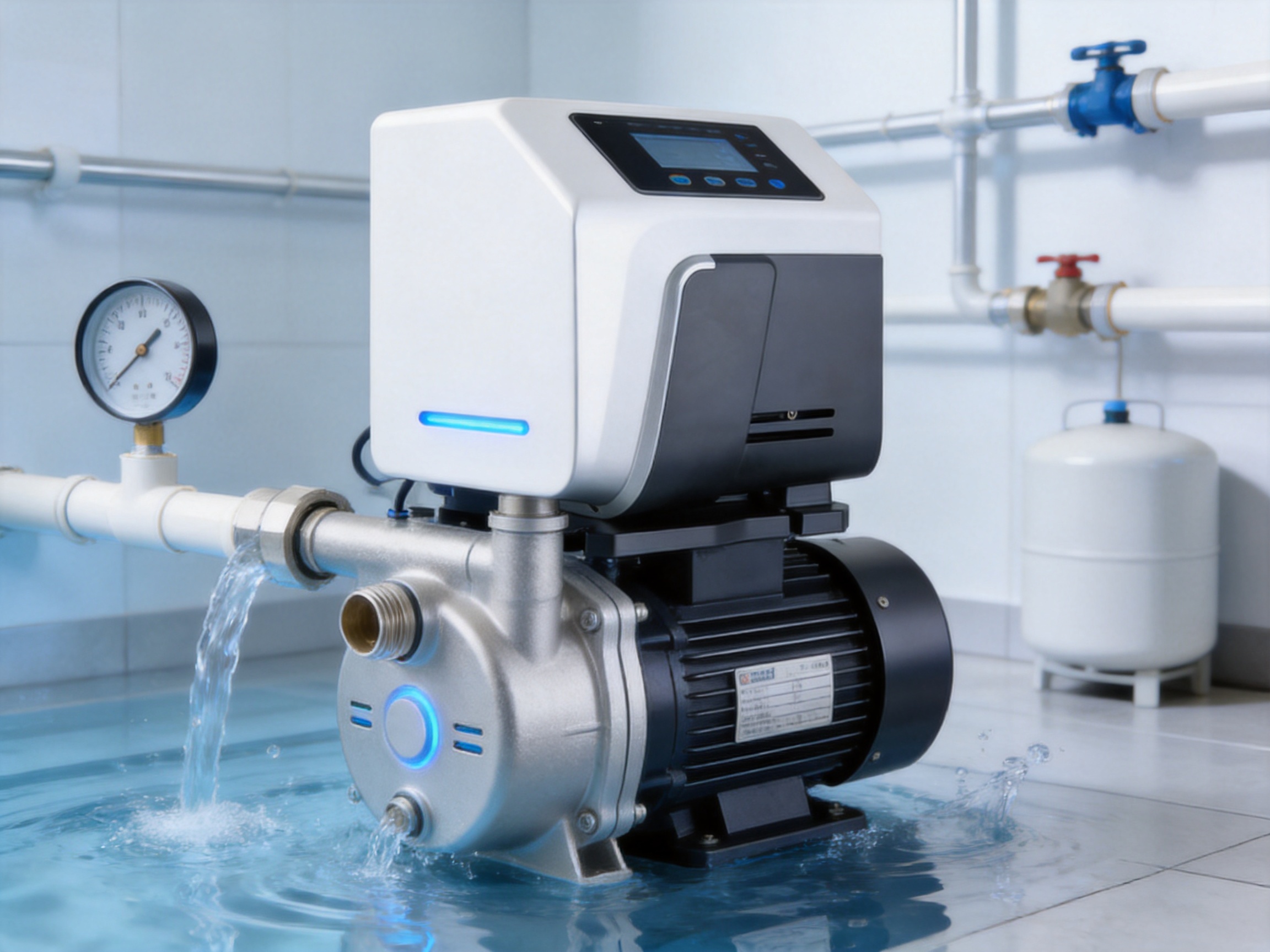
The Lite series includes five principal models. Each model uses the same general intelligent booster pump concept but offers a different power and hydraulic performance range. This enables users to select a suitable unit according to required flow, pressure, suction lift, and available electrical supply.
| Model | Voltage | Power | Maximum Flow | Maximum Head | Rated Flow | Rated Head | Maximum Suction | Dimensions |
|---|---|---|---|---|---|---|---|---|
| Lite250 | 180–220 V | 250 W | 1.8 m³/h | 26 m | 1.2 m³/h | 12 m | 8 m | 280 × 180 × 280 mm |
| Lite370 | 180–220 V | 370 W | 2.1 m³/h | 36 m | 1.2 m³/h | 17 m | 8 m | 280 × 180 × 280 mm |
| Lite400P | 165–260 V | 400 W | 2.6 m³/h | 28 m | 1.5 m³/h | 16 m | 8 m | 280 × 180 × 280 mm |
| Lite600P | 165–260 V | 600 W | 3.0 m³/h | 45 m | 2.0 m³/h | 25 m | 8 m | 280 × 180 × 280 mm |
| Lite800P | 165–260 V | 800 W | 3.3 m³/h | 52 m | 2.0 m³/h | 30 m | 8 m | 280 × 180 × 280 mm |
The Lite250 is suitable for relatively modest water demand, including small household systems, local pressure boosting, and light garden use. Its 250 W motor and maximum head of 26 meters provide a compact solution where the required pressure increase is limited.
The Lite370 offers a higher maximum head of 36 meters while retaining the same compact dimensions. It can be considered when a system requires additional pressure for elevated outlets, longer pipe runs, or a more demanding domestic supply arrangement.
The Lite400P, Lite600P, and Lite800P models use a broader voltage range of 165–260 V. This may provide useful flexibility in regions where supply voltage varies. The Lite400P provides a maximum flow of 2.6 m³/h and a maximum head of 28 meters. The Lite600P increases the maximum head to 45 meters, while the Lite800P reaches up to 52 meters and offers the highest power rating in the series.
Maximum values should not be interpreted as simultaneous operating points. Actual flow and head depend on the system curve, pipe resistance, elevation, fittings, water temperature, suction conditions, and operating settings. Selection should be based on the required duty point rather than on maximum head or maximum flow alone.
In houses, apartments, and small residential buildings, the pump can be used to improve pressure from a storage tank, municipal supply, or other water source. It is suitable for applications such as showers, taps, washing equipment, kitchen supply, and general domestic water use.
The variable-speed control helps the pump respond to changing household demand. When one outlet is open, the pump can operate at a lower level than may be required when several outlets are used simultaneously. This can improve comfort and reduce unnecessary energy consumption.
Quiet operation is also important in homes. The permanent magnet motor, integrated control strategy, and compact construction are intended to support lower noise and vibration than a basic fixed-speed arrangement. Proper pipe support and installation remain essential because pipe vibration, air, and unsuitable mounting can create noise even when the pump itself operates correctly.
The pump can support water circulation and tap water pressurization where the existing system does not provide sufficient pressure. It may be installed in a secondary water supply arrangement, a storage tank outlet, or a small distribution network.
The automatic control functions are useful when demand changes throughout the day. Rather than operating continuously at full speed, the pump can adapt to use patterns and stop when demand has ended. The stop delay function further supports controlled operation during shutdown.
Garden irrigation often includes sprinklers, hoses, drip lines, valves, and changing numbers of active outlets. These conditions can create variable flow demand and pressure fluctuations. A fixed-speed pump may not respond efficiently to such changes, while an intelligent booster pump can adjust its operation more progressively.
Dry-run protection is valuable in irrigation because water tanks may empty, suction lines may become blocked, or seasonal water levels may vary. Small leakage detection can also help reveal damaged hoses, loose connectors, or valve problems that might otherwise remain unnoticed.
Greenhouse water supply systems require dependable delivery for irrigation, fertigation support, cleaning, and general water use. Pressure requirements may change as different irrigation zones open and close. The programmable menu allows operating parameters to be adapted to the particular layout.
Protection against dry running, overload, and overheating is especially useful in greenhouse environments where equipment may operate for extended periods or at a distance from the operator. The pump’s monitoring functions can help maintenance personnel identify abnormal operation before crop watering is seriously affected.
Small workshops, offices, guesthouses, retail facilities, and service buildings may require additional water pressure without the space or budget for a large pump room. The compact dimensions of the series make it suitable for packaged booster applications where installation space is limited.
For these users, reliability and ease of operation are often more important than maximum capacity. The integrated design reduces the need to match multiple external components and can help simplify procurement. When a system requires greater capacity than the listed models can provide, the pump can still serve as a local pressure booster within a larger water supply design.
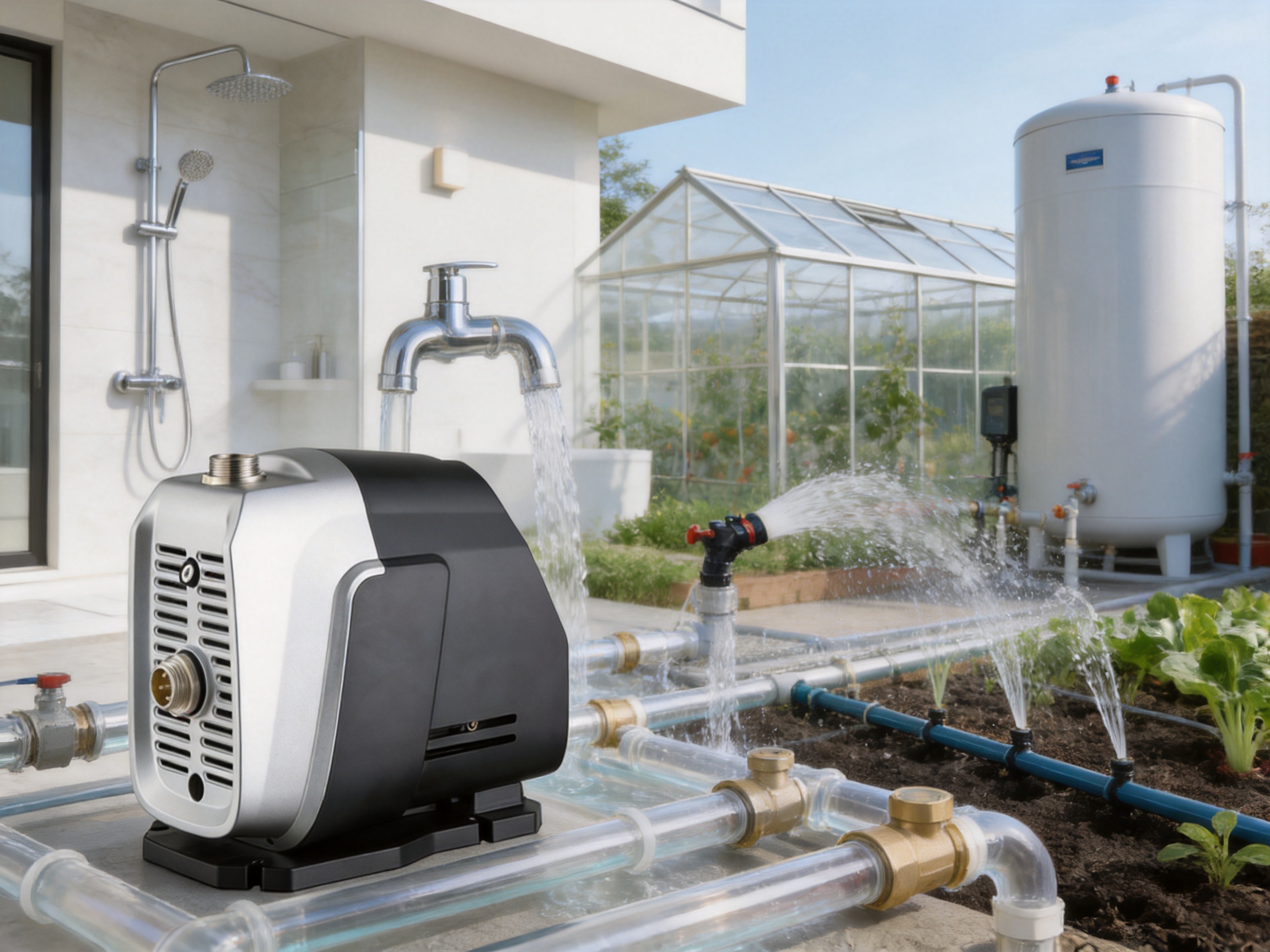
The specified maximum liquid temperature is 75°C, and the maximum ambient temperature is 50°C. The motor uses Class F insulation, and the protection rating is IPX5. The maximum speed is 5,200 revolutions per minute. These specifications define the intended operating environment and should be considered during product selection and installation.
The pump should be installed in a location protected from flooding, excessive dust, corrosive chemicals, and direct conditions outside the stated limits. Although IPX5 protection indicates resistance to water jets from appropriate directions, it does not mean that the pump should be submerged or exposed to uncontrolled flooding.
The suction pipeline should be correctly sized, airtight, and arranged to reduce the possibility of air pockets. The water source should be able to supply the selected pump continuously under the required operating conditions. A foot valve, check valve, isolation valve, strainer, or other accessories may be required depending on the system layout and local installation practice.
Before commissioning, the installer should verify voltage, electrical protection, pipe connections, rotation or operating status where applicable, and the correct priming procedure. The system should be checked for leaks and unusual noise. Settings should be adjusted gradually rather than selecting unnecessarily high pressure or speed.
Because the maximum suction is listed as 8 meters, the actual installation should account for elevation, pipe losses, water temperature, atmospheric conditions, and the condition of the suction line. A theoretical suction height may not be achievable in every field installation. Shorter suction lines, larger suitable pipes, airtight connections, and a stable water source generally support better performance.
The principal advantage of the Lite series over a simple conventional booster pump is integration. A traditional arrangement may require a separate pump, motor starter, pressure switch, inverter, overload relay, dry-run sensor, leakage monitoring device, and additional wiring. Each component must be selected, installed, and maintained correctly.
The Lite series combines many of these functions in one coordinated unit. This can reduce installation complexity, save space, and limit compatibility issues. It also allows the control system to use pressure, current, speed, and protection information together rather than relying on isolated mechanical switches.
A second advantage is variable-speed operation. Fixed-speed pumps may provide acceptable performance under one operating condition but become inefficient or uncomfortable when demand changes. The integrated frequency converter allows the pump to adapt, which can result in more stable pressure and potentially lower energy use during partial-load operation.
A third advantage is the range of automatic protective functions. Dry-run protection, overload control, overheating control, leakage detection, and stop delay are not always included in basic pump products. These functions can reduce operating risk and support longer service life when the pump is correctly selected and maintained.
A fourth advantage is compactness. All models listed in the series use dimensions of approximately 280 × 180 × 280 millimeters. The small footprint can be useful for under-counter installations, utility cabinets, compact pump rooms, greenhouse service areas, and packaged equipment. Compact size does not eliminate the need for ventilation and access, but it can make system planning easier.
A fifth advantage is application flexibility. The same product family addresses household water use, circulation, tap water pressurization, garden irrigation, and greenhouse supply. The programmable menu and model range help adapt the pump to different pressure and flow requirements without changing to an entirely different control concept.
Taizhou Edwin Electric Co., Ltd. was established in 2008 and operates as an integrated manufacturing enterprise focused on independent research and development, mass production, and global export. Its product portfolio includes deep well pumps, submersible pumps, domestic booster pumps, circulation pumps, solar water pumps, and intelligent booster pumps.
This broad manufacturing scope is relevant to the Lite series because intelligent boosting depends on more than motor design alone. Hydraulic performance, electrical control, mechanical sealing, thermal management, protection logic, and field installation requirements must be considered together. Experience across several pump categories can help a manufacturer evaluate how the equipment behaves in different water source and piping conditions.
Since 2018, the company has invested in new energy and intelligent technology. The development of solar water pumps and intelligent booster pumps reflects a move toward more efficient and electronically managed water systems. The Lite series is part of this broader technical direction, combining a permanent magnet motor with integrated frequency conversion and automatic monitoring.
As an integrated manufacturer, the company can coordinate product development, production planning, quality control, order management, and export preparation. This is valuable for international customers who need consistent specifications across repeated orders. It also supports original equipment and project procurement requirements where documentation, model selection, packaging, and delivery coordination are important.
Mass production capability helps create repeatability when manufacturing multiple models within one product family. Shared design principles, consistent dimensions, and standardized control concepts can simplify assembly, testing, spare-parts planning, and after-sales support. At the same time, the model range allows the manufacturer to provide different power and head options for customers with different requirements.
The company’s global supply experience is supported by related foreign trade and industrial service organizations established to assist with procurement planning, order tracking, cross-border delivery, and export services. For distributors and project buyers, this one-stop approach can be useful when purchasing pumps together with accessories, replacement parts, or other water supply products.
A reliable intelligent pump requires control of both mechanical and electronic production processes. The hydraulic section must be assembled accurately so that the pump can deliver the intended flow and head. The motor must operate within electrical and thermal limits. The controller must respond correctly to pressure, current, and protection conditions. The final product must also withstand transportation, installation, and repeated operating cycles.
A quality-oriented production process therefore includes incoming material control, component inspection, controlled assembly, electrical testing, hydraulic verification, protective function checks, and final inspection. Specific test procedures may vary by model and customer requirement, but the purpose is to confirm that the pump performs consistently before shipment.
Protection functions should be checked as part of product verification rather than treated as optional features. Dry-run response, overload behavior, thermal protection, pressure monitoring, current monitoring, and shutdown logic all influence user safety and equipment service life. Proper testing of these functions is especially important for intelligent products because the customer expects the controller to make correct decisions automatically.
Manufacturing quality also includes documentation and traceability. Product labels, technical data, wiring information, operating instructions, and model identification should be clear enough for installers and distributors to select and commission the pump correctly. Good documentation reduces installation errors and helps service personnel diagnose problems efficiently.
For export markets, production quality must be combined with packaging and logistics control. Pumps may travel long distances through multiple handling environments. Secure packaging, correct labeling, and coordinated shipment planning help protect the equipment and support reliable delivery to international customers.
The energy cost of a pump depends on motor efficiency, hydraulic efficiency, operating time, pressure requirements, and system resistance. A pump that operates continuously at high speed may consume more energy than necessary when demand is low. Variable-speed control addresses this problem by allowing the motor to reduce speed when the system requires less water.
The permanent magnet motor further supports energy-conscious operation. The stated potential efficiency improvement of 10% to 30% compared with traditional motors indicates that the design is intended to reduce electrical losses under suitable conditions. Actual savings will depend on the duty cycle and installation, so users should evaluate consumption over a representative operating period.
Lifecycle value includes more than electricity use. Dry-run protection can reduce damage caused by empty water sources. Overload and overheating control can help prevent motor failure. Leakage detection can reduce water waste and identify maintenance needs. The integrated design may also reduce installation labor and the number of separate components that need replacement.
Maintenance planning remains important even with automatic protection. Users should inspect connections, clean strainers where installed, check valves and suction lines, observe pressure behavior, and respond to alarms or unusual operation. Intelligent monitoring is most effective when operating information is used to support timely human maintenance.
The first step in selecting a model is to determine the required flow and head at the actual duty point. The designer should calculate static elevation, pipe friction, fittings, valves, outlet pressure, and the number of simultaneous users. Selecting only by maximum flow may result in insufficient pressure, while selecting only by maximum head may produce an unnecessarily large or inefficient system.
The second step is to confirm the water source and suction arrangement. The pump is self-priming, but the suction line must still be correctly installed and initially prepared according to the instructions. Water quality, temperature, source level, and the possibility of air entering the pipe should be evaluated.
The third step is to check electrical compatibility. Lite250 and Lite370 are listed for 180–220 V, while Lite400P, Lite600P, and Lite800P are listed for 165–260 V. The available supply should be stable and suitable for the selected model. Electrical protection and installation must comply with local regulations and should be completed by qualified personnel.
The fourth step is to consider the control objective. If the user requires stable household pressure, the programmed settings should prioritize smooth response and comfort. If the equipment will serve irrigation zones, the settings should correspond to valve operation and expected flow changes. If the pump is intended for a commercial facility, monitoring and maintenance access should be included in the system design.
The fifth step is to evaluate future requirements. If water consumption may increase, a model with higher capacity may be appropriate. However, oversizing can also cause inefficient operation, increased pressure, and unnecessary purchase cost. A qualified distributor or system designer should compare current and anticipated demand with the performance curve and operating conditions.
Regular inspection should include the suction pipe, discharge pipe, electrical connections, valves, fittings, and pump mounting. Any sign of leakage, corrosion, vibration, or unusual noise should be investigated. A small issue is usually easier and less expensive to correct than a failure that develops after prolonged operation.
The water source should be kept free of excessive debris. If a strainer is installed, it should be cleaned according to the water quality and operating frequency. A blocked inlet can reduce flow, increase motor load, and trigger protection functions. The user should not simply reset the pump repeatedly without identifying the underlying cause.
Pressure and current behavior should be observed during normal operation. A gradual change in pressure, repeated cycling, or unusual current may indicate leakage, blockage, air entry, worn components, or changes in the water source. The programmable menu should be accessed only by authorized or properly trained personnel to prevent unsuitable settings.
Before maintenance, power should be isolated and the system pressure safely released. Hot water applications require additional attention because the stated maximum liquid temperature is 75°C. Service work should follow the product instructions and applicable safety standards.
Water supply equipment is moving toward systems that are more efficient, more autonomous, and easier to monitor. Users want stable water pressure without constant manual adjustment. Installers want fewer external components and simpler commissioning. Facility managers want early warnings before a small problem becomes a major repair. Energy-conscious customers want equipment that responds to demand rather than running at full output unnecessarily.
The Lite series addresses these requirements through an integrated platform. Its intelligent controller does not merely switch the motor on and off. It monitors operating information, regulates speed, applies protection logic, and supports programmable adaptation. The permanent magnet motor and frequency converter help align energy use with actual demand.
This integration also helps bridge the gap between simple domestic pumps and more complex commercial pumping systems. The products retain a compact form suitable for smaller installations while providing advanced functions often associated with larger variable-speed systems. For distributors, this creates a practical product category for customers who need more capability than a conventional pump but do not require a large industrial booster set.
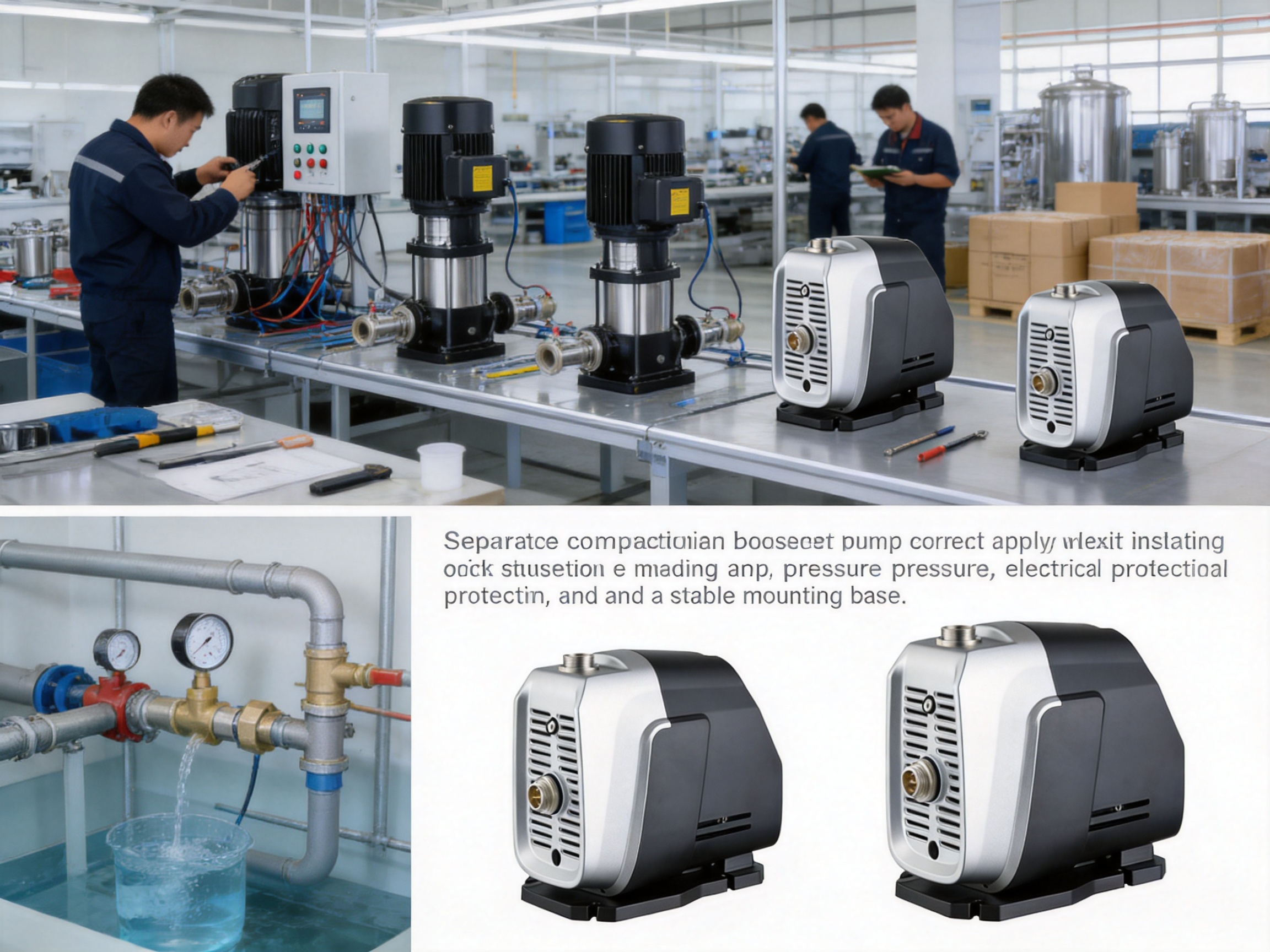
The series is suitable for household water supply, water circulation, tap water pressurization, garden irrigation, vegetable greenhouse water supply, and other light commercial or small-scale water pressure applications. Model selection should be based on the required flow, head, suction conditions, and electrical supply.
Self-priming means the pump is designed to remove air from the suction line and establish water flow after appropriate initial preparation. It does not mean that the pump can operate indefinitely without water or that an incorrectly sealed suction pipe will function properly.
Dry-run protection detects operating conditions associated with insufficient or absent liquid and activates protective action. This helps reduce overheating and mechanical damage when the water source is empty, the inlet is blocked, or air enters the suction line.
No separate frequency converter is required for the standard integrated configuration because the pump includes an integrated frequency converter. This reduces the number of external control components and simplifies installation.
A permanent magnet motor can provide higher efficiency than a traditional motor, particularly when combined with variable-speed control. The product information indicates potential energy efficiency improvements of 10% to 30%, along with low noise and low vibration under suitable operating conditions.
The intelligent control system monitors pressure and flow behavior to identify patterns associated with small leakage. When abnormal behavior is detected, the system can provide an early warning or apply the programmed response.
The listed maximum suction is 8 meters. Actual results depend on water temperature, atmospheric conditions, pipe length, pipe diameter, fittings, airtightness, elevation, and the condition of the water source.
The Lite800P provides the highest listed maximum head at 52 meters. It has an 800 W motor, a maximum flow of 3.3 m³/h, and a rated flow of 2.0 m³/h at a rated head of 30 meters.
No. Maximum flow and maximum head are different points on the pump performance curve. Actual performance depends on system resistance and the selected operating point. The pump should be selected using the required flow and head together.
The listed maximum liquid temperature is 75°C, and the listed maximum ambient temperature is 50°C. Installations outside these conditions require separate technical evaluation and should not be assumed to be suitable.
IPX5 indicates protection against water jets from appropriate directions under defined test conditions. It does not mean the pump can be submerged or installed in an uncontrolled flooded location.
Users should install the pump on a stable base, support connected pipes correctly, remove air from the system, avoid loose fittings, and select suitable pressure settings. The permanent magnet motor and intelligent speed control are designed to support low-noise operation, but installation quality also has a significant effect.
Users should confirm the required flow, total head, suction height, water temperature, ambient temperature, voltage, pipe size, water quality, duty cycle, and installation space. A distributor or qualified system designer can use this information to recommend the most suitable model.
The Lite250, Lite370, Lite400P, Lite600P, and Lite800P dry-run protection self-priming intelligent booster pumps provide a modern alternative to basic fixed-speed pressure pumps. Their main strengths include integrated frequency conversion, a high-efficiency permanent magnet motor, automatic dry-run protection, overload and overheating control, small leakage detection, programmable operation, pressure and current monitoring, and a controlled stop delay function.
The five-model range covers different power and pressure requirements while maintaining a compact form factor. This makes the series suitable for household water supply, circulation, tap water pressurization, garden irrigation, greenhouse applications, and selected small commercial systems. The product’s integrated architecture can reduce installation complexity and provide more responsive operation than a conventional pump with separate mechanical controls.
Behind the product is a manufacturer with experience in independent research and development, mass production, global export, and multiple categories of water pump technology. Taizhou Edwin Electric Co., Ltd. combines pump manufacturing experience with investment in intelligent and new energy technologies. Its production and supply capabilities support distributors, installers, project buyers, and international customers seeking reliable water pressure equipment and coordinated procurement services.
For the best result, the pump should be selected according to the actual duty point and installed within the specified working conditions. When properly matched with the water source and piping system, the Lite series can offer stable pressure, improved energy management, automatic protection, and dependable long-term service for a wide range of modern water applications.
1. Product technical data for the Lite250, Lite370, Lite400P, Lite600P, and Lite800P intelligent booster pump series.
2. Manufacturer-provided information regarding dry-run protection, motor protection, frequency conversion, leakage detection, programmable control, and monitoring functions.
3. Manufacturer-provided operating conditions, including liquid temperature, ambient temperature, insulation class, protection rating, and maximum speed.
4. Manufacturer-provided application information for household water supply, water circulation, tap water pressurization, garden irrigation, and greenhouse water supply.
5. General engineering principles for centrifugal pump selection, variable-speed motor control, suction piping, pressure boosting, and water system maintenance.
aseriesnoisereductiondesignacid-baseverticalsurfacepump-1.jpg "EV(F)A Series Noise Reduction Design Acid-base Vertical Surface Pump")
edwina@edwin-pump.com
+86-13586290903 (WhatsApp)
Xuri Gongliang Cutting Tool Entrepreneurship Park, Wenqiao Town, Wenling City, Taizhou City, Zhejiang Province, China

High Performance Smart Pump Factory


 English
