
edwina@edwin-pump.com

View All Products
en
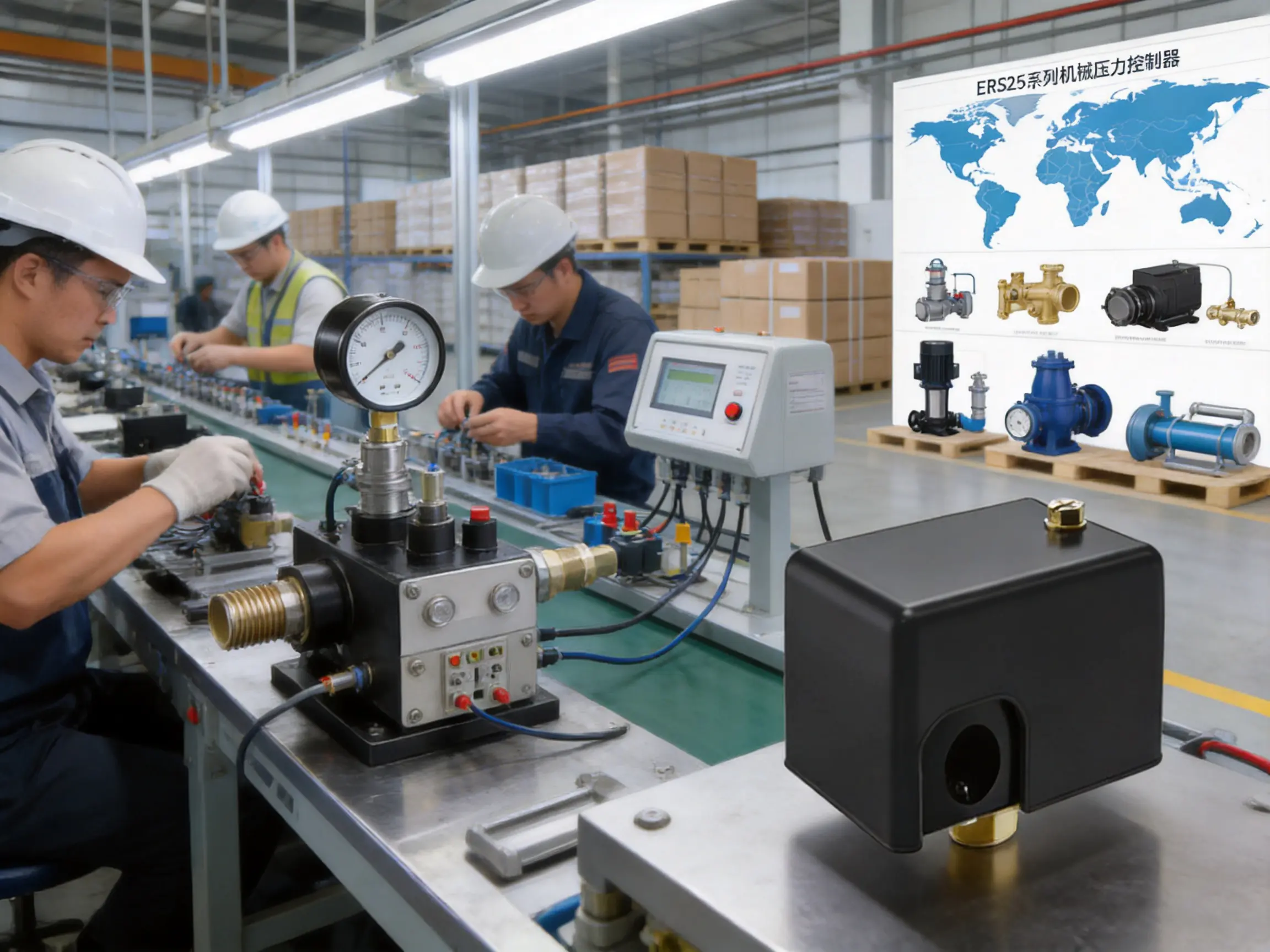
Reliable pressure control is essential to the safe, efficient, and consistent operation of an air compressor. Without an effective control device, a compressor may continue running after the required pressure has been reached, restart too frequently, or operate outside its intended pressure range. These conditions can increase energy consumption, accelerate mechanical wear, reduce equipment service life, and create unnecessary risks for connected pneumatic equipment.
The ERS25 Series mechanical pressure control is designed to provide dependable automatic pressure management for air compressor applications. With a pressure range of 10 to 80 psi, rated voltage from 110V to 240V, rated current of 12A, and compatibility with 50/60Hz power systems, the controller is suitable for a broad range of air-compression installations. Its rotative hydraulics connection design supports flexible installation, while its mechanical operating principle offers a practical solution for users who prefer straightforward, serviceable, and cost-effective pressure control.
This product is manufactured by Taizhou Edwin Electric Co., Ltd., an integrated enterprise with experience in independent research and development, mass production, and international export. Although the ERS25 is a compact component, its value extends beyond its basic specifications. It represents a combination of application-focused design, adaptable connection options, production experience, and one-stop support for customers purchasing pump and water-system accessories from China.
For distributors, original equipment manufacturers, air-compressor assemblers, maintenance companies, and industrial users, the ERS25 Series offers an effective way to automate compressor starting and stopping according to preset pressure conditions. Its simple construction and flexible connection options make it suitable for many general-purpose applications where dependable mechanical control is required.
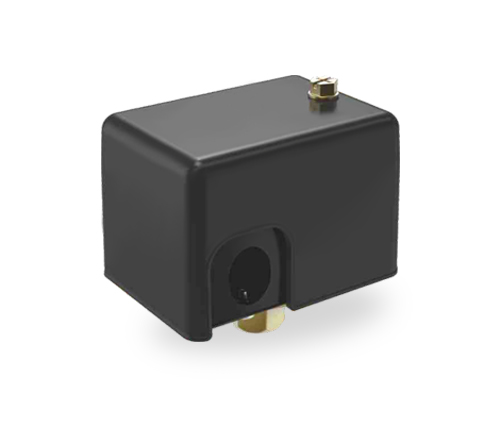
ERS25 Series 110V to 240V 12A 10 to 80psi Rotative Hydraulics Connection Mechanical Pressure Control for Air Compressors
The ERS25 Series is a mechanical pressure controller intended primarily for air compressor systems. It monitors pressure through a hydraulic connection and operates an electrical switching mechanism when the pressure reaches a designated setting. In practical use, the pressure control can command the compressor to stop when the upper pressure limit is reached and restart when the pressure falls to the lower operating point.
This automatic control function helps maintain pressure within a usable range without requiring the operator to start and stop the compressor manually. The controller can therefore improve operating convenience and help protect the compressor from unnecessary continuous running. When correctly selected, installed, and adjusted, it supports more stable operation of air receivers, pneumatic tools, small industrial compressors, workshop systems, and other air-pressure equipment.
The ERS25 Series is available with hydraulic connection configurations designed to meet different installation requirements. The listed connection options include 1/4-inch male, 1/4-inch female, and 3/8-inch female rotary connections. The product information also identifies screw options including female 0.25 inch, male 0.25 inch, and rotative 0.25 inch configurations. Buyers can discuss connection requirements and pressure settings with the manufacturer before placing an order.
Its electrical specification is also designed for broad compatibility. The controller is rated for 110V to 240V operation, with a current rating of 12A and a frequency range of 50/60Hz. This makes it appropriate for many electrical environments used in different regions, although the final application must always be checked against the local power supply, compressor motor characteristics, wiring method, and applicable safety requirements.
| Parameter | Specification | Application Significance |
|---|---|---|
| Product series | ERS25 Series | Mechanical pressure control for air compressor systems |
| Control type | Mechanical pressure controller | Provides automatic pressure-based switching without complex electronic programming |
| Pressure range | 10–80 psi | Supports a broad range of general compressor pressure applications |
| Rated voltage | 110V–240V | Suitable for many single-phase electrical environments, subject to application verification |
| Rated current | 12A | Supports compressor control circuits within the specified electrical limit |
| Frequency | 50/60Hz | Compatible with common power frequencies used internationally |
| Hydraulic connections | 1/4-inch male, 1/4-inch female, or rotary female options | Allows adaptation to different piping and equipment layouts |
| Protection degree | IP20 | Designed for suitable protected indoor or enclosure-based installations |
| Maximum liquid temperature | 60°C | Defines the stated temperature limit for the pressure-sensing medium |
The table summarizes the published product parameters. These figures should be used as the starting point for selection, but they should not replace a complete engineering review. A system designer should confirm the compressor motor's starting current, the actual pressure requirements, the medium being sensed, the connection dimensions, ambient conditions, enclosure requirements, and the electrical installation method.
A mechanical pressure controller operates by converting pressure changes into mechanical movement. The pressure from the compressor system enters through the hydraulic connection and acts on an internal sensing element. As system pressure rises or falls, the sensing mechanism moves in response. This movement changes the position of the electrical contacts and can open or close the compressor control circuit.
During a typical compressor cycle, the controller allows the compressor to operate while pressure is below the selected starting or cut-in condition. As the compressor fills the air receiver and pressure increases, the controller reaches its stopping or cut-out condition. The electrical contacts then change state, interrupting the compressor operation. When air is consumed and the pressure drops, the mechanism returns toward its starting position and permits the compressor to run again.
The exact differential between cut-in and cut-out pressure depends on the adjustment arrangement and the final product configuration. For this reason, users should not assume that any two units will operate at identical settings without verification. The pressure setting should be selected according to the compressor manufacturer's recommendations and the requirements of the connected pneumatic equipment.
One of the main benefits of this operating principle is simplicity. The controller does not require software, network communication, parameter programming, or a separate digital interface for ordinary pressure switching. This can be valuable in workshops, agricultural facilities, service environments, and general industrial installations where easy troubleshooting is important.
The 110V–240V rated voltage range allows the ERS25 Series to serve customers in markets with different standard supply voltages. A distributor or equipment assembler can potentially reduce the number of pressure-control models maintained in inventory, provided that each application is evaluated and wired correctly.
Many narrow-range components are designed for only one nominal voltage. Such products may require different stock-keeping units for different countries or for different compressor configurations. The broad voltage rating of the ERS25 can simplify product planning and help businesses respond to varied customer requirements. It also supports the needs of exporters and original equipment manufacturers who sell similar compressor systems into multiple regions.
The 10–80 psi pressure range provides flexibility for common low- and medium-pressure air applications. It can be considered for small workshop compressors, general pneumatic equipment, service stations, maintenance systems, and other installations where the pressure requirement falls within the specified range.
A wider adjustment range can be more useful than a narrowly fixed controller because the same general product family may be adapted to different receiver sizes, air consumption patterns, and operating preferences. It may also help distributors serve multiple end users without carrying an excessive number of pressure-control variants.
The rotative hydraulic connection is an important installation advantage. In confined spaces, a fixed connection may force the installer to rotate the entire pressure switch or alter the pipe arrangement. A rotary connection can provide greater freedom when aligning the controller with an existing manifold, pipe, receiver, or compressor outlet.
This design can reduce installation inconvenience and help prevent unnecessary stress on the connected pipework. Flexible positioning is particularly helpful when the controller must be installed near other components such as safety valves, gauges, air receivers, unloaders, or electrical junction boxes.
Because different systems use different connection arrangements, the availability of male, female, and rotary configurations gives buyers more opportunity to match the pressure controller to their existing installation. Connection selection should be confirmed before ordering to avoid adapters, mismatched threads, or unplanned modifications.
The ERS25 Series provides automatic control according to preset pressure conditions. This eliminates the need for an operator to monitor the pressure gauge continuously and manually switch the compressor on or off. Automatic cycling can improve user convenience and help the compressor deliver air when it is needed.
Automatic stopping is also important because continuous compressor operation can create excess heat, consume unnecessary electricity, and increase wear on moving components. By stopping the compressor when the target pressure is reached, the controller supports more disciplined system operation. However, the controller should be used as part of a properly designed system that also includes appropriate overload protection, pressure relief protection, and motor control equipment where required.
Mechanical pressure controllers are often selected because they are easy to understand and straightforward to maintain. In contrast to complex electronic control systems, a mechanical controller generally does not require firmware updates, software configuration, communication protocols, or specialized diagnostic equipment for basic operation.
This simplicity can be especially valuable in locations where technical resources are limited. A maintenance technician can inspect the pressure connection, electrical terminals, adjustment mechanism, and switching action using standard procedures. The result is a practical product for applications where reliability, low complexity, and ease of replacement are more important than remote monitoring or advanced digital functions.
The 50/60Hz frequency rating allows the product to be considered for both major power-frequency environments. This is a practical advantage for international supply chains. Equipment exporters can use a pressure controller with broader market applicability, while distributors may find it easier to support customers across different regions.
Frequency compatibility alone does not guarantee suitability for every installation. Voltage, current, motor design, insulation, enclosure, local electrical codes, and installation conditions must still be checked. Nevertheless, the 50/60Hz rating contributes to the product's versatility.
The principal application of the ERS25 Series is pressure control in air compressor systems. It may be used in compressors supplying pneumatic tools, workshop equipment, spray systems, cleaning equipment, small production machinery, and general maintenance installations. Its suitability depends on the pressure, current, temperature, and connection requirements of the individual system.
In a workshop, the controller can help maintain the air receiver within a practical operating range. The compressor starts when pressure declines during tool use and stops when the receiver has been replenished. This operating cycle allows users to draw compressed air without manually managing the compressor motor.
In small industrial installations, the controller may support localized compressed-air equipment where a simple pressure switch is preferred over a programmable controller. It can be integrated into a compressor package or installed as a replacement for a worn or incompatible mechanical pressure control, provided that the original system requirements are reviewed carefully.
For equipment manufacturers, the ERS25 may be evaluated as a component in compressor assemblies, pressure booster packages, air-storage systems, and other products requiring automatic pressure switching. The availability of connection and pressure-setting options can support product customization for different buyers.
Service and maintenance companies may also find the product useful as a replacement component. In these cases, matching the original pressure range, electrical rating, connection type, contact arrangement, and physical installation space is essential. A replacement should never be selected based only on the appearance of the old unit.
Although the ERS25 Series is designed for practical mechanical control, correct installation is essential. The pressure controller should be installed by a qualified person who understands both compressed-air hazards and electrical safety. Before installation, the system should be isolated from electrical power and depressurized according to the equipment manufacturer's procedures.
The electrical load must remain within the controller's stated 12A rating. Compressor motors can draw significantly higher current during startup than during normal running. Therefore, the rated running current alone may not provide enough information for safe selection. If the motor or compressor package requires a contactor, relay, overload protector, or other intermediate switching device, these components should be included in the design.
The controller's IP20 protection degree indicates that it is intended for an appropriately protected environment. It should not be exposed directly to rain, spray, condensation, dust-laden air, corrosive chemicals, or other conditions beyond its design protection. Outdoor or harsh industrial installations may require a suitable enclosure with appropriate environmental protection.
The stated maximum liquid temperature is 60°C. The pressure-sensing medium and the surrounding installation should remain within suitable limits. Although the product is intended for air compressor applications, buyers should confirm the compatibility of the pressure medium and avoid using the controller with aggressive fluids or gases unless the manufacturer has specifically approved such use.
All hydraulic connections should be sealed correctly without excessive force. Over-tightening can damage threads or distort connected components. Under-tightening may result in leakage. The installer should use compatible sealing materials and verify the connection after installation. A pressure test should be completed before placing the compressor into normal service.
The pressure settings should be adjusted gradually and verified with a calibrated pressure gauge. The cut-in and cut-out behavior should be observed during several complete operating cycles. If the compressor restarts too frequently, fails to stop, or operates outside the desired range, the system should be shut down and inspected before continued use.
The ERS25 Series is supplied by Taizhou Edwin Electric Co., Ltd., a manufacturer established in 2008. The company operates as an integrated enterprise with activities covering independent research and development, mass production, and global export. This combination is important for pressure-control products because consistent quality depends not only on design but also on controlled sourcing, repeatable assembly, inspection, and customer support.
A manufacturer with in-house or closely coordinated development capability can respond more effectively to application-specific requirements. The ERS25 product information identifies options for hydraulic connection and pressure setting according to customer needs. This suggests a production approach that can accommodate variation rather than relying exclusively on one fixed configuration.
For international buyers, production experience in pump and water-system products can also provide useful application knowledge. Pressure control components are often installed alongside pumps, piping, valves, storage vessels, and electrical equipment. A supplier familiar with complete fluid-system environments may be better positioned to understand how a controller fits into a larger assembly.
The company's product portfolio includes deep well pumps, submersible pumps, domestic booster pumps, circulation pumps, solar water pumps, intelligent booster pumps, commercial multistage pumps, end-suction pumps, garden pumps, pool and spa pumps, pipes, valves, and pump accessories. This broad portfolio supports a one-stop procurement model for customers sourcing complete water and fluid-handling systems.
In addition to its manufacturing operations, the company has established related import and export service entities to support procurement planning, order tracking, cross-border delivery, and foreign-trade services. For overseas buyers, these capabilities can reduce communication gaps and make it easier to coordinate technical requirements, production schedules, packaging, documentation, and shipment arrangements.
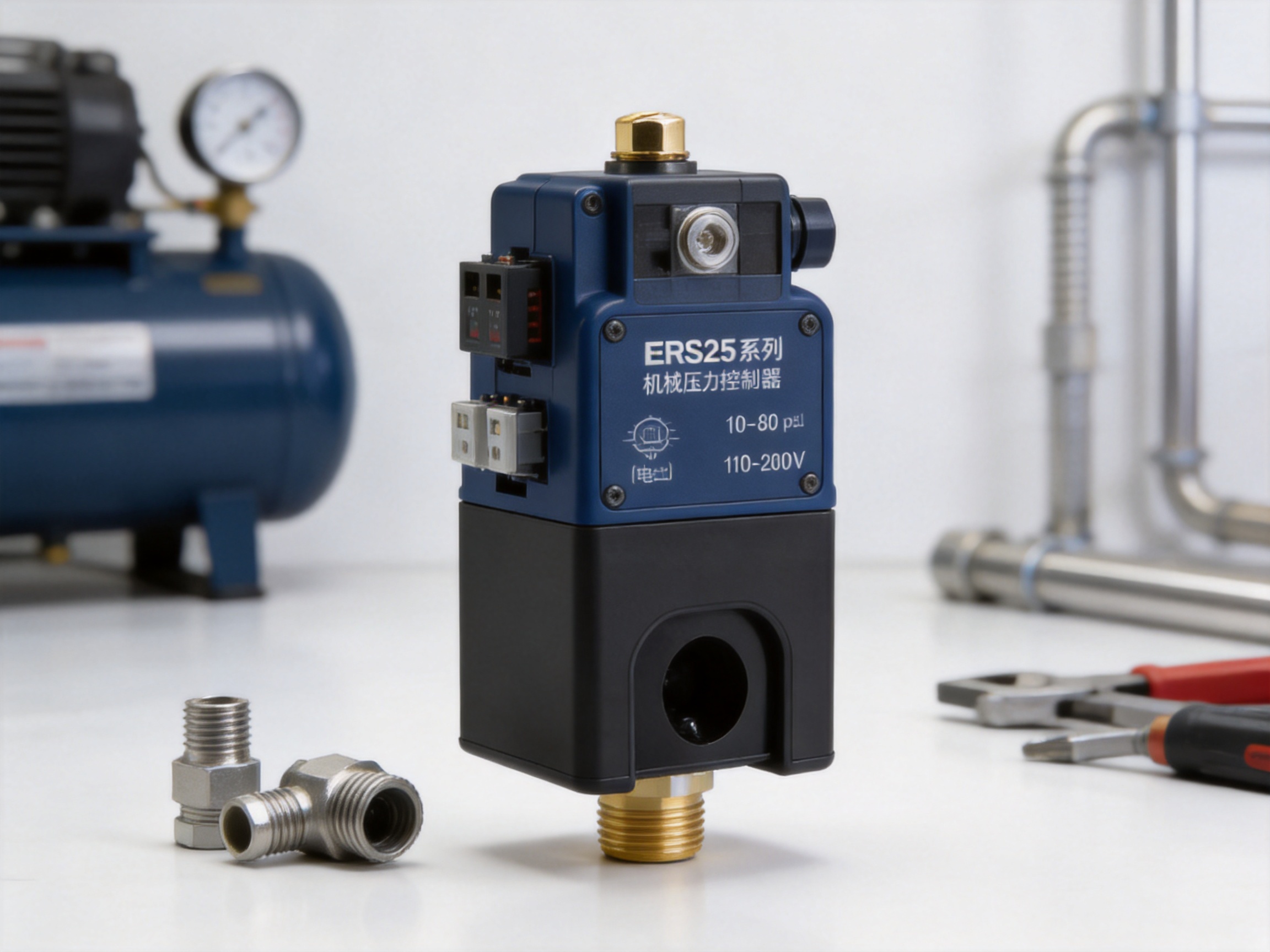
Mechanical pressure controllers require consistent performance from several small but important elements. The pressure-sensing mechanism must respond predictably, the switching contacts must operate reliably, the housing must protect internal components, and the hydraulic connection must maintain a secure seal. Small variations in material, assembly, or adjustment can affect the final product's behavior.
A professional production process should therefore include incoming-material control, component verification, controlled assembly, pressure-setting checks, electrical inspection, visual examination, and functional testing. While the exact internal procedures for a particular production batch should be confirmed with the manufacturer, these are the areas buyers should expect to be addressed when evaluating a qualified supplier.
Incoming inspection helps ensure that materials and purchased components meet defined requirements before they enter assembly. Dimensional checks on threaded connections can help prevent compatibility problems. Electrical components should be checked against their rated voltage and current requirements. Housing and sealing parts should be examined for defects that could affect protection or installation.
During assembly, controlled work instructions can help maintain consistency between units. Correct positioning of the sensing mechanism, proper fastening, secure terminal installation, and accurate adjustment are all important. A repeatable assembly process is especially valuable for distributors and OEM customers who need similar performance across multiple production batches.
Functional testing is central to pressure-control manufacturing. A completed controller should be evaluated for switching response within the intended pressure range. Electrical continuity and insulation-related checks may also be included according to the product design and applicable requirements. Visual inspection can identify damaged threads, housing defects, incorrect labels, or incomplete assembly.
For customized orders, production records and clear identification are particularly useful. If the connection type or pressure setting is modified for a customer, the product should be labeled and documented in a way that prevents confusion during installation and later replacement. These practices help distributors manage product variations and help end users select the correct spare part.
When purchasing a pressure controller, buyers are not only purchasing a mechanical component. They are also selecting a supply partner. A product may meet the basic specification on paper yet create problems if the supplier cannot maintain consistency, provide technical clarification, or organize repeat orders effectively.
Manufacturing experience can support more stable product availability. It can also help a supplier identify recurring field issues and improve connection options, adjustment procedures, packaging, or documentation. For OEM customers, collaboration with an experienced manufacturer can make it easier to align the pressure controller with the design of a compressor package.
Global export experience is another practical advantage. International shipments require attention to product labeling, packaging protection, commercial documents, customs information, and delivery coordination. A supplier accustomed to cross-border orders may offer more efficient communication from inquiry through shipment.
The company's focus on pumps and related fluid-system products also gives customers access to complementary components. A buyer sourcing a booster system, irrigation package, or water-treatment installation may be able to combine pressure controls, pumps, valves, and accessories through one procurement channel. This can simplify supplier management and reduce the time required to coordinate multiple component vendors.
Before ordering the ERS25 Series, a customer should prepare a clear technical specification. The first point is the required pressure range. The application should identify both the desired cut-in and cut-out pressures and confirm that they fall within the 10–80 psi range.
The second point is the electrical requirement. Confirm the system voltage, frequency, running current, starting behavior, switching method, and whether an intermediate contactor or relay is necessary. The 12A rating should not be treated as permission to connect any motor below 12A without considering inrush current and local electrical rules.
The third point is the hydraulic connection. Identify whether the system requires a 1/4-inch male connection, 1/4-inch female connection, or a rotary configuration. Confirm thread standards and dimensions rather than relying solely on nominal size. If an adapter is needed, evaluate its effect on sealing, mechanical clearance, and installation reliability.
The fourth point is environmental suitability. Review indoor or outdoor location, ambient temperature, humidity, exposure to water, dust, oil, vibration, and corrosive substances. Since the listed protection degree is IP20, additional protection may be necessary in demanding environments.
The fifth point is order customization. Buyers should clarify whether the pressure setting, hydraulic connection, label, packaging, or other details need to be modified. The manufacturer can then confirm available options, minimum order quantities, production lead time, sample arrangements, and inspection procedures.
| Selection Question | Information to Confirm | Reason |
|---|---|---|
| What pressure is required? | Cut-in pressure, cut-out pressure, and operating range | Ensures the controller can operate within the application requirements |
| What is the power supply? | Voltage, frequency, motor current, and starting current | Confirms electrical compatibility and switching safety |
| Which connection is needed? | Male, female, rotary, thread size, and thread standard | Prevents installation mismatch and leakage |
| Where will it be installed? | Indoor or outdoor location, humidity, dust, temperature, and vibration | Determines whether additional enclosure protection is needed |
| Is customization required? | Pressure setting, connection, labeling, packaging, and documentation | Allows production to match the buyer's product or project requirements |
| What protection is included? | Overload protection, pressure relief, grounding, and enclosure design | Ensures the pressure controller is integrated into a complete safety system |
Before installation, inspect the controller for transport damage. Check the housing, terminals, hydraulic connection, adjustment components, and identification markings. Confirm that the delivered configuration matches the purchase order and the intended compressor system.
Install the controller in a location where the pressure connection is mechanically supported and where the electrical terminals remain accessible for qualified maintenance. Avoid placing excessive weight or bending force on the hydraulic connection. If the controller is mounted on a vibrating compressor, consider whether a suitable connection arrangement or vibration-reduction method is required.
Use compatible piping and sealing methods. Clean the connection surfaces before assembly and avoid allowing sealing material to enter the pressure passage. Tighten the connection according to appropriate installation practice. After installation, inspect for leaks while the system is brought gradually to pressure.
Electrical wiring should follow the compressor design, local regulations, and the controller's terminal arrangement. The power must be disconnected before any wiring work. Conductors should be secured properly, and exposed live parts should be protected against accidental contact. Grounding and overload protection should be provided where required by the overall equipment design.
During commissioning, observe the controller over multiple cycles. Confirm that the compressor starts at the intended low-pressure condition and stops at the intended high-pressure condition. Check that the motor does not continue running after the stopping point and that it does not restart excessively often. Abnormal cycling may indicate an incorrect setting, a leaking system, an undersized receiver, a faulty check valve, or another system problem.
Do not use the pressure controller as a substitute for a safety relief valve. A pressure switch controls normal operation, whereas a relief valve provides an independent protective function when pressure exceeds a safe limit. Both functions may be necessary in a properly engineered compressed-air system.
Routine maintenance begins with visual inspection. Look for loose wiring, damaged insulation, corrosion, leakage, cracked housing, obstructed pressure passages, and signs of overheating. The frequency of inspection should reflect the operating environment, compressor duty cycle, vibration level, and importance of the equipment.
If the compressor does not start, first verify that electrical power is available and that the controller is receiving pressure information correctly. Check whether the system pressure is already above the starting setting. Also inspect the motor overload device, contactor, fuse, wiring, and emergency-stop circuit. A pressure controller should not be replaced until the wider control circuit has been checked.
If the compressor does not stop, disconnect power safely and investigate the pressure setting, switching contacts, wiring, and pressure-sensing passage. Continuing to operate a compressor that fails to stop can cause overheating, excessive energy consumption, and elevated system pressure. The cause should be corrected before the equipment returns to service.
If the compressor cycles too frequently, inspect for air leaks, incorrect differential settings, an undersized storage receiver, a defective non-return valve, or unusual air demand. Frequent cycling may not be caused by the pressure controller itself. Replacing the controller without diagnosing the system may fail to solve the problem.
If pressure readings appear inconsistent, compare the controller's behavior with a reliable pressure gauge. Inspect the hydraulic connection for blockage, leakage, or incorrect sealing. Where adjustment is necessary, make small changes and retest. Do not force the adjustment mechanism or exceed the product's stated pressure range.
For overseas buyers, the ERS25 Series offers a useful combination of standardized specifications and configurable details. The 110V–240V voltage range, 50/60Hz frequency rating, and 10–80 psi pressure range provide a foundation for international application. Connection and pressure-setting options can then be discussed to meet specific market needs.
The supplier's broader product portfolio creates opportunities for consolidated purchasing. A customer developing a water-supply package, agricultural irrigation system, commercial booster unit, or industrial fluid-handling project may source multiple related items from the same manufacturing group. This can reduce the number of purchase orders and simplify technical communication.
Taizhou Edwin Electric Co., Ltd. also supports customers through affiliated import and export service operations. These services include procurement planning, order tracking, cross-border logistics coordination, and foreign-trade support. Such capabilities are important for customers who need more than a product quotation and require assistance throughout the purchasing process.
For distributors, the product can be positioned as a practical pressure-control accessory for compressor and fluid-system applications. For OEMs, it can be evaluated as a component for integration into equipment packages. For maintenance suppliers, it can serve as a replacement option when the pressure range, voltage, current, and connection requirements are compatible.
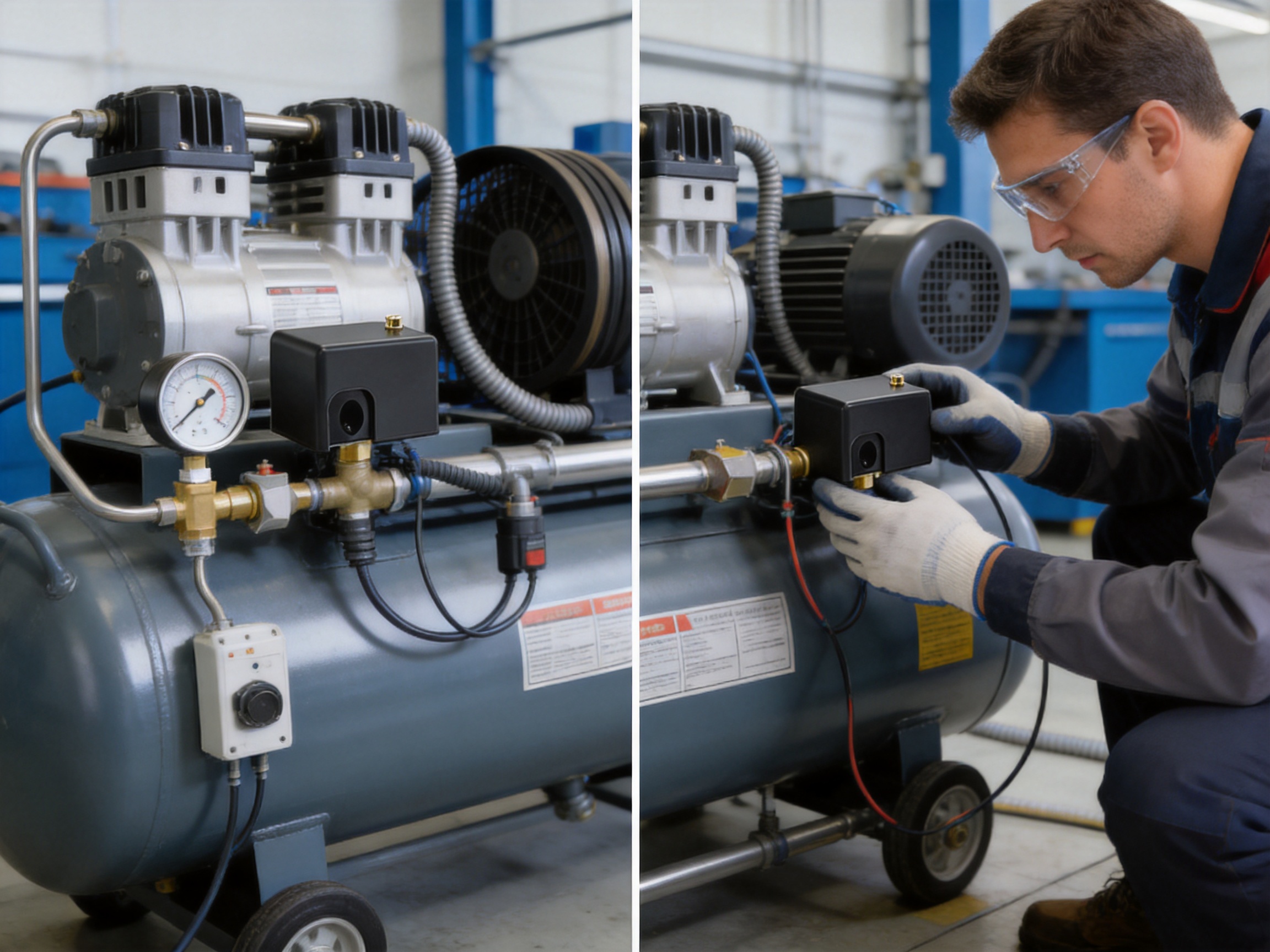
Electronic pressure controllers may offer digital displays, sensor-based measurement, programmable settings, alarm functions, and communication capability. These features can be valuable in advanced systems requiring remote monitoring or precise data collection. However, they may also increase product cost, installation complexity, and dependence on electronic components.
The ERS25 Series takes a different approach. Its mechanical design is focused on direct pressure-based switching. For applications that do not require digital monitoring, this can provide a more economical and easier-to-service solution. Users can select the technology that best matches their actual requirements rather than paying for features they will not use.
A mechanical controller may also be preferred in locations where electrical noise, limited technical support, or harsh operating conditions make complex electronics less attractive. Nevertheless, environmental suitability must still be confirmed. The correct choice depends on the equipment design, required control precision, monitoring needs, maintenance strategy, and budget.
Taizhou Edwin Electric Co., Ltd. was founded in 2008 and has developed a product portfolio centered on water pumps, pump accessories, and related fluid-handling equipment. Its product categories include solar pumps, deep well pumps, submersible pumps, surface pumps, booster pumps, circulation pumps, garden pumps, pool and spa pumps, commercial multistage pumps, end-suction pumps, intelligent booster pumps, pipes, and valves.
The company serves applications including new-energy projects, agricultural irrigation, municipal engineering, mining, construction, HVAC systems, and household water supply. This range of applications indicates experience with different pressure, flow, installation, and operating requirements. Such experience can support more informed product development and customer communication for pressure-control components.
Since 2018, the company has invested in new-energy and intelligent technologies, including solar water pumps and intelligent booster pumps. These activities complement the ERS25 Series by demonstrating a broader interest in energy-efficient and automated fluid-system solutions. The mechanical pressure controller itself is not a smart connected device, but it can still be useful in systems where dependable automatic control is needed without network-based functions.
The company's integrated approach includes research and development, production, export, procurement coordination, order tracking, and delivery support. This structure can be valuable to customers seeking long-term supply relationships, private-label opportunities, customized specifications, or coordinated sourcing of several product categories.
The ERS25 Series is a mechanical pressure controller designed primarily for air compressor systems. It automatically starts or stops compressor operation according to preset pressure conditions.
The stated pressure range is 10 to 80 psi. The final cut-in and cut-out settings should be selected according to the compressor, receiver, pneumatic equipment, and system safety requirements.
The rated voltage is 110V to 240V, with a frequency rating of 50/60Hz. The complete electrical circuit must still be checked against motor starting current, wiring requirements, overload protection, and local regulations.
The rated current is 12A. Because compressor motors may have high starting current, users should confirm whether a relay, contactor, or other intermediate switching device is required.
The listed options include 1/4-inch male, 1/4-inch female, and 3/8-inch female rotary configurations. The exact thread type and connection arrangement should be confirmed before ordering.
A rotary connection can make installation easier when the controller must be aligned with existing pipework or installed in a confined space. It can provide greater positioning flexibility than a fixed connection.
The product information states that pressure settings can be arranged according to customer needs. Buyers should confirm the required setting, adjustment range, order quantity, and production conditions with the manufacturer before placing an order.
The listed protection degree is IP20, so the controller should be installed in a suitably protected environment. Outdoor or wet installations may require a properly rated enclosure and additional environmental protection.
It may be suitable as a replacement if the pressure range, voltage, current, frequency, connection, terminal arrangement, physical dimensions, and environmental conditions match. Replacement should be verified by a qualified technician rather than based only on appearance.
No. A pressure controller manages normal compressor starting and stopping, while a pressure relief valve provides independent protection against excessive pressure. A complete system may require both devices.
OEM buyers should provide the required pressure range, voltage, frequency, current, hydraulic connection, thread standard, quantity, label or packaging requirements, application details, and any requested customization.
The supplier combines research and development, mass production, export experience, and procurement-support services. Its broader portfolio of pumps, valves, and fluid-system accessories can also support consolidated purchasing.
The ERS25 Series mechanical pressure controller is a practical solution for automatic air compressor pressure management. Its 10–80 psi pressure range, 110V–240V rated voltage, 12A current rating, 50/60Hz frequency compatibility, and flexible hydraulic connection options make it suitable for a variety of general compressor applications.
Its main advantages are straightforward operation, broad electrical compatibility, automatic start-and-stop control, adaptable connection choices, and mechanical serviceability. Compared with more complex electronic controllers, it can provide an economical alternative for applications that do not require digital displays, communication, or programmable monitoring.
The product is supported by the manufacturing and export capabilities of Taizhou Edwin Electric Co., Ltd., an established supplier of pumps, pump accessories, valves, and related fluid-handling equipment. The company's experience in research and development, mass production, customization, international logistics, and one-stop procurement strengthens its value for distributors, OEMs, project contractors, and industrial buyers.
Correct selection and installation remain essential. Buyers should verify pressure settings, current requirements, connection dimensions, environmental conditions, and safety equipment before use. When integrated into a properly designed compressor system, the ERS25 Series can provide dependable mechanical pressure control and contribute to more convenient, disciplined, and efficient equipment operation.
1. Product technical information for the ERS25 Series mechanical pressure controller, including pressure range, electrical rating, connection options, protection degree, and temperature limit.
2. Manufacturer company information concerning research and development, mass production, global export, pump product categories, and international procurement services.
3. General compressed-air system design principles concerning pressure switching, receiver operation, motor protection, pressure relief, and maintenance.
4. General industrial electrical safety practices for low-voltage motor-control circuits and mechanical switching devices.
5. General installation and maintenance practices for hydraulic connections, threaded fittings, pressure controls, and compressor accessories.
edwina@edwin-pump.com
+86-13586290903 (WhatsApp)
Xuri Gongliang Cutting Tool Entrepreneurship Park, Wenqiao Town, Wenling City, Taizhou City, Zhejiang Province, China

High Performance Smart Pump Factory


 English
