
edwina@edwin-pump.com

View All Products
en
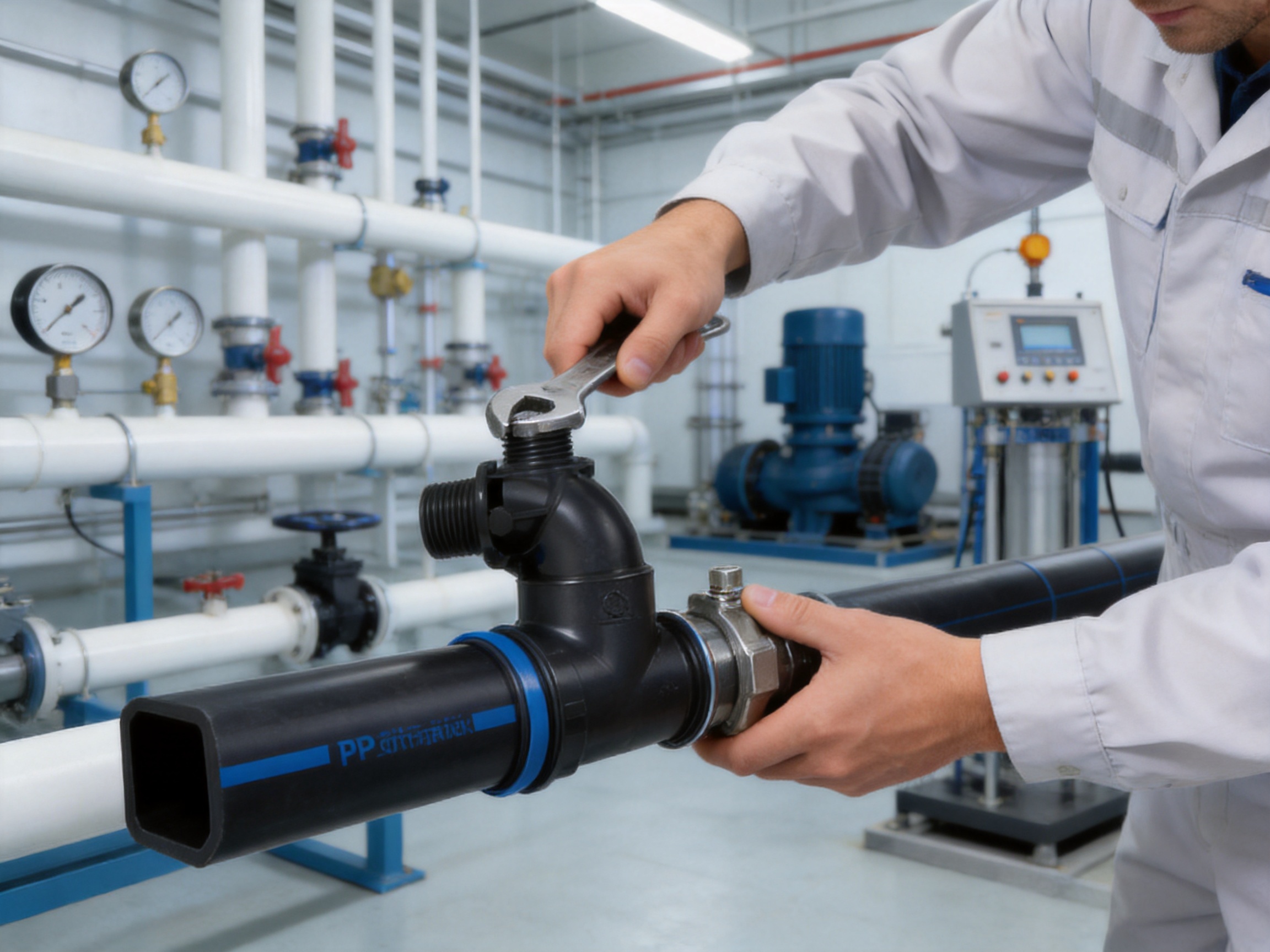
Reliable pipe fittings are essential to the performance, safety, and service life of modern water distribution systems. A fitting may be small compared with a pump, storage tank, or treatment unit, but it determines how securely pipes are joined, how efficiently water changes direction, and how easily branches can be added to an installation. The PP 90-Degree Female Threaded Offtake Metal Ring Irrigation Pipe Elbow is designed for these demanding connection requirements in agricultural irrigation, public water supply, water treatment, gardening, farming, and industrial fluid-transfer applications.
Manufactured from polypropylene and reinforced with a metal-ring threaded connection, this elbow combines the corrosion resistance of an engineering polymer with the mechanical reliability required at a threaded outlet. Its 90-degree configuration allows a pipeline to change direction while its female-threaded offtake provides a practical connection point for a branch pipe, valve, meter, riser, sprinkler assembly, or other water-control component. Available in PN10 and PN16 pressure classes, the fitting can be selected for different operating conditions and pipeline designs.
The product is part of a broad PP compression fitting range manufactured and supplied by Taizhou Edwin Electric Co., Ltd., a Zhejiang-based manufacturing enterprise with experience in pump production, water systems, product development, and international export. The company’s capabilities extend beyond individual fittings. Its integrated approach covers product research and development, material selection, molding, assembly, inspection, packing, export coordination, and customer support. This helps buyers source compatible pumps, pipes, valves, fittings, and water-system accessories from one professional supplier.
This article examines the construction, operating advantages, manufacturing strengths, application value, selection requirements, installation practices, maintenance considerations, and technical characteristics of the PP 90-degree female threaded offtake metal ring irrigation pipe elbow.
The PP 90-degree female threaded offtake metal ring irrigation pipe elbow is a water-supply fitting used to connect pipe sections at a right angle and create a threaded branch connection. The main body is made of PP, or polypropylene, while the threaded offtake incorporates a metal ring. The polymer body provides resistance to water, corrosion, and many common environmental conditions. The metal reinforcement supports thread stability and improves the durability of the connection where repeated assembly or mechanical stress may occur.
Unlike a simple plastic elbow, this product is intended to provide more than a change in direction. The offtake design enables the user to connect a threaded component to the pipeline. In an irrigation network, the branch may lead to a valve, pressure regulator, spray device, drip-irrigation manifold, or small distribution line. In a water-supply system, it may be used for a service branch, instrument connection, or local outlet.
The 90-degree geometry is one of the most widely used configurations in pipeline construction. It permits a sharp directional change while helping installers route pipework around walls, equipment, supports, tanks, pump bases, and structural obstacles. Compared with improvised combinations of several fittings, a purpose-designed elbow can reduce the number of joints, simplify installation, and reduce potential leakage points.
The fitting is supplied in a range of sizes and threaded outlet dimensions. The listed size range extends from approximately 20 mm to 110 mm pipe sizes, with threaded outlets from 1/2 inch to 4 inches depending on the selected model. The available combination of pipe diameter and thread size allows the fitting to be used in both compact branch connections and larger irrigation or water-distribution networks.
Polypropylene is widely used in water-system components because it offers a practical balance of low weight, chemical resistance, manufacturability, and mechanical strength. A PP fitting is not affected by rust in the same way as a conventional unprotected metal fitting. This is particularly important in agricultural irrigation, underground water systems, water-treatment installations, and humid environments where fittings may remain exposed to moisture for long periods.
The low density of PP also makes the elbow easier to handle than many all-metal alternatives. Installers can transport more components with less effort, position fittings in confined spaces more easily, and reduce the labor associated with large pipeline assemblies. The lightweight body is especially useful for irrigation projects that involve long pipe runs, mobile equipment, greenhouse layouts, and remote agricultural fields.
Polypropylene also has a smooth internal surface. A smooth bore helps limit unnecessary flow resistance and reduces the tendency of sediment to adhere to the internal wall compared with rough or heavily corroded surfaces. Actual system performance depends on pipe diameter, flow rate, water quality, pressure, and installation conditions, but the material is well suited to clean-water distribution and many agricultural water applications.
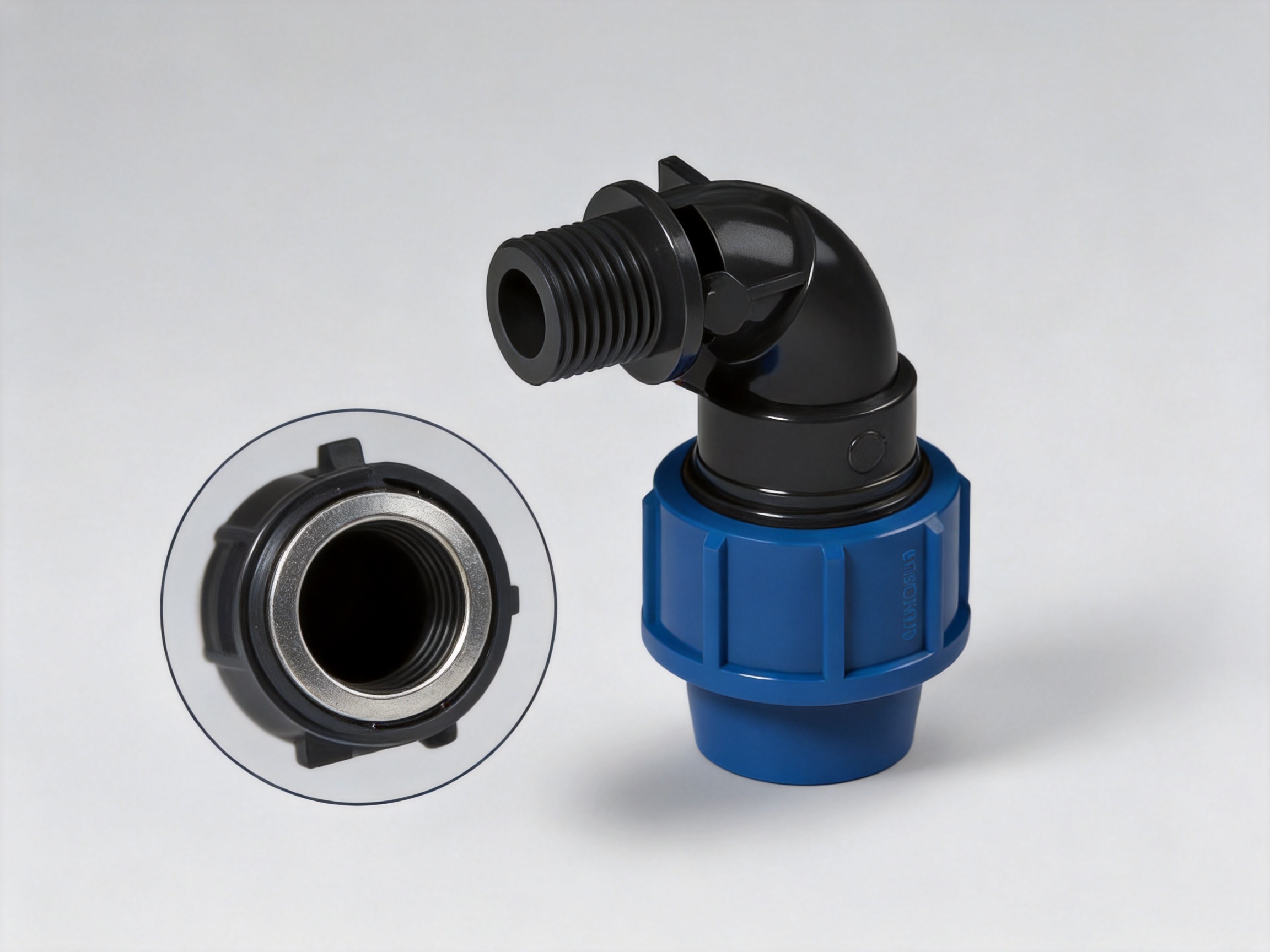
The metal ring is a key feature that differentiates this fitting from basic all-plastic threaded elbows. Threaded areas are subjected to concentrated forces during assembly. They may also experience stress from valves, adapters, gauges, risers, and connected accessories. A metal ring provides additional support at the female-threaded outlet, helping preserve thread form and connection stability when the fitting is correctly installed.
This design is particularly useful where the branch outlet must connect to a metal threaded component or where the installer expects the connection to be assembled and serviced. The metal insert provides a firm threaded interface while the surrounding PP body remains lightweight and corrosion-resistant. The result is a hybrid construction that addresses the different performance needs of the pipe body and the threaded outlet.
Installers should still avoid excessive tightening. Metal reinforcement does not eliminate the need for correct torque, suitable sealing materials, and proper alignment. The purpose of the ring is to improve the connection’s mechanical reliability, not to permit uncontrolled force or the use of oversized tools.
A right-angle elbow changes the direction of the pipeline by 90 degrees. This configuration is suitable for vertical-to-horizontal transitions, horizontal branch layouts, equipment connections, irrigation risers, and pipe routing around structures. The fitting can help create a clean and organized installation where a direct straight connection is impossible or impractical.
Good geometry is important because an elbow must withstand internal pressure while maintaining a stable shape. Dimensional consistency affects how easily the pipe enters the fitting, how the compression mechanism seals the joint, and how the finished assembly aligns with other components. Consistent molding and inspection are therefore as important as the choice of raw material.
The product is identified with PN10 and PN16 pressure classes. In general water-system terminology, PN10 indicates a nominal pressure rating of 10 bar, while PN16 indicates a nominal pressure rating of 16 bar under defined reference conditions. These ratings are used to help engineers and installers match a fitting to the intended system pressure.
A pressure class should not be interpreted as permission to operate continuously at the maximum value under every possible condition. Temperature, water chemistry, installation quality, pressure surges, repeated cycling, pipe support, and the pressure rating of connected components must all be considered. A complete system is only as strong as its lowest-rated part.
PN16 is generally selected where a higher pressure margin is required and where the complete pipeline system is designed for that class. PN10 may be appropriate for lower-pressure irrigation networks, garden-water systems, and other installations operating within the corresponding design limits. Buyers should verify the actual operating pressure, maximum surge pressure, water temperature, and local standards before selecting the fitting.
The fitting is intended primarily for water and water-based applications. The listed media is water, and the stated application fields include public works, underground living areas, factories, water-treatment systems, gardening irrigation, and farming irrigation. If the fitting is considered for chemicals, oils, aggressive fluids, hot water, or special process media, compatibility must be evaluated separately.
One of the most important advantages of a PP body is resistance to corrosion. Metal elbows installed in wet soil, fertilizer-rich irrigation water, or humid pump rooms may require coatings, cathodic protection, or eventual replacement because of rust and surface degradation. A polypropylene body does not rust, making it well suited to buried installations and agricultural environments.
Corrosion resistance can reduce maintenance requirements over the life of a pipeline. It also helps preserve the external appearance of exposed pipework and reduces the risk that corrosion products will enter the water stream. Although the metal ring must still be selected and used appropriately, the majority of the fitting remains protected by the polymer construction.
Compared with many brass, cast-iron, or steel fittings, PP fittings are significantly easier to lift, carry, and position. This reduces installation fatigue and can improve productivity on large projects. Lightweight components are also convenient when materials must be transported to remote farms, rooftop gardens, construction sites, or underground service areas.
Lower weight can simplify support design as well. While all pipework requires appropriate anchoring and support, a lightweight fitting places less dead load on brackets and connected pipe sections. This does not replace professional design, but it can contribute to a more efficient overall system.
A female-threaded offtake makes it possible to connect accessories directly to the elbow. The integrated metal ring is more robust than a bare plastic thread when used with compatible threaded parts and correct installation practices. This is advantageous in systems that require valves, gauges, regulators, sprinkler risers, or service branches.
Because the branch outlet is incorporated into the fitting, the installer may avoid using a separate tee, elbow, reducer, and threaded adapter. Fewer components can mean fewer joints, fewer opportunities for assembly error, and a more compact installation. This is especially valuable in equipment rooms and irrigation manifolds where space is limited.
Offering PN10 and PN16 versions allows buyers to select a fitting according to actual system demands instead of using one universal model for every project. This supports better engineering decisions and helps avoid unnecessary over-specification or inadequate pressure capacity.
The availability of multiple sizes and outlet threads also makes the product suitable for different network scales. Small branch connections can use compact threaded outlets, while larger pipe diameters can be incorporated into agricultural, municipal, or industrial distribution lines.
The supplied product information states a service life of more than 50 years under suitable operating and installation conditions. Long service life is supported by the PP body’s resistance to corrosion, the stable design of the compression connection, and proper control of pressure and temperature.
Any service-life statement must be considered in relation to the real environment. Ultraviolet exposure, excessive heat, freezing, impact, poor installation, incompatible chemicals, and repeated pressure surges can shorten the life of any plastic fitting. Nevertheless, the material and design offer a strong basis for durable water infrastructure when the product is correctly specified and installed.
Taizhou Edwin Electric Co., Ltd. was established in 2008 and operates as an integrated manufacturing enterprise focused on research and development, mass production, and global export. Although the company is widely associated with water pumps, its product portfolio also includes water-treatment peripheral products, pipes, valves, fittings, and related accessories.
An integrated manufacturing model offers several advantages to buyers. Product development can be coordinated with production capabilities, material requirements can be reviewed internally, and customer feedback can be transferred more efficiently to engineering and manufacturing teams. For international customers, the same organization can support product selection, order tracking, packaging, documentation, and shipment coordination.
High-quality fittings begin with correct design data. The elbow must be designed around the pipe outside diameter, compression dimensions, thread geometry, wall thickness, pressure class, and required assembly clearances. Engineering coordination is particularly important because a fitting may need to match multiple pipe standards and threaded components.
The supplied specifications indicate compatibility considerations including ISO 7, DIN EN 10226, ASME B1.20, or BS 21. These standards relate to thread forms or connection criteria and should be confirmed for the exact model and destination market. By identifying matching criteria, the manufacturer helps buyers evaluate whether the product is appropriate for their existing pipe and valve systems.
Material selection influences strength, dimensional stability, sealing performance, and long-term water-contact behavior. Polypropylene must be processed within controlled conditions to achieve consistent molding quality. Material batches should be managed carefully so that the finished body maintains the expected mechanical properties and appearance.
For the metal ring, the material must provide a stable threaded interface and suitable resistance to the intended environment. The insert must also be positioned accurately during molding or assembly. Poor alignment could make installation difficult, while inadequate bonding or retention could compromise long-term reliability. These considerations make insert-molding and assembly control important parts of the manufacturing process.
Injection molding is commonly used to produce PP fittings because it can create repeatable shapes at production scale. A well-designed mold helps control the body profile, socket dimensions, wall thickness, outlet geometry, and external gripping surfaces. Repeatability is important because compression fittings depend on accurate dimensions to produce a reliable seal.
During production, operators and quality personnel can monitor molding parameters such as temperature, pressure, cooling time, and cycle consistency. Correct control reduces risks such as warpage, incomplete filling, sink marks, excessive flash, internal stress, and dimensional variation. These controls are especially important for fittings used in pressure-bearing water systems.
The metal ring must be located correctly in the female-threaded offtake. Its position affects thread engagement, outlet alignment, and the transfer of assembly forces. A controlled manufacturing process uses suitable fixtures, molds, or assembly tools to ensure that each insert is placed consistently.
After molding or assembly, the threaded outlet can be inspected for cleanliness, profile accuracy, and smooth engagement with a reference gauge or compatible test component. The fitting should also be checked for cracks, distortion, flash, exposed defects, and incomplete encapsulation around the insert.
Pressure testing is a central quality-control activity for water fittings. A representative production or inspection program may include hydrostatic pressure testing, leakage checks, dimensional verification, and visual inspection. The test conditions should correspond to the applicable pressure class and product standard.
Hydrostatic testing is generally preferred for pressure-bearing water components because water stores less energy than compressed air. The purpose is to verify that the body, threaded insert, compression area, and connection interfaces can withstand the required test pressure without leakage or structural failure. Customers requiring specific inspection plans, certificates, or third-party testing should request these requirements before placing an order.
The company established Taizhou Haipai Import & Export Co., Ltd. and Golden Falcon Industrial Co., Ltd. to support procurement planning, order tracking, cross-border delivery, and foreign-trade services. This structure can be valuable to overseas buyers who require more than a product quotation.
International orders may involve multiple sizes, pressure classes, package configurations, labeling requirements, inspection documents, and shipment schedules. A professional export team can help coordinate these details and reduce communication gaps between the buyer, factory, freight provider, and customs representatives.
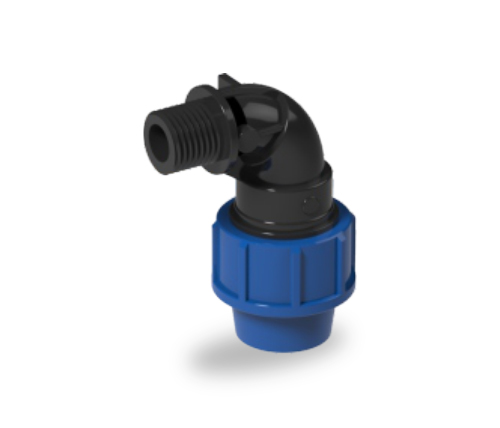
PP 90 Degree Female Threaded Offtake Metal Ring Irrigation Pipe Elbow
The following table summarizes the principal product information provided for the PP 90-degree female threaded offtake metal ring irrigation pipe elbow. Buyers should confirm the final size, pressure class, thread standard, and dimensional drawing before production or shipment.
| Item | Specification |
|---|---|
| Product type | 90-degree elbow with female-threaded offtake and metal ring |
| Body material | Polypropylene (PP) |
| Pressure classes | PN10 and PN16 |
| Media | Water |
| Temperature condition | Normal-temperature and medium-temperature service, subject to design limits |
| Available pipe sizes | Approximately 20 mm to 110 mm, depending on model |
| Threaded outlet range | Approximately 1/2 inch to 4 inches, depending on model |
| Typical color | Black and blue |
| Applications | Public water supply, underground services, factories, water treatment, gardening, and farming irrigation |
| Customization | OEM and ODM support |
| Packaging | Carton box or customer-specified packaging |
| Expected service life | More than 50 years under suitable conditions |
| Manufacturing origin | Zhejiang, China |
The available technical data contains several pipe and thread combinations. The table below presents selected examples. The notation combines the nominal pipe size with the threaded outlet size. The exact dimensional values should be verified against the approved drawing because model codes and abbreviated table headings may vary between product series.
| Nominal Size | Related DN | Pressure Class | Main Diameter D (mm) | Overall Height H (mm) | Thread Outlet |
|---|---|---|---|---|---|
| 25 × 1/2 inch | 15 × 15 | PN16 | 20 | 70 | 1/2 inch |
| 25 × 3/4 inch | 15 × 20 | PN16 | 20 | 70 | 3/4 inch |
| 32 × 1 inch | 25 × 25 | PN16 | 32 | 95 | 1 inch |
| 40 × 1-1/2 inch | 32 × 40 | PN16 | 40 | 109 | 1-1/2 inch |
| 50 × 2 inch | 40 × 50 | PN16 | 50 | 134 | 2 inches |
| 63 × 2-1/2 inch | 50 × 65 | PN16 | 63 | 167 | 2-1/2 inches |
| 75 × 3 inch | 65 × 80 | PN10 | 75 | 198 | 3 inches |
| 90 × 4 inch | 80 × 100 | PN10 | 90 | 220 | 4 inches |
| 110 × 4 inch | 100 × 100 | PN10 | 110 | 278 | 4 inches |
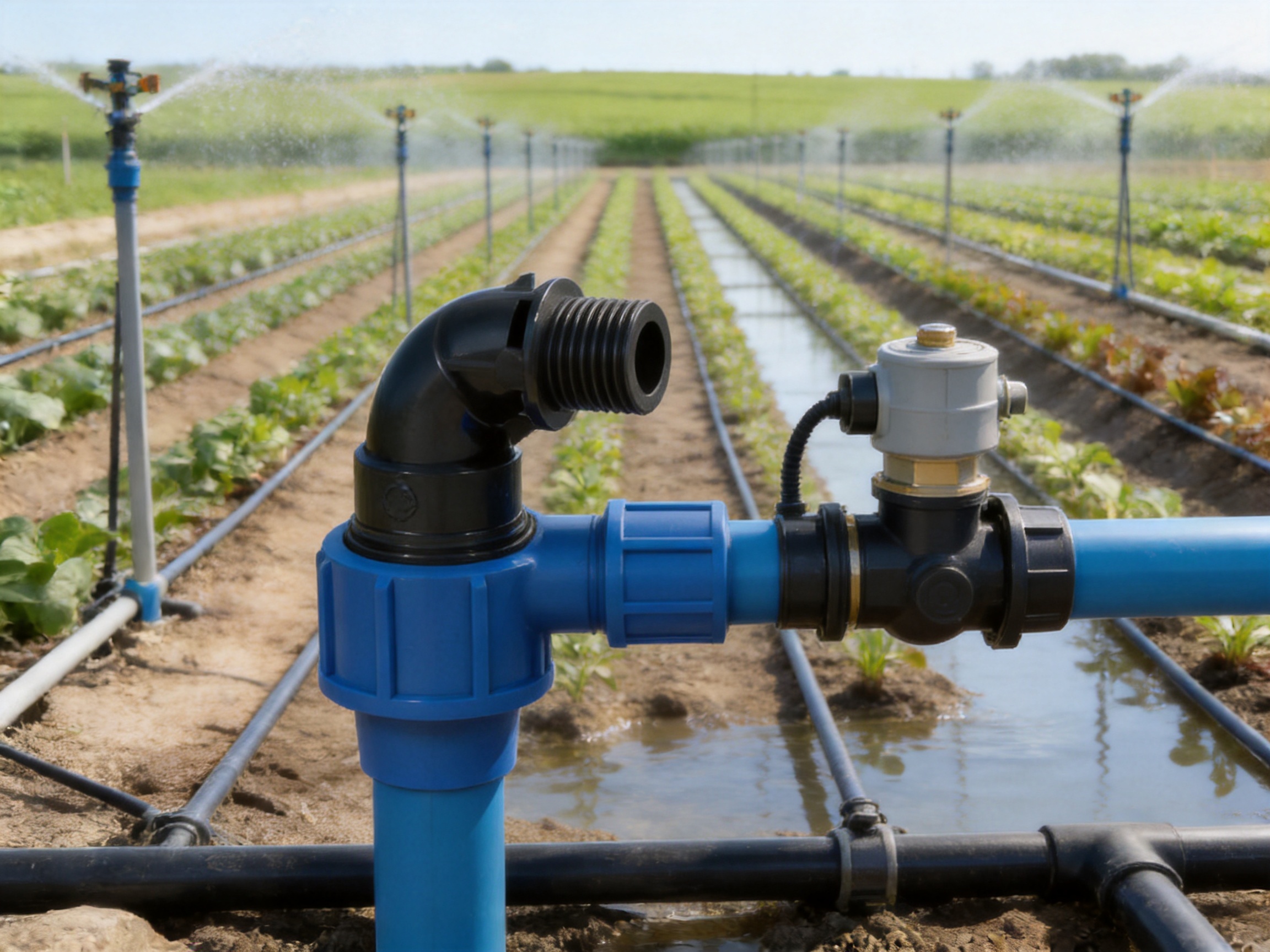
Agricultural irrigation systems require dependable connections across large areas and often operate in environments with soil moisture, fertilizer residues, temperature variation, and limited access to maintenance personnel. The PP elbow is suitable for connecting irrigation lines, risers, valves, pressure regulators, sprinkler systems, and branch manifolds.
The right-angle configuration helps installers build organized field layouts. A threaded offtake can be directed toward an irrigation control device or vertical riser, while the main pipe continues along the required route. The corrosion-resistant body is useful in contact with damp soil and irrigation water, provided that installation practices protect the fitting from excessive impact and abnormal loading.
Greenhouses, nurseries, landscape projects, and garden irrigation systems often require many branch connections in compact spaces. A 90-degree elbow with a threaded outlet can connect small distribution lines to valves, filters, timers, spray heads, and drip-irrigation assemblies.
The lightweight construction makes it convenient for overhead or wall-mounted layouts. The black-and-blue color combination can also help distinguish the fitting in a complex installation, although color should not be treated as a substitute for pressure-class or size identification.
Water-supply networks serving public works, underground living areas, and residential developments require fittings that can remain stable for long periods. The product can be used in suitable PP pipe systems where its size, pressure class, and thread standard match the project design.
For buried installations, the designer should consider soil conditions, pipe bedding, thermal movement, water hammer, access points, and protection of threaded outlets. Threaded branches should be positioned so that future maintenance is possible and external loads are not transferred directly to the fitting.
Water-treatment systems contain filters, dosing equipment, pumps, tanks, gauges, and control valves connected through a network of pipes and fittings. The elbow’s threaded offtake can provide a compact transition between PP pipework and threaded treatment equipment.
Before use in a treatment plant, the user should confirm compatibility with the chemicals present. Polypropylene is resistant to many substances, but chemical resistance depends on concentration, temperature, exposure time, and the specific chemical. The metal insert may have different compatibility characteristics from the PP body, so the entire assembly must be evaluated.
Factories may use water networks for cooling, cleaning, processing support, fire-protection auxiliaries, landscaping, or general utilities. The product can support branch connections in appropriate non-hazardous water systems. Its compact geometry helps route piping around machinery and structural supports.
Industrial users should document the working pressure, maximum temperature, water quality, vibration level, and maintenance cycle. Where connected equipment generates vibration or pulsation, flexible connectors, independent supports, or vibration-control measures may be needed.
Before installation, verify the pipe outside diameter, threaded outlet size, pressure class, pipe material, thread standard, and intended flow direction. A fitting that appears visually similar may have a different socket size or thread specification. Confirming these details prevents forced assembly and reduces the risk of leakage.
Cut the pipe squarely and remove burrs or sharp edges. The pipe end should be clean, dry, and free from mud, oil, chips, and surface damage. A damaged or irregular pipe end may prevent the compression seal from seating correctly.
Mark the required insertion depth if recommended by the fitting instructions. Do not insert the pipe at an angle. The pipe should enter straight into the fitting until it reaches the proper stop or insertion mark.
Disassemble the compression nut and internal components only as far as necessary. Place the nut, gripping ring, and sealing element in the correct order according to the assembly instructions. Push the pipe fully into the fitting body and tighten the nut by hand before using a suitable tool.
The compression nut should be tightened firmly but not excessively. Over-tightening may deform the pipe, damage the seal, or place unnecessary stress on the fitting body. Under-tightening may allow leakage or pipe pullout. If the manufacturer provides a specified tightening torque, that value should take priority.
Use a compatible male-threaded component. Clean the threads and apply an appropriate sealing material suitable for water service and the relevant thread type. Thread seal tape or approved sealing compound should be applied carefully so that excess material does not enter the flow passage.
Start the male component by hand to prevent cross-threading. Tighten it using an appropriate wrench while holding the fitting or adjacent component in a way that avoids transferring excessive torque to the pipe. Never use the pipe itself as a lever.
Large valves, meters, regulators, and metal risers can impose considerable weight or bending stress on a threaded outlet. Provide independent support for heavy components. The elbow should guide and connect the pipework, not carry the full weight of unsupported equipment.
Allow for thermal movement and ground settlement where relevant. Buried systems should be installed on suitable bedding and protected from sharp stones, impact, and concentrated loads. Exposed systems should be protected from accidental impact and excessive ultraviolet exposure when required by the project conditions.
After assembly, inspect every joint. Conduct a controlled pressure test using the project’s approved procedure. Increase pressure gradually, allow the system to stabilize, and inspect the fitting for leakage, movement, cracking, or deformation. Do not attempt to repair a pressurized joint.
If leakage occurs, depressurize the system completely before inspecting the connection. Check the pipe insertion depth, seal position, thread compatibility, alignment, and tightening condition. Replacing a damaged seal or correcting the pipe preparation is preferable to repeatedly tightening the connection.
Properly installed PP fittings generally require limited routine maintenance. However, a planned inspection program is beneficial in irrigation, industrial, and public water systems. Inspect exposed joints for leakage, discoloration, mechanical damage, unusual movement, or stress caused by connected equipment.
In agricultural systems, seasonal startup and shutdown are appropriate times to inspect fittings. Flush dirt and debris from the system, verify that valves operate correctly, and check whether freezing conditions could affect water trapped inside the fitting or connected branch. Where freezing is possible, drain or protect the system according to the project design.
In water-treatment and industrial installations, inspection intervals should reflect the fluid, temperature, pressure cycling, and chemical exposure. If a metal-threaded accessory is removed, examine the insert and threads before reassembly. Replace components that show cracking, severe thread damage, or permanent deformation.
Do not use aggressive tools, open flames, or unsuitable solvents on the PP body. Cleaning should be performed with methods approved for polypropylene and the particular water system. If a fitting has been exposed to a chemical spill or abnormal temperature, it should be assessed before being returned to service.
Water-system buyers often need more than one isolated component. A typical project may require a pump, pipe, valve, pressure-control device, electrical accessories, fittings, packaging, and technical coordination. A supplier with experience in multiple water-system categories can help customers develop a more coherent procurement plan.
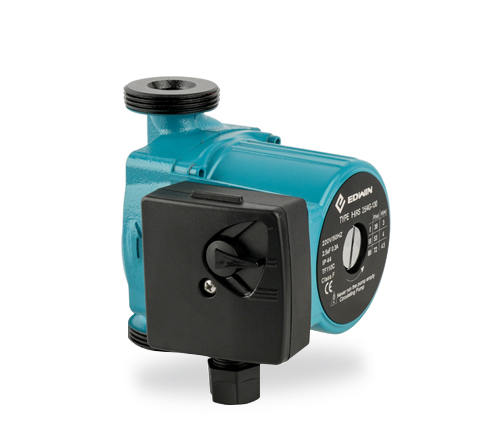
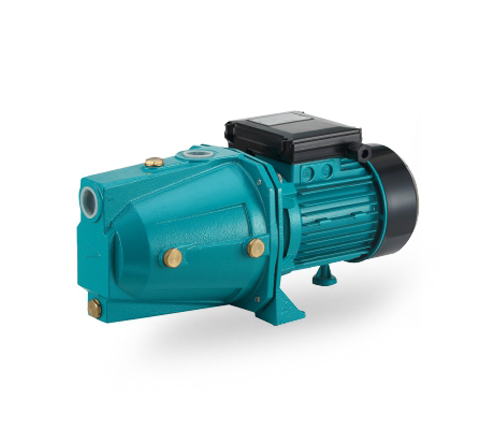
Taizhou Edwin Electric Co., Ltd. specializes in deep-well pumps, submersible pumps, domestic booster pumps, circulation pumps, solar water pumps, intelligent booster pumps, and related water-treatment products. This background gives the company practical exposure to the connection requirements found around pumping systems. The PP elbow can therefore be considered as part of a broader water-distribution solution rather than as an unrelated plastic accessory.
The company’s stated application experience includes new-energy projects, agricultural irrigation, municipal engineering, mining, construction, HVAC systems, and household water supply. These sectors involve different combinations of pressure, flow, installation environment, and control requirements. Such diversity can support a more informed approach to product selection and customization.
The company also offers OEM and ODM support. This may include customized branding, packaging, product combinations, dimensions, documentation, or project-specific supply arrangements, subject to technical review and production feasibility. For distributors and project contractors, customization can help align the fitting with an established product range or local market requirements.
The PP 90-degree female threaded offtake metal ring irrigation pipe elbow competes with several product types, including basic all-plastic elbows, brass threaded elbows, galvanized steel fittings, and multi-piece adapter assemblies. Each alternative has its own application area, but the PP-and-metal-ring design offers a balanced combination of properties.
Compared with a basic all-plastic threaded fitting, the metal ring offers a stronger threaded interface for suitable applications. Compared with an all-metal elbow, the PP body provides lower weight and improved resistance to rust. Compared with a multi-piece assembly, the integrated elbow and offtake can reduce the number of separate components and simplify installation.
The product’s PN10 and PN16 options provide flexibility for different water-network designs. The broad range of pipe sizes and threaded outlets also helps customers standardize components across small and large projects. The ability to obtain OEM and ODM support can be an additional advantage for wholesalers, distributors, contractors, and system integrators.
Competitive performance should always be judged against the exact application. A metal fitting may be preferable for very high temperatures, severe mechanical loads, or a particular chemical environment. Conversely, a PP fitting may be preferable where corrosion, weight, and installation speed are major concerns. The most suitable option is the one that matches the complete set of operating requirements.
When preparing an inquiry, buyers should provide the pipe material, pipe outside diameter, outlet thread size, required pressure class, quantity, application, water temperature, water quality, packaging requirements, destination country, and desired delivery schedule. Clear information allows the supplier to confirm the correct model and avoid errors during production.
For large projects, buyers should request dimensional drawings, sample approval, pressure-class confirmation, packing details, inspection requirements, and production schedules. If the project follows a specific national or international standard, that standard should be stated at the quotation stage.
The supplied commercial information indicates a typical delivery period of approximately 30 to 45 days, depending on order conditions. The stated payment arrangement is 30 percent in advance with the balance associated with the bill of lading or paid before delivery. These terms should be confirmed for each quotation because production volume, customization, inspection, and shipping conditions may affect the final arrangement.
Samples may be available after price and quantity are confirmed. A sample is useful for checking color, dimensions, thread engagement, compression assembly, packaging, and compatibility with the buyer’s pipe. For mass production, the approved sample should be retained as a reference where possible.
The fitting changes the direction of a PP pipe by 90 degrees and provides a female-threaded branch or offtake connection. The threaded outlet can connect to a valve, riser, gauge, regulator, sprinkler assembly, adapter, or other compatible male-threaded component.
The main body is made from polypropylene, or PP. The female-threaded offtake incorporates a metal ring to reinforce the threaded connection and improve mechanical stability when correctly installed.
Yes. Its listed applications include agricultural irrigation, farming, gardening, and water-treatment systems. The correct size and pressure class must be selected, and the fitting must be installed according to the pipe manufacturer’s and fitting manufacturer’s instructions.
PN10 and PN16 identify nominal pressure classes commonly associated with 10 bar and 16 bar reference pressures. The actual allowable operating pressure depends on temperature, standards, pressure surges, installation conditions, and the ratings of connected components.
The female-threaded outlet is designed to connect to a compatible male-threaded component, including suitable metal valves or adapters. Thread standards must match, and the component must be installed without cross-threading or excessive tightening.
The listed technical range includes pipe sizes from approximately 20 mm to 110 mm, with threaded outlet sizes from approximately 1/2 inch to 4 inches, depending on the model. Buyers should confirm the exact size combination before ordering.
OEM and ODM support is available according to the supplied product information. Customization may be possible for branding, packaging, product configuration, or other requirements after technical and commercial review.
The listed expected service life is more than 50 years under suitable conditions. Actual service life depends on pressure, temperature, water chemistry, ultraviolet exposure, freezing, mechanical loads, installation quality, and maintenance.
Use a sealing material approved for the water service and compatible with the thread standard. Start the connection by hand to avoid cross-threading, then tighten carefully with an appropriate tool. Excessive force should be avoided even though the outlet contains a metal ring.
The listed medium is water. Polypropylene may resist many chemicals, but compatibility must be checked for the specific chemical, concentration, temperature, and exposure time. The metal ring and sealing materials must also be included in the compatibility assessment.
The supplied information indicates approximately 30 to 45 days. The final schedule depends on order quantity, customization, production planning, inspection, packaging, and shipping arrangements.
The stated place of origin is Zhejiang, China. The product is supplied by Taizhou Edwin Electric Co., Ltd., an integrated manufacturer and exporter of water pumps, fittings, and related water-system products.
The PP 90-degree female threaded offtake metal ring irrigation pipe elbow is a practical connection component for modern water-distribution systems. Its PP body offers low weight and corrosion resistance, while the metal-ring female thread provides a reinforced interface for connecting valves, risers, gauges, and other threaded equipment. The 90-degree configuration supports efficient pipe routing, and the PN10 and PN16 options allow the fitting to be matched to different pressure requirements.
Its value is particularly clear in agricultural irrigation, greenhouse systems, gardening, public water supply, underground networks, water treatment, and suitable industrial utility applications. Compared with conventional all-metal fittings, it can reduce weight and corrosion concerns. Compared with basic all-plastic threaded fittings, the metal insert offers additional support at the threaded outlet. Compared with multi-piece assemblies, its integrated configuration can simplify installation and reduce the number of joints.
The product is supported by the manufacturing and export capabilities of Taizhou Edwin Electric Co., Ltd. The company combines product development, mass production, water-pump expertise, OEM and ODM support, order coordination, and international delivery services. This integrated strength can help customers obtain compatible products and manage complete water-system procurement more efficiently.
For the best result, buyers should confirm the pipe dimensions, thread standard, pressure class, operating conditions, chemical compatibility, packaging requirements, and inspection expectations before ordering. When correctly selected, installed, supported, and maintained, this PP elbow can provide a durable and efficient connection for long-term water infrastructure.
1. Product technical information supplied for the PP 90-degree female threaded offtake metal ring irrigation pipe elbow.
2. Manufacturer-provided dimensional data for PP compression fittings, including PN10 and PN16 pressure classes.
3. General engineering principles for polypropylene pipe systems and compression fitting installation.
4. ISO 7, Pipe Threads Where Pressure-Tight Joints Are Made on the Threads.
5. DIN EN 10226, Pipe Threads Where Pressure-Tight Joints Are Made on the Threads.
6. ASME B1.20, Pipe Threads, General Purpose.
7. BS 21, Pipe Threads for Tubes and Fittings Where Pressure-Tight Joints Are Made on the Threads.
8. General manufacturer guidance for water-supply, agricultural-irrigation, and water-treatment pipeline design.
edwina@edwin-pump.com
+86-13586290903 (WhatsApp)
Xuri Gongliang Cutting Tool Entrepreneurship Park, Wenqiao Town, Wenling City, Taizhou City, Zhejiang Province, China

High Performance Smart Pump Factory


 English