
edwina@edwin-pump.com

View All Products
en
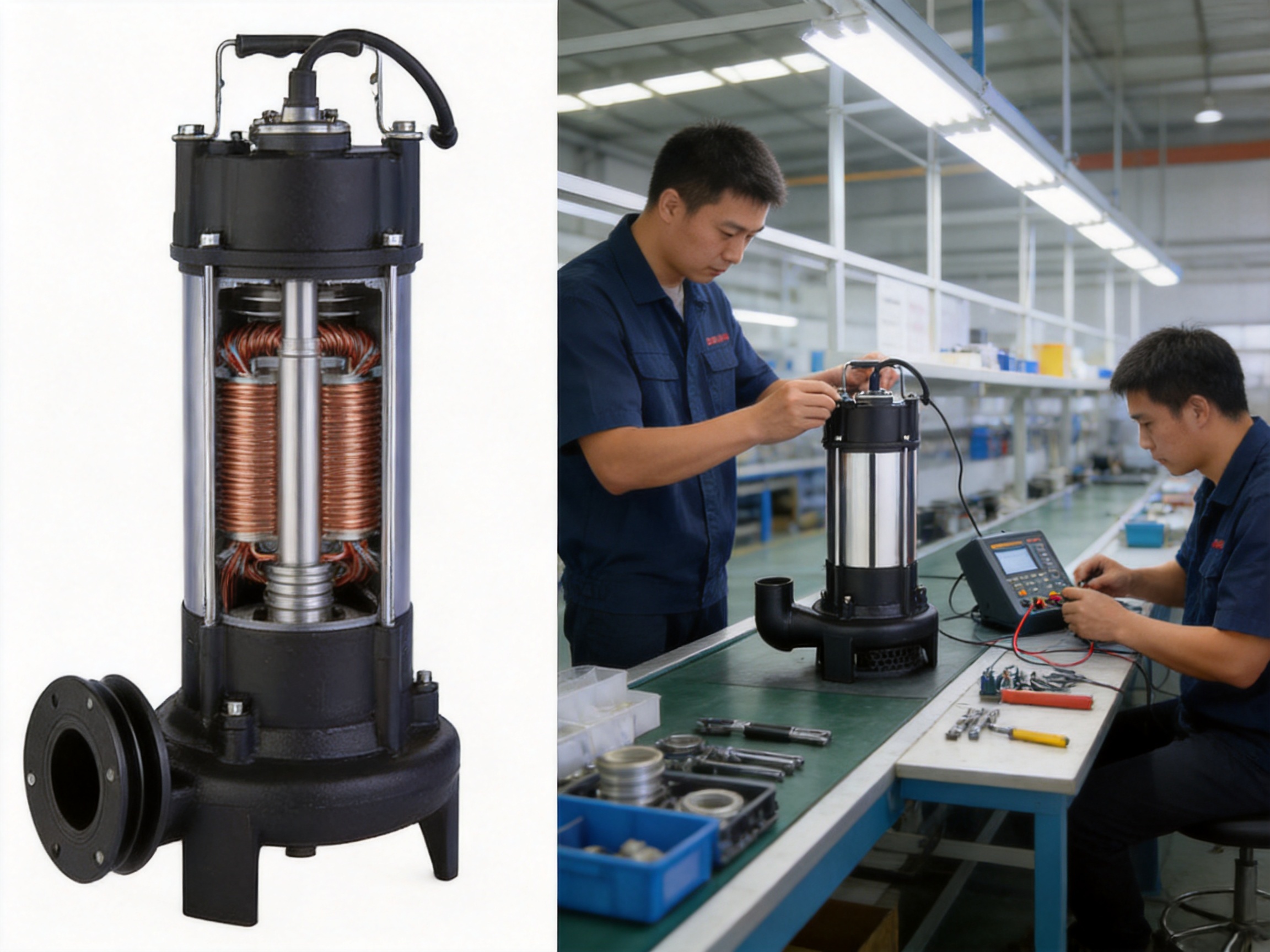
Wastewater drainage is one of the most demanding tasks in modern water management. Sewage, contaminated water, rainwater, and process liquids often contain suspended solids, fibrous materials, and abrasive particles that can quickly damage ordinary pumps. A suitable drainage pump must therefore provide more than basic water transfer. It must deliver dependable submersible operation, stable motor protection, durable wetted components, and the flexibility to serve different environments.
The SUBMERSIBLE SEWAGE PUMP VB2 is designed for wastewater drainage in industrial, municipal, commercial, agricultural, and residential applications. Its compact submersible structure allows the pump to operate directly inside a collection pit, drainage station, sewage tank, or wastewater basin. By working at the point where liquid accumulates, the pump can reduce installation complexity and avoid the need for a long suction line.
This product is manufactured by Taizhou Edwin Electric Co., Ltd., an integrated pump enterprise with experience in research and development, mass production, export, and international customer service. The company’s broader product portfolio includes deep well pumps, submersible pumps, domestic booster pumps, circulation pumps, solar water pumps, intelligent booster pumps, and other water-management products.
The VB2 is intended for users who need a practical and durable sewage drainage solution rather than a pump designed only for clean water. Its protected motor, copper winding, stainless steel welded shaft, IPX8 protection class, and broad application range make it a strong choice for wastewater transfer where reliable operation and straightforward installation are important.
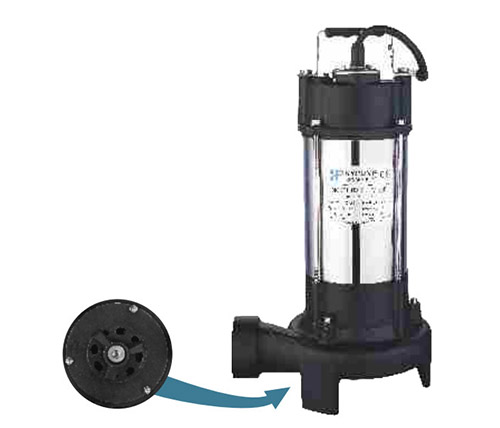
SUBMERSIBLE SEWAGE PUMP VB2
The VB2 is a submersible sewage pump designed to remain immersed in the pumped liquid during operation. This arrangement provides several functional benefits. The pump does not need to be installed above the liquid level, and it can draw wastewater directly from the lowest area of a pit or tank. This helps reduce the risk of air entering the suction line and simplifies the layout of many drainage systems.
In a typical installation, the pump is placed in a wastewater collection point. When the liquid reaches the required level, the pump transfers it through a discharge pipe to a municipal sewer, treatment facility, drainage channel, storage tank, or other approved destination. The exact control arrangement may depend on the installation, but the pump’s submersible configuration supports flexible positioning in confined or wet environments.
The model is suitable for wastewater drainage in factories, construction sites, commercial facilities, municipal sewage treatment plants, residential drainage stations, methane pools, and countryside irrigation systems. These environments can differ considerably in water quality and operating conditions. A factory may need to remove process wastewater, while a construction site may require temporary drainage after excavation or heavy rain. A residential drainage station may operate in a confined underground chamber, and an agricultural installation may handle water from methane pools or field irrigation areas.
Although the VB2 is designed for sewage and wastewater applications, selection should always be based on the actual liquid characteristics. Users should consider the presence of solids, fibers, corrosive chemicals, sand, temperature, density, pH, and the required flow and head. The pump should be installed and operated within its specified limits to achieve its expected service life.
The published operating information defines the main environmental limits for the pump. The maximum immersion depth is 5 meters, and the maximum liquid temperature is 40°C, equivalent to 104°F. The specified liquid pH range is 5 to 9. The listed liquid kinematic viscosity range is presented in the product information as 7×10* to 23×10* m²/s, and the maximum liquid density is listed as 1.2×10* kg/m³. Because the source formatting does not display all superscripts clearly, users should confirm the exact exponent values with the manufacturer before final selection.
| Item | Published specification | Practical significance |
|---|---|---|
| Product type | Submersible sewage pump | Designed for direct installation in wastewater and drainage collection points |
| Maximum immersion depth | 5 m | Defines the maximum recommended installation depth below the liquid surface |
| Maximum liquid temperature | 40°C / 104°F | Suitable for normal-temperature wastewater and drainage liquids |
| Liquid pH value | 5–9 | Supports mildly acidic to mildly alkaline liquids within the stated range |
| Liquid viscosity | 7×10* to 23×10* m²/s as published | Exact exponent should be confirmed for the intended liquid |
| Maximum liquid density | 1.2×10* kg/m³ as published | Exact exponent should be confirmed before handling unusually dense liquids |
| Motor winding | Copper | Supports efficient electrical conduction and dependable motor performance |
| Thermal protection | Built-in thermal protector | Helps protect the motor from excessive temperature |
| Shaft | Stainless steel welded shaft | Provides a durable shaft structure for wet and demanding service |
| Insulation class | Class B | Defines the stated thermal insulation category of the motor winding |
| Protection class | IPX8 | Indicates protection for continuous immersion under specified conditions |
These specifications should be read together with the installation conditions. A pump’s performance is determined not only by its motor and hydraulic design but also by the total dynamic head, pipe length, pipe diameter, discharge fittings, liquid level, operating frequency, and solids content. Correct sizing is essential for preventing overload, unnecessary energy consumption, frequent cycling, and premature wear.
The most important design advantage of the VB2 is its ability to operate while submerged. Conventional surface-mounted pumps usually require a suction pipe and sufficient liquid level to maintain prime. In wastewater applications, suction systems can be affected by air leakage, clogging, vapor formation, and difficult priming conditions. A submersible pump avoids many of these problems by placing the pumping unit directly in the liquid.
Direct immersion can also make the installation more compact. A sewage pit or drainage tank may not have enough dry space for a complete surface pumping station. With a submersible model, the motor and hydraulic section occupy the wet area, while the discharge connection can be routed upward or horizontally according to the site layout. This is particularly useful in underground drainage stations, temporary construction dewatering systems, and narrow commercial utility rooms.
Another benefit is the ability to remove liquid from a low point. Because the pump is located close to the bottom of the collection area, it can help reduce standing wastewater compared with a high-mounted suction arrangement. Less residual liquid can contribute to improved site hygiene, lower odor accumulation, and reduced risk of stagnant water, although the final residual level depends on the pump position, base design, and control system.
Submersible installation can also reduce noise in occupied buildings. The motor is surrounded by liquid during operation, and the pump does not need to be mounted in an exposed mechanical room. This can be valuable in residential quarters, commercial buildings, and facilities where noise control is important. Proper pipe support and vibration management remain necessary, but the basic layout can be quieter and less intrusive than some surface-pump alternatives.
Wastewater pumps often operate in conditions that are more severe than clean-water systems. The pump may experience frequent starts, changing liquid levels, restricted discharge flow, high ambient temperatures, or temporary blockage. For this reason, motor protection is a central part of dependable operation. The VB2 includes a built-in thermal protector to help guard the motor against excessive temperature.
A thermal protector can respond when the motor temperature rises beyond an acceptable level. This may happen because of overload, insufficient cooling, abnormal voltage, impeller obstruction, excessive operating frequency, or difficult liquid conditions. The protective device is intended to reduce the risk of motor damage caused by overheating. It does not replace correct electrical installation, suitable overload protection, proper grounding, or routine inspection.
The motor uses copper winding. Copper offers strong electrical conductivity and is widely used in quality pump motors because it supports efficient current transfer and dependable heat management. Compared with lower-conductivity winding materials, copper can help reduce electrical losses when the motor is correctly designed and operated. It also supports consistent production quality when winding processes are controlled carefully.
The stated insulation class is Class B. Insulation class identifies the thermal capability of the motor winding insulation system. The pump must still be operated within the specified liquid temperature, electrical supply, and duty conditions. If the motor is exposed to repeated overload or a temperature above the rated limit, even a properly selected insulation system can experience accelerated aging.
The IPX8 protection class is appropriate for a submersible product. It indicates that the enclosure is designed for continuous immersion under conditions specified by the manufacturer or applicable testing standard. Users should remember that IPX8 is not a universal statement that the pump can be installed at any depth or in any liquid. The product’s stated maximum immersion depth, liquid temperature, pH, density, and installation instructions remain controlling requirements.
The pump includes a stainless steel welded shaft. The shaft is a critical rotating component because it transfers motor torque to the hydraulic assembly. In a sewage environment, the shaft may be exposed to moisture, suspended solids, and chemically variable liquids. Stainless steel provides a useful level of corrosion resistance for many wastewater conditions, while the welded structure supports a robust connection between shaft components where applicable.
A durable shaft helps maintain alignment between the motor and the impeller. Good alignment reduces unnecessary vibration, bearing stress, seal wear, and mechanical noise. It can also contribute to stable hydraulic performance over time. The shaft should not be considered in isolation, however. Long service life depends on the combined quality of the bearings, mechanical seal, impeller, casing, fasteners, cable entry, and installation base.
Compared with a basic pump using less corrosion-resistant shaft material, a stainless steel shaft may provide a stronger solution for damp and wastewater environments. The actual advantage depends on the liquid chemistry and the grade of stainless steel used. If the liquid contains aggressive chemicals, chlorides, or abrasive solids, the buyer should request detailed material information and compatibility guidance before placing an order.
Factories may generate wastewater from cleaning, production, equipment washing, floor drainage, cooling processes, and utility operations. The water can collect in sumps, pits, trenches, or underground tanks that are difficult to drain by gravity alone. A submersible sewage pump can transfer this accumulated liquid to a treatment system or approved discharge point.
The VB2 is suitable for this type of drainage when the liquid remains within the stated temperature, pH, viscosity, density, and immersion limits. Industrial users should also evaluate the size and type of solids. Sewage pumps are intended for wastewater service, but no pump should be exposed to materials that exceed its hydraulic passage or damage its rotating parts.
Before installation in a factory, the engineering team should identify whether the wastewater contains oils, solvents, fibers, metal particles, abrasive sand, or concentrated chemicals. The pump should be selected according to the most demanding normal operating condition rather than an average sample. A liquid that appears to be ordinary wastewater may become more aggressive during certain production cycles.
For industrial operators, a major advantage of a standardized submersible pump is maintenance accessibility. A pump installed on a guide system, lifting chain, or properly designed support arrangement can be removed from the wet well for inspection without dismantling the entire discharge pipeline. The specific lifting method must be designed safely, and the electrical cable must never be used as a lifting rope.
Construction sites frequently face changing water levels and temporary drainage requirements. Excavations, foundation pits, basements, tunnels, and utility trenches can collect rainwater or groundwater. A submersible pump is convenient in these conditions because it can be placed close to the lowest point and moved as the work area changes.
The VB2 can support drainage in construction environments where the liquid characteristics fall within its operating limits. Its direct immersion design avoids the need for a permanent dry-room installation. This is helpful when the site is still under development and the final drainage infrastructure has not been completed.
Construction managers should protect the pump from large debris, reinforcing steel, stones, timber, and other materials that may enter the pit. A suitable strainer, protective cage, or screened collection zone can help reduce the risk of blockage. The pump should be placed on a stable surface rather than directly in loose mud where the inlet may become buried.
Electrical safety is especially important on construction sites. The power supply should include appropriate grounding and residual-current protection according to local regulations. Cables should be routed to prevent crushing, abrasion, vehicle damage, and contact with sharp edges. Water, temporary power, and construction traffic create a high-risk environment, so installation should be performed by qualified personnel.
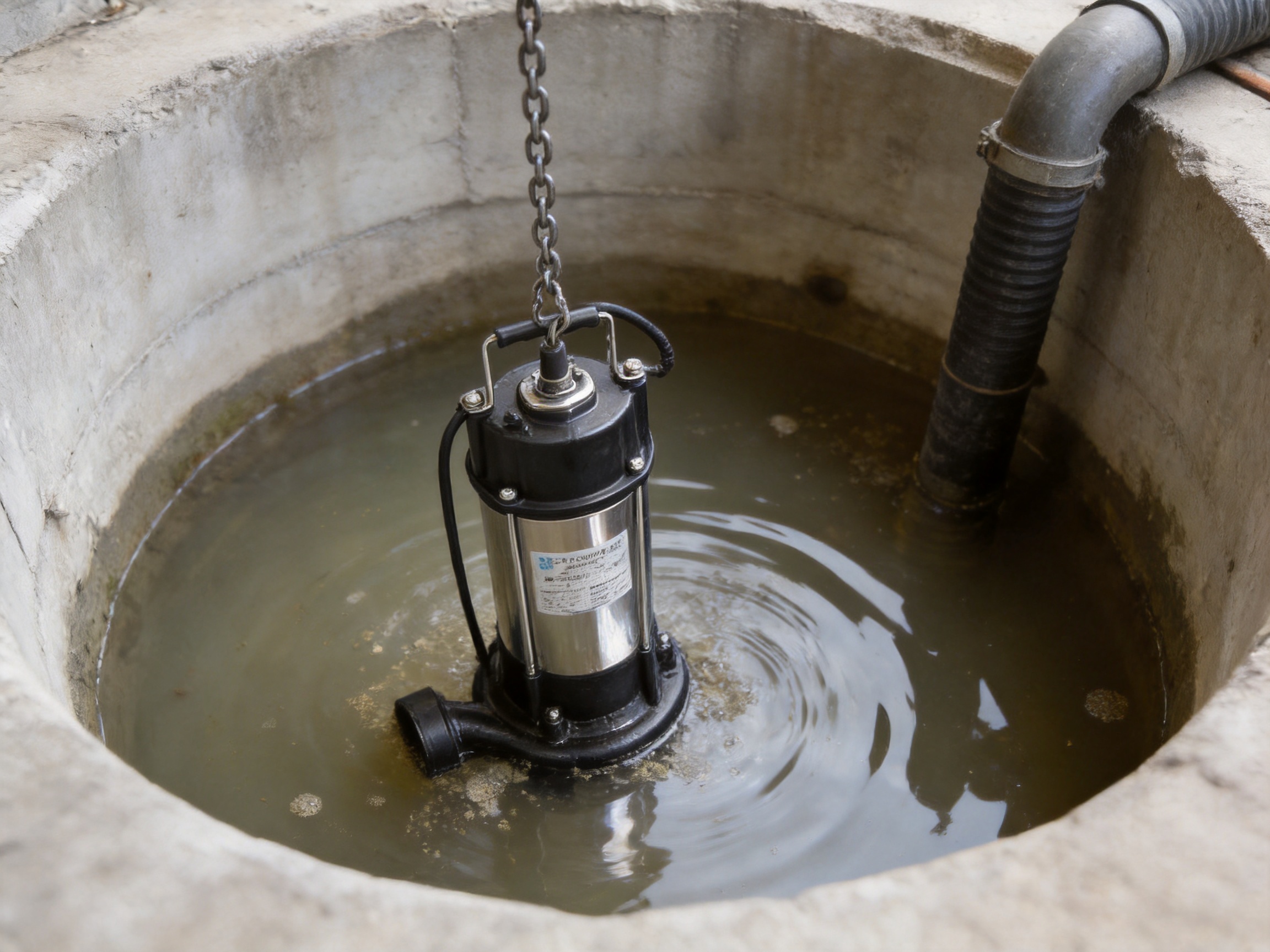
Municipal sewage treatment plants and drainage stations require equipment that can operate reliably under changing inflow conditions. A pump may be required to transfer wastewater from a collection chamber to a treatment stage, equalization tank, rising main, or higher elevation. Submersible equipment is commonly used because it fits directly into wet wells and can be configured for automatic level-based operation.
In residential quarters, drainage stations may collect wastewater from apartment buildings, residential developments, underground parking areas, landscape areas, or shared utility systems. A compact submersible pump can help reduce the space required for mechanical equipment. It can also serve as an emergency drainage device where gravity drainage is insufficient or where flooding protection is required.
Residential and municipal users generally value quiet operation, dependable starting, low maintenance, and resistance to wet conditions. The VB2’s copper winding, built-in thermal protector, stainless steel shaft, and IPX8 protection class address several of these needs. The final system should also include suitable non-return valves, isolation valves, level controls, alarm systems, and access provisions where required.
For sewage lifting stations, a non-return valve can help prevent discharged wastewater from flowing back into the collection chamber when the pump stops. An isolation valve can support maintenance by allowing the pump or discharge line to be serviced. Level sensors or float controls can reduce dry running and help match pump operation to incoming flow. These components are not substitutes for pump quality, but they are essential parts of a reliable drainage system.
The product information identifies methane pools and field irrigation in the countryside as additional application areas. Rural wastewater and agricultural drainage systems may have limited infrastructure and may need compact equipment that can be installed directly in a pool, tank, or collection point. A submersible pump can provide a practical method for transferring liquid where a permanent pumping station is not available.
When used around methane pools or anaerobic wastewater, safety assessment is essential. Methane and other gases may accumulate in enclosed or poorly ventilated areas. The pump, electrical system, controls, and installation method should be evaluated in accordance with the relevant local safety requirements and the actual gas classification of the site. Users should not assume that a standard submersible pump is automatically approved for hazardous explosive atmospheres.
For countryside irrigation, the pump may transfer water from a collection pool to fields or a secondary storage area. The liquid should be examined for sand, fibrous agricultural waste, stones, and other solids. If irrigation water contains significant abrasive material, a filtration or settling arrangement may help protect the pump and downstream equipment.
Rural users should also consider access to maintenance services and spare parts. A pump selected from an established manufacturing supplier can offer an advantage when technical support, replacement components, and order tracking are available. Taizhou Edwin Electric Co., Ltd. supports international procurement through its manufacturing and foreign-trade service structure, which can be useful for distributors, contractors, and agricultural project buyers.
The VB2 offers several practical advantages compared with basic pumps designed only for light-duty water transfer. Its first advantage is application orientation. Rather than being limited to clean water, it is positioned for wastewater drainage in factories, construction sites, commercial facilities, treatment plants, residential drainage stations, methane pools, and rural irrigation settings.
Its second advantage is the combination of submersible construction and motor protection. A pump that can operate under immersion while incorporating a thermal protector is better suited to wet-well conditions than a simple surface pump that requires separate priming and external protection arrangements.
Its third advantage is the use of a copper-wound motor. Copper winding supports efficient electrical performance and is a familiar choice for dependable pump motors. The stainless steel welded shaft adds a durable rotating element for wet service. Together, these features indicate attention to the areas that commonly influence pump reliability: motor temperature, electrical losses, shaft integrity, and corrosion exposure.
The fourth advantage is the IPX8 enclosure protection class. Many drainage applications involve continuous or repeated immersion. A product intended for this condition can provide a more appropriate engineering solution than a pump with only splash or temporary immersion protection.
The fifth advantage is manufacturing support. Buyers are not purchasing only a single mechanical assembly; they are also relying on design control, production consistency, inspection, packaging, communication, and after-sales coordination. A supplier with independent research and development, mass-production capability, and export experience can offer greater continuity than an unknown source with limited production organization.
These advantages should not be interpreted as a guarantee that the VB2 is suitable for every wastewater duty. Competitor products may offer larger solids passages, higher heads, automatic controls, explosion-proof certifications, cutting systems, or specialized materials. The best choice depends on the project’s hydraulic data and liquid characteristics. The VB2 is strongest where its stated operating range and construction match the application.
Taizhou Edwin Electric Co., Ltd. was founded in 2008 and operates as an integrated manufacturing enterprise. Its activities include independent research and development, mass production, and global export. This combination is important for pump buyers because it connects product design with manufacturing control and international delivery capability.
Independent research and development enables a manufacturer to understand the relationship between hydraulic design, motor performance, material selection, sealing, thermal protection, and application requirements. It also allows product improvements to be developed internally rather than relying entirely on third-party designs. For customers, this can make technical communication more direct and can support customized project discussions.
Mass production provides another important advantage. Repeated manufacturing allows processes such as motor winding, shaft assembly, casing production, sealing installation, electrical connection, and final testing to be organized into defined procedures. When production standards are applied consistently, variation between individual units can be reduced.
A professional manufacturing process should include incoming material checks, component inspection, assembly control, electrical testing, mechanical testing, appearance inspection, and final packaging review. For a submersible sewage pump, particular attention should be given to winding quality, insulation integrity, shaft alignment, seal installation, cable entry, motor protection, and water-resistance performance.
The use of copper winding and stainless steel welded shafts requires controlled production methods. Copper wire must be wound with appropriate tension and insulation protection. Welded shaft components require accurate alignment and secure joining. Sealing surfaces must be clean and properly fitted. Each process affects the reliability of the finished pump, especially when the unit is expected to remain submerged.
Edwin Pump has developed a product portfolio covering deep well pumps, submersible pumps, domestic booster pumps, circulation pumps, solar water pumps, intelligent booster pumps, and related water-treatment peripheral products. This range indicates experience across different pumping conditions, including household water supply, agriculture, municipal engineering, new energy projects, construction, mining, HVAC systems, and industrial applications.
Since 2018, the company has invested in new energy and intelligent technology, including solar water pumps and intelligent booster pumps. Although the VB2 is a sewage drainage product rather than a smart or solar pump, this broader technical direction demonstrates the company’s effort to develop products for changing water-management requirements.
Quality control for a submersible sewage pump begins with material selection. The shaft, casing, fasteners, seals, cable, motor winding, and hydraulic components must be appropriate for the intended environment. The pump’s operating limits should be clearly documented so that distributors and users can avoid unsuitable applications.
During motor assembly, winding quality is essential. Poor winding tension, inadequate insulation, or loose electrical connections can cause overheating and shortened service life. A built-in thermal protector adds an important layer of protection, but it works most effectively when combined with accurate winding, correct voltage, reliable connectors, and an appropriate control panel.
Mechanical assembly also requires precision. The shaft, bearings, impeller, and casing should be aligned correctly. Excessive mechanical clearance can reduce hydraulic efficiency, while insufficient clearance can increase friction or create interference. The mechanical seal should be installed without damage, and all sealing surfaces should be free of contamination.
Final testing may include electrical resistance checks, insulation testing, running tests, vibration observation, leakage inspection, and visual examination. The exact tests depend on the product design and the manufacturer’s quality system. Buyers handling large projects should request relevant inspection documents, test records, product drawings, and applicable certifications before delivery.
International export also requires attention to packaging and documentation. A pump must be protected from impact, moisture, and incorrect handling during transportation. Product labels, wiring information, installation instructions, spare-part details, and shipping documents should be prepared accurately. Edwin Pump’s export-oriented structure and affiliated foreign-trade service companies support procurement planning, order tracking, cross-border delivery, and related customer coordination.
The pump should be installed by qualified personnel who understand electrical safety and wastewater systems. Before installation, inspect the pump for transportation damage. Confirm that the power supply matches the product requirements, the cable is intact, the discharge connection is suitable, and the installation depth does not exceed 5 meters.
Place the pump on a stable base or in a properly designed guide arrangement. Avoid positioning it directly in loose sludge, sand, or debris. The inlet area should have enough clearance for liquid entry. If the collection chamber contains large solids, install a suitable screen or protective arrangement while ensuring that the screen does not create excessive flow restriction.
The discharge pipe should be correctly sized and securely supported. Excessive pipe friction can reduce flow and increase the operating burden on the pump. Long horizontal pipe runs, multiple elbows, partially closed valves, and undersized fittings can significantly affect the system’s total head. A non-return valve is generally advisable in lifting applications to limit backflow.
The electrical connection must include grounding and protection appropriate to local regulations. The thermal protector inside the motor should not be bypassed. If a control panel is used, it should be configured to support overload protection, phase protection where applicable, level control, and alarm functions required by the project.
Do not lift or lower the pump by pulling on its power cable. Use a suitable rope, chain, lifting handle, or guide arrangement designed for the pump’s weight. Keep electrical connections dry and protected. Before energizing the unit, confirm that personnel are clear of the wet well and that the discharge path is open.
The first operating test should check direction, vibration, noise, flow, current, leakage, and control response. If the pump produces abnormal noise, excessive vibration, inadequate flow, repeated thermal trips, or unusual current, switch it off and investigate the cause. Continuing to operate a pump under abnormal conditions can convert a minor installation problem into a major failure.
Regular maintenance helps preserve pump performance. The inspection interval should reflect the liquid quality, operating frequency, solids content, and importance of the drainage system. A pump serving a clean rainwater sump may require a different schedule from a pump handling industrial wastewater or sewage with heavy solids.
Routine checks should include the power cable, discharge pipe, valves, lifting arrangement, level controls, electrical connections, and pump condition. Inspect the collection chamber for accumulated sludge, rags, stones, and other debris. Clean the chamber when necessary to prevent materials from entering the pump or blocking the inlet.
Monitor operating current and temperature where suitable instruments are available. A gradual increase in current may indicate blockage, increased friction, bearing wear, hydraulic damage, or a change in liquid density. Repeated thermal-protector activation should be treated as a warning rather than simply reset without investigation.
When the pump is removed for service, inspect the impeller, casing, shaft, bearings, and mechanical seal. Replace damaged or worn parts with compatible components. Check that the shaft rotates smoothly and that there is no excessive play. Examine the cable entry and sealing points for signs of moisture penetration.
For seasonal or temporary installations, clean and inspect the pump before storage. Protect it from freezing conditions, impact, and contamination. If the pump is returned to service after a long period, carry out an electrical and mechanical inspection before energizing it.
Before purchasing the VB2, the buyer should prepare a complete application profile. Important information includes the required flow rate, total head, discharge pipe length, pipe diameter, liquid temperature, pH, density, viscosity, solids type, solids size, operating hours, starting frequency, installation depth, and power-supply conditions.
The pump should be selected based on the actual duty point rather than the maximum possible capacity alone. Oversizing can lead to inefficient operation, excessive cycling, and unnecessary energy use. Undersizing can cause long running times, inadequate drainage, motor overheating, and failure to meet the required water level.
Buyers should also confirm whether the pump will operate continuously or intermittently. A drainage station with a steady inflow may require a different control strategy from a temporary construction pit. If inflow can exceed the capacity of one pump, a duty-and-standby arrangement may be appropriate. High-importance municipal or commercial installations should consider alarms and emergency backup measures.
For liquids outside the published pH, temperature, viscosity, or density limits, technical confirmation is necessary. The same applies to liquids containing aggressive chemicals, significant abrasive solids, explosive gases, or unusual fibrous materials. The manufacturer can help determine whether the standard VB2 configuration is suitable or whether another model and material combination is required.
Distributors and contractors should request technical drawings, performance curves, electrical data, installation instructions, packaging information, spare-part availability, and warranty conditions. Clear documentation helps prevent incorrect model selection and supports efficient installation in different countries.
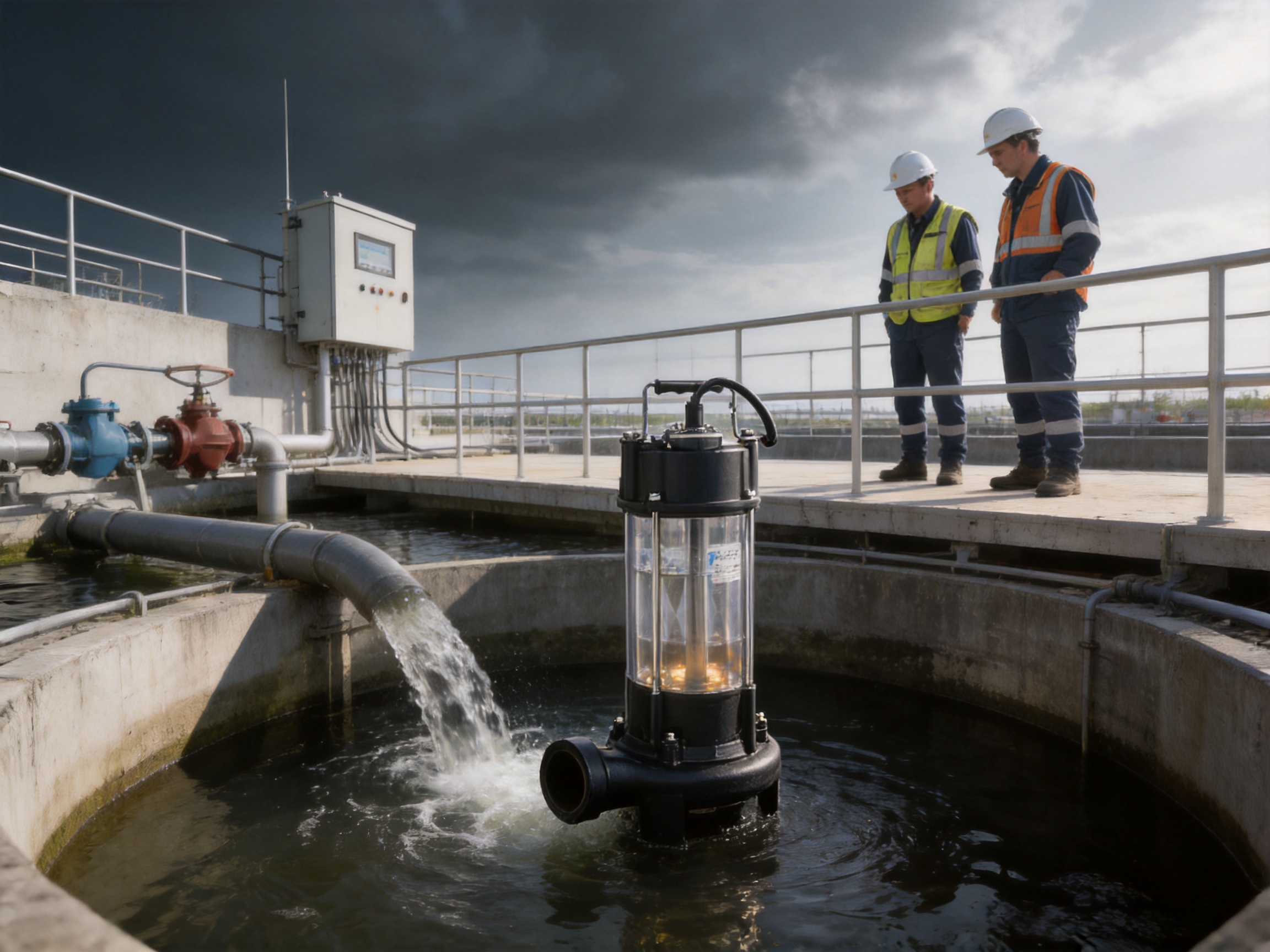
A drainage pump is part of a larger water-management system, and the reliability of that system depends on more than the product nameplate. Manufacturer experience affects design choices, production repeatability, supply continuity, technical communication, and after-sales support.
Edwin Pump’s history since 2008 provides a foundation in pump manufacturing and export. Its integrated structure combines product development, production, and international service. The company has also established related import and export organizations to support procurement planning, order tracking, cross-border delivery, and foreign-trade services.
This structure can be valuable to overseas buyers who require more than a one-time shipment. Project customers may need assistance comparing models, organizing mixed orders, coordinating packaging, preparing documents, and tracking delivery. A manufacturer with an established export team is generally better positioned to handle these practical requirements.
The company’s product range also provides a broader technical base. Experience with deep well pumps, domestic booster systems, circulation pumps, solar water pumps, and intelligent booster pumps can support a more complete understanding of water supply and water transfer applications. This is useful for customers seeking one-stop procurement across several types of pump equipment.
A long-term supplier relationship may also simplify spare-part purchasing, product replacement, technical updates, and future project expansion. For commercial users and distributors, continuity can be as important as the initial purchase price. The lowest-cost pump may not provide the lowest total cost if it requires frequent replacement or lacks technical support.
Purchase price is only one part of the total cost of a sewage pump. Installation, electricity, maintenance, downtime, spare parts, emergency service, and replacement frequency all influence the cost over the pump’s working life.
The VB2’s copper winding can support efficient motor operation when the pump is correctly selected and operated. The built-in thermal protector may help reduce the risk of costly motor damage caused by overheating. The stainless steel welded shaft and submersible construction can support dependable service in wet environments. These features may contribute to lower lifecycle costs compared with a basic pump that is poorly matched to wastewater conditions.
Energy cost depends primarily on the hydraulic duty, motor efficiency, operating hours, electricity price, and system design. Correct pipe sizing and suitable control logic are therefore important. A pump that runs at an appropriate duty point can generally provide better operational economy than one that is heavily throttled or repeatedly starts and stops without need.
Maintenance cost is influenced by the liquid. Sand, fibers, corrosive compounds, and large solids can accelerate wear regardless of the pump brand. Preventive cleaning, proper screening, and timely inspection can help preserve performance. For critical systems, keeping a spare pump or key spare parts available may reduce the cost of unexpected downtime.
Wastewater pumping should be carried out with attention to personnel safety, electrical safety, and environmental protection. Sewage may contain pathogens, toxic compounds, or gases. Personnel should use appropriate protective equipment and follow confined-space procedures when entering tanks, pits, or wells.
Electrical work in wet areas must comply with local codes. Disconnect and isolate the power supply before inspection or maintenance. Never place hands or tools near rotating components while the pump is energized. Do not bypass the thermal protector or other safety devices.
Preventing uncontrolled wastewater discharge is also important. A properly maintained pump can help reduce flooding, contamination, odor, and damage to buildings or agricultural land. Municipal and industrial users should route pumped liquid to an approved treatment or discharge location and should maintain emergency procedures for pump failure or power interruption.
Energy-efficient operation supports environmental responsibility. Correct sizing, reduced pipe losses, scheduled maintenance, and intelligent level control can reduce unnecessary electricity use. In facilities with several water systems, the manufacturer’s wider range of solar and intelligent pump products may also support future energy-management improvements.
The VB2 is a submersible sewage pump intended for wastewater drainage. It is designed to operate while immersed in the liquid and can be installed in collection pits, tanks, drainage stations, and similar locations.
Listed applications include wastewater drainage in factories, construction sites, and commercial facilities; drainage systems in municipal sewage treatment plants; residential drainage stations; methane pools; and countryside field irrigation systems.
The published maximum immersion depth is 5 meters. The installation should remain within this limit, and the buyer should confirm the complete operating conditions with the manufacturer.
The maximum stated liquid temperature is 40°C, or 104°F. Liquids above this temperature require technical evaluation and should not be pumped with the standard configuration without confirmation.
The stated liquid pH range is 5 to 9. If the liquid is more acidic or more alkaline, the materials and sealing system should be reviewed before selection.
A built-in thermal protector helps protect the motor when its temperature becomes excessive. It can respond to conditions such as overload, obstruction, abnormal operation, or insufficient cooling. It should be used together with correct electrical protection and proper maintenance.
Copper has strong electrical conductivity and is widely used in reliable pump motors. A copper-wound motor can support efficient current transfer and dependable performance when it is correctly designed, manufactured, and operated within its rated conditions.
A stainless steel shaft offers useful corrosion resistance in many wet and wastewater environments. The welded shaft structure also supports a durable rotating assembly. Material compatibility should still be checked if the liquid contains aggressive chemicals or abrasive contaminants.
No. IPX8 indicates protection for continuous immersion under specified test conditions. The VB2’s published maximum immersion depth is 5 meters, and that limit must be followed.
No pump should be assumed to handle every sewage condition. Users must check solids size, fibrous content, sand, chemicals, temperature, pH, viscosity, density, flow, and head. The manufacturer should confirm suitability for unusually difficult liquids.
Confirm the power supply, immersion depth, liquid properties, discharge pipe, total head, cable condition, lifting arrangement, control system, grounding, and protective devices. The pump should be placed on a stable base and protected from large debris.
The product information lists methane pools as an application. However, methane can create a hazardous atmosphere. The complete pump, electrical system, controls, and installation must be evaluated against local hazardous-area and explosion-safety requirements before use.
Taizhou Edwin Electric Co., Ltd. is an integrated manufacturer founded in 2008. Its activities include independent research and development, mass production, global export, and support for international procurement and delivery.
Yes. The company’s product lines include deep well pumps, submersible pumps, domestic booster pumps, circulation pumps, solar water pumps, intelligent booster pumps, and related water-treatment peripheral products.
Buyers should provide flow, head, liquid temperature, pH, density, viscosity, solids information, installation depth, operating schedule, and power-supply data. The manufacturer or qualified distributor can then confirm whether the VB2 matches the application.
The SUBMERSIBLE SEWAGE PUMP VB2 is designed as a practical wastewater drainage solution for industrial, municipal, commercial, residential, construction, agricultural, and related applications. Its submersible structure supports direct installation in wet wells and collection tanks, while the IPX8 protection class is suited to continuous immersion within the stated operating conditions.
The pump’s copper winding, built-in thermal protector, stainless steel welded shaft, Class B insulation, and broad application range provide a useful combination of electrical, mechanical, and environmental features. Compared with a basic clean-water or surface-mounted drainage pump, it offers a more application-focused solution for wet and wastewater environments.
Its value is further supported by the manufacturer’s integrated capabilities in research and development, mass production, export, procurement coordination, and water-pump product development. These strengths can benefit project contractors, distributors, agricultural users, municipal operators, and industrial customers who require dependable equipment and consistent supplier support.
Correct selection remains essential. The VB2 should be operated within its maximum immersion depth, liquid temperature, pH, viscosity, density, electrical, and hydraulic limits. With proper sizing, safe installation, suitable controls, regular inspection, and responsible maintenance, it can serve as a reliable component in modern wastewater drainage systems.
1. Product information supplied for the Submersible Sewage Pump VB2, including application notes, operating limits, motor construction, insulation class, and protection class.
2. Manufacturer profile supplied for Taizhou Edwin Electric Co., Ltd., including company history, product portfolio, research and development, manufacturing, export, and international service capabilities.
3. General principles of submersible pump installation, wastewater drainage design, electrical safety, wet-well operation, and preventive maintenance.
4. General engineering guidance concerning motor thermal protection, copper winding construction, stainless steel rotating components, enclosure protection, hydraulic sizing, and total cost of ownership.
5. Local electrical, wastewater handling, confined-space, environmental, and hazardous-area regulations applicable to the installation site.
edwina@edwin-pump.com
+86-13586290903 (WhatsApp)
Xuri Gongliang Cutting Tool Entrepreneurship Park, Wenqiao Town, Wenling City, Taizhou City, Zhejiang Province, China

High Performance Smart Pump Factory


 English