
edwina@edwin-pump.com

View All Products
en
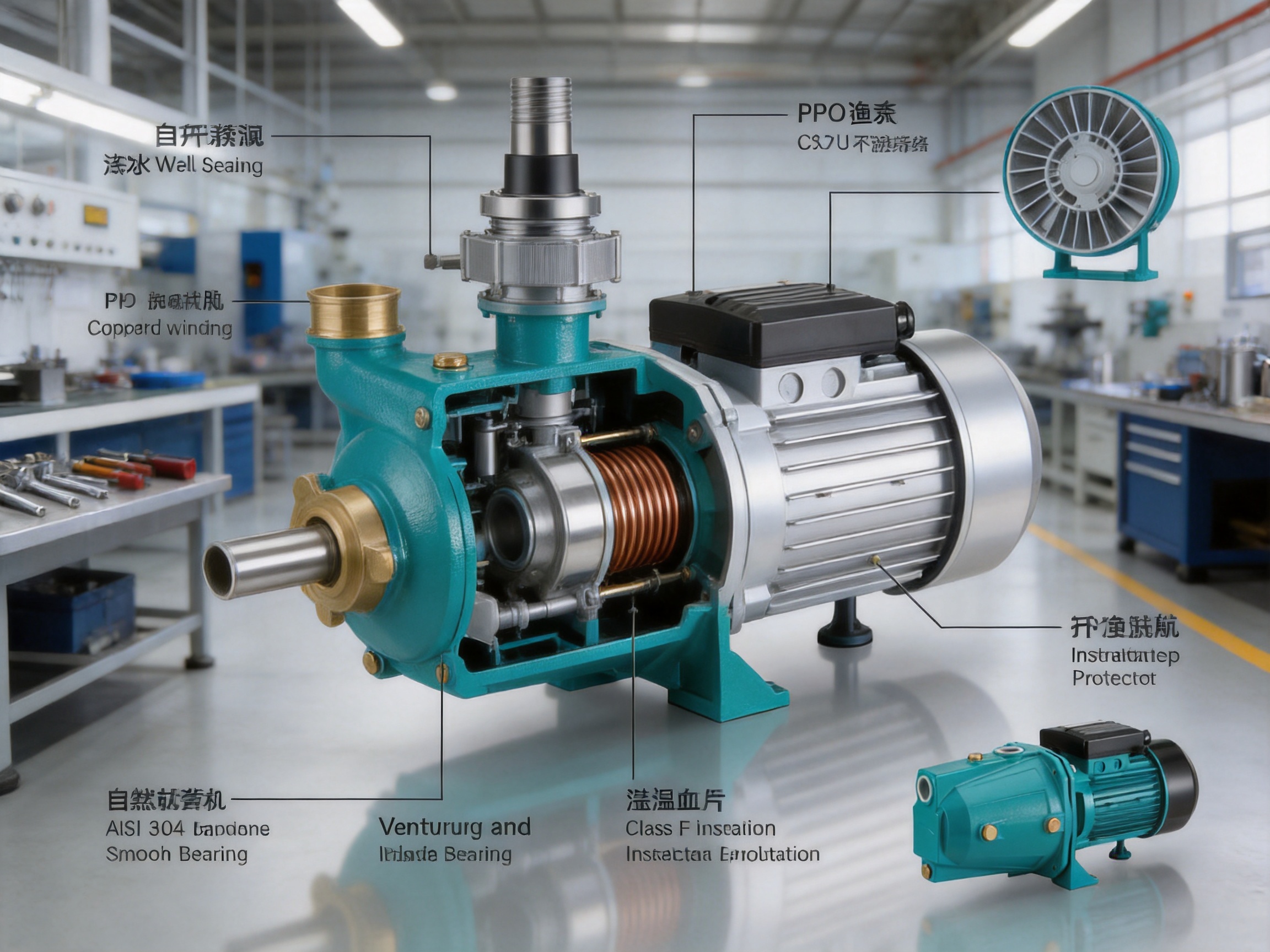
Reliable water pressure is essential for homes, gardens, small farms, workshops, and commercial facilities. Whether the purpose is operating a sprinkler system, drawing water from a storage tank, supplying a water tower, or supporting a small pressure set, the pump must start easily, deliver stable flow, resist corrosion, and continue operating under demanding everyday conditions. The JET-P Series shallow well jet pump is designed for these requirements, combining self-priming operation, a brass impeller, an AISI 304 stainless steel shaft, copper motor winding, and C&U bearings in a compact and practical package.
Available in three motor configurations from 0.6 kW to 1.1 kW, the JET-P Series covers a useful range of domestic and light commercial applications. Depending on the selected model, the pump can deliver a maximum flow of 45 to 50 liters per minute and a maximum head of 40 to 55 meters. Its maximum suction height is 8 meters, making it suitable for lifting clean water from shallow wells, tanks, reservoirs, and other below-pump water sources.
The product is categorized as a self-priming JET pump because it uses a jet assembly consisting of a nozzle, Venturi, and diffuser to assist water lifting and air removal from the suction line. This design provides an important advantage in installations where the suction pipe may contain air or where the pump must restart after a period of inactivity. Instead of requiring manual priming every time, the self-priming structure supports quicker and more convenient startup when the installation has been prepared correctly.
Behind the product is an integrated manufacturing enterprise with experience in independent research and development, mass production, export operations, and water-pump technology. The manufacturer serves customers in residential, agricultural, municipal, industrial, construction, mining, HVAC, and new-energy markets. This broad application experience contributes to a practical approach to product design: durable materials are selected for water-contact components, motor protection is incorporated into the electrical system, and the range is configured around commonly required power levels and connection sizes.
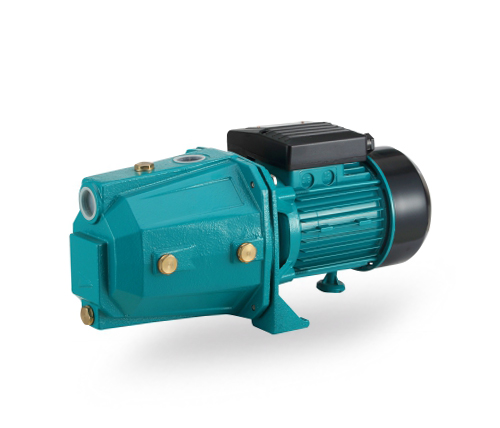
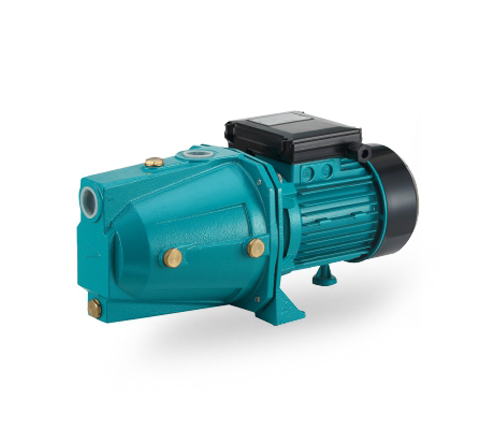
JET-P Series 0.6 to 1.1KW C&U Bearing Copper Winding Shallow Well Jet Pump for Water Sprinkler System
The JET-P Series is a shallow well jet pump intended for clean water and liquids with physical and chemical properties similar to water. It is especially suited to domestic and civil water systems in which the water source is relatively close to the pump. Typical uses include garden irrigation, sprinkler systems, water transfer from tanks, well-water lifting, small pressure-boosting installations, and general household water distribution.
The pump is available in the following configurations:
| Model | Rated Power | Rated Horsepower | Inlet/Outlet | Maximum Flow | Maximum Head | Maximum Suction |
| JET-550P | 0.6 kW | 0.8 HP | 1 inch × 1 inch | 45 L/min | 40 m | 8 m |
| JET-750P | 0.75 kW | 1 HP | 1 inch × 1 inch | 50 L/min | 45 m | 8 m |
| JET-1100P | 1.1 kW | 1.5 HP | 1 inch × 1 inch | 50 L/min | 55 m | 8 m |
The three-model structure makes selection relatively straightforward. The 0.6 kW model is appropriate for lighter household water transfer and modest garden systems. The 0.75 kW version provides a balanced combination of flow and pressure for many residential applications. The 1.1 kW model is suitable when the installation requires greater lifting height, additional pipe resistance, or a stronger pressure performance within the shallow-well range.
Maximum flow and maximum head are reference values measured under specific operating conditions. Actual performance depends on the system curve, pipe diameter, pipe length, fittings, elevation, water level, suction conditions, and discharge pressure. For this reason, users should select a pump according to the required duty point rather than choosing only by the highest advertised value. A properly matched pump generally operates more efficiently, produces more stable pressure, and experiences less unnecessary mechanical stress.
One of the most important features of the JET-P Series is its self-priming capability. Conventional centrifugal pumps normally require the pump casing and suction pipe to be filled with water before startup. If air enters the suction line, the pump may lose prime and fail to lift water. A self-priming jet pump is designed to remove air from the suction passage and re-establish liquid movement, making it more forgiving in practical installations.
The internal jet assembly includes a nozzle, Venturi, and diffuser. During operation, water is circulated through the jet mechanism at high velocity. This creates a pressure reduction that helps draw water and air from the suction line. The combined water and air flow is then separated inside the pump, allowing air to be discharged while water remains available for continued recirculation. Once the air has been removed, the pump can develop the pressure needed to transfer water through the discharge line.
This arrangement is especially valuable for sprinkler systems, shallow wells, and tank-transfer applications. In real installations, small amounts of air may enter through threaded connections, foot valves, pipe joints, or fluctuating water levels. A self-priming design helps reduce the inconvenience associated with repeated manual priming. It also supports faster restart after routine maintenance or a temporary interruption in the water supply.
Self-priming does not mean that installation requirements can be ignored. The pump should be filled with water before the first startup, the suction pipe should be as airtight as possible, and a suitable foot valve or non-return valve should be used where necessary. The suction line should also be installed with a continuous rise toward the pump or with arrangements that prevent trapped air pockets. Good installation practice allows the internal jet system to work effectively and protects the pump from dry running.
The impeller is the main rotating hydraulic component and directly influences flow, pressure, efficiency, and operating stability. The JET-P Series uses a brass impeller, providing a strong balance between mechanical durability and resistance to corrosion in clean-water service. Compared with ordinary plastic impellers, brass offers greater resistance to deformation, impact, and temperature-related dimensional changes. Compared with some lower-grade metal alternatives, it provides dependable corrosion performance in normal water applications.
A brass impeller also supports stable hydraulic geometry. The impeller must maintain the correct relationship between its blades and the pump casing to generate pressure efficiently. Excessive wear or deformation can reduce performance and increase vibration. The use of brass helps the impeller retain its shape during repeated starts, daily irrigation cycles, and extended operating periods.
The shaft and rotor assembly transfers motor torque to the impeller. Because the shaft is located near the water-contact area, corrosion resistance is important. The JET-P Series uses an AISI 304 stainless steel shaft, helping protect the rotating assembly from rust and contamination in normal clean-water conditions.
AISI 304 stainless steel is widely used in pump and fluid-handling equipment because it combines corrosion resistance, mechanical strength, and suitability for water-contact components. A rust-resistant shaft can help maintain smooth mechanical seal operation and reduce the likelihood of surface deterioration affecting alignment or rotation. It is particularly useful in installations where the pump may remain unused for periods before being restarted.
The pump body and support are manufactured from HT200 cast iron and receive special anti-rust treatment. Cast iron provides rigidity, vibration resistance, and structural stability. A stiff pump body helps maintain the relationship between the hydraulic chamber, shaft, seal, and motor during operation. This is important because changes in alignment can contribute to noise, leakage, bearing wear, and reduced service life.
The anti-rust treatment adds protection during storage and regular service. While no surface treatment can replace correct installation and maintenance, it helps the pump body withstand common environmental exposure. In residential utility rooms, garden pump shelters, workshops, and agricultural installations, this additional protection is valuable because humidity and condensation may be present.
The mechanical seal uses a carbon and ceramic combination. Mechanical seals are designed to prevent water from escaping along the shaft while allowing the shaft to rotate. Carbon and ceramic sealing faces are commonly used because they provide suitable wear resistance and sealing performance in clean-water applications.
Correct operating conditions remain important. The pump should not be operated without water because the seal relies on liquid for cooling and lubrication. Long periods of dry running can overheat the sealing faces and cause leakage. When the pump is properly flooded and used within its intended temperature and fluid limits, the carbon/ceramic seal supports dependable service.
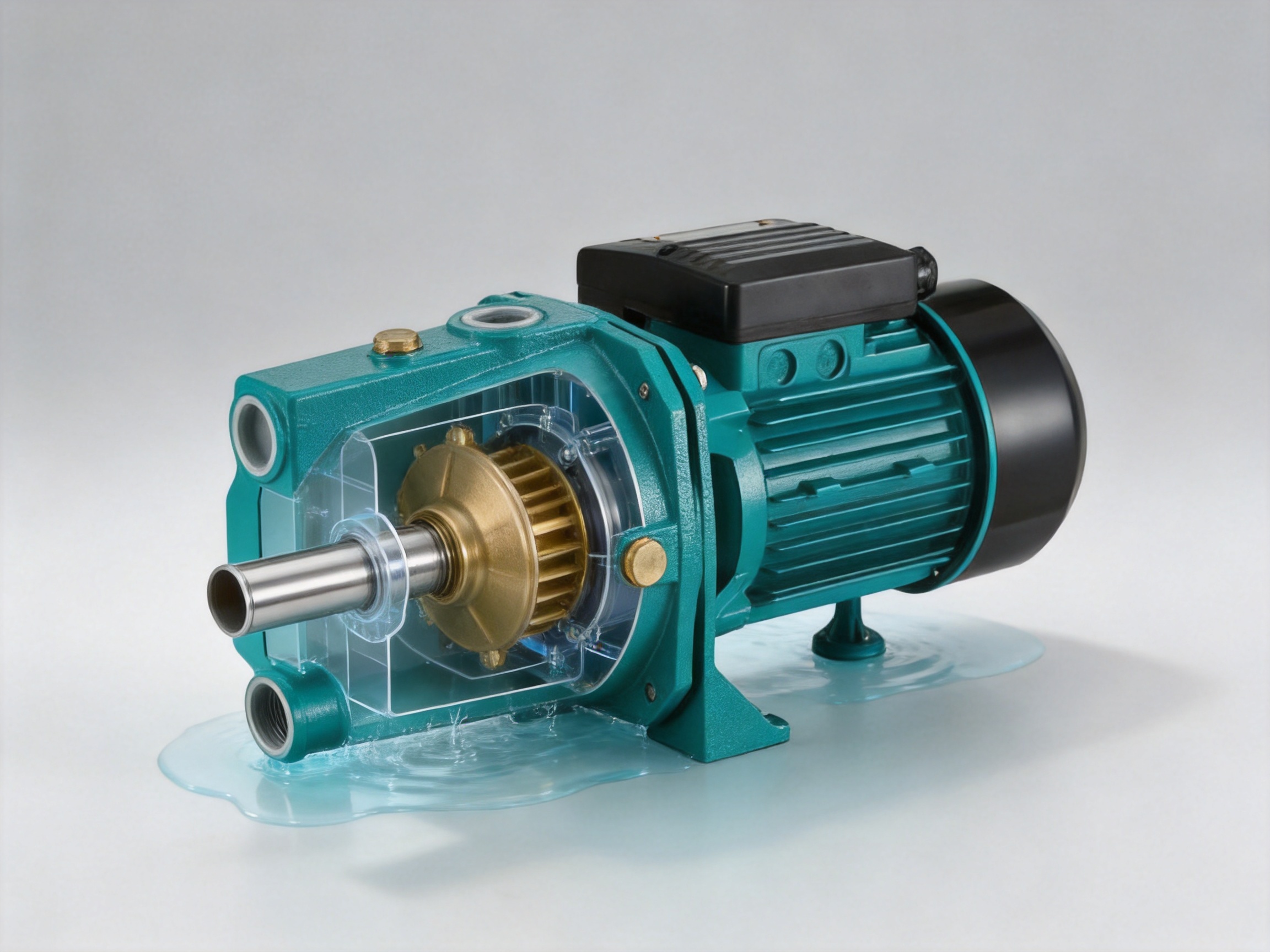
The motor is equipped with copper winding, C&U bearings, a built-in thermal protector, Class F insulation, and IP44 protection. These features address several common concerns in small water-pump applications: electrical efficiency, mechanical smoothness, overheating, insulation reliability, and protection against ordinary environmental exposure.
Copper winding is a key advantage over motors that use lower-conductivity winding materials. Copper offers excellent electrical conductivity, allowing the motor to transfer electrical energy into mechanical power with comparatively low resistance losses. Lower winding resistance can help reduce unnecessary heat generation and support efficient operation within the rated power range.
Motor heat affects insulation life, bearing grease, mechanical seals, and overall reliability. By using copper conductors, the motor is designed to maintain dependable performance during repeated starts and normal continuous operation. Copper winding also provides good thermal conductivity, helping heat move away from the winding and toward the motor housing.
The use of copper is especially meaningful in domestic booster and irrigation systems, where users often expect the pump to start automatically or operate for repeated cycles. A motor with stable winding quality is better suited to regular seasonal use than a unit built around cost reduction alone.
The JET-P Series uses C&U bearings to support smooth rotor movement. Bearings reduce friction between moving parts, maintain shaft alignment, and help control vibration. Reliable bearings are essential because a small misalignment at the motor shaft can affect the impeller, mechanical seal, noise level, and energy consumption.
C&U is an established bearing brand associated with a broad range of industrial and electrical equipment. The inclusion of branded bearings demonstrates attention to the motor’s rotating assembly rather than focusing only on the external pump casing. In competitive shallow well pump markets, the quality of the bearing and winding can make a significant difference in long-term operation.
The single-phase motor incorporates a built-in thermal protector. This component is designed to interrupt or limit motor operation when excessive temperature is detected. Overheating can result from overload, blocked ventilation, voltage problems, frequent starts, excessive friction, or operation outside the intended hydraulic range. Thermal protection adds an important layer of safety for domestic and light commercial users.
Thermal protection should not be treated as permission to operate the pump under abnormal conditions. The user should still verify the power supply, use properly sized cables, keep the motor ventilation openings clear, and investigate repeated thermal trips. A protection device is most effective when combined with correct installation, suitable overload protection where required, and regular maintenance.
The motor uses Class F insulation. This insulation classification provides a suitable thermal margin for many small electric motor applications. It helps protect the winding from the effects of normal operating temperature and contributes to reliable service when the motor is used within its rated conditions.
Good insulation is particularly important in pump environments because moisture, condensation, and temperature changes may occur. The motor should nevertheless be protected from direct water spray, flooding, and immersion. The pump’s electrical connection must be completed by a qualified person using appropriate grounding and protection devices.
The motor has an IP44 protection rating. This indicates protection against solid objects above a specified size and against water splashing from various directions. IP44 is appropriate for many sheltered indoor, utility-room, workshop, and outdoor pump installations when the pump is protected from severe weather.
IP44 does not mean the motor is waterproof or suitable for submersion. A weatherproof cover or pump house should be used when the unit is installed outdoors. The electrical terminal area should be protected from rain, flooding, and high-pressure cleaning. Proper placement extends motor life and helps preserve electrical safety.
Garden irrigation and sprinkler systems often require more pressure than simple tank transfer. Water must travel through pipes, valves, elbows, filters, and sprinkler heads. The pump must therefore overcome both elevation and friction losses. With maximum heads from 40 to 55 meters, the JET-P Series provides useful pressure capability for many small and medium garden systems.
The 0.6 kW JET-550P offers a maximum flow of 45 L/min and a maximum head of 40 meters. It is a practical choice for smaller gardens, shorter pipe runs, and applications with moderate pressure requirements. Its lower power consumption can be beneficial when the system does not require the capacity of a larger model.
The 0.75 kW JET-750P delivers up to 50 L/min and a maximum head of 45 meters. This middle model is well suited to general household water supply, garden sprinklers, allotment irrigation, and moderate pressure sets. It provides a useful balance between power, flow, and installation flexibility.
The 1.1 kW JET-1100P reaches a maximum head of 55 meters while maintaining a maximum flow of 50 L/min. It is the strongest option in the series and is appropriate where the water source is lower, the discharge route is longer, or the installation requires greater pressure reserve. A higher-head model can also help compensate for pipe friction, although the final selection should always be based on the actual duty point.
Sprinkler performance depends on the sprinkler nozzle and system design. A pump cannot create unlimited flow and pressure simultaneously. When several sprinklers operate at once, the available pressure at each outlet may decrease. Users should determine the required number of sprinkler heads, flow per head, operating pressure, and total elevation before choosing the model.
The pump can be used to distribute clean water in homes and small buildings, especially when the incoming supply is weak or water must be transferred from a tank. It can support selected outlets, garden taps, toilets, washing areas, and other non-potable or general service points when installed with an appropriate control system.
For drinking-water applications, the complete installation should comply with local regulations governing materials, hygiene, electrical safety, and backflow prevention. The pump itself is designed for clean water and similar liquids, but the suitability of the overall system depends on the source, pipework, storage tank, and local requirements.
Storage tanks are common in areas where water availability varies throughout the day. The JET-P Series can draw water from a tank and deliver it to a higher-level tank, irrigation line, or household distribution system. The self-priming design is helpful when the suction line may contain air after the tank level falls or after maintenance.
A float switch, pressure controller, or level-control system can be used to prevent the pump from operating when the tank is empty. Such controls are not included in the basic product description and should be selected according to the installation requirements. Preventing dry running is one of the most effective ways to protect the mechanical seal and extend pump life.
With a maximum suction height of 8 meters, the pump is suitable for shallow wells where the vertical distance from the water surface to the pump inlet remains within the rated limit. The suction height must account for the actual water level during operation, not only the depth of the well when full.
When the water level drops, the effective suction lift increases. Long suction pipes, narrow pipe diameters, clogged foot valves, and excessive bends further reduce performance. A large-diameter, airtight suction line with minimal restrictions is recommended. If the required suction height exceeds the product’s limit, a submersible or deep-well pump should be considered instead.
The pump is suitable for automatic irrigation systems serving gardens, allotments, nurseries, and small agricultural areas. A pressure switch or electronic controller can start and stop the pump according to water demand. Filters may be installed upstream when the water contains small particles, although the JET-P Series is intended for clean water rather than abrasive or heavily contaminated liquids.
Small shops, workshops, guesthouses, offices, and civil facilities may use the pump for water transfer, cleaning systems, landscape irrigation, and general service-water distribution. Its compact form and standard 1-inch inlet and outlet connections simplify integration with commonly available pipework and valves.
The manufacturer operates as an integrated enterprise covering independent research and development, mass production, and global export. This structure is important because pump performance depends on coordination between hydraulic design, motor production, component sourcing, assembly, testing, packaging, and after-sales support.
Independent research and development allows the product range to be adapted to practical market requirements. The JET-P Series reflects this approach through its combination of self-priming hydraulics, brass impeller construction, stainless steel shaft protection, copper winding, and several power options. Instead of offering only one general-purpose configuration, the range provides different pressure levels for different installation requirements.
Mass production supports consistency. When pump bodies, motor components, hydraulic parts, and assemblies are produced through an organized manufacturing process, the manufacturer can control dimensions, standardize procedures, and improve repeatability between batches. Consistency is particularly important for impeller clearance, shaft alignment, seal installation, bearing seating, winding quality, and electrical testing.
The materials table demonstrates a structured approach to component identification. The pump body and support use HT200 cast iron, the nozzle, Venturi, and diffuser use PPO, the impeller uses brass, the mechanical seal uses carbon and ceramic, the motor case uses aluminum, the motor cover uses cast iron, and the fan uses PP. Identifying these materials helps purchasing teams evaluate the product and helps maintenance personnel understand the construction of the pump.
Aluminum is used for the motor case to support heat dissipation and reduce unnecessary weight. The cast-iron motor cover contributes to mechanical strength. PPO components in the jet assembly provide a practical engineering-plastic solution for the nozzle, Venturi, and diffuser. PP is used for the cooling fan, where low weight and resistance to ordinary environmental conditions are useful.
An export-oriented manufacturing organization must also manage product packaging, documentation, order tracking, delivery coordination, and communication across international markets. The manufacturer’s related import and export service structure supports one-stop procurement for customers who may require multiple pump categories, accessories, or coordinated shipment planning.
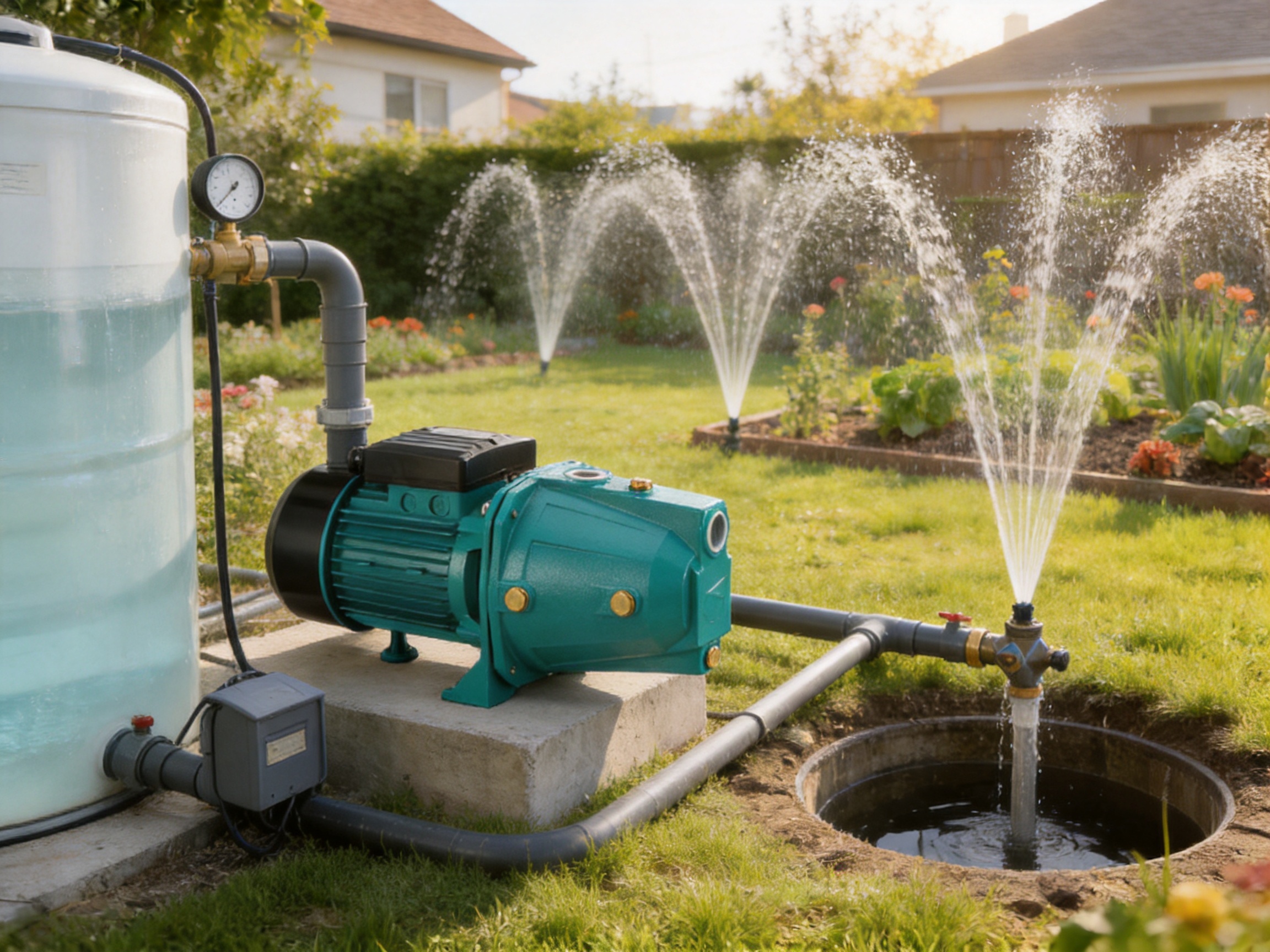
The shallow well jet pump market includes many entry-level products that may appear similar from the outside. Important differences are often found in the internal materials, motor construction, bearing quality, protection features, and manufacturing consistency. The JET-P Series offers several advantages over a basic low-cost pump.
A brass impeller and stainless steel shaft provide a stronger material platform than products that rely entirely on ordinary plastics or unprotected carbon steel in critical water-contact locations. These components are exposed to rotation, hydraulic forces, temperature changes, and possible periods of inactivity. Better material selection helps preserve performance and reduces the risk of rust-related problems.
Rust-free copper inserts and a stainless steel shaft support smoother restart after periods of inactivity. This is useful for seasonal irrigation systems, holiday homes, emergency water-transfer equipment, and installations that operate only when a tank level or pressure demand changes.
Copper winding and C&U bearings indicate attention to the motor’s internal quality. Some low-cost pumps may prioritize a low purchase price while using less durable winding materials or inconsistent bearings. A motor designed with high-quality conductive and rotating components can offer more stable operation, lower mechanical friction, and better resistance to normal service demands.
A self-priming jet design offers a practical advantage over a standard centrifugal pump when the suction line contains air. It reduces the frequency of manual priming and helps the pump recover more easily after maintenance or temporary loss of prime. This feature is particularly valuable for users who want simple operation without constant supervision.
The built-in thermal protector, Class F insulation, and IP44 motor protection provide a useful safety foundation for domestic and small commercial installations. These features do not eliminate the need for proper electrical installation, but they improve the pump’s ability to withstand common operating stresses.
Three power options allow buyers to select a pump more closely matched to their system. A pump that is too small may fail to deliver the required pressure, while an unnecessarily large pump may consume more energy and create excessive pressure. The 0.6 kW, 0.75 kW, and 1.1 kW choices help distributors and installers serve a wider variety of applications.
Correct installation is essential for safe operation and long service life. The pump should be installed on a stable, level foundation that can support its weight and limit vibration. Adequate space should be provided around the motor for ventilation and future inspection.
The suction pipe should be airtight and appropriately sized. Although the pump uses 1-inch inlet and outlet connections, the complete suction system should be designed to minimize restrictions. Excessively long pipes, undersized hoses, sharp bends, partially closed valves, and clogged strainers can reduce suction performance and increase the risk of cavitation or loss of prime.
A foot valve can help keep the suction line filled when the pump is located above the water source. The foot valve should be installed below the minimum water level and should include a strainer suitable for the water condition. The strainer must be cleaned periodically so that debris does not restrict flow.
Before the first startup, the pump casing should be filled with clean water through the designated priming opening. The suction and discharge valves should be positioned correctly, and all connections should be checked for leakage. The pump should never be started dry, even for a short period, because the mechanical seal may be damaged by overheating.
The discharge line should include appropriate valves and, where necessary, a pressure gauge, non-return valve, pressure switch, or electronic controller. For automatic domestic supply, a pressure-control system can start the pump when a tap is opened and stop it when demand ends. For irrigation, a timer, solenoid valve, and pressure controller may be used.
Electrical work should be performed by a qualified professional. The supply voltage and frequency must match the motor nameplate. Proper grounding, cable sizing, circuit protection, and an accessible disconnect switch are required. The motor should be protected from direct rain, flooding, and water jets even though it has an IP44 rating.
Routine maintenance helps preserve performance and reduces unexpected downtime. Before inspection, the power supply should be disconnected and the pump should be allowed to cool. Users should periodically check the suction pipe, discharge connections, pump body, mechanical seal area, and electrical terminal box for signs of leakage or deterioration.
A small amount of normal operational noise may be expected, but a sudden increase in noise, vibration, or temperature should be investigated. Possible causes include air entering the suction line, a blocked strainer, insufficient water, a damaged bearing, a worn mechanical seal, or foreign material affecting the impeller.
Filters and strainers should be cleaned according to water quality and operating frequency. The pump is intended for clean water and should not be used for liquids containing large solids, heavy sediment, corrosive chemicals, flammable substances, or abrasive particles unless the application has been specifically evaluated.
When the pump will be stored for an extended period, it should be drained where appropriate, protected from freezing, and kept in a dry and ventilated location. Seasonal irrigation users should inspect the pump before restarting it in spring. Checking the shaft area, electrical connections, suction valve, and prime condition can prevent avoidable startup problems.
The maximum liquid temperature is +60°C, and the maximum ambient temperature is +40°C. These limits must be respected. Although the pump can handle moderately warm water within its stated limit, it is not a specialized hot-water circulation pump. The fluid’s chemical composition, viscosity, and vapor characteristics may also affect suitability.
Model selection should begin with the required flow rate. List the number of outlets or sprinkler heads that may operate simultaneously and determine the flow required by each one. Add a reasonable allowance for pipe friction and future expansion. Next, calculate the total dynamic head, including vertical elevation, desired outlet pressure, friction losses, valves, filters, and fittings.
| Application Condition | Suggested Starting Point | Selection Consideration |
| Small garden or short transfer line | JET-550P | Suitable when moderate flow and up to approximately 40 m of maximum head are sufficient. |
| General household supply or medium garden system | JET-750P | Balanced option for up to approximately 50 L/min and 45 m maximum head. |
| Higher lifting requirement or longer discharge route | JET-1100P | Provides the greatest maximum head in the series, up to 55 m. |
| Water source deeper than the rated suction range | Not recommended as a first choice | Consider a submersible or deep-well pump instead. |
The table is a starting guide rather than a substitute for a full hydraulic calculation. Maximum values are not normally achieved at the same time. A pump curve or detailed performance data should be consulted for precise duty-point selection. Buyers can also provide the manufacturer or distributor with water-source depth, pipe length, elevation, required flow, and outlet pressure so that the most suitable model can be identified.
For importers, distributors, system integrators, and project contractors, product consistency and supply coordination are as important as individual pump performance. The manufacturer has developed a product portfolio that includes deep-well pumps, submersible pumps, domestic booster pumps, circulation pumps, solar water pumps, intelligent booster pumps, and related water-system products.
This broader range allows customers to source complementary products from one manufacturing network. A distributor may purchase shallow well jet pumps for household systems while also sourcing submersible pumps for deep wells, circulation pumps for HVAC applications, or solar pumps for remote irrigation projects. One-stop procurement can simplify communication, product matching, packaging coordination, and shipment planning.
The company was established in 2008 and has developed experience in independent product development, production, and international trade. Its pumps are used in new-energy projects, agricultural irrigation, municipal engineering, mining, construction, HVAC systems, and household water supply. Exposure to these different sectors encourages attention to varying requirements for pressure, flow, durability, controls, and environmental conditions.
Since 2018, the manufacturer has invested in new-energy and intelligent technologies, expanding into solar water pumps and intelligent booster pumps. This development complements the JET-P Series. While the JET-P is a conventional electric self-priming pump, customers can select other technologies when grid power is unavailable or when automated pressure management is required.
The JET-P Series is intended for clean water or liquids similar to water. It should not be selected automatically for sewage, seawater, fuel, solvents, concentrated chemicals, abrasive slurry, or water containing large solid particles. Such fluids may attack the materials, damage the mechanical seal, block the jet assembly, or accelerate impeller and bearing wear.
The maximum suction height is 8 meters. Atmospheric pressure, water temperature, altitude, pipe friction, and water-level variation influence actual suction capability. If a site is located at high altitude or if the water is warm, the available suction margin may be reduced. A site assessment is recommended when conditions approach the rated limit.
The pump should be protected against freezing. Frozen water can expand and damage the pump body, jet components, seal chamber, or pipework. In cold climates, drain the system or provide suitable insulation and heating according to local practice.
The pump should also be protected from repeated rapid cycling. Frequent starts can increase motor heating and mechanical stress. If a domestic water system experiences short cycling, the pressure tank, pressure-switch settings, pipe leaks, or control logic should be checked.
It is a self-priming shallow well jet pump. It is designed to transfer clean water from shallow wells, tanks, and reservoirs and to supply sprinkler, irrigation, domestic, and small commercial water systems.
The series includes the JET-550P at 0.6 kW or 0.8 HP, the JET-750P at 0.75 kW or 1 HP, and the JET-1100P at 1.1 kW or 1.5 HP.
Maximum flow is 45 L/min for the JET-550P and 50 L/min for both the JET-750P and JET-1100P. Maximum head is 40 meters, 45 meters, and 55 meters respectively.
The pump has a maximum suction height of 8 meters, so it is intended for shallow wells. For a deeper water level, a submersible or deep-well pump is generally more appropriate.
The pump is self-priming, which helps remove air from the suction line and supports easier restarting. However, the pump casing should be filled with water before the first startup, and the suction pipe must be properly sealed.
The impeller is made from brass, and the shaft is made from AISI 304 stainless steel. These materials support corrosion resistance, mechanical durability, and reliable operation in clean-water service.
The single-phase motor includes a built-in thermal protector, Class F insulation, and IP44 protection. Correct grounding, circuit protection, and professional electrical installation are still required.
It can be installed outdoors when protected from direct rain, flooding, water jets, and severe environmental exposure. IP44 protection is not the same as waterproof or submersible protection.
The maximum liquid temperature is +60°C. The maximum ambient temperature is +40°C. The pump should not be used for fluids that are chemically aggressive, highly viscous, abrasive, or otherwise outside the clean-water application range.
The correct model depends on the number of sprinklers, required flow, pipe length, elevation, and operating pressure. The JET-550P suits smaller systems, the JET-750P is a balanced general-purpose option, and the JET-1100P is preferable when greater head is required.
Use a properly installed foot valve, water-level sensor, float switch, pressure controller, or other suitable control device. Regularly check the water source and stop the pump if the suction line cannot remain filled with water.
Inspect for leaks, clean filters and strainers, check electrical connections, monitor noise and vibration, protect the unit from freezing, and verify the prime condition after long periods of inactivity. Always disconnect power before inspection or service.
The product is intended for clean water and similar liquids. For potable-water use, the complete installation must comply with applicable local regulations concerning materials, hygiene, backflow prevention, and electrical safety.
The manufacturer operates across research and development, production, export, and related procurement services. Its wider product portfolio includes deep-well, submersible, booster, circulation, solar, intelligent, and other water-pump categories, supporting coordinated sourcing for international customers.
The JET-P Series shallow well jet pump combines practical self-priming performance with durable materials and a protected single-phase motor. Its brass impeller, AISI 304 stainless steel shaft, carbon/ceramic mechanical seal, copper winding, C&U bearings, thermal protector, Class F insulation, and IP44 rating address the main reliability requirements of domestic and light commercial pumping.
With three power options, maximum flow from 45 to 50 L/min, maximum head from 40 to 55 meters, and a maximum suction height of 8 meters, the range covers many water-supply and irrigation needs. It is especially suitable for sprinkler systems, garden watering, shallow wells, storage tanks, water towers, and small pressure sets.
Its advantages over basic competing pumps are found not only in the external design but also in the internal construction and manufacturing approach. Material selection, branded bearings, copper motor winding, self-priming hydraulics, anti-rust treatment, and structured production support a product designed for dependable everyday service.
For buyers seeking a practical shallow well pump from an experienced water-pump manufacturer, the JET-P Series provides a strong combination of performance flexibility, serviceable construction, and application versatility. Proper model selection, airtight suction installation, adequate electrical protection, and routine maintenance will help the pump deliver stable performance over its intended operating life.
1. Product technical information for the JET-P Series shallow well jet pump, including model ratings, materials, operating limits, and application guidance.
2. Manufacturer-provided product description and component materials table for self-priming jet pump construction.
3. General engineering principles for centrifugal and self-priming jet pumps used in domestic water supply and irrigation systems.
4. General motor application guidance concerning copper windings, bearing systems, thermal protection, insulation classes, and enclosure ratings.
5. General installation and maintenance practices for clean-water pumps, shallow wells, storage tanks, and sprinkler systems.
edwina@edwin-pump.com
+86-13586290903 (WhatsApp)
Xuri Gongliang Cutting Tool Entrepreneurship Park, Wenqiao Town, Wenling City, Taizhou City, Zhejiang Province, China

High Performance Smart Pump Factory


 English