
edwina@edwin-pump.com

View All Products
en
Reliable water delivery is not created by the pump alone. In a modern water system, the pressure tank is one of the most important components for stable pressure, reduced pump cycling, energy savings, and longer equipment life. The CF Series Carbon Steel Horizontal Pressure Tank is designed for domestic water supply, booster systems, deep well pump installations, irrigation support, commercial building water distribution, and other applications where stored pressurized water must be delivered smoothly and consistently.
This horizontal replaceable membrane pressure tank is built with a carbon steel shell, a carbon steel flange, and membrane options suitable for different operating temperatures and water conditions. It supports maximum pressure selections of 6 bar, 8 bar, 10 bar, and, for selected models, 16 bar. With a standard precharge pressure of 1.8–2.0 bar and a 1-inch connector, it is a practical and adaptable tank for water system integrators, pump distributors, contractors, and OEM buyers seeking a dependable pressure storage solution.
CF Series Carbon Steel Horizontal Pressure Tank for Water System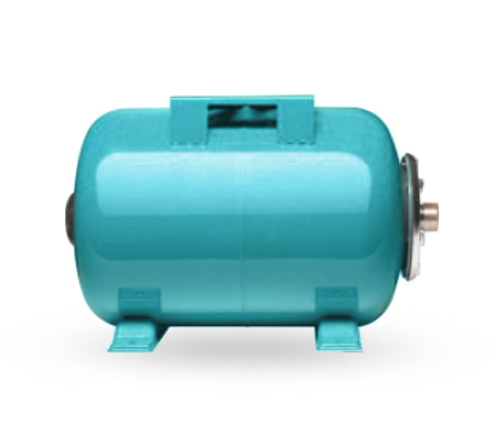
The CF Series Carbon Steel Horizontal Pressure Tank is a replaceable membrane pressure tank developed for water systems that require pressure buffering and controlled pump operation. In a typical pump system, water demand changes frequently. A household faucet may open for only a few seconds. A garden irrigation line may run intermittently. A booster pump in a building may experience repeated pressure drops during peak use. Without a properly sized pressure tank, the pump may start and stop too often, causing electrical stress, mechanical wear, heat buildup, noise, and unstable flow.
The CF Series tank stores a reserve of pressurized water. When users open outlets, the tank supplies water first, delaying pump start. When the system pressure falls to the pump cut-in point, the pump starts and refills the tank. This process reduces pump cycling and creates a smoother user experience. For installers and end users, the benefit is simple: more stable pressure, less equipment stress, and improved system reliability.
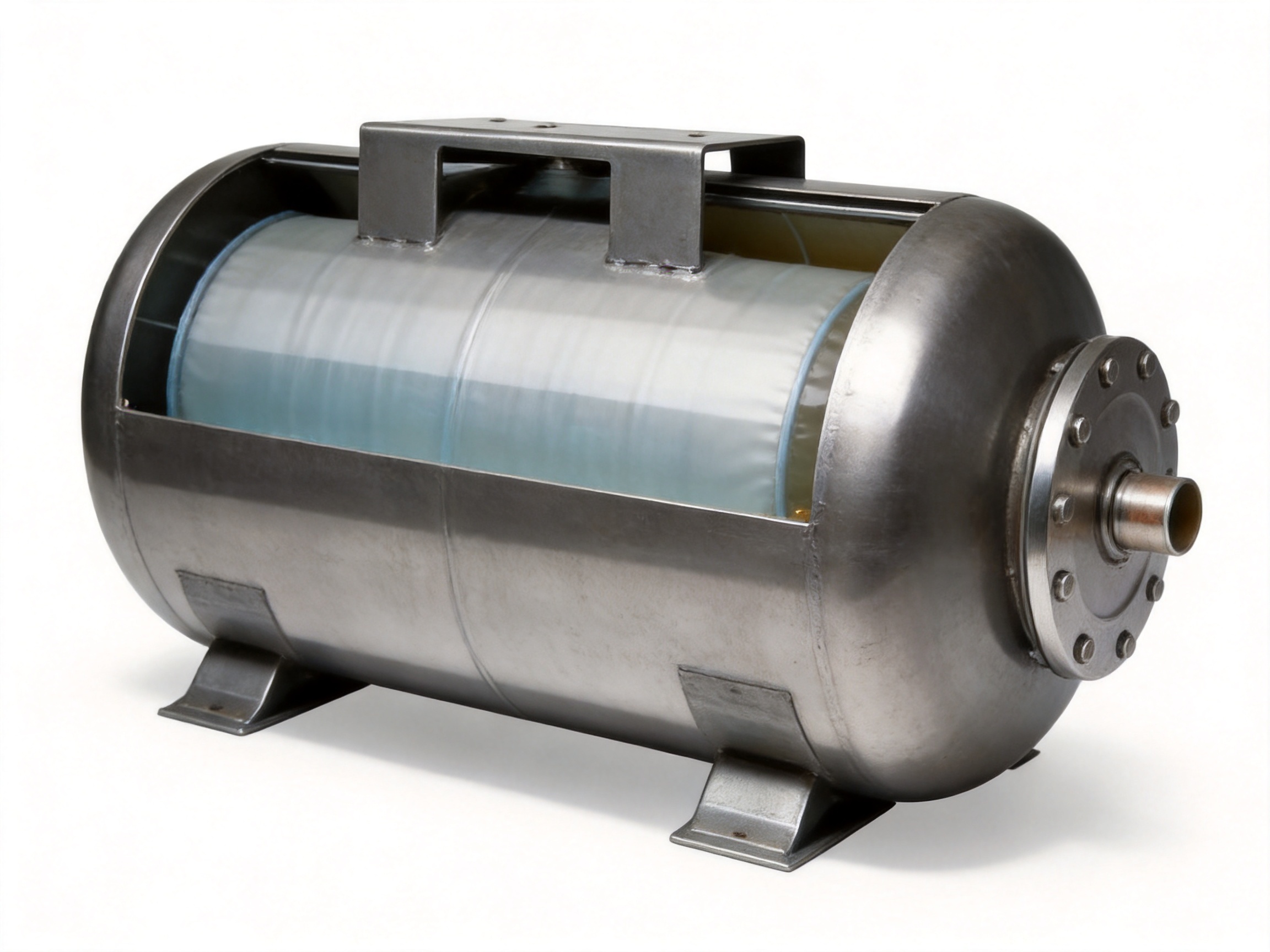
Unlike non-replaceable bladder tanks that may require full tank replacement after membrane failure, the CF Series uses a replaceable membrane structure. This design supports easier maintenance and better lifecycle value. For pump distributors and service teams, replaceable membrane construction also improves after-sales flexibility because the tank can remain in service after membrane replacement when the shell remains in good condition.
The carbon steel body provides strength, pressure resistance, and durability for everyday water system applications. Carbon steel is widely used in pressure vessel construction because it offers a favorable balance of mechanical performance, manufacturing efficiency, and cost control. Compared with lightweight or thin-walled alternatives, a well-manufactured carbon steel tank provides reassuring rigidity and stable performance under repeated pressure cycles.
The tank includes a carbon steel flange, giving the connection area strength and structural support. The flange area is critical because it must withstand mechanical loads from pipe connection, water pressure, and repeated maintenance operations. A stable flange structure helps protect sealing performance and contributes to the long-term reliability of the pressure tank.
The replaceable membrane separates water from the air cushion inside the tank. This design prevents waterlogging, reduces internal corrosion risk caused by direct water contact with air, and helps maintain proper pressure performance. The ability to replace the membrane is a major advantage for serviceability, especially in markets where spare parts availability and long-term maintenance are important purchasing factors.
The CF Series supports several membrane material options with different temperature ranges. Butyl and EPDM options operate from -10°C to 99°C, while natural rubber operates from 0°C to 77°C. These options allow buyers to select the membrane that best matches their water quality, temperature, and application requirements.
The CF Series is available in a practical size range from 19 liters to 100 liters. These models cover many residential and light commercial water system requirements. The following table summarizes the main data provided for the series.
Model |
Maximum Pressure |
Length |
Height |
Precharge Pressure |
Connector |
Packing Volume |
CF19L |
6, 8, 10, 16 bar |
395 mm |
292 mm |
1.8–2.0 bar |
1 inch |
0.0356 CBM |
CF24L |
6, 8, 10, 16 bar |
460 mm |
292 mm |
1.8–2.0 bar |
1 inch |
0.0399 CBM |
CF36L |
6, 8, 10 bar |
435 mm |
375 mm |
1.8–2.0 bar |
1 inch |
0.0588 CBM |
CF50L |
6, 8, 10 bar |
545 mm |
375 mm |
1.8–2.0 bar |
1 inch |
0.0752 CBM |
CF60L |
6, 8, 10, 16 bar |
645 mm |
408 mm |
1.8–2.0 bar |
1 inch |
0.1082 CBM |
CF80L |
6, 8, 10, 16 bar |
600 mm |
470 mm |
1.8–2.0 bar |
1 inch |
0.1325 CBM |
CF100L |
6, 8, 10, 16 bar |
685 mm |
470 mm |
1.8–2.0 bar |
1 inch |
0.1524 CBM |
Horizontal pressure tanks are often preferred when installation height is limited or when the tank must be placed near a pump on a base frame. In many booster pump sets, compact pump rooms, farm utility sheds, and deep well pump control stations, horizontal installation is convenient because the tank can sit low and stable. This layout helps installers arrange pipes, valves, pressure switches, gauges, and controllers in a clean and accessible configuration.
A horizontal tank can also simplify packaging for pump set assembly. When distributors build complete water supply packages, a horizontal tank may be mounted together with a surface pump, jet pump, centrifugal pump, or booster pump to create a compact unit. This is especially valuable in domestic water supply, garden irrigation, small commercial premises, and rural well applications.
Compared with vertical tanks, a horizontal model may provide easier access in certain low-clearance spaces. It can also support installation layouts where the pump and tank are positioned side by side. For buyers who supply multiple markets, having a horizontal pressure tank series in several capacities improves flexibility and helps meet different project requirements.
Many low-cost pressure tanks use fixed bladder or diaphragm designs that are difficult to repair once the membrane fails. In such cases, the entire tank may need to be replaced even if the steel shell is still usable. The CF Series replaceable membrane design gives maintenance teams a more practical service pathway. By replacing the membrane when needed, users can extend the useful life of the tank and reduce waste.
The series offers multiple maximum pressure options. Some applications require standard pressure ratings, while others require higher pressure resistance because of multi-story buildings, stronger booster systems, or higher pump cut-out settings. With options including 6, 8, 10, and selected 16 bar models, buyers can choose according to technical demand instead of forcing one tank rating into every project.
The 19L to 100L capacity range is practical for common water supply systems. Smaller models are suitable for compact domestic systems and pump packages, while larger models provide more water reserve and longer pump rest periods. A complete range allows distributors to reduce sourcing complexity because several project needs can be covered by one series.
The standard 1.8–2.0 bar precharge pressure is suitable for many residential and light commercial pressure systems. Proper precharge helps the tank deliver water efficiently and prevents excessive membrane compression. Although installers should always adjust precharge according to the pump switch setting and system design, a consistent factory precharge provides a convenient starting point.
The carbon steel flange and 1-inch connector support reliable integration into common water systems. A stable connection is important because leakage or flange deformation can cause pressure loss, service interruption, or premature failure. The CF Series is designed with this practical installation requirement in mind.
In houses, villas, rural homes, and residential buildings, water demand can fluctuate quickly. A pressure tank reduces frequent pump starts when users wash hands, flush toilets, use showers, or run washing machines. This improves comfort and helps protect the pump motor from unnecessary cycling.
Deep well pumps commonly require pressure tanks to stabilize flow from underground water sources. The tank works with a pressure switch or intelligent controller to maintain water pressure between set limits. The CF Series is suitable as a pump accessory in clean water well systems where a horizontal tank layout is preferred.
Booster pumps are used where municipal water pressure is insufficient. The pressure tank stores water under pressure, reducing the number of times the booster pump starts during small water demands. This is important in homes, small hotels, workshops, office buildings, and commercial spaces.
Irrigation systems often start and stop repeatedly depending on valve zones, timers, and water demand. A pressure tank can smooth operation, especially in small farms, greenhouses, gardens, and landscape irrigation networks. It can also support stable pressure for drip irrigation or spray irrigation when correctly sized.
Horizontal tanks are widely used with surface pumps and garden pumps. A compact pump-and-tank assembly is easier to transport, sell, install, and service. The CF Series provides several sizes that can match different pump capacities and water demand patterns.
Small commercial buildings, shops, service centers, and workshops may use pressure tanks to stabilize water supply. The 60L, 80L, and 100L models are especially useful where greater drawdown capacity is required. With proper system design, these tanks help reduce pump starts and improve water pressure consistency.
A pump is most efficient and durable when it does not start too frequently. Each start generates electrical inrush current, mechanical torque, vibration, and heat. If a pump starts every few seconds because of small water demand, the motor windings, bearings, seals, impeller, and control components may wear faster. The pressure tank functions as a buffer that absorbs short-term demand.
When the tank is correctly selected and precharged, it provides drawdown volume, meaning the amount of water that can be delivered before the pump must restart. More drawdown means fewer starts. For example, a larger tank generally allows longer pump-off periods, while a smaller tank is suitable for compact systems with lower water demand. This is why the CF Series includes multiple capacities: each installation can balance available space, system cost, pump size, and expected consumption.
The pressure tank also helps reduce water hammer. Water hammer occurs when moving water suddenly stops or changes direction, creating pressure shock in pipes. While a pressure tank is not a substitute for all water hammer protection devices, it can help absorb pressure fluctuations and improve system stability.
The CF Series is supported by the manufacturing capabilities of Taizhou Edwin Electric Co., Ltd., a company founded in 2008 and focused on water pump products and related water system accessories. The company has developed an integrated manufacturing approach that includes independent research and development, mass production, global export operations, procurement planning, order tracking, cross-border delivery, and after-sales service coordination.
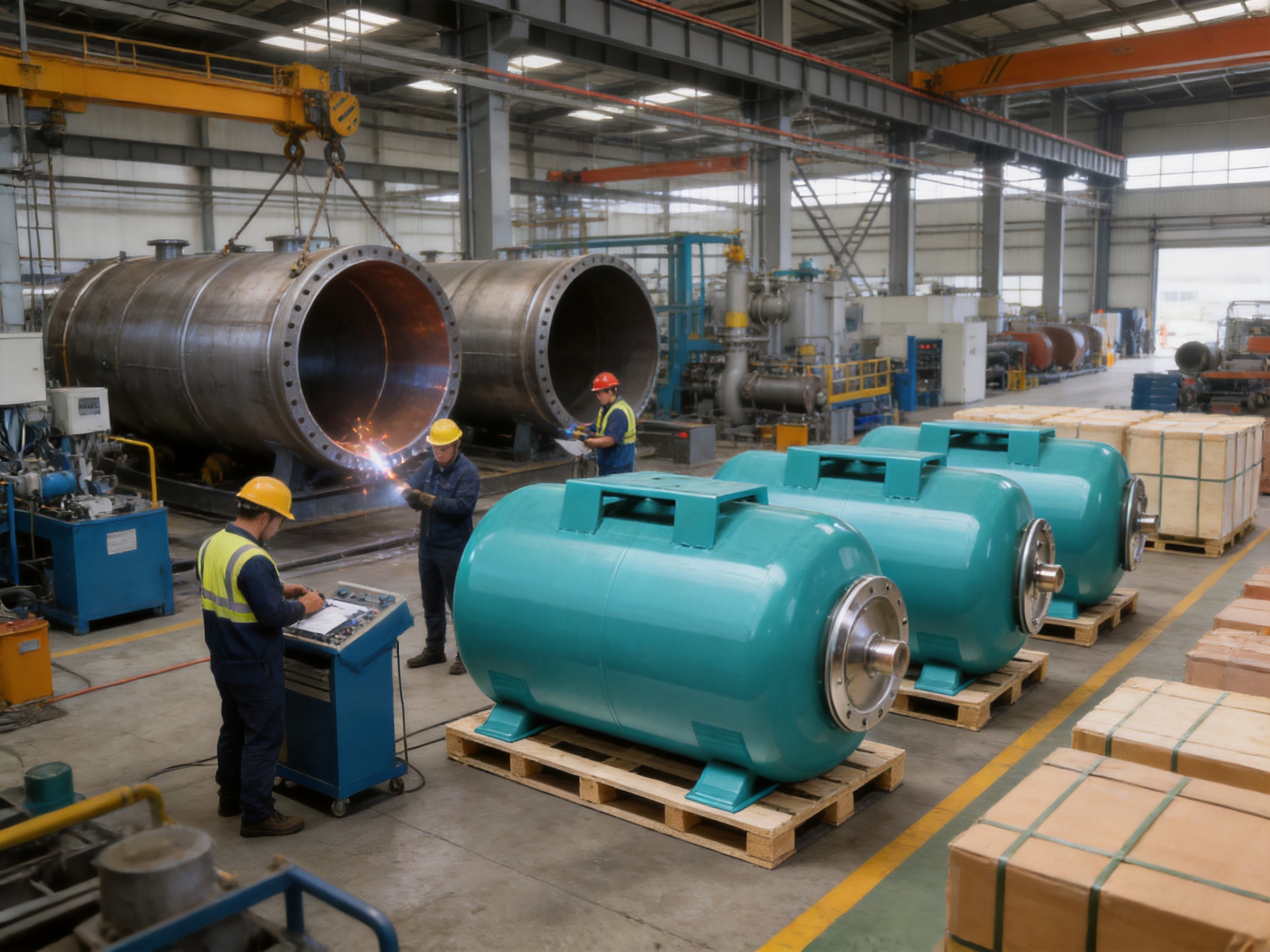
Advanced manufacturing strength is especially important for pressure tanks because the product must safely withstand repeated pressure cycles. A pressure tank is not merely a container; it is a pressure-bearing component that must combine material strength, welding consistency, dimensional accuracy, coating quality, and membrane reliability. Every stage of production influences the final product’s performance.
High-quality production begins with controlled material selection. Carbon steel sheets, flanges, membranes, connectors, and accessories should be checked for dimensional accuracy, surface condition, and compatibility with the intended pressure rating. Consistent incoming inspection reduces the risk of hidden defects and helps maintain stable batch quality.
The tank body requires accurate forming to achieve the designed geometry. Good forming control helps maintain wall uniformity and proper assembly alignment. If the shell is poorly formed, welding stress, uneven coating thickness, and installation problems can occur. Precision forming is therefore an important foundation for reliable tank production.
Weld quality is central to the safety and durability of a pressure tank. Controlled welding procedures help ensure proper penetration, stable joint strength, and consistent appearance. Manufacturers with disciplined production management pay close attention to welding parameters, operator training, fixture alignment, and inspection procedures. This reduces the risk of leakage, weak seams, and pressure failure.
Carbon steel must be protected against corrosion. Proper surface preparation before coating improves coating adhesion and durability. A uniform external coating supports long service life, attractive appearance, and resistance to common installation environments. For distributors, consistent coating quality also improves shelf appeal and reduces complaints caused by scratches, rust, or surface defects.
The membrane is the functional core of the tank. It must be installed correctly to avoid twisting, pinching, uneven stretching, or sealing problems. A well-controlled assembly process protects the membrane from premature damage and ensures stable operation after installation.
Pressure testing is essential for verifying tank integrity. Each tank should be checked according to defined procedures to confirm that the shell, flange, connector, and sealing areas can perform properly. Reliable testing processes distinguish professional manufacturers from low-cost suppliers that may rely only on visual inspection.
Because pressure tanks are bulky products, packaging efficiency matters. The CF Series technical data includes packing volume for each model, helping importers estimate container loading, warehouse space, and logistics cost. Good packaging reduces transport damage and supports efficient international distribution.
Taizhou Edwin Electric Co., Ltd. operates from Wenling City, Taizhou City, Zhejiang Province, China, a region known for pump manufacturing resources and industrial supply chains. Since its founding in 2008, the company has built product lines covering deep well pumps, submersible pumps, domestic booster pumps, circulation pumps, solar water pumps, intelligent booster pumps, and water treatment peripheral products.
This product diversity is valuable for pressure tank buyers. A pressure tank is often purchased together with pumps, controllers, valves, pipes, and accessories. A supplier with broad pump system knowledge can better understand how the tank interacts with the complete system. Instead of treating the tank as an isolated product, the manufacturer can support matching with booster pumps, surface pumps, deep well pumps, garden pumps, and intelligent control systems.
The company established professional foreign trade service capabilities through related import and export operations, enabling procurement planning, order tracking, cross-border delivery, and customer communication. For international buyers, these capabilities reduce transaction risk. Product quality is important, but so are delivery accuracy, document preparation, export packing, spare parts support, and timely communication.
Since 2018, the company has invested in new energy and intelligent technology, including solar water pumps and intelligent booster pumps. This demonstrates a forward-looking strategy. As water systems increasingly demand energy efficiency, automation, and smart control, suppliers must understand both traditional mechanical design and modern system integration. Pressure tanks remain important even in intelligent pump systems because physical pressure buffering continues to protect pumps and improve water comfort.
The water pump and pressure tank market includes many suppliers, from global premium brands to low-cost manufacturers. Buyers often face a difficult choice: premium products may carry high cost, while very cheap products may compromise material thickness, membrane quality, coating reliability, or pressure testing. The CF Series is positioned as a balanced solution for buyers who want dependable construction, serviceable design, and competitive sourcing value.
Compared with many generic pressure tanks, the CF Series offers a clearer technical range, multiple pressure options, and replaceable membrane construction. Compared with high-cost imported alternatives, it provides an attractive value proposition for distributors, contractors, and system integrators who need reliable performance without unnecessary cost burden. This balance is especially important in developing markets, agricultural sectors, residential projects, and OEM pump package manufacturing.
The company’s broad pump manufacturing background also creates an advantage over suppliers that only produce tanks without understanding pump behavior. A pressure tank must be matched to pump flow, pressure switch settings, operating pressure, water consumption patterns, and installation layout. A manufacturer experienced in pumps can provide more practical advice to buyers and reduce mismatch problems.
The CF Series provides temperature ranges for Butyl, EPDM, and natural rubber membrane options. The correct membrane choice depends on water temperature, water quality, and application needs.
Butyl is widely used in pressure tank membranes because it offers good air retention and stable performance. Its temperature range for this series is -10°C to 99°C. Good air retention helps maintain the separation between water and air pressure, supporting tank efficiency over time.
EPDM is known for heat resistance and compatibility with many water system conditions. The CF Series EPDM option also supports -10°C to 99°C. It can be a practical choice where higher temperature tolerance is needed.
Natural rubber offers elasticity and can be suitable for standard water applications within its temperature range of 0°C to 77°C. It may be chosen for cost-effective applications where the water temperature stays within the specified range.
Membrane selection should always consider local water characteristics and applicable standards. In drinking water applications, buyers should confirm compliance requirements for the target market.
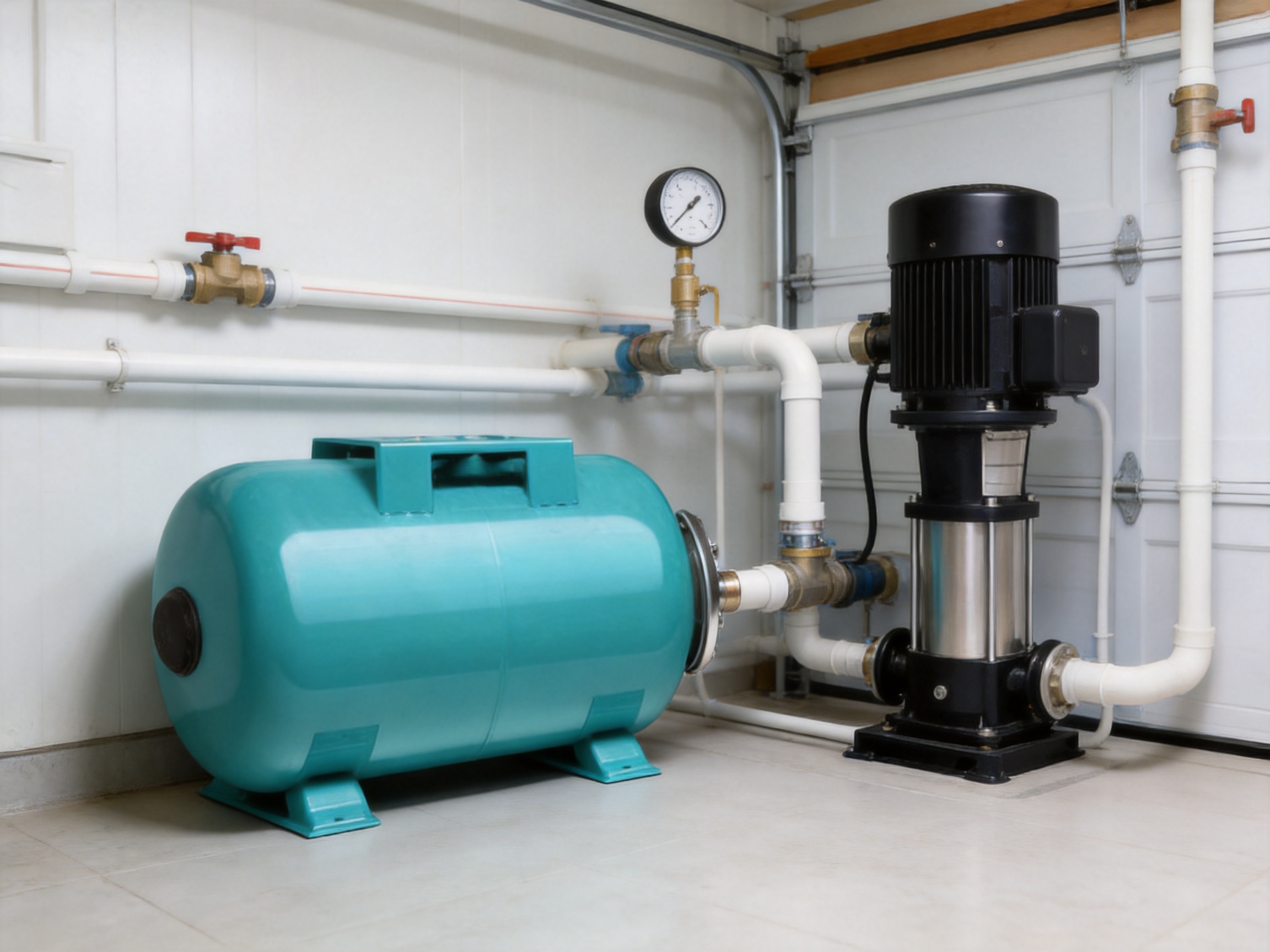
Correct installation is essential for achieving the full performance of any pressure tank. The CF Series should be installed by qualified personnel according to system requirements and local regulations. The tank must be placed on a stable surface and connected securely to the water system. Pipes should be supported properly so that excessive mechanical stress is not transferred to the connector or flange.
The precharge pressure must be checked before installation or commissioning. The tank should be empty of water when checking air precharge. In many systems, the precharge is set slightly below the pump cut-in pressure. If the precharge is too high, the tank may deliver little or no water before the pump starts. If it is too low, the membrane may be overextended, reducing efficiency and potentially shortening service life.
A pressure gauge and pressure switch should be installed in suitable positions. Safety valves, check valves, isolation valves, and drain valves may be required depending on the system design. In booster systems, the tank should be matched with the controller or pressure switch logic to prevent rapid cycling.
Installers should also consider accessibility. Since the CF Series uses a replaceable membrane, future maintenance should be possible without dismantling the entire pump room. Leaving enough space around the flange and connector areas supports easier service.
Pressure tanks are generally low-maintenance components, but periodic inspection helps ensure long-term performance. Users should check system pressure behavior. If the pump begins cycling too frequently, the tank may have lost air precharge, the membrane may be damaged, or the tank may be too small for the application. Air precharge should be checked according to maintenance schedules and adjusted as required.
Visual inspection is also useful. The external surface should be checked for corrosion, dents, leakage, and coating damage. Connection points should be checked for signs of seepage. If the system operates in a humid or corrosive environment, additional protection or more frequent inspection may be needed.
If membrane replacement is required, the system should be depressurized and isolated before service. Only compatible replacement membranes should be used. After membrane replacement, the tank should be reassembled carefully, precharged correctly, and tested before returning to operation.
Selecting the right pressure tank size depends on pump capacity, pressure switch settings, water demand, acceptable pump cycling frequency, and available installation space. A small tank may be suitable for low-demand systems, but it may lead to frequent cycling if paired with a high-flow pump. A larger tank provides more drawdown and fewer starts, but it requires more space and higher initial cost.
The CF19L and CF24L models are suitable for compact domestic systems, small surface pump packages, and installations with limited space. The CF36L and CF50L models provide increased storage for medium residential systems and garden applications. The CF60L, CF80L, and CF100L models are better suited for higher demand, larger pump systems, and commercial or agricultural uses where reduced cycling is especially valuable.
For system integrators, offering several models helps match technical needs and budgets. A professional supplier should avoid recommending a tank solely based on price. Instead, tank selection should consider lifecycle performance, pump protection, user comfort, and maintenance access.
Intelligent booster pumps are increasingly popular because they can adjust operation based on pressure, flow, and demand. However, even intelligent systems often benefit from a pressure tank. The tank absorbs small demands and pressure fluctuations, helping the controller avoid unnecessary starts. This improves comfort and can support energy savings.
In variable-speed systems, a correctly sized tank can reduce micro-cycling at low flow. In fixed-speed systems, it is even more critical because the pump usually operates at full speed whenever it starts. The CF Series can therefore support both traditional and modern water supply systems.
As the manufacturer continues to develop intelligent booster pumps and related technologies, pressure tank integration becomes part of a complete system approach. Buyers can source pumps and accessories from a supplier that understands how each component affects total performance.
For international distributors, technical performance is only one part of product success. Packaging volume, container loading, inventory planning, and model standardization also affect profitability. The CF Series provides packing volume data from 0.0356 CBM for the CF19L to 0.1524 CBM for the CF100L. This information helps buyers calculate landed cost and warehouse requirements.
A complete model range allows distributors to build a logical inventory structure. Smaller tanks can serve fast-moving retail and domestic pump package demand, while larger tanks can support contractors and project buyers. With consistent connector size and precharge range, training and after-sales support become easier.
The company’s export experience further supports global distribution. Professional order tracking, documentation, packing coordination, and shipping communication reduce operational difficulties for importers. In competitive markets, dependable supply and communication can be as important as product specifications.
A pressure tank may appear simple, but low-quality tanks can cause major problems: leaks, rapid pressure loss, membrane rupture, rust, poor paint finish, unstable precharge, and premature failure. These issues create warranty costs, customer dissatisfaction, and damage to distributor reputation. Therefore, buyers should evaluate total value rather than unit price alone.
The CF Series emphasizes practical durability, serviceability, and system compatibility. Its carbon steel construction supports strength. Its replaceable membrane supports maintenance. Its size range supports application flexibility. Its pressure rating options support different system demands. Combined with the manufacturer’s pump industry experience, these features create long-term value for distributors and end users.
A reliable pressure tank also protects other equipment. By reducing pump starts, it can extend pump life, reduce electrical stress, and support smoother operation. The savings from fewer repairs, less downtime, and better user satisfaction may exceed the initial difference between a low-quality tank and a better-built product.
In many markets, ordinary pressure tanks compete mainly on price. They may use simplified construction, limited pressure ratings, fixed membranes, thin coatings, or inconsistent testing. Such products may be acceptable for temporary or very low-demand use, but they can create problems in systems where reliability matters. The CF Series is designed to offer a stronger balance of cost and performance.
The replaceable membrane gives it a maintenance advantage over non-serviceable tanks. The multiple maximum pressure options give it an application advantage over tanks with only one standard rating. The horizontal form gives it an installation advantage in compact pump packages and low-clearance locations. The manufacturing background behind the product gives it a system knowledge advantage over suppliers with narrow accessory-only experience.
Compared with premium international brands, the CF Series can offer competitive sourcing value while still providing essential engineering features. This makes it suitable for buyers who must compete in price-sensitive markets but cannot afford high warranty risks. For OEM pump package builders, the series can also help create attractive complete water supply units.
The CF Series is suitable for pump distributors, wholesalers, importers, irrigation suppliers, hardware retailers, engineering contractors, OEM pump package manufacturers, and water system service companies. It is also suitable for buyers who need one-stop procurement of pumps and accessories.
Because the manufacturer supplies deep well pumps, submersible pumps, surface pumps, booster pumps, circulation pumps, garden pumps, pool and spa pumps, commercial multistage pumps, end suction pumps, pipes, valves, and intelligent booster pumps, customers can combine multiple product categories in one purchasing plan. This reduces supplier management complexity and helps ensure system compatibility.
For project-based buyers, sourcing from a manufacturer with broad product coverage can simplify technical communication. For distributors, it helps create a more complete catalog. For service companies, compatible accessories and pump products can improve repair efficiency and customer satisfaction.
The main function is to store pressurized water, stabilize system pressure, reduce pump start-stop frequency, and improve the comfort and reliability of water supply systems.
A replaceable membrane allows maintenance teams to replace the internal membrane when needed instead of replacing the entire tank. This improves serviceability and can reduce lifecycle cost.
It is suitable for domestic water supply, deep well pump systems, booster pump systems, garden irrigation, agricultural water systems, surface pump packages, and light commercial water distribution.
Butyl and EPDM membranes support -10°C to 99°C. Natural rubber supports 0°C to 77°C.
The standard precharge pressure is 1.8–2.0 bar. Installers should check and adjust precharge according to the pump cut-in pressure and system design.
The available models include CF19L, CF24L, CF36L, CF50L, CF60L, CF80L, and CF100L.
The series uses a 1-inch connector, which is suitable for many common water system installations.
The tank supplies water during small demands and delays pump start. This reduces cycling, electrical stress, heat buildup, and mechanical wear.
Neither type is universally better. A horizontal tank is often preferred where installation height is limited or where the tank is mounted with a pump package. The best choice depends on space, system layout, and capacity requirements.
The CF Series offers replaceable membrane construction, multiple pressure options, carbon steel structure, practical model coverage, and manufacturing support from a pump-focused company. These advantages can reduce maintenance problems and improve long-term value.
The CF Series Carbon Steel Horizontal Pressure Tank is a practical and reliable solution for modern water systems. It supports stable pressure, protects pumps from excessive cycling, improves user comfort, and provides maintenance advantages through replaceable membrane construction. With models from 19L to 100L, pressure options up to 16 bar on selected models, a carbon steel flange, a 1-inch connector, and membrane choices for different temperature conditions, the series is well suited for domestic, agricultural, commercial, and pump package applications.
Its value is strengthened by the manufacturing background of Taizhou Edwin Electric Co., Ltd., a company with extensive experience in pump production, water system accessories, intelligent booster pumps, solar water pumps, and global export service. For distributors, contractors, and system integrators, the CF Series offers more than a tank: it offers a dependable component within a broader water system solution.
In a competitive market where low-cost products can create hidden maintenance risks, choosing a well-designed pressure tank is a strategic decision. The CF Series provides a balanced combination of durability, serviceability, application flexibility, and
aseriesnoisereductiondesignacid-baseverticalsurfacepump-1.jpg "EV(F)A Series Noise Reduction Design Acid-base Vertical Surface Pump")
edwina@edwin-pump.com
+86-13586290903 (WhatsApp)
Xuri Gongliang Cutting Tool Entrepreneurship Park, Wenqiao Town, Wenling City, Taizhou City, Zhejiang Province, China

High Performance Smart Pump Factory


 English