edwina@edwin-pump.com

View All Products
en
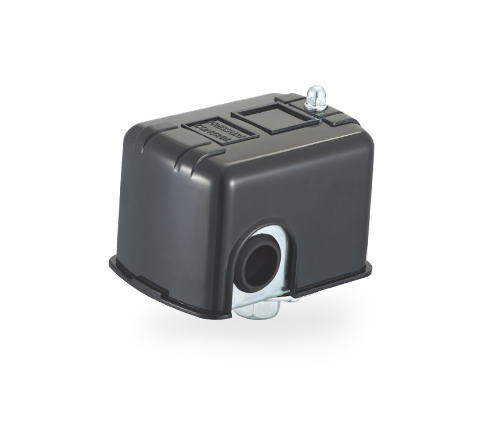
The ERQ-3 Series Automatically Delayed Closing System Pressure Switch is designed to provide dependable, automatic control for air compressors used in industrial, commercial, workshop, agricultural, and service environments. By monitoring system pressure and controlling compressor start and stop functions according to preset pressure values, the switch helps maintain stable compressed-air availability while reducing unnecessary manual operation.
Unlike a basic pressure switch that simply opens or closes an electrical circuit at a pressure threshold, the ERQ-3 Series combines automatic pressure control with an air-relief valve and delayed closing function. This arrangement supports smoother compressor shutdown, helps reduce pressure-related stress on the motor, and can improve the overall operating life of the compressor system when correctly installed and adjusted.
The product is manufactured by Taizhou Edwin Electric Co., Ltd., an integrated manufacturing enterprise with experience in research and development, mass production, export operations, and water and fluid-control equipment. Although the company is widely associated with pumps and intelligent water-control products, its technical capabilities also support the development of pressure-control accessories and electrical control components for fluid and air-handling systems.
With a pressure range of 20 to 175 psi, selectable pressure settings, a rated current of 12 A, and operating-frequency compatibility of 50/60 Hz, the ERQ-3 Series is suitable for a broad range of compressor control applications. Its configuration options also allow customers to select the hydraulic connection, pressure setting, casing requirements, screw arrangement, and air-relief pipe size according to project needs.
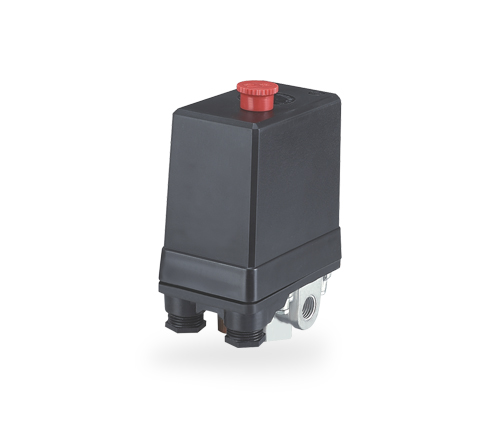
ERQ-3 Series Automatically Delayed Closing System Pressure Switch for Air Compressors
A pressure switch is an electromechanical control device that responds to changes in system pressure. In an air-compressor installation, it is normally connected to the compressed-air line and the compressor’s electrical control circuit. When system pressure falls below the selected starting value, the switch signals the compressor to operate. When pressure reaches the selected stopping value, the switch interrupts the control circuit and stops the compressor.
The ERQ-3 Series performs this automatic start-and-stop function while adding an automatically delayed closing system. The delayed closing function is associated with the air-relief valve. When the compressor stops, residual pressure around the compressor discharge side can make it difficult for the motor to restart. By relieving suitable trapped air for a controlled period, the system can reduce starting resistance and help the motor restart more smoothly during the next operating cycle.
This function is particularly useful for reciprocating compressors and other compressor arrangements in which pressure may remain in the discharge pipe after shutdown. A compressor motor that attempts to start against excessive residual pressure may draw a high starting current, experience mechanical strain, or trip a protective device. Correctly applied pressure relief can reduce this risk.
The pressure switch is not intended to replace every protection device in a compressor system. A complete installation may also require a suitable motor protector, overload relay, safety relief valve, check valve, isolation valve, pressure gauge, air receiver, and correctly sized electrical disconnect. The ERQ-3 Series should therefore be viewed as an important control component within a properly engineered compressor package.
The ERQ-3 Series operates according to two main pressure thresholds: a lower cut-in pressure and a higher cut-out pressure. The lower threshold determines when the compressor starts. The higher threshold determines when the compressor stops. The difference between these two settings is commonly called the differential or pressure band.
For example, a configuration with a starting pressure of 40 psi and a stopping pressure of 70 psi will allow the compressor to begin operation when pressure decreases to approximately 40 psi. It will continue operating until the system reaches approximately 70 psi, at which point the pressure switch opens or changes the control circuit to stop the compressor.
The available pressure-setting groups include 20–50 psi, 30–60 psi, 40–70 psi, 50–80 psi, 95–125 psi, and 135–175 psi. These ranges enable the same product family to serve lower-pressure workshop systems as well as higher-pressure applications. Actual operating pressure should always be selected according to the compressor rating, receiver rating, downstream equipment requirements, and applicable safety regulations.
When pressure falls because air is consumed, the diaphragm or pressure-sensing mechanism responds to the reduction. Once the cut-in point is reached, the electrical contacts change state and energize the compressor control circuit. As the compressor fills the air receiver or distribution network, pressure rises. When the cut-out point is reached, the contacts return to the stop position.
The pressure switch must be installed so that its pressure connection receives a representative system pressure. A restricted, incorrectly sized, leaking, or contaminated connection may cause delayed response, inaccurate switching, or unstable compressor cycling. For this reason, the connection should be kept clean, properly sealed, and protected from excessive vibration or temperature.
The automatically delayed closing system is one of the most important features of the ERQ-3 Series. An air-relief valve is provided to discharge or release residual air through a suitable pipe after the compressor stops. The delayed closing arrangement allows the valve to remain open for the required period before closing, helping to balance pressure around the compressor head or discharge line.
In a conventional compressor installation, the compressor may stop while compressed air remains between the compressor outlet and the check valve. If the motor restarts before this air is released, the compressor may need to overcome a higher initial load. The resulting starting demand can be particularly significant on single-phase motors or smaller compressor motors with limited starting torque.
By assisting pressure relief during shutdown, the ERQ-3 system can help create more favorable restart conditions. This may reduce motor strain, help limit nuisance tripping, and contribute to smoother operating cycles. It can also reduce the mechanical shock that may occur when a compressor attempts to start under pressure.
The air-relief valve can be configured for a 6 mm or 1/4-inch pipe diameter, depending on the installation design. The hydraulic connection can also be selected as a 1/4-inch female connection or another customer-specified arrangement where available. These options help installers match the pressure switch to different compressor layouts and connection standards.
The delayed closing feature should not be confused with a substitute for a check valve or a safety relief valve. The check valve prevents unwanted reverse flow from the receiver into the compressor. The safety relief valve protects against dangerous overpressure. The air-relief valve supports controlled decompression in the compressor discharge section. Each device performs a different function and should be selected accordingly.
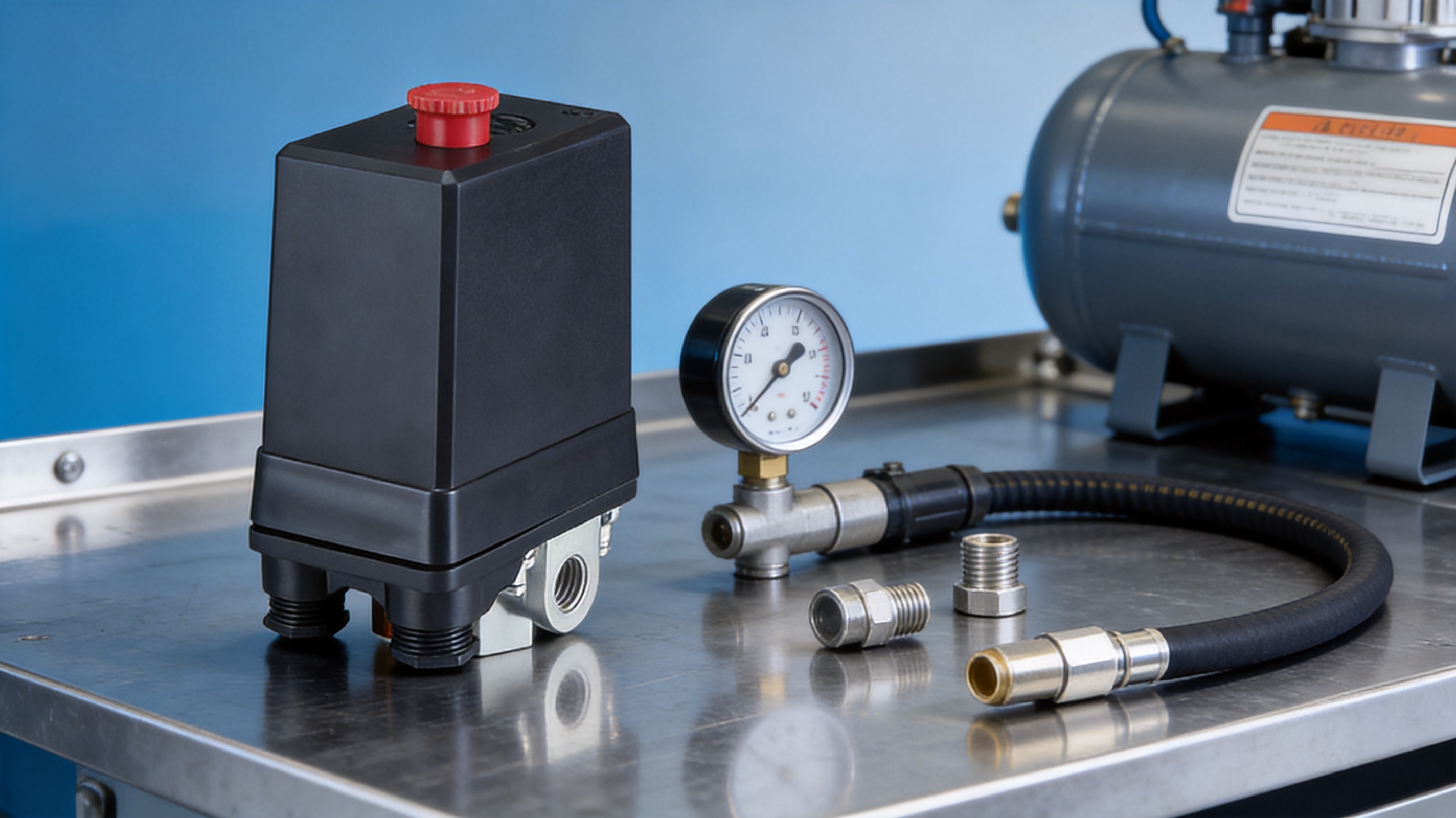
| Parameter | Specification | Application Significance |
|---|---|---|
| Product series | ERQ-3 | Automatically delayed closing pressure-control system |
| Product type | Mechanical pressure controller | Controls compressor start and stop operation through pressure response |
| Pressure range | 20–175 psi | Supports multiple compressor and air-system pressure requirements |
| Available pressure settings | 20–50 psi; 30–60 psi; 40–70 psi; 50–80 psi; 95–125 psi; 135–175 psi | Allows selection of suitable cut-in and cut-out ranges |
| Rated current | 12 A | Suitable for control circuits within the specified electrical limits |
| Rated voltage | 110–240 V according to the technical parameter listing | Requires confirmation against the actual electrical configuration |
| Additional voltage information | Some product information lists 380 V | Voltage must be verified before ordering and installation |
| Frequency | 50/60 Hz | Compatible with common commercial power frequencies |
| Maximum ambient temperature | 40°C | Installation environment should remain within the stated limit |
| Protection degree | IP20 | Intended for protected indoor or suitably enclosed locations |
| Hydraulic connection | 1/4-inch female or customized option | Allows adaptation to different compressor piping arrangements |
| Air-relief connection | 6 mm or 1/4-inch pipe option | Supports controlled discharge of residual compressor air |
| Screw configuration | One-way or four-way | Provides installation flexibility |
| Warranty | 1 year | Provides a defined warranty period for product support |
The technical data should be reviewed carefully before procurement. The supplied product information contains both a 380 V reference and a separate technical listing of 110–240 V. This may indicate different electrical versions, market configurations, or a data-entry inconsistency. Buyers should confirm the exact voltage, contact arrangement, switching capacity, and wiring diagram for the required model before placing an order.
A basic pressure switch may provide only the essential function of opening and closing an electrical circuit at a preset pressure. The ERQ-3 Series is designed as a broader compressor-control solution, combining pressure sensing, automatic start and stop, an air-relief valve, and delayed closing operation in one product family.
Integrating these functions can simplify equipment design and reduce the number of separate components required around the compressor. It may also make servicing easier because the principal pressure-control and relief functions are located in a coordinated assembly. Fewer separate components can reduce installation complexity, although the complete system must still include all required safety devices.
The delayed air-relief function provides an advantage over pressure switches that stop the compressor without addressing residual discharge pressure. When correctly connected, the relief function can help the compressor restart under lower initial resistance. This can be valuable in systems that operate frequently or have short pressure-recovery cycles.
Smoother restarting may reduce stress on the motor, starter components, compressor head, valves, and couplings. It may also improve the consistency of operation in workshops and production areas where air demand changes repeatedly throughout the day.
The 20–175 psi range provides more flexibility than a narrowly configured switch intended for only one pressure band. The available settings cover common low-pressure and medium-to-high-pressure compressor applications. Customers can also request customized pressure settings for specific equipment requirements.
This flexibility is useful for original equipment manufacturers, compressor assemblers, distributors, and maintenance providers. Rather than selecting a completely different pressure-control platform for every compressor model, they can evaluate the ERQ-3 Series across multiple equipment configurations.
The choice of one-way or four-way screw configuration, hydraulic connection options, casing requirements, and air-relief pipe sizes allows the product to be adapted to different machine layouts. Such options can reduce the need for improvised fittings and may help create a cleaner, more serviceable installation.
Customization is especially valuable for manufacturers that integrate pressure switches into private-label compressor systems or specialized air equipment. The ability to specify the pressure setting and connection format during procurement can improve compatibility and reduce downstream modification work.
Support for both 50 Hz and 60 Hz operation corresponds with the power standards used in many international markets. This makes the product more suitable for export-oriented equipment and reduces the need to maintain separate frequency-specific pressure-control inventories, provided that the voltage and switching configuration are also correct.
The product is described as being built for industrial and commercial applications, with a focus on reliable pressure control and durable operation. A professional mechanical pressure controller should maintain consistent switching behavior, resist normal vibration, and preserve its adjustment characteristics over repeated operating cycles.
In comparison with low-cost, non-standard pressure switches, a product with defined technical parameters, configurable connections, documented pressure ranges, and manufacturer warranty offers clearer procurement and maintenance expectations. Buyers can evaluate the product against an identified specification rather than relying only on appearance or an unverified pressure label.
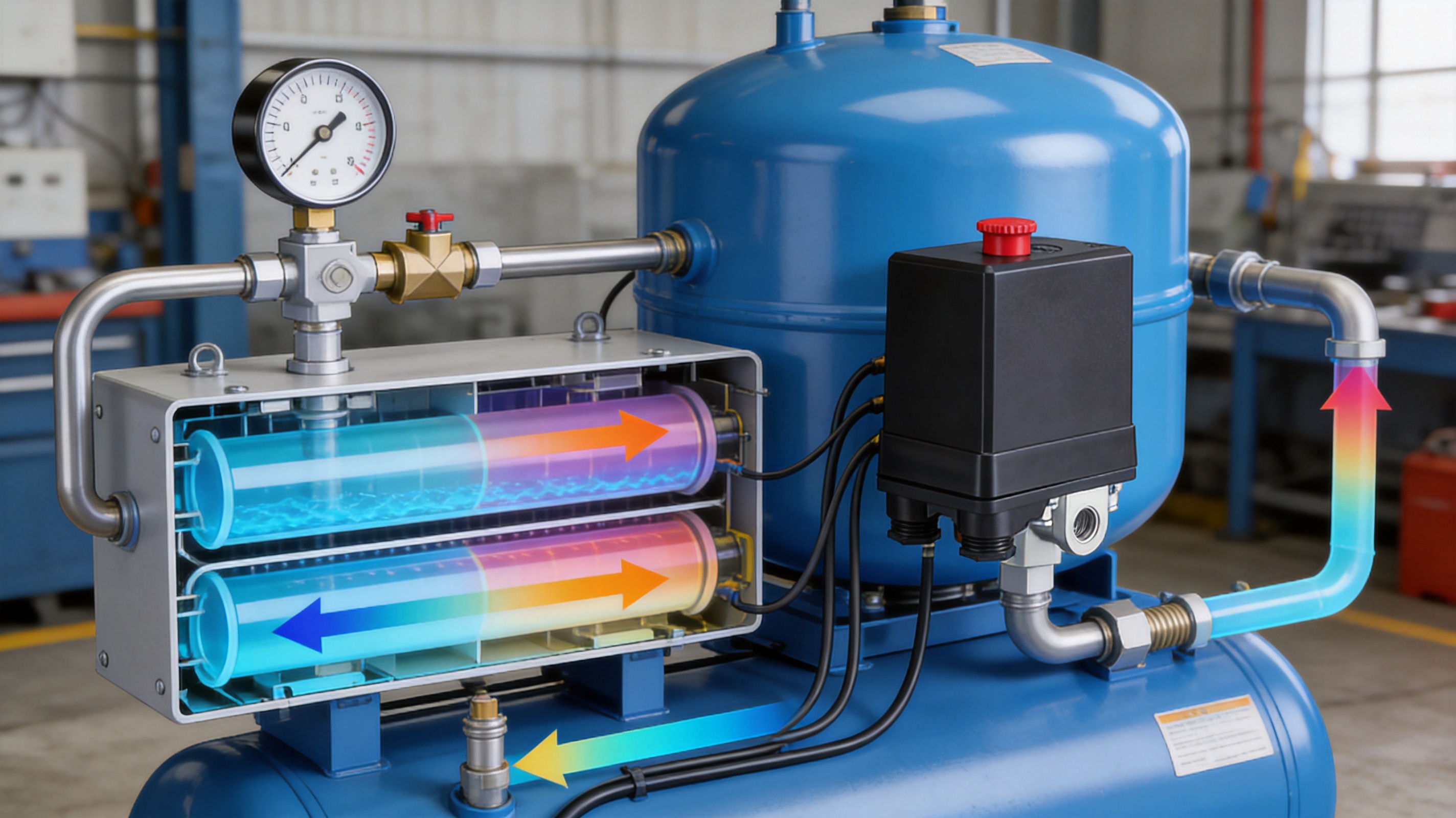
The ERQ-3 Series is supported by the manufacturing background of Taizhou Edwin Electric Co., Ltd., which was founded in 2008. The company operates as an integrated enterprise with independent research and development, mass-production capability, and global export experience. This combination is important for pressure-control products because reliability depends not only on component design but also on repeatable assembly, inspection, documentation, and supply-chain control.
Independent research and development gives the manufacturer greater control over product structure, pressure settings, connection arrangements, and application adaptation. Instead of offering only an off-the-shelf device, an experienced manufacturer can evaluate customer requirements such as compressor size, pressure band, electrical configuration, air-relief arrangement, and enclosure preferences.
For buyers, this can shorten the path between a general product and an application-ready component. It also creates opportunities for product improvements based on field feedback, such as revised connection designs, improved adjustment mechanisms, or more convenient installation arrangements.
Mass production requires more than the ability to assemble a large number of units. It requires controlled purchasing, production scheduling, standardized work instructions, component inspection, assembly consistency, pressure calibration, electrical verification, and final packaging. These processes help reduce variation between units and support repeatable performance for distributors and equipment manufacturers.
For a pressure switch, production consistency is particularly important. A small variation in a sensing spring, diaphragm assembly, contact mechanism, or adjustment component can affect cut-in and cut-out pressure. A structured production system helps ensure that the finished product remains within the agreed specification.
The company’s wider product portfolio includes deep well pumps, submersible pumps, domestic booster pumps, circulation pumps, solar water pumps, intelligent booster pumps, and other water-treatment peripheral products. This background gives the manufacturer practical exposure to pressure management, motor control, fluid movement, piping connections, and system protection.
Although compressed air and water are different media, both applications require careful consideration of pressure, flow, motor operation, electrical protection, connection standards, and environmental conditions. Experience across these product categories can support a broader understanding of pump and compressor control requirements.
The company established related import, export, and industrial service organizations to support procurement planning, order tracking, cross-border delivery, and foreign-trade services. This is useful for overseas customers that require more than a product quotation. International buyers may need help with packaging, production schedules, documentation, order consolidation, inspection arrangements, and shipment coordination.
For distributors, a supplier with export experience can help simplify communication between technical, commercial, and logistics teams. It can also support repeat orders by maintaining clearer records of selected pressure settings, connection types, packaging requirements, and customized product details.
The company serves markets including agricultural irrigation, municipal engineering, construction, mining, HVAC, household water supply, and new-energy projects. These fields often involve demanding operating conditions, variable load profiles, and the need for dependable automatic control. Experience in such applications encourages a practical approach to product design rather than focusing solely on nominal specifications.
For the ERQ-3 Series, this application-oriented approach is reflected in the availability of multiple pressure settings, connection choices, air-relief configurations, and customized casing requirements. These features are relevant to real installation conditions where a standard component may require additional adapters or modifications.
A pressure switch should be evaluated through the complete manufacturing and quality process. Important stages include incoming inspection of electrical and mechanical components, verification of pressure-sensing parts, controlled assembly of contacts and terminals, adjustment of cut-in and cut-out settings, leak checking of the pressure connection, and functional testing of the air-relief mechanism.
Electrical testing should confirm that insulation, terminals, contact operation, and rated switching characteristics meet the approved specification. Mechanical testing should confirm that the pressure switch responds at the required thresholds and returns to the correct state after pressure changes. Where customized settings are supplied, each product batch should be checked against the customer’s order information.
Calibration is especially significant. The pressure range printed on a product does not by itself guarantee that every unit has been adjusted to the desired operating points. Proper production control should distinguish between the maximum adjustable range and the factory-set pressure. Buyers should request confirmation of the actual cut-in and cut-out settings when ordering preconfigured units.
Packaging also influences product quality. Pressure switches should be protected from impact, moisture, contamination, and deformation during storage and transport. The packaging should preserve the connection threads, adjustment components, terminals, and air-relief fittings. Export shipments require special attention to humidity, vibration, and extended handling periods.
The ERQ-3 Series can be used in workshop compressor systems that supply pneumatic tools, cleaning equipment, tire inflators, spray equipment, and general service outlets. Automatic start and stop helps maintain receiver pressure without requiring the operator to control the compressor manually.
The delayed closing function is useful where the compressor starts and stops repeatedly during a working shift. By helping release residual discharge pressure, the product can support more reliable restart behavior and reduce unnecessary stress on the compressor motor.
Automotive repair shops, equipment maintenance centers, and small manufacturing facilities often require stable compressed air but may not need a complex programmable control system. A mechanical pressure switch provides a straightforward control solution that is easy to understand, adjust, and replace.
The ERQ-3 Series can be selected for pressure settings appropriate to pneumatic tools and receiver sizes. Its 50/60 Hz compatibility and connection options also make it suitable for equipment supplied to different markets, subject to confirmation of the correct voltage version.
Industrial equipment manufacturers may integrate the pressure switch into packaged compressors, portable compressors, and auxiliary air systems. The product’s available connection and pressure-setting options can support different machine designs and customer specifications.
In larger installations, the pressure switch may be used as part of a control circuit rather than as the sole device switching a large motor directly. The final circuit must be designed according to the motor current, starter arrangement, overload protection, control voltage, and applicable electrical standards.
Air compressors used in agricultural workshops, service sheds, and rural equipment maintenance areas can benefit from automatic pressure control. The product can help maintain air availability for cleaning, inflating, spraying, and maintenance operations.
Because the stated protection degree is IP20, the pressure switch should be installed in a dry, protected enclosure or sheltered location. It should not be exposed directly to rain, washdown water, excessive dust, corrosive chemicals, or outdoor condensation without additional protection.
Original equipment manufacturers often require pressure switches that match a defined product appearance, pressure setting, connection format, and packaging specification. The ERQ-3 Series offers customization options that can support OEM programs, subject to minimum order quantities, technical review, and production confirmation.
For OEM applications, it is important to approve a complete technical drawing or sample before mass production. The approval process should include pressure settings, thread dimensions, wiring terminals, electrical ratings, air-relief pipe size, casing design, label information, and packaging details.
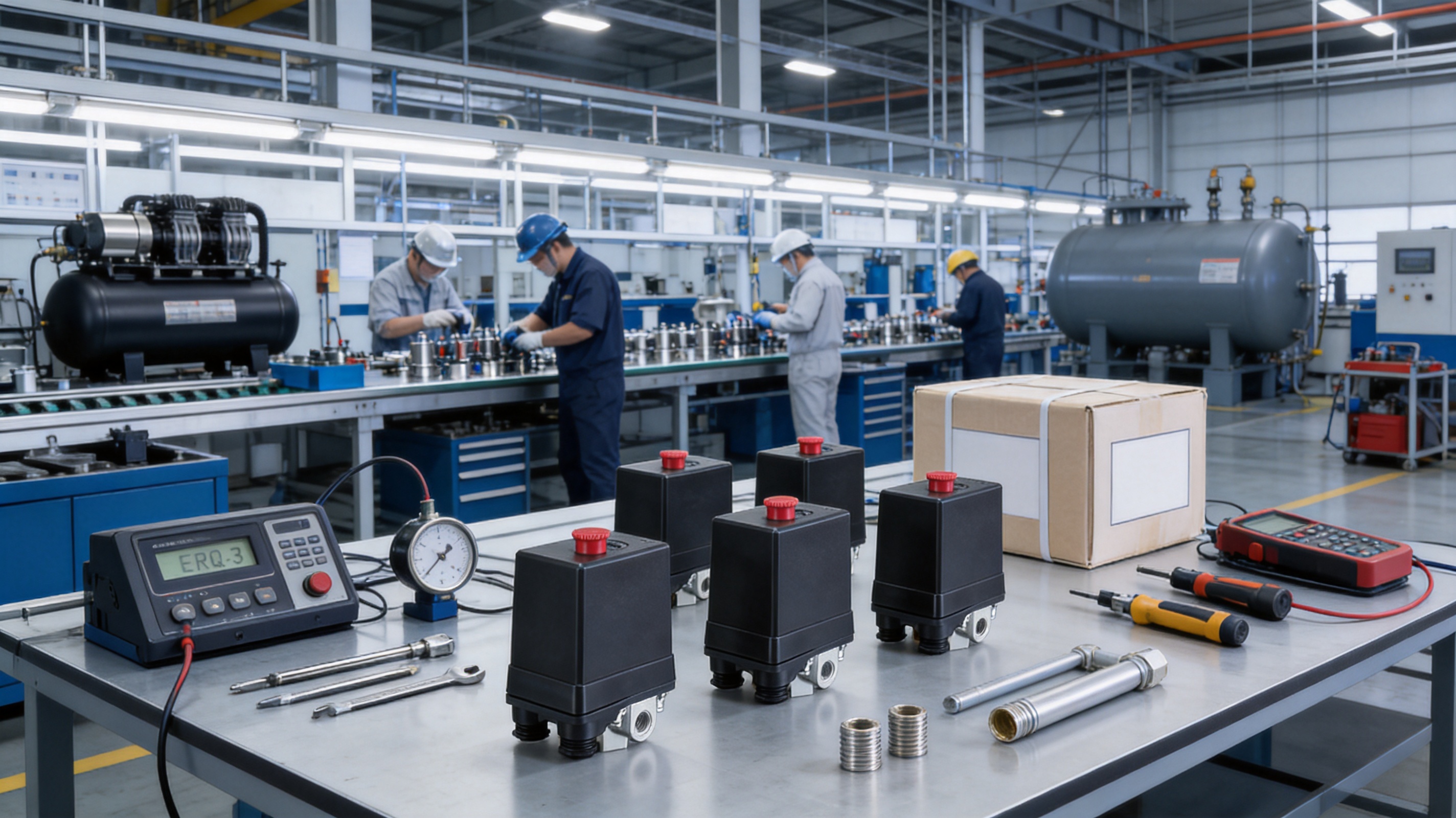
Installation should be performed by a qualified technician who understands compressed-air systems and electrical motor controls. Before work begins, disconnect the compressor from the power supply, release stored air safely, and verify that the receiver and discharge line are depressurized.
Install the pressure switch at a location where it can sense system pressure accurately and where the adjustment mechanism and terminals remain accessible for inspection. Avoid positioning it directly on a highly vibrating component unless the mounting arrangement is designed for that condition. Excessive vibration can accelerate wear or cause unstable pressure response.
Use a suitable sealant or sealing method on the pressure connection, taking care not to allow sealant material to enter the pressure passage. Foreign material inside the sensing port can obstruct pressure transmission and produce incorrect switching behavior.
Connect the air-relief pipe according to the product configuration. The pipe should be routed so that released air does not create a hazard, contaminate electrical components, or interfere with nearby equipment. It should remain free of sharp kinks and blockages.
Electrical wiring must follow the approved wiring diagram for the exact product version. Confirm the supply voltage, current, frequency, contact arrangement, motor-control method, and grounding requirements before energizing the system. The pressure switch should not be used beyond its rated switching capacity.
After installation, test the system at low-risk operating conditions. Observe the compressor start point, stop point, air-relief action, motor restart behavior, and pressure gauge response. Check all threaded joints for leakage and confirm that the compressor does not cycle excessively.
Pressure settings should be selected according to actual air demand rather than simply choosing the highest available range. An unnecessarily high pressure setting can increase energy consumption, accelerate component wear, and place additional stress on the compressor and receiver.
The cut-in and cut-out points should provide enough operating range for the application without creating excessive pressure fluctuation. If the differential is too narrow, the compressor may start and stop frequently. This condition, known as short cycling, can increase motor heating and contact wear.
If the differential is too wide, pressure may fall below the acceptable operating level before the compressor restarts. The correct selection depends on receiver capacity, compressor output, air demand, tool requirements, duty cycle, and the pressure limits of downstream components.
The pressure switch should be coordinated with a safety relief valve set below the maximum allowable working pressure of the weakest pressure-containing component. Automatic control is not a replacement for independent overpressure protection. The receiver and connected piping must comply with applicable local requirements.
Inspect the pressure connection, air-relief pipe, electrical terminals, casing, and mounting points at regular intervals. Look for air leakage, loose wiring, damaged insulation, corrosion, unusual vibration, or contamination around the pressure-sensing area.
Check whether the compressor starts and stops at consistent pressure values. Significant changes may indicate a blocked pressure port, worn sensing mechanism, damaged diaphragm, electrical contact wear, incorrect adjustment, or a problem elsewhere in the compressed-air system.
If the compressor does not start when pressure falls below the selected cut-in value, first isolate the power supply and follow safe diagnostic procedures. Possible causes include incorrect wiring, an open overload protector, a failed motor starter, a blocked pressure connection, incorrect adjustment, or insufficient control voltage.
The pressure switch should not be bypassed permanently to force operation. Bypassing the switch may remove automatic control and create an overpressure hazard. Troubleshooting should identify the cause and restore the approved control circuit.
If the compressor continues running after reaching the expected cut-out pressure, possible causes include incorrect pressure adjustment, welded electrical contacts, blocked sensing passages, a leaking pressure system, or a damaged pressure-sensing mechanism. Stop the compressor manually if safe to do so and investigate before continued operation.
Frequent starting and stopping may result from a receiver that is too small, a large air leak, excessive air demand, an unsuitable pressure differential, or an incorrectly adjusted pressure switch. Frequent cycling should not automatically be attributed to a product defect.
Inspect hoses, fittings, valves, tools, and receiver connections for leaks. Confirm that the selected pressure range is suitable and that the compressor output is adequate for the demand. If cycling continues, a larger receiver or revised control strategy may be required.
If the air-relief valve does not release residual air, check that the pipe is correctly installed and not blocked. Confirm that the valve is connected to the correct compressor discharge section and that the delayed closing mechanism is operating as intended.
If continuous leakage occurs, inspect the connection, sealing surfaces, valve seat, and pipe arrangement. Do not obstruct or remove the relief function without a technical review, because doing so may cause difficult compressor restarting.
The stated maximum ambient temperature is 40°C. Installation in a hotter environment may affect the pressure switch, electrical contacts, seals, and adjustment stability. If the compressor room regularly exceeds this temperature, ventilation or a different product specification may be necessary.
The IP20 protection degree indicates that the product is intended for a protected environment and does not provide protection against water ingress or heavy dust. Outdoor installations, washdown areas, and dusty industrial spaces require a suitable enclosure or a pressure-control product with a higher protection rating.
Compressed air stores significant energy. Even after a compressor stops, the receiver, piping, hoses, and connected equipment may remain pressurized. Always isolate and depressurize the relevant section before maintenance. Operators should also use appropriate personal protective equipment and follow site safety procedures.
The pressure switch must be used only within the declared pressure, voltage, current, frequency, and temperature limits. Any modification to the casing, contacts, pressure mechanism, or relief system may affect performance and warranty coverage.
International buyers often need products that combine technical flexibility with dependable supply. The ERQ-3 Series provides a broad pressure range, selectable settings, 50/60 Hz frequency compatibility, connection options, and customization support. These characteristics make it adaptable to different compressor models and regional installation practices.
The manufacturer’s experience in overseas export and related industrial products can also support purchasing departments that require coordinated communication, production planning, and delivery services. For distributors, the ability to order multiple configurations from one product family may simplify inventory management.
Before placing an international order, buyers should provide a complete specification sheet. This should include required pressure range, factory cut-in and cut-out values, supply voltage, contact arrangement, connection thread, air-relief pipe size, casing preferences, quantity, labeling requirements, packaging requirements, and destination-market compliance needs.
Samples should be evaluated under the intended operating conditions whenever possible. Testing should cover pressure accuracy, start-stop repeatability, restart performance, leakage, electrical compatibility, and environmental suitability. This process helps prevent problems caused by selecting a pressure switch based only on nominal pressure range.
| Procurement Item | Questions to Confirm |
|---|---|
| Pressure range | What are the required cut-in and cut-out pressures? |
| Electrical voltage | Is the required version 110–240 V, 380 V, or another configuration? |
| Current rating | Will the switch control the motor directly or operate a starter/control circuit? |
| Frequency | Is the application based on 50 Hz, 60 Hz, or both? |
| Connection | Is a 1/4-inch female connection suitable, or is a customized connection needed? |
| Air relief | Is a 6 mm or 1/4-inch relief pipe required? |
| Installation format | Is a one-way or four-way screw configuration preferred? |
| Environment | Will the switch be protected from water, dust, chemicals, and temperatures above 40°C? |
| Documentation | Are wiring diagrams, pressure-setting records, labels, and inspection documents required? |
| Customization | Are casing design, pressure setting, connection, or packaging modifications needed? |
It controls the automatic starting and stopping of an air compressor according to preset pressure values. It starts the compressor when pressure falls to the cut-in point and stops it when pressure reaches the cut-out point.
The delayed closing system allows the air-relief valve to release residual air after the compressor stops. This can reduce restart resistance and help the compressor motor start more smoothly.
The listed pressure settings are 20–50 psi, 30–60 psi, 40–70 psi, 50–80 psi, 95–125 psi, and 135–175 psi. Customized pressure settings may also be available subject to technical confirmation.
It may be suitable for many air compressors, but compatibility must be confirmed. The compressor voltage, current, starting method, pressure requirement, connection arrangement, and control-circuit design must match the pressure switch specification.
The listed rated current is 12 A. Whether direct motor switching is appropriate depends on the motor’s running current, starting current, phase arrangement, electrical category, and local regulations. Larger motors may require a contactor or starter controlled by the pressure switch.
The technical information lists 110–240 V, while another product reference lists 380 V. This indicates that voltage configuration must be confirmed with the supplier for the exact model and order. Never connect the switch before verifying the rating and wiring diagram.
A 1/4-inch female hydraulic connection is listed, and customized connection arrangements may be available. Buyers should confirm thread standard, dimensions, and sealing requirements before installation.
The listed options are a 6 mm pipe or a 1/4-inch diameter pipe. The correct choice depends on the compressor layout and the specific pressure-switch configuration.
The product family includes defined pressure-setting ranges, and customized settings are available according to the supplied information. The exact adjustment procedure and factory setting should be confirmed using the product documentation for the ordered version.
The stated protection degree is IP20. The switch should therefore be installed in a protected, dry location or inside a suitable enclosure when the operating environment contains water, dust, or other hazards.
The stated maximum ambient temperature is 40°C. Higher temperatures may require improved ventilation, a different enclosure, or an alternative product specification.
No. The pressure switch provides automatic operating control, while a safety relief valve provides independent protection against dangerous overpressure. Both may be required in a complete compressor system.
Provide the supplier with the required cut-in and cut-out pressures, voltage, frequency, current, connection dimensions, relief-pipe size, screw configuration, environmental conditions, and wiring requirements. Confirm the final technical drawing or sample before mass production.
The supplied product information states a one-year warranty. Warranty conditions, exclusions, and claim procedures should be confirmed in the commercial agreement and product documentation.
The ERQ-3 Series Automatically Delayed Closing System Pressure Switch offers a practical control solution for air compressors that require automatic pressure regulation and improved shutdown relief. Its principal advantages include automatic compressor start and stop, a delayed closing air-relief system, a wide pressure range, multiple pressure-setting options, flexible connections, 50/60 Hz compatibility, and customization support.
Compared with a basic pressure switch, the ERQ-3 Series provides a more complete approach to compressor control by addressing both pressure switching and residual discharge air. This can support smoother restarting, reduce operational stress, and simplify the design of suitable compressor packages.
The product is supported by a manufacturer with experience in independent research and development, mass production, fluid-control products, international export, and application-oriented industrial supply. These capabilities can provide value to compressor manufacturers, distributors, service companies, and industrial users seeking a configurable pressure-control component.
Successful application depends on correct technical selection. Buyers must verify the exact voltage version, pressure settings, current requirements, connection dimensions, environmental conditions, and wiring arrangement. When properly specified, installed, and maintained, the ERQ-3 Series can contribute to reliable compressor operation and more efficient pressure management across a variety of commercial and industrial applications.
1. Product technical information for the ERQ-3 Series Automatically Delayed Closing System Pressure Switch for Air Compressors.
2. Manufacturer-provided pressure range, electrical rating, connection, relief-valve, environmental, and warranty data.
3. General principles of compressed-air system design, receiver pressure control, compressor unloading, and motor protection.
4. General electrical safety practices for pressure switches, motor starters, overload protection, and industrial control circuits.
5. General maintenance practices for air compressors, pressure vessels, pneumatic piping, and automatic pressure-control equipment.
edwina@edwin-pump.com
+86-13586290903 (WhatsApp)
Xuri Gongliang Cutting Tool Entrepreneurship Park, Wenqiao Town, Wenling City, Taizhou City, Zhejiang Province, China

High Performance Smart Pump Factory


 English