edwina@edwin-pump.com

View All Products
en
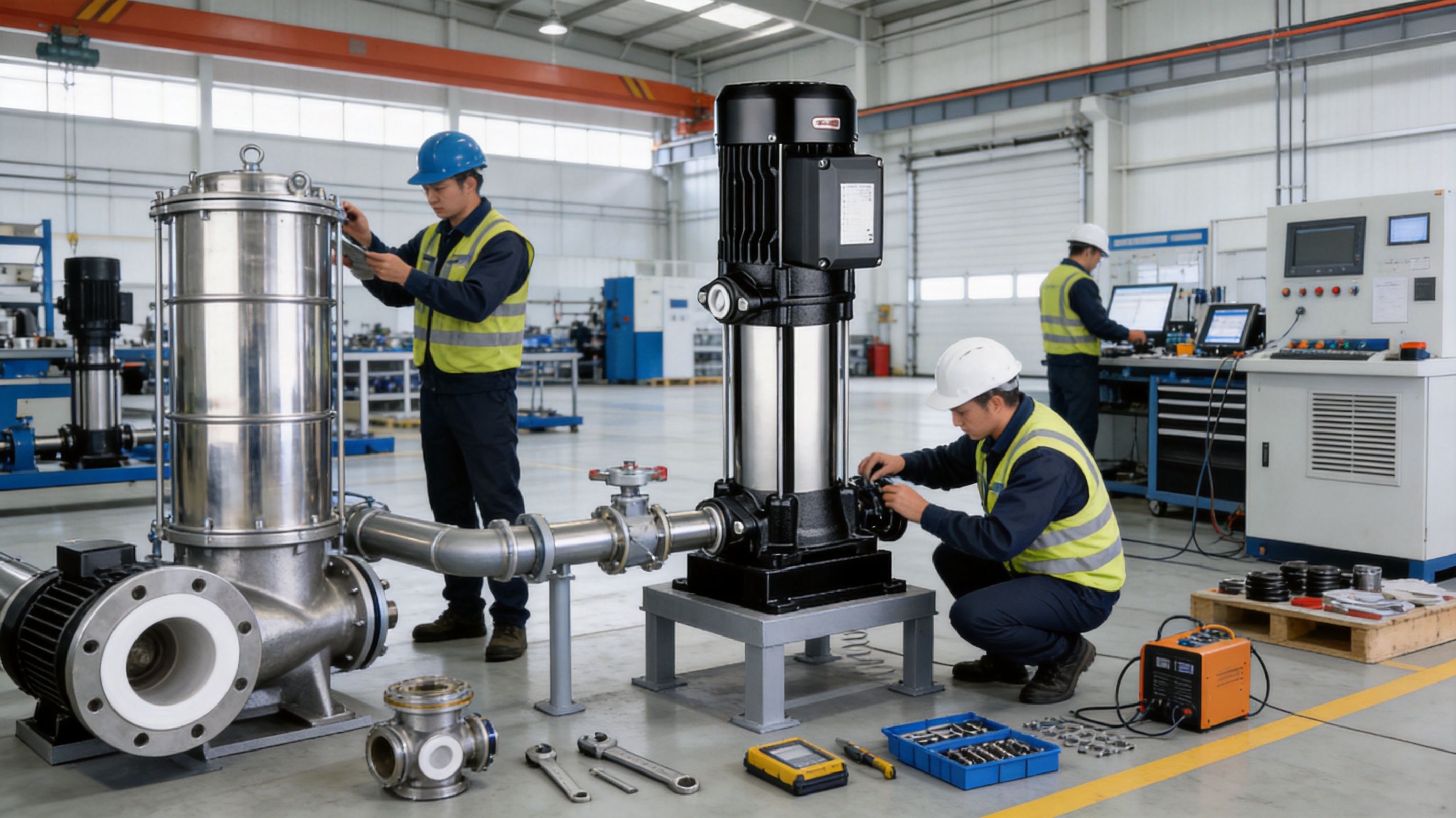
Reliable water pressure is essential in residential, commercial, agricultural, and industrial systems. As buildings become taller, production processes become more demanding, and water distribution networks become more complex, a standard single-stage pump is often unable to provide the required pressure efficiently. A vertical multistage pump offers a practical solution by combining several impeller stages in one compact hydraulic assembly. The EVP Series Easy Installation Good Heat Dissipation Stainless Steel Vertical Multistage Pump is designed for these demanding applications, offering a balanced combination of pressure performance, compact construction, installation convenience, thermal management, and flexible operating options.
The pump is engineered for water supply and pressure boosting applications where stable flow, dependable head, and space-efficient installation are important. It is available in several hydraulic ranges, including EVP2, EVP4, EVP6, EVP6H, and EVP10H models. Depending on the selected model, the pump can provide different combinations of flow and head, with motor power options extending from 0.37 kW to 7.5 kW in the listed series.
Its vertical configuration minimizes floor space while allowing multiple stages to be arranged along a common shaft. Each additional stage contributes to the total pressure developed by the pump. This design makes the series suitable for high-rise building water supply, industrial cleaning systems, firefighting systems, irrigation, pressure tank applications, and many other duties requiring consistent pressure.
Unlike many basic pressure pumps that are selected only by motor power, a multistage pump must be evaluated according to the relationship between flow rate, pressure head, fluid temperature, installation conditions, materials, and duty cycle. The EVP Series provides a broad selection of models so that users can choose a closer match to the required operating point instead of relying on a single oversized pump.
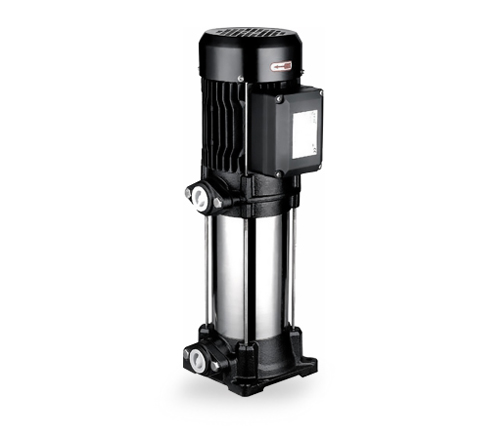
EVP Series Easy Installation Good Heat Dissipation Stainless Steel Vertical Multistage Pump
A centrifugal pump converts mechanical energy from the motor into hydraulic energy. In a multistage design, the liquid passes through several impeller and diffuser assemblies arranged in series. The flow rate is broadly determined by the hydraulic passage and impeller geometry, while the total head increases as the liquid moves through additional stages.
This arrangement is particularly useful when a system needs higher pressure without requiring an extremely large single impeller. The vertical structure keeps the hydraulic stages aligned with the motor shaft and reduces the horizontal footprint. For plant rooms, utility rooms, apartment buildings, equipment platforms, and compact booster assemblies, this space-saving configuration can be a significant advantage.
The EVP Series includes models with different nominal capacities. The EVP2 family is intended for lower flow applications, with listed working points reaching approximately 4 m³/h. The EVP4 family extends the flow range to approximately 6 m³/h. The EVP6 and EVP6H families cover higher flow conditions, while the EVP10H range reaches approximately 16 m³/h at the listed flow reference points.
Model selection should always be based on the actual system curve rather than the maximum value printed in a catalog. Static elevation, pipe friction, fittings, water demand, tank pressure, required outlet pressure, and any control valves must be considered. The technical tables provide useful reference points for preliminary selection, but final selection should be verified against the complete installation requirements.
In a single-stage pump, the impeller must generate the entire required pressure increase. In a multistage pump, the pressure increase is distributed across several stages. This makes it possible to achieve a relatively high head with a compact hydraulic assembly and moderate impeller dimensions.
For example, the listed EVP2 models provide shutoff heads from approximately 24 m to 153 m, depending on the stage configuration and motor selection. The EVP4 models provide listed heads from approximately 24 m to 145 m. The EVP6H models extend the listed head range from approximately 39 m to 130 m. The EVP10H models provide listed heads from approximately 56 m to 150 m.
These values represent catalog performance points and should not be interpreted as universal operating limits. Actual performance depends on the selected model, operating flow, liquid properties, voltage, installation conditions, and system resistance. Nevertheless, the range demonstrates how the series can serve both moderate pressure-boosting duties and demanding high-head applications.
Horizontal multistage pumps may require a larger base area because the motor and hydraulic stages are arranged along a horizontal axis. A vertical pump generally uses more height but less floor space. This can simplify installation in narrow equipment rooms and reduce interference with nearby pipework.
The EVP Series uses a vertical arrangement with the pump barrel, diffusers, impellers, shaft, motor support, and motor assembly positioned along a common vertical axis. The dimensions vary by model. Smaller EVP2 units have listed overall dimensions beginning around 382 mm, while larger EVP10H models extend to approximately 746 mm depending on the selected number of stages and motor size.
The compact footprint can also benefit packaged booster systems. When several pumps, pressure tanks, control panels, or filtration components must be installed together, reducing the space occupied by each pump creates more layout flexibility.
The most important advantage of the EVP Series is its ability to provide high pressure through a multistage hydraulic arrangement. This makes it suitable for applications in which water must be lifted through multiple floors, pushed through long pipe runs, delivered to elevated storage tanks, or supplied to equipment that requires a stable inlet pressure.
High-rise buildings commonly experience uneven pressure between lower and upper floors. A properly selected multistage pump can help compensate for this pressure difference and improve the reliability of upper-level water delivery. In industrial facilities, the same principle applies to cleaning stations, process-water networks, cooling circuits, and high-pressure washing equipment.
Compared with a single-stage pump designed for general transfer, a multistage model can provide greater head within a relatively compact body. Compared with an oversized single-stage unit, the staged arrangement may offer a more appropriate balance between hydraulic performance, motor size, and installation space.
The product information identifies the pump barrel as AISI 304 stainless steel. This material offers useful resistance to corrosion in ordinary clean-water service and provides a durable outer hydraulic structure. Stainless steel is also visually clean and easier to maintain than many unprotected carbon-steel surfaces.
The use of stainless steel in the pump barrel is especially valuable in water supply environments where the equipment may be exposed to moisture, condensation, or occasional splashing. It also supports a professional appearance in commercial, residential, and institutional installations.
Material suitability still depends on the liquid being pumped. AISI 304 stainless steel is not automatically suitable for every chemical, saline liquid, abrasive mixture, or high-temperature fluid. Users should provide complete information about the liquid composition before ordering a pump for non-standard service.
Motor temperature has a direct effect on reliability, insulation life, bearing service life, and operating stability. The EVP Series is promoted for good heat dissipation, supported by an air-cooled motor arrangement, a fan, a fan cover, and a cast-iron motor cover listed in the component information.
Effective heat dissipation helps the motor release operating heat into the surrounding environment. This is important when the pump runs for long periods, operates under relatively high load, or is installed in a plant room where several heat-producing devices are located together.
The stated maximum ambient temperature is +40°C. The pump should be installed in a ventilated area with sufficient clearance around the motor fan cover. Blocking the ventilation openings, placing the pump against a hot surface, or operating it in an enclosed space without air circulation can reduce the benefit of the cooling design.
The EVP Series is designed to simplify installation. Its vertical construction gives the inlet and outlet a clearly defined position, and the listed connection sizes include G1, G1 1/4, and G1 1/2 configurations depending on the model family. The cast-iron inlet and outlet components receive special anti-rust treatment according to the product information.
An installation-friendly pump reduces the risk of incorrect pipe alignment and unnecessary modification work. The user-friendly structure is also beneficial during maintenance because technicians can identify the motor, pump barrel, mechanical seal, support, and connection points more easily.
Proper installation remains essential. The pump should be mounted on a stable foundation, supported by correctly sized pipework, and protected from excessive vibration. Pipe loads should not be transferred to the pump casing. Isolation valves and suitable check valves should be arranged according to the system design, and the pump must be filled and vented before starting.
The product information specifies a pure copper motor. Copper windings offer high electrical conductivity and are widely used in quality electric motors because they can transfer current efficiently while supporting effective thermal management.
A copper-wound motor can contribute to stable performance when the motor is correctly matched to the hydraulic load. However, motor efficiency is also influenced by the stator design, rotor construction, bearing condition, voltage quality, frequency, cooling, and operating point. The complete motor should therefore be evaluated as an integrated assembly rather than by winding material alone.
The model range is one of the product’s practical strengths. The series includes low-power single-phase options for selected models and three-phase versions for a wider range of applications. Listed single-phase voltage is 220–240 V at 50 Hz, while listed three-phase voltage is 380–415 V at 50 Hz.
Single-phase versions can be convenient for smaller buildings, workshops, farms, and locations where three-phase power is unavailable. Three-phase versions are appropriate for many commercial and industrial facilities where higher power, continuous duty, and more stable electrical infrastructure are available.
The listed power range begins at 0.37 kW and reaches 7.5 kW. Horsepower equivalents range from approximately 0.5 HP to 10 HP. This broad selection allows distributors, contractors, and system integrators to serve multiple application categories with one product family.
| Series | Typical Listed Flow Reference | Listed Head Range | Listed Motor Power Range | Typical Connection Information |
|---|---|---|---|---|
| EVP2 | Up to approximately 4 m³/h | Approximately 24–153 m | 0.37–2.2 kW | G1 inlet and outlet |
| EVP4 | Up to approximately 6 m³/h | Approximately 24–145 m | 0.55–3.0 kW | G1 inlet and outlet |
| EVP6 | Up to approximately 10 m³/h | Approximately 30–78 m | 1.1–3.0 kW | G1 1/4 inlet and outlet |
| EVP6H | Up to approximately 10.5 m³/h | Approximately 39–130 m | 1.1–4.0 kW | G1 1/4 inlet and G1 1/2 outlet |
| EVP10H | Up to approximately 16 m³/h | Approximately 56–150 m | 3.0–7.5 kW | G1 1/4 inlet and G1 1/2 outlet |
The table summarizes the supplied catalog data for preliminary comparison. Because each series contains several stage configurations, the exact head at a specific flow must be taken from the corresponding model curve or technical table.
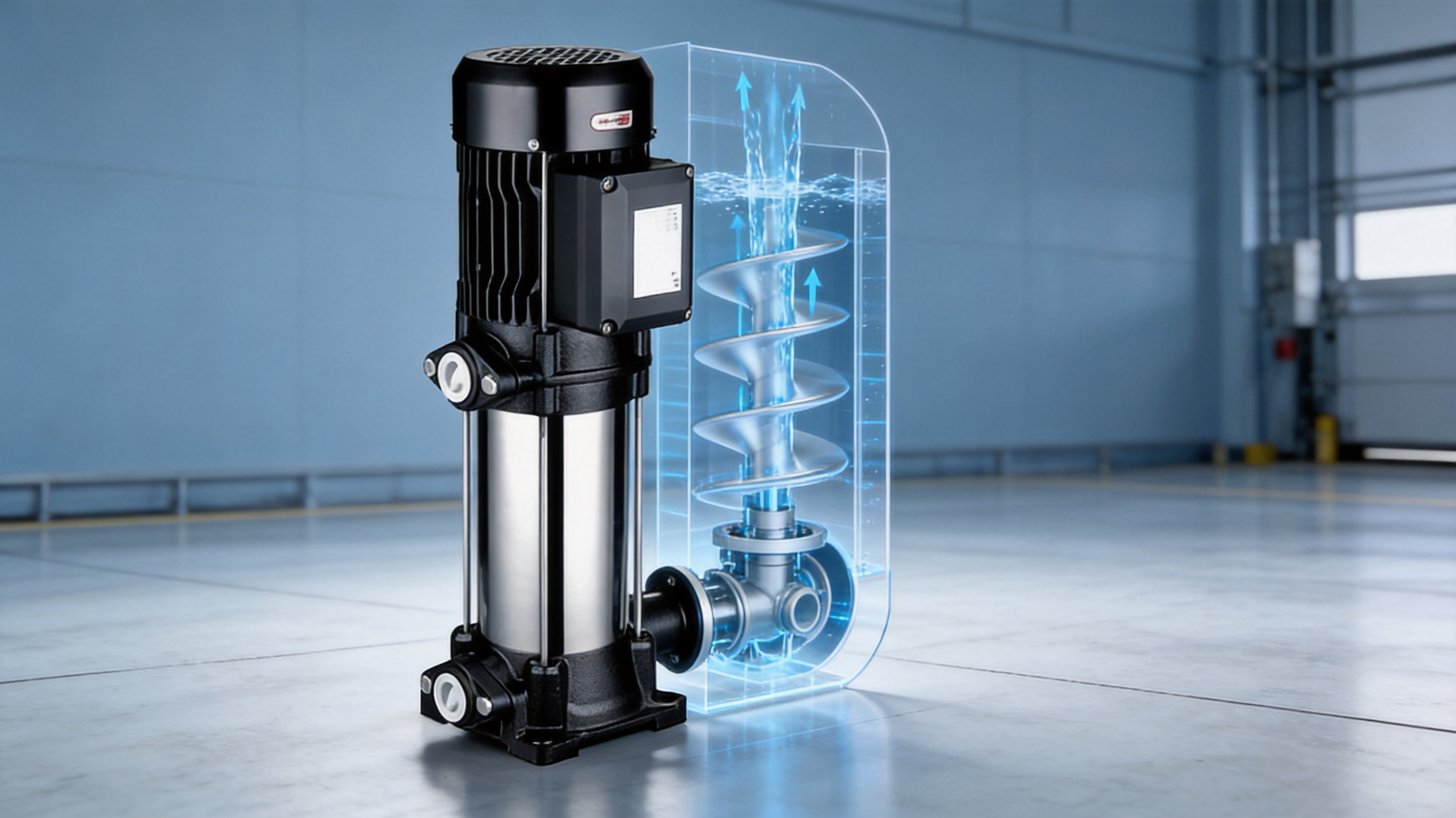
The EVP2 family is designed for compact pressure-boosting duties. Listed models range from EVP2-2 through EVP2-13, with power selections from 0.37 kW to 2.2 kW. At zero listed flow, the catalog heads range from 24 m for the two-stage model to 153 m for the thirteen-stage model.
At approximately 1 m³/h, the catalog shows head values ranging from 23 m to 142 m across the listed models. At approximately 2 m³/h, the range is about 18 m to 115 m. These figures make the family suitable for a wide variety of domestic, light commercial, and small industrial pressure applications.
The lower-power models may be used in small pressure systems, compact water supply units, and selected irrigation installations. Higher-stage EVP2 models can be considered when a relatively low flow must be delivered at a substantially higher pressure.
The EVP4 family includes models from EVP4-2 to EVP4-12, with listed motor power from 0.55 kW to 3.0 kW. The catalog flow reference extends to approximately 6 m³/h. The series provides a useful middle ground between the lower-capacity EVP2 units and the larger EVP6 models.
The EVP4 range is appropriate for building pressure boosting, cleaning systems, small firefighting support systems, irrigation networks, and water distribution installations requiring moderate flow and higher pressure. Because the number of stages varies, users can select a configuration that more closely matches the required head.
The EVP6 family covers a listed flow reference up to approximately 10 m³/h. The available models include EVP6-3 through EVP6-8, with motor power from 1.1 kW to 3.0 kW. The listed head range at zero flow is approximately 30 m to 78 m.
The EVP6H family has a higher-head configuration. Its listed models range from EVP6H-3 through EVP6H-10, with motor power from 1.1 kW to 4.0 kW and listed head values at zero flow from approximately 39 m to 130 m. This family may be considered when the system requires a stronger pressure increase while maintaining a moderate-to-high flow range.
The different connection sizes should be considered during system design. EVP6 models are listed with G1 1/4 connections on both sides, while EVP6H models are listed with a G1 1/4 inlet and G1 1/2 outlet. Adaptors should be used only when they do not create excessive restriction or poor hydraulic conditions.
The EVP10H family is the largest listed range in the supplied data. Models EVP10H-3 through EVP10H-8 are available with motor power from 3.0 kW to 7.5 kW. The catalog uses flow reference points from 0 to approximately 16 m³/h and lists head values from approximately 56 m to 150 m at zero flow.
This range is suitable for larger commercial pressure-boosting systems, industrial cleaning equipment, agricultural irrigation, municipal support installations, and other duties with higher flow requirements. Because the motor power is greater, the electrical supply, protective devices, cable sizing, foundation, and ventilation must be designed accordingly.
In residential towers, hotels, schools, hospitals, and office buildings, water pressure may decline as elevation increases. A vertical multistage pump can be installed as part of a booster system to deliver water to upper floors and remote outlets.
The compact vertical form is useful in building service rooms where available floor area is limited. The broad range of motor sizes also allows the equipment designer to select a small unit for a low-rise building or a larger model for a more demanding distribution network.
For variable-demand buildings, the pump may be combined with pressure tanks, control panels, pressure switches, flow sensors, or variable-frequency drives. The supplied pump information does not specify a built-in intelligent controller, so any automation function should be confirmed as part of the complete package rather than assumed to be integrated into the standard pump.
Industrial facilities often require water at a pressure higher than the municipal supply can provide. The EVP Series can support water system pressure boosting, equipment cleaning, high-pressure washing, and selected production utilities.
In a cleaning system, the pump must be selected according to the required nozzle pressure, flow, operating duration, and water temperature. The stated liquid temperature range is +5°C to +60°C. Applications involving hot water above this range require a specific technical review of the pump materials, seals, motor, and operating conditions.
The product information lists firefighting systems among the possible applications. In such systems, pump selection must comply with the applicable local fire code, project specification, approval requirements, standby arrangements, controller requirements, and testing procedures.
A standard pressure-boosting pump should not automatically be treated as a complete certified fire pump package. The pump may serve a supporting role where the system designer approves it, but the entire firefighting installation must meet the requirements of the relevant authority and insurance standard.
The EVP Series can be used for selected sprinkling irrigation and trickle irrigation applications. Multistage pressure generation is useful when water must travel through long laterals, elevation changes, filters, injectors, or pressure-regulating equipment.
Irrigation systems should be designed around the required application pressure and flow uniformity. The pump should be protected from sand, stones, and large debris. Filtration may be necessary upstream, particularly for drip systems where small emitters can become blocked.
A pressure tank can reduce the number of pump starts and help maintain a more stable pressure in systems with intermittent demand. The EVP Series may be paired with a pressure tank when the pump and control arrangement are correctly matched.
The tank pre-charge, pressure switch settings, pump shutoff head, non-return valve, and system pressure rating must be coordinated. Incorrect settings may cause rapid cycling, excessive pressure, or operation outside the most suitable part of the pump curve.
The supplied materials information identifies a number of key components. The fan cover is listed as 08F, the fan as polypropylene, the motor cover and flange as cast iron, the gasket as rubber, the support as aluminum, and the mechanical seal as carbon and ceramic.
The pump barrel is identified as AISI 304 stainless steel. The component table identifies the impeller, diffuser, and last-stage diffuser as plastic. Elsewhere, the product description refers to a stainless steel impeller. Because these descriptions are not fully consistent, the exact material configuration should be confirmed for the selected model and purchase order.
| Component | Listed Material or Description | Functional Role |
|---|---|---|
| Fan cover | 08F | Protects the cooling fan and helps direct airflow |
| Fan | Polypropylene | Supports motor cooling |
| Motor cover | Cast iron | Provides structural protection for the motor assembly |
| Gasket | Rubber | Helps seal mating surfaces |
| Flange | Cast iron | Provides structural connection and pipe interface support |
| Support | Aluminum | Connects and supports key pump and motor components |
| Mechanical seal | Carbon and ceramic | Limits leakage around the rotating shaft |
| Pump barrel | AISI 304 stainless steel | Forms the principal hydraulic casing |
| Impeller | Listed as plastic in the materials table; confirmation recommended | Transfers energy to the liquid |
| Diffuser | Plastic | Guides flow and converts velocity into pressure |
| Capacitor holding box | ABS | Houses the capacitor in applicable motor configurations |
The combination of metallic and engineered polymer components reflects a common strategy in modern pump design. Metallic parts provide strength, structural stiffness, and durability, while carefully selected polymers can reduce weight, support corrosion resistance, and allow efficient hydraulic passage design.
The manufacturer is described as an integrated enterprise with capabilities in independent research and development, mass production, and global export. This combination is important because a reliable pump supplier must do more than assemble products. It must coordinate product design, component sourcing, manufacturing, inspection, packaging, documentation, and after-sales support.
Independent research and development allows a manufacturer to refine hydraulic geometry, motor matching, material selection, sealing arrangements, cooling structures, and product configurations according to market requirements. It also supports the development of related product lines, including deep well pumps, submersible pumps, domestic booster pumps, circulation pumps, solar water pumps, and intelligent booster pumps.
For a vertical multistage pump, research and development must address the interaction of several components. The impeller and diffuser geometry must work together across multiple stages. Shaft alignment must remain stable along the vertical assembly. Seals must tolerate the pressure generated by the selected stage configuration. The motor must provide sufficient torque without excessive temperature rise.
Mass production can provide consistency when supported by controlled processes and appropriate inspection. Repeated production of the EVP Series enables the manufacturer to standardize component dimensions, assembly methods, motor matching, packaging procedures, and spare-part identification.
Production scale may also improve purchasing efficiency for raw materials and components. However, scale alone does not guarantee quality. The important factor is whether the manufacturing system applies consistent process controls, traceability, testing, and corrective action.
The product information emphasizes strict quality inspection. For a pump, useful inspection stages may include incoming-material verification, dimensional inspection, winding and electrical checks, shaft and rotor balancing, seal inspection, assembly verification, leakage checks, and hydraulic performance testing.
Performance testing is particularly important for multistage pumps because a small assembly error can affect the performance of several stages. Correct stage order, diffuser positioning, impeller clearance, shaft alignment, and seal installation all contribute to the final hydraulic result.
Quality inspection should also cover packaging. A vertical pump can be vulnerable to impact during transportation if the motor, connection ports, or exposed surfaces are not adequately protected. Proper packaging helps ensure that the pump arrives in an installable condition.
The company has established related import and export service organizations to support procurement planning, order tracking, cross-border delivery, and foreign trade services. This is valuable for international buyers who may require coordinated documentation, production updates, packing information, shipping arrangements, and communication across different time zones.
For distributors and project contractors, supplier organization can be as important as product specifications. Clear model identification, accurate commercial documents, consistent packaging, spare-part availability, and responsive technical communication reduce purchasing risk.
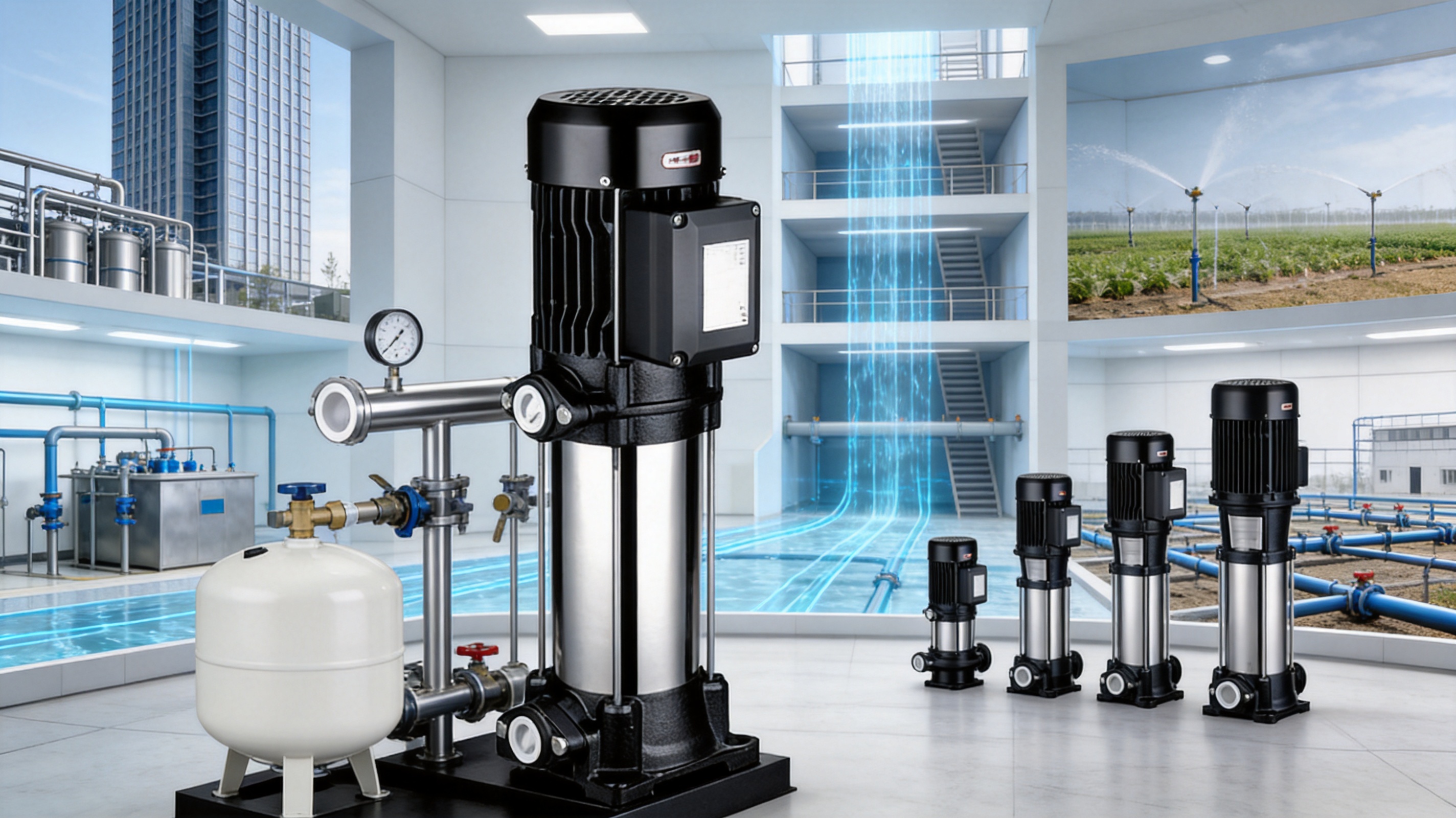
Before installation, confirm the pump model, motor voltage, phase, frequency, connection size, rotation direction, required head, flow rate, liquid temperature, and maximum working pressure. The supplied information lists a maximum pressure of 15 bar, but the actual system must remain within the rating of every connected component, including pipes, valves, fittings, tanks, and instruments.
The foundation must be stable, level, and capable of supporting the pump assembly. Although the vertical design saves floor space, the pump still requires sufficient height for installation, ventilation, access to electrical connections, and future maintenance.
Pipework should be independently supported. The inlet pipe should be as short and direct as practical, with sufficient diameter to limit friction and avoid excessive suction losses. Sudden changes in direction near the inlet can create turbulence and reduce hydraulic stability.
A strainer may be installed where debris is present, but it must be correctly sized and maintained. An undersized or blocked strainer can cause excessive pressure loss and may lead to cavitation or reduced flow.
Isolation valves can assist with servicing, while a check valve may prevent reverse flow after shutdown. The exact arrangement depends on whether the pump is used in a transfer line, a booster set, a pressure tank system, an irrigation network, or another application.
The pump must be filled with liquid before operation. Dry running can damage the mechanical seal and may cause rapid overheating. Air trapped inside the hydraulic assembly can also reduce performance and cause unstable operation. Venting should be carried out in accordance with the installation procedure.
Electrical installation should be completed by qualified personnel. The motor must be connected to a suitable protective device. Three-phase motors require phase verification and rotation checks. Single-phase models may include capacitor components housed in the listed ABS capacitor holding box, but the exact wiring arrangement should be confirmed from the supplied motor documentation.
Routine maintenance begins with observation. Operators should monitor pressure, flow, sound, vibration, motor temperature, current draw, leakage, and starting behavior. A gradual change in any of these conditions may indicate filter blockage, valve restriction, bearing wear, seal deterioration, air entry, incorrect rotation, or operation outside the recommended range.
The cooling area around the motor should remain clean and unobstructed. Dust, fibers, oil mist, or stored materials can restrict airflow. In warm environments, ventilation should be checked more frequently because high ambient temperature reduces the available margin for motor cooling.
Mechanical seals are wear components. A small amount of moisture during initial operation may be related to seal bedding, but continuous leakage should be investigated. Leakage can result from dry running, shaft misalignment, excessive vibration, unsuitable liquid, damaged sealing faces, or installation error.
Bearings should be monitored for noise and vibration. The component list includes ball bearings, but the supplied data does not specify a lubrication interval or replacement schedule. Maintenance should therefore follow the model-specific manual and the actual operating conditions.
Pressure and flow should be compared periodically with the original commissioning data. If pressure falls while motor current changes, the cause may be wear, blockage, incorrect valve position, air in the line, or a change in system demand. If pressure rises abnormally, a closed valve, blocked discharge line, or control malfunction should be checked immediately.
A single-stage pump may be economical and effective for low-head transfer, circulation, and general water movement. However, it may not provide enough pressure for high-rise supply, long pipelines, high-pressure washing, or elevated irrigation zones.
The EVP Series offers multiple stages, allowing higher head within a compact vertical package. This gives it an advantage where pressure is more important than simple transfer capacity. The correct choice still depends on the duty point; a single-stage pump may remain more economical for applications that need only modest pressure.
Horizontal multistage pumps can offer easy access in some layouts, particularly where vertical clearance is limited. The vertical EVP design has the opposite advantage: it minimizes floor area and can fit into narrow plant rooms or compact booster stations.
The best configuration depends on the building layout, suction conditions, service access, pipe direction, foundation arrangement, and available height. For installations with adequate vertical clearance but limited floor space, the EVP format can be especially attractive.
Many basic booster pumps are designed for domestic use and moderate pressure requirements. The EVP Series extends the available selection toward higher heads, larger flow rates, three-phase operation, and industrial pressure-boosting duties.
It also provides a structured family of stage configurations. This can simplify system planning for contractors who need several pressure ranges from one supplier while retaining a common product concept.
Oversizing a pump can produce excessive pressure, unstable control, high energy consumption, frequent throttling, and unnecessary mechanical stress. The EVP model range helps users select a closer match through different stage counts and motor powers.
A correctly selected pump generally operates more smoothly and provides better system control than a unit selected only by maximum pressure. Engineers should always compare the expected duty point with the pump performance data before finalizing the purchase.
The stated liquid temperature range is +5°C to +60°C. This range indicates that the standard configuration is intended for compatible water applications rather than unrestricted hot-fluid service. The seal, gasket, impeller, diffuser, and motor cooling conditions must all be reviewed when the liquid approaches the upper temperature limit.
The maximum ambient temperature is listed as +40°C. At higher ambient temperatures, the motor may require derating or additional ventilation. The stated altitude is up to 1,000 meters. Installations at greater altitude should be reviewed because air density decreases with elevation and motor cooling performance can be affected.
The stated maximum pressure is 15 bar. This is a critical design value. System pressure includes static pressure, pump pressure, surge pressure, and any pressure created by closed valves or thermal expansion. A suitable pressure relief strategy may be required for systems with rapid valve closure or variable operating conditions.
The pump is intended primarily for clean or suitably filtered water. Abrasive solids, fibrous materials, corrosive chemicals, and high concentrations of suspended particles can damage the hydraulic components and mechanical seal. If the application involves anything other than clean water, the user should provide a complete fluid analysis before selecting materials.
The pump is designed to increase water pressure and deliver water through systems that require a higher head than a basic transfer pump can provide. Typical applications include building water supply, industrial pressure boosting, cleaning systems, irrigation, pressure tanks, and selected firefighting support systems.
A vertical arrangement reduces the floor space required by the pump. It is useful in compact equipment rooms, high-rise building service areas, packaged booster systems, and industrial installations where horizontal floor area is limited.
The supplied catalog data covers several families. The EVP2 range reaches approximately 4 m³/h, EVP4 approximately 6 m³/h, EVP6 and EVP6H approximately 10 to 10.5 m³/h, and EVP10H approximately 16 m³/h at the listed reference points. Listed heads range from approximately 24 m to 153 m depending on the series and stage configuration.
Selected smaller models are listed with single-phase versions for 220–240 V at 50 Hz. Three-phase versions are listed for 380–415 V at 50 Hz. Availability depends on the model and motor power, so the required electrical configuration should be confirmed before ordering.
The pump barrel is listed as AISI 304 stainless steel. The materials table also identifies cast iron, aluminum, rubber, carbon, ceramic, polypropylene, ABS, and plastic components. The product description contains different references concerning the impeller material, so the exact impeller specification should be confirmed for the selected model.
The stated liquid temperature range is +5°C to +60°C. Applications outside this range require technical confirmation because seals, gaskets, hydraulic components, and motor conditions may need a different configuration.
Yes, the listed applications include sprinkling irrigation and trickle irrigation. The system should be designed around the required flow, pressure, filtration, elevation, and irrigation equipment. Sand and debris should be controlled to protect the hydraulic assembly.
The product information describes the EVP Series as a vertical multistage pump but does not confirm that a smart controller is included in the standard configuration. Pressure control, variable-speed operation, or intelligent booster functions should be specified separately if required.
Determine the required flow rate and total dynamic head first. Then consider the liquid temperature, voltage, phase, connection size, ambient temperature, altitude, operating schedule, and system pressure. The selected operating point should fall within the suitable portion of the pump performance data rather than only at the maximum head or maximum flow value.
Common causes include incorrect rotation, air in the system, blocked strainers, undersized pipes, closed valves, excessive suction losses, incorrect voltage, insufficient water supply, seal damage, or selection of a pump that does not match the system duty. A systematic inspection should be completed before replacing the pump.
Heat dissipation helps control motor temperature during operation. Better thermal management can support stable operation and help protect insulation, bearings, and other motor components. The pump still requires adequate ventilation and should not be installed where the fan cover is obstructed.
The manufacturer is described as having independent research and development, mass-production capability, strict quality inspection, and international procurement and export support. These capabilities help coordinate product design, production, testing, order management, documentation, and delivery.
Before placing an order, the buyer should provide the required flow rate, total head, water temperature, water quality, power supply, installation location, connection standard, operating hours, and control requirements.
The supplier should confirm the exact model, number of stages, motor power, phase, voltage, frequency, inlet and outlet size, pump materials, seal materials, dimensions, maximum pressure, and expected delivery configuration.
For project applications, it is also advisable to request a performance curve, dimensional drawing, wiring information, packing details, spare-part recommendations, inspection documentation, and installation instructions. If the product will be used in a regulated application, the buyer should confirm whether specific approvals or test documents are required.
For international shipments, the purchase process should identify the commercial invoice information, packing list, country-of-origin requirements, shipping marks, warranty terms, replacement-part process, and responsibilities for transportation damage.
The EVP Series Easy Installation Good Heat Dissipation Stainless Steel Vertical Multistage Pump is a versatile pressure-boosting solution for applications that require more head, compact installation, and dependable water delivery. Its vertical multistage architecture provides a practical alternative to basic single-stage pumps, while its broad model range helps users select different combinations of flow, head, power, and electrical configuration.
Key advantages include a compact vertical footprint, stainless steel pump barrel, multiple stage options, listed single-phase and three-phase configurations, copper motor construction, mechanical sealing, treated inlet and outlet components, and a design intended to support effective motor heat dissipation. The pump can serve building water supply, industrial pressure boosting, cleaning systems, irrigation, pressure tank installations, and selected support duties in firefighting systems.
The manufacturer’s stated strengths in independent research and development, mass production, quality inspection, and international export support further enhance the product’s value for distributors, contractors, and industrial buyers. These capabilities provide a foundation for consistent manufacturing and coordinated global supply.
Correct selection remains essential. The pump must be matched to the actual flow, head, liquid, temperature, electrical supply, ambient conditions, and system pressure. Material inconsistencies in the supplied descriptions, particularly regarding the impeller, should be clarified before purchase. When properly selected, installed, operated, and maintained, the EVP Series can provide an efficient and space-conscious solution for reliable pressure boosting across a wide range of water systems.
1. Manufacturer-supplied EVP Series vertical multistage pump product information and technical parameter tables.
2. Manufacturer-supplied pump dimensional data, component list, and material table.
3. General engineering principles for centrifugal pump selection, installation, operation, and maintenance.
4. General guidance for water-supply pressure boosting, irrigation system design, and industrial pump applications.
5. General motor engineering principles concerning electrical configuration, thermal management, ventilation, and protective devices.
edwina@edwin-pump.com
+86-13586290903 (WhatsApp)
Xuri Gongliang Cutting Tool Entrepreneurship Park, Wenqiao Town, Wenling City, Taizhou City, Zhejiang Province, China

High Performance Smart Pump Factory


 English