edwina@edwin-pump.com

View All Products
en
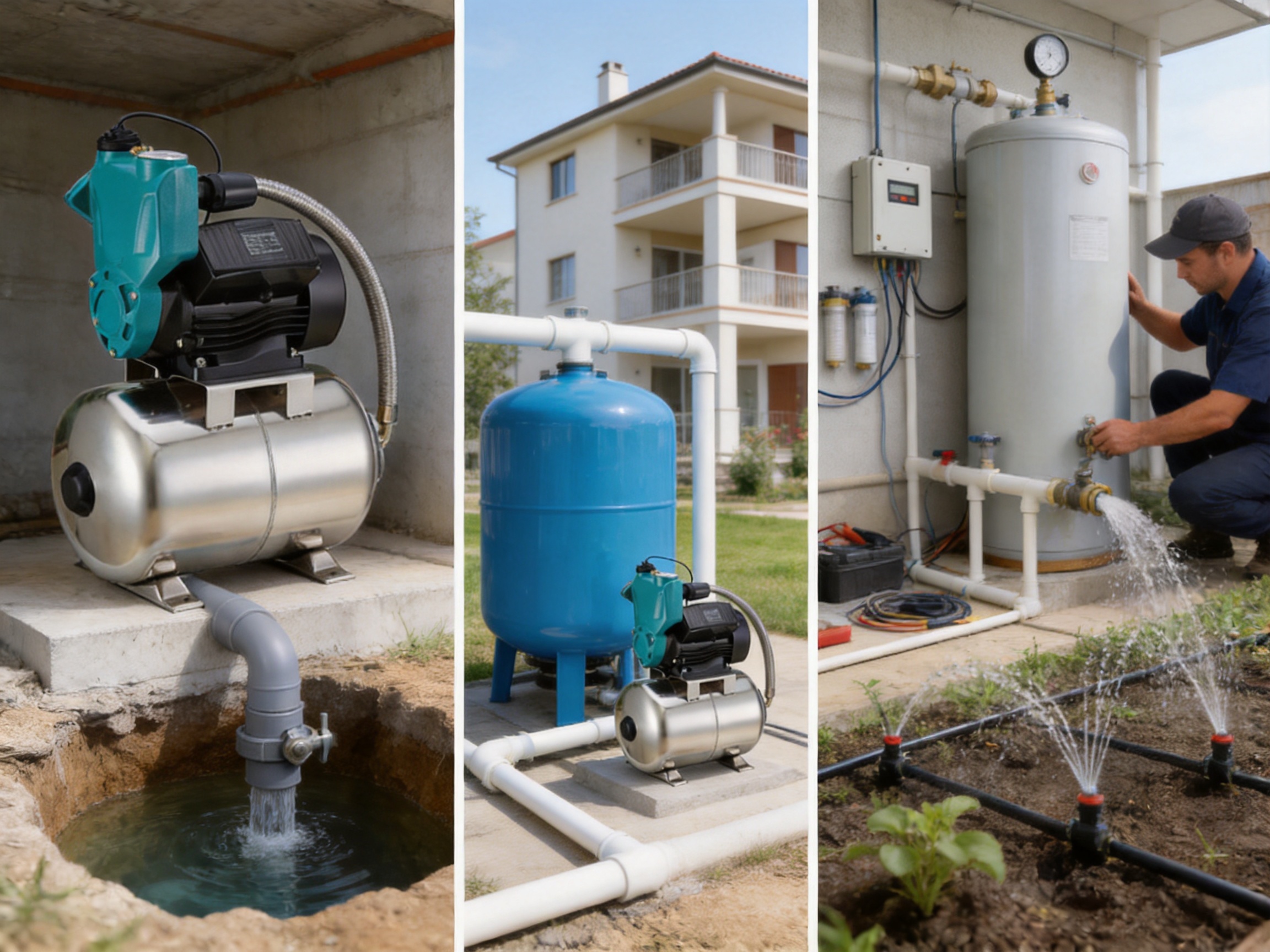
Reliable water pressure is essential in homes, farms, workshops, commercial buildings, and many light industrial facilities. However, water sources are not always positioned conveniently, and supply pressure is often inconsistent. A pump may need to draw water from a storage tank, shallow well, or underground source while also responding to changing demand from taps, irrigation outlets, appliances, or process equipment. In these conditions, a standard transfer pump may not provide sufficient control, convenience, or protection.
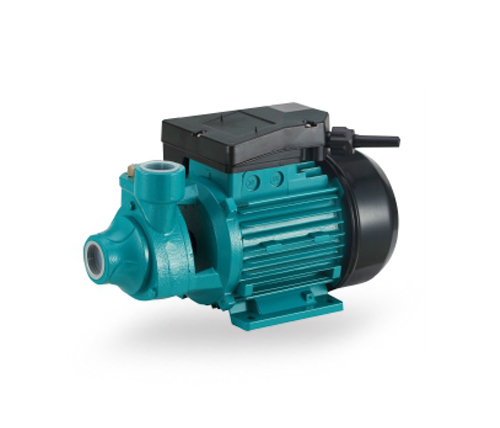
The EPS-T Series Smart Dual Control Self-priming Pump with Large Pressure Tank is designed to address these requirements in a single compact system. It combines self-priming capability, automatic pressure management, a built-in pressure tank, and a range of motor capacities from 0.25 kW to 2.20 kW. Depending on the selected model, the pump can provide a maximum flow of 30 to 115 liters per minute, a maximum head of 30 to 70 meters, and a maximum suction height of 9 meters.
This configuration gives the pump an important advantage over many conventional domestic water pumps. Instead of operating only as a manually controlled device, it can respond to water demand through its dual-control arrangement. The integrated tank helps stabilize pressure, reduce unnecessary motor starts, and improve water availability during short periods of demand. The self-priming hydraulic design also makes the unit suitable for applications in which air may be present in the suction pipe or the water level is below the pump.
Manufactured by an experienced pump producer with capabilities in research and development, mass production, and global export, the EPS-T Series is intended to provide a practical balance between performance, durability, installation convenience, and cost efficiency. Its material selection, motor construction, protective features, and broad application range make it a suitable solution for domestic and civil water supply systems, garden irrigation, tank transfer, well-water lifting, and various supporting equipment installations.
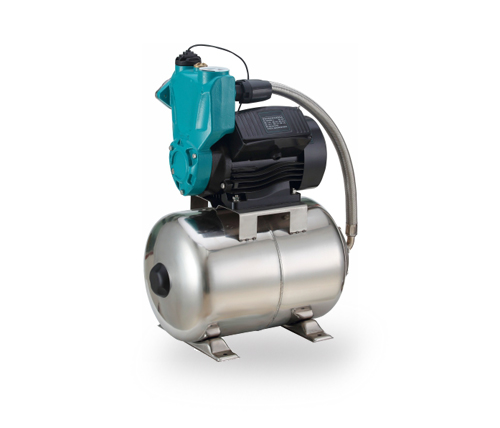
EPS-T Series Smart Dual Control Self-priming Pump with Large Tank
The EPS-T Series is a self-priming peripheral pump equipped with smart dual control and a large pressure tank. Each part of this description identifies an important operating advantage.
A self-priming pump is designed to remove air from the suction line and establish water flow without requiring the operator to manually refill the entire suction pipe every time the system starts. This is particularly useful when the water source is located below the pump or when the suction pipeline cannot remain completely flooded.
In practical installations, air can enter a suction pipe through small leaks, loose connections, imperfect foot valves, or changing water levels. A conventional non-self-priming pump may lose its prime and fail to deliver water until it is manually refilled. The EPS-T Series is designed to tolerate the presence of air or water in the pumped medium, making it more convenient for applications involving tanks, shallow wells, and intermittent use.
The maximum suction height is rated at 9 meters under suitable installation conditions. Actual performance depends on atmospheric pressure, water temperature, pipe diameter, pipe length, fittings, foot valve condition, and the altitude of the installation site. Nevertheless, the 9-meter rating gives the product useful capability for many residential and civil water-lifting situations.
The peripheral impeller is designed to generate relatively high pressure in relation to the compact size of the pump. This makes the EPS-T Series suitable for applications requiring a stable pressure supply rather than only high-volume water transfer. Typical uses include supplying elevated tanks, feeding household fixtures, supporting garden irrigation, and pressurizing small distribution systems.
Compared with a basic transfer pump, a peripheral pump can provide a stronger pressure response for compact domestic installations. Compared with larger multistage equipment, it can offer a simpler and more economical solution where the required flow is moderate and the system does not need the higher complexity of multiple impeller stages.
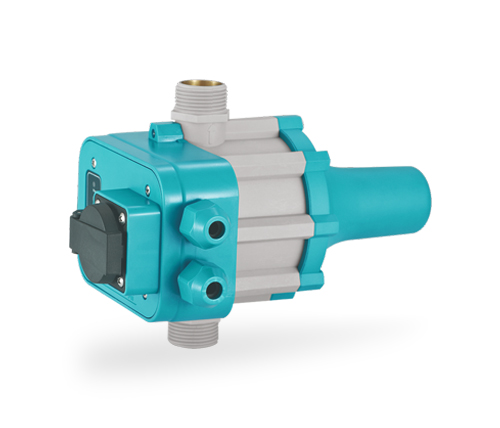
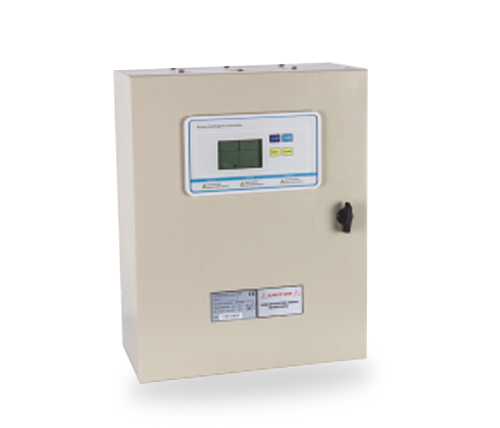
The dual-control system is intended to improve automatic operation. A pressure sensor detects changes in system conditions, while the pressure tank provides a stored volume of pressurized water. Depending on the water demand, the pump can operate in response to pressure reduction and system requirements rather than running continuously whenever a small amount of water is used.
This operating principle can reduce frequent direct cycling of the motor. For example, when a user opens a tap briefly, the pressure tank may supply part of the demand before the motor needs to start. When the system pressure falls below the control setting, the pump starts and restores pressure. When demand stops and the pressure reaches the required level, the pump stops automatically.
Automatic control is particularly valuable for households, irrigation systems, and small commercial installations because it reduces the need for manual switching. It also helps make the pump easier to integrate into systems that have multiple outlets or changing demand patterns.
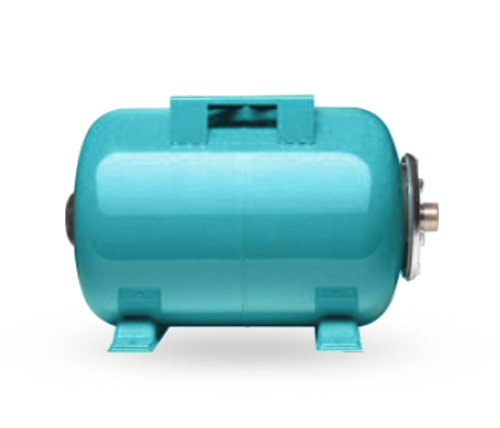
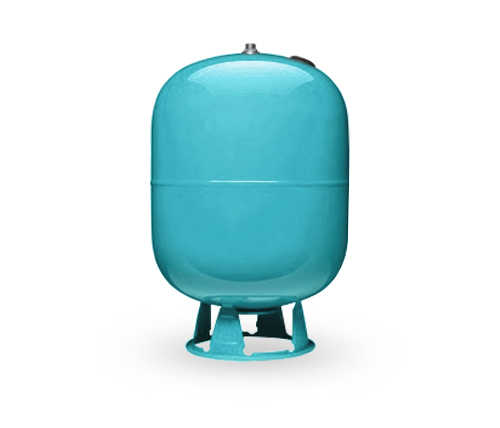
The large tank is one of the defining features of the EPS-T Series. A pressure tank stores a reserve of water under pressure and helps reduce the number of pump starts. Frequent starting and stopping can increase electrical and mechanical stress, particularly in applications where users repeatedly open and close taps or where small leaks cause pressure fluctuations.
By adding stored capacity to the system, the pressure tank can improve pressure stability and provide a smoother user experience. It can also help reduce short cycling, which may extend the service life of the motor, capacitor, control components, and mechanical systems when the pump is correctly installed and maintained.
The tank also makes the product more convenient than a pump-only installation. A separate tank, external pressure switch, and additional pipework are not necessarily required for a basic automatic water supply arrangement. This can simplify installation, reduce the number of components in the equipment room, and save space.
The EPS-T Series is offered in eight power levels. The smallest model is rated at 0.25 kW, while the largest is rated at 2.20 kW. This range allows users to select a pump according to the required flow, vertical lift, piping distance, and number of water outlets.
| Model | Power | Rated Horsepower | Inlet/Outlet | Maximum Flow | Maximum Head | Maximum Suction |
| EPS250-T | 0.25 kW | 0.34 HP | 1 inch × 1 inch | 30 L/min | 30 m | 9 m |
| EPS370-T | 0.37 kW | 0.50 HP | 1 inch × 1 inch | 40 L/min | 35 m | 9 m |
| EPS550-T | 0.55 kW | 0.75 HP | 1 inch × 1 inch | 50 L/min | 40 m | 9 m |
| EPS750-T | 0.75 kW | Listed as 0.10 HP in the supplied specification | 1 inch × 1 inch | 55 L/min | 45 m | 9 m |
| EPS900-T | 0.90 kW | 1.20 HP | 1 inch × 1 inch | 55 L/min | 60 m | 9 m |
| EPS1100-T | 1.10 kW | 1.50 HP | 1.5 inch × 1.5 inch | 100 L/min | 60 m | 9 m |
| EPS1500-T | 1.50 kW | 2.00 HP | 1.5 inch × 1.5 inch | 110 L/min | 65 m | 9 m |
| EPS2200-T | 2.20 kW | 3.00 HP | 1.5 inch × 1.5 inch | 115 L/min | 70 m | 9 m |
The supplied technical information contains an apparent inconsistency in the horsepower entry for the EPS750-T model. A 0.75 kW motor is commonly associated with approximately 1.0 HP, while the source specification displays 0.10 HP. Buyers should confirm the final nameplate and technical datasheet before ordering.
Model selection should begin with the required duty point rather than motor power alone. The duty point is determined by the desired flow and the total dynamic head. Total dynamic head includes the vertical elevation between the water source and delivery point, the required outlet pressure, and friction losses caused by pipes, elbows, valves, filters, and other fittings.
A small home with one or two outlets may be adequately served by the EPS250-T, EPS370-T, or EPS550-T, provided the required head and flow remain within the pump’s operating range. A larger residence, garden irrigation system, or small workshop may benefit from the EPS750-T or EPS900-T. The EPS1100-T, EPS1500-T, and EPS2200-T models are better suited to higher flow requirements, longer distribution lines, taller buildings, and applications involving several outlets.
Oversizing a pump is not always beneficial. A pump that is too large may consume more energy, create excessive pressure, cause unnecessary cycling, or require larger pipes and valves. Undersizing can produce weak pressure, inadequate flow, and prolonged operation. A correct selection balances flow, head, suction conditions, motor power, and anticipated future demand.
The EPS-T Series competes with several categories of water equipment, including manually controlled self-priming pumps, pump-only pressure boosters, separate pump-and-tank systems, and certain low-cost domestic pumps. Its main advantage is that several functions are integrated into one coordinated product.
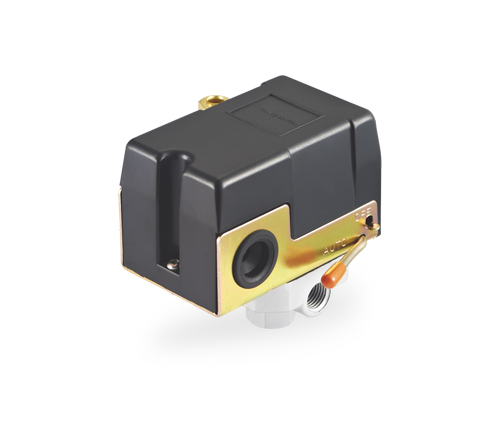
A conventional pump may require a separate pressure switch, external controller, and independent pressure tank. These components can work effectively, but they require additional design, wiring, adjustment, and maintenance. The EPS-T Series combines the pressure sensor and tank with the pump assembly, creating a more compact solution for standard applications.
Integrated equipment can also reduce the risk of compatibility problems between components. When a pump, sensor, and tank are selected as a package, the system is easier to configure than a collection of components from different manufacturers. This is especially valuable for installers who need a straightforward product for repeated residential or commercial projects.
A manual pump requires an operator to switch the motor on and off. This is inconvenient for household water supply and may lead to dry running or unnecessary operation if the pump is forgotten. The EPS-T Series is designed for automatic start and stop according to pressure conditions, allowing the system to respond to normal water use without constant human supervision.
Automatic control also supports applications where demand is irregular. A household may use water several times during the day, while an irrigation system may operate according to a timer. The pump can be incorporated into these arrangements more easily than a pump that relies only on a manual switch.
The large pressure tank gives the EPS-T Series an advantage in systems with frequent small water withdrawals. A pump-only system may start every time a tap is opened for a short period. With a pressure tank, some small demands can be supplied from stored water, reducing the need for immediate motor operation.
This can support lower wear on the motor and switching components. It can also reduce the noise associated with repeated starts, which is useful in residential installations where the pump is installed near living areas.
Non-self-priming pumps are generally best suited to flooded suction arrangements, where water is already present at the pump inlet. The EPS-T Series offers greater flexibility when the water source is below the pump, provided the suction height and installation conditions remain within the rated limits.
This makes it suitable for drawing water from tanks, shallow wells, underground reservoirs, and other sources where a fully flooded inlet cannot be guaranteed. The self-priming function can also make seasonal or intermittent use more convenient.
The eight-model range allows the same basic product family to serve a broad range of users. Distributors can offer several performance levels while maintaining a familiar product design, spare-parts structure, and installation concept. End users can upgrade to a higher-capacity version when project requirements increase.
The product family covers small domestic needs as well as higher-flow civil and commercial applications. Its maximum flow range extends from 30 L/min to 115 L/min, while the maximum head range extends from 30 meters to 70 meters. All listed models provide a maximum suction rating of 9 meters.
Material selection has a direct effect on a pump’s service life, resistance to corrosion, hydraulic reliability, and ability to withstand repeated operation. The EPS-T Series uses a combination of cast iron, brass, stainless steel, aluminum, polymer, and engineered sealing materials to match the requirements of different components.
The pump body and support are specified as HT200 cast iron. Cast iron provides structural rigidity and helps the hydraulic casing resist vibration and mechanical stress. The supplied product information also identifies a special anti-rust treatment intended to improve durability.
A rigid pump body helps maintain alignment between the impeller, shaft, mechanical seal, and motor assembly. It can also reduce deformation under pressure and support stable operation over extended service periods. For outdoor or humid environments, proper surface protection remains important, and the pump should be installed in a location protected from flooding and direct exposure when possible.
The impeller is made of brass. Brass offers a useful combination of corrosion resistance, mechanical strength, and compatibility with clean-water applications. The brass impeller is also intended to support smooth restarting after periods of inactivity.
Impeller quality affects hydraulic efficiency, pressure generation, vibration, and resistance to wear. A well-finished impeller with accurate geometry can maintain more consistent performance than a poorly balanced or irregularly manufactured component. The use of brass is therefore a meaningful feature for domestic water supply and general clean-water duties.
The shaft is specified as AISI 304 stainless steel. Since the shaft is located in an area exposed to water and the mechanical seal environment, stainless steel helps reduce the risk of rust and surface deterioration.
A corrosion-resistant shaft contributes to reliable rotation and helps protect the mechanical seal. It is especially useful when the pump experiences periods of inactivity, because stagnant moisture around the shaft can accelerate corrosion in less suitable materials.
The mechanical seal uses carbon and ceramic materials. The seal is one of the most important components in a centrifugal or peripheral pump because it prevents pumped liquid from entering the motor housing along the rotating shaft.
Carbon and ceramic sealing faces are widely used in clean-water pumps because they can provide suitable wear resistance and sealing performance when the pump is operated within its intended conditions. Correct installation, clean water, proper alignment, and avoidance of dry running are essential to preserve the seal.
The motor case is specified as aluminum. Aluminum is lightweight and can assist heat dissipation from the motor. Lower weight also makes the unit easier to handle during installation compared with an equivalent motor housing made entirely from heavier materials.
Heat management is important in pump motors because high temperature can accelerate insulation aging and affect bearing lubricant. The aluminum motor case works together with the cooling fan and fan cover to support normal operating temperatures.
The materials table identifies a range of supporting parts, including the rotor, stator, ball bearing, motor cover, fan, fan cover, capacitor holding box, capacitor, and terminal cover. The fan is specified as PP, while the motor cover is identified as cast iron.
Each component contributes to the complete operating system. Bearings support smooth rotor movement, the stator creates the electromagnetic field, the capacitor assists single-phase motor starting and operation, and the terminal cover helps protect electrical connections. Reliable pump performance depends on the coordinated quality of all these parts, not only the pump casing and impeller.
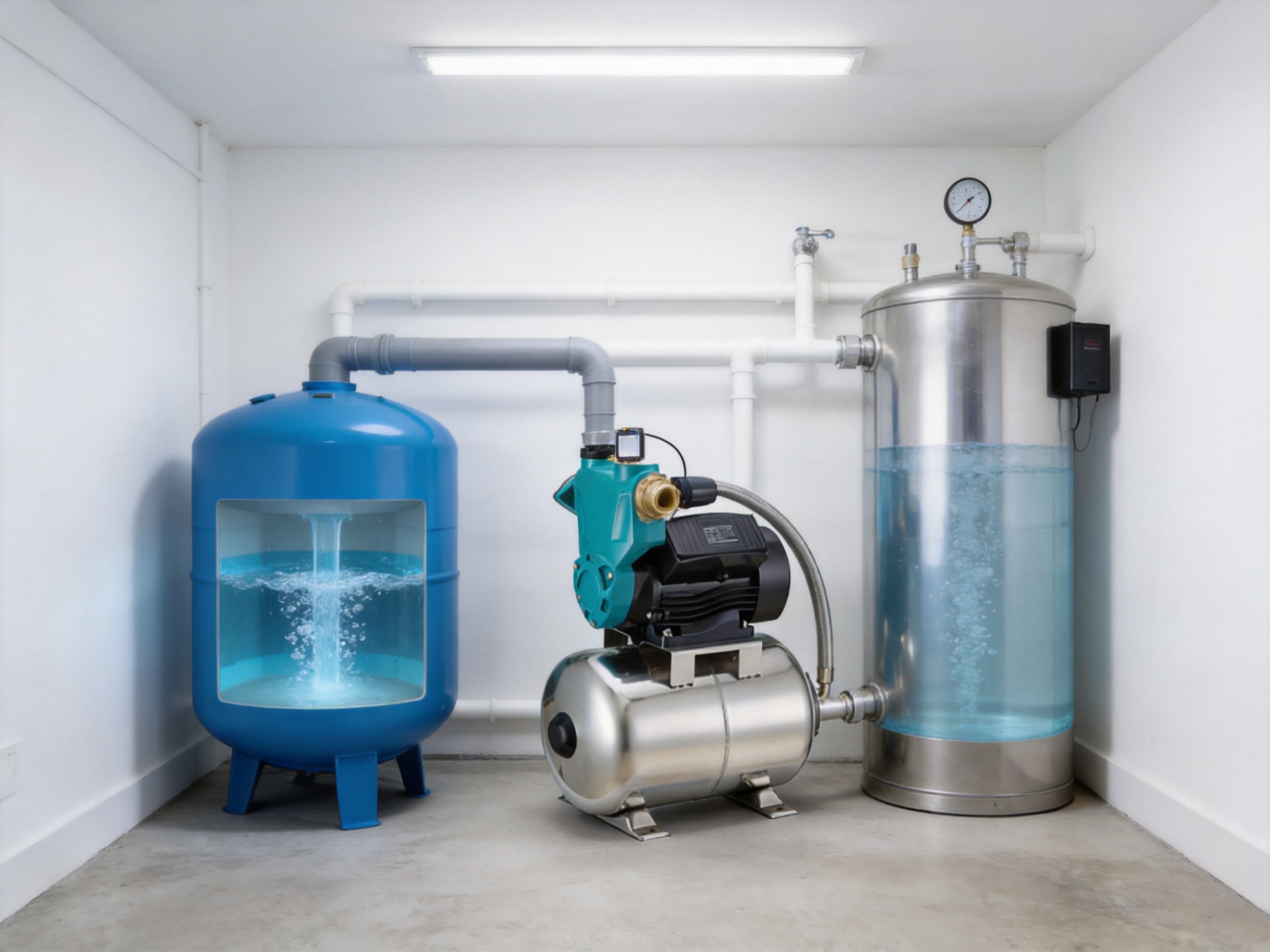
The EPS-T Series is designed with a single-phase motor configuration for convenient use in many residential and light commercial environments. Single-phase power is widely available in homes, small workshops, farms, and civil facilities, eliminating the need for a three-phase electrical supply in typical installations.
The motor uses durable copper wiring. Copper has high electrical conductivity, which helps reduce electrical losses and supports efficient motor operation. Properly manufactured windings also contribute to reliable starting torque and stable performance under normal load conditions.
Winding quality is closely related to motor life. Poorly insulated or unevenly wound coils can produce excessive heat, reduced efficiency, and premature failure. A professional manufacturing process should therefore include controlled winding, insulation, electrical testing, and verification of motor performance before final assembly.
High-efficiency C&U bearings are specified for the motor. Bearings allow the rotor and shaft to rotate with reduced friction. Correct bearing selection supports smooth operation, lower vibration, and improved mechanical durability.
Bearing performance depends not only on the bearing itself but also on shaft tolerances, housing alignment, lubrication, assembly pressure, and operating temperature. Controlled assembly is therefore essential to obtain the expected benefit from high-quality bearings.
The single-phase motor includes a built-in thermal protector. This device is intended to disconnect or protect the motor when its temperature rises excessively. Overheating can occur because of overload, blocked ventilation, abnormal voltage, excessive starting frequency, seized mechanical components, or unsuitable operating conditions.
Thermal protection provides an important safety layer, but it does not replace correct system design. The pump should still be installed with suitable electrical protection, grounding, circuit capacity, and a properly selected switch or breaker. The operator should also investigate the cause of repeated thermal trips rather than simply restarting the unit continuously.
The motor insulation rating is Class F. This insulation class is designed for elevated operating temperatures and provides a suitable margin for many demanding electrical applications. The actual service life depends on ambient temperature, load, voltage quality, ventilation, humidity, and operating frequency.
The motor protection rating is IP44. This indicates protection against solid objects above a specified size and resistance to water splashing from different directions. IP44 does not mean that the pump is waterproof or suitable for submersion.
The pump should be placed in a dry, ventilated location protected from direct rainfall, flooding, and spray. Electrical connections should be made by a qualified person, and cable entries should be protected against moisture. Proper installation is essential to obtain the intended benefit of the IP rating.
The maximum ambient temperature is specified as +40°C, and the maximum liquid temperature is +60°C. These limits allow the pump to handle a range of normal water supply conditions, including some warm-water applications. However, the pump is not intended for steam, highly corrosive liquids, flammable liquids, or liquids containing abrasive solids unless specifically approved.
As water temperature rises, vapor pressure also increases, which can affect suction performance and raise the possibility of cavitation. Installers should consider temperature when evaluating the maximum suction height and overall operating conditions.
The EPS-T Series is well suited to domestic water systems where incoming municipal pressure is weak or where water must be supplied from a tank. It can support showers, sinks, toilets, washing areas, and other household outlets when the selected model has sufficient flow and head.
The pressure tank helps provide a more stable supply during intermittent use. Automatic control means that household users can operate taps and appliances without manually starting the pump. For homes with multiple floors, model selection should account for the vertical distance between the pump and the highest outlet as well as the desired pressure at that outlet.
Many buildings depend on elevated or ground-level storage tanks. The pump can draw water from a tank and transfer it to a distribution network or elevated reservoir. Its self-priming function is valuable when the pump is positioned above the water level, although a properly sealed suction line and suitable foot valve remain necessary.
For tank transfer, the installer should ensure that the suction inlet remains submerged, the inlet pipe is adequately supported, and the pump cannot operate dry. A strainer may be used where appropriate, but excessive restriction should be avoided because it can reduce suction performance.
Garden irrigation often involves variable demand. A system may supply a hose, sprinkler, drip line, or several zones at different times. The EPS-T Series can provide pressure for these duties when the selected model matches the flow requirements of the irrigation equipment.
The pressure tank can help supply short watering operations, while the automatic controller can respond when the irrigation valve opens. Filters should be installed when the water contains particles that could affect the impeller or mechanical seal. The product is intended primarily for clean water or liquids with similar physical and chemical properties, not for heavily muddy or abrasive water.
The self-priming design supports shallow-well applications within the 9-meter maximum suction rating. The actual lift should be calculated from the water level to the pump inlet, not simply from the depth of the well. The water level may change seasonally, and the suction line may create additional friction losses.
A high-quality foot valve helps maintain prime when the pump is stopped. All threaded connections should be sealed carefully because even a small air leak can prevent reliable self-priming. The suction pipe should be as short and straight as practical, with a diameter suitable for the selected model.
Workshops, offices, guesthouses, small retail facilities, and agricultural buildings may require more pressure than a basic household pump can provide. The larger EPS-T models can support higher flow and head requirements within their stated performance limits.
Commercial users benefit from automatic operation, integrated pressure control, and the availability of multiple motor sizes. However, where the duty is continuous, the liquid contains solids, or the system requires exceptionally precise pressure regulation, a more specialized commercial pump may be appropriate.
The pump can be used with various corollary equipment, including pressure piping, valves, filters, water tanks, irrigation controllers, and household distribution systems. It may also serve as a pressure source for equipment that requires a reliable clean-water supply.
Compatibility should be checked before installation. The pump should not be connected to equipment requiring flow or pressure above its capability, and the electrical supply should match the motor nameplate.
The product is supported by a manufacturer with experience in independent research and development, mass production, and international export. This combination is important because a pump intended for global markets must satisfy more than basic hydraulic requirements. It must also offer consistent production quality, reliable documentation, coordinated procurement, and stable after-sales support.
Independent research and development allows a manufacturer to refine hydraulic structures, motor configurations, control systems, materials, and product families according to market requirements. It also makes it possible to respond to changing customer needs, such as demand for intelligent booster systems, solar pumping, energy efficiency, and simplified installation.
For the EPS-T Series, the combination of self-priming performance, pressure storage, and dual control reflects an effort to integrate several user requirements into one product. Development work should include hydraulic testing, motor testing, thermal evaluation, pressure verification, component compatibility, and assessment of actual installation conditions.
Mass production can provide advantages in component consistency, manufacturing efficiency, supply stability, and cost control. A professional factory can establish repeatable processes for casting, machining, impeller production, winding, assembly, painting, testing, and packaging.
Repeatability is especially important in pump manufacturing. Small differences in impeller balance, shaft alignment, mechanical seal installation, or winding quality can affect vibration, noise, efficiency, and service life. Standardized production procedures and inspection checkpoints help limit these variations.
A strong pump manufacturer coordinates several stages rather than treating final assembly as the only important step. The process may include material purchasing, incoming inspection, casting or component sourcing, precision machining, surface treatment, motor winding, rotor balancing, hydraulic assembly, electrical assembly, performance testing, and final packaging.
For a pump with a cast iron body and support, machining accuracy is important at the mounting and sealing surfaces. The impeller must be manufactured and balanced correctly. The stainless steel shaft must meet dimensional requirements. The mechanical seal must be assembled without damage. The motor windings, capacitor, thermal protector, and terminal connections must be tested before the pump is released.
Quality control should cover both individual components and completed pump units. Typical checks may include visual inspection, dimensional inspection, insulation resistance testing, dielectric strength testing, winding resistance measurement, no-load current testing, pressure testing, leakage inspection, flow testing, head testing, noise evaluation, and thermal protection verification.
Performance testing is particularly important because the published maximum flow and maximum head values represent hydraulic capabilities that must be supported by actual testing. While maximum values are not the same as the operating point at every condition, they provide useful reference information for selection and comparison.
International customers often require more than the physical pump. They may need product specifications, model confirmation, packaging details, spare-parts information, shipping coordination, documentation, and communication across different time zones and languages. A manufacturer with established export experience is better positioned to organize these elements.
The company’s broader organization includes procurement planning, order tracking, cross-border delivery, and foreign-trade services. These capabilities can be valuable for distributors, engineering contractors, original equipment customers, and project buyers seeking one-stop procurement.
The manufacturer’s product lines include deep-well pumps, submersible pumps, domestic booster pumps, circulation pumps, solar water pumps, and intelligent booster pumps. This broad portfolio allows customers to source different pumping technologies from one experienced supplier.
For distributors, a broad portfolio can simplify supplier management and enable product matching across different applications. A customer may require a self-priming pump for one project, a submersible pump for another, and a solar pump for an off-grid agricultural installation. Access to related product categories can improve purchasing efficiency.
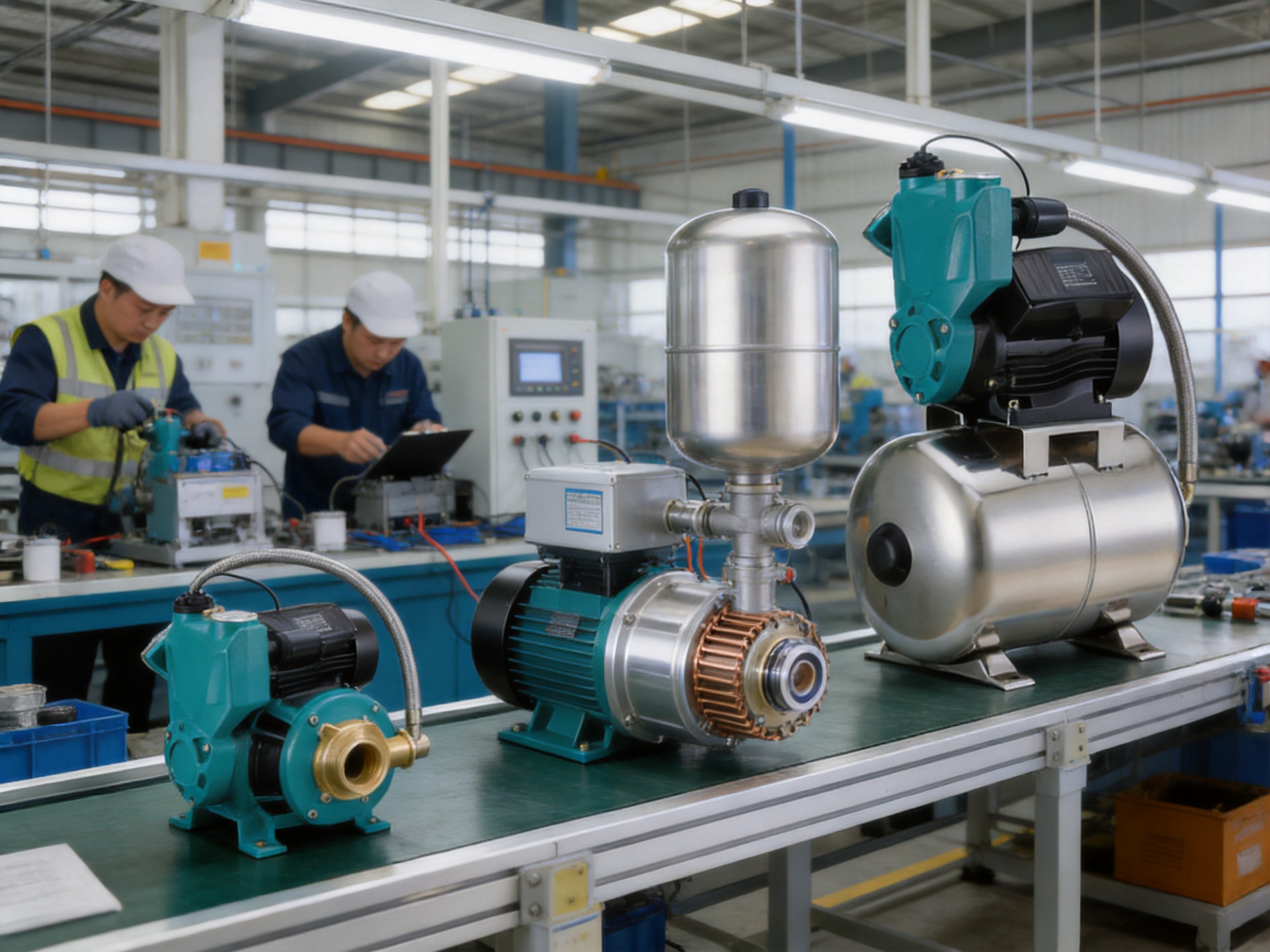
Correct installation is essential for obtaining the performance and durability expected from the EPS-T Series. The pump should be installed by a qualified technician who understands electrical safety, suction systems, pressure vessels, and local regulations.
The pump should be placed on a stable, level foundation. Adequate space should be left around the motor for ventilation, inspection, and maintenance. The location should be dry and protected from flooding, excessive humidity, direct rain, and corrosive atmospheres.
The pump should be positioned as close to the water source as practical. A shorter suction line normally reduces friction and improves priming reliability. The suction pipe should rise continuously toward the pump where possible, avoiding high points that can trap air.
The suction pipe must be airtight. Threaded joints, unions, valves, and flexible connectors should be sealed carefully. Air leakage on the suction side may not produce visible water leakage, but it can prevent the pump from building sufficient suction.
The inlet pipe should not be smaller than the recommended pump connection unless the design has been verified. Undersized suction piping increases friction loss and can reduce flow. The foot valve or check valve should be suitable for clean water and positioned below the minimum water level with adequate clearance from the tank or well bottom.
Although the pump is self-priming, the pump casing generally needs to be filled with water before initial operation. The exact procedure should follow the product manual. Operating the pump without water can damage the mechanical seal and may prevent the unit from priming.
After filling the casing, the operator should open a suitable outlet or bleed point if required, start the pump, and observe whether water flow becomes established. If the pump does not prime, the system should be stopped and checked for air leaks, insufficient water, incorrect valve orientation, excessive suction height, blocked piping, or incorrect rotation where applicable.
The discharge pipe should be sized according to the required flow and distance. Excessively small piping increases friction loss and may cause the pump to operate away from its most suitable range. Valves should be installed where isolation and maintenance are required.
A check valve may be useful in systems where reverse flow could cause pressure loss or repeated priming requirements. Pressure gauges can assist with commissioning and troubleshooting, particularly in larger or more complex installations.
The power supply must match the motor nameplate in voltage, frequency, and phase. A properly rated circuit breaker, overload protection, grounding connection, and isolation switch should be provided according to local electrical requirements.
Electrical work should only be completed by a qualified electrician. Cable size should account for motor current, cable length, ambient conditions, and allowable voltage drop. Connections must be protected from moisture and mechanical damage.
Routine maintenance helps preserve hydraulic performance and reduce unexpected downtime. The pump should be inspected regularly even when it appears to be operating normally.
Operators should check for water leakage around the mechanical seal, casing, pipe connections, and tank connections. Unusual noise, vibration, overheating, or repeated thermal trips should be investigated promptly.
The area around the pump should be kept clean and dry. Ventilation openings should not be blocked by dust, packaging materials, vegetation, or stored objects. The cooling fan must be able to move air freely around the motor.
The pressure tank may require periodic checking of its pre-charge pressure, depending on the tank design and system configuration. The pump must be isolated and the water pressure released before such work is performed. The correct pre-charge value should be taken from the product documentation or confirmed by the supplier.
A tank with incorrect pre-charge may cause unstable pressure, excessive cycling, reduced usable water volume, or premature diaphragm damage where a diaphragm tank is used. Any sign of tank leakage, corrosion, or loss of air charge should be addressed.
The EPS-T Series is intended for clean water or liquids with similar physical and chemical properties. Sand, gravel, metal particles, fibrous materials, and abrasive solids can damage the impeller, seal, and internal passages.
Where the source contains suspended particles, an appropriately sized pre-filter may be installed. The filter must be maintained so that it does not create excessive suction resistance. Chemical compatibility should also be confirmed before pumping liquids other than clean water.
If the pump will not be used for an extended period, it should be protected from freezing. Water trapped inside the casing or piping can expand when frozen and cause cracking. In seasonal installations, the system should be drained according to the manufacturer’s instructions.
When restarting after a long period of inactivity, the operator should inspect the electrical connections, rotate the shaft only if permitted by the manual, check the pressure tank, refill the pump casing, and confirm that valves are correctly positioned.
A pump that fails to deliver water may have several possible causes. The most common issues are related to suction air leaks, insufficient priming, blocked valves, excessive suction height, low water level, or a damaged foot valve.
If the motor does not start, the operator should check the power supply, circuit breaker, thermal protector status, pressure sensor, capacitor, and electrical connections. Repeated motor trips may indicate overload, low voltage, blocked hydraulic components, poor ventilation, or a mechanical problem.
If the pump starts and stops too frequently, the pressure tank pre-charge, pressure sensor settings, leakage in the distribution network, and system volume should be checked. A leaking tap or pipe can cause pressure to fall continuously and force repeated starts.
Low pressure may result from incorrect model selection, excessive pipe friction, a blocked filter, a partially closed valve, worn hydraulic components, or air in the suction system. The actual pressure and flow should be measured rather than estimated only from sound or motor operation.
Unusual noise may be caused by cavitation, trapped air, bearing wear, loose mounting, foreign material, or pipe vibration. Continuing to operate a noisy pump without inspection can increase damage and repair costs.
For importers, wholesalers, contractors, and project buyers, the EPS-T Series offers several commercial advantages. The product has a clear model family, a broad performance range, integrated control features, and a design suitable for common clean-water applications.
A distributor can stock several capacities while retaining a consistent product identity. Installers can use the same general installation method across multiple projects. End users can select a model based on required flow and head rather than searching among unrelated pump designs.
The integrated pressure tank can reduce the number of external components required in a standard installation. This may lower packaging volume, simplify shipping, reduce assembly time, and make the finished system more attractive to residential and civil customers.
The product also supports private-label, project, and wholesale procurement discussions where model documentation, packaging requirements, technical confirmation, and delivery planning are important. The manufacturer’s experience in international export and one-stop service can support customers beyond the factory gate.
The strongest competitive advantage of the EPS-T Series is its combination of functions. It is not merely a small water pump, and it is not only a pressure tank assembly. It is a self-priming automatic pressure system designed for applications where convenient water delivery and reliable pressure are both important.
Its self-priming capability provides installation flexibility. Its peripheral hydraulic design supports pressure-oriented applications. Its dual-control arrangement allows automatic response to changing demand. Its large pressure tank helps reduce unnecessary starts and supports more stable operation. Its motor range enables selection for different flow and head requirements.
The materials also support a durability-focused design. HT200 cast iron provides a strong casing and support structure. The brass impeller contributes to corrosion resistance and reliable restarting. The AISI 304 stainless steel shaft protects the water-contact rotation area from rust. Copper windings, C&U bearings, Class F insulation, thermal protection, and IP44 motor protection contribute to electrical and mechanical reliability.
Compared with low-cost pump-only products, the EPS-T Series can offer greater automation and easier integration. Compared with a fully separate pump, controller, and tank installation, it can reduce system complexity. Compared with larger multistage systems, it can provide a more economical and compact option for moderate clean-water duties.
These advantages do not eliminate the need for correct sizing and installation. No pump can overcome an incorrectly designed suction pipe, insufficient water source, excessive pressure requirement, or unsuitable liquid. However, when applied within its intended operating range, the EPS-T Series provides a practical and competitive solution for many domestic, agricultural, commercial, and civil water systems.
The EPS-T Series is a smart dual-control self-priming peripheral pump equipped with a large pressure tank. It is designed for clean-water supply, pressure boosting, tank transfer, garden irrigation, and shallow-well water lifting.
The maximum listed suction height is 9 meters. Actual results depend on the water temperature, altitude, pipe length, pipe diameter, foot valve, air tightness, and water level. The installation should be designed conservatively rather than operated continuously at the absolute limit.
Yes. The product uses dual control with a pressure sensor and pressure tank to support automatic operation. The pump starts when system pressure falls and stops when the required pressure is restored, subject to the control arrangement and installation conditions.
The tank stores pressurized water and helps reduce frequent motor starts during small or intermittent water demands. It can improve pressure stability, reduce cycling, and provide a more convenient water supply experience.
The pump is recommended for clean water or liquids with similar physical and chemical properties. Sand, gravel, abrasive particles, fibers, and large solids may damage the impeller, mechanical seal, or internal passages. A suitable filtration system should be used when necessary.
The maximum listed liquid temperature is +60°C. The pump should not be used for steam, highly corrosive chemicals, flammable liquids, or other fluids without confirmation of material compatibility and operating suitability.
The motor has an IP44 protection rating, Class F insulation, and a built-in thermal protector for the single-phase motor. The pump should still be installed in a dry, ventilated area with proper grounding and electrical protection.
The correct model depends on the number of outlets, desired flow, building height, pipe length, and required pressure. Smaller homes may use the EPS250-T, EPS370-T, or EPS550-T, while larger homes or systems with greater pressure requirements may need the EPS750-T, EPS900-T, or a higher-capacity model.
Yes. It can be used for clean-water irrigation systems, hoses, sprinklers, and garden or allotment watering when the flow and pressure requirements are within the selected model’s capabilities. Filters and appropriate valves should be used where the water source contains particles.
Yes, provided the actual suction height does not exceed the 9-meter rating and the suction system is airtight. A suitable foot valve, correctly sized suction pipe, and proper initial priming are important for reliable operation.
Common causes include air leakage in the suction pipe, an empty pump casing, a damaged foot valve, excessive suction height, a blocked inlet, inadequate water level, or incorrectly positioned valves. The pump should be switched off before troubleshooting.
The pump body and support are HT200 cast iron, the impeller is brass, the shaft is AISI 304 stainless steel, the mechanical seal uses carbon and ceramic, the motor case is aluminum, the motor cover is cast iron, and the fan is PP according to the supplied materials information.
The EPS-T Series is designed for domestic, civil, agricultural, and light commercial applications. For continuous industrial duty, abrasive liquids, high-temperature service, or highly demanding process conditions, the operating requirements should be reviewed with the supplier before selection.
Buyers should confirm the voltage, frequency, phase, motor nameplate, connection size, performance curve, pressure-tank details, control settings, applicable certifications, packaging, spare parts, and the final horsepower information. The supplied data contains an apparent horsepower inconsistency for the EPS750-T model, so this item should be verified.
The EPS-T Series Smart Dual Control Self-Priming Pump with Large Pressure Tank is a versatile pressure-water solution for users who need more than basic water transfer. Its self-priming design supports flexible suction arrangements, while its peripheral hydraulic system provides useful pressure for domestic and civil applications. The dual-control arrangement and integrated tank improve automation, pressure stability, and operating convenience.
With power options from 0.25 kW to 2.20 kW, maximum flow from 30 L/min to 115 L/min, maximum head from 30 meters to 70 meters, and a maximum suction rating of 9 meters, the series can serve a broad range of projects. Its cast iron structure, brass impeller, stainless steel shaft, carbon-and-ceramic mechanical seal, copper winding, C&U bearings, thermal protection, Class F insulation, and IP44 rating reflect a design focused on dependable service.
The manufacturer’s strengths in research and development, mass production, quality control, international export, and broad pump technology provide additional value for distributors and project customers. When correctly selected, installed, and maintained, the EPS-T Series can offer a compact, automatic, and durable alternative to conventional pump-only systems or more complicated separate pump-and-tank installations.
1. Product technical information for the EPS-T Series Smart Dual Control Self-Priming Pump with Large Pressure Tank.
2. Product materials table and component information supplied for the EPS-T Series.
3. Manufacturer-provided motor specifications, including copper winding, C&U bearings, thermal protection, Class F insulation, and IP44 protection.
4. General engineering principles for pump selection, suction piping, pressure systems, and clean-water applications.
5. General guidance on centrifugal and peripheral pump installation, maintenance, priming, and electrical safety.
6. General reference principles for pressure tanks, automatic pump controls, and domestic water-boosting systems.
edwina@edwin-pump.com
+86-13586290903 (WhatsApp)
Xuri Gongliang Cutting Tool Entrepreneurship Park, Wenqiao Town, Wenling City, Taizhou City, Zhejiang Province, China

High Performance Smart Pump Factory


 English