edwina@edwin-pump.com

View All Products
en
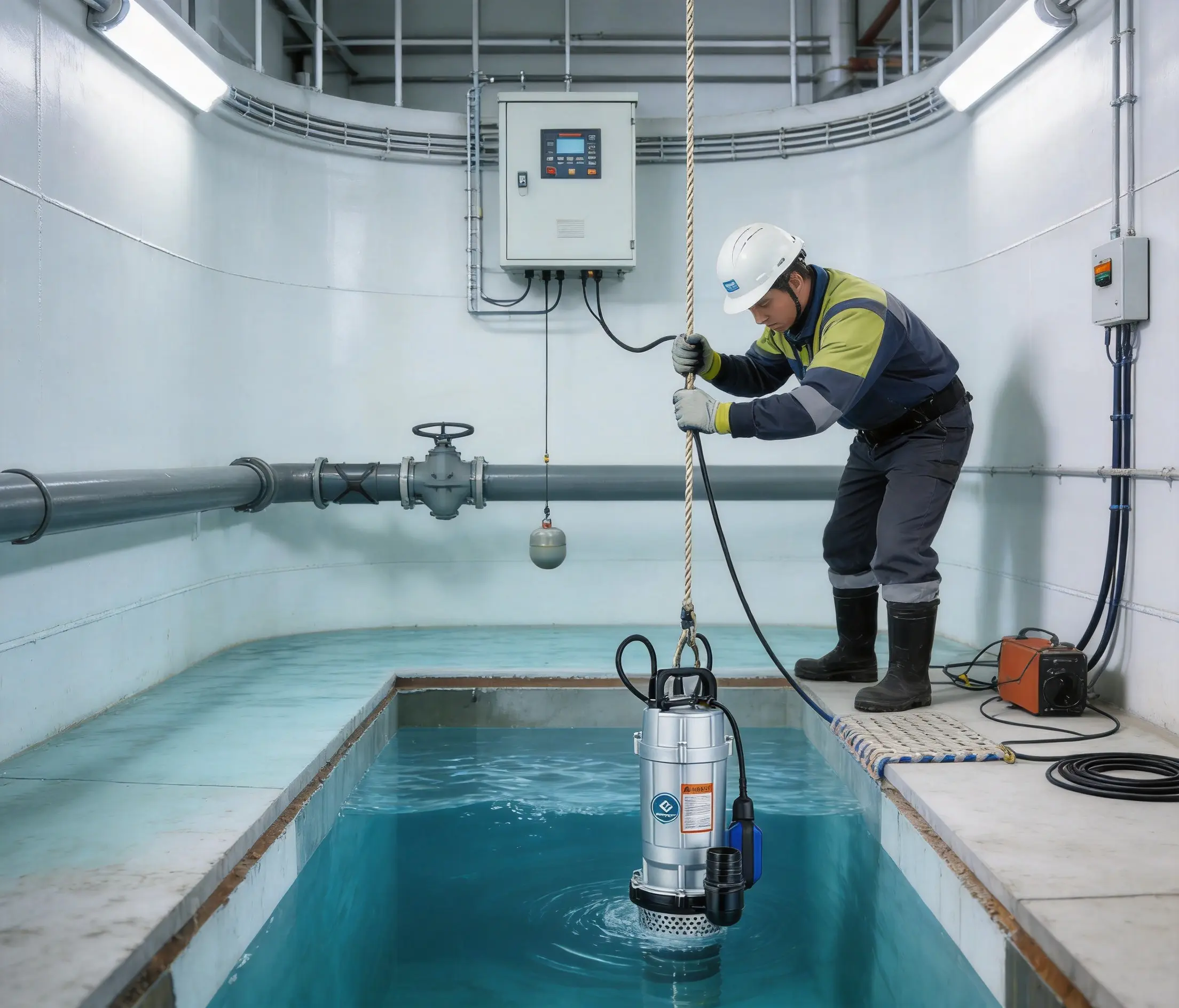
The Submersible Sewage Pump QX is a compact and versatile electric pumping solution designed for dependable water transfer in wells, reservoirs, domestic water systems, gardens, irrigation installations, and selected civil and industrial applications. As a submersible pump, it operates below the water surface, allowing the hydraulic unit to remain close to the fluid being moved. This arrangement can reduce suction-related limitations, simplify installation, and provide stable delivery when the pump is correctly matched to the water source and system requirements.
The QX model is part of a broader range of pumping equipment manufactured by Taizhou Edwin Electric Co., Ltd. The company has developed experience in deep well pumps, submersible pumps, domestic booster pumps, circulation pumps, solar water pumps, intelligent booster pumps, and related water-handling products. Its manufacturing and export activities support customers in agriculture, household water supply, construction, municipal engineering, mining, HVAC, new energy projects, and other sectors.
Although the product is identified as a submersible sewage pump, the published operating information should be examined carefully before installation. The stated maximum sand content is 0.1%, and the listed applications emphasize water supply from wells or reservoirs, domestic use, civil and industrial service, gardens, and irrigation. These conditions indicate that the QX should be selected for water that remains within the specified cleanliness and temperature limits unless the manufacturer confirms a particular sewage-duty configuration. Correct application matching is essential for service life, hydraulic performance, and warranty protection.
With its rewindable motor, single-phase and three-phase electrical options, optional floating switch, and availability for special mechanical seals and alternative electrical frequencies, the QX offers a practical foundation for many water transfer systems. Its principal value lies in combining submersible operation, flexible electrical configuration, straightforward maintenance potential, and the manufacturing support of an established pump producer.
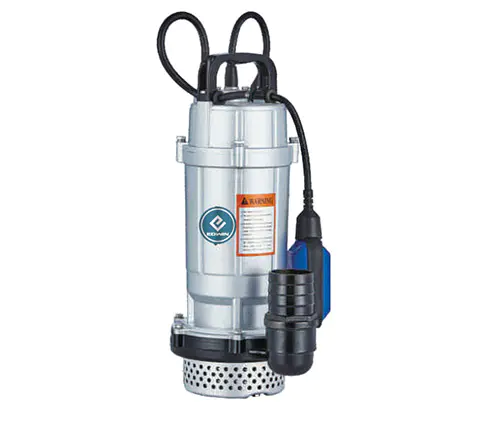
SUBMERSIBLE SEWAGE PUMP QX
The Submersible Sewage Pump QX is designed to work while immersed in the pumped liquid. Instead of drawing water through a long suction pipe from above ground, the pump is positioned at or near the water source. The motor drives the impeller through a sealed assembly, and the hydraulic section transfers the fluid through the discharge connection to the delivery pipeline.
Submersible installation provides several practical benefits. First, the pump is naturally primed because the hydraulic section is surrounded by water. This can make startup easier than for many surface-mounted pumps that require manual priming or special suction arrangements. Second, the close proximity of the pump to the water can help limit suction pipe length and associated friction losses. Third, a submerged unit can operate in locations where above-ground space is limited or where noise and visual impact must be minimized.
The QX is suitable for applications in which dependable water movement is required without a complicated installation footprint. Typical examples include transferring water from a storage tank, supplying a domestic system from a reservoir, supporting irrigation from a well, or moving water within a civil or industrial facility. The actual duty point must always be checked against the pump curve, pipeline resistance, elevation difference, and required flow rate.
Its product documentation identifies a maximum fluid temperature of 40°C and a maximum sand content of 0.1%. These operating limits are important because temperature, suspended solids, and abrasive particles directly affect the motor, seals, impeller, bearings, and electrical components. Using the pump outside these limits may reduce performance or cause premature wear.
| Characteristic | QX Product Information | Practical Significance |
|---|---|---|
| Product type | Submersible sewage pump | Designed for operation while immersed in the fluid |
| Primary applications | Wells, reservoirs, domestic, civil, industrial, garden, and irrigation use | Suitable for a broad range of water-transfer duties when correctly selected |
| Maximum fluid temperature | Up to +40°C | Supports normal cold-water and moderately warm-water applications |
| Maximum sand content | 0.1% | Requires control of abrasive solids in the pumped liquid |
| Motor design | Rewindable motor | Can support repair-oriented maintenance and motor refurbishment |
| Single-phase supply | 220–240 V, 50 Hz | Suitable for many residential and light commercial electrical systems |
| Three-phase supply | 380–415 V, 50 Hz | Suitable for many industrial and agricultural installations |
| Optional control | Floating switch available | Can assist with automatic start and stop based on water level |
| Performance reference | Curve tolerance according to ISO 9906 | Provides a recognized framework for pump performance verification |
| Optional customization | Special mechanical seal and other voltages or 60 Hz frequency on request | Allows adaptation to selected project conditions |
| Warranty | Two years according to general sales conditions | Provides defined manufacturer support subject to applicable terms |
One of the most important advantages of a submerged pump is that the pump inlet remains below the water level during normal operation. This helps keep the hydraulic chamber filled and reduces the possibility of air entering through a long suction line. For water supply systems, this can simplify commissioning and reduce the number of priming procedures required by the operator.
Surface pumps may require careful suction-pipe installation, foot valves, air-tight connections, and repeated priming if the system loses water. A submersible design can avoid many of these difficulties. The QX can therefore be attractive for wells, reservoirs, and tanks where placing the pump directly in the source is practical.
Because the motor and pump are installed below the water surface, the above-ground equipment area can be smaller. This is particularly useful in residential compounds, agricultural wells, compact utility rooms, construction sites, and installations where a surface pump would interfere with access or require additional protection.
A smaller above-ground footprint can also simplify system layout. The discharge pipe, power cable, lifting arrangement, and optional level control can be organized around the access opening or tank structure. While the installation still requires proper support and electrical protection, it does not necessarily need a dedicated pump room.
Long suction lines can create friction losses and may reduce the ability of a surface pump to achieve its required flow. By positioning the QX close to the water, the suction path is substantially shortened. The result can be a more stable hydraulic arrangement, provided that the discharge pipe is correctly sized and the pump is selected for the total dynamic head.
This advantage is especially relevant in wells and reservoirs where the vertical distance between the water source and the delivery point is significant. However, it does not mean that every submersible pump will automatically provide higher efficiency. Energy consumption still depends on the motor rating, impeller design, operating point, pipework, and system pressure. Engineering selection remains necessary.
Water surrounding the pump can help reduce airborne operating noise compared with a surface-mounted motor. The submerged installation also places the unit away from accidental contact, dust, and some environmental hazards. In domestic or landscaped settings, this can produce a cleaner and less intrusive installation.
Protection is not automatic, however. The pump must be installed at an appropriate depth, kept clear of excessive sediment, and protected against dry running, electrical leakage, mechanical impact, and improper lifting. The use of suitable control panels, overload protection, grounding, and residual-current protection is strongly recommended.
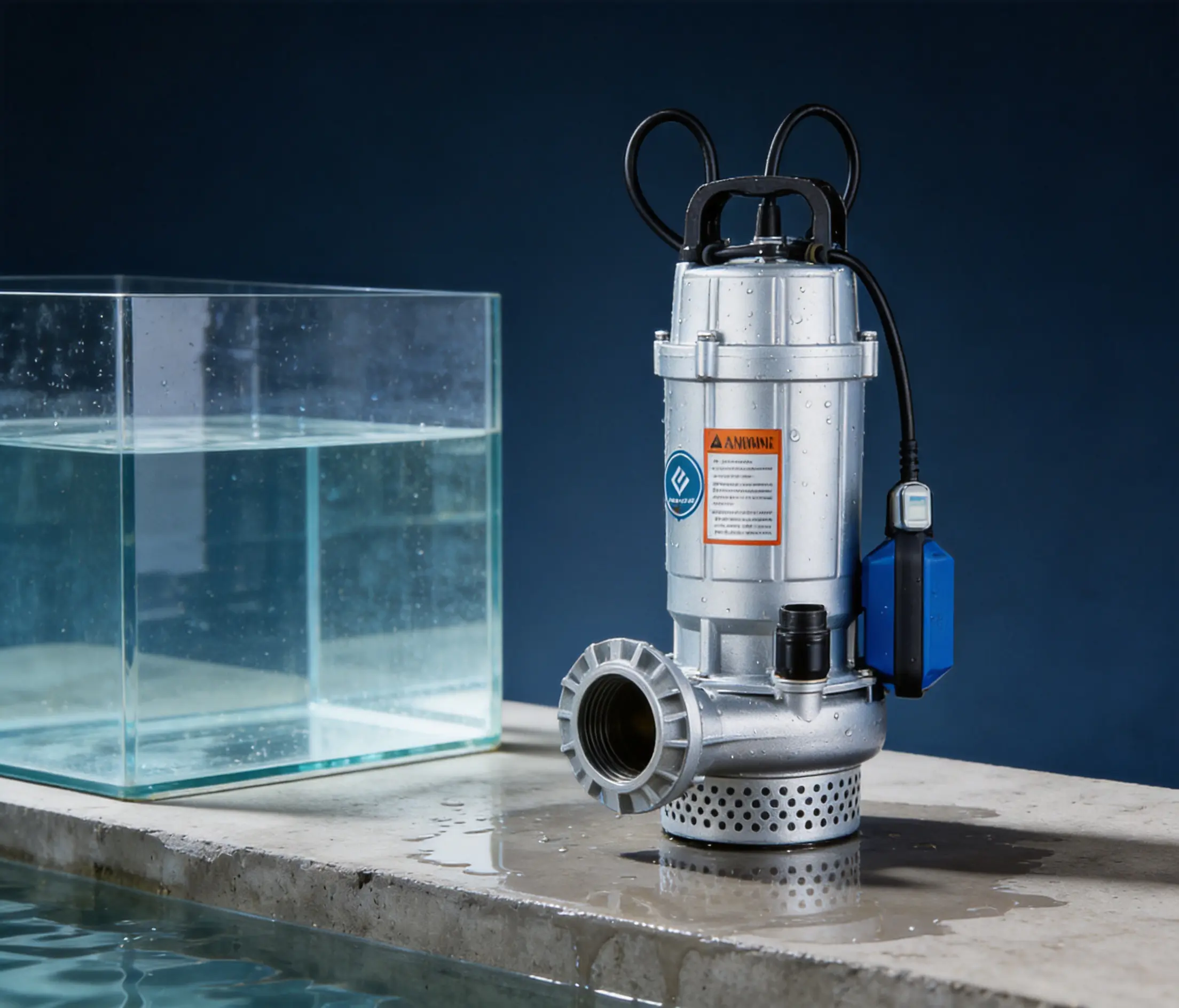
The QX uses a rewindable motor. This feature can be valuable for users who prioritize maintainability and long-term equipment service. In the event of an electrical winding failure, a qualified motor service workshop may be able to rewind the motor rather than replacing the complete pump assembly. This can reduce downtime and make repair economically practical in areas where technical service resources are available.
A rewindable motor also supports a more repair-oriented approach to asset management. Agricultural operators, contractors, water-system installers, and industrial maintenance teams may prefer equipment that can be inspected, repaired, and returned to service. The quality of any rewinding work is important, so repairs should be performed by trained personnel using appropriate insulation materials, winding specifications, drying procedures, and electrical tests.
Motor maintainability is one area in which the QX can compare favorably with products designed primarily for complete replacement. A replace-only approach may be convenient in some low-cost applications, but it can increase waste, shipping time, and long-term operating expense. A rewindable design gives the owner more service options.
The QX is available for single-phase power at 220–240 V and 50 Hz, as well as three-phase power at 380–415 V and 50 Hz. This range allows the same product family to serve different installation environments.
Single-phase models are practical for homes, small farms, gardens, small workshops, and light commercial locations where three-phase power is not available. They can be integrated into common low-voltage electrical systems, subject to correct circuit sizing and protection.
Three-phase models are well suited to industrial facilities, larger agricultural installations, construction projects, and commercial water systems. Three-phase motors can provide balanced operation and are often preferred for continuous-duty applications with higher power requirements. The electrical supply must match the motor nameplate, and phase sequence should be checked during commissioning.
Alternative voltages and 60 Hz frequency are available on request. This is an important advantage for international projects, because electrical standards differ by country and region. Instead of selecting a pump that only supports one supply configuration, buyers can discuss the required voltage, frequency, starting method, and control arrangement with the manufacturer before ordering.
The QX can be equipped with a floating switch. A float switch detects changes in water level and can be used to start or stop the pump automatically. In a tank or drainage area, this helps reduce the risk of overflow and can prevent the pump from operating after the water level has fallen below a safe point.
Automatic level control is especially useful in domestic water storage, rainwater collection, irrigation reservoirs, construction dewatering, and small industrial sumps. The float must be installed with adequate freedom of movement and protected from obstruction by pipes, cables, sediment, or structural elements. Its switching capacity and control-circuit arrangement should also be confirmed before connection.
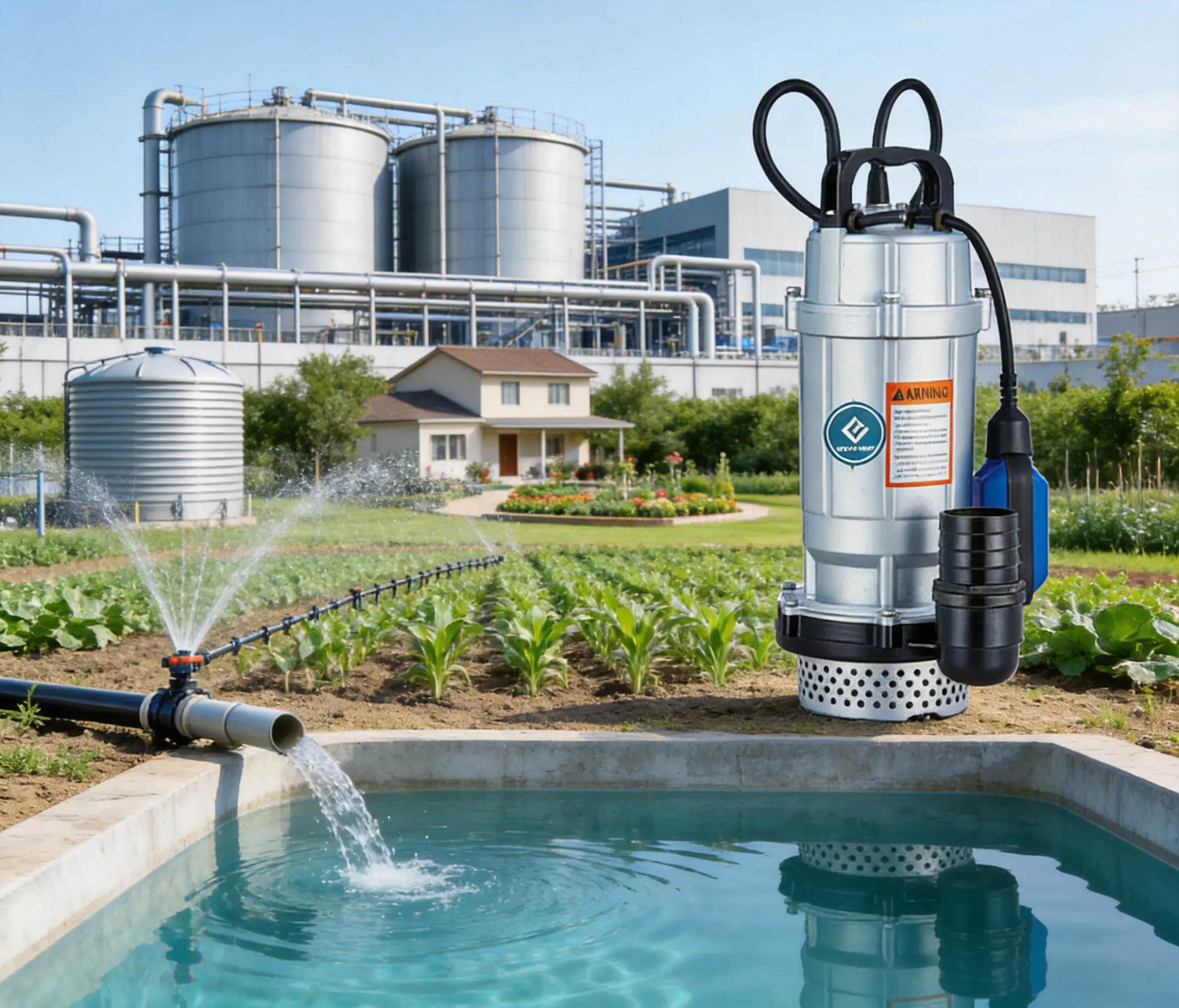
The QX can support water transfer from wells and reservoirs when the water quality remains within the specified operating limits. In well applications, the pump may deliver water to a storage tank, pressure system, irrigation network, or domestic distribution line. The installer should evaluate the static water level, dynamic water level, well diameter, available submergence, recovery rate, and total required head.
Reservoir installations may involve agricultural irrigation, landscape watering, water transfer between tanks, or general utility supply. The pump should be positioned above the bottom sediment layer and should not be allowed to rest directly on loose soil or accumulated debris. A suitable support arrangement can improve stability and protect the inlet from unnecessary solids.
For domestic applications, the QX can be used to move water from a well, underground tank, rainwater storage system, or reservoir. It may supply a household storage tank or work as part of a larger pressure-boosting arrangement. The pump should not be treated as a complete domestic water system by itself; pressure controls, non-return valves, storage, filtration, and sanitation measures may also be required.
Where the water is intended for drinking, the complete system must comply with local potable-water regulations. Materials in contact with the water, treatment procedures, storage conditions, and hygiene controls should be reviewed independently. The product information supplied identifies general water-supply applications but does not itself certify the pump for every drinking-water standard.
Garden irrigation frequently requires dependable water movement from a tank, pond, or reservoir. The QX can be used in suitable installations for sprinklers, drip irrigation, hoses, and landscape watering. Its submerged design can reduce the need for a separate priming system and can help keep the installation visually unobtrusive.
Irrigation designers should calculate flow requirements carefully. Drip systems, sprinklers, and open discharge lines have different pressure and flow characteristics. A pump that is too large may waste energy, create excessive pressure, or require throttling. A pump that is too small may fail to operate irrigation zones effectively. The correct selection is based on the intersection of the pump curve and the system curve.
In civil and industrial settings, submersible pumps are often used for water transfer, temporary site service, utility pits, process support, tank emptying, and construction-related applications. The QX may be considered where the liquid characteristics, temperature, solids content, electrical supply, and duty cycle remain compatible with the published specifications.
Industrial buyers should provide detailed information before ordering. Important data includes the fluid composition, pH, temperature, viscosity, suspended solids, particle size, required flow, total head, operating hours, installation depth, cable length, and control method. If the liquid contains aggressive chemicals, unusual contaminants, fibrous materials, or high concentrations of abrasive solids, a special configuration may be necessary.
The product name includes the term sewage pump, but pump names alone should not determine application suitability. Sewage can vary substantially. Domestic wastewater may contain soft solids, fibrous materials, grease, detergents, and biological contaminants. Industrial wastewater may contain abrasive particles, chemicals, or elevated temperatures. A pump designed for relatively clean water or limited sand content may not be suitable for heavy sewage or large solids.
The published QX information specifies a maximum sand content of 0.1% and a maximum fluid temperature of 40°C. It does not provide a solids-passage diameter, cutting mechanism, vortex impeller description, or detailed sewage composition rating. Therefore, users should obtain confirmation from the manufacturer before applying the pump to raw sewage, heavily contaminated wastewater, or liquids containing large solids.
This careful approach is not a weakness of the product; it is an essential part of responsible pump selection. Competitor products may use broad labels such as wastewater, drainage, sewage, or slurry pump, yet their actual capabilities also depend on impeller type, seal arrangement, motor cooling, materials, and solids-passage specifications. The QX should be compared on verified technical data rather than marketing terminology.
Where a special mechanical seal is required, the manufacturer can discuss an option on request. Seal selection should consider the fluid, pressure, temperature, abrasive content, and expected operating hours. A special seal may improve compatibility, but it does not automatically make the pump suitable for every sewage or chemical-duty application. The complete hydraulic and motor configuration must be evaluated.
Taizhou Edwin Electric Co., Ltd. was founded in 2008 and operates as an integrated manufacturing enterprise with capabilities covering independent research and development, mass production, and global export. This structure allows product development, manufacturing planning, quality control, packaging, and international delivery to be coordinated within a connected business system.
For buyers, an integrated manufacturer can offer advantages over a trading-only supplier. Engineering questions can be directed to teams familiar with the product design. Production schedules can be coordinated with order requirements. Custom electrical configurations and seal options can be discussed at an earlier stage. Technical feedback from distributors and end users can also be used to support future product improvement.
The company’s product portfolio includes deep well pumps, submersible pumps, domestic booster pumps, circulation pumps, solar water pumps, intelligent booster pumps, and related accessories. This breadth is significant because different pump categories require different hydraulic, electrical, and control knowledge.
Experience with deep well and submersible products supports understanding of submerged motors, cable arrangements, water-source conditions, and vertical delivery. Experience with booster pumps contributes to knowledge of pressure control and domestic water systems. Circulation pumps require attention to continuous operation, compact hydraulics, and HVAC or hot-water service. Solar and intelligent pump products add expertise in energy management, electronic control, and variable operating conditions.
A manufacturer with multiple product lines can also help customers build a more consistent procurement program. Instead of purchasing every pump type from unrelated sources, distributors and project contractors may be able to coordinate product selection, technical communication, packaging, spare parts, and after-sales support through one manufacturing partner.
Mass production can improve consistency when supported by controlled processes, standardized components, documented assembly methods, and appropriate inspection. It may also help the manufacturer maintain stable procurement channels for motors, hydraulic components, seals, cables, and electrical accessories.
Global export experience adds another practical strength. International pump orders must address electrical standards, labeling, documentation, packaging, container loading, customs requirements, spare parts, and communication across time zones. The company established related import and export organizations in 2012 to support procurement planning, order tracking, cross-border delivery, and foreign-trade services.
For overseas customers, these capabilities can reduce administrative friction. A technically suitable pump still needs to arrive in good condition, with correct documentation and a clear order schedule. Export-oriented coordination is therefore part of the overall product value, particularly for distributors, engineering contractors, and commercial buyers.
The QX documentation states that curve tolerance is according to ISO 9906. This standard provides a recognized framework for evaluating pump performance and tolerances. Reference to a recognized performance standard gives buyers a clearer basis for comparing expected flow and head behavior than an unsupported performance claim.
Performance verification should include the relevant pump curve, flow rate, head, efficiency, power input, speed, and operating range. The buyer should request the curve for the exact model and configuration being purchased. The motor voltage, frequency, impeller arrangement, and any optional equipment should correspond to the curve and nameplate data.
Quality control should also cover electrical insulation, winding resistance, grounding continuity, seal integrity, motor current, rotation direction, vibration, noise, and hydraulic performance. The specific inspection program may vary by model and order, so purchasers should clarify testing and documentation requirements before production.
Compared with a surface-mounted pump, the QX offers submerged operation, simplified priming, reduced suction-side exposure, and a smaller above-ground installation footprint. It can be especially advantageous when the water level is below the pump location or when a long suction pipe would be difficult to install and maintain.
A surface pump may still be the better choice when easy access, frequent inspection, or dry installation is a priority. The comparison should consider total system cost, installation depth, service access, electrical safety, noise, and the required duty point. The QX is most beneficial when its submersible characteristics solve a specific installation challenge.
The rewindable motor gives the QX a maintainability advantage over some low-cost pumps that are designed for complete replacement after motor failure. Rewinding may reduce repair cost and equipment waste, especially in regions with established motor service workshops.
However, rewinding must be performed properly. Poor workmanship can cause insulation breakdown, overheating, reduced efficiency, or repeated failure. Buyers should evaluate the availability and quality of local service support as part of the purchase decision.
Some pump products are manufactured for only one voltage, frequency, or phase arrangement. The QX family supports both single-phase and three-phase 50 Hz configurations, with other voltages or 60 Hz frequency available on request. This flexibility can reduce the need to change product families when serving different countries or project types.
Electrical flexibility can also benefit distributors. A supplier may be able to configure products for several regional markets while retaining a consistent product identity and procurement relationship. Exact availability, minimum order quantities, and lead times should be confirmed for customized versions.
Before installation, inspect the pump, cable, discharge connection, lifting arrangement, and optional float switch for visible damage. Confirm that the nameplate voltage and frequency match the available power supply. Verify that the pump curve meets the required flow and head, and check that the liquid temperature and sand content are within the stated limits.
The well, tank, or reservoir should be examined for depth, access, sediment accumulation, turbulence, and obstruction. The pump should not be installed where it can become buried in mud or suspended by the electrical cable. Use a suitable lifting rope, chain, or support system designed for the pump weight and installation conditions.
The discharge pipe should be sized to limit unnecessary friction loss while maintaining a practical installation cost. A non-return valve may be required to prevent reverse flow when the pump stops. Isolation valves can assist with maintenance, testing, and system control. Pipe supports should prevent excessive load from being transferred to the pump discharge connection.
Sharp bends, undersized pipes, blocked strainers, and poorly positioned valves can reduce performance. If the pump supplies a pressure system, the pressure tank, control switch, check valve, and protection devices should be selected as a coordinated package.
Electrical work should be performed by qualified personnel in accordance with local codes. The installation should include appropriate overload protection, short-circuit protection, grounding, cable sizing, and means of isolation. A residual-current device may be appropriate depending on the installation and local requirements.
Never lift or lower the pump using the power cable. Protect the cable from abrasion, sharp edges, excessive bending, heat, chemicals, and mechanical tension. For three-phase models, confirm rotation direction and phase sequence as specified by the manufacturer. Incorrect rotation can reduce performance and may increase mechanical stress.
Submersible pumps require adequate fluid around the motor and hydraulic section. Operating without sufficient water can cause overheating, seal damage, and accelerated wear. A floating switch or another level-control system can help prevent low-water operation. In wells, the installer should consider drawdown and recovery, not only the static water level.
Automatic controls should be tested after installation. The pump should start and stop at appropriate levels, and the float should not become trapped against the tank wall, pipework, or other equipment. Manual override controls should be used carefully and should not defeat essential safety protections.
Routine maintenance begins with observing operating conditions. Unusual vibration, noise, reduced flow, increased running current, repeated overload trips, leakage, or irregular float-switch operation may indicate a developing problem. Early inspection can prevent a minor issue from becoming a motor or hydraulic failure.
The pump should be isolated from the electrical supply before inspection or removal. Depending on the water quality and operating environment, maintenance may include cleaning the inlet, checking the impeller, inspecting the mechanical seal, examining cable connections, testing insulation resistance, and verifying the condition of the non-return valve.
Sand and abrasive solids should be controlled because they can wear impeller surfaces and mechanical seals. If sediment accumulates in the tank or well, the installation may require cleaning or repositioning. The pump should not be allowed to operate in a thick layer of settled material.
For long-term storage, clean and dry the accessible external surfaces, protect the cable and connectors, and follow the manufacturer’s instructions for storage position and environmental conditions. A pump removed from contaminated water should be handled with appropriate personal protective equipment and cleaned according to applicable safety procedures.
The two-year warranty stated for the QX applies according to the manufacturer’s general sales conditions. Warranty coverage commonly depends on correct installation, suitable application, proper electrical protection, authorized or acceptable service, and evidence that operating limits were not exceeded. Buyers should obtain the full warranty terms before purchase.
| Selection Question | Information to Confirm |
|---|---|
| What liquid will be pumped? | Clean water, drainage water, domestic wastewater, industrial liquid, or another fluid |
| What is the fluid temperature? | Must remain within the stated maximum of 40°C unless an approved alternative is provided |
| How much sand or solids are present? | Confirm that the concentration and particle characteristics remain within the pump capability |
| What flow is required? | Required volume per minute or hour at the actual operating point |
| What head is required? | Vertical lift plus pipe friction, fittings, valves, and terminal pressure |
| What power supply is available? | Single-phase 220–240 V, three-phase 380–415 V, or another approved supply |
| Is the frequency 50 Hz or 60 Hz? | Confirm standard or requested frequency before production |
| Is automatic level control needed? | Determine whether a floating switch or another control system is required |
| Is a special mechanical seal needed? | Review chemical, temperature, pressure, and abrasive conditions |
| How will the pump be serviced? | Plan lifting access, inspection, rewinding, seal replacement, and spare-parts support |
Choosing a pump is not limited to comparing a catalog price. The supplier’s engineering communication, production control, export capability, documentation, customization support, and after-sales service can have a major impact on total ownership cost.
Taizhou Edwin Electric Co., Ltd. has operated since 2008 and has built its business around pump manufacturing, research and development, mass production, and international supply. Its product lines serve both ordinary water-supply needs and newer intelligent and solar-powered applications. This combination suggests a supplier capable of supporting conventional pump orders while also discussing more specialized system requirements.
The company’s related import and export organizations, established in 2012, support procurement planning, order tracking, cross-border delivery, and foreign-trade services. These functions can be valuable for overseas distributors and contractors that need predictable coordination from quotation through shipment.
Its pumps are used in agriculture, new energy projects, municipal engineering, mining, construction, HVAC, and household water supply. Exposure to these sectors can help inform practical product development, although every project still requires individual technical review. Application experience should complement, not replace, documented selection data.
The QX is listed for water supply from wells or reservoirs, domestic use, civil and industrial applications, garden use, and irrigation. It operates while submerged and can transfer water from a source to a storage tank, irrigation system, or distribution network when the operating conditions are suitable.
The product name refers to sewage service, but the available specifications state a maximum sand content of 0.1% and do not identify a solids-passage diameter or cutting system. Users should obtain direct confirmation before pumping raw sewage, fibrous wastewater, heavy sludge, or liquids containing large solids.
The stated maximum fluid temperature is +40°C. Applications above this temperature should not be assumed suitable without written confirmation of an appropriate configuration.
Single-phase versions are available for 220–240 V at 50 Hz, and three-phase versions are available for 380–415 V at 50 Hz. Other voltages or a 60 Hz frequency can be requested for suitable projects.
A floating switch is available as an option. It can help start and stop the pump according to water level, but it must be installed so that it can move freely and must be connected with suitable electrical protection.
A rewindable motor can potentially be repaired by replacing the damaged windings through a qualified motor service workshop. This may reduce replacement costs and extend equipment service life when proper repair facilities are available.
Selection should be based on required flow, total head, pipe size, irrigation equipment, operating schedule, water quality, and available electrical supply. The pump curve should be compared with the system curve to confirm that the required duty point falls within an appropriate operating range.
Reference to ISO 9906 indicates that pump performance curve tolerance is associated with a recognized international testing framework. Buyers should still request the exact curve and test information for the specific model and configuration being ordered.
Special mechanical seals are available on request. The correct seal depends on the pumped liquid, temperature, pressure, abrasive content, and chemical characteristics. Seal customization should be discussed before production.
The stated warranty is two years according to the manufacturer’s general sales conditions. Buyers should review the complete terms, including installation requirements, exclusions, service procedures, and documentation obligations.
Provide the liquid type, temperature, solids or sand content, required flow, total head, installation depth, pipe size, power supply, frequency, duty cycle, control requirements, and destination country. Detailed information helps the manufacturer recommend a suitable configuration and identify whether special seals or electrical options are needed.
The Submersible Sewage Pump QX is a flexible submerged pumping solution for wells, reservoirs, domestic water systems, gardens, irrigation, and selected civil and industrial duties. Its most notable advantages include easy submerged operation, reduced priming requirements, efficient use of installation space, rewindable motor construction, single-phase and three-phase availability, optional floating-switch control, and support for selected customized electrical and sealing requirements.
Compared with many basic alternatives, the QX offers a more service-oriented motor design and broader configuration flexibility. Its relationship with an integrated manufacturer provides additional value through research and development, mass production, export coordination, product-family experience, and technical support for international customers.
Correct application selection remains essential. The stated limit of 0.1% sand content, maximum fluid temperature of 40°C, and absence of detailed solids-passage information mean that heavy sewage, sludge, abrasive slurry, or chemically aggressive wastewater should be reviewed with the manufacturer before purchase. When the fluid, duty point, electrical supply, and installation conditions are compatible, the QX can provide dependable and practical water transfer for a wide variety of users.
For buyers seeking a pump that combines submersible convenience, maintainable motor construction, electrical flexibility, and support from an experienced global pump manufacturer, the QX is a strong candidate for consideration. Its performance will be maximized through accurate hydraulic selection, professional installation, suitable electrical protection, level control where required, and a planned maintenance program.
1. Product information supplied for the Submersible Sewage Pump QX, including applications, operating conditions, motor options, electrical configurations, warranty, and customization notes.
2. ISO 9906, Rotodynamic Pumps: Hydraulic Performance Acceptance Tests, Grades 1, 2, and 3.
3. General principles of centrifugal and submersible pump selection, including total dynamic head, system curves, pipe friction, and operating-point evaluation.
4. General electrical installation practices for submersible motors, including grounding, overload protection, cable protection, isolation, and residual-current protection.
5. General maintenance principles for submersible pumps, mechanical seals, rewindable motors, level switches, and water-transfer systems.
serieswatershortageprotectionvoltagestabilizationstainlesssteelverticalmultistagepump.jpg "EVR(S) Series Water Shortage Protection Voltage Stabilization Stainless Steel Vertical Multistage Pump")
edwina@edwin-pump.com
+86-13586290903 (WhatsApp)
Xuri Gongliang Cutting Tool Entrepreneurship Park, Wenqiao Town, Wenling City, Taizhou City, Zhejiang Province, China

High Performance Smart Pump Factory


 English