edwina@edwin-pump.com

View All Products
en
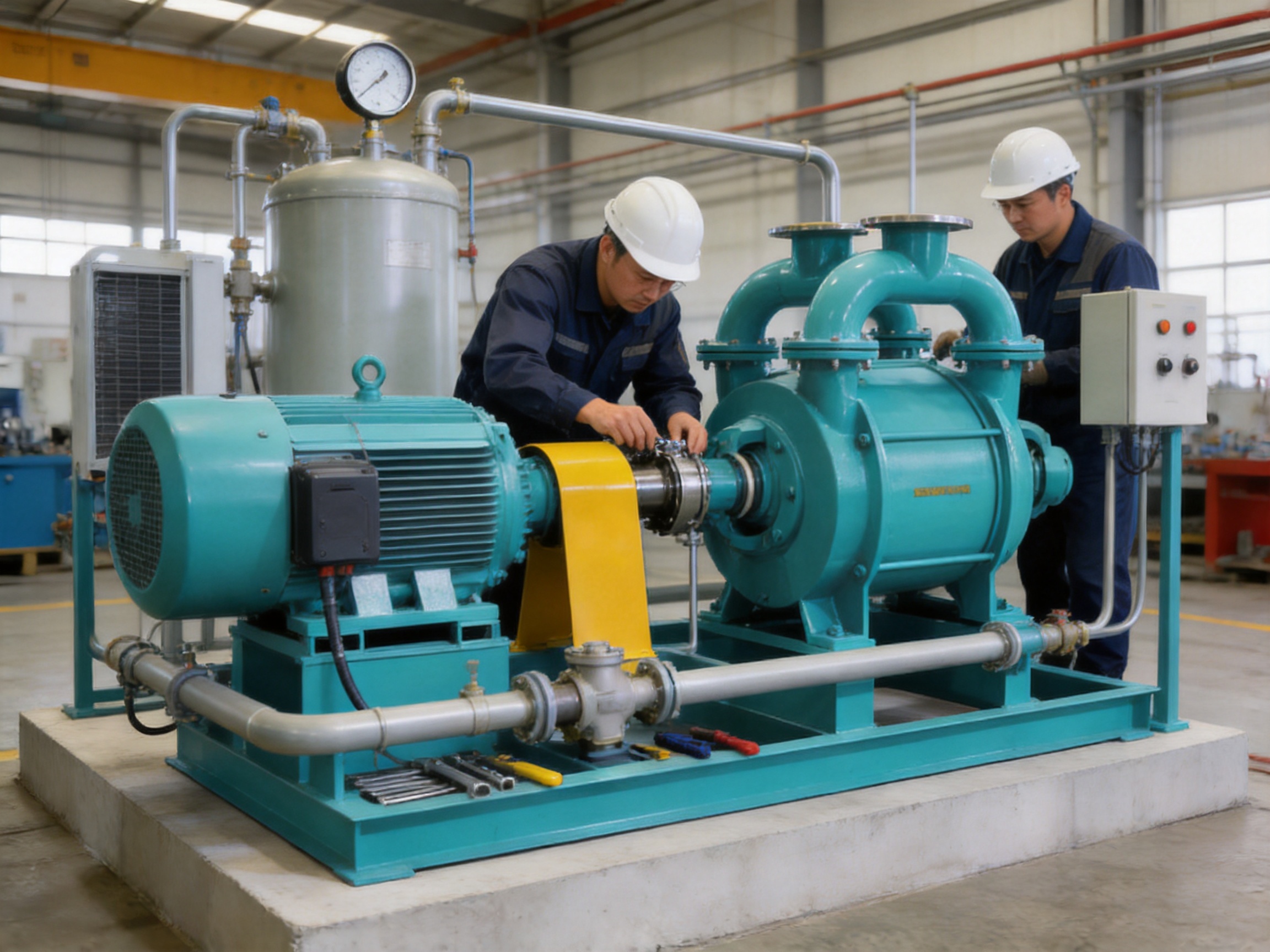
The 2SK Series Double-Stage Liquid Ring Vacuum Pump is designed for industrial users who need dependable vacuum generation in demanding environments. Built around a two-stage liquid ring compression principle, this pump is suitable for applications involving humid gases, contaminated air, process vapors, and relatively high gas-handling requirements. Its operating concept is straightforward, robust, and well suited to industries where dry vacuum technologies may be exposed to excessive moisture, dust, condensable vapor, or process contamination.
Unlike many conventional vacuum solutions that depend on close mechanical tolerances, oil lubrication, or highly sensitive internal components, a liquid ring pump uses a service liquid—normally water—to create a sealing ring inside the casing. This liquid ring forms the compression chambers required to draw in, compress, and discharge gas. The result is a reliable vacuum system capable of supporting a broad range of industrial processes.
The 2SK Series is especially relevant to chemical processing, food production, paper manufacturing, mining, petroleum, plastics, textiles, power generation, cement production, metalworking, and general manufacturing. Its double-stage configuration provides a stronger compression effect than a single-stage arrangement, making it an effective option when the application requires stable vacuum performance across a demanding operating cycle.
A liquid ring vacuum pump generates vacuum by rotating a vaned impeller inside a cylindrical pump casing. Before operation, the pump receives a controlled quantity of sealing liquid. As the impeller rotates, centrifugal force moves the liquid toward the casing wall, where it forms a rotating cylindrical ring. The impeller is mounted eccentrically in relation to the casing, so the space between the impeller vanes and the liquid ring changes continuously during each revolution.
Where the space increases, a vacuum is created and gas is drawn into the pump through the suction port. As the impeller continues to rotate, the space decreases. The trapped gas is compressed and directed toward the discharge port. During this process, the gas may mix with a certain amount of operating liquid. In a complete installation, a vapor-liquid separator can be used to separate the discharged gas from the liquid and return or manage the liquid according to the process design.
In the 2SK configuration, compression takes place through two stages. The first stage reduces the pressure of the incoming gas, while the second stage provides additional compression and supports the achievement of a deeper or more stable vacuum under suitable operating conditions. The two-stage layout is valuable in applications where a single compression step may not provide adequate vacuum performance.
The pump does not require the same type of oil-filled compression chamber used by many oil-sealed vacuum pumps. This can simplify process compatibility in applications where oil contamination is undesirable. It also allows the pump to tolerate wet gases and condensable vapors more effectively than many dry mechanical vacuum systems, provided that the selected materials, sealing liquid, operating temperature, and system configuration are appropriate.
Industrial vacuum systems frequently operate under conditions that are more severe than those found in laboratories or light-duty equipment rooms. Gas streams may contain moisture, solvents, dust, vapor, particles, or process residues. Temperature can vary significantly, and the pump may need to operate for long production cycles. These factors can reduce the service life of sensitive vacuum equipment.
The liquid ring principle offers several practical benefits in this type of environment. The operating liquid provides sealing between the impeller and casing, reducing the need for extremely small dry running clearances. It also absorbs a portion of the heat generated during compression. Because the liquid ring is continuously renewed or circulated, it can help manage condensable components within the gas stream.
Another advantage is the pump’s ability to operate with a relatively stable mechanical arrangement. The impeller is the principal rotating element, and the compression process does not depend on sliding vanes, complicated dry-running friction surfaces, or an oil film within the gas path. This supports reliable operation when the pump is correctly selected and supplied with the necessary operating liquid.
Liquid ring pumps are not universal replacements for every vacuum technology. Their performance depends on the temperature and vapor pressure of the sealing liquid, the composition of the gas, the required vacuum level, the available cooling conditions, and the design of the separator and piping system. Nevertheless, for wet, dirty, and high-capacity applications, the technology offers a strong balance between durability, process tolerance, and operating practicality.
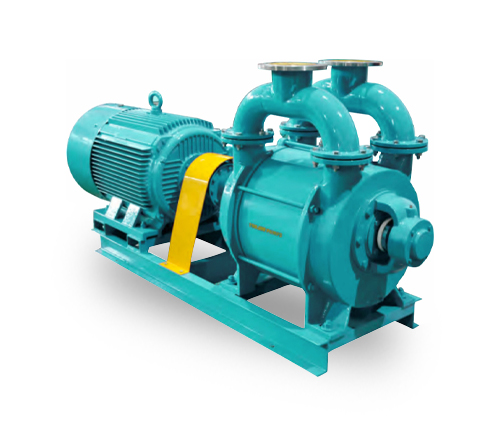
2SK Series Double Stages Liquid Ring Vacuum Chemical Industrial Pump
The most important design feature of the 2SK Series is its double-stage configuration. Two compression stages enable the pump to handle applications requiring more than a basic low-vacuum duty. The arrangement can support improved vacuum capability, stronger compression, and more consistent operation when process conditions fluctuate.
For industrial users, this means the pump can be considered for processes that require a controlled vacuum over an extended operating period. Examples include evacuation, vapor removal, suction filtration, vacuum drying support, deaeration, priming, air extraction, and vacuum assistance in chemical or manufacturing equipment.
The liquid ring forms the seal around the impeller vanes. This eliminates the need for a conventional dry compression seal throughout the working chamber. Water is commonly used as the operating liquid, but the correct liquid must be determined according to process compatibility, temperature, corrosion conditions, and environmental requirements.
Liquid sealing is particularly beneficial where the gas contains water vapor or other condensable substances. Instead of allowing condensate to accumulate unpredictably inside a sensitive dry pump, the liquid ring pump is designed to work with a controlled liquid phase. This characteristic makes the 2SK Series suitable for humid and vapor-rich applications when the system is properly engineered.
The operating concept of the pump is based on a strong casing, a rotating impeller, bearings, shaft sealing arrangements, and accurately manufactured internal components. This relatively robust construction is appropriate for factories that value dependable service over highly complex mechanisms.
A sturdy construction also helps the pump tolerate normal variations in industrial service. However, reliability still depends on proper alignment, correct operating-liquid flow, clean installation, suitable motor selection, and preventive maintenance. A robust pump should not be treated as maintenance-free equipment; it should be incorporated into a planned inspection and service program.
Many processes generate gases that are not perfectly dry or clean. Food processing can produce moisture and vapor. Chemical operations can release condensable gases. Paper and textile production may involve humid air. Mining and cement applications can expose equipment to dust and challenging ambient conditions. The liquid ring operating principle is well suited to these environments because the compression process is not dependent on a dry, oil-free chamber.
When solids or aggressive chemicals are present, the pump material and upstream protection must be selected carefully. Separators, filters, strainers, demisters, cooling arrangements, and corrosion-resistant materials may be required. The benefit of the 2SK design is that it provides a solid foundation for such engineered systems.
The 2SK Series is intended for industrial duty rather than occasional household use. With correct installation and operating conditions, it can support long working cycles in production plants. The continuous liquid ring helps regulate compression conditions, while the two-stage arrangement provides additional performance capacity for demanding vacuum duties.
Industrial customers can therefore integrate the pump into centralized vacuum systems, dedicated process skids, or equipment packages. The pump can be paired with a vapor-liquid separator, control valves, vacuum gauges, non-return valves, cooling equipment, and automated control systems according to the needs of the facility.
The selection of a vacuum pump should be based on the complete process rather than on a single performance value. Required vacuum level, gas flow, vapor content, contamination, operating temperature, maintenance resources, energy cost, and environmental conditions all influence the decision. Within that selection process, the 2SK Series offers several advantages over competing technologies in appropriate applications.
| Selection Factor | 2SK Double-Stage Liquid Ring Pump | Typical Dry Mechanical Pump | Typical Oil-Sealed Pump |
|---|---|---|---|
| Handling of humid gas | Well suited when operating-liquid conditions are correctly controlled | May require additional protection against condensation | Condensation may affect oil quality and maintenance |
| Process contamination tolerance | Generally suitable for demanding gas streams with proper filtration and separation | Contamination can affect clearances and internal surfaces | Contamination may degrade or contaminate the oil |
| Oil contamination risk | No compression oil is required in the working chamber | Usually oil-free | Oil may enter the gas path if not properly controlled |
| Compression stages | Two stages support higher compression capability than many single-stage arrangements | Depends on the specific pump design | Depends on the specific pump design |
| Heat management | Operating liquid absorbs and carries away compression heat | Often depends on air cooling or specialized internal design | Oil and external cooling may be required |
| Industrial service suitability | Strong option for wet, dirty, and high-capacity applications | Strong for clean and dry processes | Useful where oil-sealed compression is acceptable |
| Operating-liquid requirement | Yes; water or another compatible liquid is normally required | Usually no liquid required | Oil is required for many designs |
The table illustrates a general comparison rather than a substitute for engineering calculations. A dry pump may be preferable for clean, dry, high-purity applications. An oil-sealed pump may offer advantages for particular pressure ranges. However, when a process includes high humidity, condensable vapor, or contamination, a liquid ring pump often offers greater practical tolerance.
Compared with a single-stage liquid ring pump, the double-stage 2SK design can provide improved vacuum capability and greater flexibility in demanding duties. The two-stage structure may also help the pump maintain useful performance as the application approaches a more difficult operating point.
Compared with some highly specialized vacuum systems, the 2SK Series may offer a simpler operating philosophy. The pump uses a proven combination of mechanical rotation and liquid sealing rather than depending on numerous delicate components. This can be beneficial for maintenance teams that prefer equipment with understandable service requirements and readily identifiable operating conditions.
Chemical plants often require vacuum for solvent recovery, evaporation, filtration, drying, degassing, stripping, crystallization, and transfer operations. The gas stream may contain moisture, solvent vapor, or condensable chemical components. A liquid ring vacuum pump can be used when the operating liquid is compatible with the process and when the system includes appropriate separation and treatment equipment.
In chemical service, material selection is essential. The pump casing, impeller, shaft, seals, and separator must be evaluated against the chemical composition, concentration, temperature, and exposure time. The 2SK Series should be configured according to the actual process rather than installed as a generic water-service pump in an aggressive chemical environment.
Vacuum is widely used in food production for packaging, deaeration, concentration, drying, and product transfer. Moisture and steam are common in these processes, which makes liquid ring technology attractive. The pump can help remove air and vapor while reducing the risk associated with oil contamination in the compression chamber.
Food-sector installations must follow the customer’s hygiene requirements and applicable local regulations. The pump system should be designed to prevent unwanted contamination, allow effective cleaning, and use suitable materials and operating liquids. The liquid ring principle can be useful, but the overall installation—not only the pump—must meet the required sanitation standards.
Paint and coating processes can involve solvent vapor, mixing, deaeration, filtration, and drying. Vacuum equipment may be exposed to vapors that require controlled handling. A liquid ring pump can be considered when the operating liquid, materials, and exhaust treatment are compatible with the process.
Because some solvents may be flammable or chemically reactive, plant safety engineering is necessary. Customers should evaluate hazardous-area classification, motor protection, ventilation, vapor recovery, grounding, and emergency shutdown arrangements before commissioning the system.
Paper manufacturing uses vacuum in forming, dewatering, felt conditioning, pickup systems, and other production stages. These duties often involve high humidity and continuous operation. Liquid ring pumps are commonly considered for applications where a stable vacuum must be maintained in the presence of water vapor and process moisture.
The correct pump capacity depends on the machine configuration, required vacuum level, leakage rate, operating speed, and water temperature. The 2SK Series can be incorporated into a dedicated vacuum package or used as part of a larger system containing separators, condensers, control valves, and monitoring instruments.
Vacuum is used in brick extrusion to remove air from clay and improve product density and consistency. Dust and moisture may be present in the process, creating challenging conditions for vacuum equipment. The liquid ring design provides a practical option when the system includes adequate protection against large solid particles.
Upstream filtration, drainage, and separator design are especially important in dusty environments. The pump should not be expected to process large quantities of abrasive solids without protection. With sensible system engineering, its wet-gas tolerance and robust construction can support demanding production duties.
Automotive factories and metalworking plants use vacuum in lifting, clamping, impregnation, machining support, degreasing, drying, and material handling. Some processes generate oil mist, coolant vapor, or humid air. The 2SK Series may provide an appropriate vacuum source where contamination tolerance and reliable operation are more important than extremely deep laboratory vacuum.
Centralized vacuum systems can serve multiple machines, while individual pump packages may be used for dedicated workstations. The final design should account for simultaneous demand, leakage, line losses, receiver volume, and control strategy.
Vacuum systems in petroleum and oil and gas operations may support vapor handling, dehydration, filtration, distillation assistance, priming, and process evacuation. These environments demand careful consideration of gas composition, flammability, temperature, corrosion, and regulatory requirements.
The pump itself must be selected with a clear understanding of the process gas. Materials, seals, drive motors, instrumentation, and protective systems may need to comply with project-specific specifications. The 2SK Series can serve as a robust vacuum platform, but hazardous applications require a complete engineered package and appropriate certification.
Mining facilities often deal with dust, water, slurry-related humidity, and continuous production. Vacuum equipment may be used in filtration, dewatering, material handling, and processing systems. The liquid ring pump’s ability to work with humid gas makes it a candidate for selected duties.
Dust control is essential. Abrasive particles can cause wear to the impeller, casing, seals, and separator. Proper filtration, drainage, routine inspection, and operating-liquid management help protect the pump and maintain performance.
Plastics manufacturing may require vacuum for extrusion, degassing, drying, conveying, and molding-related operations. Textile plants may use vacuum in spinning, drying, suction, and process handling. Both industries can involve vapor, lint, heat, or contamination.
The 2SK Series can be selected for applications where its double-stage performance and wet-gas tolerance match the process. The system designer should consider the temperature of the gas and operating liquid, because high temperatures can reduce available vacuum performance and increase cooling requirements.
Power and utility facilities use vacuum in priming, condenser-related services, deaeration, drainage, and equipment evacuation. Cement production and general manufacturing may require vacuum for filtration, material handling, drying, and dust-related processes. These environments benefit from equipment designed for industrial durability.
In all of these sectors, the pump should be integrated with suitable controls and protection. A vacuum switch, liquid-flow monitoring device, temperature sensor, motor overload protection, and separator-level control can help operators identify abnormal conditions before serious damage occurs.
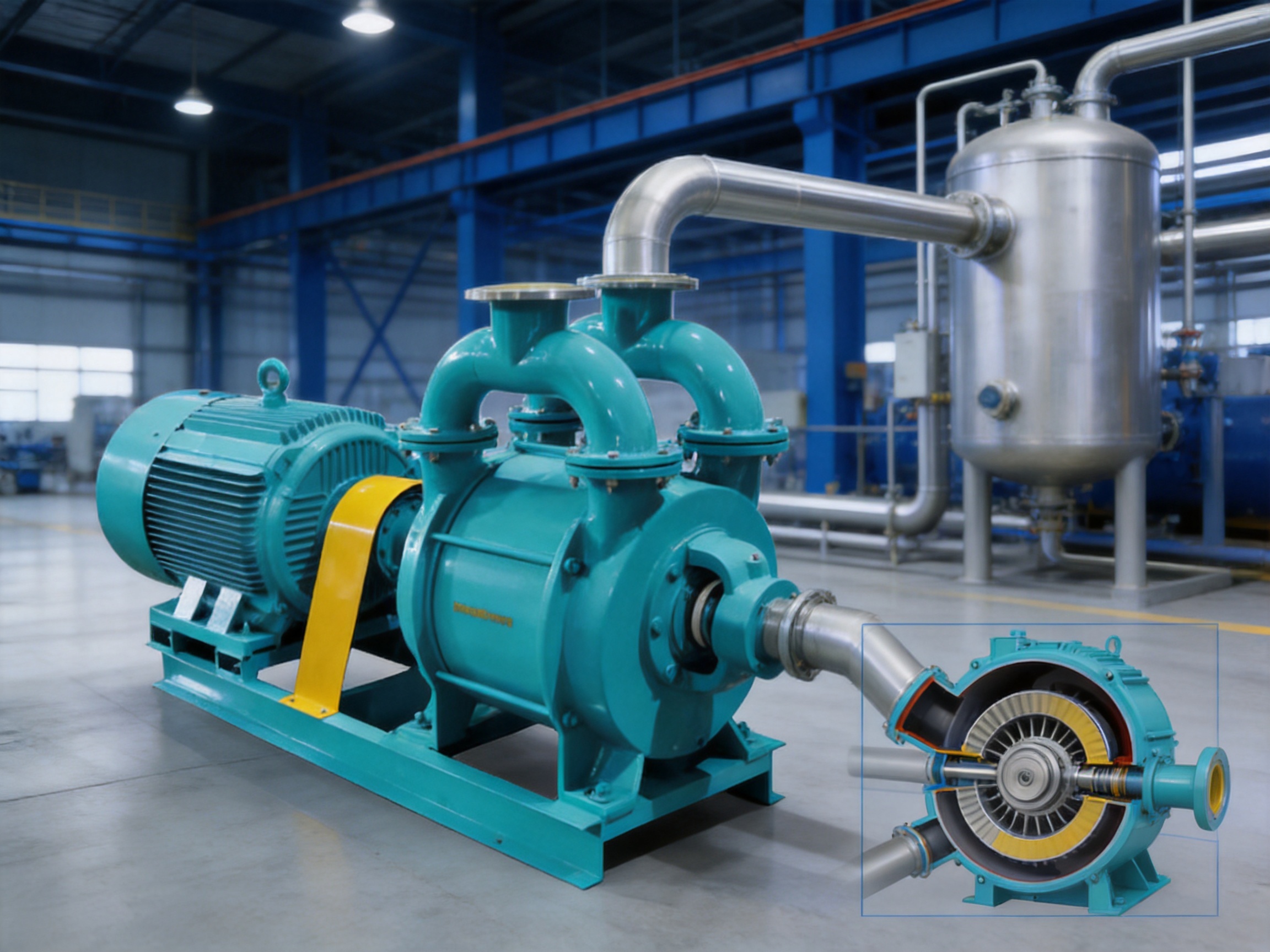
The 2SK Series is supplied by Taizhou Edwin Electric Co., Ltd., also known as Edwin Pump. The company was founded in 2008 and operates as an integrated manufacturing enterprise involved in independent research and development, mass production, and global export. Its wider product portfolio includes deep well pumps, submersible pumps, domestic booster pumps, circulation pumps, solar water pumps, intelligent booster pumps, and other water-related equipment.
This broader product experience is relevant to the 2SK Series because pump manufacturing requires an understanding of hydraulic design, rotating assemblies, motors, seals, materials, production control, and system integration. A manufacturer with experience across multiple pump categories can apply lessons from different applications to product development and quality management.
Independent research and development enables a manufacturer to adapt products to changing customer requirements. Industrial vacuum applications are not identical: one customer may need high moisture tolerance, another may require chemical compatibility, and another may prioritize continuous operation, compact installation, or simplified maintenance.
Research and development can support improvements in hydraulic passage design, impeller geometry, casing structure, sealing arrangements, motor matching, noise reduction, and system accessories. It can also help the manufacturer respond to regional standards, different power supplies, and varied installation practices.
Mass production provides benefits when it is supported by consistent procedures and quality control. Repeatable production processes can improve dimensional consistency, assembly accuracy, component interchangeability, and delivery planning. For distributors, engineering contractors, and industrial users, these capabilities are important when multiple pumps or replacement units are required.
Production scale may also support more efficient procurement of raw materials and components. However, production volume alone does not define quality. The relevant strengths are controlled processes, documented inspections, trained personnel, traceability, functional testing, and the ability to identify and correct deviations.
A liquid ring pump depends on accurate relationships between the shaft, impeller, casing, bearings, seals, and motor. Manufacturing controls should therefore address machining accuracy, shaft runout, impeller balance, bearing installation, seal assembly, and final alignment.
Proper balancing of the rotating assembly helps reduce vibration and mechanical stress. Accurate machining supports the intended internal clearances and compression behavior. Correct shaft-seal installation helps prevent leakage of the operating liquid and protects the bearings. These details have a direct effect on service life and operating stability.
Final assembly should include inspection of key components, verification of fasteners, confirmation of shaft rotation, checking of seals, and review of motor connections. Functional testing can help identify unusual vibration, abnormal noise, leakage, overheating, or performance deviations before shipment.
For industrial customers, documentation is also valuable. Inspection records, product identification, operating instructions, spare-parts information, and recommended maintenance intervals help users establish a reliable commissioning and service process.
Edwin Pump has developed export-oriented capabilities through its manufacturing and related import-export operations. The company established Taizhou Haipai Import & Export Co., Ltd. and Golden Falcon Industrial Co., Ltd. in 2012 to support procurement planning, order tracking, cross-border delivery, and foreign trade services.
For international customers, this type of support can simplify communication and project coordination. Industrial pump purchases often involve technical confirmation, voltage and frequency selection, packaging, shipping documents, spare-parts planning, and after-sales communication. A manufacturer able to coordinate these stages can provide more practical support than a supplier focused only on the initial quotation.
Correct selection is necessary to obtain the expected performance from any vacuum pump. Customers should provide detailed process information before ordering the 2SK Series. Important factors include required vacuum level, gas flow rate, gas composition, inlet temperature, discharge pressure, operating-liquid temperature, operating-liquid quality, ambient temperature, duty cycle, installation altitude, motor power supply, and available cooling arrangements.
The required capacity should be based on actual process demand rather than on the nominal size of the suction connection. System leakage, pipe length, bends, valves, filters, separators, and changes in production load can significantly affect the pump’s real operating point.
Operating-liquid temperature is particularly important. As water temperature rises, its vapor pressure also rises, which can limit the achievable vacuum. Cooling or recirculation may therefore be necessary in continuous service. The liquid flow must be sufficient to create and maintain the liquid ring, but excessive flow can increase water consumption, separator load, and operating cost.
Gas compatibility should also be reviewed. Corrosive gases, solvents, flammable vapors, toxic substances, and abrasive particles may require special materials, seals, filtration, condensers, or protective controls. The pump should never be selected solely by comparing a catalog flow value with a process flow value.
| Required Information | Why It Matters | Typical Engineering Action |
|---|---|---|
| Required vacuum level | Determines whether a single-stage or double-stage design is appropriate | Compare the required pressure with the pump performance curve |
| Gas flow rate | Defines the necessary pumping capacity | Calculate process load, leakage, and safety margin |
| Gas composition | Influences corrosion, safety, and material selection | Review casing, impeller, seal, and exhaust compatibility |
| Gas temperature | Affects vapor behavior and pump thermal load | Consider cooling, condensation, and temperature limits |
| Operating-liquid temperature | Influences vapor pressure and achievable vacuum | Provide cooling or controlled liquid circulation if needed |
| Solid or dust content | May cause abrasion or blockage | Install filters, strainers, separators, or protective devices |
| Duty cycle | Determines thermal and mechanical loading | Confirm suitability for intermittent or continuous operation |
| Power supply | Ensures motor compatibility | Specify voltage, frequency, phase, and protection requirements |
| Installation environment | May affect motor, corrosion, ventilation, and controls | Evaluate enclosure, ambient temperature, altitude, and hazardous-area needs |
The foundation should be rigid, level, and capable of supporting the complete pump and motor assembly. Soft foundations or poor anchoring can increase vibration and cause misalignment. The pump should be positioned where inspection, lubrication, seal replacement, drainage, and cleaning can be performed without dismantling unrelated equipment.
Suction piping should be as short and direct as practical. Unnecessary elbows, undersized pipes, partially closed valves, and sharp restrictions can increase pressure loss and reduce vacuum performance. The piping should be independently supported so that its weight does not load the pump casing or create strain at the connections.
The operating-liquid supply should be clean enough to prevent blockage and excessive wear. If the process permits, a separator and recirculation circuit can reduce liquid consumption. Where the liquid becomes contaminated, a controlled replacement or treatment system may be necessary.
Before startup, operators should verify the direction of motor rotation, open the required liquid supply, check valve positions, confirm separator levels, and ensure that the discharge path is clear. The pump should not be operated without the required sealing liquid. Dry running can cause rapid damage to internal components and seals.
Electrical installation should be completed by qualified personnel. Motor protection should be selected according to the motor rating and local electrical requirements. Emergency shutdown, overload protection, grounding, and, where necessary, hazardous-area protection should be included in the complete system design.
Preventive maintenance helps preserve vacuum performance and reduce unexpected downtime. Operators should regularly inspect vibration, sound, operating-liquid flow, liquid temperature, motor current, seal leakage, separator level, and vacuum pressure. A change in any of these indicators may reveal blockage, wear, incorrect liquid conditions, air leakage, or mechanical problems.
Operating liquid should be monitored for contamination, hardness, suspended solids, and temperature. Poor liquid quality can reduce performance and accelerate wear. In recirculating systems, filters, coolers, separators, and drains should be inspected according to the plant’s maintenance schedule.
Bearings and shaft seals should be serviced in accordance with the manufacturer’s instructions. If abnormal vibration occurs, the pump should be stopped and inspected rather than operated continuously in a damaged condition. Vibration may result from misalignment, impeller imbalance, bearing wear, foundation problems, foreign material, or hydraulic instability.
Performance should be checked against the original commissioning data. A gradual decline in vacuum may indicate increased leakage, worn internal surfaces, insufficient operating liquid, high liquid temperature, blocked piping, or process changes. Comparing current measurements with baseline data helps maintenance teams identify problems early.
Vacuum equipment can present mechanical, electrical, thermal, chemical, and process-related hazards. Operators should follow the installation and maintenance instructions supplied with the pump and should use suitable personal protective equipment.
The pump, piping, separator, and connected vessel may contain hazardous substances even after the system has been stopped. Before maintenance, the system should be isolated, depressurized, drained, ventilated, and verified safe. Electrical power should be locked out according to the facility’s safety procedure.
If the process contains flammable or explosive gases, the complete installation must be evaluated by qualified safety professionals. Motor type, electrical equipment, grounding, ventilation, exhaust treatment, and emergency controls may need to meet special requirements. The pump’s general suitability for industrial vacuum service does not automatically certify it for every hazardous environment.
Noise and hot surfaces should also be considered. Guards should protect operators from rotating parts, and the pump should be installed with adequate ventilation and access control. Any discharge gas or liquid should be directed to a safe collection, treatment, or drainage point.
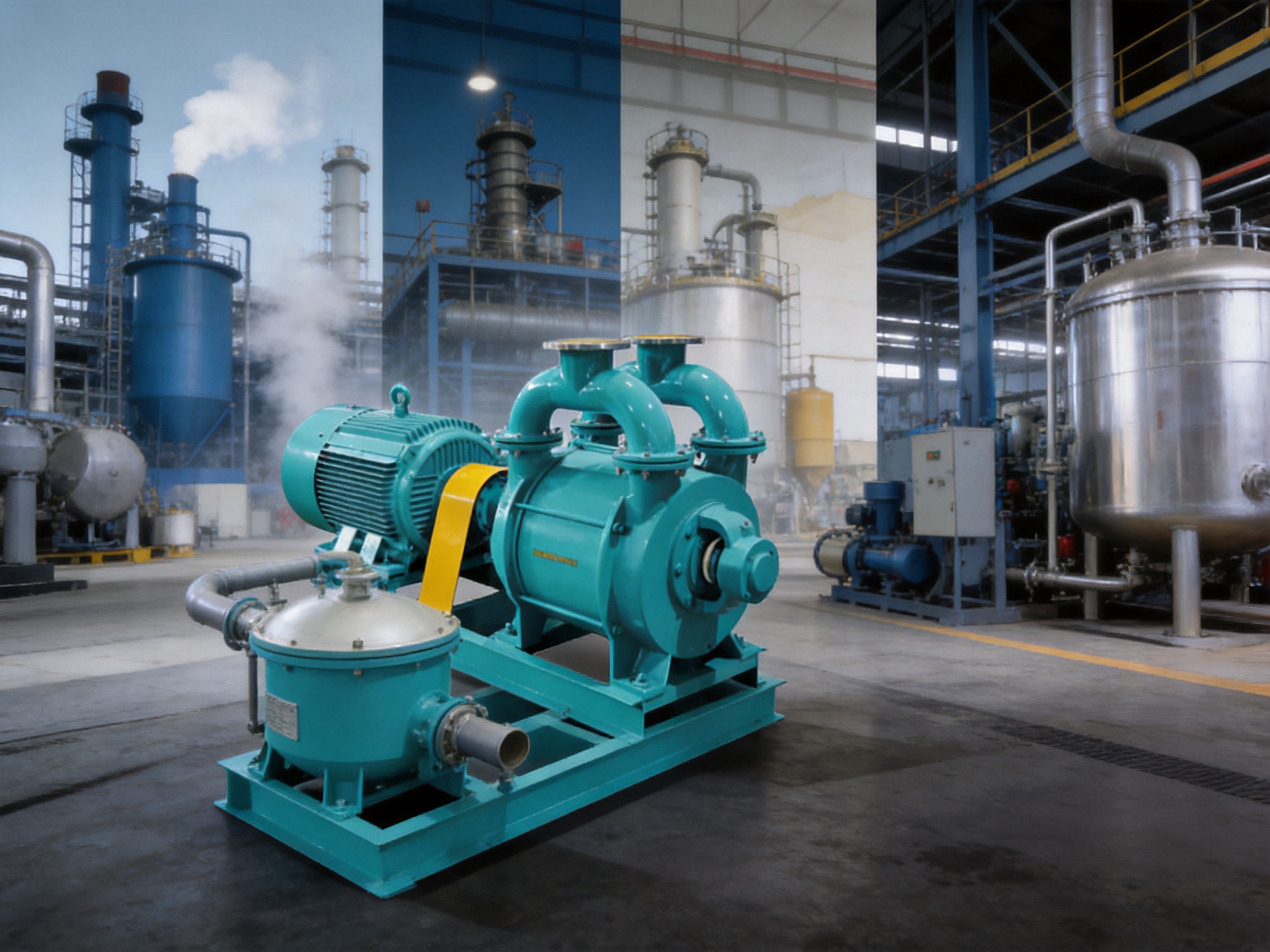
Industrial customers benefit from selecting equipment designed for the actual process rather than adapting a general-purpose pump beyond its intended duty. The 2SK Series is purpose-built around liquid ring vacuum generation and double-stage compression. This gives the product a clear operating identity and makes it easier for engineers to evaluate its suitability.
The pump’s key value lies in the combination of features: two-stage compression, liquid-sealed operation, tolerance for humid gas, robust mechanical construction, and applicability to continuous industrial service. Each feature supports a different aspect of process reliability. Together, they create a practical solution for customers who need vacuum equipment capable of working in demanding conditions.
Another advantage is the availability of a manufacturer with experience in pump development, mass production, export coordination, and related water equipment. Edwin Pump’s wider product portfolio and integrated business structure allow customers to communicate with a supplier familiar with pumps, water handling, motors, system accessories, and international procurement requirements.
For distributors and system integrators, this can support product consolidation and project coordination. For end users, it can simplify communication during selection, commissioning, spare-parts planning, and technical support. The best results are achieved when the manufacturer receives complete process information and participates in the selection of the pump, operating liquid, separator, motor, controls, and accessories.
The 2SK Series is a double-stage liquid ring vacuum pump designed for industrial vacuum applications. It uses a rotating impeller and a liquid ring to draw in and compress gas. The double-stage design provides additional compression capability compared with many single-stage liquid ring pumps.
Water is commonly used as the operating liquid. However, the correct liquid depends on gas composition, process compatibility, temperature, corrosion conditions, and environmental requirements. In chemical or specialized applications, another compatible liquid may be considered after engineering review.
Liquid ring pumps are generally well suited to humid gases, condensable vapor, and wet process conditions. The pump must still be correctly sized, and the operating-liquid temperature and flow must be controlled. Large solids, aggressive chemicals, or excessive contamination may require filtration, material upgrades, or additional system protection.
Two stages provide two successive compression steps. This can improve vacuum capability and support more stable operation in demanding applications. The actual performance depends on pump size, operating-liquid temperature, gas load, speed, and system conditions.
The compression chamber does not require oil as the sealing medium; it uses a liquid ring, normally water. This can reduce the risk of oil contamination in the compressed gas. The motor and bearing arrangements may still require appropriate lubrication according to the specific construction and maintenance instructions.
Potential applications include chemical processing, food production, paint manufacturing, paper production, brick extrusion, automotive manufacturing, metalworking, petroleum, oil and gas, mining, plastics, textiles, power and utilities, cement, and general manufacturing. Suitability must be confirmed against the actual process conditions.
Potentially, but only as part of a properly engineered and approved system. Flammable-gas applications require review of the gas composition, hazardous-area classification, motor and electrical equipment, grounding, ventilation, exhaust handling, and emergency protection. Customers should obtain professional safety guidance before ordering.
Customers should provide required vacuum level, gas flow, gas composition, gas temperature, operating-liquid temperature, discharge conditions, duty cycle, power supply, installation environment, and any requirements related to corrosion, hygiene, hazardous areas, or contamination.
A separator is often used to separate discharged gas from the operating liquid. It can also support liquid recovery, recirculation, level control, and process management. The exact arrangement depends on the application, liquid consumption target, discharge conditions, and environmental requirements.
Correct selection, clean and adequate operating liquid, proper alignment, suitable piping, routine inspection, timely seal and bearing maintenance, vibration monitoring, and protection against solids all contribute to longer service life. Operating the pump without sufficient liquid or outside its design conditions should be avoided.
The manufacturer has experience in independent research and development, mass production, pump manufacturing, global export, procurement planning, order tracking, and cross-border delivery. These capabilities can support product consistency, technical communication, project coordination, and after-sales service for international customers.
The 2SK Series Double-Stage Liquid Ring Vacuum Pump is a practical industrial vacuum solution for processes involving moisture, condensable vapor, contamination, and demanding operating cycles. Its liquid ring creates the internal seal required for compression, while the double-stage arrangement provides enhanced vacuum capability compared with many single-stage designs.
The pump is suitable for a broad range of industries, including chemical processing, food production, paper, paint, brick extrusion, automotive, metalworking, petroleum, mining, plastics, textiles, power, utilities, cement, and general manufacturing. Its advantages are most valuable when the application requires dependable wet-gas handling, reduced oil contamination risk, robust operation, and a straightforward mechanical design.
Successful operation depends on proper engineering. Customers should consider gas composition, vacuum level, flow rate, operating-liquid temperature, material compatibility, separator design, filtration, motor selection, controls, safety, and maintenance access. With these factors addressed, the 2SK Series can form the core of a reliable vacuum system for difficult industrial service.
Supported by Taizhou Edwin Electric Co., Ltd.’s experience in research and development, mass production, global export, and pump-related product integration, the 2SK Series offers industrial users a combination of proven liquid ring technology and manufacturer-backed supply capability. It is an appropriate option for companies seeking a durable, process-tolerant vacuum pump for continuous and demanding applications.
1. Manufacturer-provided product description and application information for the 2SK Series Double-Stage Liquid Ring Vacuum Pump.
2. Manufacturer-provided company information concerning Taizhou Edwin Electric Co., Ltd., its product portfolio, manufacturing activities, and export services.
3. General engineering principles for liquid ring vacuum pump operation, liquid sealing, gas compression, vapor handling, and separator systems.
4. General industrial guidance for pump installation, alignment, operating-liquid control, preventive maintenance, rotating equipment safety, and process equipment selection.
5. General vacuum engineering references covering wet-gas pumping, vapor pressure, system leakage, gas flow, pressure loss, and vacuum system design.
edwina@edwin-pump.com
+86-13586290903 (WhatsApp)
Xuri Gongliang Cutting Tool Entrepreneurship Park, Wenqiao Town, Wenling City, Taizhou City, Zhejiang Province, China

High Performance Smart Pump Factory


 English