edwina@edwin-pump.com

View All Products
en
Modern water supply systems require more than a pump with a motor. They need intelligent control, reliable protection, stable pressure management, flexible installation, and the ability to respond to changing water demand. The ELF3 Series IP65 Auto-adaptable Water Shortage Test Timing Function Wide Frequency Pressure Controller has been developed to address these requirements in one compact control solution. It is designed to coordinate the operation of water pumps in residential, agricultural, commercial, and light industrial applications while reducing the need for complicated manual commissioning.
Unlike a conventional pressure switch that simply responds to a fixed pressure value, this advanced pressure controller combines automatic pressure adaptation, water shortage protection, delayed water absorption, flow monitoring, pressure assistance, timing control, and wide-voltage compatibility. The result is a more practical and adaptable control system for self-priming pumps, jet pumps, centrifugal pumps, deep-well pumps, and other compatible water supply equipment.
The controller is manufactured by Taizhou Edwin Electric Co., Ltd., an integrated enterprise specializing in pump research and development, mass production, and international export. Since its establishment in 2008, the company has built experience across deep-well pumps, submersible pumps, domestic booster pumps, circulation pumps, solar water pumps, intelligent booster systems, and related water treatment products. This product knowledge allows the controller to be developed around real pump operating conditions rather than as a generic electrical accessory.
For distributors, system integrators, contractors, and end users, the ELF3 Series provides an opportunity to upgrade traditional pump installations with intelligent control without requiring a complicated external control cabinet. Its combination of broad electrical compatibility, IP65 protection, automatic configuration, and practical operating functions makes it suitable for projects where reliable water delivery and simplified installation are important.
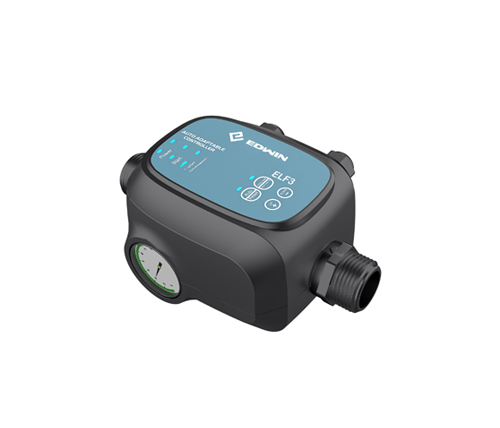
ELF3 Series IP65 Auto-adaptable Water Shortage Test Timing Function Wide Frequency Pressure Controller
The ELF3 Series is an automatic pressure controller for water pumps. Its primary function is to start and stop a connected pump according to water demand and system pressure. When a tap, outlet, or flow point is opened, the pressure in the pipeline falls. The controller detects this condition and starts the pump. When the outlet is closed and the water flow stops, the controller identifies the completed duty cycle and switches the pump off.
This automatic operation eliminates the need for users to start and stop the pump manually. It also helps maintain a more convenient water supply experience in homes, irrigation systems, water towers, small commercial facilities, and other applications requiring automatic pressure assistance.
A major feature of the ELF3 Series is its auto-adaptable operating mode. In automatic mode, the controller can analyze the maximum pressure generated by the connected pump and independently establish a suitable starting pressure at a designated percentage above the peak pressure. This removes the need for the installer to calculate and manually set the initial pressure in many applications.
The auto-adaptation function is particularly useful when the controller is used with different pump types or pump models. Pump performance varies according to motor power, pipe length, vertical lift, suction conditions, water level, and hydraulic resistance. A fixed pressure setting that works well for one installation may be unsuitable for another. By adapting to the connected pump and actual system conditions, the controller offers greater flexibility than a basic preset pressure switch.
In addition to automatic mode, the controller offers a manual mode. The starting pressure can be adjusted using the plus and minus buttons when a specific system setting is required. Manual adjustment is useful for installations with unusual pipe layouts, special pressure requirements, or leakage-prevention needs.
The controller is designed to reduce the commissioning workload. Traditional pressure controllers often require the installer to identify the correct starting pressure, adjust the setting, observe the pump response, and repeat the process until stable operation is achieved. This procedure can be time-consuming, especially when the pump is installed in a deep well, on an elevated floor, or in a system with uncertain hydraulic conditions.
The ELF3 Series can automatically determine a suitable pressure relationship during operation. It monitors the pump’s pressure performance and uses the identified maximum pressure as a reference for establishing the initiating pressure. This provides a practical starting point for installation and helps the system react more intelligently to the connected pump.
Automatic adaptation also supports product standardization for distributors and contractors. Instead of stocking multiple pressure controllers for different fixed pressure ranges, a single adaptable controller can cover a wider variety of compatible pump installations. This can simplify purchasing, inventory planning, and field servicing.
Dry running and water shortage are serious risks for pump systems. A pump may lose its water source because of a low well level, an empty storage tank, a blocked suction line, an incorrectly primed system, or an interrupted municipal supply. If the pump continues operating without sufficient water, internal components may overheat, seals may be damaged, and the service life of the equipment may be reduced.
The ELF3 Series includes a water shortage test and protection function. When the controller detects restricted water availability or an abnormal operating condition, it allows an appropriate test period and can shut the pump down automatically if normal water delivery is not restored. This provides an important layer of protection for the motor and hydraulic components.
The water shortage function is especially valuable for deep-well pumps, self-priming systems, agricultural irrigation equipment, and water transfer applications where the available water level may fluctuate. It also reduces the need for constant supervision by the operator.
Some installations require additional time for the pump to draw water into the suction line. This can occur with self-priming pumps, long suction pipes, elevated pump locations, or systems that have been idle for an extended period. If a controller interprets the initial lack of water as an immediate failure, it may stop the pump before the priming process is complete.
The ELF3 Series supports delayed water absorption. During the initialisation stage, the controller can allow the pump to operate for approximately three and a half minutes so that the system has sufficient time to prime and establish water delivery. Customized priming durations may be available before delivery for specific project requirements.
This function improves compatibility with different installation configurations and helps prevent unnecessary fault interruptions during normal priming. Correct pipe installation, appropriate pump selection, and adequate water supply remain essential, but the delayed absorption feature provides additional operating tolerance.
The controller is designed to respond automatically when a water outlet is opened. When a tap or flow point creates a pressure reduction or causes the flow switch to open, the controller starts the pump. This makes the water supply behave more like a pressurized automatic system rather than a manually controlled pump.
Automatic tap starting is convenient for household water supply, garden irrigation, utility washing, small agricultural systems, and commercial facilities. Users can obtain water when needed without separately operating a motor switch. The pump then stops after the outlet is closed and the controller detects that the water flow has ended.
By linking pressure and flow conditions, the controller can respond to real water demand instead of relying on a simple electrical timer. This supports more efficient pump operation and reduces unnecessary running time.
The timing function allows the pump start cycle to be configured according to customer requirements. This is particularly useful for water tower filling and make-up applications. In these systems, the pump may need to operate at regular intervals or during defined cycles to maintain a reserve of water at an elevated location.
A timed operating function can support applications where water demand is predictable or where automatic replenishment is required. It may also help coordinate pump operation with a wider water management strategy. The exact timing configuration should be selected according to the water source, tank capacity, pump flow, and system requirements.
The inclusion of timing control gives the ELF3 Series an advantage over pressure controllers limited to basic start-and-stop operation. It expands the controller’s usefulness beyond domestic booster applications and supports more structured water supply systems.
Pipeline pressure is affected by several factors, including static water height, pump head, friction losses, outlet demand, and the pressure already present in the system. The ELF3 Series is designed to support smart superposition of pipe pressure, helping the controller interpret the combined pressure conditions of the installation.
This is important in multi-level buildings and systems with long distribution lines. A pressure controller that does not account for existing pipe pressure may start the pump too frequently or fail to provide an appropriate response. Smart pressure management helps the controller operate more effectively across varying installation conditions.
The ELF3 Series is designed for use across a broad range of pump arrangements. Compatible applications may include self-priming pumps, jet pumps, centrifugal pumps, deep-well pumps, and other suitable water pump systems. Its installation range is described as suitable for applications with a lift from 0 to 100 meters, subject to correct pump selection and system design.
The ability to work across this height range is a significant advantage for contractors and system designers. A controller intended only for low-rise household systems may not perform adequately when the pump must supply elevated floors, overhead tanks, or long vertical pipe runs. The ELF3 Series is designed with a wider application range in mind.
Installation is not limited solely by floor height. The actual operating result depends on the pump’s maximum head, flow rate, pipe size, pipe friction, water source, and required outlet pressure. The 0 to 100 meter application reference should therefore be used as a design guideline rather than as a substitute for hydraulic calculation.
Because the controller can adapt to different pressure conditions, it is useful for installers who serve varied markets. Residential water supply, agricultural irrigation, garden systems, well-water extraction, and small commercial booster installations can all require different pump characteristics. A flexible control platform can reduce the complexity of matching accessories to pumps.
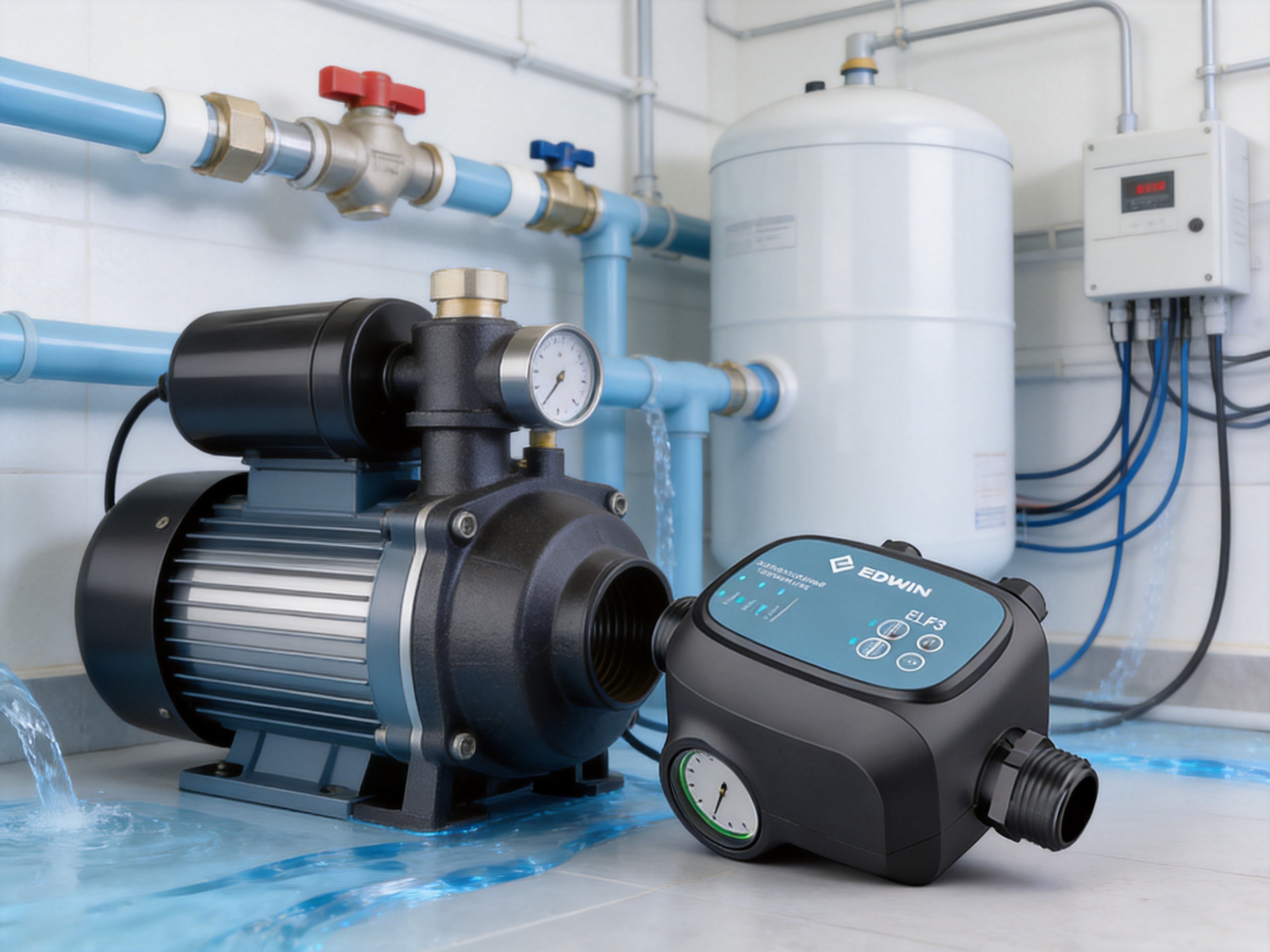
The controller supports a wide voltage range of 100 to 240 volts according to the technical data, while the product description also identifies a broad 90 to 260 volt operating range. Users and installers should confirm the applicable range for the specific model and local electrical conditions before installation.
Wide-voltage compatibility is valuable in areas where the supply voltage is unstable or where the same product is intended for multiple international markets. It can reduce the need for different controller versions and simplify product distribution across regions using different nominal voltage standards.
The controller supports both 50 Hz and 60 Hz power frequencies. This makes it appropriate for a broad range of international electrical environments. Even with wide-frequency capability, all wiring, grounding, circuit protection, and motor compatibility requirements must be checked by a qualified professional.
The ELF3 Series is specified for pump power from 0.1 to 2.2 kilowatts and a maximum current of 30 amperes. This range allows the controller to serve small domestic pumps as well as more powerful booster and water supply equipment within the stated electrical limits.
Correct sizing remains essential. The motor’s rated current, starting current, operating voltage, connection method, and duty cycle should be compared with the controller’s rating. If a pump exceeds the controller’s permitted electrical capacity, an appropriate contactor, overload device, or alternative control arrangement may be required.
The IP65 protection grade indicates that the enclosure is designed to provide protection against dust ingress and water jets from different directions. This makes the controller better suited to practical pump-room, utility, outdoor, and semi-exposed installations than an unprotected indoor electrical component.
IP65 protection improves resistance to common environmental conditions, including dust, splashing water, and routine cleaning activity. However, IP65 does not mean the controller should be submerged or installed where it is continuously exposed to flooding. The device should be mounted according to the manufacturer’s instructions, with suitable cable entries and protection from extreme environmental abuse.
The stated medium temperature range is 0 to 80 degrees Celsius, and the maximum pressure is 10 bar. These specifications define important boundaries for system design. The water temperature, static pressure, maximum pump pressure, and possible pressure surges should all remain within the specified limits.
The product information also states that the material can withstand temperatures up to 130 degrees Celsius. This material resistance should not be confused with the maximum permitted medium temperature or the complete operating temperature of the controller. The system designer should use the formal product rating applicable to the intended installation.
The ELF3 Series can be used with a pressure tank to improve system stability. A pressure tank stores a small volume of pressurized water, helping satisfy minor water demands without starting the pump every time a tap is opened briefly.
Frequent starting and stopping can increase motor stress, contact wear, thermal loading, and mechanical fatigue. A correctly selected pressure tank can reduce unnecessary cycling and help extend pump life. It can also make the water supply feel smoother during small or intermittent demands.
Another benefit is the reduction of water hammer. Water hammer occurs when water flow changes suddenly, creating a pressure wave in the pipe. Repeated or severe pressure surges can affect valves, pipe connections, pump components, and household fixtures. By cushioning changes in pressure, a pressure tank may help reduce these impacts.
The tank must be correctly sized and precharged for the application. An undersized tank may provide limited benefit, while an incorrectly pressurized tank may cause unstable operation. The controller, pressure tank, pump, non-return valve, and distribution pipe should be considered as one integrated system.
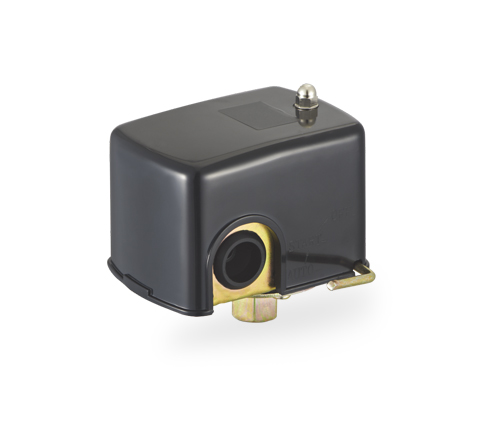
Traditional pressure switches remain useful for simple pump applications, but they often have limitations. A conventional device may require a manual adjustment of the start and stop pressure. It may offer limited protection against dry running, may not provide a priming delay, and may be designed for a narrower voltage range. Installers may also need to use separate timing devices, protection relays, or additional accessories.
The ELF3 Series integrates several of these functions into one pressure control platform. This can reduce the number of external components and simplify the overall installation. Fewer components may also mean fewer wiring points and fewer potential sources of installation error.
| Feature | Traditional Fixed Pressure Switch | ELF3 Series Intelligent Pressure Controller |
| Pressure commissioning | Usually requires manual adjustment | Automatic pressure adaptation with manual adjustment available |
| Water shortage protection | May require a separate protection device | Integrated water shortage test and shutdown function |
| Priming assistance | Often limited or unavailable | Delayed water absorption and approximately three-and-a-half-minute initialisation |
| Tap activation | Pressure response may be basic | Automatic start through pressure or flow switch activation |
| Timing control | Usually requires an external timer | Timing function available for suitable applications |
| Voltage compatibility | Often limited to a narrower range | 100 to 240 volts and 50/60 Hz according to the technical data |
| Environmental protection | Varies by model | IP65 protection grade |
| Installation flexibility | Often selected for a defined pressure range | Suitable for multiple pump types and applications up to the stated lift range |
| Pressure tank support | Possible, depending on system design | Designed to work with a pressure tank for reduced cycling and water hammer |
The comparison demonstrates the product’s main competitive advantages. It is not simply a replacement for a mechanical pressure switch. It is a multifunctional controller intended to provide more intelligent interaction between the pump, water demand, pressure conditions, and protection requirements.
Traditional systems may still be appropriate where the installation is extremely simple, the voltage is stable, the water source is reliable, and manual pressure calibration is acceptable. The ELF3 Series becomes more attractive when the application requires broader compatibility, automatic adaptation, water shortage protection, priming assistance, or timing operation.
The ELF3 Series is available in four listed versions: ELF3-S, ELF3-SP, ELF3-ST, and ELF3-STP. All four variants are specified with a power range of 0.1 to 2.2 kilowatts, voltage of 100 to 240 volts, maximum current of 30 amperes, and frequency of 50/60 Hz.
The model suffixes identify the main differences. “S” means self-adaption, “T” means timing function, and “P” means pressure gauge. These variations allow customers to select the configuration that best matches the project requirements.
| Model | Self-Adaption | Timing Function | Pressure Gauge | Power Range | Voltage | Maximum Current |
| ELF3-S | Yes | No | No | 0.1–2.2 kW | 100–240 V | 30 A |
| ELF3-SP | Yes | No | Yes | 0.1–2.2 kW | 100–240 V | 30 A |
| ELF3-ST | Yes | Yes | No | 0.1–2.2 kW | 100–240 V | 30 A |
| ELF3-STP | Yes | Yes | Yes | 0.1–2.2 kW | 100–240 V | 30 A |
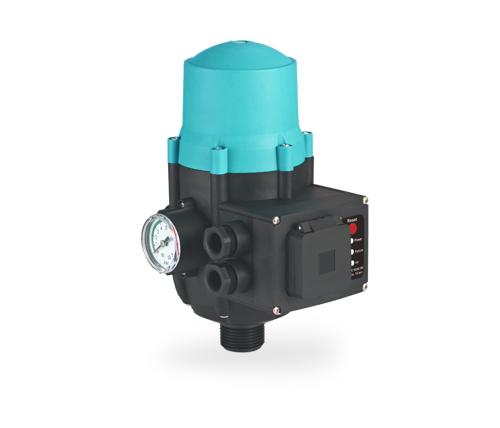
The pressure gauge versions provide a direct visual reference for system pressure. This can be useful during commissioning, maintenance, and troubleshooting. A visible pressure indication helps installers confirm whether the pump is building pressure correctly and whether the system is operating within the expected range.
The timing versions are suitable for water tower replenishment and other applications that require scheduled pump cycling. Where both timing and visual pressure monitoring are desirable, the ELF3-STP version combines both functions.
In residential applications, the controller can automatically start a pump when household taps or showers require water. It may be used with a storage tank, well system, rainwater collection system, or low-pressure municipal supply. Automatic operation improves convenience and reduces the need for manual switching.
The water shortage protection function is particularly useful in homes supplied by wells or storage tanks. If the source becomes temporarily unavailable, the controller can help prevent the pump from running indefinitely without water.
Deep-well pumps often operate under changing water levels and demanding pressure conditions. The wide installation range and water shortage test function make the ELF3 Series suitable for systems where the pump must deliver water from a significant depth or supply elevated outlets.
Deep-well installations require careful attention to cable sizing, pump selection, non-return valves, pipe diameter, well yield, and motor protection. The controller supports automatic pressure management but does not replace correct well and pump engineering.
Small agricultural systems may need automatic water delivery to greenhouses, livestock facilities, crop areas, or storage tanks. The timing function can support scheduled replenishment, while the automatic tap or flow response can control water delivery when irrigation outlets are opened.
For irrigation systems with multiple zones, the controller should be selected according to the total current, pressure requirement, valve arrangement, and expected duty cycle. Filters and suitable pipework are also essential to protect the pump and maintain stable hydraulic performance.
Garden pumps and landscape systems frequently operate with changing demand. Sprinklers, hoses, drip lines, and automatic valves may create different flow patterns. The ELF3 Series can provide automatic pump operation and reduce the need for manual intervention.
Where the system includes a small pressure tank, the controller can help reduce pump starts caused by brief water use. This is useful for gardens with intermittent hose use, automatic irrigation controllers, or small water features.
Elevated water tanks require dependable replenishment. The controller’s timing function can be configured for pump cycles that help maintain the required water level or supply schedule. The automatic pressure features can also support normal demand from the distribution network.
Water tower applications should include suitable level controls, overflow protection, non-return valves, and isolation devices. The pressure controller can contribute to the operating system but should be coordinated with tank instrumentation where precise level management is required.
Small offices, workshops, restaurants, guesthouses, service buildings, and utility facilities may experience fluctuating water demand. The controller can provide pressure assistance without the complexity of a large variable-speed pump station.
Its IP65 enclosure and wide electrical compatibility support installation in practical utility environments. Nevertheless, commercial installations should be assessed for continuous duty, peak demand, hygiene requirements, local electrical codes, and maintenance access.
The company behind the ELF3 Series operates as an integrated manufacturing enterprise with capabilities covering independent research and development, mass production, and global export. This integrated structure is important because a pressure controller must be designed with an understanding of both electrical control and pump hydraulics.
A company focused on multiple pump categories can test control products against different operating conditions. Deep-well pumps, submersible pumps, booster pumps, circulation pumps, and surface pumps each have different starting characteristics, pressure curves, flow patterns, and protection requirements. Experience across these categories supports more practical product development.
The company’s product portfolio also includes solar water pumps and intelligent booster pumps. Investment in new energy and intelligent technology since 2018 demonstrates a development direction focused on energy-conscious and automated water supply. This background is relevant to the ELF3 Series because intelligent pump control is increasingly important in systems where energy use, water availability, and remote or unattended operation must be considered.
Mass production capability provides additional benefits for international buyers. Stable production planning, standardized assembly procedures, repeatable testing, and coordinated order management help support consistent supply. For distributors, this can be more valuable than purchasing a technically similar product from a small supplier without reliable production capacity.
The company also established Taizhou Haipai Import & Export Co., Ltd. and Golden Falcon Industrial Co., Ltd. to support procurement planning, order tracking, cross-border delivery, and foreign trade services. These related service capabilities contribute to a one-stop purchasing experience for customers who need pumps, controllers, accessories, and other water system components.
Independent research and development allows product functions to be adjusted according to market needs and field feedback. Features such as automatic pressure adaptation, delayed water absorption, water shortage testing, wide-voltage operation, and timing control are practical responses to common installation challenges.
Product development should not be limited to adding functions. The functions must work together in a logical operating sequence. For example, the controller must recognize pressure reduction, initiate the pump, allow sufficient time for priming, monitor water availability, and stop the pump after demand ends. This integrated operating logic is one of the product’s important strengths.
Reliable control equipment depends on consistent component selection, enclosure quality, electrical assembly, sealing, terminal connection, and functional testing. As an enterprise engaged in mass production and global export, the manufacturer is positioned to establish repeatable processes for these areas.
For buyers, quality should be evaluated not only by the appearance of the product but also by the stability of its operating logic, the accuracy of pressure detection, the consistency of protective functions, and the availability of technical support. A controller that works reliably across repeated pump cycles can reduce warranty issues and service calls.
International customers may also benefit from the company’s experience serving different application environments. Pumps are used in new energy projects, agricultural irrigation, municipal engineering, mining, construction, HVAC systems, and household water supply. Exposure to varied markets encourages attention to different voltage systems, water conditions, installation practices, and customer expectations.
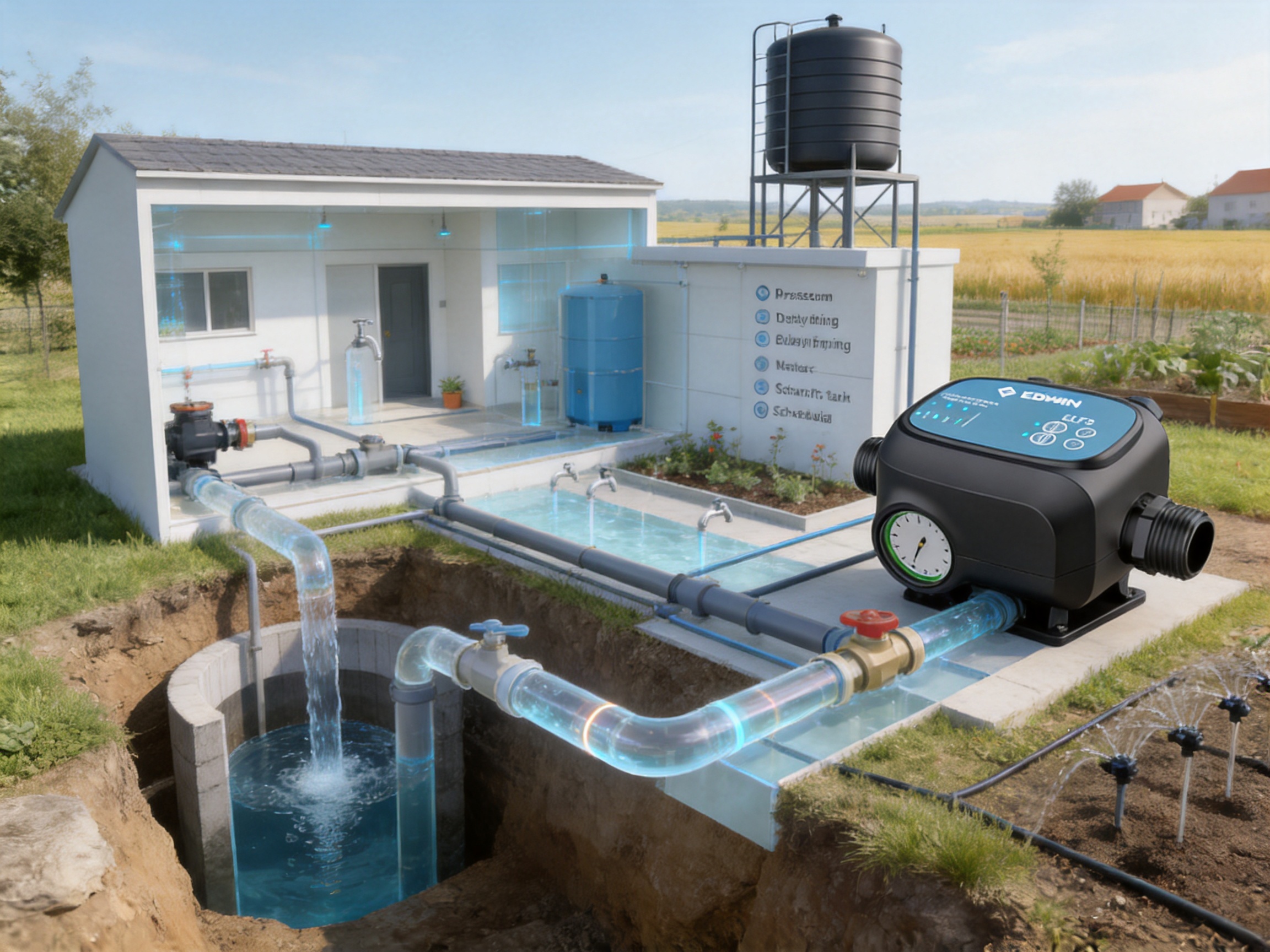
The controller should be installed by a qualified professional familiar with pump systems and electrical safety. Before installation, the technician should verify the pump’s rated voltage, current, power, maximum head, flow rate, and connection requirements. The water source and pipe system should also be inspected for leaks, blockages, air ingress, and adequate water availability.
The controller should be mounted in a location protected from flooding, direct immersion, excessive vibration, and conditions outside its rated temperature range. Although the enclosure has an IP65 protection grade, correct sealing of cable entries and connectors is necessary to maintain the intended level of environmental protection.
The pipe connection is listed as a one-inch interface thread. The installer should use compatible fittings and sealing materials without applying excessive force that could damage the connection. Pipework should be adequately supported so that mechanical stress is not transferred to the controller housing.
A non-return valve may be required depending on the pump type and system arrangement. In deep-well and self-priming applications, the correct valve position can help maintain prime and prevent water from flowing back after the pump stops. The suction line should be airtight and correctly sized.
After installation, the system should be filled or primed according to the pump instructions. The installer should observe the initial operating sequence, confirm that the pump builds pressure, verify that the tap-start function responds correctly, and check that the pump stops after the water outlet is closed.
Where automatic mode is used, the controller should be allowed to complete its pressure recognition and priming process. If manual mode is selected, the start pressure should be adjusted gradually using the plus and minus buttons. Excessively high or low settings can cause unstable operation, inadequate pressure, or frequent starts.
For timing applications, the operating cycle should be selected according to the tank volume, pump flow, water source recovery rate, and required replenishment schedule. The timing function should not be used to force a pump to operate when the water source is insufficient or when the pump is not designed for the duty cycle.
The controller’s operating sequence can be understood as a series of coordinated actions. First, the system remains in standby while the water outlet is closed and the pipeline is pressurized. When the pressure falls below the established starting pressure, or when the flow switch is triggered by an opened outlet, the controller sends a start signal to the pump.
During initialisation, the pump may operate for approximately three and a half minutes to absorb water and complete priming. This delayed water absorption period is important for installations where water does not arrive immediately at the pump inlet or where air must be removed from the suction line.
Once normal water delivery is established, the pump continues supplying the system according to demand. If the outlet remains open, the controller allows operation to continue. If the water source is restricted, the controller carries out its water shortage test and may stop the pump to prevent damage.
When the outlet is closed, the flow switch returns to its closed condition and the pipeline pressure recovers. The controller then stops the pump automatically. A pressure tank can support this process by storing water and minimizing short cycling during small demand changes.
This sequence gives the system a more intelligent response than a basic on-off switch. It coordinates pressure, flow, priming time, and water availability in a way that is better suited to variable field conditions.
Routine maintenance begins with checking for pipe leaks. A small leak can cause pressure to fall repeatedly, leading to unnecessary pump starts. If the pump starts when no outlet is open, the installer should inspect taps, valves, pipe joints, check valves, and the pressure tank.
The water source should also be checked regularly. A blocked filter, low well level, empty tank, or obstructed suction line can activate water shortage protection. Cleaning filters and confirming that the pump remains properly primed can help restore normal operation.
Electrical terminals should be inspected during scheduled maintenance. Loose connections may produce heat, intermittent operation, or voltage drop. Any electrical inspection must be carried out with the power isolated and by an appropriately qualified technician.
If the controller does not start the pump, possible causes include insufficient pressure reduction, an incorrect electrical connection, a pump motor fault, a closed isolation valve, or an active water shortage condition. If the controller does not stop the pump, possible causes include a continuing flow demand, a leak, a damaged flow switch, insufficient pressure, or incorrect system sizing.
Frequent starts may indicate a leaking pipe, an undersized pressure tank, incorrect tank precharge, an unsuitable pressure setting, or a pump that is too large for the system. The installer should diagnose the complete water system rather than replacing the controller immediately.
Maintenance records should include pump operating hours, pressure observations, water source conditions, filter cleaning, and any protective shutdowns. Such records help identify recurring problems and support preventive maintenance.
For distributors, the ELF3 Series offers a clear product proposition: one intelligent controller with multiple integrated functions and broad pump compatibility. Its four model variants allow product selection based on timing and pressure gauge requirements without creating an excessively complex range.
The controller can be marketed alongside domestic booster pumps, deep-well pumps, self-priming pumps, garden pumps, agricultural pumps, and other compatible products. This creates opportunities for bundled sales and complete system solutions rather than the sale of a single isolated component.
For system integrators, automatic adaptation reduces the amount of pressure calibration required during commissioning. The wide voltage and frequency range also supports international project work. IP65 protection expands the potential installation environment, while water shortage protection provides an important safety feature for unattended systems.
For original equipment manufacturers and project buyers, the manufacturer’s integrated production and export experience can support customized procurement programs. Customers may evaluate packaging, labeling, technical documentation, model configuration, and priming parameters according to the needs of their markets.
The company’s ability to supply a broad range of pumps and water treatment peripheral products can also simplify sourcing. Instead of coordinating multiple suppliers for pumps, controllers, and related equipment, buyers may be able to consolidate procurement through one experienced water system manufacturer and its associated export service companies.
The market includes mechanical pressure switches, electronic pump controllers, variable-frequency drives, integrated booster systems, and custom control cabinets. Each category serves different needs. The ELF3 Series is positioned between basic mechanical control and more complex variable-speed systems.
Compared with a mechanical pressure switch, it offers more automation and protection functions. Compared with a complete variable-frequency booster package, it can provide a simpler and potentially more economical control solution for pump systems that do not require continuous speed regulation.
Its strongest competitive advantages are the combination of automatic pressure adaptation, water shortage testing, delayed priming, automatic tap starting, wide-voltage compatibility, timing control, and IP65 protection. Many basic controllers provide only one or two of these functions, requiring additional components for a comparable system.
The availability of a manual mode is another advantage. Fully automatic products can be convenient, but some professional installations require direct control over the start pressure. Providing both automatic and manual operating options allows the same product family to serve a wider customer base.
The optional pressure gauge further improves usability. A gauge allows the installer to see system pressure during commissioning and maintenance. This can accelerate troubleshooting and provide a simple visual confirmation that the pump is operating within the expected range.
Cost should not be evaluated only by comparing the purchase price of the controller. The total installation cost may include wiring, external protection devices, separate timers, additional dry-run protection, commissioning labor, and future service. An integrated controller can reduce the number of components and simplify installation, potentially improving overall project value.
| Parameter | Specification |
| Product series | ELF3 Series |
| Product type | Automatic pressure controller |
| Compatible pump applications | Self-priming, jet, centrifugal, deep-well, submersible, and other suitable pumps |
| Power range | 0.1–2.2 kW |
| Voltage | 100–240 V according to listed technical data |
| Frequency | 50/60 Hz |
| Maximum current | 30 A |
| Medium temperature | 0–80°C |
| Maximum pressure | 10 bar |
| Protection grade | IP65 |
| Application lift | 0–100 m |
| Interface thread | 1 inch |
| Functions | Auto-adaptation, water shortage protection, delayed water absorption, automatic tap start, timing, manual pressure adjustment, and lightning protection |
| Packaging quantity | 12 pieces per carton |
| Single-piece carton size | 192 × 140 × 90 mm |
| Outer carton size for 12 pieces | 435 × 400 × 200 mm |
Technical parameters should be verified against the final product specification, nameplate, installation manual, and model configuration before purchase or commissioning. Electrical and hydraulic limits must never be exceeded.
Water pumps are often installed in locations where direct supervision is inconvenient. A well pump may be outside a building, a booster pump may be installed in a service room, and a water tower pump may operate according to a scheduled replenishment cycle. Intelligent control helps these systems operate with less human intervention.
Automation also supports equipment protection. A pump that runs without water, starts too frequently, or operates against abnormal pressure may suffer premature failure. By monitoring pressure and flow conditions and responding to water shortage, the controller helps improve the reliability of the complete system.
Intelligent control does not eliminate the need for correct engineering. It works best when combined with a properly selected pump, adequate pipework, suitable valves, a reliable power supply, and regular maintenance. The controller is an important part of the system, but not a substitute for good installation practice.
The move toward intelligent water equipment is also connected with energy management. A pump that runs only when water is required can avoid some unnecessary operating time. Reduced cycling and improved operating logic may contribute to better efficiency and longer equipment life, although actual energy savings depend on the pump, duty cycle, pressure requirement, and system design.
Customers selecting an ELF3 Series model should first identify the pump’s electrical rating and confirm that the motor falls within the controller’s permitted power and current range. They should then determine whether a timing function is required and whether a visible pressure gauge would be useful.
The ELF3-S model is suitable when automatic pressure adaptation is required without timing control or an integrated pressure gauge. The ELF3-SP model adds a pressure gauge for projects where visual monitoring is important.
The ELF3-ST model includes the timing function and is suitable for water tower make-up or scheduled pumping applications. The ELF3-STP model combines automatic adaptation, timing control, and pressure gauge functionality for customers seeking the most complete listed configuration.
Customers should also consider the installation environment, water temperature, maximum system pressure, pump lift, thread size, water quality, and expected operating frequency. If the water contains sand, sediment, or other contaminants, suitable filtration and pump protection should be considered.
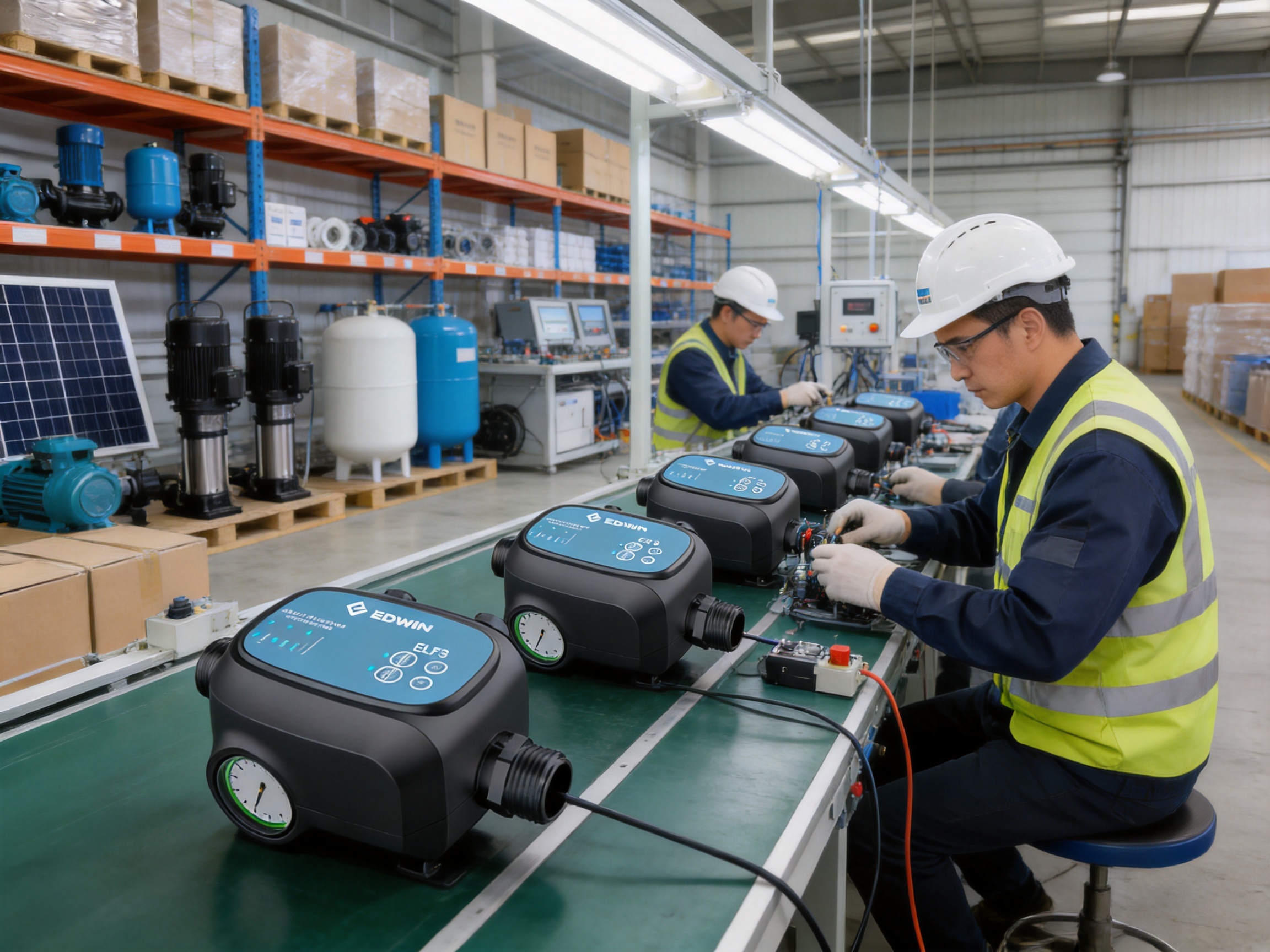
The ELF3 Series automatically controls a compatible water pump according to pressure and flow demand. It starts the pump when pressure falls or a flow condition is detected and stops the pump when water demand ends. It also provides water shortage protection and other control functions.
In automatic mode, the controller can adapt to the connected pump and establish a suitable starting pressure. Manual pressure adjustment is also available through the plus and minus buttons when the installer needs a specific setting.
The controller is designed for a range of compatible pumps, including self-priming pumps, jet pumps, centrifugal pumps, deep-well pumps, and submersible pump applications. Compatibility must be confirmed by checking the pump’s voltage, current, power, pressure, and connection requirements.
It tests for insufficient water availability or abnormal water delivery. If the pump cannot establish normal water flow, the controller can shut it down after the applicable test period to help reduce the risk of dry running.
The described operating principle provides an initial priming period of approximately three and a half minutes. Customized priming durations may be available before delivery for particular project requirements.
Yes. The automatic tap start function responds to a pressure reduction below the starting pressure or to a flow switch opening. The pump then operates automatically until the water outlet is closed and the system returns to the appropriate pressure condition.
The timing function can be used to set pump cycles according to customer requirements. It is especially suitable for water tower replenishment and other applications where the pump must operate on a scheduled basis.
The pressure gauge version provides a direct visual indication of system pressure. This helps installers during commissioning and allows maintenance personnel to observe pressure conditions during troubleshooting.
The IP65 enclosure provides protection against dust and water jets, making the controller suitable for many practical outdoor or semi-exposed installations. It should not be submerged and must be installed with proper cable sealing and protection from flooding or extreme conditions.
Yes. A pressure tank can help reduce pump cycling, cushion pressure changes, and reduce the impact of water hammer. The tank must be correctly sized and precharged for the specific pump and water system.
The listed power range is 0.1 to 2.2 kilowatts, with a maximum current of 30 amperes. The motor’s actual operating and starting characteristics must be checked before installation.
The technical data lists 100 to 240 volts and 50/60 hertz. The product description also references a broader 90 to 260 volt range. Buyers should confirm the applicable range for the exact model and production specification.
The stated maximum pressure is 10 bar. The complete installation, including the pump, pipes, valves, fittings, and pressure tank, should be designed so that this limit is not exceeded.
Yes, it is intended to support deep-well pump applications within the specified electrical, pressure, and lift limits. The well yield, pump depth, water level, cable, pipework, and dry-running risks must be evaluated as part of the installation design.
The product is manufactured by Taizhou Edwin Electric Co., Ltd., an integrated pump and intelligent water equipment manufacturer based in Zhejiang, China. The company focuses on research and development, mass production, and global export.
The manufacturer has experience across multiple pump categories, including deep-well pumps, submersible pumps, booster pumps, circulation pumps, solar water pumps, and intelligent pump systems. This broader product knowledge supports control products designed around real pump applications.
The ELF3 Series IP65 Auto-adaptable Water Shortage Test Timing Function Wide Frequency Pressure Controller provides a comprehensive control solution for modern water pump installations. Its automatic pressure adaptation reduces commissioning complexity, while manual adjustment gives installers direct control when required. Water shortage protection, delayed water absorption, automatic tap starting, timing operation, lightning protection, wide voltage compatibility, and IP65 protection further expand its practical value.
Compared with a traditional fixed pressure switch, the controller offers a higher level of integration and adaptability. It can support a wider variety of pump types and installation conditions, including systems with vertical lifts of up to the stated 100-meter application range. When combined with a correctly sized pressure tank, it can also help reduce pump cycling and water hammer.
The strength of the product is supported by the manufacturer’s integrated business model. Taizhou Edwin Electric Co., Ltd. combines independent research and development, mass production, pump expertise, intelligent technology investment, and international export services. This combination enables the company to provide not only a controller but also broader pump and water system solutions for residential, agricultural, commercial, municipal, HVAC, construction, mining, and new energy applications.
For distributors and professional buyers seeking a flexible automatic pump control product, the ELF3 Series represents a practical balance between functionality, installation convenience, environmental protection, and application versatility. Final selection should always be based on the pump nameplate, hydraulic calculations, local electrical requirements, and the complete technical documentation supplied for the selected model.
1. Product technical information for the ELF3 Series automatic pressure controller, including electrical, hydraulic, environmental, and packaging specifications.
2. Manufacturer-provided operating principle and application information for automatic pump control, pressure adaptation, priming, and water shortage protection.
3. Manufacturer-provided model suffix information for self-adaption, timing function, and pressure gauge configurations.
4. General principles of water pump system design, including pump selection, pressure control, pipe friction, priming, non-return valves, and pressure tank operation.
5. General guidance for enclosure protection classifications and the practical interpretation of IP65 protection in pump equipment installations.
6. General engineering principles concerning water hammer, pump cycling, dry running, pressure vessel operation, and preventive maintenance.
edwina@edwin-pump.com
+86-13586290903 (WhatsApp)
Xuri Gongliang Cutting Tool Entrepreneurship Park, Wenqiao Town, Wenling City, Taizhou City, Zhejiang Province, China

High Performance Smart Pump Factory


 English