
edwina@edwin-pump.com

View All Products
en
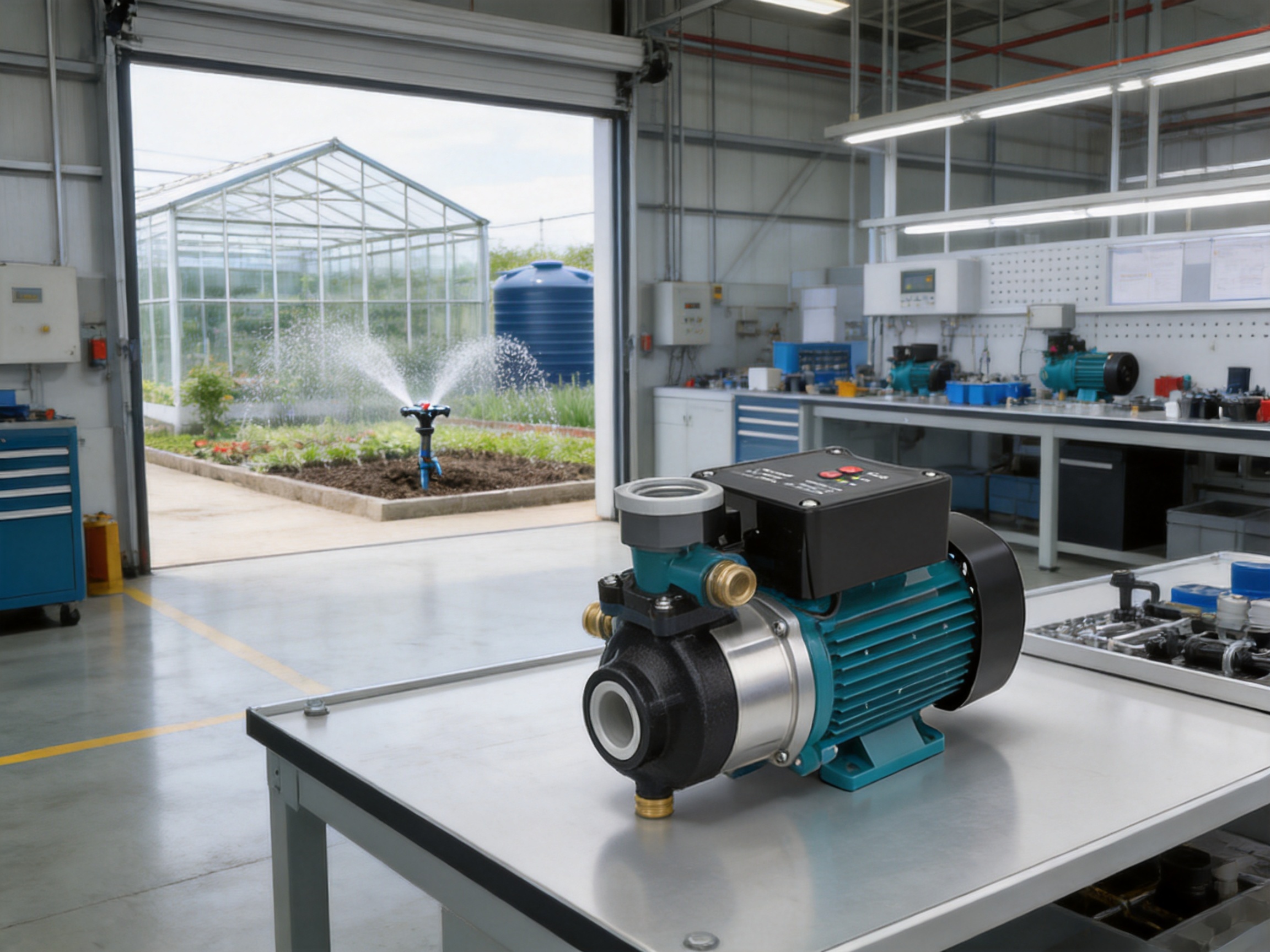
Reliable water delivery is essential for sprinkler systems, household irrigation, garden watering, and many light-duty pressure-boosting applications. When water availability changes during the day, a conventional pump may require manual operation, additional controls, or frequent monitoring. The ITQB Series Water-shortage Protection Auto-start Peripheral Pump addresses these challenges through an integrated intelligent control concept that combines automatic starting, pressure and flow regulation, water-shortage protection, thermal safety, and automatic restart after the water supply is restored.
Designed for applications that require moderate flow and relatively high pressure, the ITQB Series belongs to the peripheral pump category. Its compact construction and 1-inch inlet and outlet connections make it suitable for residential sprinkler systems, small-scale agricultural irrigation, garden watering, domestic water transfer, and other installations where space is limited. Three models are available, covering motor outputs from 180 W to 380 W, maximum heads from 25 m to 35 m, and maximum flows from 2.0 m³/h to 2.1 m³/h.
The product is manufactured by Taizhou Edwin Electric Co., Ltd., an integrated pump enterprise with experience in research and development, production, export, and application-oriented water equipment. The company’s broader product portfolio includes deep well pumps, submersible pumps, domestic booster pumps, circulation pumps, solar water pumps, and intelligent booster pumps. This product experience supports the development of a compact pump that combines hydraulic performance with automatic control and practical protection functions.
A sprinkler installation must deliver water at a suitable pressure while responding to changing demand. When sprinklers open, pressure falls and the pump must start. When the valves close, demand stops and the pump should shut down. If the water source becomes empty or the supply is interrupted, the pump must avoid dry running. If the water returns, the system should resume operation without requiring a user to reset the entire installation.
The ITQB Series is designed around these operating requirements. Rather than functioning as a basic motor and hydraulic unit only, it incorporates an intelligent control system that identifies pipeline pressure and responds to changing conditions. This allows the pump to operate as part of a more convenient automatic water supply system.
Peripheral pumps are generally recognized for their ability to produce higher pressure than many similarly sized standard centrifugal pumps, especially at lower or moderate flow rates. This characteristic is useful in sprinkler applications where the system may require pressure for spray coverage, hose resistance, elevated pipework, or several small sprinkler heads. The ITQB Series applies this compact peripheral-pump design to a control package intended for automatic operation.
Its performance range is suitable for residential and small commercial installations rather than large municipal or industrial pumping duties. A maximum head of up to 35 m provides useful pressure capability for domestic irrigation and sprinkler networks, while a maximum flow of up to 2.1 m³/h supports a range of low-to-moderate water demands. The exact operating point depends on pipe length, elevation, fittings, sprinkler design, water temperature, and system resistance.
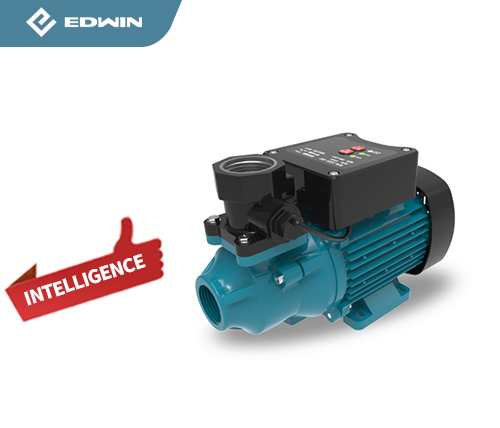
ITQB Series Water-shortage Protection Auto-start Peripheral Pump for Water Sprinkler System
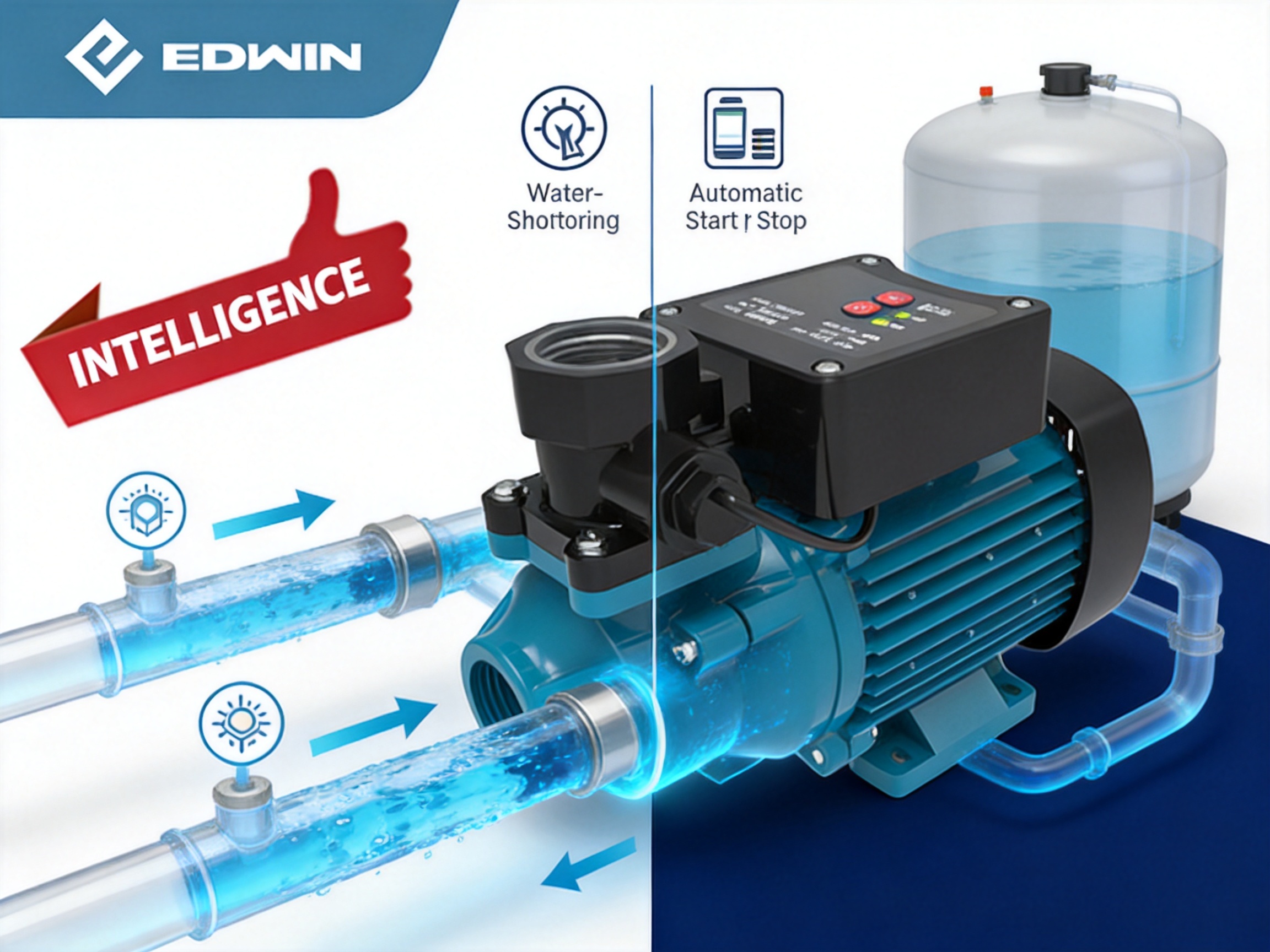
Water shortage is one of the most serious risks for a small automatic pump. If the pump continues to run after the water source has been depleted, the mechanical seal, impeller, bearing, and motor can be exposed to excessive heat and abnormal operating conditions. A pump that lacks protection may also consume unnecessary electricity and require frequent maintenance.
The ITQB Series includes a water-shortage protection function that is intended to stop the pump when the system detects insufficient water availability. This feature helps protect the pump during an empty tank condition, an interrupted tap-water supply, or another situation in which the pump cannot receive a suitable volume of water.
Water-shortage protection is particularly valuable for sprinkler systems because demand can change rapidly. A sprinkler valve may remain open while the source tank is empty, or a supply pipe may become temporarily unavailable. Automatic protection reduces dependence on constant supervision and gives the system a greater level of operational security.
Compared with a basic peripheral pump that must be monitored manually, an integrated protected system can reduce the risk of damage caused by dry running. It also simplifies installation because the user does not necessarily need to purchase and wire a separate external protection controller, subject to the requirements of the specific installation.
The auto-start function allows the pump to respond to pressure changes in the pipeline. When a sprinkler valve opens or a tap is activated, the pressure in the system falls. The control system identifies this change and starts the motor. When water demand stops and the pressure returns to the appropriate level, the pump can stop automatically.
This operation improves convenience in homes, gardens, small farms, and light-duty commercial sites. Users do not need to walk to the pump every time they want to start irrigation. The pump can be connected to the water network and operate according to the requirements of the connected outlets.
The product’s control concept also includes automated activation after the tap-water supply is replenished. This is important in regions or buildings where water availability is intermittent. Once the supply condition becomes suitable again, the pump can resume its intended automatic operating sequence.
Automatic control can also reduce unnecessary operating time. A manually operated pump may be left running after watering has finished. By stopping when the demand ends, the ITQB Series can help limit energy consumption, reduce noise exposure, and reduce wear on internal components.
The ITQB Series uses a dual regulation system based on pressure and flow switching. This arrangement is designed to facilitate smooth pressure alteration and to support pump applications within a system capacity of up to 100 m head, depending on the overall control arrangement and installation conditions.
Pressure-only control can sometimes create uncertainty when a system has small leaks, variable pipe resistance, or intermittent demand. Flow information provides an additional operating reference. By combining pressure and flow signals, the pump controller can make a more appropriate decision about whether water is being requested and whether the pump should continue running.
For sprinkler systems, this combined approach can help manage the transition between starting, continuous water delivery, and stopping. It is also useful where the pipeline contains several outlets with different operating characteristics. The result is a more responsive system than a simple manual switch or a single fixed-pressure arrangement.
Frequent rapid cycling can shorten the service life of a pump motor and increase mechanical stress. A small leak, a partially closed valve, or a poorly adjusted pressure setting may cause repeated starting and stopping. This condition can lead to unnecessary heating, contact wear, and unstable water pressure.
The ITQB Series incorporates a cyclical start/stop protection mechanism. Its purpose is to recognize or reduce abnormal repeated cycling and to provide greater protection during unstable operating conditions. This function is an important advantage over a simple pump that responds immediately to every minor pressure fluctuation.
In practical terms, the system can help create a more stable operating pattern. However, correct pipework design remains essential. A pump controller cannot compensate for major leakage, incorrect valve selection, insufficient water supply, or an incorrectly sized pressure vessel where one is required.
Thermal protection is included to help safeguard the motor if the operating temperature becomes excessive. High temperature can result from overload, restricted ventilation, repeated starts, abnormal voltage, blocked flow, or operation under unsuitable environmental conditions.
The ITQB Series is specified with Class F insulation and a maximum ambient temperature of +40°C. These ratings indicate that the motor is designed for demanding everyday conditions within the stated limits. The motor should nevertheless be installed in a clean, dry, and adequately ventilated location, protected from direct flooding and excessive external heat.
Thermal safety complements water-shortage protection. Water shortage primarily addresses the hydraulic condition, while thermal protection addresses motor temperature. Together, these functions provide a broader protection strategy than either function alone.
The control system includes intelligent learning and memory functionality. This feature is intended to help the pump recognize operating patterns and retain relevant system information. In an automatic sprinkler installation, the pump may encounter different combinations of valve positions, flow rates, and pressure changes. A controller that can learn from these conditions may provide more consistent automatic behavior.
Intelligent memory can also reduce the need for repeated manual adjustment. Once the installation has been commissioned correctly, the controller is designed to remember operating parameters and respond in accordance with the established system conditions. The exact behavior depends on the control configuration, the connected pipe network, and the commissioning procedure.
An optional timing function can be used where watering must occur according to a schedule. Timed operation is useful for gardens, landscaped areas, greenhouses, and small irrigation zones that require watering at specific periods of the day.
Scheduled watering can reduce the need for manual operation and may help avoid watering during periods of high evaporation. It can also support more organized irrigation management when combined with solenoid valves, sprinklers, or a storage tank. The timing function should be selected and configured according to the actual control requirements of the project.
The product is designed with electrochemical resistance to corrosion and rust as one of its listed functions. Material selection also contributes to long-term durability. The pump body and pump support are made from cast iron, the motor housing is aluminum, and the impeller is brass. The mechanical seal uses silicon carbide.
These materials serve different engineering purposes. Cast iron provides structural strength and resistance to mechanical stress. Aluminum helps reduce motor housing weight and assists heat dissipation. Brass provides a durable impeller material for the hydraulic section. Silicon carbide is used in the mechanical seal arrangement to support resistance to wear under demanding sealing conditions.
Material performance depends on the pumped liquid. The product is intended for clean or appropriately filtered water within the stated temperature range. Aggressive chemicals, abrasive particles, saltwater, sludge, and liquids containing unsuitable solids may require a different pump construction.
The plug-and-play capability is intended to simplify installation and operation. A compact integrated control arrangement can reduce the number of external components required in a basic sprinkler system. This is beneficial for homeowners, installers, and maintenance personnel who want a practical solution without building a complicated control cabinet.
Even with plug-and-play equipment, electrical and hydraulic installation should be completed by a qualified person. Correct earthing, circuit protection, cable sizing, pipe sealing, check-valve placement, and suction-line arrangement are necessary for safe and reliable operation.
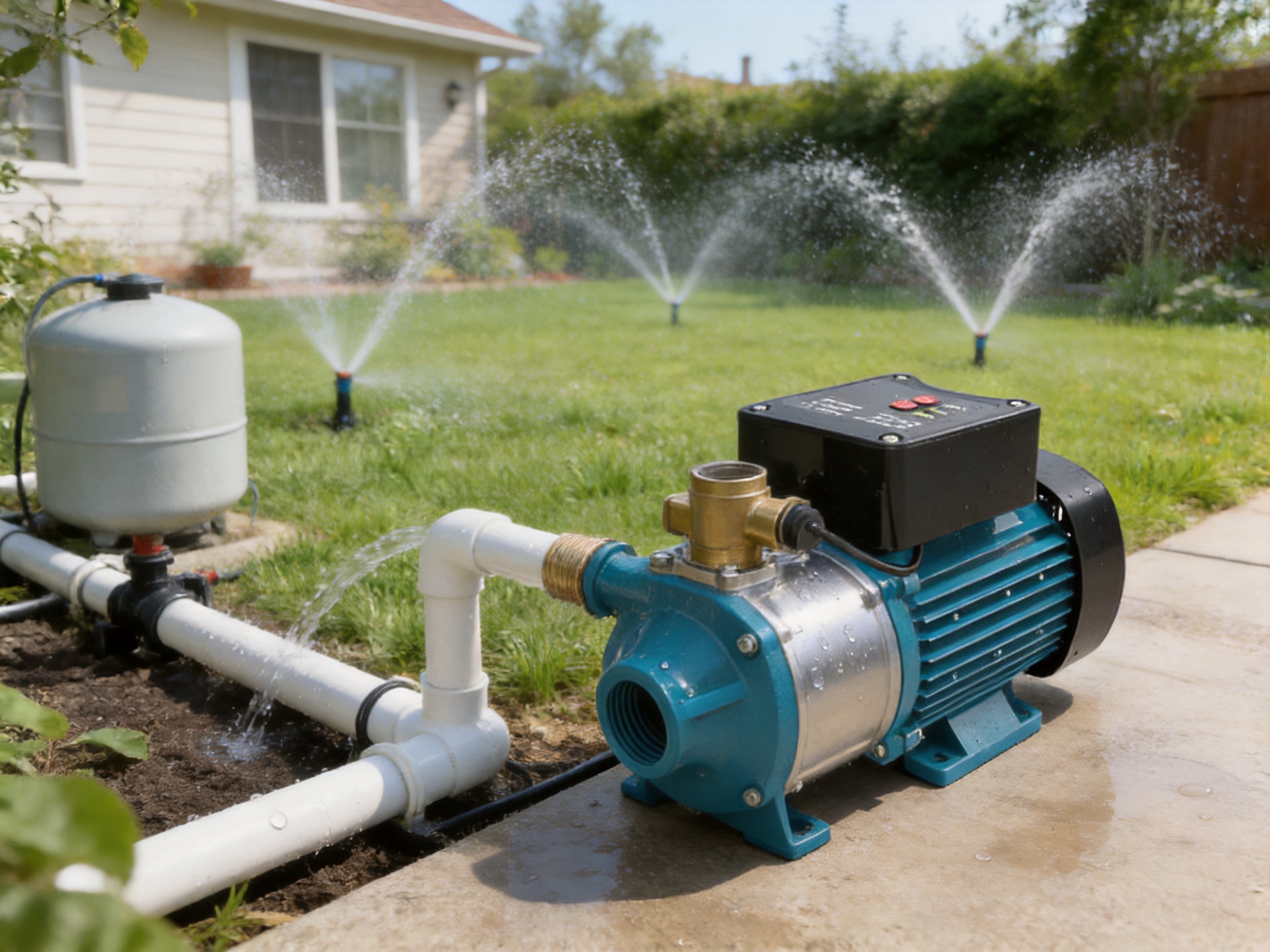
The ITQB Series is available in three models. The range allows users to select a motor size according to the required head and flow conditions. The smallest model is suitable for compact installations, while the higher-powered models provide additional pressure capability for larger or more demanding sprinkler layouts.
| Model | Power | Power | Maximum Flow | Maximum Head | Maximum Suction | Pipe Connection | Dimensions | Gross Weight |
|---|---|---|---|---|---|---|---|---|
| ITQB-180 | 180 W | 0.2 HP | 2.0 m³/h | 25 m | 7 m | 1 inch × 1 inch | 270 × 163 × 213 mm | 5.8 kg |
| ITQB-280 | 280 W | 0.4 HP | 2.0 m³/h | 30 m | 7 m | 1 inch × 1 inch | 270 × 163 × 213 mm | 6.0 kg |
| ITQB-380 | 380 W | 0.5 HP | 2.1 m³/h | 35 m | 7 m | 1 inch × 1 inch | 275 × 178 × 213 mm | 6.3 kg |
The source technical information also lists maximum flow values of 33 l/min for the ITQB-180 and ITQB-280 models and 35 l/min for the ITQB-380 model. These values should be checked against the final technical datasheet and performance curve before engineering a complete system, because the relationship between cubic metres per hour and litres per minute should remain consistent across published specifications.
The maximum suction height for all three listed models is 7 m. This value is subject to real installation conditions. Suction height is affected by atmospheric pressure, water temperature, pipe diameter, suction-pipe length, foot-valve condition, air leakage, altitude, and the presence of bends or restrictions. A short, airtight suction line with an appropriate foot valve will generally provide more reliable operation than a long or undersized line.
The 1-inch inlet and outlet connections provide a practical interface for common small irrigation and domestic water-supply pipework. The pump should not be selected solely by connection size. The actual pipe diameter, required pressure, elevation, flow demand, and friction loss must all be considered when choosing a model.
The specified maximum liquid temperature is +100°C, while the maximum ambient temperature is +40°C. For sprinkler systems, the pumped liquid will normally be much cooler than the maximum liquid rating. The higher listed liquid-temperature capability indicates that the hydraulic and sealing materials are designed for a broader range of water applications, but users must still follow the complete product manual and safety instructions.
The pump should be installed where the surrounding temperature remains within the permitted limit. Outdoor installations should include suitable protection against rain, direct sun, standing water, frost, and accidental impact. The IP44 ingress-protection rating provides protection appropriate to the designed installation environment, but it does not mean that the motor can be submerged or exposed to powerful water jets.
The standard input is single-phase, 220 V, 50/60 Hz. Other input voltages may be customized. Before ordering or installing the pump, users should verify that the available power supply matches the motor specification and local electrical requirements.
A dedicated circuit with correctly rated overcurrent protection is recommended. The pump must be properly grounded, and electrical connections should be protected from moisture. Voltage instability, undersized cables, poor terminals, and incorrect frequency can affect starting performance, motor temperature, and service life.
The suction line should be as short and direct as practical. All joints must be airtight because even a small amount of air entering the suction line can interrupt priming and reduce pump performance. The suction pipe should generally maintain a gradual rise toward the pump where possible, avoiding high points that can trap air.
A suitable foot valve or non-return valve may be necessary when the pump is installed above the water source. The valve helps retain water in the suction pipe when the pump stops. If the suction pipe drains after each operating cycle, the pump may require repeated priming and may not start reliably.
A strainer can help prevent debris from entering the pump, especially when the water source is a tank, open reservoir, or rainwater collection system. The strainer must be correctly sized and cleaned regularly. Excessive restriction on the suction side can cause poor flow, noise, and unstable operation.
The discharge pipe should be sized according to the required flow and the total length of the system. Although the pump has 1-inch connections, increasing the downstream pipe diameter may reduce friction loss in longer installations. Excessive fittings, narrow hoses, sharp bends, and partially blocked filters can consume available pressure.
A check valve can prevent reverse flow when the pump stops. Isolation valves should be installed where appropriate to facilitate maintenance. If the sprinkler system contains multiple zones, zone valves can be used to control the demand and avoid exceeding the pump’s practical flow range.
Correct pump selection begins with understanding the required operating point. The user should calculate the combined effect of static elevation, sprinkler pressure requirement, pipe friction, filter loss, valve loss, and any additional fittings. The pump’s maximum head is not the same as the head available at maximum flow. As flow increases, available head generally decreases.
For a small garden with a short pipe run and a limited number of sprinkler heads, the ITQB-180 may be sufficient. The ITQB-280 can be considered when additional pressure is required for elevation, longer pipework, or a larger sprinkler zone. The ITQB-380 offers the highest listed head and slightly higher maximum flow in the range.
Users should avoid selecting a pump only because it has a higher horsepower rating. An oversized pump can produce excessive pressure, increase cycling, overload small pipes, or cause sprinkler nozzles to operate outside their intended range. An undersized pump may fail to provide adequate coverage and may run continuously at an unsuitable operating point.
A professional installer should compare the system curve with the pump performance curve. The intersection of these curves represents the expected operating point. If the final project includes several sprinkler zones, each zone should be evaluated separately. The pump should be selected for the zone with the greatest hydraulic requirement, while valves and controls should prevent simultaneous demand from exceeding the system design.
The pump body and pump support are constructed from cast iron. These components form the structural foundation of the hydraulic assembly. Cast iron is commonly used in pump construction because it offers good rigidity, dimensional stability, and resistance to mechanical stress.
A strong pump body helps maintain alignment between the impeller, seal, and motor assembly. It also supports stable operation when the pump is connected to rigid pipework. The installation base should be level and secure so that vibration is not transferred unnecessarily to the pump casing or connected pipes.
The aluminum motor housing provides a balance between strength, weight, and heat dissipation. Compared with a heavier housing material, aluminum can help keep the product compact and easier to handle during installation. Its thermal properties also support the removal of heat generated by the motor during operation.
Good ventilation around the motor remains necessary. The housing should not be enclosed in a small unventilated box, covered with insulating materials, or placed directly against a heat source. Keeping the cooling area clean is a simple but important part of maintenance.
The impeller is made from brass. The impeller is the rotating hydraulic element that transfers energy from the motor to the water. Brass offers useful mechanical durability and is widely used in pump applications where a robust, corrosion-resistant impeller is required for clean-water service.
Impeller performance depends on maintaining suitable water quality. Sand, gravel, metal particles, and other abrasive materials can cause wear even when the impeller material is durable. A correctly maintained inlet strainer can help protect the hydraulic assembly.
The mechanical seal is specified as silicon carbide. The seal prevents water from escaping along the rotating shaft between the hydraulic chamber and motor section. A reliable seal is essential because leakage can damage bearings, electrical insulation, and surrounding components.
Silicon carbide is known for its hardness and wear resistance. It can be advantageous in demanding sealing environments, although seal life still depends on water quality, temperature, alignment, pressure, and operating conditions. The pump should never be operated outside the liquid specifications without confirming material compatibility.
The listed bearing is 6201 for the 180 W to 380 W models. Bearings support the rotating shaft and contribute to smooth, stable operation. Bearing life is affected by alignment, vibration, temperature, lubrication condition, electrical loading, and water ingress.
Preventive maintenance should include listening for abnormal noise, checking for unusual vibration, inspecting the seal area, and verifying that the motor does not overheat. Early identification of a bearing or seal problem can prevent more extensive damage.
Taizhou Edwin Electric Co., Ltd. was founded in 2008 and operates as an integrated manufacturing enterprise. Its stated capabilities include independent research and development, mass production, and global export. These capabilities are important for a pump product that must combine hydraulic design, motor engineering, electronic control, assembly precision, and international customer support.
Independent research and development allows the manufacturer to adapt pump designs to practical application requirements. In the ITQB Series, this is reflected in the combination of a peripheral hydraulic unit with automatic pressure and flow control, water-shortage protection, thermal safety, cyclical start/stop protection, timing options, and intelligent memory.
Mass-production experience can support repeatability. A consistent manufacturing process is important because a pump is an assembly of interacting parts rather than a single component. The pump body, support, impeller, shaft, bearing, seal, motor, wiring, and controller must be assembled within appropriate tolerances. Repeatable production helps maintain consistency between batches and models.
The manufacturer’s product portfolio covers several water-pumping sectors, including deep well pumping, submersible pumping, domestic pressure boosting, circulation, solar water pumping, and intelligent booster systems. Experience across these fields can support the design of motors, hydraulic passages, control systems, protection functions, and application-specific solutions.
The company has also invested in new energy and intelligent technology since 2018. The development of solar water pumps and intelligent booster pumps indicates a focus on adapting traditional water equipment to more efficient and automated operating methods. The ITQB Series fits within this broader direction by offering automatic control in a compact domestic and irrigation product.
An integrated factory model can provide closer coordination between product design, component procurement, assembly, testing, packaging, and export preparation. This is particularly valuable when customers require model customization, different input voltages, private labeling, or coordinated order delivery.
For international buyers, manufacturing strength is not limited to the pump’s rated performance. It also includes the ability to maintain documentation, organize production schedules, support quality checks, prepare export packaging, and communicate technical requirements. The company’s affiliated import and export service structure was established to support procurement planning, order tracking, cross-border delivery, and foreign-trade services.
Material specifications provide a foundation for manufacturing control. The use of cast iron for the pump body and support, aluminum for the motor housing, brass for the impeller, silicon carbide for the mechanical seal, and a defined bearing type allows the production team to establish clear component requirements.
Assembly quality is equally important. The rotating assembly must be aligned correctly, the mechanical seal must be installed without damage, the electrical connections must be secure, and the control unit must be correctly matched to the motor. Appropriate inspection at each stage can reduce the likelihood of leakage, excessive vibration, electrical faults, or unstable automatic operation.
A smart pump should be evaluated not only for whether the motor turns, but also for whether the complete system responds correctly to changing conditions. Functional testing may include verifying starting behavior, stopping behavior, pressure response, flow detection, water-shortage protection, thermal protection, restart behavior, and abnormal cycling response.
Hydraulic testing can help confirm that the pump delivers the expected flow and head within the model range. Electrical testing can verify insulation, current behavior, grounding, and control response. Dimensional and visual inspections help ensure that pipe connections, housing components, fasteners, and labels meet production requirements.
Actual test procedures should follow the manufacturer’s quality system and the requirements applicable to the destination market. Buyers should request the appropriate test records, certificates, and conformity documents for their project or sales channel.
The first major advantage of the ITQB Series is the integration of automation. A conventional peripheral pump may deliver pressure and flow effectively but require a separate pressure switch, flow sensor, dry-run protector, control box, or manual reset arrangement. The ITQB Series brings multiple functions into one coordinated product platform.
The second advantage is protection against water shortage. A pump without dry-run protection may continue operating under an empty-source condition. The ITQB control system is designed to identify water shortage and stop operation, which can reduce the risk of seal and motor damage.
The third advantage is automatic recovery. When the tap-water supply or source condition is restored, the product is designed to activate automatically. This is more convenient than a system that remains stopped until a person manually resets it.
The fourth advantage is the dual pressure-and-flow regulation concept. Using both pressure and flow information can provide more intelligent control than relying on a single mechanical pressure switch. This is useful in sprinkler networks where flow demand changes when zones open or close.
The fifth advantage is compactness. The pump offers automatic functions without requiring a large external control cabinet for basic installations. Its compact dimensions, ranging from 270 × 163 × 213 mm to 275 × 178 × 213 mm, can make it easier to install in utility rooms, garden pump boxes, service areas, or compact equipment spaces.
The sixth advantage is the model range. Users can select 180 W, 280 W, or 380 W according to the required pressure and flow. This gives distributors and installers flexibility when serving different household, garden, and small irrigation applications.
The seventh advantage is application versatility. Although the product is promoted for water sprinkler systems, the listed features also suit domestic water boosting, small irrigation systems, garden watering, rainwater transfer, and similar clean-water duties. The pump can serve users who want more automation than a basic transfer pump but do not need a large commercial multistage system.
A residential garden may contain several small sprinklers, a hose connection, and a storage tank. The ITQB Series can be used to provide pressure when a valve opens. Automatic start and stop operation allows the homeowner to activate watering from a convenient valve or timer rather than switching the pump manually.
Water-shortage protection is particularly useful when the garden is supplied by a limited tank. If the tank level becomes too low, the protection function can help prevent extended dry running. A properly installed float or level device may also be used where the water source requires additional independent monitoring.
Small farms, nurseries, and greenhouse operations often require controlled watering for beds, containers, or individual zones. The pump’s pressure capability can support small drip or sprinkler networks, provided filters, emitters, and pipe sizes are selected correctly.
The optional timing function may help organize watering cycles. In such applications, the pump should be protected from fertilizer concentration, abrasive particles, and chemical incompatibility. If the water contains suspended solids or aggressive additives, a pump with a specialized material configuration may be more appropriate.
Rainwater tanks are frequently used for garden irrigation and landscape sprinkling. Because the water level in a rainwater tank changes, water-shortage protection can provide an important safety function. A suction strainer and suitable filtration should be installed to prevent leaves, sediment, and debris from entering the pump.
The system should also include an appropriate overflow arrangement and an access cover that prevents large contaminants from entering the tank. The pump must be installed above the highest expected water level unless the design specifically permits another arrangement.
In homes with low incoming pressure, the ITQB Series may be used to improve water delivery to selected outlets. It can support a bathroom, garden tap, or small domestic distribution system when the total demand remains within the pump’s capability.
Domestic applications require careful consideration of local plumbing regulations, potable-water compatibility, noise, pressure limits, and backflow prevention. The pump should not be used for drinking-water systems unless the complete product and installation are approved for that purpose.
Small offices, guesthouses, retail properties, and workshops may use the pump for landscaped areas or low-demand washdown points. The automatic features reduce the need for dedicated daily pump operation and can help maintain a predictable watering routine.
For larger commercial landscapes, multiple zones, or long pipe runs, a larger booster system may be required. The ITQB Series is best matched to moderate demand and should be applied within its performance range.
Before starting the pump for the first time, the hydraulic system should be inspected for correct connections, closed or open valves as appropriate, adequate water supply, and secure pipe supports. The pump should be filled and primed according to the manufacturer’s instructions. Operating a self-priming arrangement without confirming the correct priming method may lead to unstable performance.
During commissioning, the installer should open a suitable water outlet and observe the starting response. The pressure should be checked at the actual sprinkler or outlet. The installer should also confirm that the pump stops when demand ends and that it does not repeatedly cycle under normal conditions.
The water-shortage protection function should be tested in a controlled manner. The test should follow the product manual and should not expose the pump to unnecessary prolonged dry running. After the water source is restored, the installer should confirm the intended automatic restart behavior.
Routine maintenance should include cleaning the inlet strainer, checking pipe joints for air or water leakage, inspecting the electrical cable, verifying the condition of valves, and observing unusual noise or vibration. The pump should be isolated from the power supply before maintenance.
If the pump starts and stops too frequently, the system should be checked for leaking taps, damaged sprinkler valves, undersized pressure vessels, incorrect sensor settings, or air entering the suction line. If the pump fails to start, possible causes include a lack of water, electrical supply problems, blocked pipework, incorrect priming, or a control protection state.
Purchase price is only one part of pump value. A product’s total ownership cost also includes installation time, external control components, energy use, maintenance, downtime, replacement parts, and the consequences of pump failure. The ITQB Series is designed to create value through integrated functions that can reduce system complexity and simplify routine operation.
Automatic stopping prevents the motor from running after water demand has ended. Water-shortage protection helps reduce the risk of damage when the source is unavailable. Thermal protection provides an additional safeguard during abnormal loading. Cyclical start/stop protection addresses unstable operating conditions. These functions can contribute to longer service life when the system is correctly installed and maintained.
The compact construction can also reduce installation labor. A smaller pump is easier to transport, position, and connect than a larger commercial unit. The 1-inch pipe connections are familiar to many irrigation installers, while the three-model range helps avoid selecting a product that is significantly larger than the application requires.
Efficiency should be evaluated at the actual operating point. A pump that is too large or too small for the system may operate inefficiently. Correct pipe sizing, clean filters, appropriate sprinkler nozzles, and well-designed zones are just as important as motor efficiency in achieving economical operation.
Distributors should identify the customer’s required voltage, frequency, target application, expected flow, required head, suction height, water quality, and installation environment before recommending a model. They should also confirm whether the customer needs the optional timing function or customized input voltage.
Project buyers should request the latest technical datasheet, pump performance curve, wiring instructions, protection details, packaging information, and applicable conformity documentation. The final order should clearly identify the model, motor rating, voltage, frequency, connection standard, and any requested customization.
For international supply, the buyer should also confirm spare-parts availability, warranty terms, production lead time, export packaging, language requirements for manuals, and after-sales technical support. These details are important when the pump will be distributed through dealers or installed in multiple locations.
Taizhou Edwin Electric Co., Ltd. and its related export-service organizations provide procurement planning, order tracking, cross-border delivery, and foreign-trade support. This structure can be useful for customers seeking one-stop sourcing across several pump categories, including domestic booster pumps, submersible pumps, deep well pumps, circulation pumps, solar pumps, and intelligent water equipment.
Modern water systems increasingly require automation, protection, and adaptability. Users want equipment that can start when needed, stop when demand ends, protect itself when water is unavailable, and resume operation without constant supervision. The ITQB Series responds to these expectations in a compact peripheral-pump format.
Its intelligent functions are especially appropriate for decentralized water systems. A home garden, greenhouse, rainwater tank, or small irrigation area may not justify a large control cabinet or a complex automation system. However, these applications still benefit from dry-run protection, pressure sensing, flow detection, and timed operation.
The product also reflects the direction of pump manufacturing toward integrated solutions. Instead of treating the pump, pressure switch, dry-run protector, thermal device, and timer as unrelated accessories, the ITQB Series brings many of them together in a coordinated control platform. This can improve usability and reduce the number of separate devices that must be selected and installed.
The ITQB Series is a vortex peripheral pump with integrated automatic control. It is designed for moderate-flow, pressure-oriented applications such as water sprinkler systems, garden irrigation, domestic water boosting, and other clean-water duties.
The range includes 180 W, 280 W, and 380 W models. These correspond to approximately 0.2 HP, 0.4 HP, and 0.5 HP respectively.
The listed maximum heads are 25 m for the ITQB-180, 30 m for the ITQB-280, and 35 m for the ITQB-380. Actual head at the required flow will be lower than the shutoff or maximum-head value and should be confirmed using the pump curve.
The listed maximum flow is 2.0 m³/h for the ITQB-180 and ITQB-280 and 2.1 m³/h for the ITQB-380. The actual flow depends on total system resistance, elevation, pipe size, sprinkler demand, and valve configuration.
Yes. Water-shortage protection is one of the main functions of the ITQB Series. The controller is designed to stop the pump when insufficient water is detected, helping reduce the risk associated with dry running.
The product includes automated activation following replenishment of the tap-water supply. The exact restart sequence depends on the installation and control conditions, so commissioning should follow the manufacturer’s instructions.
The ITQB Series is primarily intended for residential, garden, small-scale irrigation, and light commercial applications. Large farms, high-flow sprinkler systems, and long-distance pipelines may require a larger centrifugal, multistage, or booster-pump system.
The listed maximum suction height is 7 m for all three models. Actual suction performance depends on altitude, water temperature, pipe length, pipe diameter, air tightness, valve condition, and correct priming.
The standard supply is single-phase, 220 V, 50/60 Hz. Other input voltages can be customized, subject to confirmation before production.
The maximum liquid temperature is listed as +100°C, and the maximum ambient temperature is +40°C. The pump should be installed and operated within the complete limits provided in the final product documentation.
The listed rating is IP44. This supports protection against solid objects and splashing water within the defined test conditions, but it does not permit submersion or exposure to powerful water jets.
The pump body and support are cast iron, the motor housing is aluminum, the impeller is brass, and the mechanical seal is silicon carbide. The listed bearing is 6201 for the models in this power range.
A timing function is listed as an optional feature. Buyers should specify this requirement when ordering and confirm how the timing control is configured for the intended installation.
In addition to peripheral hydraulic performance, the ITQB Series offers water-shortage protection, auto-start operation, pressure and flow regulation, cyclical start/stop protection, thermal safety, automatic restart after water recovery, intelligent memory, corrosion and rust resistance, and plug-and-play convenience.
The buyer should check required flow, required pressure, elevation, suction height, pipe length, water quality, power supply, ambient conditions, sprinkler-zone design, and any timing or customization requirements. Model selection should be based on the complete system rather than motor power alone.
The ITQB Series Water-shortage Protection Auto-start Peripheral Pump provides a practical combination of pressure performance, compact construction, automatic operation, and protective control functions. Its three-model range covers motor outputs from 180 W to 380 W, maximum heads from 25 m to 35 m, and maximum flows from 2.0 m³/h to 2.1 m³/h.
Its key advantage over a conventional basic peripheral pump is the integration of intelligent system functions. Water-shortage protection helps address dry-running risk. Automatic start and stop operation improves convenience. Dual pressure and flow regulation supports responsive control. Thermal protection, cyclical start/stop protection, automatic restart, intelligent memory, and optional timing further expand the product’s practical value.
The construction combines a cast-iron pump body and support, aluminum motor housing, brass impeller, silicon carbide mechanical seal, and a specified 6201 bearing. These components are selected to support strength, heat management, hydraulic durability, sealing reliability, and smooth rotation under appropriate operating conditions.
Manufactured by Taizhou Edwin Electric Co., Ltd., the product benefits from an organization focused on independent research and development, mass production, global export, and intelligent water technology. The company’s broader experience in domestic boosting, submersible pumping, deep well pumping, circulation, solar water pumping, and commercial water equipment supports its ability to serve diverse water-management requirements.
For homeowners, irrigation installers, distributors, and international project buyers, the ITQB Series is a strong option when a sprinkler or small water-supply system needs more than a basic pump. With correct hydraulic sizing, proper installation, suitable filtration, and regular maintenance, it can provide a convenient and dependable solution for automatic water delivery.
1. ITQB Series product technical data and model specifications supplied in the product materials.
2. Product information concerning water-shortage protection, automatic starting, pressure and flow regulation, thermal safety, timing, and intelligent control.
3. Product construction information covering cast iron, aluminum, brass, silicon carbide, and 6201 bearing components.
4. Taizhou Edwin Electric Co., Ltd. company profile and manufacturing information.
5. General pump-installation principles for suction piping, priming, filtration, pressure loss, and sprinkler-system sizing.
6. General electric-motor protection principles covering insulation class, thermal protection, grounding, and ingress protection.
edwina@edwin-pump.com
+86-13586290903 (WhatsApp)
Xuri Gongliang Cutting Tool Entrepreneurship Park, Wenqiao Town, Wenling City, Taizhou City, Zhejiang Province, China

High Performance Smart Pump Factory


 English