
edwina@edwin-pump.com

View All Products
en
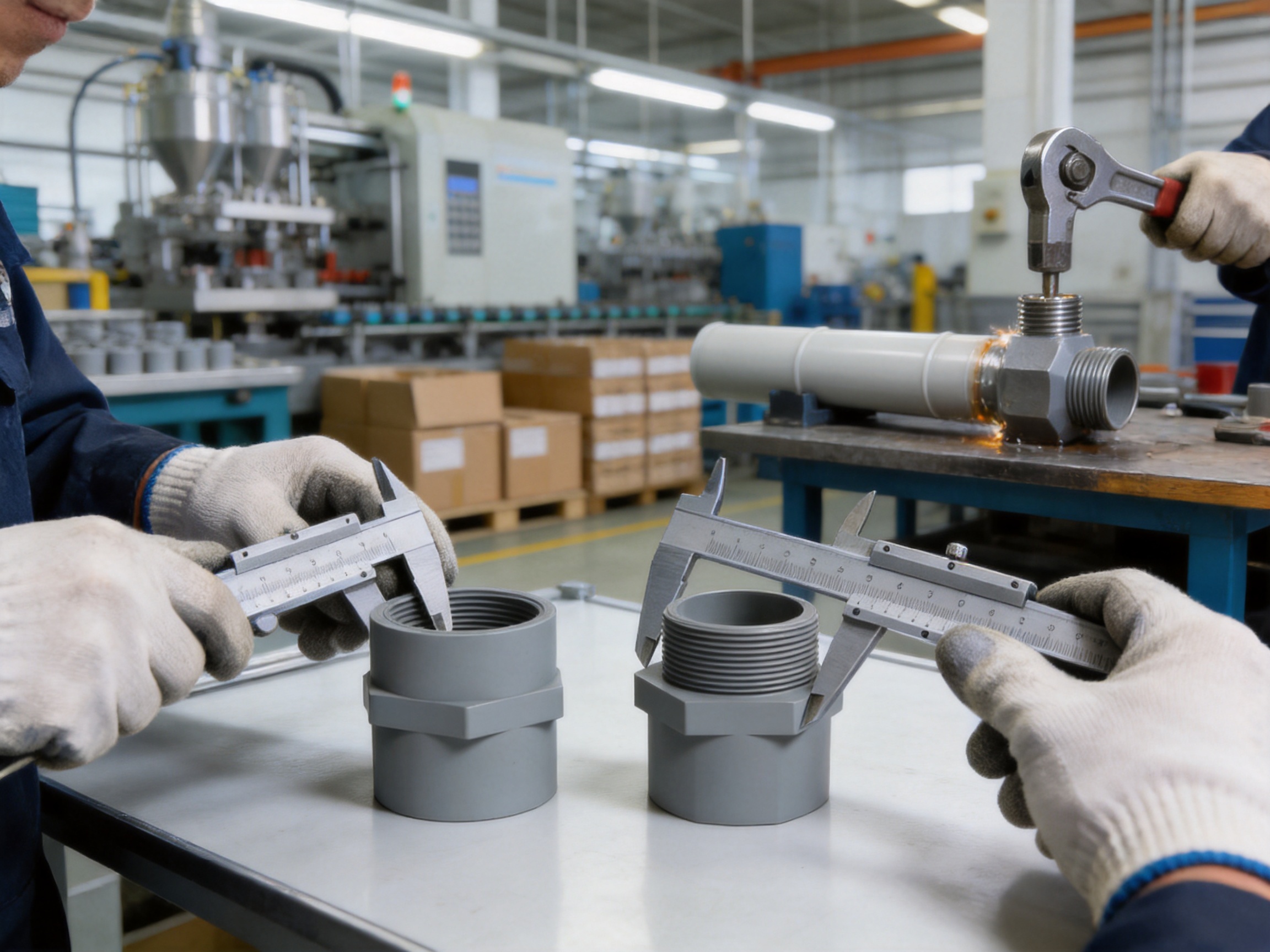
Reliable pipe connections are essential in plumbing, irrigation, water treatment, building services, and industrial fluid-handling systems. A connection must be strong enough to withstand operating pressure, stable across the expected temperature range, resistant to the conveyed medium, and practical to install or maintain. The 0.5-inch to 2-inch HEX CPVC Male or Female Thread Adapter is designed to address these requirements by connecting CPVC piping with threaded components, fittings, valves, instruments, or equipment interfaces.
Produced in CPVC and available in sizes from 1/2 inch to 2 inches, this adapter combines a solvent-weld connection area with a threaded connection. Its hexagonal body provides a convenient gripping surface for installation and removal, helping installers apply controlled tightening force without damaging the fitting. The result is a compact and versatile transition component for systems that combine CPVC piping with threaded plumbing or mechanical equipment.
The adapter is available in male and female thread configurations. The male version is suitable for joining a CPVC pipe system to a female threaded component, while the female version accepts a male threaded component. Depending on the project design, the same product family can therefore be used to connect pipes, valves, pumps, pressure gauges, manifolds, filters, water-treatment equipment, and other accessories.
This article examines the structure, material, dimensional range, installation value, application advantages, manufacturing capabilities, quality considerations, and purchasing benefits associated with CPVC hex thread adapters. It also explains how a specialized pump and water-system manufacturer can support customers that require both individual piping components and complete fluid-handling solutions.
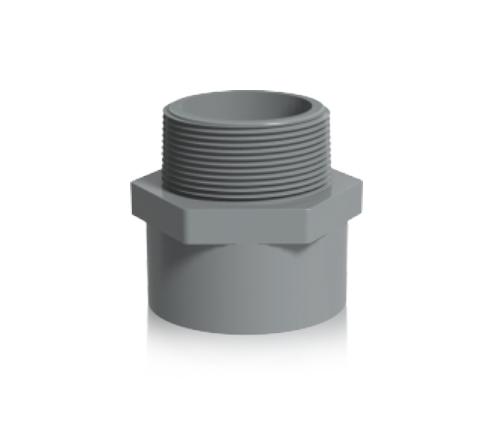
0.5" to 2" HEX CPVC Male or Female Thread Adapter
A CPVC hex thread adapter has two functional ends. One end is designed for connection to CPVC pipe, normally by means of a solvent-cement joint. The other end contains either male or female threads for connection to a compatible threaded component. This dual-interface design allows the adapter to serve as a transition between a permanently bonded CPVC pipeline and a removable threaded assembly.
The CPVC pipe end is dimensioned to match the specified pipe standard and fitting system. During installation, the pipe and socket are prepared, cleaned, and joined using a compatible CPVC solvent cement. The cement softens and fuses the mating surfaces, creating a continuous connection after curing. Correct preparation and curing are important because the quality of a solvent-welded joint depends on both the fitting and the installation procedure.
The threaded end is manufactured for connection with a matching thread. A male adapter has external threads, while a female adapter has internal threads. Thread sealant or sealing tape may be used where appropriate for the application and the connected component. The installer should follow the relevant piping standard and the recommendations of the sealant manufacturer.
The hexagonal external profile is a practical feature rather than merely a visual design element. It gives a wrench or suitable installation tool a defined gripping surface. Compared with a smooth round fitting, a hex body can make alignment, tightening, and disassembly more manageable. It also helps reduce the risk of gripping the pipe socket or applying force to an unsuitable portion of the fitting.
The adapter is intended for water media and is suitable for normal-temperature and medium-temperature service within the limitations of the selected CPVC material, the pipe system, the sealant, and the applicable pressure-temperature rating. Actual performance depends on installation quality, fluid conditions, operating pressure, temperature, and compatibility with other system components.
The product range covers six commonly used nominal sizes: 1/2 inch, 3/4 inch, 1 inch, 1-1/4 inches, 1-1/2 inches, and 2 inches. This range supports small domestic lines, building-service branches, irrigation assemblies, equipment connections, and larger water-distribution layouts.
| Nominal Size | D (mm) | L1 (mm) | L (mm) | M |
|---|---|---|---|---|
| 1/2 inch | 21.34 | 22.8 | 42.8 | 1/2 inch |
| 3/4 inch | 26.67 | 25.9 | 47.9 | 3/4 inch |
| 1 inch | 33.40 | 29.1 | 55.5 | 1 inch |
| 1-1/4 inches | 42.16 | 32.8 | 60.3 | 1-1/4 inches |
| 1-1/2 inches | 48.26 | 36.0 | 65.0 | 1-1/2 inches |
| 2 inches | 60.32 | 39.1 | 71.7 | 2 inches |
The dimensions shown above identify the principal size relationships in the product family. D represents the stated outside dimensional reference, L1 indicates one length dimension, and L represents the overall length dimension shown in the technical data. M identifies the corresponding nominal thread size. Before ordering, engineering teams should confirm the required pipe standard, thread standard, pressure class, connection orientation, and dimensional tolerances for the intended system.
The fitting is identified as a HEX Adapter under the S76 and S77 product designations. These designations can assist distributors, engineers, and procurement teams when distinguishing between related male and female configurations. Because the product title covers both versions, purchase documentation should clearly specify the required thread direction and quantity.
CPVC, or chlorinated polyvinyl chloride, is a thermoplastic material widely used in water distribution and plumbing applications. Compared with many conventional metallic connection materials, CPVC offers a combination of low weight, corrosion resistance, electrical nonconductivity, and relatively simple installation. These characteristics make it suitable for applications where water quality, maintenance access, installation speed, and long-term resistance to corrosion are important.
One major advantage is resistance to corrosion caused by water and many common plumbing environments. Metallic fittings can be affected by rust, scaling, galvanic interaction, or chemical attack depending on water chemistry and system design. CPVC does not rust, and it can reduce concerns associated with corrosion products entering a water line. Nevertheless, chemical compatibility should always be confirmed before the fitting is used with fluids other than the specified water medium.
The low weight of CPVC simplifies handling and transportation. Installers can position fittings more easily in ceiling spaces, equipment rooms, plant rooms, and narrow service areas. Lower component weight may also reduce the need for heavy lifting equipment during installation, particularly in residential and commercial projects.
CPVC also provides a smooth internal surface. A smooth bore can support efficient water movement and may reduce the accumulation of deposits compared with rougher or corroded internal surfaces. Hydraulic performance remains dependent on pipe size, flow rate, system design, fitting geometry, and the condition of the complete pipeline.
Another useful characteristic is electrical nonconductivity. In installations where electrical continuity through the piping is undesirable, a nonmetallic fitting can provide a practical alternative. This feature does not replace the need for proper electrical bonding, grounding, or safety design where those measures are required by local regulations.
The material also supports a clean, efficient installation process. CPVC fittings are commonly joined using solvent cement rather than welding, brazing, or threaded metal fabrication. This can reduce the need for hot-work equipment and may be advantageous in occupied buildings, retrofit projects, and areas where open flames or high heat are undesirable.
The hexagonal body distinguishes this adapter from fittings with a completely smooth exterior. It provides a controlled area for a wrench or hand tool, allowing the installer to position the adapter accurately while connecting the threaded side. This is especially useful where the opposite end must remain aligned with a pipe run, valve, pump connection, or compact equipment port.
A defined wrench surface can also help during service work. Threaded equipment connections may need to be removed for inspection, replacement, or cleaning. The hex profile gives maintenance personnel a recognizable point at which to apply loosening force. When used correctly, this can help protect the pipe socket and reduce the possibility of twisting the connected piping.
The hex shape supports repeatable installation practices. A professional installer can align the fitting, apply thread sealant, tighten it to the appropriate level, and use the hex body to maintain control. Proper tightening remains essential. Excessive force can damage plastic threads, distort the fitting, or place unnecessary stress on the connected component. Insufficient tightening may result in leakage or poor mechanical stability.
Compared with improvised combinations of multiple reducers, nipples, and threaded components, a single adapter may reduce the number of joints in a connection. Fewer joints can simplify installation, reduce potential leakage points, and make the assembly easier to inspect. The exact benefit depends on the required layout and the selected male or female configuration.
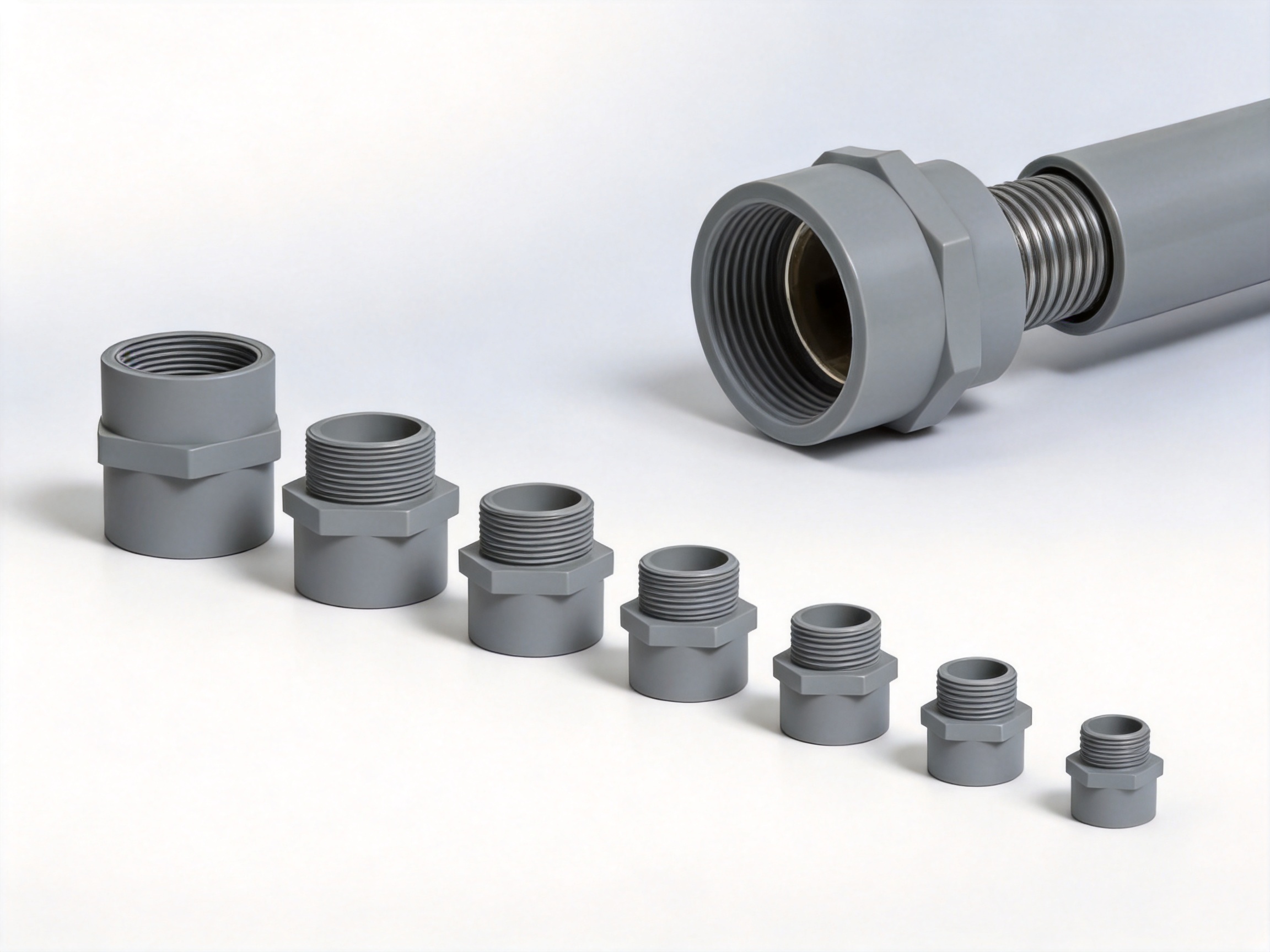
The male configuration has external threads and is used when the adapter must screw into a female threaded port. Typical connection points may include female-threaded valves, pump accessories, filter housings, pressure-control devices, or equipment manifolds. The installer connects the CPVC pipe to the solvent-weld socket and then joins the external thread to the receiving component.
The female configuration has internal threads and receives a male-threaded component. It can be used where a threaded valve, nipple, gauge fitting, or equipment connector must be inserted into a CPVC piping system. The female design can provide a neat transition when the connected component already has external threads.
Choosing the correct version is important for both installation efficiency and system reliability. Procurement documents should state the nominal size, thread configuration, pipe connection type, quantity, and any required standard. Photographs or general product names should not be used as the only basis for selection because male and female adapters can appear similar when viewed from a distance.
When connecting plastic threads to metal threads, installers should consider the differences in hardness, thermal expansion, and tightening behavior. The connection should be assembled carefully, with a compatible sealant and controlled torque. Metal components should not be forced into plastic threads, and tools should be applied only to the intended hexagonal surface.
These CPVC thread adapters are suitable for a wide range of water-handling applications. In residential plumbing, they may connect CPVC pipe to shutoff valves, water-treatment accessories, pressure regulators, or appliance connections. Their compact format is helpful in utility rooms, kitchens, bathrooms, and service cabinets where space is limited.
In commercial buildings, the adapters can be used in branch piping, water distribution, equipment rooms, and service risers. Hotels, hospitals, offices, and other facilities often contain a combination of plastic pipework and threaded components. A standardized CPVC transition fitting helps engineers and installers create consistent connection details across different sections of the building.
In irrigation systems, the fitting can connect CPVC pipelines to valves, control assemblies, filters, pressure devices, and distribution accessories. Irrigation installations may include frequent changes in direction and equipment configurations, making adaptable threaded transitions valuable during construction and maintenance.
Water-treatment installations can use these adapters in connection with filtration equipment, dosing accessories, water storage systems, and related piping. The specified application is water, so the designer should verify compatibility with any treatment chemicals, disinfectants, additives, or cleaning agents used in the complete system.
Food-plant and process-support applications may also use CPVC water lines where the operating conditions and regulatory requirements are suitable. In such environments, material documentation, cleaning procedures, temperature exposure, and local approval requirements should be reviewed before installation.
The adapter may also be incorporated into systems serving pump equipment. A pump installation commonly includes valves, gauges, strainers, pressure-control parts, and flexible or rigid pipe connections. The male or female CPVC adapter can help connect these accessories to a CPVC pipeline, provided the connection size and operating conditions are appropriate.
The comparison between a CPVC hex thread adapter and a competing fitting should be based on the complete installation rather than on material price alone. A well-designed CPVC adapter can offer advantages in corrosion resistance, handling, installation time, and connection flexibility. These benefits can contribute to lower total ownership cost when the product is matched correctly to the service conditions.
Compared with conventional metal adapters, the CPVC version is lighter and does not rust. This can be particularly valuable in humid plant rooms, irrigation environments, and water systems where corrosion control is a continuing maintenance concern. The absence of rust does not mean that the fitting is suitable for every chemical or temperature condition; application compatibility remains essential.
Compared with smooth plastic adapters without a defined wrench surface, the hex design can offer better installation control. The installer has a stable gripping location for alignment and service. This can be a practical advantage in compact assemblies where access is restricted or where the pipe must not be twisted during connection.
Compared with assemblies made from several separate transition pieces, a properly selected adapter can reduce component count. Fewer parts may reduce installation labor, simplify inventory management, and limit the number of potential leakage points. It may also produce a cleaner appearance in exposed plumbing and equipment installations.
The broad 1/2-inch to 2-inch size range is another commercial advantage. Contractors and distributors can source multiple common sizes from one product family. This supports standardized project specifications, easier replenishment, and more consistent installation practices across residential, commercial, irrigation, and water-treatment applications.
OEM and ODM support further increases flexibility. A customer may require customized packaging, branding, labeling, product documentation, or a project-specific combination of male and female variants. The stated product information identifies support for OEM and ODM programs, allowing business customers to discuss requirements beyond standard catalog purchasing.
The manufacturer behind this product is an integrated enterprise with experience in research and development, mass production, and global export. Established in 2008, the company has developed a product portfolio centered on water pumps and water-system peripheral products. This background is relevant because a piping adapter is often purchased as part of a larger water-handling project rather than as an isolated component.
Experience with deep well pumps, submersible pumps, domestic booster pumps, circulation pumps, solar water pumps, intelligent booster pumps, and related equipment gives the manufacturer practical exposure to the connection requirements found in real water systems. Understanding how fittings interact with pumps, valves, pressure controls, and distribution networks can support more useful product selection and technical communication.
An integrated manufacturing model can coordinate product development, production planning, inspection, packing, and export documentation. For international customers, this coordination helps reduce communication gaps between technical teams, production personnel, and logistics departments. It may also support more reliable delivery planning for mixed orders that include pumps, accessories, and piping components.
The product specification identifies CPVC as the body material, grey as the body color, manual operation, ASTM as the stated standard, and SCH80 as the stated thickness classification. These details provide a starting point for technical review. For projects with strict approval requirements, buyers should request the relevant material certificates, test reports, dimensional records, and compliance documents before placing a final order.
Mass production capability is important for maintaining consistency between batches. Consistent molding, thread formation, socket dimensions, marking, and packaging help installers work with predictable components. Production quality should be assessed through appropriate process controls, inspection procedures, sampling plans, and final product checks.
Research and development capability also supports product improvement. Changes in tooling, product geometry, packaging, documentation, and manufacturing efficiency can be evaluated as market requirements evolve. For OEM and ODM customers, development support may help adapt product identification and commercial presentation while preserving the functional requirements of the fitting.
The company’s location in Zhejiang, China, places its production and export operations within a major manufacturing region. Its associated procurement, order-tracking, cross-border delivery, and foreign-trade service capabilities are intended to support customers purchasing for international markets. This one-stop approach can be valuable for distributors and contractors that need coordinated sourcing rather than separate suppliers for every product category.
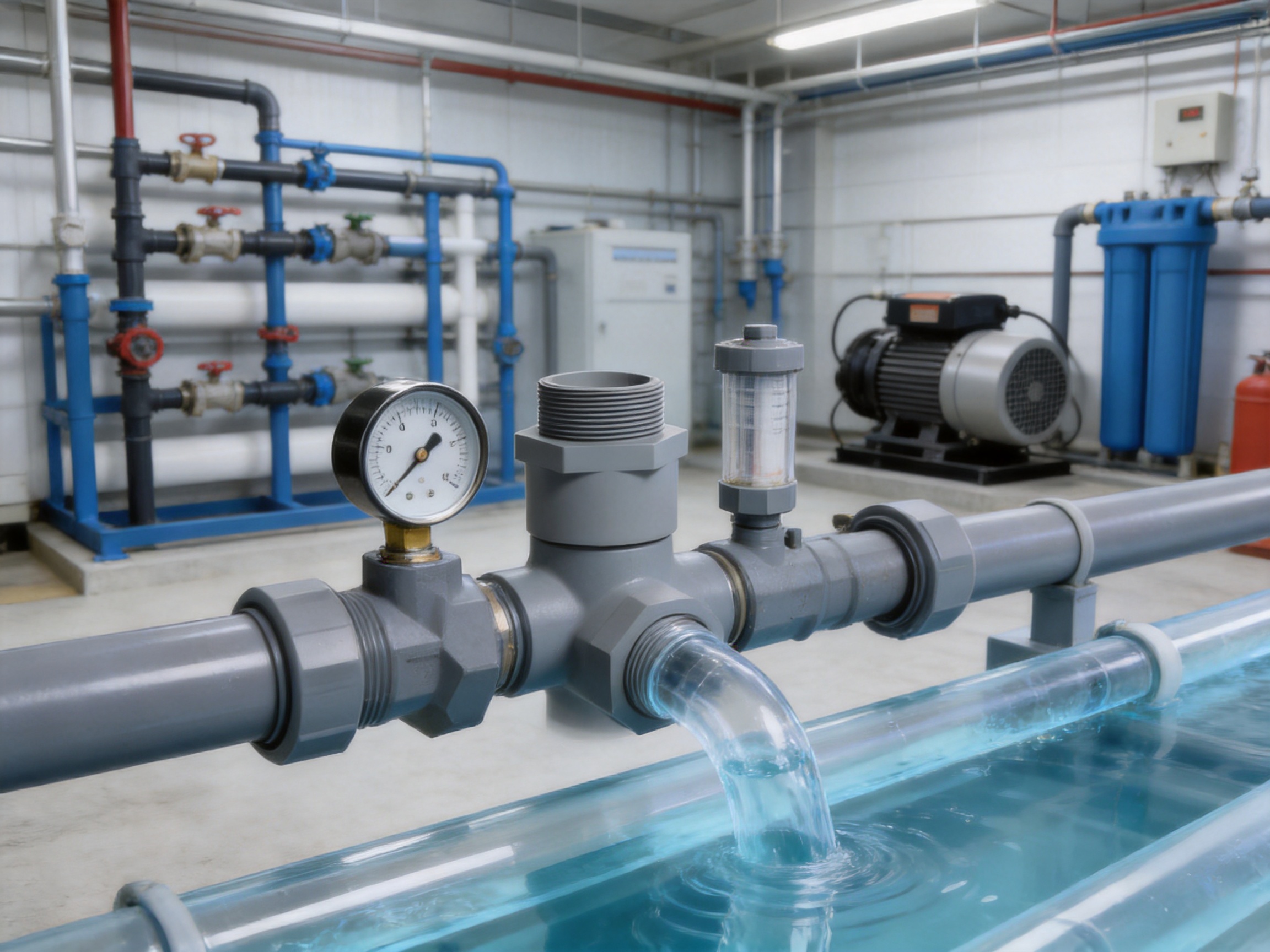
The manufacturing process for a CPVC adapter generally begins with controlled material preparation. CPVC resin and approved additives must be managed according to the required formulation and processing conditions. Stable material handling contributes to consistent color, mechanical performance, dimensional accuracy, and surface quality.
Injection molding is typically used to produce thermoplastic fittings of this type. During molding, the material is heated, injected into a precision tool, cooled, and ejected. The mold must reproduce the socket, hexagonal body, threaded area, and other functional surfaces accurately. Proper control of temperature, pressure, filling, cooling, and cycle time helps reduce defects such as incomplete filling, distortion, sink marks, or dimensional variation.
Thread geometry requires particular attention. Threads must be formed with sufficient accuracy to engage the corresponding male or female component while avoiding excessive looseness or interference. The thread must also be supported by adequate wall thickness so that normal installation loads do not cause cracking or deformation.
The CPVC socket area is equally important. It must receive the specified pipe size and provide a suitable bonding surface for solvent cement. Dimensional inconsistency in the socket can affect insertion depth, joint fit, and adhesive coverage. Quality checks should therefore include socket dimensions, roundness, visual appearance, and compatibility with the intended piping standard.
The hexagonal body must be formed consistently so that it can be gripped during installation. Sharp flash, incomplete corners, or irregular molding may interfere with tool access or reduce the professional appearance of the product. A well-controlled molding process helps create a clean and usable wrench surface.
After molding, fittings may undergo visual inspection, dimensional inspection, thread checks, packaging inspection, and other tests appropriate to the product specification. A manufacturing organization with mass-production experience can establish inspection checkpoints throughout the process rather than relying only on a final visual check.
Packaging is also part of product quality. The stated packing method is a carton box or packaging according to the customer’s request. Suitable packaging protects threads and socket surfaces from impact, contamination, and deformation during storage and transportation. For export shipments, packaging must also be selected according to the shipment method, carton strength, moisture exposure, and handling conditions.
Before installation, confirm that the adapter size, thread direction, pipe material, and connected component are correct. Inspect the fitting for cracks, distortion, damaged threads, contamination, or visible molding defects. Do not install a product that has been damaged during storage or transportation.
Cut CPVC pipe squarely and remove burrs from the cut end. A clean, square pipe end improves insertion into the fitting socket and supports uniform solvent-cement coverage. The pipe and socket should be dry and free from dirt, oil, moisture, and loose particles before cement is applied.
Use a solvent cement and primer system that is suitable for CPVC and accepted by the applicable piping standard. Apply the products according to the cement manufacturer’s instructions. Insert the pipe fully into the socket with the recommended twisting motion, then hold the joint in position long enough to prevent push-out during initial set.
For the threaded connection, verify that the mating component uses the correct thread size and compatible thread form. Apply an appropriate thread sealant where required. Sealant should be applied carefully so that excess material does not enter the water passage or interfere with the thread engagement.
Tighten the threaded connection by hand and then use an appropriate tool on the adapter’s hexagonal body. Avoid excessive force. Plastic threads can be damaged by over-tightening, and excessive torque can transfer stress into the solvent-welded pipe joint or the connected equipment port.
Allow solvent-welded joints to cure for the time specified by the cement manufacturer. Cure time may vary according to pipe size, temperature, humidity, and system pressure. Do not pressurize the line before the joint has reached the required cure condition.
After installation, inspect the assembly and conduct a pressure or leakage test according to the applicable code, project specification, and system design. If a leak is detected, depressurize the system before making any adjustment. Never attempt to tighten a pressurized plastic connection.
Project buyers should begin by identifying the required nominal size. The available range covers common sizes from 1/2 inch through 2 inches, but the pipe outside diameter and fitting standard should still be confirmed. Nominal size terminology can vary between markets, so technical drawings and dimensional data should be used for final verification.
The next decision is the thread configuration. Specify male or female clearly, and identify whether the threaded component is located on the valve, pump, gauge, filter, or other equipment. Ordering both variants under a general description without a configuration breakdown may result in unnecessary substitutions or installation delays.
Operating conditions should also be reviewed. The stated medium is water, and the temperature description includes medium and normal temperature. If the system involves elevated temperatures, pressure fluctuations, disinfectants, aggressive chemicals, or special cleaning cycles, the buyer should request confirmation of suitability and allowable pressure-temperature performance.
For commercial and industrial projects, request the applicable technical documents before shipment. These may include dimensional drawings, material information, inspection records, product photographs, packing details, and certificates required by the project or destination market. Document requirements often vary by country, industry, and end-user specification.
Packaging and labeling should be agreed in advance for distributor and OEM programs. Carton markings may include size, product type, thread configuration, quantity, batch information, customer part number, or other identification details. Clear labeling helps warehouse personnel distinguish male and female adapters and reduces picking errors.
Buyers should also consider whether the adapter will be purchased alone or together with pumps and accessories. A supplier that can provide deep well pumps, submersible pumps, booster pumps, circulation pumps, solar water pumps, intelligent booster pumps, and piping accessories may simplify project coordination. Combining related products can reduce the number of purchase orders and improve compatibility discussions.
In a domestic booster system, a CPVC adapter may connect a water line to a valve, pressure-control device, or pump-related accessory. The correct arrangement depends on the pump manufacturer’s connection size, pressure requirements, vibration behavior, and the piping material selected by the system designer.
For irrigation equipment, the adapter can form part of a connection between the main pipeline and a control valve or filtration unit. The hex body can be useful during seasonal maintenance when valves and accessories need to be removed or replaced. Outdoor systems should be designed with suitable support, protection from impact, and allowance for thermal movement.
In circulation systems, the adapter may be used around equipment connections, balancing devices, or service components where CPVC water piping is suitable. The designer should confirm that the operating temperature and pressure remain within the limits of the complete CPVC system.
Solar water-pumping projects may require various piping transitions around pumps, storage tanks, filters, and control components. Although the adapter itself is a passive manual fitting, it can support the connection architecture of an active pumping system. Proper sizing and careful installation remain necessary to avoid unnecessary restriction or leakage.
Commercial multistage pump systems and building water-supply installations may include numerous threaded accessories. A standardized family of CPVC adapters can help maintain consistency across branch connections, service points, and equipment interfaces. The adapter should never be treated as a substitute for a system pressure calculation or a complete connection design.
CPVC fittings generally require limited routine maintenance when they are correctly selected and installed. Periodic visual inspection can identify signs of leakage, unusual movement, mechanical damage, discoloration, or stress around the joint. Exposed fittings should be protected from impact, excessive loading, and unauthorized modification.
Threaded connections should not be used as structural supports for heavy valves, pumps, filters, or unsupported pipe sections. Pipe hangers and equipment supports should carry the appropriate loads. Excessive weight or vibration can place stress on the adapter, even if the thread itself is correctly assembled.
Where the system experiences repeated temperature changes, the designer should consider thermal expansion and contraction. CPVC and connected materials may expand at different rates. Proper routing, supports, expansion provisions, and flexible connections can reduce stress on transition fittings.
If disassembly is required, isolate and depressurize the line first. Use the hexagonal body to hold or turn the adapter, and avoid clamping directly onto the socket or applying tools in a way that can crush the fitting. When reassembling, inspect the thread and replace damaged sealing material as necessary.
Service life depends on water chemistry, pressure, temperature, ultraviolet exposure, installation quality, and mechanical loading. The adapter should be used within the limits established by the piping system manufacturer and applicable standards. A product designed for water should not automatically be assumed suitable for other fluids.
For international customers, product quality includes more than the molded fitting itself. It also includes accurate order confirmation, reliable production scheduling, protective packaging, documentation, and shipment coordination. An integrated export organization can provide support across these stages.
The manufacturer’s business structure includes dedicated foreign-trade and procurement-related entities established to serve purchasing, order tracking, cross-border delivery, and related services. This is useful for buyers who need a single point of contact for multiple pump and water-system products.
Global customers may also benefit from OEM and ODM communication. Customized support can include product labeling, packing configuration, documentation, and commercial presentation, subject to technical and production review. A clear technical brief should identify the size range, configuration, standard, packaging, inspection requirements, target market, and expected order volume.
Supplier evaluation should include production capability, product range, export experience, response speed, documentation quality, and after-sales communication. A company that serves agricultural irrigation, municipal engineering, mining, construction, HVAC, new-energy projects, and household water supply can offer application experience across different operating environments.
For large projects, customers should request samples or pre-production confirmation where appropriate. Sample approval can verify dimensions, thread configuration, color, marking, packaging, and compatibility with the customer’s pipe and equipment. It can also prevent costly changes after mass production.
The lightweight nature of CPVC can reduce transportation weight compared with many metal alternatives. Easier handling may also reduce installation energy and labor requirements. The absence of corrosion can contribute to longer functional performance in suitable water applications and may reduce the need for frequent replacement caused by rust.
Solvent-weld installation can avoid hot-work operations associated with welding or brazing metal pipe. This can simplify work planning in occupied buildings and reduce the need for high-temperature equipment. Installers must still follow safety instructions for primers, solvent cements, ventilation, storage, and fire prevention.
Operational efficiency depends on the whole system. A fitting alone cannot guarantee energy savings or reduced maintenance. However, corrosion-resistant materials, smooth internal surfaces, reliable joints, and serviceable connection geometry can support a well-designed system over its operating life.
It connects CPVC pipe to a threaded valve, fitting, instrument, pump accessory, or other threaded component. One end is designed for CPVC pipe connection, and the other end has male or female threads.
The listed sizes are 1/2 inch, 3/4 inch, 1 inch, 1-1/4 inches, 1-1/2 inches, and 2 inches.
The male version has external threads and screws into a female threaded port. The female version has internal threads and receives a component with external threads.
The hexagonal body provides a defined gripping surface for installation and removal. It helps installers control alignment and tightening while reducing the temptation to grip the pipe socket or another unsuitable part of the fitting.
The body material is CPVC. The stated body color is grey, and the product information identifies SCH80 thickness and ASTM as the stated standard.
The specified medium is water. Chemical compatibility should be confirmed for any disinfectant, cleaning solution, additive, process fluid, or treatment chemical before use.
It can be used in suitable water-pumping systems to connect CPVC pipe with threaded valves, controls, gauges, filters, and other accessories. The connection must match the pump system’s size, pressure, temperature, vibration, and material requirements.
Installation normally requires CPVC pipe preparation tools, compatible primer and solvent cement where specified, thread sealant, and a suitable wrench for the hexagonal body. The installer should follow the relevant piping and cement manufacturer instructions.
The connection should be tightened carefully with compatible sealant and controlled force. The tool should engage the hexagonal body, and excessive torque should be avoided because plastic threads and fittings can be damaged by over-tightening.
The product information identifies OEM and ODM support. Customers can discuss customized branding, labeling, packaging, documentation, and related requirements with the supplier.
Potential applications include building plumbing, homes, hospitals, hotels, food plants, irrigation, water treatment, pump systems, and other water-distribution installations where CPVC and the selected thread connection are appropriate.
Confirm the nominal size, male or female configuration, pipe standard, thread standard, operating pressure, temperature, water chemistry, quantity, packaging, documentation, and destination-market requirements.
The 0.5-inch to 2-inch HEX CPVC Male or Female Thread Adapter is a practical transition fitting for water piping systems that combine CPVC pipe with threaded equipment and accessories. Its CPVC construction offers low weight, corrosion resistance, electrical nonconductivity, and a smooth internal surface. Its hexagonal body supports controlled installation and convenient maintenance, while the male and female configurations provide flexibility for different connection layouts.
The six-size range covers many common plumbing, irrigation, building-service, water-treatment, and pump-system requirements. The adapter can also reduce the need for multiple transition components when the correct configuration is selected. Proper installation, appropriate sealant, controlled tightening, correct solvent-weld procedures, and compliance with the relevant pressure and temperature limits are essential for reliable performance.
The manufacturer’s broader experience in pumps, intelligent water systems, solar pumping, mass production, research and development, and international export strengthens its ability to support customers seeking more than a single fitting. Its OEM and ODM capabilities, packaging options, and one-stop procurement services can benefit distributors, contractors, engineering companies, and industrial buyers.
For the best result, the adapter should be selected as part of a complete system design. When its size, material, thread configuration, and service conditions are properly matched, the CPVC hex thread adapter can provide a clean, serviceable, and dependable connection for modern water-handling installations.
1. Product technical data for 0.5-inch to 2-inch HEX CPVC Male or Female Thread Adapter, including dimensional information and material specifications.
2. ASTM standards and related guidance for thermoplastic piping systems and CPVC fitting dimensions, materials, and applications.
3. General manufacturer instructions for CPVC pipe preparation, solvent-cement joining, curing, and pressure testing.
4. Engineering principles for threaded plastic connections, compatible sealants, controlled tightening, and mechanical support of piping systems.
5. Technical information concerning water-pumping, irrigation, building plumbing, water treatment, and pump accessory integration.
6. Manufacturer information regarding research and development, mass production, OEM and ODM support, export services, and water-pump product categories.
edwina@edwin-pump.com
+86-13586290903 (WhatsApp)
Xuri Gongliang Cutting Tool Entrepreneurship Park, Wenqiao Town, Wenling City, Taizhou City, Zhejiang Province, China

High Performance Smart Pump Factory


 English
