edwina@edwin-pump.com

View All Products
en

Reliable pipe connections are essential to the safety, efficiency, and service life of every water distribution, process-fluid, drainage, and building utility system. Although a coupling is a relatively small component, its performance can influence the integrity of an entire piping installation. A poorly selected fitting may lead to leakage, premature corrosion, difficult maintenance, contamination risks, or unplanned downtime. For this reason, engineers, contractors, distributors, and maintenance teams increasingly look for fittings that combine chemical resistance, dimensional consistency, simple installation, and dependable long-term performance.
The CPVC Schedule 80 socket coupling described in this article is designed for precisely these requirements. Available in nominal sizes from 1/2 inch to 6 inches, the coupling provides a solvent-weld connection between two CPVC pipes of the same nominal size. Manufactured from CPVC and produced to ASTM-related requirements, it is intended for building services and a wide range of hot- and cold-water applications. Its grey body, socket-end configuration, and manual installation method make it a practical option for professional piping work.
Beyond its basic function of joining two pipe sections, this fitting provides a combination of advantages that can make CPVC piping more attractive than many conventional alternatives. Its resistance to corrosion, low maintenance requirements, relatively light weight, broad size selection, and compatibility with established CPVC joining methods support efficient project execution. When used with correctly specified pipe, solvent cement, primers, supports, and installation procedures, it can contribute to a durable and dependable piping network.
A socket coupling is a straight fitting used to connect two pipes in line. Each end of the coupling contains a socket, or female hub, designed to receive the outside diameter of a compatible pipe. The pipe and fitting are prepared with the recommended primer and solvent cement, inserted to the correct depth, and allowed to cure. The resulting joint forms a continuous connection that is sealed against leakage when the materials and installation procedures are properly matched.
Unlike a threaded coupling, a socket coupling does not depend on metal threads or mechanical tightening. This eliminates the need for pipe threading equipment and reduces the number of components involved in the connection. It also avoids the potential for thread damage, improper tightening, or corrosion around threaded metallic surfaces. For projects where many joints must be completed efficiently, socket joining can simplify the workflow and reduce installation labor.
The straight-through configuration is especially useful when extending a pipeline, repairing a damaged section, or connecting two pre-cut lengths of pipe. Because the coupling does not change the direction or diameter of the line, it helps maintain a direct flow path. Its compact shape also makes it suitable for installations where space is limited, provided that the required working clearance and support arrangements are available.
The fitting is identified as a CPVC SCH80 coupling, with the model designation S50 listed in the supplied specifications. It is manufactured from chlorinated polyvinyl chloride, a thermoplastic material developed for improved temperature capability and resistance to many chemicals compared with standard PVC. The product is grey and is offered in nominal sizes ranging from 1/2 inch through 6 inches.
The listed standard information includes ASTM D1784 for the CPVC material specification and ASTM F439 as the matching criteria for CPVC socket-type fittings. These references are important because they establish recognized expectations for material classification, dimensions, performance, and fitting compatibility. Project engineers should still confirm the exact edition of the applicable standard, the required pressure rating, and any local code requirements before approving a product for a particular service.
Product characteristic | Listed specification |
Fitting type | CPVC Schedule 80 socket coupling |
Model designation | S50 |
Material | CPVC |
Nominal size range | 1/2 inch to 6 inches |
Color | Grey |
Connection method | Socket connection using compatible solvent-welding procedures |
Material standard reference | ASTM D1784 |
Fitting matching reference | ASTM F439 |
Media examples | Hot water, cold water, pure water, drinking water, and wastewater, subject to compatibility review |
Customization support | OEM and ODM |
Packaging | Carton box or customer-requested packaging |
The supplied dimensional data identifies the outside diameter, overall length, and socket-related length for each listed size. These values are useful during design, prefabrication, material takeoff, and installation planning. However, dimensional data should always be checked against the approved drawing or current technical datasheet before fabrication, especially when a project requires strict interchangeability with fittings from another manufacturer.
The availability of sizes from 1/2 inch to 6 inches allows the coupling to serve both small building branches and larger distribution lines. Smaller sizes are commonly associated with fixture branches, domestic water outlets, laboratory services, and compact mechanical systems. Medium sizes can be used in building risers, equipment connections, plant-room piping, and commercial water distribution. Larger sizes are useful for main lines, high-flow services, and industrial or institutional installations.
The broad size range simplifies procurement because multiple connection requirements can be covered within one material family. A contractor working on a hotel, hospital, food-processing facility, or residential development may be able to standardize on CPVC fittings instead of combining several different pipe materials and joining technologies. Standardization can reduce training requirements, simplify inventory management, and lower the risk of selecting an incompatible fitting.
The following dimensions are included in the supplied product data. They are presented for reference and should be verified against the purchase specification before use in a controlled engineering application.
Nominal size | D (mm) | L (mm) | L1 (mm) |
1/2 inch | 21.34 | 50.2 | 24 |
3/4 inch | 26.67 | 56.5 | 27 |
1 inch | 33.40 | 62.5 | 30 |
1-1/4 inch | 42.16 | 68.5 | 33 |
1-1/2 inch | 48.26 | 74.5 | 36 |
2 inch | 60.32 | 80.5 | 39 |
2-1/2 inch | 73.02 | 97.0 | 46 |
3 inch | 88.90 | 103.0 | 49 |
4 inch | 114.30 | 123.0 | 59 |
5 inch | 141.00 | 139.5 | 67 |
6 inch | 168.00 | 159.6 | 76.8 |
One of the strongest advantages of CPVC over many metallic piping materials is its resistance to corrosion. Metal pipe systems can be affected by oxidation, galvanic corrosion, aggressive water chemistry, dissolved salts, and chemical exposure. Corrosion may reduce wall thickness, discolor water, produce scale, and eventually cause leakage. CPVC does not rust, and its nonmetallic structure can help reduce many of the corrosion mechanisms associated with steel, iron, and other metal systems.
This characteristic is particularly valuable in humid plant rooms, coastal environments, chemical-handling areas, water-treatment facilities, and buildings where the water chemistry may be challenging. A corrosion-resistant coupling can help preserve the integrity of the connection without requiring protective coatings, cathodic protection, or frequent repainting. This does not mean that CPVC is universally resistant to every chemical. Compatibility must be evaluated for the actual fluid, concentration, temperature, and exposure duration.
Compared with a metallic coupling, the CPVC option can also reduce the possibility of rust particles entering the water stream. For applications involving clean water, process water, or sensitive equipment, maintaining a clean internal surface is an important consideration. The fitting is suitable for listed water services when the complete piping system, joining materials, and local approvals meet the project requirements.
The Schedule 80 designation indicates a heavier-wall pipe and fitting system than thinner schedule alternatives in the same nominal size family. A thicker wall can provide additional mechanical strength and pressure capability, subject to the applicable standard, temperature, pipe size, and system design. For demanding installations, this added material thickness can provide a greater margin against external damage and operating stresses.
A Schedule 80 coupling is therefore appropriate for projects where a more robust construction is preferred. It may be considered for commercial service rooms, industrial utility lines, institutional buildings, workshops, and exposed piping subject to higher mechanical demands. The fitting should not be treated as automatically suitable for every pressure or temperature condition. The pressure rating of CPVC decreases as temperature rises, and the complete system must be evaluated rather than relying on the fitting designation alone.
Mechanical robustness also depends on correct support and alignment. CPVC piping should be protected from impact, excessive bending, concentrated loads, and unsupported equipment connections. A high-quality coupling cannot compensate for pipe movement, poor support spacing, excessive stress, or installation in an environment outside the material’s approved service range.
The product information lists both hot and cold water among the applicable media. CPVC is widely selected for water systems because it combines low thermal conductivity with greater temperature capability than ordinary PVC. Its comparatively low heat transfer can help reduce condensation on cold-water lines and reduce heat loss from hot-water lines when the system is properly designed and insulated.
Lower thermal conductivity can also improve handling safety around hot-water distribution systems because the exterior surface of the pipe may not become as hot as an equivalent uninsulated metal line. Nevertheless, hot-water systems still require appropriate insulation, temperature control, expansion allowances, and protection against scalding. The actual allowable temperature and pressure must be confirmed from the manufacturer’s current technical information and the governing plumbing code.
Thermal expansion is an important design consideration for all thermoplastic piping. CPVC expands and contracts more than many metals when temperature changes occur. Long straight runs may require offsets, loops, guides, or other provisions for movement. Couplings should not be used to restrain thermal movement unless the system design specifically permits it. Proper engineering helps prevent undue stress at joints, valves, pumps, heaters, and fixed supports.
Metallic couplings offer high mechanical strength and are widely used in many industries, but they may require threading, grooving, welding, soldering, or specialized mechanical connection methods. These operations can increase labor, require more tools, and introduce hot-work risks. Metallic systems may also be vulnerable to corrosion depending on the water chemistry and surrounding environment.
The CPVC socket coupling provides a simpler cold-joining method. It is lighter to handle, does not rust, and generally requires fewer specialized tools. Its smooth internal surface and nonmetallic composition can be beneficial in water service. The trade-off is that CPVC must be protected from excessive impact, ultraviolet exposure where applicable, incompatible chemicals, and temperatures outside the approved range.
Standard PVC is commonly used for cold-water, drainage, and other services, but CPVC is formulated for a higher temperature range. When the system carries warm or hot water, CPVC may offer a more suitable material option than standard PVC. The Schedule 80 design further supports applications requiring a heavier-wall configuration.
CPVC and PVC are not automatically interchangeable. They may require different solvent cements, and the correct joining products must be selected for the specific material. Mixing materials without approval can produce weak joints, dimensional problems, or chemical incompatibility. The advantage of the CPVC coupling is realized when it is used as part of a complete, matched CPVC system.
Threaded plastic fittings can be useful where disassembly is required, but they may be more sensitive to cross-threading, over-tightening, and stress concentration. Socket couplings create a permanent connection and therefore are well suited to straight pipeline sections where routine disassembly is not required. The absence of threads also provides a smooth internal passage and reduces the possibility of leakage caused by damaged or improperly sealed threads.
Mechanical repair couplings can be valuable for emergency repairs or situations where pipes cannot be moved. However, they often use multiple metal or elastomeric components and may require more space around the pipeline. A solvent-welded CPVC coupling offers a compact, clean connection when the pipe ends can be prepared and inserted correctly. For new construction and planned replacement work, this can provide a more integrated appearance and simpler material list.
The supplied company information describes an integrated manufacturing enterprise established in 2008, with capabilities covering independent research and development, mass production, and global export. Although the company is widely associated with pumps, its product portfolio also includes piping accessories and water-treatment peripheral products. This broader water-system experience is valuable because fittings are best understood as part of a complete fluid-handling network rather than as isolated components.
An integrated manufacturing approach can support closer coordination between product design, tooling, material selection, production scheduling, inspection, packaging, and export documentation. For a molded thermoplastic fitting, these stages influence dimensional stability and field performance. Controlled tooling, consistent resin preparation, appropriate molding conditions, and inspection of socket dimensions are all important to achieving reliable assembly.
Research and development capability can also support product adaptation. Different markets may require different labeling, packaging, dimensional conventions, color requirements, documentation, or private-label arrangements. The stated OEM and ODM support indicates that the supplier can discuss customized commercial requirements with importers, distributors, contractors, and project purchasers.
Mass production is another important strength for large projects. A consistent production system can help maintain repeatability across substantial quantities of fittings. This matters when thousands of joints must fit the same pipe standard and when a project schedule depends on uninterrupted material availability. Production capacity should always be confirmed for the required size mix, delivery schedule, inspection plan, and packaging format.
Global export experience adds value beyond manufacturing itself. International buyers often require coordinated order tracking, documentation, packing lists, product identification, shipment planning, and communication across different time zones. The supplied company profile describes dedicated procurement and foreign-trade service capabilities established through related business entities. Such support can make the purchasing process more predictable for overseas customers.
For a CPVC coupling, material control begins with the correct CPVC compound and the appropriate formulation for the intended service. The raw material should be managed so that every production batch remains consistent in color, physical properties, and processing behavior. Traceability can help connect finished products with production records and inspection results.
Dimensional control is equally important. The socket must accept the compatible pipe while providing sufficient engagement for a secure solvent-welded joint. If the socket is too tight, assembly may be difficult and the cement may not distribute correctly. If it is too loose, the joint may not develop the intended structural and sealing performance. Outside diameter, socket depth, fitting length, wall thickness, and visual finish should be controlled against the approved product specification.
Inspection may include visual checks, dimensional measurements, material verification, pressure or performance testing, and review of molding defects. The precise inspection program depends on the manufacturer’s quality system, applicable standard, customer requirements, and intended market. Purchasers should request the relevant technical documentation when the couplings are intended for regulated projects or critical services.
Correct installation is central to the performance of a CPVC socket coupling. Even a well-manufactured fitting can fail if the pipe is not cut square, the surfaces are contaminated, the wrong cement is used, or the joint is disturbed before curing. The following procedure is a general guide and does not replace the instructions of the fitting, pipe, solvent-cement, or code authority.
First, verify that the pipe and coupling have the same nominal size and are approved for use together. Cut the pipe squarely so that the end enters the socket evenly. A diagonal cut can reduce the bonding area and may push cement unevenly through the joint. Remove burrs from the inside and outside of the pipe, and lightly bevel the external edge if recommended by the joining system.
Clean the pipe end and the coupling socket. Dirt, moisture, grease, dust, and loose particles can interfere with the solvent-welding process. Do not use materials that may attack or contaminate CPVC. The joining surfaces should be dry unless the approved product instructions specifically state otherwise.
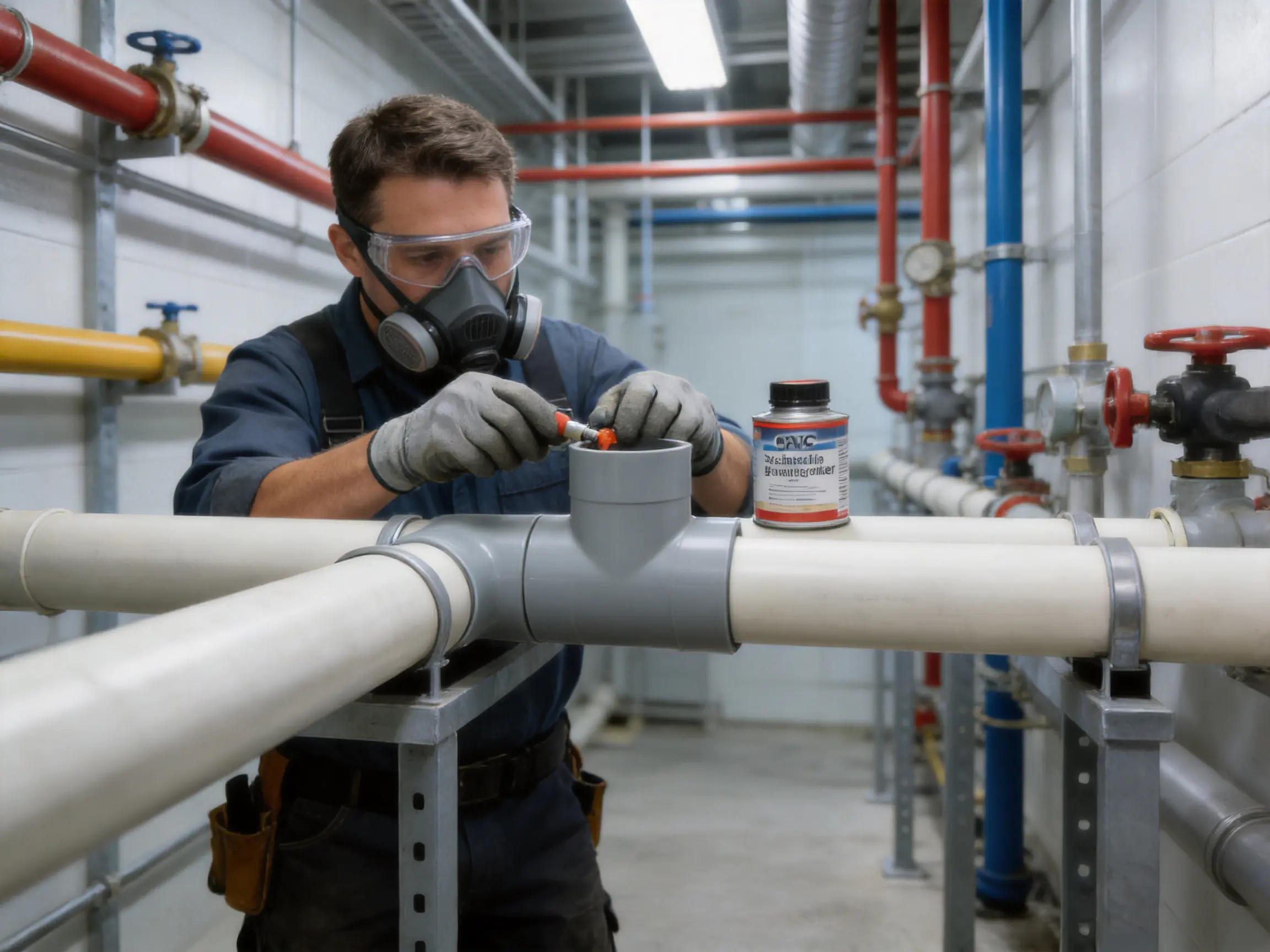
Use a primer and solvent cement specifically approved for the CPVC system. Apply the products according to the manufacturer’s instructions, including the required working time, temperature range, and safety precautions. The solvent cement should be evenly applied to the prepared pipe and socket surfaces without leaving excessive pools inside the fitting.
Because solvent cement products are flammable and produce vapors, installation should take place in a well-ventilated area away from ignition sources. Workers should use appropriate personal protective equipment and follow the safety information supplied with the chemical products. The pipe and fitting manufacturer’s recommendations take priority over generic installation practices.
Insert the pipe into the coupling socket while the cement remains workable. Push it fully to the socket bottom and rotate it slightly if the joining instructions recommend this action. Hold the pipe and fitting together briefly to prevent the pipe from backing out. Remove excess cement from the exterior without disturbing the joint.
After assembly, allow the connection to cure for the period required by the solvent-cement manufacturer. Cure time depends on pipe size, temperature, humidity, ventilation, and pressure conditions. Larger fittings and cold or humid environments may require longer curing. The system should not be pressurized prematurely.
Once the required cure time has elapsed, inspect the completed line and test it according to the applicable plumbing code and project specification. Hydrostatic testing is generally preferred where practical, but the test medium, pressure, duration, and procedure must be approved for the specific system. Sudden pressure surges should be avoided because water hammer can stress thermoplastic piping and fittings.
Any leakage should be investigated and corrected using an approved repair method. Do not attempt to conceal an improperly bonded joint behind walls, ceilings, insulation, or equipment. Good installation records should identify the installer, materials used, test results, and any deviations from the approved design.
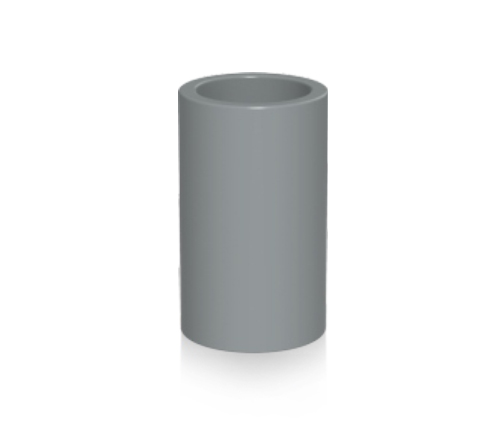
1/2 to 6 Inch CPVC SCH80 ASTM Corrosion Resistant Socket Coupling for Buidings
The coupling is identified for use in buildings, homes, hospitals, hotels, and food plants. These environments have different operating requirements, but they share a need for organized, hygienic, maintainable, and dependable water distribution. The fitting can be used in straight sections of compatible CPVC piping where a permanent socket connection is appropriate.
In homes and apartment buildings, CPVC couplings can be used in domestic hot- and cold-water networks, risers, branch lines, utility rooms, and equipment connections. The compact design is helpful in wall cavities and service spaces. Its corrosion resistance can reduce the likelihood of rust-related staining and maintenance problems, while its lower weight can simplify handling during renovation work.
Hotels, offices, shopping facilities, and restaurants often contain extensive plumbing systems with numerous branches, risers, and equipment connections. A standardized CPVC fitting range can support organized installation and simplify replacement stock. The size availability from 1/2 inch to 6 inches allows a project to use the same general fitting family from small branches to larger distribution lines.
Hospitals and institutional buildings require careful attention to water quality, reliability, maintenance access, and regulatory compliance. CPVC may be considered for approved water services where the complete system satisfies local requirements. Engineers should review chemical compatibility with disinfectants, cleaning agents, treatment chemicals, and any specialized fluids used within the facility.
Food plants may benefit from corrosion-resistant piping materials in selected water and utility services. The smooth, nonmetallic internal surface can be advantageous where cleanliness is important. However, all materials in contact with potable or process water must meet the required food, sanitary, and regulatory approvals. The coupling itself should not be assumed suitable for direct product contact without documented approval.
Pure water, selected wastewater services, and other utility applications are listed among the possible media. Chemical compatibility must be carefully verified, particularly where the system carries concentrated chemicals, oxidizing agents, solvents, or elevated-temperature fluids. A product that performs well in ordinary water may require different limitations in a specialized treatment process.
Proper selection requires more than matching the nominal pipe size. Designers should evaluate operating pressure, temperature, fluid chemistry, flow rate, pipe support, thermal expansion, ultraviolet exposure, fire protection requirements, and local code approval. The coupling must be selected as part of a system that includes compatible pipe, valves, tees, elbows, reducers, unions, solvent cement, and transition components.
Flow considerations are generally favorable for socket fittings because the coupling maintains a straight line without introducing a major change in direction. Nevertheless, the internal geometry and alignment of the pipe ends should be kept consistent. Poorly cut pipe or excessive cement inside the fitting can reduce the effective flow passage and create local turbulence.
Support spacing should follow the pipe manufacturer’s recommendations. Supports should distribute loads without crushing or deforming the pipe. Heavy valves, pumps, filters, and other equipment should be independently supported rather than suspended from the CPVC piping. Where vibration is present, flexible connectors and suitable restraints may be necessary.
Transitions between CPVC and metal require special attention. The connection method should account for thermal movement, mechanical stress, galvanic considerations, and the possibility of over-tightening threaded components. If threaded adapters are used, sealant and tightening practices must be compatible with the plastic material.
The listed packaging is a carton box or packaging prepared according to the customer’s request. Appropriate packaging helps protect socket ends, maintain product identification, and reduce damage during storage and transportation. For large orders, cartons should be labeled with size, quantity, product description, batch or lot information where available, and any customer-specific identification requirements.
CPVC fittings should be handled carefully. They should not be thrown, dragged across abrasive surfaces, or exposed to sharp impacts. Before installation, fittings should be inspected for cracks, deep scratches, distortion, contamination, or other damage. Damaged products should be isolated and evaluated rather than installed.
Storage should protect the fittings from excessive heat, direct sunlight, chemicals, and physical loading. Products should remain in a clean and ventilated area, preferably in their original packaging until needed. Solvent cement and primer should be stored separately according to their safety data and shelf-life instructions.
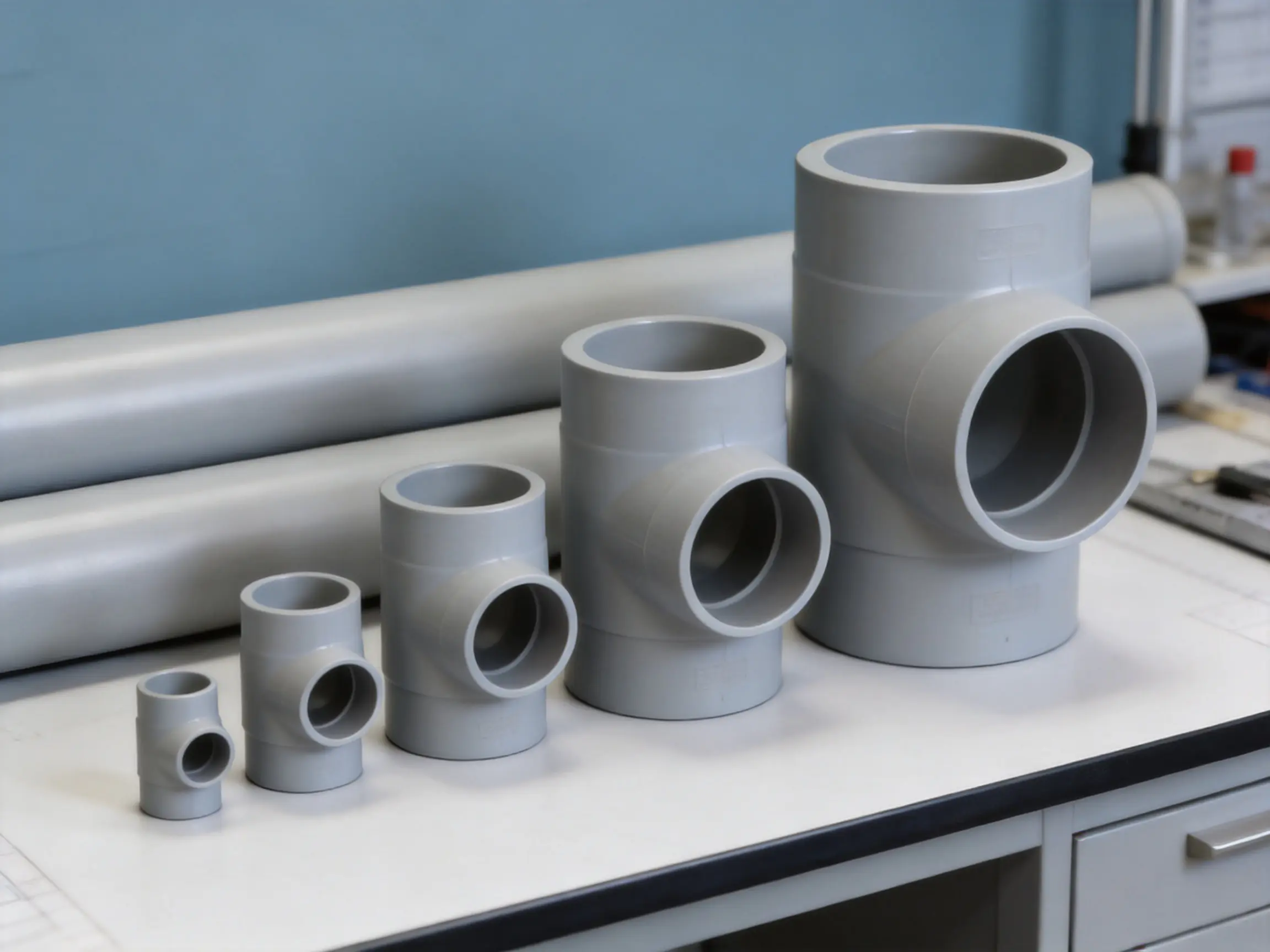
The first competitive advantage is material performance. A CPVC Schedule 80 construction combines corrosion resistance with a heavier-wall fitting design. This can be attractive to buyers seeking an alternative to metal in water and utility systems where rust prevention, lower weight, and simpler installation are priorities.
The second advantage is installation efficiency. Socket joining avoids threading and hot work, potentially reducing labor time and equipment requirements. A contractor can prepare, cement, and assemble the fitting using a relatively compact set of tools. This is particularly useful in occupied buildings, restricted plant rooms, renovation sites, and projects where hot-work permits are difficult to obtain.
The third advantage is product range. A size selection from 1/2 inch to 6 inches supports varied project requirements. Buyers can consolidate sourcing and use one compatible fitting family across residential, commercial, institutional, and selected industrial applications.
The fourth advantage is customization and supply support. OEM and ODM capabilities can help distributors and project suppliers request customized packaging, markings, documentation, or product configurations. The company’s experience in manufacturing, export, procurement coordination, and global service can support customers who need more than a simple one-time product purchase.
The fifth advantage is alignment with a broader water-equipment portfolio. A supplier that works with pumps, booster systems, circulation equipment, and water-treatment accessories can better understand how fittings interact with complete water systems. This background may be useful to customers purchasing pumps and piping components together for irrigation, building water supply, HVAC, municipal, agricultural, or industrial projects.
Before placing a large order, buyers should request the current product datasheet, dimensional drawing, material information, applicable certificates, and installation instructions. They should confirm whether the product is intended for potable water, hot water, wastewater, or another service and whether approvals are valid in the destination market.
Purchasers should also verify the exact size standard. Nominal inch dimensions may be associated with different pipe standards in different regions. The coupling must match the outside diameter and wall designation of the pipe being installed. It is also important to confirm whether the buyer requires Schedule 80 pipe specifically or another wall series with compatible socket dimensions.
For critical projects, buyers may request pre-production samples, first-article inspection, batch testing, third-party inspection, or an agreed quality-control plan. Packaging, carton strength, labeling, spare quantity, and delivery schedules should be included in the purchase contract. These measures reduce misunderstandings and help ensure that the delivered product meets the project’s technical and commercial requirements.
Lifecycle performance is an important part of material selection. A corrosion-resistant fitting can reduce replacement frequency in suitable applications, which may lower material consumption and maintenance disruption over time. Its lower weight may also reduce transportation energy compared with heavier metallic components, although the total environmental impact depends on manufacturing, transport, service life, and end-of-life management.
Thermoplastic piping systems may have a long operating life when correctly selected and installed. Preventing premature failure is one of the most effective ways to improve sustainability because leaks, water damage, emergency repairs, and replacement work consume additional resources. Careful design, compatible chemicals, correct joining, and routine inspection are therefore as important as the material itself.
At the end of service, CPVC components should be managed according to local waste and recycling rules. Buyers and contractors should avoid mixing incompatible materials in a way that makes recovery or responsible disposal more difficult. Packaging reduction, recyclable cartons, efficient shipment planning, and accurate order quantities can also support more sustainable procurement.
When specifying the coupling, identify the nominal size, Schedule 80 requirement, CPVC material, socket configuration, quantity, color, applicable standards, and intended service. Confirm the working pressure and temperature, especially for hot-water or process applications. Review chemical compatibility for any fluid other than ordinary potable or utility water.
Confirm that the pipe, coupling, solvent cement, primer, and accessories come from compatible specifications. Ask for dimensional data and verify that the listed outside diameter matches the pipe standard used on the project. If the installation is regulated, request all required certificates and approvals before shipment.
For international orders, agree on packaging, marking, inspection, shipping documents, delivery terms, and replacement procedures. The supplied company information identifies Zhejiang, China, as the place of origin and provides export-oriented service capabilities. Buyers should coordinate the commercial details early so that production and logistics remain aligned with the project schedule.
It is a straight CPVC fitting used to connect two compatible CPVC pipes in line. The Schedule 80 designation identifies a heavier-wall product series, while the socket ends are designed for solvent-welded connections rather than threaded assembly.
The listed range is 1/2 inch to 6 inches. The available sizes include 1/2, 3/4, 1, 1-1/4, 1-1/2, 2, 2-1/2, 3, 4, 5, and 6 inches.
The product information lists hot and cold water among the possible media. The allowable temperature and pressure must be confirmed from the current technical data and local code. Thermal expansion, support, insulation, and temperature control should also be considered.
CPVC does not rust like ferrous metal and is resistant to many common water-related corrosion mechanisms. Chemical compatibility must still be checked for the actual fluid, concentration, temperature, and exposure period.
No. A socket coupling is normally joined by an approved CPVC primer and solvent cement. The pipe must be cut, prepared, inserted to the correct depth, and cured according to the joining-material instructions.
CPVC and PVC should not be connected casually. The compatibility of the pipe, fitting, primer, and solvent cement must be confirmed by the relevant manufacturer and governing code. Use a transition fitting or approved joining method when changing material.
The supplied information identifies ASTM D1784 for the CPVC material and ASTM F439 as the matching fitting criterion. Buyers should confirm the applicable standard edition, certification status, and local approval requirements for the intended market.
Drinking water is listed among the possible media, but suitability depends on the complete system and the approvals required in the installation location. The pipe, fitting, solvent cement, and installation process must all meet the applicable potable-water requirements.
Store it in clean, dry, ventilated conditions away from direct sunlight, excessive heat, chemicals, and heavy impact. Keep it in its original packaging where possible and inspect every fitting before installation.
The supplied specifications state that OEM and ODM support are available. Customers should discuss custom markings, packaging, documentation, colors, dimensions, and minimum order quantities before production.
An inquiry should include size, quantity, application, fluid, temperature, pressure, required standard, destination market, packaging needs, inspection requirements, and target delivery date. Providing complete information helps the supplier recommend the correct configuration and prepare an accurate quotation.
The CPVC Schedule 80 socket coupling is a practical connection component for compatible building and utility piping systems. Its principal strengths include corrosion resistance, a robust heavier-wall configuration, a broad 1/2-inch to 6-inch size range, and a socket connection method that can simplify installation compared with threaded, welded, or heavily mechanical alternatives. These characteristics make it relevant to homes, hotels, hospitals, food plants, commercial buildings, water-treatment installations, and selected industrial services.
The product’s value is strengthened by the supplier’s integrated manufacturing background, research and development capability, mass-production experience, export support, and OEM/ODM flexibility. Consistent results still depend on correct material matching, dimensional control, compatible solvent cement, proper curing, suitable system design, and compliance with local codes.
For buyers seeking a dependable nonmetallic fitting, this coupling offers a strong combination of material performance, installation efficiency, product availability, and supply-chain support. When selected within its approved operating range and installed according to professional procedures, it can contribute to a durable, low-maintenance, and corrosion-resistant piping network.
ASTM International. ASTM D1784, Standard Specification for Rigid Poly(Vinyl Chloride) and Chlorinated Poly(Vinyl Chloride) Compounds.
ASTM International. ASTM F439, Standard Specification for Socket-Type Chlorinated Poly(Vinyl Chloride) CPVC Plastic Pipe Fittings.
Plastic Pipe Institute. Engineering guidance for thermoplastic piping design, support, thermal movement, and pressure considerations.
International Association of Plumbing and Mechanical Officials. General installation principles for plastic piping systems and solvent-welded joints.
Manufacturer technical information for CPVC Schedule 80 socket couplings, dimensional data, material specifications, packaging, and application guidance.
aseriesnoisereductiondesignacid-baseverticalsurfacepump-1.jpg "EV(F)A Series Noise Reduction Design Acid-base Vertical Surface Pump")
edwina@edwin-pump.com
+86-13586290903 (WhatsApp)
Xuri Gongliang Cutting Tool Entrepreneurship Park, Wenqiao Town, Wenling City, Taizhou City, Zhejiang Province, China

High Performance Smart Pump Factory


 English