edwina@edwin-pump.com

View All Products
en
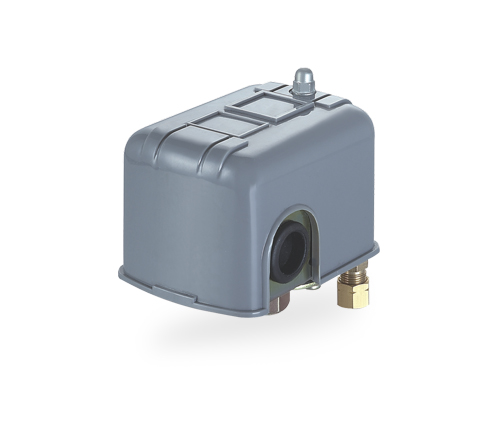
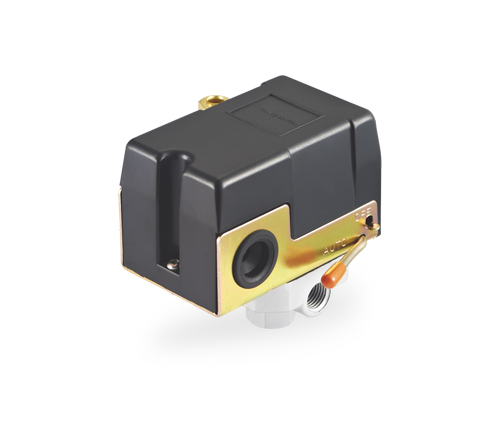
ERQ-5 Series 50/60Hz Zinc Alloy Bottom Pressure Switch Used in Air Compressors
Reliable pressure control is fundamental to the safe, efficient, and stable operation of an air compressor. A compressor must start when system pressure falls below the required level and stop when the desired pressure has been restored. If this control process is inaccurate, delayed, or unreliable, the compressor may run unnecessarily, consume excess electricity, experience accelerated wear, or operate under unsafe conditions. The ERQ-5 Series 50/60Hz Zinc Alloy Bottom Pressure Switch is designed to provide automatic pressure control for air compressor systems in industrial, commercial, workshop, and automotive service environments.
With a pressure range of 20–100 psi, rated voltage from 110V to 240V, rated current of 12A, and compatibility with both 50Hz and 60Hz electrical systems, the ERQ-5 Series is suitable for many common compressor configurations. Its zinc alloy bottom provides a durable foundation for the pressure-control assembly, while its configurable pressure settings and connection options help equipment manufacturers, distributors, and system integrators adapt the product to different applications.
The pressure switch is more than a simple on-and-off component. It serves as an important interface between the air pressure in the compressor system and the electrical circuit controlling the motor. When the pressure decreases to the selected cut-in point, the switch closes the circuit and allows the compressor to start. When the pressure reaches the selected cut-out point, the switch opens the circuit and stops the compressor. This automatic operating cycle helps maintain pressure while reducing the need for constant manual supervision.
Manufactured by Taizhou Edwin Electric Co., Ltd., the product is supported by an integrated business structure involving product research and development, mass production, export operations, order coordination, and international customer service. The company has developed experience in pump and fluid-control products since its establishment in 2008 and has expanded its product portfolio to include water pumps, intelligent pumping equipment, and related accessories. This industrial background supports a practical understanding of pressure, flow, electrical control, and the demanding operating conditions found in fluid-handling equipment.
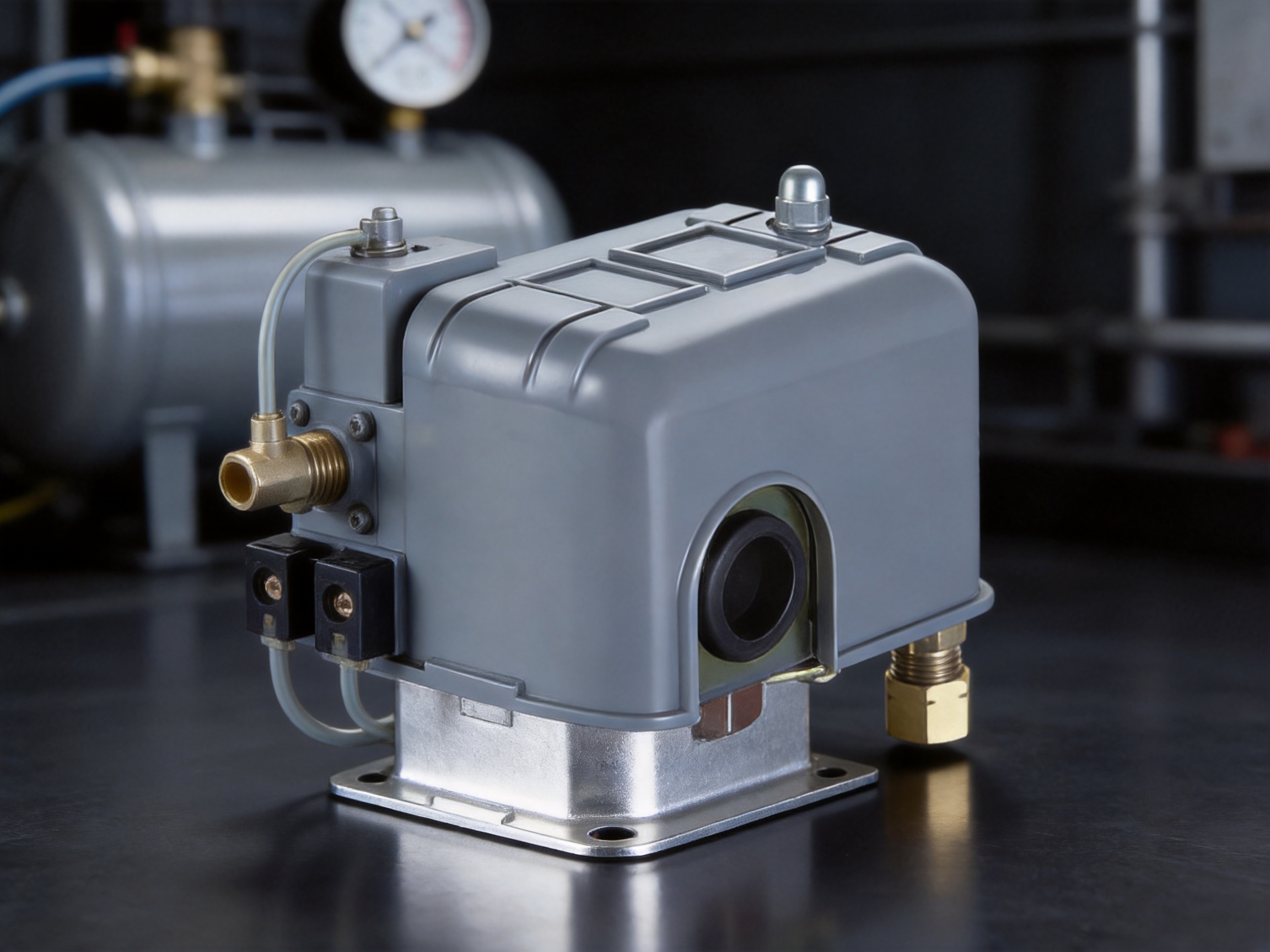
The ERQ-5 Series is a mechanical pressure controller designed primarily for air compressors. It monitors air pressure and automatically controls the compressor according to preset pressure values. The product combines a pressure-sensing mechanism, electrical contacts, a mechanical housing, connection components, and an air-relief function in a compact control assembly.
The zinc alloy bottom is one of the defining features of the design. Zinc alloy offers a useful combination of mechanical strength, dimensional stability, corrosion resistance, and manufacturing flexibility. In a pressure-switch application, the bottom section must provide a dependable mounting and connection area while supporting the internal pressure-control mechanism. A robust metal base can help the switch withstand the vibration, repeated cycling, and environmental demands commonly associated with compressor operation.
The ERQ-5 Series is compatible with 50Hz and 60Hz power systems. This dual-frequency capability is important for international equipment manufacturers and distributors because electrical standards vary across markets. Rather than requiring separate frequency-specific versions for many applications, a compatible 50/60Hz product can simplify product selection, inventory planning, and export distribution.
The pressure range is specified as 20–100 psi. Within this overall range, common pressure-setting combinations include 20–50 psi, 30–60 psi, 40–70 psi, and 50–80 psi. Customized settings are also available according to customer requirements. The selected cut-in and cut-out values determine the operating cycle of the connected compressor. Choosing the correct setting is essential for matching the switch to the receiver size, motor capacity, air demand, system pressure, and safety requirements of the application.
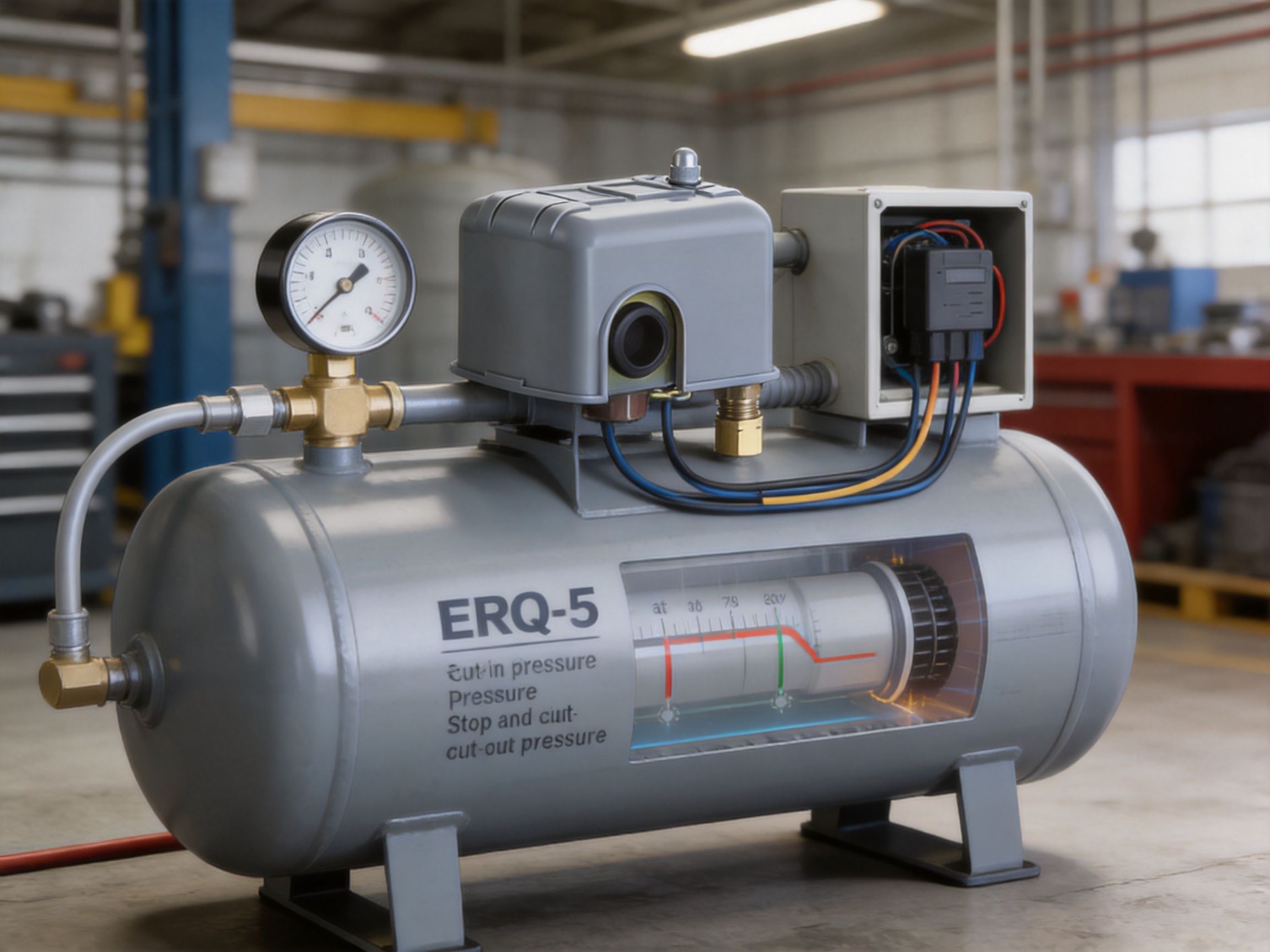
An air compressor pressure switch performs two primary functions: pressure sensing and electrical switching. The pressure-sensing section responds to changes in air pressure within the compressor system. A mechanical movement transfers the pressure change to an electrical contact mechanism. When the pressure reaches the lower operating threshold, the contacts change state and energize the compressor motor. Once pressure rises to the upper threshold, the contacts change again and interrupt the motor circuit.
The lower pressure value is commonly called the cut-in pressure. It represents the point at which the compressor starts. The higher pressure value is commonly called the cut-out pressure. It represents the point at which the compressor stops. The difference between these two values is the pressure differential. For example, a setting of 30–60 psi generally means that the compressor starts at approximately 30 psi and stops at approximately 60 psi, subject to the specific adjustment method, system conditions, and calibration tolerance.
This automatic cycle helps maintain a usable pressure reserve in the air receiver. When tools, actuators, spray equipment, or other pneumatic devices consume air, receiver pressure gradually decreases. Once the cut-in point is reached, the pressure switch starts the compressor. As the compressor replenishes the receiver, pressure increases until the cut-out point is reached. The switch then stops the motor.
The pressure switch also helps prevent continuous operation when air demand is intermittent. Without automatic pressure control, an operator would need to start and stop the compressor manually. This would be inconvenient and could lead to poor pressure management. Automatic control improves usability and can reduce unnecessary motor running time, especially when the compressor is correctly sized for the application.
It is important to understand that a pressure switch is a control component rather than a substitute for every other compressor safety device. Depending on the equipment design, a complete air-compressor system may also require a pressure relief valve, overload protection, thermal protection, check valve, receiver inspection, grounding, and appropriate electrical isolation. The pressure switch should be installed and used according to the compressor manufacturer’s instructions and applicable safety regulations.
| Parameter | Specification |
|---|---|
| Product series | ERQ-5 Series |
| Product type | Mechanical pressure controller |
| Primary application | Air compressors |
| Pressure range | 20–100 psi |
| Common pressure settings | 20–50 psi, 30–60 psi, 40–70 psi, 50–80 psi |
| Rated voltage | 110V–240V |
| Rated current | 12A |
| Frequency | 50/60Hz |
| Bottom material | Zinc alloy |
| Hydraulic connection option | 1/4-inch female connection, with other configurations available according to requirements |
| Screw type | One-way or four-way |
| Air-relief valve | Available with a delayed-closing system |
| Air-relief pipe option | 6 mm or 1/4-inch diameter pipe |
| Maximum working temperature | 40°C |
| Protection degree | IP20 |
| Warranty | 1 year |
The specifications above provide a general selection guide. Actual installation suitability should be confirmed by comparing the pressure-switch ratings with the compressor motor’s starting current, running current, voltage, pressure requirements, connection dimensions, and control-circuit design. In particular, the stated 12A rating should not be interpreted as permission to connect the switch to any motor without evaluating motor type, inrush current, duty cycle, and local electrical requirements.
The bottom portion of a pressure switch is exposed to mechanical forces from installation, piping, vibration, and repeated pressure cycles. Zinc alloy provides a solid metal structure that can support the pressure connection and help maintain dimensional stability. Compared with a lightweight structure that may be more vulnerable to deformation, a properly manufactured zinc alloy base offers a firm platform for the pressure-control assembly.
Mechanical stability is especially valuable in air compressors because compressors generate vibration during normal operation. The pressure switch may be mounted directly on the compressor or on a nearby receiver, where it is exposed to repeated starting and stopping cycles. A strong base can help preserve the alignment of the connection and internal mechanism when the product is correctly installed.
Air-compressor environments can include moisture, oil mist, dust, temperature changes, and workshop contaminants. Zinc alloy has useful resistance to many common environmental conditions, although the actual service life depends on the surface treatment, installation environment, exposure level, and maintenance practices. The metal construction supports long-term durability in ordinary industrial and workshop conditions when the switch is protected from excessive moisture and corrosive chemicals.
Zinc alloy is suitable for precision casting and the production of shapes with integrated mounting and connection features. This can support consistent dimensions and efficient mass production. For a pressure switch manufacturer, a repeatable metal base design helps maintain product consistency across production batches while allowing the housing and connection arrangement to be adapted for different customer requirements.
Air compressors may start and stop many times during a working day. The pressure switch therefore needs to operate through repeated mechanical and electrical cycles. A stable metal bottom contributes to the overall robustness of the assembly. It does not eliminate the need for proper electrical protection or correct pressure adjustment, but it supports the reliable mechanical foundation needed for repeated operation.
Different compressors and pressure receivers may require different connection arrangements. The ERQ-5 Series can be configured with a 1/4-inch female hydraulic connection, while other hydraulic connection requirements may be discussed for customized production. The switch also supports one-way or four-way screw configurations. These options help customers match the pressure switch to existing equipment layouts and installation preferences.
The air-relief valve is another practical feature. The product can be equipped with an air-relief valve using a delayed-closing system. An air-relief valve can reduce residual pressure in the compressor discharge line after the motor stops. By relieving pressure in the appropriate section of the system, it may help reduce the load on the motor during the next start. The exact function and installation arrangement depend on the compressor design, check-valve configuration, piping layout, and selected relief-tube connection.
Air-relief pipe options include a 6 mm pipe or a 1/4-inch diameter pipe. Offering more than one pipe size helps equipment manufacturers and service providers adapt the pressure switch to different compressor assemblies. However, pipe sizing should be verified against the compressor manufacturer’s design and the requirements of the air-relief valve. Incorrect routing or an unsuitable tube may affect starting performance or create leakage.
Customized pressure settings are available according to customer needs. This is valuable for original equipment manufacturers, private-label distributors, and replacement-parts suppliers that serve equipment with different operating ranges. Customized settings should be defined clearly before production, including the desired cut-in pressure, cut-out pressure, pressure differential, unit of measurement, and any applicable calibration tolerance.
A basic manual switch requires an operator to monitor pressure and control the compressor. The ERQ-5 Series provides automatic start-and-stop operation according to the selected pressure values. This reduces operator involvement and supports more consistent pressure management during routine use.
Many competing pressure switches are designed for a single frequency or a narrower voltage range. The ERQ-5 Series is specified for 50/60Hz operation and 110V–240V rated voltage. This broad compatibility can be advantageous for exporters and equipment manufacturers serving multiple markets. It may reduce the need to maintain separate product versions for common regional power systems, subject to confirmation of the final electrical application.
Some entry-level pressure controls rely heavily on lightweight materials. The ERQ-5 Series uses a zinc alloy bottom to provide a more substantial mechanical structure. This can be valuable for compressor applications where vibration, connection strength, and repeated cycling are important considerations.
The combination of pressure-setting options, hydraulic connection choices, screw configurations, and air-relief alternatives makes the ERQ-5 Series more adaptable than a fixed-configuration pressure switch. Customers can select a configuration that is closer to their equipment requirements instead of modifying the compressor assembly extensively.
For maintenance departments and service distributors, a pressure switch with common voltage, frequency, pressure, and connection options can serve a broad selection of compressor models. A replacement component must still be checked carefully for compatibility, but a versatile product can simplify sourcing and reduce downtime when the original switch requires replacement.
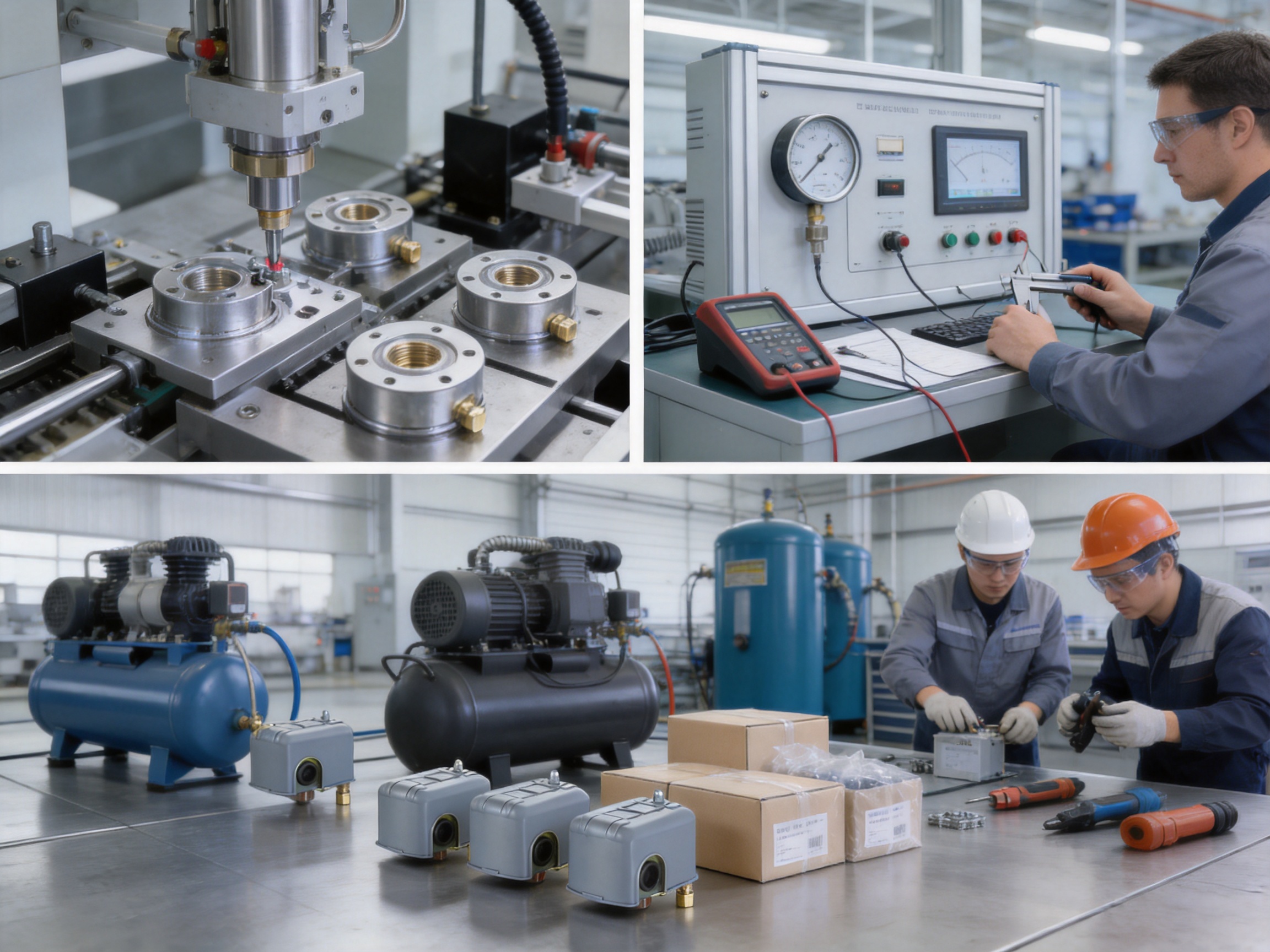
The manufacturer behind the ERQ-5 Series operates as an integrated manufacturing enterprise with experience in independent research and development, mass production, and global export. This integrated model is important for pressure-control products because the quality of a finished switch depends on more than the design concept. It also depends on material selection, casting or forming consistency, machining, assembly control, electrical inspection, pressure calibration, packaging, and after-sales support.
Independent research and development allows product specifications to be adjusted according to real application requirements. For example, customer feedback may identify a need for a different connection, pressure setting, screw arrangement, air-relief pipe size, or housing configuration. An organization with internal product-development capability can coordinate these changes more efficiently than a purely trading-based supplier.
Mass-production capability supports repeatable output and supply continuity. Air-compressor manufacturers and distributors often require stable quantities across multiple orders. Production planning, component procurement, assembly scheduling, and final inspection must be coordinated to avoid inconsistent delivery. A structured manufacturing system can help support repeat orders and reduce variation between batches.
The company’s broader product portfolio includes deep well pumps, submersible pumps, domestic booster pumps, circulation pumps, solar water pumps, intelligent booster pumps, and other water-treatment or fluid-handling products. Although the ERQ-5 Series is designed for air compressors, this wider product background provides experience in motor-driven equipment, fluid pressure, electrical control, sealing, mechanical reliability, and international application requirements.
The manufacturer has also developed related companies and professional teams for procurement planning, order tracking, cross-border delivery, and foreign-trade services. These capabilities are useful for overseas customers that require coordinated communication, production updates, documentation, packaging arrangements, and export logistics. A technically suitable product is more valuable when it can be supplied consistently and supported throughout the purchasing process.
A reliable pressure switch begins with controlled raw materials. The zinc alloy used for the bottom should meet defined composition and quality requirements. Material consistency affects casting performance, mechanical strength, dimensional stability, surface quality, and resistance to environmental exposure. Incoming material inspection is therefore an important part of a responsible manufacturing process.
The metal bottom may be produced through a controlled forming or die-casting process, depending on the final design. Important production factors include mold condition, filling behavior, cooling, surface finish, dimensional accuracy, and the removal of excess material. Consistent forming helps ensure that threaded connections, mounting surfaces, and interfaces align correctly with the remaining components.
After forming, the part may require trimming, deburring, machining, cleaning, and surface treatment. Thread quality is especially important because the pressure connection must be assembled securely and should not damage mating components. Sharp edges or residual casting material can interfere with installation, sealing, or the movement of internal parts.
The pressure-sensing and switching components require careful assembly. The sensing mechanism must respond predictably to changes in pressure, while the electrical contacts must open and close reliably. Assembly procedures should control component orientation, fastening, contact alignment, spring or adjustment settings, and sealing elements. Consistent assembly is essential because a small mechanical difference can influence pressure accuracy or switching behavior.
Electrical inspection is another important production stage. Depending on the applicable testing plan, inspection may include continuity testing, insulation checks, terminal verification, contact-operation testing, and confirmation of voltage and current markings. These checks help identify assembly errors before the pressure switch is packaged and shipped.
Pressure calibration or functional testing verifies whether the pressure switch operates near the specified settings. A suitable test system can apply controlled pressure while monitoring the cut-in and cut-out points. Test results help confirm that the pressure mechanism, adjustment range, and electrical contacts work together as intended.
Final inspection should also examine appearance, connection threads, housing integrity, labeling, terminal condition, accessories, packaging, and documentation. A complete inspection approach is especially important for export products because the pressure switch may be installed by customers who were not involved in the original production process.
Quality control for a mechanical pressure controller should cover the entire product lifecycle, from design and material procurement to final shipment. A single final inspection cannot replace process control. The manufacturer’s integrated production structure supports coordination between engineering, purchasing, manufacturing, quality management, and customer service.
Batch consistency is important for equipment manufacturers that install the switch in large quantities. If one batch has noticeably different pressure behavior, connection dimensions, or electrical performance from another, the customer may experience production delays or field-service problems. Standardized work instructions, controlled assembly procedures, traceable materials, and documented inspections help reduce such risks.
Product customization also requires disciplined quality management. When customers request a special pressure setting or connection arrangement, the requirements should be recorded in an approved specification. The production and inspection teams should use the same information to prevent errors between the quotation, order confirmation, manufacturing instruction, label, and shipment documents.
The one-year warranty provides a defined period of manufacturer support. Warranty coverage should be reviewed together with the sales agreement, installation requirements, operating conditions, and evidence needed for a potential claim. Correct installation and operation are essential because damage caused by overpressure, incorrect wiring, unsuitable voltage, excessive temperature, corrosion, impact, or unauthorized modification may not be covered.
In industrial facilities, compressed air may supply pneumatic tools, valves, actuators, packaging machinery, cleaning equipment, and production lines. The pressure switch can support automatic compressor control in systems where the operating pressure falls within its specified range and the electrical load is suitable.
Vehicle repair workshops commonly use compressors for tire inflation, impact wrenches, air blow guns, spray equipment, and maintenance tools. The ERQ-5 Series can help maintain receiver pressure automatically, allowing technicians to use compressed air without repeatedly operating a manual control.
Small commercial and service businesses may use compressors for cleaning, light manufacturing, upholstery, refrigeration service, or equipment maintenance. A compact pressure-control component with flexible connections can simplify integration into different cabinet and receiver layouts.
Compressor manufacturers can evaluate the ERQ-5 Series as a control component for new equipment designs. The available pressure settings and connection options may help reduce the need for extensive mechanical adaptation. Before mass production, the customer should validate the switch in the complete compressor system, including motor starting, pressure rise, receiver volume, relief piping, and thermal behavior.
Distributors and service companies may use the product as a replacement option when an existing pressure switch has worn out or failed. The replacement must match the original or required pressure range, electrical rating, connection type, air-relief arrangement, and physical mounting dimensions. A visually similar component is not necessarily an electrically or mechanically suitable replacement.
Installation should be performed by a qualified technician familiar with electrical equipment and compressed-air systems. Before beginning work, disconnect the power supply, release stored air pressure where appropriate, and follow the compressor manufacturer’s safety procedures. The receiver and piping system may retain dangerous pressure even after the compressor motor has stopped.
Confirm the pressure-switch specifications before installation. Check the rated voltage, frequency, current, pressure range, pressure settings, hydraulic connection, screw type, air-relief configuration, and maximum working temperature. Verify that the selected switch is appropriate for the motor-control circuit rather than assuming that the nameplate voltage alone is sufficient.
The pressure connection should be clean and free of debris. Use an appropriate sealing method that is compatible with the thread type and compressor service. Avoid applying excessive force to the zinc alloy bottom during installation. Over-tightening can damage threads, distort the connection, or place unnecessary stress on the housing.
Electrical wiring should follow the product’s terminal markings and the compressor manufacturer’s wiring diagram. The circuit should include suitable overcurrent protection and motor protection. Wires must be properly sized, securely fastened, and protected from abrasion, heat, oil, and vibration. The pressure switch should not be used as a replacement for a properly rated motor starter or overload device when such equipment is required.
If an air-relief valve is included, route the relief pipe correctly and ensure that it is not kinked, blocked, or exposed to avoidable mechanical damage. A delayed-closing relief system must be compatible with the compressor check valve and discharge piping. After installation, inspect the system for leaks and confirm that the motor starts and stops at the intended pressure values.
Regular inspection can help extend the service life of the pressure switch and the compressor. Operators should observe whether the compressor starts and stops normally, whether pressure rises at the expected rate, whether the switch cycles too frequently, and whether there are unusual sounds, electrical odors, air leaks, or visible damage.
Frequent cycling may indicate an undersized receiver, excessive air leakage, incorrect pressure settings, a defective check valve, insufficient compressor capacity, or an application that demands more air than the system can supply. Repeatedly adjusting the pressure switch without investigating the underlying cause may create additional problems.
Keep the pressure switch clean and protect it from direct water spray, heavy dust, corrosive chemicals, and excessive heat. The stated protection degree is IP20, so the product should not be treated as a waterproof device. If the compressor operates in a harsh environment, the installation may require additional enclosure or environmental protection consistent with electrical safety requirements.
Do not exceed the specified pressure range or maximum working temperature. The pressure switch is intended to operate within its technical limits. Overpressure protection must be provided by the complete compressor system, including a correctly selected safety relief device where required.
When a pressure switch shows signs of contact welding, unstable switching, air leakage, damaged threads, cracked housing, or inaccurate operation, it should be inspected by a qualified technician and replaced if necessary. Never bypass a defective pressure switch as a permanent operating solution.
When purchasing the ERQ-5 Series, buyers should first define the application. Important questions include the compressor type, motor voltage, electrical frequency, motor current, receiver pressure, desired cut-in and cut-out values, mounting location, air-relief requirement, ambient temperature, and expected operating cycle.
The operating pressure should be selected according to the compressor and receiver design, not simply according to the maximum available setting. A setting that is too high may cause excessive mechanical and thermal stress. A setting that is too low may fail to provide the required air reserve or tool performance. The pressure differential should also be suitable for the system’s receiver size and air demand.
The electrical rating must be reviewed carefully. A 12A rating provides a useful reference, but motor starting current can exceed running current. Customers should determine whether the pressure switch directly controls the motor or operates a contactor, relay, or other control device. If the motor is controlled through an auxiliary device, the pressure switch may only carry the control-circuit load.
Connection compatibility is equally important. Confirm whether the compressor requires a 1/4-inch female connection, one-way screw arrangement, four-way screw arrangement, or another configuration. Physical dimensions, clearance, terminal direction, and air-relief pipe routing should be checked before final approval.
For large orders, customers should request a technical confirmation before production. The confirmation can include product drawings, pressure settings, electrical specifications, connection details, labeling, packaging requirements, sample approval, and inspection expectations. Clear communication at this stage reduces the possibility of mismatch during installation.
An integrated supplier can provide benefits beyond the supply of an individual component. Research and development, manufacturing, export, and customer service are coordinated within a broader industrial organization. This may improve communication when a buyer needs a customized pressure setting, a modified connection, a private-label package, or a combined procurement plan.
The manufacturer’s experience in water pumps and fluid-handling equipment also provides a relevant technical foundation. Pump systems and compressor systems are different applications, but both involve pressure control, motor operation, fluid movement, sealing, vibration, and system-level performance. Experience in these areas can help the supplier understand the practical requirements of equipment manufacturers and service distributors.
The company’s international market orientation is another strength. Customers serving different countries may need support with voltage and frequency compatibility, packaging, shipping coordination, technical documentation, and order tracking. A supplier accustomed to global export can help coordinate these details more efficiently than a supplier focused only on local sales.
One-stop procurement capability may also be valuable to customers that purchase pressure switches together with pumps, pump accessories, or other fluid-control products. Consolidated purchasing can simplify communication and logistics, although each product must still be evaluated according to its own technical requirements.
| Evaluation area | ERQ-5 Series characteristics | Potential limitation of a basic fixed model |
|---|---|---|
| Power-system compatibility | Specified for 110V–240V and 50/60Hz applications | May be limited to one voltage or frequency |
| Pressure adjustment | 20–100 psi range with common and customized settings | May provide only one preset combination |
| Mechanical base | Zinc alloy bottom for a durable metal foundation | Lightweight construction may offer less mechanical robustness |
| Connection flexibility | 1/4-inch female connection and configurable screw arrangements | Fixed connection may require additional adapters |
| Air-relief function | Delayed-closing air-relief option with 6 mm or 1/4-inch pipe | May require a separate relief component |
| Supply capability | Supported by an integrated manufacturing and export organization | Trading-only supply may provide less direct production coordination |
| Customization | Pressure settings, connections, housing, and related options can be discussed | Standard-only models provide less adaptation for OEM projects |
This comparison is intended as a general purchasing guide rather than a universal performance claim. A competing pressure switch may be better suited to a specific application, particularly where the system requires higher pressure, a different protection rating, a special certification, or a different electrical configuration. The correct selection depends on technical verification and complete system testing.
Compressed air stores significant energy and can cause serious injury if equipment is incorrectly installed or maintained. Always isolate electrical power and release pressure before servicing the pressure switch, receiver, piping, or compressor head. Follow national and local regulations for pressure vessels, electrical equipment, and workplace safety.
Do not use the pressure switch beyond the specified pressure range. Do not remove or disable the compressor’s safety relief device. Do not operate the system if the receiver, hose, pipe, fitting, or electrical enclosure shows damage. Ensure that the pressure switch is protected from unauthorized adjustment when the application requires a fixed operating range.
The IP20 protection degree indicates limited protection against solid objects and no protection against water ingress. The switch should be installed in a suitable location and should not be exposed to rain, spray, condensation, or washdown conditions unless an appropriate additional protective arrangement has been provided.
Electrical work should be completed by qualified personnel. Confirm that the power supply is disconnected before opening the housing or handling terminals. Use a suitable grounding and protection system, and make sure all covers and terminal guards are correctly installed before energizing the compressor.
The main function is to automatically start and stop an air compressor according to preset pressure values. It starts the compressor when pressure falls to the cut-in level and stops the compressor when pressure reaches the cut-out level.
The specified pressure range is 20–100 psi. Common settings include 20–50 psi, 30–60 psi, 40–70 psi, and 50–80 psi. Customized pressure settings can also be discussed according to customer requirements.
Yes. The ERQ-5 Series is specified for both 50Hz and 60Hz electrical systems. The actual voltage and motor-control arrangement should still be checked before installation.
The rated voltage is 110V–240V, and the rated current is 12A. The suitability of the switch should be evaluated against the compressor motor’s starting current, running current, control-circuit design, and applicable electrical requirements.
The zinc alloy bottom provides a durable metal foundation for the pressure connection and internal control assembly. It offers mechanical strength, dimensional stability, and resistance to ordinary environmental conditions while supporting repeated compressor cycling.
An air-relief valve with a delayed-closing system is available. The relief pipe can be configured for a 6 mm or 1/4-inch diameter option. The relief arrangement should be matched to the compressor’s check valve and discharge piping.
A 1/4-inch female hydraulic connection is available, and connection arrangements can be discussed according to customer needs. The screw type can be one-way or four-way, depending on the selected configuration.
Yes. Customization can include pressure settings, housing or crust requirements, hydraulic connections, air-relief pipe arrangements, and other agreed specifications. OEM customers should confirm drawings and technical requirements before production.
The stated maximum working temperature is 40°C. The complete installation should be evaluated for ambient temperature, compressor heat, ventilation, and exposure to hot surfaces.
No. The stated protection degree is IP20, so the switch should be protected from water, spray, condensation, and wet environments. Additional enclosure protection may be needed in harsh locations.
Typical applications include industrial air compressors, workshops, automotive repair shops, commercial equipment, OEM compressor assemblies, and replacement or aftermarket service systems.
Buyers should compare the switch with the compressor’s pressure requirements, motor voltage, frequency, current, connection dimensions, air-relief configuration, installation space, operating temperature, and required safety devices. A sample test or technical confirmation is recommended for new equipment designs.
The product information specifies a one-year warranty. Warranty conditions should be confirmed in the sales agreement, including installation requirements, operating limits, documentation, and procedures for handling any quality claim.
The ERQ-5 Series 50/60Hz Zinc Alloy Bottom Pressure Switch is a practical automatic control solution for air compressors operating within a 20–100 psi pressure range. Its principal advantages include dual-frequency compatibility, a 110V–240V rated voltage range, a 12A rated current, a durable zinc alloy bottom, configurable pressure settings, flexible connection options, and an available delayed-closing air-relief system.
For compressor manufacturers, distributors, workshops, and maintenance providers, the product offers a combination of automatic operation and configuration flexibility. It can help maintain receiver pressure, reduce manual intervention, and support predictable compressor cycling when correctly matched to the equipment.
The product is further supported by a manufacturer with experience in independent research and development, mass production, global export, fluid-handling equipment, and one-stop procurement services. Its integrated production and supply capabilities are valuable for customers requiring repeat orders, customized specifications, export coordination, and technical communication.
As with any pressure-control component, correct selection and installation are essential. Buyers should verify electrical load, pressure values, connection type, environmental conditions, air-relief requirements, and system safety devices before placing an order. When these factors are properly evaluated, the ERQ-5 Series can provide dependable pressure-based control for a wide range of air-compressor applications.
1. Product technical information for the ERQ-5 Series 50/60Hz Zinc Alloy Bottom Pressure Switch.
2. Manufacturer-provided specifications for pressure range, rated voltage, rated current, frequency, connections, air-relief options, temperature, protection degree, and warranty.
3. General principles of mechanical pressure-switch operation in air-compressor systems.
4. General guidelines for compressed-air system installation, maintenance, pressure control, and workplace safety.
5. General engineering references concerning zinc alloy components, die-casting practices, dimensional control, and corrosion resistance.
6. General electrical engineering practices for motor circuits, overload protection, switching devices, and industrial equipment installation.
edwina@edwin-pump.com
+86-13586290903 (WhatsApp)
Xuri Gongliang Cutting Tool Entrepreneurship Park, Wenqiao Town, Wenling City, Taizhou City, Zhejiang Province, China

High Performance Smart Pump Factory


 English