edwina@edwin-pump.com

View All Products
en
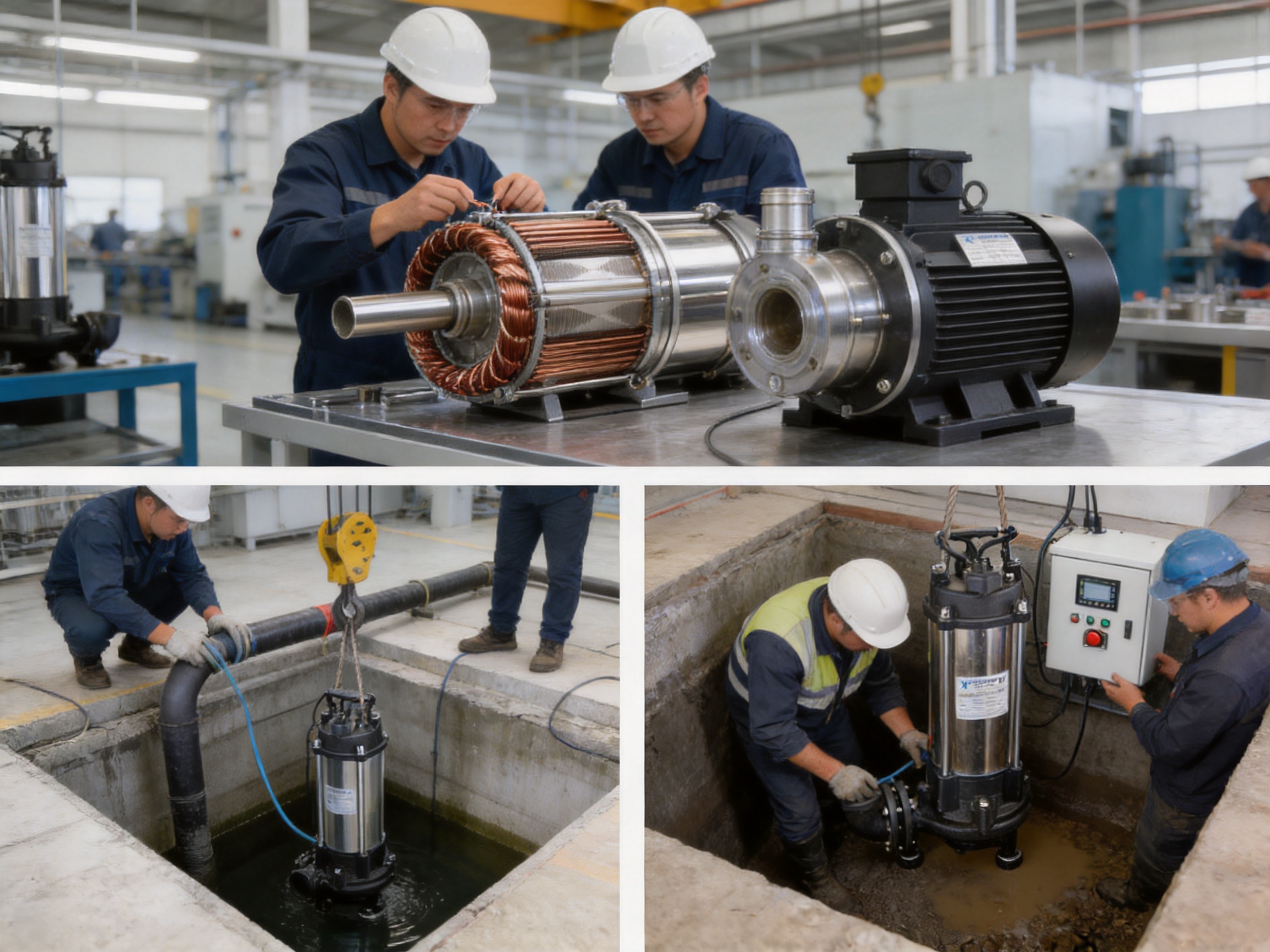
Wastewater drainage systems must operate reliably in environments that are wet, dirty, corrosive, and frequently unpredictable. A pump used for sewage transfer is exposed to suspended solids, changing liquid levels, variable operating cycles, and demanding installation conditions. For this reason, selecting a suitable submersible sewage pump requires more than simply comparing motor power or purchase price. The pump must provide dependable drainage, safe electrical protection, resistance to continuous immersion, and stable performance under practical wastewater conditions.
The Submersible Sewage Pump WJ is designed for wastewater drainage in factories, construction sites, commercial facilities, municipal sewage treatment systems, residential drainage stations, methane pools, and rural irrigation applications. Its submersible configuration allows the pump to work directly inside the liquid, reducing the need for extensive surface piping and helping remove wastewater from pits, collection tanks, treatment areas, and temporary drainage points.
With a maximum immersion depth of 5 meters, a maximum liquid temperature of 40°C, a liquid pH range of 5 to 9, and an IPX8 protection class, the WJ is engineered for demanding water-management tasks. Its copper winding, built-in thermal protector, stainless steel welded shaft, and Class B insulation provide a practical combination of electrical safety, mechanical strength, and operational durability.
Manufactured by Taizhou Edwin Electric Co., Ltd., the WJ forms part of a broader pump portfolio that includes deep well pumps, submersible pumps, domestic booster pumps, circulation pumps, solar water pumps, intelligent booster pumps, and other water-treatment products. The manufacturer combines independent research and development, mass production, export experience, and coordinated procurement services to support customers in different markets.
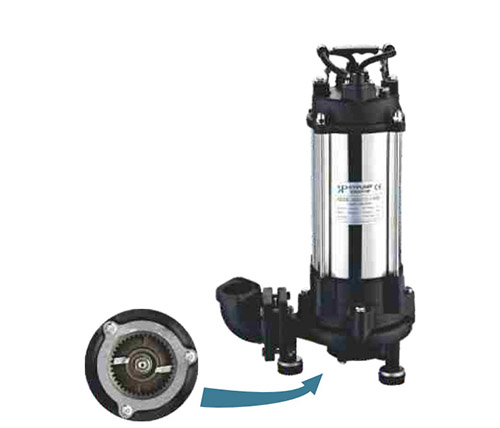
SUBMERSIBLE SEWAGE PUMP WJ
Sewage pumping is fundamentally different from clean-water pumping. Clean water normally contains few suspended particles and presents relatively consistent operating conditions. Wastewater may contain organic matter, sediment, suspended solids, and other contaminants. The pump may also be required to start and stop repeatedly as the liquid level changes. These conditions place additional stress on the hydraulic components, motor, seals, shaft, cable entry, and thermal protection system.
An unsuitable pump can cause several problems. Blockages may interrupt drainage, overheating may damage the motor, and inadequate sealing may allow water to reach electrical components. Repeated failures can result in equipment replacement, labor costs, flooding, unpleasant odors, production interruptions, and sanitation concerns. A pump selected specifically for sewage and wastewater service provides a stronger foundation for dependable operation.
The WJ is designed as a submerged drainage solution. Instead of drawing water through a long suction line from above the liquid, the pump is placed in the wastewater collection area. This arrangement can reduce suction-related complications, simplify installation, and allow the pump to handle drainage from low-lying pits or tanks. As the liquid level rises, the pump can remove wastewater directly from the source.
Submersible installation also helps save space. In many factories, construction sites, and residential drainage stations, available floor area is limited. A surface-mounted pump may require a dedicated foundation, suction pipe, priming arrangement, and weather protection. A submersible pump can often be installed in a pit or tank with fewer external components, making it suitable for both permanent and temporary drainage projects.
The WJ is designed to operate while immersed in the pumped liquid. This configuration places the hydraulic inlet close to the wastewater source and allows the unit to remove water from collection pits, drainage chambers, treatment areas, and other low-level locations. The pump does not depend on a long external suction path, which can be beneficial where suction lift, pipe length, or installation geometry would complicate the use of a surface pump.
Submersible operation also allows the pump and motor to function as a compact assembly. This can make equipment planning easier for contractors and maintenance teams. Rather than designing a large surface installation, users can focus on the pump pit, discharge piping, lifting arrangement, electrical supply, and control system appropriate to the project.
The stated maximum immersion depth is 5 meters. This specification indicates the maximum recommended depth at which the pump may be positioned below the liquid surface under the manufacturer’s operating conditions. It is especially relevant to wastewater pits, drainage wells, construction excavations, residential collection tanks, and municipal pumping chambers.
Correct installation at or below the permitted depth is important. Excessive immersion can increase pressure on seals, cable entries, and other components. For this reason, users should confirm the actual pit depth, discharge arrangement, liquid density, temperature, and operating cycle before installation. The 5-meter rating provides useful flexibility for many ordinary drainage applications while establishing a clear boundary for safe equipment selection.
The WJ is specified for liquid temperatures up to 40°C, or 104°F. This makes it suitable for common sewage drainage, construction-site wastewater, commercial drainage, agricultural water, and many municipal applications. The temperature limit is important because motor insulation, seals, lubricants, cable materials, and other components can be affected by heat.
Users should ensure that the actual wastewater temperature remains within the specified limit. Where hot industrial liquids, heated process water, or high-temperature effluent is involved, a pump designed specifically for elevated temperatures should be considered. Operating within the stated range helps protect the motor and supports longer service life.
The liquid pH range of 5 to 9 covers many ordinary wastewater and drainage conditions. This range includes mildly acidic through mildly alkaline liquids commonly encountered in municipal sewage, commercial drainage, construction wastewater, residential wastewater, and agricultural applications.
pH is a critical consideration because strongly acidic or strongly alkaline liquids may attack metal surfaces, elastomers, insulation, or other wetted components. If the pumped liquid falls outside the specified range, the user should request a materials assessment before operation. Proper chemical compatibility is one of the most effective ways to reduce premature corrosion and avoid unexpected failures.
The motor protection class is listed as IPX8. In practical terms, this classification is associated with equipment designed for continuous immersion under conditions specified by the manufacturer. It supports the pump’s intended submersible application and helps protect the motor enclosure against water ingress when the unit is correctly installed and operated.
IP protection is not a substitute for correct installation. The power cable, cable joints, control panel, grounding system, and upstream electrical protection must also be suitable for wet environments. Cable damage, poor connections, incorrect voltage, or inadequate grounding can create safety risks even when the pump itself has a high protection rating.
The WJ uses a copper winding in its motor. Copper is widely used in electric motors because it provides good electrical conductivity and supports efficient current transfer. A properly manufactured copper winding can help limit electrical losses and support stable motor performance during normal operation.
For a sewage pump, winding quality is particularly important because the motor may experience repeated starting, fluctuating load, and difficult ambient conditions. The combination of copper winding, suitable insulation, and thermal protection helps the motor withstand normal demands more reliably than a poorly constructed motor with inadequate electrical design.
Motor performance depends on more than winding material alone. Coil arrangement, winding accuracy, insulation treatment, connection quality, rotor balance, bearing installation, and final testing all influence reliability. A professional production process must therefore control the motor from raw-material inspection through assembly and electrical testing.
The built-in thermal protector is an important safety feature. If motor temperature rises beyond a safe operating level, the protector can interrupt or control operation according to the electrical design. This helps reduce the risk of damage caused by overload, restricted cooling, abnormal operating conditions, voltage issues, or repeated starting.
Thermal protection is particularly valuable in submersible applications because the motor may be installed in a confined pit where inspection is inconvenient. The protector provides an additional layer of defense when the pump encounters conditions that increase motor temperature. It should be used together with correctly sized circuit breakers, overload protection, grounding, and a suitable control system.
The motor insulation class is listed as Class B. Insulation systems are classified according to their permissible thermal endurance. Class B insulation is commonly applied in electric motors and provides a defined level of thermal resistance for normal operating conditions.
Maintaining the motor within its rated temperature range is still essential. Insulation life can be reduced by prolonged overheating, moisture contamination, excessive voltage variation, frequent starts, or mechanical overload. The built-in thermal protector and correct operating practices work together with the insulation system to support dependable motor service.
The WJ uses a stainless steel welded shaft. A stainless steel shaft offers useful resistance to corrosion in wet environments and can provide a durable connection between the motor and hydraulic assembly. The welded construction is intended to create a secure shaft structure suitable for the rotational demands of the pump.
Wastewater equipment may be exposed to moisture, suspended matter, and chemically active contaminants. A corrosion-resistant shaft can help reduce surface deterioration and maintain mechanical integrity over time. Shaft straightness, weld quality, balancing, bearing fit, and dimensional accuracy are all important factors in the finished assembly.
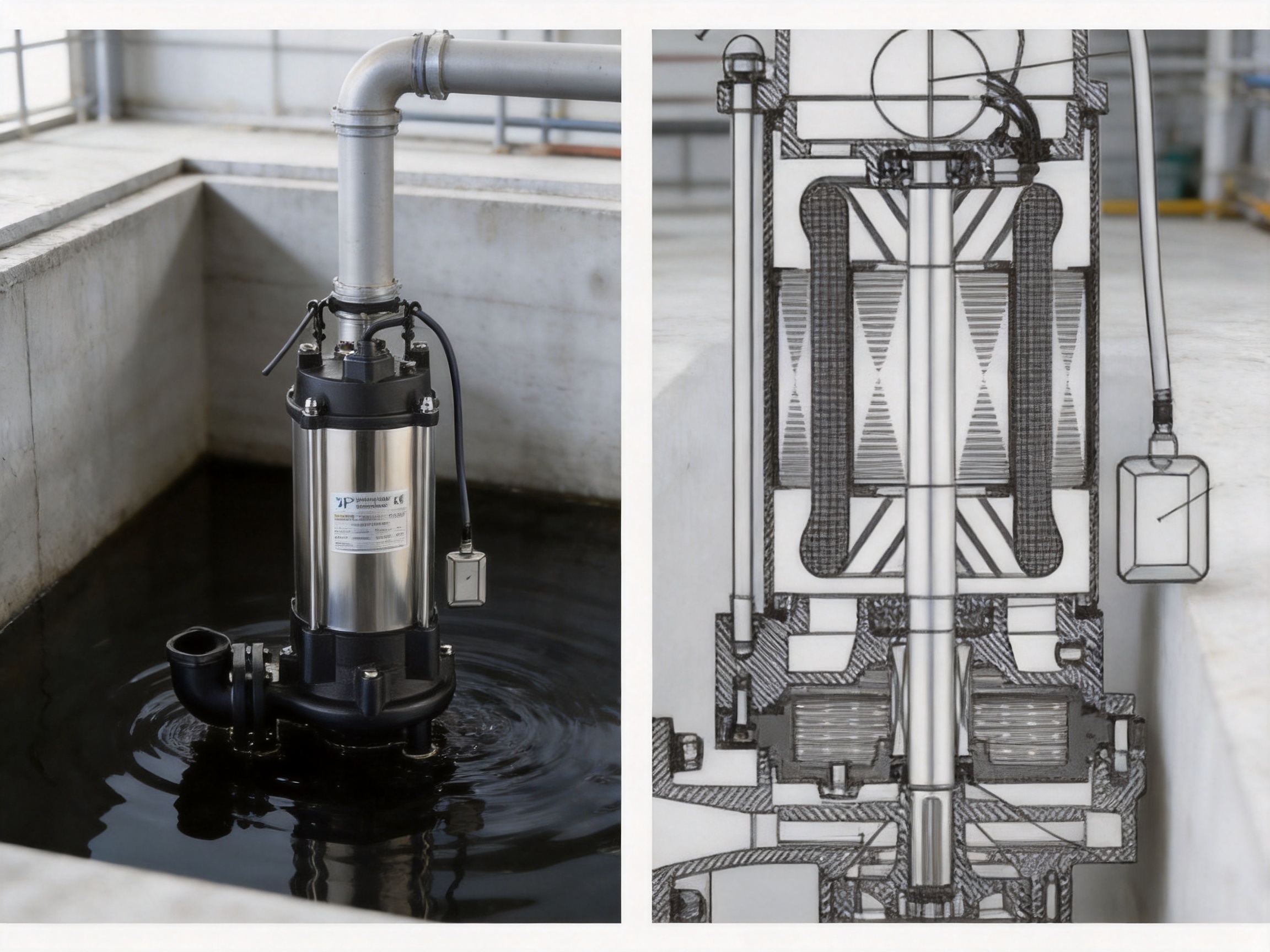
Factories often generate wastewater from cleaning, equipment maintenance, production support, floor washing, and drainage operations. The composition and temperature of this water can vary considerably. The WJ is suitable for drainage duties within its specified liquid temperature, pH, density, and viscosity limits.
In a factory environment, the pump may be installed in a collection pit or drainage chamber. Its submersible arrangement can help remove accumulated water without requiring a large pump room. Where the liquid contains aggressive chemicals, abrasive solids, or unusually high concentrations of contaminants, a detailed compatibility review should be completed before selection.
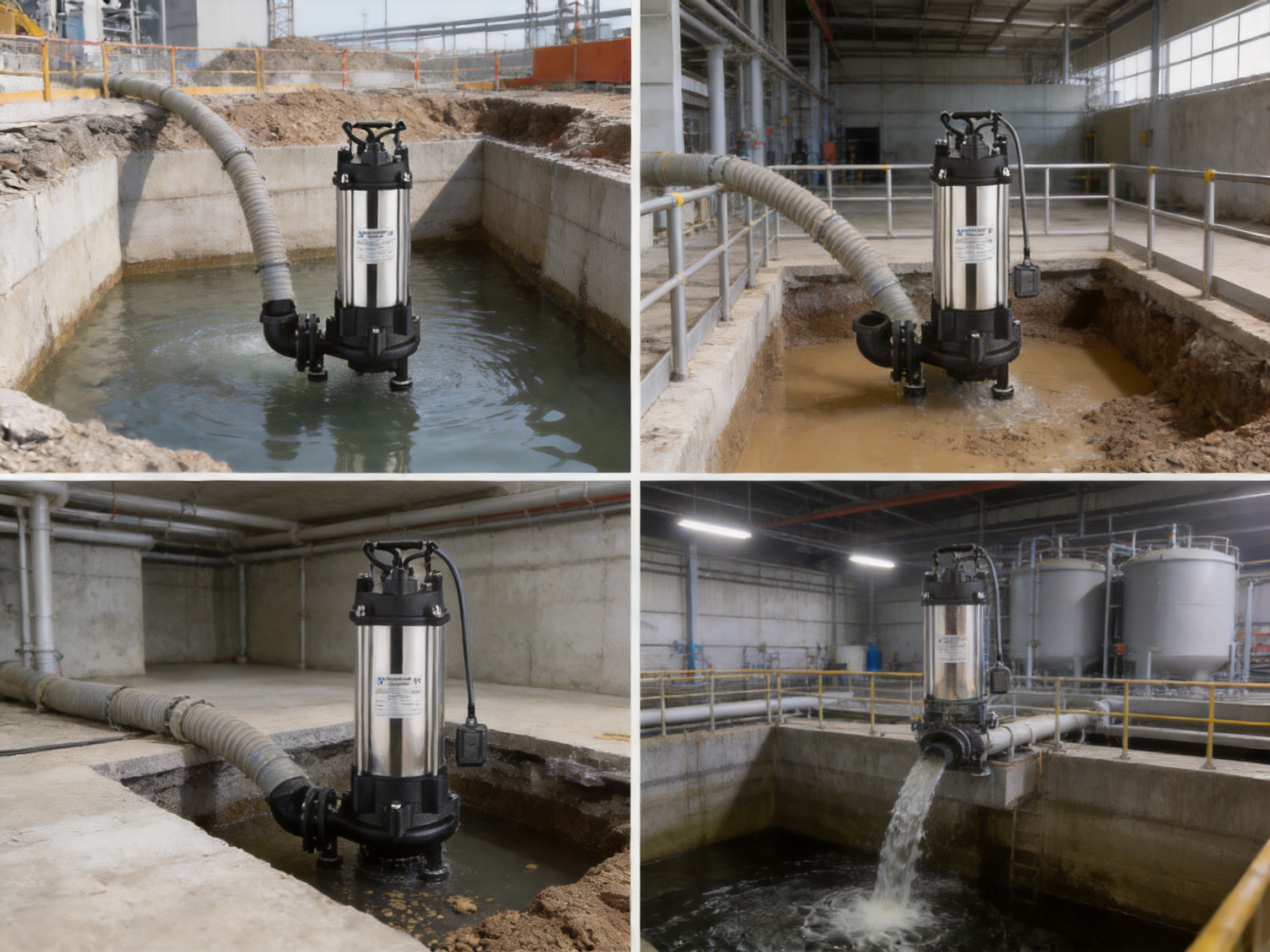
Construction sites frequently require temporary pumping from excavations, foundation areas, underground structures, and drainage channels. Rainwater, groundwater, mud-contaminated water, and site wastewater can accumulate quickly and interfere with construction progress.
A submersible sewage pump is practical for these conditions because it can be lowered into a pit or excavation and connected to a discharge line. The compact configuration supports flexible deployment as site conditions change. Contractors should protect the pump from large debris, avoid dry running, secure the discharge hose or pipe, and provide a stable electrical supply suitable for outdoor or wet-area operation.
Commercial buildings may require wastewater drainage in kitchens, service areas, underground rooms, parking structures, restrooms, and utility spaces. A drainage failure can disrupt business operations and create health or property risks. The WJ can support commercial wastewater removal where the liquid falls within its specified operating conditions.
Commercial users benefit from planned maintenance. The pump should be inspected according to operating frequency, the collection pit should be cleaned, and electrical connections should be checked for moisture or damage. Keeping a maintenance record can help identify changes in pumping time, noise, vibration, or motor temperature before a major failure occurs.
Municipal wastewater facilities rely on multiple pumping stages, including collection, transfer, drainage, and treatment support. Submersible pumps can be used in drainage stations, auxiliary pits, maintenance areas, and smaller wastewater handling points.
The WJ’s protection class, thermal protection, and corrosion-conscious construction make it a practical option for suitable auxiliary drainage duties. Municipal projects should evaluate the complete hydraulic duty, including flow rate, head, pipe losses, solids content, duty cycle, redundancy requirements, and control strategy. For critical stations, operators may require duty-and-standby pump arrangements to maintain service during inspection or repair.
Residential quarters may contain basement drainage systems, sewage collection tanks, and small pumping stations where gravity drainage is not possible. A compact submersible pump can remove wastewater from these locations and transfer it to a higher sewer line or treatment system.
For residential installations, low noise, simple maintenance, safe electrical protection, and dependable automatic operation are especially important. The pump should be connected to an appropriate level-control arrangement where automatic starting and stopping is required. Users should also ensure that the collection tank is accessible for periodic inspection and cleaning.
The WJ is also identified for use in methane pools and field irrigation in rural areas. Methane-digester systems and agricultural water storage areas may require pumping for transfer, drainage, or field distribution. The pump’s submersible structure can simplify installation in tanks or collection areas.
Rural users should pay close attention to electrical safety, cable protection, seasonal operating conditions, and water quality. Irrigation water containing sand, stones, or heavy abrasive particles may require a pump specifically designed for abrasive service. The actual liquid should be evaluated before continuous operation.
Surface pumps depend on suction piping and must be properly primed. Air leakage, excessive suction lift, clogged foot valves, or poor pipe sizing can reduce performance and cause loss of prime. A submersible pump operates within the liquid and therefore avoids many of these suction-side problems.
This does not mean that discharge piping is unimportant. The discharge line must still be sized correctly, protected against damage, and arranged to minimize unnecessary friction losses. However, eliminating a long suction line can make the installation easier to design and commission.
Because the motor and pump are installed below the liquid level, the WJ can be used where a conventional surface pump would require a dedicated room or platform. This is valuable in construction pits, compact drainage stations, underground areas, and commercial utility spaces.
Space savings may also reduce civil-engineering requirements. The project may need fewer foundations and less above-ground equipment. The exact installation arrangement depends on the pit design, discharge system, access requirements, and local safety regulations.
The WJ is positioned close to the wastewater source, allowing the pump to remove liquid directly from a collection area. This can improve drainage effectiveness in low points where surface equipment would struggle to draw water through a suction line.
Direct removal is particularly useful after heavy rain, during excavation, or when wastewater accumulates below the normal gravity drainage level. The pump can help restore the drainage area more quickly when correctly sized for the required flow and head.
The combination of IPX8 protection, built-in thermal protection, copper winding, Class B insulation, and a stainless steel shaft provides several protective features in one design. These features address common risks associated with submerged operation, including moisture exposure, temperature rise, electrical stress, and corrosion.
Competitor products may offer similar individual features, but the practical advantage of the WJ lies in how these elements are integrated into a complete wastewater pump. Product value should be judged not only by specifications but also by consistency of manufacturing, quality control, service support, and suitability for the intended duty.
Taizhou Edwin Electric Co., Ltd. was founded in 2008 as an integrated manufacturing enterprise specializing in independent research and development, mass production, and global export. This structure allows the company to coordinate product design, production planning, quality management, and international delivery rather than relying solely on disconnected external suppliers.
Integrated manufacturing can improve communication between engineering and production teams. Feedback from assembly, testing, and customer applications can be transferred into product improvement. It also supports more consistent production when customers require repeated orders, private-label supply, or project-based quantities.
Independent research and development is important in the pump industry because pumps must be adapted to different water conditions, installation environments, energy requirements, and market standards. Product development may involve hydraulic structure, motor design, sealing, materials, thermal protection, electrical compatibility, packaging, and serviceability.
The company’s product development experience includes traditional water pumps as well as newer solar water pumps and intelligent booster pumps. This wider technical portfolio can support the continuous improvement of submersible products and provide customers with a broader selection when several pumping functions are required within one project.
Mass production requires repeatable processes. A pump manufacturer must control incoming materials, component dimensions, winding operations, welding, machining, assembly, painting or surface treatment, electrical testing, hydraulic testing, and final inspection. Repeatability is especially important when customers purchase multiple pumps for a building, irrigation project, municipal system, or distribution network.
For the WJ, consistent production helps ensure that the motor winding, shaft, protection components, sealing elements, and housing are assembled according to defined specifications. Standardized work instructions and inspection checkpoints can reduce variation between units and support predictable field performance.
Motor production is a central part of submersible pump quality. The winding must be correctly formed and positioned, insulation must be protected from mechanical damage, and electrical connections must be secure. Rotor balance and bearing alignment also affect vibration, noise, and service life.
A robust production process may include visual inspection, dimensional checks, winding resistance testing, insulation testing, no-load testing, and performance verification. These controls help identify manufacturing defects before the pump reaches the customer. Final testing is particularly valuable for submerged equipment because many internal problems are difficult to diagnose after installation.
The pump’s mechanical assembly must maintain alignment between the motor and hydraulic components. The stainless steel welded shaft, bearings, seals, impeller-related components, fasteners, and housing must be installed accurately. Incorrect alignment can lead to vibration, noise, increased wear, or reduced hydraulic performance.
Sealing is equally important. The pump is designed for immersion, so water resistance depends on the integrity of the housing, cable entry, gaskets, shaft sealing arrangement, and assembly surfaces. Quality control should therefore include inspection of sealing components and appropriate water-resistance or pressure-related checks according to the production specification.
Edwin Pump serves customers in international markets and has developed supporting companies and teams for procurement planning, order tracking, cross-border delivery, and foreign-trade services. This capability is useful for overseas buyers who need more than a product quotation.
International pump purchasing often involves technical confirmation, voltage and frequency selection, packaging requirements, shipping documents, customs coordination, lead-time planning, and after-sales communication. A manufacturer with export experience can help reduce misunderstandings and improve order execution.
| Item | WJ Specification or Feature | Practical Significance |
|---|---|---|
| Product type | Submersible sewage pump | Designed for direct operation inside wastewater or drainage liquid |
| Maximum immersion depth | 5 meters | Suitable for many drainage pits, tanks, and collection chambers |
| Maximum liquid temperature | 40°C / 104°F | Appropriate for ordinary wastewater and drainage applications within this limit |
| Liquid pH range | 5 to 9 | Supports mildly acidic to mildly alkaline wastewater conditions |
| Liquid kinematic viscosity | Specified by the product information as approximately 7 × 10 to 23 × 10 m²/s; confirm the exact technical notation before ordering | Final selection should be based on the actual liquid properties |
| Maximum liquid density | 1.2 × 10 kg/m³ as listed in the supplied information; confirm the exact exponent with the manufacturer | Important for motor loading and hydraulic selection |
| Motor winding | Copper | Supports electrical conductivity and reliable motor operation |
| Thermal protection | Built-in thermal protector | Helps limit overheating caused by abnormal operating conditions |
| Shaft | Stainless steel welded shaft | Provides corrosion-conscious mechanical construction for wet service |
| Insulation class | Class B | Provides a defined level of thermal endurance for the motor insulation system |
| Protection class | IPX8 | Supports continuous submersible operation under specified conditions |
The table summarizes the available product information. Some numerical entries in the source material contain incomplete scientific notation, including the viscosity and density values. Buyers should request the official technical datasheet before final selection, especially for industrial liquids, high-density wastewater, or applications involving unusual viscosity.
A pump should never be selected only by product name. The required flow rate and total dynamic head must be calculated for the actual system. Flow depends on the volume that must be removed and the available pumping time. Head includes the vertical lift from the liquid surface or pump location to the discharge point, plus friction losses in pipes, bends, valves, and fittings.
If the pump is too small, drainage may be slow and the motor may operate continuously. If it is too large for the system, frequent cycling, excessive energy use, high discharge velocity, or unstable operation may occur. The WJ should therefore be matched with the project’s hydraulic requirement and the manufacturer’s performance curve.
Discharge piping should be as direct as practical while allowing access for maintenance. Excessive bends increase friction losses and may reduce the delivered flow. The pipe should be supported so that its weight does not pull on the pump outlet or create mechanical stress.
Depending on the installation, a check valve may be used to prevent reverse flow when the pump stops. An isolation valve can assist with maintenance. The choice and arrangement of valves should consider the wastewater’s solids content and the risk of blockage. Pipe diameter should be selected according to the required flow, allowable velocity, and total system head.
The pump should be positioned on a stable base or in accordance with the installation method recommended by the supplier. It should not rest directly on loose sediment, mud, or debris that could block the inlet. The collection pit should be designed to reduce excessive turbulence and prevent the pump from drawing large objects into the hydraulic passage.
Where automatic operation is required, the level-control system should be located so that the pump starts and stops at suitable liquid levels. The control arrangement should prevent excessive short cycling and should include protection against dry running where appropriate. The pump should not be operated outside the manufacturer’s minimum liquid-level requirements.
Electrical work should be performed by qualified personnel. The supply voltage and frequency must match the motor specification. Grounding, circuit protection, cable sizing, cable routing, and control-panel design must comply with applicable electrical standards and local regulations.
The cable must be protected from sharp edges, vehicle traffic, construction equipment, chemical exposure, and mechanical pulling. Cable joints should not be placed in standing water unless they are specifically designed and certified for that environment. Before commissioning, the installer should inspect the cable, verify insulation condition, confirm rotation where applicable, and test the protective devices.
Regular inspection helps detect problems before they cause a drainage failure. Operators should observe pumping time, discharge behavior, vibration, unusual noise, motor temperature, and the condition of the electrical cable. A change in normal operation may indicate blockage, wear, reduced voltage, a damaged bearing, or a developing seal problem.
The collection pit should be inspected and cleaned at suitable intervals. Accumulated sediment, rags, plastic, grease, stones, and other debris can reduce pump performance or cause blockage. Cleaning frequency depends on the wastewater characteristics and the number of operating hours.
If the pump runs but the flow is low, the discharge line and pump inlet should be checked for blockage. The pump must be isolated from the electrical supply before any inspection or handling. Personnel should follow lockout and safety procedures, especially when working around sewage, methane, confined spaces, or contaminated water.
Large objects should never be forced into the pump. If the application regularly contains solids that exceed the pump’s intended capability, the system may require screening, a different hydraulic design, or a pump model with an appropriate solids-handling structure.
If the built-in thermal protector interrupts operation, the cause should be investigated instead of repeatedly resetting the pump without inspection. Possible causes include overload, a blocked hydraulic passage, high liquid temperature, incorrect voltage, excessive starts, inadequate cooling conditions, or a mechanical fault.
The pump should be allowed to cool according to safe operating procedures. If thermal trips continue, qualified technicians should measure supply conditions, inspect the pump, and verify that the hydraulic duty matches the product specification.
If the pump will be stored for an extended period, it should be cleaned, dried externally, protected from impact, and stored in a dry, secure area. The cable should be coiled without sharp bends. Before returning the pump to service, the user should inspect the housing, shaft area, cable, fasteners, and sealing surfaces.
Seasonal agricultural and construction applications may expose the pump to long periods of inactivity followed by intensive use. A pre-season inspection can reduce the risk of failure during peak demand.
Reliable equipment performance depends on the interaction between product quality and operating discipline. Even a well-manufactured pump can fail if it is run dry, overloaded, operated in excessively hot or chemically aggressive liquid, installed with undersized piping, or connected to an unsuitable power supply.
Users should read the manufacturer’s instructions before installation and retain the technical documentation for future maintenance. Operators should be trained in electrical isolation, wastewater hygiene, confined-space awareness, and emergency procedures. Methane pools and sewage tanks may contain hazardous gases, so entry into such areas must follow appropriate workplace safety requirements.
The pump should be lifted with suitable equipment and never by pulling the power cable. Before removing the pump from a pit, the electrical supply must be disconnected and the unit allowed to drain safely. Maintenance personnel should use protective clothing and follow local rules for contact with wastewater.
Responsible operation also means selecting the right product for the liquid. The WJ is intended for conditions within the stated temperature, pH, immersion, density, and viscosity limits. When the wastewater includes abrasive solids, flammable substances, high concentrations of chemicals, or unusual temperatures, the application should be reviewed with the manufacturer.
For distributors, a product line must offer dependable specifications, broad application potential, consistent supply, and clear technical communication. The WJ can serve several market segments, including construction drainage, commercial facilities, residential pumping stations, factory wastewater systems, municipal support applications, and rural water management.
Contractors can benefit from a compact submersible solution that is relatively easy to position in pits and temporary drainage locations. The combination of thermal protection and submersible motor construction can also simplify equipment planning, provided the electrical and hydraulic requirements are properly confirmed.
Industrial buyers often require more than a single pump. They may need several related products, spare parts, packaging support, delivery coordination, and documentation. Edwin Pump’s wider product range and foreign-trade support can help customers consolidate purchasing for different water-supply and drainage requirements.
Project purchasers should request the complete technical information before placing an order. This may include motor power, rated voltage, frequency, current, outlet size, flow-head performance, cable length, weight, dimensions, solids-handling capability, control requirements, and applicable certifications. Detailed confirmation is particularly important when the pump is part of a municipal, industrial, or export project.
A surface drainage pump may be convenient when the liquid is clean, the suction lift is low, and the pump can be installed close to the source. However, it requires reliable suction piping and priming. The WJ’s submerged configuration is generally more convenient for pits, tanks, and low-level wastewater where suction arrangements would be difficult.
A clean-water submersible pump is normally intended for liquids with limited suspended solids and lower contamination. A sewage pump is selected for wastewater drainage and is generally more appropriate for dirty water applications within its design limits. Using a clean-water model in sewage service may increase the risk of blockage or premature wear.
Large municipal pumping stations may require high-capacity, heavy-duty equipment with advanced solids handling, guide-rail systems, monitoring, and redundancy. The WJ is suitable for the application range defined by its technical specifications and may be especially practical for smaller drainage stations, auxiliary systems, construction sites, commercial facilities, and residential installations.
The WJ is intended for wastewater and drainage liquids within the manufacturer’s specified limits. The supplied information gives a pH range of 5 to 9, a maximum liquid temperature of 40°C, and a maximum liquid density value that should be confirmed from the official datasheet. The actual solids content, viscosity, chemical composition, and required flow should be reviewed before use.
The pump is designed for submersible operation and is listed with an IPX8 protection class. It may operate underwater under the conditions specified by the manufacturer. Continuous operation still depends on correct liquid level, motor loading, temperature, electrical supply, hydraulic duty, and installation.
The stated maximum immersion depth is 5 meters. The pump should not be installed deeper than this limit unless the manufacturer provides written approval for a different condition.
The maximum stated liquid temperature is 40°C, or 104°F. It is suitable for wastewater within this limit. Hotter liquids require a separate technical evaluation and possibly a pump designed with high-temperature materials and insulation.
IPX8 indicates a high level of protection for continuous immersion under specified conditions. It supports the pump’s submersible design, but the complete installation must also protect the cable, electrical connections, control equipment, and grounding system.
Yes. The motor includes a built-in thermal protector. This feature helps respond to excessive temperature caused by certain overload or abnormal operating conditions. It does not eliminate the need for correct circuit protection, proper sizing, and regular maintenance.
Copper offers good electrical conductivity and is widely used in reliable motor construction. In the WJ, the copper winding works together with Class B insulation, thermal protection, and the overall motor design to support stable operation.
The stainless steel shaft provides a corrosion-conscious mechanical connection in a wet operating environment. Its welded construction is intended to provide strength and reliable rotational transmission. Proper alignment and maintenance remain important for long service life.
Yes. Construction-site drainage is one of the listed applications. The pump may be used for suitable excavation, foundation, groundwater, or site drainage duties, provided the liquid properties and hydraulic requirements fall within the product’s limits.
Yes. The listed applications include drainage stations in residential quarters. A suitable level-control system, safe electrical installation, accessible collection pit, and regular cleaning program should be provided.
As a submersible pump, the WJ is installed in the liquid and does not normally require the same surface suction priming arrangement as a conventional surface pump. The discharge system must still be correctly designed and installed.
Buyers should provide the manufacturer with the liquid temperature, pH, density, viscosity, solids content, flow requirement, total head, operating hours, starting frequency, and installation depth. The manufacturer can then confirm whether the WJ is appropriate or recommend another model.
Taizhou Edwin Electric Co., Ltd. has experience in independent development, mass production, and global export. Its associated procurement and foreign-trade teams support order planning, order tracking, cross-border delivery, and related services. Exact documentation and service arrangements should be confirmed for each project.
The Submersible Sewage Pump WJ is a practical wastewater drainage solution for factories, construction sites, commercial facilities, municipal support systems, residential drainage stations, methane pools, and rural irrigation applications. Its submersible design simplifies drainage from pits and tanks, while the 5-meter maximum immersion depth supports a wide range of common installations.
The product combines several useful protective and durability features: copper motor winding, built-in thermal protection, Class B insulation, a stainless steel welded shaft, and IPX8 protection. Together, these features address important challenges associated with wet environments, motor temperature, electrical operation, and corrosion-conscious mechanical construction.
Compared with many conventional surface-pump arrangements, the WJ can reduce suction-side complexity, save installation space, and remove wastewater directly from low-level collection points. Its value is further supported by the manufacturer’s experience in research and development, mass production, international export, and one-stop procurement services.
For the best results, the WJ should be selected according to the actual flow, head, liquid characteristics, solids content, operating cycle, immersion depth, and electrical conditions. Buyers should confirm incomplete technical notation in the source specification and request the official performance curve and datasheet before final ordering. With proper selection, installation, and maintenance, the WJ can provide dependable support for wastewater drainage and water-management projects in diverse operating environments.
1. Manufacturer product information for the Submersible Sewage Pump WJ.
2. Manufacturer technical materials concerning submersible pump applications, motor construction, and operating limits.
3. International Electrotechnical Commission, Degrees of Protection Provided by Enclosures for Electrical Equipment.
4. International Electrotechnical Commission, Rotating Electrical Machines: Rating and Performance Principles.
5. General engineering guidance for wastewater pumping systems, drainage-pit design, and pump selection.
6. General occupational safety guidance for electrical equipment, wastewater handling, confined spaces, and submerged machinery.
edwina@edwin-pump.com
+86-13586290903 (WhatsApp)
Xuri Gongliang Cutting Tool Entrepreneurship Park, Wenqiao Town, Wenling City, Taizhou City, Zhejiang Province, China

High Performance Smart Pump Factory


 English