edwina@edwin-pump.com

View All Products
en
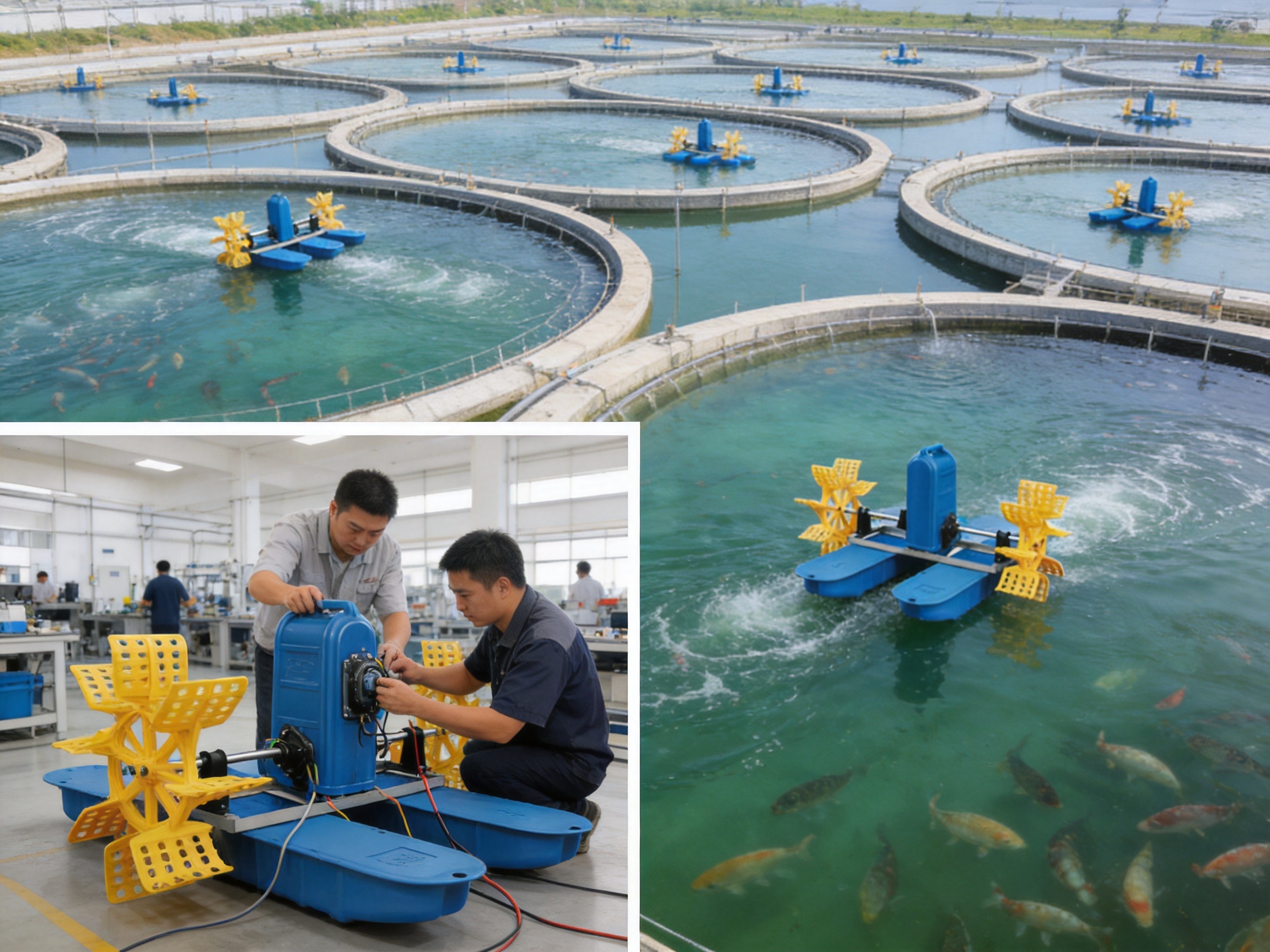
Modern aquaculture depends on stable water quality, sufficient dissolved oxygen, and reliable circulation. As production density increases, fish and shrimp consume oxygen more rapidly, organic matter accumulates faster, and pond conditions can change quickly because of weather, temperature, stocking levels, and feeding schedules. A dependable aeration system is therefore not simply an accessory. It is a core part of responsible aquaculture management.
The ADSWA Series AC/DC Solar Paddle Wheel Aerator is designed to address these operating challenges with a combination of renewable energy utilization, grid or generator backup, high-speed paddle wheel circulation, and brushless motor technology. Its dual-input AC/DC design allows the aerator to use solar energy under suitable conditions while maintaining the option of AC power when solar generation is insufficient. This makes the equipment particularly appropriate for large aquaculture ponds, high-density fish farms, shrimp farms, ecological water projects, and remote installations where dependable power management is essential.
With a rated power of 2,200 W, six impellers, an oxygenation rate greater than 2.0 kg/h, and a stated covering area of approximately 2,665 to 8,000 square meters, the ADSWA6-300-2200 model is configured for substantial water movement. Its best DC input voltage range is 300–400 V, and the recommended solar array power is at least 1.3 times the pump power. The design combines efficient pond aeration with a practical approach to energy continuity, reducing the risk of oxygen depletion during periods when conventional aeration systems may be difficult or expensive to operate.
Dissolved oxygen is one of the most important parameters in pond-based aquaculture. Fish, shrimp, beneficial microorganisms, and other aquatic organisms all depend on oxygen for respiration and biological activity. When oxygen levels decline, animals may become stressed, feeding performance may deteriorate, disease susceptibility may increase, and mortality can occur in severe cases.
Oxygen depletion is especially likely at night and before sunrise. During daylight hours, algae and aquatic plants may produce oxygen through photosynthesis. After sunset, however, photosynthesis stops while fish, microorganisms, and organic materials continue to consume oxygen. Heavy cloud cover, excessive stocking, high water temperatures, algal crashes, and overfeeding can make the problem more severe.
A paddle wheel aerator supports pond management in two principal ways. First, it agitates the water surface and exposes a larger volume of water to the atmosphere. Second, it creates horizontal and vertical water movement, helping distribute oxygen throughout the pond instead of allowing poorly circulated areas to develop. Better circulation can also assist in moving suspended materials toward collection or treatment zones and in reducing stagnant areas where harmful compounds may accumulate.
For commercial farms, the cost of an aeration failure can be considerably higher than the cost of electricity used by the equipment. A system that offers energy flexibility and automatic continuity can therefore contribute to both operational stability and financial risk management.
The ADSWA Series AC/DC Solar Paddle Wheel Aerator uses brushless AC and DC motors to provide an adaptable power solution. The aerator can operate with DC power generated by a suitable solar array and can also use AC power when available. This configuration is intended to reduce dependence on a single energy source.
The AC/DC switching function is particularly valuable in outdoor aquaculture environments. Solar generation naturally varies according to sunlight, season, cloud cover, panel temperature, and installation conditions. A solar-only aerator may experience interruptions when available energy is inadequate. By incorporating AC compatibility, the ADSWA series can continue operating during rainy weather or other periods of limited solar production, provided that an appropriate AC supply is connected.
The paddle wheel is engineered to rotate at high speed and create a strong water flow. This water movement supports oxygen diffusion and improves circulation across the pond. The six-impeller configuration of the ADSWA6-300-2200 model is suited to applications requiring a broad aeration pattern and substantial water displacement.
The unit also uses corrosion-resistant materials in areas exposed to water and outdoor operating conditions. Combined with brushless motor technology, this design approach is intended to support long-term operation while reducing maintenance requirements. The product is supplied with a three-year warranty, demonstrating a commitment to service life and user confidence.
| Performance Item | ADSWA6-300-2200 Specification |
| Voltage | AC220/DC300V |
| Best DC Input Voltage | 300–400 V |
| Rated Power | 2,200 W |
| Oxygenation Rate | Greater than 2.0 kg/h |
| Covering Area | Approximately 2,665–8,000 m² |
| Impeller Quantity | 6 |
| Solar Panel Open-Circuit Voltage | Less than 450 V |
| Recommended Solar Panel Power | At least 1.3 times pump power |
| Warranty | Three years |
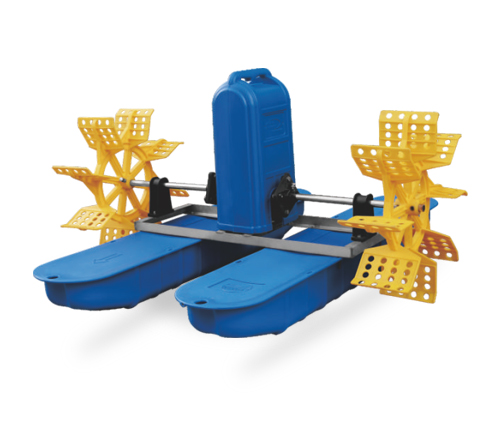
ADSWA Series AC/DC Solar Paddle Wheel Aerator
The most important differentiating feature of the ADSWA series is its dual AC/DC power capability. Traditional electric aerators commonly rely on a single AC connection, while basic solar aerators may depend entirely on sunlight and battery storage. Each approach has limitations. Grid-powered equipment may be expensive to operate in remote locations or difficult to install where electrical infrastructure is limited. Solar-only equipment can face reduced output during prolonged cloudy conditions or at times when the pond may still require continuous aeration.
The ADSWA series is intended to combine the advantages of both systems. During periods of adequate solar energy, the unit can use DC power from the solar array. When solar input is reduced or unavailable, AC power can provide an alternative source. This arrangement helps reduce the likelihood of unexpected stoppages and limits the need for operators to manually change the power source.
Automatic or simplified power switching can be particularly beneficial for farms that cover large areas or operate in remote regions. Operators may not be able to visit every pond immediately during a storm, at night, or during a period of intense production activity. A system that is designed for power-source flexibility can reduce dependence on manual intervention and allow the aerator to remain available during changing weather conditions.
The hybrid configuration can also support a more practical energy strategy. Solar power can reduce daytime electricity consumption and contribute to lower operating costs, while AC power provides an energy safety net. The actual financial benefit depends on local electricity prices, sunlight conditions, solar system design, operating schedules, and the scale of the aquaculture facility.
For system planners, it is important to ensure that the solar array, switching equipment, protection devices, wiring, and AC source are all correctly matched to the aerator. The stated DC operating range is 300–400 V, the open-circuit voltage of the solar panel system should be below 450 V, and the recommended solar power is at least 1.3 times the rated aerator power. These values should be considered during engineering and installation to promote stable operation and protect the equipment.
Paddle wheel aeration is widely used because it combines surface agitation with horizontal movement. As the impellers rotate, the paddles lift and move water, producing splashing and circulation. This increases the contact between water and air, helping transfer atmospheric oxygen into the pond.
The ADSWA6-300-2200 model has six impellers. Multiple impellers can distribute the mechanical action across a wider section of the equipment and support a stronger overall flow than a small single-impeller arrangement. In a correctly positioned pond installation, this movement can help reduce stagnant zones and distribute oxygenated water more evenly.
Strong circulation is especially useful in high-density aquaculture. When many fish or shrimp share a limited water volume, oxygen demand is higher and water quality can change more rapidly. Aeration must therefore do more than create localized surface turbulence. It should help move water through the pond, promote circulation between different zones, and support a more uniform environment for the cultured species.
The stated oxygenation rate of greater than 2.0 kg/h provides an important performance reference for equipment selection. Actual field performance may vary according to water temperature, salinity, pond depth, water quality, installation arrangement, solar input, and operating conditions. Nevertheless, the rating gives farm designers a basis for comparing the model with the expected oxygen demand of a pond or group of ponds.
The stated covering area of approximately 2,665–8,000 square meters also shows that the product is intended for significant pond applications rather than small decorative water features. The correct number of aerators should be determined according to biomass, species, feeding rate, water depth, climate, pond shape, and required emergency capacity.
The use of brushless AC and DC motors is another important product advantage. Conventional brushed motors use physical brushes and commutators that gradually wear during operation. These components may generate friction, require periodic attention, and become a source of maintenance when the equipment operates for long hours in demanding environments.
Brushless motor systems use electronic commutation instead of mechanical brushes. This can reduce mechanical wear in the motor and support longer service intervals. The absence of brushes can also help reduce sparking and improve the suitability of the motor for continuous-duty equipment, although the complete installation must still be designed and operated in accordance with appropriate electrical safety practices.
For aquaculture operators, reduced maintenance can be a major advantage. A pond aerator may run for many hours each day, especially during hot weather, periods of high stocking density, and nighttime operation. Fewer wear components can reduce the frequency of service interruptions and help farms maintain a predictable maintenance schedule.
Brushless technology also complements the solar power system. Solar output can vary throughout the day, so the motor and its control system must work effectively with changing DC input conditions. The ADSWA design is developed around AC/DC operation and electronic control, helping integrate renewable energy with the mechanical aeration system.
Motor life is influenced by more than the motor design alone. Correct voltage, suitable protection, proper alignment, adequate water clearance, appropriate load conditions, and protection from abnormal operating conditions are all important. Operators should follow the installation and maintenance instructions supplied for the specific system.
Aquaculture equipment operates in conditions that can be more aggressive than ordinary indoor machinery. Water, humidity, algae, suspended solids, cleaning chemicals, salt, and exposure to sunlight can affect metal and polymer components. Coastal farms and shrimp farms may face additional challenges because saline or brackish water can accelerate corrosion.
The ADSWA series uses corrosion-resistant materials in its construction. This is important because the paddle wheel, frame, motor housing, fasteners, and other parts may be exposed to water spray and humid air during normal operation. Corrosion resistance can help preserve structural integrity, reduce premature component replacement, and maintain the performance of moving parts.
Material selection is one part of a broader manufacturing quality process. Components must also be formed accurately, joined securely, finished consistently, and inspected before assembly. Correct tolerances are important for rotating parts because misalignment can increase vibration, noise, energy consumption, and bearing stress.
Operators should still rinse and inspect the equipment according to site conditions. Corrosion-resistant does not mean completely immune to all chemicals or environments. Regular inspection of fasteners, shafts, guards, floats, electrical connections, and protective coatings remains a good practice, especially in saline water or areas with frequent chemical treatment.
Solar-powered aeration can help reduce the operating cost and environmental impact associated with conventional electricity or fuel-powered generators. Once the solar array is installed, the system can use available sunlight as an energy source without ongoing fuel consumption. This can be particularly useful for farms located far from the grid or in regions with strong solar resources.
The ADSWA6-300-2200 model has a rated power of 2,200 W. The recommended solar panel power is at least 1.3 times the aerator power, which indicates a minimum design reference of approximately 2,860 W of solar capacity. In practice, the final solar array may need to be larger depending on the local solar resource, seasonal conditions, operating hours, system losses, and the desired level of performance during weak sunlight.
Solar array sizing should not be based only on the nameplate power of the motor. Engineers should consider the open-circuit voltage, working voltage, maximum current, controller compatibility, cable length, temperature effects, shading, panel orientation, and protection equipment. The stated open-circuit voltage limit is below 450 V, and the best DC input range is 300–400 V. Keeping the system within these parameters is essential.
A suitable installation may also include disconnect devices, surge protection, grounding, overcurrent protection, monitoring equipment, and a properly designed AC changeover arrangement. These elements are not merely optional conveniences. They help protect personnel and equipment while making it easier to identify performance changes or faults.
Where continuous 24-hour aeration is required, the project designer should determine whether AC backup is sufficient or whether battery storage is needed. The product information emphasizes AC/DC switching and continued operation during rainy days when an AC source is available. The precise operating strategy should therefore be established before installation.
Compared with a conventional AC-only aerator, the ADSWA series offers greater flexibility in energy selection. An AC-only system may perform reliably where grid electricity is stable, but it may produce higher operating costs and may be less practical in remote ponds. The solar input capability allows the operator to use renewable energy during suitable conditions.
Compared with a solar-only aerator, the ADSWA series offers a backup power option. This is a significant advantage where aeration cannot be interrupted during several cloudy days, heavy rain, or seasonal variations in sunlight. The ability to switch between DC and AC reduces the need for operators to arrange an emergency generator or manually replace the equipment when solar output is low.
Compared with smaller paddle wheel units, the six-impeller configuration and 2,200 W power rating are designed for larger water areas and higher production intensity. The stated covering area and oxygenation rate provide a useful starting point for commercial pond planning.
Compared with equipment using brushed motors, the brushless motor design can reduce wear-related maintenance and support a longer operating life. This is valuable for farms that run aerators for extended periods and need to minimize downtime.
Compared with products using ordinary materials in wet environments, the use of corrosion-resistant materials can improve long-term durability. The three-year warranty further supports the product's position as a solution intended for serious aquaculture and ecological water management applications.
| Comparison Factor | ADSWA Series Advantage | Practical Value |
| Power Source | AC/DC compatibility | Greater flexibility and improved continuity |
| Solar Operation | Designed for a 300–400 V best DC input range | Suitable for planned high-voltage solar arrays |
| Backup Capability | AC operation when solar conditions are poor | Reduced risk of weather-related interruption |
| Motor Type | Brushless AC/DC motor | Lower mechanical wear and maintenance demand |
| Water Movement | Six paddle wheel impellers | Strong circulation for large pond applications |
| Construction | Corrosion-resistant materials | Better suitability for wet outdoor environments |
| Warranty | Three years | Additional purchase confidence and support |
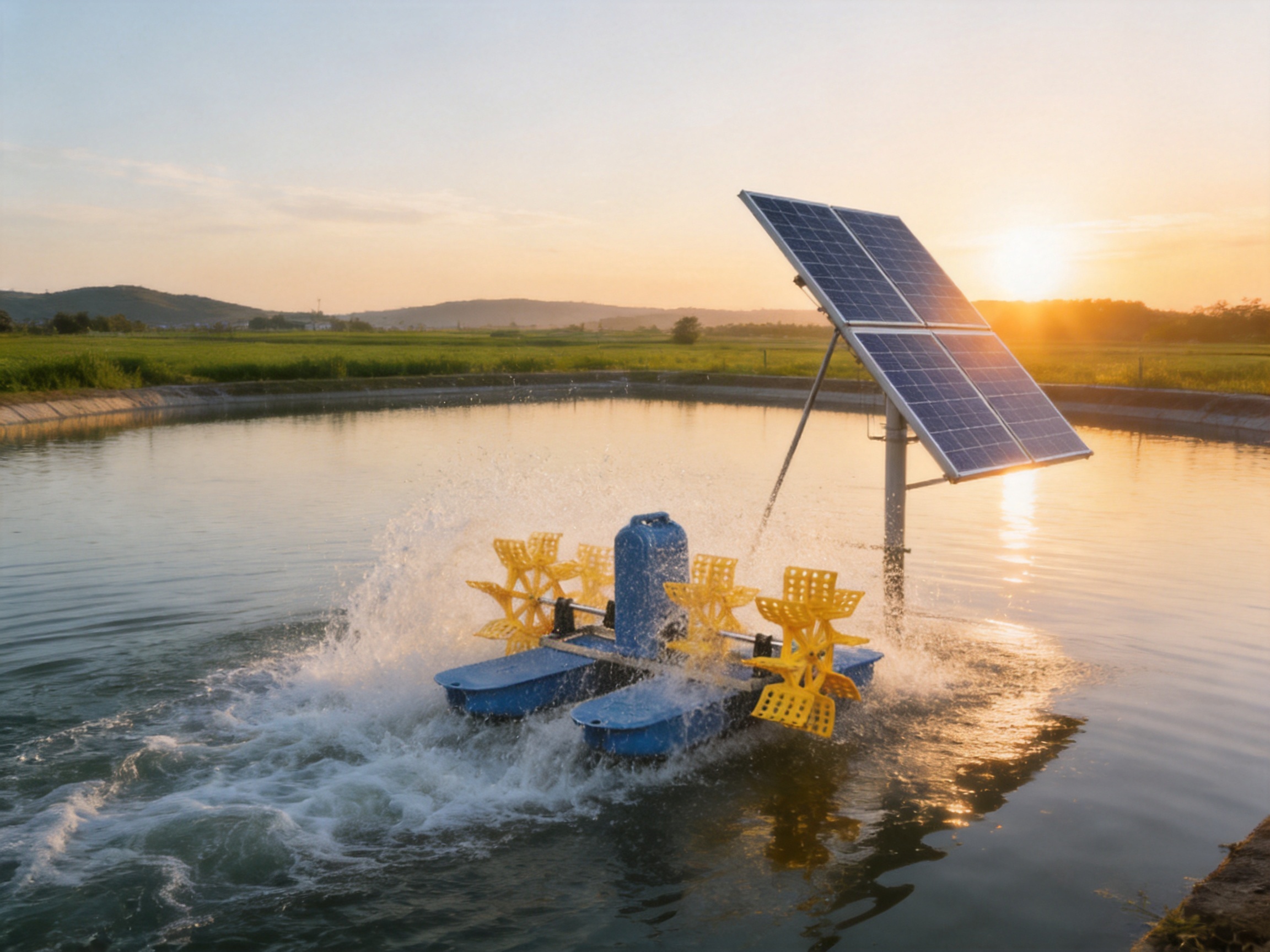
The performance of an aerator depends on the quality of its complete manufacturing system. A strong product is not created by the motor alone. It requires coordinated design, material selection, machining, electrical assembly, mechanical balancing, inspection, packaging, and after-sales support.
Taizhou Edwin Electric Co., Ltd., operating under the Edwin Pump name, was founded in 2008 as an integrated manufacturing enterprise. Its business model includes independent research and development, mass production, and global export. This combination is important because product development and production experience can reinforce each other. Design teams can study field requirements, while manufacturing teams can provide practical feedback about materials, tolerances, assembly efficiency, and quality control.
The company specializes in multiple pump and water-related product categories, including deep well pumps, submersible pumps, domestic booster pumps, circulation pumps, solar water pumps, intelligent booster pumps, and related water treatment products. This broader product experience provides a useful technical foundation for developing equipment that must operate with water, motors, electrical controls, and outdoor installation conditions.
Manufacturing an AC/DC solar paddle wheel aerator requires attention to several critical stages. The motor must be correctly designed for both its electrical operating modes. The controller must manage the power input safely and efficiently. The paddle wheel must be manufactured with suitable dimensional accuracy. The frame must support the rotating assembly without excessive vibration. Electrical connections must be protected against moisture. Every stage contributes to the final operating result.
Independent research and development allows a manufacturer to adapt product designs to changing market requirements. Aquaculture customers increasingly seek lower energy consumption, greater automation, reduced maintenance, and better compatibility with renewable energy. The ADSWA series reflects these priorities through its hybrid AC/DC power system, brushless motor, solar input planning, and automatic switching function.
Research and development also involves evaluating how equipment performs in different applications. A pond in a tropical climate may face high temperatures and intense sunlight, while a farm in a temperate region may experience seasonal cold, cloud cover, and changing water conditions. Commercial farms may require multiple units, centralized monitoring, and integration with other equipment. Product development must consider these different operating environments without compromising the basic reliability of the aerator.
Material selection is essential for a product exposed to water and weather. Corrosion-resistant components can reduce the risk of deterioration and help maintain safe mechanical operation. The manufacturer’s experience with submersible pumps, solar pumps, and other water equipment provides relevant knowledge of sealing, insulation, structural materials, and outdoor protection.
Component selection should also address the motor, bearings, shafts, couplings, impellers, floats, cables, connectors, and control devices. The quality of one component cannot fully compensate for a weak component elsewhere. A reliable manufacturing process therefore evaluates the entire assembly rather than focusing on only one headline specification.
Paddle wheel aerators contain rotating parts that must operate smoothly. If an impeller is unbalanced or a shaft is misaligned, vibration can increase. Excessive vibration may create noise, loosen fasteners, accelerate bearing wear, and reduce the service life of the motor and frame.
Precision assembly helps ensure that the paddle wheel rotates correctly and that the mechanical load is distributed as intended. Inspection of shafts, impellers, fasteners, and support structures can identify problems before the equipment is shipped. Proper assembly also helps the aerator maintain stable operation when operating for long periods.
Because the ADSWA series accepts both AC and DC power, electrical quality control is especially important. The control system must be matched to the rated voltage and input range. Connections should be secure, insulation should be suitable for the environment, and protective devices should be correctly installed.
Testing may include checking electrical continuity, insulation condition, rotation direction, current behavior, control response, and switching performance. The purpose of these checks is to reduce the likelihood of installation problems and ensure that each unit is ready for its intended operating conditions.
An integrated mass-production system can provide consistency across repeated orders. Commercial aquaculture projects may need multiple aerators with matching specifications. Consistent production makes it easier for customers to plan installations, maintain spare parts, train operators, and standardize service procedures.
Global export experience also requires attention to packaging, documentation, order tracking, transport coordination, and communication with international customers. The company established Taizhou Haipai Import & Export Co., Ltd. and Golden Falcon Industrial Co., Ltd. in 2012 to support procurement planning, order tracking, cross-border delivery, and foreign trade services. These capabilities are valuable to distributors, project contractors, and farm operators purchasing equipment for international installations.
The ADSWA series is intended primarily for large aquaculture ponds and high-density aquaculture farms. It may be considered for freshwater fish culture, selected brackish-water applications, shrimp production, hatchery support areas, and water management projects where circulation and oxygenation are needed.
Fish farms can use paddle wheel aerators to support oxygen levels during night operation, hot weather, high feeding periods, or periods of increased biomass. Shrimp farms may use them to improve circulation and help maintain more uniform conditions across the pond. The correct placement should be determined according to pond shape, water depth, prevailing flow patterns, inlet and outlet locations, and the location of sludge or waste accumulation.
In ecological water management, aeration can support water circulation in retention ponds, landscape water bodies, and selected treatment environments. However, the equipment should be specified according to the biological and hydraulic objectives of the site. Aeration alone cannot replace filtration, water exchange, nutrient management, or appropriate stocking control.
Commercial operators may install several aerators in a coordinated layout. Multiple units can create a circulation pattern that reduces dead zones and supports more consistent oxygen distribution. The final arrangement should be developed by a qualified engineer or experienced farm manager using the pond’s dimensions and production requirements.
A successful installation begins with a clear assessment of the pond and the available power sources. The installer should confirm the required aeration capacity, expected operating hours, solar resource, AC availability, cable routes, mounting or floating arrangements, and access for maintenance.
The solar array must be configured so that the operating voltage remains within the appropriate range. The best DC input voltage is specified as 300–400 V, while the solar panel open-circuit voltage should be less than 450 V. The solar power recommendation is at least 1.3 times the aerator power. These values should be verified with the manufacturer’s technical documentation and the selected electrical equipment before commissioning.
The installation area should provide sufficient clearance around the paddle wheel. Objects such as pond walls, nets, vegetation, pipes, or other aerators should not obstruct water movement or create a risk of entanglement. The support structure or floating assembly must be stable and strong enough for the operating environment.
Electrical installations near water require special care. Grounding, residual-current protection where appropriate, cable protection, waterproof connections, disconnect devices, and safe access should be included in the project design. Only qualified personnel should install or service the electrical system.
After installation, the operator should confirm the direction of rotation, observe vibration and noise, check water movement, verify the power input, and inspect the system during initial operation. Any abnormal condition should be corrected before extended use.
The brushless motor and corrosion-resistant construction are designed to reduce maintenance demands, but regular inspection remains necessary. Preventive maintenance is generally less expensive than emergency repair, especially in a commercial farm where an aerator failure can affect an entire production cycle.
Operators should inspect the paddle wheel for algae, ropes, plastic, nets, plant material, and other debris. Foreign objects may reduce flow, increase mechanical load, or damage the impellers. The motor housing, supports, floats, fasteners, and electrical connections should also be checked for signs of damage or loosening.
In saline or chemically aggressive water, rinse procedures may be needed to limit salt or residue accumulation. The appropriate cleaning method depends on the material and manufacturer’s instructions. Harsh chemicals or abrasive tools should not be used unless approved for the specific components.
Solar panels should be kept reasonably clean and free from shading. Dust, bird deposits, leaves, and algae may reduce energy production. The solar array and cables should be inspected for damage, while the open-circuit voltage and operating behavior can be checked as part of a planned service program.
Any maintenance work should begin with safe isolation of both AC and DC power sources. Because solar panels may continue producing voltage in daylight, disconnecting only the AC source is not sufficient. The system should be isolated according to approved electrical procedures.
Selecting an aerator solely according to pond area may lead to an inaccurate result. A more complete evaluation should include species, biomass, water temperature, feeding rate, pond depth, organic loading, local climate, water exchange, and the required emergency oxygen capacity.
The ADSWA6-300-2200 model has an oxygenation rate greater than 2.0 kg/h and a stated covering area of 2,665–8,000 square meters. These figures can serve as initial references, but the actual number of units should be determined by the oxygen demand of the farm. High-density production may require more aeration capacity than a low-density pond of the same surface area.
Farm managers should also consider whether aerators are intended for continuous operation or for use during specific risk periods. A system designed only for nighttime operation may have different energy requirements from a system intended to operate throughout the day. If the farm needs continuous operation during poor weather, the AC backup capacity and switching arrangement should be reviewed carefully.
It is also useful to plan for redundancy. If a single aerator provides all the oxygenation for a pond, a fault may create a serious emergency. Several appropriately sized units can provide greater operational flexibility and allow maintenance to be carried out without completely stopping aeration.
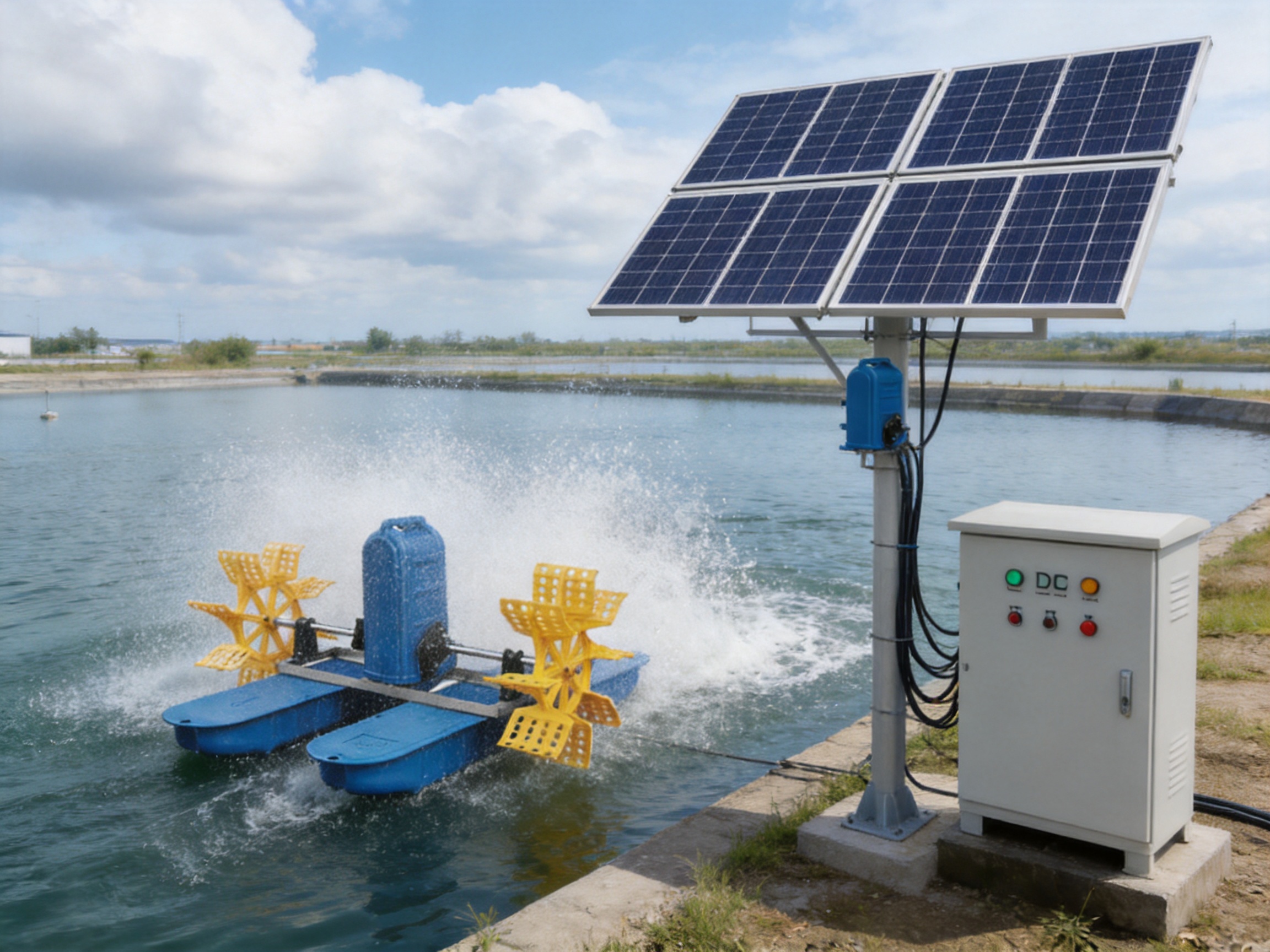
The main economic benefit of the ADSWA series comes from combining productive aeration with flexible energy use. Solar operation can reduce reliance on purchased electricity during suitable daylight conditions, while AC compatibility can limit the risks associated with changing weather. The potential savings will vary by location, but the dual-source architecture gives the farm more control over its energy strategy.
Reduced maintenance can also contribute to lower lifecycle costs. Brushless motors have fewer mechanical wear components, and corrosion-resistant materials are intended to improve durability in wet environments. Lower maintenance frequency can reduce labor requirements and minimize production interruptions.
Reliable oxygenation may support better feed utilization and more stable animal growth, although biological results depend on overall farm management. Aeration cannot compensate for poor water exchange, overstocking, excessive feeding, or inadequate disease control. It is one part of an integrated production system.
The three-year warranty provides additional value by offering a defined period of manufacturer support. Buyers should review the warranty terms, installation requirements, exclusions, service procedures, and spare-part availability before purchasing. Clear communication between the supplier, installer, distributor, and end user can help ensure that the system delivers its intended value.
For large aquaculture projects, purchasing equipment is only one part of the process. The customer may also require model selection, solar sizing guidance, order coordination, documentation, shipment planning, installation support, and after-sales communication. A manufacturer with experience in international trade and multiple water equipment categories can help organize these stages.
The company’s integrated approach combines product development, production, export, and procurement support. Through its related foreign trade companies, it provides services involving procurement planning, order tracking, cross-border delivery, and international business coordination. This can be useful for project contractors and distributors managing several product categories for one customer.
Its product portfolio also includes deep well pumps, submersible pumps, surface pumps, booster pumps, circulation pumps, garden pumps, pool and spa pumps, commercial multistage pumps, end suction pumps, pipes and valves, pump accessories, solar water pumps, and intelligent booster pumps. This broad range can support one-stop sourcing for projects involving water intake, transfer, pressure boosting, circulation, irrigation, and aeration.
Since 2018, the company has invested in new energy and intelligent technology. The ADSWA series reflects this direction by applying renewable energy compatibility and intelligent power-source management to aquaculture aeration.
It is a solar-compatible paddle wheel aerator designed for aquaculture ponds and ecological water management. It uses brushless AC and DC motors, high-speed paddle wheel circulation, and an AC/DC switching function to support continuous operation under changing energy conditions.
The listed model is ADSWA6-300-2200. It is rated at AC220/DC300V, has a best DC input range of 300–400 V, and has a rated power of 2,200 W. It includes six impellers and has an oxygenation rate greater than 2.0 kg/h.
The stated covering area is approximately 2,665–8,000 square meters. Actual coverage depends on pond shape, water depth, biomass, species, water quality, climate, operating schedule, and the number and arrangement of aerators.
The product information recommends solar panel power equal to or greater than 1.3 times the aerator power. For a 2,200 W aerator, this corresponds to a reference value of approximately 2,860 W or more. The final array should be designed according to local sunlight, system losses, voltage requirements, and the desired operating schedule.
The listed solar panel open-circuit voltage should be less than 450 V. The best input voltage range for DC operation is 300–400 V. The solar array and electrical control equipment should be selected and installed by qualified professionals.
The AC/DC switching function is designed to allow continued operation when solar generation is reduced, including rainy conditions, provided that a suitable AC power source is connected and available.
A brushless motor does not use conventional mechanical brushes that wear during operation. This can reduce mechanical wear and maintenance requirements, making the technology suitable for equipment that may operate for long periods in demanding outdoor environments.
The product uses corrosion-resistant materials and is intended for demanding water environments. However, the suitability of any installation depends on the salinity, chemicals, temperature, cleaning practices, and material requirements of the specific site. The customer should confirm compatibility with the manufacturer before using the aerator in highly saline or chemically aggressive water.
There is no universal number because aerator quantity depends on biomass, species, feeding rate, pond area, depth, temperature, water quality, climate, and the desired safety margin. The oxygenation rate and covering area should be used as starting references, followed by a site-specific engineering assessment.
No. Solar operation can reduce fuel or electricity consumption, and brushless motors can reduce motor wear, but the paddle wheel, frame, electrical system, cables, solar panels, and support structure still require periodic inspection and cleaning.
The product information states that the aerator is supported by a three-year warranty. Buyers should confirm the detailed warranty terms, installation conditions, service procedures, and coverage limitations before placing an order.
The product is manufactured by Taizhou Edwin Electric Co., Ltd., also known as Edwin Pump. The company was founded in 2008 and specializes in water pumps, solar pumping products, intelligent booster systems, circulation equipment, and related water treatment products.
The ADSWA Series AC/DC Solar Paddle Wheel Aerator is designed for aquaculture operators who require strong circulation, dependable oxygenation, and greater energy flexibility. Its combination of AC and DC compatibility helps address the variable nature of solar power, while the AC backup function can support operation during rainy or cloudy conditions. The high-speed paddle wheel, six-impeller configuration, 2,200 W power rating, and oxygenation rate greater than 2.0 kg/h make the ADSWA6-300-2200 model suitable for substantial aquaculture applications.
Its brushless motor technology is intended to reduce wear and maintenance, while corrosion-resistant materials support long-term use in wet outdoor environments. The three-year warranty provides additional confidence for commercial users. More broadly, the manufacturing capabilities of Taizhou Edwin Electric Co., Ltd. include independent research and development, mass production, global export, and experience across several pump and water treatment categories.
For best results, the aerator should be selected as part of a complete pond management plan. Solar array voltage, panel capacity, AC backup, pond layout, biomass, water depth, maintenance access, electrical protection, and emergency operating requirements should all be assessed before installation. When correctly specified and maintained, the ADSWA series can help aquaculture farms improve water circulation, support dissolved oxygen management, reduce dependence on a single power source, and build a more resilient operating system.
1. Product performance data for the ADSWA6-300-2200 AC/DC solar paddle wheel aerator, including voltage, power, oxygenation rate, covering area, impeller quantity, and solar input requirements.
2. Manufacturer-provided product description for the ADSWA Series AC/DC Solar Paddle Wheel Aerator.
3. Manufacturer company information concerning research and development, mass production, export operations, product categories, and corporate history.
4. General principles of aquaculture aeration, dissolved oxygen management, pond circulation, and surface oxygen transfer.
5. General engineering practices for photovoltaic system sizing, electrical protection, motor operation, and equipment installation near water.
6. General maintenance practices for paddle wheel aerators, brushless motors, corrosion-resistant equipment, and commercial aquaculture systems.
edwina@edwin-pump.com
+86-13586290903 (WhatsApp)
Xuri Gongliang Cutting Tool Entrepreneurship Park, Wenqiao Town, Wenling City, Taizhou City, Zhejiang Province, China

High Performance Smart Pump Factory


 English