
edwina@edwin-pump.com

View All Products
en
In modern water delivery, pressure boosting, heating and cooling circulation, industrial cleaning, and light chemical service, the pump is no longer a simple mechanical accessory. It is a core reliability component that determines process stability, water quality, operating cost, maintenance frequency, and long-term system safety. The EM-(T) Series Stainless Steel Impeller Horizontal Multistage Pump is designed for users who need dependable pressure, stable flow, corrosion-resistant wetted components, and flexible motor configuration in a compact horizontal structure.
This horizontal multistage pump is built around a practical engineering philosophy: use durable stainless steel impellers for hydraulic efficiency and corrosion resistance, combine them with a robust motor system, and provide configuration flexibility for different global voltage environments. The result is a pump suitable for water treatment processes, industrial cleaning, process water boosting, heating and cooling systems, air-conditioning systems, soft water heater service, fertilization and metering systems, and drinking water or light chlorine water supply and boosting.
EM-(T) Series Stainless Steel Impeller Horizontal Multistage Pumpseriesstainlesssteelimpellerhorizontalmultistagepump.jpg)
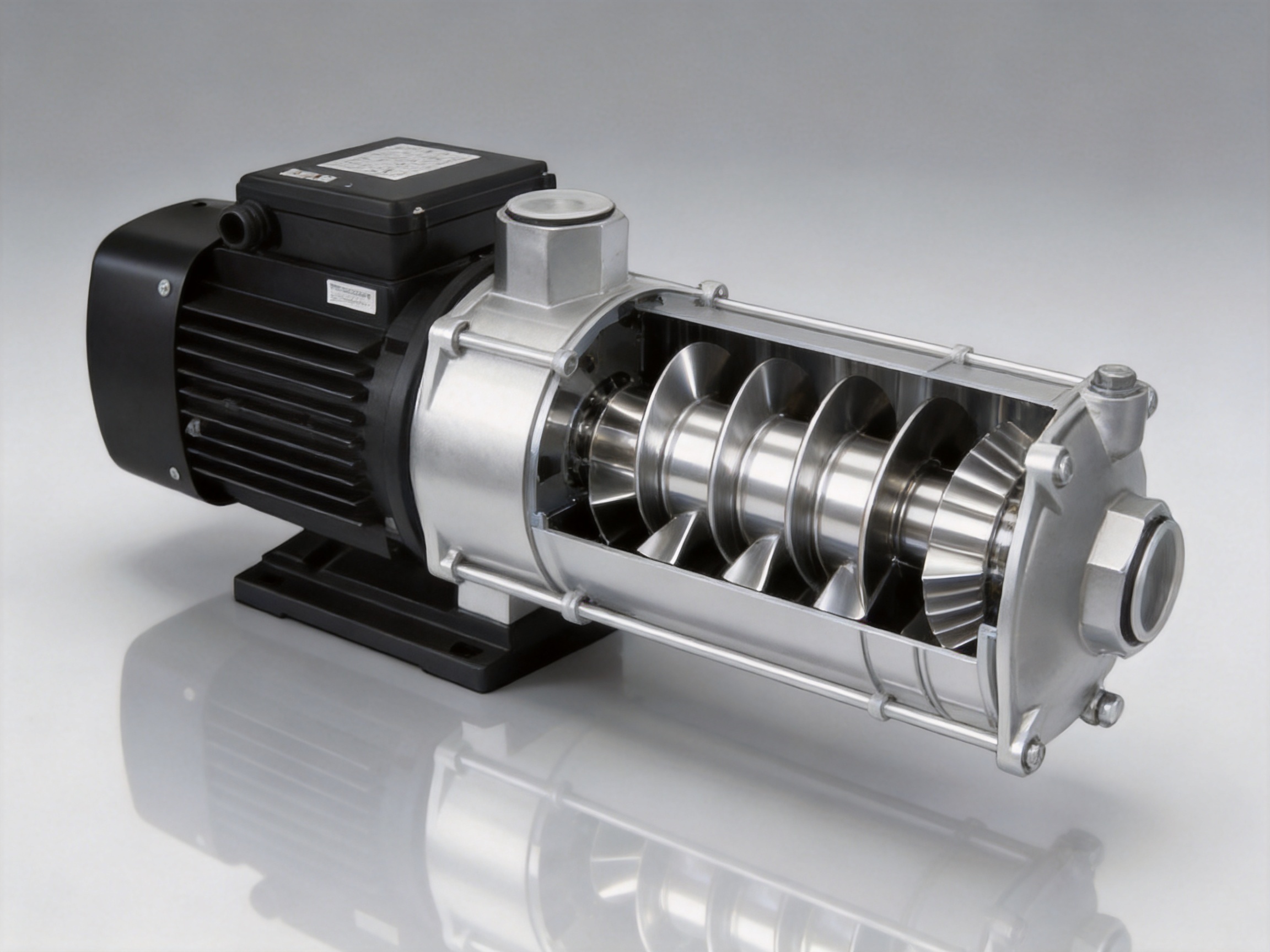
The EM-(T) Series Stainless Steel Impeller Horizontal Multistage Pump is a horizontal centrifugal pump with multiple impeller stages arranged to increase pressure progressively. Compared with a single-stage centrifugal pump, a multistage design can deliver higher pressure while maintaining stable hydraulic performance. This makes it especially useful in applications where water must be moved through long pipelines, filtration units, heat exchangers, spray nozzles, building supply networks, or process equipment that requires consistent pressure.
The pump features stainless steel impellers, a key advantage for users handling clean water, treated water, light chlorine water, soft water, and other non-aggressive or mildly corrosive liquids. Stainless steel improves resistance to oxidation and corrosion compared with ordinary cast materials, while also supporting smoother hydraulic surfaces that help maintain efficiency. For facilities seeking longer service life and lower maintenance risk, the stainless steel impeller design provides a practical balance of durability, performance, and cost control.
The pump is designed with a maximum working pressure of 1.0 MPa, allowing it to operate in demanding water boosting and circulation systems. Its environmental temperature tolerance of up to +50°C enables use in warm industrial spaces, equipment rooms, processing plants, and regions with high ambient temperatures. For single-phase motors, built-in thermal protection helps reduce the risk of motor damage caused by overheating, which is particularly important in domestic, commercial, and light industrial environments where pumps may operate for long periods.
The motor system uses a 2-pole induction motor and supports common single-phase and three-phase voltage options. Standard single-phase configurations include 1×220–240V/50Hz and 1×110–120V/50Hz, while three-phase configurations include 3×380–415V/50Hz. Other voltage options can be supplied according to customer requirements, helping distributors, contractors, and industrial buyers adapt the pump to different electrical standards in global markets.
A horizontal multistage pump offers a combination of compact installation, high pressure capability, ease of maintenance, and stable operation. The horizontal layout is especially valuable where floor-mounted equipment is preferred, where access for inspection is important, or where the pump needs to be integrated into a skid, booster system, water treatment unit, or industrial process line.
In a multistage pump, each impeller adds energy to the liquid. Instead of relying on one large impeller, the pump uses several smaller impellers and diffusers to build pressure step by step. This design improves efficiency and enables higher head generation in a relatively compact body. For users, this means better pressure performance without unnecessarily oversized equipment.
Compared with many basic single-stage pumps, the EM-(T) Series is better suited for applications where pressure stability matters. Industrial cleaning systems require strong and consistent flow to maintain cleaning effectiveness. Water treatment systems require stable delivery through filters, membranes, softeners, and dosing units. HVAC-related heating and cooling loops need circulation reliability to maintain temperature control. In these environments, weak pressure, unstable flow, or frequent motor overheating can cause downtime, product quality issues, or excessive energy consumption.
The horizontal multistage structure also makes installation more convenient in many technical rooms. It can be mounted on a base, aligned with piping, and connected to control equipment without the height requirements often associated with vertical units. For OEM equipment builders and system integrators, this compact horizontal format is useful when designing packaged water systems, booster modules, cleaning machines, and process skids.
The EM-(T) Series pump combines hydraulic, mechanical, and electrical design features that contribute to reliable service. Its advantages are not limited to one component; rather, they come from the interaction of corrosion-resistant impellers, mechanical sealing, motor protection, insulation performance, pressure resistance, and material selection.
One of the most important advantages is the stainless steel impeller. Impellers are critical to pump performance because they transfer energy from the motor to the liquid. In many low-cost pumps, impellers may be made from lower-grade materials that can corrode, deform, or wear faster depending on water quality. Stainless steel offers better strength and corrosion resistance, helping the pump maintain performance over time.
The mechanical seal uses carbon and ceramic materials, a common and effective pairing for water pump sealing. A reliable mechanical seal reduces leakage risk, protects the motor side from liquid ingress, and supports safer operation. For industrial and commercial buyers, seal reliability is a major factor in total lifecycle cost because seal failure can lead to downtime, water damage, and unexpected maintenance.
The pump’s maximum working pressure of 1.0 MPa provides sufficient capacity for many pressure-boosting and circulation applications. In systems with filters, heat exchangers, valves, long pipe runs, or elevation differences, pressure capability directly affects system effectiveness. A pump that cannot maintain pressure may cause poor cleaning results, insufficient supply, reduced heat transfer efficiency, or unstable production conditions.
The motor’s Class F insulation improves resistance to heat and electrical stress. Class F insulation is widely used in demanding motor applications because it supports higher thermal endurance than lower insulation classes. In practical terms, this contributes to operational stability, especially when the pump is used in warm environments or under continuous duty conditions.
The built-in thermal protector for single-phase motors adds another layer of safety. If overheating occurs due to voltage fluctuation, blocked ventilation, overload, or abnormal operating conditions, thermal protection helps reduce the risk of motor burnout. This feature is especially valuable in installations where operators may not constantly monitor the pump.
| Feature | Engineering Benefit | User Value |
|---|---|---|
| Horizontal multistage design | Builds pressure through multiple hydraulic stages | Stable high-pressure delivery in compact installations |
| Stainless steel impeller | Improves corrosion resistance and hydraulic durability | Longer service life and more stable performance |
| Maximum working pressure of 1.0 MPa | Supports demanding boosting and circulation systems | Suitable for industrial, commercial, and domestic pressure needs |
| Carbon and ceramic mechanical seal | Provides effective sealing for water transfer applications | Reduced leakage risk and lower maintenance burden |
| Class F motor insulation | Improves thermal endurance and motor reliability | Better operation in harsh or warm environments |
| Thermal protector for single-phase motors | Helps prevent damage from overheating | Improved safety and equipment protection |
| Flexible voltage options | Adapts to different global electrical systems | Easier selection for international projects and distributors |
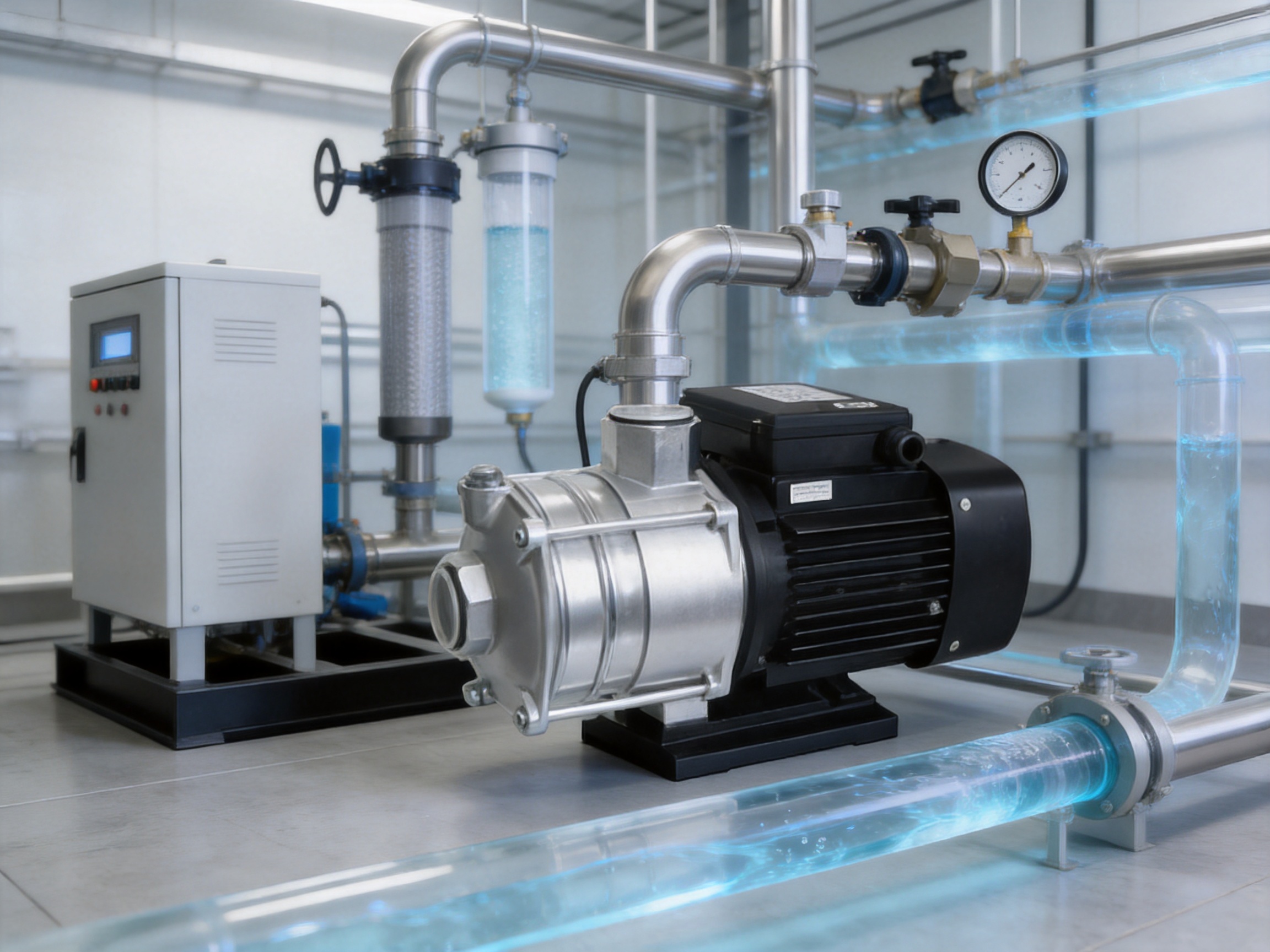
Water treatment systems often require stable pressure through filters, softeners, ultraviolet units, dosing systems, and sometimes membrane equipment. The EM-(T) Series is well suited for these conditions because it combines steady pressure with corrosion-resistant hydraulic components. Treated water can sometimes have different chemical characteristics from raw water, and stainless steel impellers help protect performance where ordinary materials may deteriorate more quickly.
In filtration systems, pressure loss increases as water passes through media, cartridges, valves, and pipework. A dependable multistage pump helps overcome these losses and maintain required flow. In soft water applications, such as water heater support or process water preparation, stable boosting ensures the downstream equipment receives sufficient pressure for normal operation.
For light chlorine water supply and boosting, material resistance is important. While the pump should always be selected according to actual liquid concentration and compatibility requirements, stainless steel impellers provide an advantage over pumps with lower-grade hydraulic components in many light-duty treated water applications. The pump’s design makes it a strong candidate for municipal support systems, commercial water treatment rooms, factories, and OEM water treatment packages.
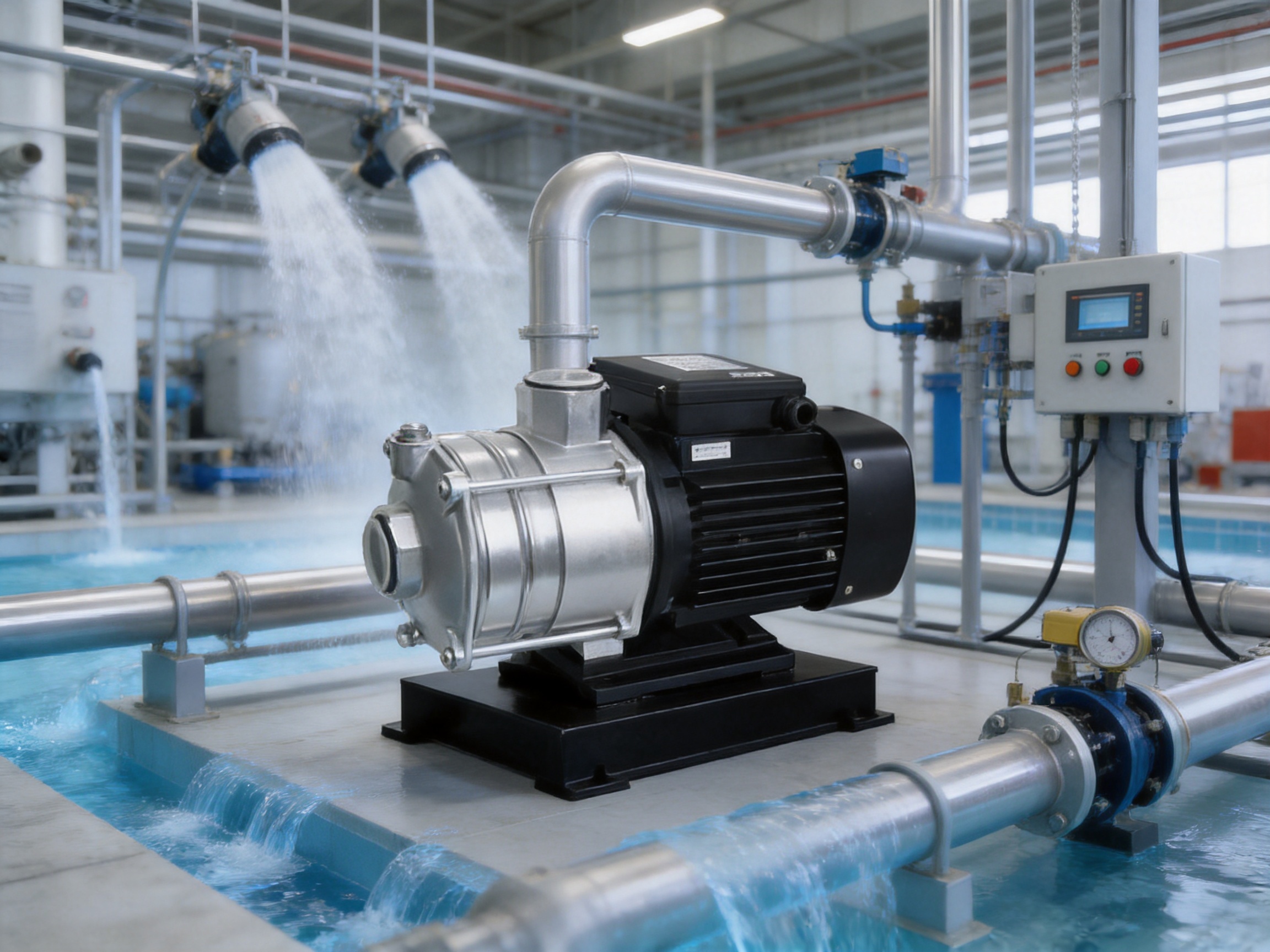
Industrial cleaning systems depend heavily on pressure and flow stability. Cleaning effectiveness is affected by spray pattern, nozzle pressure, water volume, and system consistency. If pressure drops, cleaning quality declines. If the pump overheats or suffers premature wear, production schedules can be disrupted.
The EM-(T) Series pump addresses these challenges with multistage pressure generation and motor protection. It can support industrial cleaning machines, washdown systems, equipment cleaning, and process cleaning where clean or treated water is used. The stainless steel impeller provides durability under repeated operation, while the motor system is designed to support reliable performance in industrial environments.
Many competitors in the general pump market offer basic centrifugal pumps that may be adequate for simple transfer but struggle in cleaning systems requiring stronger pressure. The multistage hydraulic design gives this pump a performance advantage by producing higher pressure more efficiently than many single-stage alternatives. This helps users achieve stronger cleaning performance without selecting unnecessarily large equipment.
Heating and cooling systems require dependable circulation to transfer thermal energy efficiently. In industrial process cooling, insufficient flow can cause overheating of machinery or unstable product quality. In heating loops, poor circulation can reduce heat transfer and increase energy consumption. In air-conditioning support systems, pressure stability helps maintain balanced distribution through pipes, coils, and control valves.
The EM-(T) Series pump can be used for heating and cooling in industrial processes as well as air-conditioning system support. Its environmental temperature rating of up to +50°C allows it to operate in mechanical rooms, workshops, and industrial spaces where ambient conditions may be warmer than standard indoor environments. The motor’s Class F insulation further supports reliable operation where heat is a concern.
Compared with lower-end circulation or transfer pumps, this pump provides stronger pressure-building capability. In systems with long pipe loops or equipment resistance, a standard low-head pump may not be sufficient. The multistage structure helps overcome system resistance and maintain the designed flow rate, which is essential for energy efficiency and process reliability.
Fertilization and metering systems require controlled delivery of water and diluted solutions. In agricultural, greenhouse, and industrial dosing environments, stable pressure helps maintain dosing accuracy and distribution uniformity. A pressure fluctuation can affect the accuracy of injectors, metering devices, and distribution lines.
The EM-(T) Series pump can support fertilization and metering systems where the liquid characteristics are compatible with the pump materials. When liquid density or viscosity is higher than that of water, selecting a higher-power driving motor is recommended. This design guidance is important because pump performance depends on the physical properties of the conveyed liquid. By allowing higher-power motor selection, the pump family offers flexibility for users who need to adapt to different process media.
This flexibility gives the pump an advantage over products that are sold only in fixed configurations without consideration for liquid density or viscosity. In real-world systems, water quality and solution characteristics vary significantly. A pump supplier that supports suitable motor selection helps users avoid underpowered operation, overload, and premature failure.
Material selection is one of the most important indicators of pump quality. A pump may look similar to competing products externally, but internal materials determine corrosion resistance, hydraulic efficiency, sealing reliability, and long-term performance. The EM-(T) Series uses a stainless steel impeller, carbon and ceramic mechanical seal, HT200 support, cast iron motor cover, aluminum motor case, and ABS capacitor holding box.
The stainless steel impeller is the centerpiece of the hydraulic design. Stainless steel is widely valued in pump manufacturing because it resists corrosion better than many ordinary metals and maintains mechanical strength. This is especially important in water treatment, soft water, light chlorine water, and industrial water systems where water chemistry may not be identical to clean tap water.
The carbon and ceramic mechanical seal is selected to provide reliable sealing between the wet pump section and the motor section. Mechanical seals must resist friction, heat, and water exposure. Carbon and ceramic combinations are commonly used because they provide a good balance of wear resistance, sealing performance, and cost efficiency.
The aluminum motor case helps reduce weight and supports heat dissipation. Effective motor cooling is important for continuous operation and long service life. The cast iron motor cover and HT200 support contribute mechanical strength. The ABS capacitor holding box provides electrical component protection in single-phase configurations.
These component choices reflect a practical manufacturing approach: use strong and durable materials where mechanical stress and corrosion resistance matter, and use appropriate lightweight or insulating materials where electrical protection and structural support are required. This balanced design helps the pump remain competitive in cost while providing dependable performance.
Electrical compatibility is a major consideration for global pump buyers. A pump may perform well hydraulically, but if the motor voltage does not match the local electrical system, the product cannot be used safely or efficiently. The EM-(T) Series addresses this issue with flexible motor options for common international power supplies.
The standard single-phase options include 1×220–240V/50Hz and 1×110–120V/50Hz. This makes the pump suitable for many residential, commercial, and light industrial installations. The three-phase option of 3×380–415V/50Hz supports industrial facilities, manufacturing plants, and larger water systems where three-phase power is preferred for efficiency and stability.
Motors of other voltages can be supplied upon request, which is particularly important for international distributors, contractors, OEM equipment manufacturers, and project buyers. Different regions may require specific voltage and frequency standards, and the ability to customize motor voltage reduces procurement complexity.
The 2-pole induction motor design supports efficient high-speed operation suitable for centrifugal pump performance. Induction motors are widely used because they are robust, relatively simple, and reliable. When combined with Class F insulation and thermal protection for single-phase versions, the motor system provides a strong foundation for long-term pump operation.
In the competitive water pump market, many products may appear similar at first glance. However, differences in hydraulic design, materials, motor protection, production control, and customization capability can create significant differences in user experience. The EM-(T) Series offers several competitive advantages that distinguish it from ordinary horizontal pumps and basic multistage models.
First, the stainless steel impeller provides stronger corrosion resistance than many pumps using lower-grade or less durable impeller materials. In water treatment and industrial service, impeller corrosion can reduce performance, create imbalance, increase vibration, and shorten pump life. Stainless steel helps the pump maintain hydraulic stability over time.
Second, the multistage design offers higher pressure capability than many single-stage pumps of comparable size. For users who need boosting rather than simple transfer, this is a critical advantage. Instead of installing multiple pumps or oversized equipment, users can select a compact multistage pump designed for pressure generation.
Third, the pump provides practical motor protection. Single-phase motors with built-in thermal protectors help reduce damage risk during abnormal operation. Some low-cost competitors omit protective features to reduce price, but this can lead to higher long-term costs due to motor burnout, service calls, and replacement downtime.
Fourth, the motor insulation class supports demanding environments. Class F insulation is an important indicator of motor durability. In applications with high ambient temperatures or continuous operation, lower insulation quality may increase failure risk. The EM-(T) Series is designed to operate in environmental temperatures up to +50°C, making it suitable for warm industrial and mechanical spaces.
Fifth, the product offers voltage flexibility. For international projects, this is more than a convenience; it is a procurement advantage. Buyers can work with one product family for multiple markets rather than sourcing different pumps from different suppliers for each region.
Finally, the pump is supported by an experienced manufacturing enterprise with a broad product portfolio, export service capability, and long-term commitment to quality and innovation. Product quality depends not only on design but also on production discipline, supply chain management, inspection standards, and after-sales communication.
Taizhou Edwin Electric Co., Ltd. was founded in 2008 and has developed into an integrated manufacturing enterprise specializing in independent research and development, mass production, and global export. Its manufacturing experience covers deep well pumps, submersible pumps, domestic booster pumps, circulation pumps, solar water pumps, and intelligent booster pumps. This broad product foundation supports technical knowledge across hydraulic design, motor manufacturing, sealing systems, pressure control, and export compliance.
For the EM-(T) Series Stainless Steel Impeller Horizontal Multistage Pump, manufacturing strength begins with component processing. Pump body dimensions, impeller geometry, diffuser alignment, shaft fit, bearing position, and mechanical seal surfaces all affect final performance. Accurate machining and controlled assembly reduce vibration, improve hydraulic consistency, and support long operating life.
Impeller quality is especially important. Stainless steel impellers must be formed, finished, and inspected to maintain balanced rotation and proper hydraulic geometry. Poor impeller balance can cause vibration, bearing wear, seal stress, and noise. A manufacturer with disciplined quality control can reduce these risks and deliver more consistent pump performance.
Motor production and testing are equally important. Winding quality, insulation treatment, rotor balance, bearing installation, capacitor selection, and thermal protector reliability all influence motor life. Class F insulation requires suitable materials and process control to achieve the intended thermal performance. A well-managed motor manufacturing process improves reliability under continuous or demanding operation.
Assembly control is another area where advanced manufacturing creates value. Multistage pumps require precise alignment of impellers, diffusers, shaft components, seals, and housing elements. Even small deviations can affect efficiency or cause internal wear. Consistent assembly procedures, trained workers, and inspection checkpoints help ensure each unit meets performance expectations.
Reliable pumps are not created by design alone. They require testing and verification. For a horizontal multistage pump, key inspection areas include hydraulic performance, pressure resistance, leakage control, electrical safety, motor temperature behavior, vibration, noise, and appearance. A strong manufacturer uses quality control throughout the production process rather than relying only on final inspection.
Incoming material inspection helps ensure that metals, seals, bearings, capacitors, and electrical components meet required standards. In-process inspection verifies machining dimensions, assembly accuracy, and motor winding quality. Final testing confirms that the finished pump operates correctly before shipment.
Hydraulic testing is especially important because users depend on actual flow and pressure performance. A pump that does not meet its curve can cause system failure even if it appears mechanically sound. Pressure testing helps verify the pump’s ability to withstand working conditions up to its rated design. Leakage testing helps confirm seal and housing integrity.
Electrical testing protects both users and equipment. Insulation resistance, grounding, running current, starting behavior, and thermal protection checks help identify issues before pumps reach customers. For export markets, consistent electrical quality is essential because pumps may be installed in different environments by different contractors.
By combining manufacturing experience with inspection discipline, the company can provide products that support long-term customer confidence. This is especially important for distributors and project buyers who need stable batch quality, not just one good sample.
To obtain the best performance from the EM-(T) Series pump, users should select the correct model according to flow, head, liquid characteristics, temperature, voltage, and operating pattern. A pump that is too small may fail to meet pressure requirements, while a pump that is too large may waste energy or operate outside its optimal efficiency range.
Flow and head are the two most important hydraulic parameters. Flow refers to the volume of liquid delivered over time, while head represents the pressure energy required to move liquid through the system. In real installations, head includes static lift, pipeline friction, valve resistance, filter pressure loss, equipment resistance, and required outlet pressure.
Liquid density and viscosity must also be considered. The product guidance notes that when the density or viscosity of the conveyed liquid is larger than that of water, it is necessary to select a driving motor of higher power. This is important because thicker or heavier liquids require more energy to pump. Failure to account for liquid properties can result in overload, reduced flow, overheating, or motor damage.
Temperature is another consideration. The pump can operate in ambient temperatures up to +50°C. However, the actual liquid temperature, ventilation conditions, duty cycle, and installation environment should also be reviewed. Good ventilation around the motor supports heat dissipation and helps extend service life.
Electrical supply should match the motor configuration. Voltage instability can affect performance and motor temperature. For single-phase installations, the thermal protector provides additional protection, but proper wiring, grounding, and overload protection are still essential. Professional installation is recommended for industrial and commercial systems.
Correct installation is essential for long pump life. The pump should be mounted on a stable foundation or base to reduce vibration. Piping should be properly supported so that pipe weight or misalignment does not stress the pump body. Suction piping should be designed to minimize air pockets, excessive friction, and turbulence.
Before operation, the pump should be primed according to system requirements. Running a centrifugal pump dry can damage the mechanical seal and internal components. Valves should be positioned correctly, and the system should be checked for leakage, blockage, and correct rotation direction in three-phase installations.
Regular maintenance should include checking for abnormal noise, vibration, leakage, motor temperature, pressure changes, and electrical condition. The mechanical seal, bearings, capacitor, and motor ventilation should be monitored as part of preventive maintenance. In water treatment and industrial systems, filters and strainers should be maintained to prevent excessive suction resistance or debris entry.
Operators should also monitor system pressure. A sudden pressure drop may indicate air ingress, worn components, clogged filters, leaking pipes, or incorrect valve position. A sudden pressure increase may indicate blockage or closed downstream valves. Early detection helps prevent damage and downtime.
Compared with pumps that require frequent maintenance due to weak materials or poor sealing, the EM-(T) Series is designed for dependable operation with reasonable maintenance practices. Its stainless steel impeller, mechanical seal configuration, motor protection, and robust component selection all contribute to a lower-risk maintenance profile.
Energy consumption is one of the largest long-term costs in pump ownership. While purchase price is important, the true cost of a pump includes electricity, maintenance, downtime, repair parts, labor, and replacement frequency. A pump with better hydraulic matching and reliable components can provide lower lifecycle cost even if its initial price is not the lowest.
The multistage design helps generate pressure efficiently by distributing the pressure increase across several impellers. When properly selected for the operating point, this can be more efficient than forcing a single-stage pump to operate beyond its ideal range. Stable hydraulic operation also reduces stress on components, helping maintain efficiency over time.
Durable materials contribute to lifecycle value. If impellers corrode or wear, pump efficiency declines and energy consumption may rise. Stainless steel impellers help preserve hydraulic shape and surface quality, supporting long-term performance. A reliable mechanical seal reduces leakage and prevents water-related damage. Motor insulation and thermal protection help avoid premature motor replacement.
Downtime cost can be significant in industrial and commercial settings. A failed pump can stop a cleaning line, interrupt water treatment, reduce HVAC performance, or disrupt process water supply. By choosing a pump designed for reliability, users reduce the probability of unexpected shutdowns and emergency repairs.
Taizhou Edwin Electric Co., Ltd., also known as Edwin Pump, has built its business around high-performance water pumps and one-stop procurement support. Since its founding in 2008, the company has focused on independent research and development, manufacturing, and global export. Its products are used in new energy projects, agricultural irrigation, municipal engineering, mining, construction, HVAC systems, and household water supply.
In 2012, the company established Taizhou Haipai Import & Export Co., Ltd. and Golden Falcon Industrial Co., Ltd. to strengthen procurement planning, order tracking, cross-border delivery, and foreign trade service. This structure provides an important advantage for international customers. Buying pumps for global projects requires more than product selection; it requires documentation, shipment coordination, communication, schedule control, and reliable after-sales support.
Since 2018, the company has invested in new energy and intelligent technology, launching solar water pumps and intelligent booster pumps. This demonstrates a forward-looking approach to market demand. As water systems become more efficient, automated, and energy-conscious, manufacturers with experience in intelligent and renewable-energy pump solutions are better positioned to support future applications.
The company’s wide product category coverage also benefits buyers. Its portfolio includes solar pumps, deep well pumps, submersible pumps, surface pumps, booster pumps, circulation pumps, garden pumps, pool and spa pumps, commercial multistage pumps, pump accessories, end suction pumps, pipes and valves, and intelligent booster pumps. This broad range allows customers to source multiple water system components from one supplier, reducing procurement complexity.
For the EM-(T) Series horizontal multistage pump, this manufacturing and export background adds confidence. Customers can expect not only a product but also technical communication, configuration support, and supply capability. In competitive markets, this service strength can be as important as the pump itself.
The EM-(T) Series pump is suitable for industrial facilities that need stable process water pressure, commercial buildings that require water boosting, water treatment equipment manufacturers, HVAC contractors, agricultural dosing systems, and distributors serving diverse pump markets. Its combination of pressure capability, stainless steel impeller construction, and motor flexibility makes it useful across many sectors.
For OEM manufacturers, the compact horizontal design can be integrated into packaged systems. For contractors, the flexible voltage options simplify project adaptation. For distributors, the broad application range makes inventory more versatile. For end users, the pump provides practical reliability and reduced maintenance risk.
The pump is especially valuable where clean or treated water must be delivered consistently. Examples include water treatment skids, industrial washing equipment, soft water boosting, air-conditioning auxiliary circulation, process cooling loops, and light chlorine water boosting. In each of these scenarios, stable pressure and material durability directly affect system performance.
It is designed for water transfer, pressure boosting, and circulation in industrial, commercial, and domestic applications. Typical uses include water treatment, industrial cleaning, process water boosting, heating and cooling systems, air-conditioning systems, soft water service, fertilization and metering systems, and drinking water or light chlorine water supply.
A stainless steel impeller improves corrosion resistance, strength, and long-term hydraulic stability. Compared with lower-grade materials, stainless steel helps reduce deterioration in treated water and mildly corrosive water environments, supporting longer service life and more consistent performance.
A multistage pump uses several impellers to increase pressure step by step. This allows it to produce higher pressure in a compact structure. A single-stage pump uses one impeller and is often better suited for lower-pressure transfer applications.
The maximum working pressure is 1.0 MPa, making it suitable for many pressure boosting, circulation, and industrial water delivery systems.
The pump can operate in environmental temperatures up to +50°C. Proper ventilation and correct installation are still important to protect the motor and maintain long service life.
The pump uses a 2-pole induction motor. Standard options include single-phase 1×220–240V/50Hz, single-phase 1×110–120V/50Hz, and three-phase 3×380–415V/50Hz. Other voltage configurations can be provided upon request.
Single-phase motors are equipped with built-in thermal protectors. This helps reduce the risk of motor burnout caused by overheating or abnormal operating conditions.
If the liquid density or viscosity is higher than that of water, a higher-power driving motor may be necessary. This helps prevent overload and ensures the pump can meet the required performance conditions.
Its advantages include stainless steel impeller construction, multistage pressure generation, thermal protection for single-phase motors, Class F insulation, flexible voltage options, and support from an experienced manufacturer with global export capability.
The pump is manufactured by Taizhou Edwin Electric Co., Ltd., a pump manufacturing enterprise founded in 2008 with experience in R&D, mass production, global export, and one-stop procurement services for water pump solutions.
The EM-(T) Series Stainless Steel Impeller Horizontal Multistage Pump is a practical and reliable solution for users who require stable pressure, corrosion-resistant hydraulic performance, flexible motor configuration, and dependable operation in industrial, commercial, and domestic water systems. Its horizontal multistage design provides stronger pressure capability than many ordinary single-stage pumps, while its stainless steel impeller improves durability in treated water and light chlorine water applications.
The pump’s maximum working pressure of 1.0 MPa, Class F motor insulation, single-phase thermal protection, and ambient temperature tolerance up to +50°C make it suitable for demanding environments. Its voltage flexibility supports global use, and its ability to accommodate higher-power motors for denser or more viscous liquids improves application adaptability.
Beyond the product itself, the manufacturing strength of Taizhou Edwin Electric Co., Ltd. adds significant value. With independent R&D, broad pump production experience, global export service, and investment in new energy and intelligent pump technology, the company provides both product reliability and supply-chain support. For buyers seeking a horizontal multistage pump that balances performance, durability, and practical cost efficiency, the EM-(T) Series is a strong choice.
1. Hydraulic Institute. Pump Application and Operation Guidelines.
2. Karassik, I. J., Messina, J. P., Cooper, P., and Heald, C. C. Pump Handbook.
3. Gülich, J. F. Centrifugal Pumps.
4. Europump and Hydraulic Institute. Variable Speed Pumping: A Guide to Successful Applications.
5. IEC Standards for Rotating Electrical Machines and Motor Insulation Classification.
6. General engineering references on centrifugal pump selection, mechanical seals, and industrial water system design.
edwina@edwin-pump.com
+86-13586290903 (WhatsApp)
Xuri Gongliang Cutting Tool Entrepreneurship Park, Wenqiao Town, Wenling City, Taizhou City, Zhejiang Province, China

High Performance Smart Pump Factory


 English