edwina@edwin-pump.com

View All Products
en
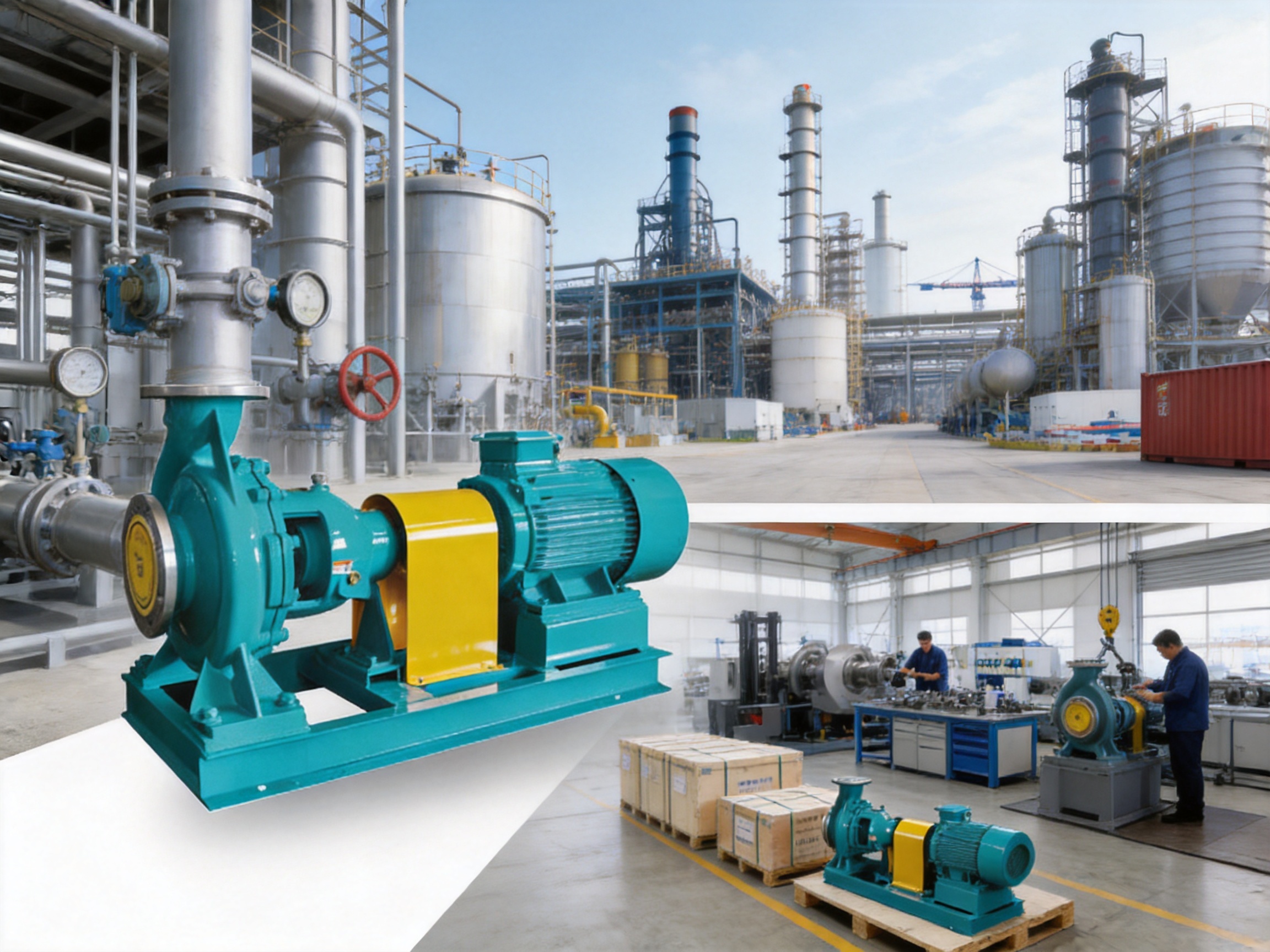
Reliable fluid handling is essential in chemical processing, petroleum refining, metallurgy, electric power generation, papermaking, food production, pharmaceutical manufacturing, synthetic fiber production, and many other industries. In these environments, pumps must do more than transfer water. They must continuously handle corrosive liquids, maintain stable hydraulic performance, protect workers and equipment, and remain serviceable throughout demanding operating cycles.
The IH model single-stage, single-suction, cantilever chemical centrifugal pump is designed specifically for these requirements. It is an end-suction centrifugal pump intended to transport corrosive liquids with a viscosity similar to water and without solid particles. Its construction follows the ISO 2858 international standard for marked and rated performance and dimensions, giving users a familiar configuration for industrial system design, equipment replacement, and maintenance planning.
The pump combines a broad operating range, efficient hydraulic performance, practical mechanical construction, flexible shaft sealing arrangements, and a maintenance-friendly extended-coupling design. It is suitable for applications where process liquids must be moved safely and consistently while contamination is restricted. Depending on the selected material, seal arrangement, and operating conditions, the pump can support a wide variety of corrosive or clean process media.
Manufactured by Taizhou Edwin Electric Co., Ltd., the product forms part of a broader pump manufacturing and export portfolio. The company has developed experience in independent research and development, mass production, procurement coordination, quality management, and international delivery. These capabilities support customers that require not only an individual pump, but also technical communication, order tracking, product configuration, and long-term supply cooperation.
This article examines the IH pump’s operating principle, structural advantages, performance range, sealing systems, installation considerations, maintenance benefits, industrial applications, and the manufacturing strengths behind its production.
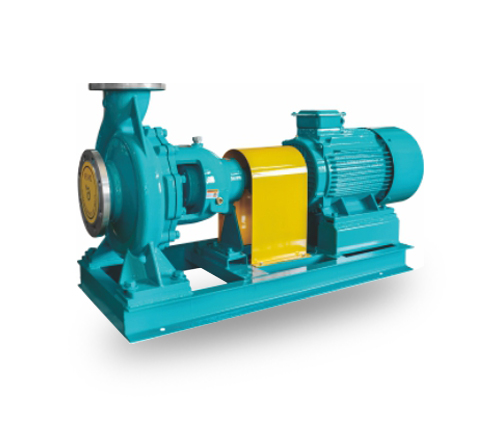
IH Model Single-stage Single-suction Cantilever Type Chemical Centrifugal Pump
The IH model is a single-stage, single-suction, cantilever-type chemical centrifugal pump. “Single-stage” means that the pump uses one impeller to increase the pressure of the liquid. “Single-suction” indicates that liquid enters the impeller from one side through the axial inlet. “Cantilever” describes the arrangement in which the rotating assembly is supported from one side, allowing the pump casing and rotor to follow a conventional industrial centrifugal-pump configuration.
During operation, the motor drives the pump shaft through a prolonged coupling. The impeller rotates inside the pump casing, creating a low-pressure area at the impeller eye. Liquid enters axially, moves through the impeller passages, and is discharged radially through the casing. The conversion of velocity energy into pressure energy inside the casing produces the required head for the process system.
The pump is intended for liquids that have a viscosity close to that of water and do not contain solid particles. This makes it particularly appropriate for clean corrosive liquids, chemical solutions, process water with aggressive chemical characteristics, and other media that require corrosion-resistant fluid handling. The pump is not intended to replace a slurry pump, sewage pump, or solids-handling pump where abrasive particles or large suspended solids are present.
The temperature range of the standard IH model is approximately -20°C to 105°C. With an appropriate cooling arrangement and suitable material and seal selection, the pump can be adapted for media with higher temperatures. Such applications require careful review of the liquid characteristics, vapor pressure, seal system, bearing conditions, casing material, and motor selection before production or installation.
The IH model is offered in a broad hydraulic range to accommodate different flow and pressure requirements. The available specifications cover small and medium industrial process duties as well as larger transfer systems. The stated performance range includes capacities from 6.3 to 400 cubic meters per hour and heads from 5 to 125 meters.
Two principal operating speeds are available: 2,900 revolutions per minute and 1,450 revolutions per minute. The lower-speed arrangement may be selected when reduced hydraulic loading, lower noise, lower wear, or a different system duty is required. The higher-speed arrangement can provide a compact solution for applications requiring greater head or a smaller pump size within the applicable operating range.
Motor power is available from approximately 0.55 kW to 90 kW. Inlet diameters range from 50 mm to 200 mm, while the highest stated working pressure is 1.6 MPa. These parameters allow the product family to serve a wide variety of process systems, from auxiliary chemical transfer to continuous industrial circulation and distribution.
| Parameter | Stated Range or Configuration | Design Significance |
|---|---|---|
| Pump type | Single-stage, single-suction, cantilever centrifugal pump | Conventional industrial configuration for clean corrosive liquids |
| Application medium | Corrosive liquids with viscosity similar to water and without solid particles | Suitable for many chemical and process-liquid duties |
| Capacity | 6.3–400 m³/h | Supports small, medium, and larger transfer requirements |
| Head | 5–125 m | Provides flexibility for different pipeline and process pressures |
| Speed | 2,900 r/min and 1,450 r/min | Allows selection according to duty, system design, and operating preference |
| Motor power | 0.55–90 kW | Offers a broad power range for different hydraulic loads |
| Inlet diameter | 50–200 mm | Supports various pipe sizes and installation layouts |
| Maximum stated working pressure | 1.6 MPa | Defines an important boundary for system design |
| Standard temperature range | -20°C to 105°C | Suitable for many ambient and process-temperature conditions |
| Seal options | Stuffing seal or mechanical seal | Allows the sealing system to be matched to the liquid and operating conditions |
The IH series is organized into 29 basic types. According to the supplied technical information, 22 two-speed types are developed through impeller diameter trimming for A and B models, creating a total specification range of up to 112 configurations. This design approach gives users more opportunity to select a pump close to the required duty rather than relying on a single oversized or undersized model.
One of the most important benefits of an industrial centrifugal pump is its ability to convert motor power into useful liquid movement with minimal losses. The IH model uses a conventional but carefully developed hydraulic structure that supports stable flow, head generation, and efficient operation when properly selected for the system duty.
The supplied product information identifies the IH model as an energy-saving product recommended nationally and states that its efficiency is approximately 5% greater than that of the F model pump. In practical terms, a more efficient pump can reduce the amount of motor power required for a given flow and head. Over a long operating period, even a moderate improvement in efficiency may contribute to lower electricity consumption and reduced operating cost.
Energy performance depends on more than the pump alone. System resistance, pipe diameter, valve selection, liquid temperature, viscosity, operating point, motor efficiency, coupling alignment, and maintenance condition all affect actual energy consumption. For this reason, the correct model should be selected near its preferred operating region, with the pump curve and system curve evaluated together.
The availability of impeller trimming is an additional advantage. When a full-diameter impeller would produce more head than required, trimming can help bring the pump closer to the desired operating point. This can reduce throttling losses and prevent unnecessary pressure generation. It may also help avoid selecting an excessively large motor for a relatively modest process duty.
Compared with general-purpose water pumps that may be used outside their intended service, the IH model is designed around chemical and corrosive-liquid applications. Its standardized industrial dimensions and multiple configurations provide a more appropriate basis for process-pump selection than adapting a basic domestic or agricultural pump to an aggressive liquid.
Chemical liquids can attack pump components through uniform corrosion, pitting, crevice corrosion, erosion-corrosion, stress-related damage, or chemical incompatibility with elastomers and seal materials. Therefore, the safe and reliable use of a chemical pump requires more than selecting a pump based only on capacity and head.
The IH model is intended to transport corrosive liquids, and its construction can be configured according to the characteristics of the handled medium. Important selection factors include chemical composition, concentration, temperature, specific gravity, vapor pressure, viscosity, crystallization tendency, and the presence of any trace solids. The material of the casing, impeller, shaft, sealing components, gaskets, and fasteners should be reviewed as part of the complete equipment specification.
For liquids with a viscosity similar to water and no solid particles, the centrifugal hydraulic design can provide smooth and continuous transport. The absence of solids reduces the risk of abrasive wear at the impeller, casing passages, wear areas, and mechanical seal faces. If the process contains particles, the user should request a separate review to determine whether filtration, a different impeller design, or another pump category is required.
The pump is also suitable for applications where pollution of the conveyed liquid is not permitted or where leakage must be tightly controlled. This is particularly relevant in pharmaceutical, food, fine chemical, and certain laboratory or specialty-process installations. The final suitability depends on the selected materials, seal design, cleanliness requirements, and applicable industry standards.
The pump is composed of a pump body, impeller, bearings, impeller nut, pump cover, sealing components, intermediate support, shaft, and suspended parts. This arrangement follows a familiar industrial pattern and allows the rotating assembly to be supported and serviced in a systematic manner.
The pump cover is fixed to the intermediate support. The pump body and intermediate support clamp the pump cover between them through the coupling arrangement. Liquid enters the pump body axially and exits radially. Support feet can be mounted directly onto the foundation or base, providing a straightforward installation method for many industrial layouts.
The suspended parts are fixed to the intermediate support through a locating fit and are supported on the base by the suspended frame. This arrangement helps establish a defined relationship between the casing, shaft, bearing support, and motor coupling. Correct assembly and alignment remain essential, but the standardized structural pattern simplifies engineering communication and maintenance procedures.
The shaft transmits torque from the motor to the impeller. Because the shaft operates in a chemical-pump environment, shaft protection, seal condition, liquid compatibility, and alignment are important. Excessive vibration, dry running, cavitation, incorrect coupling alignment, or unsuitable seal installation can cause shaft and bearing problems even when the basic pump design is appropriate.
The principal components listed for the product include the pump casing, hanging stand, impeller, impeller nut, seal ring, pump cover, seal part, intermediate bracket, and shaft. Each component contributes to the pump’s hydraulic, mechanical, or sealing performance. During maintenance, replacement parts should be selected according to the pump model, material configuration, operating medium, speed, and original assembly dimensions.
A key structural advantage of the IH model is its prolonged or extended coupling. This arrangement is designed to make inspection and maintenance more convenient by allowing the rotor assembly to be removed without dismantling the connected inlet and outlet piping in the usual maintenance procedure.
After the intermediate coupling section is disassembled, the rotor part can be withdrawn for inspection and servicing. This is particularly valuable in chemical plants, where pipework may be complex, valves may be difficult to access, and unplanned maintenance can interrupt production. Reducing the amount of piping work required during a pump overhaul can save time and decrease the risk of disturbing adjacent equipment.
Maintenance accessibility is a competitive advantage that is sometimes overlooked during initial equipment selection. A pump with a good purchase price may become expensive if every seal replacement or bearing inspection requires extensive pipe removal. The IH arrangement is based on a widely used industrial structural pattern intended to make routine servicing more manageable.
Typical maintenance activities may include checking the mechanical seal or packing, inspecting bearings, measuring shaft condition, examining the impeller and wear areas, replacing gaskets, checking the impeller nut, and verifying coupling alignment. The exact schedule depends on operating hours, liquid chemistry, temperature, pressure, vibration, and the consequences of leakage or downtime.
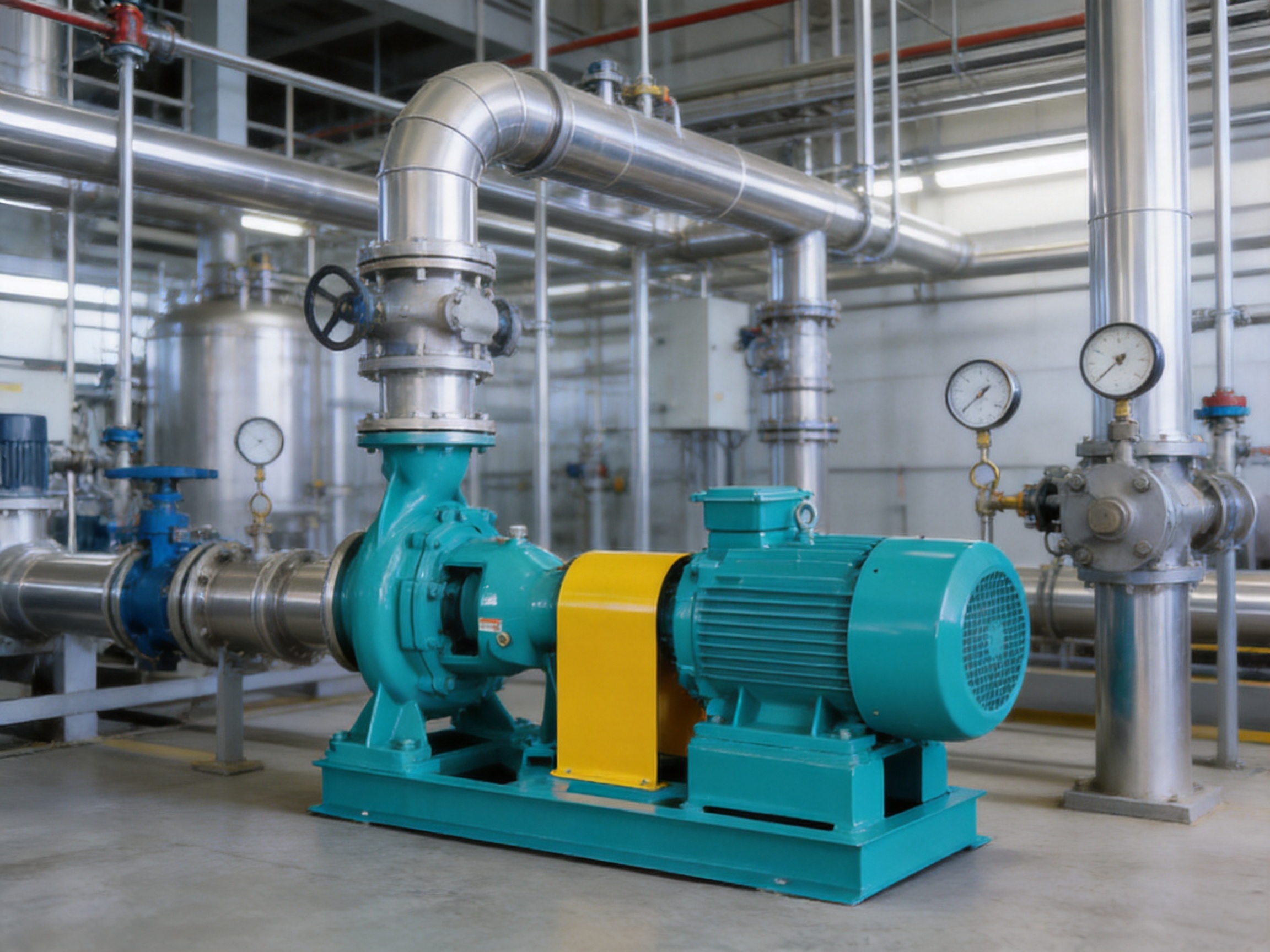
Sealing is one of the most critical features of any chemical centrifugal pump. The seal must prevent process liquid from escaping along the shaft while also preventing air from entering the pump when the system operates under suction or low-pressure conditions. The IH model supports both stuffing seals and mechanical seals, allowing the configuration to be adapted to the application.
The stuffing seal is installed in the stuffing box located in the pump cover. Soft packing material is compressed around the shaft or shaft sleeve to create a controlled sealing interface. A flushing or cooling liquid at a suitable pressure can be introduced into the stuffing box to assist cooling, lubrication, and cleaning of the sealing area.
Stuffing seals are mechanically simple and can be practical in applications where a small, controlled amount of leakage is acceptable. They are also familiar to many maintenance teams and can be adjusted or repacked using common industrial procedures. However, packing requires correct compression. Excessive tightening can generate heat and accelerate shaft wear, while insufficient tightening can result in excessive leakage.
Mechanical seals use precision-machined mating faces to reduce leakage around the rotating shaft. The IH pump may be equipped with single-face or double-face mechanical seals. Seal chamber dimensions and shaft-gland arrangements can also be configured in accordance with ISO 3069 requirements, subject to the selected design.
A flushing or cooling liquid may be supplied to the seal chamber to remove heat and wash the sealing faces. Proper selection of the barrier or flush liquid is important. It must be compatible with the process medium and seal materials, and its pressure must be sufficient to support the intended sealing arrangement without creating an unsafe operating condition.
Single mechanical seals may be suitable for many general chemical-transfer applications. Double mechanical seals may be considered when leakage control is especially important, when the process liquid is hazardous, when the liquid crystallizes or evaporates at the seal faces, or when additional cooling and barrier protection are needed.
Other seal arrangements may be available according to the user’s requirements, including bellows-type mechanical seals and auxiliary impeller seals. These alternatives should be selected only after reviewing the process liquid, temperature, pressure, shaft speed, solids content, emissions requirements, and maintenance capability.
The IH pump is driven directly by an electric motor through a prolonged coupling. Viewed from the motor side, the stated rotation direction is clockwise. This detail must be confirmed during installation because incorrect rotation can result in reduced performance, unstable operation, or damage to the pump.
Before commissioning, the motor should be jogged briefly only when it is safe to do so and when the coupling and guards are installed or controlled according to site procedures. The actual rotation should be compared with the arrow or technical documentation supplied for the selected pump. Electrical connections should be made by qualified personnel, and all lockout, isolation, and guarding requirements should be followed.
Alignment between the motor shaft and pump shaft is essential. Misalignment can lead to vibration, coupling wear, bearing overload, seal failure, and shaft damage. Alignment should be checked after the pump is secured to the foundation, after piping is connected, and whenever the equipment has been moved or disturbed.
The IH model can serve a wide range of industries that need to transport corrosive or clean process liquids. Its performance range and configuration flexibility make it appropriate for both standalone equipment and integrated process systems.
Chemical plants often need to transfer acids, alkalis, solvents, chemical solutions, process water, and intermediate products. The IH model can be considered for clean corrosive liquids when the materials and sealing system are compatible with the medium. Typical duties may include tank transfer, circulation, dosing-system supply, filtration-system circulation, and process-line distribution.
Petroleum-related facilities use pumps throughout storage, blending, treatment, utility, and auxiliary systems. The pump may be considered for compatible clean liquids in transfer or circulation duties. The specific application must be evaluated for flammability, temperature, vapor pressure, hazardous-area motor requirements, and leakage-control standards.
Metallurgical plants require pumps for chemical treatment, cooling circuits, process-water movement, and auxiliary fluid transfer. Where the liquid is clean but corrosive, a chemical centrifugal pump can provide an effective solution. Slurries and abrasive suspensions, however, may require a dedicated slurry pump or a different wear-resistant configuration.
Power-generation facilities contain numerous water-treatment, chemical-injection, cooling, and auxiliary systems. The IH model may be used for compatible process liquids in applications where the required capacity, head, pressure, temperature, and material selection fall within the pump’s operating limits.
Pulp and paper plants handle bleaching chemicals, process additives, coating liquids, treated water, and cleaning solutions. For low-solid or solids-free corrosive liquids, the IH model can support transfer and circulation duties. Where fiber content is significant, the pump selection should be reviewed carefully because fibers may affect impeller passage flow, seal reliability, and hydraulic performance.
Food and pharmaceutical systems may require the movement of clean liquids, cleaning solutions, process water, and compatible chemical media. In these environments, contamination control, cleanability, sealing, material traceability, and applicable hygiene requirements are especially important. The pump should be specified with materials and surface conditions appropriate to the particular process and regulatory environment.
Synthetic fiber facilities use a range of chemical solutions and process liquids during polymer preparation, spinning, washing, treatment, and finishing. The broad capacity and head range of the IH family may support auxiliary and process-transfer duties where the liquid is compatible with the selected pump materials and does not contain damaging solid particles.
The IH model offers several advantages when compared with ordinary water pumps or less specialized centrifugal-pump designs.
First, it is specifically intended for corrosive-liquid service rather than only clean freshwater applications. This focus encourages a more careful approach to casing, impeller, shaft, seal, and gasket selection. It also makes the pump more appropriate for industrial users that need to control leakage and corrosion-related failure.
Second, the pump follows ISO 2858-based performance and dimensional principles. Standardized dimensions can simplify replacement planning, engineering communication, and integration into established process-pump systems. Users familiar with international pump standards can more easily compare requirements and prepare installation documentation.
Third, the model offers a broad hydraulic range, with capacities up to 400 cubic meters per hour and heads up to 125 meters. The combination of two operating speeds and impeller trimming provides additional flexibility for matching the pump to the system.
Fourth, the extended-coupling design improves service accessibility. The ability to remove the rotor assembly without normally dismantling the connected inlet and outlet pipes can reduce maintenance labor and shorten downtime.
Fifth, the availability of stuffing seals, single mechanical seals, double mechanical seals, bellows-type arrangements, and auxiliary impeller seals gives users more options than a fixed, one-seal configuration. The best choice can be based on leakage tolerance, temperature, process hazard, pressure, and maintenance strategy.
Sixth, the product is supported by a manufacturer with experience in independent research and development, mass production, international export, procurement coordination, and order tracking. For overseas buyers, this broader capability can be valuable because successful pump procurement involves technical clarification, production communication, inspection, packaging, documentation, shipping coordination, and after-sales support.
Taizhou Edwin Electric Co., Ltd. was founded in 2008 and operates as an integrated manufacturing enterprise. Its business includes independent research and development, mass production, and global export. This combination is important for industrial customers because product consistency depends on more than final assembly. It also relies on design control, component sourcing, production planning, inspection, documentation, and responsive communication.
The company’s wider product portfolio includes deep well pumps, submersible pumps, domestic booster pumps, circulation pumps, solar water pumps, intelligent booster pumps, and other water-treatment-related products. This breadth provides experience across different pump structures, motor arrangements, hydraulic requirements, and application environments.
Since 2018, the company has invested in new energy and intelligent technology, including solar water pumps and intelligent booster pumps. Although the IH model is a conventional industrial chemical centrifugal pump, experience gained from broader pump development can support a more comprehensive understanding of energy efficiency, motor control, system integration, and modern water-handling requirements.
For international customers, the company established Taizhou Haipai Import & Export Co., Ltd. and Golden Falcon Industrial Co., Ltd. in 2012 to provide procurement planning, order tracking, cross-border delivery, and foreign-trade services. These supporting capabilities can help customers manage multi-product purchasing, production schedules, export documents, packaging requirements, and delivery arrangements.
Advanced manufacturing should be understood as a complete process rather than a single machine or production step. For a chemical pump, an effective manufacturing process includes controlled material selection, accurate casting or fabrication, precision machining, shaft and impeller balancing, seal-chamber dimensional control, assembly inspection, motor and coupling matching, pressure verification, performance testing, and final documentation.
Consistent production is especially important for a standardized pump family with many specifications. The IH series includes numerous basic types, speeds, impeller diameters, and performance combinations. Maintaining dimensional consistency across these variants helps reduce assembly errors and supports the interchangeability of service components where applicable.
Quality management should also include traceability of key components, inspection of critical dimensions, verification of rotating-part balance, checking of casing integrity, and confirmation of the final operating direction. For corrosive-liquid service, material and seal records are particularly useful because they help the user confirm that the selected configuration matches the process medium.
Selecting the correct IH pump requires accurate process information. The first requirement is the desired flow rate. The second is the total dynamic head, including static elevation, pipeline friction, valves, fittings, heat exchangers, filters, and other equipment. The pump should not be selected solely by pipe diameter or motor power.
The liquid description should include chemical name, concentration, temperature range, density, viscosity, vapor pressure, and any suspended solids. If the liquid can crystallize, polymerize, evaporate, or change viscosity with temperature, this should be clearly identified. These properties directly affect hydraulic performance, seal selection, corrosion resistance, and operating reliability.
The user should also specify whether leakage is acceptable, whether the liquid is hazardous, whether emissions are restricted, and whether the system requires a single or double mechanical seal. The flushing or barrier-liquid arrangement should be discussed when necessary.
Operating speed is another important factor. A 2,900 r/min pump may provide a compact solution, while a 1,450 r/min pump may be preferred for certain low-speed, lower-wear, or noise-sensitive duties. The final choice depends on the required flow and head, liquid properties, available motor supply, installation space, and operating philosophy.
The selected pump should operate within a suitable region of its performance curve. Continuous operation far to the left or right of the preferred operating area can increase radial loads, recirculation, vibration, seal wear, and energy consumption. A pump that is too large may be forced to run against a throttled valve, while a pump that is too small may fail to achieve the required pressure.
Customers should provide the intended installation altitude, ambient temperature, power supply, hazardous-area classification if applicable, inlet conditions, discharge pressure, and control method. This information enables the manufacturer to recommend a suitable pump, motor, seal, coupling, base, and accessory package.
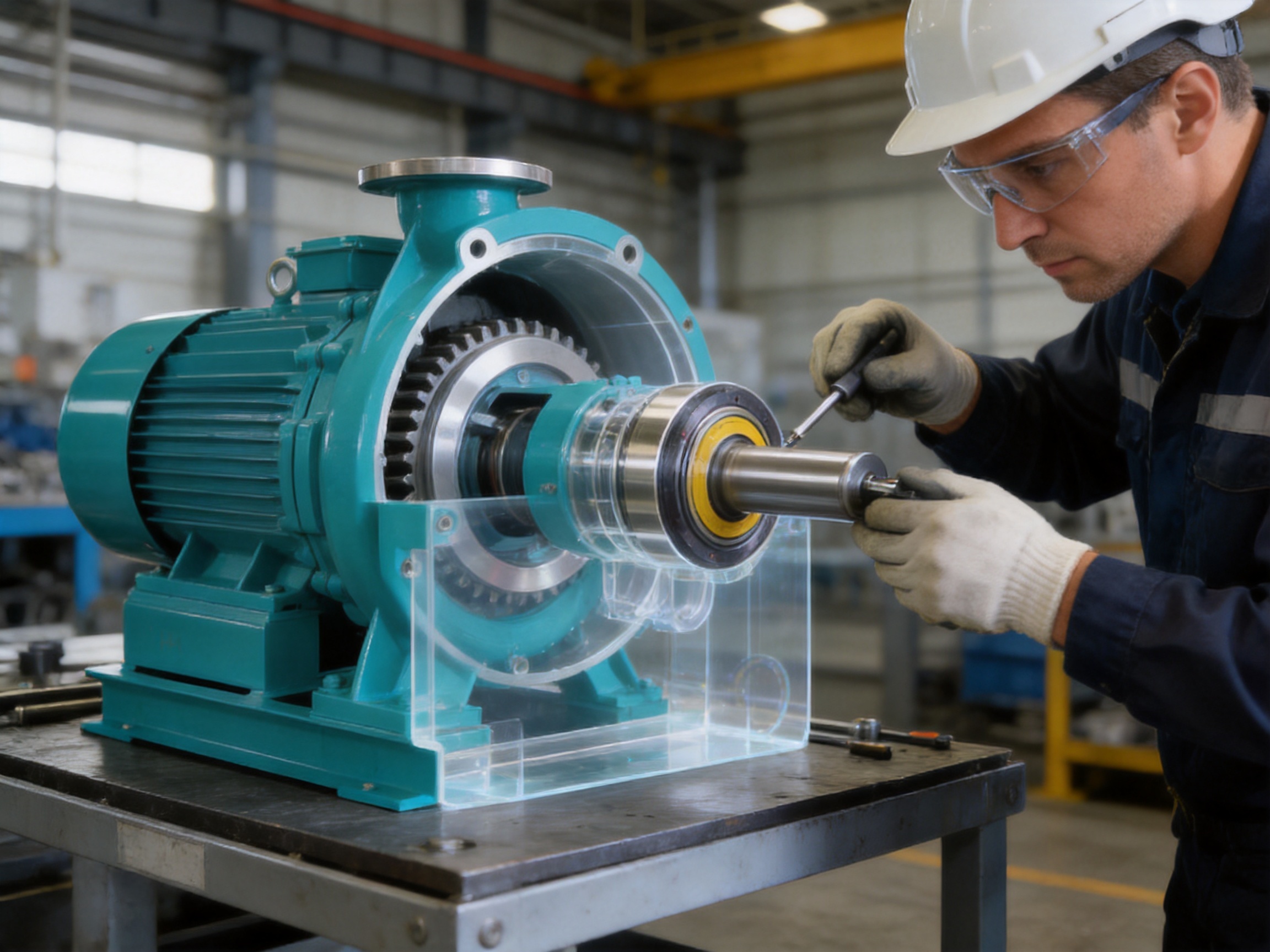
The foundation should be sufficiently rigid to support the pump and motor without excessive vibration. The base should be level, and the pump should be securely anchored. Piping should be independently supported so that its weight and thermal expansion do not impose loads on the pump casing.
The suction pipe should be designed to minimize air pockets, sudden restrictions, and unnecessary bends near the pump inlet. The pipe diameter should be appropriate for the required flow, and the suction arrangement should provide adequate net positive suction head. Poor suction conditions can result in cavitation, noise, vibration, reduced capacity, and rapid damage to the impeller and seal.
The discharge line should include suitable isolation and control equipment. A check valve may be required depending on the system arrangement. The use of valves should not create a condition in which the pump operates continuously at shutoff unless the pump and process are specifically designed for that duty.
Before starting, the pump should be filled and vented as required by the installation arrangement. A centrifugal pump should not be operated dry unless it has been specifically designed for dry running. Mechanical seals can be damaged very quickly if their faces operate without the required liquid film.
All guards should be installed before normal operation. The motor rotation should be verified, the coupling alignment should be checked, and the seal or packing should be inspected. Instruments for pressure, flow, temperature, and vibration should be used where appropriate to establish a commissioning baseline.
During the first operating period, the user should monitor unusual noise, excessive vibration, leakage, bearing temperature, motor current, discharge pressure, and seal condition. Any abnormal condition should be investigated before extended operation. Early detection can prevent a minor installation or alignment issue from becoming a major mechanical failure.
Reliable operation begins with using the pump within its specified range. The pump should not be used for liquids with significantly higher viscosity, abrasive solids, or chemical characteristics outside the selected material limits without technical approval.
Routine inspection should include checking for seal leakage, abnormal bearing noise, coupling condition, foundation looseness, pipe vibration, pressure changes, and motor current. A gradual increase in vibration may indicate misalignment, bearing wear, impeller imbalance, cavitation, pipe strain, or internal wear.
Stuffing seals require appropriate adjustment. Packing should normally permit controlled lubrication and cooling rather than being tightened until all leakage stops. Mechanical seals generally require clean operating conditions, correct flush pressure, adequate cooling, and protection from sudden thermal or pressure changes.
Bearings should be lubricated according to the maintenance instructions applicable to the selected bearing arrangement. Over-lubrication can be harmful, and lubricant contamination should be avoided. The coupling should be inspected for wear and alignment, especially after maintenance or foundation work.
When the pump is stopped for an extended period, the process liquid may need to be drained depending on its chemical characteristics. Some liquids can crystallize, solidify, corrode components, or create hazardous conditions if left inside the casing. The correct preservation method depends on the medium and the length of storage.
Before disassembly, the pump must be isolated from the power supply and process system. Pressure should be released, the casing should be drained safely, and the liquid should be handled according to the site’s chemical-safety procedures. Personal protective equipment and decontamination procedures should be selected for the specific medium.
Chemical-pump safety requires a complete system approach. The pump, motor, coupling, piping, valves, electrical equipment, seals, containment arrangements, and control system must be considered together.
The user should confirm that the pump materials are compatible with the liquid under actual concentration and temperature conditions. Compatibility data obtained at room temperature may not be sufficient for a hot or concentrated solution. Changes in concentration can occur through evaporation, dilution, or reaction, so the process should be evaluated under both normal and abnormal conditions.
Where the liquid is toxic, flammable, volatile, or environmentally hazardous, a double mechanical seal, leakage-detection system, containment arrangement, or additional ventilation may be necessary. Hazardous-area electrical requirements should be addressed separately when applicable.
Pressure and temperature limits must not be exceeded. The stated maximum working pressure of the pump is an important design boundary, but the complete system may have lower limits because of seals, flanges, valves, instruments, or piping materials.
Safety procedures should also cover emergency shutdown, spill control, chemical exposure, lockout and tagout, confined spaces, and maintenance authorization. Technical performance and workplace safety are closely connected in chemical fluid-handling systems.
The IH model is a single-stage, single-suction, cantilever-type chemical centrifugal pump with an end-suction configuration. It is designed for corrosive liquids with viscosity similar to water and without solid particles.
Potential industries include chemical processing, petroleum, metallurgy, electric power, papermaking, food production, pharmaceutical manufacturing, and synthetic fiber production. The actual application depends on liquid compatibility, solids content, temperature, pressure, and required performance.
The stated capacity range is approximately 6.3 to 400 cubic meters per hour. The exact capacity depends on the selected pump type, impeller diameter, speed, liquid properties, and operating point.
The stated head range is approximately 5 to 125 meters. The required model should be selected using the complete system curve rather than the head value alone.
The standard stated temperature range is approximately -20°C to 105°C. With appropriate cooling and suitable materials and seals, higher-temperature applications may be possible after technical evaluation.
The pump is intended for liquids without solid particles. Applications containing abrasive solids, fibers, or significant suspended matter require additional evaluation and may require a different pump design.
The pump can use a stuffing seal or a mechanical seal. Mechanical-seal options include single-face and double-face arrangements. Other configurations, such as bellows-type mechanical seals or auxiliary impeller seals, may be considered according to user requirements.
The extended coupling is designed to allow the rotor assembly to be removed for inspection and maintenance without normally dismantling the inlet and outlet pipes. This can reduce service time and simplify maintenance in complex industrial installations.
When viewed from the motor side, the stated rotation direction is clockwise. Rotation should always be confirmed during installation before continuous operation.
Selection should consider flow, total head, liquid composition, concentration, temperature, viscosity, vapor pressure, solids content, seal requirements, motor power, speed, inlet conditions, pressure, and applicable safety requirements.
It may be a more suitable choice for corrosive industrial liquids because it is designed for chemical-pump service and offers specialized seal and material configurations. A general water pump should not be used for corrosive media unless its materials and seals have been specifically verified.
The manufacturer combines independent research and development, mass production, international export, procurement planning, order tracking, and cross-border delivery services. Its broader portfolio includes submersible, deep well, booster, circulation, solar, and intelligent pump products.
The IH model brings together several characteristics that industrial users commonly require: standardized dimensions, a broad capacity and head range, energy-conscious hydraulic performance, corrosion-oriented application design, flexible sealing options, and a service-friendly structure.
Its extended-coupling construction is particularly useful for plants where maintenance time directly affects production. The ability to access the rotating assembly without extensive pipe removal can improve maintainability and reduce the disruption associated with seal, bearing, shaft, or impeller service.
The pump’s configuration range also supports more precise equipment selection. With two main speeds, impeller trimming, multiple inlet sizes, and a wide motor-power range, users can seek a model that matches the actual process duty instead of relying on a single standard configuration.
For international buyers, the supplier’s integrated manufacturing and export capabilities add value to the equipment itself. Technical clarification, production coordination, inspection, packaging, delivery, and documentation are all important parts of a successful industrial purchase. A manufacturer that can support these activities can help reduce communication gaps and procurement risk.
As with any chemical pump, performance depends on correct specification and installation. The IH model should be selected with full knowledge of the liquid and system conditions. When properly configured, installed, and maintained, it can provide reliable and efficient service in a wide range of corrosive-liquid handling applications.
The IH model single-stage, single-suction cantilever chemical centrifugal pump is a versatile industrial solution for transporting clean corrosive liquids with water-like viscosity. Its ISO 2858-based dimensions and performance principles, broad hydraulic range, two-speed options, energy-saving characteristics, and multiple seal configurations make it suitable for many demanding process environments.
The pump’s mechanical construction follows a proven industrial pattern. The axial inlet, radial discharge, supported shaft, intermediate bracket, extended coupling, and removable rotor arrangement contribute to practical installation and maintenance. The choice between stuffing and mechanical seals allows the system designer to address different leakage, cooling, lubrication, and chemical-compatibility requirements.
Its potential applications extend across chemical processing, petroleum, metallurgy, electric power, papermaking, food, pharmaceutical, and synthetic fiber industries. The pump is especially appropriate where corrosion resistance, process cleanliness, service accessibility, and stable hydraulic performance are important.
Behind the product is a manufacturer with experience in pump research and development, mass production, global export, procurement services, and broader intelligent and renewable-energy pump technologies. This integrated capability supports customers seeking dependable equipment and coordinated international supply.
Before purchase, users should provide complete process data and confirm materials, seals, motor specifications, operating conditions, safety requirements, and installation details. With correct selection and disciplined maintenance, the IH model can serve as a durable and efficient component in modern industrial fluid-handling systems.
1. ISO 2858, End-suction centrifugal pumps: designation, nominal duty point, and dimensions.
2. ISO 3069, End-suction centrifugal pumps: dimensions of cavities for mechanical seals and soft packing.
3. General principles of centrifugal-pump selection, installation, alignment, commissioning, and maintenance.
4. Industrial guidance for chemical compatibility, mechanical-seal selection, stuffing-box operation, and process-liquid containment.
5. Product technical information for the IH model single-stage, single-suction cantilever chemical centrifugal pump.
6. Manufacturer information concerning pump research and development, mass production, product portfolio, and international export services.
edwina@edwin-pump.com
+86-13586290903 (WhatsApp)
Xuri Gongliang Cutting Tool Entrepreneurship Park, Wenqiao Town, Wenling City, Taizhou City, Zhejiang Province, China

High Performance Smart Pump Factory


 English