
edwina@edwin-pump.com

View All Products
en
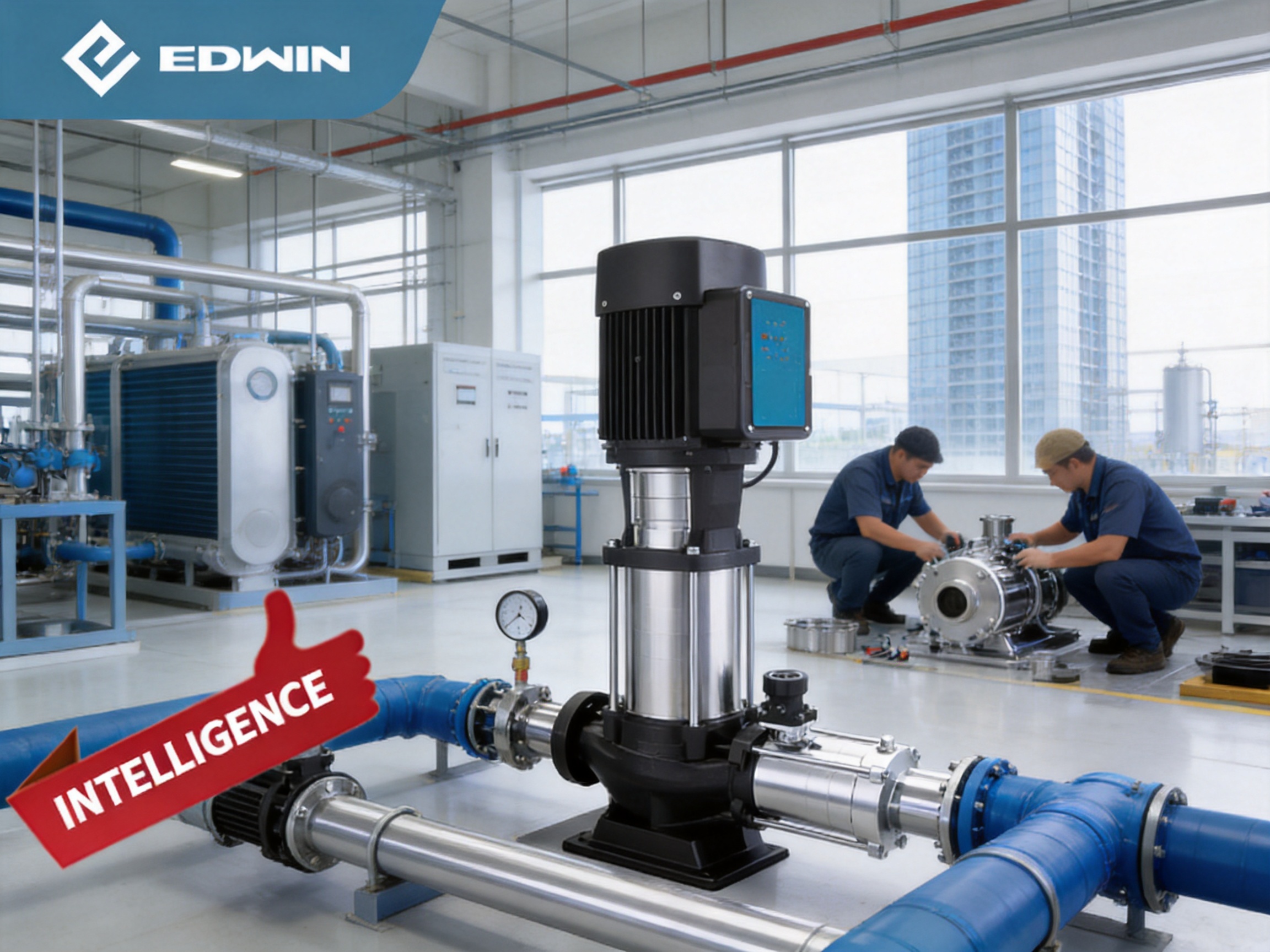
Modern cooling systems demand more than simple water movement. They require stable pressure, dependable circulation, efficient energy use, compact equipment, and reliable operation under changing loads. The ITSRM Series 10 bar IP55 self-adaptive energy-saving multi-stage centrifugal pump is designed to address these requirements in commercial, industrial, HVAC, and building-service applications.
Developed for cooling systems and pressurization duties, the ITSRM Series combines a multi-stage hydraulic structure with self-adaptive operation, stainless steel wetted components, compact horizontal construction, and a protection rating suitable for demanding installation environments. Its available power range extends from 0.25 kW to 1.1 kW, with maximum heads from 19 m to 56 m and maximum flows from 4 m³/h to 7 m³/h, depending on the model.
These specifications make the series suitable for circulating water through air-conditioning equipment, cooling mechanisms, industrial heat-exchange systems, HVAC pipe networks, high-rise water-supply systems, and other applications that require moderate flow combined with dependable pressure.
The ITSRM Series is a horizontal multi-stage centrifugal pump engineered to deliver pressurized water through a compact, efficient assembly. Unlike a single-stage pump, which generates pressure through one impeller and diffuser arrangement, a multi-stage pump uses several hydraulic stages connected in sequence. Each stage contributes additional pressure, allowing the complete pump to achieve a greater head without requiring an excessively large impeller diameter.
This design is especially valuable in cooling and building-service systems. A cooling loop may need to overcome the resistance of long pipe runs, filters, heat exchangers, valves, elevation changes, and terminal equipment. The pump must therefore provide sufficient pressure while maintaining stable circulation. The ITSRM Series addresses this balance through a range of staged configurations and motor sizes.
The product is identified as a 10 bar pump because its maximum operating pressure is rated at 10 bar. This rating provides a practical margin for applications in which the pump must operate within a pressurized closed-loop system or support elevated building-water requirements. Correct system design remains essential, but the pressure capacity gives installers flexibility across a broad range of commercial and industrial applications.
The self-adaptive feature is another important part of the product concept. Cooling demand is rarely constant. A system may require high circulation during peak operating conditions and considerably less flow during partial load, nighttime operation, or reduced occupancy. A self-adaptive pump can respond to changing system requirements, helping avoid unnecessary energy consumption associated with continuously running at full output.
The ITSRM Series provides multiple models so that users can select a pump according to flow, head, connection size, and motor power. The smaller models provide a maximum flow of 4 m³/h, while the larger models provide up to 7 m³/h. Maximum head ranges from 19 m to 56 m.
The 2 m maximum suction capability is specified for the listed models. This value should be considered during system layout, especially where the pump is installed above the water source or where the suction pipe includes several fittings. Proper pipe sizing, airtight joints, adequate water levels, and correct priming procedures remain important for reliable operation.
| Model | Power | Power | Maximum Flow | Maximum Head | Maximum Suction | Inlet and Outlet | Dimensions |
|---|---|---|---|---|---|---|---|
| kW | HP | m³/h | m | m | inch | mm | |
| ITSRM2-20(S) | 0.25 | 0.3 | 4 | 19 | 2 | 1 x 1 | 338 x 138 x 215 |
| ITSRM2-30(S) | 0.37 | 0.5 | 4 | 28 | 2 | 1 x 1 | 356 x 138 x 215 |
| ITSRM2-40(S) | 0.55 | 0.7 | 4 | 36 | 2 | 1 x 1 | 374 x 138 x 215 |
| ITSRM2-50(S) | 0.55 | 0.7 | 4 | 46 | 2 | 1 x 1 | 392 x 138 x 215 |
| ITSRM2-60(S) | 0.75 | 1.0 | 4 | 54 | 2 | 1.25 x 1 | 410 x 138 x 215 |
| ITSRM4-20(S) | 0.37 | 0.5 | 7 | 19 | 2 | 1.25 x 1 | 356 x 138 x 215 |
| ITSRM4-30(S) | 0.55 | 0.7 | 7 | 28 | 2 | 1.25 x 1 | 383 x 138 x 215 |
| ITSRM4-40(S) | 0.75 | 1.0 | 7 | 38 | 2 | 1.25 x 1 | 410 x 138 x 215 |
| ITSRM4-50(S) | 1.1 | 1.5 | 7 | 47 | 2 | 1.25 x 1 | 480 x 155 x 220 |
| ITSRM4-60(S) | 1.1 | 1.5 | 7 | 56 | 2 | 1.25 x 1 | 507 x 155 x 220 |
The two principal hydraulic groups are the ITSRM2 and ITSRM4 configurations. The ITSRM2 models are designed around a maximum flow of 4 m³/h, while the ITSRM4 models can reach 7 m³/h. Within each group, increasing the model number generally increases the available head. This gives system designers a clear selection path: first determine the required flow, then select the head level that best matches total system resistance.
Pressure generation is one of the most important advantages of a multi-stage centrifugal pump. In a cooling system, the pump must overcome frictional losses and component resistance. A single-stage pump may need to operate at a higher speed or use a larger hydraulic assembly to achieve the same pressure. A multi-stage design distributes the pressure-generation task across several stages.
Each stage contains a diffuser and impeller arrangement. Water enters the first hydraulic stage, receives energy from the rotating impeller, and is guided into the next stage by the diffuser. This process continues until the water reaches the discharge outlet. The result is a relatively high pressure in a compact horizontal package.
Compared with many general-purpose single-stage pumps, the ITSRM Series can offer greater head without a proportionate increase in external size. This is useful where equipment-room space is limited or where a pump must be integrated into an existing plant room, HVAC cabinet, mechanical room, or packaged cooling assembly.
The multi-stage approach also supports a broad model range. A system requiring 19 m of head can use a lower-power model, while a system requiring close to 56 m can use a higher-stage configuration. Selecting the correct model prevents oversizing, reduces unnecessary energy consumption, and helps the pump operate closer to its intended performance range.
One of the defining features of the ITSRM Series is self-adaptive operation. In practical terms, this means the pump is intended to adjust its performance according to the demand of the connected system rather than operating continuously at one fixed output level.
Cooling demand varies according to outdoor temperature, room occupancy, equipment load, operating schedules, and the number of active terminal units. If a pump runs at maximum capacity during every operating condition, it may consume more electricity than necessary and create excessive flow through valves, coils, and heat exchangers. Excessive flow can also contribute to noise, vibration, and inefficient system balancing.
A self-adaptive pump helps align water movement with actual demand. During peak cooling periods, it can provide the pressure and flow required by the system. During partial-load periods, it can reduce output and limit power consumption. This operating principle is particularly valuable in commercial buildings, hotels, offices, retail facilities, workshops, and industrial installations where demand changes throughout the day.
The energy-saving advantage is not limited to motor electricity. Reduced unnecessary flow may lower pressure losses across control valves and other components. It can also improve the overall balance of a hydronic system. Over the full service life of a pump, these operating improvements may contribute to lower ownership costs compared with a basic fixed-output pump.
Actual savings depend on system design, operating hours, control strategy, water temperature, pipe resistance, and load variation. The product should therefore be selected and commissioned using the system curve and the required operating point rather than by motor power alone.
The ITSRM Series has an IP55 protection rating. The first digit indicates protection against dust ingress at a level that helps prevent harmful deposits inside the motor enclosure. The second digit indicates protection against water jets from various directions.
This rating makes the pump suitable for many indoor and outdoor installations when it is properly mounted and protected from extreme exposure. It is appropriate for mechanical rooms, plant rooms, HVAC service areas, utility spaces, covered outdoor equipment areas, and other environments where dust or incidental water may be present.
IP55 does not mean the pump can be submerged or exposed indefinitely to heavy weather without additional protection. Installation should still include appropriate drainage, ventilation, electrical isolation, and protection from flooding. However, compared with a pump designed only for dry and clean indoor environments, the IP55 enclosure provides a stronger level of environmental resilience.
The protection rating also supports the product’s suitability for cooling towers, industrial workshops, and building-service areas where moisture and airborne particles may be more common than in ordinary residential installations.
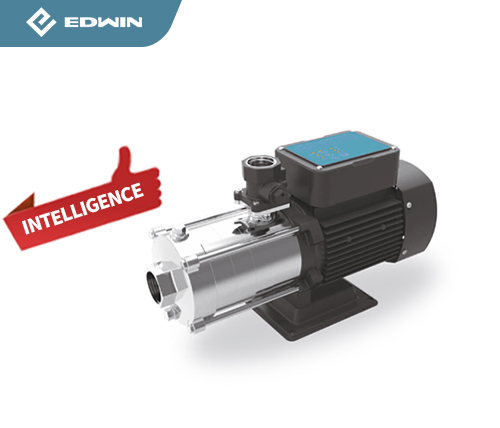
ITSRM Series 10Bar IP55 Self-adaptive Energy-saving Multi-stage Centrifugal Pump for Cool System
The listed operating conditions provide flexibility for different water-circulation duties. The lower temperature range is specified as -15°C to +70°C, while the higher temperature range is specified as -15°C to +110°C. The applicable temperature range should be confirmed according to the selected version, seal arrangement, operating fluid, and system design.
The maximum environmental temperature is +70°C. This value concerns the surrounding installation environment and should not be confused with the temperature of the pumped medium. Adequate ventilation around the motor and control components is important, particularly in enclosed plant rooms or areas exposed to heat from boilers, chillers, compressors, or other equipment.
The maximum operating pressure is 10 bar. This rating includes the pressure already present in the system plus the pressure generated by the pump. Installers should calculate static pressure, system pressure, pump head, and pressure fluctuations before commissioning. Safety valves, expansion equipment, pipe ratings, and connected components must be compatible with the complete system pressure.
The insulation class is F. This provides a recognized thermal insulation level for the motor winding system and supports reliable operation when the pump is used within its specified electrical and environmental conditions. Protection and insulation values should be considered together with voltage, frequency, ambient temperature, duty cycle, and installation method.
Many major hydraulic components in the ITSRM Series are made from stainless steel. The listed stainless steel components include the inlet and outlet, connecting pipe, pressing plate, impeller, shaft, plug, inlet diffuser, mechanical seal, connector, diffuser, supporting diffuser, and fluid director.
Stainless steel provides several important advantages in water-pumping applications. It offers good corrosion resistance, a clean surface, and strong mechanical performance. These properties are beneficial in cooling systems where water quality, condensation, oxygen exposure, and long operating hours may affect ordinary materials.
The stainless steel impeller and diffuser components are especially significant because they are directly involved in hydraulic performance. Stable surfaces can help maintain predictable water passage geometry and reduce the risk of corrosion products affecting clearances or flow paths. The stainless steel shaft supports mechanical alignment and rotational strength, while stainless steel inlet and outlet components provide a durable connection between the pump and the pipe network.
Material selection also affects service life. A pump constructed with corrosion-resistant wetted components can be more suitable for long-term commercial use than an equivalent pump relying extensively on lower-grade materials. Nevertheless, water chemistry must still be controlled. Highly aggressive fluids, excessive chloride concentration, abrasive particles, or chemical additives may require special material confirmation before purchase.
The mechanical seal is a critical component because it prevents pumped water from escaping along the rotating shaft. The ITSRM Series includes a mechanical seal within its component construction. Seal performance depends on the correct selection of seal materials, water quality, temperature, pressure, alignment, and operating conditions.
A properly functioning mechanical seal protects the motor and surrounding equipment from leakage. It also helps maintain stable pump performance over long operating periods. Users should avoid dry running, sudden operation with an empty pump chamber, or operation outside the specified temperature and pressure range, as these conditions can shorten seal life.
The motor end cover is listed as aluminum alloy or cast iron, depending on configuration. Aluminum alloy can support a lighter compact assembly, while cast iron provides rigidity and robust mechanical support. The base may be constructed from a steel plate or plastic, allowing the product range to accommodate different structural and packaging requirements.
The combination of a compact motor body, horizontal pump arrangement, and carefully integrated hydraulic stages makes the ITSRM Series convenient for equipment layouts where floor space and service access must be considered together.
The product is manufactured by Taizhou Edwin Electric Co., Ltd., an integrated enterprise founded in 2008. According to the supplied company information, the business combines independent research and development, mass production, and global export. This combination is important for a pump manufacturer because product development, manufacturing consistency, and export support must work together to serve commercial customers.
Independent research and development allows a manufacturer to improve hydraulic structures, motor configurations, intelligent controls, materials, and product families according to market requirements. For a self-adaptive multi-stage pump, development work may involve hydraulic curve optimization, motor control, thermal management, sealing systems, vibration reduction, and compact packaging.
Mass-production capability supports repeatability. Pumps used in commercial projects and distribution channels must maintain consistent dimensions, connection positions, electrical performance, and hydraulic characteristics from one production batch to another. Consistency helps installers plan replacement units, simplifies procurement, and reduces uncertainty during system integration.
The company’s broader product portfolio includes deep well pumps, submersible pumps, domestic booster pumps, circulation pumps, solar water pumps, intelligent booster pumps, and other water-treatment peripheral products. This range gives the manufacturer experience across different pumping environments, including household water supply, agricultural irrigation, municipal engineering, mining, construction, HVAC, and new-energy projects.
Experience across multiple pump categories can support better component knowledge and manufacturing flexibility. For example, expertise in submersible motors can contribute to motor sealing knowledge, while experience with circulation pumps can contribute to compact hydraulic design and low-noise operation. The ITSRM Series benefits from being part of a broader technical product ecosystem rather than an isolated model.
The company established related import and export service organizations to support procurement planning, order tracking, cross-border delivery, and foreign-trade services. For international buyers, these capabilities can be as important as the pump itself. A reliable supplier should be able to communicate specifications clearly, coordinate production, prepare export documentation, and support repeat orders.
A high-performance multi-stage pump depends on the accuracy of numerous manufacturing steps. The hydraulic stages must be correctly aligned, rotating components must be balanced, seals must be installed accurately, and electrical components must be assembled and inspected according to the intended specification.
The production process begins with material preparation. Stainless steel parts must be selected according to the required strength, corrosion resistance, forming characteristics, and compatibility with the pumped medium. Motor housings, bases, shafts, impellers, diffusers, connectors, and sealing components each require different manufacturing considerations.
Material identification and incoming inspection help reduce the risk of using incorrect components. Dimensional checks are particularly important for parts that influence hydraulic clearances, shaft alignment, connection fit, and seal seating.
Impellers and diffusers must be formed or machined to maintain the designed water passages. Small dimensional deviations can influence flow, head, efficiency, and noise. For this reason, production control should cover shape, dimensions, surface condition, and balance.
In a multi-stage pump, the relationship between individual stages is especially important. The inlet of one stage must align with the outlet path of the preceding stage. Supporting diffusers and fluid directors must guide water efficiently while maintaining the correct mechanical position inside the pump body.
Assembly requires careful integration of the motor, shaft, hydraulic stages, mechanical seal, end cover, base, inlet, and outlet. The shaft must rotate freely without excessive radial or axial movement. The mechanical seal must be installed without damage or contamination. Fasteners must be tightened consistently so that the pump housing remains stable during operation.
Electrical assembly includes winding, insulation, terminal connections, and protective components. The insulation class F specification indicates that the motor insulation system is designed for the stated thermal category. Electrical testing should confirm insulation resistance, continuity, grounding, and safe operation under the intended supply conditions.
Quality control for a pump of this type should include visual inspection, dimensional inspection, pressure testing, leakage checking, electrical safety testing, no-load operation, and performance verification. Hydraulic testing can compare actual flow and head against the design curve. Noise and vibration checks can help identify alignment, bearing, balance, or assembly issues.
Testing is particularly important for self-adaptive models because the pump must respond correctly under changing operating conditions. The controller, motor, and hydraulic assembly must work as one system. Verification should cover start-up, shutdown, load changes, protection functions, and stable operation across the expected performance range.
The ITSRM Series offers several advantages over conventional fixed-speed, single-stage, or less corrosion-resistant pump designs. These advantages should be evaluated in relation to the specific application, but the overall product concept is well suited to modern cooling installations.
The multi-stage structure generates greater head without requiring a very large pump body. This can simplify installation in crowded mechanical rooms and packaged equipment. It also allows the same general product family to serve low-rise circulation duties and higher-resistance pipe systems.
Self-adaptive operation can reduce the disadvantages of continuous full-speed operation. Instead of delivering a constant output regardless of demand, the pump is intended to adjust its operation to system conditions. This can improve energy efficiency and reduce unnecessary stress on valves and pipework.
With nine listed models, the series gives designers a practical range of flow and head combinations. The 4 m³/h models suit lower-flow applications, while the 7 m³/h models serve higher-flow requirements. The head range from 19 m to 56 m helps cover different building heights and system resistances.
Stainless steel hydraulic components can offer longer-lasting resistance to corrosion than basic carbon-steel or lower-grade material alternatives. They also provide a clean and professional appearance, which is beneficial in visible utility installations and commercial equipment rooms.
The IP55 rating provides a stronger level of protection against dust and water exposure than open or lightly protected motor constructions. This supports more flexible installation while still requiring normal engineering precautions.
The product is not limited to one narrow residential application. Its pressure rating, multi-stage structure, stainless steel construction, and self-adaptive operating concept make it suitable for commercial HVAC, industrial cooling, high-rise water supply, and pressurization systems.
A manufacturer with product development, mass-production, export, and procurement-support capabilities can provide more than a standalone pump. International customers may benefit from coordinated model selection, documentation, production scheduling, shipping support, and access to complementary pump categories.
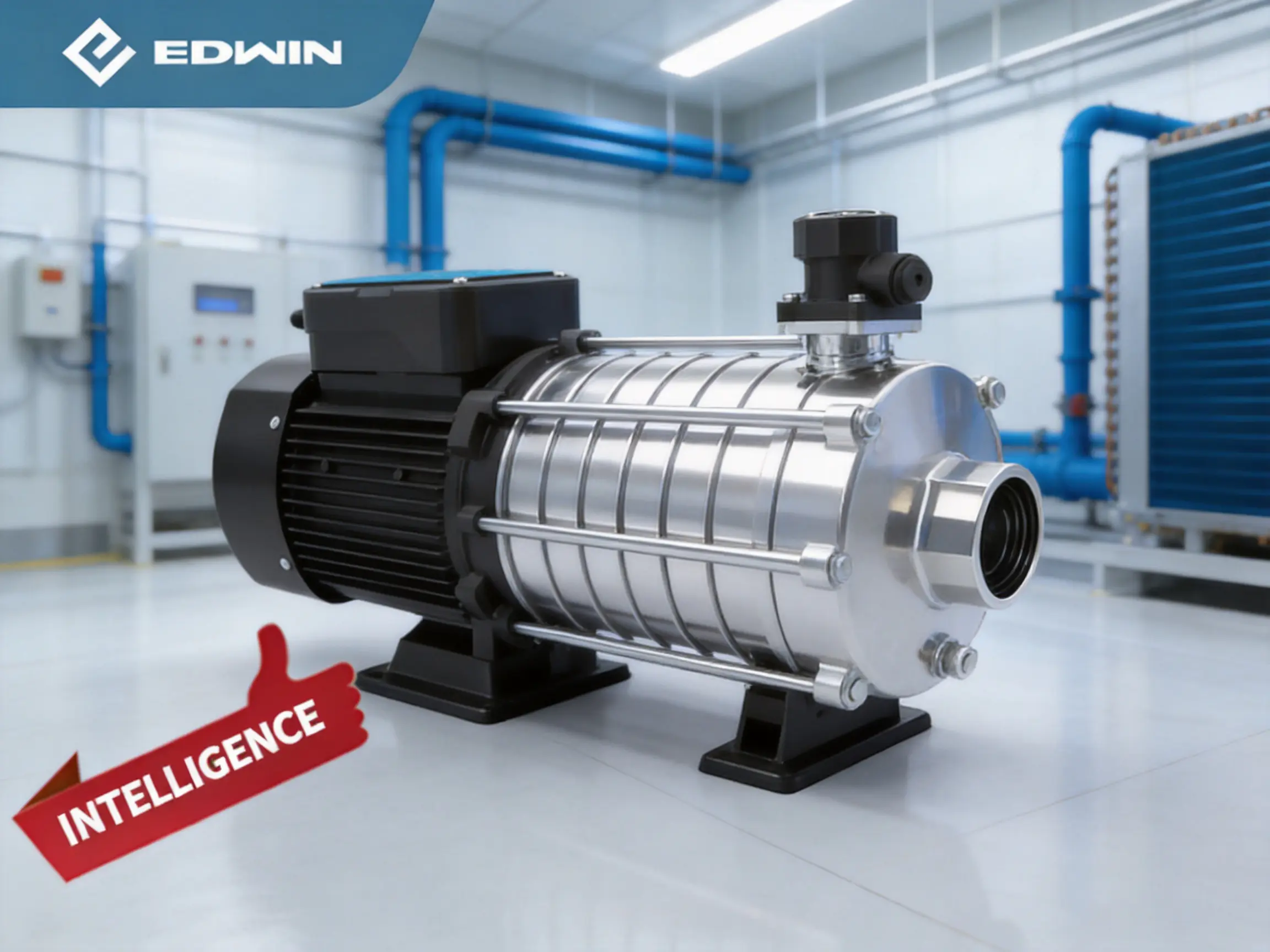
In chilled-water or air-conditioning systems, the pump circulates water between cooling equipment and terminal units. The system may include fan-coil units, air-handling units, heat exchangers, filters, control valves, and long pipe networks. The selected ITSRM model must provide enough head to overcome the combined resistance of these components.
The self-adaptive function can be valuable when only part of the building is occupied or when individual zones reduce their demand. The pump can support efficient circulation without maintaining maximum output continuously.
Industrial cooling mechanisms often require stable water circulation to transfer heat away from machinery, production lines, compressors, or process equipment. In these applications, the pump must operate reliably for long periods and must be compatible with the water temperature and chemical condition of the cooling medium.
The stainless steel internal components provide a useful level of durability for ordinary water-based cooling systems. If the system uses treated water, glycol mixtures, inhibitors, or other additives, the materials and seal configuration should be confirmed before ordering.
The ITSRM Series can be considered for selected cooling-tower-related circulation duties where the required flow and head fall within the model range. Cooling-tower installations may expose equipment to moisture, dust, and outdoor environmental variation, making the IP55 rating useful. The actual suitability depends on whether the pump is handling condenser water, make-up water, or another part of the system.
The product description identifies pressurization for high-rise construction water supply as an application. In this role, the multi-stage structure is useful because elevated buildings require additional head to overcome vertical elevation and distribution losses.
Model selection must consider static lift, desired pressure at the highest outlet, pipe friction, peak demand, storage-tank arrangement, and pressure-control requirements. For larger buildings or higher flows than those listed, multiple pumps or a larger pump series may be required.
The pump should be installed on a stable, level foundation capable of supporting the equipment and resisting operating vibration. The pipework should be independently supported so that its weight is not transferred to the pump inlet or outlet. Misaligned pipework can create mechanical stress and may affect seal, bearing, and housing life.
The suction pipe should be as short and direct as practical. Avoid unnecessary elbows, sudden reductions, and restrictions near the inlet. The suction line must be airtight, correctly sized, and arranged to prevent air pockets. Where a foot valve, strainer, or check valve is used, its pressure loss should be included in the system calculation.
The discharge pipe should include suitable isolation and check valves when required by the application. Isolation valves make maintenance easier, while a check valve can reduce reverse flow after shutdown. Pressure gauges may be installed at appropriate points to assist with commissioning and troubleshooting.
The pump must be filled or primed according to the installation arrangement before starting. Dry running can damage the mechanical seal and may cause rapid overheating. The electrical supply must match the motor specification, and grounding must be completed before operation.
Because the product has an IP55 rating, electrical connections should still be protected from standing water, flooding, condensation, and direct exposure beyond the rated conditions. Ventilation openings must remain clear so that the motor can dissipate heat effectively.
Before commissioning, inspect all pipe connections, electrical terminals, valves, fasteners, and mounting points. Confirm that the system contains the correct fluid and that air has been removed from the relevant sections. Check that the pump rotates in the correct direction if the design requires directional verification.
Start the pump with the system arranged according to the manufacturer’s instructions. Observe pressure, flow, vibration, sound, temperature, and leakage. A short inspection immediately after start-up can reveal installation issues before they develop into serious faults.
Routine maintenance should include checking for seal leakage, abnormal noise, excessive vibration, loose connections, unusual motor temperature, and changes in pressure or flow. Strainers and filters should be cleaned according to water quality and operating conditions. A gradual decline in performance may indicate blockage, wear, air ingress, valve problems, or changes in the system curve.
Maintenance intervals depend on operating hours, water quality, temperature, pressure, and duty cycle. Systems operating continuously in industrial environments may require more frequent inspection than intermittent building-service systems.
Correct selection begins with determining the required flow rate. The required flow may be based on cooling capacity, temperature difference, heat-transfer requirements, terminal-unit demand, or building water-supply demand. Flow should not be selected solely from the pipe diameter or motor power.
The next step is calculating total dynamic head. This includes static elevation, pipe friction, fittings, valves, filters, heat exchangers, cooling coils, and other equipment losses. The pump should be selected so that its operating point falls within an efficient and stable part of the performance curve.
The following table provides a simplified selection guide based on the supplied maximum values. It is not a substitute for a full system calculation.
| Application Requirement | Possible Model Group | Selection Consideration |
|---|---|---|
| Lower flow with approximately 19 m to 36 m head | ITSRM2-20(S) to ITSRM2-40(S) | Suitable when the design flow is near 4 m³/h or lower and system resistance is moderate. |
| Lower flow with approximately 46 m to 54 m head | ITSRM2-50(S) to ITSRM2-60(S) | Suitable for higher-resistance circuits requiring additional pressure. |
| Higher flow with approximately 19 m to 38 m head | ITSRM4-20(S) to ITSRM4-40(S) | Designed for applications approaching 7 m³/h with moderate to high head requirements. |
| Higher flow with approximately 47 m to 56 m head | ITSRM4-50(S) to ITSRM4-60(S) | Suitable for higher-pressure, higher-flow applications within the product range. |
Users should also verify inlet and outlet sizes. The ITSRM2 models generally use 1 x 1 inch connections on smaller models, while higher models may use a 1.25-inch inlet with a 1-inch outlet. The ITSRM4 models use 1.25-inch by 1-inch connections. Adaptors should be selected carefully to avoid creating excessive turbulence or restriction.
The purchase price of a pump is only one part of total cost of ownership. Energy consumption, maintenance, downtime, replacement parts, installation labor, and system efficiency can have a greater financial effect over the operating life of commercial equipment.
The self-adaptive operating principle can help lower energy use in variable-demand systems. Stainless steel components can support durability in water-based applications. The compact construction can reduce installation space and potentially simplify replacement. IP55 protection can reduce vulnerability to ordinary dust and water exposure when the pump is correctly installed.
Reliability also depends on proper sizing. An undersized pump may fail to meet system demand, while an oversized pump may cycle excessively, waste energy, and create unnecessary pressure. A correctly selected ITSRM model can provide a better balance between initial investment and long-term operating performance.
For international buyers, technical support and supply-chain coordination are essential. The manufacturer’s stated export experience and associated service companies are intended to support global procurement, order tracking, cross-border shipment, and foreign-trade requirements.
This is particularly relevant for distributors and engineering contractors who may need multiple pump categories from one source. A supplier capable of providing deep well pumps, submersible pumps, booster pumps, circulation pumps, solar pumps, and intelligent pumping products can simplify vendor management and product planning.
Customer support should include model confirmation, performance data, installation guidance, spare-parts communication, packaging coordination, and after-sales assistance. For project customers, consistency between the approved sample and delivered production unit is also important. A manufacturer with independent development and mass-production experience is better positioned to manage these requirements.
Energy efficiency is increasingly important because pumps often operate for thousands of hours per year. Even a modest reduction in unnecessary output can produce meaningful savings over time. The ITSRM Series addresses this need through self-adaptive operation and a model range that allows more accurate matching to system requirements.
Efficient pumping also supports broader environmental goals. Lower electrical consumption can reduce indirect carbon emissions associated with building operation or industrial production. Longer service life can reduce material consumption and replacement frequency, while corrosion-resistant components may help preserve performance over a longer period.
Energy performance should be evaluated as part of the complete system. Pipe diameter, control valves, heat exchangers, filters, insulation, water temperature, and control settings all affect pump efficiency. A high-quality pump cannot compensate for poorly designed or badly balanced pipework, but it can provide a strong foundation for an efficient system.
No pump is suitable for every application. The ITSRM Series should be used within its specified flow, head, pressure, temperature, suction, electrical, and environmental limits. The maximum values in a product table are not necessarily the recommended continuous operating point for every system.
The pumped fluid should normally be clean water or a compatible water-based medium. Abrasive solids can damage impellers, diffusers, seals, and internal surfaces. Aggressive chemicals can affect stainless steel grades, elastomers, and mechanical seals. Fluid compatibility should be confirmed before use in specialized process applications.
Noise and vibration can be affected by cavitation, air ingress, poor foundation conditions, misalignment, pipe stress, bearing wear, or operation far from the design point. If abnormal behavior occurs, the system should be shut down safely and inspected rather than allowed to operate indefinitely.
Temperature ranges must also be interpreted correctly. The supplied data distinguishes between lower-temperature and higher-temperature operating conditions, suggesting that different configurations or service conditions may apply. Buyers should confirm the appropriate version for the intended medium temperature before placing an order.
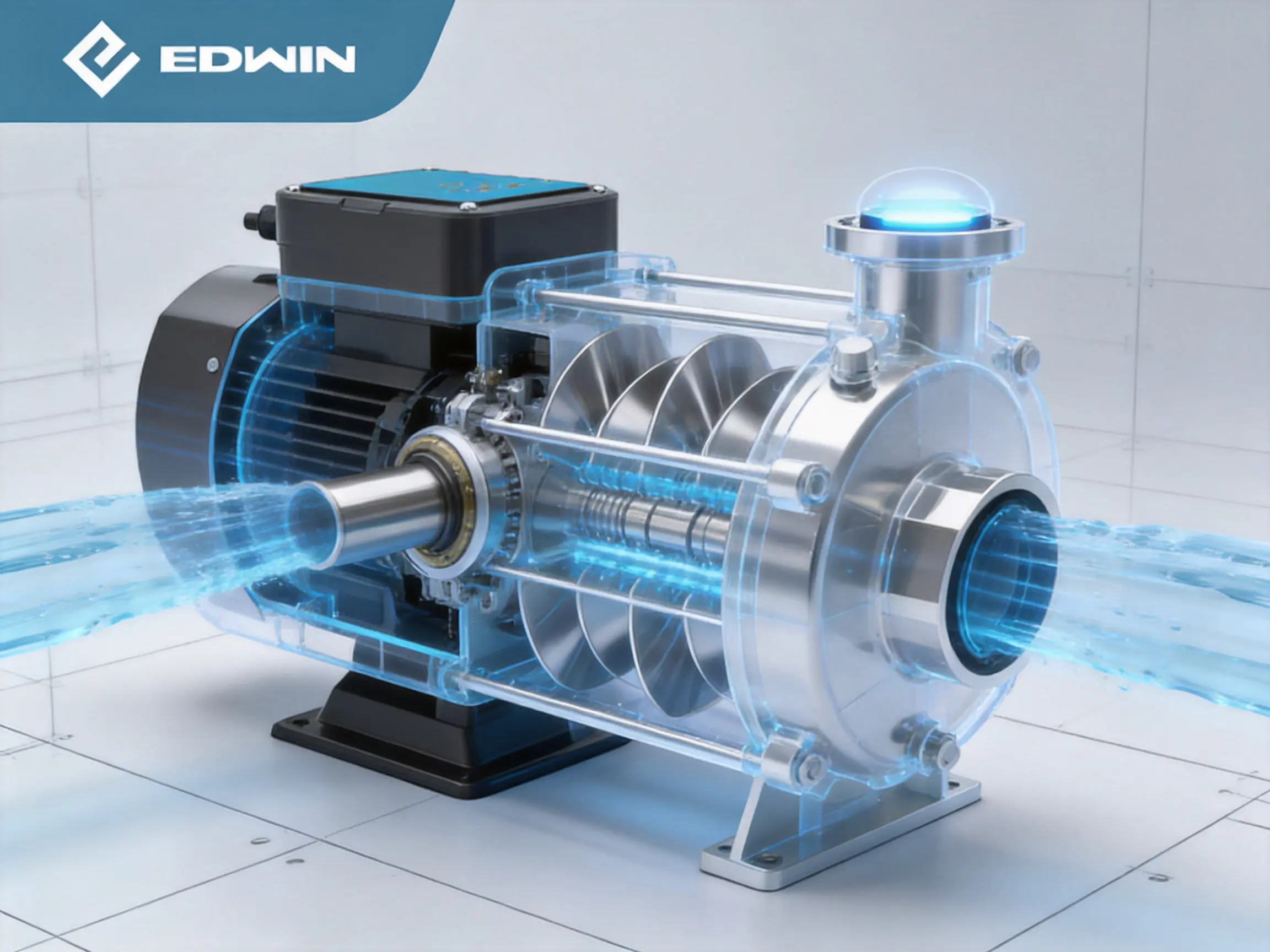
It is a horizontal multi-stage centrifugal pump designed for cooling systems, HVAC circulation, high-rise water-supply pressurization, and related water-pumping applications.
The maximum operating pressure is 10 bar. This includes the pressure conditions of the complete system and should be checked against the ratings of connected pipes, valves, tanks, and equipment.
The listed models provide maximum flows of either 4 m³/h or 7 m³/h, depending on the ITSRM2 or ITSRM4 configuration.
The maximum head ranges from 19 m to 56 m across the product family.
The self-adaptive operating concept allows the pump to adjust its output according to changing system demand. By avoiding unnecessary full-output operation during partial-load conditions, the pump can reduce energy consumption and improve hydronic system efficiency.
The IP55 rating provides protection against dust and water jets, making the pump suitable for many protected outdoor and industrial installations. It should not be submerged or exposed to flooding, and appropriate weather protection and drainage should still be provided.
The listed components, including the impeller, shaft, diffusers, inlet and outlet, connectors, fluid director, and several other wetted parts, are made from stainless steel. The motor end cover may be aluminum alloy or cast iron, while the base may be steel plate or plastic.
Yes. The product information identifies high-rise construction water-supply pressurization as an application. The correct model must be selected after calculating elevation, pipe losses, required outlet pressure, and peak flow.
Buyers should confirm required flow, total head, operating pressure, water temperature, fluid composition, electrical supply, connection size, installation environment, suction arrangement, and expected duty cycle.
Yes. Regular inspections should check leakage, vibration, noise, motor temperature, electrical connections, pressure, flow, filters, strainers, and valve operation. The maintenance interval depends on system conditions and operating hours.
The ITSRM Series combines multi-stage pressure generation, self-adaptive operation, IP55 environmental protection, and stainless steel hydraulic components. These features can provide higher pressure, better adaptation to variable demand, and stronger durability than a basic fixed-output single-stage design.
The ITSRM Series 10 bar IP55 self-adaptive energy-saving multi-stage centrifugal pump is designed for modern cooling and pressurization requirements. Its principal strengths include a compact horizontal multi-stage structure, a maximum head range of 19 m to 56 m, maximum flow rates of 4 m³/h or 7 m³/h, stainless steel hydraulic components, IP55 protection, and an operating concept intended to reduce energy use under changing demand.
Its application range extends from air-conditioning circulation and cooling mechanisms to industrial cooling, cooling-tower-related duties, HVAC systems, and high-rise building water-supply pressurization. The broad model range makes it easier to match pump capacity to different system curves, while the compact construction supports installation where space is limited.
Behind the product is a manufacturer with experience in independent research and development, mass production, international export, and a broad water-pump portfolio. These capabilities support not only product manufacturing but also project coordination, procurement planning, order tracking, and global delivery.
For engineers, contractors, distributors, and industrial users, the most important step is accurate application matching. When the pump is selected according to actual flow, head, temperature, pressure, fluid quality, and installation conditions, the ITSRM Series can provide a reliable and energy-conscious solution for demanding water-circulation systems.
1. ITSRM Series product specification and technical data supplied for this article.
2. Product operating-condition information covering pressure, temperature, insulation, and IP55 protection.
3. Product component and construction information for stainless steel hydraulic parts, motor housing, base, and mechanical seal.
4. General engineering principles for centrifugal pump selection, hydraulic head calculation, system resistance, and pump installation.
5. General guidance on HVAC water circulation, cooling-system design, variable-load operation, and energy-efficient pumping.
6. General industrial practice for motor insulation, environmental protection ratings, mechanical seals, and pump maintenance.
edwina@edwin-pump.com
+86-13586290903 (WhatsApp)
Xuri Gongliang Cutting Tool Entrepreneurship Park, Wenqiao Town, Wenling City, Taizhou City, Zhejiang Province, China

High Performance Smart Pump Factory


 English
