
edwina@edwin-pump.com

View All Products
en
Reliable access to water is essential for agriculture, livestock production, rural communities, construction sites, emergency water supply, and many off-grid projects. In locations where grid electricity is unavailable, unstable, or expensive to extend, solar pumping provides a practical alternative. The Solar Submersible Borehole Pump 3S/4S is designed for this operating environment, combining a permanent magnetic brushless direct-current motor, stainless steel internal components, oil-filled motor construction, and an integrated controller in a compact submersible package.
Unlike a conventional surface pump, a borehole pump is installed below the water level and pushes water upward through a delivery pipe. This arrangement allows the pump to draw water from deep wells while avoiding the priming problems commonly associated with surface-mounted suction pumps. When paired with a properly designed photovoltaic system, the 3S/4S can support water transfer and supply in remote areas with reduced dependence on fuel or grid power.
The product belongs to a broad family of water-handling equipment that includes solar pumps, deep-well pumps, submersible pumps, surface pumps, booster pumps, circulation pumps, garden pumps, pool and spa pumps, commercial multistage pumps, pump accessories, end-suction pumps, pipes, valves, and intelligent booster pumps. Within this portfolio, the Solar Submersible Borehole Pump 3S/4S is especially suited to users seeking a dedicated solar-powered solution for borehole and deep-well water extraction.
Its design is centered on efficient energy conversion, straightforward installation, dependable operation, and reduced maintenance. These characteristics are important because solar pumping systems often operate in locations where technical support, replacement parts, and regular servicing may not be immediately available.
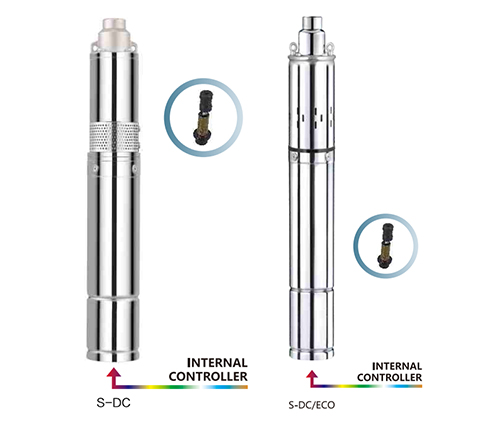
Solar Submersible Borehole Pump 3S/4S
The Solar Submersible Borehole Pump 3S/4S is a compact deep-well pumping unit intended for installation inside a borehole or well. The pump and motor operate underwater, where the surrounding water helps keep the unit cool during operation. Water enters through the pump inlet and is lifted through the connected discharge pipe to a storage tank, irrigation network, livestock trough, household supply system, or other destination.
The product uses a permanent magnetic DC brushless motor. In this motor design, permanent magnets create the magnetic field required for rotation, while electronic control replaces the mechanical brushes found in traditional brushed motors. Eliminating brushes reduces a common source of friction and wear. It also supports longer service intervals and contributes to a cleaner, more efficient drive system.
The motor is described as oil filled. Oil filling provides an additional thermal and mechanical environment for the motor, helping transfer heat away from internal components and supporting stable operation when the pump is submerged. Correct installation and adherence to operating instructions remain important, but this construction is well suited to the demands of underwater pumping.
An internal controller is incorporated into the pump structure. This design simplifies the overall system by reducing the need for a separate external motor-control enclosure in suitable installations. It can help reduce wiring complexity, save installation space, and make the product easier to integrate into solar pumping projects.
Stainless steel rotors and screws are used in the motor assembly. Stainless steel is valued in pump construction because it provides resistance to corrosion and supports long-term mechanical integrity in contact with water. The use of stainless steel in critical components can be particularly beneficial in boreholes where water chemistry, moisture, and continuous immersion place demands on the equipment.
NSK bearings are specified for the motor. Bearings support rotating components and influence noise, friction, efficiency, and operating life. The use of recognized bearing components reflects an emphasis on stable mechanical performance and controlled manufacturing quality.
Solar water pumping converts energy from photovoltaic panels into useful hydraulic work. During daylight hours, solar electricity powers the motor, which lifts water from the borehole. Water can then be used immediately or stored in an elevated or ground-level tank for later use.
This method has several practical advantages. First, it can reduce dependence on diesel fuel. Fuel-powered pumps require regular fuel delivery, storage, engine servicing, oil changes, and exhaust management. In remote locations, these requirements may create substantial operating difficulties. A solar pump has no fuel tank and produces no exhaust at the point of use.
Second, solar pumping can lower operating expenses over the service life of an installation. Solar panels require an initial investment, but sunlight is available without a recurring fuel purchase. The overall economic result depends on pump sizing, sunlight conditions, well depth, water demand, installation quality, and maintenance requirements.
Third, solar pumping can improve access to water where electrical infrastructure is limited. Agricultural fields, grazing areas, small settlements, and construction locations may be far from reliable grid connections. A correctly designed solar borehole system can operate independently of the local electricity network.
Fourth, solar pumping can support environmental objectives. By using renewable energy instead of combustion-based power, a solar water system can reduce local emissions and the environmental impact associated with transporting and burning fuel. The environmental benefit is strongest when the system is carefully sized and operated according to the available water resource.
The 3S/4S is designed for this type of application. Its brushless DC motor, integrated control arrangement, and submersible construction provide a foundation for compact solar water systems that can be adapted to different project requirements.
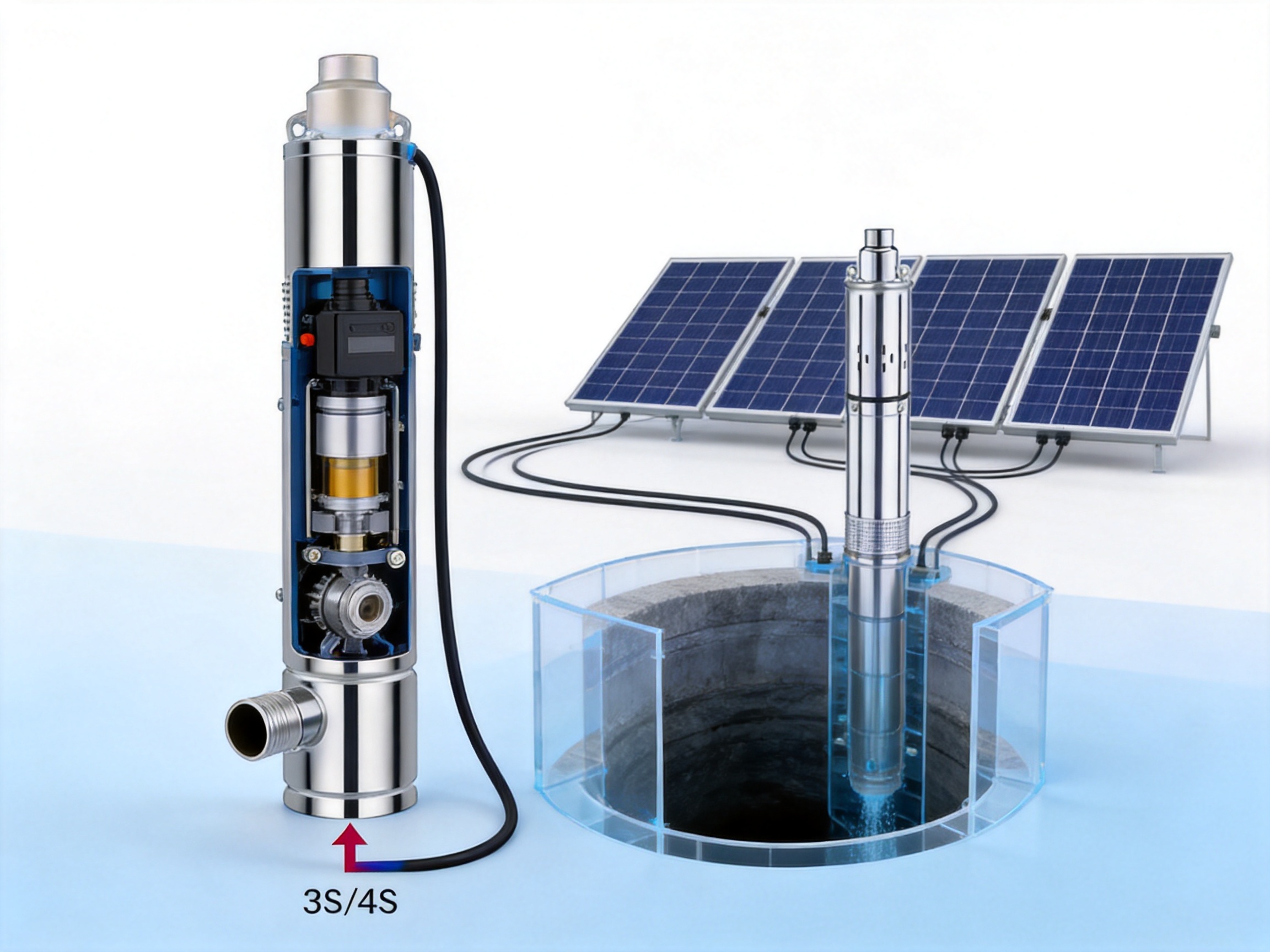
The permanent magnetic DC brushless motor is one of the central advantages of this product. A permanent magnetic motor can achieve efficient torque production without requiring electrical energy to create the rotor magnetic field. The brushless configuration removes mechanical brushes and commutators, which are subject to wear in traditional motor designs.
In practical terms, fewer mechanical contact points can mean reduced maintenance and improved operating consistency. Brushless operation can also reduce electrical noise and mechanical friction. These qualities are useful in solar applications because the available power may vary during the day as sunlight changes. Efficient motor operation helps the system make better use of the electricity produced by the solar array.
The product information states that motor efficiency is improved by approximately 15 to 30 percent. The exact result in a complete installation will depend on operating conditions, including water level, pumping head, flow requirement, solar radiation, cable length, controller behavior, and hydraulic system design. Nevertheless, the stated efficiency improvement indicates a clear design priority: more of the available electrical input is intended to become useful pumping output.
Improved efficiency is especially important for solar systems. A more efficient motor may allow a project designer to achieve a required pumping result with a smaller photovoltaic array than would be necessary for a less efficient motor. Alternatively, the same solar array may be able to deliver more water during a comparable period. In either case, efficient energy use can influence the total cost and physical size of the system.
Efficiency also affects operation during less favorable solar conditions. Morning, late afternoon, haze, seasonal changes, and intermittent cloud cover can reduce available power. A motor designed to use energy efficiently can help extend the useful operating period, although no pump can overcome inadequate solar input or an incorrectly sized system.
Stainless steel rotors and screws provide an additional layer of durability in a submerged environment. Borehole pumps are exposed to water continuously or for long periods, and internal materials must be selected with corrosion resistance in mind. Stainless steel can help protect important mechanical elements against rust and deterioration.
Material selection is also relevant to product cleanliness and service life. In water applications, corroding metal can create particles, weaken assemblies, and affect the reliability of moving components. Stainless steel construction helps maintain the integrity of the pump structure when the unit is used in appropriate water conditions.
Water quality should still be evaluated before installation. Excessive sand, abrasive particles, unusual chemical content, or high salinity can affect any pump. Proper well development, filtration where necessary, and compliance with the product’s operating instructions remain essential.
An oil-filled motor is designed to operate in a submerged environment while supporting heat transfer around internal motor components. Electric motors generate heat during operation, and effective thermal management helps maintain stable performance. The surrounding water and internal oil work together to create a suitable operating environment for the motor when the pump is correctly installed.
Oil-filled construction can also provide a protective barrier around motor components. This is one reason it is widely used in submersible equipment. However, it is important to prevent damage to the motor cable, seals, and housing during transportation and installation. The pump should never be operated outside the conditions specified by the manufacturer.
Bearings are small but important parts of a pump motor. They maintain alignment between rotating and stationary components, reduce friction, and help control vibration. The inclusion of NSK bearings indicates attention to the quality of the rotating assembly.
Stable bearing performance can support smoother operation and help protect other motor components. It can also contribute to lower mechanical losses. As with all pump components, bearing life depends on correct loading, water conditions, operating speed, installation quality, and maintenance practices.
The internal controller is designed to simplify the system structure. In conventional pumping arrangements, control equipment may be installed separately from the pump. A built-in controller can reduce the number of external components and shorten the installation process for suitable applications.
A simpler structure can be valuable for installers working in remote locations. It may reduce the amount of control-panel wiring, minimize the space needed for equipment, and make the basic system easier to understand. It also provides a more compact solution for agricultural, domestic, and small commercial projects.
The controller does not remove the need for proper system protection. Designers and installers should consider photovoltaic voltage, current, cable sizing, grounding, dry-running risk, overcurrent protection, water-level conditions, and any required storage-tank controls. A simple pump architecture still requires a professionally planned installation.
The Solar Submersible Borehole Pump 3S/4S offers several potential advantages over conventional surface pumps, brushed-motor pumps, and fuel-powered water systems. These advantages should be evaluated against the specific requirements of each project rather than treated as universal results.
Surface pumps are installed above the water source and draw water through a suction pipe. Their performance can be affected by suction lift, air leakage, priming problems, and the distance between the pump and the water surface. As the water level falls, a surface pump may become less practical or may require additional priming arrangements.
A submersible borehole pump is installed below the water level and pushes water upward. This eliminates the need for a long suction lift and reduces the likelihood of losing prime under normal operating conditions. It is therefore better suited to deep wells and boreholes where the water surface is far below ground level.
Brushed motors use physical brushes to transfer electrical current to the rotating part of the motor. These brushes gradually wear and may require replacement. The brushless motor used in the 3S/4S eliminates this wear mechanism and can provide a longer-maintenance operating concept.
Brushless motors also support efficient electronic control. This is particularly relevant to photovoltaic systems, where the available input may change throughout the day. Although brushless technology may require appropriate electronic control, the integrated controller helps provide a compact system arrangement.
Fuel-powered pumps can deliver water independently of sunlight, which is useful in certain high-demand or emergency applications. However, they require fuel, engine servicing, lubrication, exhaust management, and regular mechanical attention. Noise and emissions may also be concerns near homes, livestock, and environmentally sensitive areas.
A solar submersible pump has different operating characteristics. It depends on sunlight and should generally be combined with water storage when demand continues after sunset. In return, it can offer quiet operation, low daily intervention, and reduced dependence on fuel logistics. For many daylight-oriented water tasks, this is an attractive tradeoff.
A pump with a separate controller may provide extensive control options, but it can also increase wiring complexity, installation time, enclosure requirements, and the number of components that must be protected from weather. The internal controller of the 3S/4S is intended to simplify the basic system architecture.
This compact arrangement can be particularly useful for small farms, rural water points, remote utility systems, and projects where a large electrical cabinet is unnecessary. For more complex commercial installations, additional control equipment may still be required according to the project design.
| Design Feature | Practical Benefit | Importance in Solar Pumping |
|---|---|---|
| Permanent magnetic brushless DC motor | Reduced brush wear and efficient motor operation | Helps use variable photovoltaic power effectively |
| Stainless steel rotors and screws | Improved resistance to corrosion in suitable water conditions | Supports durability during submerged operation |
| Oil-filled motor | Supports heat transfer and internal motor protection | Suitable for continuous or extended underwater service |
| NSK bearings | Stable support for rotating components | Contributes to smooth operation and mechanical reliability |
| Internal controller | Simpler structure and reduced external wiring | Facilitates compact solar system installation |
| Submersible borehole configuration | Pushes water from deep sources without surface suction lift | Well suited to deep wells and remote water sources |
The product is manufactured by Taizhou Edwin Electric Co., Ltd., an integrated manufacturing enterprise established in 2008. The company focuses on independent research and development, mass production, and global export. This combination is important for pump buyers because successful water projects require more than a single product. They also require consistent manufacturing, product planning, supply coordination, documentation, and responsive support.
Independent research and development allows a manufacturer to work directly on motor architecture, pump structure, controller integration, materials, and application requirements. Rather than relying only on standard market designs, an engineering-led manufacturer can improve products according to field feedback and changing customer needs.
Mass production provides another advantage. A product designed for repeated production can benefit from standardized component selection, controlled assembly procedures, repeatable inspection, and more predictable delivery planning. Consistency is especially important in projects that require multiple pumps or repeat orders for distributors and contractors.
The company’s product range covers deep-well pumps, submersible pumps, domestic booster pumps, circulation pumps, solar water pumps, and intelligent booster pumps. This broad scope gives customers access to complementary products from one supplier. A buyer may be able to coordinate borehole extraction, household boosting, hot-water circulation, irrigation, and associated pumping requirements through one procurement relationship.
The company also established Taizhou Haipai Import and Export Co., Ltd. and Golden Falcon Industrial Co., Ltd. in 2012 to support procurement planning, order tracking, cross-border delivery, and foreign trade services. These functions are relevant to international customers because pump projects often involve multiple stages, including technical selection, commercial negotiation, production scheduling, shipping coordination, and after-sales communication.
A manufacturer with export experience is better positioned to understand the documentation, packaging, communication, and delivery requirements associated with overseas orders. For distributors and project contractors, this can reduce coordination effort and help create a more predictable procurement process.
Quality in a submersible pump is determined by the combined performance of materials, motor components, seals, bearings, cables, hydraulic parts, controller electronics, assembly accuracy, and final testing. The stated use of stainless steel internal components, NSK bearings, oil-filled motors, and integrated control reflects a product design that places attention on these areas.
Manufacturing quality is not limited to component selection. It also depends on how parts are received, measured, assembled, sealed, tested, and packaged. A professional production process should maintain consistency between batches and identify defects before products leave the factory. This is particularly important for submersible products because access for repair may be difficult after installation.
The manufacturer’s experience in independent development and mass production supports a systematic approach to product improvement. Feedback from agricultural, municipal, construction, mining, household, HVAC, and new-energy applications can help guide future refinements in efficiency, reliability, and installation convenience.
Pumps operate in different environments and must be selected according to actual duty requirements. A domestic water system, an agricultural irrigation line, a livestock installation, and a municipal project may all need different combinations of flow, head, operating duration, controls, and water storage.
The company’s investment in new energy and intelligent technology since 2018 demonstrates an effort to address emerging demand for solar pumping and intelligent water systems. The Solar Submersible Borehole Pump 3S/4S represents this focus by combining renewable-energy compatibility with an integrated motor-control structure.
Application-focused development can also help customers avoid unnecessary complexity. A suitable pump should deliver the required water performance without being excessively oversized. Oversizing can increase equipment cost and may cause inefficient operation, while undersizing can result in inadequate supply and excessive operating stress.
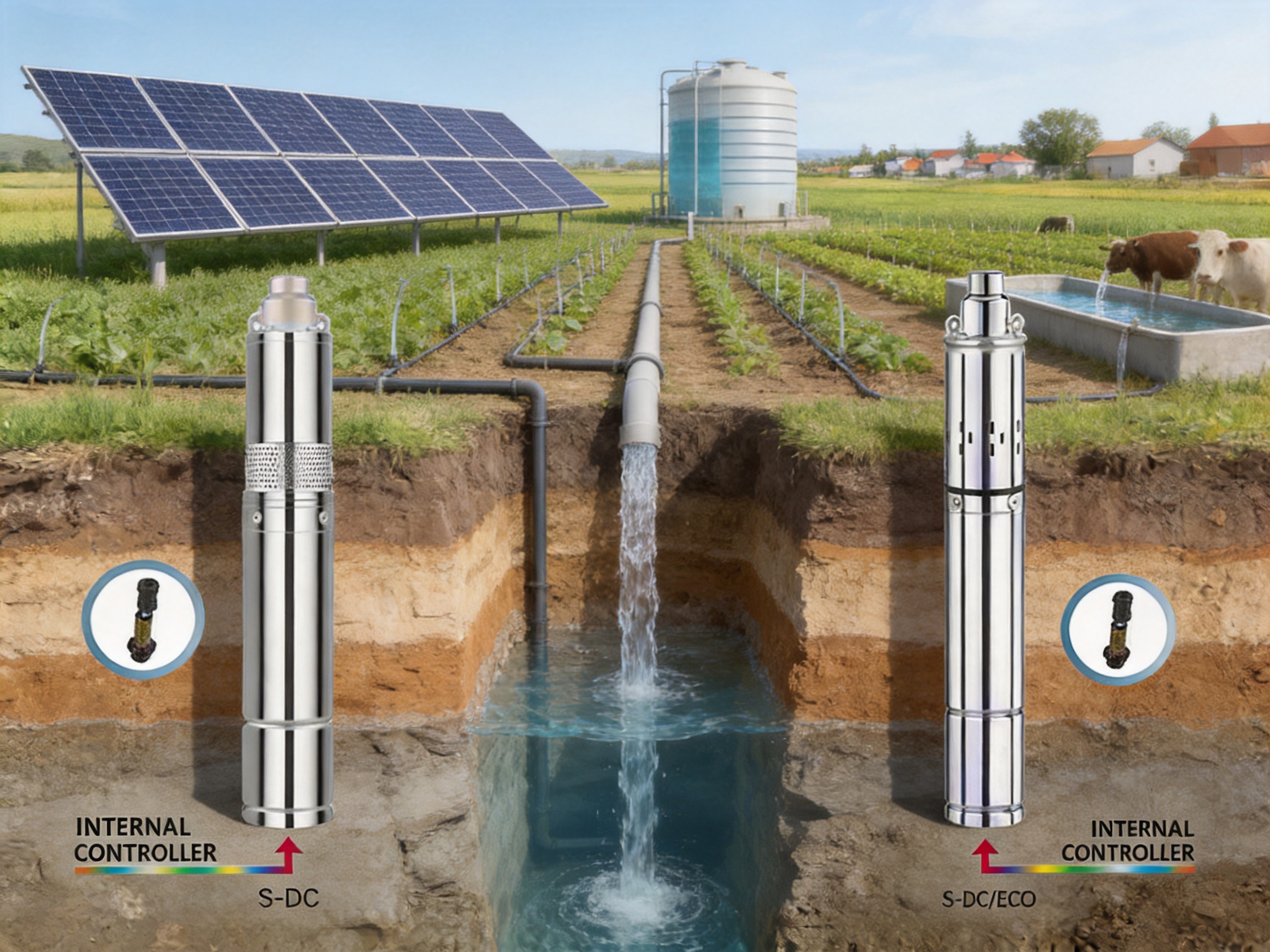
Agricultural irrigation is one of the most relevant applications for solar borehole pumps. Fields may be located far from reliable power infrastructure, and irrigation demand often occurs during daylight hours when solar energy is available. The pump can transfer borehole water to drip irrigation, sprinkler systems, storage tanks, or open distribution channels, subject to correct hydraulic design.
Water storage is recommended when irrigation must continue after sunset or when crop demand is not synchronized with peak solar production. An elevated tank can also provide pressure through gravity, reducing the need for additional electrical equipment in certain layouts.
Reliable water access is essential for livestock. A solar pump can supply troughs or storage tanks in grazing areas where extending grid electricity would be expensive. Automatic water-level controls may be used to prevent overflow and regulate filling, while protective measures should be installed to prevent animals from damaging pipes, cables, or control components.
In rural homes and small communities, the pump can transfer water from a borehole to a storage tank for household use. A separate booster pump may be added when higher distribution pressure is required inside the building. The solar borehole pump and the booster pump perform different jobs: the former extracts water, while the latter increases pressure within the delivery system.
Construction sites may require temporary water for dust suppression, concrete preparation, cleaning, or worker facilities. When the site is remote and a borehole is available, a solar submersible pump can provide a lower-maintenance alternative to a fuel-powered unit for daytime tasks.
Small municipal water points and community supply projects can use solar pumping to reduce operating dependence on the grid. The project should include appropriate storage, water treatment where required, security measures, and monitoring. The pump is a key component, but the overall system must be designed as a complete water-supply installation.
Solar pumping may support renewable-energy developments, remote monitoring stations, environmental projects, and isolated utility facilities. The compact motor and integrated controller can be advantageous where equipment space is limited and service visits are infrequent.
Selecting a solar borehole pump requires more than matching the pump name to the well. The entire system should be evaluated before purchase and installation.
The well depth, static water level, dynamic water level, borehole diameter, available water yield, and water quality should be confirmed. The dynamic water level is especially important because the water level may fall while pumping. The pump must remain adequately submerged and must not exceed the sustainable yield of the borehole.
Sand and abrasive particles can cause accelerated wear in pumping equipment. If the borehole produces significant sediment, it should be properly developed, and filtration or other protective measures should be considered. Water chemistry should also be reviewed where salinity, acidity, or aggressive minerals may affect metal and sealing materials.
The required flow rate depends on the end use. Irrigation, livestock, household supply, and tank filling each have different demand patterns. Total dynamic head includes the vertical lift from the water level to the discharge point, friction losses in the pipe, pressure requirements at the outlet, and any elevation changes in the system.
A pump should be selected using a complete performance curve and actual project data. Choosing only by pipe diameter or motor power can produce an unsuitable result. The correct operating point is the intersection between pump performance and system demand.
The photovoltaic array must be compatible with the motor and internal controller. Voltage, current, panel configuration, cable length, shading, seasonal sunlight, and local climate all influence performance. Panels should be installed where they receive adequate sunlight and should be protected from avoidable shading caused by trees, structures, or equipment.
Solar output changes throughout the day. The pump may deliver more water at midday and less in the morning or afternoon. A storage tank is often the simplest way to balance variable solar production with a more stable water demand.
Submersible pump cables must be protected from abrasion, sharp edges, excessive tension, and water ingress. The delivery pipe should be selected for the expected pressure and flow, with joints assembled carefully to prevent leakage. The pump should be lowered using suitable support methods rather than suspended by the electrical cable.
Pipe friction can significantly reduce delivered water performance, especially in long horizontal runs or systems using undersized pipe. Although a smaller pipe may initially cost less, the resulting friction loss can increase the required head and reduce useful flow. Proper pipe sizing is therefore part of energy-efficient system design.
Submersible pumps should not operate without sufficient water. Dry running can cause overheating, seal damage, and premature wear. Water-level sensors, tank controls, or other protective devices may be used according to the installation design. The borehole’s recovery rate should be monitored to ensure that pumping does not lower the water level below the safe operating point.
Correct installation is essential for obtaining the expected performance from the Solar Submersible Borehole Pump 3S/4S. Before installation, inspect the pump, cable, pipe fittings, and controller area for transport damage. Confirm that the borehole is clear and that its diameter is suitable for the pump assembly.
The pump should be installed at an appropriate depth below the dynamic water level while maintaining sufficient clearance from the bottom of the borehole. Installing too close to the bottom may increase the intake of sediment. Installing too high may expose the pump to inadequate cooling or water shortage during periods of heavy withdrawal.
Electrical connections should be completed by qualified personnel. The photovoltaic voltage must remain within the permitted operating range, and all connections should be protected against moisture. Grounding and electrical safety measures should follow local regulations and the manufacturer’s instructions.
After installation, the system should be tested gradually. Check the direction and stability of operation where applicable, observe the water output, monitor the water level, inspect for leaks, and confirm that the controller responds correctly. The first operating period should be used to establish a baseline for flow, pumping duration, and solar conditions.
Routine maintenance is generally simpler than for an engine-driven pump, but it is not unnecessary. Operators should periodically inspect solar panels for dust, leaves, and shading. They should check exposed pipework, tank controls, electrical enclosures, support structures, and water quality. Changes in flow or unusual noise may indicate a developing issue.
If the pump is removed, it should be lifted with appropriate equipment and never by pulling on the electrical cable. Seals, cable connections, bearings, and hydraulic components should be checked during professional servicing. Any repair involving the motor or controller should be performed by personnel familiar with submersible electrical equipment.
International distributors, contractors, and project developers often require more than a technically suitable pump. They need stable product supply, communication support, export coordination, and the ability to purchase related equipment. The manufacturer’s integrated business structure is designed to support these needs.
A broad product portfolio can simplify procurement. Customers may source solar pumps for remote projects, deep-well pumps for conventional installations, booster pumps for pressure systems, circulation pumps for HVAC applications, and valves or accessories for related water systems. This one-stop approach can reduce the number of separate supplier relationships.
Order tracking and foreign trade services are also valuable when equipment is shipped across borders. Project schedules may depend on the arrival of pumps, pipes, control components, and installation materials. Professional coordination can help reduce misunderstandings concerning quantities, packaging, production timing, and delivery arrangements.
For distributors, consistent product positioning is important. The 3S/4S can be presented as a solar submersible solution for borehole water extraction, with emphasis on brushless motor efficiency, corrosion-conscious construction, integrated control, and simplified installation. Technical claims should always be matched to the final configuration and local operating conditions.
Before purchasing a Solar Submersible Borehole Pump 3S/4S, buyers should prepare the following information:
1. The total depth of the borehole and the normal static and dynamic water levels.
2. The borehole diameter and the available installation space.
3. The required flow rate in liters per minute, cubic meters per hour, or another consistent unit.
4. The total pumping head, including elevation, pipe friction, and required outlet pressure.
5. The water quality, including possible sand, abrasive particles, salinity, or corrosive minerals.
6. The expected daily pumping volume and the hours during which water is needed.
7. The available solar radiation and the proposed photovoltaic panel configuration.
8. The desired storage-tank capacity and whether water must be available after sunset.
9. The required pipe length, pipe diameter, cable length, and installation route.
10. Any local electrical, water-safety, environmental, or construction requirements.
Providing this information to the supplier allows the pump and system to be evaluated more accurately. It also helps prevent the common problem of selecting a pump based only on the motor label without considering the actual well and hydraulic conditions.
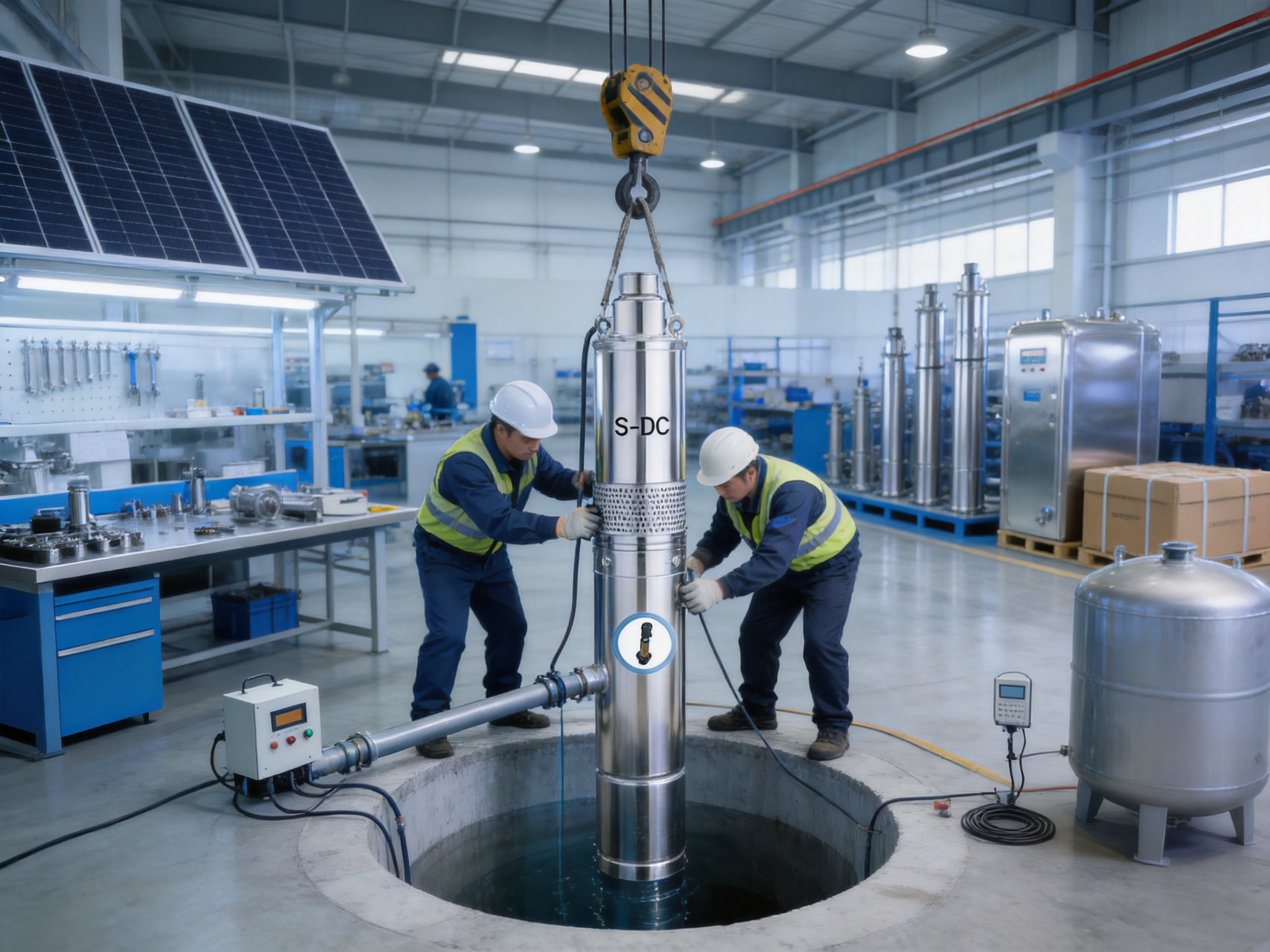
It is designed to extract and transfer water from boreholes or deep wells using solar-generated electricity. It is suitable for applications such as irrigation, livestock supply, rural water systems, tank filling, construction sites, and other remote water projects when the pump is correctly matched to the well and system requirements.
A submersible pump operates below the water level and pushes water upward through a delivery pipe. This avoids the suction-lift limitations and priming problems that can affect surface pumps. It is therefore well suited to applications where the water source is located significantly below ground level.
A brushless DC motor does not use mechanical brushes that wear through contact. This can reduce maintenance requirements, lower mechanical friction, and support efficient operation. The design is particularly useful in solar systems where available electrical power changes with sunlight.
The product information states a motor efficiency improvement of approximately 15 to 30 percent. Actual system performance depends on the pump operating point, solar array, water level, pipework, controller, sunlight, and installation quality. The stated range should be treated as a design reference rather than a guaranteed output for every installation.
Stainless steel provides resistance to corrosion and helps protect important internal components in a submerged water environment. It can support durability and mechanical integrity, although the pump should still be used within the specified water-quality conditions.
An oil-filled motor supports heat transfer around internal motor components and provides a suitable protective environment for submerged operation. Correct installation, cable protection, sealing, and adherence to operating instructions remain necessary for reliable service.
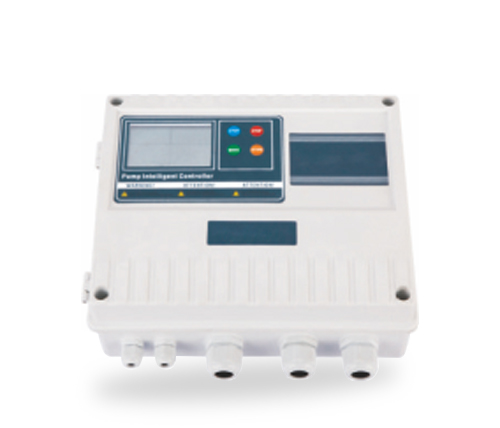
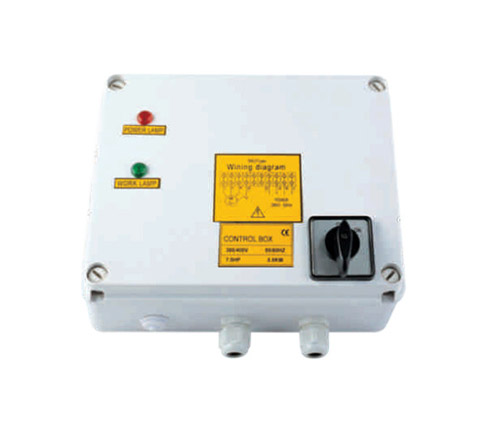
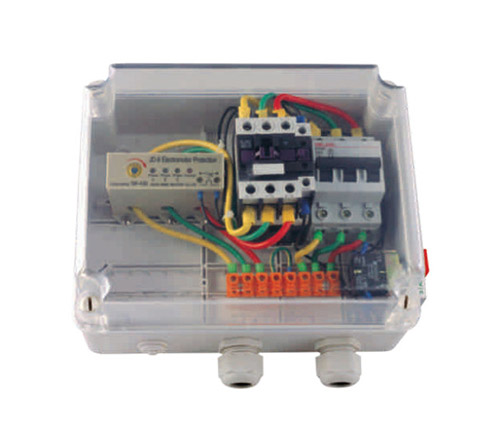
The pump incorporates an internal controller, which can simplify the system structure and reduce external wiring for suitable installations. Additional protection, switching, tank controls, or monitoring devices may still be required depending on the project design and local regulations.
The answer depends on the complete system. If the pump is powered directly by solar panels, operation generally depends on available sunlight. A battery system or another power source may permit night operation, while a storage tank can provide water after sunset without requiring the pump to run at night.
Yes. Irrigation is a common application for solar borehole pumps. The pump should be selected according to the required flow, total head, irrigation method, borehole yield, and solar resource. Storage tanks are useful when irrigation demand extends beyond the strongest sunlight hours.
Routine attention includes inspecting the solar panels, checking exposed wiring and pipework, monitoring water output, observing the well water level, and keeping the surrounding installation secure. Professional servicing may be needed for seals, bearings, motor components, controller faults, or reduced performance.
Dry running can be reduced through water-level sensors, tank controls, borehole monitoring, and correct pump placement. The water source should be assessed to ensure that its recovery rate can support the expected pumping schedule.
No pump is suitable for every borehole automatically. The borehole diameter, depth, water level, yield, water quality, required flow, total head, and available solar power must be evaluated. Supplier or installer guidance should be obtained before final selection.
The manufacturer combines independent research and development, mass production, global export experience, and related procurement and foreign-trade services. Its product range covers several pump categories, allowing international customers to coordinate different water-system requirements through one supplier.
The Solar Submersible Borehole Pump 3S/4S is designed for efficient and practical water extraction from deep wells and boreholes in locations where solar energy is available. Its permanent magnetic DC brushless motor, stated motor-efficiency improvement, stainless steel rotors and screws, NSK bearings, oil-filled motor, and internal controller provide a carefully considered combination of efficiency, durability, and installation convenience.
Compared with surface pumps, the submersible configuration is better suited to deep water sources because it pushes water upward rather than relying on surface suction. Compared with brushed motors, the brushless design reduces brush-related wear. Compared with fuel-powered alternatives, solar operation can reduce fuel logistics, noise, and local emissions while supporting lower day-to-day intervention.
The product’s performance depends on correct system engineering. Well conditions, flow requirements, total head, solar array sizing, pipework, cable installation, water quality, dry-running protection, and storage capacity must all be considered. A properly selected and installed pump can provide a dependable foundation for agricultural irrigation, livestock supply, rural water access, construction, municipal projects, and remote infrastructure.
Supported by a manufacturer with experience in research and development, mass production, international export, and a broad water-pump portfolio, the 3S/4S is positioned as a compact solar pumping solution for customers seeking reliable deep-well water supply and simpler system integration.
1. Manufacturer-provided product information for the Solar Submersible Borehole Pump 3S/4S.
2. Manufacturer-provided company profile and product portfolio information.
3. General engineering principles for submersible pump selection and borehole system design.
4. General technical guidance on photovoltaic water-pumping system planning.
5. General maintenance practices for submersible motors, solar arrays, water-storage systems, and borehole installations.
edwina@edwin-pump.com
+86-13586290903 (WhatsApp)
Xuri Gongliang Cutting Tool Entrepreneurship Park, Wenqiao Town, Wenling City, Taizhou City, Zhejiang Province, China

High Performance Smart Pump Factory


 English
