edwina@edwin-pump.com

View All Products
en
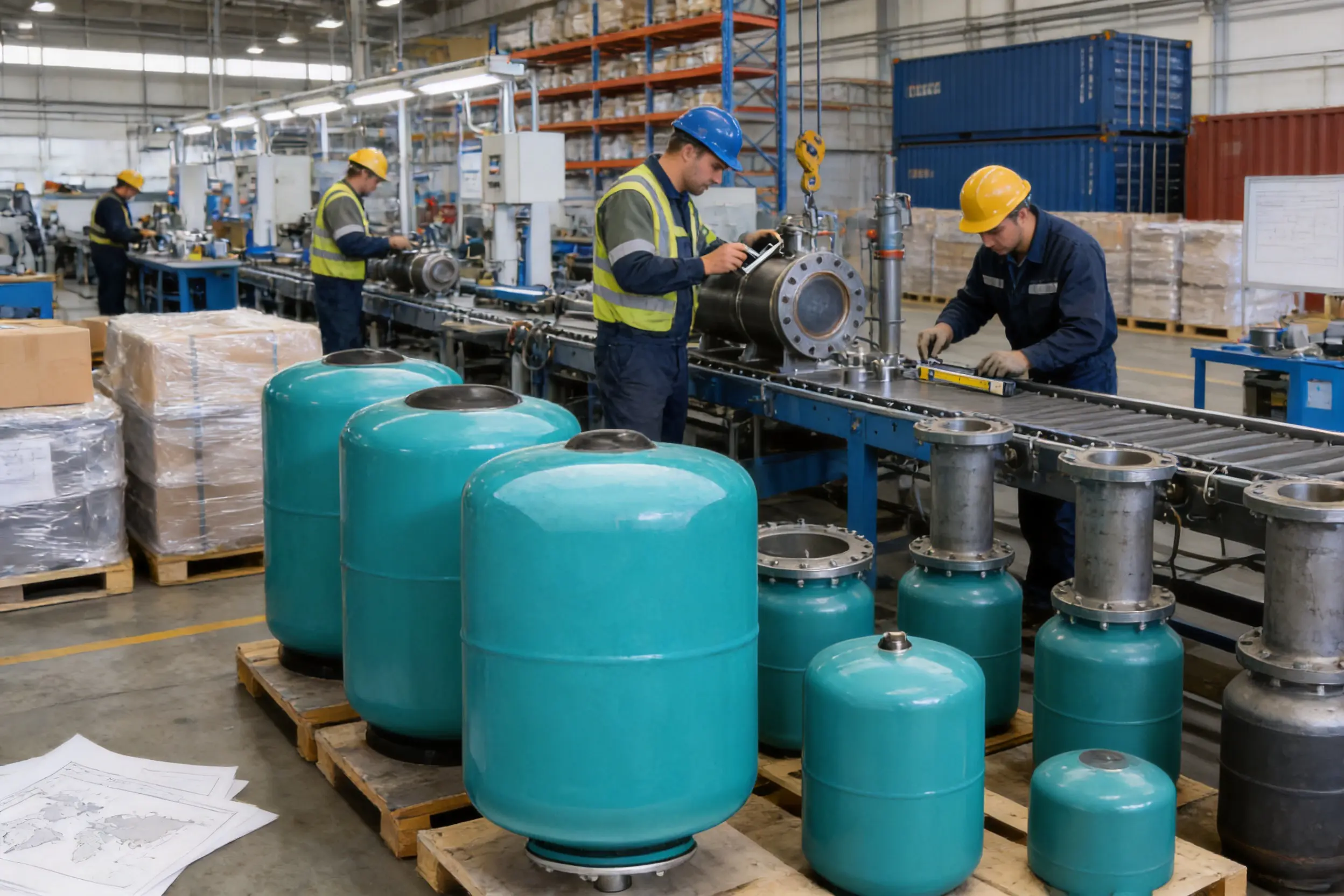
Pressure management is one of the most important factors in designing a dependable water supply, booster, irrigation, heating, and pump system. A pump may provide the required flow and pressure, but without an appropriately selected pressure tank, the system can experience frequent starts, unstable pressure, water hammer, unnecessary energy consumption, and premature wear on electrical and mechanical components.
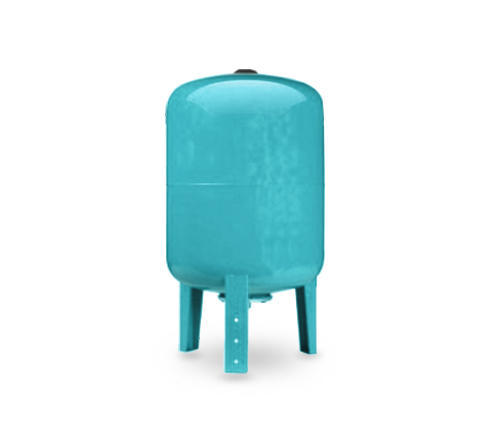
The VT Series 3L to 50L Vertical Carbon Steel Pressure Tank with Flange is designed to address these challenges in compact domestic, agricultural, commercial, and light industrial water applications. It combines a vertical carbon steel vessel, replaceable membrane construction, a practical one-inch connector, multiple pressure options, and a broad selection of tank capacities. The series includes models from VT3L through VT50L, allowing installers and system designers to select a suitable vessel for small booster sets, household water systems, garden irrigation, circulation applications, and other pressurized fluid systems.
Unlike a basic fixed-bladder tank that may be difficult to service, the VT Series uses a replaceable membrane concept. This design can improve maintainability and extend the useful service life of the pressure vessel when the membrane eventually requires replacement. The carbon steel flange provides a robust connection point, while the vertical configuration helps save floor space and supports orderly installation in compact pump rooms.
This article explains the construction, operating principle, technical data, selection method, installation considerations, maintenance requirements, and competitive advantages of the VT Series. It also examines how the manufacturing and export capabilities of Taizhou Edwin Electric Co., Ltd. support the product’s suitability for international pump system projects.
A pressure tank is a storage and pressure-balancing component installed in a water pumping system. Its internal membrane separates the water chamber from a precharged air or gas chamber. When the pump runs, water enters the tank and compresses the air inside the vessel. When a tap, irrigation outlet, or other demand point is opened, the compressed air pushes stored water into the system before the pump needs to start again.
This operating principle provides several important benefits. First, it reduces the number of pump starts during periods of low or intermittent demand. Second, it helps maintain a more stable pressure between the pump’s cut-in and cut-out settings. Third, it provides a limited reserve of pressurized water, which can be useful when demand is brief or irregular.
Without a pressure tank, a pump may start every time a small amount of water is required. Frequent cycling can increase motor heating, electrical stress, contactor wear, impeller loading, and seal wear. A properly selected tank does not eliminate the need for correct pump control, but it can significantly improve the operating conditions of the complete system.
The tank must be selected according to the pump’s flow rate, pressure range, control settings, system demand, installation space, and required pressure rating. The VT Series provides several pressure classes and tank volumes to support this selection process.
The VT Series is a family of vertical carbon steel pressure tanks with replaceable membranes. The available nominal capacities range from 3 liters to 50 liters. The vertical form factor is suitable for installations where floor area is limited but vertical clearance is available.
The main product features include:
• Vertical carbon steel tank construction.
• Carbon steel flange connection.
• Replaceable membrane design.
• One-inch connector across the listed models.
• Maximum pressure options of 6 bar, 8 bar, 10 bar, and, on selected models, 16 bar.
• Precharge pressure range of 1.8 to 2.0 bar.
• Butyl membrane operating temperature range of -10°C to 99°C.
• EPDM membrane operating temperature range of -10°C to 99°C.
• Natural rubber membrane operating temperature range of 0°C to 77°C.
• Compact dimensions for domestic and commercial pump rooms.
• Model selection from VT3L, VT4L, VT5L, VT8L, VT12L, VT19L, VT24L, VT36L, and VT50L.
The series is particularly useful for applications where a compact pressure tank is required to stabilize a pump system without occupying the space required by a large horizontal vessel.
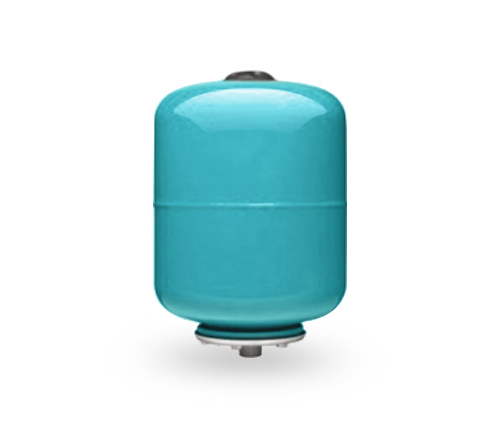
VT Series 3L to 50L Vertical Carbon Steel Pressure Tank with Flange
One of the most significant advantages of the VT Series is its replaceable membrane structure. In a pressure tank, the membrane is exposed to repeated expansion and contraction as the water volume changes. Over time, this component may experience fatigue, especially in systems with frequent cycling or demanding operating conditions.
A replaceable membrane allows service personnel to replace the flexible internal component instead of automatically discarding the entire pressure vessel. This can offer several advantages:
• Lower long-term maintenance cost compared with replacing a complete non-serviceable tank.
• Reduced downtime when replacement parts are available.
• Better sustainability because the metal vessel can remain in service.
• Easier inspection and service planning.
• Greater flexibility for distributors and installers supporting multiple markets.
The replaceable membrane design is also valuable for professional pump contractors. When a system is installed in a remote agricultural area, a commercial building, or a location where access is difficult, the ability to service the membrane can simplify future maintenance planning.
The membrane material should be selected according to the fluid, temperature, and application. The listed product data identifies three material options: Butyl, EPDM, and natural rubber. Butyl and EPDM are specified for operating temperatures from -10°C to 99°C, while natural rubber is specified from 0°C to 77°C. These figures should be treated as product operating limits, and the final selection should also consider water quality, chemical exposure, sanitation requirements, and local regulations.
The carbon steel flange forms an important part of the tank’s mechanical design. It provides the connection interface between the vessel and the piping or valve assembly. A properly manufactured flange must maintain dimensional consistency, withstand the system pressure, and support reliable sealing during repeated pressure changes.
Carbon steel is widely used in pressure vessel construction because it offers a useful balance of strength, formability, availability, and cost. Compared with many lightweight alternatives, carbon steel can provide a rigid vessel structure suitable for pump system service. The choice of carbon steel also supports economical production across multiple tank sizes and pressure classes.
For installers, the flange arrangement can simplify connection to a pump manifold, check valve, pressure switch, pressure gauge, or other control components. The one-inch connector listed for the VT Series provides a common connection size for many small and medium water systems. Nevertheless, installers should confirm thread type, sealing method, pipe standard, and local connection requirements before installation.
Carbon steel pressure tanks require appropriate protection against external corrosion. The actual coating, surface treatment, and installation environment should be confirmed with the supplier for the specific order. The tank should be protected from continuous standing water, aggressive chemicals, severe humidity, and direct exposure to corrosive atmospheres unless the selected configuration is specifically approved for those conditions.
Temperature is a key factor in pressure tank selection because the membrane must remain flexible and stable throughout the operating range. The VT Series provides three listed membrane material choices, giving system designers more flexibility than a single-material tank.
Butyl is commonly selected for water pressure applications because it offers low gas permeability and good flexibility. For the VT Series, the specified working temperature range for the Butyl membrane is -10°C to 99°C. This broad range can be suitable for cold-water systems, domestic water boosting, and selected warmer water applications, subject to the complete system design.
Butyl should be evaluated according to the water chemistry and any additives used in the system. If the tank is intended for potable water, the purchaser should confirm whether the specific membrane configuration satisfies the applicable drinking-water requirements in the destination market.
EPDM is known for resistance to weathering, ozone, and many water-related operating conditions. The specified working temperature range for the EPDM membrane is -10°C to 99°C. It may be appropriate for a variety of water circulation and pressure stabilization applications.
EPDM is not universally compatible with every fluid. Oil-based fluids and certain chemical mixtures may require another membrane material. The application should therefore be reviewed before ordering, particularly in industrial systems or systems containing treatment chemicals.
Natural rubber is specified for a working temperature range of 0°C to 77°C. It can provide useful elasticity in suitable water applications, but it has a narrower temperature range than the listed Butyl and EPDM options. Natural rubber should be selected when its temperature and fluid compatibility characteristics match the planned service conditions.
The correct membrane material depends on more than the nominal tank capacity. A proper selection review should include:
• Minimum and maximum operating temperature.
• Water or fluid composition.
• Whether the system is for potable water, irrigation, heating, or industrial use.
• Frequency of pump cycling.
• Exposure to sunlight, ozone, chemicals, or freezing conditions.
• Applicable hygiene, pressure vessel, and installation regulations.
When there is uncertainty, the purchaser should provide the supplier with the complete application description before confirming the membrane material.
The VT Series includes nine listed models. The smaller tanks are suitable for compact domestic or light-duty systems, while the larger models provide more stored volume and can help reduce pump cycling in systems with higher intermittent demand.
| Model | Nominal Capacity | Maximum Pressure Options | Diameter | Height | Precharge Pressure | Connector | Packing Volume |
|---|---|---|---|---|---|---|---|
| VT3L | 3 L | 6, 8, 10 bar | 170 mm | 235 mm | 1.8–2.0 bar | 1 inch | 0.0081 CBM |
| VT4L | 4 L | 6, 8, 10 bar | 155 mm | 302 mm | 1.8–2.0 bar | 1 inch | 0.0077 CBM |
| VT5L | 5 L | 6, 8, 10 bar | 170 mm | 275 mm | 1.8–2.0 bar | 1 inch | 0.0088 CBM |
| VT8L | 8 L | 6, 8, 10 bar | 200 mm | 325 mm | 1.8–2.0 bar | 1 inch | 0.0140 CBM |
| VT12L | 12 L | 6, 8, 10, 16 bar | 270 mm | 305 mm | 1.8–2.0 bar | 1 inch | 0.0233 CBM |
| VT19L | 19 L | 6, 8, 10, 16 bar | 270 mm | 395 mm | 1.8–2.0 bar | 1 inch | 0.0321 CBM |
| VT24L | 24 L | 6, 8, 10, 16 bar | 270 mm | 460 mm | 1.8–2.0 bar | 1 inch | 0.0361 CBM |
| VT36L | 36 L | 6, 8, 10 bar | 350 mm | 437 mm | 1.8–2.0 bar | 1 inch | 0.0535 CBM |
| VT50L | 50 L | 6, 8, 10 bar | 350 mm | 547 mm | 1.8–2.0 bar | 1 inch | 0.0670 CBM |
The available 16-bar option on the VT12L, VT19L, and VT24L models gives system designers additional flexibility for applications requiring a higher pressure rating. The VT3L, VT4L, VT5L, VT8L, VT36L, and VT50L models are listed with maximum pressure options of 6, 8, and 10 bar.
The technical information should always be checked against the final nameplate and purchase specification. Maximum pressure is not the same as recommended continuous operating pressure. System designers must select a tank whose pressure rating is equal to or greater than the highest pressure that can occur in the complete system, including pump shutoff pressure and possible transient conditions.
Tank capacity should be selected according to system demand rather than simply choosing the largest available model. A larger tank can provide more drawdown volume, but it may also require more installation space and a higher purchase cost. A smaller tank may be adequate for a low-flow domestic application but insufficient for a pump that operates frequently.
The following factors should be considered:
• Pump flow rate.
• Pump motor power and starting frequency.
• Cut-in and cut-out pressure settings.
• Minimum desired run time for each pump cycle.
• Average and peak water demand.
• Number of outlets or fixtures.
• Available installation space.
• Pressure rating of pipes, valves, fittings, and connected equipment.
• Required reserve volume during short periods of demand.
For a small domestic booster pump used for occasional tap operation, a 3L, 4L, 5L, or 8L tank may be appropriate. For a larger home, small commercial facility, irrigation system, or pump with more frequent cycling, the 12L, 19L, 24L, 36L, or 50L models may offer greater operating stability.
Actual drawdown volume is lower than the tank’s nominal volume because the vessel is not normally emptied completely. The usable water volume depends on the precharge pressure and the cut-in and cut-out settings. For this reason, tank selection should be based on pressure calculations rather than nominal liters alone.
The listed precharge pressure for the VT Series is 1.8 to 2.0 bar. Precharge is the pressure of the air or gas chamber when the water side is completely depressurized. It directly affects the tank’s usable drawdown volume and operating behavior.
In many conventional pump systems, the precharge is adjusted slightly below the pump cut-in pressure. However, the exact value depends on the control strategy, pump characteristics, pressure switch settings, and system requirements. The manufacturer’s installation instructions and the requirements of the complete pump assembly should always be followed.
Precharge should be checked with a calibrated pressure gauge after isolating the tank from the water supply and releasing water pressure from the tank side. Measuring precharge while the tank remains pressurized with water can produce an inaccurate result. The tank must also be protected from accidental overpressure during adjustment.
Incorrect precharge can cause several problems. Excessive precharge may reduce the amount of water entering the tank and lead to rapid cycling. Insufficient precharge may allow excessive membrane movement, reduce system response, and increase the risk of the membrane contacting internal surfaces under unfavorable conditions.
Precharge should be inspected during commissioning and periodically during service. The inspection interval depends on the system duty cycle, ambient temperature, installation conditions, and the consequences of pressure instability.
The VT Series should be installed by qualified personnel who understand water pressure systems and local safety requirements. Before installation, inspect the tank for shipping damage, confirm the model and pressure rating, and verify that the membrane material is appropriate for the application.
The installation location should provide:
• Sufficient vertical clearance.
• A stable and level support surface.
• Protection from impact and vibration.
• Protection from freezing unless the system is specifically designed for freezing conditions.
• Access for checking precharge and replacing the membrane.
• Adequate drainage in case of leakage or maintenance discharge.
• A temperature environment within the selected membrane’s operating range.
The tank should be connected using suitable pipework and fittings. The pipe system must be independently supported so that excessive loads are not transferred to the tank connector or flange. Thread sealant or sealing tape should be applied in accordance with the connection standard and installation practice. Over-tightening can damage threads or distort sealing components.
A pressure relief device may be required depending on the pump, system pressure, applicable regulations, and risk assessment. The complete system should include suitable isolation valves where practical, allowing the tank to be removed or serviced without draining the entire installation.
Before commissioning, flush the connected pipework when required, verify that all connections are tight, check the pressure gauge, confirm the precharge setting, and slowly pressurize the system. Inspect the tank and connections for leakage during initial operation.
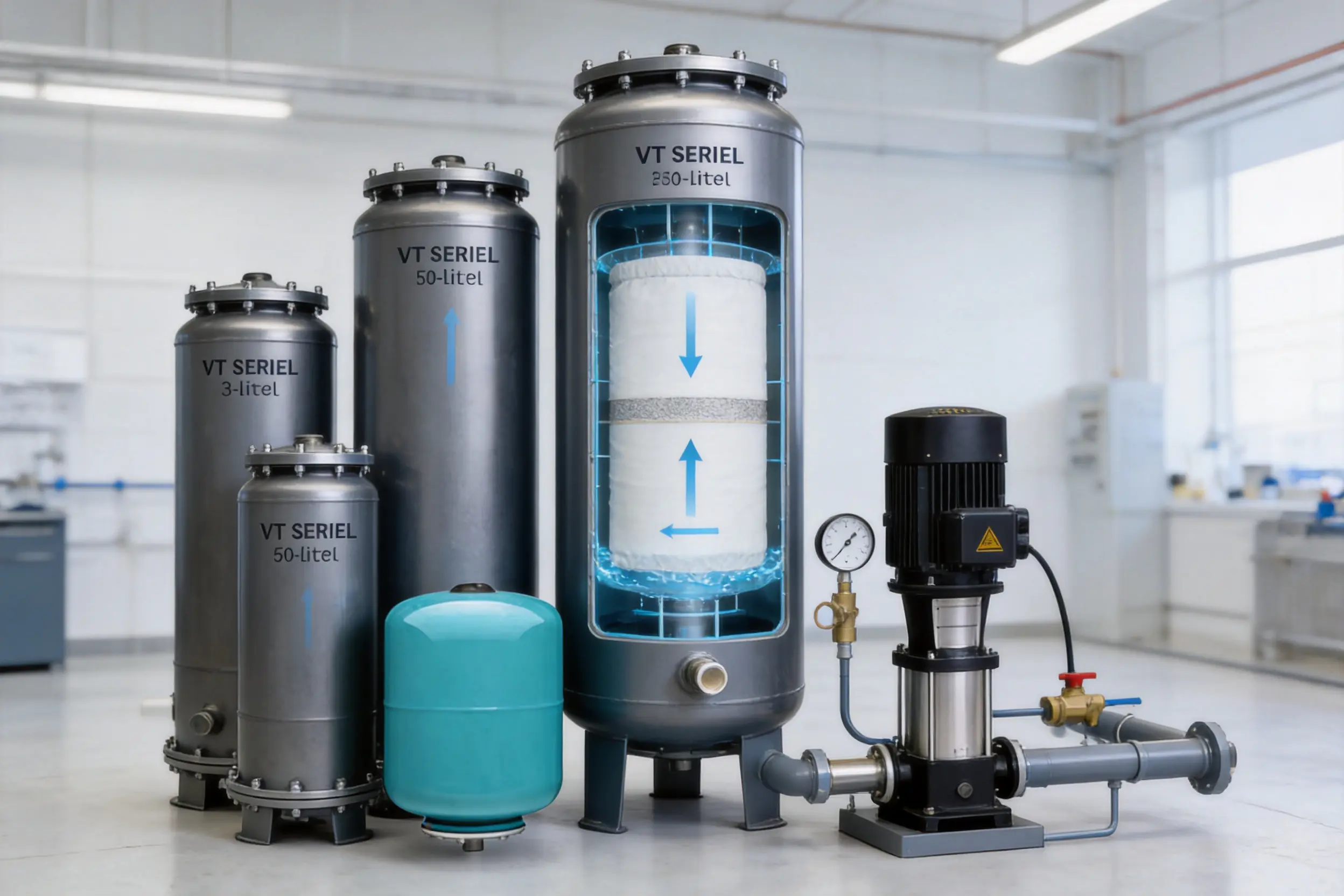
In household booster systems, a pressure tank can reduce pump starts caused by short water draws such as hand washing, toilet filling, or brief kitchen use. The compact VT3L through VT12L models can be considered where installation space is limited, while larger homes may require a higher-capacity model.
The vertical configuration is useful in utility rooms, equipment cabinets, and compact pump enclosures. A properly sized tank can contribute to smoother pressure delivery and reduce unnecessary pump operation.
Garden pumps and small irrigation systems often operate intermittently. A pressure tank can help stabilize pressure when sprinkler zones open or close and can reduce cycling when a small quantity of water is drawn. The membrane and tank material should be selected for the water quality and outdoor installation conditions.
Small offices, workshops, guesthouses, and retail buildings may experience variable water demand throughout the day. The VT12L through VT50L models can be incorporated into compact booster assemblies to improve pressure stability and provide a buffer between demand fluctuations and pump operation.
Solar pumping systems may experience variable power availability because of changes in sunlight and electrical output. A pressure tank can help manage short-term water demand and reduce the need for immediate pump starts. It should be selected as part of the complete solar pumping design, including the controller, pump flow, storage tank, water source, and delivery network.
Some circulation or heating-related systems use pressure vessels to accommodate fluid expansion or stabilize pressure. The selected membrane must be compatible with the fluid and temperature. Because the VT Series temperature limits differ by membrane material, the application temperature must be reviewed before use in warm-water or heating environments.
Agricultural water systems, livestock facilities, workshops, and light industrial installations may benefit from a replaceable membrane tank that can be serviced in the field. The 16-bar options available on selected models may provide additional design flexibility, although all connected components must have compatible pressure ratings.
The VT Series offers several practical advantages over basic pressure tanks that use a non-replaceable internal bladder or membrane.
A replaceable membrane can reduce the need to discard the complete pressure vessel when the internal flexible component reaches the end of its service life. This is particularly valuable for commercial users who prioritize repairability and predictable maintenance costs.
The range from 3L to 50L gives installers more choices than a product line focused on only one or two capacities. A broader range makes it easier to match the tank to the pump and the available installation space.
Models are available in several maximum pressure options. In particular, selected 12L, 19L, and 24L models are listed with a 16-bar option. This can help engineers design systems for higher pressure requirements without automatically moving to a much larger tank.
Vertical tanks use height rather than extensive floor area. This can be a significant advantage in pump rooms, equipment cabinets, and narrow utility spaces. The listed dimensions allow installers to estimate the required footprint and clearance before ordering.
The one-inch connector across the listed range simplifies product standardization for many domestic, agricultural, and small commercial systems. A common connector can also reduce inventory complexity for distributors and service teams.
The availability of Butyl, EPDM, and natural rubber options allows the tank to be matched more closely to temperature and fluid conditions. A product line with multiple membrane choices can be more versatile than a one-material alternative.
Taizhou Edwin Electric Co., Ltd. was founded in 2008 and operates as an integrated manufacturing enterprise focused on independent research and development, mass production, and global export. Although the company is widely associated with water pumps, its product portfolio also includes water treatment peripheral products such as pressure tanks and related accessories.
The company’s manufacturing model is important for pressure tank buyers because product quality depends on more than the finished vessel. It also depends on engineering coordination, material control, production consistency, inspection, packaging, documentation, and after-sales support.
An in-house research and development orientation allows product design to be aligned with practical pump system requirements. For the VT Series, the key design elements include vertical geometry, replaceable membrane construction, carbon steel flange connection, multiple pressure ratings, and a range of capacities.
Independent development can also support product adjustments for different regional markets. For example, buyers may need different membrane materials, packaging arrangements, connection standards, labeling formats, or technical documentation. These details are easier to coordinate when the supplier has direct control over product development and production planning.
Mass production supports repeatability when manufacturing pressure vessels in several sizes. Consistent forming, joining, flange assembly, membrane installation, pressure testing, and final inspection are essential to delivering tanks that perform predictably in pump systems.
A multi-model product family also allows production resources to be organized around standardized components and processes. This can improve purchasing efficiency, shorten preparation time, and support stable supply for distributors that need repeated shipments of multiple tank capacities.
Pressure tanks require disciplined process control. Typical quality checkpoints for this type of product include incoming material inspection, dimensional verification, weld or joint evaluation where applicable, flange inspection, membrane checking, pressure testing, leakage inspection, precharge verification, appearance inspection, and packaging review.
The exact inspection plan should be confirmed for the specific order, but buyers should expect a professional manufacturer to maintain traceability and quality procedures throughout the production process. Consistent inspection is especially important because a pressure tank may remain in service for years and may be installed in locations where replacement is inconvenient.
To support international purchasing, the company established Taizhou Haipai Import & Export Co., Ltd. and Golden Falcon Industrial Co., Ltd. in 2012. These affiliated organizations provide procurement planning, order tracking, cross-border delivery, and foreign trade services.
This integrated structure can be valuable for overseas distributors, pump assemblers, engineering contractors, and private-label customers. A coordinated supplier can help manage product selection, production schedules, export documents, packing requirements, and shipment planning through one procurement channel.
The company’s broader product portfolio includes deep well pumps, submersible pumps, domestic booster pumps, circulation pumps, solar water pumps, intelligent booster pumps, and other water system products. This application experience gives the supplier a practical understanding of how pressure tanks interact with pumps, pressure switches, controllers, valves, and pipe systems.
For buyers, this can be an advantage over suppliers that manufacture a pressure vessel without understanding the pump system in which it will be installed. System-oriented knowledge can help with model matching, precharge guidance, application review, and accessory coordination.
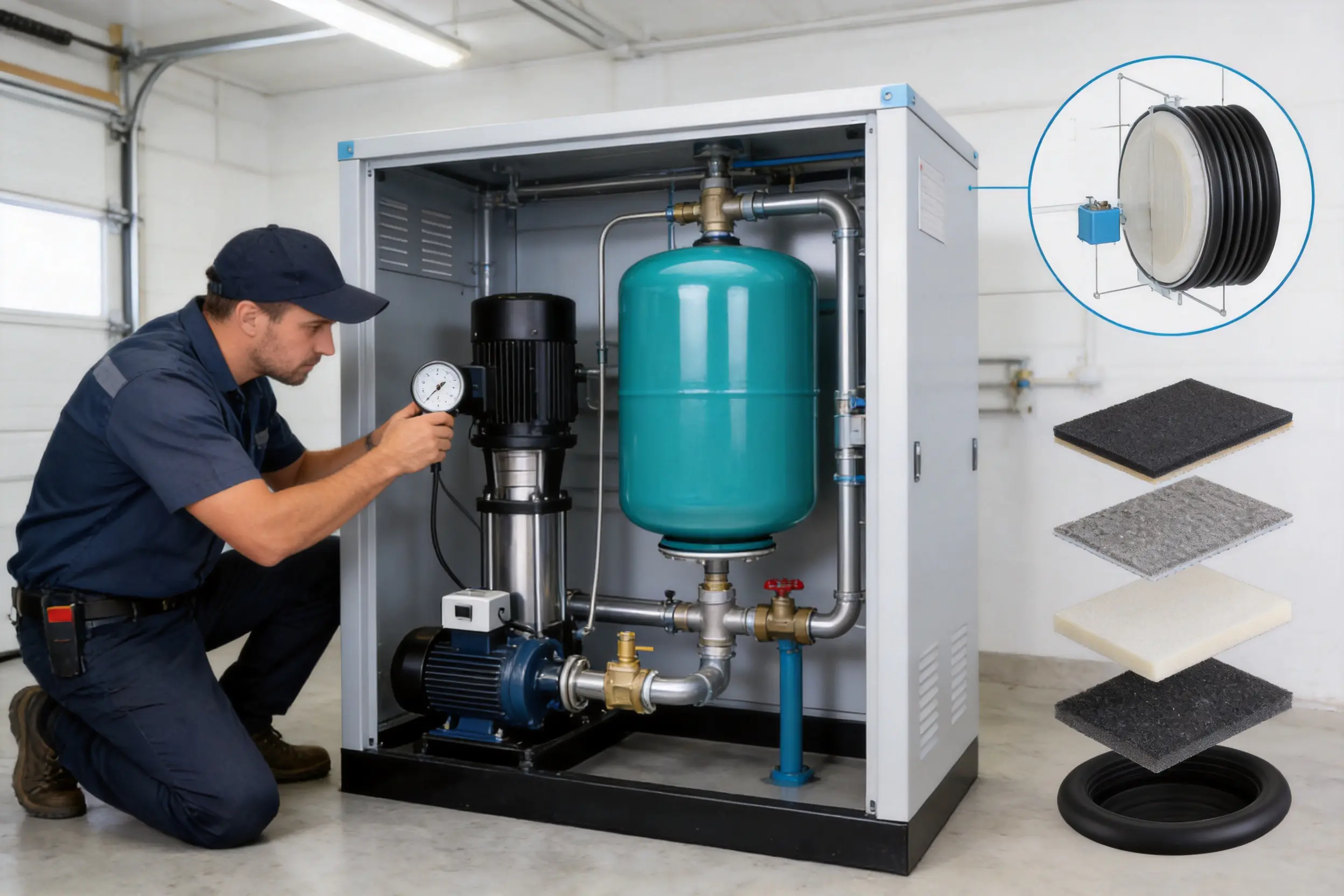
The technical data includes packing volume for each model, ranging from 0.0077 CBM for the VT4L to 0.0670 CBM for the VT50L. Packing volume is important for distributors because it affects container planning, warehouse allocation, freight calculation, and landed cost.
The compact dimensions of the smaller models can support efficient mixed-product shipments. A distributor may combine several pressure tank sizes with pumps, controllers, valves, and accessories in a consolidated order. This can improve product availability while reducing the need for emergency purchasing.
International buyers should confirm the following details before placing an order:
• Exact model and nominal capacity.
• Maximum pressure rating.
• Membrane material.
• Connector and thread standard.
• Required labeling and packaging.
• Quantity per carton or pallet.
• Net weight and gross weight.
• Packing dimensions and total shipment volume.
• Inspection and documentation requirements.
• Destination-market regulations.
• Spare membrane availability.
• Warranty terms and after-sales procedures.
Clear confirmation of these details helps prevent delays and reduces the risk of receiving a configuration that does not match the installer’s system.
Regular maintenance helps preserve pressure stability and extend the useful life of the tank. The maintenance schedule should be adapted to the system’s operating frequency and environment, but the following practices are generally appropriate:
• Inspect the tank exterior for corrosion, impact, leakage, or coating damage.
• Check the connector and flange area for signs of leakage.
• Verify the precharge pressure after isolating and depressurizing the water side.
• Confirm that the pressure gauge and pressure switch operate correctly.
• Check that the tank support and connected pipework remain stable.
• Inspect isolation valves and relief devices.
• Observe pump cycling frequency and investigate sudden changes.
• Replace the membrane when inspection confirms deterioration or loss of performance.
A sudden increase in pump starts may indicate low precharge, an undersized tank, a leaking check valve, a damaged membrane, or a change in water demand. Troubleshooting should examine the complete system rather than replacing the tank immediately.
Before any service work, isolate the tank, stop the pump, release water pressure, and follow safe pressure vessel procedures. Do not disassemble a pressurized tank. Replacement membranes should match the correct tank model and should be installed according to the manufacturer’s instructions.
Pressure tanks store energy and must be treated as pressurized equipment. The maximum pressure rating shown for the selected model must not be exceeded. The pressure rating of every connected component, including pipes, valves, gauges, switches, and fittings, must be compatible with the system’s maximum possible pressure.
System designers should consider pump shutoff pressure, pressure switch failure, thermal expansion, water hammer, blocked outlets, and other abnormal conditions. Where required by local codes or engineering practice, a properly sized pressure relief device should be installed.
The tank should not be modified by drilling, welding, cutting, or adding unauthorized fittings. Alterations may reduce structural integrity and invalidate the product warranty or applicable approvals. Any special application, including hot water, chemical service, compressed gas, or potable water, should be reviewed with the supplier before use.
A practical selection procedure can be completed in several stages.
Identify whether the tank will be used for domestic boosting, irrigation, solar pumping, circulation, agricultural supply, or another application. Record the fluid type, water quality, temperature, operating environment, and expected duty cycle.
Establish the pump cut-in pressure, cut-out pressure, normal operating pressure, and maximum possible pressure. Select a tank with a suitable maximum pressure rating and verify that all connected equipment has compatible ratings.
Use pump flow, expected demand, desired minimum run time, and control settings to estimate the necessary tank size. Select from the VT3L to VT50L range according to the calculated requirement and available space.
Select Butyl, EPDM, or natural rubber according to temperature, fluid compatibility, and application requirements. Do not choose membrane material based solely on price.
Check the tank diameter, height, connector size, and installation clearance. Verify that the one-inch connection is compatible with the planned piping system and that the vertical arrangement can be supported securely.
Before production or shipment, confirm the model, pressure rating, membrane material, packaging, labeling, spare parts, and required documents. A written specification reduces the likelihood of errors in international procurement.
For distributors, the VT Series offers a balanced combination of model coverage, compact packaging, serviceability, and compatibility with common pump applications. The 3L to 50L range allows a distributor to serve several customer segments without managing an excessively broad product family.
For system integrators, the replaceable membrane and multiple pressure classes provide flexibility during system design. The vertical format can simplify integration into booster sets and compact equipment assemblies. The one-inch connector supports straightforward connection in many small and medium installations.
For end users, the principal value is dependable pressure management. A correctly selected tank can reduce pump cycling, support smoother pressure delivery, and provide a maintainable component within the water system.
Compared with low-cost tanks that provide limited technical options or no practical service path, the VT Series is positioned as a more versatile solution. Its advantages are not based on one feature alone. They result from the combination of replaceable membrane construction, carbon steel mechanical design, multiple capacities, pressure flexibility, temperature options, and support from a manufacturer with established pump production and export experience.
The listed capacity range is from 3 liters to 50 liters. Available models are VT3L, VT4L, VT5L, VT8L, VT12L, VT19L, VT24L, VT36L, and VT50L.
Yes. The VT Series is described as using a replaceable membrane design. The replacement membrane should be suitable for the exact model and application.
The listed options are Butyl, EPDM, and natural rubber. Their temperature ranges differ, so the material should be selected according to temperature, fluid compatibility, and system requirements.
Butyl is listed for -10°C to 99°C, EPDM is listed for -10°C to 99°C, and natural rubber is listed for 0°C to 77°C.
The listed precharge pressure is 1.8 to 2.0 bar. The final adjustment should be made according to the pump control settings and manufacturer instructions.
The listed connector size is one inch for all models in the technical table. The exact connection standard should be confirmed before ordering.
The VT12L, VT19L, and VT24L models are listed with maximum pressure options of 6, 8, 10, and 16 bar.
Some membrane configurations are listed for temperatures up to 99°C, but suitability depends on the membrane material, fluid, system design, and applicable regulations. The exact application should be confirmed before use.
The tank should be installed vertically on a stable support, with adequate clearance for inspection and membrane replacement. Connected pipework should be supported independently, and the tank should not be exposed to pressure, temperature, or environmental conditions beyond its rating.
The tank stores pressurized water and releases it during short periods of demand. This allows the pump to remain off for some demand events instead of starting every time a small amount of water is used.
No. The correct size depends on pump flow, pressure settings, demand pattern, desired pump run time, installation space, and system requirements. Oversizing may increase cost and space requirements without providing a proportional benefit.
The importer should provide the required capacity, pressure rating, membrane material, quantity, destination country, connection requirements, packaging expectations, and application details. This allows the supplier to confirm the appropriate configuration.
The VT Series 3L to 50L Vertical Carbon Steel Pressure Tank with Flange is a versatile pressure management solution for domestic, agricultural, commercial, solar, circulation, and light industrial water systems. Its replaceable membrane design supports long-term serviceability, while the carbon steel flange provides a practical and robust connection arrangement.
The range of capacities allows selection for compact and larger pump systems. Multiple pressure options, including 16-bar configurations on selected models, expand design flexibility. Butyl, EPDM, and natural rubber membrane choices help match the tank to different temperature and application conditions. The vertical design, one-inch connector, and compact dimensions further support efficient integration into pump rooms and equipment assemblies.
Beyond the product specifications, the manufacturing background of Taizhou Edwin Electric Co., Ltd. adds value for international buyers. Established in 2008, the company combines independent product development, mass production, pump application knowledge, and export support. Its affiliated foreign trade organizations provide procurement planning, order tracking, cross-border delivery, and related services.
For the best result, the VT Series should be selected as part of a complete pressure system rather than as an isolated component. Correct capacity, pressure rating, precharge, membrane material, connection, installation, and maintenance are all essential. When these factors are properly coordinated, the tank can help improve pump operating stability, reduce unnecessary cycling, simplify future service, and support reliable water delivery over the life of the installation.
1. Product technical specification for the VT Series 3L to 50L Vertical Carbon Steel Pressure Tank with Flange.
2. Manufacturer-provided technical data covering model capacity, dimensions, pressure ratings, connector size, precharge pressure, and packing volume.
3. Manufacturer-provided membrane temperature information for Butyl, EPDM, and natural rubber configurations.
4. General engineering principles for diaphragm and membrane pressure tank sizing in pumped water systems.
5. General installation and maintenance practices for pressurized water vessels and booster pump systems.
6. Manufacturer company information concerning research and development, mass production, export operations, and water pump applications.
aseriesnoisereductiondesignacid-baseverticalsurfacepump-1.jpg "EV(F)A Series Noise Reduction Design Acid-base Vertical Surface Pump")
serieswatershortageprotectionvoltagestabilizationstainlesssteelverticalmultistagepump.jpg "EVR(S) Series Water Shortage Protection Voltage Stabilization Stainless Steel Vertical Multistage Pump")
edwina@edwin-pump.com
+86-13586290903 (WhatsApp)
Xuri Gongliang Cutting Tool Entrepreneurship Park, Wenqiao Town, Wenling City, Taizhou City, Zhejiang Province, China

High Performance Smart Pump Factory


 English