
edwina@edwin-pump.com

View All Products
en
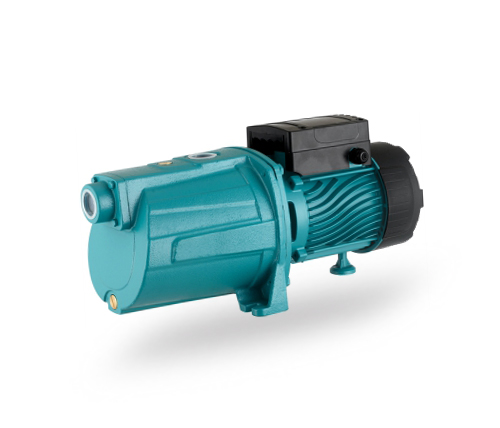
An intelligent circulation pump is designed to move liquids through a system while adjusting its behavior based on real conditions. It is often used in heating, cooling, and fluid transport systems where steady flow and adaptive control are needed.
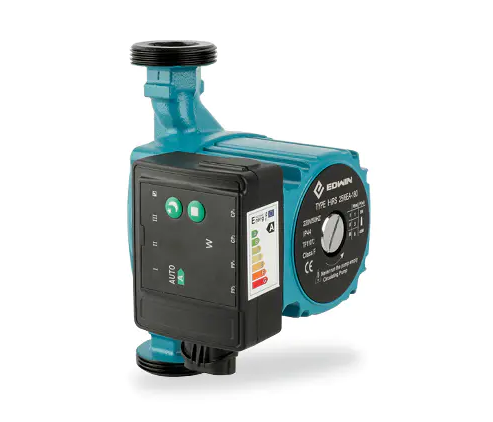
Unlike basic pumping equipment that runs at a fixed level, this type of pump responds to changes in demand. It can adjust speed and operation patterns based on system feedback. This creates a more responsive flow process that aligns with actual usage needs.
Understanding how it works requires looking at both its physical movement and its control behavior.
The main idea is simple: move fluid while adapting to changing conditions.
Traditional systems often operate at a constant output. That means the flow stays the same even when demand changes. This can lead to unnecessary energy use or uneven distribution.
An intelligent pump introduces adjustment into the process. It does not treat every situation the same. Instead, it reacts to signals from the system and changes its operation accordingly.
This adaptive behavior helps maintain smoother flow conditions across different parts of a system.
The process begins when the system requires movement of fluid. Once activated, the pump draws liquid from one area and pushes it through a defined path.
At this stage, basic circulation is similar to conventional systems. The difference appears in how the pump continues operating after startup.
Instead of maintaining a fixed motion, the pump observes system conditions. It may respond to pressure changes, flow resistance, or usage patterns within the system.
This early stage sets the foundation for continuous adjustment.
The control system plays a central role in how the pump behaves. It acts like a monitoring layer that interprets system conditions.
It gathers signals from the environment and adjusts pump behavior based on those signals. This may include increasing or reducing movement intensity depending on current needs.
Rather than relying on a single fixed setting, the system continuously evaluates what is happening.
This allows the pump to respond in real time to changing conditions within the circulation loop.
Fluid systems rarely stay in one steady condition. Demand can change depending on usage patterns, temperature shifts, or system load.
Without adjustment, flow may become too strong in some areas or too weak in others.
An intelligent pump manages this variation by adjusting output behavior. When demand increases, it can respond with stronger movement. When demand decreases, it reduces activity.
This balance helps maintain stable distribution across the entire system.
Feedback is a key part of intelligent operation. The system continuously sends information about current conditions back to the pump.
This information may relate to movement resistance, flow changes, or system balance.
The pump interprets these signals and adjusts its operation accordingly.
This creates a continuous loop:
This cycle repeats throughout operation, creating ongoing adaptation.
Variable operation means the pump does not run at a constant level all the time. Instead, it changes its activity based on system needs.
This variation helps avoid unnecessary movement when full output is not required.
It also helps maintain smoother conditions during periods of higher demand.
The ability to shift between different operating states is a key part of intelligent circulation behavior.
In fluid systems, balance refers to even distribution across different paths. Without balance, some areas may receive more flow while others receive less.
An intelligent pump helps reduce this imbalance by adjusting its output in response to system conditions.
When one part of the system becomes more resistant, the pump can respond by adapting flow behavior.
This supports a more even distribution across connected sections.
Demand within a system is not always constant. It may rise during peak usage or drop during quieter periods.
During these changes, the pump adjusts its operation instead of maintaining a fixed pattern.
When demand increases, flow activity becomes more active. When demand decreases, activity reduces.
This dynamic response helps the system remain stable without excessive fluctuation.
The pump essentially follows the rhythm of the system rather than forcing a fixed pattern.
Energy use in circulation systems is closely tied to how long and how strongly the pump operates.
A fixed-output system may continue using the same level of energy even when demand is low.
An intelligent pump adjusts its behavior to match actual needs. This means it does not maintain unnecessary activity when conditions do not require it.
Over time, this adaptive operation supports more balanced energy behavior across the system.
The way a circulation system is built influences how the pump operates.
Longer pipelines, multiple branches, or varying resistance levels can all affect flow behavior.
An intelligent pump responds to these differences by adjusting its operation to suit the structure.
It does not treat the system as a uniform path. Instead, it reacts to variations within the system layout.
This allows it to work in a wider range of installation conditions.
In real environments, conditions are not always steady. Flow resistance may change, or system demand may shift unexpectedly.
When this happens, the pump detects the change through feedback signals.
It then adjusts its operation to restore balance.
This process helps reduce sudden fluctuations in circulation behavior.
Instead of reacting slowly, the system responds continuously to maintain smoother operation.
Continuous adjustment is one of the defining characteristics of intelligent circulation systems.
The pump does not switch between fixed states only. It constantly fine-tunes its behavior based on real-time information.
This creates a more fluid interaction between system demand and pump activity.
Rather than operating in fixed cycles, the pump follows a more flexible pattern that reflects actual conditions.
This ongoing adjustment helps maintain stability across changing environments.
Modern fluid systems often require flexibility. Buildings, industrial setups, and controlled environments may all experience changing flow requirements.
An intelligent pump fits into these systems by providing adaptable operation.
It supports different flow conditions without requiring manual adjustment.
This makes it suitable for systems where conditions vary throughout daily operation.
Its ability to respond to change allows it to function as part of a broader adaptive system structure.
In real use, the pump behaves as a responsive unit within a larger system.
It does not operate in isolation. Instead, it interacts with system conditions continuously.
Its behavior is shaped by:
These factors combine to guide how the pump adjusts during operation.The result is a system that responds dynamically rather than statically.
An intelligent circulation pump works by combining movement with ongoing adaptation. It continuously adjusts its operation based on system feedback, helping fluid move in a more responsive and balanced way across changing conditions.
edwina@edwin-pump.com
+86-13586290903 (WhatsApp)
Xuri Gongliang Cutting Tool Entrepreneurship Park, Wenqiao Town, Wenling City, Taizhou City, Zhejiang Province, China

High Performance Smart Pump Factory


 English