
edwina@edwin-pump.com

View All Products
en
Deep well pumping is a critical operation in many industries, ranging from agriculture to municipal water supply and industrial processes. Among the various types of pumps designed for this purpose, the Oil Filled Borehole Pump has become increasingly popular due to its unique design and operational advantages. Understanding how the Oil Filled Borehole Pump enhances deep well efficiency can help industries make informed decisions when selecting pumping equipment.
The primary advantage of an Oil Filled Borehole Pump lies in its cooling and lubrication system. Unlike conventional dry-type pumps, the motor of an oil-filled pump is submerged in oil within a sealed casing. This oil acts as a cooling agent, absorbing heat generated during operation and ensuring the pump runs at temperatures. By effectively dissipating heat, the Oil Filled Borehole Pump minimizes the risk of motor overheating, which is a common cause of premature pump failure in deep well applications.
Another significant benefit of the Oil Filled Borehole Pump is its enhanced durability. The oil inside the motor housing not only cools but also lubricates the internal components, reducing friction and wear on bearings and seals. This lubrication system contributes to longer service life and reduced maintenance needs, making the Oil Filled Borehole Pump a reliable choice for continuous operation in demanding environments.
Efficiency improvements offered by the Oil Filled Borehole Pump extend beyond cooling and lubrication. The pump’s sealed design protects internal components from contamination by well water, which may contain sediments, minerals, or corrosive elements. This protection ensures smoother operation and prevents damage that can decrease pump efficiency. Consequently, the Oil Filled Borehole Pump maintains consistent performance over extended periods, which is vital for applications where downtime must be minimized.
From an energy consumption perspective, the Oil Filled Borehole Pump is also advantageous. The cooling effect of the oil reduces electrical resistance within the motor, allowing it to operate more efficiently. As a result, these pumps typically consume less energy compared to their dry-type counterparts, to cost savings over the pump’s lifespan. For industries seeking to optimize operational costs, this energy efficiency is a critical factor when considering the Oil Filled Borehole Pump.
Installation and operation of the Oil Filled Borehole Pump are designed to be straightforward, even in challenging deep well conditions. The pump’s compact and sealed construction makes it suitable for wells with limited space. Additionally, the oil-filled motor can operate reliably at various depths and temperatures, adapting to the specific demands of different well environments.
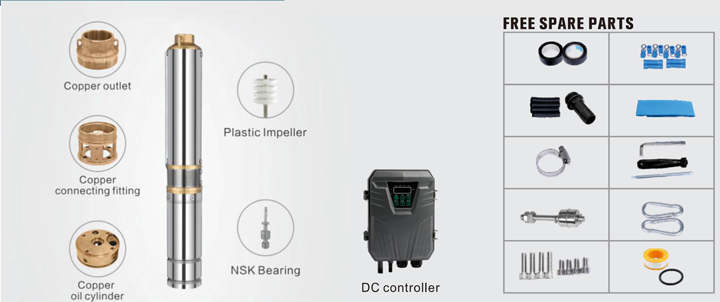
The Oil Filled Borehole Pump is widely used in agricultural irrigation systems where consistent water delivery is essential for crop health. Its reliability ensures that farms maintain efficient water usage, even in remote locations without easy access to power grids. Municipal water supply systems also benefit from the pump’s durability and efficiency, supporting communities with stable water access.
Furthermore, industries such as mining, oil extraction, and geothermal energy increasingly rely on the Oil Filled Borehole Pump to manage fluid extraction and circulation processes. The pump’s ability to operate under high pressure and in harsh conditions makes it well-suited for these demanding applications.
In summary, the Oil Filled Borehole Pump improves deep well efficiency through its effective cooling and lubrication system, protection from contaminants, and energy-saving design. Its durability and reliable performance contribute to longer service life and reduced maintenance costs, making it a valuable investment for various industries. Understanding these advantages helps decision-makers choose the right pump to meet their deep well pumping needs, ensuring efficient and sustainable water and fluid management.
edwina@edwin-pump.com
+86-13586290903 (WhatsApp)
Xuri Gongliang Cutting Tool Entrepreneurship Park, Wenqiao Town, Wenling City, Taizhou City, Zhejiang Province, China

High Performance Smart Pump Factory


 English