
edwina@edwin-pump.com

View All Products
en
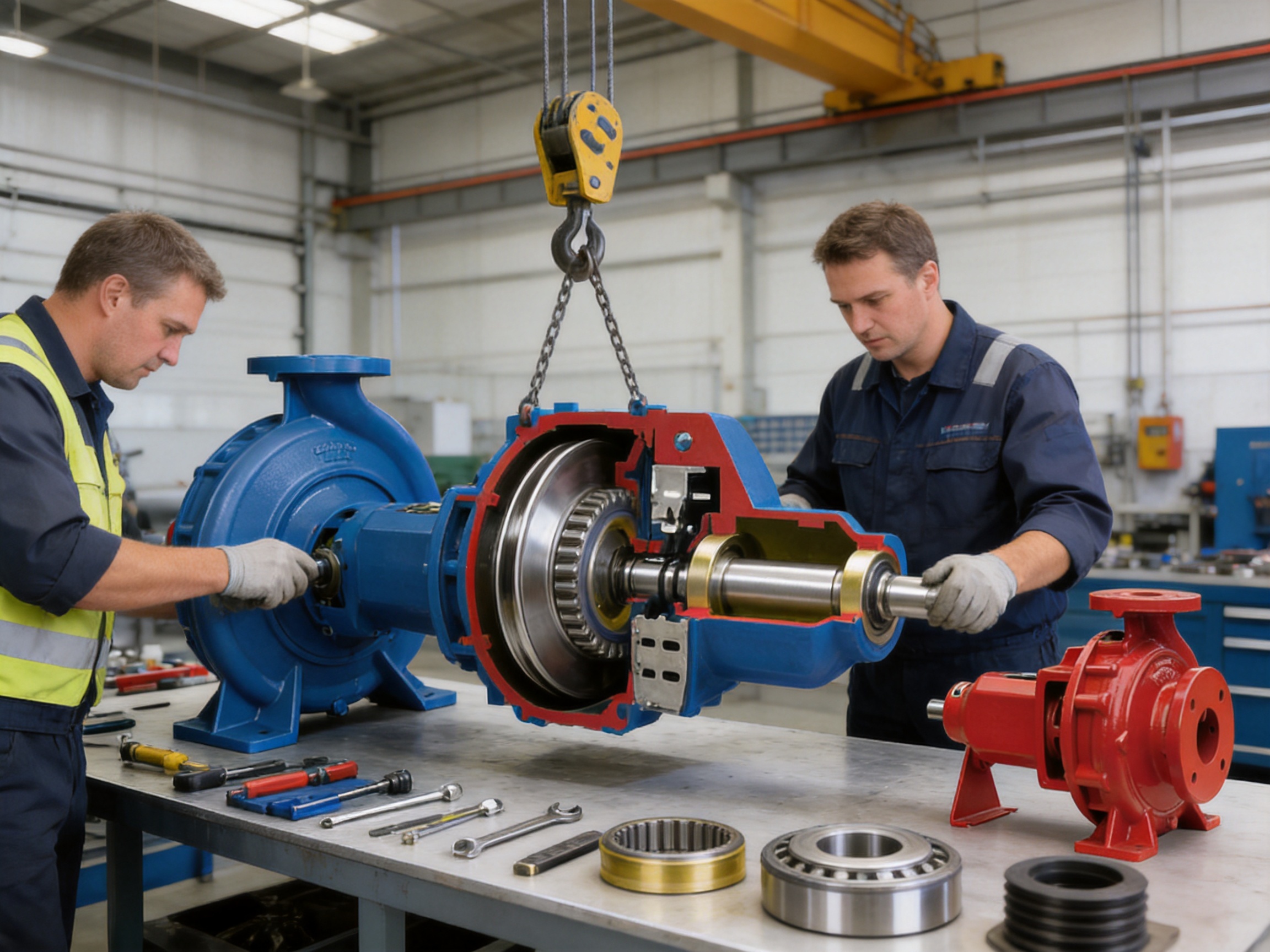
Reliable water pressure is essential in municipal distribution, industrial processing, fire protection, district heating, cooling plants, air-conditioning systems, and many other fluid-handling applications. When a pumping system must operate continuously, efficiently, and with predictable maintenance requirements, the selection of the centrifugal pump becomes a critical engineering decision. The EISO Series SS Large Bearing Back Pull-Out End Suction Centrifugal Pump has been developed to answer these requirements with a robust construction, service-friendly configuration, standardized dimensions, and a broad range of material and sealing options.
This pump combines the familiar operating principles of a single-stage end suction centrifugal pump with design features intended for demanding commercial and industrial service. Its stainless steel impeller option improves resistance to corrosion, while the large bearing arrangement supports stable operation under substantial hydraulic and mechanical loads. The back pull-out structure allows the rotating assembly to be removed without disconnecting the pump casing from the connected pipework, reducing the time and labor required for inspection, repair, or replacement.
Manufactured and supplied by Taizhou Edwin Electric Co., Ltd., the EISO Series reflects the company’s experience in pump research and development, mass production, quality control, and international export. Since its establishment in 2008, the company has expanded its product portfolio from traditional water pumps into deep well pumps, submersible pumps, domestic booster systems, circulation pumps, solar water pumps, intelligent booster pumps, and other water treatment-related products. This wider product background supports a practical understanding of complete water systems rather than isolated pump components.
The EISO Series SS pump is particularly suitable for users seeking a durable end suction pump that can be adapted to different fluids, pressure requirements, installation conditions, and maintenance strategies. Its design is compatible with ISO2858 and ISO5199 requirements, supporting interchangeability and easier integration into standardized industrial pumping systems.
The EISO Series is a horizontal, single-stage, end suction centrifugal pump designed for transporting clean or relatively clean water and other compatible liquids. In a conventional centrifugal operating cycle, liquid enters through the axial suction nozzle, reaches the impeller eye, and is accelerated by the rotating impeller. The volute casing converts a portion of the velocity energy into pressure energy before the fluid exits through the discharge connection.
This operating principle provides a practical balance between efficiency, mechanical simplicity, and application flexibility. Unlike more complicated multistage arrangements, a single-stage end suction pump has a comparatively straightforward hydraulic and mechanical layout. This makes it easier to inspect, maintain, and configure for a wide range of standard water pressure duties.
The EISO Series is designed around a back pull-out construction. In this arrangement, the pump casing can remain connected to the suction and discharge piping while the motor, shaft, impeller, bearing housing, casing cover, and related rotating parts are withdrawn from the rear. For large or permanently installed systems, this feature can be especially valuable because it avoids extensive pipework disassembly and reduces the need to disturb alignment between the pump and the system.
The pump is available with cast iron or stainless steel pump body and impeller configurations, depending on the application. The shaft is made from stainless steel, and the standard sealing arrangement uses a mechanical seal. Additional seal arrangements may include double mechanical seals, cartridge seals, gland packing, and dynamic seals. These options enable the pump to be matched to different fluid temperatures, chemical characteristics, leakage-control requirements, and maintenance preferences.
The stainless steel impeller is one of the principal advantages of the EISO Series SS configuration. Impellers are exposed directly to the pumped liquid and experience continuous velocity, pressure, and rotating forces. In systems containing dissolved minerals, mild chemical contaminants, oxygen, or other corrosive influences, material selection can significantly affect service life.
A stainless steel impeller offers better corrosion resistance than ordinary carbon steel or lower-grade cast materials in many water-handling environments. It also helps maintain hydraulic performance when the pump is exposed to intermittent operation, wet storage, or periods of inactivity. The supplied design information identifies stainless steel grades such as SS304 and SS316 as available options, allowing the material to be selected according to water chemistry and application conditions.
Stainless steel does not eliminate the need for proper application engineering. Chloride concentration, temperature, pH value, abrasive particles, and chemical compatibility should still be evaluated before final selection. However, the availability of stainless steel impeller materials gives system designers a stronger starting point than a pump limited to one basic material configuration.
The EISO Series uses a heavy-duty large bearing arrangement intended to support stable shaft rotation and higher operating loads. Bearings carry radial and axial forces generated by the hydraulic assembly and coupling system. If bearings are undersized or poorly protected, vibration, overheating, premature wear, and unplanned shutdowns may result.
The use of large bearings provides additional mechanical capacity and contributes to smoother operation. The standard bearing brand is identified as NTN or an approved equivalent, and the bearing arrangement is lubricated for life with grease in the standard configuration. Heavy-duty bearings are housed in a robust bearing housing manufactured from high-strength cast iron, which provides structural support for the rotating assembly.
Another important detail is bearing protection. The bearing housing incorporates a quality-manufactured lip seal to reduce the ingress of moisture and foreign matter. This is particularly important in pump rooms, outdoor installations, cooling plants, and industrial areas where condensation, dust, spray, or incidental water may be present.
Maintenance accessibility is a major factor in the total cost of ownership of a commercial pump. A pump that is efficient during operation but difficult to service can create long shutdowns and high labor costs. The back pull-out configuration of the EISO Series directly addresses this concern.
When properly isolated and prepared for service, the rotating assembly can be removed from the rear without disconnecting the main pump casing from the suction and discharge pipelines. Maintenance personnel can inspect the impeller, shaft, wear rings, mechanical seal, bearings, and casing cover while the fixed casing and pipe connections remain in place.
This arrangement offers several practical benefits. It minimizes disturbance to the pipework, reduces reinstallation work, helps preserve existing system alignment, and shortens the time required for routine service. In applications where pumps are installed in large plant rooms or connected to expensive process piping, these benefits can be more valuable than the initial purchase price alone.
The EISO Series is designed to meet the international standards of ISO2858 and ISO5199. Standardized dimensions and hydraulic design principles make it easier to compare the pump with other compatible models and to plan replacement or expansion projects.
Standardization can also reduce procurement risk. Users may be able to use familiar installation practices, established maintenance procedures, and commonly available accessories. The availability of standard IEC electric motors through a stub shaft further simplifies motor selection and replacement. Instead of relying on a highly specialized motor assembly, the system can be configured around a standard motor format appropriate for the required power, speed, voltage, and efficiency class.
For engineering contractors and industrial users, standardized equipment is valuable because it supports repeatable design. A pump selected for one facility can often be evaluated for similar duties at another facility, subject to confirmation of flow rate, head, liquid properties, temperature, power, and installation requirements.
Design feature | Practical benefit | Typical value to the user |
Stainless steel impeller option | Improved resistance to many corrosive water conditions | Longer component service potential and material flexibility |
Large bearing arrangement | Supports radial and axial operating loads | Smoother operation and improved mechanical reliability |
Back pull-out design | Rotating assembly can be serviced without removing the casing from the pipework | Reduced downtime and lower maintenance labor |
Standard IEC motor compatibility | Allows use of widely available industrial motors | Easier replacement and procurement planning |
ISO2858 and ISO5199-oriented design | Supports standardized industrial selection and interchangeability | Simpler system integration and equipment comparison |
Replaceable wear rings | Protects primary casing and impeller clearances | More economical restoration of hydraulic efficiency |
Energy consumption is one of the most important operating costs in a pumping system. A pump may operate for thousands of hours each year, so even a modest improvement in hydraulic efficiency can produce significant energy savings over the equipment’s service life. The EISO Series impeller is developed using three-dimensional solid modeling and computational fluid dynamics techniques. These engineering tools help designers examine flow paths, pressure distribution, velocity changes, and potential hydraulic losses before production.
The impeller is a closed design, which supports efficient liquid transfer and helps reduce the risk of corrosion-related problems in stationary or inactive conditions. The impeller diameter can be trimmed to meet a specified performance point. This allows the pump to be selected more closely to the required duty rather than operating with excessive head and relying on throttling to control flow.
Dynamic balancing of the impeller is another important feature. An unbalanced impeller can transmit vibration through the shaft, bearings, coupling, and foundation. Over time, this may increase wear and reduce reliability. A dynamically balanced impeller supports smoother rotation, lower vibration, and better protection of the bearing system.
The large shaft design reduces shaft deflection under load. Excessive shaft deflection can affect mechanical seal alignment, increase wear ring contact, cause vibration, and reduce bearing life. The EISO Series uses a robust shaft configuration, with 420 stainless steel identified as standard and 304 stainless steel or 316 stainless steel available as options. The shaft also uses a tapered and keyed design, which supports positive impeller locking while facilitating removal during maintenance.
These features work together rather than operating as isolated advantages. A hydraulically efficient impeller can reduce energy use, dynamic balance can limit vibration, a strong shaft can maintain alignment, and properly supported bearings can protect the rotating assembly. The result is a pump design focused on stable long-term operation rather than only short-term performance.
The pump casing is manufactured from cast iron or stainless steel, depending on the selected configuration. The volute casing is designed for efficient conversion of velocity energy into pressure and is supplied with flanges rated to PN1.6 MPa, or 16 bar, in the stated configuration. The flange drilling follows the supplied international dimensional requirements for standard industrial connections.
The casing includes convenient suction and discharge pressure gauge tapping points as well as a volute drain. These connections support commissioning, diagnosis, pressure monitoring, draining, and maintenance. Proper use of pressure gauges can help operators identify changes in suction conditions, system resistance, or pump performance.
The impeller is available in cast iron, SS304, or SS316. The closed impeller design is intended to provide efficient hydraulic performance and suitable durability in water applications. Because the impeller is dynamically balanced, it contributes to smooth operation and helps reduce premature bearing failure.
Impeller trimming allows the hydraulic output to be adjusted within the permitted performance range. This is useful when the design point does not exactly correspond to a full-diameter impeller. However, the final trimmed diameter and operating range should always be confirmed against the manufacturer’s performance chart and the intended system duty.
The stainless steel shaft provides corrosion resistance and mechanical strength. The tapered and keyed design helps ensure secure transmission of torque while simplifying the removal of the impeller. Optional mechanical shaft sleeves can protect the shaft in the seal area, especially where the pumped liquid or seal leakage could otherwise cause localized wear.
A replaceable shaft sleeve can be economically advantageous. Instead of replacing an entire shaft because of wear near the mechanical seal, maintenance personnel may replace the sleeve when the design and selected configuration permit it. This can reduce repair cost and improve equipment availability.
The standard shaft seal is a single mechanical seal using carbon, ceramic, and Viton materials in the stated configuration. Mechanical seals reduce the continuous leakage associated with traditional packing and generally require less routine adjustment. A high-quality John Crane seal or approved equivalent is identified for the standard arrangement.
Different liquids and operating temperatures may require different seal faces, elastomers, or seal arrangements. Optional configurations include silicone versus silicone faces, high-temperature arrangements, double mechanical seals, cartridge seals, gland packing, and dynamic seals. The proper choice depends on liquid properties, temperature, pressure, solids content, emissions requirements, and the operator’s maintenance strategy.
Cast iron wear rings are fitted as standard, with replaceable front and rear wear rings available in optional materials. Wear rings create a controlled clearance between the rotating impeller and stationary casing. Their purpose is to limit internal recirculation and help preserve hydraulic efficiency.
During operation, wear rings may gradually experience erosion or abrasion. Replacing the wear rings can restore the intended clearance without replacing the complete casing or impeller. This is an important lifecycle advantage for commercial and industrial users because it supports economical refurbishment.
The bearing housing is manufactured from high-strength cast iron and includes a support foot and lifting provision. Its robust construction supports the rotating assembly and helps maintain the mechanical relationship between the shaft, bearings, casing cover, and coupling system.
The support foot also provides a stable structural connection to the baseplate or foundation. Proper installation remains essential. The pump should be mounted on a correctly designed foundation, aligned with the motor, securely bolted, and protected from pipe strain. A strong pump cannot compensate for poor installation practices.
The EISO Series is supported by the manufacturing capabilities of Taizhou Edwin Electric Co., Ltd., an integrated enterprise specializing in independent research and development, mass production, and global export. This combination is important because product quality depends not only on the design drawing but also on the consistency of materials, machining, assembly, testing, packaging, and after-sales support.
Independent research and development enables the company to develop and adapt pump products for different market requirements. The company’s product portfolio covers deep well pumps, submersible pumps, domestic booster pumps, circulation pumps, solar water pumps, intelligent booster pumps, and related water system products. Experience across these categories can support a broader understanding of pressure, flow, motor selection, control, and water-use conditions.
The company’s mass production capability is also relevant to international buyers. Repeated production of standardized pump models allows manufacturing teams to refine assembly procedures, establish inspection routines, and maintain consistent component compatibility. Standardized production can reduce variation between batches when supported by appropriate incoming inspection and process controls.
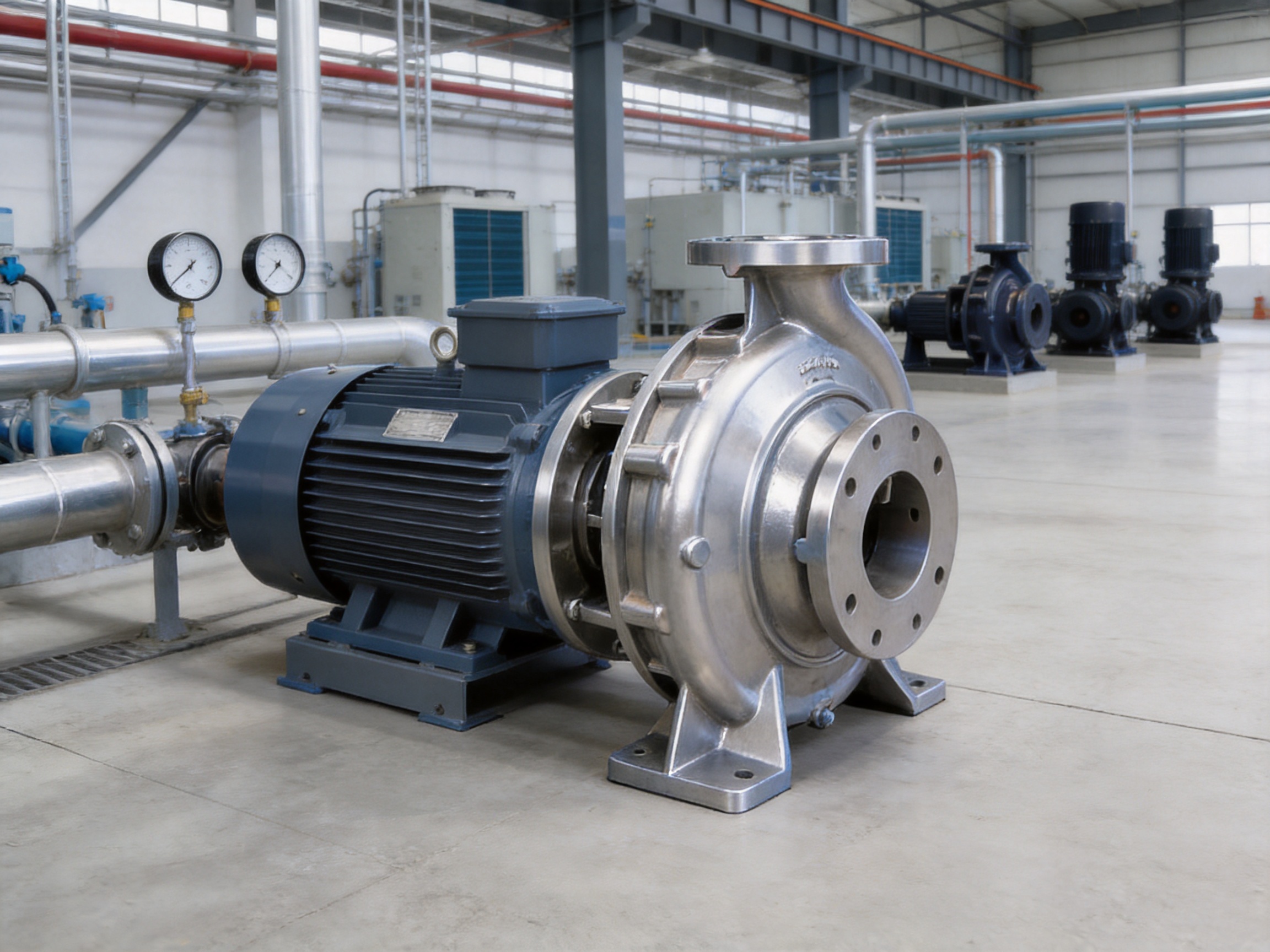
The EISO Series design indicates attention to several manufacturing and engineering details. These include dynamically balanced impellers, machined shafts, replaceable wear rings, standardized flanges, heavy-duty bearings, mechanical seal options, and compatible IEC motor arrangements. Each detail contributes to a product that can be assembled, tested, installed, maintained, and ultimately refurbished in a systematic way.
Before painting, the pump is thoroughly cleaned of foreign material. It is then treated with a high-quality undercoat or primer and finished with industrial enamel paint. Surface preparation and coating are important for equipment installed in damp pump rooms, utility plants, industrial facilities, and outdoor environments. The paint system protects external surfaces during storage, transport, installation, and operation, although the exact coating suitability should be evaluated for highly corrosive atmospheres.
The company also supports procurement through affiliated import and export organizations established to provide purchasing planning, order tracking, cross-border delivery, and foreign trade services. For overseas customers, this integrated approach can simplify communication and reduce the number of separate suppliers involved in a project.
A reliable pump begins with an accurate understanding of the intended duty. Engineering work typically includes evaluating flow rate, total head, liquid temperature, viscosity, density, solids content, suction conditions, motor speed, operating frequency, and installation arrangement. The EISO Series performance charts and dimensional information provide the basis for matching a pump model to the system.
Three-dimensional CAD modeling supports accurate development of pump components and assembly relationships. Computational fluid dynamics supports the analysis of hydraulic passages and impeller performance. These tools do not replace physical testing, but they can improve the design process by identifying possible flow losses, high-velocity areas, and pressure inconsistencies at an early stage.
Mechanical design also includes the evaluation of shaft strength, bearing loads, seal location, wear ring clearances, casing pressure, and maintenance access. The back pull-out structure demonstrates that maintainability has been considered as part of the original design rather than added as an afterthought.
Production of a commercial centrifugal pump requires control over casting quality, machining accuracy, shaft straightness, impeller geometry, balancing, bearing installation, seal assembly, and final alignment. The EISO Series uses a combination of cast components, stainless steel parts, machined shafts, standard bearings, and replaceable wear components.
Component consistency is particularly important for standardized pump families. Casing dimensions, shaft fits, impeller clearances, bearing locations, and seal chambers must remain compatible across production batches. Accurate machining and controlled assembly help ensure that the completed pump rotates freely, maintains proper internal clearances, and can be serviced using the intended replacement components.
Large bearings and a strong bearing housing are beneficial only when correctly installed. Bearing seating, shaft runout, lubrication, seal protection, and coupling alignment all influence the final performance of the complete assembly. A structured assembly process helps reduce the risk of avoidable vibration, leakage, and overheating during commissioning.
Commercial pump testing should verify that the completed assembly can operate safely and deliver the required hydraulic performance. Typical inspection considerations include visual examination, dimensional checks, rotation direction, shaft and coupling alignment, seal condition, pressure integrity, vibration, noise, motor current, and flow-head performance.
For a specific project, customers may request documentation such as material certificates, inspection records, pressure test reports, performance test data, motor information, coating details, and packing lists. The exact documentation package should be agreed during quotation and order confirmation.
International certifications and standards can assist with market acceptance and project approval. The product information identifies a CE certificate for the series. Customers should confirm the certificate scope, applicable model, motor configuration, and project-specific compliance requirements before placing an order.
Water supply systems require dependable pressure and stable flow. The EISO Series can be applied to water transfer, distribution, pressure maintenance, and plant utility systems. Its standardized flange arrangement and available motor configurations support integration into new installations and replacement projects.
In municipal applications, pump selection should consider seasonal demand, minimum and maximum flow, suction tank level, standby capacity, water quality, and control strategy. In industrial water systems, the designer should also consider the presence of treatment chemicals, elevated temperature, suspended solids, and intermittent operating cycles.
Fire-fighting systems require equipment that can provide the specified flow and pressure when demanded. The EISO Series may be used in suitable fire water transfer or pressure applications when the complete assembly meets the governing fire protection standards, certification requirements, control requirements, and project specifications.
Fire system designers must verify duty point, standby arrangements, starting method, motor rating, pressure maintenance, testing provisions, and local regulatory requirements. A standard centrifugal pump should not be assumed to be fire-certified without confirmation of the relevant approvals and system design.
Pressure boosting applications include commercial buildings, industrial facilities, process lines, irrigation networks, and water distribution systems located at higher elevations. The pump can be configured to increase pressure where the existing supply is insufficient or where a consistent pressure level is required.
For variable-demand systems, the pump may be combined with a variable-frequency drive, pressure sensor, control cabinet, or parallel pump arrangement. Intelligent control products from the wider Edwin Pump portfolio may also support a complete pressure management solution, subject to the selected system architecture.
The EISO Series can be used for general transport and circulation of hot water in commercial district heating systems when the selected materials, mechanical seal, elastomers, motor, and operating temperature are suitable. Hot water applications require particular attention to vapor pressure, thermal expansion, seal performance, insulation, and pump-room safety.
The pump should be selected to avoid operating conditions that cause cavitation or excessive internal recirculation. The system should also include appropriate air removal, expansion control, isolation valves, and pressure monitoring.
Industrial processes often require pumps to move water, treated water, cooling liquids, and other compatible fluids. The back pull-out design is valuable in process plants because maintenance access may be limited and production interruptions can be costly.
For non-water liquids, the user should provide detailed fluid information. Viscosity affects hydraulic performance and motor power. Corrosive liquids affect casing, impeller, shaft, seal, gasket, and wear ring selection. Liquids containing abrasive solids may require special materials or a different pump design.
Cooling plants and air-conditioning units depend on reliable chilled-water or condenser-water circulation. The EISO Series can be used in suitable HVAC primary or secondary circulation duties, cooling tower systems, heat exchanger loops, and utility water circuits.
HVAC designers should evaluate operating efficiency across the expected load range. Oversized pumps may consume unnecessary energy and create control difficulties, while undersized pumps may fail to meet terminal-unit requirements. Correct impeller trimming, motor selection, valve arrangement, and control strategy are therefore essential.
The EISO Series offers several advantages when compared with conventional end suction pumps that lack maintenance access, standardized dimensions, or material flexibility. The most visible difference is the back pull-out construction. A conventional close-coupled pump may be compact, but servicing the motor, impeller, seal, or bearings can require more extensive dismantling. In a large fixed installation, this may increase downtime.
Compared with a basic cast iron pump with a fixed material configuration, the EISO Series provides more options for stainless steel impellers, stainless steel shafts, alternative seals, replaceable wear rings, and different bearing arrangements. This makes it easier to adapt the equipment to the actual fluid and duty rather than selecting a one-size-fits-all design.
Compared with a highly specialized pump requiring a proprietary motor, the standard IEC motor compatibility of the EISO Series may simplify procurement and replacement. Standard motor availability can be particularly useful for international users who need local service support or who operate several pump brands within the same facility.
Compared with a pump using permanently integrated, non-replaceable wear surfaces, replaceable wear rings can reduce lifecycle cost. When normal clearance wear occurs, the user may restore performance by replacing selected wear components instead of replacing a complete casing or impeller.
These advantages should be evaluated against the actual project requirements. A pump’s suitability depends on the complete duty point, liquid, operating schedule, installation, controls, local standards, and service environment. The EISO Series is strongest where durability, maintainability, standardized industrial design, and material flexibility are important selection criteria.
Correct selection begins with the required flow rate and total dynamic head. Flow rate should reflect the actual process or distribution demand, while total head should include static elevation, pipe friction, fittings, valves, heat exchangers, filters, and required terminal pressure. The pump should be selected near its best efficiency region whenever practical.
Suction conditions must also be checked. The available net positive suction head should exceed the pump’s required net positive suction head with a suitable safety margin. Poor suction piping, excessive restrictions, inadequate liquid level, high temperature, or entrained air can create cavitation even when the nominal pump duty appears correct.
Motor power must be selected for the expected operating point and fluid properties. A margin may be required for variation in flow, density, viscosity, voltage, ambient temperature, and operating conditions. Excessive motor oversizing can reduce efficiency and increase purchase and operating costs, while insufficient power can cause overload trips or motor damage.
Material selection should consider the liquid’s chemistry and temperature. Cast iron may be suitable for many clean-water systems, while stainless steel may be preferred for improved corrosion resistance. SS304 and SS316 should not be treated as interchangeable in every environment. Chlorides and aggressive chemicals may require a higher grade or a specialized material review.
The seal should be selected according to pressure, temperature, speed, liquid compatibility, and leakage requirements. A standard single mechanical seal may be appropriate for many water duties. Double seals, cartridge seals, packing, or high-temperature options may be more suitable for special applications.
Selection factor | Information required | Why it matters |
Flow rate | Normal, minimum, and maximum flow | Determines hydraulic capacity and operating range |
Total head | Static elevation and system resistance | Defines the pressure the pump must produce |
Liquid properties | Temperature, density, viscosity, pH, chlorides, solids | Influences materials, power, seal, and hydraulic performance |
Suction condition | Liquid level, pipe size, available NPSH, inlet pressure | Helps prevent cavitation and unstable operation |
Motor requirements | Power, voltage, frequency, speed, efficiency class | Ensures compatible and reliable drive performance |
Seal arrangement | Single, double, cartridge, packing, or dynamic seal | Controls leakage and supports application compatibility |
Installation | Foundation, piping, coupling, lifting, ambient conditions | Determines mechanical stability and service access |
The pump should be installed on a rigid, level foundation capable of supporting the pump, motor, baseplate, and connected piping. The foundation should limit vibration and prevent movement during starting and stopping. Anchor bolts should be tightened according to the installation instructions and checked after initial operation.
Suction piping should be as short and direct as practical. It should avoid unnecessary elbows, sharp changes in direction, and high points where air can collect. The pipe should be independently supported so that its weight and thermal expansion do not impose loads on the pump casing.
Before commissioning, the pump and suction line should be correctly filled and vented. Dry running can damage the mechanical seal. All valves should be positioned according to the starting procedure, and the motor rotation direction should be checked before extended operation. Electrical connections must be completed by qualified personnel and must comply with local regulations.
Coupling alignment is essential for a pump using a standard IEC motor and stub shaft arrangement. Misalignment can increase vibration, bearing loads, and seal wear. Alignment should be checked after the pump and motor are bolted down, after connected piping is installed, and after the system has reached operating temperature when thermal movement is significant.
During initial operation, operators should record suction pressure, discharge pressure, flow, motor current, vibration, bearing temperature, seal condition, and unusual noise. These baseline records help identify future changes and support preventive maintenance.
Routine maintenance should include inspection of leakage, vibration, noise, bearing temperature, coupling condition, foundation bolts, paint condition, pressure gauge readings, and motor current. A gradual change in any of these indicators may provide an early warning of wear, blockage, cavitation, misalignment, or system changes.
The mechanical seal should be monitored for abnormal leakage. Small amounts of initial conditioning leakage may be normal for certain seal types, but persistent or increasing leakage should be investigated. The pump must be isolated, depressurized, and made safe before seal inspection or replacement.
Bearings identified as grease-for-life should not be lubricated unnecessarily unless the specific maintenance instructions require it. Adding incompatible or excessive grease can cause overheating. If an optional oil-lubricated or alternative bearing configuration is selected, the corresponding lubrication schedule must be followed.
Wear ring clearance should be inspected when hydraulic performance declines, power consumption changes, or the pump is opened for major service. Replacing worn rings can restore internal clearances and improve efficiency. The impeller should also be examined for erosion, corrosion, deposits, cracks, or damage caused by foreign objects.
The back pull-out design makes planned maintenance more manageable. A service team can prepare replacement seals, bearings, wear rings, gaskets, and other components before taking the pump out of service. This reduces the chance that an inspection will become an extended unplanned outage because of unavailable parts.
For facilities with multiple pumps, a spare-parts strategy can be organized around common components and standardized configurations. The company’s broad product and export support structure may assist customers with procurement planning, order tracking, and replacement component coordination.
Energy use, maintenance, replacement parts, downtime, and service labor all contribute to the total cost of ownership of a pump. A design that is efficient but difficult to maintain may not be economical over the entire lifecycle. Likewise, a durable pump that operates far from its best efficiency point can create unnecessary energy costs.
The EISO Series addresses lifecycle considerations through hydraulic design, impeller trimming, dynamic balancing, replaceable wear rings, standard motors, large bearings, and back pull-out maintenance. These features can help reduce energy waste, extend service intervals, and simplify repairs when the pump is correctly selected and operated.
Material flexibility may also support sustainability by extending the useful life of equipment in corrosive conditions. Replacing a wear ring or mechanical seal instead of an entire pump reduces material consumption and avoids unnecessary equipment disposal. Proper preventive maintenance further reduces the likelihood of catastrophic failure and emergency replacement.
Energy performance should be evaluated using the actual system curve and operating schedule. Variable-frequency control may be beneficial in systems with changing demand, but it must be correctly matched to motor insulation, minimum speed, cooling, control logic, and pump operating limits. A complete system assessment is more reliable than judging efficiency from the pump alone.
Taizhou Edwin Electric Co., Ltd. operates as an integrated pump manufacturing enterprise with independent research and development, mass production, and global export capabilities. Its product range includes solutions for agricultural irrigation, municipal engineering, construction, mining, new energy projects, HVAC systems, industrial processing, and household water supply.
The company’s development of solar water pumps and intelligent booster pumps since 2018 demonstrates an interest in energy transition and intelligent water management. These product lines complement the EISO Series by addressing different system architectures, from conventional industrial pumping to renewable-energy-driven and automated pressure applications.
For global buyers, a supplier’s ability to provide more than one pump category can simplify project sourcing. A contractor may require deep well pumps for water intake, submersible pumps for drainage, circulation pumps for HVAC, booster pumps for pressure control, and end suction pumps for industrial transfer. A manufacturer with a broader portfolio can support coordinated technical communication and procurement.
The company’s foreign trade and export service organizations provide purchasing planning, order tracking, cross-border delivery, and related support. International customers should still confirm lead times, packaging standards, documentation, spare-parts availability, warranty conditions, payment terms, and installation support for each project.
Customer communication is especially important for engineered pump orders. The buyer should provide the pump duty, liquid data, motor requirements, flange standards, seal preferences, material requirements, control method, ambient conditions, and applicable certifications. Clear technical information at the quotation stage reduces the risk of later changes or performance mismatches.
The EISO Series SS Large Bearing Back Pull-Out End Suction Centrifugal Pump is a strong choice for users who value serviceability, standardized design, mechanical strength, and material adaptability. Its stainless steel impeller option offers improved corrosion resistance for many water applications. Its large bearings and robust bearing housing support reliable operation under demanding loads. Its back pull-out construction reduces the disruption associated with maintenance.
The pump is also supported by engineering features that contribute to efficiency and reliability. Three-dimensional design and computational fluid dynamics assist impeller development. Dynamic balancing reduces vibration. A strong stainless steel shaft limits deflection. Replaceable wear rings support economical refurbishment. Mechanical seal and casing options allow the pump to be tailored to different operating conditions.
Compared with simpler pumps, the EISO Series provides a more complete industrial package. Compared with highly specialized equipment, it offers standardized dimensions and compatible motor arrangements that may simplify procurement and replacement. Compared with pumps designed only for short-term cost, its maintenance-oriented construction can provide better lifecycle value when correctly applied.
The final performance of any pump depends on selection, installation, operation, and maintenance. The EISO Series should therefore be evaluated using the manufacturer’s performance curves, dimensional drawings, material data, seal specifications, and project requirements. When these factors are properly aligned, the pump can provide dependable service across water supply, pressure boosting, fire water, heating, cooling, HVAC, and industrial process applications.
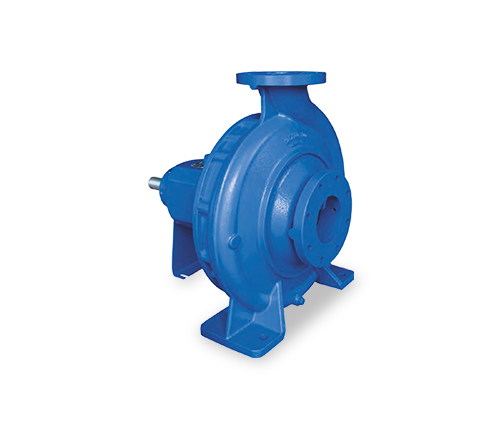
EISO Series SS Large Bearing Back Pull-Out End Suction Centrifugal Pump for Water Pressure
The EISO Series is a horizontal, single-stage, end suction centrifugal pump with a back pull-out construction. It is designed for water pressure, water transfer, circulation, and compatible industrial liquid applications.
Back pull-out means that the rotating assembly can generally be removed from the rear of the pump without disconnecting the pump casing from the suction and discharge pipework. This simplifies maintenance and can reduce system downtime.
Yes. The product information identifies stainless steel impeller options, including SS304 and SS316, as well as stainless steel shaft options. The pump body and other components may be configured in cast iron or stainless steel according to the application.
The stated standard mechanical seal uses carbon, ceramic, and Viton materials. Other seal configurations, including double mechanical seals, cartridge seals, gland packing, dynamic seals, silicone face combinations, and high-temperature arrangements, may be available depending on the application.
Yes. The design uses a stub shaft that allows the use of standard IEC electric motors. The exact motor power, speed, voltage, frequency, efficiency class, and mounting requirements should be confirmed during selection.
Typical applications include municipal and industrial water supply, fire-fighting systems, pressure boosting, commercial district heating, industrial process transport, cooling plants, HVAC systems, and general water circulation.
The stainless steel options improve resistance to many corrosive water conditions, but suitability depends on the liquid’s chemistry, temperature, concentration, chloride level, solids content, and operating pressure. A material compatibility review is required for aggressive liquids.
The supplied information identifies PN1.6 MPa, or 16 bar, flange-rated configurations and references ISO2858, ISO5199, and international flange dimensional requirements. The exact flange size and drilling should be checked against the approved drawing for the selected model.
Wear rings are designed to control the clearance between the impeller and casing. When they become worn, replacing the rings can restore the clearance and hydraulic performance without replacing the entire casing or impeller, provided the other components remain serviceable.
Selection normally requires flow rate, total head, liquid type, temperature, density, viscosity, solids content, suction conditions, available NPSH, motor requirements, seal preference, flange standard, installation arrangement, and applicable certifications.
No. A CE certificate relates to the applicable product configuration and relevant requirements within its scope. The complete installation must also comply with local electrical, pressure, machinery, fire protection, environmental, and building regulations. The certificate scope should be confirmed for the selected model.
Customers can plan preventive inspections, keep suitable seals and wear rings in stock, record operating conditions, monitor vibration and pressure, maintain proper alignment, and use the back pull-out design to service the rotating assembly without unnecessary pipework removal.
It may be used with variable-frequency control when the motor, pump, control system, minimum flow, minimum speed, cooling, and operating limits are properly evaluated. The variable-speed operating range should be confirmed with the manufacturer or system engineer.
The manufacturer combines independent research and development, mass production, a broad water-pump portfolio, quality-oriented component design, and export support. Its affiliated foreign trade organizations assist with procurement planning, order tracking, cross-border delivery, and international customer service.
No. It is primarily intended for water and compatible liquids. Liquids with high viscosity, abrasive solids, volatile characteristics, strong corrosiveness, or unusually high temperatures may require different materials, seal arrangements, hydraulic designs, or pump types.
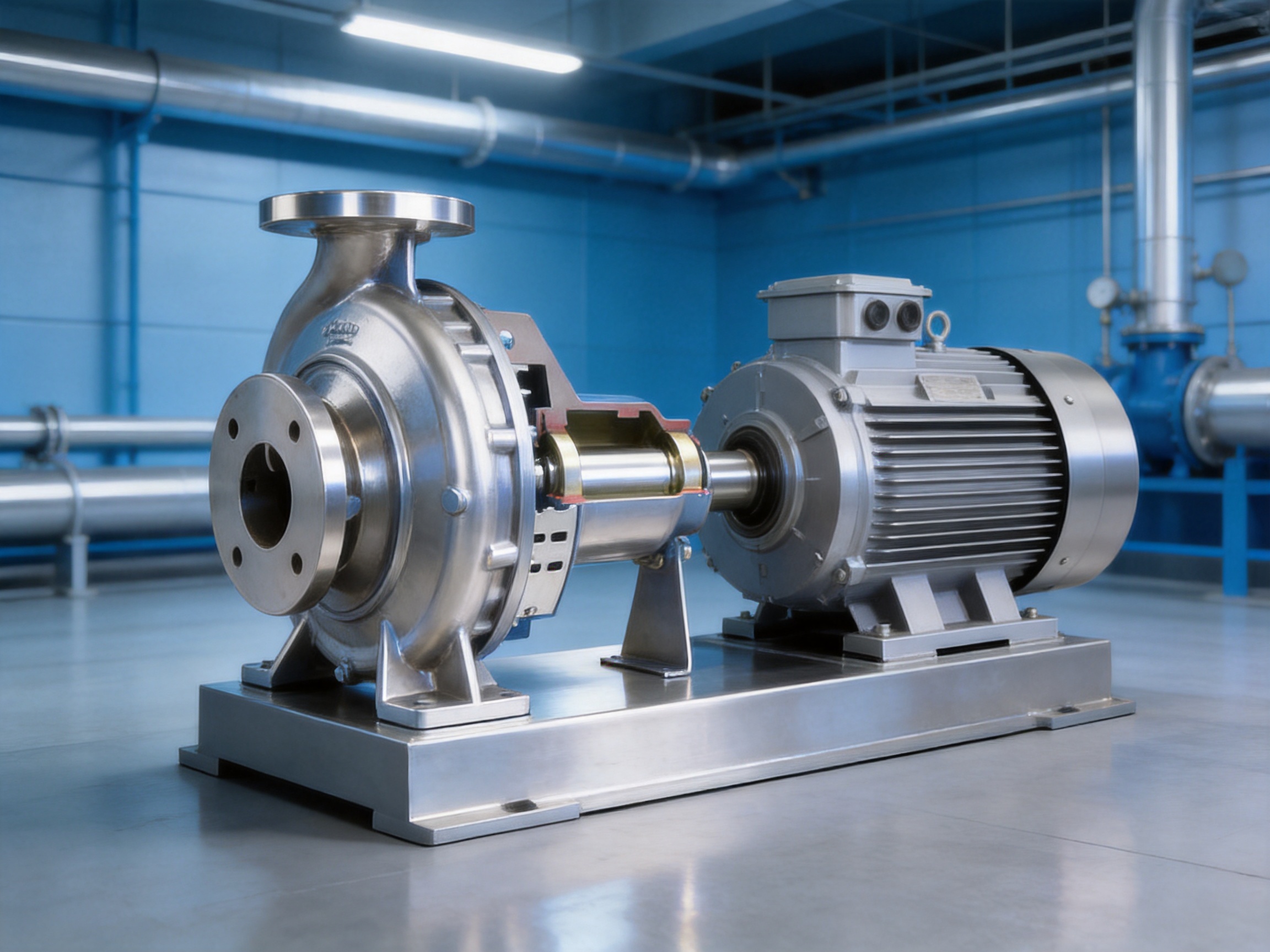
The EISO Series SS Large Bearing Back Pull-Out End Suction Centrifugal Pump provides a practical combination of hydraulic performance, mechanical durability, maintenance accessibility, and configuration flexibility. Its stainless steel impeller options, robust bearing system, standard IEC motor compatibility, replaceable wear rings, and standardized industrial design make it suitable for a broad range of commercial and industrial water applications.
Its value is further strengthened by the manufacturing and export capabilities of Taizhou Edwin Electric Co., Ltd. The company’s experience in research and development, mass production, international supply, and multiple pump categories gives customers access to a wider water-system resource. This is particularly helpful for projects that require several pump types or coordinated procurement services.
Before ordering, users should confirm the complete duty point, liquid properties, materials, seal arrangement, motor specifications, flange dimensions, certifications, delivery requirements, and spare-parts plan. With correct selection and installation, the EISO Series can provide dependable water pressure, efficient fluid transfer, and maintainable long-term service.
1. ISO2858, End-Suction Centrifugal Pumps: Designation, Nominal Duty Point, and Dimensions.
2. ISO5199, Technical Specifications for Centrifugal Pumps, Class II.
3. International standards for industrial pipe flanges and PN16 flange dimensions.
4. Manufacturer’s EISO Series product information, performance documentation, component materials, and installation data.
5. Manufacturer’s technical information on pump casing construction, impeller design, bearing arrangements, shaft sealing, wear rings, and maintenance configuration.
6. General engineering principles for centrifugal pump selection, NPSH evaluation, hydraulic efficiency, shaft alignment, mechanical seal operation, and preventive maintenance.
aseriesnoisereductiondesignacid-baseverticalsurfacepump-1.jpg "EV(F)A Series Noise Reduction Design Acid-base Vertical Surface Pump")
edwina@edwin-pump.com
+86-13586290903 (WhatsApp)
Xuri Gongliang Cutting Tool Entrepreneurship Park, Wenqiao Town, Wenling City, Taizhou City, Zhejiang Province, China

High Performance Smart Pump Factory


 English