edwina@edwin-pump.com

View All Products
en
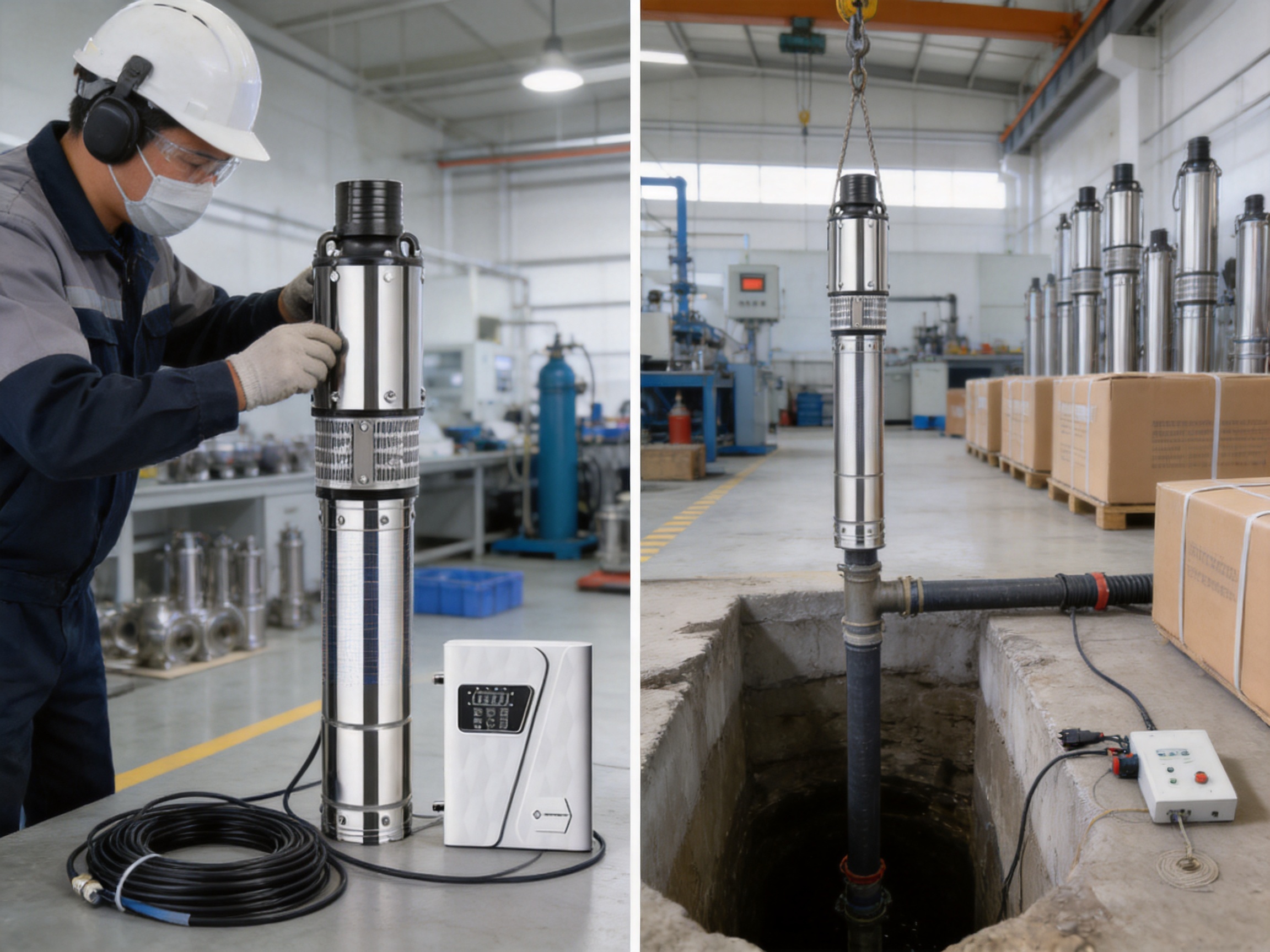
Reliable water access is essential for agriculture, livestock production, rural communities, industrial facilities, construction sites, and many other applications. In locations where grid electricity is unstable, expensive, or unavailable, solar pumping offers an efficient and sustainable alternative. However, solar-only systems can face interruptions when sunlight is weak, weather conditions change, or water demand continues after sunset. The 6/8ADPC AC/DC Hybrid Brushless Motor Solar Deep Well Pump addresses this challenge by combining solar DC power with conventional AC electricity in one flexible pumping solution.
This high-performance submersible pump is engineered for deep well applications that require strong flow, substantial lifting capability, reliable operation, and long service life. Its hybrid power architecture allows the pump to use solar energy whenever sufficient DC power is available and conventional AC electricity when solar generation is insufficient. This operating principle supports stable water delivery throughout the day and night while reducing dependence on a single energy source.
The pump is equipped with a brushless motor designed to improve efficiency, reduce mechanical wear, lower maintenance requirements, and extend operating life. Its stainless steel construction provides resistance against corrosion in demanding outdoor and underground environments. Combined with precision hydraulic engineering, wide voltage adaptability, and compatibility with intelligent solar control systems, the pump provides a practical choice for customers seeking dependable water infrastructure with lower long-term energy costs.
A conventional solar water pump normally depends entirely on electricity generated by photovoltaic panels. During periods of strong sunlight, such a system can perform efficiently. However, its output may decrease during cloudy weather, early mornings, late afternoons, or seasonal changes. A traditional grid-powered pump, by comparison, can operate whenever electricity is available but may involve high energy costs and may be unsuitable for remote locations.
An AC/DC hybrid pump combines the advantages of both systems. The 6/8ADPC series can receive DC power from a solar array and AC power from a conventional electrical supply. The associated controller manages the available power source and supports automatic switching. When solar power is adequate, the system can prioritize renewable energy. When solar input drops below the required operating level, AC power can be used to maintain water delivery.
This arrangement is especially valuable for irrigation and commercial water supply. Water demand does not always follow the solar generation curve. Crops may require irrigation at specific times, livestock need dependable access to water, and industrial processes may need continuous pumping. Hybrid operation minimizes the risk of an empty storage tank, interrupted irrigation cycle, or production delay caused by temporary reductions in solar output.
The hybrid structure also gives system designers greater flexibility. A project can begin with solar operation and later integrate grid power, backup generation, or other electrical sources. This adaptability can reduce the need for oversized battery storage. In many large pumping projects, sending solar energy directly to the pump during daylight hours is more practical than storing all energy in batteries for later use.
The main feature of the pump is its ability to work with both AC and DC input sources. The specified models use AC380/DC520V ratings, with an optimum DC input range of approximately 520V to 650V. These electrical parameters are suitable for larger commercial solar pumping installations that use a properly designed high-voltage photovoltaic array and compatible control equipment.
Automatic source management helps the system respond to changing energy conditions. Instead of requiring operators to manually reconnect cables or change operating modes, the controller can manage the transition between solar DC and AC power. This reduces operational complexity and helps protect the pump from unsuitable electrical conditions when the system is correctly configured.
For installers, the hybrid power input is an important advantage over single-source pumps. A solar-only pump may require a separate backup system, while an AC-only pump does not take full advantage of available renewable energy. The hybrid model integrates both possibilities into one pumping solution, helping simplify project planning and improve resilience.
The brushless motor is designed to operate without the carbon brushes and mechanical commutators used in many conventional brushed motors. Because there are fewer friction-based electrical contact components, brushless construction can reduce wear, heat generation, electrical losses, and maintenance requirements.
Brushless motors can also provide smooth rotation and stable operating performance. This is particularly useful in deep well applications, where the pump may be installed far below ground level and difficult to remove for servicing. Reducing the number of wear components can help extend maintenance intervals and lower the total cost of ownership over the life of the installation.
Another important benefit is improved motor efficiency. Lower internal losses mean that a greater proportion of input energy can be converted into useful pumping work. In a solar application, efficient energy conversion is especially important because photovoltaic power varies throughout the day and is more valuable when every available watt is used effectively.
The 6/8ADPC pump is designed for installation in deep well environments. A submersible configuration places the pump below the water level, allowing it to push water upward through the discharge pipe. This arrangement avoids many of the suction limitations associated with surface-mounted pumps and is suitable for wells where the water level is located far below ground.
Submersible installation can also help reduce priming problems and surface noise. Once properly installed below the water level, the pump remains ready to move water when the control system sends an operating command. Correct well sizing, cable selection, pipe installation, and protection against dry running remain essential for dependable performance.
The pump uses a durable stainless steel design intended to withstand outdoor, underground, and water-contact conditions. Stainless steel offers strong resistance to corrosion and can support long-term operation in environments where ordinary materials may deteriorate more quickly.
Material selection is particularly important for submersible pumps because the product is exposed continuously to water and may be difficult to access after installation. A corrosion-resistant housing helps protect the motor and hydraulic components while maintaining mechanical integrity. It also supports a clean and professional installation for agricultural, industrial, municipal, and residential projects.
The listed 6/8ADPC models are designed for high-volume pumping. The performance data identifies a maximum flow rate of up to 135 cubic meters per hour, with maximum heads ranging from 35 meters to 150 meters depending on the model configuration. These specifications allow the series to serve a wide range of pumping requirements, from relatively high-flow irrigation to applications requiring greater vertical lift.
Maximum flow and maximum head should not be interpreted as simultaneous operating points. Actual performance depends on the system curve, pipe diameter, pipe length, elevation difference, friction losses, valves, fittings, water conditions, and available electrical power. A professional selection process should match the pump curve to the required duty point rather than relying only on the maximum values.
For example, a field irrigation project may prioritize high flow at a moderate head, while a rural water supply project may require less flow but greater lifting capability. The availability of several power and head options within the series helps engineers select a model that more closely fits the actual application.
| Model | AC/DC Voltage | Optimum DC Input | Rated Power | Maximum Flow | Maximum Head | Outlet | Cable Length | Solar Array VOC | Recommended Solar Power |
| 6/8ADPC135-35-380/520-7500 | AC380/DC520V | 520–650V | 7,500W | 135m³/h | 35m | 4 inches | 2m | Below 900V | At least 1.3 × pump power |
| 6/8ADPC135-75-380/520-15000 | AC380/DC520V | 520–650V | 15,000W | 135m³/h | 75m | 4 inches | 2m | Below 900V | At least 1.3 × pump power |
| 6/8ADPC135-113-380/520-22000 | AC380/DC520V | 520–650V | 22,000W | 135m³/h | 113m | 4 inches | 2m | Below 900V | At least 1.3 × pump power |
| 6/8ADPC135-150-380/520-37000 | AC380/DC520V | 520–650V | 22,000W as listed | 135m³/h | 150m | 4 inches | 2m | Below 900V | At least 1.3 × pump power |
The final row in the supplied performance information lists a model code ending in 37000 but identifies the power as 22,000W. This specification should be confirmed with the manufacturer or technical sales team before ordering, engineering, or installation. Such verification is a normal part of professional pump selection and helps ensure that the motor, controller, solar array, cable, and protection devices are correctly matched.
A solar-only pump can be highly economical during sunny periods, but its operation may be limited by weather and daylight. If the system has no battery bank or backup source, water output may decline when solar irradiance falls. The AC/DC hybrid design provides an additional energy pathway, allowing the system to continue operating when the solar array cannot deliver sufficient power.
This advantage is especially important for livestock farms, commercial greenhouses, water treatment installations, and community water systems. These applications may require a predictable water supply rather than operation only during ideal solar conditions. The hybrid arrangement improves continuity while still allowing the customer to reduce the use of grid electricity during periods of strong sunlight.
An AC-only submersible pump can deliver consistent output when the grid is reliable, but it may incur significant electricity costs over many years. In remote areas, extending the grid to a well can also involve expensive infrastructure. The hybrid pump can use photovoltaic power as the primary daytime energy source, reducing operating expenses and improving access to water where grid electricity is limited.
The ability to operate from both sources also gives the customer greater flexibility during energy price changes. Solar generation can offset daytime consumption, while AC power can be reserved for periods when water demand is high but solar energy is unavailable. This operating strategy can improve the financial performance of a pumping project.
Brushed motors rely on components that gradually wear through friction and electrical contact. These parts may require periodic replacement, and the associated friction can contribute to heat and energy loss. The brushless motor in the 6/8ADPC series is designed to reduce these issues and provide smoother, quieter performance.
Lower maintenance is a significant advantage in deep well installations. Accessing a submerged pump can require lifting equipment, labor, and service downtime. A motor designed for long service intervals can therefore reduce both direct maintenance costs and the disruption caused by repairs.
Small low-voltage solar pumps are useful for domestic water storage, garden irrigation, and light-duty applications. However, they may not be suitable for large commercial flow rates or significant lifting requirements. The 6/8ADPC series is configured for higher-power installations, with models reaching 22,000W as listed in the supplied data and supporting flow rates up to 135 cubic meters per hour.
Its higher-voltage architecture can be appropriate for large photovoltaic arrays where long cable distances and high power levels must be managed efficiently. System designers must still comply with local electrical regulations and use qualified personnel, because high-voltage DC systems require careful insulation, disconnects, grounding, overcurrent protection, and commissioning procedures.
The pump is designed to work with intelligent control systems and is described as smart MPPT controller ready. Maximum power point tracking, commonly known as MPPT, helps a solar pumping system obtain useful power from photovoltaic panels under changing sunlight and temperature conditions.
Solar panels do not produce a fixed voltage and current in every operating condition. Their electrical output changes with irradiance, temperature, shading, and panel characteristics. An MPPT controller can adjust the operating point so the system extracts energy more effectively from the array. This can improve daily water production, especially during periods when sunlight is weaker than the design condition.
Intelligent control can also support protective functions such as overvoltage protection, undervoltage protection, overload protection, overcurrent protection, dry-run protection, and fault monitoring. The exact features depend on the selected controller and system configuration. When the controller is correctly matched to the pump, it becomes an important part of the complete water supply system rather than a simple switching device.
Automatic protection also helps reduce the risk of damage caused by abnormal operating conditions. For example, a well may temporarily run dry, a discharge valve may be closed, or the power supply may fluctuate. A suitable controller can detect certain problems and stop or adjust the pump before damage occurs. Operators should review the controller manual to understand which protections are included and how alarms are reset.
Taizhou Edwin Electric Co., Ltd., operating under the Edwin Pump name, was founded in 2008. The company is described as an integrated manufacturing enterprise covering independent research and development, mass production, and global export. This structure is important for customers who need more than a standard catalog product. It supports technical communication, production planning, quality coordination, and after-sales service through a connected organization.
Independent research and development allows the manufacturer to improve motor structures, hydraulic components, control compatibility, and product configurations in response to market requirements. Solar pumping systems must balance electrical efficiency, hydraulic performance, mechanical durability, and environmental resistance. A manufacturer with experience across these areas can develop products that are more suitable for complete system applications.
Mass production capability provides another advantage. Commercial projects often require consistent specifications, repeat orders, stable component sourcing, and dependable delivery schedules. A structured production operation can support repeatability from one unit to the next while helping distributors and engineering contractors plan inventory and project execution.
The company’s product portfolio includes deep well pumps, submersible pumps, domestic booster pumps, circulation pumps, solar water pumps, intelligent booster pumps, and related water treatment peripheral products. This broad product range gives customers access to a wider selection of pumping technologies from one manufacturing source. It also helps the company understand different operating environments, from household water supply to industrial and agricultural systems.
Since 2018, the company has invested in new energy and intelligent technology. This focus is directly relevant to the 6/8ADPC series, which combines renewable-energy operation with intelligent control compatibility. Solar pumping requires knowledge of both pump hydraulics and photovoltaic electrical systems. Investment in these fields can help the manufacturer produce more practical hybrid products for modern energy and water management projects.
A reliable hybrid submersible pump depends on the quality of multiple manufacturing stages. Motor components must be produced with suitable dimensional accuracy. Rotor and stator assemblies require proper alignment and electrical insulation. Hydraulic components must be balanced and assembled to reduce vibration. Stainless steel parts must be formed, machined, finished, and inspected to provide dependable resistance against the working environment.
Electrical connections require particular attention in submersible equipment. Cable joints, seals, insulation systems, and terminal structures must be assembled correctly to prevent moisture penetration. In a high-voltage DC solar installation, insulation quality is even more important because the array may operate at potentially hazardous voltage levels. Professional production and inspection procedures help reduce the possibility of electrical failure during service.
Quality control should also include dimensional inspection, electrical testing, operating tests, leak checks, vibration evaluation, and performance verification where applicable. Testing helps identify problems before shipment and supports consistency across production batches. For export customers, documentation and model identification are equally important because installers need accurate information for system design and compliance.
In addition to manufacturing, the company has established related import and export organizations to support procurement planning, order tracking, cross-border delivery, and foreign trade services. This one-stop approach can be valuable for international buyers who must coordinate product selection, documentation, shipping, and delivery across different countries.
Global pump projects may involve distributors, engineering contractors, agricultural operators, municipal buyers, and industrial procurement teams. Each group may require different technical documents, packaging arrangements, labeling, inspection procedures, and delivery schedules. A professional export team can help coordinate these requirements and reduce communication gaps between the factory and the final installation site.
Customers should provide complete project information when requesting a quotation. Important details include well depth, static and dynamic water levels, required flow rate, total dynamic head, pipe size, water quality, daily operating hours, available AC supply, solar array conditions, installation environment, and local electrical standards. Better project information enables more accurate model selection and reduces the risk of under-sizing or over-sizing the equipment.
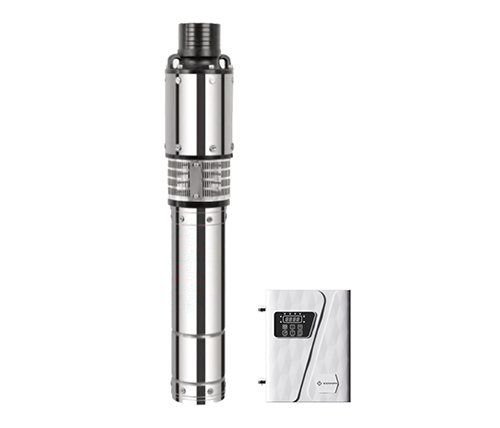
6/8ADPC AC/DC Hybrid Brushless Motor Solar Deep Well Pump
Agriculture is one of the most important application areas for hybrid solar deep well pumps. Farms may be located far from electrical infrastructure, and irrigation costs can represent a major part of operating expenses. A solar-assisted pump can use daytime sunlight to supply water for fields, orchards, nurseries, and greenhouses.
The high-flow models in the 6/8ADPC series can be considered for projects that require substantial water movement. The 4-inch outlet configuration, combined with a maximum listed flow of 135 cubic meters per hour, may suit larger irrigation networks when the pump duty point and pipe system are properly matched. Irrigation designers should calculate the required pressure at sprinklers, drip systems, filters, valves, and distribution manifolds before selecting the pump.
For orchard irrigation, the pump can supply water to storage tanks or pressurized distribution systems. In greenhouse projects, reliable pumping supports crop production and climate management. In field irrigation, the hybrid energy structure can reduce dependence on diesel generators and grid electricity. Where water demand is predictable, operators may also combine direct solar pumping with elevated storage tanks, allowing water to be stored during daylight and distributed later.
Water storage is often a useful complement to solar pumping. Instead of relying entirely on batteries, the system stores energy in the form of elevated water. During sunny periods, the pump fills a tank or reservoir. Water can then be used for irrigation during evening hours or brief periods of reduced sunlight. This approach can reduce battery replacement costs and simplify system maintenance.
Livestock farms require dependable water for cattle, poultry, sheep, horses, and other animals. A water interruption can affect animal health, cleaning operations, and farm productivity. The hybrid pump can provide an additional level of security by using AC electricity when solar conditions are not sufficient.
Rural homes, schools, clinics, and community projects may also benefit from a pump that can operate in both off-grid and grid-connected conditions. Where a stable grid is unavailable, solar power can support normal operation. If the grid later becomes available, it can provide backup power without requiring a complete pump replacement.
In community water systems, project planners should consider demand patterns, storage capacity, well recovery rate, and sanitation requirements. A pump’s maximum flow may exceed the sustainable yield of the well, so the system must be controlled to avoid excessive drawdown. Dry-run protection and water-level monitoring can be valuable additions for wells with variable recovery rates.
Industrial facilities may need water for process operations, cooling, cleaning, dust suppression, or utility services. Construction sites may use deep well pumping for dewatering, temporary water supply, or site development. Mining and water treatment operations can also require high-volume pumping with substantial lifting capability.
The AC/DC hybrid structure can support industrial energy management strategies. During periods of strong solar production, the pump may use renewable energy to reduce demand from the electrical grid. During nighttime or low-production periods, AC power can maintain the required water flow. This can be useful for facilities seeking to reduce energy costs or improve their renewable-energy utilization.
Industrial applications require careful attention to water quality and operating conditions. Abrasive particles, corrosive chemicals, high temperatures, or excessive sand content may affect pump life. The supplied product information emphasizes stainless steel durability, but final material suitability should always be confirmed against the actual water chemistry and solids content. Pre-installation water analysis is recommended for demanding applications.
The correct pump should be selected according to the required flow and total dynamic head. Total dynamic head includes the vertical distance from the water level to the discharge point, pressure required at the outlet, friction losses in pipes, and losses through valves, filters, elbows, and other fittings.
Static water level alone is not enough for pump selection. When a well is operating, the water level may fall to a lower dynamic level. The pump must be able to deliver the required flow at this operating condition. Engineers should also review the well’s sustainable yield to prevent excessive drawdown or dry running.
Performance curves should be used to identify the actual operating point. The maximum head is generally associated with very low or zero flow, while the maximum flow is normally achieved at a lower head. Selecting a pump only by its maximum flow or maximum head can result in poor efficiency or insufficient pressure.
The supplied information recommends solar panel power of at least 1.3 times the pump power. This ratio provides a starting point for photovoltaic array planning, but the final array size should account for local solar radiation, temperature, panel orientation, seasonal conditions, shading, controller efficiency, cable losses, and the desired daily water volume.
The specified solar panel open-circuit voltage is below 900V, while the optimum DC input is identified as 520V to 650V. These values must be carefully coordinated. The number of panels in series determines voltage, while the number of parallel strings determines current and total power. The array must remain within the controller’s voltage and current limits under both normal operating and cold-weather open-circuit conditions.
High-voltage solar arrays require professional design. Installers should use appropriate DC isolators, fuses or circuit breakers, surge protection, grounding equipment, insulated connectors, and weather-resistant cable routing. All work should comply with local electrical codes and occupational safety requirements.
The AC input is specified as AC380V for the listed models. Before installation, the available electrical supply must be confirmed, including phase configuration, frequency, voltage stability, protection capacity, and connection requirements. The controller should be configured according to the manufacturer’s instructions, and the AC and DC sources must never be connected incorrectly or combined outside the approved architecture.
Automatic switching should be tested during commissioning. The installer should verify that the system responds correctly when solar power is reduced, when AC power is introduced, and when either source is unavailable. Testing should also confirm that the pump restarts safely after a fault or power interruption and that all protective functions operate as intended.
The well should be developed and cleaned before pump installation. Excessive sand, sediment, or debris can damage hydraulic components and reduce performance. The pump must be positioned according to the installation instructions, with sufficient submergence and adequate clearance from the well bottom.
The discharge pipe should be selected to limit friction losses and withstand the expected pressure. Undersized piping can reduce flow, increase energy consumption, and create unnecessary strain on the pump. Valves, non-return devices, pressure gauges, and flow measurement equipment should be installed where appropriate for system control and maintenance.
The 2-meter cable length listed in the performance information may require an approved extension or connection arrangement depending on the well depth and controller location. Cable joints must be completed using suitable waterproof methods and must be rated for the system voltage. Improper cable splicing is a common source of submersible pump failure and should be avoided.
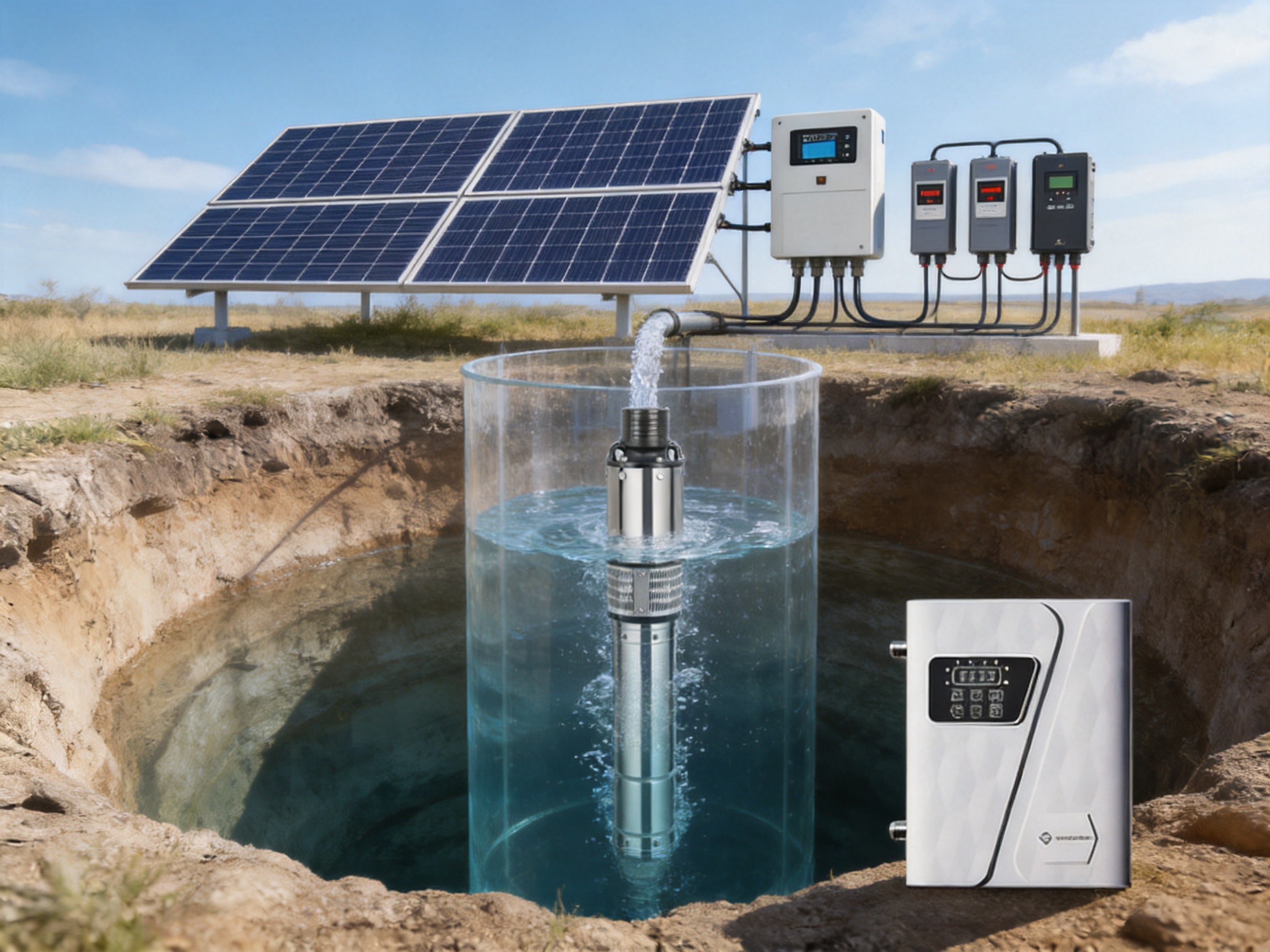
Solar operation can reduce the amount of electricity purchased from the grid and lower reliance on fossil-fuel-powered generators. For agricultural and rural projects, this can reduce recurring operating costs while providing greater energy independence. The environmental benefit is particularly meaningful when the pump replaces a diesel generator that produces exhaust emissions, noise, and fuel-related maintenance requirements.
The brushless motor contributes to energy efficiency by reducing mechanical and electrical losses. When combined with MPPT control, the system can use photovoltaic energy more effectively across changing weather conditions. Efficient pumping does not eliminate the need for proper system design, however. Poorly sized pipes, excessive friction, leaks, and over-pressurized networks can waste energy even when the pump itself is efficient.
Water efficiency should be considered alongside energy efficiency. Irrigation systems using drip lines, pressure regulation, soil moisture monitoring, or scheduled watering can reduce unnecessary pumping. Storage tanks and intelligent controls can help match water production to actual demand. The pump is most effective when integrated into a complete water and energy management strategy.
Although the brushless motor and stainless steel construction are designed for long service, proper maintenance remains important. Operators should monitor flow, pressure, current, operating hours, water quality, and fault records. A gradual decrease in flow may indicate pipe blockage, well drawdown, wear, voltage problems, or changes in the water source.
Routine inspections should include the solar array, controller, electrical connections, grounding system, discharge pipe, valves, and storage equipment. Solar panels should be kept reasonably clean and free from shading. Loose electrical connections can produce heat and voltage drop, so they should be checked by qualified personnel during scheduled service.
The pump should not be operated outside its recommended conditions. Running without sufficient water, operating against a closed discharge valve, exceeding the permitted voltage, or pumping water with unsuitable solids can shorten service life. A protection system should be used wherever possible, but protection devices are not a substitute for correct installation and operation.
One of the principal lifecycle benefits of a submersible brushless pump is the potential reduction in service interventions. Because the pump is installed below ground, every removal operation can be expensive. A durable product with appropriate control, correct water conditions, and planned maintenance can help reduce the total cost associated with downtime and lifting equipment.
Choosing a pump involves more than comparing the motor wattage or maximum flow printed on a data sheet. A reliable supplier should be able to support model selection, electrical matching, controller configuration, documentation, packaging, shipment, and technical communication. This is particularly important for hybrid solar systems because the pump, controller, photovoltaic array, AC supply, and hydraulic network must operate as one system.
Edwin Pump’s experience in deep well pumps, submersible pumps, solar water pumps, intelligent booster pumps, and circulation pumps provides a broad technical foundation for different water applications. Its related import and export organizations are intended to support international procurement, order tracking, and cross-border delivery. For overseas buyers, this can simplify communication and help coordinate the complete purchasing process.
Customers should request the latest technical drawings, performance curves, installation instructions, controller specifications, warranty terms, and conformity documents before placing an order. They should also confirm the exact rated power of each model, especially when a model code and table entry appear inconsistent. Clear documentation protects both the buyer and the manufacturer by establishing the expected operating conditions.
For large projects, buyers may also request pre-shipment inspection, sample testing, serial number records, spare parts recommendations, and production updates. These measures are useful when pumps will be installed in remote regions or when multiple units must be delivered for a coordinated project.
The purchase price is only one part of a pumping project’s cost. A complete evaluation should include the solar array, controller, AC connection, cables, pipes, valves, storage tanks, installation labor, maintenance, energy consumption, and expected service life. A hybrid pump may offer greater value than a lower-cost single-source product when the project requires reliable operation across changing conditions.
Solar energy can reduce ongoing electricity consumption, while AC backup can prevent costly water interruptions. The brushless design may reduce maintenance expenses, and stainless steel construction may improve durability in corrosive environments. These benefits should be evaluated over the entire lifecycle rather than only at the initial purchasing stage.
For agricultural users, the financial return may be measured through reduced irrigation costs, improved crop consistency, and lower generator fuel consumption. For industrial users, value may come from reducing production interruptions and managing peak electricity demand. For rural water projects, the most important benefit may be dependable access to water with manageable operating requirements.
Energy prices, solar resources, water demand, and installation conditions vary by location. A project-specific financial model should therefore be prepared before investment. The manufacturer or authorized technical partner can provide pump data, but local engineers should confirm the full system economics and regulatory requirements.
Before selecting a 6/8ADPC pump, the purchaser should document the required water flow in cubic meters per hour or another suitable unit. The required flow should be based on actual demand, not simply the maximum amount of water that the well can produce. Excessive flow may reduce well recovery and waste energy.
The total dynamic head should include the lowest expected operating water level, elevation to the delivery point, required outlet pressure, pipe friction, and accessory losses. If the system supplies sprinklers, filters, drip irrigation, or pressure vessels, their requirements must be included in the calculation.
The water quality should be reviewed for sand, suspended solids, salinity, temperature, acidity, alkalinity, and corrosive chemicals. Stainless steel provides useful corrosion resistance, but no material is suitable for every water condition. Special applications may require additional material confirmation or filtration.
The electrical design should confirm the AC voltage, DC operating range, maximum photovoltaic open-circuit voltage, controller ratings, cable size, grounding, and protection equipment. The solar array should be designed for the local climate and desired daily production rather than only the pump’s nominal wattage.
Finally, the installer should plan for access, lifting, commissioning, monitoring, and future maintenance. A deep well pump is easier and safer to service when the installation includes suitable lifting points, isolation valves, electrical disconnects, test ports, and clear documentation.
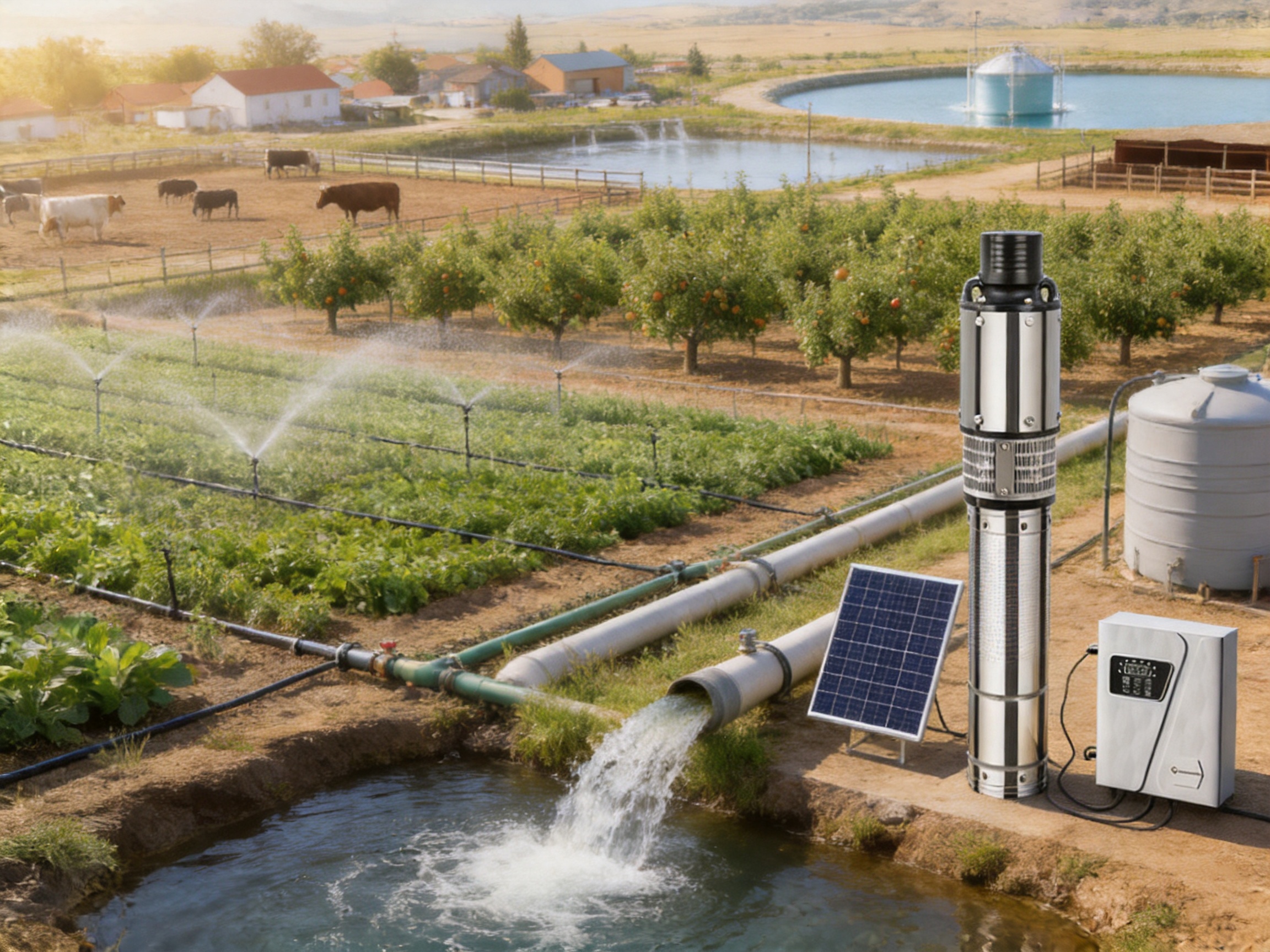
An AC/DC hybrid solar deep well pump is a submersible pump that can operate using both DC electricity from solar panels and AC electricity from the grid or another approved AC source. The 6/8ADPC series is designed to switch between these sources through a compatible control system, helping maintain water delivery when sunlight is insufficient.
Yes, the pump can operate at night when a suitable AC power source is available. A system may also use a water storage tank, battery system, or other approved backup arrangement. Solar panels alone generally cannot provide direct operating power after sunset unless stored energy or another source is included.
The brushless motor is designed to reduce mechanical wear, friction, heat, and maintenance compared with brushed motor designs. It can provide smooth and quiet operation while supporting longer service life, which is especially valuable in deep well installations where pump removal is difficult.
The supplied performance information lists a maximum flow of 135 cubic meters per hour for the presented models. Actual flow depends on the selected model, total dynamic head, pipe system, water level, controller, and available input power.
The listed models provide maximum heads of 35 meters, 75 meters, 113 meters, and 150 meters. These are maximum values under specified test conditions and should not be treated as the guaranteed flow head for every installation. A performance curve and project duty point should be used for final selection.
The supplied data identifies an optimum DC input range of approximately 520V to 650V and specifies a solar panel open-circuit voltage below 900V. The exact solar array configuration must be designed to remain within the controller’s permitted voltage and current limits under all expected temperatures and operating conditions.
Yes, the pump is intended for agricultural irrigation applications, including fields, orchards, and greenhouses. It may be used with storage tanks, sprinkler systems, drip irrigation, or other distribution networks when the hydraulic duty point and water quality are suitable.
Yes, it can be used for livestock water supply when properly sized and installed. Storage tanks and level controls are often recommended so that water remains available during periods of low solar production or fluctuating demand.
A compatible controller is required to manage the solar DC input and protect the pump. The product is described as smart MPPT controller ready, meaning it can work with intelligent control technology designed to improve solar energy utilization and provide automatic protection. The exact controller model should be confirmed before purchase.
Direct connection should not be made unless the complete pump system is specifically designed and approved for that arrangement. High-voltage solar pumping systems normally require a compatible controller, disconnect equipment, protection devices, correct grounding, and professional commissioning.
Installers should check the well depth, static and dynamic water levels, sustainable well yield, required flow, total dynamic head, pipe size, water quality, AC supply, photovoltaic array voltage, controller compatibility, cable requirements, and local safety regulations.
The final model should be selected according to the actual flow and head duty point rather than maximum specifications alone. The performance curve, system resistance, solar conditions, AC availability, and expected daily water demand should all be considered. Technical confirmation is recommended for every project.
Stainless steel provides useful corrosion resistance, but suitability depends on the specific water chemistry. Salinity, acidity, chlorides, chemicals, and abrasive solids can affect material life. A water analysis should be reviewed before installation in unusual or highly corrosive conditions.
The recommendation means that the solar array should have a power capacity of at least 1.3 times the pump power as a starting point. This helps provide sufficient energy under less-than-ideal sunlight. Actual sizing should also consider regional solar radiation, seasonal changes, temperature, shading, system losses, and desired water production.
Potential applications include agricultural irrigation, livestock water supply, rural and off-grid water projects, industrial utility systems, construction, mining, water treatment, and hybrid backup pumping installations.
The 6/8ADPC AC/DC Hybrid Brushless Motor Solar Deep Well Pump combines renewable-energy operation, AC backup capability, efficient brushless motor technology, stainless steel construction, and high-volume pumping performance. These features address several weaknesses found in single-source, brushed-motor, or low-capacity pumping systems.
Its hybrid architecture helps provide water during changing weather and nighttime conditions. Its brushless motor is designed to reduce wear and energy loss. Its submersible configuration supports deep well use, while its stainless steel structure is intended for demanding water environments. Compatibility with intelligent MPPT control further supports efficient solar energy utilization and automatic system protection.
The product is particularly suitable for agricultural irrigation, livestock farms, rural communities, industrial facilities, construction projects, and other applications that require dependable water supply with flexible energy options. To achieve the best result, users should combine the pump with correct hydraulic sizing, a properly designed photovoltaic array, a compatible controller, suitable electrical protection, and professional installation.
With manufacturing experience dating back to 2008, a product portfolio covering multiple pump categories, investment in new energy and intelligent technologies, and support for global procurement, Taizhou Edwin Electric Co., Ltd. is positioned to serve customers seeking integrated water pumping solutions. The most successful projects will be those that match the pump carefully to actual site conditions and use the manufacturer’s technical resources during selection and commissioning.
1. Product information supplied for the 6/8ADPC AC/DC Hybrid Brushless Motor Solar Deep Well Pump.
2. Product performance data and model specifications supplied by the manufacturer.
3. Manufacturer company information concerning research and development, mass production, export services, and product categories.
4. General principles of submersible pump selection, hydraulic system design, and total dynamic head calculation.
5. General engineering principles for photovoltaic pumping systems, MPPT control, electrical protection, and solar array sizing.
6. General maintenance practices for deep well submersible pumps, brushless motors, stainless steel equipment, and water supply systems.
edwina@edwin-pump.com
+86-13586290903 (WhatsApp)
Xuri Gongliang Cutting Tool Entrepreneurship Park, Wenqiao Town, Wenling City, Taizhou City, Zhejiang Province, China

High Performance Smart Pump Factory


 English