
edwina@edwin-pump.com

View All Products
en
Reliable water pressure is essential in homes, farms, workshops, and small commercial facilities. When a municipal supply system cannot deliver sufficient pressure, or when water must be drawn from a shallow well, storage tank, or underground source, a properly selected self-priming jet pump can provide an efficient and practical solution. The JBP-PT Series Portable Brass Impeller Easy Installation Self-Priming JET Pump is designed for these demanding situations, combining compact construction, high pumping head, automatic pressure control, and durable water-contact components.
This series is developed for users who need more than a basic transfer pump. Its self-priming design supports suction lifting, while the integrated pressure tank and pressure switch help maintain a stable water supply. A brass impeller, stainless steel shaft, treated cast iron body, copper motor winding, thermal protection, and Class F insulation contribute to long service life and dependable operation.
Available in several configurations, including JBP-2PT, JBP-3PT, JBP-2PTZ, and JBP-3PTZ, the range offers power options from 0.6 kW to 0.75 kW and a maximum head of up to 38 meters. With a maximum suction height of 8 meters and flow rates of up to 60 liters per minute, the pump can support residential water boosting, shallow-well supply, garden irrigation, small-scale agricultural use, and selected light commercial applications.
The JBP-PT Series is a portable self-priming jet pump engineered to improve water pressure and deliver water from a lower source to multiple outlets. The pump combines a hydraulic section, electric motor, pressure tank, and pressure control components in one compact unit. This arrangement simplifies installation and reduces the amount of additional equipment required by the user.
A conventional centrifugal pump may require manual priming whenever air enters the suction pipe. A self-priming jet pump is designed to evacuate air from the suction line after the pump casing has initially been filled with water. This makes the product more convenient for applications where the suction pipe is located above the water level or where the pump is not permanently submerged.
The portable format is particularly useful for users who need to move the pump between a storage tank, garden, temporary irrigation area, construction site, or workshop. The unit is not limited to a fixed plant installation. Its compact structure and straightforward connections make it suitable for both permanent and temporary water supply arrangements.
The integrated pressure tank helps reduce frequent motor starting and stopping during low-volume water use. When a tap is opened, the stored water in the tank can supply the initial demand. As pressure decreases, the pressure switch starts the motor. When the required pressure is restored, the motor stops. This operating principle can help improve user comfort, reduce unnecessary cycling, and support longer motor and switch life when the system is correctly installed.
The series uses 1-inch inlet and outlet connections. These connection sizes are widely used in domestic plumbing and small irrigation systems, making the pump compatible with many commonly available pipes, valves, filters, check valves, and fittings.
seriesportablebrassimpellereasyinstallationself-primingjetpump.jpg)
JBP-PT Series Portable Brass Impeller Easy Installation Self-priming JET Pump
The self-priming function is one of the most important advantages of this pump. In a suitable installation, the pump can remove air from the suction line and resume normal water delivery after the pump casing has been filled correctly. This is especially valuable for shallow wells, rainwater tanks, water storage containers, and household systems where the pump is positioned above the water source.
A maximum suction height of 8 meters gives the pump useful flexibility for vertical lifting from a lower water level. Actual performance depends on pipe length, pipe diameter, elbows, foot valves, water temperature, air tightness, elevation, and the condition of the water source. The stated maximum should therefore be treated as a design limit rather than a guaranteed operating point for every installation.
The suction pipe must be completely airtight. Even a small leak can allow air to enter the system and prevent stable priming. A properly sized foot valve or non-return valve is also recommended where the water source is below the pump. These installation details are essential for achieving the best results from any self-priming pump.
The JBP-PT Series provides a maximum head of 38 meters. This makes it suitable for applications requiring pressure elevation, such as supplying water to upper floors, overcoming pipe resistance, or feeding several household outlets. The maximum head is higher than that of many basic garden transfer pumps, which are generally intended for short-distance, low-resistance water movement.
High head capability is especially useful when the water system includes long pipe runs, multiple bends, filters, shower fittings, water heaters, or washing machines. These components create pressure losses. A pump with insufficient head may deliver acceptable flow at the outlet but fail to maintain satisfactory pressure when more than one outlet is used.
Maximum head and maximum flow are not normally achieved at the same operating point. As discharge pressure increases, flow generally decreases. For system design, installers should consult the actual pump curve and select an operating point that meets both the required flow and the required pressure. The specifications provided for the JBP-PT Series establish the principal capacity range, while final performance depends on the complete piping system.
The pressure tank and pressure switch work together to provide a more stable water supply than a simple manually operated pump. This is useful in households where appliances and taps require consistent pressure. Washing machines, dishwashers, water heaters, showers, and kitchen faucets can all perform more effectively when pressure does not fluctuate excessively.
Stable pressure also improves convenience. Users do not need to start and stop the pump manually each time water is required. The pressure control system responds automatically to changes in demand. This makes the pump appropriate for household water boosting and small water distribution systems.
The pump impeller is manufactured from brass. This material provides several practical benefits in comparison with lower-cost plastic impellers used in some entry-level pumps. Brass offers good dimensional stability, mechanical strength, and resistance to corrosion in normal fresh-water service. It also provides a durable hydraulic component for repeated operation and frequent starts.
The brass impeller is supported by rust-free copper inserts, helping the pump restart more smoothly after extended periods of inactivity. This is important for seasonal homes, holiday properties, garden systems, and standby water supply equipment that may remain unused for weeks or months.
Brass is not a substitute for correct water treatment or appropriate application selection. Water containing abrasive sand, aggressive chemicals, excessive mineral concentration, or other contaminants may require additional filtration and specialized materials. For normal clean-water applications, however, the brass impeller provides a strong balance of durability, cost, and hydraulic reliability.
The AISI 304 stainless steel shaft helps protect water-contact areas from rust. Shaft corrosion can lead to mechanical seal damage, increased friction, vibration, and eventual leakage. By using stainless steel in this important component, the pump is better suited to long-term service in clean-water environments.
The stainless steel shaft also supports reliable mechanical operation in systems that experience repeated starts and stops. When combined with high-quality bearings and correct alignment, it contributes to smooth rotation and reduced mechanical stress.
The single-phase motor includes a built-in thermal protector. If the motor temperature rises excessively because of overload, blocked ventilation, low voltage, excessive starts, or abnormal operating conditions, the protector can interrupt operation to reduce the risk of motor damage. Once the motor cools, the protection system may permit a restart, depending on the specific electrical configuration.
The motor uses Class F insulation, which provides a reliable level of electrical insulation for normal operating conditions. The IP44 protection rating provides protection against solid objects of suitable size and water splashing from typical directions. IP44 does not mean that the motor can be submerged or exposed to high-pressure water jets. The unit should always be installed in a dry, ventilated, and appropriately protected location.
The maximum ambient temperature is +40°C, and the maximum liquid temperature is +60°C. These limits allow the pump to handle a range of normal domestic water conditions, including certain warm-water applications. The pump should not be used for boiling water, steam, chemically aggressive fluids, flammable liquids, or liquids containing large quantities of abrasive solids.
The four listed models share the same general connection size, maximum suction height, and maximum head. Their main difference is motor power and maximum flow. The JBP-2PT and JBP-2PTZ models use a 0.6 kW motor, while the JBP-3PT and JBP-3PTZ models use a 0.75 kW motor.
| Model | Power | Power | Inlet/Outlet | Maximum Flow | Maximum Head | Maximum Suction |
|---|---|---|---|---|---|---|
| kW | HP | L/min | m | m | ||
| JBP-2PT | 0.6 | 0.8 | 1 inch x 1 inch | 50 | 38 | 8 |
| JBP-3PT | 0.75 | 1 | 1 inch x 1 inch | 60 | 38 | 8 |
| JBP-2PTZ | 0.6 | 0.8 | 1 inch x 1 inch | 50 | 38 | 8 |
| JBP-3PTZ | 0.75 | 1 | 1 inch x 1 inch | 60 | 38 | 8 |
The 0.6 kW models are suitable for smaller homes, individual outlets, garden irrigation, and systems with moderate flow demand. The 0.75 kW models provide a higher maximum flow and may be more suitable when several outlets are used or when the pipe system creates greater resistance.
The PT and PTZ designations identify different product configurations within the same general series. Buyers should confirm the exact electrical, control, packaging, and regional specifications with the supplier before ordering. Voltage, frequency, plug type, pressure-switch settings, pressure-tank details, and certification requirements may vary according to the target market.
Model selection should begin with the application rather than motor power alone. The installer should calculate the static lift, required outlet pressure, pipe friction loss, fittings, and desired flow. Selecting a pump that is too small may lead to poor pressure, while selecting a pump that is excessively large can increase energy use and cause undesirable cycling or throttling.
Basic centrifugal pumps are often economical and effective for transferring water between nearby tanks. However, they may require separate priming equipment, an external pressure controller, and an additional pressure tank when used for domestic boosting. The JBP-PT Series integrates several of these functions into one product, simplifying the installation.
The self-priming hydraulic design also provides an advantage when the pump must lift water from a source below the pump. A standard non-self-priming centrifugal pump may lose its prime when air enters the suction line, requiring manual intervention. The jet pump arrangement is more forgiving in these conditions, provided that the initial priming and pipe sealing are completed correctly.
Some low-cost pumps use plastic impellers and lightweight components to reduce manufacturing cost. These products can be satisfactory for occasional garden use, but they may be less suitable for frequent starts, higher pressure operation, or longer service intervals. The brass impeller in the JBP-PT Series provides a more robust alternative for users who prioritize mechanical durability and restart reliability.
The brass impeller also offers a solid hydraulic surface for applications where the pump operates frequently. Together with the stainless steel shaft and copper inserts, it creates a water-contact assembly designed for consistent service rather than only short-term transfer duties.
Submersible pumps are installed inside the water source and are useful when the water level is deep or when the installation requires quiet underwater operation. However, they can be more difficult to inspect, remove, and service. Electrical connections, lifting cables, well diameters, and cooling conditions must also be carefully managed.
The JBP-PT Series remains outside the water source, allowing easier access for inspection, cleaning, pressure adjustment, and replacement of wear components. This makes it a practical choice for shallow wells, storage tanks, and domestic systems where an external pump can be installed safely.
It is not intended to replace deep-well submersible equipment in applications beyond its 8-meter suction capability. Instead, its advantage lies in accessible installation, flexible placement, and convenient pressure boosting for shallow sources.
A manually controlled pump requires the user to operate a switch or valve whenever water is needed. This arrangement is inconvenient and can cause the pump to run dry if it is left operating after the water source is depleted. The integrated pressure switch in the JBP-PT Series supports automatic operation based on system pressure.
Automatic pressure control is particularly beneficial in homes with several water outlets. The pump can respond to demand without requiring the user to access the equipment room. When combined with suitable dry-running protection, filtration, and non-return valves, the system can provide a dependable automatic water supply solution.
Commercial multistage pumps can deliver very high pressure and are appropriate for large buildings, industrial water systems, and demanding process applications. However, they may be excessive for a small home, garden, or workshop. They usually require more complex installation, larger electrical capacity, and greater initial investment.
The JBP-PT Series provides a more compact and economical option for low- to medium-demand installations. It offers high head relative to its size while retaining a simple single-phase motor arrangement. This makes it easier to integrate into domestic systems without the infrastructure associated with large commercial pump sets.
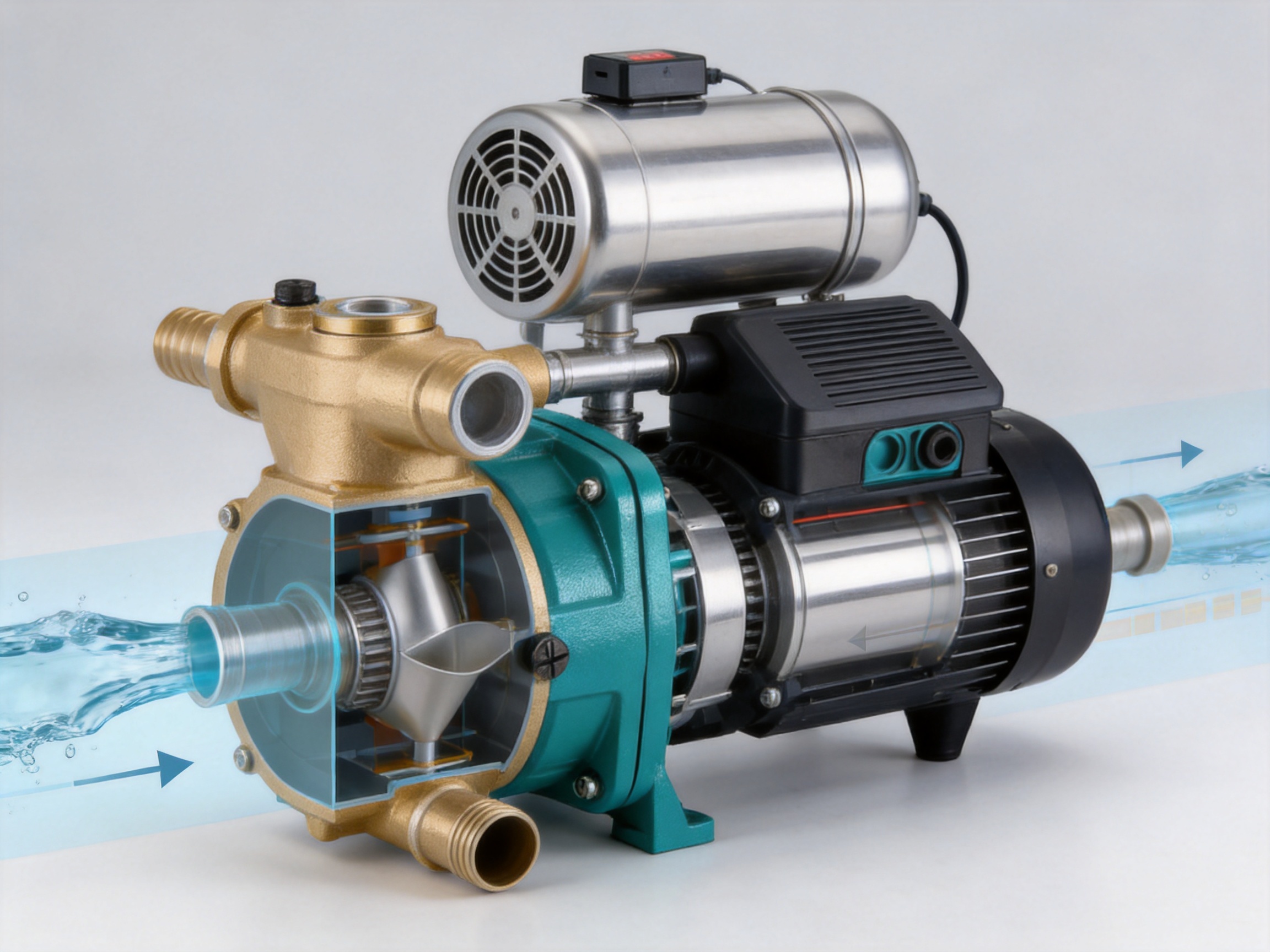
The pump body and support are made from HT200 cast iron and receive special anti-rust treatment. Cast iron provides structural stiffness and helps the hydraulic casing withstand normal operating pressure and mechanical vibration. A rigid pump body also supports better alignment between the motor and hydraulic assembly.
Anti-rust treatment is important because external pump surfaces may be exposed to humidity, condensation, and occasional splashing. The treatment helps extend the useful appearance and service life of the casing. Nevertheless, the pump should be installed under suitable protection and should not be left exposed to continuous rain or flooding.
The Venturi tube and diffuser are made from PPO, a material commonly used for lightweight, dimensionally stable hydraulic components. These parts are central to the jet-pump operating principle. The Venturi section contributes to the recirculation and suction process, while the diffuser helps convert velocity into pressure within the hydraulic passage.
The brass impeller provides the primary energy transfer from the motor to the water. The mechanical seal uses carbon and ceramic mating surfaces. This material combination is widely used in clean-water pumps because it offers reliable sealing performance, reasonable wear resistance, and compatibility with normal fresh-water service.
The pressure tank is constructed from stainless steel according to the listed component information. Its purpose is to store a limited volume of pressurized water and reduce the need for immediate motor operation during small water demands. The tank also supports more stable pressure behavior in the piping network.
Pressure tanks require correct pre-charge and periodic inspection. The pre-charge should be adjusted according to the pressure-switch settings and the manufacturer’s instructions. If the tank loses its air charge, the pump may start too frequently, which can increase wear on the motor, pressure switch, and mechanical components.
The motor includes durable copper wiring, high-efficiency C&U bearings, a built-in thermal protector, Class F insulation, and IP44 protection. Copper winding provides good electrical conductivity and supports efficient conversion of electrical energy into mechanical power. High-quality bearings help maintain smooth rotor movement and reduce vibration.
The motor case is made from aluminum, while the motor cover is listed as cast iron. The fan is made from PP, and the terminal board is made from PC. These materials balance strength, heat management, electrical insulation, corrosion resistance, and manufacturing practicality.
The motor assembly is designed for single-phase operation. Electrical installation must be completed by qualified personnel and must comply with local regulations. Correct grounding, suitable cable sizing, overload protection, voltage compatibility, and isolation equipment are essential for safe operation.
The product is manufactured by Taizhou Edwin Electric Co., Ltd., an integrated enterprise founded in 2008. The company focuses on independent research and development, mass production, and global export. This combination provides an important advantage for buyers seeking continuity of supply, product customization, technical communication, and coordinated order management.
An integrated manufacturing structure allows the pump design, component selection, assembly process, and quality control activities to be coordinated more closely. Instead of relying entirely on unrelated external suppliers, an integrated manufacturer can establish consistent product standards across the hydraulic section, motor, pressure-control system, and final assembly.
Independent research and development supports continuous improvement in pump hydraulics, motor efficiency, materials, control systems, and user-oriented installation features. For a self-priming jet pump, development work may involve optimizing the Venturi passage, diffuser geometry, impeller design, pressure control, priming behavior, noise characteristics, and thermal performance.
Development also includes adapting products to different markets. Residential water systems vary by voltage, frequency, pipe standard, electrical safety requirement, and preferred pressure range. A manufacturer with its own technical development capability can respond more efficiently to these differences than a company that only resells standardized products.
Mass production capability is valuable for distributors, contractors, and project buyers. Consistent production scheduling can support repeat orders and reduce supply uncertainty. Standardized assembly procedures also help control variation between units.
For this pump series, production quality depends on the correct machining and finishing of the cast iron body, accurate fitting of the Venturi and diffuser, proper impeller balancing, correct mechanical-seal installation, motor winding quality, pressure-tank assembly, and final electrical testing. A structured production system brings these operations together under defined procedures.
The specified materials demonstrate attention to the performance of major components. Brass is used for the impeller, AISI 304 stainless steel for the shaft, carbon and ceramic for the mechanical seal, PPO for the Venturi and diffuser, and copper for the motor winding. Each material has been selected for a particular mechanical, hydraulic, thermal, or corrosion-related purpose.
Component control is especially important in pumps because a failure in one small part can affect the entire system. A poorly fitted seal can cause leakage. An unbalanced impeller can create vibration. Incorrect bearing installation can increase noise and heat. Inadequate winding insulation can shorten motor life. Consistent inspection and assembly practices are therefore central to product reliability.
A quality-oriented pump manufacturing process should include inspection of incoming materials, dimensional checks, motor electrical tests, hydraulic performance tests, pressure-switch verification, leakage inspection, and final visual examination. Performance testing can confirm that the assembled pump reaches expected flow and head values under controlled conditions.
For export products, packaging inspection is also important. The pump must be protected against impact, moisture, and movement during storage and transportation. Clear model identification and technical documentation help distributors and end users install the correct product safely.
The company’s experience in international export and one-stop procurement services strengthens its ability to coordinate product supply, order tracking, cross-border delivery, and foreign-trade requirements. This is an important advantage for overseas buyers who need more than a single unit and may require reliable communication throughout the purchasing process.
The manufacturer’s product portfolio includes deep-well pumps, submersible pumps, domestic booster pumps, circulation pumps, solar water pumps, intelligent booster pumps, and related water-treatment peripheral products. This broad product knowledge can help buyers select complementary equipment for a complete water system.
For example, a customer may require a shallow-well jet pump for a house, a submersible pump for a deeper borehole, a circulation pump for a heating system, or a solar pump for an agricultural project. Access to multiple pump categories makes it easier to compare technologies and choose equipment according to the actual water source and duty conditions.
The JBP-PT Series is well suited to homes that experience low municipal pressure or unstable water delivery. It can support several common domestic appliances and outlets, including washing machines, water heaters, dishwashers, showers, kitchen faucets, and garden taps.
In a typical installation, water is drawn from a storage tank or low-pressure supply line and delivered through the household plumbing system. The pressure tank provides an initial reserve, while the pressure switch controls automatic starting and stopping. The actual number of outlets that can operate simultaneously depends on their flow requirements and the available pump curve.
With a maximum suction height of 8 meters, the pump can serve many shallow-well and tank applications. The suction line should include a suitable foot valve, and the water source should be protected from excessive sediment. A filter may be required to prevent sand, leaves, and other particles from entering the hydraulic assembly.
Users should measure the lowest expected water level rather than relying only on the depth of the well. If the water level falls below the pump’s practical suction capability, the pump may lose prime or operate with insufficient flow. Deeper sources generally require a submersible or deep-well pump.
The pump can supply sprinklers, hose outlets, drip irrigation zones, and small garden distribution systems. The 0.6 kW models may be appropriate for modest garden layouts, while the 0.75 kW models can provide additional flow for larger areas or multiple irrigation outlets.
Irrigation systems should be divided into zones when the total demand exceeds the pump’s efficient operating range. Using a valve to regulate each zone can help maintain predictable pressure and prevent the motor from operating under unsuitable conditions.
For small farms, nurseries, greenhouses, and livestock-support facilities, the pump can be used to transfer clean water, boost pressure, or supply localized irrigation. It is particularly useful where a portable unit is preferred and the water source is shallow.
Agricultural users should consider water quality carefully. If the source contains sand, mud, algae, or organic debris, suitable pre-filtration is necessary. The pump is intended primarily for clean water and should not be selected for slurry, heavily contaminated water, or abrasive liquid.
Workshops, small offices, guesthouses, retail facilities, and service buildings may use the pump to improve water pressure for sinks, wash stations, cleaning equipment, or basic utility systems. Its compact design can be advantageous where plant-room space is limited.
For larger commercial buildings with high simultaneous demand, multiple floors, fire-protection requirements, or continuous-duty operation, a professionally engineered commercial booster system may be more appropriate. The JBP-PT Series is best positioned for light commercial duties within its hydraulic and thermal limits.
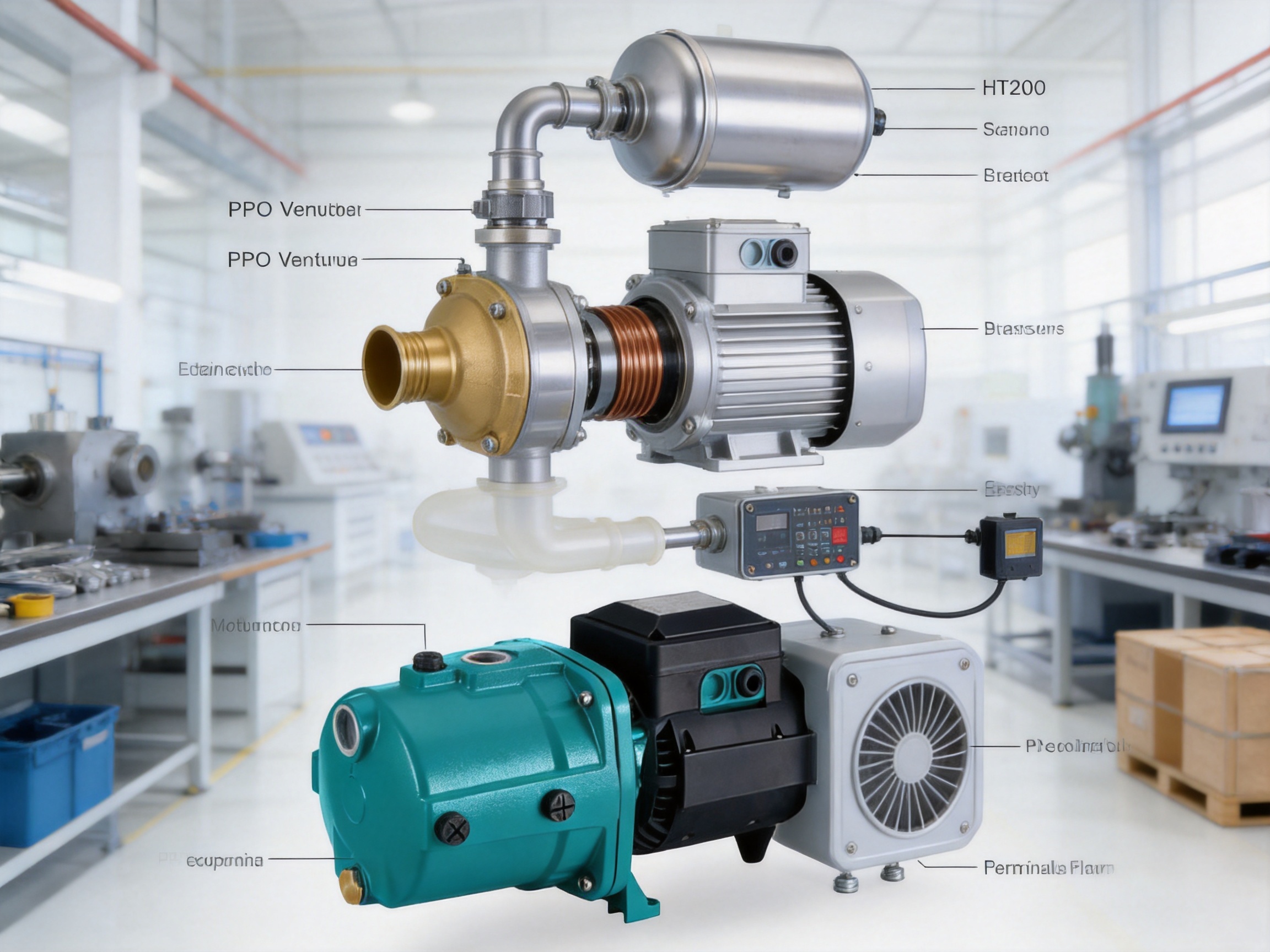
Install the pump on a stable, level surface capable of supporting its weight and resisting vibration. The area should be dry, ventilated, accessible for maintenance, and protected from direct rainfall, flooding, and extreme temperatures.
Leave sufficient clearance around the motor for cooling air and around the hydraulic section for pipe connection and service work. Avoid installing the pump directly on unstable soil, loose boards, or surfaces that can amplify vibration.
The suction pipe should be as short and straight as practical. Excessive pipe length, unnecessary elbows, undersized piping, and poorly sealed joints increase friction losses and make priming more difficult. The pipe should rise continuously toward the pump where possible, avoiding high points that can trap air.
All threaded connections should be sealed correctly without allowing sealing material to enter the hydraulic passage. The foot valve should remain below the minimum water level and should be positioned away from the bottom of the tank or well to reduce the risk of drawing sediment.
Before the first start, fill the pump casing and suction line according to the installation instructions. Never operate the pump dry. Dry running can damage the mechanical seal and may cause overheating in a short period.
After filling, check that all valves are in the correct position and that the suction pipe is airtight. Start the pump and observe whether water delivery begins normally. If the pump does not prime, stop it and inspect the water level, foot valve, suction connections, priming water, and possible air leaks.
The discharge pipe should be sized to support the expected flow without excessive pressure loss. A check valve may be installed where backflow could cause loss of prime or unwanted pressure changes. Isolation valves can simplify maintenance, but they must not be used to operate the pump permanently against a fully closed discharge unless the system design specifically permits it.
Pressure gauges are useful for monitoring system behavior. If pressure fluctuates unusually, the installer should inspect the pressure-tank pre-charge, pressure switch, pipework, non-return valve, and possible leaks.
Electrical work must be completed by a qualified electrician. Confirm that the voltage and frequency shown on the motor nameplate match the local electrical supply. Use proper grounding and an appropriately rated circuit breaker or motor-protection device.
The IP44 rating does not eliminate the need for safe electrical installation. Cable glands, terminal covers, junction boxes, and isolation switches must be installed correctly. Electrical components should be protected from condensation and direct water exposure.
Routine maintenance helps preserve performance and reduce unexpected downtime. Operators should periodically inspect the pump for leakage, unusual noise, vibration, overheating, pressure instability, and changes in flow. Early identification of these conditions can prevent more serious damage.
Filters and foot valves should be cleaned when necessary. A blocked filter increases suction resistance and may cause cavitation, poor flow, or loss of prime. The pump should be stopped and isolated from the electrical supply before any cleaning or inspection work begins.
The pressure tank should be checked at suitable intervals. If the tank is waterlogged or has insufficient air pre-charge, the pump may start too often. Frequent cycling can place additional stress on the motor, pressure switch, capacitor, and electrical contacts.
The mechanical seal is a wear component. Minor moisture during an initial running period may sometimes occur, but continuous leakage, dripping, or water entering the motor area requires immediate attention. Operating a leaking pump can damage bearings, windings, and other components.
In areas where freezing temperatures occur, drain the pump and exposed pipework if the system will not be used. Frozen water expands and can crack the pump body, pressure tank, or connected fittings. Seasonal users should also inspect the system carefully before restarting it after a long period of storage.
The pump should only be used for liquids within the specified temperature and application range. Clean water is the preferred medium. Do not pump flammable liquids, corrosive chemicals, seawater, highly abrasive fluids, or liquids containing excessive solids unless the manufacturer has confirmed compatibility.
Do not touch the motor housing immediately after extended operation if it is hot. Keep children and untrained users away from the equipment. Never remove the terminal cover or pressure-control components while the power supply is connected.
Dry running must be avoided. If the water source may run empty, install a suitable low-water or dry-running protection system. The built-in thermal protector protects the motor from certain overheating conditions, but it is not a substitute for correct system design and water-level monitoring.
Pressure settings should be adjusted only by trained personnel. Excessively high pressure may damage household appliances, pipes, tanks, or fittings. The pressure tank and switch must be matched to the intended operating range.
For distributors and project buyers, product quality is only one part of the purchasing decision. Availability, technical response, repeat-order consistency, packaging, documentation, and delivery coordination are also important. The manufacturer’s experience in independent development, mass production, and international export supports these requirements.
Taizhou Edwin Electric Co., Ltd. has developed a broader procurement and foreign-trade service structure through related companies established to support procurement planning, order tracking, cross-border delivery, and export services. This can be valuable for importers who purchase multiple pump categories or require coordinated shipment planning.
Buyers should provide clear information before ordering. Important details include the destination market, voltage, frequency, required certifications, water source, suction height, desired flow, operating pressure, pipe size, ambient conditions, and expected duty cycle. Supplying complete information allows the correct configuration to be selected and reduces installation problems.
For private-label or distribution projects, buyers may also discuss packaging, labels, manuals, spare parts, product identification, and inspection procedures. A manufacturer with established production capability can often provide a more consistent platform for long-term product development than a supplier focused only on spot trading.
The JBP-PT Series occupies a useful position between a simple garden pump and a large commercial booster package. It offers self-priming capability, high head, automatic pressure control, portable construction, and durable water-contact materials in one compact product.
Its brass impeller distinguishes it from many low-cost alternatives that rely on basic plastic hydraulic components. Its AISI 304 stainless steel shaft supports corrosion resistance in water-contact areas. The treated cast iron body provides structural durability, while copper windings and C&U bearings support dependable motor operation.
The integrated pressure tank reduces the need for separate system components. The pressure switch enables automatic operation. Thermal protection and Class F insulation improve the electrical safety margin. Together, these features provide a balanced solution for users seeking reliability without the complexity or cost of a large commercial pumping system.
The product also benefits from the manufacturer’s wider engineering background in domestic, agricultural, intelligent, solar, submersible, and commercial pump technologies. This broader expertise provides a foundation for product improvement and helps buyers access related pump solutions as their projects expand.
For applications within the specified suction, head, flow, temperature, and electrical limits, the JBP-PT Series can provide a dependable combination of performance, convenience, and serviceability. Correct installation remains essential, but the product’s design gives installers a strong starting point for household and light commercial water supply systems.
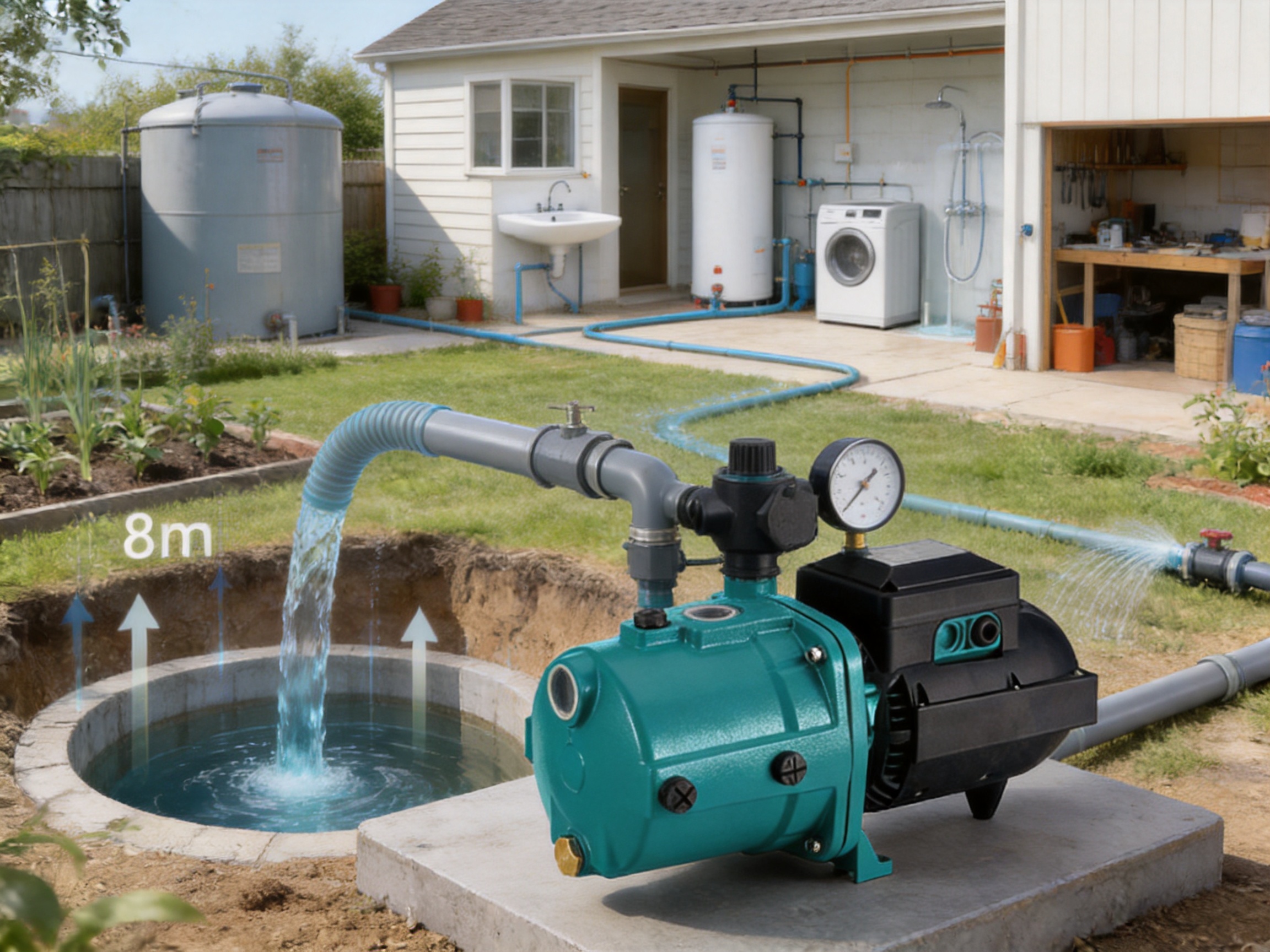
The JBP-PT Series is a portable self-priming jet pump with an integrated pressure tank and automatic pressure switch. It is designed for water boosting, shallow-well supply, storage-tank transfer, and related clean-water applications.
The listed maximum suction height is 8 meters. Actual performance depends on water temperature, pipe design, air tightness, foot-valve condition, elevation, and friction losses. The pump should be installed as close to the water source as practical.
The maximum head listed for all four models is 38 meters. Maximum head represents the highest pressure capability under specified test conditions and should not be interpreted as the flow rate available at every point in the system.
The JBP-2PT or JBP-2PTZ model may be suitable for a smaller home or moderate water demand. The JBP-3PT or JBP-3PTZ model provides a higher maximum flow and may be preferable when several outlets operate at the same time. Final selection should be based on a pressure and flow calculation.
The supplied technical information identifies PT and PTZ as model variations with the same listed power, connection size, maximum flow, maximum head, and suction height. Buyers should confirm the exact distinction, electrical configuration, control details, and regional specification with the supplier before placing an order.
No. The pump must not be operated without water. Dry running can damage the mechanical seal and cause overheating. If the water source may become empty, a suitable water-level sensor or dry-running protection device should be considered.
The listed maximum liquid temperature is +60°C. This permits certain warm-water applications, but the pump should not be used for steam, boiling water, or fluids outside the approved material and temperature range.
The motor has an IP44 protection rating, which provides protection against suitable solid objects and water splashing. It is not designed to be submerged or exposed to high-pressure water. Installation must be in a dry and protected location.
Brass provides good mechanical strength, dimensional stability, and corrosion resistance in normal clean-water service. It is generally more robust than many entry-level plastic impellers and supports reliable operation during repeated starts and long service periods.
The JBP-PT Series is supplied with an integrated pressure tank. The tank helps provide a reserve of pressurized water and reduces unnecessary starts during small water demands. Correct pre-charge and pressure-switch adjustment are important for proper operation.
The pump is suitable for shallow suction applications up to the listed 8-meter maximum. It is not a substitute for a deep-well or borehole submersible pump where the water level is significantly deeper.
Clean water is recommended. If the source contains sand, sediment, leaves, algae, or other contaminants, install suitable filtration and maintain the foot valve. Abrasive or chemically aggressive fluids may require another pump type and different materials.
Maintenance includes checking for leakage, inspecting the suction line, cleaning filters and foot valves, monitoring pressure behavior, checking the pressure-tank pre-charge, and observing motor noise or vibration. Always disconnect the electrical supply before service.
The JBP-PT Series is manufactured by Taizhou Edwin Electric Co., Ltd., an integrated pump enterprise established in 2008 with capabilities in research and development, mass production, and international export.
Buyers should provide the destination country, voltage, frequency, required certifications, desired flow and pressure, water source, suction height, pipe size, operating temperature, expected duty cycle, packaging requirements, and any private-label or documentation needs.
The JBP-PT Series Portable Brass Impeller Easy Installation Self-Priming JET Pump is designed for users who need reliable water pressure, convenient automatic operation, and flexible installation. Its self-priming hydraulic design, 38-meter maximum head, 8-meter suction capability, integrated pressure tank, and 1-inch connections make it suitable for a broad range of household and light commercial systems.
The product’s brass impeller, stainless steel shaft, treated cast iron body, copper motor winding, C&U bearings, thermal protector, Class F insulation, and IP44 protection provide a carefully balanced construction. These features give the pump practical advantages over basic transfer pumps while avoiding the complexity of oversized commercial equipment.
Supported by an integrated manufacturer with experience in research and development, mass production, export, and multiple pump categories, the series is also suitable for distributors and project purchasers seeking dependable supply and technical cooperation. When correctly selected, installed, and maintained, it can provide stable and efficient water service for homes, gardens, shallow wells, storage tanks, workshops, and small commercial facilities.
1. Manufacturer-provided product specifications for the JBP-PT Series Portable Brass Impeller Self-Priming Jet Pump.
2. Manufacturer-provided materials table for pump hydraulic and motor components.
3. Manufacturer-provided technical data for JBP-2PT, JBP-3PT, JBP-2PTZ, and JBP-3PTZ models.
4. General engineering principles for self-priming centrifugal and jet pump systems.
5. General guidance on pump installation, suction-line design, pressure tanks, and motor protection.
6. General reference principles for IP protection ratings, motor insulation classes, and clean-water pumping applications.
edwina@edwin-pump.com
+86-13586290903 (WhatsApp)
Xuri Gongliang Cutting Tool Entrepreneurship Park, Wenqiao Town, Wenling City, Taizhou City, Zhejiang Province, China

High Performance Smart Pump Factory


 English