edwina@edwin-pump.com

View All Products
en
Modern water systems require more than a pump alone. A pump must start at the right moment, maintain suitable pressure, respond to changing demand, and stop safely when water is unavailable or flow has ended. When these functions are managed manually, the system may experience unnecessary energy consumption, pressure fluctuations, dry running, repeated starts, or premature mechanical wear. The FU3-P Series Pressure Gauge Auto-check Plug and Play Adaptive Timing Function Controller is designed to address these challenges in a compact and practical way.
This automatic pressure controller is suitable for a wide range of pumps, including deep well submersible pumps, surface pumps, domestic booster pumps, irrigation pumps, and other compatible water-supply equipment. Its pressure-gauge design provides a direct visual indication of operating conditions, while its auto-check function and adaptive timing features help simplify commissioning and daily operation. The controller can detect pump-related operating conditions, support automatic priming, establish a suitable starting-pressure reference, and stop the pump when flow conditions indicate that pumping is complete.
With a broad operating voltage range of 90 V to 260 V, a maximum current rating of 30 A, a maximum working pressure of 10 bar, and protection rated at IP65, the controller is designed for demanding residential, agricultural, and light commercial applications. Its plug-and-play structure also reduces installation complexity when compared with systems that require separate pressure switches, timing relays, flow sensors, and manually configured control components.
This article examines the operating principle, technical characteristics, application value, product advantages, manufacturing strengths, quality considerations, installation requirements, and selection guidance associated with the FU3-P Series.
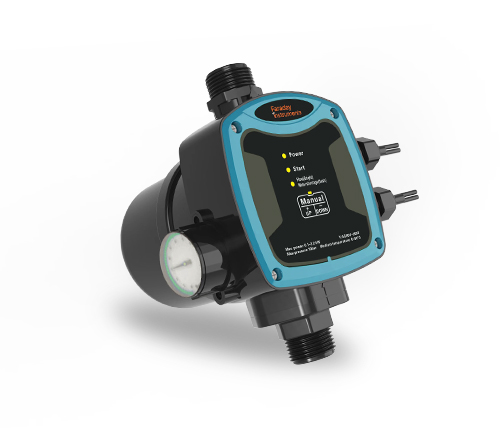
FU3-P Series Pressure Gauge Auto-check Plug and Play Adaptive Timing Function
A pump is responsible for moving water, but it does not independently know when water is needed or when the delivery line has reached a stable condition. In a traditional installation, the pump may depend on a manual switch, a mechanical pressure switch, a storage tank, or a combination of electrical relays and protection devices. Each additional component increases wiring requirements and creates another point that must be adjusted, inspected, and maintained.
An automatic pressure controller acts as the operating link between the pump and the water system. It monitors pressure and flow-related conditions and uses this information to start or stop the pump. The objective is not simply to turn the pump on and off. A well-designed controller should help the pump operate in a controlled sequence that corresponds to actual water demand.
For example, when a faucet is opened, pressure in the pipeline falls. The controller can identify that the system pressure has dropped below the starting level and activate the pump. Once the water outlet is closed and flow has stopped, the controller can recognize the end of demand and stop the pump. This automated sequence is useful in domestic water supply, garden irrigation, equipment washing, small commercial facilities, and many other applications.
The controller also provides an important layer of operational protection. If a pump continues running while the water source is empty, the motor and hydraulic components may overheat or suffer accelerated wear. The FU3-P Series can allow a defined self-priming or initialization period and can stop operation when water scarcity conditions persist beyond the configured timing period.
The FU3-P Series combines pressure monitoring, automatic pump control, adaptive timing, and a plug-and-play installation concept in one controller. The product is intended for various pump types and is especially suitable for installations where automatic operation is required without building a complicated control cabinet.
The pressure gauge gives the operator a direct indication of the pressure within the system. This is useful during installation, troubleshooting, and routine inspection. Instead of relying only on electrical indicators, the user can observe the approximate pressure condition of the delivery line and determine whether the pump is operating within the expected range.
The auto-check function is designed to monitor pump pressure and operating behavior. In Auto Mode, the controller can detect the maximum pressure generated by the pump and establish a starting-pressure value based on a designated percentage of that peak pressure. This reduces the need for manual starting-pressure calculations during commissioning.
The adaptive timing function is another important feature. Pump systems do not always reach stable operating conditions immediately, particularly when the pump is installed in a deep well, when the delivery pipe is long, or when the system requires initial priming. The controller therefore provides a timed initialization period. The stated standard timing is 3 minutes and 20 seconds, although this timing can be customized before shipment according to application requirements.
The design is also intended to accommodate different application preferences. Some models support intelligent adjustment of starting pressure, while others allow the starting pressure to be manually adjusted through the plus and minus buttons. Certain versions are associated with tank applications, and the pressure-gauge version provides visual pressure monitoring as part of the controller assembly.
The primary functions of the FU3-P Series include automatic pump starting when pressure falls below the starting level, flow-switch-based activation, automatic stopping when the flow switch closes, automatic response to water-shortage conditions, pressure display, adjustable starting pressure, self-priming timing, and compatibility with different pump categories.
These functions are integrated into a single control device rather than distributed among multiple separate components. This can make the overall system easier to understand and more convenient to install, particularly for contractors and distributors who need a standardized control solution for different pump configurations.
The controller operates through the relationship between pressure, flow, and time. When the water system is idle, the pressure remains at a stable level. If a user opens a water outlet, pressure begins to fall. When the pressure becomes lower than the configured starting pressure, the controller sends a signal to activate the pump.
In some operating conditions, the flow switch can also open during the start sequence. This provides an additional method for recognizing demand and initiating pump operation. The combination of pressure detection and flow response allows the controller to support a broad range of water systems.
Once the pump starts, the controller permits a self-priming or initialization period. The standard time described for the product is 3 minutes and 20 seconds. During this period, the pump can fill the pipeline, remove air, establish pressure, and reach a stable operating condition. This is particularly useful for deep well submersible pumps and other systems that need additional time before water reaches the delivery point.
When the water outlet is closed, the flow switch closes. The controller detects that the demand has ended and stops the pump automatically. This prevents the motor from continuing to operate unnecessarily after water use has stopped.
If the water source is insufficient or absent, the pump may continue running without developing the expected flow. The controller can allow the pump to operate for the defined initialization period and then stop it when the water-shortage condition continues. This feature helps reduce the risk associated with extended dry running, although the final protection performance depends on correct installation, pump selection, and the actual water-source conditions.
The starting pressure can be adjusted using the plus and minus buttons on models that provide manual adjustment. This allows the installer to accommodate different building heights, pipe lengths, pressure requirements, and user preferences. In Auto Mode, the intelligent adjustment function can establish a starting-pressure reference from the pump's detected maximum pressure, reducing dependence on manual setup.
Fixed timing alone may not be suitable for every pump system. A short pipe network may stabilize quickly, while a deep well installation or long irrigation line may require more time. The adaptive concept of the controller helps address these differences by providing an initialization sequence that supports the actual startup behavior of the pump.
The standard timing provides a practical starting point for many applications. For special projects, the timing can be customized before the controller leaves the factory. This is valuable for original equipment manufacturers, distributors, and project contractors who need a consistent control sequence across a specific pump range.
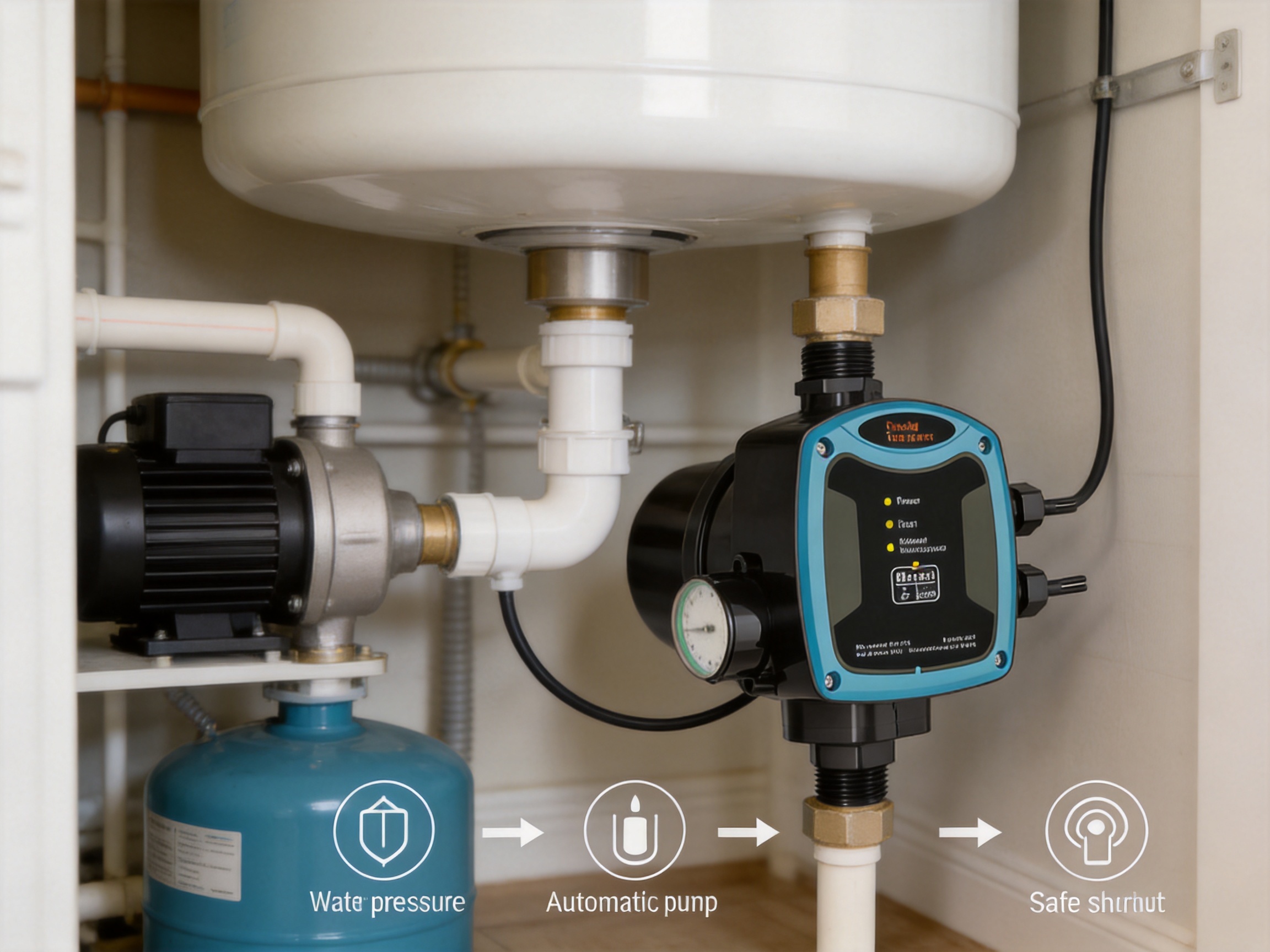
The FU3-P Series is designed for flexible use in pump systems with different electrical and hydraulic conditions. Its main technical parameters are summarized below.
| Parameter | Specification |
|---|---|
| Applicable pump power | 0.1 to 2.2 kW |
| Operating voltage | 90 V to 260 V |
| Maximum current | 30 A |
| Medium temperature | 0°C to 80°C |
| Maximum pressure | 10 bar |
| Protection grade | IP65 |
| Application lift | 0 to 100 m |
| Frequency | 50/60 Hz |
| Interface thread | 1 inch |
| Standard initialization timing | 3 minutes and 20 seconds |
The wide voltage range allows the controller to be used in various single-phase electrical environments. The 50/60 Hz frequency compatibility also supports international applications where electrical frequency differs between markets. Nevertheless, the installer must confirm the local power supply, pump nameplate data, wiring method, and applicable electrical regulations before installation.
The maximum pump power range of 0.1 to 2.2 kW covers many small and medium pump applications. The maximum current rating of 30 A provides additional flexibility, but it should not be interpreted as permission to operate every pump at the maximum value continuously. Electrical protection must be selected according to the actual motor current, starting current, duty cycle, and local safety requirements.
The IP65 protection grade indicates that the enclosure is designed to provide protection against dust ingress and water jets from suitable directions. It remains important to install the controller in a suitable location, protect it from prolonged immersion, avoid direct exposure to severe weather where possible, and use properly sealed cable entries and pipe connections.
| Model | Power | Voltage | Maximum Current | Frequency | Pieces per Carton | Outer Box, One Piece | Outer Box, Twelve Pieces |
|---|---|---|---|---|---|---|---|
| FU3-ASP | 0.1-2.2 kW | 90-260 V | 30 A | 50/60 Hz | 12 | 210 × 168 × 190 mm | 520 × 435 × 400 mm |
| FU3-MSP | 0.1-2.2 kW | 90-260 V | 30 A | 50/60 Hz | 12 | 210 × 168 × 190 mm | 520 × 435 × 400 mm |
| FU3-MP | 0.1-2.2 kW | 90-260 V | 30 A | 50/60 Hz | 12 | 210 × 168 × 112 mm | 520 × 435 × 245 mm |
The model suffixes identify different functional arrangements. The letter “A” indicates intelligent adjustment of starting pressure. The letter “S” indicates a tank-related version. The letter “M” indicates that starting pressure is adjustable. The letter “P” indicates a pressure-gauge configuration. Buyers should confirm the exact model function and application suitability with the supplier before placing a project order.
Traditional pump control can be reliable when correctly designed, but it often depends on several separate components. A conventional installation may include a mechanical pressure switch, a pressure gauge, a non-return valve, a storage tank, a relay, a dry-run protection device, and additional timing equipment. Such a system can work effectively, but every component requires space, wiring, adjustment, and maintenance.
The FU3-P Series offers an integrated alternative. By combining pressure monitoring, automatic control, timing, and flow-related response in one product, it can reduce the number of separate control components required for suitable applications. This contributes to a cleaner installation and can help shorten commissioning time.
A plug-and-play design is valuable for installers who handle multiple pump types or who need to complete projects quickly. The controller is intended to connect directly into the pump system and automatically detect or establish relevant operating conditions. This reduces the amount of manual parameter setting required during initial installation.
Although every installation still requires correct electrical and hydraulic work, an integrated controller can make the process easier to standardize. Distributors can offer a common control solution across several pump categories, while service technicians can follow a more consistent troubleshooting procedure.
Manual pressure adjustment can be difficult when the installer does not know the exact pressure capability of the pump or when the water system has changing hydraulic resistance. The auto-check function addresses this issue by detecting the pump's maximum pressure and using a designated percentage of that value as the initiating pressure in Auto Mode.
This approach can reduce trial-and-error adjustment. It also helps create a more repeatable starting point when the same controller is used with different pump models. The actual pressure result still depends on pump performance, pipe resistance, elevation, valves, water temperature, and system demand, but the controller provides a practical automatic reference.
Deep well submersible pumps may require a longer startup sequence because water must travel through a vertical delivery pipe before reaching the outlet. Surface pumps may also need time to prime, especially after maintenance or when air has entered the suction line. The timed initialization function supports these situations by allowing the pump to operate for the defined period before the controller determines whether stable water delivery has been achieved.
This is a practical advantage over a control system that stops the pump immediately when pressure does not rise within a very short interval. The timing function can help prevent false shutdowns during normal priming while still providing a response to prolonged water shortage.
The pressure gauge allows users to observe system pressure without connecting an external test instrument for every basic inspection. This is useful for checking whether the pump is producing pressure, identifying unusual pressure loss, and confirming the effect of adjustments.
Automatic stopping also improves convenience. Users do not need to return to the pump location to switch it off after filling a tank, washing equipment, watering a garden, or opening and closing a domestic outlet. The pump responds to system conditions instead of relying entirely on manual control.
The controller can support a range of pump applications within its electrical and pressure limits. It can be used with suitable domestic water-supply systems, irrigation arrangements, garden pumps, deep well equipment, surface pumps, and selected commercial or industrial water systems.
Its compatibility with 50 Hz and 60 Hz power supplies also supports international distribution. For pump manufacturers and wholesalers, this can reduce the need to stock many different control products for different target markets.
In homes, the controller can be used to automate water delivery from a storage tank, well, rainwater collection system, or other suitable source. When a user opens a tap or activates a water-using appliance, pressure falls and the pump starts. After the outlet is closed, the controller stops the pump.
This arrangement can be useful where the incoming municipal pressure is insufficient or where water must be transferred from a lower-level tank to an elevated building. The starting-pressure adjustment allows the installer to adapt the system to the building's height and pipe resistance.
Deep well submersible pumps often operate under conditions where automatic control and dry-running response are important. The controller's auto-check function can help determine a pressure reference, while the initialization timing allows the pump to complete its startup and delivery sequence.
Because well conditions vary significantly, the installer should verify the well yield, pump submergence, water level variation, delivery pipe dimensions, and electrical requirements. The controller can support automatic operation, but it does not replace proper well design or water-source monitoring.
Small and medium irrigation systems frequently require automatic pump operation when a valve or irrigation outlet is opened. The FU3-P Series can help activate the pump when pressure drops and stop it when water demand ends. This may reduce unnecessary running time and simplify seasonal operation.
For large irrigation networks, multiple zones, or systems with high starting currents, a larger control architecture may be required. The controller is most appropriate when the pump rating and hydraulic arrangement fall within the stated product limits.
Garden pumps and landscape watering systems benefit from convenient automatic control. The operator can open a hose outlet or use a compatible watering device without manually switching the pump on and off. The pressure gauge also provides a quick way to observe whether the system is operating within the expected pressure range.
Small commercial facilities, workshops, cleaning stations, and service buildings may use automatic pressure control for water transfer and basic boosting. The compact controller can be easier to install where there is limited room for a conventional control panel.
For critical commercial applications, the project designer should evaluate redundancy, alarm requirements, continuous-duty conditions, local regulations, and the consequences of pump failure. The FU3-P Series can serve as a practical control component, but the complete system must be engineered for its intended duty.
Some industrial processes require a stable supply of service water for cleaning, cooling, or auxiliary operations. When the flow demand is intermittent, automatic pressure control can reduce manual intervention. The medium-temperature range of 0°C to 80°C supports many ordinary water applications, but the liquid composition, chemical compatibility, and process requirements must be checked before use.
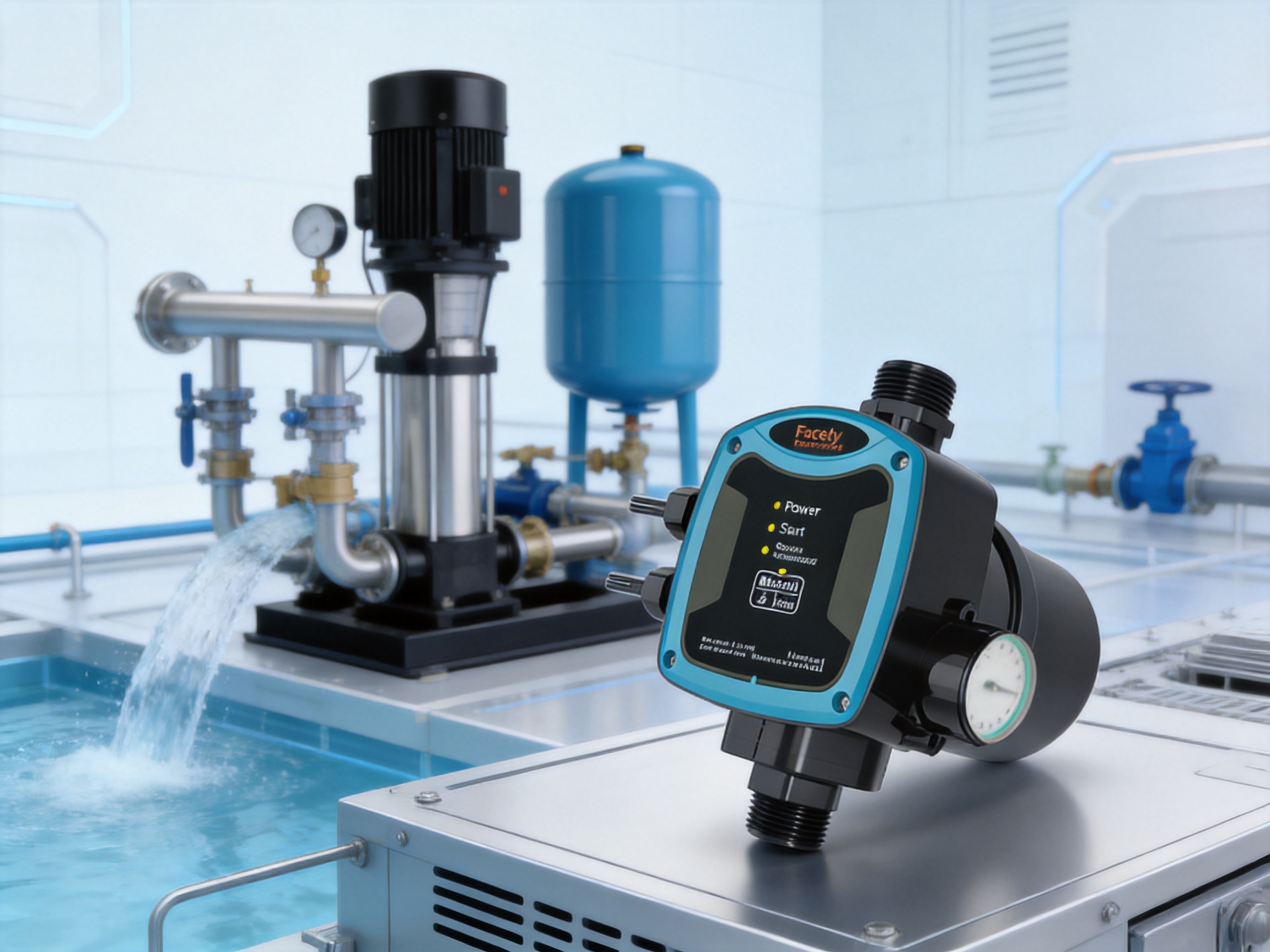
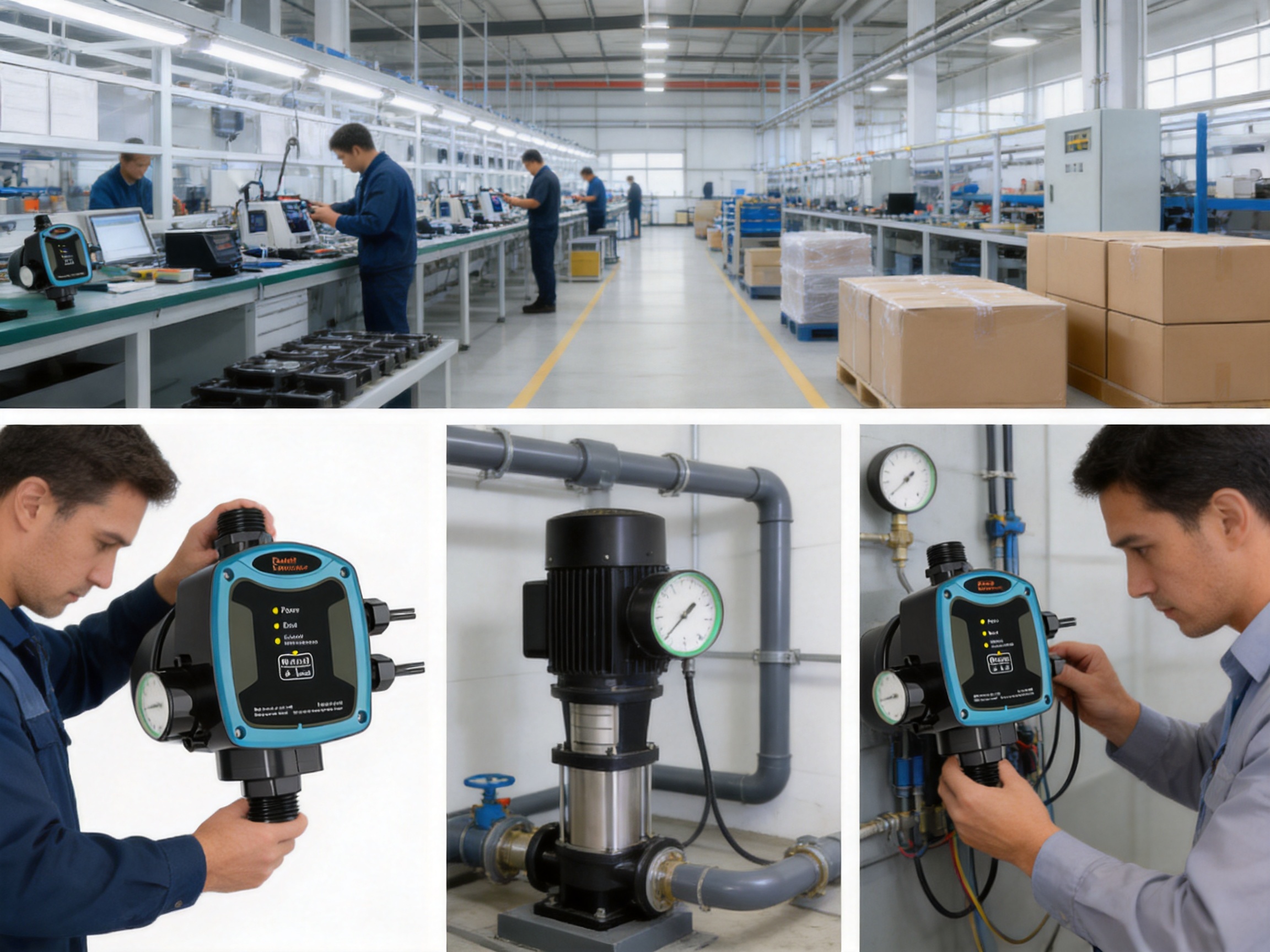
The performance of an automatic controller depends not only on its visible functions but also on the consistency of its manufacturing process. The manufacturer behind this product operates as an integrated enterprise with activities covering independent research and development, mass production, and global export. This structure supports coordination between product design, production, quality management, packaging, and international customer service.
A manufacturing organization with in-house research and development capability can respond more directly to market requirements. Pump applications differ between regions, and customers may request changes in timing, pressure adjustment, electrical compatibility, packaging, or product configuration. The ability to develop and refine products internally can shorten the distance between customer feedback and engineering improvement.
Automatic pump control is an application-driven field. A controller that works well in a short domestic pipeline may need different timing or pressure behavior in a deep well, irrigation, or commercial installation. Experience across deep well pumps, submersible pumps, domestic booster pumps, circulation pumps, solar water pumps, and intelligent booster systems can provide useful insight into these different operating conditions.
The FU3-P Series reflects this application-oriented approach through its combination of automatic pressure detection, flow response, adjustable starting pressure, and timed initialization. These functions address practical installation problems rather than focusing only on electrical switching.
Mass production capability is important for distributors and project customers who require stable supply over time. Consistent production involves controlled assembly procedures, repeatable inspection steps, product identification, packaging standards, and order coordination.
The stated packaging data for one-piece and twelve-piece cartons supports organized shipment and inventory management. Standardized carton dimensions also help wholesalers plan storage and transportation. For international buyers, packaging consistency reduces handling uncertainty during export and distribution.
A quality-oriented manufacturing process should verify the key functions that affect field performance. For a controller of this type, appropriate checks may include electrical continuity, voltage compatibility, current handling, pressure response, flow-switch operation, automatic start and stop behavior, timing performance, gauge condition, sealing quality, and visual assembly inspection.
The exact inspection plan depends on the factory's internal quality system and customer requirements. Buyers seeking private-label production or project supply should request the applicable inspection documents, sampling standards, product test records, and technical confirmation before finalizing an order.
A company that produces several pump categories can evaluate the controller in relation to actual pump behavior. This is valuable because pump control cannot be separated from hydraulic performance. Starting pressure, maximum pressure, self-priming time, current demand, and dry-running behavior all depend on the pump and the installation.
Experience in pumps and related accessories allows the manufacturer to consider the complete water system rather than treating the controller as an isolated electrical product. This supports better product matching and can help customers select a controller that fits their pump range.
The manufacturer's wider business structure includes dedicated procurement planning, order tracking, cross-border delivery, and foreign trade service capabilities. For overseas customers, these functions are important because successful procurement involves more than product manufacturing. It also requires specification confirmation, production scheduling, export documentation, packaging coordination, and communication throughout the order cycle.
A one-stop service model can be especially helpful for customers purchasing pumps, controllers, valves, pipes, or other water-system accessories together. Coordinated sourcing may reduce the need to manage multiple suppliers and can improve compatibility between the pump and its control equipment.
Distributors need products that are understandable, adaptable, and easy to position in different markets. The FU3-P Series offers a clear value proposition: automatic pump control with pressure display, adaptive timing, broad electrical compatibility, and a compact installation concept.
For distributors, the range of model functions allows inventory to be organized around application requirements. A model with intelligent starting-pressure adjustment can be offered for simplified commissioning, while a manually adjustable version can be selected for installers who prefer direct control. Tank-related configurations can support systems that use pressure vessels or storage arrangements.
For original equipment manufacturers, customization of initialization timing before shipment may help align the controller with a specific pump model or system design. OEM customers should define the required pressure range, power rating, pump type, timing sequence, interface, labeling, packaging, and inspection requirements at the project planning stage.
The product's compact format may also support the development of packaged pump sets. A manufacturer can combine a suitable pump, controller, pipe connection, and protective components into a ready-to-install solution. This can improve installation efficiency and make the final product easier for end users to operate.
Before installation, confirm that the pump power, voltage, current, frequency, maximum pressure, flow requirements, and application lift are compatible with the controller. Confirm that the liquid temperature remains within the stated range and that the liquid is suitable for the pump and controller materials.
The controller should be installed in a location that is accessible for inspection and adjustment. The installation area should be protected from unnecessary mechanical impact, flooding, excessive heat, and conditions outside the stated environmental limits. Pipe connections should be sealed correctly without excessive force that could damage the threaded interface.
Electrical wiring must be completed by qualified personnel. The power supply should include suitable isolation and protection in accordance with local regulations. The pump motor's actual current and starting characteristics must be considered when selecting upstream protection. The controller should not be operated with damaged cables, loose terminals, exposed conductors, or an unsuitable power source.
After installation, the system should be filled or primed as required by the pump design. Open the relevant water outlet, energize the system, and observe the startup sequence. Confirm that the pump starts when pressure falls below the starting condition and that the pressure gauge responds normally.
During commissioning, allow sufficient time for the controller's initialization sequence. Confirm that the pump can prime, develop pressure, and deliver water through the intended outlet. Close the outlet and verify that the pump stops when the flow switch closes or when the system reaches the appropriate no-demand condition.
To test water-shortage response, follow a safe procedure recommended by the installer or supplier. Do not intentionally run a pump dry for longer than necessary. The purpose of the test is to confirm the control response without causing damage to the pump or motor.
If the pressure starts too early or too late, use the adjustment function available on the selected model. Changes should be made gradually, with the pump switched and the system conditions controlled according to the operating instructions. The correct setting depends on the pump curve, building height, pipe layout, and desired service pressure.
Routine inspection should include checking the pressure gauge, pipe joints, electrical connections, pump noise, starting frequency, and stopping behavior. An unusual pressure reading may indicate a blocked filter, closed valve, damaged pipe, air in the system, a worn pump, or an incorrect starting-pressure setting.
If the pump does not start, check whether the power supply is available, whether the pressure has fallen sufficiently, whether the flow switch is functioning, and whether the pump protection device has operated. Confirm that the pump is correctly connected and that the water outlet or valve is actually demanding water.
If the pump continues running after the outlet is closed, inspect the flow switch, check for hidden water leakage, and verify whether a tap, toilet valve, irrigation valve, or pipeline fitting is allowing continuous flow. A leak may prevent the system from reaching a stable no-demand condition.
If the controller stops the pump during normal priming, inspect the suction or well conditions, check for air leakage, confirm the water level, and review the initialization timing. A deep well or long pipeline may require a timing arrangement suited to the installation.
If the gauge pressure is lower than expected, compare the reading with the pump's performance data and inspect the hydraulic system for restrictions. The pump may be operating against excessive lift, an undersized pipe, a partially closed valve, or a blocked filter. Pressure should not be increased beyond the safe limits of the pump, pipework, fittings, or connected equipment.
Maintenance work must be performed with the power supply isolated. The controller should never be opened or modified by unqualified personnel. Replacement parts and adjustments should follow the supplier's technical guidance.
Automatic stopping can reduce the time a pump runs without useful water demand. This may lower energy consumption in intermittent applications and reduce unnecessary motor heating. The benefit depends on the pump size, operating schedule, hydraulic system, and frequency of use.
Controlled starting and stopping may also reduce mechanical stress compared with repeated uncontrolled switching. The exact effect depends on the pump type and motor design, but avoiding unnecessary operation is generally beneficial for equipment service life.
Water-source protection is another efficiency consideration. A pump that runs continuously during water shortage may consume energy without delivering water and may suffer damage. By responding to a prolonged shortage condition, the controller can help protect the pump system and reduce wasteful operation.
The pressure gauge contributes to maintenance efficiency because it allows operators to identify changes in system behavior earlier. A gradual pressure decrease may indicate wear or blockage before it becomes a major failure. Early inspection can reduce downtime and emergency repair costs.
The controller should be selected according to the pump's rated power and current rather than only its intended application name. Confirm the electrical supply, motor type, frequency, current demand, and starting characteristics. The maximum listed values should be treated as operating limits, not as a target for every installation.
Hydraulic conditions are equally important. Confirm the total lift, pipe length, pipe diameter, water-source level, maximum pressure, and expected flow. A controller cannot compensate for an incorrectly sized pump or an unsuitable pipe system.
Buyers should also determine whether automatic or manual starting-pressure adjustment is preferred. Auto Mode can simplify commissioning, while manual adjustment may be useful when an installer needs direct control over the starting threshold.
For systems with a pressure tank, confirm that the tank-related model is appropriate. For applications requiring visible pressure monitoring, select the pressure-gauge configuration. Where the pump requires extended priming, discuss the required timing before shipment.
Environmental conditions should also be reviewed. The medium temperature must remain between 0°C and 80°C, and the installation should be protected from conditions that exceed the enclosure's intended protection. Chemical liquids, abrasive fluids, seawater, and unusual process media require separate material-compatibility confirmation.
The FU3-P Series is an automatic pressure controller for suitable pumps. It combines pressure monitoring, automatic pump starting and stopping, flow-related control, timed initialization, and adjustable or intelligent starting-pressure functions depending on the model.
Yes, it is designed to support suitable deep well submersible pump applications. The self-priming or initialization timing is particularly useful where water needs time to travel through a deep delivery pipe. The pump rating, current, pressure, water level, and well conditions must be checked before installation.
The pump can start when system pressure falls below the starting pressure. It may also be activated through the opening of the flow switch during the startup sequence. The exact response depends on the selected model and the system configuration.
When the water outlet is closed and flow stops, the flow switch closes. The controller detects the no-demand condition and stops the pump automatically. Leakage or an open valve may prevent the system from reaching this condition.
The controller can allow the pump to operate for the defined initialization period and then stop it if water shortage continues. This helps reduce the risk of prolonged dry running. The controller should still be installed with a correctly selected pump and a suitable water-source design.
Yes. Models with manual adjustment can be adjusted using the plus and minus buttons. In Auto Mode, the intelligent function can detect the pump's maximum pressure and establish a starting-pressure reference based on a designated percentage of that value.
The stated standard initialization or self-priming time is 3 minutes and 20 seconds. This timing can be customized before shipment for suitable project requirements.
The listed applicable pump power range is 0.1 to 2.2 kW. The actual selection must also consider current, voltage, frequency, motor characteristics, and the complete electrical installation.
The controller is specified for 90 V to 260 V and 50/60 Hz. The local power supply and pump nameplate must be checked before connection.
The stated maximum pressure is 10 bar. The complete system must also be checked so that the pump, pipes, valves, fittings, storage tank, and connected equipment are all suitable for the operating pressure.
The integrated pressure gauge provides convenient visual monitoring during normal operation and basic troubleshooting. It should not be considered a replacement for specialized testing equipment when detailed commissioning, calibration, or fault analysis is required.
The IP65 protection grade supports protection against dust and water jets under suitable conditions. The controller should still be installed carefully, protected from flooding and severe exposure, and fitted with properly sealed electrical connections. Outdoor suitability depends on the complete installation environment.
No. It is suitable only when the industrial pump and application fall within the controller's electrical, hydraulic, temperature, and functional limits. Large pumps, high-current motors, complex multi-pump systems, hazardous areas, and critical processes may require specialized control equipment.
The product combines pressure monitoring with auto-check, adaptive or configurable timing, flow-related control, automatic response to water shortage, and a plug-and-play installation concept. A traditional pressure switch may provide basic switching but may require additional components to achieve the same range of functions.
Domestic pump installers, irrigation contractors, equipment distributors, pump manufacturers, original equipment customers, agricultural users, and small commercial facilities can benefit when their applications match the product specifications.
The FU3-P Series Pressure Gauge Auto-check Plug and Play Adaptive Timing Function Controller provides a practical approach to automatic pump management. By integrating pressure monitoring, automatic starting and stopping, timed initialization, flow response, water-shortage handling, and adjustable starting pressure, it helps simplify the operation of suitable pump systems.
Its advantages over more traditional arrangements include reduced installation complexity, easier commissioning, direct pressure visibility, broad electrical compatibility, and support for different pump applications. The adaptive timing function is particularly valuable for deep well, self-priming, and long-pipeline systems where immediate pressure stabilization cannot be expected.
The product is supported by a manufacturer with experience in pump research and development, mass production, international export, and related water-system products. This manufacturing background provides value for distributors and project customers who need consistent supply, application support, product customization, and coordinated procurement.
Correct product selection remains essential. Installers must verify electrical ratings, pump performance, water-source conditions, pressure requirements, pipework, temperature, environmental exposure, and local safety regulations. When properly matched and installed, the FU3-P Series can help create a more convenient, responsive, and reliable automatic water-supply system.
1. Product technical information for the FU3-P Series automatic pressure controller, including operating principle, electrical specifications, pressure limits, timing functions, and model data.
2. Pump system design principles for pressure control, automatic starting, flow detection, self-priming, and dry-running risk reduction.
3. General guidance for selection and installation of domestic, agricultural, and commercial water pumps.
4. General enclosure protection principles for equipment rated IP65.
5. Manufacturer information concerning pump research and development, mass production, international export, and water-system product integration.
edwina@edwin-pump.com
+86-13586290903 (WhatsApp)
Xuri Gongliang Cutting Tool Entrepreneurship Park, Wenqiao Town, Wenling City, Taizhou City, Zhejiang Province, China

High Performance Smart Pump Factory


 English