edwina@edwin-pump.com

View All Products
en
Reliable water movement is essential in homes, farms, workshops, commercial buildings, irrigation systems, and many light industrial installations. A pump must do more than move water from one point to another. It must provide stable pressure, withstand repeated operation, restart reliably after periods of inactivity, and remain serviceable when operating conditions are not perfect. The PUN Series Brass Impeller Water Shortage Protection Centrifugal Pump is designed around these practical requirements.
The PUN Series combines a centrifugal hydraulic design with a brass impeller, corrosion-conscious construction, water shortage protection, and a compact motor-pump arrangement. Available in several power levels and port configurations, the series is intended for clean water and liquids with physical and chemical characteristics similar to water. Its operating range makes it suitable for domestic water distribution, garden irrigation, tank transfer, well lifting, automatic irrigation systems, water tower supply, and various supporting water systems.
This article examines the pump’s hydraulic performance, construction, materials, motor technology, application advantages, manufacturing strengths, selection considerations, installation principles, maintenance requirements, and competitive value. It also explains why material selection and production integration are important when purchasing a centrifugal pump for long-term use.
The PUN Series is a compact centrifugal pump developed for applications that require practical water transfer and moderate-to-high pressure performance. Centrifugal pumps use a rotating impeller to transfer mechanical energy from the motor to the liquid. As the impeller rotates, water enters the suction area, gains velocity, and is converted into pressure within the pump body. This operating principle allows the pump to deliver continuous flow without the complicated internal structure associated with some positive-displacement designs.
The series includes models from 0.2 kW to 0.75 kW, corresponding approximately to 0.3 HP to 1 HP. Depending on the selected model, maximum flow reaches 90 to 185 L/min, while maximum head ranges from 17 m to 32 m. The maximum suction height is specified as 8 m across the series. These figures give users a range of options for matching pump size with building height, pipeline resistance, irrigation area, storage tank position, and required water volume.
Although the pump is compact, its construction reflects the needs of equipment that may be installed in environments where humidity, intermittent use, and repeated starting are common. The cast iron pump body and support provide structural stability. The brass impeller provides a durable working component in contact with water. The AISI 304 stainless steel shaft helps protect the water-contact area against rust. Together, these features create a practical balance between cost, durability, and performance.
Water shortage protection is a central product feature. Pumping equipment can suffer when a supply tank, well, or inlet line does not provide enough water. Running without adequate liquid may increase heat, accelerate mechanical seal wear, and reduce operating life. A pump designed with water shortage protection is better suited to applications where water levels can vary or where supply conditions are not perfectly consistent. Users should still follow the installation instructions and provide appropriate inlet controls, because protection technology should support—not replace—correct system design.
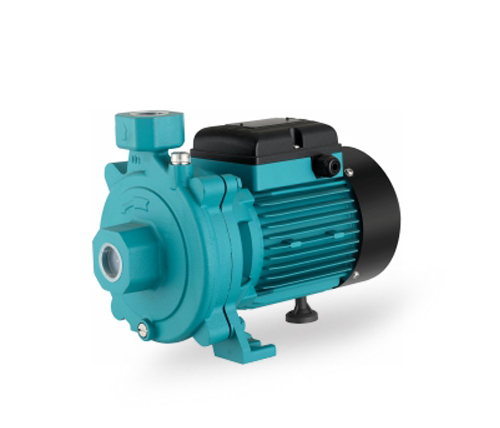
PUN Series Brass Impeller Water Shortage Protection Centrifugal Pump
The brass impeller is one of the most important distinguishing features of the series. The impeller is the primary rotating hydraulic component, so its material has a direct influence on durability, restart behavior, and resistance to corrosion. Brass offers a useful combination of mechanical strength, dimensional stability, and resistance to many common water-related corrosion conditions.
Compared with basic plastic impellers, a brass impeller can provide a more substantial and durable structure for applications involving regular operation, repeated starts, and moderate water pressure. Compared with certain low-cost ferrous components, brass is less vulnerable to visible rust in water-contact areas. This can be especially valuable in domestic water systems, garden applications, and storage-tank installations where equipment may be exposed to moisture for long periods.
The use of brass does not mean that the pump is suitable for every chemical liquid or abrasive slurry. The product is intended for clean water and liquids similar to water. However, within that intended range, the brass impeller offers a strong balance between performance and serviceability. It supports the pump’s positioning as a more durable alternative to entry-level water pumps that rely heavily on lower-cost wetted materials.
The pump uses an AISI 304 stainless steel shaft for the water-contact area. Stainless steel is widely selected for shafts because the shaft is exposed to mechanical stress as well as moisture. A rust-resistant shaft helps maintain a clean and stable rotating surface, supports mechanical seal performance, and reduces the risk of corrosion-related scoring.
The pump body and support are made from cast iron and receive special anti-rust treatment. Cast iron provides rigidity and helps the pump resist vibration when properly mounted. It also offers a practical cost-to-strength ratio for general water applications. Anti-rust treatment is important because the external pump housing may encounter humid air, splashing water, condensation, or outdoor installation conditions.
The combination of treated cast iron, brass, and stainless steel demonstrates a component-by-component material strategy. Rather than using one material throughout the pump, each material is selected according to its position and function. This approach can provide better overall value than a pump designed only around the lowest initial manufacturing cost.
Water shortage is a common concern in tank-fed systems, shallow wells, irrigation installations, and seasonal water networks. If the liquid level drops below the usable inlet level, a conventional pump may continue operating without sufficient water. This can cause overheating, abnormal noise, loss of prime, and mechanical seal stress.
The PUN Series is identified as a water shortage protection centrifugal pump. This feature improves suitability for installations where the available water supply is not always stable. It can help reduce the consequences of insufficient water, protect the pump during abnormal supply conditions, and give users greater confidence when operating the equipment in practical domestic or agricultural environments.
Protection should be understood as part of a complete system. Users should install suitable suction piping, avoid air leaks, maintain adequate water levels, and use a check valve or foot valve where necessary. Proper installation ensures that the protection function is not forced to compensate for preventable hydraulic problems.
One of the notable characteristics of the series is its maximum head range. Depending on the model, the pump provides a maximum head from 17 m to 32 m. Head describes the height or pressure energy that the pump can theoretically provide, although actual performance depends on flow, pipe size, fittings, elevation, and system resistance.
The PUN-750 model with 1-inch inlet and outlet is listed with a maximum head of 25 m and a maximum flow of 185 L/min. The PUN-751 model with 1.25-inch connections is listed with a maximum head of 32 m and a maximum flow of 130 L/min. These figures show why model selection must consider both flow and pressure rather than focusing on motor power alone.
For domestic pressure boosting, garden irrigation, tank transfer, and small water distribution systems, a compact pump with a useful head range can reduce the need for a larger, more expensive unit. It can also simplify installation where space is restricted. The compact configuration makes the series practical for applications where a large commercial pump would be excessive.
Many small water pumps are not used continuously. Garden irrigation may be seasonal, backup water supply may remain unused for weeks, and domestic auxiliary systems may operate only when demand increases. The PUN Series uses a brass impeller and rust-free copper inserts to help support smooth restarting after extended inactivity.
Reliable restarting is important because a pump that operates well only under continuous use may become inconvenient and costly in real installations. Corrosion, sticking, and mechanical resistance can make startup difficult after storage or idle periods. The selected materials are intended to reduce these risks and promote dependable operation when the pump is brought back into service.
Long idle periods should still be managed responsibly. The pump should be installed in a clean, dry, and ventilated location, and the system should be checked before seasonal operation. The suction line must remain sealed, and the pump should not be started dry.
The available PUN Series models cover several combinations of motor power, port size, flow, and head. The following table organizes the supplied technical data for easier comparison.
| Model | Power | Approximate Power | Inlet and Outlet | Maximum Flow | Maximum Head | Maximum Suction |
|---|---|---|---|---|---|---|
| PUN-200 | 0.2 kW | 0.3 HP | 1 inch x 1 inch | 90 L/min | 17 m | 8 m |
| PUN-400 | 0.4 kW | 0.6 HP | 1 inch x 1 inch | 95 L/min | 21 m | 8 m |
| PUN-401 | 0.4 kW | 0.6 HP | 1.25 inches x 1.25 inches | 105 L/min | 21 m | 8 m |
| PUN-600 | 0.6 kW | 0.8 HP | 1 inch x 1 inch | 115 L/min | 25 m | 8 m |
| PUN-601 | 0.6 kW | 0.8 HP | 1.25 inches x 1.25 inches | 120 L/min | 25 m | 8 m |
| PUN-750 | 0.75 kW | 1 HP | 1 inch x 1 inch | 185 L/min | 25 m | 8 m |
| PUN-751 | 0.75 kW | 1 HP | 1.25 inches x 1.25 inches | 130 L/min | 32 m | 8 m |
Flow is the volume of water delivered within a specific period. A household may need sufficient flow for several outlets, a garden system may require a defined irrigation volume, and a tank-transfer application may prioritize rapid filling. The PUN-750 has the highest listed maximum flow, making it a strong choice when water volume is the main consideration.
Maximum flow is not the same as normal operating flow. As pipeline resistance and delivery height increase, actual flow generally decreases. Users should therefore identify the desired operating point instead of selecting a model solely because it has the highest advertised flow. A smaller pump may be more energy-conscious and more stable if the required flow is modest.
Head is especially important when water must be lifted to an upper floor, elevated tank, long pipeline, or distant irrigation point. The PUN-751 provides the highest listed maximum head at 32 m. It may be appropriate where pressure and vertical lift are more important than maximum volume.
Total dynamic head includes elevation, friction loss, bends, valves, filters, and other resistance. For example, a system that appears to require only 15 m of vertical lift may require considerably more pump head once pipe friction and fittings are included. A qualified installer should calculate the complete system requirement before final selection.
The series is available with 1-inch and 1.25-inch inlet and outlet configurations. Larger connections can be helpful in systems requiring higher flow or lower inlet resistance. However, pipe size should match the existing installation and should not be selected independently from the pump’s hydraulic design.
Using an undersized suction line may increase friction, reduce available inlet pressure, and create conditions that encourage air entry or cavitation. Where a larger model and larger pipe are selected, the complete system should use appropriately sized valves, elbows, filters, and discharge piping.
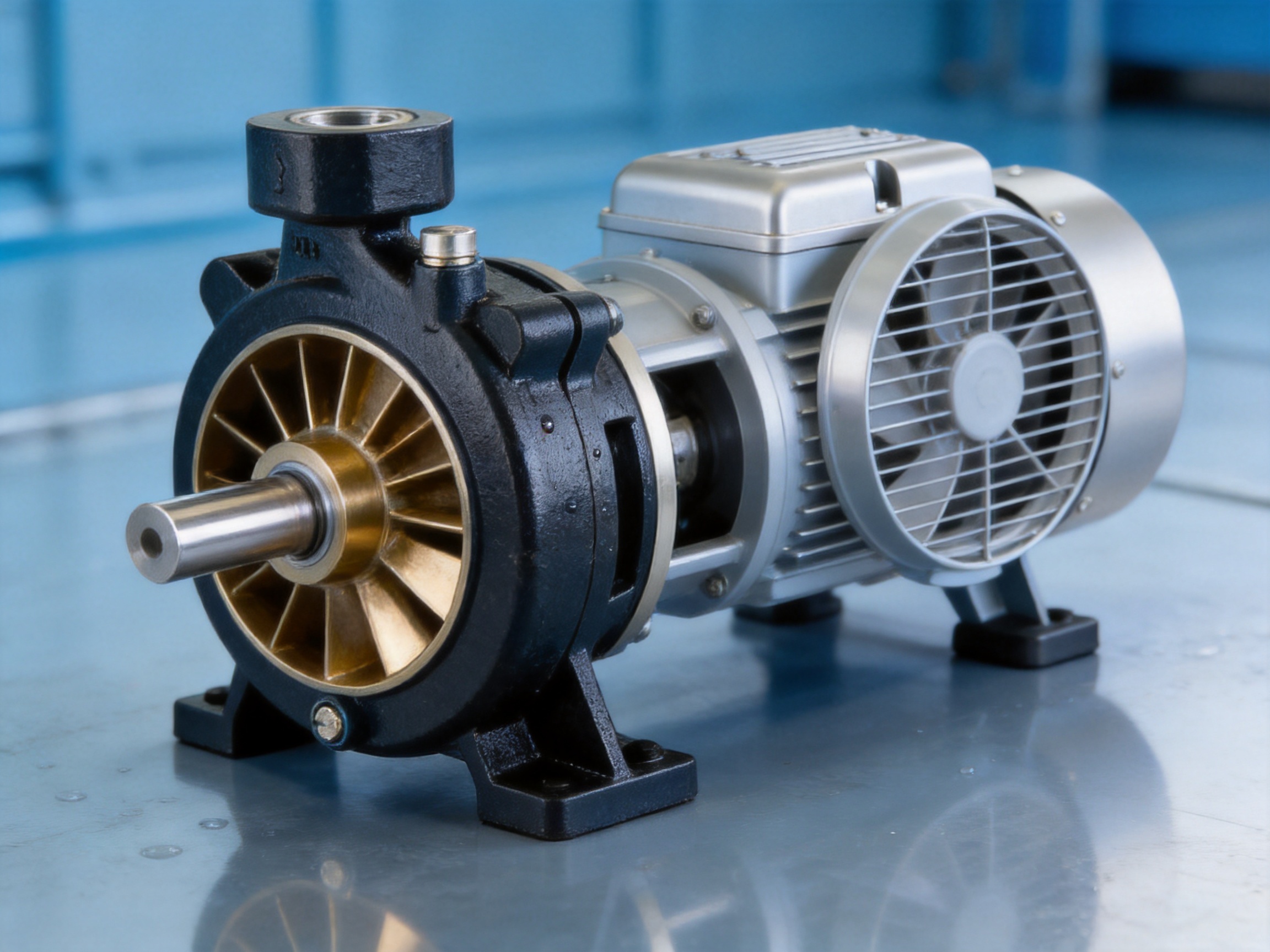
The motor uses durable copper wiring. Copper is valued for its electrical conductivity, which helps support efficient conversion of electrical energy into motor torque. Durable winding construction can also contribute to stable operation and longer service life when the pump is used within its rated conditions.
Motor life depends on more than winding material. Correct voltage, sufficient ventilation, suitable duty cycles, appropriate overload protection, and clean operating conditions are all important. The copper winding is a strong foundation, but the complete installation must also be properly designed.
High-efficiency C&U bearings are specified for the motor. Bearings reduce friction and support the rotating shaft and rotor assembly. Smooth bearing operation helps reduce vibration, noise, and mechanical energy losses.
Bearings are particularly important in a centrifugal pump because the rotating assembly must maintain stable alignment. Excessive vibration can affect the mechanical seal, pump body, mounting base, and connected pipework. Proper alignment and secure mounting remain necessary even when high-quality bearings are used.
The single-phase motor includes a built-in thermal protector. Thermal protection is intended to help safeguard the motor against overheating caused by abnormal load, restricted ventilation, repeated starting, or other operating problems. It is an important feature for domestic and light commercial applications, where the pump may be operated by users who are not specialists in motor protection systems.
Thermal protection should not be treated as permission to operate the pump under continuous overload. If the protector repeatedly interrupts operation, the cause should be investigated. Possible causes may include low voltage, blocked piping, a seized bearing, excessive ambient temperature, incorrect wiring, or an unsuitable pump size.
The motor has Class F insulation. Insulation class indicates the thermal capability of the motor winding insulation system. Class F is commonly used in equipment requiring dependable resistance to elevated winding temperatures under rated operating conditions.
The stated IP44 protection rating indicates protection against solid objects above a specified size and against water splashing from various directions. IP44 does not mean that the motor can be submerged or exposed to direct high-pressure water jets. The pump should be installed in a location protected from flooding, heavy rain, and uncontrolled spray.
The maximum ambient temperature is specified as +40°C. In hot climates or enclosed pump rooms, ventilation must be adequate to prevent excessive heat accumulation. A motor operating in a hot, poorly ventilated space may experience reduced efficiency and more frequent thermal protection activation.
The component list demonstrates how the pump is assembled from specialized parts. The pump body is made from HT200 cast iron, while the impeller is brass. The mechanical seal uses a carbon and ceramic combination, and the support is cast iron. The motor case is aluminum, the motor cover is cast iron, and the fan is made from PP. The terminal board is made from PC.
Each material serves a different purpose. HT200 cast iron provides a rigid hydraulic enclosure. Brass supports impeller durability and water-contact reliability. Carbon and ceramic are widely used in mechanical seal faces because they can provide suitable friction and sealing performance when correctly selected for the operating conditions. Aluminum helps reduce motor housing weight while supporting heat dissipation. PP provides a lightweight fan structure, and PC is used for electrical terminal insulation and support.
The shaft and rotor, ball bearing, fan cover, capacitor, and terminal cover must work together with the principal hydraulic components. The pump’s performance depends on the complete assembly, not on one material alone. Accurate dimensional control, correct bearing installation, seal alignment, rotor balancing, and electrical testing are necessary to convert the component specification into reliable finished equipment.
The mechanical seal helps prevent water from traveling along the rotating shaft into the motor area. A carbon and ceramic seal combination is commonly used because the two faces can operate with controlled friction when cooled and lubricated by the pumped liquid.
Mechanical seals are sensitive to dry running, abrasive particles, incorrect installation, and extended operation outside the intended temperature range. The specified maximum liquid temperature is +60°C, and the pump should be used only with liquids compatible with the seal materials.
The maximum liquid temperature is listed as +60°C. This makes the pump suitable for some warm-water applications, but it should not be regarded as a general-purpose hot-water or boiler pump. The user must also consider the temperature rating of the pipework, valves, seals, electrical insulation, and connected equipment.
Higher liquid temperatures can reduce the available suction margin and increase the risk of vapor formation. For warm-water operation, careful system design is essential. Clean, cool water remains the primary intended medium for this series.
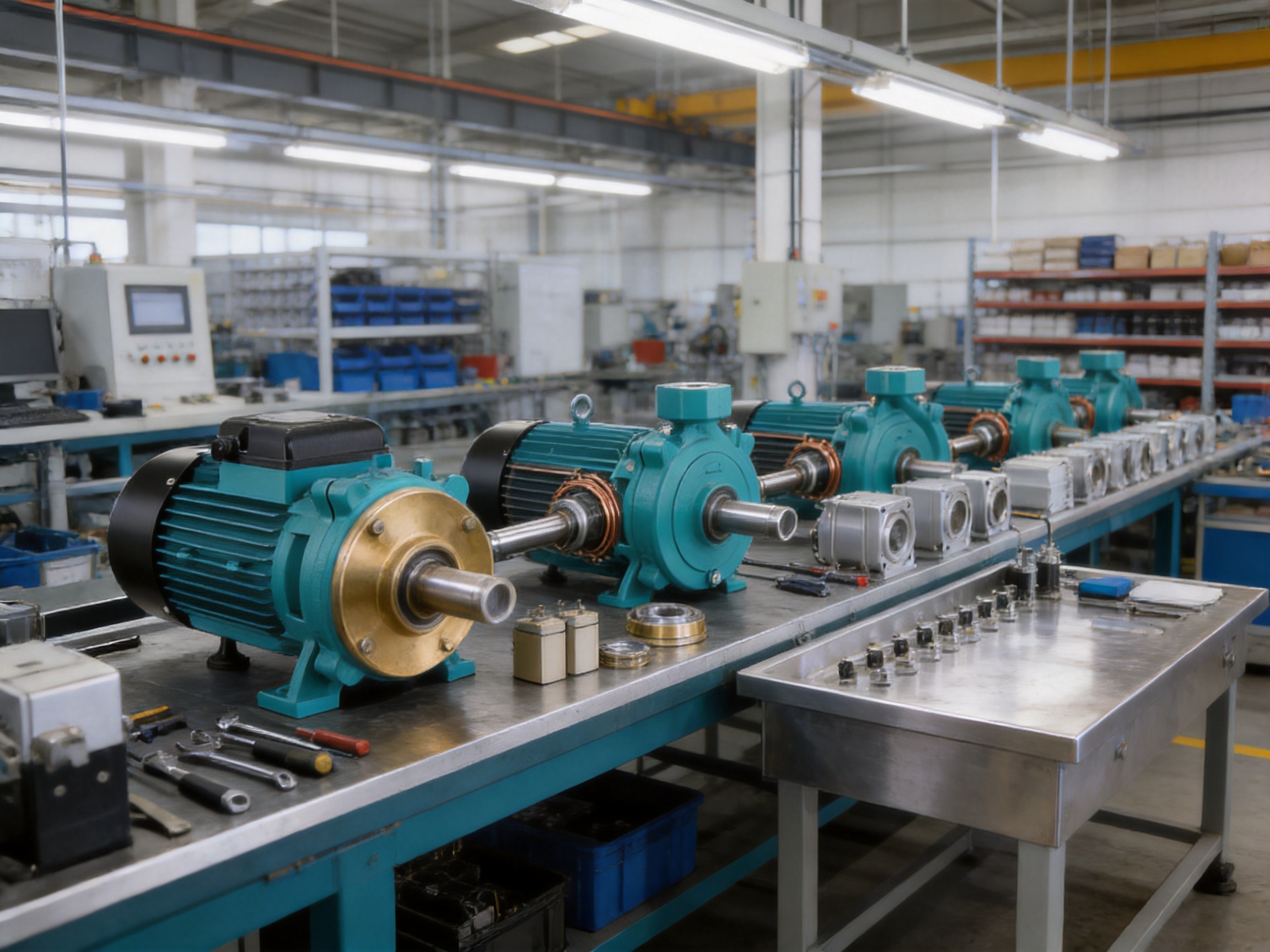
The pump is produced by Taizhou Edwin Electric Co., Ltd., an integrated manufacturing enterprise established in 2008. The company’s stated capabilities include independent research and development, mass production, and global export. This combination is important because a reliable pump supplier must do more than assemble a product. It must be able to develop product structures, organize component production, maintain repeatable manufacturing, and support customers across international markets.
Independent research and development gives a manufacturer greater control over hydraulic configuration, motor matching, material selection, and product improvement. It also allows product families to be adapted to different market requirements. The PUN Series demonstrates this approach through multiple motor ratings and port configurations rather than a one-size-fits-all product.
Mass production provides another advantage. When a manufacturer produces a product family repeatedly, it can establish more consistent assembly procedures, component specifications, inspection routines, and packaging methods. Consistency is particularly important in pumps because small variations in impeller clearance, shaft alignment, seal installation, or winding quality can affect noise, efficiency, and service life.
Global export experience strengthens the company’s ability to manage international order requirements, packaging, documentation, delivery planning, and communication with overseas buyers. The company has also established related import and export and industrial entities to support procurement planning, order tracking, cross-border delivery, and foreign trade services. For distributors and project purchasers, this broader supply-chain capability can be as important as the pump’s technical specifications.
An integrated manufacturing model allows hydraulic and electrical decisions to be made together. A pump is not simply a motor attached to a water chamber. The impeller diameter, pump body geometry, motor speed, winding design, shaft dimensions, bearing selection, and seal arrangement must be matched.
When these elements are developed within a coordinated product program, the manufacturer can improve the relationship between power input and water output. It can also provide several models within one family, allowing customers to select the most suitable balance of flow, head, connection size, and motor power.
The listed construction materials create a clear basis for process control. Cast iron components require appropriate casting quality and finishing. Brass impellers require dimensional accuracy and balanced rotation. Stainless steel shafts require suitable machining and surface quality. Mechanical seals require careful handling and correct pressure during assembly.
Electrical components require their own controls. Copper windings must be properly formed and insulated. Bearings must be installed without damaging the raceways. Capacitors, terminal boards, and protective components must be fitted securely. The motor must be tested for electrical continuity and operating behavior before shipment.
While specific factory test standards are not provided in the product information, a professional pump production process should include dimensional inspection, assembly inspection, leak checks, electrical checks, and performance verification appropriate to the model. These controls are especially important in mass production because they help reduce variation between individual units.
The company’s broader product portfolio includes deep well pumps, submersible pumps, domestic booster pumps, circulation pumps, solar water pumps, intelligent booster pumps, and related water equipment. This range can benefit buyers who need more than one type of pump for a project or distribution catalog.
For example, a contractor may require a surface centrifugal pump for a storage tank, a submersible pump for a deep well, and an intelligent booster pump for a building water network. A supplier capable of supporting multiple categories can simplify purchasing, technical communication, spare-parts planning, and logistics.
The company reports applications in new energy projects, agricultural irrigation, municipal engineering, mining, construction, HVAC systems, and household water supply. The PUN Series is best understood as part of this wider water-equipment capability, while its specific application range remains focused on clean-water transfer and related domestic or civil duties.
When comparing the PUN Series with competing centrifugal pumps, buyers should evaluate more than the purchase price. Important comparison points include impeller material, shaft material, protection features, motor insulation, enclosure rating, maximum suction, temperature capability, available models, replacement support, and supplier manufacturing capacity.
Basic plastic-impeller pumps can be attractive because they are lightweight and often inexpensive. However, applications involving frequent cycling, higher pressure, or long idle periods may benefit from a more robust impeller construction. The brass impeller of the PUN Series offers a stronger material option for users who place emphasis on durability and restart reliability.
The appropriate choice depends on the application. A small plastic-impeller pump may be sufficient for occasional light-duty transfer. The PUN Series becomes more compelling when a user wants a pump with a metal hydraulic working component, higher pressure capability, and broader domestic or civil utility.
Ferrous impellers can provide strength, but they may be more vulnerable to rust in water-contact environments if surface protection is inadequate. The brass impeller and AISI 304 stainless steel shaft give the PUN Series an advantage in corrosion-conscious design for clean-water applications.
This does not eliminate the need for correct water quality. Sand, abrasive particles, aggressive chemicals, and contaminated liquids can reduce pump life regardless of material. Nevertheless, the selected wetted materials provide a practical advantage for ordinary clean-water service.
Some entry-level pumps provide limited motor protection and rely heavily on external safeguards. The PUN Series includes a built-in thermal protector for its single-phase motor, Class F insulation, and IP44 protection. These features contribute to a more complete motor package for household, garden, and light commercial environments.
Protection features do not replace a correctly rated circuit breaker, proper grounding, suitable cable size, or professional electrical installation. However, they improve the pump’s ability to tolerate certain abnormal conditions and can reduce the risk of motor damage caused by overheating.
A supplier offering only one small pump model may force customers to compromise between excessive power and insufficient performance. The PUN Series provides seven listed model configurations, including variations in power and connection size. This makes it easier to select a pump closer to the actual system requirement.
Model variety can also help distributors serve different customer groups. A small domestic installation may use the PUN-200, while a garden or water-transfer application may need the PUN-600 or PUN-750. A higher-head application may favor the PUN-751.
The pump can support domestic water distribution where clean water must be transferred from a storage tank, ground-level source, or supply point to household outlets. Its compact size and range of pressure capabilities make it suitable for homes that experience weak supply pressure or require water lifting to an elevated tank.
Domestic installation should include suitable isolation valves, a properly sized suction line, protection against dry running, and an electrical supply compatible with the motor specification. The pump should be mounted on a stable base away from flooding and excessive vibration.
Garden irrigation systems often require a combination of adequate flow and moderate pressure. The pump can transfer water from a tank, rainwater storage system, or clean-water source to sprinklers, hoses, or drip irrigation equipment.
Filters may be necessary when water is drawn from a storage tank. Leaves, sediment, and debris can block small irrigation emitters and damage hydraulic components. The filter must be installed so that it does not create excessive suction resistance.
The pump is suitable for transferring water to storage tanks and supporting water tower supply. The required model should be selected according to elevation, pipe length, tank filling time, and the number of outlets operating at the same time.
Automatic control systems can be used with appropriate pressure switches, float switches, or control equipment. The compatibility of the control system with the pump’s motor and starting characteristics should be confirmed before installation.
The maximum suction height is listed as 8 m. This makes the pump suitable for certain shallow well or surface-lift applications, provided the actual suction conditions remain within the practical limit. It is not a substitute for a deep-well submersible pump when the water level is significantly below the surface.
Suction lift depends on altitude, water temperature, pipe diameter, pipe length, inlet fittings, and airtightness. If the well is deep or the water level changes substantially, a submersible or deep-well pump may be more appropriate.
The pump can be used in small commercial buildings, workshops, agricultural properties, and civil water systems where clean-water transfer is required. Potential duties include equipment washing, auxiliary water supply, small irrigation networks, and general water circulation or transfer.
For demanding commercial duties, purchasers should calculate the complete duty point, operating hours, starting frequency, water quality, and maintenance resources. The PUN Series is a practical surface centrifugal pump, but every project should confirm that its rated conditions match the intended duty.
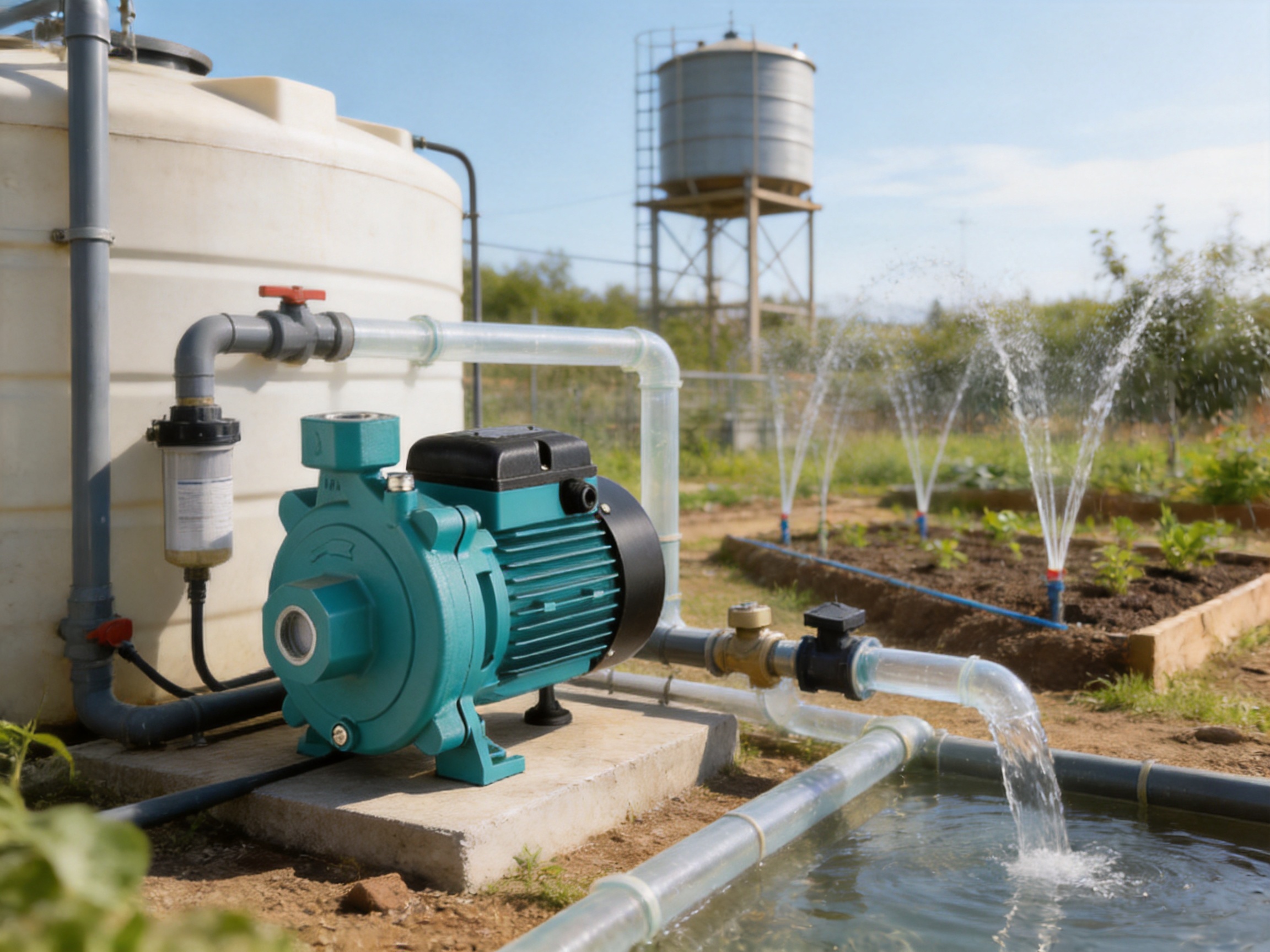
Install the pump on a firm, level base that can support its weight and absorb normal operating vibration. The location should be dry, ventilated, accessible for inspection, and protected from flooding. Adequate space should be left around the motor so that cooling air can circulate.
Outdoor installations should include protection from direct rain and strong sunlight. Although the motor has an IP44 rating, this rating does not permit submersion or continuous exposure to severe weather. A protective enclosure may be used, provided that it does not restrict ventilation.
The suction pipe should be as short and direct as practical. Avoid unnecessary bends, sharp restrictions, and high points where air can collect. All threaded connections must be sealed correctly, because even a small air leak can cause loss of prime and unstable operation.
The suction pipe should be adequately supported so that its weight does not load the pump inlet. A foot valve or check valve may be needed to retain water in the suction line, particularly when the pump is installed above the water source.
A surface centrifugal pump generally requires the pump chamber and suction line to be filled with water before startup. The user should follow the model-specific instructions for priming. Starting the pump without sufficient liquid can damage the mechanical seal and cause overheating.
After priming, inspect the suction connections for air entry and observe whether the pump reaches stable operation. If the pump does not deliver water, switch it off and investigate the cause rather than allowing it to run continuously.
Electrical installation should be carried out by a qualified person. The voltage and frequency must match the motor nameplate. The circuit should include suitable overcurrent protection, grounding, and a correctly sized cable. Moisture must be prevented from entering the terminal area.
The built-in thermal protector provides additional motor protection, but it does not replace the requirements of the electrical installation. Repeated thermal trips indicate that the pump should be inspected for an underlying problem.
Before operation, confirm that the pump is securely mounted, the valves are in the correct position, the suction line is full of water, and the discharge route is open as required. Check for leaks, unusual vibration, abnormal noise, and excessive heating.
Record the initial operating condition where practical. Information about pressure, flow, current, and sound can help identify changes during future maintenance. A gradual increase in noise or current may indicate bearing wear, blockage, seal problems, or hydraulic overload.
Regular maintenance helps preserve the advantages of the PUN Series. Maintenance intervals depend on operating hours, water quality, installation environment, and starting frequency. Clean-water domestic systems may require less attention than agricultural systems exposed to sediment or outdoor contamination.
Inspect the pump body, pipe connections, valves, and base for leaks or movement. Check that the ventilation openings remain clear. Remove dust from the motor exterior without directing high-pressure water at the electrical components.
Filters should be cleaned regularly. A blocked filter can reduce inlet pressure and cause the pump to operate inefficiently. If the pump is used with a tank, inspect the tank for sediment, algae, and debris that could enter the suction line.
Listen for changes in operating noise. Grinding, rattling, or a sudden increase in vibration may indicate bearing wear, an impeller obstruction, misalignment, or cavitation. The pump should be switched off before any inspection or cleaning is attempted.
Mechanical seals are wear components. A visible leak from the shaft area may indicate seal damage and should be addressed promptly. Continuing to operate with a significant leak can expose the motor or bearings to water and may lead to more extensive repairs.
If the pump will remain unused for a long period, protect it from freezing, drain it where appropriate, and keep the installation dry. Before restarting, check the suction line, fill the pump, confirm that the impeller can operate normally, and inspect the electrical connection.
A pump purchase is not limited to the individual unit. Buyers often need repeat supply, consistent specifications, packaging reliability, technical communication, and responsive order management. A manufacturer with experience in research, mass production, and export can provide a stronger foundation for these requirements.
For wholesalers, a stable model family simplifies inventory planning. The PUN Series offers several power and connection combinations, allowing a distributor to build a product range around common application needs. Consistent product naming and clear technical data also help sales teams recommend models more accurately.
For project contractors, supplier coordination can reduce procurement complexity. A company with a broader pump portfolio may support multiple water-system requirements, from surface transfer and domestic boosting to deep-well, submersible, circulation, and solar pumping.
For original equipment or private-label buyers, manufacturing integration may create opportunities for product configuration, packaging coordination, and long-term supply planning. Specific customization options must be confirmed directly with the manufacturer, but the presence of independent development and mass-production capabilities is a positive starting point.
Before ordering a PUN Series pump, define the water source, required flow, total head, suction height, pipe size, liquid temperature, water quality, power supply, operating frequency, and installation environment.
Confirm that the liquid is clean water or sufficiently similar in physical and chemical properties. Do not use the pump for corrosive chemicals, abrasive slurries, flammable liquids, seawater, or heavily contaminated water unless the manufacturer has specifically approved the application.
Check whether the water source can maintain the required inlet condition. If the water level is too low or the suction distance is excessive, a surface pump may not be suitable. In those cases, a submersible or deep-well pump may provide better performance.
Compare the required duty point with the selected model’s performance curve when available. Maximum flow and maximum head are limiting values, not necessarily the flow and head delivered simultaneously. A professional selection should be based on the operating point.
Verify the electrical supply, installation location, pipe connections, control method, and spare-parts requirements. Buyers ordering for export or project use should also confirm packaging, documentation, lead time, warranty conditions, and after-sales procedures.
The PUN Series is a surface centrifugal pump with a brass impeller and water shortage protection. It is designed mainly for clean-water transfer and liquids with physical and chemical properties similar to water.
The listed maximum suction height is 8 m for the models in the series. Actual suction performance depends on water temperature, altitude, pipe size, pipe length, fittings, airtightness, and the condition of the water source.
A brass impeller offers a durable metal hydraulic component with good resistance to many common water-related corrosion conditions. It can support reliable operation and smooth restarting after periods of inactivity when the pump is used within its intended conditions.
The pump should not be intentionally operated without water. Water shortage protection is designed to improve safety under insufficient supply conditions, but correct priming, adequate water levels, and proper suction-pipe installation remain essential.
The pump can support certain shallow well water-lifting applications within its 8 m maximum suction specification. It is not intended to replace a deep-well submersible pump for significant depths below the water surface.
The stated maximum liquid temperature is +60°C. The pump is primarily intended for clean water, and the complete system must also be suitable for the selected temperature.
The single-phase motor includes a built-in thermal protector. It also uses Class F insulation and has an IP44 protection rating. These features support safe operation, but proper external electrical protection and grounding are still required.
The PUN-750 is listed with the highest maximum flow at 185 L/min. The PUN-751 is listed with the highest maximum head at 32 m. The correct choice depends on the complete system requirement rather than one specification alone.
The models differ in their inlet and outlet connection sizes. The larger connection models may be suitable for systems requiring different pipe arrangements or higher flow capacity, but pipe size should be matched to the total system design.
The pump can be used in suitable light commercial and civil water applications, including clean-water transfer, irrigation, auxiliary supply, and tank filling. Larger or continuous-duty projects should be checked carefully against the pump’s duty point, operating schedule, and environmental conditions.
Keep the pump in a dry, clean, and ventilated location. Protect it from freezing, excessive humidity, dust, and impact. Before restarting after storage, inspect the connections, prime the pump, and verify that the motor and hydraulic system operate normally.
Its competitive strengths include a brass impeller, AISI 304 stainless steel shaft, anti-rust-treated cast iron construction, water shortage protection, thermal motor protection, several power options, and a manufacturer with independent development, mass-production, and export capabilities.
The PUN Series Brass Impeller Water Shortage Protection Centrifugal Pump is designed as a durable and adaptable solution for clean-water transfer. Its combination of brass impeller construction, stainless steel shaft, treated cast iron body, carbon and ceramic mechanical seal, copper motor winding, C&U bearings, thermal protection, Class F insulation, and IP44 enclosure provides a well-balanced specification for domestic, garden, agricultural, and light commercial applications.
The seven listed model configurations make it possible to select between different motor powers, connection sizes, maximum flows, and maximum heads. This is an advantage over product lines that offer only one fixed configuration. The water shortage protection feature further improves suitability for variable supply conditions, although correct system design and installation remain essential.
The manufacturer’s integrated capabilities in research and development, mass production, export, and broader pump-category supply add value for distributors, contractors, and international buyers. A structured product family, component-based design, and material-conscious construction provide a solid basis for reliable water-pumping service.
For the best result, users should select the pump according to the actual duty point, liquid characteristics, suction conditions, pipework, electrical supply, and operating environment. When properly matched, installed, and maintained, the PUN Series can provide dependable water transfer and pressure support across a wide range of practical applications.
1. Product technical information for the PUN Series Brass Impeller Water Shortage Protection Centrifugal Pump.
2. Manufacturer-provided component and materials information for the PUN Series pump.
3. Manufacturer-provided technical data covering model power, connection size, maximum flow, maximum head, and maximum suction height.
4. General engineering principles for centrifugal pump operation, suction lift, hydraulic head, and system resistance.
5. General electrical engineering principles concerning motor insulation classes, thermal protection, enclosure ratings, and grounding.
6. General maintenance practices for surface centrifugal pumps, mechanical seals, bearings, suction lines, and water filtration systems.
edwina@edwin-pump.com
+86-13586290903 (WhatsApp)
Xuri Gongliang Cutting Tool Entrepreneurship Park, Wenqiao Town, Wenling City, Taizhou City, Zhejiang Province, China

High Performance Smart Pump Factory


 English