edwina@edwin-pump.com

View All Products
en
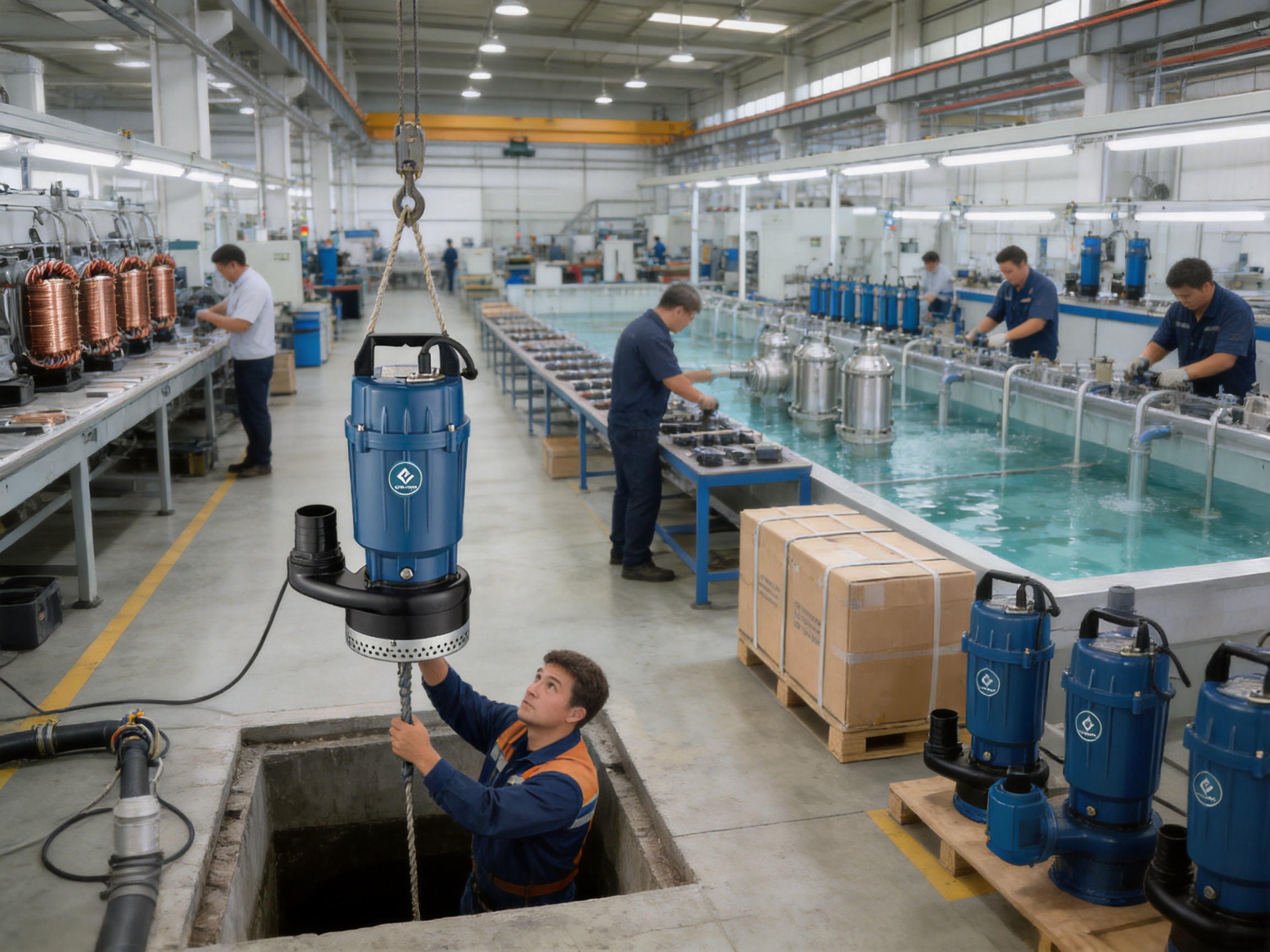
Effective water management is essential in agriculture, construction, industrial facilities, livestock operations, residential properties, and municipal environments. When accumulated water, well water, or wastewater must be removed efficiently, a dependable submersible pump can reduce labor, protect equipment, and maintain safe operating conditions. The Submersible Sewage Pump SPA3 is designed for practical drainage and water-supply applications where compact construction, safe underwater operation, and reliable motor protection are important.
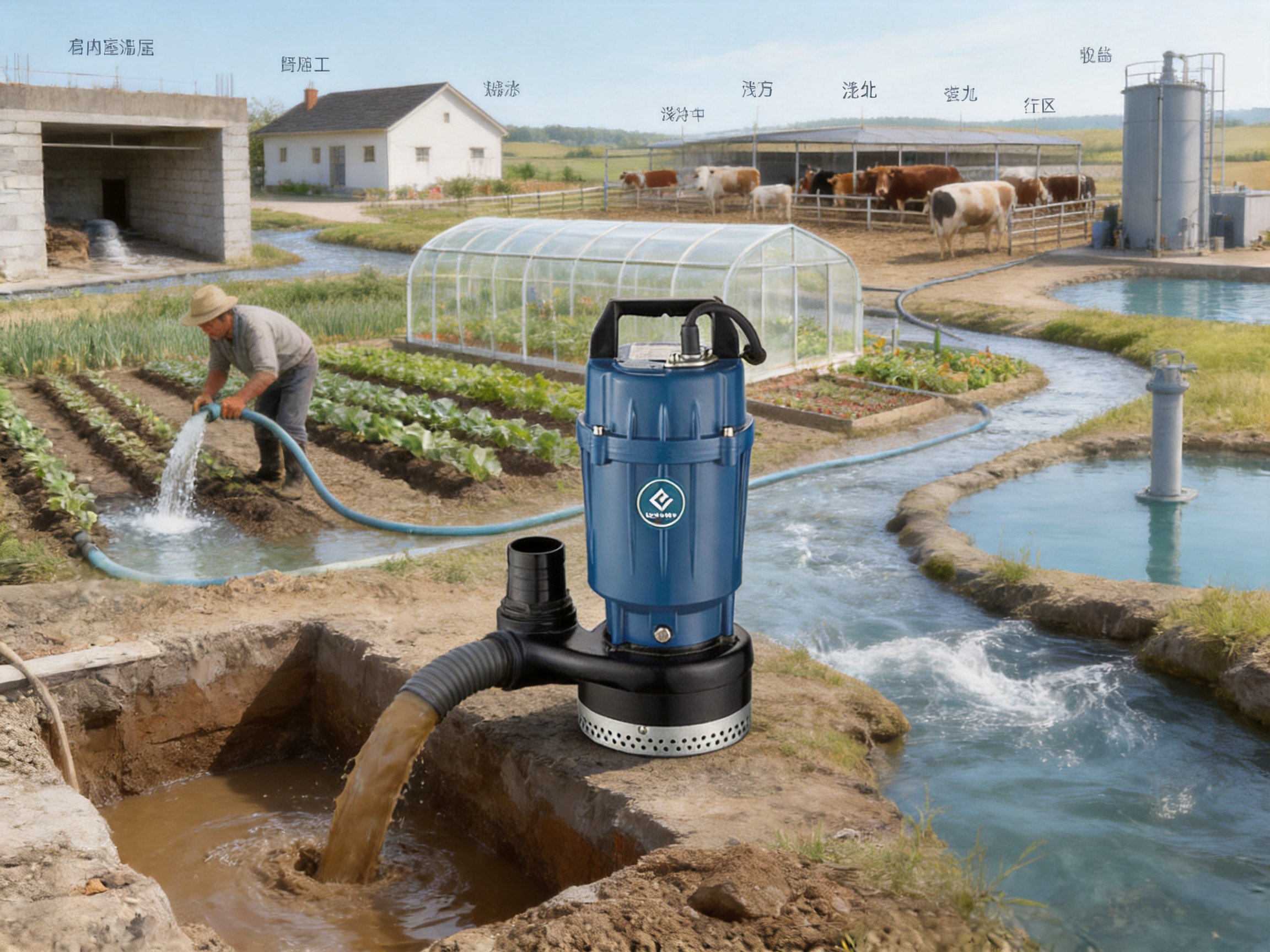
The SPA3 is a small electrical irrigation and drainage pump developed for applications such as urban well-water pumping, field irrigation, garden irrigation, household water supply, industrial accumulated-water drainage, construction-site drainage, and livestock-breeding water management. Its submersible design allows the pump to operate directly inside the water source, reducing the need for complicated external suction arrangements and helping users manage water in locations where conventional surface pumps may be less convenient.
Manufactured by Taizhou Edwin Electric Co., Ltd., the pump reflects the company’s long-term experience in electric pump development, mass production, export service, and application-oriented product design. The manufacturer has developed a broad portfolio that includes deep well pumps, submersible pumps, domestic booster pumps, circulation pumps, solar water pumps, intelligent booster pumps, and related water-treatment products. This product range gives the company a strong understanding of different hydraulic environments and customer requirements.
The SPA3 is especially suitable for users seeking a practical and economical drainage solution rather than an oversized industrial pumping system. Its copper-wound motor, built-in thermal protector, Class B insulation, and IPX8 protection class provide a combination of electrical safety and operating reliability. With a maximum immersion depth of 5 meters and a maximum liquid temperature of 40°C, the pump is intended for normal-temperature water-management applications within its specified working conditions.
The Submersible Sewage Pump SPA3 is an electrically powered pump designed to work while immersed in water. Unlike a surface pump, which is installed outside the water source and must draw water through a suction pipe, a submersible pump is placed directly into the water. The pump’s submerged position can simplify installation, reduce suction-related difficulties, and make it easier to remove water from wells, pits, tanks, trenches, or other low-lying areas.
The SPA3 is positioned as a compact drainage and irrigation product for everyday water-handling requirements. It can support small electrical irrigation systems, help remove accumulated water, and provide water for gardens, households, agricultural fields, construction sites, and livestock facilities. The pump is therefore suitable for users who require mobility and flexible deployment across several working environments.
Its design is particularly useful where water levels change frequently. A portable submersible pump can be moved between different collection points as required, allowing one unit to serve multiple areas. For example, a farm may use the pump for field drainage after rainfall, garden irrigation during dry weather, and water transfer from a storage tank. A construction company may use it to remove water from excavated areas, foundation pits, or temporary collection basins.
As with all pumps, correct application is important. The SPA3 should be selected according to water quality, immersion conditions, electrical supply, required delivery performance, and the specific drainage environment. The published operating information identifies a maximum immersion depth of 5 meters and a maximum liquid temperature of 40°C. These limits should be respected to support safe and stable operation.
| Item | Specification or Description | Application Significance |
|---|---|---|
| Product type | Submersible sewage pump | Operates directly inside the water source |
| Model | SPA3 | Compact pump for small irrigation and drainage requirements |
| Maximum immersion depth | 5 meters | Suitable for shallow wells, pits, tanks, and drainage areas within the limit |
| Maximum liquid temperature | 40°C | Designed for normal-temperature water applications |
| Motor winding | Copper winding | Supports stable electrical conductivity and dependable motor operation |
| Motor protection | Built-in thermal protector | Helps protect the motor against excessive heat during abnormal conditions |
| Insulation class | Class B | Provides an established level of electrical insulation for the motor |
| Protection class | IPX8 | Designed for continuous immersion under specified conditions |
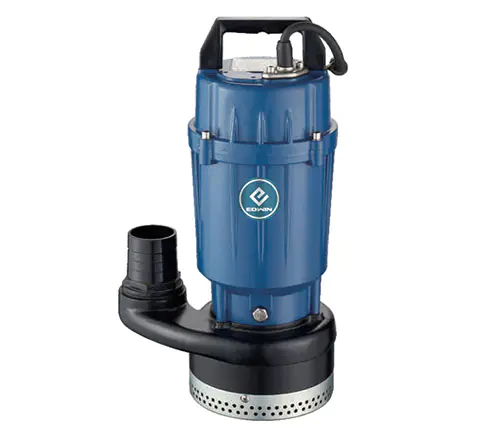
SUBMERSIBLE SEWAGE PUMP SPA3
The most important advantage of the SPA3 is its submersible operating principle. Because the pump is installed inside the water, it does not need to lift water through a long suction line before pumping begins. This can simplify system arrangement and reduce the possibility of priming problems associated with some surface-mounted pump installations.
Direct immersion also helps users handle water in narrow or difficult-to-access areas. A surface pump may require a stable platform, a properly sealed suction connection, and sufficient space around the equipment. A submersible pump can often be lowered into a well, collection pit, tank, or flooded area with a discharge pipe and suitable electrical connection. This flexibility is valuable for temporary drainage work and seasonal irrigation.
The submerged position can also reduce operating noise in comparison with many exposed pumping arrangements because the surrounding water helps absorb part of the motor and hydraulic sound. Although installation conditions influence actual noise levels, placing the pump below the water surface can make the working environment more comfortable for household, garden, and light commercial use.
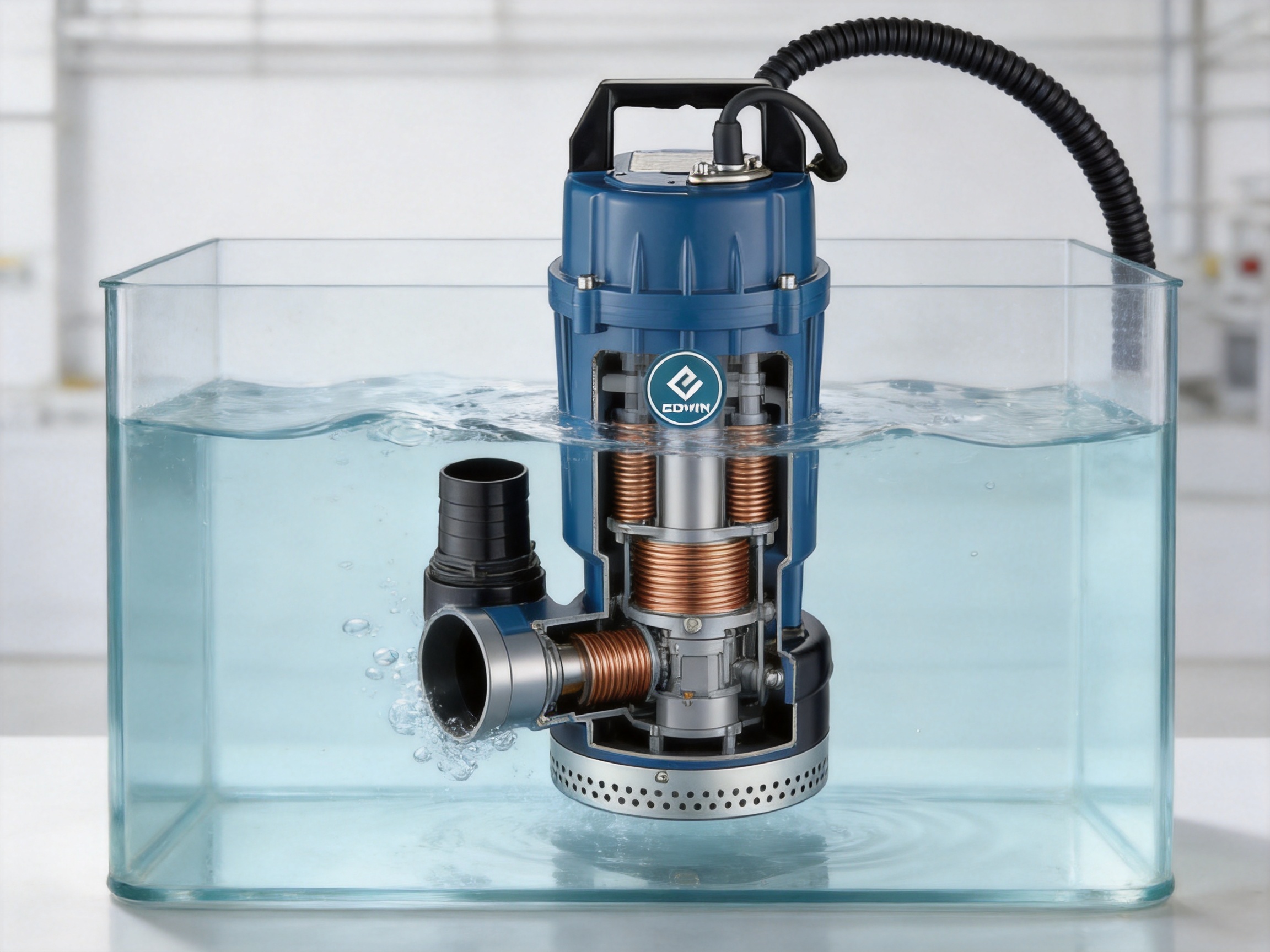
The SPA3 uses a copper winding in its motor. Copper is widely used in electric motors because it offers strong electrical conductivity and supports efficient transfer of current through the winding. A properly manufactured copper-wound motor can help provide stable operation, reliable starting behavior, and good resistance to the electrical demands of repeated pump use.
For drainage and irrigation applications, motors may be required to start and stop repeatedly as water levels change or as operators move the pump from one location to another. Motor winding quality is therefore important. The use of copper winding contributes to a dependable electrical foundation for the pump and supports the manufacturer’s focus on practical, long-term performance.
Compared with low-cost products that may use less consistent winding materials or weaker assembly processes, a copper-wound motor offers a more reliable basis for professional and household water-management work. Of course, operating life also depends on correct voltage, adequate water coverage, clean ventilation conditions around the motor housing, and compliance with the stated application limits.
The built-in thermal protector is another important advantage. Electric motors can generate excessive heat when subjected to overload, restricted water flow, unsuitable voltage, repeated abnormal starts, or inadequate operating conditions. If this heat is not controlled, it may damage winding insulation and shorten motor life.
A thermal protector helps reduce this risk by responding to excessive motor temperature. Depending on the operating condition, it can interrupt or control motor operation when the temperature rises beyond a safe level. This feature provides an additional layer of protection for users who operate the pump in changing field, garden, household, or construction environments.
Thermal protection does not eliminate the need for correct installation. Users should still ensure that the pump is fully positioned as required, that the power supply is suitable, that the discharge route is not unnecessarily restricted, and that the pump is not operated outside the specified temperature or immersion limits. However, the integrated protector improves the pump’s ability to withstand ordinary operating fluctuations and helps protect the motor from avoidable thermal stress.
The SPA3 carries an IPX8 protection class. This rating is associated with equipment designed for continuous immersion in water under conditions specified by the manufacturer. For a submersible pump, protection against water entering the electrical enclosure is fundamental. Without adequate sealing, water could reach sensitive electrical components and create serious safety and reliability concerns.
IPX8 protection makes the SPA3 suitable for submerged operation when installed correctly. It supports the pump’s use in wells, tanks, drainage pits, flooded areas, and other applications where the motor housing is placed below the water surface. This protection class is one of the key differences between a purpose-built submersible pump and an ordinary non-submersible electric motor.
The protection rating should always be understood together with proper cable handling, connector protection, grounding, maintenance, and the manufacturer’s installation requirements. The rating does not mean that every part of the installation is automatically waterproof. Electrical connections outside the pump must also be protected from moisture and accidental contact.
The maximum liquid temperature for the SPA3 is 40°C. This range covers many common water-management conditions, including garden irrigation, agricultural drainage, household water transfer, construction-site water removal, and accumulated rainwater drainage. It is appropriate for normal-temperature water rather than hot industrial liquids.
A defined temperature limit helps users select the pump responsibly. When liquid temperature rises, motor cooling conditions, seal performance, insulation stress, and material durability can all be affected. By identifying a maximum temperature, the product information provides a clear boundary for safe application planning.
The pump is rated for a maximum immersion depth of 5 meters. This makes it suitable for many shallow wells, basements, pits, tanks, agricultural collection points, garden ponds used for water management, and temporary drainage locations. The depth specification gives installers a practical reference when determining whether the pump is appropriate for a particular site.
Operating within the specified depth can help maintain proper mechanical and electrical loading. Users should consider not only water depth but also discharge-head requirements, pipe length, bends, outlet elevation, water quality, and the desired flow rate. A pump may be physically capable of reaching a certain depth while still requiring careful hydraulic planning to achieve effective discharge performance.
Urban and semi-urban properties may use wells or underground collection points as supplementary water sources. The SPA3 can be applied to shallow well-water pumping where the immersion depth and water quality remain within the product’s operating conditions. Its submersible design reduces the need for a complex surface installation and allows water to be transferred from the well to a storage tank, garden, or household distribution point.
Before use in a well, the installer should confirm that the well opening is large enough, the pump can be lowered and removed safely, and the water does not contain materials that could block or damage the hydraulic components. A suitable discharge pipe and secure lifting arrangement should be used. The power cable should not be used as the sole method of supporting the pump.
Small farms and agricultural plots often require flexible water movement. The SPA3 can support irrigation from collection tanks, shallow wells, drainage channels, and temporary reservoirs. Its portable design allows farmers to transfer the unit between fields as the irrigation schedule changes.
The pump may be useful for supplemental irrigation in vegetable gardens, nurseries, orchards, and small crop areas. It can also help remove excess water after heavy rain, protecting cultivated areas from prolonged waterlogging. In agricultural use, operators should keep the pump intake area clear of leaves, stones, soil clumps, and other materials that could restrict flow or damage internal parts.
For larger farms or high-pressure irrigation networks, a different pump type or a complete pumping system may be required. The SPA3 is best evaluated as a compact irrigation and drainage solution for small or moderate applications within its hydraulic capability.
Garden irrigation requires equipment that is easy to move, simple to install, and capable of transferring water from tanks or collection points. The SPA3 can be used to support watering systems, transfer stored rainwater, or drain areas that collect water after storms.
Its compact submersible arrangement can help preserve space around the garden. Rather than occupying a permanent platform beside the tank, the pump can be positioned inside the water source when needed. This is especially convenient for private gardens, plant nurseries, landscape-maintenance teams, and small horticultural operations.
In households, water-management problems may occur in basements, storage tanks, utility areas, drainage pits, or low-lying outdoor spaces. The SPA3 can help move accumulated water away from these areas and transfer water between suitable storage points.
For household use, safety is particularly important. The pump should be connected to an appropriate electrical system with suitable protective devices. Users should avoid touching the pump, cable, or water while the equipment is energized. Installation and maintenance should be completed by qualified personnel whenever electrical conditions are uncertain.
Industrial sites may experience water accumulation in service areas, storage zones, production yards, equipment rooms, and drainage pits. The SPA3 can be used for light-duty or supplementary drainage where liquid temperature, immersion depth, and water quality are suitable.
Industrial users should carefully identify the liquid before installation. The available product information is oriented toward water-management applications. Aggressive chemicals, oils, flammable liquids, abrasive slurries, or highly contaminated fluids may require specialized pumps and materials. Application review is therefore essential before industrial deployment.
Construction projects frequently require temporary removal of rainwater, groundwater, or accumulated water from excavations, foundation pits, trenches, and low-lying work areas. A portable submersible pump can be particularly useful because it can be moved as the site layout changes.
The SPA3 can support small construction drainage tasks when the water is within the pump’s acceptable conditions. It can help maintain drier working areas, reduce delays caused by standing water, and support site housekeeping. Construction environments can contain sand, concrete particles, stones, and debris, so users should inspect water conditions and protect the pump intake from excessive solids.
Livestock facilities require regular water transfer, drainage, and cleaning. The SPA3 may be used for suitable water-supply and drainage duties around animal housing, storage areas, washdown zones, and collection points. Its submersible structure can simplify the removal of water from low areas.
Hygiene and maintenance are important in this environment. After use, the pump may need to be cleaned according to site procedures. Operators should prevent organic matter, fibrous material, and large debris from entering the pump. Where wastewater contains unusual contaminants, a technical evaluation should be carried out before use.
Competition in the pump market includes basic surface pumps, low-cost submersible pumps, general drainage pumps, and more advanced commercial systems. The SPA3 offers a balanced position between simple household equipment and larger industrial pump packages.
A surface-mounted pump must generally be placed outside the water source and connected through a suction pipe. This arrangement can require careful priming, airtight connections, and a stable installation platform. If air enters the suction line, the pump may lose prime or operate inefficiently.
The SPA3 avoids many of these challenges by operating underwater. It is not dependent on the same type of external suction arrangement and can be placed close to the lowest point of the water body. This makes it a convenient alternative for temporary drainage, shallow wells, pits, and tanks.
Some low-cost pumps may provide basic water transfer but lack integrated thermal protection or clearly defined immersion protection. The SPA3 combines a copper-wound motor, built-in thermal protector, Class B insulation, and IPX8 protection. These features demonstrate a more deliberate approach to electrical safety and submerged operation.
While cost remains important for many buyers, the total value of a pump should include operating reliability, service life, protection features, maintenance requirements, and the risk of unexpected downtime. A pump with appropriate protection can offer stronger value than a minimally equipped alternative when used regularly.
Large industrial pumping systems can provide high flow and pressure, but they may be excessive for small irrigation or drainage tasks. They can require more installation space, higher investment, heavier lifting equipment, and more complex control arrangements.
The SPA3 is designed for users who need a compact and manageable solution. Its practical scale can reduce equipment burden for household, agricultural, garden, and temporary construction applications. Selecting a pump that matches the actual task can improve efficiency and avoid unnecessary operating costs.
General-purpose electric pumps are not always suitable for immersion. Using equipment outside its intended environment may create electrical and mechanical risks. The SPA3 is purpose-designed as a submersible product and includes an IPX8 protection class appropriate to submerged operation under specified conditions.
This application-specific design gives the SPA3 a clear advantage when the pump must operate inside a well, tank, pit, or flooded area. It also makes the product easier to position within a drainage plan because users do not need to create a dry installation area beside every water source.
The performance of a pump depends not only on its design but also on how consistently it is manufactured. Taizhou Edwin Electric Co., Ltd. was founded in 2008 and operates as an integrated manufacturing enterprise focused on independent research and development, mass production, and global export.
This integrated structure is important because it allows product design, component selection, production planning, quality management, order coordination, and export service to work together. Instead of treating manufacturing as an isolated step, the company develops a complete process for delivering pumps to customers in different markets.
Independent research and development enables a manufacturer to adapt products to changing application needs. Pump users may require improved energy performance, stronger protection, simpler installation, more compact dimensions, better control, or compatibility with different water systems. A company with its own development capability can study these needs and incorporate practical improvements into future product generations.
The manufacturer’s product range includes deep well pumps, submersible pumps, domestic booster pumps, circulation pumps, solar water pumps, intelligent booster pumps, commercial multistage pumps, end-suction pumps, garden pumps, pool and spa pumps, pump accessories, pipes, and valves. This breadth indicates experience across multiple hydraulic applications.
Mass production requires consistent assembly methods, repeatable component standards, organized testing, and controlled production scheduling. For export customers, consistency is especially important because products may be installed by distributors, contractors, or end users in different countries.
A stable mass-production system helps ensure that each unit conforms to the intended design. It also supports order fulfillment for importers, wholesalers, engineering companies, and project customers who require multiple pumps with consistent specifications.
Motor assembly is a critical manufacturing stage for a submersible pump. Copper winding must be formed and installed consistently, insulation must be protected, electrical connections must be secure, and the motor housing must be assembled to support reliable operation. Thermal protection must also be integrated correctly so that it can respond when excessive heat occurs.
Class B insulation provides a defined insulation classification for the motor. Maintaining the intended insulation system requires careful material selection, winding workmanship, connection control, and appropriate production inspection. These details are not always visible to the purchaser, but they strongly influence the reliability of the finished pump.
For a submersible pump, sealing quality is essential. The IPX8 protection class depends on the integrity of the housing, cable entry, seals, joints, and assembly interfaces. A reliable production process must therefore pay close attention to sealing components and assembly procedures.
The manufacturer’s experience with submersible and deep well pump products supports an application-focused understanding of underwater equipment. This background is valuable when producing pumps that must operate in wet environments and withstand repeated handling, immersion, and removal.
Although specific internal test procedures are not listed in the supplied product information, responsible pump manufacturing normally involves inspection of electrical performance, motor operation, sealing integrity, and general assembly quality. Product testing helps identify defects before shipment and supports consistency across production batches.
For customers purchasing pumps for international distribution, quality control is also important because service access may be far from the original factory. Reliable pre-shipment inspection can reduce installation problems, warranty claims, and project delays.
Edwin Pump serves customers in international markets and has developed supporting companies for procurement planning, order tracking, cross-border delivery, and foreign-trade services. This structure can be valuable to overseas buyers who need more than a product quotation.
Export experience helps a manufacturer understand packaging, documentation, lead-time coordination, container loading, communication requirements, and distributor support. For pump importers, these capabilities can simplify procurement and improve the predictability of repeated orders.
Taizhou Edwin Electric Co., Ltd. is part of a wider business structure that includes Taizhou Haipai Import and Export Co., Ltd. and Golden Falcon Industrial Co., Ltd. These companies were established to support procurement planning, order tracking, international delivery, and foreign-trade services.
This one-stop approach is particularly useful for industrial clients and overseas distributors. Buyers may need product selection assistance, mixed-product procurement, shipping coordination, packaging confirmation, technical communication, and after-sales cooperation. A manufacturer that can support these stages may offer greater practical value than a supplier that only sells individual units.
The company’s pumps are used in new-energy projects, agricultural irrigation, municipal engineering, mining, construction, heating, ventilation and air-conditioning systems, and household water supply. Exposure to these fields helps the company understand the differences between residential, agricultural, commercial, and industrial pumping requirements.
Since 2018, the company has invested in new energy and intelligent technology, including solar water pumps and intelligent booster pumps. This investment demonstrates a broader strategy beyond traditional motor-pump production. It also suggests that the manufacturer is preparing for market trends involving energy efficiency, automation, remote management, and smart water systems.
For the SPA3, this broader technical background is relevant because submersible drainage products must often work as part of a larger water-management system. Customers may later require booster pumps, solar pumps, control devices, valves, pipes, or other accessories. A supplier with multiple product categories can help develop a more coordinated solution.
Correct installation is necessary to obtain reliable performance from any submersible pump. Before installation, users should verify that the pump model is appropriate for the water, electrical supply, immersion depth, temperature, and expected hydraulic duty.
Check the water source for stones, metal objects, cloth, rope, fibrous materials, mud, and other debris. Large particles can block the intake or damage internal components. If the water is heavily contaminated, a filter or protective screen may be required, provided that it does not restrict flow excessively.
The maximum immersion depth is 5 meters, and the maximum liquid temperature is 40°C. The pump should remain within these limits. If the source is deeper or hotter, users should consult the supplier about a more suitable model.
The discharge pipe should be correctly sized and securely connected. Excessive pipe length, sharp bends, blocked outlets, or undersized piping can increase resistance and reduce practical performance. The discharge route should also be positioned so that expelled water does not return immediately to the intake area.
The pump should be lowered and lifted using a suitable rope, handle, or support arrangement. The power cable should not be used to carry the weight of the pump. The unit should be positioned securely and protected from unnecessary impact against the bottom or walls of the water source.
Electrical installation should be completed according to local regulations and by qualified personnel where required. The power supply must match the pump’s electrical requirements. Grounding and residual-current protection should be considered as part of the installation design. Electrical connectors must remain protected from water and accidental contact.
A submersible pump depends on suitable water coverage for safe operation and cooling. The SPA3 should not be operated without adequate water around the pump. If water levels fluctuate, users should consider a level-control arrangement or regular supervision to prevent dry running.
After use in dirty water, the pump should be inspected and cleaned according to the operating environment. Removing debris from the intake and external housing can help maintain stable water flow. Periodic inspection is especially important in construction, agricultural, and livestock applications.
Routine maintenance can extend operating life and reduce unexpected downtime. Users should inspect the cable, plug, housing, lifting arrangement, discharge connection, and visible seals. Any sign of damage, unusual noise, abnormal vibration, overheating, or reduced water movement should be investigated before continued use.
The pump should be disconnected from the power supply before inspection or cleaning. Operators should never place hands into the water or touch the pump while it is energized. If the pump requires internal repair, it should be handled by qualified service personnel.
When storing the unit, clean and dry the external surfaces as appropriate, protect the cable from sharp bends, and keep the pump in a location that prevents impact or freezing. Long-term storage conditions should be considered because extreme temperatures, moisture, and contamination can affect electrical and mechanical components.
For distributors and project contractors, maintaining basic service records can be helpful. Records may include installation date, application, operating hours, maintenance activities, observed faults, and replacement parts. This information can support warranty communication and help identify whether a problem is related to application conditions, installation, or equipment wear.
Buyers should evaluate the SPA3 based on the actual task rather than selecting only by price or physical size. Important considerations include the type of water, required flow, discharge height, pipe distance, immersion depth, operating temperature, electrical supply, frequency of use, and expected solids content.
The SPA3 is well suited to compact irrigation and drainage applications. It may be an excellent choice for gardens, small farms, household drainage, shallow wells, construction pits, livestock facilities, and industrial accumulated-water removal when conditions remain within the specified limits.
For high-pressure water supply, deep wells, large municipal systems, severe industrial liquids, or applications requiring precise automatic control, buyers may need to consider another product category. Edwin Pump’s broader product range includes deep well, booster, solar, circulation, multistage, and intelligent pump solutions that may be evaluated for more specialized requirements.
Distributors should also consider the advantages of sourcing from an integrated manufacturer. Product consistency, export coordination, technical communication, mixed-order capability, and after-sales cooperation can be as important as the individual pump specification.
The SPA3 is designed for small electrical irrigation and drainage applications. Typical uses include urban well-water pumping, field irrigation, garden irrigation, household water supply, industrial accumulated-water drainage, construction-site drainage, and water supply or drainage for livestock facilities.
Yes. It is a submersible pump intended to operate while immersed in water. Its IPX8 protection class supports continuous immersion under specified conditions, provided that the pump is installed and operated correctly.
The maximum immersion depth stated for the SPA3 is 5 meters. The pump should not be installed deeper than this limit without confirmation from the manufacturer.
The maximum liquid temperature is 40°C. The pump is intended for normal-temperature water applications and is not designed for hot industrial liquids unless the manufacturer confirms suitability.
The motor uses a copper winding. Copper supports good electrical conductivity and provides a reliable foundation for stable motor operation when the pump is used within its intended conditions.
Yes. The SPA3 includes a built-in thermal protector. This feature helps protect the motor from excessive heat caused by certain overload or abnormal operating conditions. It does not replace proper installation, correct voltage, or routine maintenance.
Class B is an insulation classification for the motor winding system. It identifies the thermal capability of the insulation system under recognized classification standards. Users should still operate the pump within the stated temperature and application limits.
The product is described for sewage, drainage, irrigation, and accumulated-water applications. However, water quality must be evaluated carefully. Large solids, abrasive particles, fibrous materials, chemicals, oils, and highly contaminated liquids may require a specialized pump or additional protection.
It may be used for suitable household water-supply and water-transfer tasks, including moving water from a well or storage tank. The installation must comply with local electrical and water-use regulations, and the water must be suitable for the intended purpose.
The SPA3 operates directly in the water, which can simplify installation and reduce dependence on external suction arrangements. It is also suitable for locations where space is limited or where water must be removed from a pit, tank, well, or low-lying area.
The thermal protector helps reduce the risk of motor damage caused by excessive heat. It provides an additional safety feature when the pump experiences certain abnormal conditions, although correct installation and proper operation remain essential.
The SPA3 is manufactured by Taizhou Edwin Electric Co., Ltd., an integrated pump manufacturer founded in 2008. The company focuses on research and development, mass production, global export, and one-stop procurement services.
Yes. The manufacturer’s product portfolio includes deep well pumps, submersible pumps, domestic booster pumps, circulation pumps, solar water pumps, intelligent booster pumps, commercial multistage pumps, garden pumps, pool and spa pumps, end-suction pumps, pipes, valves, and pump accessories.
Buyers should check water type, required flow, discharge height, pipe length, electrical supply, immersion depth, liquid temperature, operating frequency, solids content, and installation environment. Confirming these factors helps ensure that the SPA3 is suitable for the intended duty.
The Submersible Sewage Pump SPA3 is a practical water-management solution for small irrigation, drainage, well-water pumping, household water transfer, construction-site dewatering, livestock facilities, gardens, and suitable industrial applications. Its submersible design supports flexible installation, while the 5-meter maximum immersion depth and 40°C maximum liquid temperature provide clear application boundaries.
The use of a copper-wound motor, built-in thermal protector, Class B insulation, and IPX8 protection gives the pump a strong feature set for its application range. These features help distinguish it from basic unprotected pumps and provide a balanced alternative to larger, more complex pumping systems.
Its value is also supported by the manufacturing capabilities of Taizhou Edwin Electric Co., Ltd. Since 2008, the company has developed experience in research and development, mass production, international export, and multi-category pump supply. Its investment in solar and intelligent pump technology demonstrates a continuing focus on innovation and evolving water-system requirements.
For buyers, distributors, contractors, farmers, household users, and industrial customers, the SPA3 offers a combination of compact design, underwater operating capability, motor protection, and application flexibility. When selected and installed within its specified conditions, it can provide dependable support for everyday drainage and irrigation work.
1. Product information supplied for the Submersible Sewage Pump SPA3, including application, motor, immersion-depth, temperature, insulation, and protection details.
2. Taizhou Edwin Electric Co., Ltd. company profile and manufacturing overview, including research and development, mass production, export, and product portfolio information.
3. General principles of electric motor construction, copper winding, thermal protection, and motor insulation classification.
4. General principles of ingress protection ratings for electrical equipment used in wet and submerged environments.
5. General pump-installation and maintenance practices for submersible irrigation and drainage equipment.
6. General water-management practices for agricultural irrigation, construction drainage, household water transfer, and industrial accumulated-water removal.
edwina@edwin-pump.com
+86-13586290903 (WhatsApp)
Xuri Gongliang Cutting Tool Entrepreneurship Park, Wenqiao Town, Wenling City, Taizhou City, Zhejiang Province, China

High Performance Smart Pump Factory


 English