edwina@edwin-pump.com

View All Products
en
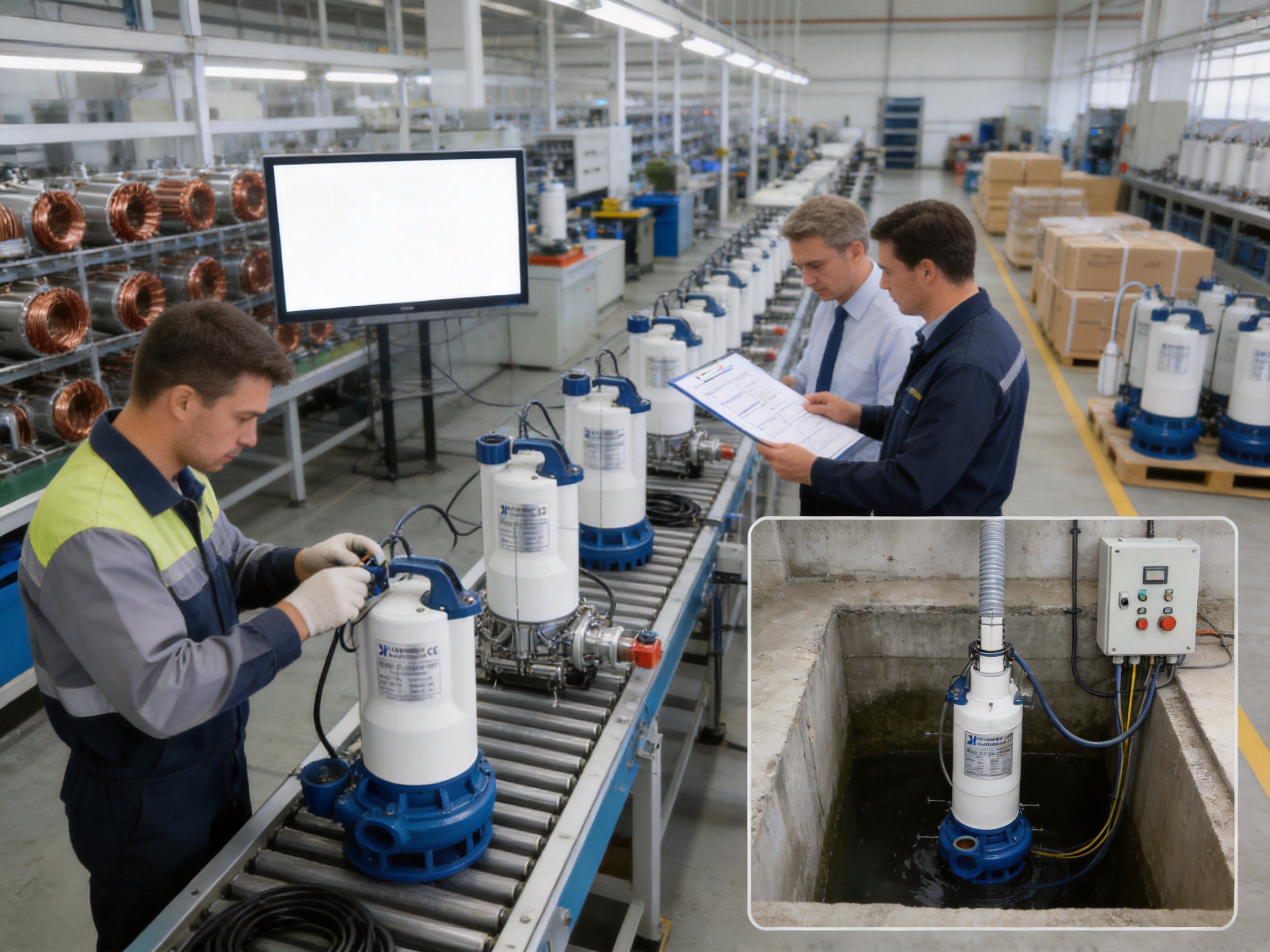
Water management depends on equipment that can operate reliably in demanding environments. Whether the task involves removing accumulated water from a construction site, supporting agricultural irrigation, draining a household area, or managing water in a livestock facility, the pump must be easy to deploy, safe to operate, and suitable for repeated use. The Submersible Sewage Pump SPP370C is designed as a practical electrical submersible solution for these everyday drainage and water-transfer requirements.
With a compact submersible configuration, copper winding motor, built-in thermal protection, Class B insulation, and an IPX8 protection rating, the SPP370C combines essential operating safety with straightforward installation. Its stated maximum immersion depth of 5 meters and maximum liquid temperature of 40°C make it suitable for many small-scale drainage and irrigation conditions. The pump is also positioned for use in urban well water pumping, field irrigation, garden irrigation, household water supply, industrial accumulated-water drainage, construction, and livestock-related water management.
This article examines the product’s design, application value, operating advantages, maintenance considerations, and manufacturing background. It also explains why a focused manufacturer with independent research and development, mass-production capability, export experience, and one-stop procurement services can provide meaningful value to distributors, contractors, engineering buyers, and project operators.
The SPP370C belongs to the submersible pump category, meaning that the pump is placed directly into the water or liquid being transferred. Unlike a surface pump, which generally needs to remain outside the water source and rely on suction piping, a submersible pump operates at the point of immersion. This arrangement can simplify installation, reduce the need for priming, and support drainage in locations where an external suction system would be inconvenient.
The product title identifies the SPP370C as a submersible sewage pump. At the same time, the stated application range includes irrigation, drainage, household water supply, industrial accumulated-water removal, construction water management, and livestock breeding. This broad application profile indicates that the pump is intended as a versatile utility product rather than a unit limited to one narrow commercial function.
For buyers, versatility is important because water-related tasks often change from one site to another. A distributor may need a pump suitable for household drainage and small agricultural projects. A contractor may need a portable solution for removing water from excavations or construction areas. A farm operator may need equipment for transferring or draining water around livestock facilities. A product with a flexible application range can simplify inventory planning and reduce the need to source several different basic pump models.
The SPP370C is especially relevant for applications where a pump must be installed quickly and operated with minimal preparation. Its submersible design allows the pump to be placed in an available water collection point, sump, well, drainage area, or flooded section, subject to the installation requirements of the specific project. This makes it practical for maintenance teams, installers, agricultural users, and general-purpose water management.
The fundamental advantage of the SPP370C is its submersible operating configuration. When a pump is positioned within the water, the distance between the inlet area and the liquid is minimized. This can help reduce the complexity associated with suction-side pipe arrangements. In many applications, the operator can place the pump in the water, connect the discharge line, and prepare the electrical supply according to the installation requirements.
Submersible operation is particularly useful in areas where water accumulates below ground level or in locations that are difficult to access with a surface-mounted pump. Construction pits, drainage wells, utility spaces, garden collection points, and flooded low areas can all present installation challenges for conventional surface equipment. A submersible pump provides a more direct method of extracting water from these locations.
The design also supports applications in which portability matters. A compact pump can be moved between different drainage points as work conditions change. This is valuable for contractors and service providers who may work at several locations during the same week. Instead of installing a permanent pumping station for every small task, they can use a mobile submersible solution where appropriate.
The SPP370C has a stated maximum immersion depth of 5 meters. This specification defines the maximum depth at which the pump should be submerged under the manufacturer’s stated operating conditions. It gives users a clear reference when planning installation in wells, drainage pits, tanks, or other water collection locations.
A defined immersion limit is important for both performance and equipment protection. Buyers should consider the total water depth, the position of the pump, the discharge arrangement, the electrical installation, and the possibility of changing water levels. The pump should not be placed deeper than the stated limit. If a project requires greater depth, the buyer should consult the manufacturer about an alternative model designed for that condition.
For many small drainage and irrigation tasks, a 5-meter maximum immersion depth offers a useful operating range. It can accommodate common collection pits, shallow wells, garden water sources, and localized construction drainage areas. The specification also helps distributors match the product to the correct customer applications instead of relying on uncertain estimates.
The stated maximum liquid temperature is 40°C. This makes the SPP370C suitable for normal-temperature water applications, including irrigation water, household drainage water, rainwater, groundwater, and many types of accumulated industrial or construction water that remain within the specified temperature range.
Temperature control is an important aspect of pump selection. Pump components, insulation systems, seals, and electrical materials are all affected by operating temperature. Using a pump beyond its specified liquid-temperature limit may reduce service life or create unsafe operating conditions. The 40°C specification gives operators a practical boundary for planning and helps prevent misuse in hot-water applications for which this pump is not intended.
The SPP370C should therefore be selected for suitable cold or moderately warm water duties. Applications involving hot process liquids, steam condensate, high-temperature wastewater, or chemically aggressive fluids require a separate technical evaluation and potentially a specialized pump model.
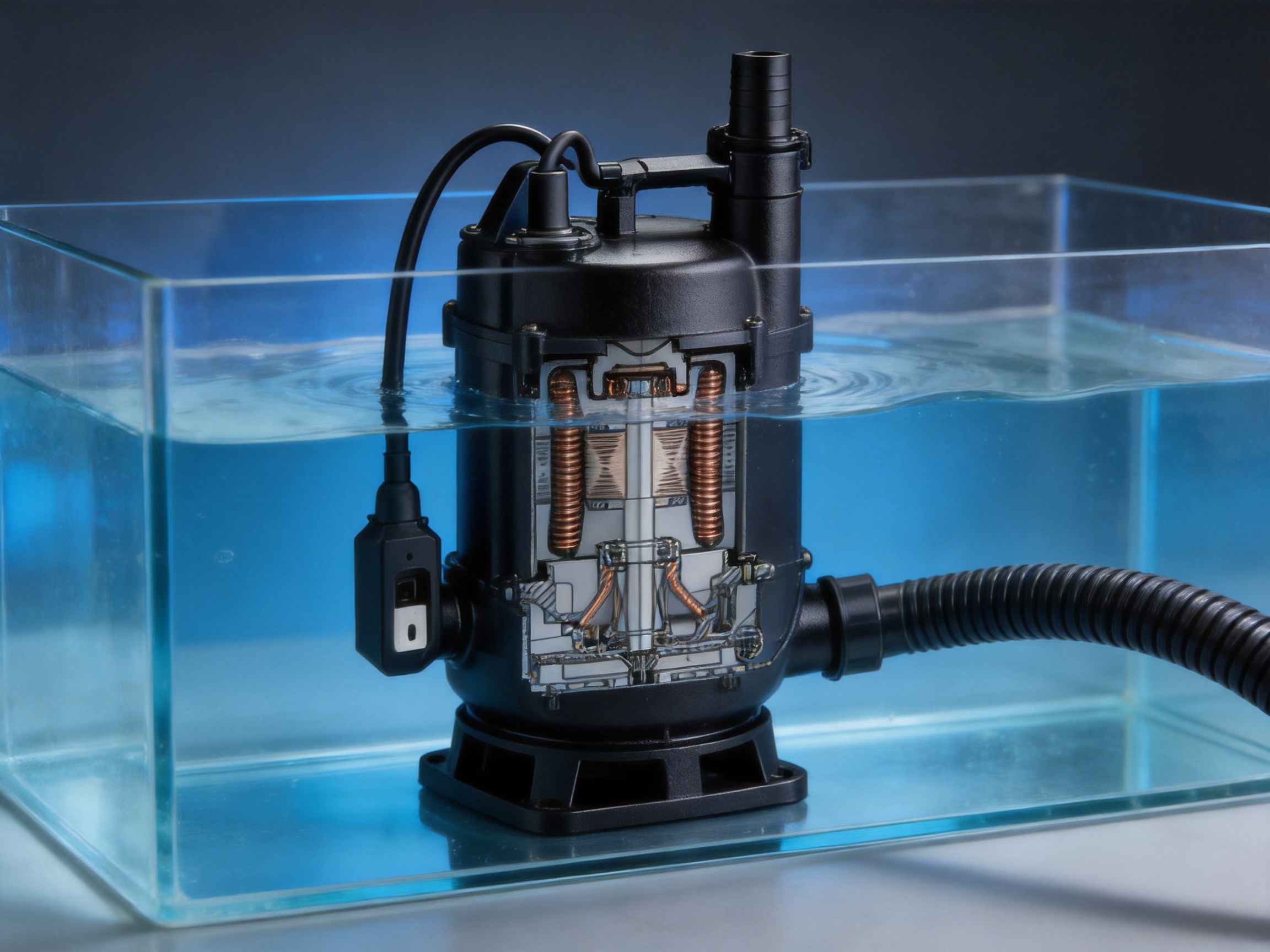
The motor uses copper winding. Copper is widely valued in electric motor construction because of its electrical conductivity and its ability to support efficient energy transfer when properly designed and manufactured. The winding is a critical component of the motor because it converts electrical energy into the electromagnetic force required to drive the pump.
A copper-wound motor can support stable electrical performance and dependable operation in routine pumping conditions. It also provides a strong foundation for product consistency when combined with appropriate winding processes, insulation materials, quality inspection, and controlled assembly. For distributors and project buyers, the use of copper winding is a meaningful specification because it distinguishes the motor construction from lower-cost alternatives that may use different conductor materials or less robust winding arrangements.
Motor material alone does not determine total pump performance. Correct voltage, frequency, cooling conditions, hydraulic loading, installation, and maintenance are also important. Nevertheless, the copper winding is one of the product’s principal design advantages and contributes to its suitability for practical, repeated water-transfer duties.
The SPP370C includes a built-in thermal protector. This feature is designed to help protect the motor against excessive temperature conditions. Thermal stress can occur when a pump operates under abnormal load, experiences restricted flow, is affected by electrical irregularities, or is used in conditions that prevent sufficient heat dissipation.
Built-in thermal protection adds an important safety layer to the motor system. It can help reduce the risk of damage caused by overheating, although it should not be regarded as a replacement for correct installation, appropriate electrical protection, or proper operating procedures. The pump should still be connected to a suitable power supply and used within its intended operating conditions.
Compared with basic pumps that provide fewer integrated protective features, a built-in thermal protector can reduce the burden on users and installers. It also demonstrates that the product design considers not only water movement but also motor safety and long-term service reliability.
The motor insulation class is identified as Class B. Insulation class relates to the thermal endurance of the insulation system used in the motor. Class B insulation is a recognized industrial motor-insulation category and provides a defined reference for the motor’s thermal operating capability under applicable standards and design conditions.
For users, this specification offers greater transparency than a product description that does not identify the insulation system. It helps technical buyers compare motor construction and evaluate whether the pump is appropriate for routine operating environments. The insulation system works together with the copper winding, thermal protector, housing, sealing, and cooling conditions to support dependable motor operation.
The SPP370C is specified with an IPX8 protection class. IPX8 is associated with equipment designed for continuous immersion in water under conditions defined by the manufacturer or applicable testing requirements. This rating is highly relevant to submersible pump applications because the motor and electrical enclosure must remain protected while operating below the water surface.
IPX8 protection supports the core purpose of the product. It provides buyers with confidence that the pump has been designed and evaluated for submerged operation rather than simply adapted from a surface-mounted motor. The rating should still be understood within the manufacturer’s stated limits, including the maximum immersion depth and installation instructions.
Proper cable handling, electrical grounding, connection protection, and routine inspection remain essential. A high ingress-protection rating does not eliminate the need for safe electrical practices. However, the IPX8 specification is an important advantage over general-purpose equipment that is not designed for continuous submersion.
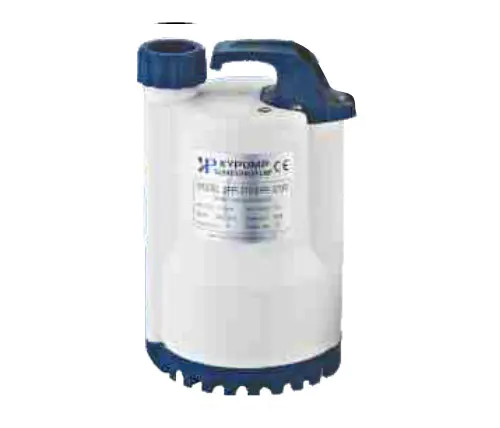
SUBMERSIBLE SEWAGE PUMP SPP370C
Urban and residential areas may include shallow wells, collection points, drainage wells, and water-storage spaces that require periodic pumping. The SPP370C can be considered for these duties when the water temperature, immersion depth, electrical supply, and liquid characteristics remain within the product’s specifications.
Its submersible form can be useful where there is limited space around the well or where a surface pump would require a longer suction line. The pump can be positioned directly in the water source, allowing the discharge line to be routed toward a storage tank, drainage channel, garden area, or other approved destination.
Users should evaluate water quality before installation. Clear or lightly contaminated water applications are generally easier to manage than liquids containing large solids, fibrous materials, abrasive particles, or aggressive chemicals. If the liquid is described as sewage or wastewater, the operator should confirm that the specific solids content and particle size are compatible with the pump’s design.
Agricultural irrigation often requires flexible water movement from wells, tanks, ponds, drainage areas, or collection reservoirs. A submersible pump can provide a convenient method for transferring water into an irrigation pipeline or distribution system. The SPP370C’s application profile includes field irrigation, making it relevant to farms and small agricultural operations that need a practical water-transfer device.
For irrigation planning, buyers should consider the required flow, discharge distance, elevation difference, pipe diameter, filtration needs, and operating schedule. These factors determine whether the pump is suitable for a particular field. Because the available product information does not state flow rate, head, power rating, or outlet size, those values should be confirmed with the supplier before final selection.
When properly matched to the irrigation system, the pump can support routine water movement without requiring a complicated permanent installation. This can benefit seasonal operations, small farms, nurseries, and agricultural areas where water sources or irrigation layouts change during the year.
Garden irrigation is another suitable application category. Homeowners, landscaping teams, and property managers may need to move water from a storage container, shallow well, rainwater collection area, or drainage point. A compact submersible pump can provide a straightforward option for these tasks.
In household water-supply applications, the pump may be used for non-potable water transfer, utility water movement, or localized drainage, depending on the project and applicable regulations. The operator should identify whether the water is intended for drinking, washing, irrigation, or general utility use. Potable-water applications may require additional certifications, materials, and hygiene controls that are not included in the supplied product information.
The pump’s built-in thermal protection and IPX8 rating are valuable in residential environments because they add protection to an installation that may be operated by users with limited technical experience. Even so, a qualified person should complete electrical connections and confirm that the pump is installed safely.
Industrial sites frequently experience accumulated water in service areas, maintenance zones, trenches, pits, storage spaces, and outdoor work areas. The SPP370C can be considered for suitable industrial drainage duties where the liquid remains within the stated temperature and immersion limits.
Industrial buyers should examine the liquid carefully before choosing the pump. Water containing oil, solvents, corrosive chemicals, high concentrations of abrasive solids, or unusually large debris may require special materials or a different pump design. The SPP370C is best evaluated for compatible water-based liquids rather than automatically applied to every industrial wastewater condition.
Its portable submersible configuration can nevertheless be valuable for emergency response, routine site maintenance, and temporary drainage. Maintenance teams can keep suitable pumps available for localized water removal, helping reduce downtime when unexpected accumulation occurs.
Construction projects often need to remove rainwater, groundwater, and accumulated water from excavations, foundations, trenches, basements, and temporary work zones. These conditions can change quickly, so equipment must be practical to install and relocate. The SPP370C’s submersible design is well suited to applications where the pump can be placed directly into a collection area.
Construction users should protect the pump from excessive impact, large debris, unstable ground, and unsuitable electrical conditions. The pump should be installed where it cannot become buried by mud or blocked by construction materials. A suitable intake arrangement and regular cleaning can help maintain effective operation.
For contractors, the product’s defined 5-meter immersion limit provides a clear starting point for matching it to shallow or moderate-depth drainage locations. If the project includes deeper excavation, greater discharge requirements, or heavy solids, a larger or specialized dewatering pump should be selected.
Livestock-breeding facilities may need water drainage around washing areas, utility spaces, storage zones, and outdoor collection points. The SPP370C can support appropriate water-management tasks when the liquid is compatible with the pump and when local environmental and sanitation rules are followed.
Farm operators should pay close attention to cleaning and inspection. Organic materials, bedding, fibers, and solids can interfere with pump operation if they enter the intake area. A screened or controlled intake arrangement may be necessary, depending on the application. The pump should not be assumed to be a solids-handling grinder unless the manufacturer specifically confirms such a feature.
In agricultural environments, ease of relocation is a practical advantage. One pump may be used at different drainage points during seasonal operations, provided that it is cleaned, inspected, and installed correctly each time.
Compared with a conventional surface pump, the SPP370C can simplify many installations by operating directly in the water. Surface pumps may require suction hoses, foot valves, priming procedures, and careful control of suction conditions. A submersible pump can reduce several of these requirements because the pump is already positioned at the liquid source.
This does not mean that every submersible pump is automatically better than every surface pump. Surface pumps can be preferable for certain fixed installations, higher accessibility, or applications where the motor must remain outside the water. The advantage of the SPP370C is its suitability for submerged drainage and water transfer, especially where direct placement provides a simpler solution.
Many low-cost utility pumps emphasize purchase price but provide limited information about motor protection. The SPP370C includes a built-in thermal protector, which adds a defined protective function against overheating conditions. Along with Class B insulation and copper winding, this gives the product a more complete motor specification than products described only by basic pumping capability.
For professional buyers, integrated protection may reduce the risk of premature motor damage caused by operating stress. For distributors, it provides a stronger technical selling point when customers are comparing products from different suppliers.
The IPX8 rating is a key differentiator because it directly relates to continuous immersion. General-purpose pumps without an appropriate ingress-protection rating may not be suitable for submerged operation. The SPP370C is designed around the requirements of a submersible product, giving buyers a clearer basis for selecting it for wells, drainage pits, and water collection areas.
The SPP370C is not limited to a single niche. Its stated use areas include urban wells, field irrigation, garden irrigation, household supply, industrial accumulated-water drainage, construction, and livestock facilities. This broad range can create advantages for distributors and contractors who need an adaptable product that can serve different customer segments.
A versatile pump can also simplify spare-parts planning, product training, and customer support. Instead of learning several unrelated entry-level pump designs, a sales or service team can develop a stronger understanding of one model’s installation limits and application conditions.
Product performance depends not only on the design but also on how consistently the product is made. Taizhou Edwin Electric Co., Ltd. was founded in 2008 and operates as an integrated manufacturing enterprise focused on independent research and development, mass production, and global export. This combination can provide advantages over suppliers that only trade products without direct control of design and production.
Independent research and development allows the manufacturer to improve product structures, motor systems, application matching, and product families according to market feedback. Mass-production capability supports repeatability, while export experience helps the company understand packaging, documentation, order coordination, and international customer requirements.
These strengths are particularly relevant for wholesale buyers. A distributor needs more than one sample unit; it needs dependable product availability, consistent specifications, communication support, and the ability to manage repeat orders. An integrated manufacturer is better positioned to coordinate these requirements than a supplier with no direct production foundation.
Independent research and development is an important foundation for a pump manufacturer. It enables the company to evaluate customer requirements, identify common operating problems, and develop products for different application categories. For Edwin Pump, the product portfolio includes deep well pumps, submersible pumps, domestic booster pumps, and circulation pumps.
This portfolio suggests experience across several water-pumping environments. Deep well pumping requires attention to submerged motor operation and vertical water lifting. Booster pumping requires stable pressure support. Circulation pumping requires continuous water movement in systems such as heating, cooling, or HVAC installations. Submersible drainage products require water-resistant construction and practical field handling.
Experience across these categories can help a manufacturer apply lessons from one product family to another. It can also provide customers with a broader sourcing platform when they need several pump types for one project or distribution channel.
Mass production is more than the ability to assemble a large number of units. A professional mass-production system should support consistent component sourcing, repeatable motor winding, controlled assembly, inspection procedures, packaging standards, and production scheduling. These elements are essential for maintaining product uniformity between batches.
For the SPP370C, consistent production is important because buyers rely on the stated motor and protection features. Copper winding, thermal protection, Class B insulation, and IPX8 construction must be incorporated correctly in every unit. Process control helps reduce variation and supports more predictable field performance.
Mass-production capability also benefits customers by improving supply continuity. Contractors and distributors can plan inventory more effectively when a manufacturer has established production resources rather than relying on irregular small-batch sourcing.
Since 2018, Edwin Pump has invested in new energy and intelligent technology, launching solar water pumps and intelligent booster pumps. This development demonstrates an effort to respond to changing market needs, including energy efficiency, remote or flexible water supply, and automated pressure management.
Although the SPP370C is a conventional electrically powered submersible pump, its position within a broader technology-oriented portfolio can be valuable to customers. Buyers may begin with a simple drainage product and later require a solar pump, intelligent booster pump, circulation pump, or deep well system. A manufacturer with multiple product categories can support these evolving requirements.
Edwin Pump serves customers in international markets and has developed related companies to support procurement planning, order tracking, cross-border delivery, and foreign-trade services. These capabilities can be important for buyers outside China who need coordinated purchasing rather than a single isolated transaction.
International sourcing requires attention to product documentation, packing, delivery schedules, communication, payment procedures, and after-sales coordination. A manufacturer supported by an experienced export team can help reduce friction in these areas. This is particularly useful for importers, wholesalers, engineering companies, and private-label customers.
The company’s one-stop procurement approach also enables customers to combine different water-pump categories in a single sourcing plan. This can reduce the number of supplier relationships that a buyer must manage and may improve consistency across a project or product range.
Edwin Pump products are used in new energy projects, agricultural irrigation, municipal engineering, mining, construction, HVAC systems, and household water supply. Exposure to these industries can strengthen a manufacturer’s understanding of different operating environments and customer expectations.
For the SPP370C, this experience supports its positioning as a flexible utility pump. The product can be introduced to agricultural customers, construction contractors, household equipment distributors, municipal maintenance teams, and industrial service providers, subject to application compatibility.
Before using the SPP370C, the operator should identify the type of liquid, water temperature, immersion depth, expected operating duration, discharge distance, elevation difference, and electrical supply. The product’s stated limits include a maximum immersion depth of 5 meters and a maximum liquid temperature of 40°C.
The liquid should also be evaluated for solids, fibers, chemicals, oils, and abrasive particles. The word “sewage” can describe many different liquid conditions, and not all sewage is the same. If the liquid contains large solids or fibrous material, the buyer should obtain confirmation about the pump’s passage size and solids-handling capability before installation.
Because the pump operates in water, electrical safety is essential. The power supply should match the product specification provided by the manufacturer. Connections should be protected from water exposure, and grounding or residual-current protection should be installed where required by local regulations.
The power cable should be inspected for cuts, abrasions, exposed conductors, or damage before each use. Operators should never pull, lower, or retrieve the pump by the electrical cable unless the manufacturer specifically provides a suitable lifting arrangement. The pump should be disconnected from the power supply before inspection, cleaning, or repositioning.
The pump should be placed on a stable surface or in an appropriate collection area where it will not become buried in mud or blocked by debris. It should remain within the stated immersion depth. If the water level may fall during operation, the operator should ensure that the pump does not run without sufficient surrounding liquid unless the manufacturer confirms that the design permits such operation.
Correct positioning can help protect the inlet and maintain stable pumping. A suitable strainer or intake protection may be considered where the site contains leaves, fibers, stones, or other debris, provided that the accessory does not restrict flow excessively.
The discharge pipe should be sized and routed according to the pump’s technical data and the project requirement. Excessively long pipes, sharp bends, undersized hoses, and unnecessary elevation can increase resistance and reduce the delivered flow. The pump’s actual performance should be evaluated using the manufacturer’s flow and head curve once those technical values are confirmed.
Discharge lines should be secured so that movement and vibration do not damage the connection. In temporary construction or agricultural installations, the route should be checked regularly because vehicles, tools, animals, or changing ground conditions may affect the pipe.
Routine inspection helps maintain service life. The pump should be checked for unusual noise, vibration, reduced flow, overheating, cable damage, seal leakage, and visible corrosion. The intake area should be cleaned when necessary, particularly after operation in muddy or debris-containing water.
After use in contaminated water, the pump should be handled according to the applicable health and environmental procedures. Cleaning and disinfection requirements vary according to the liquid and the worksite. The pump should be stored in a dry, protected location after cleaning and inspection.
Customers should not select a pump solely by model name or purchase price. The correct choice depends on the operating conditions. The following table summarizes the main evaluation points for the SPP370C.
| Selection factor | Relevant SPP370C information | Buyer consideration |
|---|---|---|
| Pump type | Submersible sewage pump | Suitable for direct placement in compatible water or wastewater conditions |
| Maximum immersion depth | 5 meters | Do not install below the stated depth; confirm deeper-duty requirements separately |
| Maximum liquid temperature | 40°C | Use for normal-temperature water duties; evaluate hot liquids separately |
| Motor winding | Copper winding | Supports dependable electrical motor construction when correctly manufactured and operated |
| Motor protection | Built-in thermal protector | Provides an additional safeguard against excessive motor temperature |
| Insulation | Class B | Provides a defined motor insulation classification for technical evaluation |
| Ingress protection | IPX8 | Designed for continuous immersion under specified conditions |
| Application range | Irrigation, drainage, household, construction, industrial accumulated water, and livestock facilities | Confirm liquid compatibility, required flow, head, solids content, and electrical details |
Distributors should also consider packaging, order quantity, replacement availability, technical documentation, branding requirements, and delivery support. A product may be technically suitable but commercially difficult if the supplier cannot provide stable communication or repeat-order coordination.
Edwin Pump’s manufacturing and export structure is relevant in this context. The company combines product development, production, and international procurement support. This can make the SPP370C a practical candidate for distributors seeking a reliable submersible pump within a broader product portfolio.
In the pump industry, the quality of the finished product is influenced by many connected stages. The motor winding must be produced consistently. Thermal protection must be installed correctly. Sealing and enclosure processes must support the intended ingress protection. Components must be inspected before assembly, and finished units should be checked before shipment.
A manufacturer with direct control over these processes can respond more effectively to technical feedback than a trading company that purchases finished units from changing sources. Independent research and development can support product improvement. Mass-production resources can improve consistency. Export services can support international buyers after the production stage.
Taizhou Edwin Electric Co., Ltd. has operated since 2008 and focuses on independent research and development, mass production, and global export. This long-term operating background provides a foundation for serving customers that require more than a one-time purchase. Its related procurement and foreign-trade companies further support order tracking, cross-border delivery, and sourcing coordination.
The company’s product expansion into solar water pumps and intelligent booster pumps also indicates a commitment to developing solutions for newer water-management requirements. As energy systems and water infrastructure become more connected, manufacturers with experience in both conventional pump construction and intelligent technologies may be better positioned to support customers’ future needs.
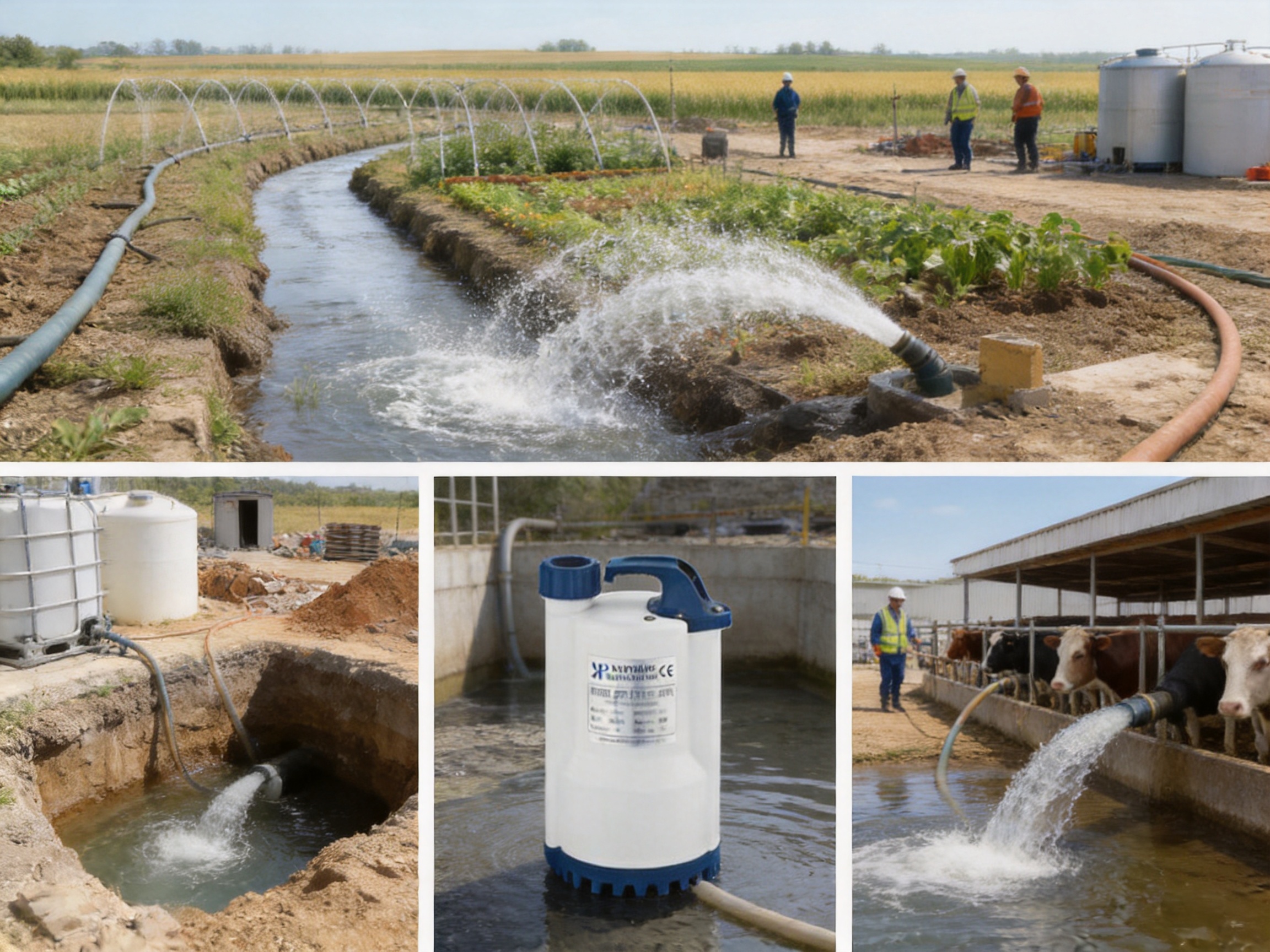
Agricultural users can benefit from a pump that supports irrigation and drainage in a single product category. The submersible format is useful when water must be transferred from wells, tanks, or collection points. The built-in thermal protector and IPX8 rating provide additional reassurance for repeated outdoor use, provided that the electrical installation is properly protected.
Construction contractors value equipment that can be deployed quickly and moved between work areas. The SPP370C can serve as a practical option for compatible accumulated-water drainage in shallow or moderate-depth locations within the 5-meter immersion limit. Its defined technical features help contractors evaluate whether it is appropriate for a particular site.
Household and garden distributors can present the SPP370C as a versatile water-transfer and drainage product. The application range covers garden irrigation, household utility water, and localized drainage. Its copper winding, thermal protection, Class B insulation, and IPX8 rating provide useful technical points for customer education.
Industrial maintenance teams often need equipment for temporary or emergency drainage. The SPP370C can be kept as part of a site-maintenance inventory when the liquids are compatible and the required pumping performance matches the product data. Its submersible construction can help teams address water accumulation without installing a permanent pump station for every location.
Importers and wholesalers can benefit from a product supported by a broader manufacturer portfolio. The ability to source submersible pumps alongside deep well, booster, circulation, solar, and other pump types can streamline procurement. Edwin Pump’s international export experience and related order-support companies can also assist buyers with planning and delivery coordination.
Responsible product marketing requires clear communication about both advantages and limitations. The available information for the SPP370C does not specify its rated flow, total head, motor power, voltage, frequency, outlet diameter, cable length, solids passage, or detailed material construction. These values should be obtained from the manufacturer before a final engineering selection.
The product should not be promoted as suitable for every type of sewage, chemical liquid, hot-water application, or heavy-duty dewatering project without technical confirmation. The maximum liquid temperature is 40°C, and the maximum immersion depth is 5 meters. These limits should be included in sales, installation, and project documentation.
Similarly, the presence of a thermal protector does not mean that the pump can be operated indefinitely under blocked-flow, dry-running, incorrect-voltage, or overloaded conditions. Proper system design and safe operation remain necessary. IPX8 protection supports submerged operation, but cables, connectors, control panels, and external electrical equipment must also be installed according to applicable safety requirements.
Clear specifications build customer confidence. When buyers understand what the pump can and cannot do, they are more likely to achieve reliable field performance and long-term satisfaction.
Maintenance begins with correct selection. A pump that is used within its intended operating range generally has a better opportunity to provide stable service than one that is continuously overloaded or exposed to unsuitable liquids. Buyers should keep records of installation depth, liquid type, operating hours, cleaning dates, and any changes in performance.
Reduced flow may result from a blocked intake, damaged discharge hose, excessive pipe resistance, low water level, or internal wear. Unusual noise may indicate debris, mechanical stress, or a developing equipment issue. Repeated thermal-protection activation should be investigated rather than ignored. Possible causes include overload, restricted flow, electrical problems, unsuitable liquid conditions, or insufficient cooling.
Professional service teams should disconnect the pump from power before handling it. Inspection should include the cable, housing, intake, discharge connection, sealing areas, and visible fasteners. If internal repair is required, it should be carried out by qualified personnel using appropriate replacement parts and procedures.
For distributors, after-sales support is an important part of product value. Technical documents, application guidance, spare-parts communication, and prompt response to customer questions can distinguish a professional pump supplier from a purely price-driven source.
The SPP370C is a submersible sewage pump designed for direct operation in compatible liquids. Its stated applications include drainage, irrigation, household water supply, industrial accumulated-water removal, construction, and livestock-related water management.
The stated maximum immersion depth is 5 meters. The pump should not be installed deeper than this limit unless the manufacturer provides different technical instructions for a specific version.
The maximum stated liquid temperature is 40°C. The pump should be selected for normal-temperature water and compatible water-based liquids rather than hot-water or high-temperature process applications.
Yes. The SPP370C includes a built-in thermal protector designed to help protect the motor against excessive temperature conditions. Correct electrical installation and operating practices are still required.
The motor uses copper winding. Copper is widely used in motor construction because of its electrical conductivity and ability to support reliable electromagnetic operation when correctly designed and manufactured.
The motor is specified with Class B insulation. This provides a defined reference for evaluating the motor’s insulation system and thermal endurance category.
The product is specified with an IPX8 protection class, which is associated with equipment designed for continuous immersion under defined conditions. The pump must still be used within the stated immersion depth and installation requirements.
No pump should be assumed to suit every sewage condition. The buyer should confirm the liquid’s solids content, particle size, fiber content, temperature, chemical composition, and required performance. The SPP370C should be used only where the liquid is compatible with its design.
It can be considered for compatible construction drainage tasks, including the removal of accumulated water from suitable pits, trenches, and work areas. The depth, liquid condition, debris level, discharge requirements, and electrical installation must be checked before use.
The stated application range includes field irrigation and garden irrigation. Buyers should confirm the required flow, head, pipe arrangement, water quality, and operating schedule before selecting the pump for a particular irrigation system.
Buyers should confirm rated power, voltage, frequency, flow rate, total head, outlet size, cable length, dimensions, weight, solids passage, control requirements, packaging, and any required certifications. These details were not included in the supplied product information.
Taizhou Edwin Electric Co., Ltd. has operated since 2008 and focuses on independent research and development, mass production, and global export. The company also supports procurement planning, order tracking, cross-border delivery, and foreign-trade services through related companies.
Yes. Its product portfolio includes deep well pumps, submersible pumps, domestic booster pumps, circulation pumps, solar water pumps, intelligent booster pumps, and other water-pump products and accessories.
It can be used in fixed or temporary arrangements when the installation meets the product requirements. Its submersible configuration also makes it practical for portable drainage tasks. The buyer should determine whether the operating frequency and site conditions require a permanent system or a mobile pump.
The pump should be inspected regularly, disconnected from power before handling, kept free from intake blockage, checked for cable damage, and cleaned after use when required. Any repeated overheating, abnormal noise, reduced flow, or visible damage should be investigated by qualified personnel.
The Submersible Sewage Pump SPP370C is a practical water-management solution for compatible drainage, irrigation, household, construction, industrial, and agricultural applications. Its principal advantages include direct submersible operation, a maximum immersion depth of 5 meters, a maximum liquid temperature of 40°C, copper motor winding, built-in thermal protection, Class B insulation, and IPX8 protection.
Compared with basic alternatives, the product offers a more complete combination of submerged-use protection, motor safety features, and application flexibility. It can simplify many temporary or permanent water-transfer tasks while providing buyers with clear operating limits for responsible selection.
The product is further supported by the capabilities of Taizhou Edwin Electric Co., Ltd., an integrated manufacturer founded in 2008 with experience in independent research and development, mass production, international export, and one-stop procurement support. Its wider product portfolio and investment in solar and intelligent pump technologies provide additional value for customers seeking a long-term supplier rather than a single isolated product.
For the best result, buyers should match the SPP370C to the actual liquid, depth, temperature, flow, head, electrical supply, and solids conditions of the project. When correctly selected, installed, and maintained, it can serve as a dependable component in agricultural irrigation, construction drainage, household water management, industrial maintenance, and many other everyday pumping applications.
1. Manufacturer-provided product information for the Submersible Sewage Pump SPP370C.
2. Manufacturer-provided technical information concerning copper winding, built-in thermal protection, Class B insulation, and IPX8 protection.
3. Manufacturer-provided application information for irrigation, drainage, household water supply, construction, industrial accumulated-water removal, and livestock facilities.
4. Manufacturer-provided company profile for Taizhou Edwin Electric Co., Ltd., including its history, research and development activities, production capabilities, export services, and product portfolio.
5. General principles of electric motor insulation classification and ingress-protection evaluation.
6. General pump-selection principles concerning flow, head, liquid temperature, immersion depth, solids compatibility, installation, and maintenance.
serieswatershortageprotectionvoltagestabilizationstainlesssteelverticalmultistagepump.jpg "EVR(S) Series Water Shortage Protection Voltage Stabilization Stainless Steel Vertical Multistage Pump")
edwina@edwin-pump.com
+86-13586290903 (WhatsApp)
Xuri Gongliang Cutting Tool Entrepreneurship Park, Wenqiao Town, Wenling City, Taizhou City, Zhejiang Province, China

High Performance Smart Pump Factory


 English