edwina@edwin-pump.com

View All Products
en
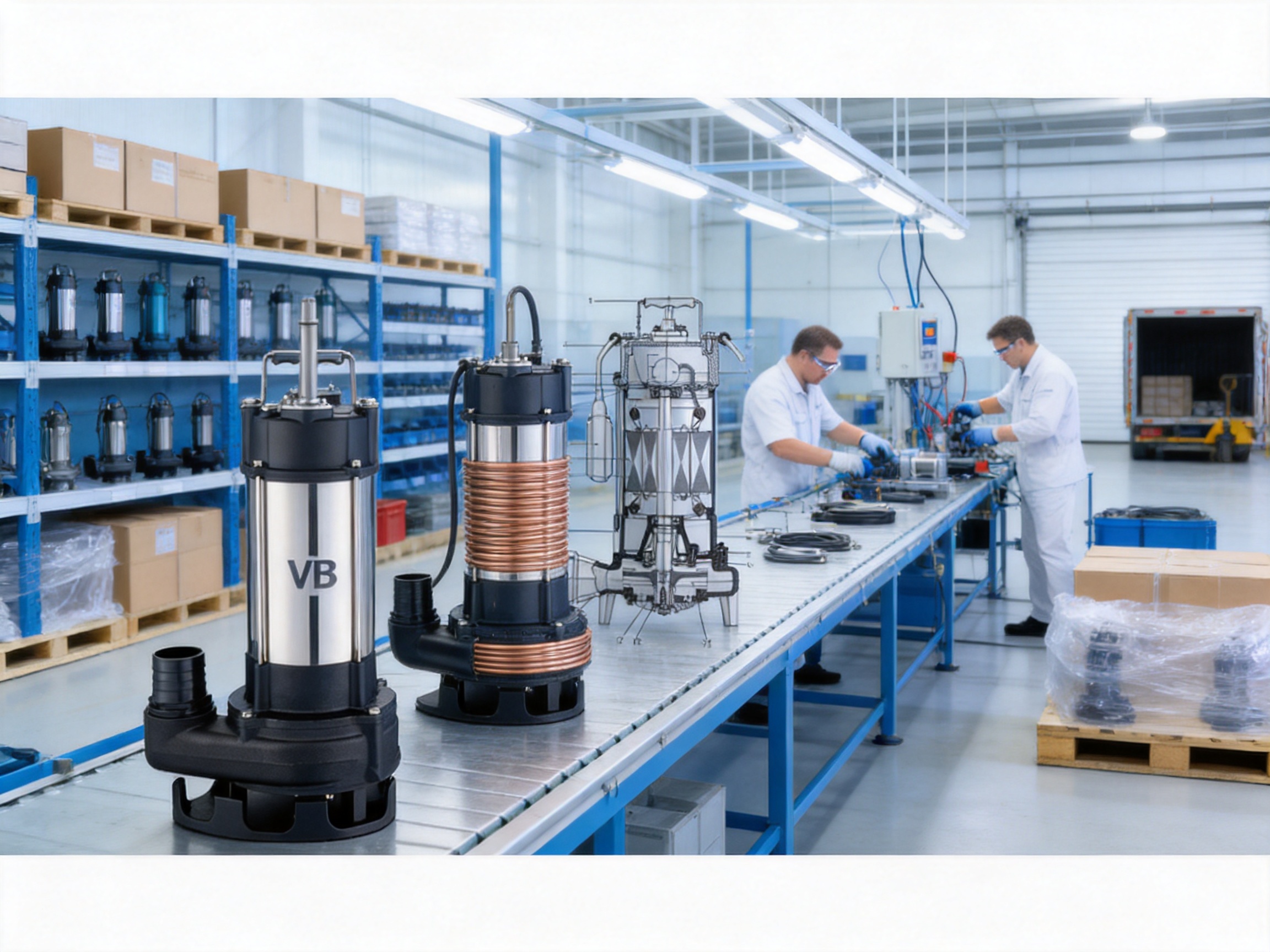
Wastewater management requires equipment that can operate reliably in difficult conditions, often with suspended solids, changing liquid levels, limited access, and long operating cycles. A sewage pump must do more than move clean water. It must handle contaminated liquids, support dependable drainage, resist moisture penetration, and continue working in locations where maintenance access may be restricted. The Submersible Sewage Pump VB is designed around these practical requirements, providing a compact and durable solution for wastewater drainage, sewage treatment systems, construction sites, residential drainage stations, methane pools, and agricultural irrigation applications.
As a submersible unit, the VB pump works directly inside the liquid. This arrangement reduces the need for long suction pipes, simplifies installation, and allows the pump to remove water from pits, tanks, collection wells, and drainage areas with limited surface space. The pump and motor form an integrated assembly, helping reduce the footprint of the installation while supporting stable hydraulic performance.
The VB series combines a copper-wound motor, built-in thermal protection, a stainless steel welded shaft, Class B insulation, and IPX8 protection. These features are important in wastewater applications because the pump may face high humidity, frequent starts, fluctuating water levels, and exposure to contaminated liquids. With a maximum immersion depth of 5 meters and a maximum liquid temperature of 40°C, the pump is suitable for a wide range of routine drainage duties.
Manufactured by Taizhou Edwin Electric Co., Ltd., the pump reflects the company’s broader experience in deep well pumps, submersible pumps, booster pumps, circulation pumps, solar water pumps, and other water-handling equipment. The manufacturer combines product development, production, export coordination, and technical service to support customers requiring consistent equipment for domestic, commercial, agricultural, and industrial projects.
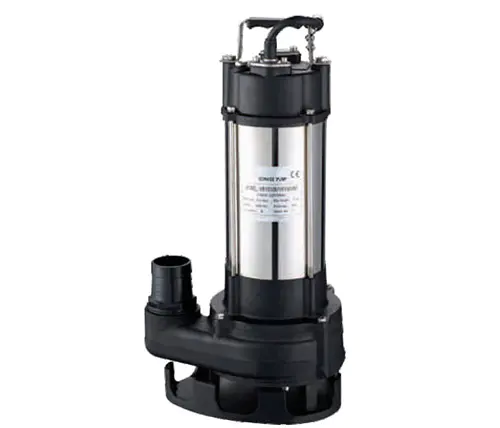
SUBMERSIBLE SEWAGE PUMP VB
The Submersible Sewage Pump VB is intended for pumping wastewater and drainage liquids in applications where a conventional surface pump may be inconvenient or less effective. Its submersible design allows the pump to be placed in the liquid source, such as a drainage pit, sewage collection basin, treatment tank, or temporary construction sump. Once correctly installed, the unit can transfer liquid without the priming procedures normally associated with many surface-mounted pumps.
The pump is especially suitable for applications requiring dependable drainage rather than high-complexity process pumping. It can be used in factories, construction sites, commercial facilities, municipal sewage treatment systems, residential drainage stations, methane pools, and countryside irrigation fields. This range of applications makes the VB a practical option for contractors, system integrators, agricultural users, property managers, and distributors looking for a versatile wastewater pump.
Its operating limits should always be respected. The stated maximum immersion depth is 5 meters, the maximum liquid temperature is 40°C, and the allowable liquid pH range is 5 to 9. The specified liquid kinematic viscosity is within the manufacturer’s defined operating range, and the maximum liquid density is listed as 1.2 × 10³ kg/m³. These conditions make the pump appropriate for many ordinary wastewater and drainage duties, while highly abrasive, chemically aggressive, unusually dense, or very hot liquids should be evaluated separately before selection.
| Item | Specification or Feature | Practical Importance |
|---|---|---|
| Pump type | Submersible sewage pump | Designed for direct installation in wastewater or drainage liquid |
| Maximum immersion depth | 5 meters | Suitable for many pits, tanks, collection wells, and drainage stations |
| Maximum liquid temperature | 40°C / 104°F | Supports normal wastewater and drainage conditions |
| Liquid pH range | pH 5 to 9 | Suitable for mildly acidic to mildly alkaline liquids within the stated range |
| Maximum liquid density | 1.2 × 10³ kg/m³ | Allows handling of liquids denser than clean water within the specified limit |
| Motor winding | Copper | Supports electrical conductivity, motor efficiency, and stable operation |
| Thermal protection | Built-in thermal protector | Helps protect the motor against overheating |
| Shaft | Stainless steel welded shaft | Provides corrosion resistance and mechanical durability |
| Insulation class | Class B | Provides the specified level of winding insulation protection |
| Protection class | IPX8 | Designed for continuous immersion under the specified conditions |
Wastewater systems often operate in spaces that are difficult to access. Drainage pits may be narrow, collection tanks may be below ground, and temporary construction sumps may change position as a project develops. A submersible pump addresses these challenges by placing the pumping equipment close to the liquid. This reduces the distance between the liquid source and the pump inlet, helping simplify the layout and reducing the risk of suction-related problems.
A surface-mounted pump usually requires a correctly sized suction pipe, a foot valve or check valve, a reliable airtight connection, and an appropriate priming procedure. If air enters the suction line, the pump may lose prime and stop moving liquid. A submersible pump avoids many of these difficulties because the pump inlet is positioned below the liquid level during operation. For drainage contractors and maintenance personnel, this can save installation time and make emergency pumping more straightforward.
The integrated submerged arrangement also helps reduce noise at the point of use. Because the motor and hydraulic assembly operate below the liquid surface, the surrounding area may experience less airborne operating noise than with a comparable surface-mounted machine. This is valuable in residential drainage stations, commercial facilities, and urban installations where noise control is important.
Another benefit is efficient use of space. The VB pump does not require a separate dry pump room or a large surface foundation. It can be suspended, guided, or placed in a suitable collection area according to the installation design. This makes it particularly useful for retrofit projects and drainage locations where civil construction work must be minimized.
One of the most important advantages of the VB pump is its direct installation in the liquid. Compared with many surface drainage pumps, this approach reduces suction-pipe complexity and makes the equipment easier to position in a collection pit. The pump begins work from a submerged condition, which is beneficial when the liquid level changes rapidly or when the pumping location is below the available floor level.
This design can also help reduce the total installation footprint. A surface pump generally needs adequate clearance around the motor, suction connection, discharge connection, and maintenance area. A submersible pump can often be installed in a much smaller space, subject to safe access and local installation requirements.
Wastewater equipment must tolerate moisture and occasional operating stress. The VB motor includes a built-in thermal protector, which helps safeguard the motor if operating conditions cause excessive temperature rise. Possible causes include overloading, restricted flow, repeated starting, insufficient cooling, or other abnormal conditions. Thermal protection does not replace correct pump selection or proper installation, but it adds an important layer of operational security.
The IPX8 protection class is another important advantage for an immersed motor. It indicates that the enclosure is designed for continuous immersion under conditions specified by the applicable product standard. In practical terms, this supports the pump’s intended use inside wastewater, drainage, and collection environments. The actual permissible immersion depth and installation conditions must still follow the manufacturer’s instructions.
The stainless steel welded shaft contributes to the pump’s durability. The shaft transfers motor torque to the hydraulic components and is exposed to mechanical loads during starting and continuous operation. In wastewater environments, ordinary materials may be more vulnerable to corrosion or surface deterioration. Stainless steel construction helps improve resistance to moisture and many ordinary wastewater conditions within the permitted pH range.
A durable shaft can also support longer service intervals when the pump is correctly selected and maintained. While no material is immune to every chemical or abrasive liquid, stainless steel is a practical choice for general drainage and sewage applications because it combines strength, corrosion resistance, and compatibility with submerged equipment.
The use of copper winding supports stable electrical performance. Copper offers high electrical conductivity and is widely used in quality electric motors. A properly manufactured copper-wound motor can provide efficient current transfer, reliable starting characteristics, and effective heat conduction from the winding toward the motor structure.
For pump users, motor winding material is more than a specification detail. It affects operating reliability, energy behavior, and resistance to repeated working cycles. When combined with correct winding production, insulation treatment, thermal protection, and final testing, copper winding provides a solid foundation for dependable pump operation.
Many drainage pumps are designed for only one narrow market segment. The VB pump, however, is suitable for several types of users. It can serve industrial drainage, construction dewatering, municipal sewage facilities, residential wastewater collection, agricultural environments, and commercial premises. This flexibility is useful for distributors and engineering companies that need a standard product capable of addressing multiple project types.
A broad application range can also simplify purchasing and spare-parts planning. Instead of managing numerous pump models for basic drainage duties, a customer may be able to standardize selected equipment across several locations, provided that the flow, head, liquid properties, and installation conditions are compatible with the pump’s performance curve and operating limits.
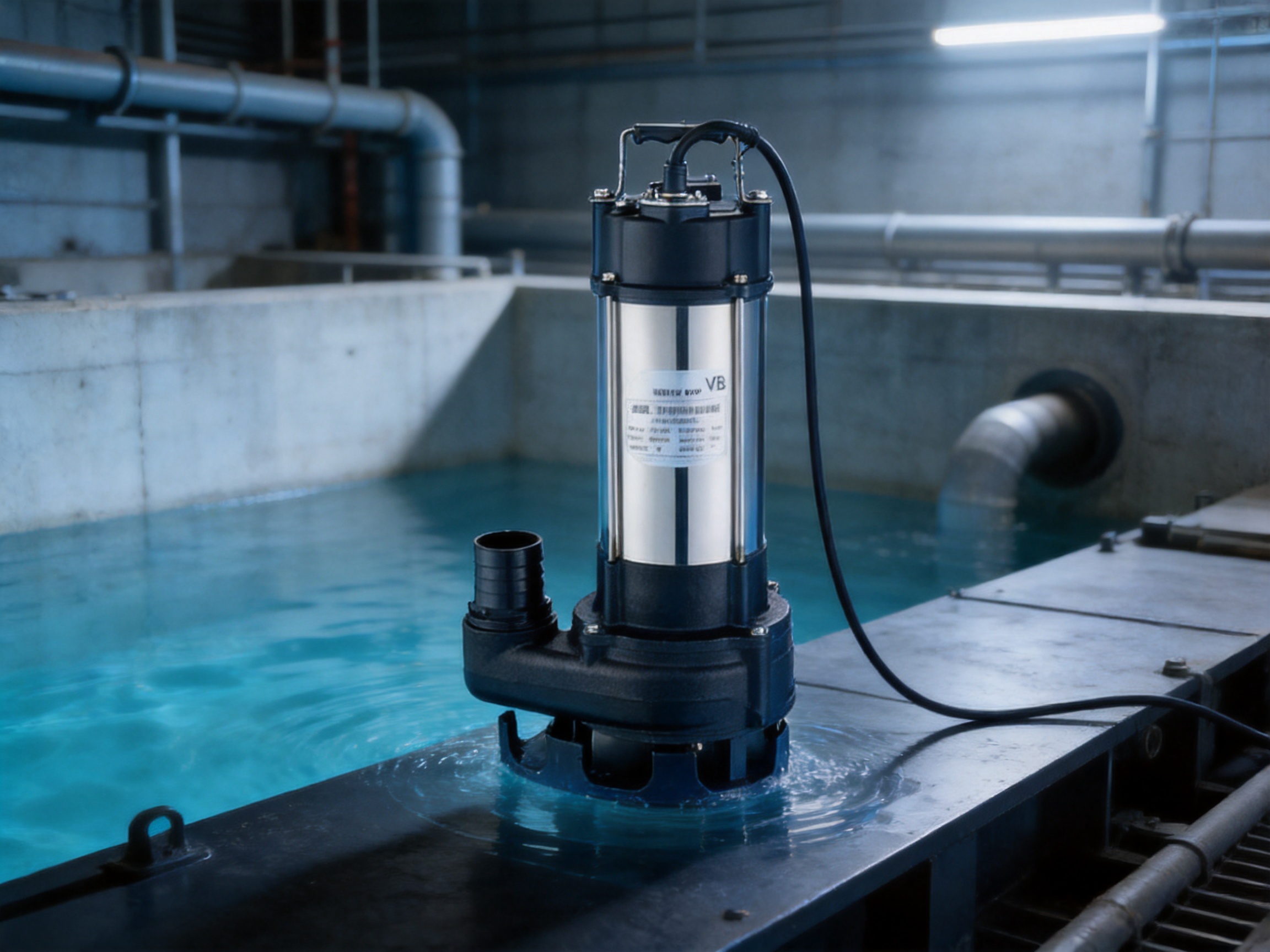
Factories may generate wastewater from washing areas, equipment rooms, production support spaces, storage yards, and utility systems. The liquid may collect in low points where gravity drainage is not possible. The VB pump can be installed in a sump or collection pit to move wastewater toward a treatment facility, sewer connection, storage tank, or discharge point.
Before installation in an industrial environment, the user should identify the liquid composition. The stated pH range of 5 to 9 supports many general wastewater conditions, but solvents, strong acids, strong alkalis, high concentrations of oils, abrasive solids, or high-temperature liquids may require special materials or a different pump design. A pump should never be selected solely by name; the liquid, duty cycle, flow requirement, total head, and solids characteristics must all be considered.
Construction sites frequently experience rainwater accumulation, groundwater seepage, foundation-pit flooding, and temporary drainage requirements. The VB pump’s submersible structure is well suited to these environments because it can be placed in a temporary sump and moved as the work area changes. Its compact arrangement can be valuable where there is no permanent pump room.
Construction users should pay special attention to electrical safety, cable protection, grounding, lifting arrangements, and protection against damage from building materials. The pump should be lowered and raised using appropriate methods rather than by pulling on the power cable. Mud, sand, gravel, and other abrasive materials should also be considered when determining whether the pump is suitable for a particular site.
Municipal facilities depend on reliable pumping at numerous stages, including collection, drainage, wastewater transfer, overflow control, and auxiliary service areas. A submersible sewage pump can provide a practical solution for drainage stations and smaller transfer duties. Its direct immersion design can reduce the need for extensive suction infrastructure and support operation in underground or enclosed collection areas.
In municipal systems, reliability depends on more than the pump itself. The installation should include suitable discharge piping, isolation equipment, non-return protection where required, level control, electrical protection, and access for inspection. Regular cleaning is also important because accumulated debris may obstruct the inlet or affect the hydraulic components.
Homes, residential compounds, apartment buildings, and rural properties may have bathrooms, basements, utility rooms, or drainage points below the level of the main sewer. In these situations, wastewater can be collected in a tank and transferred using a submersible pump. The VB design offers a compact option for such drainage stations when the required flow and head are within its operating range.
Residential installations benefit from the pump’s submerged operation, compact size, and built-in thermal protection. However, the installation must be designed to prevent dry running, excessive cycling, and blockage. A float switch or other appropriate level-control system can help start and stop the pump according to the liquid level. The control system should be selected to match the motor and local electrical standards.
The pump is also identified for use in methane pools and field irrigation in rural areas. Agricultural and rural drainage systems may have limited infrastructure, uneven terrain, and seasonal water requirements. A submersible pump can be placed in a collection pool or storage area and connected to a discharge line leading to fields or drainage channels.
When used near methane-generating environments, safety assessment is essential. Electrical equipment must be suitable for the specific atmosphere and local regulations. Users should confirm whether the proposed installation requires special explosion-protection certification or additional ventilation and control measures. The pump’s general application description does not automatically confirm suitability for every hazardous area.
Taizhou Edwin Electric Co., Ltd. was founded in 2008 and has developed as an integrated manufacturing enterprise focused on research and development, mass production, and global export. This integrated structure is important for pump customers because it allows product development, manufacturing coordination, quality management, and order support to operate within a connected business system.
The company’s product portfolio includes deep well pumps, submersible pumps, domestic booster pumps, circulation pumps, solar water pumps, intelligent booster pumps, and other water-treatment peripheral products. Experience across these categories supports a broader understanding of hydraulic systems, motor design, electrical control, pressure management, and the requirements of international customers.
Independent research and development allows a manufacturer to adjust products according to market demand rather than relying only on standard third-party designs. For a sewage pump, development work may include hydraulic optimization, motor matching, sealing arrangements, shaft materials, thermal protection, cable design, structural strength, and ease of installation.
Product development also involves learning from field use. Pumps supplied to construction, agricultural, municipal, and commercial users may encounter different operating patterns. Feedback from distributors and end users can help identify opportunities to improve component durability, packaging, installation instructions, and product compatibility with local systems.
Mass production capability provides practical benefits for project buyers and distributors. It can improve delivery planning, support repeat orders, and help maintain consistency between production batches. A pump manufacturer with established production processes can coordinate component sourcing, winding operations, assembly, inspection, packaging, and shipping in a more structured manner.
For the VB pump, manufacturing consistency is especially important because motor performance and waterproof integrity depend on multiple connected processes. A high-quality result requires properly prepared components, accurate assembly, reliable sealing, correct electrical connections, and final inspection. No single component can compensate for poor control elsewhere in the production chain.
The copper winding must be produced and assembled with attention to conductor placement, insulation integrity, connection quality, and electrical balance. The winding process influences motor efficiency, starting behavior, heat generation, and service life. Proper insulation treatment is essential because the motor operates in a wet environment and must remain electrically protected during immersion.
The built-in thermal protector is integrated into the motor protection concept. During production, the protector and winding connections must be positioned correctly and checked for electrical continuity. Assembly accuracy helps ensure that the thermal device can respond to abnormal temperature conditions while the motor operates within its intended design.
Mechanical assembly includes the motor housing, shaft, hydraulic section, fasteners, seals, and protective components. The stainless steel welded shaft must be correctly aligned with the motor and rotating assembly. Alignment affects vibration, bearing loads, seal performance, and noise. Accurate assembly also helps maintain the intended relationship between the impeller and casing.
In submerged equipment, sealing is a central manufacturing concern. The motor chamber must be protected against water entry, and cable connections must be properly secured. Sealing surfaces should be clean and undamaged during assembly. Inspection procedures can identify defects before the pump reaches the customer, reducing the risk of field failure.
A professional pump manufacturing process normally includes visual inspection, dimensional checks, electrical testing, insulation testing, operational testing, and inspection of packaging and identification labels. Hydraulic testing may be conducted according to the model and production requirements to confirm that the pump can perform within its designed range.
Testing is valuable because it transforms design intentions into measurable production controls. A pump may have a suitable material list and a strong design, but actual quality depends on whether the assembled product meets the required electrical, mechanical, and hydraulic conditions. Consistent inspection helps reduce variation and supports reliable delivery to international customers.
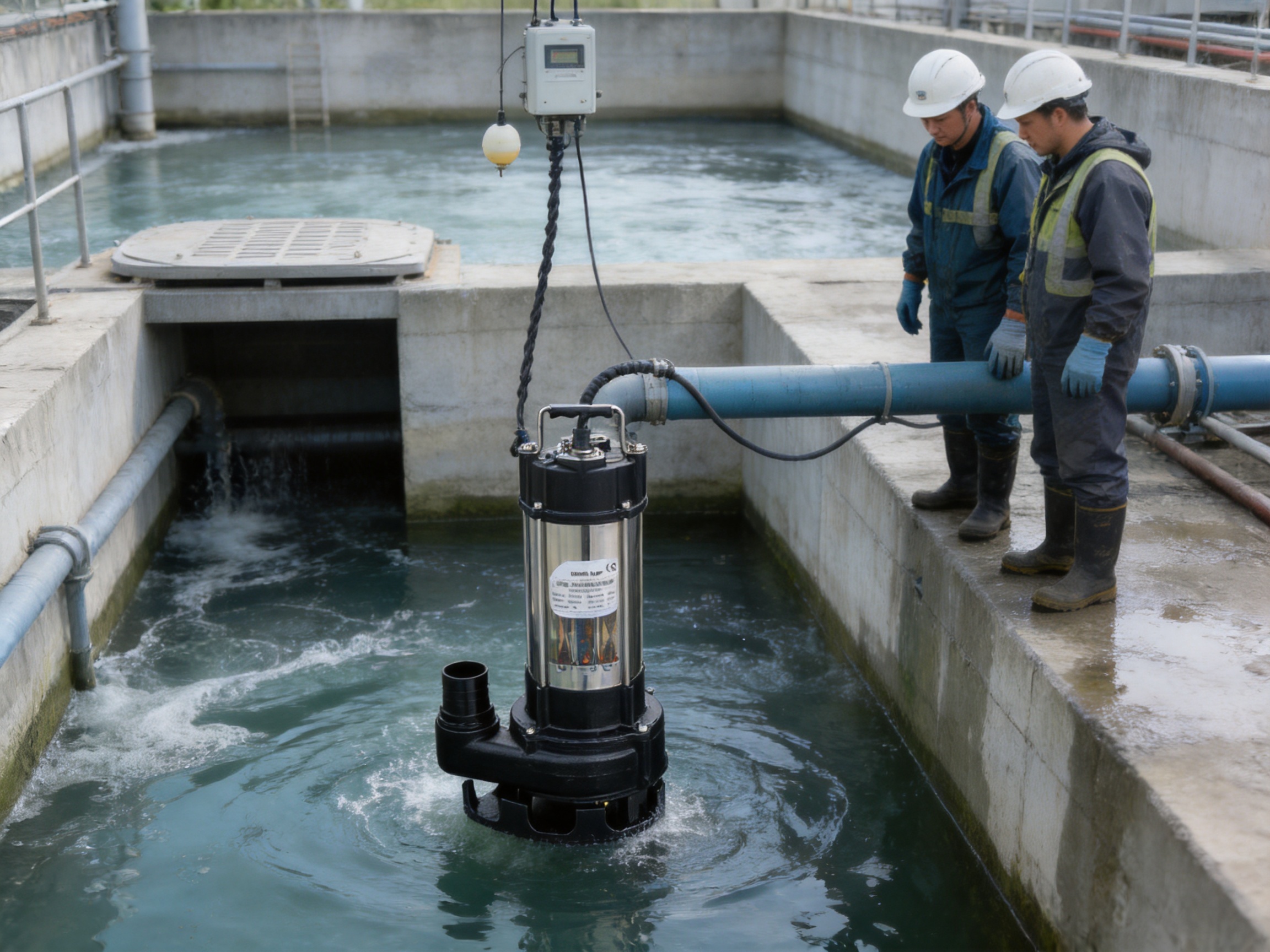
Distributors and engineering contractors often need products that are easy to explain, practical to install, and suitable for several market sectors. The VB pump offers a clear product position: it is a submersible sewage and drainage pump with defined operating limits, durable motor features, and a broad range of intended uses.
The product’s technical specifications can support straightforward selection discussions. Customers can begin by checking immersion depth, liquid temperature, pH, density, viscosity, required flow, required head, solids conditions, power supply, and duty cycle. This structured approach reduces the risk of selling an unsuitable pump and helps distributors provide more professional technical service.
The manufacturer’s wider export and procurement capabilities can also support one-stop purchasing. Taizhou Haipai Import & Export Co., Ltd. and Golden Falcon Industrial Co., Ltd. were established in 2012 to provide procurement planning, order tracking, cross-border delivery, and foreign-trade services. For international buyers, this type of support can be important because successful delivery involves more than manufacturing. It also requires documentation coordination, packaging, production scheduling, and communication throughout the order process.
For repeat projects, a stable supply relationship can help customers reduce procurement uncertainty. A buyer may require several pump categories for one project, including deep well pumps, booster pumps, circulation pumps, sewage pumps, and accessories. A manufacturer with multiple product lines can potentially coordinate these requirements more efficiently than a supplier focused on only one narrow product type.
Before installing the VB pump, confirm that the model is appropriate for the required flow and head. Check the liquid temperature, pH, density, viscosity, and expected solids content. Confirm that the maximum immersion depth of 5 meters will not be exceeded. The pump should not be installed in a liquid that falls outside the specified operating limits without written technical approval from the manufacturer.
Inspect the pump for visible damage caused during transport. Check the cable, casing, discharge connection, lifting arrangement, and identification information. Do not operate a pump with damaged insulation, cracked housing, loose components, or a compromised cable. Electrical work should be performed by qualified personnel in accordance with local regulations.
The pump should be positioned where it can receive liquid without being buried in sediment or blocked by large debris. The intake area must remain sufficiently clear to allow stable water entry. If the collection pit contains heavy sediment, the pit may require cleaning before the pump is installed.
The pump should be supported or suspended using a suitable arrangement. The discharge pipe must not place excessive mechanical load on the pump casing. The power cable should be routed and secured so that it cannot be pinched, cut, abraded, or used as a lifting rope.
The built-in thermal protector helps protect the motor from overheating, but the complete electrical installation should include appropriate circuit protection, grounding, and switching equipment. Depending on the installation, additional overload protection, residual-current protection, level control, and phase protection may be required.
The power supply must match the product’s rated electrical data. Incorrect voltage, unsuitable frequency, poor grounding, undersized cables, or excessive voltage drop can cause unreliable operation and motor damage. All electrical decisions should be made by a qualified electrician who understands the local standard and the environmental risks of wet installations.
A submersible sewage pump should not be allowed to run without sufficient liquid around the hydraulic and motor components. Dry running can increase temperature, reduce lubrication at relevant sealing points, and damage components. A float switch, level sensor, or control panel can be used to start and stop the pump at suitable liquid levels.
The control system should prevent excessive cycling. If the collection tank is too small or the level switches are badly positioned, the pump may start and stop repeatedly. Frequent cycling can increase motor stress and reduce equipment life. The tank volume, pump capacity, discharge rate, and control settings should be selected as a complete system.
Regular maintenance helps protect the pump’s performance and extends service life. The inspection schedule should reflect the liquid quality, operating hours, solids content, and importance of the installation. A pump handling relatively clean drainage water may require less frequent attention than one operating in heavily contaminated wastewater.
Inspect the discharge line for blockage, leakage, or unusual vibration. Check the power cable for abrasion and confirm that control devices operate correctly. Observe starting behavior, operating sound, discharge flow, and running time. A change in these conditions may indicate a blockage, worn hydraulic component, electrical issue, or change in liquid conditions.
Clean the collection pit when sediment or debris begins to interfere with the pump. Remove fibers, plastic, cloth, roots, and other materials that may wrap around rotating components or restrict the intake. The pump should be isolated from the power supply before any inspection or cleaning work begins.
If the thermal protector stops the motor, do not immediately force the pump back into operation. First identify the reason for overheating. Possible causes include a blocked discharge line, restricted intake, excessive starts, incorrect voltage, mechanical friction, high liquid temperature, or an operating condition beyond the pump’s capacity.
After the pump has cooled, qualified personnel should inspect the system. Repeated thermal protection events indicate that the underlying cause has not been corrected. Continued operation under these conditions may reduce reliability even if the motor appears to restart normally.
If the pump will not be used for an extended period, it should be removed, cleaned, inspected, and stored according to the manufacturer’s instructions. Wastewater residue should not be allowed to dry on critical surfaces. The cable and seals should be protected from sharp edges, extreme temperatures, and chemical exposure.
Before returning the pump to service, check insulation condition, mechanical freedom, discharge connections, control settings, and the general condition of the collection pit. Long-term storage is an appropriate time to replace damaged accessories and plan preventive maintenance.
| Selection Factor | Questions to Confirm | Why It Matters |
|---|---|---|
| Required flow | How much liquid must be transferred per hour or minute? | Determines whether the pump can meet the drainage time requirement |
| Total head | What vertical lift and pipe resistance must be overcome? | Affects actual discharge performance and operating efficiency |
| Liquid temperature | Is the liquid at or below 40°C? | Protects the motor and seals from excessive thermal stress |
| Liquid chemistry | Is the pH between 5 and 9, and are aggressive chemicals absent? | Supports material compatibility and corrosion resistance |
| Liquid density | Is the density no greater than 1.2 × 10³ kg/m³? | Helps prevent excessive motor loading |
| Solids and debris | What size and type of solids are present? | Helps determine blockage risk and maintenance needs |
| Immersion depth | Is the installation depth no more than 5 meters? | Ensures operation within the stated pressure and sealing limit |
| Duty cycle | Will the pump run continuously, intermittently, or frequently start and stop? | Influences motor temperature and control-system design |
| Electrical supply | Does the available supply match the rated pump data? | Prevents starting problems and electrical damage |
| Control method | Will a float, sensor, or control panel be used? | Helps prevent dry running and excessive cycling |
The VB pump’s main competitive advantage is the combination of practical submersible design, defined operating limits, motor protection, and manufacturing support. Some low-cost drainage pumps may compete primarily on purchase price, but the long-term value of a sewage pump depends on more than initial cost. Motor construction, sealing quality, material selection, thermal protection, assembly consistency, technical support, and availability all influence the total cost of ownership.
Compared with basic pumps that lack thermal protection, the VB offers an additional safeguard against overheating. Compared with products using less corrosion-resistant shaft materials, the stainless steel welded shaft provides a stronger solution for wet operating conditions. Compared with surface-mounted drainage equipment, the submersible format can simplify installation and reduce priming-related concerns.
The pump also benefits from the manufacturer’s established experience across several water-pump categories. A company that produces deep well, solar, booster, circulation, and submersible pumps develops knowledge in different hydraulic and motor applications. This broader technical background can support product improvements and help customers identify complementary equipment for complete water-management systems.
Another competitive factor is the manufacturer’s focus on international markets. Export customers often require dependable communication, production follow-up, packaging coordination, and documentation support. The company’s foreign-trade service structure is intended to address these practical requirements, making the product more accessible to overseas distributors and project purchasers.
Reliable drainage equipment contributes to more efficient use of water, energy, labor, and infrastructure. A pump that operates consistently can reduce emergency interventions and prevent prolonged flooding. In agricultural applications, dependable transfer of water can support better irrigation scheduling. In municipal and commercial environments, effective drainage helps protect buildings, equipment, and public facilities.
Energy performance depends on the complete system rather than only on the motor. Correct pump sizing, appropriate pipe diameter, reduced unnecessary bends, proper level control, and operation near the intended duty point all influence energy consumption. The copper-wound motor provides a sound electrical foundation, but the final efficiency of an installation depends on engineering choices and maintenance quality.
Longer service life also supports sustainability because fewer premature replacements reduce material use, transportation demand, and disposal requirements. Proper installation, protection against dry running, regular cleaning, and timely inspection can help the pump achieve a longer useful operating period.
The VB pump is designed for wastewater drainage in factories, construction sites, commercial facilities, municipal sewage treatment plants, residential drainage stations, methane pools, and rural field irrigation applications. The exact suitability depends on the liquid properties, required flow, total head, solids content, electrical supply, and installation conditions.
The pump has an IPX8 protection class and is designed for submerged operation under the manufacturer’s specified conditions. The maximum immersion depth is 5 meters. Users should follow the installation instructions and ensure that the pump operates within its rated duty and environmental limits.
The maximum stated liquid temperature is 40°C, equivalent to 104°F. Liquids above this temperature may increase motor, insulation, seal, and bearing stress. A different pump design should be considered for higher-temperature applications.
The stated liquid pH range is 5 to 9. This covers many general wastewater and drainage conditions, but it does not automatically cover strong acids, strong alkalis, or liquids containing aggressive chemicals. Chemical compatibility should be reviewed before use in industrial process wastewater.
Yes. The motor includes a built-in thermal protector. This feature helps protect against excessive temperature rise caused by certain abnormal operating conditions. It should be used together with correct electrical protection, proper pump selection, and suitable control equipment.
Copper has high electrical conductivity and is widely used in quality electric motors. In the VB pump, the copper winding supports stable electrical operation and effective motor performance when combined with correct insulation, assembly, cooling, and protection.
The stainless steel welded shaft provides mechanical strength and improved resistance to moisture and corrosion in ordinary wastewater conditions. It helps transfer motor power to the hydraulic components while supporting durability in a submerged environment.
No pump should be assumed to handle every type of sewage. The VB pump is intended for wastewater and drainage conditions within its stated limits. Users must evaluate solids, fibers, abrasives, chemical content, temperature, density, viscosity, and required pumping performance. Liquids outside the specified conditions may require another model or special technical confirmation.
The maximum stated immersion depth is 5 meters. This limit should not be exceeded because pressure increases with depth and may affect sealing, motor protection, and overall reliability.
Because the pump is installed directly in the liquid, it avoids many of the priming requirements associated with surface-mounted suction pumps. However, the pump must still be positioned correctly, adequately submerged, and connected to a suitable discharge system.
A float switch, level sensor, or automatic control panel can stop the pump when the liquid level falls below the safe operating point. The control system should be correctly adjusted to prevent both dry running and excessive start-stop cycling.
Customers should confirm the required flow, total head, liquid temperature, pH, density, viscosity, solids content, immersion depth, duty cycle, voltage, frequency, discharge connection, and control method. Providing this information to the supplier helps ensure accurate model selection.
It is identified for drainage at construction sites and can be used in suitable temporary sumps or collection areas. Construction users should consider sand, gravel, concrete residue, sharp debris, cable protection, lifting arrangements, and electrical safety before installation.
The manufacturing and foreign-trade organization supports procurement planning, order tracking, cross-border delivery, and export services. International buyers can discuss product selection, production requirements, packaging, documentation, and delivery planning with the supplier before placing an order.
The Submersible Sewage Pump VB is a practical wastewater drainage solution for industrial, municipal, commercial, residential, construction, and agricultural environments. Its direct submerged installation simplifies many drainage layouts, while the compact structure helps reduce space requirements. The copper-wound motor, built-in thermal protector, stainless steel welded shaft, Class B insulation, and IPX8 protection provide a strong combination of electrical, mechanical, and environmental features.
Its maximum immersion depth of 5 meters, maximum liquid temperature of 40°C, pH range of 5 to 9, and maximum liquid density of 1.2 × 10³ kg/m³ define the conditions under which the pump should be selected and operated. Respecting these limits is essential for reliable service. Correct flow and head selection, suitable level control, electrical protection, and regular maintenance are equally important.
The manufacturer’s experience since 2008, integrated research and development, mass-production capability, broad pump portfolio, and international order-support structure add value for distributors and project customers. These strengths help position the VB pump not merely as a basic drainage device, but as part of a professional water-management product range designed for global applications.
For customers seeking a dependable submersible wastewater pump, the VB series offers a balanced combination of application flexibility, motor protection, durable construction, straightforward installation, and manufacturing support. Final selection should always be based on the complete operating conditions and the official technical documentation for the required model.
1. Manufacturer product information for the Submersible Sewage Pump VB.
2. Manufacturer technical information concerning motor construction, thermal protection, insulation class, and enclosure protection.
3. General principles of wastewater pumping, drainage-system design, and submersible pump installation.
4. International practices for electrical safety, grounding, motor protection, and wet-environment equipment installation.
5. General pump engineering guidance concerning flow, total head, liquid compatibility, solids handling, and preventive maintenance.
edwina@edwin-pump.com
+86-13586290903 (WhatsApp)
Xuri Gongliang Cutting Tool Entrepreneurship Park, Wenqiao Town, Wenling City, Taizhou City, Zhejiang Province, China

High Performance Smart Pump Factory


 English