
edwina@edwin-pump.com

View All Products
en
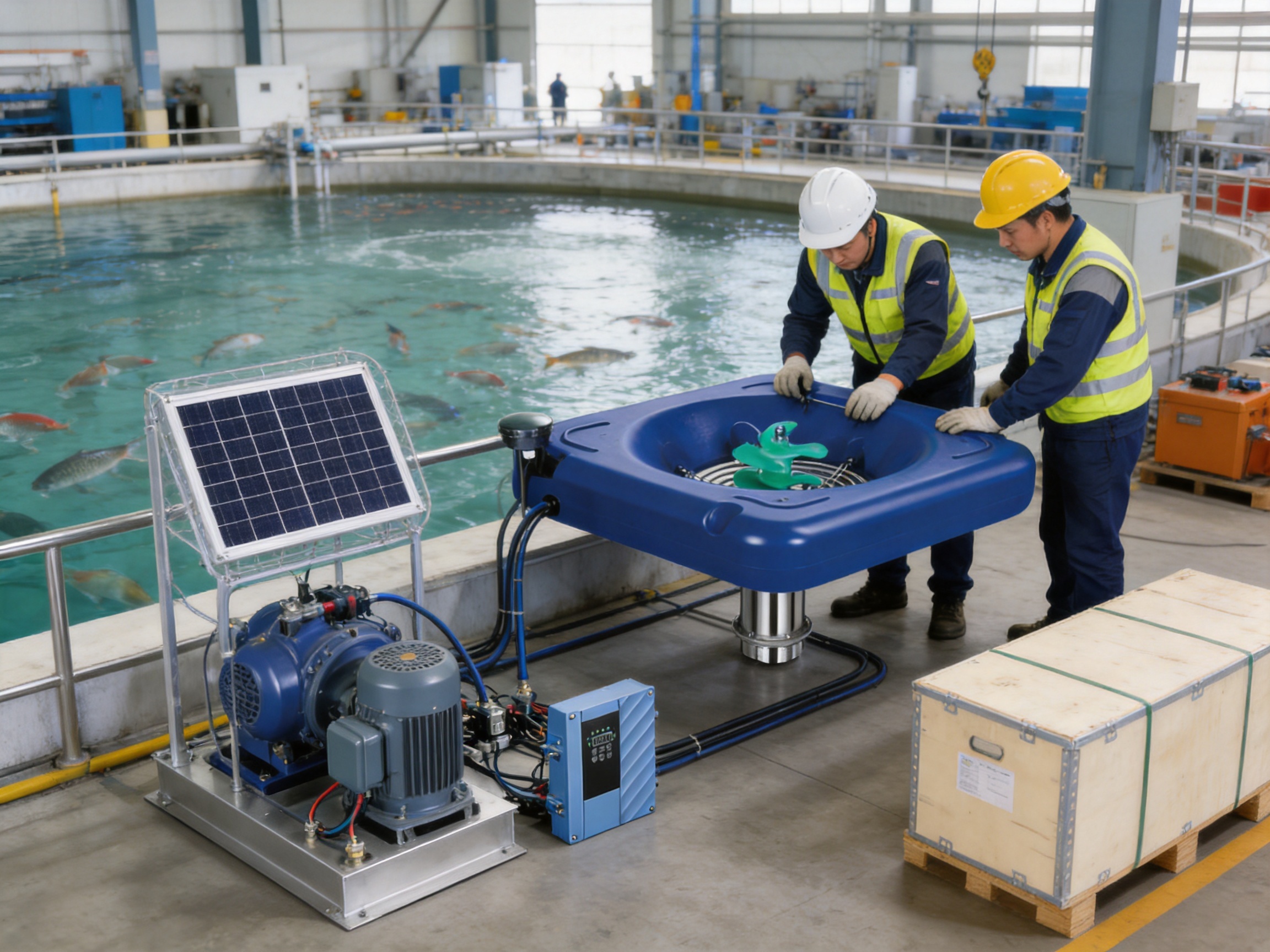
Reliable dissolved oxygen is one of the most important requirements in aquaculture. Fish, shrimp, and other aquatic organisms depend on sufficient oxygen for feeding, metabolism, growth, disease resistance, and survival. When oxygen levels decline, especially in deep, heavily stocked, or organically loaded ponds, the consequences can include slow growth, poor feed conversion, stress, disease outbreaks, and sudden stock losses. For this reason, a dependable aeration system is not simply an accessory. It is a core part of responsible and productive water management.
The ADSAO Series AC/DC Brushless Motor Solar Air Aerator is designed to address these challenges with a combined approach: high-efficiency air compression, brushless motor technology, solar energy utilization, and intelligent switching between direct-current solar power and alternating-current mains power. This configuration allows the aerator to deliver oxygen throughout the water column while maintaining operational continuity when solar conditions are weak.
Unlike a basic surface agitator that concentrates oxygen transfer near the water surface, the ADSAO system uses compressed air to create underwater aeration. Air is distributed through submerged outlets, producing bubbles that travel upward through the water. During this movement, oxygen is transferred into the water and circulation is generated across multiple depths. The result is more uniform dissolved oxygen distribution and improved water movement in deep or irregularly shaped ponds.
With a rated power of 2,200 W, an oxygenation rate of at least 3.4 kg/h, and a stated coverage range of 2,665 to 5,328 square meters, the ADSAO-300-2200 is positioned for demanding aquaculture environments. It is suitable for mixed fish and shrimp farming, ecological water bodies, ornamental fish ponds, and other applications where stable, efficient, and widely distributed oxygenation is required.
Dissolved oxygen is influenced by temperature, stocking density, algae activity, organic matter, weather, and water circulation. Warm water holds less oxygen than cool water, while fish and microorganisms consume oxygen continuously. At night, photosynthesis stops, but respiration continues. This can cause oxygen concentrations to fall sharply before sunrise. Overcast weather can create a similar risk because sunlight is insufficient for normal photosynthetic oxygen production.
Deep water introduces another challenge. Oxygen near the surface does not necessarily reach the lower layers in sufficient quantities. Stratification may develop, with warmer or oxygen-rich water remaining above colder or oxygen-depleted water. In ponds containing large quantities of feed residue, suspended solids, or organic sediment, microbial decomposition can further consume oxygen in deeper zones.
An efficient aerator must therefore accomplish more than simply disturbing the water surface. It should promote oxygen transfer, improve vertical circulation, reduce stagnant areas, and operate reliably during periods of high oxygen demand. The ADSAO air compression aeration design directly addresses these requirements by placing the oxygen delivery process below the surface rather than relying only on surface agitation.
Uniform aeration can also support more consistent fish and shrimp distribution. When oxygen levels vary significantly from one area to another, aquatic animals may gather in limited zones, increasing competition and stress. By helping distribute oxygen across the pond, a properly designed aerator can contribute to a more stable living environment and better use of the available farming area.
The ADSAO Series combines a brushless AC/DC motor with an air compression aerator. The motor powers the air compression system, which supplies air to submerged aeration points. As air bubbles rise through the water, they create a large contact interface between air and water. This contact allows oxygen to dissolve while the rising bubbles help move water vertically.
The aeration process has two main effects. First, it increases direct oxygen transfer. Second, it supports water circulation. Rising air entrains surrounding water, drawing lower water upward and encouraging mixing between different layers. This circulation can help reduce localized oxygen deficiency and support more even water conditions.
The system is designed to operate from both DC solar input and AC mains power. Its best input voltage range is listed as 300 V to 400 V DC, while the rated voltage is AC220/DC300V. The solar array open-circuit voltage should remain below 450 V, and the recommended solar panel power is at least 1.3 times the pump power. For the ADSAO-300-2200, this means a solar installation of at least approximately 2.86 kW, subject to the final system design, solar conditions, wiring, controller configuration, and local installation requirements.
When sunlight is strong, the solar system can provide the primary operating energy. When solar power is reduced by clouds, early morning conditions, late afternoon conditions, or other weather changes, the intelligent switching function enables stable operation on mains power. This reduces the risk of a sudden loss of aeration at precisely the time when oxygen management may be most important.
The switching function is particularly useful for farms that cannot depend on uninterrupted sunlight. A purely solar-powered aerator may experience reduced output during cloudy periods unless sufficient energy storage or backup equipment is provided. A purely mains-powered aerator, on the other hand, may involve higher operating costs and greater dependence on the electrical grid. The ADSAO hybrid AC/DC approach provides a practical balance between renewable energy use and operational continuity.
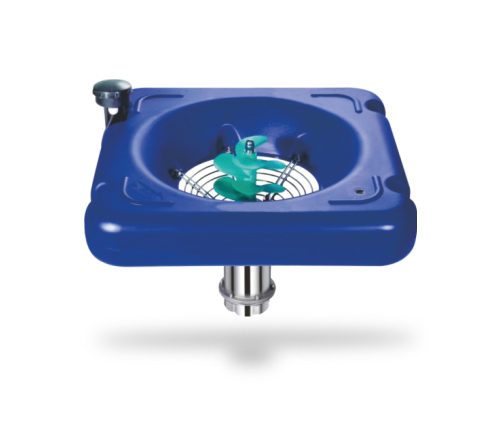
ADSAO Series AC/DC Brushless Motor Solar Air Aerator
The ADSAO-300-2200 is designed for high-capacity aeration applications. Its principal specifications are summarized below. Actual field performance may vary according to water depth, water quality, air distribution layout, temperature, altitude, solar radiation, pipe resistance, installation design, and operating conditions.
| Item | Specification |
|---|---|
| Model | ADSAO-300-2200 |
| Voltage | AC220/DC300V |
| Best DC input voltage | 300V–400V |
| Rated power | 2,200W |
| Oxygenation rate | At least 3.4 kg/h |
| Coverage area | Approximately 2,665–5,328 m² |
| Solar panel open-circuit voltage | Below 450V |
| Recommended solar panel power | At least 1.3 times pump power |
| Motor type | Brushless AC/DC motor |
| Application environments | Fish and shrimp farms, ecological water bodies, ornamental ponds, and related oxygenation applications |
| Warranty | Three years |
The stated coverage range demonstrates that the system can serve different pond layouts and oxygenation requirements. The lower end of the range may be more appropriate for sites with higher stocking density, deeper water, greater organic loading, or more demanding oxygen requirements. The upper end may be applicable where water conditions, stocking levels, depth, and aeration layout permit effective oxygen distribution over a larger area.
Coverage should not be interpreted as a universal replacement for site engineering. Pond depth, shape, water circulation, biomass, feeding schedule, and local climate all affect the number and position of aeration points. A professional installation should evaluate the complete pond system rather than selecting equipment only by surface area.
The brushless motor is a central feature of the ADSAO design. In a conventional brushed motor, mechanical brushes and a commutator transfer electrical power to the rotating component. These parts are subject to friction and wear. A brushless motor uses electronic commutation instead, reducing dependence on mechanical contact components.
Reduced mechanical wear can contribute to longer service life and lower routine maintenance requirements. This is valuable in aquaculture, where equipment may operate for long periods and may be installed near water, in remote fields, or in locations where service access is limited. A motor that eliminates brush replacement can simplify maintenance planning and reduce downtime associated with consumable motor parts.
Brushless motors can also provide efficient electrical performance and stable rotational control. Improved motor efficiency means that a greater portion of the input energy can be converted into useful mechanical output. This supports the purpose of a solar-powered aeration system, where energy availability and operating efficiency are closely connected.
Compared with some conventional motor arrangements, a brushless design may provide quieter and smoother operation because it avoids the mechanical brush contact associated with traditional motors. Lower vibration and reduced mechanical friction can benefit the service environment, although actual noise and vibration levels depend on the complete aerator assembly, mounting method, pipe system, and operating conditions.
For users comparing aerators, the motor design is an important distinction. A low initial price does not always represent the lowest total cost of ownership. Maintenance frequency, energy consumption, replacement parts, operating continuity, and expected service life should all be considered. The ADSAO brushless motor is designed to support this broader value calculation.
Solar power offers important advantages for aquaculture facilities. It can reduce grid electricity consumption, support operation in remote locations, and help lower the environmental impact of daily aeration. However, solar energy is variable. A system that depends only on direct solar input may experience reduced aeration during periods of weak sunlight.
The ADSAO aerator responds to this challenge with AC/DC compatibility and intelligent switching. During suitable solar conditions, the system can use available DC power. When the solar power level becomes insufficient, it can switch to AC mains operation to maintain stable aeration. This is a major advantage over single-source equipment that cannot adapt to changing energy conditions without manual intervention or separate backup equipment.
Stable switching is particularly relevant to intensive aquaculture. Fish and shrimp do not stop consuming oxygen simply because the sky becomes cloudy. In some circumstances, cloudy conditions may occur after weather changes that also reduce natural oxygen production. Maintaining aeration during these periods can help protect stock and reduce the need for emergency manual intervention.
The hybrid system can also provide operational flexibility for different farm sizes. A facility may begin with grid-supported operation and gradually increase its solar capacity. Alternatively, a farm with an existing solar array may use mains power as a dependable backup. The appropriate operating strategy depends on local electricity costs, solar radiation, grid reliability, and the farm’s production schedule.
To achieve safe and efficient operation, the solar array must be correctly sized and matched to the system. The provided specification recommends solar panel power of at least 1.3 times the pump power. For a 2,200 W unit, this implies a minimum nominal solar panel capacity of approximately 2,860 W. The open-circuit voltage must remain below 450 V, and the DC operating voltage should be considered within the recommended 300 V to 400 V range.
Solar design should also account for panel temperature, voltage drop, cable length, shading, dust, seasonal sunlight, controller characteristics, and installation orientation. Professional electrical design is recommended, especially for high-voltage DC systems. Protective devices, grounding, isolation, and weather-resistant enclosures should be selected according to applicable standards and local regulations.
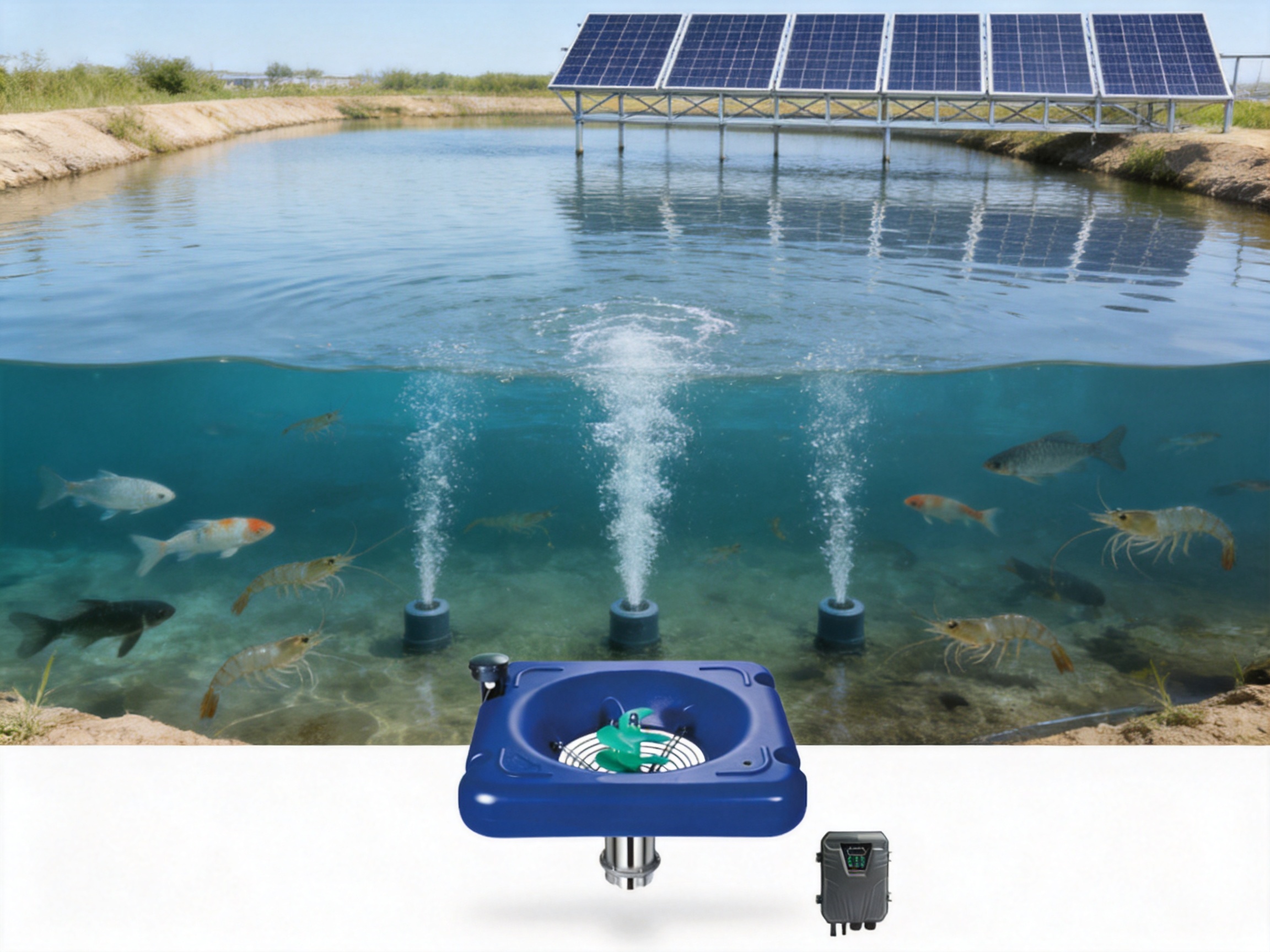
Many surface aerators create oxygen transfer by splashing or churning water at the surface. These systems can be effective in suitable conditions, but their oxygenation pattern may be concentrated near the upper layer. They may also be less suitable when the primary problem is oxygen depletion in deeper water.
The ADSAO air compression method delivers air below the water surface. Submerged air release allows the bubbles to remain in contact with water as they rise. The longer path through the water can support oxygen transfer and create vertical movement. This approach is especially relevant for deep ponds, tanks, ecological water bodies, and aquaculture sites where oxygen must reach more than the immediate surface zone.
Deep-water aeration can help address stratification. When lower water becomes oxygen deficient, circulation generated by rising bubbles may help move that water upward while bringing oxygenated water downward. The degree of mixing depends on water depth, air volume, diffuser placement, bubble size, and the overall pond design. Correctly positioned aeration points are therefore essential for achieving the desired result.
Submerged aeration also avoids relying exclusively on high-speed surface water movement. This may be beneficial in ponds containing young fish, shrimp, ornamental species, or floating equipment that could be disturbed by aggressive surface turbulence. As with any aeration method, the final selection should consider species, stocking density, pond geometry, and farm management practices.
Mixed fish and shrimp farming presents a complex oxygen management requirement. Different species may occupy different water layers and may respond differently to water movement. A system that distributes oxygen through the water column can help create a more balanced environment for mixed production.
In shrimp farming, oxygen demand may be influenced by biomass, feed input, bottom sediment, and microbial activity. Aeration can support both dissolved oxygen management and circulation. It may also help reduce localized zones where organic matter accumulates, although aeration should be used together with proper feeding control, water exchange, sludge management, and routine water-quality testing.
In fish ponds, oxygen requirements may rise rapidly as fish grow. A system selected for early production stages may not provide enough capacity at later biomass levels. The ADSAO-300-2200 offers a comparatively high output configuration for larger or more demanding installations, subject to professional site assessment.
Aquaculture operators can use aeration strategically during high-risk periods. These may include nighttime, pre-dawn hours, hot weather, cloudy days, periods following heavy feeding, and times when algae levels change rapidly. A hybrid solar and mains system makes it easier to maintain a planned operating schedule without depending entirely on manual equipment activation.
Automation can also support more efficient energy use. If the aerator is connected to dissolved oxygen sensors, timers, or a farm control system, operators may be able to match operation to actual oxygen conditions. The exact control options depend on the final electrical and control configuration, but the AC/DC design provides a useful foundation for intelligent energy management.
The ADSAO aerator is also suitable for ecological water bodies and ornamental fish ponds. In these environments, oxygenation may be required not only for animal health but also for water clarity, odor control, biological balance, and overall appearance.
Ecological ponds often contain plants, microorganisms, fish, and organic material that interact continuously. Insufficient circulation can create stagnant zones with unpleasant odors or uneven water quality. Gentle but effective submerged aeration can support movement between layers and help maintain a more consistent aquatic environment.
Ornamental ponds require special attention to noise, appearance, and fish welfare. A submerged air compression system can provide oxygenation without relying on a large visible surface machine. The installation can be planned so that the mechanical equipment and solar components are positioned appropriately while the aeration points remain integrated into the pond design.
For decorative water features, the aeration system should be selected according to the size, depth, fish population, filtration system, and visual requirements of the pond. Aeration is not a substitute for filtration or biological maintenance, but it can complement these systems by improving oxygen availability and circulation.
Energy consumption is a major operating cost for commercial aquaculture. Aeration equipment may run for many hours per day, and in intensive operations it may operate continuously. Even moderate improvements in motor efficiency can become significant over a full production cycle.
The ADSAO system combines a brushless motor with solar energy utilization. The brushless motor is intended to reduce energy losses associated with mechanical friction, while the solar input can offset a portion of grid electricity use. The hybrid arrangement enables the operator to use renewable energy when available without sacrificing operational stability during weak sunlight.
The solar panel recommendation of at least 1.3 times pump power is important because a solar array must provide more than the nominal motor rating under favorable conditions. Solar output changes throughout the day, and actual production is affected by temperature, panel orientation, dust, shading, and weather. Proper oversizing helps the system access sufficient power during a broader range of operating conditions.
Energy savings should be evaluated using a complete lifecycle analysis. Operators should consider the cost of solar panels, mounting structures, electrical protection, installation, maintenance, grid electricity, and potential production losses caused by inadequate aeration. The most economical system is not necessarily the one with the lowest purchase price. It is the system that delivers dependable oxygenation at an acceptable total cost over its service life.
The three-year warranty provides additional confidence for users planning long-term operation. Warranty coverage remains subject to the supplier’s specific terms, installation requirements, operating conditions, and maintenance procedures. Correct installation and regular inspection are essential for protecting equipment performance.
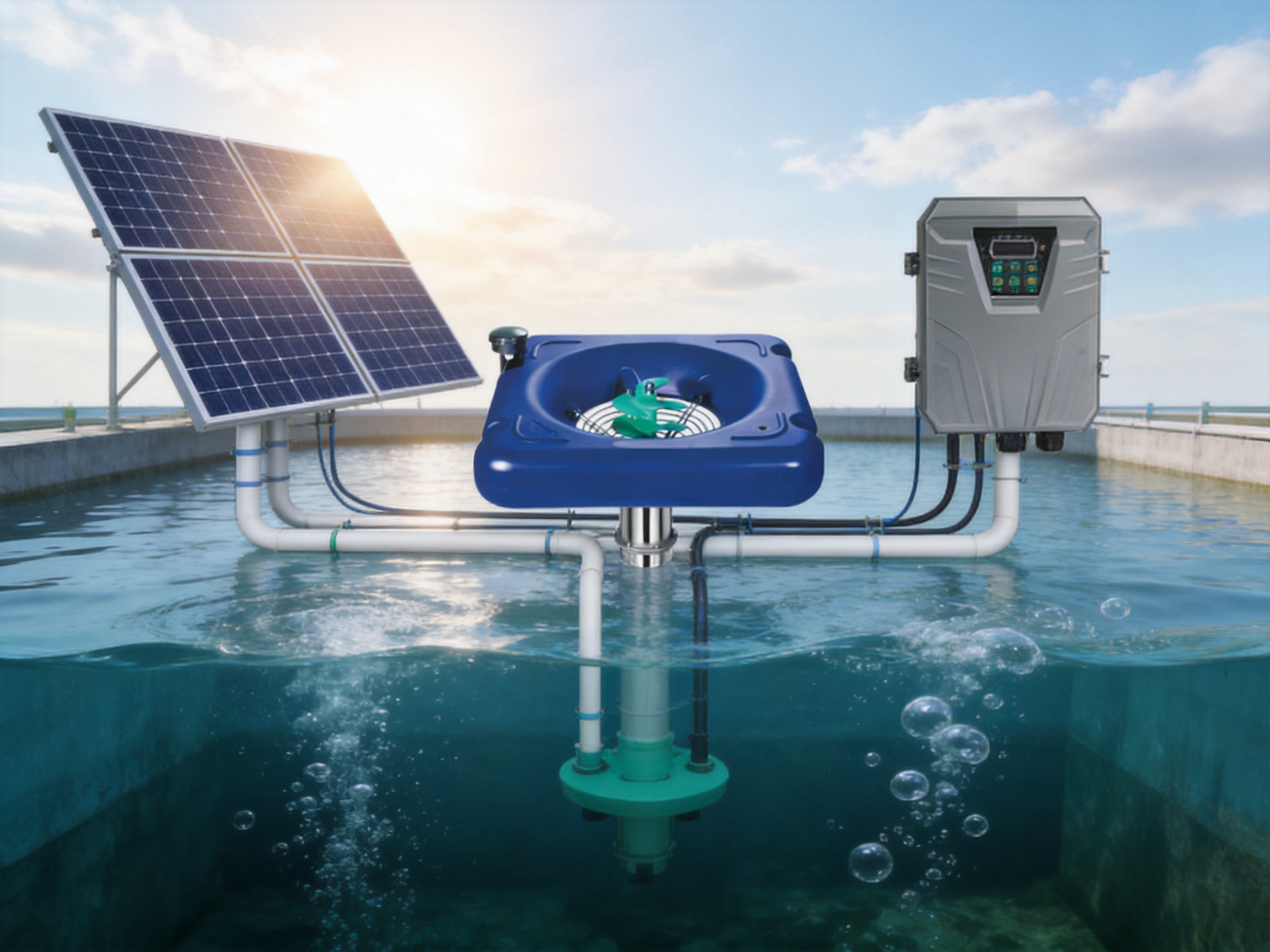
The ADSAO Series offers several practical advantages when compared with single-source or conventional aeration equipment. The first is energy flexibility. A standard AC aerator depends entirely on the electrical grid, while a basic DC solar aerator may lose output when solar conditions deteriorate. The ADSAO system is designed to use both sources and to switch intelligently between them.
The second advantage is the brushless motor configuration. Conventional brushed motors may require brush inspection and replacement over time. By using electronic commutation, the ADSAO design reduces the number of mechanical wear components in the motor and supports lower routine maintenance requirements.
The third advantage is deep-water air delivery. Surface-only aerators may provide limited oxygen distribution in lower water layers. The compressed-air approach is intended to oxygenate and circulate water below the surface, making it more suitable for deep ponds and applications where vertical mixing is important.
The fourth advantage is the potential for lower operating costs through solar energy use. The system can reduce dependence on mains electricity while retaining grid support for cloudy or low-solar periods. This is a practical advantage for farms seeking to manage energy costs without accepting the reliability limitations of a completely off-grid system.
The fifth advantage is application flexibility. The equipment can be used in mixed fish and shrimp farming, ecological water bodies, ornamental fish ponds, and related oxygenation projects. Its broad application range allows distributors, engineering contractors, and farm operators to consider one platform for different water-management requirements.
| Comparison factor | ADSAO hybrid solar air aerator | Single-source AC aerator | Basic direct-solar aerator |
|---|---|---|---|
| Power sources | AC mains and DC solar input | AC mains only | Solar input only |
| Operation during cloudy conditions | Intelligent switching can support mains operation | Normally continues if the grid is available | Output may decline unless energy storage or backup is provided |
| Motor design | Brushless AC/DC motor | Depends on the selected motor | Depends on the selected motor |
| Oxygen delivery approach | Compressed air delivered below the water surface | May use surface agitation or other methods | Varies by product design |
| Solar energy utilization | Integrated into hybrid operating strategy | Requires separate solar conversion equipment if solar use is desired | Primary energy source |
| Maintenance considerations | Brushless design can reduce motor wear components | Varies by motor and aerator structure | Varies by motor and control system |
| Typical value proposition | Renewable energy use with operational backup | Simple grid-based operation | Low direct solar operating cost where sunlight is dependable |
This comparison is intended to explain design characteristics rather than claim that one solution is ideal for every site. Conventional aerators remain suitable for many applications, particularly where grid electricity is stable and surface agitation meets the oxygenation requirement. A direct-solar system may be appropriate where sunlight is consistent and backup is unnecessary. The ADSAO system is differentiated by combining solar efficiency, backup capability, brushless operation, and submerged compressed-air oxygenation in one product concept.
Taizhou Edwin Electric Co., Ltd. was founded in 2008 and operates as an integrated manufacturing enterprise. Its stated capabilities include independent research and development, mass production, and global export. This combination is important for industrial buyers because product quality depends not only on the final assembly but also on design control, component selection, production consistency, testing, packaging, and after-sales support.
Independent research and development enables the manufacturer to adapt product structures, motor systems, solar interfaces, and intelligent control functions to changing market needs. The development of solar water pumps, intelligent booster pumps, and the ADSAO solar aerator reflects an ongoing focus on new-energy and intelligent technologies since 2018.
Mass-production capability supports repeatability. When equipment is manufactured in controlled production batches, the manufacturer can establish standardized assembly procedures, inspection points, component records, and performance checks. Repeatable production is especially important for distributors and project buyers who require consistent specifications across multiple orders.
The company’s wider product portfolio includes deep well pumps, submersible pumps, domestic booster pumps, circulation pumps, solar water pumps, intelligent booster pumps, and other water-pump and water-treatment peripheral products. This product breadth can provide practical benefits to customers seeking coordinated procurement for irrigation, water supply, construction, municipal projects, mining, HVAC systems, new-energy installations, or aquaculture facilities.
A broad manufacturing background in water pumps can also support the development of specialized aeration equipment. Pump design requires attention to motor performance, fluid movement, sealing, electrical protection, materials, heat management, vibration, and long-term reliability. These engineering considerations are relevant to air compression aerators as well as water pumps.
For international customers, manufacturing strength includes more than production capacity. The company established Taizhou Haipai Import & Export Co., Ltd. and Golden Falcon Industrial Co., Ltd. in 2012 to support procurement planning, order tracking, cross-border delivery, and foreign-trade services. This structure is intended to provide one-stop support for customers who require communication across product selection, order execution, logistics, and export documentation.
A high-performance aerator must be produced with attention to the entire system, not only the motor. The air compression assembly, electrical connections, control components, housing, mounting structure, air outlets, and protective measures all influence field performance. A quality-oriented manufacturing process should therefore include incoming component control, controlled assembly, electrical inspection, mechanical inspection, functional testing, and final product verification.
Motor assembly requires accurate alignment and careful handling of rotating components. Electrical systems require secure connections, suitable insulation, and protection against environmental exposure. Air systems require attention to sealing, pressure, flow resistance, and connection integrity. Small defects in any of these areas can reduce performance or create unnecessary maintenance requirements.
Solar-compatible equipment also requires careful matching between the motor, controller, voltage range, protective devices, and solar array. The listed DC input range of 300 V to 400 V and maximum recommended open-circuit voltage below 450 V provide important design limits. These values should be respected during system engineering and verified before commissioning.
Manufacturing consistency is especially valuable for overseas projects. International customers may purchase multiple units for different ponds or different production sites. Standardized processes help reduce variation between units, simplify spare-parts planning, and make installation and operator training more straightforward.
Although product documentation cannot replace on-site testing, a manufacturer with independent development, mass-production experience, and export-service capability is better positioned to support professional buyers. These strengths can reduce procurement complexity and provide a more dependable foundation for long-term cooperation.
Correct installation is essential to obtaining the full benefit of the ADSAO aerator. Before installation, the operator should evaluate pond dimensions, water depth, stocking density, species, feeding intensity, water temperature, existing aeration equipment, electrical availability, and solar exposure.
The solar panels should be positioned to receive adequate sunlight throughout the operating period. Shading from trees, buildings, utility structures, and nearby equipment should be minimized. Panels should be installed on a structurally secure support system, and cables should be protected from abrasion, water ingress, animals, and accidental damage.
The DC voltage design must remain within the specified operating limits. Open-circuit voltage should remain below 450 V, while the best input range is identified as 300 V to 400 V DC. Because voltage can vary with temperature and solar conditions, the solar array should be calculated by a qualified professional rather than assembled solely from nominal panel ratings.
Air distribution should be arranged to cover the pond effectively. In a large or irregular pond, several aeration points may be needed to prevent dead zones. In deeper ponds, the position and depth of the air outlets can affect circulation patterns. The air pipe layout should minimize unnecessary bends, restrictions, and leakage points.
The aerator and its electrical equipment should be installed on a stable foundation in a dry and ventilated location. The equipment should be protected against rain, flooding, excessive dust, corrosive gases, and unauthorized access. Electrical grounding, circuit protection, isolation, and emergency shutoff arrangements should comply with applicable safety regulations.
Commissioning should include a visual inspection, electrical verification, confirmation of input voltage, air leakage inspection, rotation or operation checks, and observation of bubble distribution. Operators should monitor dissolved oxygen at representative locations rather than assuming that strong bubbling at one point means the entire pond is adequately oxygenated.
The brushless motor helps reduce maintenance associated with mechanical brushes, but the complete aeration system still requires routine inspection. Solar panels should be checked for dust, bird deposits, shading, cracks, and loose mounting hardware. Dirty panels can reduce energy production and may increase reliance on mains power.
Air pipes, connectors, valves, and submerged diffusers should be inspected for leakage, blockage, biological fouling, and damage. A restriction in the air system can increase pressure demand and reduce effective oxygen transfer. Regular cleaning and replacement of worn air-distribution components can help preserve system performance.
Electrical terminals and protective devices should be inspected by qualified personnel. Signs of overheating, corrosion, water ingress, unusual odor, or repeated switching should be investigated promptly. The system should not be opened or serviced while energized.
Operators should maintain a basic record of operating hours, dissolved oxygen readings, solar conditions, mains usage, maintenance activity, and unusual events. This information can help identify gradual performance changes before they become serious failures. It can also support better decisions about aeration schedules and energy management.
In aquaculture, maintenance should be coordinated with production routines. High-risk periods such as nighttime and early morning may require additional attention. Backup procedures should be established so that staff know how to respond if the aerator stops, if grid power fails, or if severe weather damages the solar installation.
Stable oxygenation can contribute to more consistent feeding behavior and growth conditions. Fish and shrimp require oxygen to metabolize feed and support normal physiological functions. When dissolved oxygen falls, animals may reduce feeding, become stressed, or use energy for survival rather than growth.
By supporting a more uniform oxygen environment, the ADSAO aerator may help farms make better use of their production area. Improved circulation can also help distribute temperature and water quality more evenly. However, productivity depends on many factors, including genetics, feed quality, stocking density, disease control, water exchange, temperature, pH, ammonia, nitrite, alkalinity, and farm management.
Aeration should therefore be viewed as one part of an integrated aquaculture program. It does not remove the need for water-quality testing, proper feeding, biosecurity, filtration, sludge control, or responsible stocking. Its role is to provide the oxygen and circulation support needed for these practices to work more effectively.
It is an air compression aerator powered by a brushless motor that can operate with AC mains electricity and DC solar input. The system supplies compressed air below the water surface to support oxygen transfer and water circulation.
The listed model is ADSAO-300-2200. It is rated at 2,200 W and uses AC220/DC300V input. Its best DC input voltage range is 300 V to 400 V.
The stated oxygenation rate is at least 3.4 kg/h. Actual results depend on water depth, temperature, air-distribution equipment, installation design, water quality, and operating conditions.
The stated coverage area is approximately 2,665 to 5,328 square meters. The correct application range depends on pond depth, biomass, stocking density, oxygen demand, water quality, and the arrangement of the submerged air outlets.
A brushless motor uses electronic commutation rather than mechanical brushes. This can reduce mechanical wear, lower routine maintenance requirements, improve efficiency, and support stable long-term operation.
Yes. The intelligent switching function is designed to support stable operation on mains power when solar power is insufficient, including during cloudy conditions or other periods of reduced solar output.
The specification recommends solar panel power of at least 1.3 times the pump power. For the 2,200 W model, this corresponds to approximately 2,860 W of nominal solar panel capacity or more, subject to professional system design.
The solar panel open-circuit voltage should remain below 450 V. The best DC input voltage is listed as 300 V to 400 V. The complete solar array must be designed and verified by qualified personnel.
It is designed to address oxygen deficiency in deeper water by delivering compressed air below the surface. The final performance depends on pond depth, air outlet placement, pipe design, water conditions, and the required oxygenation level.
Yes. The product is described as suitable for mixed fish and shrimp farming. Operators should still select the aeration capacity and operating schedule according to biomass, feed input, water depth, species requirements, and local environmental conditions.
Yes. It is suitable for ornamental fish ponds and ecological water bodies. Installation should consider noise, appearance, fish species, pond depth, filtration, and the desired circulation pattern.
No. Aeration supports oxygen management but does not replace testing for dissolved oxygen, temperature, pH, ammonia, nitrite, alkalinity, salinity, or other relevant parameters. Monitoring remains essential for responsible aquaculture.
The product information states a three-year warranty. Buyers should confirm the detailed warranty terms, installation requirements, exclusions, and service procedures before purchase.
Buyers should confirm pond size, depth, stocking density, oxygen demand, solar conditions, available mains power, solar array voltage, air pipe layout, installation location, local electrical requirements, spare parts, and after-sales service arrangements.
For commercial users, product performance is only one part of a successful procurement decision. Buyers also need dependable communication, consistent manufacturing, technical coordination, shipment planning, and service support. An integrated manufacturer can help reduce the number of separate suppliers involved in a project.
Taizhou Edwin Electric Co., Ltd. combines product development, manufacturing, and international export experience. Its product portfolio covers several major pump categories, including deep well pumps, submersible pumps, domestic booster pumps, circulation pumps, solar water pumps, and intelligent booster pumps. This breadth can be useful for customers planning complete water systems rather than purchasing a single isolated machine.
The company’s focus on independent research and development supports continued product improvement. Its investment in new-energy and intelligent technologies since 2018 demonstrates an effort to respond to the increasing demand for solar-powered and digitally managed water equipment.
Its associated import and export service companies provide support in procurement planning, order tracking, cross-border delivery, and foreign-trade operations. For international distributors, engineering contractors, and industrial buyers, this can simplify communication and improve order coordination.
The company’s markets and applications include agriculture, municipal engineering, mining, construction, HVAC, household water supply, new-energy projects, and aquaculture-related environments. This cross-sector experience can help inform product selection for different operating conditions and procurement models.
The ADSAO Series AC/DC Brushless Motor Solar Air Aerator is designed for aquaculture operators and water-management professionals who require efficient oxygen delivery, deep-water circulation, and flexible energy use. Its combination of a brushless motor, compressed-air aeration, solar input, mains backup, and intelligent switching creates a practical solution for modern fish and shrimp farming, ecological water bodies, and ornamental ponds.
The ADSAO-300-2200 provides a rated power of 2,200 W, an oxygenation rate of at least 3.4 kg/h, and a stated coverage range of 2,665 to 5,328 square meters. Its solar system should be designed within the specified voltage limits, with recommended solar panel power of at least 1.3 times the aerator power. Correct sizing and installation are essential for safe and reliable operation.
Compared with single-source equipment, the hybrid AC/DC arrangement offers greater resilience when sunlight changes. Compared with motor designs that use mechanical brushes, the brushless configuration can reduce wear and routine maintenance. Compared with surface-only solutions, submerged compressed-air aeration is intended to improve oxygen delivery and circulation throughout deeper water layers.
Supported by an integrated manufacturing enterprise with independent research and development, mass-production capability, a broad pump portfolio, and international export services, the ADSAO aerator is positioned as a high-value option for customers seeking dependable oxygenation technology and coordinated supplier support.
1. Product performance data for the ADSAO-300-2200 AC/DC solar air aerator, including voltage, power, oxygenation rate, coverage area, and solar input requirements.
2. Product application information for fish and shrimp farming, ecological water bodies, and ornamental fish ponds.
3. General engineering principles of dissolved oxygen management and air compression aeration in aquaculture systems.
4. General technical principles of brushless motor operation, electronic commutation, efficiency, and maintenance reduction.
5. General solar photovoltaic system design principles concerning array sizing, open-circuit voltage, operating voltage, shading, temperature, and electrical protection.
6. Company information concerning manufacturing history, research and development, mass production, global export, product categories, and international trade support.
7. General aquaculture management principles concerning stocking density, feeding, water quality, circulation, aeration scheduling, and dissolved oxygen monitoring.
edwina@edwin-pump.com
+86-13586290903 (WhatsApp)
Xuri Gongliang Cutting Tool Entrepreneurship Park, Wenqiao Town, Wenling City, Taizhou City, Zhejiang Province, China

High Performance Smart Pump Factory


 English