
edwina@edwin-pump.com

View All Products
en
In residential water supply, garden irrigation, tank transfer, small pressure boosting, and light-duty civil applications, a pump must do more than move water from one point to another. It must start reliably, tolerate occasional air in the suction line, resist corrosion, protect its motor from overheating, and maintain stable performance over years of use. The SJET Series Stainless Steel Welded Shaft Self-priming JET Pump is designed for exactly these demands. It combines a corrosion-resistant hydraulic structure, a self-priming jet design, a durable copper-winding motor, practical protection features, and carefully selected materials to provide dependable clean water transfer for homes, farms, gardens, water towers, small equipment systems, and automatic irrigation installations.
This article examines the product from a technical and application-focused perspective. It explains why a stainless steel self-priming jet pump is useful, how the pump is built, what advantages it offers compared with ordinary domestic water pumps, and how the manufacturing strengths behind the product contribute to long service life and stable performance. It also includes technical data, practical selection guidance, installation considerations, a Q&A section, and reference notes for readers who want to understand clean water pumping more deeply.
SJET Series Stainless Steel Welded Shaft Self-priming JET Pump.jpg)
The SJET Series is a self-priming jet pump developed for clean water and liquids with physical and chemical characteristics similar to water. It is suitable for domestic, civil, garden, and small equipment applications where stable suction and pressure delivery are required. The pump uses a jet-assisted hydraulic system to improve suction capability and maintain reliable water lifting from tanks, shallow wells, cisterns, or water storage systems. With a maximum suction height of up to 8 meters, it is well suited for common household and garden pumping conditions.
A key feature of this model is its stainless steel welded shaft and corrosion-resistant wet-end configuration. The pump body is made from stainless steel, while the impeller is available in stainless steel or brass according to the model configuration. The mechanical seal uses carbon and ceramic materials, a classic pairing for clean water pumps because it balances wear resistance, sealing reliability, and cost efficiency. The shaft is AISI 304 stainless steel, helping protect water-contact areas from rust and reducing the risk of contamination caused by corroded components.
The motor section is also designed for dependable operation. Copper windings support efficient electrical performance and heat resistance. C&U bearings contribute to smooth rotation and reduced mechanical wear. The motor has Class F insulation and IP44 protection, making it suitable for ordinary protected environments where dust and splashing water may occur. For single-phase models, a built-in thermal protector helps prevent damage caused by overheating, overload, or abnormal operating conditions.
The pump can handle liquid temperatures up to 60°C and ambient temperatures up to 40°C. These values make it suitable for many household and small civil water transfer tasks, including warm clean water applications within the specified limit. It is not intended for sewage, abrasive liquids, highly corrosive chemicals, flammable fluids, or liquids containing heavy sand or solid particles. When used correctly, it provides a practical balance of suction capacity, pressure, corrosion resistance, and everyday reliability.
The SJET Series is intended for a wide range of clean water transfer situations. One of its most common uses is domestic water distribution. In homes where water pressure is unstable or where water must be supplied from a ground-level tank to upper floors, a self-priming jet pump can deliver water into the household piping network or into a small pressure set. When paired with appropriate pressure control accessories, it can support automatic start-stop operation for taps, showers, washing areas, and general household water use.
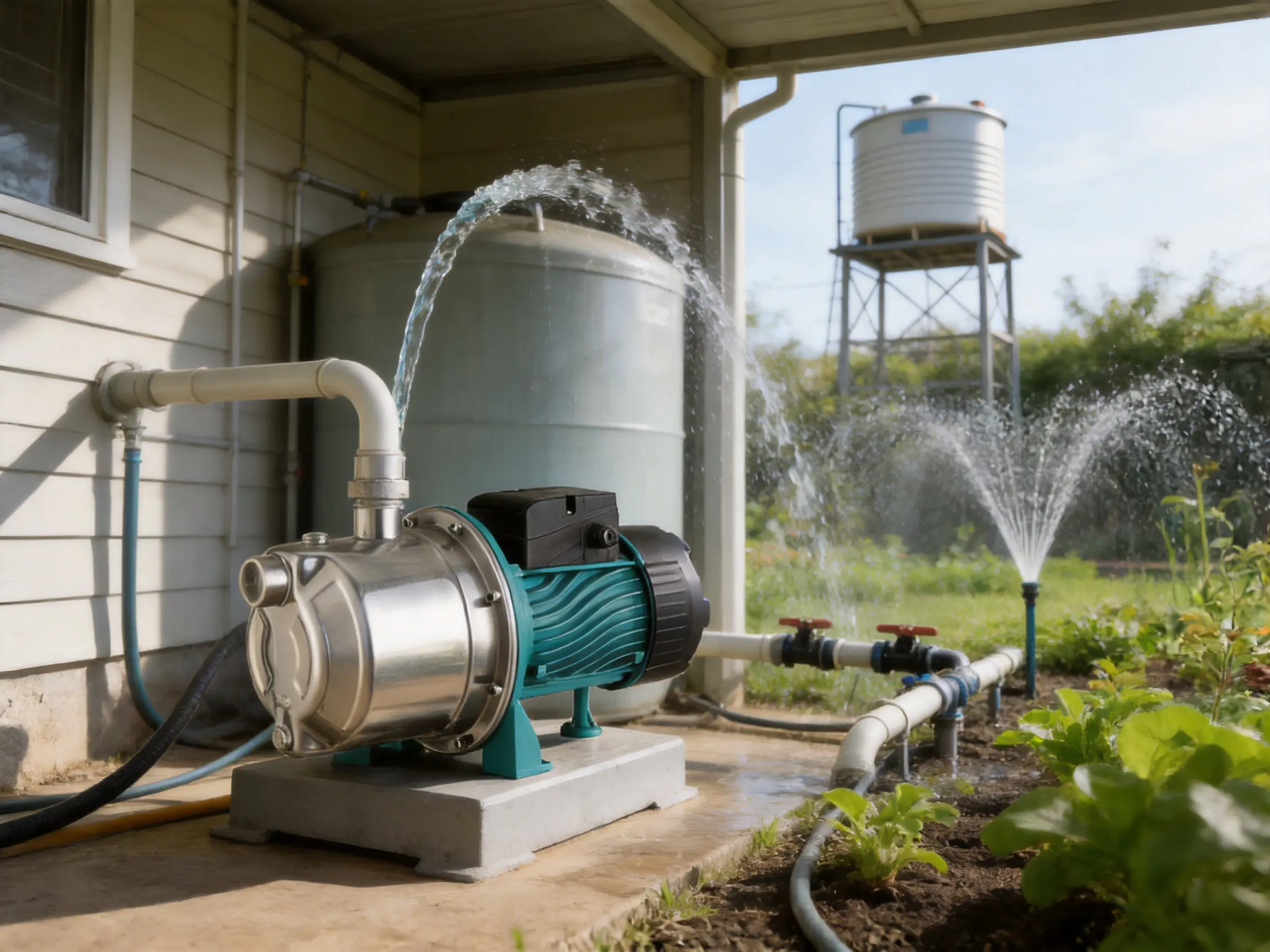
Another important application is garden and allotment irrigation. Gardens often rely on water storage tanks, shallow wells, ponds with clean water, or rainwater collection systems. A pump in this environment must restart reliably, handle occasional air in the suction line, and generate enough head for sprinklers, hoses, or drip irrigation systems. The self-priming jet structure helps reduce start-up difficulty, while the stainless steel body and rust-resistant components support outdoor and semi-outdoor service when installed with proper protection.
The pump is also suitable for water tower supply. In many residential and rural buildings, water is lifted from a lower storage source to an elevated tank. The maximum head of the series, depending on model, can reach up to 48 meters, making it useful for many water tower and elevated storage applications. Because water tower systems often start and stop repeatedly, the quality of the motor winding, bearings, seal, and shaft becomes especially important.
Automatic irrigation systems benefit from the pump’s stable pressure characteristics and clean water compatibility. Whether supplying sprinklers in a greenhouse, watering vegetable plots, or feeding small agricultural support equipment, the pump provides practical performance with manageable power ratings. Its maximum flow range of 50 to 68 liters per minute, depending on model, covers many small and medium domestic irrigation tasks.
In addition, the pump can be used for well water lifting where the water level and suction conditions fall within the pump’s rated limits. It is important to understand that this is not a deep well submersible pump. It is a surface-mounted self-priming jet pump, and the practical suction lift depends on installation quality, pipe diameter, check valve condition, water temperature, altitude, and leakage prevention. Within proper conditions, however, it offers convenient surface access and easy maintenance compared with submerged pump types.
A conventional centrifugal pump generally requires the pump casing and suction line to be fully filled with water before operation. If air enters the suction pipe, the pump may lose prime and fail to draw water. This can be inconvenient in garden, tank, and shallow well systems where suction conditions are not always perfect. A self-priming jet pump is designed to overcome this limitation by using a jet and diffuser arrangement that helps create suction and remove air from the hydraulic chamber after initial priming.
The jet system typically uses a nozzle and venturi structure. Water circulating inside the pump passes through the jet assembly, increasing velocity and creating a low-pressure zone that assists suction from the source. The diffuser then converts velocity into pressure. This design allows the pump to handle situations where air may be present in the water being pumped, as described in the product application information. For real-world users, this means fewer interruptions, easier restarting, and more forgiving operation than many ordinary centrifugal surface pumps.
Self-priming ability is especially valuable when water is drawn from tanks, cisterns, shallow wells, or rainwater reservoirs. In these installations, the suction pipe can develop air pockets due to small leaks, water level fluctuation, or maintenance activity. A properly installed self-priming jet pump can recover more easily from such conditions, reducing the need for frequent manual intervention. This is one reason jet pumps remain popular in domestic and rural water supply markets.
The SJET Series further improves practicality by combining this self-priming function with corrosion-resistant materials and robust motor construction. Some competing pumps may offer acceptable suction but use lower-grade shafts, thinner pump bodies, or motors with less effective thermal protection. Over time, those weaknesses can cause rust, noise, overheating, or reduced performance. A pump intended for repeated daily use needs both hydraulic efficiency and mechanical durability.
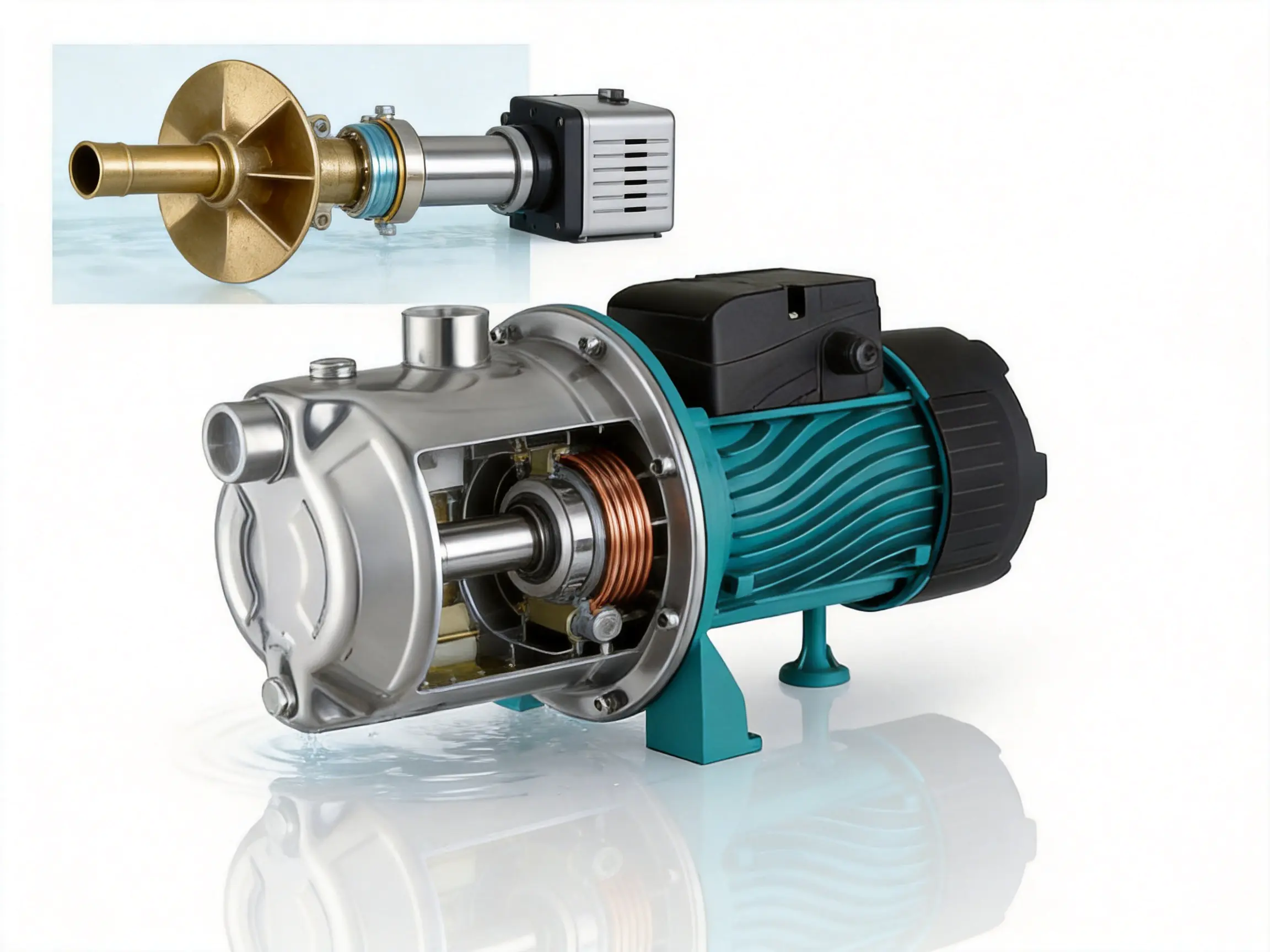
The material structure of a water pump directly affects durability, water quality, maintenance frequency, and long-term performance. The SJET Series uses a stainless steel pump body, a stainless steel or brass impeller, a carbon/ceramic mechanical seal, an AISI 304 stainless steel shaft, and selected engineering plastics such as PPO for the venturi tube and diffuser. This combination provides a strong balance between corrosion resistance, hydraulic performance, manufacturability, and cost control.
Stainless steel is valuable in pump bodies because it resists rust better than ordinary untreated cast iron or low-grade steel. In clean water applications, corrosion is not only a visual problem. Rust can roughen internal surfaces, reduce hydraulic efficiency, contaminate water, damage seals, and shorten the life of threaded connections. A stainless steel wet end helps maintain a cleaner internal environment and improves long-term appearance, especially in humid areas.
The impeller is another critical component. A brass impeller offers excellent dimensional stability, wear resistance in clean water, and smooth operation after long periods of inactivity. Stainless steel impellers provide corrosion resistance and strength, making them attractive where users prefer a fully rust-resistant wet-end configuration. Both options are stronger and more durable than low-grade plastic impellers commonly used in some economy pumps. While plastic impellers can be suitable in certain low-load applications, metal impellers provide better confidence where pressure, temperature, or restart reliability matters.
The mechanical seal uses carbon and ceramic. This pairing is widely used because the carbon face provides good self-lubricating properties, while the ceramic face provides hardness and wear resistance. When the pump handles clean water within the recommended limits, this type of seal can deliver stable sealing performance. Good seal performance is essential because even minor leakage can damage motor bearings, reduce efficiency, and create safety concerns.
The AISI 304 stainless steel shaft is particularly important. The shaft transfers motor torque to the impeller, so it must be straight, strong, and corrosion-resistant. In ordinary pumps with lower-grade shafts, corrosion at the wet end can create imbalance, seal wear, and eventual failure. A stainless steel welded shaft construction improves resistance in water-contact areas and supports stable alignment between the motor and hydraulic assembly.
Engineering plastics such as PPO are used for the venturi tube and diffuser because they provide good dimensional accuracy, corrosion resistance, and hydraulic surface quality. These parts shape the jet flow and pressure recovery process, so consistent geometry is essential. Well-molded jet components help the pump maintain suction performance and reduce internal turbulence.
Component |
Material or Specification |
Functional Advantage |
Pump body |
Stainless steel |
Improves corrosion resistance and supports cleaner water contact surfaces. |
Venturi tube |
PPO engineering plastic |
Provides accurate jet geometry and corrosion-resistant hydraulic performance. |
Diffuser |
PPO engineering plastic |
Helps convert flow velocity into pressure with stable molded dimensions. |
Impeller |
Stainless steel or brass |
Offers durability, smooth restart, and resistance to rust or deformation. |
Mechanical seal |
Carbon and ceramic |
Supports reliable sealing under clean water operating conditions. |
Shaft |
AISI 304 stainless steel |
Reduces corrosion risk in water-contact areas and supports long service life. |
Motor winding |
Copper |
Improves conductivity, heat resistance, and operating stability. |
Bearings |
C&U bearings |
Promotes smooth rotation, lower vibration, and better mechanical reliability. |
Motor insulation |
Class F |
Provides dependable electrical insulation for demanding operation. |
Motor protection |
IP44 |
Protects against solid objects and splashing water in suitable environments. |
The SJET Series includes several models with different motor powers and hydraulic outputs. This range allows users and distributors to select a suitable model according to flow demand, required head, pipe length, suction conditions, and operating frequency. The models listed include 0.37 kW, 0.6 kW, 0.75 kW, and 1.1 kW versions, corresponding approximately to 0.5 HP, 0.8 HP, 1 HP, and 1.5 HP.
The smaller 0.37 kW model is suitable for lighter-duty household transfer, small gardens, and low-to-moderate pressure requirements. It provides a maximum flow of 50 liters per minute and a maximum head of 38 meters. The 0.6 kW model increases maximum flow to 55 liters per minute and maximum head to 45 meters, making it appropriate for applications requiring more pressure or longer piping. The 0.75 kW model reaches 60 liters per minute and 48 meters of head, while the 1.1 kW model offers the highest flow in the series at 68 liters per minute with a maximum head of 48 meters.
All listed models use 1 inch by 1 inch inlet and outlet connections and provide a maximum suction rating of 8 meters. This standard connection size simplifies installation with common domestic piping and fittings. However, users should remember that maximum flow and maximum head are not achieved at the same operating point. As with most centrifugal and jet pumps, the actual operating performance follows a pump curve: flow decreases as head increases, and head decreases as flow increases. Correct model selection should consider the actual duty point rather than only the maximum values.
Model |
Power kW |
Power HP |
Inlet and Outlet |
Maximum Flow |
Maximum Head |
Maximum Suction |
SJET-370A/B |
0.37 |
0.5 |
1 inch x 1 inch |
50 L/min |
38 m |
8 m |
SJET-550A/B |
0.6 |
0.8 |
1 inch x 1 inch |
55 L/min |
45 m |
8 m |
SJET-750A/B |
0.75 |
1 |
1 inch x 1 inch |
60 L/min |
48 m |
8 m |
SJET-1100A/B |
1.1 |
1.5 |
1 inch x 1 inch |
68 L/min |
48 m |
8 m |
Many low-cost surface pumps appear similar from the outside, but their differences become clear after months or years of use. A pump used for domestic supply or irrigation must repeatedly start, stop, handle suction variation, and operate in humid environments. The SJET Series offers several advantages over typical economy pumps, especially in corrosion resistance, motor quality, restart reliability, suction capability, and thermal protection.
The first advantage is the stainless steel pump body. Ordinary cast iron pump bodies can be strong, but if surface treatment is poor or water conditions are not ideal, rust can form inside and outside the casing. Rust can discolor water, increase internal friction, and eventually weaken threaded areas. A stainless steel body provides a more corrosion-resistant solution, particularly valuable for users who want cleaner water contact surfaces and a better long-term appearance.
The second advantage is the welded stainless steel shaft. In many budget pumps, the shaft or shaft sleeve may be vulnerable to rust near the mechanical seal. Once corrosion begins in that region, seal wear accelerates and leakage becomes more likely. AISI 304 stainless steel improves protection in this critical area. Stable shaft quality also reduces vibration and supports better bearing life.
The third advantage is the quality of the motor system. Copper windings are preferred over aluminum windings because copper has better electrical conductivity and heat performance. A copper-winding motor can run more efficiently and tolerate load changes more reliably when designed correctly. Class F insulation adds another layer of security, while C&U bearings support smoother operation and longer mechanical service.
The fourth advantage is built-in thermal protection for single-phase operation. In real installations, pumps may face blocked outlets, insufficient water, high ambient temperature, voltage fluctuation, or frequent starting. Without thermal protection, the motor can overheat and fail. A thermal protector helps reduce this risk by interrupting operation under abnormal heat conditions. This is an important feature for domestic users who may not constantly monitor the pump.
The fifth advantage is the self-priming jet design itself. Compared with non-self-priming centrifugal pumps, the SJET Series is more forgiving in suction applications. It can handle cases where air or water may be present in the liquid being pumped, provided the installation is correct and the pump is initially primed. This makes it useful for tanks, shallow wells, and garden systems where suction conditions are not always stable.
The sixth advantage is the combination of practical performance and manageable power. The series covers common domestic needs without excessive energy consumption or oversized motor selection. Users can choose from 0.37 kW to 1.1 kW, matching the pump to the required duty rather than relying on a single model for all tasks. Proper sizing improves efficiency, reduces operating cost, and extends service life.
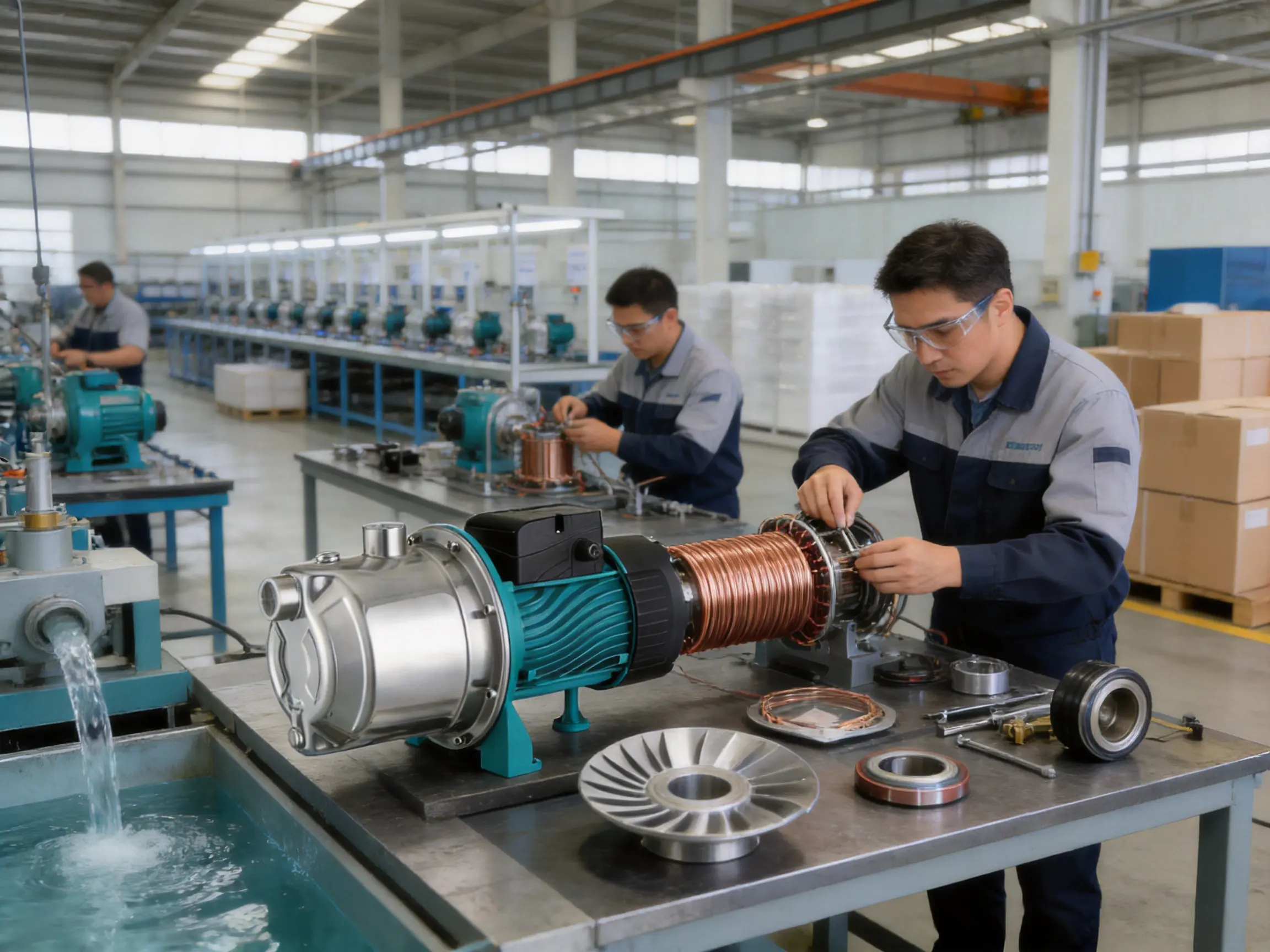
A reliable pump is not created only by a design drawing. It depends on manufacturing discipline, material control, machining precision, motor winding quality, assembly consistency, inspection procedures, and export service capability. Taizhou Edwin Electric Co., Ltd. was founded in 2008 and has developed as an integrated manufacturing enterprise specializing in independent research and development, mass production, and global export. Its product lines include deep well pumps, submersible pumps, domestic booster pumps, circulation pumps, solar water pumps, and intelligent booster pumps, giving the company broad experience across multiple water movement technologies.
This manufacturing background matters because a self-priming jet pump requires accurate coordination between hydraulic and motor components. The pump body must be formed and finished with reliable sealing surfaces. The venturi and diffuser must maintain correct dimensions. The shaft must be straight and balanced. The impeller must be matched to the motor power and hydraulic chamber. The mechanical seal must be installed without damaging the sealing faces. The motor must be wound, insulated, and assembled to reduce heat, noise, and vibration. Every step affects field performance.
Advanced manufacturing strength begins with material selection. Stainless steel, brass, carbon, ceramic, PPO, aluminum, ABS, and copper all have different processing requirements. A mature manufacturer must control incoming material quality and ensure that each component meets the required specification. For example, the AISI 304 shaft must resist corrosion while maintaining mechanical strength. The copper winding must meet electrical and thermal requirements. The PPO hydraulic parts must retain dimensional stability after molding. Material traceability and supplier control reduce variation and improve reliability.
Precision manufacturing is equally important. Pump performance depends heavily on clearances, concentricity, and surface finish. If the impeller clearance is inconsistent, hydraulic efficiency may decline. If the shaft alignment is poor, vibration and seal wear may increase. If the mechanical seal surface is contaminated or misaligned during assembly, leakage can occur. By applying controlled machining, fixture-based assembly, and inspection procedures, the manufacturer can reduce these risks and deliver more consistent products.
Motor production is one of the strongest indicators of pump quality. Copper winding requires correct wire gauge, winding density, insulation treatment, and electrical testing. The motor must be designed to provide sufficient torque for start-up and stable running under expected load. C&U bearings must be properly fitted to avoid excessive axial or radial stress. Class F insulation and IP44 protection must be implemented through material choice and assembly quality, not merely printed on a label. When motor quality is stable, the user experiences quieter operation, lower failure risk, and longer service life.
The company’s export experience also adds value for global customers. Pumps are used in different electrical environments, climates, water supply systems, and installation habits around the world. A manufacturer serving international markets must understand packaging, documentation, model consistency, spare parts, logistics, and communication. Through affiliated trade service teams, the company supports procurement planning, order tracking, cross-border delivery, and foreign trade services. For distributors and project buyers, these capabilities can be as important as the pump itself.
Quality control for a self-priming jet pump should cover both hydraulic performance and electrical safety. Before a pump reaches the customer, it should be checked for assembly integrity, insulation performance, leakage resistance, starting ability, noise, vibration, and operating characteristics. While specific factory test procedures may vary by model and order requirements, the principles are consistent: each pump must be safe, stable, and capable of meeting its intended performance range.
Hydraulic testing verifies that the pump can build pressure, deliver flow, and maintain sealing. During testing, the pump’s suction and discharge behavior can reveal assembly issues such as air leakage, incorrect jet positioning, impeller rubbing, or seal problems. For a self-priming pump, suction performance is especially important because even small leaks in the suction path can reduce priming reliability.
Electrical testing is equally essential. Insulation resistance, grounding continuity, voltage behavior, current draw, and thermal response all affect safe operation. The built-in thermal protector must be correctly matched to the motor so it can respond to abnormal overheating without causing nuisance shutdowns under normal use. Proper capacitor selection and installation are also important for single-phase motor starting and running performance.
Noise and vibration inspection helps identify mechanical defects before shipment. Excessive vibration may indicate rotor imbalance, bearing fit problems, shaft misalignment, or hydraulic irregularities. Since pumps are often installed near homes or occupied buildings, smooth and quiet operation is a practical advantage. Bearings, shaft quality, impeller balance, and motor assembly all contribute to the final acoustic performance.
Packaging quality should not be overlooked. Pumps are heavy mechanical products that may travel long distances by road, sea, or air. Good packaging protects the pump body, motor cover, terminal box, paint surfaces, and accessories from impact and moisture. For global distributors, consistent packaging reduces damage claims and improves customer satisfaction.
Even a well-built pump can perform poorly if installed incorrectly. To achieve the best results from the SJET Series, users should follow sound installation principles. The pump should be mounted on a stable, level surface in a dry, ventilated, and protected location. Although the motor has IP44 protection, it should not be exposed directly to heavy rain, flooding, or continuous water spray. Adequate ventilation helps keep the motor within its ambient temperature limit.
The suction pipe should be as short and straight as practical. Excessive length, many elbows, undersized pipe, or air leakage will reduce suction performance. Since the maximum suction rating is 8 meters under suitable conditions, installations should avoid pushing the pump to the absolute limit whenever possible. A lower suction lift improves reliability, flow, and priming speed. A foot valve or check valve should be installed to maintain water in the suction line and prevent backflow after the pump stops.
All suction connections must be airtight. This point is critical. A small air leak may not drip water, but it can still allow air into the suction line and prevent proper priming. Threaded joints should be sealed with suitable sealing tape or compound, and pipe fittings should be tightened without damaging threads. Flexible hoses should be reinforced to prevent collapse under suction.
The pump casing must be filled with water before first start-up. Self-priming does not mean dry running. The internal chamber needs water to create the jet circulation required for suction. Running the pump without water can damage the mechanical seal quickly because the seal faces depend on liquid for lubrication and cooling. After priming, the user should close the priming plug securely and check for leakage.
The discharge pipe should be sized appropriately for the required flow. A pipe that is too small increases friction loss and reduces delivered water. If the pump supplies a pressure tank or automatic controller, the pressure settings should match the pump curve and motor capacity. Overly high cut-out pressure can cause frequent running at low flow or failure to stop properly. Correct pressure control improves comfort and protects the pump.
Electrical installation should be performed according to local standards. The voltage and frequency must match the motor nameplate. The circuit should include suitable protection, grounding, and wire sizing. If voltage supply is unstable, additional protection may be necessary. Poor voltage conditions can cause overheating, weak starting, capacitor failure, or reduced motor life.
The SJET Series is designed for reliable operation, but regular maintenance improves service life. Users should periodically inspect the pump for leakage, abnormal noise, vibration, overheating, reduced flow, or difficulty priming. Early detection of small issues can prevent major failure. The suction filter or foot valve should be cleaned if water flow decreases or if the source contains fine debris. Although the pump is intended for clean water, real water sources may contain small particles that accumulate over time.
The mechanical seal should remain dry externally during normal operation. If water appears between the pump body and motor support, the seal may be worn or damaged. Continued operation with seal leakage can allow water to reach bearings or motor components. Prompt service is recommended. Seal life depends on water quality, dry-running avoidance, temperature, pressure, and operating hours.
Bearings are designed for smooth operation, but bearing life can be shortened by overload, water ingress, vibration, or high temperature. If the pump begins making grinding or high-pitched noises, bearing inspection may be required. Stable installation and correct hydraulic conditions help reduce bearing stress.
If the pump will remain unused for a long period, especially in cold climates, water should be drained to prevent freezing damage. Freezing water expands and can crack the pump body or damage internal components. In humid storage conditions, the pump should be kept dry and protected from corrosive environments. Before restarting after long storage, the shaft should rotate freely, the pump should be primed, and all connections should be checked.
For irrigation or seasonal use, users should inspect the foot valve, suction pipe, and priming condition at the beginning of each season. Many priming problems are caused not by the pump itself but by aged suction hoses, loose clamps, damaged check valves, or blocked strainers. A systematic inspection saves time and avoids unnecessary pump replacement.
Selecting the correct pump model requires understanding the real duty point. The maximum flow number indicates flow at very low head, while the maximum head number indicates pressure at very low or zero flow. Most applications operate between these extremes. Users should estimate vertical lift, pipe friction, required outlet pressure, number of water points, and irrigation equipment demand.
For small household transfer or light garden watering, the SJET-370A/B may be adequate. It offers lower power consumption and sufficient performance for simple water movement tasks. If the system includes longer piping, higher discharge elevation, or multiple outlets, the SJET-550A/B may provide a more comfortable margin. For larger gardens, stronger pressure requirements, or water tower supply, the SJET-750A/B is often a practical choice. The SJET-1100A/B suits applications requiring higher flow while maintaining strong head performance.
Users should avoid oversizing when possible. An oversized pump can cause frequent cycling in pressure systems, higher electricity use, increased noise, and unnecessary wear. Conversely, an undersized pump may run continuously without meeting demand, leading to overheating or user dissatisfaction. The best pump is not always the largest; it is the one that matches the system requirement.
For distributors, offering several models in the same series simplifies inventory planning. The shared 1 inch inlet and outlet size, similar installation style, and common application range make it easier to recommend models to customers. The presence of A/B model variants can support market-specific configurations, branding needs, or component options.
Water supply systems are becoming more diverse. Some households use municipal water with storage tanks, others depend on wells, and many gardens use rainwater harvesting to reduce cost and environmental impact. A self-priming jet pump fits well into this changing landscape because it offers flexibility. It can draw from a tank, lift from a shallow source, pressurize a small network, or support irrigation equipment.
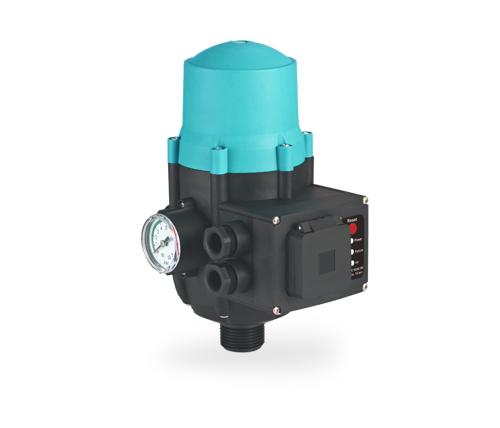
In civil applications, small pressure sets are often used where water pressure must be stabilized for limited facilities. A stainless steel self-priming jet pump can be paired with a pressure tank, pressure switch, controller, or intelligent control unit to create an automatic water supply system. This allows users to open a tap and receive pressurized water without manually starting the pump.
In agricultural support roles, the pump can help transfer clean water to irrigation lines, mixing tanks, livestock support systems where clean water is required, or small equipment. Its flow range is not intended for large-scale agricultural pumping, but it is practical for farms, greenhouses, orchards, and allotments with moderate demand. The self-priming feature is valuable where water sources and pipe arrangements change seasonally.
In construction and maintenance environments, a surface pump may be used for temporary clean water movement, equipment support, or tank emptying. The stainless steel body and robust motor provide durability for repeated use, while the 1 inch connections make the pump compatible with common hoses and fittings. Users should still ensure that the pumped liquid is clean and non-abrasive.
Sustainability in pump selection is not only about energy efficiency. It also includes service life, repairability, material durability, correct sizing, and reduced replacement frequency. A pump that fails quickly consumes more resources through replacement parts, shipping, labor, and waste. By using corrosion-resistant materials, copper windings, reliable bearings, and thermal protection, the SJET Series supports a longer useful life when correctly applied.
Correct model selection also contributes to energy savings. A pump that matches the system duty point avoids unnecessary power consumption. For example, using a 1.1 kW pump for a very small garden may not be efficient if a 0.37 kW or 0.6 kW model can meet the requirement. Conversely, using an undersized pump that runs excessively may also waste energy and shorten service life. The availability of multiple models helps users choose responsibly.
The stainless steel body can reduce deterioration in humid environments, lowering the likelihood of early casing replacement. Brass or stainless steel impellers can maintain shape and performance over time better than lower-quality alternatives in demanding conditions. The ability to restart smoothly after periods of inactivity is particularly useful for seasonal irrigation, where pumps may sit unused for months.
Thermal protection supports sustainability by preventing avoidable motor burnout. A burned motor often means major repair or full pump replacement. By interrupting operation during overheating events, the protector can save the pump from severe damage. However, users should treat thermal shutdown as a warning sign. The cause should be investigated, such as blocked flow, dry running, excessive ambient temperature, voltage problems, or mechanical obstruction.
Taizhou Edwin Electric Co., Ltd. has built its position through pump manufacturing, research and development, mass production, and global export. Since 2008, the company has focused on medium-to-high-end global markets with products such as deep well pumps, submersible pumps, domestic booster pumps, circulation pumps, solar water pumps, and intelligent booster pumps. This broad product foundation provides technical experience that supports the design and production of the SJET Series.
The company’s development of new energy and intelligent pump products since 2018 also reflects a forward-looking manufacturing strategy. Solar water pumps and intelligent booster pumps require knowledge of motor performance, control systems, hydraulic efficiency, and application engineering. This experience can benefit conventional pump products as well because it encourages better testing, improved component selection, and stronger awareness of user needs.
For international buyers, manufacturing capability must be paired with service capability. The establishment of professional import and export teams helps support procurement planning, order tracking, delivery coordination, and foreign trade documentation. This is important for wholesalers, retailers, project contractors, and brand partners who need stable supply and clear communication. A good pump manufacturer must deliver not only products but also consistency, responsiveness, and long-term cooperation.
The company’s pumps are used in new energy projects, agricultural irrigation, municipal engineering, mining, construction, HVAC systems, and household water supply. Such application diversity shows that the organization understands different operating conditions and customer expectations. For the SJET Series, this background supports practical design choices: corrosion resistance for household water, self-priming for suction flexibility, copper motors for reliability, and standard connections for easy installation.
When evaluating this self-priming jet pump, buyers should consider the water source, required pressure, expected flow, installation environment, electrical supply, and operating schedule. The pump is designed for clean water or liquids similar to water. If the liquid contains sand, fibers, chemicals, oils, or abrasive particles, another pump type may be required. Using the wrong pump for the wrong liquid is one of the most common causes of premature failure.
Buyers should also compare not only price but total value. A cheaper pump may save money at purchase but cost more through rust, leakage, overheating, poor priming, or early replacement. The SJET Series emphasizes durable materials and motor protection, which can reduce ownership cost over time. For distributors, fewer after-sales problems can protect reputation and improve repeat business.
Warranty and spare parts availability are also important. Common service parts for self-priming pumps may include mechanical seals, capacitors, bearings, impellers, diffusers, venturi components, gaskets, and terminal covers. A manufacturer with export experience and established product lines is better positioned to support spare parts planning and consistent model supply.
Packaging and labeling should match the target market’s requirements. Electrical specifications, safety notices, model information, and installation instructions must be clear. For OEM or distributor programs, consistent product appearance and documentation help build customer trust. A pump that looks professional, installs easily, and performs reliably strengthens the entire sales channel.
The pump is designed for clean water and liquids similar to water in physical and chemical properties. It should not be used for sewage, abrasive slurry, flammable liquids, strong chemicals, or water containing heavy sand and solids.
It can be used for shallow well lifting when the suction height and installation conditions are within the rated range. The maximum suction height is 8 meters under suitable conditions. It is not a deep well submersible pump and should not be used where the water level is beyond surface pump suction limits.
No. The pump must be filled with water before first start-up. Self-priming means it can remove air from the suction path more effectively after proper priming, but dry running can damage the mechanical seal and other components.
The stainless steel body improves corrosion resistance, helps maintain cleaner water contact surfaces, and provides a better long-term appearance than many ordinary untreated metal pump bodies. It is especially valuable in humid domestic and garden environments.
Copper has excellent electrical conductivity and heat performance. A copper-winding motor can provide stable operation, better efficiency potential, and improved durability compared with many low-cost alternatives when the motor is properly designed and manufactured.
The built-in thermal protector helps protect the single-phase motor from overheating. If the motor becomes too hot due to overload, poor water supply, blocked discharge, voltage issues, or other abnormal conditions, the protector can interrupt operation to reduce the risk of motor burnout.
The maximum liquid temperature is 60°C. It can handle clean water within this temperature limit, but it should not be used beyond the specified range. High temperature can affect seals, plastics, motor load, and overall service life.
The correct model depends on the garden size, sprinkler demand, pipe length, elevation, and required pressure. Smaller gardens may use the 0.37 kW or 0.6 kW model, while larger irrigation layouts may require the 0.75 kW or 1.1 kW model. Selection should be based on the actual duty point rather than only maximum flow.
The suction side operates under negative pressure, so even a tiny air leak can prevent proper priming. The suction pipe should be airtight, short, correctly sized, and fitted with a reliable foot valve or check valve. Poor suction installation is a common cause of pump performance complaints.
Compared with non-self-priming centrifugal pumps, this jet pump is more suitable for suction applications where air may be present. It also offers corrosion-resistant materials, a stainless steel shaft, copper windings, thermal protection, and durable hydraulic components, giving it advantages in reliability and service life.
The SJET Series Stainless Steel Welded Shaft Self-priming JET Pump is a practical and durable solution for clean water transfer, domestic supply, garden irrigation, water tower filling, automatic irrigation systems, shallow well lifting, and small equipment support. Its value comes from the combination of self-priming jet technology, stainless steel wet-end construction, stainless steel or brass impeller options, carbon/ceramic mechanical sealing, AISI 304 shaft material, copper motor windings, C&U bearings, Class F insulation, IP44 protection, and built-in thermal protection for single-phase models.
Compared with many ordinary pumps, it offers stronger corrosion resistance, better restart reliability, improved motor durability, and more forgiving suction performance. Its model range allows users to match power and hydraulic output to actual needs, helping reduce energy waste and improve service life. When installed correctly and used within its specified limits, it can provide dependable water movement for a wide variety of residential and civil applications.
The manufacturing background of Taizhou Edwin Electric Co., Ltd. further strengthens the product’s value. With experience in pump research and development, mass production, global export, new energy pumping, intelligent booster systems, and multiple water pump categories, the company brings technical capability and supply-chain service to the SJET Series. For homeowners, installers, distributors, and project buyers, this combination of product engineering and manufacturing strength makes the pump a reliable choice for clean water applications where performance, durability, and long-term value matter.
Karassik, I. J., Messina, J. P., Cooper, P., and Heald, C. C. Pump Handbook. McGraw-Hill Education.
Gülich, J. F. Centrifugal Pumps. Springer.
Hydraulic Institute. Pump Application Guidelines for Centrifugal Pumps.
Stepanoff, A. J. Centrifugal and Axial Flow Pumps. Wiley.
European Committee for Standardization. Rotodynamic Pumps: Hydraulic Performance Acceptance Tests.
International Electrotechnical Commission. Rotating Electrical Machines and Degrees of Protection Provided by Enclosures.
Manufacturer product specifications for the SJET Series Stainless Steel Welded Shaft Self-priming JET Pump.
edwina@edwin-pump.com
+86-13586290903 (WhatsApp)
Xuri Gongliang Cutting Tool Entrepreneurship Park, Wenqiao Town, Wenling City, Taizhou City, Zhejiang Province, China

High Performance Smart Pump Factory


 English