edwina@edwin-pump.com

View All Products
en
Reliable water movement is essential in modern water treatment, industrial processing, building services, agriculture, and commercial facilities. Pumping equipment must deliver stable flow, adequate pressure, corrosion resistance, simple maintenance, and dependable operation under changing working conditions. The EMI-Z(T) Series Horizontal Deodorization Stainless Steel Water Surface Centrifugal Pump is designed to address these requirements through a compact horizontal construction, stainless steel wetted components, centrifugal hydraulic performance, and self-priming capability.
This pump series belongs to the horizontal multistage pump category and is available in multiple configurations covering rated flows from 1 to 5 m³/h and rated heads from 8 to 45.5 m. Its range of motor powers extends from 0.25 kW to 1.1 kW, allowing users to select a model according to the required flow, pressure, suction arrangement, and operating duty. The series is particularly suitable for clean-water transfer, water boosting, treatment processes, industrial cleaning, HVAC circulation, air-freshening systems, soft-water heater devices, and metering or fertilization installations.
Although the product is described as a deodorization pump, its engineering value extends beyond odor-control installations. It provides a practical solution wherever water must be moved efficiently through compact pipework and where material durability is important. Stainless steel pump casing and impeller components help the pump withstand many common water-service environments, while the horizontal design supports convenient installation and service access.
Manufactured by Taizhou Edwin Electric Co., Ltd., the product reflects the company’s experience in pump research and development, mass production, export, and one-stop industrial procurement. Since its founding in 2008, the company has developed product lines covering deep-well pumps, submersible pumps, domestic booster pumps, circulation pumps, solar water pumps, intelligent booster pumps, and related water-treatment equipment. This broader product capability supports practical system matching rather than isolated pump supply.
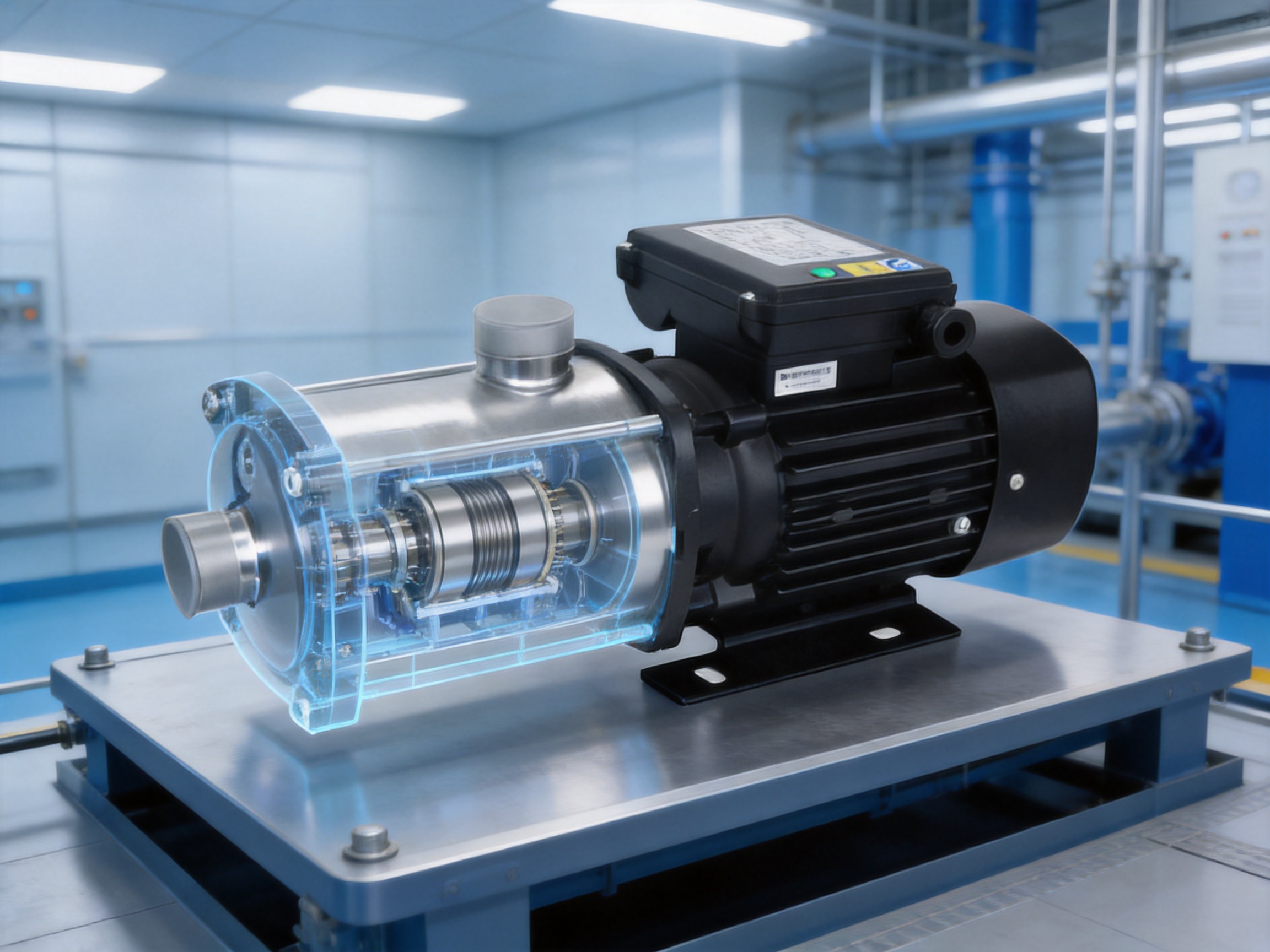
The EMI-Z(T) Series is a horizontal stainless steel surface centrifugal pump designed for water transfer and pressure-boosting duties. The pump uses a multistage hydraulic arrangement to generate useful pressure from a relatively compact motor and casing assembly. Each stage contributes to the total head, allowing the pump to serve applications that require more pressure than a basic single-stage surface pump can normally provide.
The horizontal layout places the motor and hydraulic section along a common horizontal axis. This arrangement can simplify connection to existing suction and discharge pipework. It is especially useful in plant rooms, utility areas, water-treatment equipment packages, industrial skids, and service spaces where vertical clearance is limited.
The pump is equipped with a two-pole induction motor. Single-phase versions are available for 220–240 V or 110–120 V, both at 50 Hz, while three-phase versions are available for 380–415 V at 50 Hz. A thermal protector is provided for single-phase models. Motors with other voltage requirements may be available upon request, which is helpful for export projects and sites operating under different electrical standards.
The stated maximum working pressure is 1.0 MPa. The maximum suction value listed for the technical models is 5 m. Environmental temperature is specified at up to 50°C. The pump is also identified as self-priming, an important feature for surface-mounted installations where the pump may need to evacuate air from the suction line during startup.
One of the most important advantages of this series is its stainless steel construction in critical hydraulic components. The pump casing and impeller are specified as stainless steel. These components are directly exposed to the pumped liquid, so material selection has a significant influence on service life, cleanliness, and resistance to corrosion.
Compared with ordinary painted cast-iron hydraulic components, stainless steel can provide better resistance in applications involving treated water, light chlorine water, softened water, humid plant rooms, and many industrial process-water environments. It also presents a smooth and clean surface that is appropriate for water-service installations where hygiene and appearance matter.
Material compatibility must always be checked against the actual liquid. Stainless steel should not be interpreted as universally suitable for every chemical or wastewater composition. Concentration, temperature, pH, chloride content, suspended solids, and exposure time all influence corrosion behavior. Nevertheless, for many clean-water and lightly treated-water duties, stainless steel offers a practical balance of durability, appearance, and cost.
The horizontal multistage design allows the pump to produce higher pressure while maintaining a compact footprint. Instead of relying on a single large impeller, the pump uses multiple hydraulic stages arranged in sequence. The total pressure developed is the combined contribution of the individual stages.
This configuration gives users a broad selection of rated heads. Depending on the model, the rated head begins at 8 m and reaches 45.5 m. The rated flow range extends from 1 to 5 m³/h. Such a range covers many small and medium water-boosting duties, including process-water supply, equipment feeding, building service systems, and industrial cleaning systems.
A multistage pump can be more suitable than a single-stage pump when the required discharge pressure is relatively high but the required flow is moderate. It can also provide stable pressure in systems with long pipe runs, elevation differences, filters, valves, heat exchangers, or spray equipment.
The horizontal arrangement offers advantages during installation, inspection, and replacement. The pump can be positioned on a base or equipment platform without requiring the additional vertical clearance associated with many vertical multistage designs. This can be useful in compact mechanical rooms and packaged systems.
A horizontal pump is also easy to integrate with horizontal suction and discharge pipework. When the piping layout is planned correctly, the installation can have short, direct connections, reducing unnecessary bends and minimizing hydraulic losses. The compact configuration can support skid-mounted systems, water-treatment assemblies, booster sets, and industrial process equipment.
Installation quality remains essential. The pump should be mounted on a stable and level foundation. Pipework should be independently supported so that its weight does not load the pump casing. The suction line should be as short and direct as practical, with suitable diameter and airtight joints. Correct installation improves efficiency, reduces vibration, and supports longer seal and bearing life.
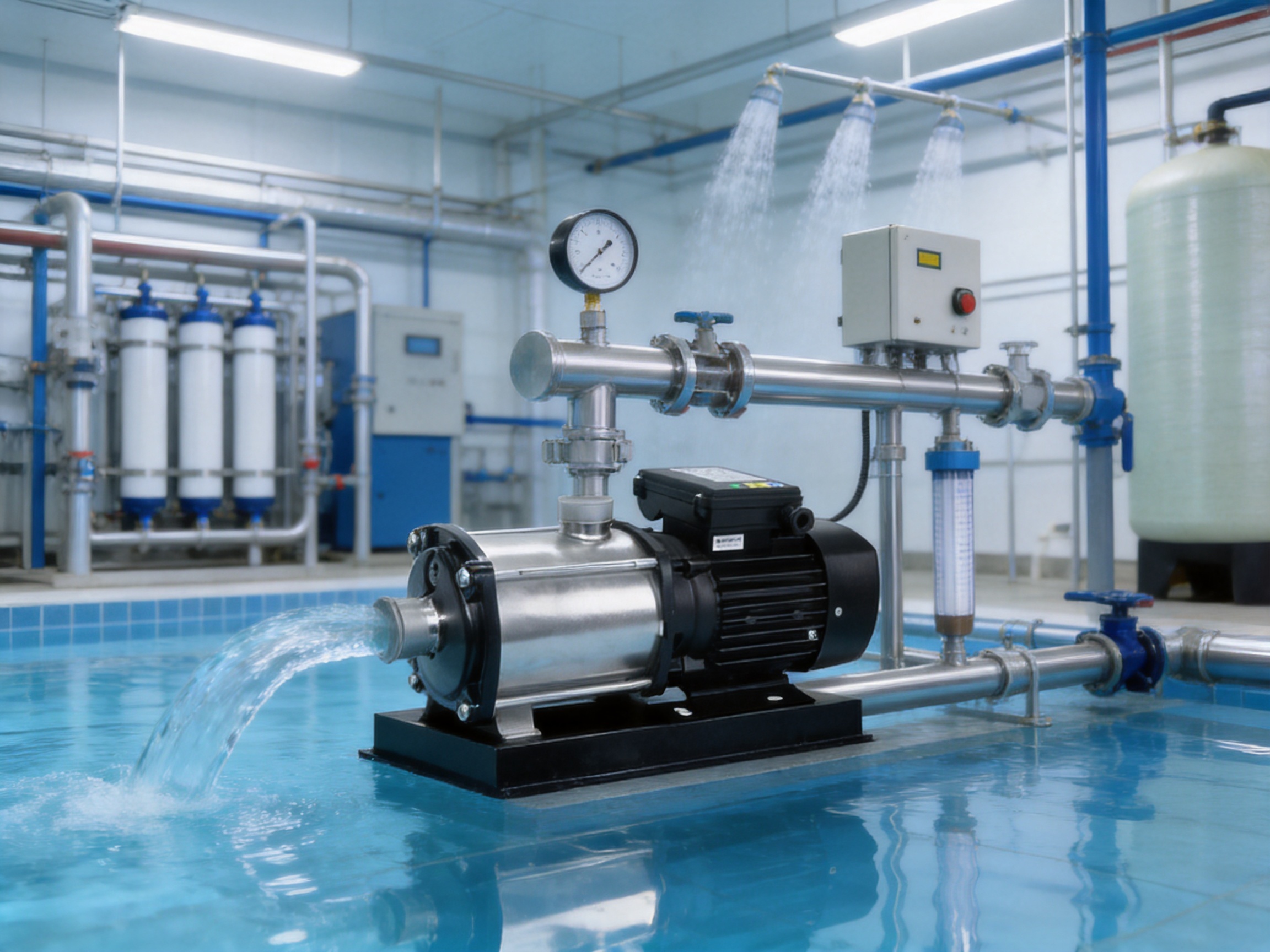
Surface-mounted pumps can encounter air in the suction pipe, especially after maintenance, tank-level changes, or extended shutdowns. The self-priming function of the EMI-Z(T) Series helps the pump remove air and establish liquid flow, reducing the need for repeated manual priming.
Self-priming does not eliminate the need for proper installation. The suction lift must remain within the specified operating limit, the suction line must be free from air leaks, and the pump should be filled or prepared according to the applicable operating instructions. A foot valve or suitable non-return arrangement may be required depending on the system layout.
When correctly applied, self-priming capability improves startup convenience and can make the pump more practical for water-transfer systems where the pump is installed above the liquid source.
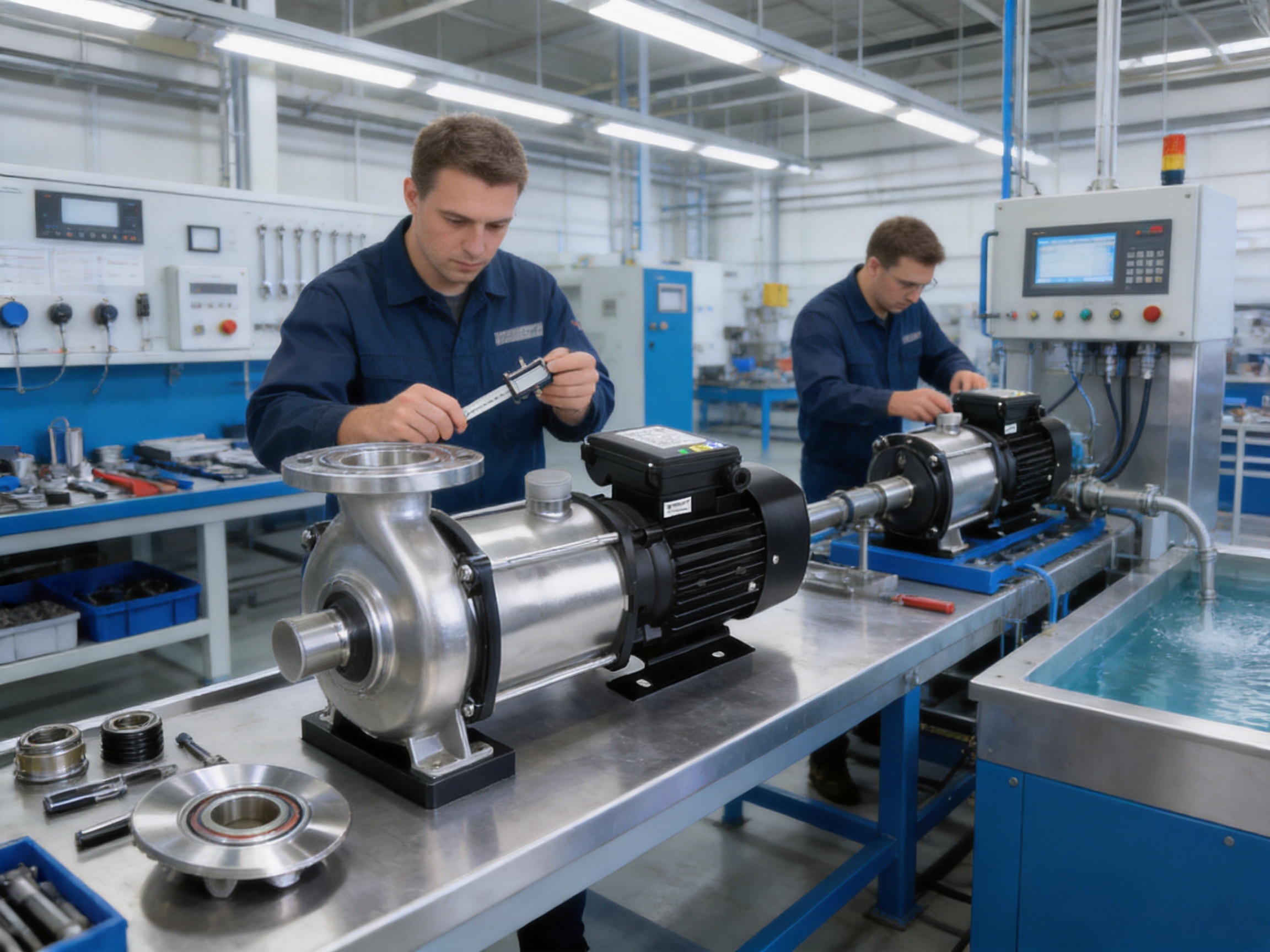
The product description emphasizes easy maintenance. The horizontal construction and accessible components can simplify inspection of the mechanical seal, impeller assembly, bearings, motor, and electrical accessories. Easier access may reduce service time and help maintenance teams restore operation more quickly.
The pump includes a carbon/ceramic mechanical seal. Mechanical seals are precision components that prevent water from escaping along the rotating shaft. Their service life depends on liquid cleanliness, operating temperature, pressure, alignment, dry-running prevention, and correct assembly. A well-maintained seal protects the motor and surrounding equipment from leakage.
The component structure also includes an O-ring, diffuser, self-suction valve, pump cover assembly, support, shaft and rotor, motor case, ball bearing, motor cover, fan, fan cover, capacitor holding box, and capacitor. The use of identifiable component groups supports systematic maintenance and spare-parts planning.
The motor options allow the series to serve both domestic and industrial electrical environments. Single-phase models are convenient for smaller facilities, workshops, residential utility systems, and locations where three-phase power is unavailable. Three-phase models are more appropriate for industrial installations requiring balanced electrical loading and continuous-duty equipment integration.
The availability of 110–120 V and 220–240 V single-phase options is valuable for international distribution. The 380–415 V three-phase option is suitable for many industrial power networks. Other voltage requirements can be discussed for specific orders, allowing the equipment to be adapted to local project conditions.
Single-phase motors can be exposed to overload, locked-rotor conditions, voltage fluctuations, or inadequate cooling. The thermal protector specified for single-phase versions helps protect the motor from excessive temperature under abnormal operating conditions.
Thermal protection is not a replacement for correctly sized electrical protection. The final installation should still include appropriate circuit protection, grounding, isolation, and control equipment. Users should confirm the motor current, duty cycle, starting method, and local electrical requirements before commissioning.
The EMI-Z(T) Series provides several model groups based on nominal flow. The model number generally indicates the approximate rated flow group and the number of hydraulic stages. For example, the EMI1 group is associated with a rated flow of approximately 1 m³/h, while the EMI5 group is associated with approximately 5 m³/h. The final model selection should always be based on the complete pump curve and actual duty point rather than on the model number alone.
| Model Group | Rated Flow Range | Rated Head Range | Power Range | Maximum Suction |
| EMI1 | 1 m³/h | 18–38 m | 0.25–0.37 kW | 5 m |
| EMI2 | 2 m³/h | 16–38 m | 0.25–0.55 kW | 5 m |
| EMI3 | 3 m³/h | 11–30 m | 0.25–0.55 kW | 5 m |
| EMI4 | 4 m³/h | 13–45.5 m | 0.37–1.1 kW | 5 m |
| EMI5 | 5 m³/h | 8–36 m | 0.37–1.1 kW | 5 m |
The full model range includes EMI1-2Z(T), EMI1-3Z(T), EMI1-4Z(T), EMI1-5Z(T), EMI2-2Z(T), EMI2-3Z(T), EMI2-4Z(T), EMI2-5Z(T), EMI3-2Z(T), EMI3-3Z(T), EMI3-4Z(T), EMI3-5Z(T), EMI4-2Z(T), EMI4-3Z(T), EMI4-4Z(T), EMI4-5Z(T), EMI4-6Z(T), EMI5-2Z(T), EMI5-3Z(T), EMI5-4Z(T), EMI5-5Z(T), and EMI5-6Z(T).
The rated head figures range from 8 m for the EMI5-2Z(T) model to 45.5 m for the EMI4-6Z(T) model. Power selection ranges from 0.25 kW for several lower-capacity models to 1.1 kW for higher-head configurations. This graduated selection helps avoid the common problem of choosing one oversized pump for every application.
Operating weight is listed in the technical table from approximately 7.4 kg to 13 kg, depending on model. The relatively moderate weight supports easier handling during installation and maintenance, especially in packaged equipment rooms or locations where lifting access is limited.
The pump can be used in water-treatment processes where clean or lightly treated water must be transferred between tanks, filters, dosing systems, heat exchangers, or distribution points. Its stainless steel hydraulic components are appropriate for many water-service environments, subject to liquid compatibility verification.
Possible duties include transferring softened water, feeding compact treatment equipment, circulating treated water, and boosting pressure after filtration. The multistage design is beneficial when the system includes cartridge filters, membrane equipment, ultraviolet units, or other components that create pressure losses.
The product’s deodorization designation reflects its suitability for systems where water movement supports odor-control processes. Water may be circulated through spray systems, scrubbers, wet treatment equipment, or other arrangements intended to reduce unpleasant odors.
The pump does not independently remove odor. Instead, it provides reliable water circulation or transfer within a deodorization system. The complete installation may include chemical dosing, air treatment, filtration, spray nozzles, tanks, and control devices. The pump must be selected according to the total flow and pressure required by the entire system.
Industrial cleaning equipment often needs steady water pressure for spray nozzles, washing stations, equipment rinsing, and process-area cleaning. The EMI-Z(T) Series can serve low- to medium-flow cleaning systems where the liquid is compatible with the pump materials.
For cleaning fluids containing strong chemicals, abrasive solids, or high temperatures, the user should request a detailed material review. Stainless steel improves resistance compared with many standard materials, but the mechanical seal, O-rings, and other components also need to match the fluid.
Industrial process systems frequently require water circulation through heat exchangers, jackets, cooling devices, or heating equipment. The pump can help maintain flow through these circuits and overcome the resistance created by valves, pipework, and heat-transfer equipment.
Users should verify the maximum liquid temperature, environmental temperature, pressure, and required continuous operating duty before choosing a model. The stated environmental temperature limit is up to 50°C, while the permitted liquid temperature depends on the complete pump configuration and operating instructions.
Heating, ventilation, and air-conditioning systems require dependable circulation and pressure maintenance. The pump can be used in small chilled-water, hot-water, treated-water, or equipment-feeding systems where its flow and head range are appropriate.
In HVAC installations, correct hydraulic balancing is especially important. An oversized pump can create excessive flow, noise, energy consumption, and valve wear. A properly selected model can provide the required flow while avoiding unnecessary operating cost.
Softened water systems can use the pump to transfer or circulate water through heater devices and associated pipework. Stainless steel hydraulic components may be advantageous where water quality and corrosion resistance are important.
Water chemistry should be monitored because softening changes the mineral balance of water. The pump should be protected against dry running, excessive temperature, scale formation, and prolonged operation outside its rated range.
Agricultural and horticultural installations may use the pump to support fertilization or metering systems. It can provide water movement for mixing, distribution, or pressure supply, provided the fertilizer solution is compatible with the pump’s stainless steel, seal, elastomer, and plastic components.
When the liquid contains suspended fertilizer particles or aggressive chemical concentrations, filtration and material compatibility analysis are recommended. The pump should not be selected solely from the required water flow without considering the density and viscosity of the liquid.
The pump may be used for drinking-water supply and light chlorine water, subject to applicable regulations, material approvals, and project requirements. Stainless steel construction can support hygienic water applications, while the compact design is suitable for small booster stations and utility systems.
For potable-water projects, the purchaser should confirm whether the complete pump assembly, seal materials, coatings, lubricants, and manufacturing controls meet the relevant local certification requirements. Compliance depends on the exact product configuration and destination market.
The EMI-Z(T) Series has several practical advantages compared with conventional basic surface centrifugal pumps. A traditional single-stage pump may provide adequate flow but insufficient pressure for systems containing filters, elevation changes, long pipe runs, or multiple outlets. The multistage design addresses this limitation by producing higher head within a compact form.
Compared with ordinary cast-iron pumps, stainless steel hydraulic components can offer better corrosion resistance and a cleaner appearance. This is particularly useful in humid rooms, treated-water systems, light chlorine-water applications, and industrial environments where surface corrosion can shorten equipment life.
Compared with larger industrial pumps, the EMI-Z(T) Series can be easier to install and maintain in small and medium systems. Its motor powers and flow range are suited to applications that do not justify a large pump assembly. Lower equipment size can also reduce installation space and handling requirements.
Compared with non-self-priming surface pumps, the self-priming function can improve startup convenience. It can reduce the operational difficulties associated with air in suction pipework, although correct suction design remains necessary.
Compared with fixed, one-size pump solutions, the broad model selection provides more opportunities to match the pump to the actual duty. Correct matching supports better efficiency, lower noise, less wear, and improved service life.
The product is manufactured by Taizhou Edwin Electric Co., Ltd., an integrated enterprise specializing in independent research and development, mass production, and global export. This combination is important because reliable pump production requires more than final assembly. It involves product design, hydraulic development, material control, motor production, machining, sealing, electrical testing, performance verification, packaging, and after-sales support.
Independent research and development gives a manufacturer greater control over product structure and application adaptation. For the EMI-Z(T) Series, this includes the development of the horizontal multistage hydraulic arrangement, self-priming structure, motor matching, material selection, component configuration, and model range.
R&D capability also supports adjustments for different markets. Electrical voltage, frequency, connection standards, packaging requirements, and application preferences can vary between regions. A manufacturer with internal engineering capability can respond more effectively than a trader relying only on fixed third-party products.
Hydraulic design determines how efficiently the pump converts motor power into flow and pressure. Impeller geometry, diffuser arrangement, stage configuration, internal clearances, suction path, and discharge passage all influence performance.
The EMI-Z(T) range uses multiple combinations of flow, head, stage number, and power. This indicates a structured model-development approach rather than a single generic pump offered for unrelated duties. Different model groups allow the manufacturer to match the hydraulic section and motor to the expected operating range.
Performance testing is essential because actual pump behavior must be confirmed against design expectations. Flow, head, current, power, noise, vibration, leakage, and startup behavior should be evaluated according to the applicable production and project standards.
The materials table identifies stainless steel for the pump casing and impeller, carbon/ceramic for the mechanical seal, HT200 for the support, aluminum for the motor case, cast iron for the motor cover, and PP for the fan. These material choices reflect a balance between corrosion resistance, structural strength, weight, thermal performance, and manufacturing cost.
Material control begins with incoming inspection. Correct grades, dimensions, surface condition, and mechanical properties should be checked before components enter production. Consistent material control helps reduce variation between production batches and supports predictable service performance.
Seals and elastomers deserve special attention because they are sensitive to liquid chemistry and temperature. A professional manufacturer can provide appropriate configuration advice when the customer supplies details about the liquid, concentration, operating temperature, pressure, and duty cycle.
Pump casing interfaces, impeller dimensions, shaft surfaces, seal seats, bearing positions, and stage components must be manufactured within suitable tolerances. Excessive clearance can reduce hydraulic efficiency, while insufficient clearance can increase friction and risk contact between rotating and stationary components.
Assembly quality is equally important. Shaft alignment, bearing installation, mechanical-seal positioning, impeller balance, fastening torque, and electrical connection all influence final performance. Controlled assembly procedures help ensure that the pump operates smoothly and that components do not experience premature stress.
The two-pole induction motor is a key part of the complete pump system. Motor performance affects starting reliability, operating efficiency, heat generation, vibration, and service life. The manufacturer’s experience across multiple pump categories supports the ability to match motors to different hydraulic loads.
Electrical testing should include insulation resistance, winding continuity, grounding, operating current, rotation direction for three-phase versions, and thermal behavior. Single-phase units should also be checked for capacitor performance and thermal-protection operation.
Mass-production capability can provide several benefits. It supports stable component sourcing, repeatable assembly procedures, spare-parts availability, production scheduling, and cost control. For distributors and project buyers, repeatability is particularly important because multiple pumps may be required across different installations.
The company’s global export experience also supports packaging, documentation, international voltage options, order tracking, and cross-border delivery. The company established Taizhou Haipai Import & Export Co., Ltd. and Golden Falcon Industrial Co., Ltd. in 2012 to support procurement planning, order tracking, logistics, and foreign-trade services.
Edwin Pump offers a broader range of equipment than a single product line. Its portfolio includes solar water pumps, deep-well pumps, submersible pumps, domestic booster pumps, circulation pumps, intelligent booster pumps, and other water-treatment peripheral products.
This broader portfolio can simplify project procurement. A buyer developing a water-supply system may require a source pump, a booster pump, storage equipment, control devices, valves, pipes, and circulation equipment. A supplier capable of coordinating several product categories can help reduce compatibility problems and communication delays.
Before installation, confirm the pump model, rated flow, rated head, voltage, frequency, phase, suction arrangement, liquid properties, and available power supply. The pump should not be installed based only on the pipe diameter or motor power.
Place the pump on a firm, level foundation. Allow adequate space around the motor and hydraulic section for ventilation, inspection, seal replacement, and electrical access. Do not suspend the pump from unsupported piping.
The suction pipe should be airtight and appropriately sized. Avoid high points where air can collect. Minimize sharp bends and unnecessary valves near the suction inlet. If a foot valve or check valve is used, ensure that it does not create excessive suction loss.
The discharge line should include suitable isolation and non-return devices where required by the system. A pressure gauge can assist with commissioning and troubleshooting. A flow meter or other monitoring device may be useful for verifying the actual operating point.
Electrical work should be completed by qualified personnel. Confirm the correct voltage and phase before energizing the motor. Provide grounding, overload protection, isolation, and appropriate cable sizing. Three-phase motors must rotate in the correct direction, while single-phase motors should be checked for proper capacitor and thermal-protection operation.
Before startup, fill or prepare the pump according to the required priming procedure. Never operate the pump dry unless the manufacturer specifically permits it. Open the relevant valves gradually and observe pressure, flow, vibration, noise, leakage, and motor temperature.
Routine maintenance should begin with visual inspection. Check for water leakage around the mechanical seal, unusual noise, excessive vibration, loose fasteners, damaged cables, blocked ventilation openings, and abnormal pressure readings.
Keep the motor fan and fan cover clean. Dust and debris can restrict cooling air and increase motor temperature. In humid or corrosive environments, inspect electrical connections and protective enclosures regularly.
Monitor the mechanical seal because seal failure is often indicated by increasing leakage. A small amount of initial moisture may occur in some seal designs, but persistent or increasing leakage requires inspection. Continued operation with severe leakage can damage bearings, the motor, or nearby equipment.
Check the suction system if the pump loses prime, delivers unstable flow, or produces cavitation-like noise. Possible causes include air leaks, a blocked strainer, insufficient liquid level, excessive suction lift, undersized piping, or a closed valve.
Inspect bearings and rotating components according to the service schedule. Abnormal bearing noise, shaft movement, rising vibration, or motor temperature may indicate wear or misalignment. Replacement parts should match the specified dimensions and materials.
If the liquid has high density or viscosity compared with water, a higher-power motor may be necessary. Increased viscosity raises resistance and can reduce flow, increase motor load, and affect self-priming behavior. The manufacturer should be consulted before using the pump for liquids significantly different from water.
The correct pump is selected by identifying the required flow and total dynamic head. Total head includes static elevation, pressure requirements at the destination, friction losses in pipes and fittings, and losses across filters, valves, heat exchangers, spray nozzles, and other equipment.
For example, a system requiring approximately 2 m³/h at 24 m of head may be evaluated against the EMI2-3Z(T) model, which is listed with a rated flow of 2 m³/h and rated head of 24 m. However, the final decision should be based on the pump curve and the exact system resistance.
A system requiring approximately 4 m³/h at 28 m of head may be evaluated against the EMI4-4Z(T) model. For approximately 5 m³/h at 20 m of head, the EMI5-4Z(T) model may be considered. These examples illustrate the selection process but do not replace engineering confirmation.
Do not select a pump solely by choosing the highest available head. Oversizing can cause excessive pressure, unnecessary energy consumption, control difficulties, noise, and premature wear. Undersizing can result in poor service, insufficient pressure, overheating, or continuous operation outside the desired duty point.
When the liquid density or viscosity exceeds that of water, motor power must be reviewed. The required power is influenced by flow, head, liquid density, viscosity, pump efficiency, and operating conditions. Chemical compatibility must also be checked for all wetted and sealing components.
Energy cost is an important part of pump ownership. The motor power rating indicates the installed power but does not alone determine actual energy consumption. Operating efficiency depends on the selected model, duty point, hydraulic design, motor efficiency, pipe resistance, control method, and maintenance condition.
Choosing a model that operates near its intended duty point can reduce throttling losses and improve system performance. Proper pipe sizing also matters. Very small pipes create high friction losses, forcing the pump to work harder. Excessive bends, poorly designed valves, blocked filters, and air leaks can also increase operating cost.
Regular maintenance protects efficiency. A worn impeller, damaged diffuser, blocked suction line, failing bearing, or leaking mechanical seal can increase energy consumption and reduce delivered performance. Preventive inspection is generally less expensive than responding to an unexpected breakdown.
Where demand varies significantly, the pump may be combined with suitable controls or a pressure-management system. The compatibility of variable-speed operation should be confirmed before implementation because motor cooling, minimum flow, pressure limits, and control stability must be considered.
International projects often involve different electrical standards, local water conditions, installation practices, and documentation requirements. The EMI-Z(T) Series offers several features that support export applications, including multiple single-phase voltage options, three-phase operation, compact dimensions, a broad model range, and motors with other voltages available upon request.
The company’s export-oriented structure supports order coordination, cross-border delivery, procurement planning, and communication with overseas buyers. This is important for distributors, original equipment manufacturers, engineering contractors, and project integrators that need consistent supply rather than one-time product transactions.
International buyers should provide complete technical information during inquiry. Useful details include the liquid type, temperature, pH, density, viscosity, solid content, required flow, total head, suction lift, power supply, installation location, operating hours, and applicable certifications. More complete information allows the manufacturer to recommend a more reliable configuration.
The EMI-Z(T) Series is a horizontal stainless steel surface centrifugal pump with a multistage hydraulic arrangement and self-priming capability. It is designed for water transfer, pressure boosting, circulation, and related industrial or commercial applications.
It can be used in selected water-treatment or deodorization systems, but the actual wastewater composition must be reviewed. The pump is not automatically suitable for heavy solids, abrasive sludge, fibrous material, or highly corrosive chemical wastewater. Liquid compatibility and solids-handling requirements should be confirmed before selection.
The stated maximum working pressure is 1.0 MPa. The system designer must also consider pressure generated at shutoff, pipeline pressure rating, temperature, and the combined pressure from static elevation and operating conditions.
The listed maximum suction value for the technical models is 5 m. Actual suction performance depends on atmospheric pressure, liquid temperature, pipe diameter, pipe length, air tightness, liquid level, and installation elevation.
It may be possible, but a higher-power motor may be necessary. Viscosity and density affect hydraulic performance and motor loading. The manufacturer should receive the complete liquid data before approving the application.
Single-phase options include 1 × 220–240 V at 50 Hz and 1 × 110–120 V at 50 Hz. Three-phase models are available at 3 × 380–415 V and 50 Hz. Motors with other voltages may be available upon request.
A thermal protector is specified for single-phase models. The installation should also include suitable overload protection, grounding, isolation, and other electrical safety devices required by local regulations.
The pump casing and impeller are specified as stainless steel. The mechanical seal uses carbon and ceramic materials. Other components include HT200 support material, an aluminum motor case, a cast-iron motor cover, and a PP fan.
The technical table covers rated flows from 1 to 5 m³/h. The exact operating flow depends on the selected model, system resistance, and pump curve.
The listed rated heads range from 8 to 45.5 m. Different model groups and stage numbers provide different pressure capabilities.
The horizontal configuration and accessible component layout are intended to simplify maintenance. Regular inspection of the mechanical seal, bearings, electrical connections, suction line, and ventilation system is still necessary.
It may be suitable for drinking-water applications when the complete configuration meets the relevant local requirements. The purchaser should confirm material approvals, seal specifications, manufacturing requirements, and certification needs for the destination market.
Provide the required flow, total head, liquid type, temperature, density, viscosity, chemical composition, suction lift, power supply, operating schedule, installation environment, and any required certifications. This information helps ensure accurate model selection and quotation.
The EMI-Z(T) Series Horizontal Deodorization Stainless Steel Water Surface Centrifugal Pump combines compact horizontal installation, multistage pressure performance, stainless steel hydraulic components, self-priming capability, flexible electrical options, and service-friendly construction. Its rated flow range of 1–5 m³/h and head range of 8–45.5 m provide practical choices for many small and medium water-transfer and boosting systems.
Its advantages are particularly relevant in water-treatment processes, deodorization equipment, industrial cleaning, HVAC systems, process heating and cooling, soft-water applications, fertilization systems, and light chlorine-water supply. Compared with basic single-stage or conventional cast-iron surface pumps, the series offers a stronger combination of pressure capability, corrosion resistance, compact installation, and model flexibility.
The product’s value is also supported by the manufacturing strengths of Taizhou Edwin Electric Co., Ltd. Independent R&D, mass-production capability, component control, motor matching, international electrical options, export experience, and one-stop procurement services provide a foundation for dependable supply. Through a broader portfolio of deep-well, submersible, booster, circulation, solar, and intelligent pump products, the company can support complete water-system requirements rather than isolated equipment purchases.
For best results, users should select the pump from the actual system duty point, verify liquid compatibility, follow correct installation procedures, and maintain the mechanical and electrical components according to operating conditions. When properly specified and maintained, the EMI-Z(T) Series can provide a durable and efficient solution for demanding water-service applications.
1. Product technical information for the EMI-Z(T) Series Horizontal Deodorization Stainless Steel Water Surface Centrifugal Pump.
2. Pump manufacturer materials and component table for the EMI-Z(T) Series.
3. Hydraulic pump selection principles for flow, total head, suction lift, and motor sizing.
4. General engineering guidance for centrifugal pump installation, priming, alignment, and maintenance.
5. General guidance for stainless steel material selection in water-treatment and industrial water systems.
6. General electrical motor practices for single-phase and three-phase induction pump motors.
7. Company information regarding research and development, production, export, and water-pump product lines.
serieshorizontaldeodorizationstainlesssteelwatersurfacecentrifugalpump.jpg)
EMI-Z(T) Series Horizontal Deodorization Stainless Steel Water Surface Centrifugal Pump
edwina@edwin-pump.com
+86-13586290903 (WhatsApp)
Xuri Gongliang Cutting Tool Entrepreneurship Park, Wenqiao Town, Wenling City, Taizhou City, Zhejiang Province, China

High Performance Smart Pump Factory


 English