edwina@edwin-pump.com

View All Products
en
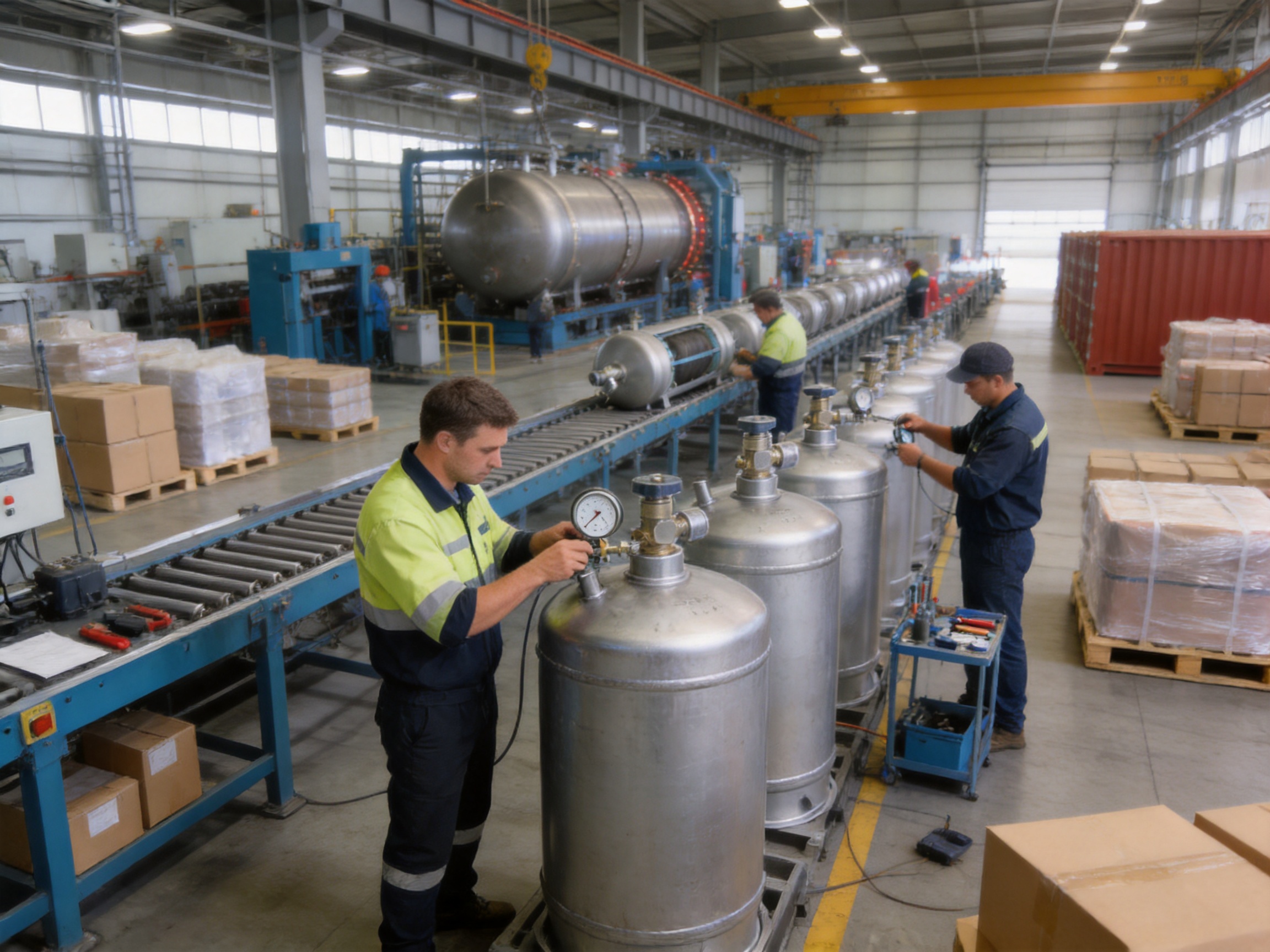
Pressure management is a critical part of many modern water, heating, and renewable-energy systems. A properly selected pressure tank helps stabilize system pressure, reduce pump cycling, protect connected equipment, and improve the overall service life of pumps and valves. The FT/PT Series pressure tanks are designed as compact carbon steel pressure vessels for thermal systems, boiler systems, solar systems, and selected water pressure applications.
These tanks combine a carbon steel shell with a fixed SBR rubber balloon and a factory pre-charge pressure of 1.5 bar. With a maximum working pressure of 4 bar and a stated working temperature range of -10°C to 99°C when using EPDM-compatible configurations, the series is suitable for a broad range of residential, light commercial, heating, and renewable-energy installations.
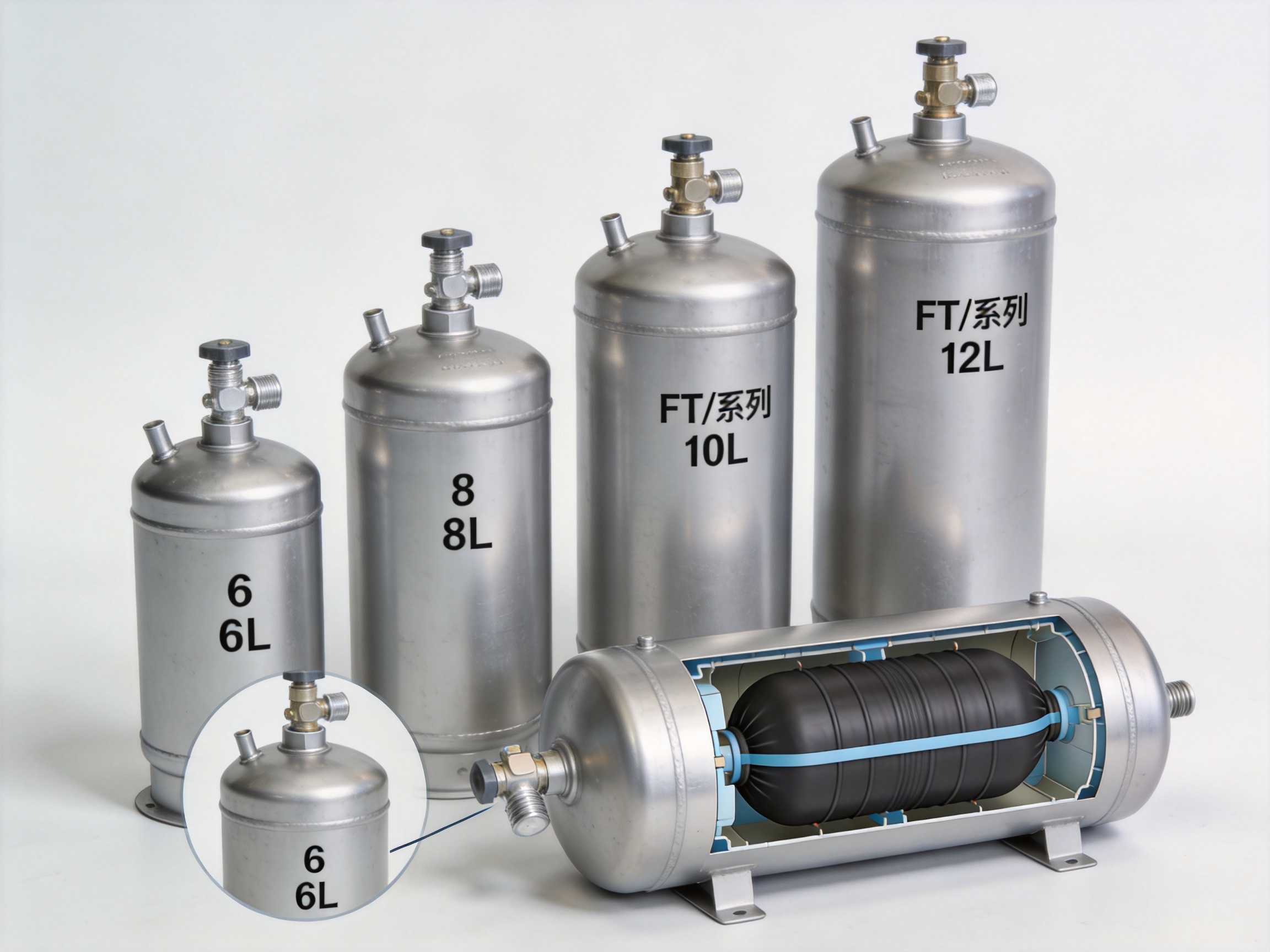
The product range includes compact FT models from 6 liters to 12 liters, together with the PT-8L model. Their small footprint makes them practical for systems where installation space is limited. The series is also available with OEM support, allowing distributors, system integrators, and equipment manufacturers to source pressure tanks for their own product programs and market requirements.
Manufactured and supplied by Taizhou Edwin Electric Co., Ltd., the FT/PT Series benefits from the company’s experience in pump manufacturing, integrated production, product development, and international export. The company’s broader product portfolio includes deep well pumps, submersible pumps, domestic booster pumps, circulation pumps, solar water pumps, intelligent booster pumps, and other water-system products. This wider technical background is valuable because a pressure tank must be selected and applied as part of a complete hydraulic system rather than as an isolated component.
A pressure tank is a vessel that stores a quantity of water or system fluid under controlled pressure. Inside a bladder-type or balloon-type pressure tank, the fluid is separated from compressed air or gas by a flexible membrane. As the system pressure changes, the membrane moves. This action allows the tank to accept and release fluid without requiring the pump to start every time there is a small demand.
In a heating or solar circuit, the tank accommodates changes in fluid volume caused by temperature variation. Liquids expand when heated and contract when cooled. Without a properly sized expansion or pressure tank, this changing volume can lead to pressure spikes, frequent safety-valve discharge, unstable circulation, or excessive stress on pipes and system components.
In a domestic water or booster system, the tank provides a reserve volume and helps reduce short cycling. Short cycling occurs when a pump starts and stops repeatedly over a brief period. This condition can increase electrical consumption, create mechanical wear, and shorten the service life of motor bearings, seals, switches, and control components.
The FT/PT Series is based on a fixed SBR rubber balloon design inside a carbon steel tank. The balloon separates the fluid from the compressed air space. When pressure rises, the balloon is compressed and the air space absorbs the increase. When pressure falls, the stored energy in the compressed air pushes the balloon back toward its original position and returns fluid to the system.
The outer shell is made from carbon steel, a widely used material for pressure vessels and hydraulic accessories. Carbon steel offers a practical balance between mechanical strength, formability, cost efficiency, and manufacturing availability. It is suitable for many closed-loop thermal and pressure applications when the tank is installed in accordance with the system design and protected from unsuitable external conditions.
The steel shell provides the structural enclosure for the internal balloon. It is designed to withstand the stated maximum working pressure of 4 bar. Correct installation remains essential. The tank should not be exposed to pressure above its rated limit, and the system should include appropriate pressure controls, safety devices, and isolation arrangements.
Compared with many larger or more specialized vessels, the carbon steel construction of the FT/PT Series offers an economical option for compact pressure-management requirements. It is especially useful for manufacturers and installers who need dependable functionality without the higher material cost associated with stainless steel vessels in applications where stainless steel is not required.
The internal balloon is made from SBR rubber. SBR, or styrene-butadiene rubber, is commonly used in industrial and water-system components because of its flexibility, resilience, and ability to withstand repeated expansion and contraction. In a pressure tank, the rubber element must move repeatedly as the system fills, heats, cools, or supplies water.
The fixed balloon design keeps the internal separation element positioned inside the tank. This arrangement helps maintain the intended division between the system fluid and the compressed air chamber. It also supports a compact structure that is suitable for the FT Series models with capacities of 6, 8, 10, and 12 liters.
The rubber material must always be matched to the operating medium and temperature. The supplied product information identifies SBR as the balloon material and specifies a working temperature range of -10°C to 99°C with EPDM indicated in the temperature statement. Because material compatibility can depend on the exact configuration, installers should confirm the membrane material and fluid compatibility before commissioning systems that use special additives, aggressive chemicals, potable-water requirements, or unusual temperature conditions.
The FT/PT Series has a pre-charge pressure of 1.5 bar. Pre-charge is the pressure maintained in the air or gas side of the tank before the system is filled. It is an important installation parameter because it influences the usable drawdown volume, response of the pressure system, and amount of fluid that can enter the tank.
Pre-charge should be checked under the correct conditions and adjusted only when required by the application. In many systems, the ideal pre-charge depends on the pump control settings, minimum operating pressure, maximum operating pressure, tank position, and system elevation. A tank installed at a higher level may require different pressure considerations than one installed near the pump or boiler.
The factory setting of 1.5 bar provides a practical starting point for many applications. However, it should not be treated as a universal setting for every installation. Qualified installers should verify the system design and follow the requirements of the pump manufacturer, heating equipment manufacturer, or local installation standard.
The following table summarizes the principal specifications supplied for the FT/PT Series pressure tanks. Dimensions and packing information should be confirmed against the latest technical drawing and commercial quotation before mass ordering, as packaging methods and production details may change according to model or OEM requirements.
| Model | Nominal Capacity | Diameter | Height | Connector | Packing Information |
|---|---|---|---|---|---|
| FT-6L | 6 liters | 325 mm | 103 mm | 3/4 inch | 0.06799 CBM / 5 pieces |
| FT-8L | 8 liters | 325 mm | 128 mm | 3/4 inch | 0.08820 CBM / 5 pieces |
| FT-10L | 10 liters | 325 mm | 136 mm | 3/4 inch | 0.09984 CBM / 5 pieces |
| FT-12L | 12 liters | 325 mm | 160 mm | 3/4 inch | 0.10658 CBM / 5 pieces |
| PT-8L | 8 liters | 398 mm | 100 mm | 3/4 inch | 0.01584 CBM |
Across the series, the 3/4-inch connector provides a commonly used connection size for compact heating, solar, and pressure systems. The FT models share a 325 mm diameter while their heights increase with tank volume. This makes it easier for installers to compare available capacity while planning cabinet, wall, or equipment-room space.
The PT-8L model has a different dimensional format from the FT models. Its diameter is listed as 398 mm and its height as 100 mm. This alternative geometry may be suitable for an installation that requires a wider but lower tank profile. Before installation, the available clearance around the connector, support surface, and service area should be checked carefully.
One of the main advantages of the FT/PT Series is the availability of several compact capacities. The 6-liter, 8-liter, 10-liter, and 12-liter FT options allow system designers to select a tank closer to the actual demand instead of using one oversized model for every project.
A properly sized tank can help control cost, reduce installation space, and simplify handling. Smaller systems often have limited room inside boiler cabinets, solar stations, utility closets, pump rooms, or domestic equipment enclosures. The compact FT models are therefore practical for packaged systems and equipment assemblies where every millimeter matters.
The availability of the PT-8L configuration adds another dimensional option. Two tanks with a similar nominal capacity may not fit the same installation space because of differences in diameter, height, access, and connection location. Offering more than one form factor can provide a useful advantage to distributors and system integrators serving different equipment designs.
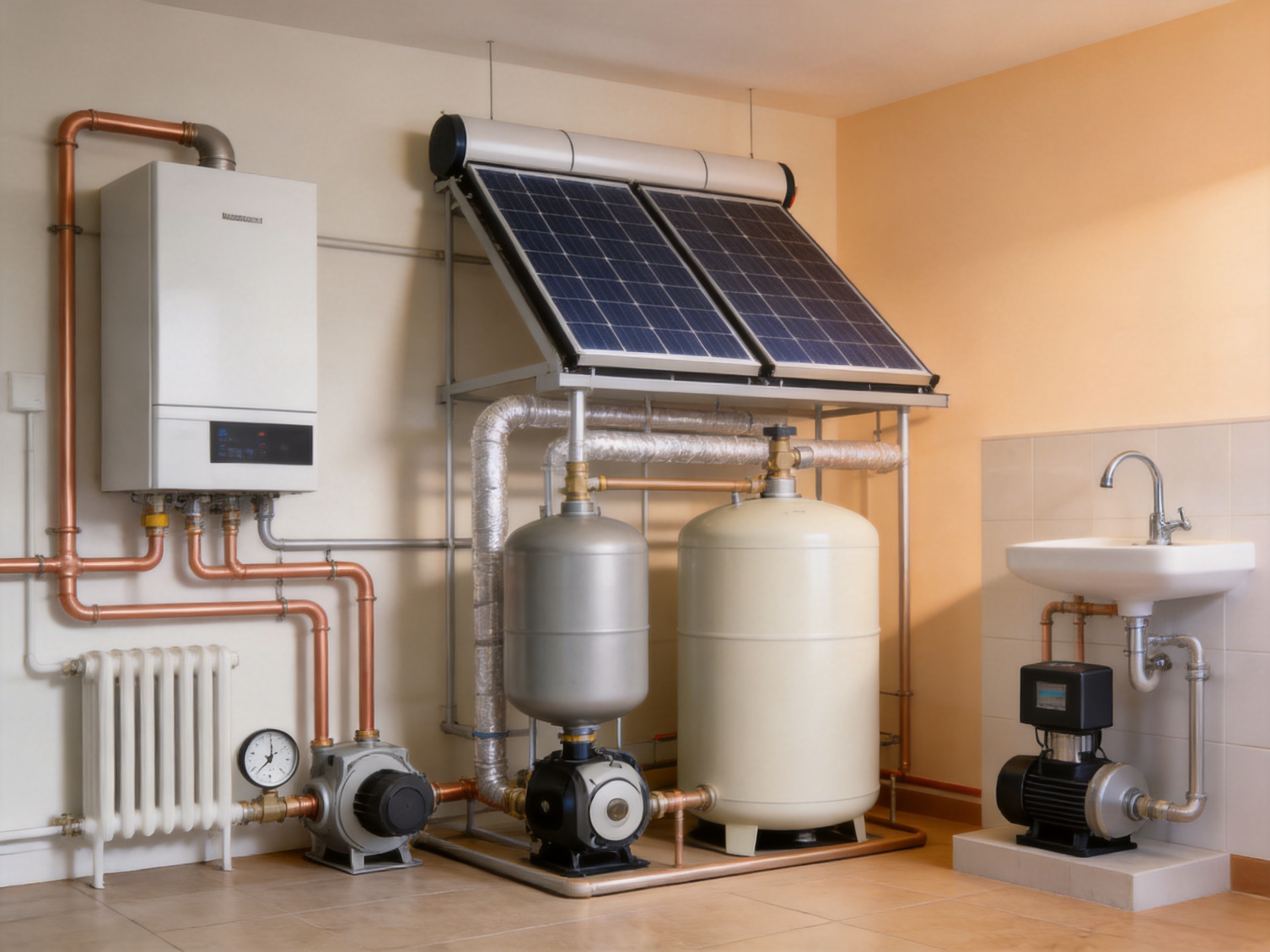
The product information identifies the FT/PT Series for thermal systems, boiler systems, and solar systems. This application flexibility is a significant benefit for businesses that supply several types of heating or renewable-energy equipment. Instead of sourcing unrelated tanks from different manufacturers, a buyer may use one product family across multiple equipment categories, subject to confirming material and pressure compatibility.
Thermal systems may use the tank to absorb fluid expansion and stabilize pressure. Boiler systems can use it as part of a controlled heating circuit. Solar systems often experience significant temperature fluctuations, particularly during high solar gain and low-load conditions. A pressure tank helps manage the resulting changes in fluid volume when properly matched to the circuit size and operating temperature.
The broader pump expertise of the supplier also supports system-level communication. A company that manufactures circulation pumps, booster pumps, solar pumps, and submersible pumps is familiar with the relationship between pump performance, pressure controls, pipe sizing, tank volume, and operating cycles. This can make technical discussions more efficient for OEM customers and project buyers.
Carbon steel and SBR rubber provide a practical material combination for many general-purpose applications. Compared with premium materials intended for highly corrosive or specialized fluids, this construction can reduce purchase cost while still providing the pressure-management function required by standard systems.
Cost effectiveness does not mean that specifications should be ignored. The tank must be operated within the 4 bar maximum working pressure and the stated temperature limits. When those conditions are respected, the FT/PT Series offers an economical way to add pressure stability and expansion capacity to compact systems.
For distributors, the combination of several capacities, a common connector size, and OEM support can simplify product planning. For manufacturers of boilers, solar stations, heat-transfer units, and pump packages, a standardized pressure-tank family can reduce sourcing complexity and support consistent assembly procedures.
OEM support is specifically identified as a feature of the product. This is important for customers that sell equipment under their own brand, integrate the tank into a larger assembly, or require coordinated packaging and product documentation.
OEM cooperation may include discussions regarding labeling, packaging, order quantities, product configuration, technical documents, and delivery planning. The exact scope should be agreed during the quotation and engineering stage. Customers should provide details about the intended medium, operating pressure, working temperature, installation orientation, connection requirements, branding, and applicable market regulations.
An OEM pressure tank program can help a system manufacturer present a more complete product offering. Instead of treating the tank as an anonymous accessory, the manufacturer can include it within a heating station, solar kit, boiler package, booster set, or other engineered system. This can improve purchasing consistency and create a more unified service experience for the end customer.
Thermal systems often contain a fixed quantity of fluid that changes in volume as temperature changes. If the circuit is completely full and has no allowance for expansion, the pressure can rise sharply during heating. The pressure tank provides a controlled space for this expansion and helps reduce unnecessary stress on pipes, heat exchangers, valves, and circulation equipment.
The tank should be installed at a suitable point in the system, commonly near the equipment designated by the system designer. Isolation valves, drain arrangements, pressure gauges, safety valves, and other accessories may be required depending on the system type. The tank itself is not a replacement for a safety valve or a complete pressure-control system.
Boiler systems require stable pressure management to operate safely and efficiently. During the heating cycle, water or heat-transfer fluid expands. During cooling, it contracts. A correctly selected pressure tank accommodates part of this volume change and helps the boiler circuit maintain a more consistent operating pressure.
The FT/PT Series can be considered for compact boiler assemblies and equipment packages within the stated operating limits. The designer must account for total system volume, maximum operating temperature, static head, fluid type, and pressure-relief settings. A boiler manufacturer may also have specific requirements for approved tank construction, connection location, or diaphragm and bladder materials.
Solar thermal systems can experience wide temperature changes because solar radiation varies throughout the day and system demand may not always match collector output. During periods of high solar gain, the heat-transfer fluid can expand significantly. During low-light conditions or system shutdown, the fluid can cool and contract.
A pressure tank helps provide an expansion volume that supports more stable system operation. It can also help reduce pressure fluctuations that might otherwise cause nuisance activation of safety components. For solar applications, material compatibility and temperature resistance are especially important. Buyers should confirm that the selected configuration is suitable for the specific heat-transfer fluid and maximum design temperature.
Although the primary stated applications are thermal, boiler, and solar systems, compact pressure tanks may also be considered for selected pump and water-pressure assemblies when the pressure, temperature, membrane, and fluid requirements are compatible. In a domestic booster system, the tank can reduce pump starts caused by small water demands.
The product should not be applied to a system merely because the nominal volume appears suitable. The pressure switch range, pump flow, cut-in pressure, cut-out pressure, static pressure, and expected demand pattern all influence tank performance. Engineering verification is particularly important when the tank is used with intelligent booster pumps, variable-speed equipment, or automatic control systems.
Taizhou Edwin Electric Co., Ltd. was founded in 2008 as an integrated manufacturing enterprise focused on independent research and development, mass production, and global export. This combination is relevant to pressure-tank buyers because a successful product program requires more than a basic vessel. It requires product design, production planning, inspection, packaging, technical communication, and reliable international order handling.
The company’s core product lines include deep well pumps, submersible pumps, domestic booster pumps, and circulation pumps. It has also expanded into solar water pumps and intelligent booster pumps. This product range indicates experience with the different operating conditions encountered in water supply, irrigation, heating, renewable energy, and building-service systems.
Pressure tanks are closely related to these products. A circulation pump may require a stable thermal circuit. A solar pump may be installed in a system with substantial temperature variation. A booster pump may benefit from reduced cycling and a controlled pressure reserve. Knowledge of these applications can support more practical pressure-tank selection and technical service.
The company emphasizes independent research and development as part of its manufacturing model. For OEM and project customers, this is useful because product requirements can vary between markets and equipment categories. A buyer may need a particular connection arrangement, label format, packaging approach, capacity range, or integration method.
Research and development capability also supports product improvement over time. Pressure-tank performance depends on shell design, internal membrane behavior, connection reliability, surface protection, pre-charge consistency, packaging strength, and compatibility with the target system. A manufacturer with an established development function can evaluate these factors as part of a continuing product program.
Customers should request the specific technical documents and quality records applicable to their order. Depending on the destination market and end use, these may include dimensional drawings, material information, operating instructions, pressure-test records, packaging specifications, and conformity documents where required.
Mass production is an important strength for distributors and equipment manufacturers that need stable supply. The FT/PT Series includes several models, and each model must be produced with consistent dimensions, connection quality, membrane installation, pre-charge, and packaging.
A structured production system can help reduce variation between batches. It can also support repeat orders for OEM customers, who generally need the same tank to fit the same equipment housing or assembly line. Consistent model identification and packaging are especially important when several similar capacities are stored in one warehouse.
Before placing a large order, buyers should clarify production lead time, minimum order quantity, inspection arrangements, spare-parts policy, packaging details, and shipment terms. These commercial points are not substitutes for technical quality, but they are important elements of a reliable international supply chain.
The company has developed affiliated import and export service resources to support procurement planning, order tracking, cross-border delivery, and foreign-trade services. This structure can be valuable for overseas buyers that prefer to coordinate products, documents, communication, and shipping through an experienced export team.
For customers purchasing pressure tanks together with pumps or other water-treatment peripheral products, one-stop sourcing may reduce administrative workload. It can also make it easier to coordinate product specifications and shipment schedules. A buyer may discuss a complete package that includes pumps, tanks, valves, pipes, controls, or related accessories instead of managing each category separately.
International buyers should still confirm the commercial terms, export documents, destination requirements, customs classification, product markings, and local installation rules before finalizing an order. The supplier can provide product information, but the importer and system designer remain responsible for meeting applicable regulations in the destination market.
A pressure tank is a pressure-bearing product, so quality evaluation should cover the complete assembly rather than only the external shell. The carbon steel body, internal balloon, connection, welds or formed joints, surface finish, air valve, pressure retention, and packaging all affect product reliability.
The shell must maintain its structural integrity under the specified maximum working pressure. Manufacturing controls should pay attention to material forming, joining, connection alignment, surface treatment, and pressure testing. Any production process used for pressure-bearing parts should be managed to minimize defects and dimensional inconsistency.
Buyers can ask for inspection procedures that relate to shell integrity, including appearance inspection, dimensional inspection, leakage testing, and pressure testing. The exact test method and acceptance criteria should be agreed according to the product specification, destination market, and intended application.
The fixed SBR balloon is the working separation element inside the tank. It must be installed without damage, excessive twisting, or improper positioning. The connection should be securely integrated with the tank and should accept the specified 3/4-inch pipe fitting or adapter.
During installation, the connector should not be overloaded by unsupported pipework. Excessive force, side loading, vibration, or incorrect sealing materials can damage the connection or create leakage. A suitable support arrangement and compatible sealing method should always be used.
Because the stated factory pre-charge is 1.5 bar, production and final inspection should include verification of this value within an agreed tolerance. The pre-charge may change during storage, transportation, or long periods of inactivity, so installers should check it before commissioning when the application requires precise pressure control.
Pre-charge measurement must be conducted using an appropriate gauge and under suitable conditions. A tank connected to a pressurized water system cannot be evaluated in the same way as an isolated tank. The system should be depressurized according to safe procedures before checking or adjusting the air side.
The supplied packing information identifies carton or shipment volume for the listed models. Because pressure tanks may be transported through multiple handling stages, packaging should protect the shell, connector, and external surface from impact, moisture, and abrasion.
For OEM buyers, packaging may be designed around warehouse stacking, container loading, retail distribution, or integration into a larger equipment package. The packing quantity and cubic-meter data are useful for logistics planning, but final loading calculations should be based on the approved packing configuration and shipping documents.
Installation should be performed by qualified personnel familiar with pressure systems. The tank must be installed in a location that provides adequate support, access for inspection, protection from impact, and sufficient clearance for connection and service.
Before installation, verify the tank model, nominal capacity, connector size, pressure rating, temperature rating, membrane material, and pre-charge. Confirm that the tank is appropriate for the system fluid. Do not use a tank outside the specified working pressure or temperature range.
The pipe connection should be clean and correctly aligned. Avoid forcing the pipe into position or using the tank as a structural support for heavy pipework. If the tank is installed in a vibration-prone environment, suitable flexible connections or supports may be necessary.
The system should include appropriate pressure-relief protection. The 4 bar maximum working pressure must not be exceeded. A pressure gauge can help operators monitor the system, while isolation and drain arrangements can simplify future inspection or replacement.
After filling the system, remove trapped air according to the system design and check all joints for leakage. Bring the equipment into operation gradually. Observe the pressure during heating, cooling, pump starting, pump stopping, and normal demand conditions.
For a thermal, boiler, or solar application, the installer must consider static height, total fluid volume, design temperature, expansion coefficient, safety-valve setting, and location of the tank. A nominally suitable tank may still be too small if the total system volume or temperature range is substantial.
Regular inspection helps preserve the performance of a pressure tank. The inspection interval depends on system type, operating conditions, local requirements, and the consequences of failure. At a minimum, operators should monitor pressure behavior and check for visible corrosion, leakage, unusual noise, or repeated pump cycling.
The pre-charge should be checked when system performance changes or during planned maintenance. If the tank loses air pressure repeatedly, the cause should be investigated. Possible causes may include a leaking air valve, damaged balloon, incorrect measurement procedure, or unsuitable operating conditions.
External corrosion protection is also important for carbon steel tanks. The vessel should be kept away from persistent water leakage, aggressive chemicals, condensation accumulation, and environments that can damage the external coating. Any surface damage should be assessed and treated appropriately.
If a tank is removed from service, the system must be isolated and depressurized safely. Do not attempt to open, cut, weld, or modify a pressure tank while it contains pressure. Replacement should be based on the model, capacity, connection, pressure rating, and membrane compatibility.
Selection begins with the application. Determine whether the tank will be used in a thermal circuit, boiler system, solar installation, domestic water-pressure package, or another compatible system. Identify the system fluid and check whether the SBR balloon and stated temperature range are suitable.
Next, calculate or estimate the required tank volume. The nominal volume alone does not equal the usable fluid volume. Drawdown depends on pre-charge, system pressure settings, temperature, and tank position. If the tank is being used for thermal expansion, the total system fluid volume and expected temperature change are particularly important.
Then confirm pressure conditions. The maximum system pressure must remain below the 4 bar maximum working pressure of the tank. The pre-charge of 1.5 bar should be evaluated against the minimum system pressure and equipment operating requirements.
Finally, review physical installation constraints. Compare the FT models according to their listed diameter and height. Consider the PT-8L if a different low-profile arrangement is more suitable. Check connector orientation, maintenance access, support requirements, packaging dimensions, and transportation limitations.
OEM buyers typically require more than a standard product. They need dependable repeatability, clear technical communication, delivery coordination, and a supplier capable of supporting future orders. The FT/PT Series addresses these needs through its defined model range, compact construction, common connector, and stated OEM support.
A boiler manufacturer can select an appropriate tank for a compact heating package. A solar equipment producer can evaluate the product for a solar thermal station. A pump manufacturer can investigate its use in a booster or circulation assembly where the specifications are suitable. A distributor can stock several sizes to serve different installer requirements.
The relationship between pressure tanks and pumps makes supplier coordination especially valuable. The same manufacturing group offers several pump categories and water-system products, allowing customers to discuss pressure control as part of a broader system solution. This can simplify procurement and reduce the risk of mismatched components.
OEM customers should provide complete application information at the beginning of the project. Important data includes target market, intended equipment, fluid, pressure range, temperature range, installation position, connection type, annual volume, packaging requirements, and any required testing or documentation.
The main purpose is to manage pressure and fluid-volume changes in compatible thermal, boiler, solar, and selected water-pressure systems. It can provide expansion capacity, reduce pressure fluctuation, and help limit unnecessary pump starts.
The tank body is made from carbon steel. This provides a practical combination of strength and cost efficiency for general pressure-management applications within the stated operating limits.
The product is described as using a fixed SBR rubber balloon. The balloon separates the system fluid from the compressed air space and moves as system pressure changes.
The stated factory pre-charge pressure is 1.5 bar. The actual setting should be checked and adjusted only when required by the system design and by qualified personnel using safe procedures.
The maximum working pressure is 4 bar. The tank must not be used in a system that can exceed this value. Appropriate pressure controls and safety devices are required.
The supplied information states a working temperature range of -10°C to 99°C with EPDM identified in the temperature specification. Customers should confirm the exact membrane configuration and fluid compatibility for their application before ordering.
The listed models are FT-6L, FT-8L, FT-10L, FT-12L, and PT-8L. The FT models range from 6 to 12 liters, while the PT model has a nominal capacity of 8 liters.
The listed models use a 3/4-inch connector. The connection should be verified against the latest technical drawing before installation or mass production.
Yes, solar systems are identified among the intended applications. However, the selected tank must be suitable for the system fluid, pressure, temperature, expansion volume, and installation arrangement. Solar thermal systems may require careful review because of high temperature and stagnation conditions.
Yes, boiler systems are also identified as an application. The boiler manufacturer’s requirements, system volume, design temperature, pressure-relief setting, and applicable regulations must be considered before installation.
OEM support is available. Specific requirements such as labeling, packaging, documentation, configuration, and order planning should be discussed directly with the supplier before production.
Capacity should be selected according to the system type, total fluid volume, temperature variation, pressure settings, pump operation, and available installation space. Nominal capacity should not be selected by volume alone.
No. A pressure tank is not a substitute for a safety valve, pressure controller, temperature limiter, or other required protective device. The complete system must include all safety components required by its design and local regulations.
Buyers should confirm the model, nominal capacity, dimensions, connector, working pressure, temperature range, membrane material, pre-charge, application fluid, packaging, documentation, and OEM requirements.
The FT/PT Series pressure tanks provide a compact and practical solution for pressure stabilization and fluid expansion in thermal systems, boiler systems, solar systems, and selected compatible water-pressure applications. Their carbon steel construction, fixed SBR rubber balloon, 1.5 bar pre-charge, 4 bar maximum working pressure, and range of compact capacities make them suitable for many equipment packages and system installations.
The series offers several advantages over less flexible alternatives: multiple size options, a common 3/4-inch connector, compact dimensions, support for OEM programs, and compatibility with several important heating and water-system categories. The FT models provide capacities from 6 to 12 liters, while the PT-8L offers an alternative dimensional profile for installations with different space requirements.
The manufacturing background of Taizhou Edwin Electric Co., Ltd. adds value for customers seeking an experienced pump and water-system supplier. Since its establishment in 2008, the company has focused on research and development, mass production, international export, and one-stop procurement services. Its broader range of pumps and related products provides useful system knowledge for customers evaluating pressure tanks as part of complete equipment solutions.
Correct selection and installation remain essential. Buyers should verify pressure, temperature, fluid compatibility, tank capacity, pre-charge, dimensions, and regulatory requirements before use. When properly matched to the system, the FT/PT Series can support more stable operation, reduce unnecessary cycling, simplify equipment integration, and provide a cost-effective pressure-management component for professional OEM and project applications.
1. Product specification information for the FT/PT Series pressure tanks, including model dimensions, connector size, pre-charge pressure, working pressure, working temperature, and packing data.
2. Technical principles of diaphragm and bladder pressure tanks used in heating, solar, boiler, booster, and water-supply systems.
3. General engineering practices for thermal expansion control, pressure regulation, pump cycling reduction, and pressure-vessel installation.
4. Manufacturer information concerning product development, mass production, pump manufacturing, OEM support, and international export services.
5. General maintenance guidance for carbon steel pressure vessels, rubber membrane assemblies, pressure gauges, air pre-charge systems, and hydraulic equipment.
edwina@edwin-pump.com
+86-13586290903 (WhatsApp)
Xuri Gongliang Cutting Tool Entrepreneurship Park, Wenqiao Town, Wenling City, Taizhou City, Zhejiang Province, China

High Performance Smart Pump Factory


 English