edwina@edwin-pump.com

View All Products
en
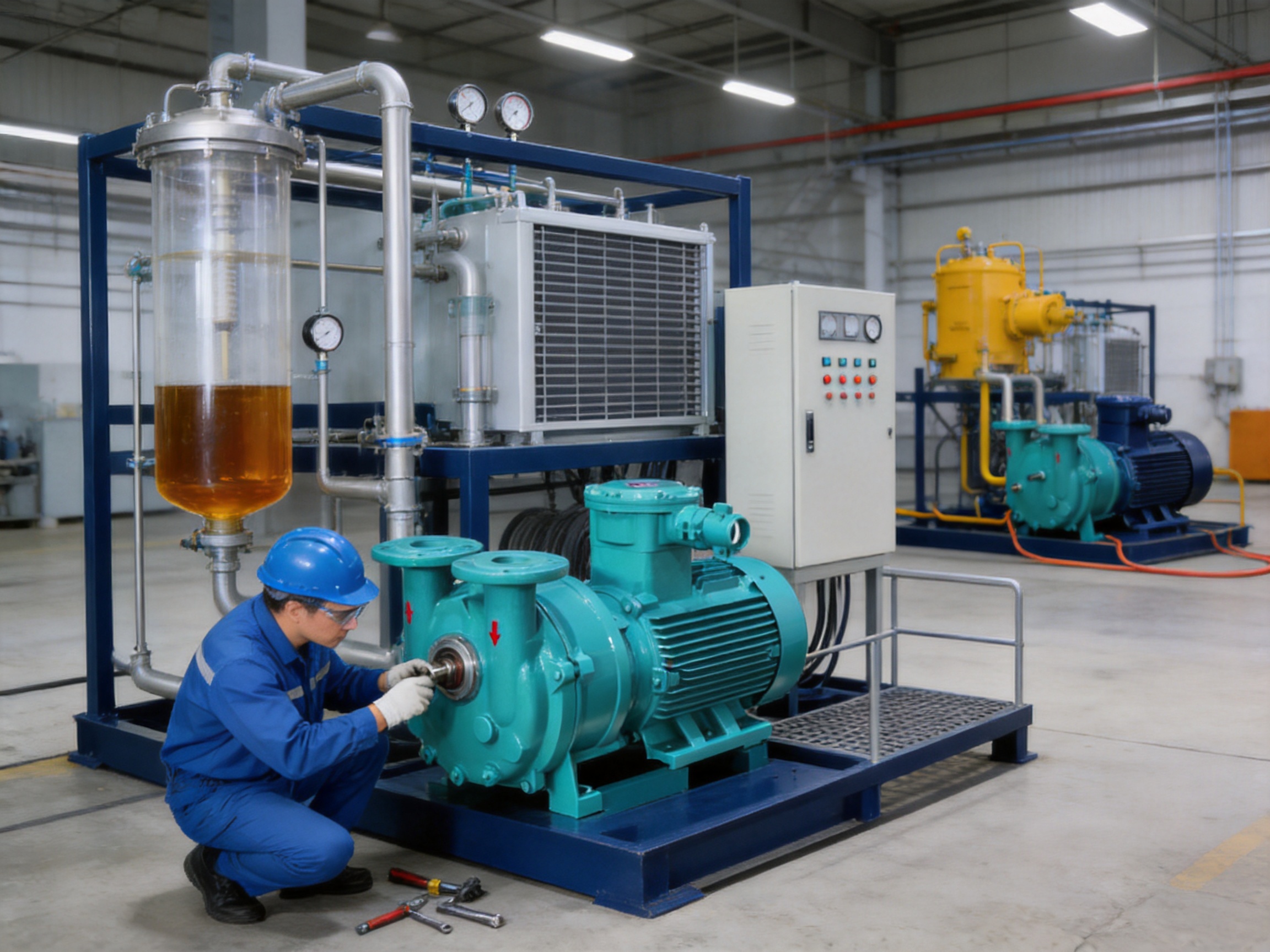
The 2BV series liquid ring vacuum chemical industrial pump is designed for industrial applications that require dependable gas and vapor handling, stable vacuum generation, corrosion-resistant construction, and flexible operating conditions. As a liquid ring pump, it uses a rotating impeller and a sealing liquid to create a vacuum, compress the extracted gas, and discharge it from the system. This operating principle makes the pump suitable for chemical processing, industrial manufacturing, transformer oil treatment, vacuum drying, gas extraction, evaporation, filtration, and other demanding processes.
Unlike a conventional water pump, the 2BV series is engineered primarily for vacuum production and gas compression. It can handle gases and steam while maintaining a stable operating cycle with relatively few wearing components. When operated with water, the pump can achieve a suction pressure of approximately 33 mbar absolute, corresponding to about 97% vacuum. When transformer oil is used as the operating liquid, the suction pressure can reach approximately 6.7 mbar absolute, corresponding to about 99% vacuum. This flexibility enables the same basic pump concept to serve both general industrial vacuum duties and deeper-vacuum applications.
The pump is also available in stainless steel configurations for processes that require improved resistance to corrosive media, contamination, or demanding operating environments. Depending on the working conditions, wetted components may be manufactured from SUS304, SUS316, or SUS316L stainless steel. Shaft materials and mechanical seal materials can also be selected according to the application. This construction flexibility gives equipment designers greater control over service life, maintenance requirements, and process compatibility.
For industrial users, pump selection is not based only on maximum vacuum. The operating liquid, gas composition, discharge pressure, temperature, corrosion level, motor power, duty cycle, and environmental classification must all be considered. The 2BV series is therefore best understood as a configurable vacuum platform rather than a one-size-fits-all machine.
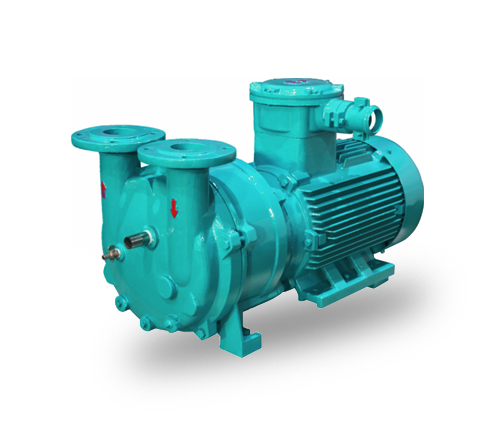
2BV Series Liquid Ring Vacuum Chenmical Industrial Pump
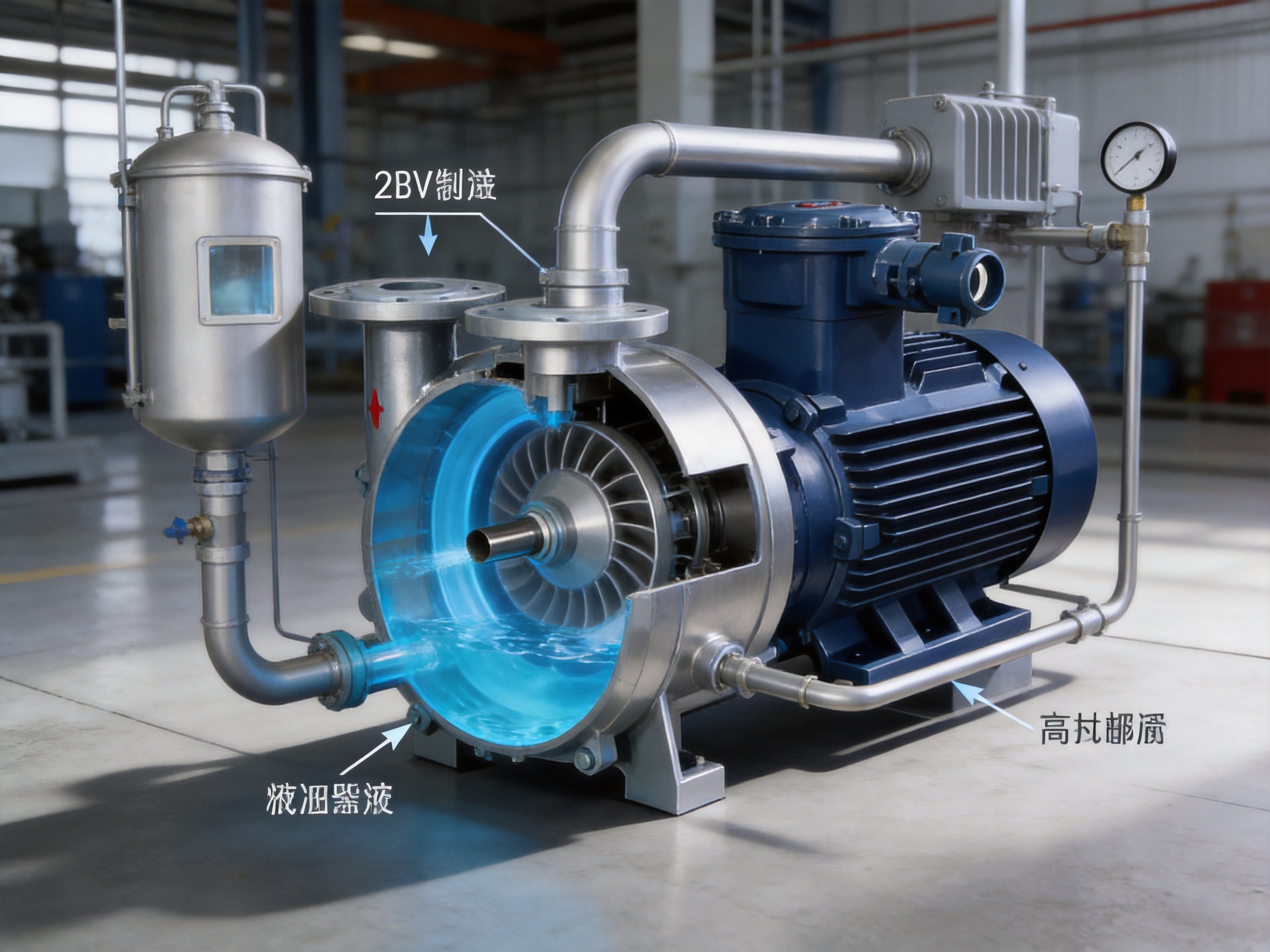
A liquid ring vacuum pump is a positive-displacement vacuum machine that uses a rotating liquid ring to create sealed working chambers. The impeller is mounted eccentrically inside the pump casing. Before operation, the casing is partially filled with a compatible operating liquid. As the impeller rotates, centrifugal force forms the liquid into a ring around the inner wall of the casing. Because the impeller is positioned off-center, the space between the impeller blades and the liquid ring changes continuously during rotation.
When the space between the blades increases, the pump creates a low-pressure zone and draws gas or vapor into the suction port. As the impeller continues to rotate, the available volume decreases. The gas is compressed and discharged through the outlet port. The operating liquid performs several functions simultaneously: it creates a seal between the impeller chambers, absorbs some compression heat, supports smooth gas compression, and helps protect internal components from direct contact with the process gas.
This operating principle is especially useful when the pumped medium contains moisture, condensable vapor, or small quantities of liquid. Many dry vacuum pumps can experience performance loss or damage when exposed to condensable vapor. A liquid ring pump is generally more tolerant of these conditions because the sealing liquid is already part of its normal operating process.
The pump does not depend on close-contact sliding vanes in the same way as a rotary vane vacuum pump. It also does not require the same type of reciprocating piston arrangement found in traditional reciprocating vacuum pumps. As a result, the liquid ring design can provide stable operation, reduced vibration potential, and a practical solution for continuous industrial service.
The 2BV series begins its operating cycle when the selected sealing liquid enters the pump casing. The impeller rotates at the specified speed, causing the liquid to form a concentric ring along the casing wall. Since the impeller is eccentric to the casing, the liquid ring creates a series of variable-volume chambers between adjacent impeller blades.
At the suction side, the chambers expand and draw in gas or vapor from the connected process. At the discharge side, the chambers contract and compress the captured gas. The compressed gas and a portion of the operating liquid leave through the discharge connection. In a properly designed installation, a separator or liquid management system can recover and regulate the operating liquid before it returns to the pump.
The performance of a liquid ring pump depends strongly on the temperature and vapor pressure of the operating liquid. A cooler sealing liquid generally allows the pump to achieve a deeper vacuum because its own vapor pressure is lower. If the operating liquid becomes too hot, the achievable vacuum may decline. For this reason, cooling arrangements, liquid flow, and operating temperature should be evaluated during system design.
Water is the most common operating liquid for general industrial service because it is accessible, economical, and suitable for many non-corrosive applications. Transformer oil may be used when a deeper vacuum is required or when the process is specifically related to oil treatment. Other operating liquids may be considered when chemical compatibility, vapor pressure, contamination control, or product recovery requirements make water unsuitable.
Correct operating-liquid selection is essential. The liquid must be compatible with the casing, impeller, shaft seal, process gas, discharge system, and environmental requirements. A liquid that is chemically aggressive, too viscous, or too volatile may reduce performance or cause premature wear. Application-specific engineering advice should therefore be obtained before using a non-standard liquid.
Under suitable water-ring operating conditions, the 2BV series can reach a suction pressure of approximately 33 mbar absolute. This corresponds to a vacuum degree of approximately 97%. The actual result depends on water temperature, atmospheric pressure, rotation speed, gas load, installation altitude, piping resistance, and the condition of the pump.
When transformer oil is used as the operating liquid, the suction pressure can reach approximately 6.7 mbar absolute, or about 99% vacuum. This deeper vacuum capability makes the oil-ring configuration appropriate for certain transformer oil treatment and vacuum dehydration processes. The use of oil changes the operating conditions, so the pump system must be designed to manage oil circulation, separation, filtration, sealing, and fire-safety considerations.
Vacuum performance should not be judged only by the lowest published pressure. Industrial processes often operate under changing gas loads. A pump that reaches a deep vacuum under no-load conditions may not maintain that vacuum when connected to a large vessel, wet material, leaking system, or continuous vapor source. The more meaningful selection parameters include pumping speed at the required suction pressure, operating-liquid temperature, process vapor load, and expected continuous duty.
The compressor version of the series can operate with a maximum pressure of approximately 0.26 MPa absolute according to the supplied product information. Discharge pressure has a direct effect on power consumption. As discharge pressure rises, the motor must perform more compression work, and the required power increases. Therefore, the actual discharge pressure must be provided when selecting the motor and complete pump package.
A high discharge pressure may also increase operating-liquid temperature and place additional demands on cooling and separation equipment. The pump should never be selected only by suction vacuum while ignoring discharge conditions. A complete pressure profile from the process vessel through the pump and into the discharge line is necessary for dependable operation.
Traditional reciprocating vacuum pumps use pistons, cylinders, valves, and connecting mechanisms to move and compress gas. They can provide useful vacuum performance, but their mechanical construction may involve more moving parts and more pronounced pulsation. Reciprocating machines may also require regular attention to valves, piston rings, lubrication systems, and cylinder sealing components.
The liquid ring design offers a different balance of advantages. Its rotating impeller and liquid seal create a comparatively smooth gas-handling process. The operating liquid helps seal the internal chambers and absorb compression heat. Because the pump is naturally suited to wet gas and vapor service, it can be advantageous in processes where condensation is unavoidable.
The supplied technical information indicates that the 2BV series can replace W, WY, and WL series reciprocating vacuum pumps in suitable applications. Such replacement must always be verified against the required vacuum level, capacity, gas composition, discharge pressure, and installation conditions. Nevertheless, the ability to serve as an alternative to reciprocating equipment is an important benefit for plants seeking simpler continuous-duty vacuum systems.
The 2BV series is also positioned as a replacement for SK and 2SK water ring pumps. Compared with older water ring designs, the 2BV platform is intended to provide improved performance and a more modern compact arrangement. Depending on the selected model, it can offer a practical combination of vacuum generation, gas compression, material flexibility, and application adaptability.
Users replacing older equipment should compare the original pump curve with the 2BV performance curve rather than relying only on nominal port size or motor power. The process may have changed over time, and the original pump may have been oversized or operated under conditions different from the design point. A replacement evaluation should include actual suction pressure, gas flow, operating-liquid temperature, discharge pressure, and motor requirements.
Dry vacuum pumps avoid the use of sealing liquid inside the compression chamber. They can be attractive where process contamination from liquid is unacceptable. However, some dry pump designs are more sensitive to condensable vapor, wet gas, particles, or aggressive chemicals. The 2BV liquid ring approach can be advantageous when the gas stream includes steam or moisture and when a liquid-sealed compression process is acceptable.
The choice between a liquid ring pump and a dry vacuum pump depends on the process. If the application requires an absolutely oil-free and liquid-free vacuum path, a dry technology may be preferable. If the process involves steam, humid gas, or frequent condensation, a liquid ring pump may provide greater operating tolerance. The 2BV series is particularly relevant where stable industrial vacuum is more important than eliminating all operating liquid.
Many chemical and industrial processes expose equipment to corrosive gases, vapors, solvents, salts, acids, alkaline substances, or contaminated process liquids. Standard cast materials may not provide sufficient protection in these conditions. The 2BV series can be configured with stainless steel wetted components for applications where corrosion resistance and process cleanliness are important.
The supplied material information identifies several stainless steel options. SUS304, also known as 0Cr18Ni9, is suitable for many general industrial environments. SUS316, also identified as 0Cr17Ni12Mo2, contains molybdenum and generally provides improved resistance in certain chloride-containing or chemically demanding conditions. SUS316L, identified as 00Cr17Ni14Mo2, offers low-carbon stainless steel construction that can be beneficial for welding-related corrosion resistance and demanding chemical service.
The selection between SUS304, SUS316, and SUS316L should be based on the exact process medium, concentration, temperature, exposure duration, and cleaning method. Stainless steel is not universally resistant to every chemical. For example, the suitability of a material may change significantly with chloride concentration, acid strength, temperature, oxygen content, and the presence of abrasive particles.
In addition to the pump casing and cover, the impeller and other wetted parts should be considered as part of the material selection. A pump with a corrosion-resistant casing but an unsuitable internal component may still experience premature failure. The complete wetted path must be reviewed, including port plates, impeller, shaft sealing areas, gaskets, and connected accessories.
Stainless steel construction can also support improved hygiene and cleaning performance in certain process environments. A smoother and more chemically resistant surface may reduce the retention of process residues. However, the final suitability depends on surface finish, process standards, cleaning chemicals, and the plant’s sanitation procedures.
The shaft is a critical component because it transfers motor torque to the impeller while operating in contact with the sealing environment. The supplied information identifies 2Cr13 and 0Cr18Ni12Mo2Ti as possible shaft materials. The appropriate choice depends on corrosion exposure, mechanical loading, temperature, and the selected pump configuration.
Mechanical seals are used to limit operating-liquid leakage along the shaft. The supplied product information states that Chinese-brand mechanical seals are used and that seal materials can be selected in FPM or PTFE. FPM, commonly associated with fluoroelastomer materials, is often selected for resistance to oils, fuels, and many industrial chemicals. PTFE provides broad chemical resistance and can be appropriate for aggressive chemical environments, although its mechanical and temperature characteristics must be considered.
Seal selection should match both the operating liquid and the pumped gas. A seal that is compatible with water may not be suitable for transformer oil, solvents, or a chemically active process. Temperature cycling, pressure difference, shaft speed, and the presence of solids can also influence seal life.
In chemical service, leakage prevention is not only a maintenance concern. It may be essential for worker safety, environmental protection, product purity, and regulatory compliance. The selection of the mechanical seal, elastomers, gaskets, and connection materials should therefore be treated as a complete sealing-system decision rather than an isolated component choice.
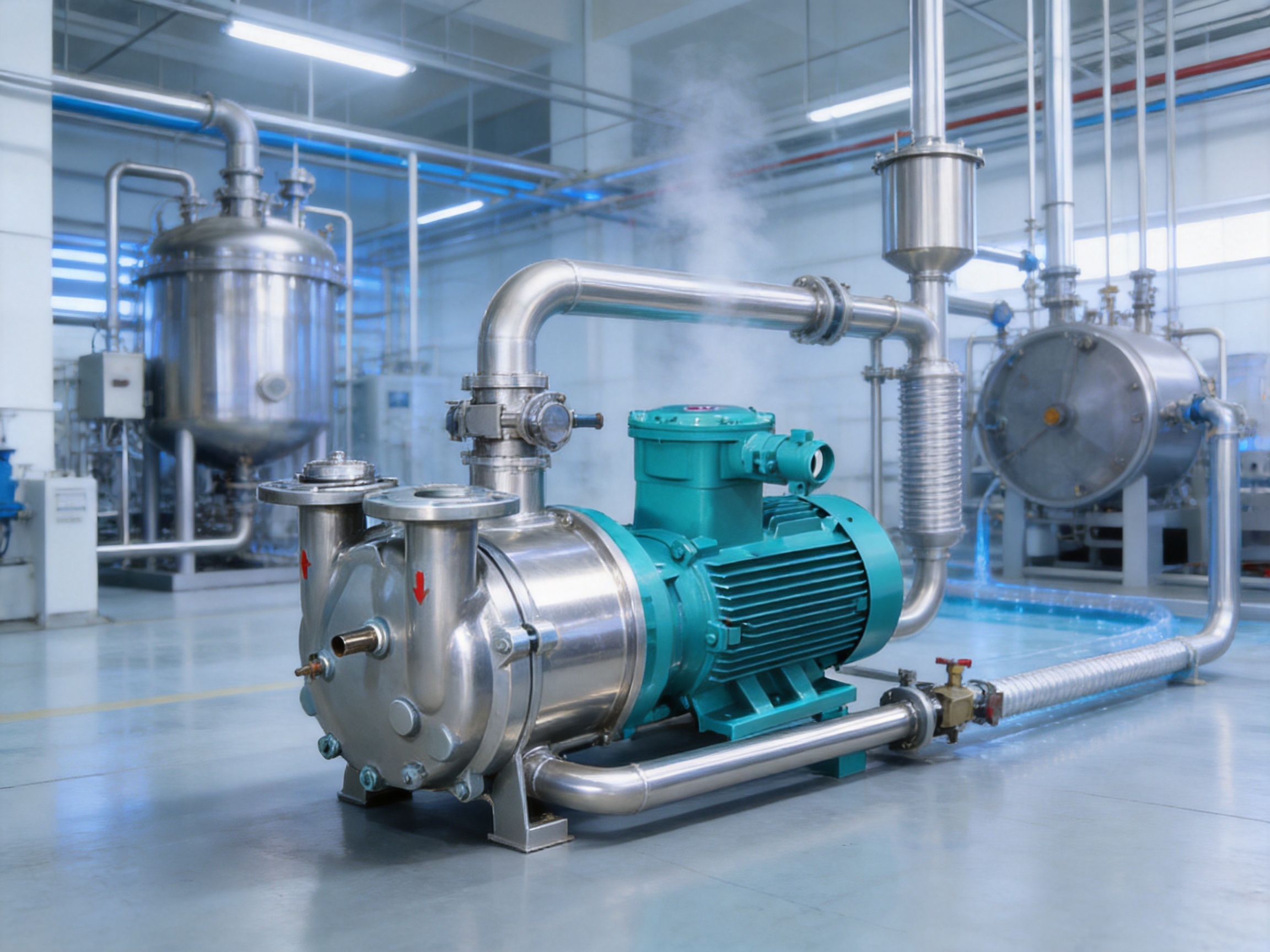
The liquid ring operating principle supports continuous vacuum production across a range of industrial conditions. The pump can handle gases and steam, and the sealing liquid provides a consistent internal seal. This is valuable in processes that operate for extended periods and cannot tolerate frequent interruptions.
Steam and condensable vapor are common in evaporation, drying, sterilization, distillation, filtration, and chemical processing. The 2BV series is designed for gas and steam service, making it more suitable for wet applications than many vacuum technologies that are optimized primarily for dry gas.
The ability to use water or transformer oil gives the pump a broader operating range. Water provides a practical solution for general vacuum applications, while transformer oil can support a deeper vacuum where the process design permits it. This flexibility allows users to adapt the pump to the process rather than redesigning the entire vacuum system around a single sealing medium.
Stainless steel wetted components provide a stronger foundation for corrosive industrial service. The availability of SUS304, SUS316, and SUS316L options enables more accurate matching between the pump and the process environment.
Compared with reciprocating vacuum systems, a liquid ring pump can reduce dependence on piston assemblies, reciprocating valves, and related wear components. This may simplify routine maintenance and support more consistent operation, especially in continuous-duty applications.
When a liquid ring pump operates for a long time near its limiting vacuum, cavitation may occur. Cavitation can create a characteristic screaming noise and may cause damaging pressure fluctuations. The supplied product information states that a cavitation protection pipe can be added to reduce this noise and protect the pump. This feature is valuable when the process requires prolonged operation close to the maximum vacuum capability.
The 2BV2-Ex and 2BV6 series are described as being mainly used for pumping explosive gases or operating in flammable and explosive environments. Their technical parameters correspond to the related 2BV2 or 2BV5 series products. Hazardous-area applications require careful evaluation of the complete installation, including motor type, electrical protection, grounding, instrumentation, ventilation, process containment, and local regulations.
The existence of an explosion-related model does not remove the need for site-specific hazardous-area engineering. The user must confirm that the complete pump package and all connected equipment meet the classification and safety requirements of the installation.
The manufacturer behind the product is an integrated enterprise established in 2008, with activities covering independent research and development, mass production, and global export. This combination is important for industrial pump buyers because product development, manufacturing control, order coordination, and after-sales communication can be managed through an established organizational structure.
A manufacturer with independent research and development capability can adapt pump configurations to different markets and applications. For the 2BV series, this may include material selection, mechanical seal options, cavitation protection arrangements, motor matching, and pump package requirements. Application knowledge is particularly important for vacuum pumps because the process conditions can influence performance as much as the pump model itself.
Mass-production capability supports repeatability. Consistent machining, assembly procedures, inspection routines, and component sourcing can help reduce variation between individual units. For international customers, repeatability is valuable when several pumps are installed across different projects or when a replacement unit must match an existing process specification.
The manufacturer’s broader product portfolio includes deep well pumps, submersible pumps, domestic booster pumps, circulation pumps, solar water pumps, intelligent booster pumps, and other water-handling equipment. Although a liquid ring vacuum pump serves a different duty from a standard water pump, experience across multiple pump categories can support broader knowledge of hydraulic design, motor integration, sealing, materials, and system application.
The company also provides procurement and foreign-trade support through affiliated organizations established to assist with procurement planning, order tracking, cross-border delivery, and export services. For industrial customers, these capabilities can simplify communication, documentation, production scheduling, and shipment coordination.
Manufacturing strength should be evaluated through practical evidence, including product drawings, material certificates where required, inspection records, test procedures, spare-parts support, packaging standards, and technical response. A professional supplier should be able to clarify the recommended operating liquid, performance conditions, motor selection, seal arrangement, and installation requirements before an order is finalized.
For a corrosion-resistant vacuum pump, material control is central to product reliability. The casing, pump cover, port plate, impeller, shaft, mechanical seal, elastomers, and fasteners may all be exposed to different combinations of chemical, mechanical, and thermal stress. A responsible manufacturing process identifies each component’s function and selects materials based on the actual application.
Stainless steel grades should not be treated as interchangeable labels. SUS304, SUS316, and SUS316L have different chemical and fabrication characteristics. The manufacturer’s ability to offer multiple grades gives the customer more flexibility, but the customer must provide accurate process information so the correct grade can be selected.
Proper assembly is necessary for smooth operation. The impeller must be installed with the correct clearances, the shaft must be aligned with the motor, and the mechanical seal must be handled without damage. Rotating components should be checked for balance and runout because imbalance can increase vibration, bearing load, noise, and seal wear.
Liquid ring pumps also require correct internal clearances. Excessive clearance can reduce volumetric efficiency and vacuum performance, while insufficient clearance may increase the risk of contact during thermal expansion or abnormal operating conditions. Consistent machining and careful assembly are therefore important elements of manufacturing quality.
A suitable pre-delivery test program may include visual inspection, dimensional checks, rotation verification, leakage inspection, motor checks, vibration observation, and performance testing under defined conditions. Vacuum tests should specify the operating liquid, temperature, suction pressure, gas load, and test method because performance can vary with these factors.
For special materials or hazardous-area applications, customers may require additional documentation. The required documents may include material records, inspection certificates, test reports, nameplate information, packing lists, and installation instructions. These requirements should be agreed during the quotation and order stages.
Chemical plants use vacuum equipment for evaporation, distillation, filtration, crystallization, solvent recovery, vacuum drying, degassing, and reactor evacuation. The 2BV series can be suitable for these processes when the gas composition, temperature, operating liquid, and corrosion conditions fall within the pump’s design range.
Stainless steel construction is particularly relevant when corrosive vapors or chemically contaminated liquids are present. The pump should be selected according to the strongest chemical exposure expected during normal operation, cleaning, startup, shutdown, and upset conditions.
Transformer oil treatment often requires deep vacuum to remove dissolved water, air, and other unwanted gases. The oil-ring configuration, using transformer oil as the operating liquid, can reach a suction pressure of approximately 6.7 mbar absolute under suitable conditions. This makes the pump relevant to vacuum dehydration and degassing systems.
In this application, contamination control is critical. The operating liquid, recovered oil, process oil, seals, hoses, filters, and separators should be managed to prevent cross-contamination. The system designer should also consider oil temperature, fire safety, vapor recovery, and the compatibility of all materials in contact with transformer oil.
Vacuum drying reduces the boiling point of moisture and selected solvents, allowing materials to dry at lower temperatures than under atmospheric pressure. This can help protect heat-sensitive products and shorten drying cycles. The 2BV pump can support vacuum drying systems where wet vapor handling and liquid tolerance are important.
Vacuum filtration uses pressure difference to pull liquid through a filter medium. A liquid ring pump can provide a stable vacuum source for filter vessels, rotary filters, belt filters, and related equipment. The pump should be protected from excessive solids or corrosive filtrate carryover through suitable separators, traps, filters, or condensers.
Evaporation and distillation systems frequently generate vapor loads that vary over time. A liquid ring pump can handle a mixture of gas and condensable vapor, particularly when an upstream condenser removes a substantial portion of the vapor before it reaches the pump. The operating-liquid temperature must be controlled to maintain the required vacuum level.
Degassing is used to remove entrained air or dissolved gases from liquids, polymers, resins, oils, and process chemicals. Stable vacuum and suitable material construction are important for this duty. The final pump selection depends on whether the gas stream contains solvent vapor, corrosive compounds, flammable substances, or particulate contamination.
Factories may use centralized vacuum systems for packaging, material handling, fixture holding, pneumatic equipment, cleaning, and process evacuation. The 2BV series can be considered when the plant needs a robust liquid-sealed vacuum source capable of continuous service. A centralized system should include appropriate liquid circulation, cooling, separation, instrumentation, and maintenance access.
Correct selection begins with a complete process data sheet. The customer should provide the required suction pressure, gas flow or pumping speed, gas composition, vapor content, temperature, operating hours, discharge pressure, operating liquid, and installation environment.
| Selection Item | Required Information | Why It Matters |
|---|---|---|
| Required suction pressure | Minimum absolute pressure or target vacuum level | Determines whether water-ring or oil-ring operation is suitable and affects model selection. |
| Gas or vapor flow | Flow rate at the required suction pressure | Defines the necessary pumping capacity and prevents undersizing. |
| Gas composition | Air, steam, solvent vapor, corrosive gas, flammable gas, or mixed gas | Influences material, seal, safety, cooling, and separation requirements. |
| Operating liquid | Water, transformer oil, or another approved liquid | Controls sealing performance, achievable vacuum, heat removal, and compatibility. |
| Operating-liquid temperature | Normal, minimum, and maximum temperature | Vapor pressure and pump performance are strongly affected by liquid temperature. |
| Discharge pressure | Pressure at the pump outlet or separator discharge | Determines compression work and motor power requirements. |
| Material requirement | SUS304, SUS316, SUS316L, or other approved materials | Protects the wetted parts from corrosion and process contamination. |
| Mechanical seal | FPM, PTFE, or another specified sealing material | Ensures compatibility with the operating liquid and process gas. |
| Hazard classification | Ordinary area or flammable and explosive environment | Determines whether an explosion-related configuration and special electrical equipment are required. |
| Duty cycle | Intermittent, continuous, seasonal, or standby operation | Influences cooling, maintenance intervals, and system redundancy. |
The pump should be selected from its performance curve at the actual working point. The working point is the intersection between the required system performance and the pump’s capacity under the selected operating conditions. A model that appears suitable at atmospheric pressure may not provide the required capacity at deep vacuum.
Motor power should be selected based on both suction and discharge conditions. If the pump is used as a compressor or must discharge against higher pressure, the motor may require substantially more power than a vacuum-only application. The manufacturer should receive the actual discharge pressure before confirming the motor size.
Operating-liquid temperature should be measured or estimated realistically. A process that begins with cool water may gradually heat the liquid during continuous operation. If the temperature rises, the water vapor pressure increases and the achievable vacuum may decline. Cooling water, heat exchangers, recirculation arrangements, or controlled liquid replacement may be necessary.
Installation altitude also affects performance. At high elevations, atmospheric pressure is lower, which changes the relationship between absolute pressure and percentage vacuum. The system should therefore be specified using absolute pressure rather than vacuum percentage alone.
The pump should be installed on a rigid foundation or support that can carry its weight and resist vibration. The motor and pump should be aligned according to the manufacturer’s requirements. Soft or flexible connections may be used to reduce the transfer of piping strain, but they should not be used to correct poor alignment or inadequate support.
Suction piping should be as short and direct as practical. Excessive elbows, undersized pipes, sharp restrictions, and unnecessary elevation changes increase pressure loss and may reduce available pumping capacity. The suction line should be protected from foreign material, scale, and liquid slugs that could interfere with operation.
A separator or liquid management device may be required on the discharge side to recover operating liquid and prevent unwanted carryover. The design should account for gas flow, liquid flow, vapor condensation, drainage, venting, and safe disposal or recovery of the separated medium.
When water is used, the water supply should be clean enough to prevent blockage or excessive deposits. Hard water, contaminated water, and water containing abrasive particles may shorten service life. A strainer or filtration arrangement may be useful where the quality of the operating liquid is uncertain.
When transformer oil is used, the oil circulation system should be designed to prevent overheating, contamination, and uncontrolled leakage. The system should include suitable recovery, filtration, and safety measures. Oil vapor, electrical equipment, and hot surfaces must be considered in the overall installation design.
The pump should be protected from unexpected liquid slugs, large quantities of solids, and chemically incompatible substances. Condensers, knock-out pots, traps, and filters may be used upstream when the process is likely to produce heavy condensation or entrained material.
For flammable or explosive gases, the complete installation must be evaluated. The pump, motor, electrical controls, cable glands, instrumentation, grounding, ventilation, and discharge system should be suitable for the classified area. Local safety regulations and the plant’s hazardous-area procedures take priority.
Before startup, verify that the operating liquid is available and that the liquid level or flow is within the required range. Confirm that valves are in the correct position, the suction system is connected, the discharge path is open, and the motor rotates in the specified direction.
The pump should not be operated dry unless the design specifically permits it. The liquid ring is essential to sealing, compression, cooling, and normal operation. Dry running can cause overheating, seal damage, loss of vacuum, and internal wear.
During operation, monitor suction pressure, discharge pressure, operating-liquid temperature, liquid flow, motor current, vibration, noise, and leakage. A gradual change in these values may indicate a blocked line, worn seal, excessive liquid temperature, incorrect rotation, insufficient liquid supply, cavitation, or a developing mechanical problem.
A loud screaming sound near the limiting vacuum may indicate cavitation. The cavitation protection arrangement should be used as recommended, and the operating condition should be reviewed. Continuous operation at the maximum vacuum without appropriate protection may shorten pump life.
Mechanical seals should be inspected for leakage. A small change in leakage pattern may be an early warning of seal wear or shaft damage. Seal replacement should be carried out with clean tools and correct installation procedures. Scratches, contamination, incorrect compression, or misalignment can cause premature failure.
The operating liquid should be checked for contamination, viscosity changes, chemical degradation, and excessive temperature. Water may need periodic replacement or treatment. Transformer oil may require filtration or replacement depending on the process and contamination level.
Maintenance intervals should be based on operating hours, process severity, liquid quality, and historical performance. Spare mechanical seals, gaskets, bearings, and other recommended service parts should be kept available when downtime is costly.
Insufficient vacuum may be caused by excessive operating-liquid temperature, inadequate liquid flow, air leakage in the system, undersized piping, incorrect rotation, excessive gas load, worn internal clearances, or operation beyond the selected pump’s capacity. The first troubleshooting step should be to compare actual conditions with the original selection data.
High motor current can result from excessive discharge pressure, excessive liquid supply, incorrect voltage, mechanical friction, bearing problems, or an unsuitable operating liquid. Discharge pressure should be measured directly rather than estimated. Since higher discharge pressure increases compression work, it is one of the first conditions to verify.
Noise and vibration may be associated with cavitation, poor alignment, damaged bearings, impeller imbalance, loose foundations, pipe strain, foreign material, or unstable liquid flow. Operating near the limiting vacuum for long periods should be avoided unless the pump is equipped and configured for that condition.
Seal leakage may be caused by normal wear, dry running, chemical incompatibility, shaft damage, excessive pressure, misalignment, or incorrect assembly. The selected FPM or PTFE material should be checked against the actual operating liquid and process gas.
Corrosion may indicate that the selected stainless steel grade is not suitable for the process conditions or that an unexpected contaminant is present. Temperature, concentration, exposure time, and cleaning chemicals should be reviewed. Material upgrades may be necessary, but the complete wetted path must be evaluated rather than changing only the casing.
Industrial pump efficiency should be evaluated across the complete lifecycle rather than only by purchase price. A correctly selected 2BV pump can reduce wasted energy caused by excessive capacity, unstable operation, repeated maintenance, or premature replacement. Motor selection, operating-liquid cooling, piping design, and process control all influence lifecycle energy use.
Liquid ring pumps use an operating liquid that may require replenishment, cooling, treatment, separation, or disposal. The environmental impact depends on the chosen liquid and the process. Water-based systems may be appropriate where water use is acceptable, while oil-based systems require careful recovery and handling.
Recovering operating liquid through a separator can reduce consumption and prevent discharge contamination. Condensers can reduce vapor load and improve pump performance. Variable process control, automatic liquid-temperature management, and scheduled maintenance may also support more efficient operation.
Durable stainless steel construction can extend service life in corrosive applications. Longer service life reduces the frequency of replacement, transportation, installation, and disposal. However, durability depends on correct material selection and proper operating conditions.
A liquid ring vacuum pump is part of a process system, not an isolated component. Supplier support is important because performance depends on operating liquid, gas load, temperature, discharge pressure, materials, seals, motor power, and accessories.
An experienced pump manufacturer should be able to review process data, recommend a suitable model, clarify the difference between water-ring and oil-ring operation, advise on stainless steel selection, and identify whether cavitation protection or hazardous-area construction is required.
For international projects, procurement and export support can also affect the success of the installation. Clear technical documentation, accurate nameplate data, organized packing, shipment coordination, spare-parts availability, and responsive communication help reduce project risk.
The manufacturer’s experience in new energy projects, agricultural irrigation, municipal engineering, mining, construction, HVAC systems, household water supply, and industrial pumping indicates a broad understanding of pump applications. Its development of solar water pumps and intelligent booster pumps since 2018 also reflects attention to energy-related and intelligent equipment trends. These capabilities complement the company’s production and export experience, although the final evaluation should always focus on the specific requirements of the vacuum application.
The main function is to produce vacuum and compress gases or steam using a rotating liquid ring. It is designed for industrial gas and vapor handling rather than ordinary water transfer.
Under suitable operating conditions, the supplied information indicates a suction pressure of approximately 33 mbar absolute, corresponding to about 97% vacuum. Actual performance depends on water temperature, gas load, speed, altitude, and system conditions.
When transformer oil is used as the operating liquid, the pump can reach approximately 6.7 mbar absolute, corresponding to about 99% vacuum under suitable conditions.
Yes. The 2BV series is described as suitable for pumping gases and steam. The system should still be designed with appropriate condensers, separators, cooling, and material compatibility for the specific vapor.
Oil-ring operation can provide a deeper vacuum because transformer oil has different vapor-pressure characteristics from water. It is particularly relevant to certain transformer oil treatment and vacuum dehydration applications. Oil handling, filtration, cooling, and safety requirements must be considered.
The supplied product information identifies SUS304, SUS316, and SUS316L options for wetted components. The correct grade depends on the chemical composition, concentration, temperature, and duration of exposure.
The listed seal materials include FPM and PTFE. The correct material should be selected according to the operating liquid, process gas, pressure, temperature, and chemical compatibility requirements.
The 2BV series is designed as a replacement for SK and 2SK series water ring pumps in suitable applications. Replacement should be confirmed using actual performance requirements, including suction pressure, gas capacity, operating-liquid temperature, discharge pressure, and motor power.
The supplied information states that the series can replace W, WY, and WL reciprocating vacuum pumps in suitable applications. The process must be checked carefully because reciprocating and liquid ring pumps may have different capacity characteristics, pressure limits, and system requirements.
Cavitation can occur when the pump operates near its limiting vacuum and the pressure in the liquid ring falls close to the vapor pressure of the operating liquid. High liquid temperature can make this condition more likely. A cavitation protection pipe can help reduce noise and protect the pump.
Higher discharge pressure requires more compression work. As a result, the pump consumes more power and may require a larger motor. The actual discharge pressure should be provided before motor selection is finalized.
The 2BV2-Ex and 2BV6 series are described as suitable for explosive gases or flammable and explosive environments. The complete installation must still comply with the applicable hazardous-area classification and safety requirements.
The customer should provide the target suction pressure, gas or vapor flow, gas composition, temperature, operating liquid, discharge pressure, material requirement, mechanical seal preference, duty cycle, motor voltage and frequency, installation environment, and any hazardous-area classification.
The 2BV series liquid ring vacuum chemical industrial pump provides a flexible solution for industrial vacuum generation, gas compression, steam handling, and process evacuation. Its ability to operate with water or transformer oil allows it to cover both general vacuum service and deeper-vacuum applications. Stainless steel configurations using SUS304, SUS316, or SUS316L can improve suitability for corrosive and demanding process environments, while FPM and PTFE seal options support more accurate chemical compatibility.
Compared with traditional reciprocating vacuum pumps and older SK or 2SK water ring designs, the series offers a modern liquid ring operating concept, stable continuous service, tolerance for wet gas and steam, and the possibility of reduced mechanical complexity. Cavitation protection, special material choices, and explosion-related configurations further expand its application range.
The manufacturer’s integrated capabilities in research and development, mass production, pump manufacturing, export coordination, and technical service provide a foundation for serving industrial customers in different markets. However, reliable performance depends on correct engineering. Pump capacity, operating-liquid temperature, suction pressure, gas composition, discharge pressure, motor power, material grade, mechanical seal, and installation design must all be evaluated together.
When properly selected and maintained, the 2BV series can support chemical processing, transformer oil treatment, vacuum drying, filtration, evaporation, distillation, degassing, and general industrial vacuum systems. Its strongest value lies in combining liquid ring reliability, material flexibility, deep-vacuum potential, and application adaptability in one industrial pump platform.
1. Product technical information for the 2BV series liquid ring vacuum pumps and compressors.
2. General engineering principles for liquid ring vacuum pump operation and operating-liquid selection.
3. Industrial vacuum system design practices for suction piping, condensers, separators, and discharge systems.
4. Stainless steel material selection guidance for chemical processing equipment.
5. Mechanical seal material selection principles for water, transformer oil, and corrosive industrial media.
6. Industrial pump maintenance practices covering alignment, lubrication, vibration, cavitation, and seal inspection.
7. General safety principles for vacuum equipment operating with flammable or explosive gases.
edwina@edwin-pump.com
+86-13586290903 (WhatsApp)
Xuri Gongliang Cutting Tool Entrepreneurship Park, Wenqiao Town, Wenling City, Taizhou City, Zhejiang Province, China

High Performance Smart Pump Factory


 English