
edwina@edwin-pump.com

View All Products
en
Reliable water pressure is essential for modern homes, gardens, water towers, solar water systems, and small commercial installations. However, many conventional booster pumps are noisy, difficult to regulate, vulnerable to corrosion, or inefficient when demand changes throughout the day. A pressure-boosting solution must therefore do more than simply move water. It should respond intelligently to water demand, operate safely, consume only the energy required, and remain dependable over many years of service.
The TW Series Energy Saving Smart Permanent Magnet Shield Booster Pump is designed to address these requirements in one compact system. It combines a low-voltage permanent magnet motor, shielded water-cooled construction, dual pressure-and-flow control, food-grade fluid-contact materials, and automatic adaptive operation. Available in four performance levels, the series offers maximum heads from 20 to 35 meters, maximum flows from 2.0 to 2.5 cubic meters per hour, and a maximum suction capability of 9 meters.
Manufactured by Taizhou Edwin Electric Co., Ltd., the pump is part of a broader product portfolio that includes deep well pumps, submersible pumps, domestic booster pumps, circulation pumps, solar water pumps, and other water-system equipment. The manufacturer combines independent research and development, mass production, component procurement, assembly, testing, and international export experience to provide practical pumping solutions for residential and light-duty professional applications.
This article examines the TW Series in detail, including its design principles, operating advantages, technical specifications, manufacturing strengths, application range, installation considerations, and competitive value.
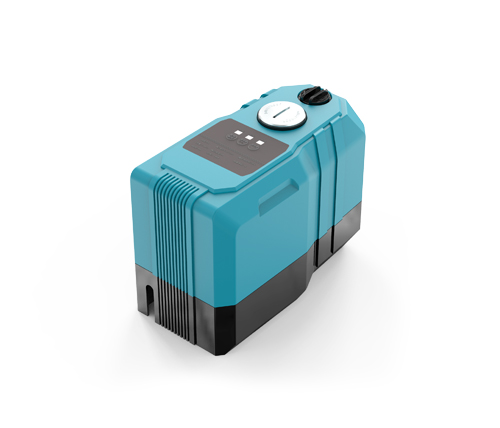
TW Series Energy Saving Smart Permanent Magnet Shield Booster Pump
Water pressure problems are common in multi-story homes, rural properties, apartments, villas, gardens, and buildings supplied by elevated tanks or private wells. The available pressure may be insufficient at upper-floor outlets, remote taps, showers, water heaters, irrigation points, or household appliances. In other cases, pressure may fluctuate sharply as several outlets open and close.
A traditional fixed-speed pump often responds poorly to these changing conditions. It may run at full power even when only a small amount of water is required. This can increase energy consumption, create unnecessary noise, and cause pressure fluctuations. A pump without appropriate control protection may also continue operating after water demand has stopped, increasing the possibility of dry running, overheating, seal wear, or premature motor damage.
The TW Series is designed around automatic adaptation. Its dual control system combines pressure and flow sensing so that the pump can react to actual water use. When an outlet is opened and water demand begins, the pump can support the system pressure. When demand decreases or stops, the control system can reduce operation or stop the pump according to the system condition.
This adaptive approach provides several practical benefits. It supports more stable water delivery, reduces unnecessary operating time, improves household comfort, and helps reduce mechanical and electrical stress. Instead of treating every operating condition as a full-load condition, the pump is intended to match its action more closely to the requirements of the water system.
The TW Series is a super-silent, auto-adaptive, dual-control, low-voltage permanent magnet household booster pump. It is intended for clean water and non-corrosive liquids without solid particles or fibers. The series is suitable for water pressure boosting, well-water lifting, water tower filling, garden irrigation, solar water supply systems, water heaters, and general living-water distribution.
The product family includes four models: TW-20, TW-25, TW-30, and TW-35. The model number corresponds to the maximum head in meters. For example, the TW-20 has a maximum head of 20 meters, while the TW-35 has a maximum head of 35 meters.
All models use 1-inch inlet and outlet connections, a maximum suction capability of 9 meters, and the same overall dimensions of 255 × 138 × 193 millimeters. This common platform simplifies product selection, installation planning, replacement, and inventory management.
The principal product advantages include a stated operating voltage range of DC 24–40V, very low operating noise of approximately 20–30dB, food-grade plastic fluid-contact components, permanent magnet motor technology, a reported service life of up to 30,000 hours, IP55 protection, Class H insulation, and S1 continuous-duty capability.
One of the most important features of the series is its low-voltage pump-side operating design. The product information specifies DC 24–40V as the safe voltage range. This voltage level is substantially lower than the voltage commonly present at household outlets and is intended to reduce the risk associated with direct electrical contact in wet environments.
Low-voltage operation is particularly valuable in bathrooms, utility rooms, outdoor water systems, solar-powered installations, and locations where electrical safety is a major concern. The documentation also lists single-phase input options of 100–140V and 160–240V at 50/60Hz. System designers should verify the exact power-supply configuration, controller arrangement, and local electrical requirements before installation.
The low-voltage architecture can also support integration with selected solar-energy and battery-based water systems, provided that the electrical supply is correctly matched to the pump and its control equipment. This makes the product relevant to energy-conscious residential projects and decentralized water-supply applications.
The TW Series uses a permanent magnet motor rather than a conventional motor design. Permanent magnet motors can provide efficient torque production and compact construction. They are especially useful in applications where quiet operation, energy efficiency, and precise speed control are important.
The listed electric pump speed is 12,000 revolutions per minute. At this speed, the pump can achieve useful hydraulic performance while remaining compact. The permanent magnet motor also contributes to the pump’s quiet operating profile when combined with the water-cooling and shielded structure.
Unlike a traditional air-cooled motor that may require an external cooling fan, this pump uses a water-cooling structure. The pumped liquid helps carry away heat from relevant internal areas, while the shielded construction keeps the motor assembly compact and protected. Eliminating a cooling fan removes a potential source of mechanical noise and reduces the number of external moving components.
Noise is one of the most common complaints associated with household water pumps. A pump installed near a bedroom, bathroom, kitchen, living area, or office can become disruptive if it produces strong vibration or high-frequency mechanical noise. Conventional booster pumps may also create an abrupt starting sound each time a tap is opened.
The TW Series is specified at approximately 20–30dB, placing it in a very quiet operating category for a small household pump. Actual sound levels will depend on installation, piping, mounting, water conditions, air in the system, and the surrounding structure. Nevertheless, the product’s permanent magnet motor, water-cooling structure, and shielded configuration are designed to reduce the sources of noise commonly found in conventional pump systems.
There is no cooling fan, so the pump avoids fan noise and fan-bearing wear. The compact body also allows it to be positioned close to the point of use without requiring a large equipment room. In residential applications, this can improve comfort while making it easier to locate the pump near the water heater, bathroom, tank, or main supply line.
Quiet operation is not only a comfort feature. Lower vibration can also reduce stress on connected pipework, mounting brackets, threaded joints, and nearby fittings. Correct installation remains essential: the pump should be firmly supported, pipework should be aligned without forcing the pump casing, and excessive vibration should not be transferred from the piping system into the pump body.
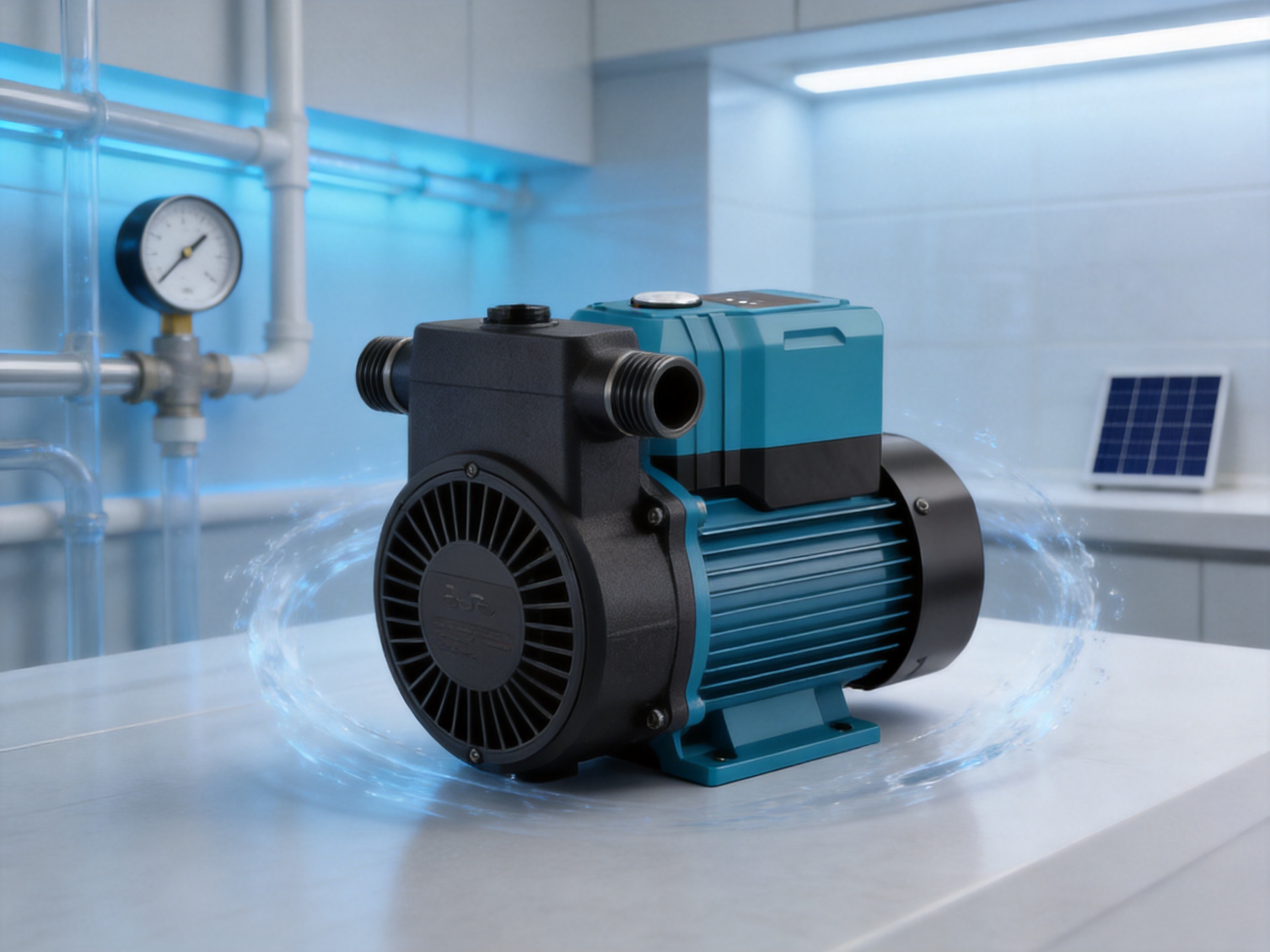
The TW Series uses a dual control system based on pressure and flow switch control. This arrangement is intended to recognize both the pressure condition of the water system and the presence or absence of water movement. The result is a more responsive operating process than a simple manual on-and-off switch.
When a user opens a faucet or starts a shower, the pressure in the line changes and water begins to flow. The control system detects this demand and enables the pump to support the required pressure. When the outlet is closed and flow stops, the pump can stop or adjust its operation according to the system condition.
The product information also refers to stepless pressure regulation for pumps with a 0–100-meter head range. The exact available pressure range for each TW model is determined by the selected model’s performance curve and operating point. Users should therefore select a model based on the required flow, elevation, pipe resistance, and desired pressure rather than relying only on the maximum-head figure.
Auto-adaptive control is especially beneficial where demand changes frequently. A household may require only a small flow when one tap is open, but a higher flow when a shower, kitchen faucet, washing machine, and garden outlet operate at the same time. A system that adapts to demand can provide a better balance between water pressure, energy use, and motor loading.
Pressure stability is important for showers, water heaters, washing machines, dishwashers, irrigation nozzles, and modern household fixtures. A pump that starts and stops unpredictably or delivers large pressure changes can reduce user comfort and affect the performance of connected equipment.
The pressure-and-flow control system helps the pump respond to actual system conditions. It is not a replacement for proper hydraulic design, correctly sized pipework, or a suitable pressure vessel where one is required, but it provides a useful control foundation for compact booster installations.
Energy saving is a central design objective of the TW Series. A permanent magnet motor can operate efficiently within its intended range, while auto-adaptive control helps avoid unnecessary full-power operation. The pump is designed to deliver water pressure when needed rather than run continuously regardless of demand.
Energy performance depends on the operating point, water temperature, pipe friction, suction conditions, supply voltage, installation quality, and usage pattern. Even so, reducing unnecessary operation can contribute to lower electricity consumption over the life of the system. It can also reduce heat generation and mechanical stress, supporting long service intervals.
For commercial buyers, energy efficiency may provide value beyond monthly electricity savings. Lower operating energy can improve the total cost of ownership, support sustainability objectives, and make the pump more attractive for projects involving solar water supply or energy-conscious residential construction.
The TW Series uses food-grade plastic for fluid-contact components. The listed construction includes an engineering-plastic pump body, an ABS plastic base and upper cover, a PPS shield cover, a PPO impeller, a ferrite permanent magnet, and a 99-ceramic motor shaft.
These materials serve several purposes. Plastic fluid passages do not rust in the same way as ordinary ferrous metal components. This helps protect water quality and reduces the risk of rust particles entering the water system. The use of non-metallic materials can also reduce overall weight and support corrosion resistance in humid environments.
The shield cover is made from PPS, a material known for its heat resistance, dimensional stability, and suitability for demanding engineering applications. PPO is used for the impeller, while ABS is used in the base and upper cover. The ceramic shaft helps provide a hard, corrosion-resistant bearing surface in the wet portion of the pump.
Material selection must always be understood within the product’s intended application. The TW Series is designed for clean water or non-corrosive liquids without solid particles and fibers. It should not be used for abrasive slurry, sewage containing solids, highly corrosive chemicals, or liquids outside the specified compatibility range.
Corrosion can shorten pump life, contaminate water, damage seals, and increase maintenance requirements. In domestic water systems, the visible presence of rust is also unacceptable to many users. Food-grade plastic fluid components provide a practical way to reduce rust-related concerns in the water path.
The non-rusting design is particularly useful in bathrooms, kitchens, water heaters, garden systems, and water tower installations where the pump may be exposed to humidity for long periods. It can also benefit systems in regions where local water chemistry accelerates metal corrosion.
Although the pump body and fluid components are designed for corrosion resistance, connected pipes, valves, fittings, and storage tanks must also be selected appropriately. A corrosion-resistant pump cannot eliminate corrosion occurring elsewhere in the water system.
The TW Series is specified with a service life of up to 30,000 hours. In practical terms, service life depends on operating conditions, water quality, temperature, voltage stability, installation, maintenance, and the frequency of starts and stops. The stated figure nevertheless reflects the product’s focus on long-term household operation.
Several design elements support durability. The permanent magnet motor reduces the need for a cooling fan. The water-cooling structure helps manage motor heat. The ceramic shaft resists wear and corrosion in the wet area. The shielded construction protects the motor and contributes to compact assembly. The use of standard components also supports easier servicing.
The manufacturer states that the product has a high pass rate for standard parts and high production efficiency for assembly parts. It is designed so that maintenance can be performed quickly with a cross screwdriver. This is valuable for installers, distributors, property managers, and end users who need to reduce downtime.
Simple maintenance does not mean that inspection can be ignored. The system should be checked periodically for leaks, unusual vibration, blocked filters, air entry, loose electrical connections, and abnormal sound. The pump should be isolated from the power supply before any service work is performed.
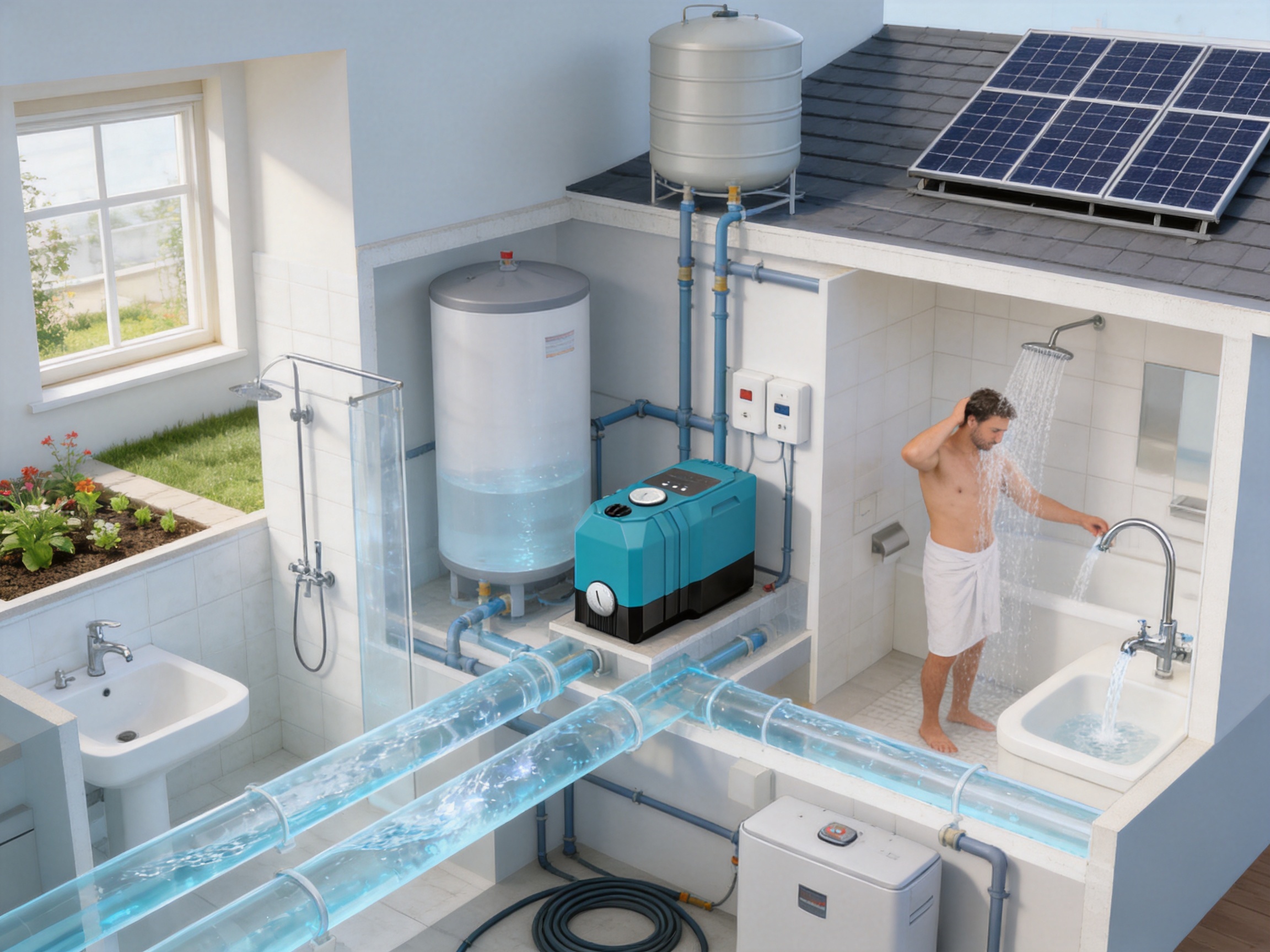
The pump is specified with IP55 protection and is described as waterproof for direct use in bathroom environments. IP55 generally indicates protection against dust that could interfere with operation and protection against water jets from various directions. The rating does not mean that the pump should be submerged or exposed to uncontrolled flooding.
Bathroom and utility-room installation can be challenging because electrical equipment may be located near water, condensation, splashing, and cleaning activities. The pump’s waterproof construction provides an additional layer of protection, but installation must still follow local electrical codes and safe separation requirements.
The ambient temperature range is listed as 4–55°C, while the liquid temperature range is listed as 0–100°C. These ranges must be considered carefully. The pump may handle high-temperature liquid within the stated limit, but the ambient environment, seals, connected pipes, and control components must also be suitable for the selected temperature.
Class H insulation provides a high level of thermal insulation capability for the motor winding system. The S1 duty classification indicates continuous-duty operation under the conditions for which the pump is designed. Together, these specifications make the pump suitable for regular household water-supply duties rather than only short intermittent operation.
The following table summarizes the main technical data supplied for the TW Series models.
| Model | Voltage | Power | Power | Maximum Flow | Maximum Flow | Maximum Head | Maximum Suction | Inlet and Outlet | Net Weight | Gross Weight | Dimensions |
|---|---|---|---|---|---|---|---|---|---|---|---|
| V | W | HP | m³/h | L/min | m | m | inch | kg | kg | mm | |
| TW-20 | DC-24 | 84 | 0.1 | 2.0 | 33 | 20 | 9 | 1 × 1 | 1.8 | 2.1 | 255 × 138 × 193 |
| TW-25 | DC-30 | 105 | 0.1 | 2.2 | 37 | 25 | 9 | 1 × 1 | 1.8 | 2.1 | 255 × 138 × 193 |
| TW-30 | DC-36 | 126 | 0.2 | 2.4 | 40 | 30 | 9 | 1 × 1 | 1.8 | 2.1 | 255 × 138 × 193 |
| TW-35 | DC-40 | 160 | 0.2 | 2.5 | 42 | 35 | 9 | 1 × 1 | 1.8 | 2.1 | 255 × 138 × 193 |
Maximum flow and maximum head are reference points rather than simultaneous operating values. As with other centrifugal pump systems, flow generally decreases as required head increases. For accurate model selection, installers should consult the performance chart, calculate the total dynamic head, and estimate the required flow at the actual operating point.
The TW-20 is suited to applications requiring a maximum head of approximately 20 meters under the specified test conditions. It may be appropriate for smaller homes, modest pressure-boosting duties, short pipe runs, or lower elevation differences.
The TW-25 provides a maximum head of 25 meters and a maximum flow of 2.2 cubic meters per hour. It offers an intermediate capacity for homes or small systems requiring additional pressure beyond the TW-20.
The TW-30 provides a maximum head of 30 meters and a maximum flow of 2.4 cubic meters per hour. It can be considered for higher buildings, longer pipe runs, elevated storage tanks, or systems with greater resistance.
The TW-35 is the highest-capacity model in the series, with a maximum head of 35 meters and a maximum flow of 2.5 cubic meters per hour. It is intended for applications requiring the greatest pressure capability within this product family.
Model selection should consider elevation, pipe length, bends, valves, filters, water heaters, shower fittings, simultaneous outlet demand, and the pressure required at the most distant point. Choosing a pump only by maximum head may result in inadequate flow or excessive capacity.
The pump can be used for lifting clean well water where the suction conditions are within the stated maximum suction capability of 9 meters. A suitable foot valve, strainer, and correctly sized suction pipe may be required to maintain prime and reduce the risk of air entry.
Well-water quality should be checked before installation. The water must not contain solid particles, fibers, abrasive material, or chemicals that could damage the impeller, shaft, control components, or seals.
The TW Series is suitable for filling elevated water tanks and towers. The optional timing function can supply water to a water tower at regular intervals, depending on the selected configuration. This can support scheduled replenishment in homes, agricultural buildings, and small facilities.
Tank filling systems should include appropriate level control or overflow protection. The pump should not be allowed to operate indefinitely against a closed line or continue running after the tank is full unless the control arrangement is specifically designed for that condition.
In residential water systems, the pump can boost pressure to showers, faucets, water heaters, washing machines, and other clean-water outlets. Its compact size and low noise make it suitable for installation near living areas, utility spaces, bathrooms, or the main household water line.
The dual-control system is particularly useful in homes where demand varies throughout the day. It can support a more consistent experience when users open and close outlets frequently.
The pump can provide pressure for garden watering, hose outlets, sprinklers, and selected small irrigation systems. The required flow and pressure depend on the number of irrigation devices, nozzle size, hose length, elevation, and filtration requirements.
For outdoor applications, the pump should be protected from freezing, flooding, direct physical damage, and unapproved electrical exposure. Filters should be installed where the water may contain sediment or debris.
The pump is suitable for supporting solar-energy water-supply systems and related equipment when the electrical supply and control arrangement are correctly matched. Its low-voltage design is relevant to solar and battery-based projects, while its compact construction makes it useful in decentralized installations.
Solar system designers should verify the voltage range, starting requirements, available current, battery capacity, controller compatibility, and protection against low-voltage conditions. The pump must not be connected directly to an incompatible solar panel or power source.
Water heaters often require adequate inlet pressure to operate correctly and provide a comfortable shower or tap experience. The TW Series can support pressure boosting for water-heater systems, provided that liquid temperature, pressure limits, pipe materials, and local safety requirements are respected.
When handling warm or hot water, installers should verify that all connected components are rated for the temperature. The product documentation lists a liquid temperature range of 0–100°C, but the complete system must be evaluated as a whole.
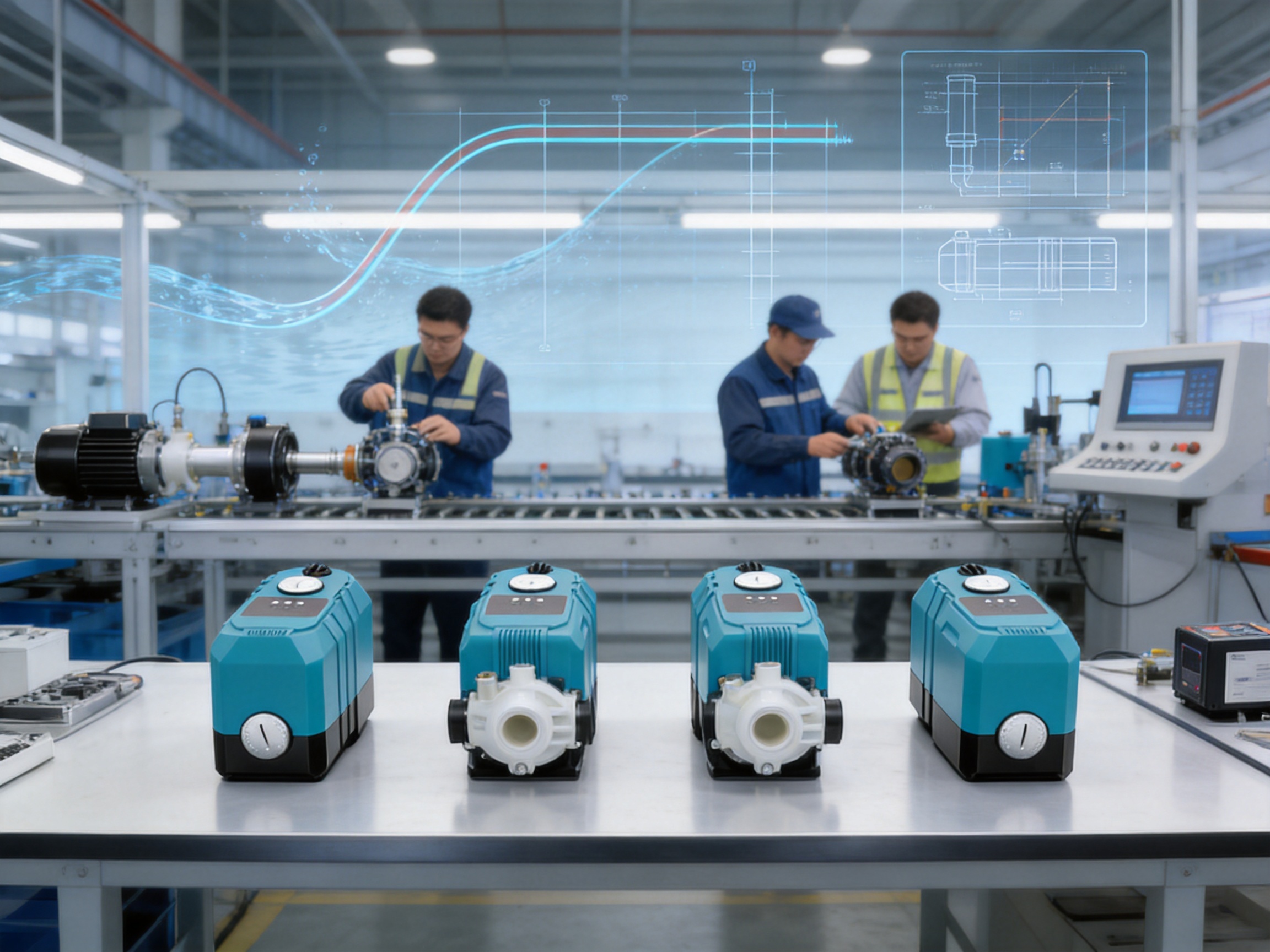
The manufacturer, Taizhou Edwin Electric Co., Ltd., was founded in 2008 and operates as an integrated manufacturing enterprise focused on independent research and development, mass production, and global export. This integrated structure is important because pump quality depends on more than the final assembly process. It also depends on product design, material selection, component consistency, production controls, testing, packaging, and after-sales support.
Independent research and development enables the manufacturer to refine pump hydraulics, motor systems, controls, materials, and product configurations according to market requirements. The development of solar water pumps and intelligent booster pumps since 2018 demonstrates an ongoing focus on energy-related and smart water technologies.
Mass-production capability supports consistent product availability and helps serve distributors, wholesalers, engineering contractors, and original equipment customers. A stable production system also makes it easier to maintain common dimensions, standardized components, and repeatable performance across product batches.
The manufacturer’s product range covers deep well pumps, submersible pumps, domestic booster pumps, circulation pumps, solar water pumps, and related water-system equipment. This breadth gives customers access to multiple pump categories from one supplier and supports integrated procurement for residential, agricultural, municipal, construction, mining, HVAC, and new-energy projects.
The TW Series is designed around a practical combination of standard components and efficient assembly parts. A high pass rate for standard parts helps reduce production interruptions and simplifies replacement planning. Efficient assembly processes can improve consistency, shorten production lead times, and support competitive pricing for international buyers.
Standardized construction also benefits distributors and service organizations. Since the TW-20, TW-25, TW-30, and TW-35 share the same overall dimensions and connection size, product handling and installation planning can be simplified. The principal differences are the voltage, power, maximum flow, and maximum head.
Quality in a booster pump involves hydraulic performance, motor reliability, electrical safety, material stability, sealing, noise control, and resistance to operating stress. The TW Series addresses these areas through its permanent magnet motor, water-cooling structure, food-grade plastic fluid path, ceramic shaft, IP55 protection, Class H insulation, and continuous-duty design.
While project-specific testing and compliance requirements must be confirmed for each market, the product’s design specifications provide a clear basis for technical evaluation. Buyers can compare the series according to noise, voltage, head, flow, materials, size, and control features rather than evaluating only nominal motor power.
The stated 20–30dB noise level is a major competitive advantage for household use. Traditional booster pumps with air-cooled motors and less controlled starting behavior may create more noticeable noise and vibration. The TW Series addresses this issue through a permanent magnet motor, water cooling, shielded construction, and fanless operation.
The DC 24–40V operating range is well suited to applications where electrical safety is a high priority. Bathrooms, utility rooms, outdoor systems, and solar installations can benefit from a low-voltage pump-side design when properly installed with compatible electrical equipment.
The dual pressure-and-flow control system gives the pump a more intelligent response than a basic manual switch. It can recognize water demand and support automatic start and stop behavior, improving convenience and helping reduce unnecessary running time.
Food-grade plastic fluid-contact components provide an advantage over pump designs that expose water to ordinary ferrous metal surfaces. This is particularly valuable in clean-water systems where rust-free delivery and corrosion resistance are important selling points.
With a net weight of approximately 1.8 kilograms and dimensions of 255 × 138 × 193 millimeters, the TW Series is easy to handle during installation. Its compact form is useful in locations where space is restricted, including bathroom cabinets, utility cupboards, pump enclosures, and small mechanical rooms.
Four models cover maximum heads from 20 to 35 meters and maximum flows from 2.0 to 2.5 cubic meters per hour. This gives installers flexibility when matching the pump to a specific building height, pressure requirement, or pipe-network resistance.
The stated serviceability with a cross screwdriver can reduce repair complexity. For distributors and maintenance teams, easier access to standard parts can reduce downtime and improve the practicality of long-term ownership.
The pump should be installed by a qualified person familiar with water systems and applicable electrical requirements. Before installation, confirm the model, voltage, connection size, flow requirement, maximum head, suction height, liquid temperature, ambient temperature, and water quality.
The suction pipe should be airtight and appropriately sized. Air leakage on the suction side can cause unstable operation, loss of prime, reduced performance, and abnormal noise. Where necessary, use a suitable foot valve or check valve to help maintain prime.
The pump should be mounted on a stable surface and protected from excessive vibration. Pipework should be independently supported so that its weight is not transferred to the pump casing. Threaded connections should be sealed correctly without excessive tightening, which could damage plastic components.
A suitable filter may be required before the pump, especially in well-water, tank, or outdoor applications. However, the filter must be sized correctly and cleaned regularly. A blocked filter can reduce inlet pressure and cause poor performance or cavitation-like noise.
Before initial operation, the pump and suction line should be filled and air should be removed according to the installation arrangement. Do not operate the pump dry. Confirm that all valves are correctly positioned and that the discharge path is open enough for safe startup.
The electrical supply must match the specified input and pump-side voltage arrangement. Protective devices should be selected in accordance with local codes and the manufacturer’s instructions. The IP55 rating should not be interpreted as permission to submerge the pump or expose electrical connections to uncontrolled water.
Regular inspection helps preserve performance. Check for water leakage around the inlet, outlet, pump body, seals, and connected fittings. Examine the power cable and electrical connections for damage, heat, moisture, or looseness.
If the pump does not start, confirm that the electrical supply is available, the control system detects water demand, the inlet valve is open, and the pump is properly primed. If the pump starts and stops repeatedly, investigate insufficient flow, air in the suction line, a leaking outlet, an incorrectly adjusted control system, or a pressure vessel issue where applicable.
If performance is lower than expected, check for blocked filters, undersized pipework, excessive elevation, closed valves, air leaks, or an operating point beyond the selected model’s capability. Remember that the maximum head is not the same as the head available at maximum flow.
Unusual noise may indicate air, cavitation, poor mounting, pipe vibration, blocked suction, or foreign material. Because the pump is designed for clean water without solid particles or fibers, contaminated water should be filtered or treated before entering the pump.
When servicing the pump, disconnect the power supply and relieve water pressure. Allow hot liquid and components to cool before opening the system. Use original or approved replacement parts where possible to preserve performance and safety.
For distributors, the TW Series offers a compact product family with a clear model structure. The shared dimensions and 1-inch connections simplify storage, cataloging, and customer recommendations. The four model levels provide an easy progression based on maximum head.
For plumbing contractors, the pump combines automatic control, low noise, compact size, and straightforward installation. These features can help contractors provide a more refined solution for homeowners who are sensitive to noise, space, water quality, or electricity consumption.
For original equipment and project buyers, the manufacturer’s integrated production capacity and broad pump portfolio can support one-stop sourcing. Customers may be able to coordinate booster pumps with deep well pumps, submersible pumps, solar pumps, circulation pumps, and other water-system products through the same supply network.
The company also maintains import and export service capabilities through related trading and industrial organizations. These capabilities support procurement planning, order tracking, cross-border delivery, and international customer service. For global buyers, supplier coordination can be as important as the technical specification of the individual pump.
The TW Series is a low-voltage, permanent magnet, shielded booster pump with automatic adaptive dual control. It is designed primarily for household water pressure boosting, clean-water transfer, well-water lifting, water tower filling, garden irrigation, and support of solar water systems and water heaters.
The letters identify the product series, while the number indicates the maximum head in meters. For example, TW-20 has a maximum head of 20 meters and TW-35 has a maximum head of 35 meters.
The listed pump-side voltage range is DC 24–40V. The product information also lists single-phase input options of 100–140V and 160–240V at 50/60Hz. Buyers should confirm the exact electrical configuration and required controller or power supply before purchase and installation.
Yes, the product is described as waterproof and suitable for direct use in a bathroom. It has an IP55 protection rating. Nevertheless, installation must comply with local electrical regulations, and the pump must not be submerged or installed where flooding can occur.
The specified noise level is approximately 20–30dB. Actual noise can vary with mounting, pipework, air in the system, water conditions, and the surrounding building structure. Correct installation is important for achieving the quietest operation.
The listed liquid temperature range is 0–100°C. Before using the pump with hot water, confirm that the complete system, including pipes, valves, seals, fittings, and control equipment, is suitable for the intended temperature.
No. The pump is designed for clean water or non-corrosive liquids without solid particles and fibers. Sediment, abrasive particles, fibers, and other contaminants can damage the hydraulic components or reduce service life.
Selection depends on the required flow, elevation, pipe resistance, and desired pressure. TW-20 is the lowest-capacity model, while TW-35 offers the highest maximum head. A professional installer should calculate the total dynamic head and consult the pump performance chart before selecting a model.
The pump is classified for S1 duty, meaning it is designed for continuous-duty operation under suitable conditions. However, the dual pressure-and-flow control system is intended to start and stop or adapt operation according to water demand, helping avoid unnecessary running.
Maintenance includes checking for leaks, cleaning filters, inspecting electrical connections, confirming proper priming, and monitoring unusual noise or vibration. The manufacturer states that maintenance can be carried out quickly using a cross screwdriver, but power must always be disconnected before service work.
Yes, the pump is listed as suitable for supporting solar-energy water-supply systems. The electrical supply must be compatible with the pump, and designers should verify voltage, current, starting requirements, controller compatibility, and battery or solar-panel capacity.
Its principal differences include low-voltage operation, permanent magnet motor technology, water cooling without a fan, 20–30dB quiet operation, automatic pressure-and-flow control, food-grade fluid-contact materials, compact dimensions, and multiple model options within one standardized series.
The TW Series Energy Saving Smart Permanent Magnet Shield Booster Pump is designed for users who require more than basic water transfer. It combines quiet operation, low-voltage safety, automatic demand response, corrosion-resistant fluid-contact materials, compact construction, and long-life design in a single household-oriented platform.
Its competitive value is especially clear in residential and light-duty water systems where noise, water quality, limited installation space, and changing demand are important considerations. The dual-control system supports convenient automatic operation, while the permanent magnet motor and water-cooling structure contribute to efficiency and quietness.
The four-model range provides flexibility for different head requirements, from 20 meters to 35 meters. Common dimensions and 1-inch connections make the range practical for distributors and installers, while the manufacturer’s integrated research, production, assembly, and export capabilities support reliable supply for international buyers.
For best results, the pump should be selected according to the complete hydraulic duty rather than maximum head alone. Correct priming, clean water, suitable filtration, proper pipe sizing, compatible electrical protection, and regular inspection are essential. When these requirements are observed, the TW Series can provide a dependable and comfortable pressure-boosting solution for homes, gardens, water towers, solar systems, and clean-water installations.
Taizhou Edwin Electric Co., Ltd. TW Series Energy Saving Smart Permanent Magnet Shield Booster Pump Product Specifications.
Taizhou Edwin Electric Co., Ltd. TW Series Technical Data and Performance Information.
Taizhou Edwin Electric Co., Ltd. Product Construction and Materials List for the TW Series Booster Pump.
International Electrotechnical Commission. Degrees of Protection Provided by Enclosures for Electrical Equipment.
International Electrotechnical Commission. Rotating Electrical Machines: Rating and Performance Principles.
General pump engineering principles for total dynamic head, flow calculation, suction performance, and clean-water system design.
edwina@edwin-pump.com
+86-13586290903 (WhatsApp)
Xuri Gongliang Cutting Tool Entrepreneurship Park, Wenqiao Town, Wenling City, Taizhou City, Zhejiang Province, China

High Performance Smart Pump Factory


 English