edwina@edwin-pump.com

View All Products
en

Reliable pressure control is essential to the performance, safety, and service life of a water pumping system. Whether a pump supplies water to a residence, supports irrigation, serves a commercial building, or operates as part of an industrial installation, the system needs a dependable method of starting and stopping the motor. A pressure switch provides this essential control function by responding to changes in hydraulic pressure and sending an electrical signal to the pump.
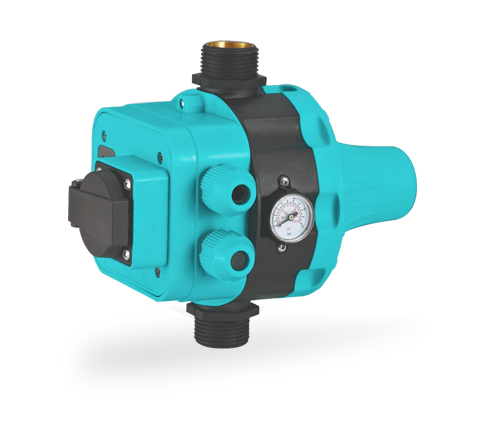
The ERS-5 Series Zinc Alloy Bottom Antifatigue Pressure Switch for Water Pumps is designed for this purpose. It combines a durable zinc alloy construction, a bottom-mounted configuration, adjustable pressure settings, and a switching design suitable for a wide range of water pump applications. Its specifications include a pressure range of 15 to 100 psi, standard settings of 20–40 psi, 30–50 psi, and 40–60 psi, a rated current of 16(8) A, voltage compatibility from 110–240 V and 400 V, IP44 protection, and a maximum working temperature of 55°C.
This article explains the operating principle, construction, application value, manufacturing strengths, and selection considerations of this pressure switch. It also compares the practical benefits of a zinc alloy bottom pressure switch with those of ordinary alternatives and presents questions commonly asked by buyers, installers, pump manufacturers, and system designers.
A water pump does not always need to run continuously. In a domestic water supply system, for example, the pump should start when pressure becomes too low and stop after the system reaches the required pressure. In an irrigation installation, the pump may need to respond to water demand at different outlets. In a booster system, the pump must maintain stable pressure without unnecessary operation.
A pressure switch performs this automatic control task. It monitors the pressure inside the hydraulic system and changes the state of an electrical contact when the pressure reaches a predetermined point. The lower pressure point is generally called the cut-in pressure. When system pressure falls to this level, the switch closes or changes its electrical state to start the pump. The upper pressure point is called the cut-out pressure. When the system reaches this level, the switch opens or changes state to stop the pump.
This automatic cycle reduces the need for manual operation. It also helps prevent the pump from running when water demand is low, which can reduce energy consumption, limit mechanical wear, and improve operating convenience. A correctly selected pressure switch can also help protect a pump from abnormal pressure conditions and reduce the possibility of over-pressurization.
The pressure switch is therefore a small component with an important responsibility. If its pressure response is inconsistent, the pump may start too frequently, run for too long, fail to start, or stop at an unsuitable pressure. The mechanical strength and electrical performance of the switch are consequently as important as its nominal pressure range.
The ERS-5 Series is a mechanical pressure controller developed for water pump systems. Its zinc alloy body is designed to provide a strong enclosure for the pressure-sensing and switching mechanism. The bottom connection arrangement allows the switch to be mounted at the bottom of the pump or in a position that supports a compact connection between the pump and the hydraulic control component.
The term “antifatigue” refers to the design objective of maintaining reliable operation through repeated pressure cycles. A water pump system may start and stop many times during normal use. Every cycle places mechanical demands on the diaphragm, spring, contact mechanism, and pressure adjustment structure. A pressure switch designed for repeated cycling must maintain its calibrated behavior over time instead of drifting rapidly or becoming difficult to operate.
The ERS-5 Series is available with different hydraulic connection options. The listed configurations include female screw sizes of 1/4 inch and 3/8 inch, as well as a male 1/4-inch connection. This range gives pump manufacturers and installers greater flexibility when matching the switch to different pump outlets, manifolds, adapters, and pipe arrangements.
The product can also be supplied with different pressure settings and customized exterior or hydraulic connection arrangements according to customer requirements. This flexibility is valuable for original equipment manufacturers, distributors, engineering contractors, and pump assemblers that need a pressure controller adapted to a particular system rather than a single universal configuration.
Its principal specifications are summarized below.
| Product series | ERS-5 Series |
| Product type | Mechanical pressure controller |
| Application | Water pumps and water pressure systems |
| Body material | Zinc alloy |
| Rated voltage | 110–240 V / 400 V |
| Power frequency | 50/60 Hz |
| Rated current | 16(8) A |
| Minimum cut-in pressure | 15 psi |
| Maximum cut-out pressure | 100 psi |
| Available pressure settings | 20–40 psi, 30–50 psi, and 40–60 psi |
| Protection class | IP44 |
| Maximum working temperature | 55°C |
| Female screw sizes | 1/4 inch and 3/8 inch |
| Male screw size | 1/4 inch |
| Warranty | 1 year |
The specification range makes the switch suitable for many domestic, commercial, and light industrial water applications. Before installation, the voltage, current, pressure setting, connection size, working temperature, and environmental conditions should always be checked against the complete pump system.
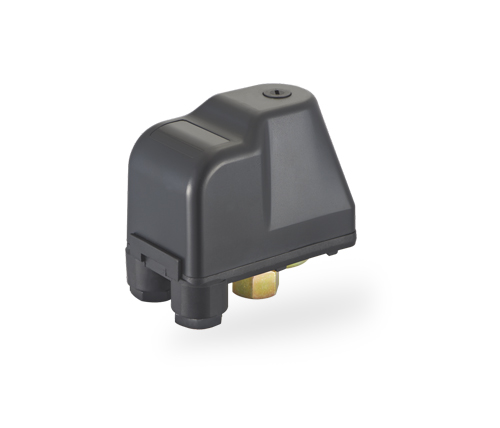
ERS-5 Series Zinc Alloy Bottom Antifatigue Pressure Switch for Water Pumps
Material selection has a direct influence on the durability of a pressure switch. The ERS-5 Series uses a zinc alloy body, which offers a practical balance of strength, dimensional stability, and manufacturing efficiency. A rigid metal enclosure helps protect the internal pressure and electrical components from external mechanical impact during installation, transportation, and daily operation.
Compared with lightweight plastic housings used in some basic pressure switches, zinc alloy can provide a more substantial structure around the hydraulic connection and adjustment area. This is particularly useful when the switch is mounted directly to a pump or pipe fitting, where tightening forces and vibration can be transmitted through the connection. A robust body can reduce the risk of deformation and help maintain the alignment of the internal mechanism.
Zinc alloy is also suitable for precision die-casting and mass production. This allows the manufacturer to form complex external and internal features with consistent dimensions. When the casting process is properly controlled, it can support repeatable assembly, accurate connection geometry, and a uniform appearance across production batches.
Water pump installations are exposed to pressure fluctuations, vibration, humidity, and occasional temperature changes. The switch body must therefore be more than a simple cover. It should provide structural support for the connection, protect the contact assembly, and help maintain the relationship between the pressure-sensing mechanism and the electrical switching mechanism.
The zinc alloy design is especially valuable in applications where the switch may be handled frequently by installers or integrated into packaged pump equipment. The metal body offers a firm mounting surface and can contribute to a professional, durable appearance. As with all metal components used around water, the overall installation should still be designed to prevent unnecessary exposure to corrosive chemicals, standing water, or unsuitable environments.
A zinc alloy body can provide several practical advantages. First, it improves resistance to mechanical stress during mounting. Second, it provides a rigid platform for internal components. Third, it supports stable dimensions over the operating temperature range specified for the product. Fourth, it gives equipment manufacturers a durable component suitable for repeated handling in production and field service.
These benefits do not mean that material alone determines product quality. The final performance also depends on casting quality, machining, surface treatment, sealing, contact materials, calibration, and inspection. The strength of the ERS-5 Series comes from combining the zinc alloy structure with a complete manufacturing and quality-control process.
Repeated cycling is one of the most important operating challenges for a pump pressure switch. Each time water is consumed, pressure can fall. The pump starts, pressure rises, and the pump stops. In a household system, this sequence may occur several times per day or many times during periods of high demand. In commercial or agricultural systems, the number of cycles can be significantly higher.
A conventional switch that is not designed for repeated operation may experience gradual changes in spring tension, diaphragm movement, contact condition, or adjustment stability. These changes can lead to a wider difference between the intended and actual switching pressures. They may also result in contact sticking, delayed response, or a pump that cycles too frequently.
The antifatigue focus of the ERS-5 Series is intended to support stable performance over repeated pressure changes. The pressure-sensing components must move smoothly, the spring mechanism must maintain its response, and the electrical contacts must operate consistently. The body and connection must also withstand the mechanical effects of vibration and repeated hydraulic loading.
For pump manufacturers, this design objective can help produce equipment with more predictable operating behavior. For installers, it can reduce the likelihood of premature adjustment problems. For end users, it can support dependable automatic water supply during normal operation.
A pressure switch cannot compensate for an incorrectly sized pump, a blocked pipe, an undersized pressure tank, or a system with severe water hammer. However, a fatigue-resistant switch is better positioned to perform reliably when the rest of the system is correctly designed and maintained.
Proper pressure settings are essential to the life of both the switch and the pump. If the cut-in and cut-out points are too close together, the pump may start and stop too frequently. If the pressure tank is incorrectly charged or the system has a leak, the pump may also cycle excessively. The ERS-5 Series provides commonly used pressure ranges of 20–40 psi, 30–50 psi, and 40–60 psi, allowing the system designer to select a suitable differential for the application.
The correct setting depends on the pump curve, pipe arrangement, water demand, tank configuration, building height, and required outlet pressure. The switch should not be adjusted beyond the safe operating limits of the pump or other system components. A qualified technician should verify the actual pressure using a calibrated gauge.
The product has a stated pressure range from 15 to 100 psi. The minimum cut-in value is 15 psi, while the maximum cut-out value is 100 psi. Standard pressure settings include 20–40 psi, 30–50 psi, and 40–60 psi.
A 20–40 psi setting may be appropriate for certain smaller domestic water systems where moderate pressure is sufficient. A 30–50 psi setting is widely used for household and light commercial applications that require a higher pressure level. A 40–60 psi setting can support systems designed for greater water pressure, provided that the pump, tank, pipework, valves, and fixtures are all rated for the selected pressure.
The difference between the cut-in and cut-out pressure is known as the pressure differential. A suitable differential allows the pump to operate for a reasonable period instead of restarting after only a small pressure drop. Longer operating cycles can help reduce rapid switching and may improve the overall operating efficiency of the system.
The availability of different factory settings is an advantage for original equipment production. Instead of adjusting every unit manually in the field, a manufacturer can specify the desired pressure configuration when placing an order. This can reduce assembly time and make product behavior more consistent from one pump package to another.
Customized settings can also be useful in specialized systems. However, customization should be based on clearly defined engineering requirements. The selected pressure must remain within the capability of the switch and the connected pump system. The manufacturer, installer, or system designer should confirm the target pressure before production or installation.
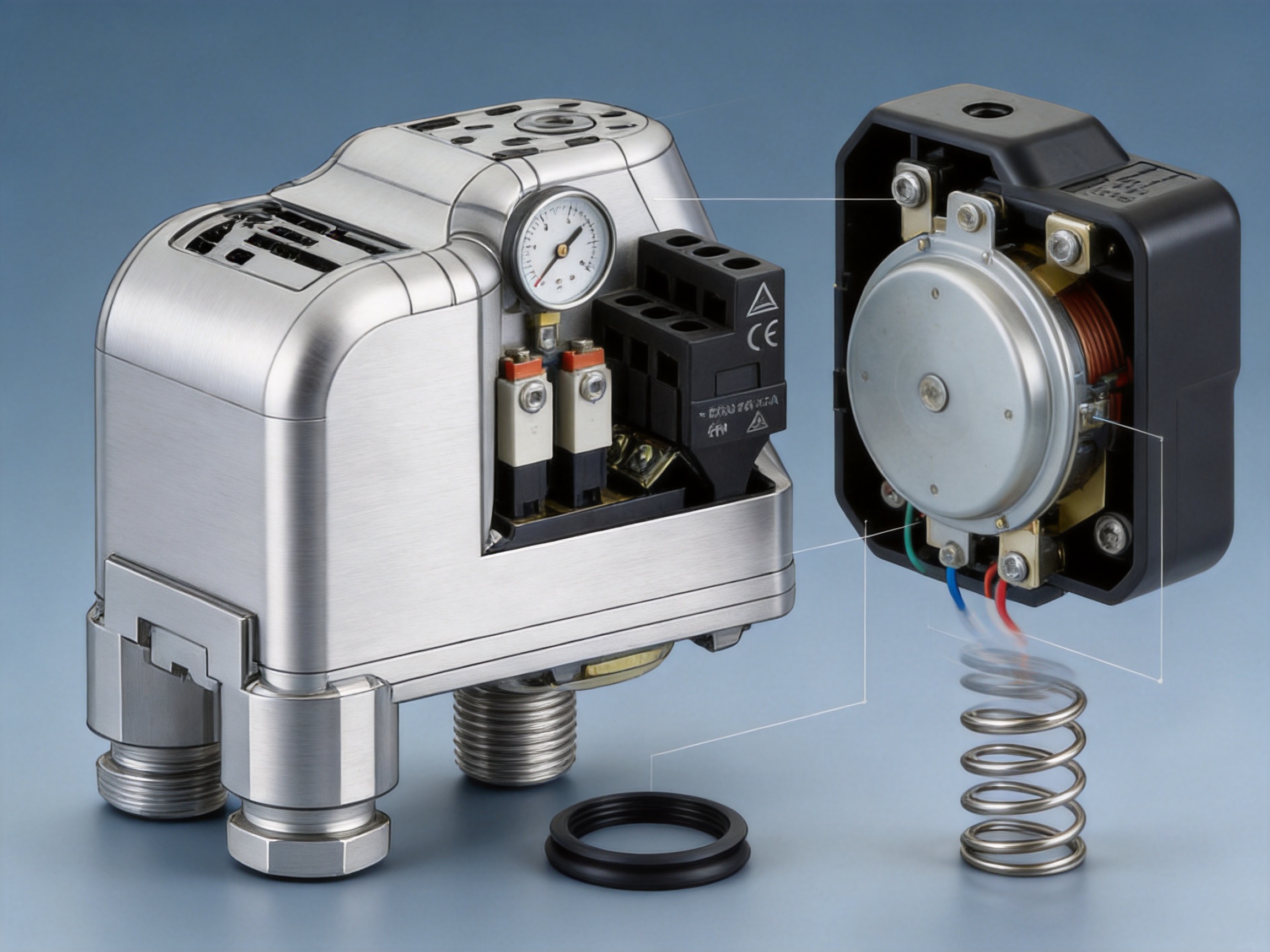
The ERS-5 Series is rated for 110–240 V and 400 V applications, with a power frequency of 50/60 Hz. Its rated current is listed as 16(8) A. These specifications indicate that the switch can be integrated into different electrical environments, subject to the exact wiring arrangement, motor characteristics, and applicable electrical standards.
Motor loads can have different starting and running characteristics. A pump motor may draw a higher current when starting than when operating continuously. The 16(8) A designation should therefore be interpreted correctly in relation to the electrical system and motor load. The installer must verify whether the pressure switch can directly control the intended motor or whether a contactor, relay, or other motor-control device is required.
Correct wiring is essential for safe operation. The power supply should be isolated before installation or service. Terminals should be tightened to the appropriate degree, conductors should be protected from moisture and abrasion, and the grounding arrangement should comply with local requirements. Electrical work should be carried out by qualified personnel.
The broad voltage specification is useful for manufacturers exporting pump systems to different markets. It can simplify product planning by allowing one pressure switch series to serve multiple regional configurations. Nevertheless, the complete product documentation and local electrical regulations must be followed for each application.
A pressure switch is both a hydraulic sensing device and an electrical switching device. Selecting it only by pipe size or pressure range is not sufficient. The installer must also consider the motor voltage, frequency, current, starting method, enclosure requirements, ambient conditions, and control architecture.
For larger motors or demanding commercial systems, the switch may be used to control a separate contactor rather than carrying the motor current directly. This arrangement can reduce electrical stress on the pressure switch and allow the pump to be controlled safely according to the system design.
The bottom-mounted structure is a distinctive feature of the ERS-5 Series. Positioning the pressure switch at the bottom of the pump can support a compact equipment layout, particularly when the pump outlet and pressure-control connection are designed as an integrated assembly.
A bottom connection can also help manufacturers create a cleaner packaged pump design. The switch can be positioned close to the hydraulic outlet, reducing the need for additional tubing or complicated external routing. This may save space in domestic booster units, small pressure systems, and compact pump sets.
The available connection choices include female 1/4-inch and 3/8-inch configurations and a male 1/4-inch configuration. These options can be matched with different fittings and adapters. The correct connection must be selected according to the pump port, thread standard, sealing method, and installation direction.
During installation, the switch should be supported appropriately and should not be forced into alignment by excessive tightening. Thread sealant or sealing tape should be applied in a way that does not enter the pressure passage. The switch should also be installed where the pressure can be measured accurately and where it is protected from unnecessary mechanical impact.
Although the product is designed for water pump use, it should not be installed in a medium or environment that is incompatible with the materials or stated operating limits. Water quality, chemical additives, temperature, and contamination should all be evaluated in specialized applications.
The ERS-5 Series has an IP44 protection class. In general terms, this indicates protection against solid objects above a specified size and protection against water splashes from different directions. IP44 is suitable for many indoor or sheltered pump installations, but it does not mean that the switch is waterproof or designed for immersion.
The pressure switch should be installed in a location that avoids direct water jets, flooding, condensation accumulation, and prolonged exposure to corrosive substances. A protective enclosure or suitable equipment cabinet may be required in outdoor, industrial, or high-humidity installations.
The maximum working temperature is specified as 55°C. The surrounding environment, water temperature, motor heat, pipe temperature, and enclosure ventilation should all be considered. Operation above the specified temperature may affect the mechanical response, electrical insulation, seal performance, or service life of the product.
Using the switch within its rated environmental limits is one of the simplest ways to improve reliability. Good installation practice is therefore an important part of the product’s performance. Even a well-manufactured pressure switch may not operate correctly if it is exposed to conditions outside its design range.
Many pressure switches appear similar from the outside, but their practical value can differ according to construction, calibration, connection design, and quality control. The ERS-5 Series offers several features that may be advantageous when compared with basic low-cost alternatives.
A zinc alloy body can provide greater rigidity and a more secure mounting structure than a lightweight housing. This may be particularly beneficial where the switch is mounted directly to a pump and exposed to vibration or repeated handling. The metal construction also supports a more substantial product design for commercial equipment and professional installations.
A switch designed with repeated pressure cycles in mind can offer more consistent operation than a basic component intended for less demanding use. Stable switching behavior is important in systems where the pump starts and stops regularly throughout the day.
The ERS-5 Series supports several standard pressure ranges and can be customized according to customer requirements. This gives pump manufacturers more flexibility than a single fixed setting. It also allows distributors to serve multiple applications with one product family.
The availability of male and female connection choices in common sizes can simplify system integration. It may reduce the need for additional adapters and make it easier to match the pressure switch to different pump designs.
The 110–240 V / 400 V and 50/60 Hz specifications support use in a variety of markets, provided the actual electrical installation is suitable. This can be useful for exporters, OEM pump manufacturers, and distributors serving customers in regions with different supply standards.
These advantages should be evaluated together with price, installation requirements, local certifications, required pressure, and the complete pump system. The most economical component is not necessarily the lowest-cost item; it is the component that provides suitable performance, service life, compatibility, and support for the application.
The performance of a pressure switch depends heavily on the manufacturing process. A reliable product requires more than a suitable design concept. It requires consistent material control, accurate forming, stable assembly, calibration, electrical inspection, and traceable quality management.
Taizhou Edwin Electric Co., Ltd., operating under the Edwin Pump name, was founded in 2008. The company is an integrated manufacturing enterprise with activities covering independent research and development, mass production, and global export. Its wider product portfolio includes deep well pumps, submersible pumps, domestic booster pumps, circulation pumps, solar water pumps, intelligent booster pumps, and water-treatment peripheral products.
This broader pump manufacturing background is relevant to the ERS-5 Series because a pressure switch is most effective when it is developed with a clear understanding of pump behavior and water system requirements. Experience with different pump types can help a manufacturer consider pressure response, motor starting, hydraulic connections, installation space, and system integration during product development.
Independent research and development allows the manufacturer to adapt products to customer requirements and market needs. For a pressure switch, this may include adjusting the body configuration, connection type, pressure setting, external finish, internal mechanism, or packaging format.
Customization is particularly important for OEM and private-label customers. A pump manufacturer may require a specific connection direction or pressure range, while a distributor may need a product configuration suitable for a regional market. A flexible development capability can shorten the path from requirement definition to finished product.
Mass production requires repeatability. The body, spring, diaphragm, terminals, contacts, seals, and adjustment components must be produced and assembled within controlled tolerances. Stable production helps reduce variation between units and supports consistent pressure performance.
For international customers, production capacity is also important because it affects order planning, delivery schedules, and the ability to support repeat purchases. A manufacturer with integrated production and export experience can coordinate technical communication, production scheduling, inspection, packaging, and shipping more efficiently.
Key inspection activities for a pressure switch may include visual inspection of the body, dimensional inspection of threaded connections, pressure testing, switching-point verification, electrical continuity testing, insulation checks, and functional cycling. The exact inspection plan depends on the product design and the customer’s requirements.
Pressure calibration is especially important. A switch must respond at the intended cut-in and cut-out points within the specified tolerance. Inconsistent calibration can cause unwanted pump cycling or inadequate water pressure. Electrical inspection is equally important because the contacts must switch reliably under the intended load conditions.
A combination of process control and final inspection helps identify defects before products leave the factory. It also provides useful information for continuous improvement. If a recurring issue is found in assembly or testing, the manufacturer can investigate the relevant process and make corrective adjustments.
Edwin Pump supplies customers in international markets and serves applications including agricultural irrigation, municipal engineering, construction, mining, HVAC systems, new energy projects, and household water supply. This broad application experience exposes the company to different operating conditions, purchasing requirements, packaging expectations, and technical standards.
In 2012, the company established Taizhou Haipai Import & Export Co., Ltd. and Golden Falcon Industrial Co., Ltd. to support procurement planning, order tracking, cross-border delivery, and foreign trade services. These supporting capabilities are valuable for international customers that require more than a product catalogue. They also help coordinate one-stop procurement of pumps, accessories, and related water-system components.
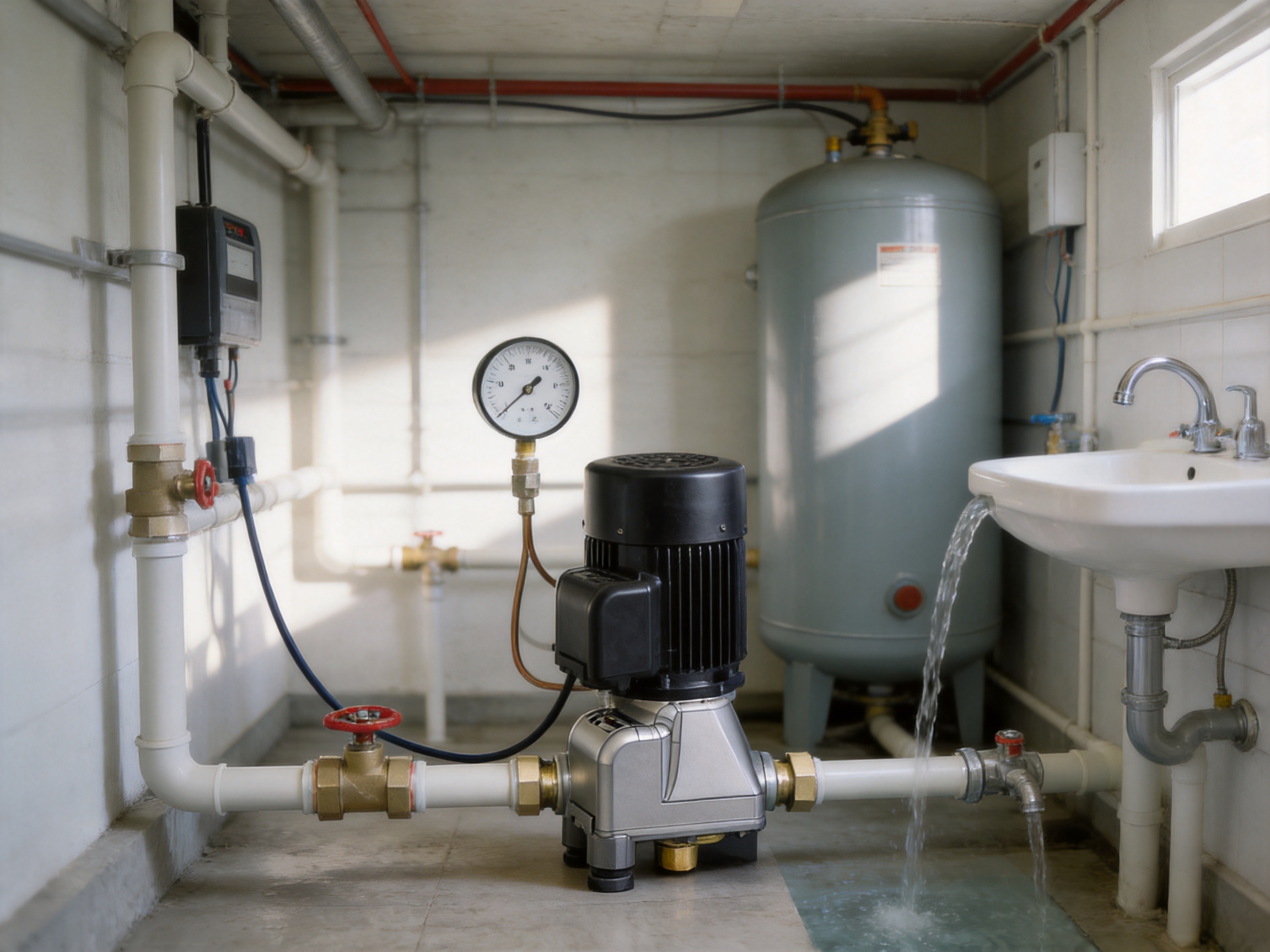
In homes, the pressure switch can be used in systems that draw water from storage tanks, wells, or municipal supplies. It can automatically start a domestic pump when pressure falls and stop the pump when the selected upper pressure is reached. The product’s compact connection sizes are suitable for many small and medium pump assemblies.
Domestic booster pumps are used to improve water pressure at showers, faucets, washing machines, and other outlets. A pressure switch can provide automatic operation according to household demand. The correct pressure range should be selected according to the building’s plumbing, the pump’s performance, and the comfort requirements of the users.
Small irrigation systems may require automatic pump control as water demand changes. The pressure switch can be integrated into a pump package that supplies sprinklers, hoses, or localized irrigation equipment. In these systems, the installer should also consider flow variation, water source reliability, filtration, pipe losses, and the possibility of dry running.
Commercial facilities may use pump systems for general water supply, service rooms, small pressure-boosting systems, or auxiliary equipment. The ERS-5 Series can be considered where the voltage, current, pressure, temperature, and protection requirements match the application.
Some water systems associated with building services require pressure monitoring or pump activation. The pressure switch may be suitable for selected auxiliary water applications, but the fluid temperature and chemical composition must remain within the product’s allowable conditions. For high-temperature or chemically treated systems, engineering review is recommended.
Pump manufacturers can install the pressure switch as part of a finished pump set. Its bottom-mounted structure and available connection choices can help create a compact product assembly. Factory-installed pressure settings can also simplify commissioning for distributors and end users.
Before installation, confirm the pressure switch model, connection type, pressure range, voltage, current, frequency, environmental conditions, and motor-control arrangement. Check that the pump and pressure tank are compatible with the selected cut-in and cut-out pressures.
Inspect the threads and sealing surfaces before connection. The switch should be screwed into the correct port without cross-threading. Excessive torque should be avoided because it can damage the connection or distort the body. If an adapter is required, it should be correctly rated for the system pressure and fluid.
Install the switch in a position where it can sense system pressure accurately. The location should be free from unnecessary vibration, impact, flooding, and direct spray. The electrical cover and terminals should remain accessible for qualified service personnel while being protected from accidental contact.
After hydraulic installation, inspect the system for leaks. After electrical installation, verify wiring, grounding, terminal tightness, and motor-control operation. Restore power only after all covers are correctly installed and the work area is safe.
Use a calibrated pressure gauge to confirm the actual cut-in and cut-out pressure. Allow the pump to complete several operating cycles while observing pressure behavior, motor starting, stopping, leakage, and unusual noise. If the switch operates too frequently, investigate the pressure tank, leakage, pipe sizing, pump selection, and system demand before changing the switch setting.
Pressure adjustments should be made only by trained personnel and within the permitted operating range. Any adjustment should be followed by another pressure and functional test. The goal is not simply to obtain a higher pressure, but to establish a stable operating cycle that matches the complete water system.
Routine maintenance begins with visual inspection. Look for corrosion, damaged threads, loose wiring, water ingress, cracks, unusual vibration, or signs of overheating. The pressure gauge should also be checked periodically to determine whether the system is operating at the intended pressure.
If the pump does not start, possible causes include insufficient system pressure change, incorrect wiring, a tripped protective device, a blocked pressure passage, a damaged switch, or a pump fault. If the pump does not stop, possible causes include a pressure leak, insufficient pump capacity, an incorrectly adjusted switch, a damaged contact mechanism, or a blocked pipe.
Rapid cycling may indicate a leaking pipe, an undersized or incorrectly charged pressure tank, a narrow pressure differential, a damaged check valve, or unstable water demand. Replacing the switch without identifying the underlying cause may not solve the problem.
Electrical testing should be performed with the power isolated and by qualified personnel. The pressure switch should not be opened or modified while energized. If the switch shows signs of internal damage, overheating, or repeated failure, it should be replaced rather than operated outside its intended condition.
The ERS-5 Series is supplied with a one-year warranty. Warranty coverage normally depends on correct installation, appropriate use, and compliance with the product’s operating limits. Records of installation, pressure settings, and maintenance can assist with troubleshooting and after-sales service.
OEM and wholesale buyers should define the required configuration before placing an order. Important information includes the desired pressure range, hydraulic connection type, male or female thread, voltage, current, frequency, quantity, packaging, labeling, and any customization requirements.
Buyers should also provide information about the intended pump type and application. A pressure switch used on a small domestic booster pump may have different requirements from one used on an agricultural or commercial pump assembly. Details about water temperature, installation environment, expected cycling frequency, and motor-control method can help the manufacturer recommend an appropriate configuration.
Factory-set pressure ranges may improve production consistency. If the customer requires a non-standard setting, the target cut-in and cut-out values should be confirmed in writing, together with acceptable tolerances and any required inspection procedure.
Connection compatibility should be checked carefully. Thread size alone may not identify the complete connection standard. The buyer should confirm the thread type, sealing method, port orientation, and adapter requirements with the pump design team.
For international procurement, packaging and export documentation are also important. A professional supply partner can support order tracking, production coordination, shipping arrangements, and communication between the technical and purchasing departments. These services can reduce delays and simplify the sourcing of complete pump systems and accessories.
A pressure switch is connected directly to pump operation, so knowledge of pumps is a meaningful advantage for its manufacturer. An integrated pump company can evaluate the pressure switch in the context of pump curves, motor loads, hydraulic layouts, water demand, and equipment packaging.
Edwin Pump’s product portfolio covers deep well pumps, submersible pumps, surface pumps, booster pumps, circulation pumps, garden pumps, pool and spa pumps, commercial multistage pumps, end suction pumps, solar water pumps, intelligent booster pumps, pipes, valves, and pump accessories. This range gives the company experience across different water-system requirements.
The company has also invested in new energy and intelligent technology since 2018, expanding into solar water pumps and intelligent booster pumps. Although the ERS-5 Series is a mechanical pressure controller, its role can be considered alongside modern pump-control solutions in a broader system design. Mechanical control remains valuable where simplicity, direct pressure response, and easy integration are priorities.
An integrated manufacturer can provide a one-stop sourcing route for pump equipment and related components. This may help customers coordinate specifications, reduce the number of suppliers, simplify communication, and build more consistent equipment packages.
The pressure switch automatically starts and stops a water pump according to system pressure. It activates the pump when pressure falls to the cut-in point and deactivates the pump when pressure reaches the cut-out point.
The listed standard pressure settings are 20–40 psi, 30–50 psi, and 40–60 psi. The product specification also identifies a minimum cut-in pressure of 15 psi and a maximum cut-out pressure of 100 psi. Customized settings may be available according to customer requirements and technical confirmation.
“Bottom” refers to the bottom-mounted hydraulic configuration. The switch is designed to be installed at the bottom of the pump or in a corresponding lower connection position, depending on the pump assembly.
Zinc alloy provides a rigid metal structure suitable for pump installation, repeated handling, and protection of the internal mechanism. It is also suitable for controlled casting and mass production. The actual service life still depends on correct installation and suitable environmental conditions.
The antifatigue design is intended to support reliable operation during repeated pressure cycles. It helps the pressure-sensing and switching mechanism maintain consistent performance as the pump starts and stops during normal use.
The listed rated voltage includes 400 V. However, the installer must verify the exact motor current, starting current, wiring arrangement, control method, and local electrical requirements. A contactor or relay may be required for some motor applications.
The listed options include female 1/4-inch and 3/8-inch connections and a male 1/4-inch connection. The correct option should be selected according to the pump port, thread standard, adapter arrangement, and sealing method.
The product has an IP44 protection class. This offers protection suitable for many sheltered installations and resistance to water splashes, but it does not mean that the switch can be immersed or exposed to direct water jets. Installation conditions should remain within the specified environmental limits.
The stated maximum working temperature is 55°C. The water temperature, ambient temperature, motor heat, and enclosure conditions should all be considered to prevent operation above this limit.
The manufacturer offers options for the exterior configuration, hydraulic connection, and pressure setting according to customer needs. Custom requirements should be confirmed before production, including technical specifications, acceptable tolerances, packaging, and inspection expectations.
Check for pipe or valve leaks, pressure tank condition, tank pre-charge, pressure differential, pump sizing, blocked filters, damaged check valves, and unstable water demand. Frequent cycling is not always caused by the pressure switch itself.
The pressure switch can be used in selected commercial and industrial water systems when the voltage, pressure, current, temperature, protection, and fluid conditions are compatible. The complete system should be reviewed by a qualified engineer for demanding applications.
The product information states a one-year warranty. Warranty terms should be confirmed with the supplier and may depend on correct installation, operating conditions, and compliance with the specified application requirements.
The ERS-5 Series Zinc Alloy Bottom Antifatigue Pressure Switch is designed to provide automatic, repeatable control for water pump systems. Its principal strengths include a durable zinc alloy body, a bottom-mounted configuration, common hydraulic connection options, multiple pressure settings, broad electrical compatibility, IP44 protection, and a design intended for repeated pressure cycling.
Compared with basic alternatives, the product offers a combination of mechanical robustness, configuration flexibility, and application suitability. The zinc alloy construction supports a firm and durable assembly. The antifatigue design addresses the repeated operating cycles common in water pump systems. The available settings and connection options help manufacturers and installers adapt the component to different pump packages.
The product is supported by the wider capabilities of Taizhou Edwin Electric Co., Ltd., an integrated manufacturer with experience in research and development, mass production, pump equipment, water-system accessories, and global export. Its broad product range and international service structure provide a foundation for OEM cooperation, wholesale supply, customized configurations, and one-stop procurement.
For the best result, the pressure switch should be selected as part of a complete system. Pump capacity, pressure tank size, pipework, electrical load, water temperature, installation environment, and required pressure must all be evaluated together. When correctly matched, installed, and maintained, the ERS-5 Series can help improve automatic pump control, system convenience, and long-term operating reliability.
1. Product technical information for the ERS-5 Series Zinc Alloy Bottom Antifatigue Pressure Switch for Water Pumps.
2. Manufacturer-provided specifications for rated voltage, current, pressure range, connection sizes, protection class, and working temperature.
3. General principles of mechanical pressure-switch operation in domestic, commercial, and industrial water systems.
4. General installation and maintenance practices for automatic water pump control equipment.
5. General electrical safety principles for motor control, pressure switches, relays, and pump installations.
6. General engineering considerations for hydraulic pressure, pump cycling, pressure tanks, and water distribution systems.
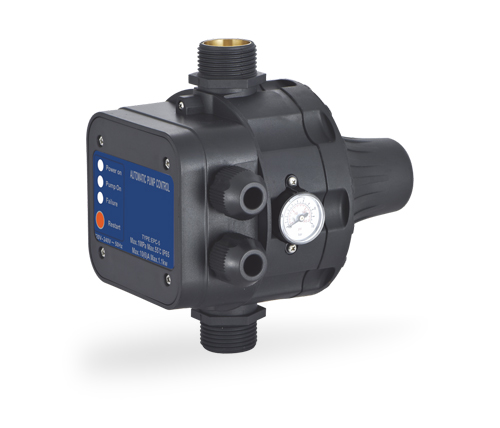
edwina@edwin-pump.com
+86-13586290903 (WhatsApp)
Xuri Gongliang Cutting Tool Entrepreneurship Park, Wenqiao Town, Wenling City, Taizhou City, Zhejiang Province, China

High Performance Smart Pump Factory


 English