edwina@edwin-pump.com

View All Products
en
Reliable water pressure is essential for modern homes, small commercial buildings, workshops, gardens, and many light-duty water supply systems. When the incoming supply is weak, the water source is below the installation point, or the system requires stable pressure across several outlets, a properly selected self-priming jet pump can provide an efficient and practical solution. The JBP-PT Series Portable Brass Impeller Easy Installation Self-Priming JET Pump is designed for these applications, combining a compact portable structure, a brass impeller, integrated pressure equipment, and a high-head hydraulic design.
This pump series is manufactured by Taizhou Edwin Electric Co., Ltd., a Chinese pump manufacturer with experience in research and development, mass production, export operations, and water system solutions. The product is positioned as a versatile pump for residential water supply and other applications requiring dependable suction performance, stable pressure, and straightforward installation.
Unlike a basic transfer pump, a self-priming jet pump is designed to create the pressure and suction conditions required to lift water from a lower source after the pump casing has been correctly filled. The JBP-PT Series further supports automatic pressure management through its pressure tank and pressure switch configuration. This makes it suitable for household systems where users expect the pump to start when water is demanded and stop when the pressure target is restored.
seriesportablebrassimpellereasyinstallationself-primingjetpump.jpg)
JBP-PT Series Portable Brass Impeller Easy Installation Self-priming JET Pump
The JBP-PT Series is a portable self-priming jet pump with a brass impeller, pressure tank, pressure switch, and single-phase motor protection features. The available models include the JBP-2PT, JBP-3PT, JBP-2PTZ, and JBP-3PTZ. Depending on the selected model, rated motor power is either 0.6 kilowatts or 0.75 kilowatts, corresponding to approximately 0.8 horsepower or 1 horsepower.
All listed models use a one-inch inlet and one-inch outlet. The maximum flow is listed as 50 liters per minute for the 0.6-kilowatt models and 60 liters per minute for the 0.75-kilowatt models. The maximum head is listed as 38 meters, while maximum suction is listed as 8 meters. These specifications make the series appropriate for many domestic water pressure and shallow-well applications, provided that the actual system resistance, pipe arrangement, water quality, and operating conditions are carefully evaluated.
The pump is built around a cast iron body and support, a brass impeller, a stainless steel shaft, a carbon and ceramic mechanical seal, and a pressure tank made from stainless steel. Its motor uses copper wiring, C&U bearings, a built-in thermal protector, Class F insulation, and IP44 protection. Together, these features provide a balanced combination of hydraulic performance, mechanical durability, and electrical protection.
Portability is one of the most practical advantages of this pump design. The unit can be moved between suitable water supply points, temporary installations, workshops, gardens, and residential service areas more easily than a large fixed pumping assembly. Its compact integrated arrangement also helps reduce the number of separate components that must be sourced and assembled by the installer.
The one-inch inlet and outlet connections are widely used in domestic plumbing and irrigation systems. This familiar connection size can simplify the selection of compatible pipes, valves, flexible connectors, filters, and unions. The pressure tank and pressure switch are supplied as part of the pump arrangement, reducing the need to design a separate pressure-control system for basic applications.
Easy installation does not eliminate the need for correct preparation. The pump should be placed on a stable, level surface, protected from flooding and excessive weather exposure. Suction piping should be airtight, appropriately sized, and fitted with a suitable foot valve or non-return valve where required. The pump casing should be filled with water before initial operation, and the electrical supply must match the motor requirements and local safety regulations.
The brass impeller is a major component advantage. Brass is commonly selected for pump impellers because it offers a useful balance of strength, machinability, corrosion resistance, and dimensional stability. Compared with some lower-cost materials, a brass impeller can provide better resistance to rust-related deterioration in ordinary clean-water service.
The product information also identifies rust-free copper inserts within the hydraulic assembly. These inserts help support reliable restarting after the pump has remained unused for an extended period. This characteristic is valuable in seasonal homes, garden systems, backup water supply installations, and equipment that does not operate continuously throughout the year.
Material selection should always be matched to the liquid being pumped. The JBP-PT Series is intended for clean or relatively clear water rather than abrasive slurries, heavily contaminated water, corrosive chemicals, or liquids containing large solid particles. Correct liquid selection helps preserve the impeller, diffuser, mechanical seal, and internal passages.
The listed maximum head of 38 meters gives the pump useful pressure capability for domestic water supply and booster applications. Pump head represents the energy the pump can add to the water, and it must be considered together with flow rate, pipe friction, elevation difference, fittings, valves, and the pressure required at the final outlet.
A high maximum head does not mean that the pump will deliver its maximum flow at that head. As with all centrifugal pumps, flow and head vary according to the pump curve and system resistance. The 50-liter-per-minute and 60-liter-per-minute figures should therefore be treated as maximum flow values under specified test conditions, not as guaranteed flow at every operating point. Professional selection should use the full performance curve when available.
Compared with a basic low-head transfer pump, a high-head jet pump can be more suitable where the water must be lifted vertically, pushed through a long pipe run, or delivered to several fixtures. It can also help compensate for moderate pressure losses in household distribution systems. This makes the product more versatile than a pump designed only for short-distance water movement.
The self-priming jet configuration is intended to help the pump draw water from a source located below the pump. The hydraulic assembly includes a venturi tube and diffuser made from PPO. These components contribute to the jet-pump operating principle by supporting the circulation and acceleration of water within the suction system.
When the pump is correctly filled and the suction line is sealed, the jet assembly can assist with removing air from the suction pipe and establishing the required pumping action. The stated maximum suction height is 8 meters. In practice, the achievable suction height depends on atmospheric pressure, water temperature, pipe diameter, pipe length, airtightness, altitude, and the condition of the foot valve.
Self-priming capability is especially useful when the water source is a shallow well, underground storage tank, rainwater tank, or collection reservoir. It can reduce the inconvenience associated with repeated manual priming, although the pump still requires correct initial filling and a properly designed suction line.
The pressure tank stores a limited volume of pressurized water and helps reduce the need for the motor to start every time a small amount of water is used. The pressure switch monitors system pressure and controls automatic starting and stopping within its operating range. This arrangement is suitable for household outlets such as faucets, washing machines, water heaters, and dishwashers.
A pressure tank can also reduce pressure fluctuations during brief or intermittent demand. For example, when a user opens a tap for a short period, the stored water may supply part or all of the demand before the motor needs to start. This can help improve user comfort and reduce unnecessary switching cycles.
The exact pressure settings should be checked during installation and adjusted only by qualified personnel when necessary. The tank must also be maintained at the correct air pre-charge according to the equipment configuration. An incorrectly charged tank can cause rapid cycling, unstable pressure, or unnecessary stress on the pressure switch and motor.
The design of the JBP-PT Series reflects a deliberate division of materials according to the function of each component. The pump body and support use HT200 cast iron, a material commonly used for rigid pump structures. The motor case uses aluminum, which supports weight reduction and heat dissipation. The motor cover uses cast iron, while the fan is made from PP and the terminal board is made from PC.
| Component | Specified Material | Functional Purpose |
|---|---|---|
| Pump body | HT200 cast iron | Rigid hydraulic housing and structural strength |
| Support | HT200 cast iron | Stable mounting and mechanical support |
| Venturi tube | PPO | Jet assembly performance and corrosion resistance |
| Diffuser | PPO | Hydraulic flow guidance |
| Impeller | Brass | Water movement, durability, and rust resistance |
| Mechanical seal | Carbon and ceramic | Sealing between rotating and stationary components |
| Pressure tank | Stainless steel | Pressurized water storage and corrosion resistance |
| Shaft | AISI 304 stainless steel | Corrosion-resistant rotating shaft |
| Motor case | Aluminum | Lightweight enclosure and heat dissipation |
| Motor cover | Cast iron | Protection and structural support |
| Fan | PP | Motor cooling airflow |
| Terminal board | PC | Electrical connection support and insulation |
The use of AISI 304 stainless steel for the shaft is particularly important in water-contact areas. Stainless steel helps reduce rust formation and supports long-term operation when the pump is used with suitable water. The shaft must still be protected from abrasive particles, chemical attack, and mechanical overload, since no material is immune to every operating environment.
The carbon and ceramic mechanical seal provides a common and effective sealing combination for clean-water centrifugal pumps. The carbon face and ceramic face work together to limit leakage along the rotating shaft. Seal life depends on water cleanliness, correct alignment, adequate lubrication from the pumped liquid, and protection against dry running.
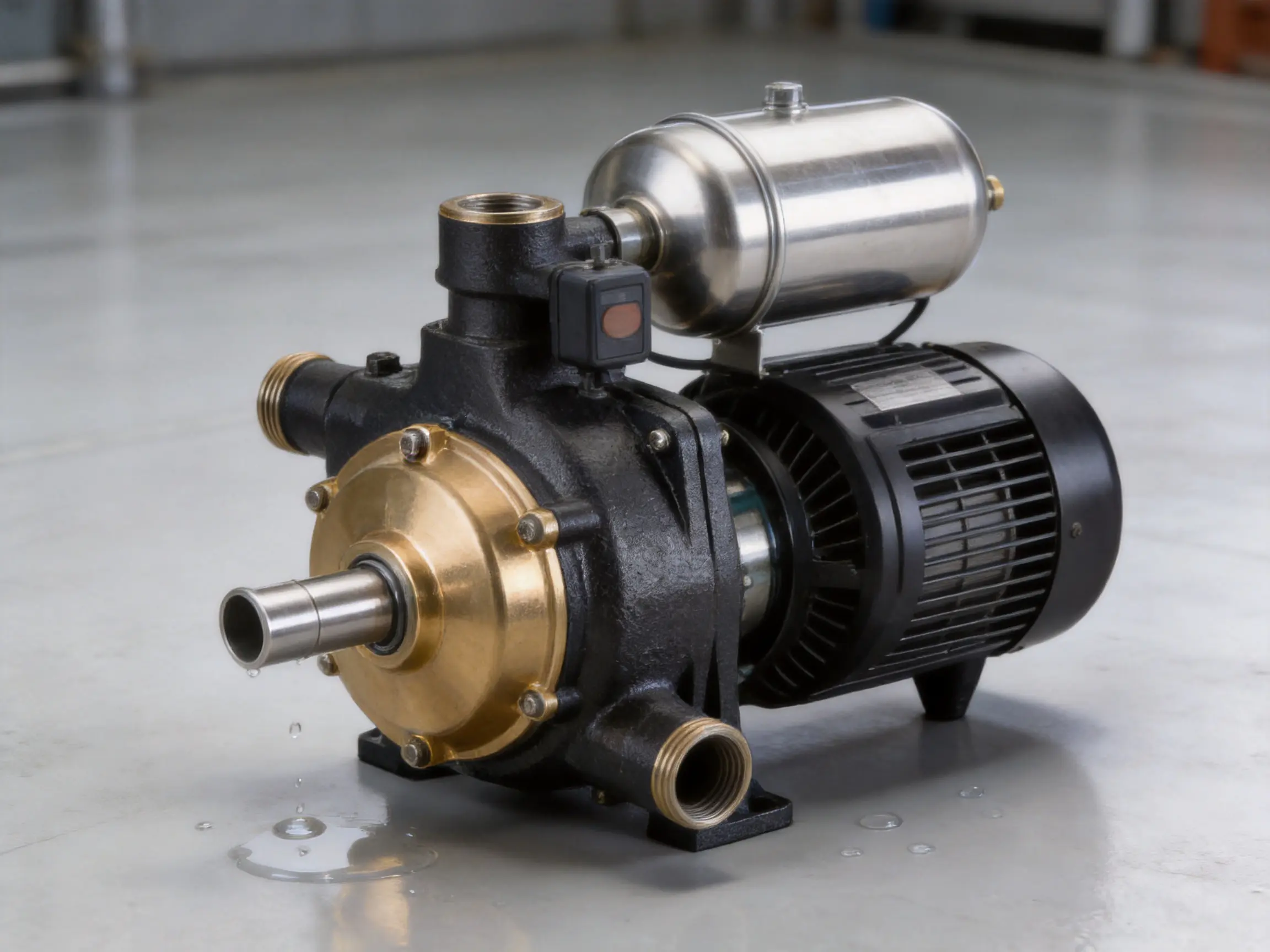
The motor is designed for dependable single-phase operation in appropriate applications. Copper wiring supports efficient electrical conduction and can contribute to stable motor performance. Copper windings are widely preferred in quality pump motors because they offer good conductivity, thermal performance, and mechanical reliability when manufactured correctly.
The use of C&U bearings supports smooth rotor movement and helps reduce friction during operation. Bearing quality affects noise, vibration, temperature, and service life. A properly selected and correctly installed bearing also helps maintain shaft alignment, which is important for protecting the mechanical seal and impeller.
A built-in thermal protector is provided for the single-phase motor. This device is designed to interrupt or protect the motor when excessive heat develops, helping reduce the risk of damage caused by overload, blocked ventilation, abnormal voltage, or prolonged operation under unsuitable conditions. Thermal protection is an important advantage over basic motors that rely entirely on external protection.
The motor has Class F insulation. This insulation class provides a defined thermal capability for the winding insulation system and supports reliable operation when the motor is used within its rated conditions. The pump also has an IP44 protection rating. IP44 indicates protection against solid objects of a specified size and water splashing from various directions, but it does not mean that the motor can be submerged or exposed to continuous jets of water.
The maximum ambient temperature is listed as 40 degrees Celsius. Installers should provide sufficient ventilation around the motor and avoid placing the pump in enclosed spaces where heat cannot escape. If the surrounding temperature is higher than the specified value, motor temperature may rise and the thermal protector may activate more frequently.
The JBP-PT Series includes two principal power levels and two model suffix groups. The 2PT models use 0.6 kilowatts and approximately 0.8 horsepower, while the 3PT models use 0.75 kilowatts and approximately 1 horsepower. The Z versions have the same listed hydraulic data in the provided specification. Buyers should confirm whether the Z designation indicates a particular electrical, packaging, regional, or configuration difference before placing an order.
| Model | Power | Approximate Horsepower | Inlet and Outlet | Maximum Flow | Maximum Head | Maximum Suction |
|---|---|---|---|---|---|---|
| JBP-2PT | 0.6 kW | 0.8 HP | 1 inch by 1 inch | 50 L/min | 38 m | 8 m |
| JBP-3PT | 0.75 kW | 1 HP | 1 inch by 1 inch | 60 L/min | 38 m | 8 m |
| JBP-2PTZ | 0.6 kW | 0.8 HP | 1 inch by 1 inch | 50 L/min | 38 m | 8 m |
| JBP-3PTZ | 0.75 kW | 1 HP | 1 inch by 1 inch | 60 L/min | 38 m | 8 m |
The lower-power models may be appropriate for smaller homes, short pipe runs, modest water demand, and installations where energy use and purchase cost are important. The higher-power models provide a greater listed maximum flow and may be preferred for larger homes, multiple outlets, longer distribution lines, or applications with higher intermittent demand.
Model selection should not be based on horsepower alone. The installer should estimate the required flow, static elevation, friction loss, desired outlet pressure, suction lift, and water source level. A pump that is too small may fail to provide adequate pressure, while an oversized pump may cycle excessively, consume more energy, or operate away from its most suitable performance range.
The primary application described for this series is residential water supply. In homes with weak municipal pressure, elevated bathrooms, long internal pipe runs, or several water-using appliances, the pump can help improve pressure and flow. The integrated pressure tank and pressure switch support automatic operation, allowing the pump to respond to demand without requiring manual starting and stopping.
Typical fixtures may include kitchen faucets, bathroom showers, toilet cisterns, washing machines, water heaters, and dishwashers. The actual number of fixtures that can operate simultaneously depends on their flow requirements and the pump operating point. Users should avoid assuming that the maximum listed flow will be available when every outlet is open.
The self-priming design can be useful for drawing water from a shallow well within the stated suction limit. The suction pipe should be as short and straight as practical, with minimal bends and correctly sealed threaded joints. A foot valve can help retain water in the suction line when the pump is stopped.
The well should be assessed for sustainable yield and water quality. If the water contains sand, silt, or abrasive particles, an appropriate pre-filter or sediment management system may be needed. Excessive sediment can accelerate impeller wear, damage the mechanical seal, and reduce the effectiveness of the jet assembly.
The pump may also be used to pressurize water from a storage tank or rainwater collection tank when the water is suitably filtered. The suction arrangement should prevent vortex formation and avoid drawing floating debris or settled sediment into the pump. A strainer and non-return valve may be considered according to the system design.
Rainwater systems often experience changing water levels and periods of inactivity. The brass impeller and rust-resistant internal features can be useful in such service, but the pump should still be flushed and inspected periodically. Long periods without operation can allow seals to stick or contaminants to settle in the piping, so seasonal maintenance remains important.
For gardens, the pump can supply sprinklers, hoses, drip irrigation zones, and small irrigation manifolds. The 38-meter maximum head provides flexibility for moderate elevation changes and pressure losses through fittings. The correct model depends on the number of irrigation outlets and the required operating pressure.
Garden irrigation systems should include suitable valves to isolate zones and prevent uncontrolled flow. A filter is recommended when the water source contains particles. The pump should not be allowed to run dry when an irrigation valve is closed unless an appropriate control system is installed.
The JBP-PT Series offers several practical advantages over a simple non-self-priming transfer pump. A conventional transfer pump may require repeated manual priming, have limited suction capability, or lack automatic pressure control. By combining a jet assembly, pressure tank, and pressure switch, this series is better suited to systems where water must be drawn from below the pump and delivered automatically to household outlets.
The brass impeller is another distinction from low-cost pumps that use less durable impeller materials. Brass can provide improved resistance to rust and support reliable operation in ordinary clean-water conditions. The AISI 304 stainless steel shaft and stainless steel pressure tank further strengthen the product’s resistance to corrosion in appropriate environments.
The motor protection package also gives the series an advantage over very basic pump motors. Copper windings, C&U bearings, a thermal protector, Class F insulation, and IP44 protection provide a more complete engineering specification than an unprotected motor assembly. These features do not remove the need for correct installation, but they can improve the pump’s resilience in normal service.
The integrated format may reduce installation complexity compared with building a system from a separate pump, external pressure tank, pressure switch, and additional mounting components. Fewer separate components can mean fewer connection points, a more compact footprint, and a simpler maintenance plan.
Competitor products may offer different combinations of electronic controls, variable-speed drives, stainless steel hydraulic bodies, or larger tanks. Those alternatives may be preferable for particular high-demand or highly automated systems. However, the JBP-PT Series provides a balanced mechanical and automatic solution for users who want reliable pressure support without the complexity or cost of a more advanced variable-speed booster package.
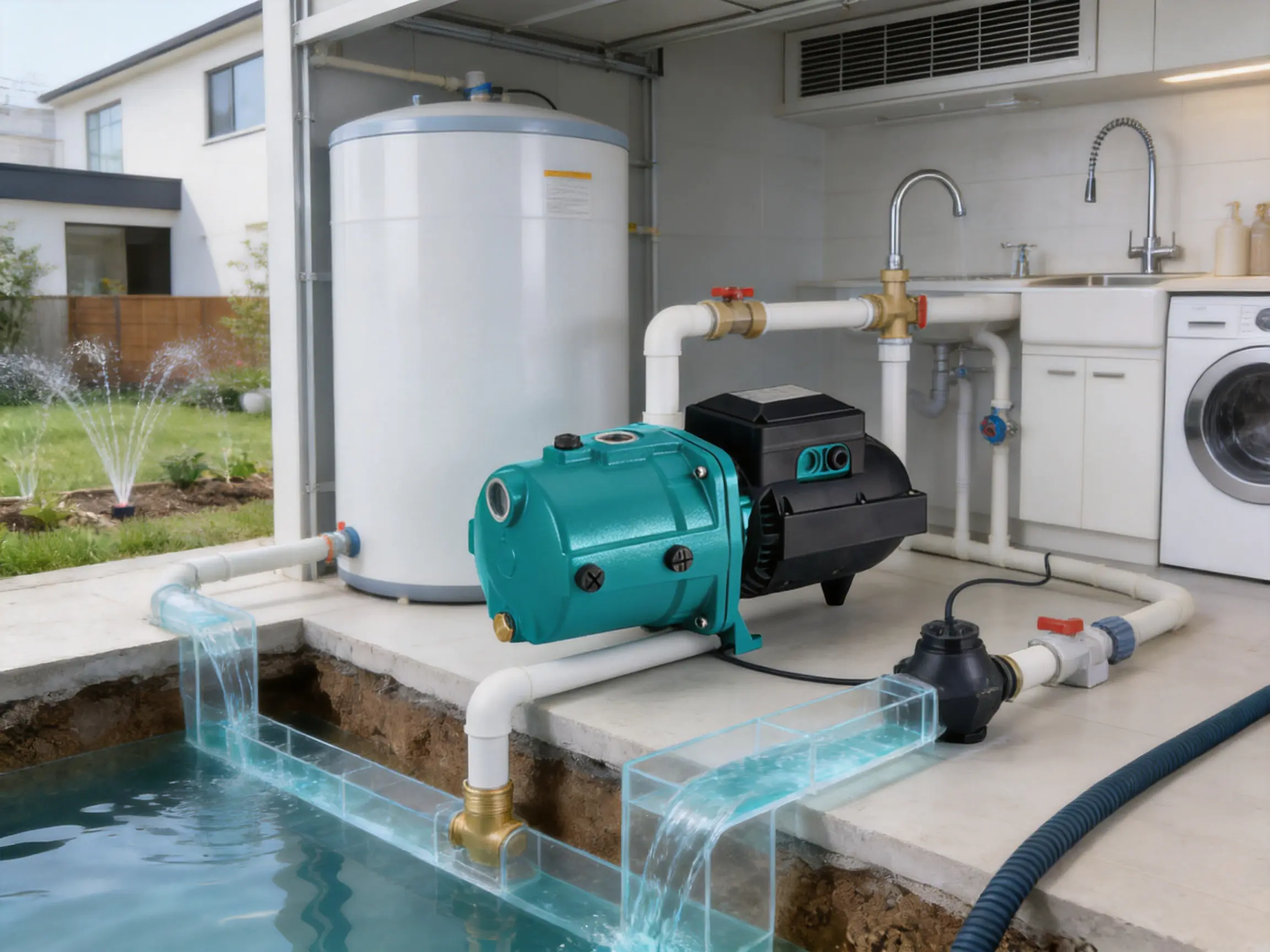
Taizhou Edwin Electric Co., Ltd. was founded in 2008 and operates as an integrated manufacturing enterprise focused on independent research and development, mass production, and global export. Its product portfolio includes deep-well pumps, submersible pumps, domestic booster pumps, circulation pumps, solar water pumps, intelligent booster pumps, and related water treatment products.
This broader product experience is relevant to the JBP-PT Series because pump manufacturing competence depends on more than assembling a motor and housing. Hydraulic design, motor production, casting or component sourcing, seal selection, electrical protection, testing, packaging, and after-sales support all influence the final product. An established manufacturer with several pump categories can apply knowledge gained across different operating conditions and market requirements.
The company’s manufacturing model includes independent product development and large-scale production. This combination can support consistent component specifications, repeatable assembly processes, and more efficient production planning. For distributors and project buyers, mass-production capability can also improve supply continuity for repeated orders and private-label or regional distribution programs.
Manufacturing quality begins with incoming material control. Components such as brass impellers, stainless steel shafts, cast iron bodies, motor windings, bearings, mechanical seals, capacitors, and electrical terminals should be checked against defined specifications. Dimensional accuracy is important because small deviations in shaft diameter, impeller clearance, seal seating, or housing alignment can affect vibration, noise, leakage, and hydraulic performance.
Hydraulic components require careful inspection and assembly. The impeller must be correctly balanced and securely mounted on the shaft. The diffuser and venturi tube must be positioned correctly so that internal water passages function as designed. The mechanical seal must be installed without damaging its sealing faces. Incorrect assembly at any of these stages can reduce performance even when individual parts meet their material requirements.
Motor assembly also requires controlled processes. Copper windings should be formed and insulated consistently. The rotor and stator must be aligned within suitable tolerances. Bearings should be installed without excessive force, and the shaft should rotate smoothly before the motor is closed. The thermal protector, capacitor, terminal board, and electrical connections must be positioned securely to support safe operation.
Final inspection should include visual checks, electrical checks, rotation checks, leakage checks, and operational testing. Where applicable, manufacturers may test insulation resistance, current draw, pressure behavior, flow performance, noise, vibration, and automatic start-stop operation. These controls help identify assembly defects before products are shipped to customers.
The company also provides one-stop procurement support through related import and export organizations established in 2012. This structure is intended to support procurement planning, order tracking, cross-border delivery, and foreign trade services. For international customers, logistical coordination can be as important as product design, especially when orders contain several pump categories or require consolidated shipment.
Before installation, confirm that the pump model, voltage, frequency, connection size, and operating environment match the project requirements. Inspect the pump for shipping damage and verify that the impeller turns freely when appropriate. Do not connect the motor to an electrical supply until the mechanical installation is complete and the wiring has been checked.
Install the pump on a rigid, level foundation. A stable base helps reduce vibration and protects the suction and discharge connections from mechanical stress. The pump should be located in a dry, ventilated area where the ambient temperature remains within the specified limit. Avoid locations subject to flooding, direct water spray, excessive dust, or corrosive vapors.
The suction pipe should be airtight because even a small air leak can prevent successful self-priming. Use suitable pipe sealant on threaded joints, but prevent excess sealant from entering the hydraulic passage. The suction pipe should generally be equal to or larger than the pump connection size, depending on the system design. Sharp bends, unnecessary reducers, and long horizontal suction runs should be avoided.
Install a foot valve or suitable non-return valve when needed to keep water in the suction line after the pump stops. The valve should be correctly sized and positioned below the water level. It must remain clear of mud, floating debris, and the bottom of the tank or well.
Before the first start, fill the pump casing with clean water through the designated priming opening. Confirm that the suction line is filled where possible. Starting a centrifugal pump without water can cause rapid mechanical seal damage and overheating. If the pump does not prime within a reasonable period, stop it and check for air leaks, insufficient filling, incorrect valve position, excessive suction lift, or a blocked foot valve.
The electrical connection must be performed by a qualified electrician. Provide suitable overcurrent protection, grounding, and a disconnecting device in accordance with local regulations. The rated supply should match the motor nameplate. Never handle electrical connections with wet hands or while the power is connected.
During initial operation, observe the pump for abnormal noise, excessive vibration, leakage, overheating, or repeated pressure-switch cycling. Check that water reaches the intended outlets and that the pump stops when the system reaches its pressure setting. A small amount of adjustment may be required to optimize the pressure tank and switch arrangement, but changes should be made only by a qualified technician.
Keep the pump and motor exterior clean. Dust accumulation can restrict cooling airflow and increase motor temperature. Ensure that the fan cover remains in place and that ventilation openings are not blocked. Do not wash the motor directly with a high-pressure water jet.
Inspect the suction strainer, foot valve, and filters regularly. A blocked filter can reduce flow, increase suction resistance, and cause cavitation or loss of prime. If the water source contains sediment, maintenance intervals should be shortened. Clean water is particularly important for protecting the mechanical seal and impeller.
Listen for changes in operating sound. Grinding, rattling, squealing, or pronounced vibration may indicate bearing wear, impeller damage, cavitation, loose mounting, or a foreign object in the hydraulic passage. Continued operation under these conditions can increase damage and repair cost.
Check for water leakage around the mechanical seal, pump body, pipe connections, and pressure tank fittings. A small leak on the suction side may draw air without visibly releasing water, making it especially difficult to diagnose. Threaded connections should be inspected and resealed when necessary.
For seasonal shutdown, disconnect the power and drain the pump and exposed pipework if freezing temperatures are possible. Protect the pump from frost because trapped water can expand and crack the pump body or damage seals. When returning the pump to service, inspect the connections, refill the casing, and verify the condition of the foot valve.
Possible causes include an empty pump casing, an air leak in the suction line, a defective foot valve, excessive suction height, a blocked suction pipe, or an incorrect rotation or electrical connection. Refill the casing, check every suction joint, inspect the valve, and confirm that the water source is within the 8-meter maximum suction specification.
Insufficient pressure may result from excessive pipe friction, a partially blocked impeller, low water level, an undersized suction pipe, a leaking discharge line, or demand greater than the selected model can provide. Compare the actual system requirement with the pump curve and inspect the complete piping system rather than focusing only on the motor power.
Rapid cycling may be caused by an incorrectly charged pressure tank, a tank bladder problem where applicable, a very small pressure differential, a leaking outlet, or a malfunctioning pressure switch. Check for hidden leaks and have the pressure system inspected by a qualified technician. Frequent cycling places additional stress on the motor, switch, and electrical components.
Overheating can result from high ambient temperature, blocked ventilation, low or unstable voltage, excessive mechanical load, frequent cycling, bearing problems, or dry running. Allow the thermal protector to operate as intended and do not repeatedly reset the pump without identifying the underlying cause.
Noise and vibration may be caused by cavitation, air entering the suction line, a loose foundation, worn bearings, an unbalanced impeller, or foreign material inside the pump. Stop the pump if the condition is severe and inspect the installation. Operating a vibrating pump for long periods can damage the seal and connected pipework.
Although the JBP-PT Series is especially suitable for household water supply, it can also serve selected light commercial applications. Small offices, guesthouses, workshops, agricultural buildings, service rooms, and retail facilities may use the pump where water demand is moderate and the liquid is clean.
For commercial applications, the design should account for simultaneous demand, duty cycle, operating hours, water temperature, and maintenance access. The listed maximum liquid temperature is 60 degrees Celsius. This does not mean that every hot-water application is automatically suitable. Water chemistry, pressure, thermal expansion, seal compatibility, and local plumbing codes must all be considered.
For larger commercial buildings, high-rise systems, fire protection, process water, or continuous-duty industrial service, a different pump configuration may be required. Commercial multistage pumps, intelligent booster pumps, or specialized stainless steel systems may be more appropriate when higher flow, higher pressure, redundancy, or advanced control is needed.
Distributors and system integrators should evaluate more than the catalog headline. Important purchasing questions include the required electrical standard, target market, packaging requirements, spare parts availability, warranty arrangements, pressure-switch configuration, plug or cable requirements, and the exact differences between standard and Z models.
Project buyers should request the applicable performance curve, motor nameplate information, dimensional drawings, installation instructions, and recommended spare parts. It is also useful to confirm the factory inspection process and the documentation available for export shipments.
The manufacturer’s wider product range can support mixed procurement. A buyer may source self-priming jet pumps for household systems, deep-well pumps for boreholes, submersible pumps for drainage or wells, circulation pumps for HVAC, and intelligent booster pumps for advanced pressure control from the same supply network. This can simplify vendor management and consolidate technical communication.
International customers should also consider after-sales support. A reliable supply relationship includes access to mechanical seals, capacitors, pressure switches, impellers, bearings, covers, and other service parts. Clear product identification and model records make it easier to support end users over the service life of the equipment.
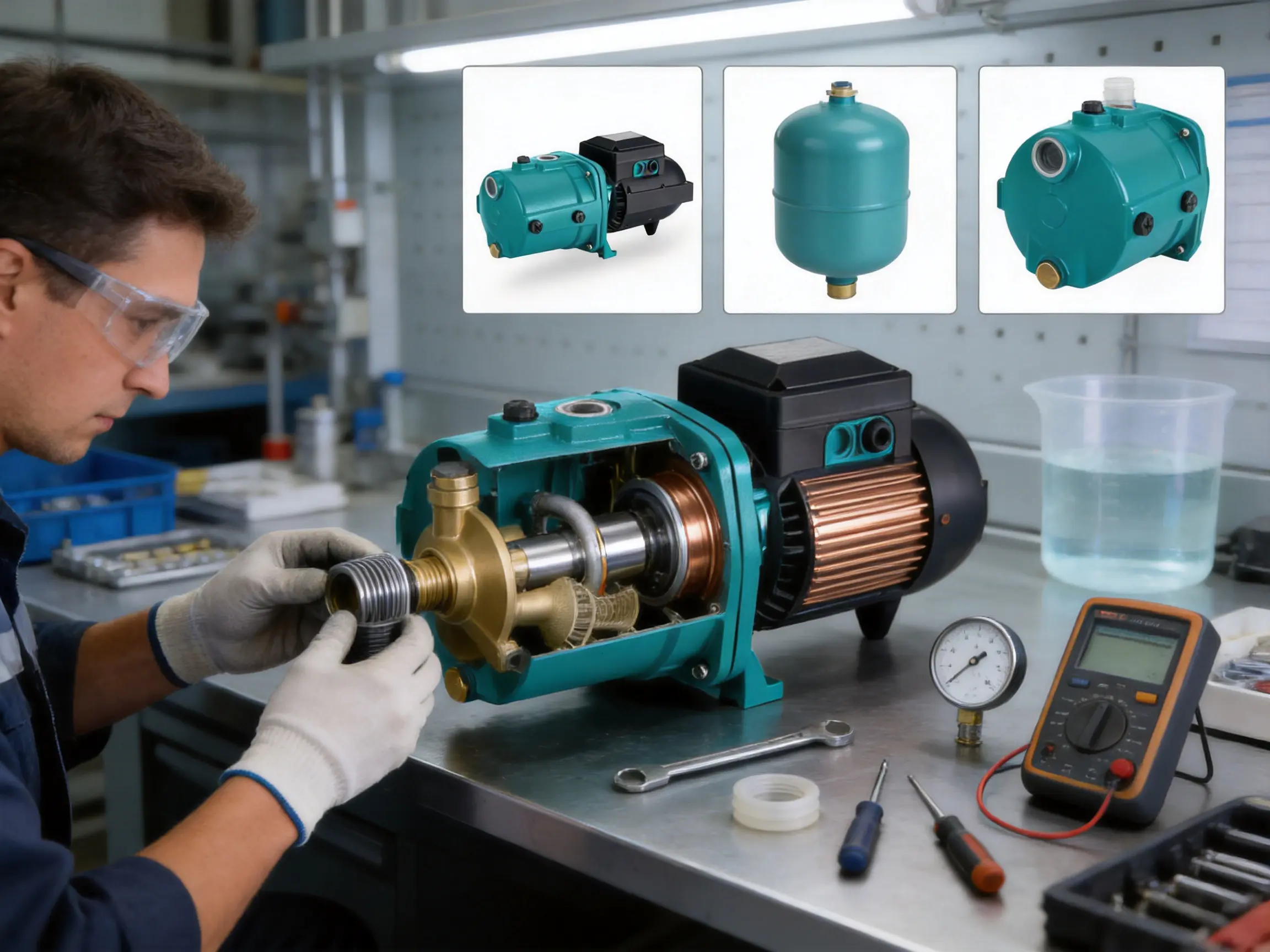
Energy efficiency begins with correct pump selection. A pump operating near the required duty point can provide the necessary water pressure without excessive energy consumption. Oversizing the pump may cause throttling, unnecessary pressure, and frequent cycling, while undersizing can lead to long running times and failure to satisfy demand.
The copper-wound motor, smooth bearings, and appropriately designed hydraulic components support efficient operation, but efficiency also depends on the installation. Undersized pipes, clogged filters, excessive bends, leaking valves, and poor suction conditions all increase energy use. Regular maintenance can therefore reduce both operating cost and environmental impact.
The pressure tank contributes to efficient household operation by reducing the number of motor starts during small water demands. Fewer starts can reduce electrical and mechanical stress. However, the tank must be correctly maintained so that it performs its intended function.
Responsible disposal is also important. At the end of service life, metal components such as cast iron, brass, aluminum, copper, and stainless steel may be suitable for recycling through approved channels. Electrical parts, capacitors, insulation materials, and seals should be handled according to local waste regulations.
The JBP-PT Series is a practical choice for users who need more than simple water transfer but do not require a complex variable-speed pressure system. Its self-priming jet arrangement supports shallow-source applications, while the pressure tank and pressure switch provide automatic household water delivery. The brass impeller, stainless steel shaft, and corrosion-conscious material selection support durability in suitable clean-water conditions.
The product is also positioned between basic consumer pumps and larger professional booster packages. It offers a useful combination of portability, high head, automatic operation, familiar one-inch connections, and manageable motor power. This balance can appeal to homeowners, installers, agricultural users, property managers, and distributors seeking a versatile pressure pump.
Its advantages are strengthened by the manufacturer’s broader capabilities in pump development, mass production, international logistics, and one-stop procurement. Customers can work with a supplier familiar with multiple water-pumping categories rather than treating the product as an isolated item. For repeat purchasing and project-based supply, this broader capability may improve product coordination and order management.
It is a portable self-priming jet pump equipped with a brass impeller, pressure tank, pressure switch, and single-phase electric motor. It is intended mainly for clean-water supply and pressure-boosting applications.
The listed maximum suction height is 8 meters. Actual performance depends on water temperature, altitude, suction pipe design, airtightness, valve condition, and the difference between the pump and water level.
The series includes 0.6-kilowatt models rated at approximately 0.8 horsepower and 0.75-kilowatt models rated at approximately 1 horsepower.
The 0.6-kilowatt models have a listed maximum flow of 50 liters per minute. The 0.75-kilowatt models have a listed maximum flow of 60 liters per minute. Actual flow varies according to head and system resistance.
The listed maximum head is 38 meters for all models in the supplied technical data. The operating flow at that head must be confirmed using the applicable performance curve.
Yes, the product is described as suitable for household water supply systems serving appliances such as washing machines, water heaters, and dishwashers. The installation must provide adequate flow, pressure, electrical protection, and water quality.
Yes. The pump casing should be filled before initial operation, and the suction line should be properly prepared. Self-priming capability does not mean that the pump can safely run dry.
Brass offers good corrosion resistance, strength, and dimensional stability for many clean-water applications. It can also support reliable restarting after periods of inactivity when the pump is correctly maintained.
The pump is intended for clean or relatively clear water. Water containing sand, abrasive particles, large solids, chemicals, or heavy contamination may damage the impeller, diffuser, mechanical seal, or other components.
IP44 indicates a defined level of protection against solid objects and splashing water. It does not mean that the motor is waterproof, submersible, or suitable for continuous exposure to high-pressure water.
The listed maximum liquid temperature is 60 degrees Celsius. Suitability for hot-water service should also consider water chemistry, seal materials, pressure, thermal expansion, and local regulations.
The supplied technical data lists the PT and PTZ models with the same power, connection size, maximum flow, maximum head, and maximum suction. Buyers should confirm the precise difference with the supplier because the suffix may identify a configuration, market version, electrical option, or packaging variation.
No. The listed maximum suction height is 8 meters, which is suitable for shallow-source applications. Deep wells generally require a submersible or deep-well pump positioned below the water level.
Maintenance includes checking filters and foot valves, inspecting for leaks, keeping the motor ventilated, monitoring noise and vibration, protecting the pump from freezing, and checking pressure-tank and pressure-switch operation. Maintenance frequency depends on water quality and operating conditions.
The product is manufactured by Taizhou Edwin Electric Co., Ltd., a pump manufacturer established in 2008 with activities in product development, mass production, international export, and water-pump solutions.
The JBP-PT Series Portable Brass Impeller Easy Installation Self-Priming JET Pump offers a well-balanced solution for household water pressure, shallow-well supply, storage-tank service, garden irrigation, and selected light commercial applications. Its portable design, one-inch connections, self-priming jet assembly, brass impeller, pressure tank, pressure switch, and 38-meter maximum head give it practical advantages over simpler transfer pumps.
The use of HT200 cast iron, PPO hydraulic components, AISI 304 stainless steel, brass, aluminum, carbon, ceramic, PP, and PC reflects a component-based engineering approach. Copper motor wiring, C&U bearings, thermal protection, Class F insulation, and IP44 protection further support dependable operation when the pump is installed within its specified limits.
Product performance ultimately depends on correct sizing, airtight suction piping, proper priming, suitable water quality, adequate electrical protection, and regular maintenance. When these requirements are respected, the series can provide stable automatic water delivery in a compact and accessible package.
Supported by a manufacturer with experience in research and development, mass production, global export, and multiple pump categories, the JBP-PT Series is positioned as a practical choice for customers seeking dependable pressure support without unnecessary system complexity.
1. Product specification and technical data supplied for the JBP-PT Series Portable Brass Impeller Easy Installation Self-Priming JET Pump.
2. Manufacturer information supplied for Taizhou Edwin Electric Co., Ltd., including company history, product categories, manufacturing activities, and export services.
3. General principles of centrifugal pump operation, self-priming jet pump design, suction lift, system head, and pump selection.
4. General engineering practices for pump installation, pressure-tank maintenance, mechanical seal protection, motor ventilation, and electrical safety.
5. General material engineering references concerning brass impellers, AISI 304 stainless steel shafts, cast iron pump bodies, PPO hydraulic components, and carbon-ceramic mechanical seals.
serieswatershortageprotectionvoltagestabilizationstainlesssteelverticalmultistagepump.jpg "EVR(S) Series Water Shortage Protection Voltage Stabilization Stainless Steel Vertical Multistage Pump")
edwina@edwin-pump.com
+86-13586290903 (WhatsApp)
Xuri Gongliang Cutting Tool Entrepreneurship Park, Wenqiao Town, Wenling City, Taizhou City, Zhejiang Province, China

High Performance Smart Pump Factory


 English