
edwina@edwin-pump.com

View All Products
en
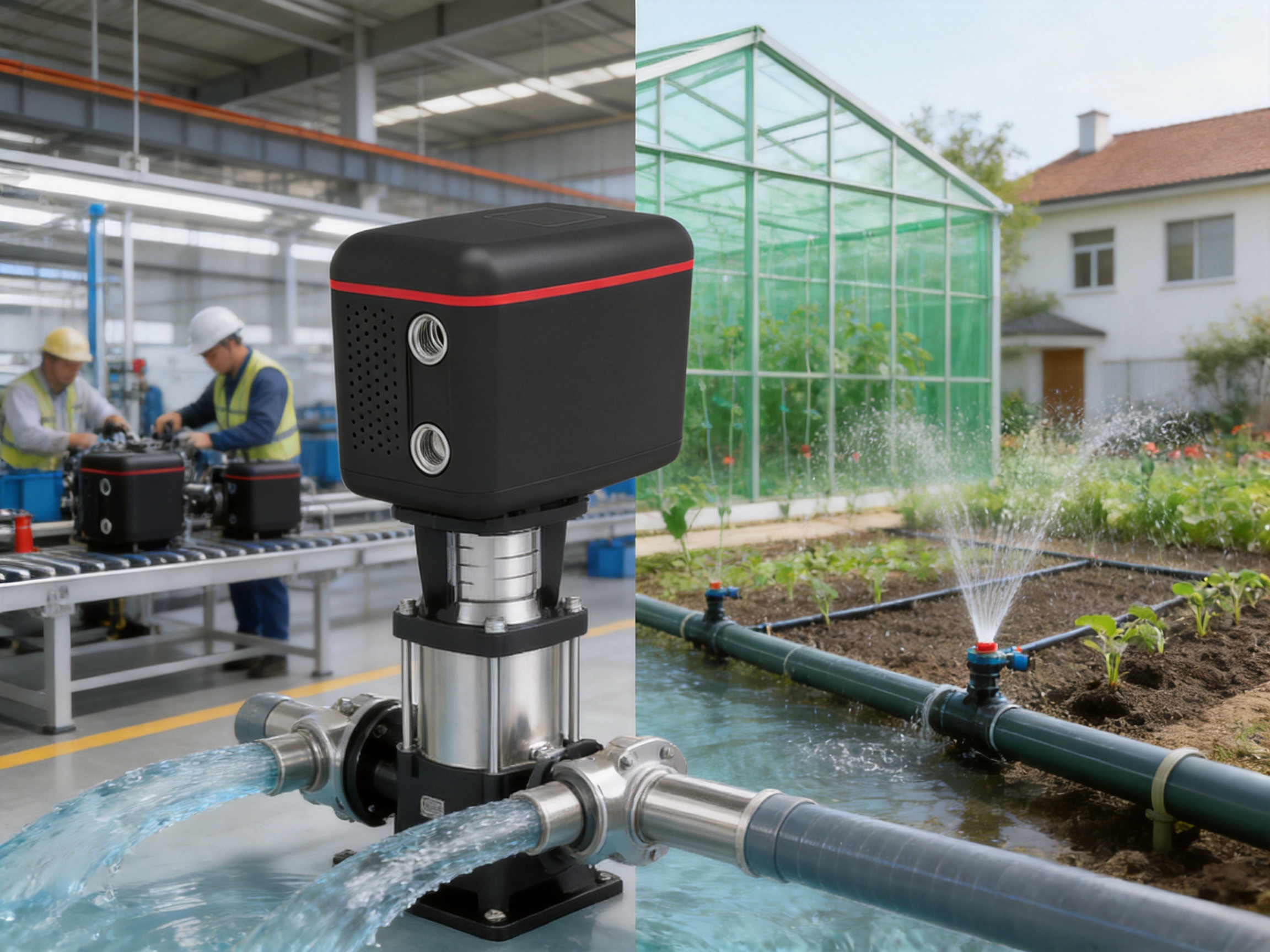
Modern homes, small commercial properties, gardens, and greenhouse installations increasingly need water systems that can deliver stable pressure without wasting electricity or creating excessive noise. Conventional booster pumps can solve a pressure problem, but they may operate at a fixed speed, cycle too frequently, require manual adjustment, or produce an intrusive sound level. The HGZ15/35EA-B Silent WiFi Water-Cooled Frequency Conversion Permanent Magnet Intelligent Shield Booster Pump is designed to address these limitations through a combination of variable-frequency control, permanent magnet motor technology, intelligent pressure management, water cooling, shielded construction, and mobile connectivity.
This pump is part of a new generation of compact intelligent water supply equipment. Rather than simply switching on and off at a fixed speed, it can adjust its operating condition according to water demand. It can be used for tap water pressurization, domestic water supply, pipeline heating, garden irrigation, vegetable greenhouses, and circulation applications. Its dual operating modes allow it to function as either a pressure booster or a temperature-controlled circulation pump, giving installers more flexibility than a conventional single-purpose booster unit.
The HGZ15/35EA-B model provides a rated flow of 2.2 cubic meters per hour, a rated head of 25 meters, and a maximum head of 35 meters. Its 400 W power rating and 1-inch connection size make it suitable for many residential and light-duty water systems where compact dimensions, low sound, and automatic control are important. The pump body is made from SUS 304 stainless steel, while the impeller uses PPO material, the check valve uses brass, and the rotor combines ceramic and silicon steel sheet components.
Behind the product is Taizhou Edwin Electric Co., Ltd., a Chinese pump manufacturer with experience in independent research and development, mass production, and international export. The company has developed product lines covering deep well pumps, submersible pumps, domestic booster pumps, circulation pumps, solar water pumps, and intelligent pumping equipment. Its manufacturing and supply capabilities are supported by affiliated import and export operations that provide procurement planning, order tracking, delivery coordination, and foreign trade services.
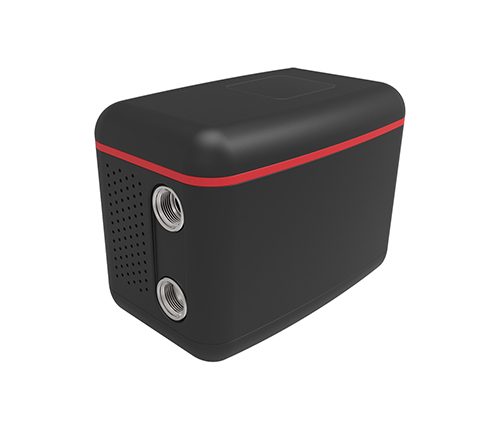
HGZ15/35EA-B Silent WIFI Water Cooled Frequency Conversion Permanent Magnet Intelligent Shield Booster Pump
Water consumption is rarely constant throughout the day. A household may use only a small amount of water when one tap is open, but demand can increase rapidly when several showers, faucets, appliances, or irrigation outlets operate simultaneously. A traditional fixed-speed pump must be selected for the highest expected demand. When the actual demand is lower, the pump may still run at full speed, causing unnecessary energy consumption, pressure fluctuation, and mechanical stress.
An intelligent variable-frequency pump approaches the problem differently. It monitors operating conditions and changes motor speed to match the required pressure and flow. At low demand, the pump can operate more gently. When demand rises, it can increase speed to maintain the desired water supply. This type of control can reduce repeated hard starts, improve user comfort, and help the pump work closer to the real needs of the water system.
Stable pressure is particularly important in buildings with upper floors, long pipelines, multiple outlets, or fluctuating municipal water pressure. It is also valuable in garden irrigation systems, where inconsistent pressure can cause uneven sprinkler coverage or poor drip irrigation performance. In a greenhouse, stable flow can improve the consistency of water distribution and make automated irrigation easier to manage.
The pump also supports a circulation function based on temperature control. This means it is not limited to pressure boosting. When installed in a suitable heating or circulation system, it can start and stop according to a preset temperature. This dual-purpose capability can reduce the need to purchase separate equipment for pressure boosting and circulation duties.
The HGZ15/35EA-B is designed as a compact 400 W intelligent booster pump. Its operating parameters provide a useful balance between domestic water pressure improvement and moderate flow requirements. The rated head is the head at which the pump is designed to provide its rated flow under the specified operating conditions. The maximum head represents the highest theoretical lifting capability under the relevant performance curve, generally at very low or zero flow.
| Item | Specification |
|---|---|
| Model | HGZ15/35EA-B |
| Product type | Silent WiFi water-cooled intelligent booster pump |
| Motor technology | Permanent magnet motor with variable-frequency drive |
| Rated power | 400 W |
| Rated flow | 2.2 m³/h |
| Rated head | 25 m |
| Maximum head | 35 m |
| Connection size | 1 inch |
| Construction style | Shielded, water-cooled pump design |
| Noise level | Below 45 dB, according to the supplied product information |
These figures should be considered together rather than separately. A maximum head of 35 meters does not mean that the pump will deliver its rated flow at that height. Actual performance depends on the system curve, pipe length, pipe diameter, elevation, fittings, valves, water temperature, and the number of outlets operating simultaneously. Installers should use the pump performance curve and calculate total dynamic head before final selection.
The 1-inch connection size is widely used in residential water supply and small irrigation systems. It can simplify integration with existing pipelines, although adapters may be required where the installation uses different pipe standards or connection dimensions. Correct pipe sizing remains important because a narrow or obstructed pipeline can create excessive resistance and prevent the pump from reaching its intended performance.
One of the pump’s most important advantages is its permanent magnet variable-frequency drive system. A permanent magnet motor can achieve high efficiency because the rotor generates magnetic force without relying on conventional rotor current in the same way as a standard induction motor. When combined with electronic speed control, the motor can operate over a wider range of conditions while responding to changes in demand.
Traditional fixed-speed booster pumps often rely on a simple pressure switch. When pressure falls below a set point, the motor starts at full speed. When pressure rises, the motor stops. This approach is straightforward, but it can produce frequent cycling, pressure pulses, and high starting current. It also means that a small flow requirement may trigger the same full-power operation as a much larger demand.
The variable-frequency system of the HGZ15/35EA-B is intended to provide smoother operation. The controller can adjust motor speed to maintain pressure and flow more accurately. This helps the pump avoid unnecessary full-speed operation and may reduce energy use in systems where demand changes frequently. It also supports a more comfortable water experience, especially when several water outlets are used at different times.
Another benefit is reduced mechanical shock. A controlled acceleration is generally less abrupt than a direct full-speed start. Lower starting shock can help reduce stress on the impeller, bearings, shaft, pipe connections, and check valve. While service life depends on installation quality and operating conditions, intelligent speed control is a meaningful advantage over basic on-off pumps.
Energy savings depend on the application, operating schedule, water demand, and system design. The pump should not be promoted as using a fixed percentage less energy in every installation because actual results vary. However, variable-frequency control offers a logical efficiency advantage where the water demand is variable. A system that frequently operates at partial flow can benefit more than a system that always runs near full capacity.
The permanent magnet motor and electronic drive also make it possible to coordinate pressure and flow more precisely. Instead of selecting a motor only for peak demand and accepting inefficient operation at all other times, the pump can respond to changing requirements. This is particularly useful in residential buildings, small commercial premises, irrigation systems, and greenhouses where water usage changes throughout the day.
Noise is one of the most common disadvantages of conventional booster pumps. A pump installed close to a bedroom, kitchen, office, or living area can become a daily source of irritation if it starts loudly or transmits vibration through the pipework. The HGZ15/35EA-B uses a shielded construction and a water-cooled motor design to address this issue.
The supplied product information states that the pump operates below 45 dB. Actual sound levels can vary depending on the installation surface, pipe support, water conditions, operating speed, and surrounding enclosure. Even so, the design target places the product in the low-noise category for domestic booster equipment.
Unlike a conventional fan-cooled motor, a water-cooled motor uses the pumped water to assist with heat removal. Eliminating the external cooling fan can reduce airborne noise and create a more compact structure. The shielded construction also helps contain motor and hydraulic noise. This is valuable in homes and other installations where the pump must be located near occupied spaces.
The shielded design is also described as helping eliminate water pump leakage issues associated with traditional exposed shaft arrangements. The exact sealing configuration must be evaluated according to the product construction and service instructions, but the general principle is that a shielded pump motor can reduce the exposure of certain rotating components and minimize potential leakage paths.
A quiet pump can still become noisy if it is installed incorrectly. The base should be firm and level, and the pump should not be allowed to rest directly on a thin metal panel that can amplify vibration. Flexible connectors may help isolate pipe vibration, while pipe supports should prevent the pipeline from placing stress on the pump housing.
Air trapped in the system can create rattling, cavitation-like noise, or unstable flow. The suction side should be designed to avoid unnecessary restrictions, and the pump should be fully primed according to the installation instructions before operation. Valves should be fully open during initial commissioning unless the system design requires otherwise.
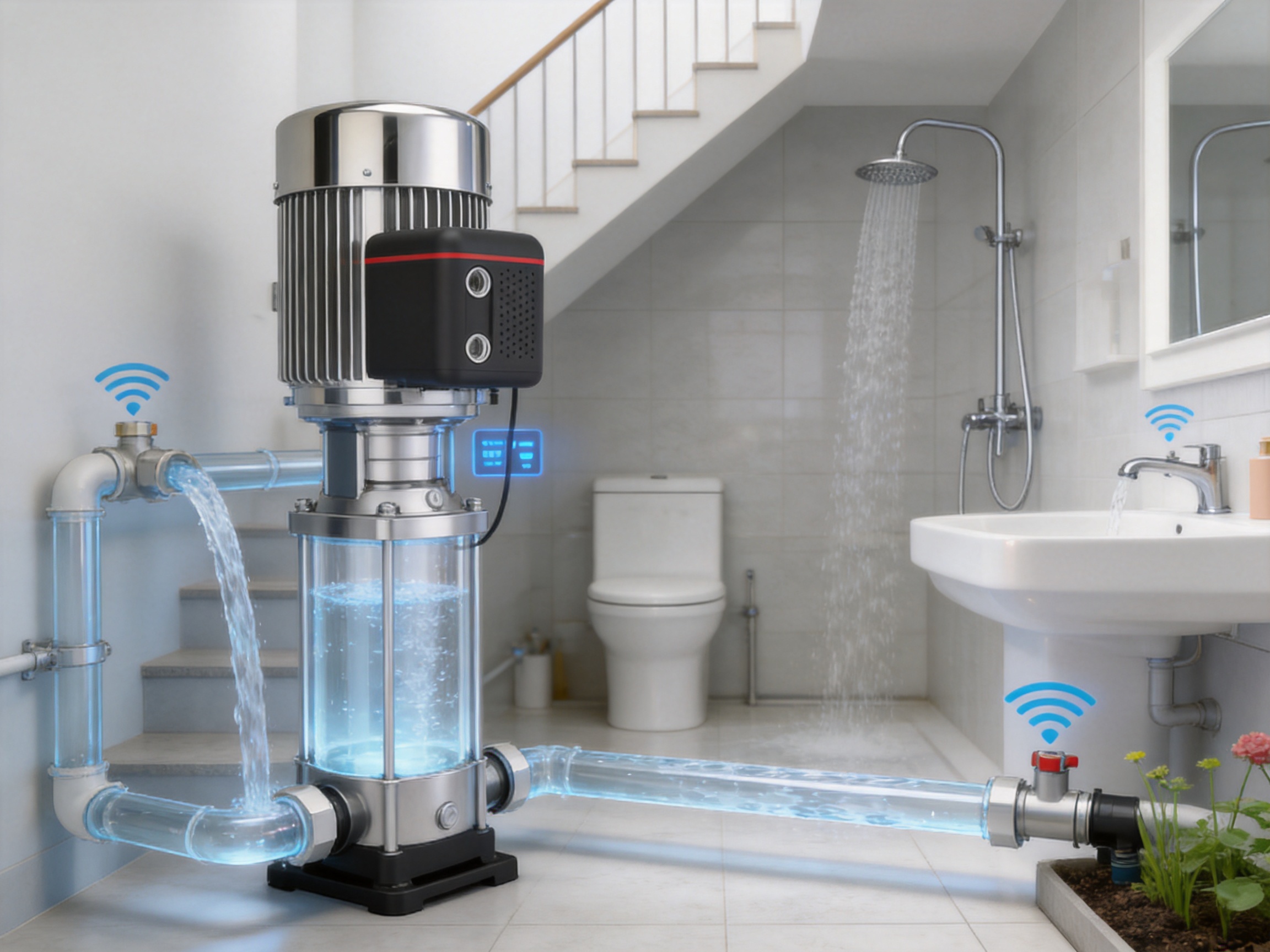
WiFi connectivity gives the HGZ15/35EA-B a level of convenience that is not normally available on a basic mechanical booster pump. Once connected to a suitable network and mobile application, the pump can be monitored and controlled remotely. This allows users to check operating status, adjust selected settings, and manage the system without standing beside the pump.
Remote control is useful in many practical situations. A homeowner can check the pump before arriving at a holiday property. A greenhouse operator can monitor equipment without walking to the pump room. A maintenance worker can review the operating condition of a system installed in a basement, utility room, or remote service area. Smart control can also make it easier to respond to changes in occupancy, irrigation schedules, or seasonal water demand.
Connectivity does not replace proper mechanical protection or professional installation. The pump should still be installed with appropriate electrical protection, correct grounding, suitable pipework, and access for maintenance. WiFi performance can be affected by building materials, network strength, router configuration, and local environmental conditions. The remote function should therefore be viewed as an additional control and monitoring tool rather than the only means of operating the pump.
The pump includes an intelligent memory function intended to recognize usage habits and record them in its control program. On later uses, it can operate according to previously observed patterns. The objective is to reduce unnecessary operation and align pump behavior with typical household or system demand.
For example, a household may regularly use a small amount of water in the morning, experience a higher demand during evening hours, and require no operation overnight. A memory-based control approach can help the pump respond more naturally to these recurring patterns. The benefits will depend on the application and the controller’s learning logic, but the function represents a move away from purely manual operation.
The HGZ15/35EA-B can be used in pressure control mode or temperature control mode. Pressure control mode is suitable for boosting water pressure in domestic supply lines, garden systems, and selected light commercial installations. The pump responds to water demand and adjusts its operation to maintain a stable pressure target.
Temperature control mode is intended for circulation applications. The pump can start and stop according to a preset temperature, allowing it to circulate water when heating or temperature maintenance is needed. This can be useful in pipeline heating systems, selected hot-water circulation arrangements, and other systems where temperature is a key operating condition.
The dual-mode design increases application flexibility. A single pump platform can serve different project requirements, reducing the need for separate equipment categories. It also allows an installer or system designer to consider the pump for both booster and circulation projects, provided that the temperature, fluid, pressure, and installation conditions remain within the product’s allowable limits.
Users should verify whether the intended fluid and operating temperature are compatible with the pump. The supplied information describes water-related applications and does not establish suitability for aggressive chemicals, flammable liquids, seawater, or fluids containing large amounts of solids. Product documentation and technical support should be consulted for any non-standard application.
Water pumps can be damaged by abnormal operating conditions. The HGZ15/35EA-B includes a series of protective functions designed to help reduce the risk of damage and improve operational reliability. These include locked-rotor protection, undervoltage protection, abnormal-temperature reminders, dry-running protection, leakage protection, and overvoltage-related protection as described in the supplied product information.
Dry running occurs when the pump operates without sufficient water. This may happen because of an empty tank, a closed supply valve, an air leak, poor priming, a blocked inlet, or a temporary interruption in the water supply. Without protection, dry running can cause overheating, accelerated wear, and damage to hydraulic components.
The dry-running protection function is designed to detect abnormal water conditions and stop or alert the pump. It should not be considered a substitute for correct system design. The suction line still needs to be properly sealed, the water source must be reliable, and the pump must be commissioned correctly.
A locked rotor may result from foreign matter, mechanical obstruction, bearing problems, or other abnormal conditions. Stall protection can help prevent the motor from remaining energized under an unsafe condition. This feature is particularly useful in systems where the pump may be exposed to changing water quality or where access for immediate supervision is limited.
Electrical voltage may fluctuate in real-world installations. Undervoltage and overvoltage protection can help the controller respond when the supply moves outside the acceptable operating range. The abnormal-temperature reminder can alert users to overheating or other thermal conditions, allowing investigation before a minor issue becomes a major failure.
Leakage protection adds another layer of safety for electrically driven water equipment. Electrical installation should still be carried out according to local codes and should include suitable circuit protection and grounding. Users should not rely on a built-in pump function as a replacement for a correctly selected residual-current device or other required safety equipment.
The pump uses SENSATA sensors and flow switches, according to the supplied product information. High-quality sensors are important because intelligent control depends on accurate information. If pressure, flow, temperature, or other operating conditions are measured incorrectly, the controller may start too late, stop too early, or adjust the motor speed inefficiently.
Accurate sensing contributes to more stable pressure and more predictable automatic operation. It also supports protection functions such as dry-running detection and abnormal-condition monitoring. The combination of pressure and flow information can help the controller distinguish between normal demand and unusual behavior.
Sensor reliability is especially important in a compact integrated pump because the controller, motor, hydraulic section, and protection functions must work together. A pump that uses only a simple pressure switch has limited information about its operating environment. By contrast, an intelligent system can use multiple signals to make more refined decisions.
As with any sensor-based product, correct installation and clean operating conditions matter. Sediment, scale, air, incorrect wiring, or unstable power can affect system behavior. Periodic inspection and appropriate filtration may be advisable in water supplies with visible particles or poor quality.
The selected materials provide a practical balance of strength, corrosion resistance, weight, and manufacturability. The pump body is made from SUS 304 stainless steel. This material is widely used in water-handling equipment because it offers good corrosion resistance in many ordinary water applications and provides a clean, durable external surface.
The impeller is made from PPO, a technical polymer commonly used in engineered components that require dimensional stability, low weight, and resistance to many operating conditions. A polymer impeller can reduce rotating mass and contribute to efficient motor operation. Its suitability remains dependent on water temperature, chemical compatibility, and the specific design of the hydraulic passage.
The check valve is made from brass. A correctly functioning check valve helps prevent reverse flow when the pump stops. It can also reduce pressure loss caused by backflow and help maintain system pressure. Brass is commonly selected for valve components because of its machinability, durability, and compatibility with many water systems.
The stator winding uses copper wire and silicon steel sheet. Copper provides good electrical conductivity, while silicon steel is used in electromagnetic cores to support efficient motor operation. The rotor combines ceramic and silicon steel sheet materials. Together with permanent magnet technology, these components support the pump’s efficient and compact motor structure.
| Component | Specified material | Functional role |
|---|---|---|
| Stator winding | Copper wire and silicon steel sheet | Electrical conduction and electromagnetic motor operation |
| Rotor | Ceramic and silicon steel sheet | Permanent magnet motor rotation and magnetic efficiency |
| Pump body | SUS 304 stainless steel | Water containment, structural support, and corrosion resistance |
| Impeller | PPO | Hydraulic energy transfer with low rotating mass |
| Check valve | Brass | Prevention of reverse flow after pump shutdown |
The HGZ15/35EA-B competes most directly with basic fixed-speed domestic booster pumps. Its first advantage is intelligent speed regulation. A conventional pump generally runs at one speed, while this model can vary its speed according to pressure and flow requirements. This can provide smoother performance and may reduce energy use during periods of low demand.
Its second advantage is lower operating noise. The combination of a water-cooled motor and shielded structure is more suitable for indoor or near-residential installation than a loud fan-cooled motor. The stated noise level below 45 dB provides a clear design objective for quieter operation.
Its third advantage is application flexibility. Many domestic pumps are designed only for pressure boosting. This model supports both pressure control and temperature-controlled circulation, making it potentially useful in domestic supply, pipeline heating, greenhouse irrigation, and selected circulation projects.
Its fourth advantage is remote access. WiFi connectivity and mobile application control can reduce the inconvenience of manual operation. Users may be able to observe status and adjust operation remotely, which is particularly valuable for properties that are difficult to access or systems that require frequent monitoring.
Its fifth advantage is integrated protection. A low-cost basic pump may rely on external devices for several protective functions. The HGZ15/35EA-B integrates multiple electronic and operational protections, including dry-running, locked-rotor, voltage, temperature, and leakage-related functions. This can simplify system design, although external electrical protection remains necessary.
Its sixth advantage is compact intelligent integration. Instead of combining a separate pump, pressure controller, variable-frequency drive, temperature controller, and communication module, the product brings these functions into one equipment platform. Fewer separate components can make installation cleaner and reduce the number of interfaces that require adjustment.
| Feature | Basic fixed-speed booster pump | HGZ15/35EA-B intelligent booster pump |
|---|---|---|
| Motor operation | Usually one fixed speed | Permanent magnet variable-frequency operation |
| Pressure response | Basic start-stop control | Intelligent pressure and flow adjustment |
| Noise approach | May use fan cooling and exposed motor construction | Water-cooled, shielded construction |
| Remote monitoring | Usually unavailable | WiFi and mobile application connectivity |
| Operating modes | Typically pressure boosting only | Pressure control and temperature control |
| Protection functions | May require external devices | Multiple integrated protection functions |
| Usage memory | Usually unavailable | Intelligent memory function |
The table is a general comparison rather than a statement that every conventional pump has the same limitations. Premium fixed-speed systems may include advanced controls, and competing intelligent pumps may offer similar features. The main distinction is that this model combines several functions in a compact 400 W product intended for practical household and light-duty water applications.
The pump can improve water pressure in homes where municipal supply is weak, upper floors receive inadequate flow, or several outlets must operate more consistently. Its intelligent pressure control can be useful when demand changes throughout the day. Low noise is also important when the pump is installed near bedrooms, kitchens, utility rooms, or occupied areas.
In temperature-controlled circulation mode, the pump can support systems that require water movement when a temperature threshold is reached. Proper application design is essential because circulation systems vary widely in temperature, pipe material, fluid volume, and control logic.
Garden taps, sprinklers, drip lines, and small irrigation networks often experience variable demand. The pump can provide pressure support when water must travel through long pipes or operate through multiple outlets. The installer should confirm that the available flow and pressure match the irrigation equipment’s requirements.
Greenhouse irrigation benefits from reliable pressure and controllable flow. The pump can be integrated into a small irrigation system serving beds, containers, or drip lines. WiFi monitoring may help operators check the pump remotely, while dry-running protection can provide useful protection when a storage tank or supply source becomes depleted.
Small shops, offices, guesthouses, workshops, and similar premises may benefit from a compact pressure booster with automatic operation. The model should be selected only after evaluating peak demand, pipe network resistance, duty cycle, water quality, and the consequences of pump downtime.
The manufacturer behind the pump was founded in 2008 and operates as an integrated enterprise covering independent research and development, mass production, and global export. This structure is valuable because intelligent pump development requires cooperation between hydraulic design, motor engineering, electronic control, software logic, sensor integration, production management, and after-sales support.
Independent research and development gives a manufacturer greater control over product adaptation. Rather than relying entirely on unrelated third-party components or generic pump platforms, an integrated producer can develop product specifications around actual market needs. The HGZ15/35EA-B reflects this approach by combining a permanent magnet motor, variable-frequency control, temperature control, WiFi connectivity, memory, sensors, and multiple protections in a single product concept.
Mass production provides another advantage. Repeated manufacturing allows production teams to standardize assembly procedures, improve process familiarity, stabilize component sourcing, and manage larger customer orders. For international buyers, production capacity is important because a technically capable product must also be available in consistent quantities and delivered according to a reliable schedule.
The company’s product portfolio includes deep well pumps, submersible pumps, domestic booster pumps, circulation pumps, solar water pumps, and other water supply equipment. This broad range supports cross-product knowledge. For example, experience with submersible and deep well pumps contributes understanding of motor insulation, hydraulic performance, water environments, and long-term operation. Experience with solar pumps and intelligent pumps contributes knowledge of energy efficiency and electronic control.
The company also established Taizhou Haipai Import & Export Co., Ltd. and Golden Falcon Industrial Co., Ltd. in 2012 to support procurement planning, order tracking, cross-border delivery, and foreign trade services. For overseas customers, this can simplify communication and help coordinate product selection, order documentation, shipment planning, and delivery follow-up.
Its products are used in new energy projects, agricultural irrigation, municipal engineering, mining, construction, HVAC systems, and household water supply. Exposure to these different sectors can help a manufacturer understand that pump requirements vary considerably. A residential booster pump must prioritize quiet operation and convenience, while an agricultural pump may prioritize durability, flow capacity, and ease of maintenance. Developing products for diverse applications encourages more disciplined product positioning and engineering adaptation.
A high-performance intelligent booster pump requires multiple manufacturing stages. These generally include raw material inspection, motor component preparation, stator winding, rotor assembly, hydraulic component production, electronic controller assembly, pump integration, sealing inspection, electrical testing, functional testing, and final packaging. The exact internal process used for this model should be confirmed through the manufacturer’s production documentation, but these stages illustrate why integrated pump manufacturing capability matters.
Motor production requires careful control of winding quality, insulation, magnetic components, rotor balance, and electrical connections. Hydraulic assembly requires correct alignment of the impeller, pump body, check valve, seals, and flow passages. Electronic control assembly requires proper installation of sensors, circuit boards, communication modules, and protective components. The finished product must bring all these systems together without compromising water tightness, electrical safety, or operating accuracy.
Product consistency is especially important for variable-frequency pumps. A small variation in sensor placement, hydraulic clearance, motor assembly, or controller calibration can affect pressure response and noise. A manufacturer with its own development and production structure is better positioned to investigate such issues and improve the relationship between mechanical and electronic parts.
Before installation, the water source and destination should be identified clearly. The installer should calculate the required static lift, pressure requirement, pipe friction, valve resistance, and peak flow. The pump’s 35-meter maximum head should not be treated as a universal operating target. A system requiring high flow at significant elevation may need a different model or a larger pump.
The suction line should be as short and direct as practical. It should be free of air leaks, unnecessary bends, and restrictions. If the pump draws from a storage tank, the tank level and inlet arrangement must be sufficient to prevent vortex formation and air entry. If the pump boosts municipal water, local regulations and supply conditions should be considered.
The discharge side should include suitable isolation and service provisions. A check valve is included in the product material information, but the overall installation may also require additional valves, filters, pressure gauges, expansion components, or bypass arrangements depending on the system design. A filter can help protect the hydraulic section where the water contains particles, but it must be maintained so that it does not create excessive pressure loss.
Electrical work should be performed by a qualified person. The power supply must match the product requirements, and appropriate grounding, overcurrent protection, isolation, and residual-current protection should be provided in accordance with local rules. The WiFi connection should be configured only after the pump has been mechanically and electrically commissioned safely.
Correct commissioning helps the pump achieve reliable performance. The system should be checked for leaks, the pump should be filled and primed as required, and all relevant valves should be positioned correctly. The installer should confirm that water flows freely and that the pump does not run without water.
During the first operation, observe pressure stability, sound, vibration, current behavior, and the response of the controller. Any unusual grinding, repeated cycling, severe vibration, unstable pressure, or abnormal temperature should be investigated before continuous use. WiFi and application functions should be tested after the basic pumping functions are confirmed.
Routine maintenance should include visual inspection of pipe connections, electrical cables, valves, filters, and the pump body. Water quality should be monitored where sediment or scale is present. A blocked filter can make the pump appear weak, while air entering through a loose suction connection can create unstable operation and noise.
If the pump reports dry running, locked rotor, abnormal temperature, or voltage problems, the cause should be corrected rather than repeatedly resetting the unit. Possible causes may include a depleted water source, blocked pipe, incorrect voltage, insufficient ventilation around associated equipment, or mechanical obstruction. Maintenance records can help identify recurring conditions and improve system reliability.
Energy efficiency is only one part of sustainable pumping. A well-designed variable-frequency system can reduce unnecessary motor operation, but the greatest savings often come from correctly sizing the pump and eliminating leaks, excessive pipe resistance, and uncontrolled water use.
The HGZ15/35EA-B contributes to more efficient operation through demand-based speed adjustment, permanent magnet motor technology, intelligent memory, and automatic start-stop functions. If the pump operates only when pressure or temperature conditions require it, it can avoid some of the wasted runtime associated with manual or continuously operating systems.
Remote monitoring may also support better maintenance. Early awareness of abnormal operation can prevent a small problem from becoming a major failure. A system that is monitored regularly is more likely to receive timely attention when pressure, flow, temperature, or operating behavior changes.
For irrigation, intelligent control can support more precise water delivery. The pump itself does not determine irrigation efficiency; sprinklers, drip emitters, schedules, soil conditions, and control valves also matter. Nevertheless, stable pressure and controllable operation can help the overall system distribute water more consistently.
International pump buyers often require more than a product catalog. They may need help selecting a model, confirming technical details, arranging samples, preparing export documents, coordinating packaging, and tracking shipment progress. A manufacturer with dedicated foreign trade and supply support can make the purchasing process more efficient.
The company’s stated one-stop service structure covers procurement planning, order tracking, cross-border delivery, and foreign trade services. This is useful for distributors, engineering contractors, wholesalers, and project buyers who need coordinated communication from product selection through delivery.
A global supplier should also be able to discuss application conditions rather than selling only by power rating. Important questions include required flow, total head, water temperature, fluid quality, installation location, duty cycle, control method, local electrical supply, and communication requirements. A 400 W pump may be ideal for one application and unsuitable for another. Accurate technical matching protects both the buyer and the end user.
For distributors, the model’s combination of quiet operation, WiFi control, permanent magnet efficiency, and multiple protections creates a clear market position. It can be presented as a smart household and light-duty water solution rather than as a basic commodity pump. For project buyers, the dual pressure and temperature modes may reduce equipment variety across different small installations.
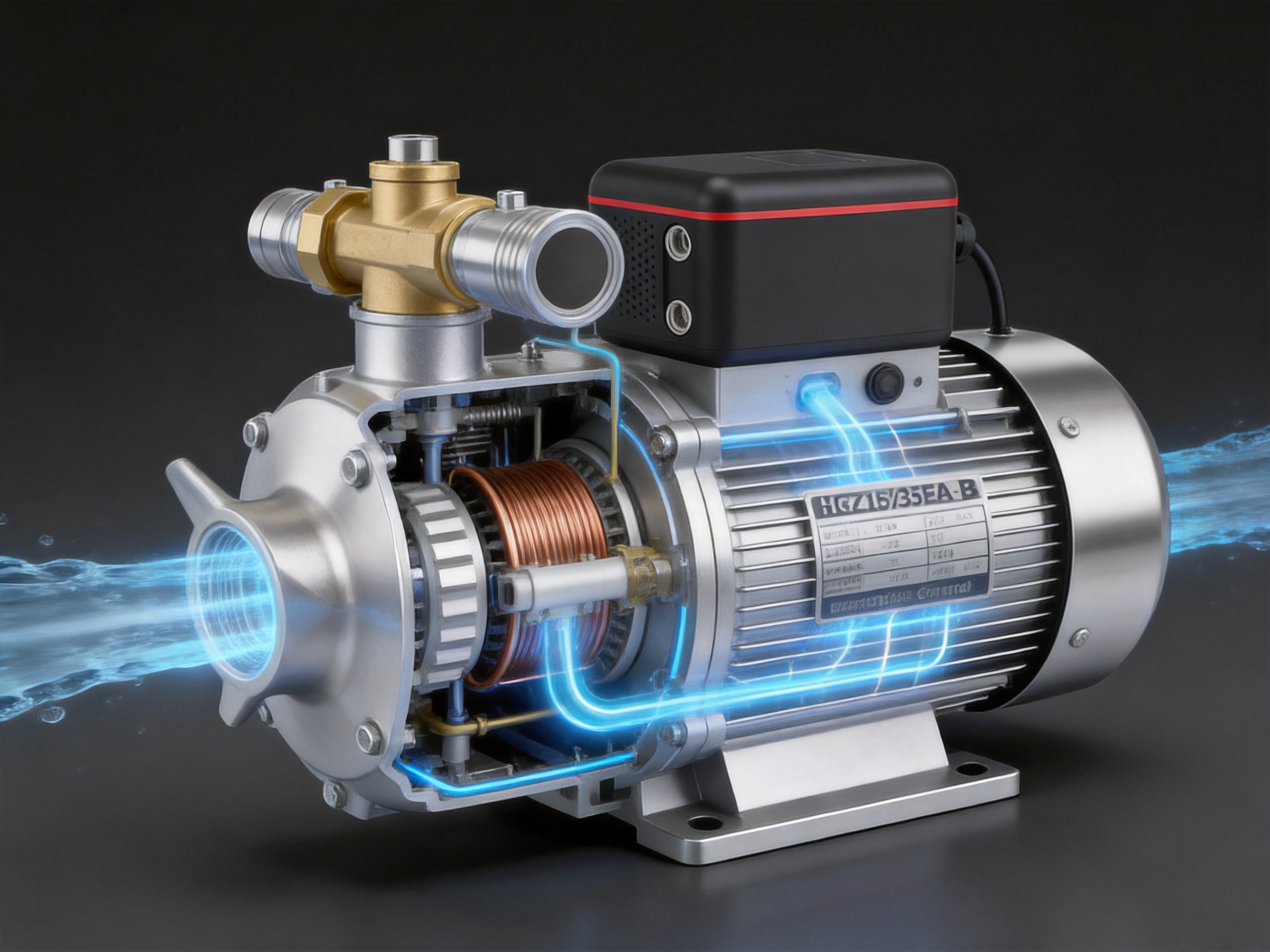
The primary purpose is to provide intelligent water pressure boosting for domestic, garden, greenhouse, and selected light commercial systems. It can also operate in a temperature-controlled circulation mode when installed in a suitable system.
The rated flow is 2.2 cubic meters per hour. Actual flow at the installation point depends on total head, pipe resistance, valves, fittings, water conditions, and the selected control settings.
The maximum head is 35 meters. This is the maximum stated lifting capability and should not be interpreted as the flow available at every operating height. The performance curve should be reviewed for accurate selection.
The rated power is 400 W. Because the pump uses variable-frequency control, its actual electrical consumption may change according to operating speed and water demand.
The supplied product information states that the noise level is below 45 dB. The water-cooled motor and shielded construction are intended to reduce noise. Actual sound levels also depend on installation, pipe vibration, mounting, and operating conditions.
Yes. The pump is designed for WiFi connectivity and remote control through a mobile phone application. Network quality, application compatibility, and setup requirements should be confirmed before installation.
Pressure control mode adjusts pump operation to support stable water pressure and flow. Temperature control mode starts and stops circulation according to a selected temperature condition. The first mode is suitable for boosting, while the second is intended for compatible circulation applications.
Yes. Dry-running protection is listed among the pump’s intelligent protective functions. However, correct priming, a reliable water source, sealed pipework, and suitable installation remain necessary.
The pump body is SUS 304 stainless steel. The impeller is PPO, the check valve is brass, the stator winding uses copper wire and silicon steel sheet, and the rotor uses ceramic and silicon steel sheet.
No. The pump is intended for compatible water applications. Water containing excessive solids, aggressive chemicals, seawater, or unusual contaminants may require a different construction. Fluid temperature and quality should be checked before selection.
It can be used in a suitable circulation system because it supports temperature control mode. The complete system must remain within the pump’s pressure, temperature, flow, material, and electrical limits.
The stated connection size is 1 inch. The exact thread or connection standard should be confirmed for the destination market and installation project.
Buyers should confirm required flow, total head, water temperature, fluid quality, connection standard, electrical supply, installation environment, WiFi availability, and whether the system needs pressure control, temperature control, or both.
It combines permanent magnet motor technology, variable-frequency operation, WiFi connectivity, intelligent memory, water cooling, shielded construction, dual control modes, sensors, flow switching, and multiple protection functions in one compact product.
Homeowners, small property operators, greenhouse users, garden irrigation installers, distributors, and light commercial customers may benefit when they need quiet, compact, automatically controlled water pressure or circulation.
The HGZ15/35EA-B represents a practical step beyond the basic fixed-speed booster pump. Its most valuable feature is not one isolated specification, but the way several technologies work together. Permanent magnet motor technology supports efficiency. Variable-frequency control supports demand-based operation. Water cooling and shielded construction support quieter performance. WiFi connectivity supports remote management. Temperature control expands the pump’s use beyond pressure boosting. Sensors and protection functions support safer automatic operation.
Its 400 W rating, 2.2 m³/h rated flow, 25-meter rated head, 35-meter maximum head, and 1-inch connection make it a focused model for compact water supply applications rather than a universal high-flow commercial pump. This positioning can be an advantage because the product is designed around everyday pressure and circulation needs instead of unnecessary oversizing.
The manufacturer’s experience in research and development, mass production, international export, and multiple pump categories strengthens the product’s commercial potential. Its broader product portfolio can support customers who need more than one pump type, while its foreign trade and logistics structure can help coordinate international purchasing.
As with any pump, performance depends on correct application matching. The product should be selected using the complete system requirements, not only the maximum head or motor power. Professional installation, suitable electrical protection, proper priming, clean water conditions, and regular maintenance are essential for dependable service.
For users who want a compact and intelligent pressure solution with low-noise operation, remote control, variable-speed efficiency, and flexible pressure or temperature modes, the HGZ15/35EA-B offers a strong combination of features. It is especially well suited to modern residential systems, small irrigation networks, vegetable greenhouses, and selected circulation installations where convenience and energy-conscious operation are priorities.
1. Supplied product specification for model HGZ15/35EA-B, including power, flow, head, connection size, materials, and operating functions.
2. Manufacturer-provided product information concerning permanent magnet motor technology, variable-frequency control, water cooling, shielded construction, WiFi connectivity, and protection functions.
3. Manufacturer-provided company profile covering independent research and development, mass production, international export, affiliated trade services, and product application sectors.
4. General principles of centrifugal pump selection, including total dynamic head, system resistance, flow requirements, priming, and commissioning practice.
5. General engineering principles for variable-frequency motor control, pressure boosting, temperature-controlled circulation, and energy-conscious pump operation.
edwina@edwin-pump.com
+86-13586290903 (WhatsApp)
Xuri Gongliang Cutting Tool Entrepreneurship Park, Wenqiao Town, Wenling City, Taizhou City, Zhejiang Province, China

High Performance Smart Pump Factory


 English